Feeds:
Posts
Comments

Archive for the ‘Travel’ Category

 “We all have our time machines. Some take us back. They’re called memories. Some take us forward. They’re called dreams.” – Jeremy Irons
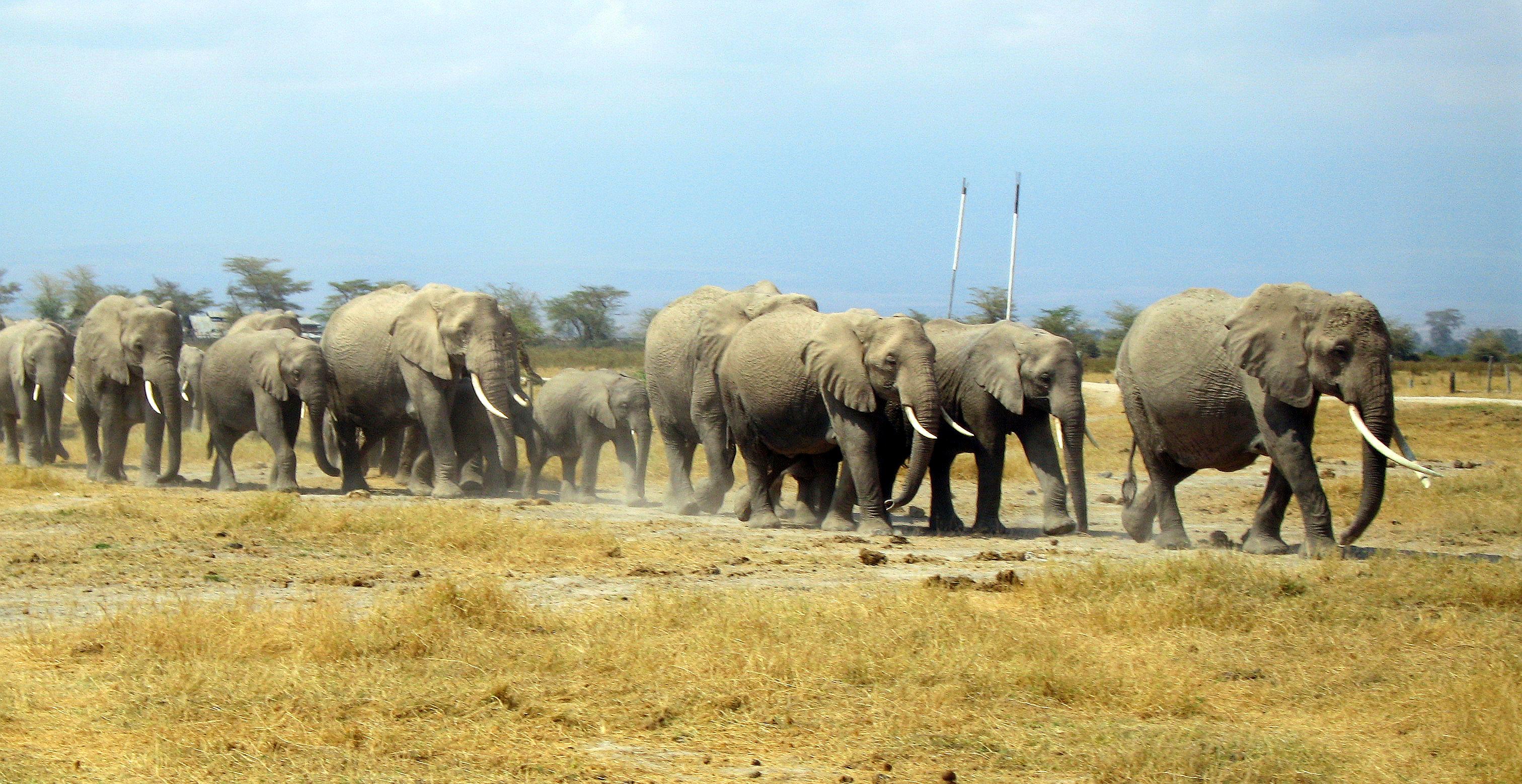
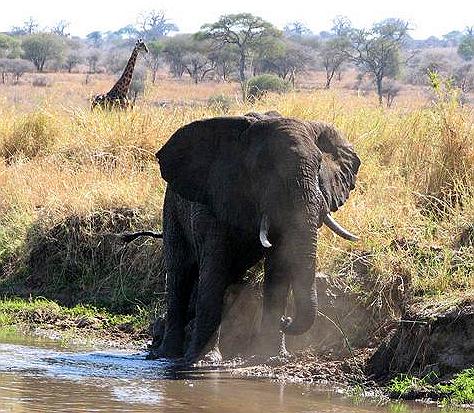
Elephants on the move in Amboseli -- Photo by Pat Bean

African Safari: Amboselli

The next morning we were up early for breakfast, served family style in open air tent, and eagerly ready for a day in Amboseli National Park, which was about an hour away from our Porini camp. Our driver was Emanuel, whom I was delighted to discover was more interested in birds than Bilal. I never once had to ask him to stop when one was in sight.

Emanuel, our driver/guide for Amboseli. He was a real birder. Yea! -- Photo by Pat Bean

In fact, even before we left the camp he had pointed out a blue-naped mousebird that I had missed seeing. I knew then it was going to be a great day, like every other day I’d so far spent in Africa.

We were accompanied in the Land Rover by a husband and wife couple, whom I barely remember except that they were pleasant. Kim remembered, when I asked, that he had a lot of expensive cameras and was heavily into photography.

The other person who also accompanied us was Jackson, who was nearing the end of a five-year internship to become a guide. Jackson was a Maasai, and would be one of the very first of his tribe to become a guide.

From a distance hippos looked like big gray rocks, especially since sometimes only their backs were visible in the sunken swamps that dotted the Amboseli landscape. -- Photo by Kim Perrin

While it was an hour’s drive to the park from our Porini camp site, there was plenty to see along the way, including two, then three, cheetahs stalking a gerenuk, which escaped all of them once the pursuit race began.

Our first sighting in the park was a large herd of female elephants migrating across the landscape with a lot of young ones in tow. Following behind was one huge male with a huge desire to sire yet another one.

Amboseli is a Maasai word for salty dust, and refers to the volcanic ash from past Mount Kilmanjaro eruptions. Snow melt flowing down into the landscape here from the mountain makes it an excellent habitat for wildlife, and rarely were we out of sight of the four-legged and winged creatures that call Amboseli home.
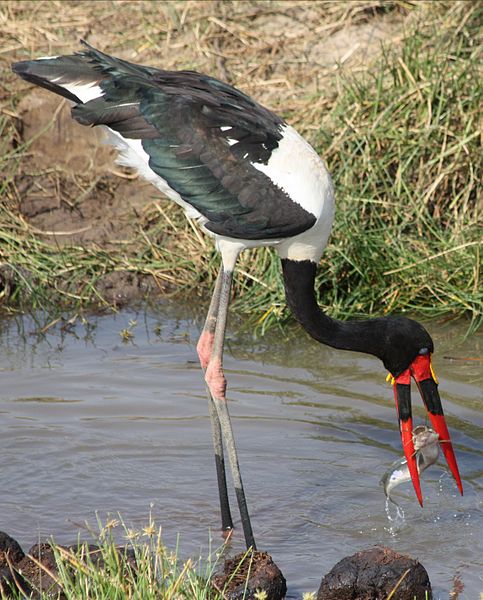
Saddle-billed stork catching a fish -- Wikipedia photo

Looking across the savannah, we often saw what at first glance were big gray rocks. In reality they were hippos lazing in the swamp areas of the park. 

Among our more fun bird-watching experiences was watching a saddle-backed stork fight with a snake. The stork won.

We also saw an African jacana walking on lily pads, a jewel colored malachite kingfisher and a squacco heron, which looked an awfully lot like our American bittern.

 Lots of memories were made this day.

Bird Log of new lifers: Lizard buzzard, red-billed hornbill, August 28, 2007,  during the drive to Porini; crested francolin, blue-naped mousebird, crested bustard, black-faced sandgrouse, Fischer’s starling, plain-backed pipit, Fischer’s sparrow -lark, grassland pipit, saddle-billed stork, long-toed plover, common greenshank, malachite kingfisher, African jacana, squacco heron, eastern pale chanting goshawk, pied kingfisher. August 29, 2011, Amboseli National Park. We also saw a sandwich tern, which is a common bird along the Texas Gulf Coast.

Read Full Post »

“Once you have traveled, the voyage never ends, but is played out over and over again in the quietest chamber. The mind can never break off from the journey.” – Pat Conroy.

Dik-Dik -- Photo by Kim Perrin

African Safari: A Kenya Welcome

We joined another couple and their driver for the half-four ride from Arusha to the border town of Namanga, where after a check through customs we met up with Johnson, another Ranger Safaris’ driver. He warned us that we were in for a long bumpy ride to the Porini Camp Lodge, where we were to spend the next two nights.

We were used to a bumpy ride and there was plenty to see along the way, and Johnson was quite knowledgeable about the sights we were seeing. So it all seemed perfectly normal.

Kim emerging from our tent suite, one of only six for safari guests at the Porini Camp. -- Photo by Pat Bean

I even got two more life birds, a lizard buzzard and a red-billed hornbill. The longer we were in Africa, the slower grew my list of new birds. But I was happy because I was beginning to recognize many of the earlier ones now without having to use the field guide every time.

We also saw quite a few giraffe along the way, as well as elephants, zebras, gazelle and a couple of dik-diks, tiny antelopes named for the warning sound they issue when predators are nearby.

The hot water tank for showers in our tent. -- Photo by Pat Bean

When we finally drove up to the Porini Lodge, we were met, as usual, with a wet wash rag to clean the African dust from our face and hands. I noticed my washrag had turned from white to brown by the time I handed it back to a staff worker.

Our lodge, however, was a far cry from the five-star camp complexes we stayed at in Tanzania. Tonight we would be sleeping in tents, albeit one with floors and showers. Hot water for the latter, however, was hauled up in a canvas bag.

A shower would have to wait, however. We had barely gotten into camp in time for the nightly sundowner. This even was a late wildlife viewing drive to a place where we could watch yet another spectacular African sunset.

Two very tired ladies at the end of a long day enjoying their first taste of a Tuskers.

Bone-tired from the long day, Kim and I watched it go down with a Tuskers in hand. While I’m not a big beer fan, this one tasted really good. And the photo someone took of us two with the beers in hand turned out to be another favorite of the trip

Read Full Post »

 “Be grateful for luck. Pay the thunder no mind – listen to the birds. And don’t hate nobody.” – Eubie Blake

Verreaux eagle owl -- Photo by Kim Perrin

African Safari: “Stop, Stop!”

As we drove out of Arusha, leaving Bilal and Tanzania behind for Kenya, I touted up my number of new life birds. Adding the ones I had seen in Tarangire National Park yesterday afternoon and this morning’s wildlife drive, the total was 135.

Some like the more exotic hoopoe, grey-crowned herons and noisy go-away-birds had been easy to identify, and Bilal had stopped the Land Rover for closer looks automatically. But most of the time, and especially for the smaller, less flamboyant birds along the way, it was me who was always hollering “Stop, stop!”

Lilac-breasted roller -- Photo by Pat Bean

I could see I was annoying Bilal, and Kim said stopping the big Land Rover with all its gears took time. I tried, honestly I did, to curb my actions, but my enthusiasm for a potentially new lifer simply couldn’t be contained.

I truly did get as big a high from spotting a lilac-breasted roller or even a plain black sooty chat as I did from seeing an elephant or a lion, which I’m sure only another addicted birder will understand. And while Bilal never missed stopping for any big cat in our vicinity, he often seemed blind when it came to many of the birds.

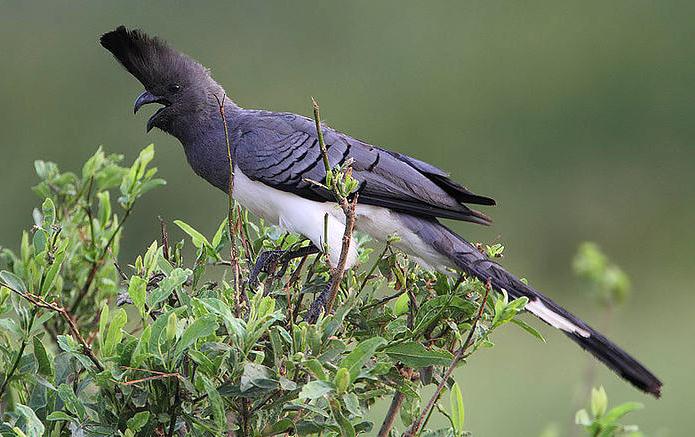
White-bellied go-away-bird. They're quite noisy and everybody usually ends up telling them to go away. -- Wikipedia photo

So it was with great delight that on one of our wildlife drives it was Kim hollering to Bilal to stop – and if anything she did it more commandingly and every bit as loud as my frequent calls for halts.

Almost jumping up and down, she ordered Bilal to back up to a spot beneath a tree we had just passed. The bird she had seen, and which I had totally missed, was a magnificent Verreaux eagle owl.

Silvery-cheeked hornbill -- Wikipedia photo

Unlike most of my calls for halts, Bilal didn’t roll his eyes this time. He was as impressed as we both were.

Like so many of the owls I’ve seen sleeping high in American trees, it stayed put and simply blinked its sleepy eyes at us a few times. Slightly bigger than a great-horned owl, this African species had a ruffled white feather collar and pink eyelids.

Since it was the only one we would see during our Safari, I owed Kim big time.

Bird Log of New Lifers: White-bellied go-away-bird, ashy starling, lesser grey shrike, green-winged pytilia, hammerkop, cardinal quelea, yellow-bellied greenbul,. Tarangire National Park, August 27.

Read Full Post »

” Travel is fatal to prejudice, bigotry, and narrow-mindedness, and many of our people need it sorely on these accounts.  Broad, wholesome, charitable views of men and things cannot be acquired by vegetating in one little corner of the earth all one’s lifetime.”  ~Mark Twain<!–, The Innocents Abroad, or, The New Pilgrims Progress, "Conclusion," 1869; CTO–>

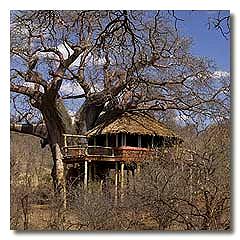
A tree grew through it. A parting look at the Tarangire Treetops Lodge's main building.

African Safari: Photo Op

It was with regret that Kim and I left the Treetops Lodge the next morning. We both would have loved to have spent more time in this place where childhood fantasies were a reality. All too soon, it seemed, a guard was outside below waiting for us to descend from our trap-door entrance so he could walk us to the main lodge for breakfast.

Elephants and giraffe's shadowed us for our final wildlife drive with Bilal. -- Photo by Kim Perrin

Later, looking at the lodge’s website, I realized we couldn’t have afforded it. One night’s stay at the lodge, which has only 20 tree-house suites, cost over $600. It had been one of the luxuries that we had included in our African Adventure Company package. I’m glad we hadn’t known the cost it added to our trip or Kim and I might have forgone staying here.

As it was, our tree-house night will forever be part of our Africa memories. And so would Bilal.

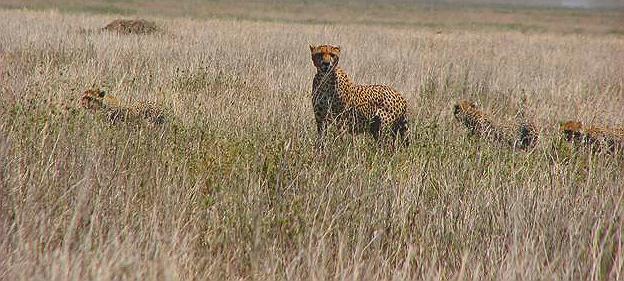
Cheetahs, like this mom with three youngsters, were frequently seen on our wildlife drives with Bilal. -- Photo by Kim Perrin

The macho, dark-skinned man had looked out for us for a whole week. He treated us with respect and professionalism in all his actions, and we came to respect and care for him.

Today, we would have one last wildlife drive with him, before he deposited us in Arusha, where we would have lunch at the Flame Tree Restaurant, a dropping-off place for various safari companies, and where we would be met and driven across the border into Kenya.

Giraffe, elephants, zebras and other wildlife shadowed us for the usual bouncy journey. While they, like the superb starlings and cattle egret, had become familiar sights to us this past week, their antics were still awesome to watch.

Kim and I say our good-byes to Bilal in Arusha, where he handed us off to a Ranger Safaris' driver who would take us to the Kenya border, where we would continue our safari. Just for the record, we tipped him well.

We arrived in Arusha early, and Bilal drove us around the busy downtown area, where I kept seeing images of Elsa Martinelli being chased by baby elephants in the 1962 John Wayne film “Hatari.” The town was quite a bit bigger these days, with lots of hustle and bustle and color. But my imagination had grown bigger over the years, too. And so I could still see the town as it might have once been.

Both views were exotic and strange and wonderful, and expanded the mind.

Arusha Market -- Wikitravel photo

Then all too soon it was time to say good-bye to Bilal. Kim and I both hoped he had enjoyed his time with us as much as we had with him. He posed with us while another guide took our picture.

It’s one of my favorite photos of the entire safari.

Read Full Post »

“If people sat outside and looked at the stars each night, I’ll bet they’d live a bit differently.” – Bill Watterson

Kim in a Maasai robe ready for our nighttime safari -- Photo by Pat bean

African Safari: Beneath the Stars

For our night-time drive, one of our Maasai guides sat on the front fender of the car with a spotlight to provide us an opportunity to see a few animals that are rarely seen during daylight hours.

It was a completely different experience from our earlier wildlife viewing. For one thing, there were 10 of us squeezed into the Land Rover and Kim and I couldn’t hop around from side to side as we were used to doing in our drives with Bilal.

So if an animal wasn’t on your side of the vehicle, given the darkness, you might not see it. Some animals froze when they were spotlighted but others quickly disappeared into the bush. We spotted many more glowing eyes than glimpses of entire animals.

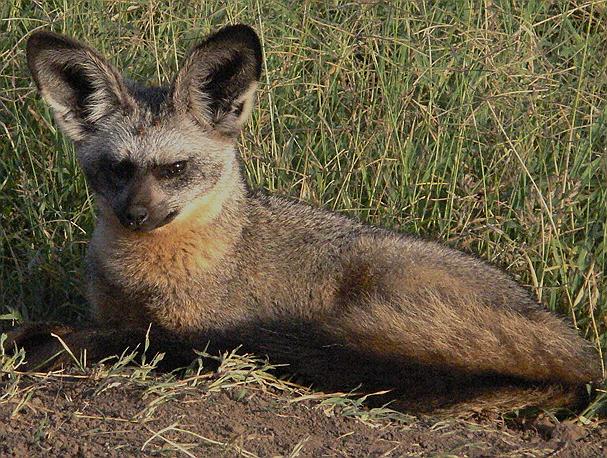
Bat-eared fox -- Wikipedia photo

Even so, I was amazed at what we saw. My list included bat-eared fox, genet, large winged bat, steenbok, dik-dik, white-tailed mongoose, spring hare, bushbaby, kangaroo rat and a few zebra and impala wandering around in the dark.

I might have seen a few more things but the birder guy along for the ride and myself talked birds for much of the trip. We both admitted being frustrated with not being able to identify a lot of what we had seen.

 After awhile, however, I decided enough of that and began watching the sides of the roads intently for what I could see right now and possibly identify.

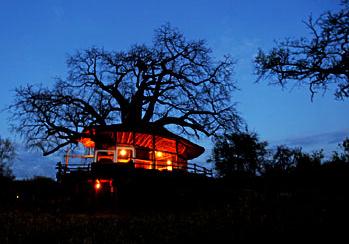
The warm lights of the Treetops Lodge was a welcome sight.

I truly don’t believe in what ifs, and here I was wallowing in it.

It was cool, with a clear sky painted with brilliant white sparks of light. I decided just being outdoors in an African landscape in the dark, with its sweet, earthy smells and background music of rustling animals and insect chirps, was as rewarding as any animals we happened to see.

After our hour-long drive in the dark, preceded by a very long day of exciting wildlife viewing in a bouncing vehicle, I must admit, however, that the warm lights of our lodge was a welcome sight.

I was eager to go to sleep among our suite’s tree branches.

Read Full Post »

“What is that feeling when you’re driving away from people and they recede on the plain till you see their specks dispersing? — it’s the too-huge world vaulting us, and it’s good-by. But we lean forward to the next crazy venture beneath the skies.”- Jack Kerouac, On the Road.

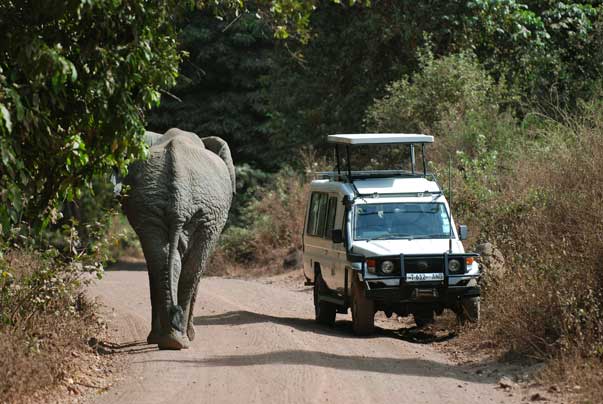
Sharing the road -- Photo by Kim Perrin

Maggie and I are on the road today, traveling from Ogden, Utah, back to Lake Walcott State Park. I’ll try to write a post later today about our first night-time safari drive. 

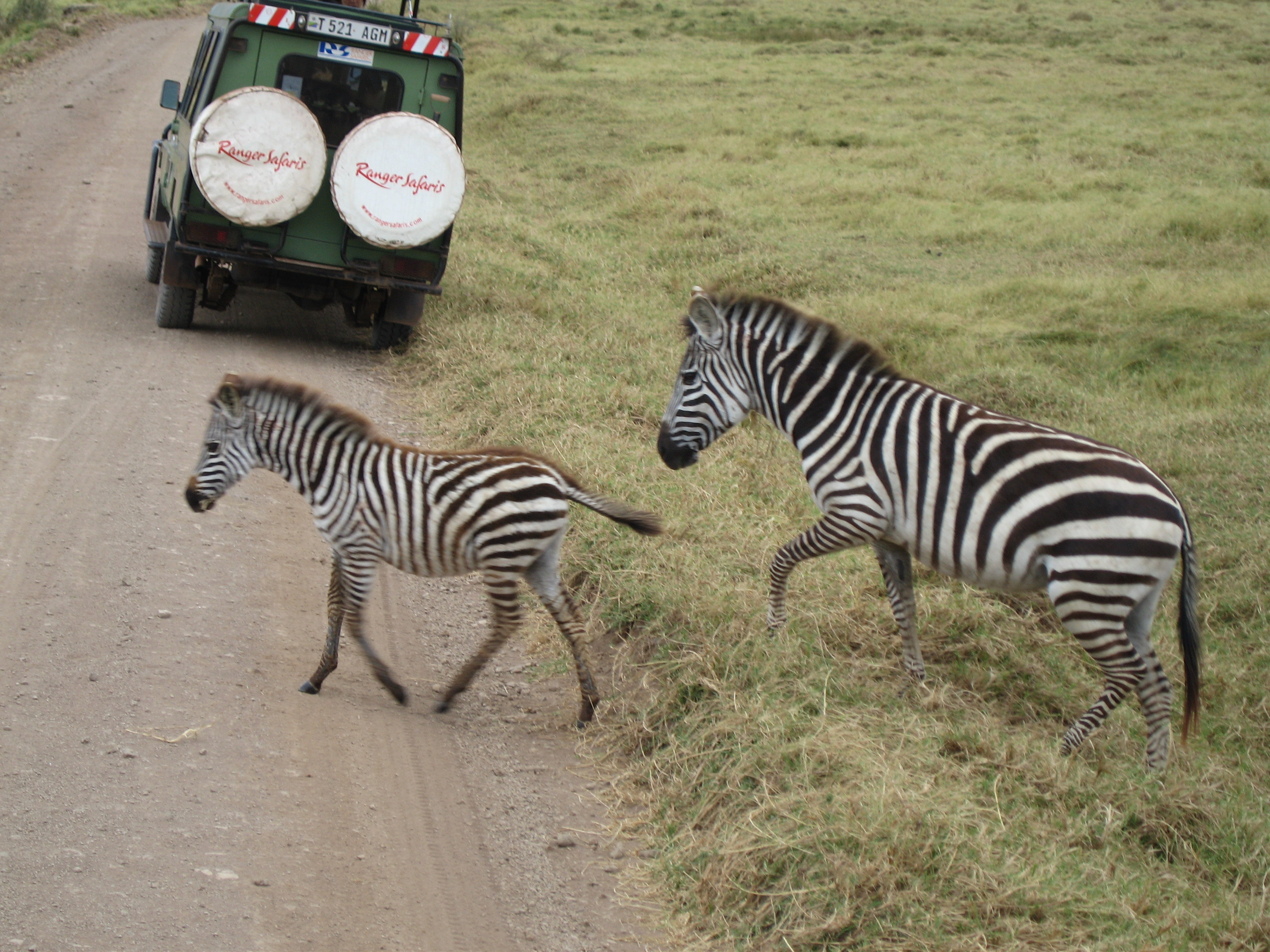
In the meantime I thought you might enjoy these photos of  a couple of our drives with Bilal in Tanzania. Then if I don’t get back to blogging again as promised, I won’t feel so guilty.

I must say I liked sharing the road with these travelers much better than 18-wheelers.

Zebra crossing -- Photo by Pat Bean

.

Read Full Post »

 “Rest is not idleness, and to lie sometimes on the grass under trees on a summer’s day, listening to the murmur of the water, or watching the clouds float across the sky, is by no means a waste of time.” J. Lubbock

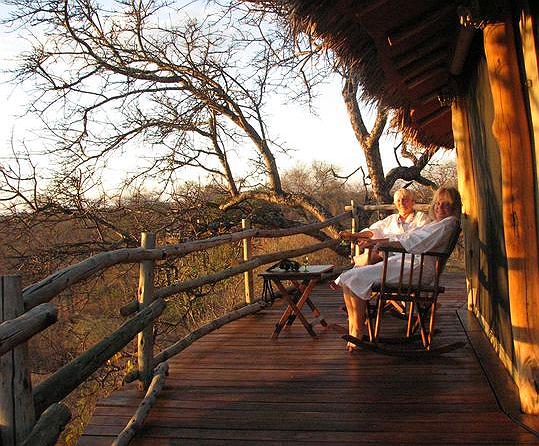
Kim and I on the deck of our tree-house suite drinking cognac and watching the sun go down. -- Photo taken with a timer by Kim Perrin

African Safari

I’ve always dreamed of living in a tree house, and have drooled over the Swiss Family Robinson’s home up among the branches many times. . Tonight a tiny taste of that dream would come true.

After a grand afternoon of game watching in Tarangire National Park, including our scary face off with a concerned mama elephant, followed by a long ride over one of the roughest roads you can imagine, we arrived at the Tarangire Treetops Lodge about 30 kilometers away. .

One of the tree-house suites for guests at the Tarangire Treetops Lodge.

A guide escorted us to our accommodations, which we accessed by a ladder up through a trap door. He said he would be back later to escort us down to dinner.

We immediately saw that our tree house home for the night was a lot bigger and grander than the ones dads build for their children in the backyard.

Our large room was airy with a long deck on one side that overlooked a wildlife viewing area. The room came complete with a shower, fluffy white robes and a set up of cognac and glasses on a small table before two deck chairs. .

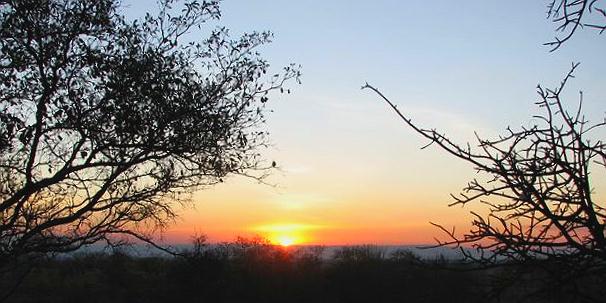
Tarangire sunset -- Photo by Kim Perrin

We took advantage of all three, in that order, the latter as we watched yet another of Africa’s colorful sunsets before being escorted back to the main lodge for dinner.

This would be our last night with Bilal, and he reluctantly joined us for one pre-dinner Coke before hurrying off. We had tried to get him to have dinner with us several times, but it seems there were rules about guides and clients associating except during our wildlife drives together.

Meanwhile, so entranced had we been with our accommodations, and perhaps the cognac, that we had dressed for dinner, forgetting that we had planned to go on a night wildlife drive.

So we raced back to change into something more appropriate for the adventure, arriving back at the lodge just as dinner was being served on an outdoor patio. As it turned out we weren’t the only ones who had forgotten the night ride was supposed to begin immediately after dinner.

I wondered if the other forgetful couple had also taken advantage of the cognac hospitality. The wait for them to change, however, was pleasantly filled by conversation with our fellow tourists who would all squeeze into an open Land Rover with us for the night’s drive.

One of the guys was an avid birder like myself. What a relief it was, for both of us, to finally have someone who appreciated the finer points of whether a bird’s supercilium was white or brown and whether it had two or three wing bars.

But finally everyone was gathered, and dressed in warm Maasai robes provided by the lodge to ward of the night chill, and we were off for our first African night safari.

Tune in tomorrow for the “rest of the story,’ as columnist Paul Harvey was always so fond of saying.

Read Full Post »

It was peaceful watching this mom and young charges splashing in the water until ... -- Photo by Pat Bean

 ” We live in a world full of beauty, charm and adventure. There is no end to the adventures that we can have if only we seek them with our eyes open. ” – Irving Wallace

"Hey guy's! There's a hammerkop over there with the zebra." -- Photo by Pat Bean

African Safari: Holding Our Breaths

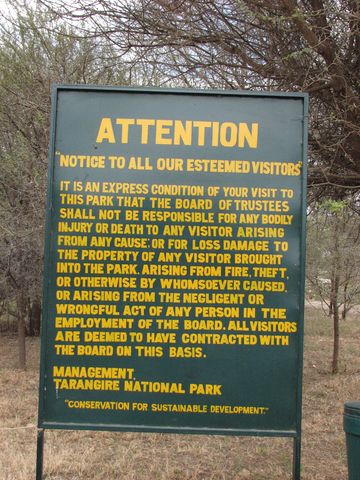
Our afternoon game drive with Bilal took place in Tarangire National Park, which is known for its elephants. The park , except during its rainy season, is mostly hot and dry. We missed the rainy season, and our August visit during Africa’s winter was made before the heat and dryness claimed the land.

The elephants, as almost all of the park’s wildlife did, made their way daily to the park’s only water source, the Tarangire River for which the park is named. Bilal knew exactly where to go and where to park for spectacular views of wildlife visiting the river.

One of the places was in the shade of a tree right next to a bank. On the far side of the river, we watched zebra and waterbuck peacefully drinking together. While we were watching a couple of giraffe joined them. It was fun to watch how they splayed their legs apart so as to be able to get low enough to drink.

Kim got this photo of a really big elephant that didn't scare us a bit. Perhaps because it was shot with her zoom lens. -- Photo by Kim Perrin

As I watched in awe, my eye was drawn to a bird at the feet of the zebras. It was a hammerkop, a strange looking bird with an elongated head. It was yet another lifer, which I excitedly pointed out to Kim and Bilal, both of whom failed to see birds when larger, more exotic, wildlife was in view.

On our side of the river were three elephants, a mom and two young ones. They were splashing in the water near were Bilal had parked the Land Rover. They looked like they were having so much fun that even I forgot to look at birds for awhile.

As we watched, the three began to climb out of the river beside our vehicle. As the young ones made their way up the bank, the mom got in front of our vehicle and engaged us in a stare off. She was close enough that she could have easily touched the hood of the vehicle with her trunk.

We could hear her snuffling as she glared intently into each of our eyes.

We can't say we weren't warned. -- Photo by kim Perrin

Kim and I, who were both standing up in the vehicle, stopped breathing we were so still. Bilal had his hand on the keys in the ignition but he didn’t move a muscle either. While this wasn’t the largest elephant we had seen, we all knew how fierce the protective mom could turn in an instant if she thought we were a danger to the young ones she had in tow.

After what seemed like an eternity, but in reality was only about two or three minutes she turned and led her charges off. All three of us took a big breath.

Bilal said he had been afraid if he started the vehicle to get us away, it would have caused her to charge.

Kim and I had wanted to have an adventure when we came to Africa, and this day certainly provided one. But we were both irked that neither of us had taken a photo of the face off. I would remember that later during another close-up wildlife encounter

Read Full Post »

 “It’s pretty hard to tell what does bring happiness. Poverty and wealth have both failed.” – Frank McKinney “Kin” Hubbard 

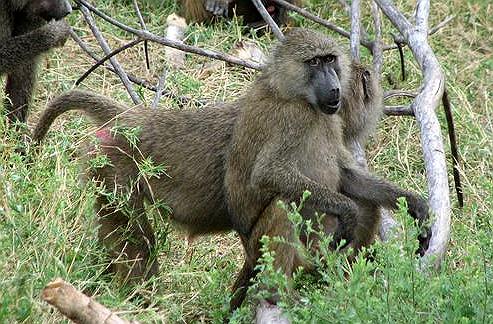
Baboons were a frequent sight on the outskirts of towns. -- Photo by Kim Perrin

African Safari: Ngorongoro to Tarangire

 Our morning drive with Bilal took us on a paved road for a change. It seemed, what with no apparent traffic rules, more dangerous than driving among the lions and other wild beasts. Our destination was Tarangire National Park.

 On the way we passed an overloaded bus – I never saw one that wasn’t – with a rhino painted on its rear and the message: “More money, more problems.” It started another one of those enlightening conversations with Bilal. I mentioned that while so many of the Africans we had seen had so very little, they seemed happy.

 “Why do you say that,” he asked.

 “Because they seem so cheerful and always have big smiles on their faces,” I replied.

 “Just because they smile a lot doesn’t mean happiness,” he said. His words gave me a lot to think about, and has changed the way I look at people.

I think of bananas as coming from South America, but Tanzania, Kim and I learned, has its share, too. -- Photo by Kim Perrin

 A bit later, in one of the small towns we passed through, Bilal stopped and bought some bananas from a roadside business run by women. “I like to support the women,” he said, “because they are often mistreated by men.”

 The bananas were good, and Bilal’s words had yet again endeared him to Kim and I.

 Then our attention was drawn to a couple of baboons making it in the middle of the road. We all laughed.

As I’ve aged, I’ve begun to think of laughter as a great indicator of happiness, especially the ability to laugh at oneself. But even today, four years after my conversation with Bilal, his words about smiles and happiness not meaning the same thing still lingers with me.

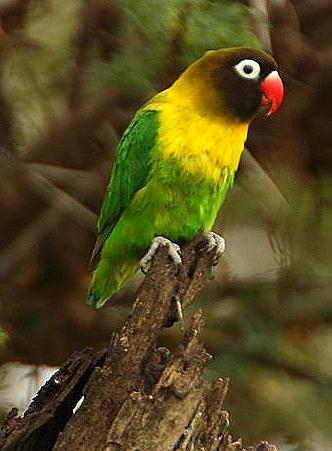
A yellow-collared lovebird photographed in Tanzania. -- Wikipedia photo

We stopped for lunch at a small tented lodge, where I had time to do a bit of birdwatching. The morning turned up four new life birds, including a yellow-collared lovebird that kept us company while we ate in a rustic dining room open to the outdoors.

 Bilal then picked us up for an afternoon game drive in Tarangire National Park, where we would have our most frightening encounter with wildlife of our entire safari. Stay tuned and I’ll tell you all about it next.

Bird Log of New Lifers: White-naped raven, pygmy falcon, white-bellied canary, blue=spotted wood dove, yellow=collared lovebird, Aug. 27, 2007, drive from the Ngorongoro Crater to Tarangire National Park.

Read Full Post »

“This life is yours. Take the power to choose what you want to do and do it well. Take the power to love what you want in life and love it honestly. Take the power to walk in the forest and be a part of nature. Take the power to control your own life. No one else can do it for you. Take the power to make your life happy.” – Susan Polis Schutz

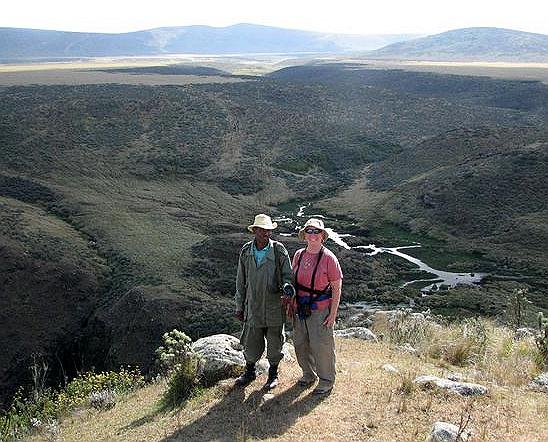
Our hike up the escarpment started in tall grass. Adrian, with his rifle, poses for a picture with me before we begin. -- Photo by Kim Perrin

African Safari: A Pleasant Afternoon Walk

This afternoon’s wildlife drive included a hike, a rare opportunity for us to to truly to get close to Africa’s landscape. Bilal was not happy about it. He had to stay with the Land Rover, and he kept telling us we didn’t have to go if we didn’t want to go.

Kim and I suspected he was nervous about trusting his two ladies to another guide, this time one armed with a rifle. I also suspected – since the hike was uphill to the top of the Ngorongoro escarpment for a view of the smaller next door Olmoti Crater – that he didn’t believe this old “mama” could make it.

Kim in front of one of the big trees we passed on the way up. -- Photo by Pat Bean

While I was admittedly slow on the steeper sections, we made it to the top in 50 minutes, 10 minutes short of the hour allotted to get up there. As a veteran hiker, I subscribe to the philosophy of just putting one foot in front of the other until you reach your destination, and as always it worked. .

The hike took us through tall grass, which had me thinking about snakes, and then into a forest of giant trees. The trees were awesome. As was the view from the top. And my body enjoyed the exercise after several days of bouncing around in our metal beast.

Our guide, Adrian, who seemed quite pleased to have two women to guard, asked if we wanted to hike down into the crater. Both Kim and I were tempted but decided against it. Kim was worried that Bilal would be worried, but I was more worried about the climb back up.

The view from the top was spectacular. -- Photo by Kim Perrin

It only took us 30 minutes going back down, where Bilal had our chariot waiting for us – and a welcoming smile.

Then it was more sight-seeing of birds, monkeys, buffalo, zebras and other wildlife – but still no rhinos – on our drive back to the lodge for another delicious dinner and a night of restful sleep in our soft, mosquito-netted beds.

Read Full Post »

« Newer Posts - Older Posts »