Feeds:
Posts
Comments

Archive for the ‘Favorite Places’ Category

“Reckless automobile driving arouses the suspicion that much of the horse sense of the good old days was possessed by the horse.” – Unknown
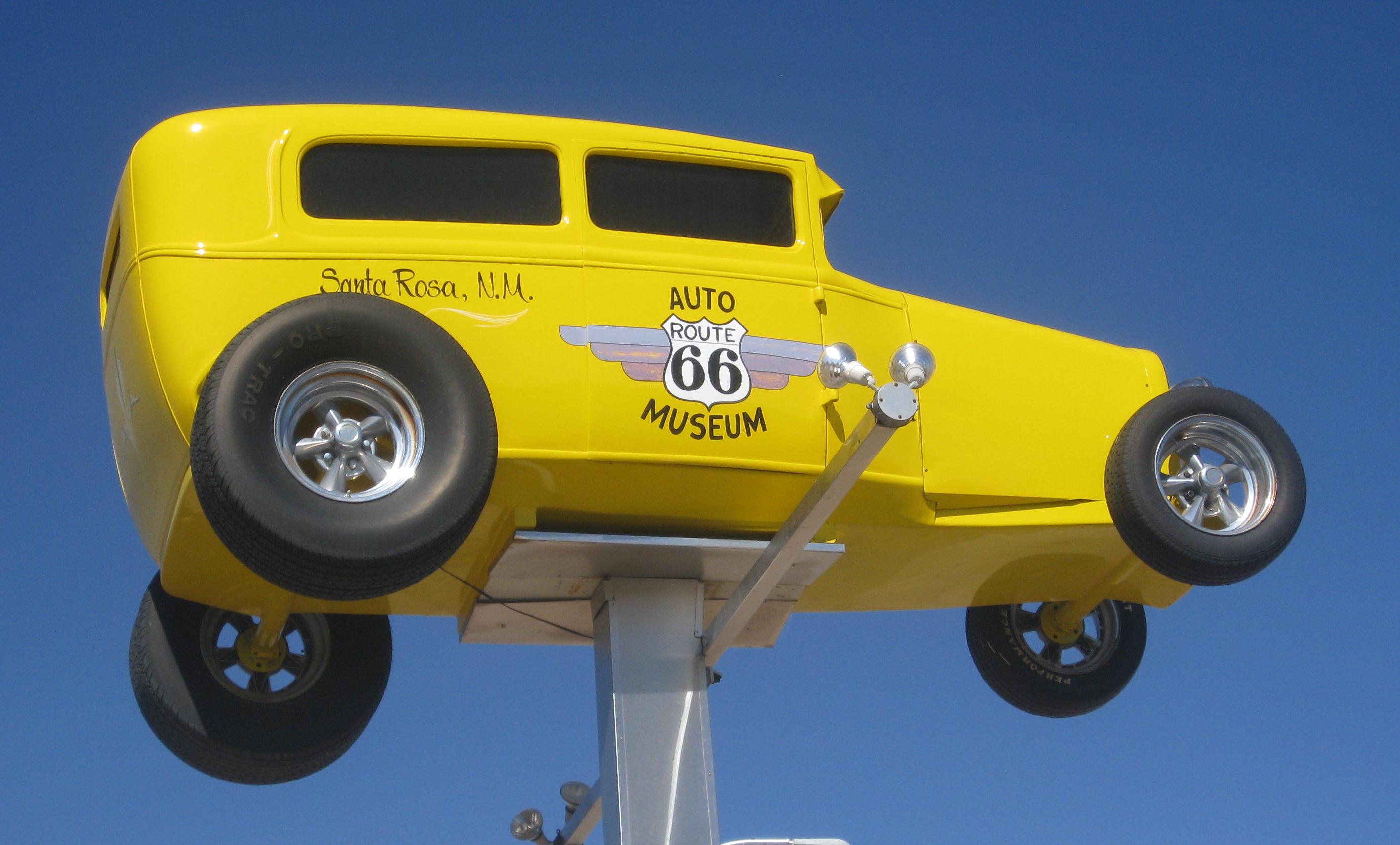
High up on a pole, this bright yellow vehicle advertises the Route 66 Auto Museum. — Photo by Pat Bean

Running Board Back in Time

After a night spent at the Santa Rosa RV Campground, where you can order a western-style barbecue dinner be delivered to your motorhome, I decided to check out the town’s Route 66 Auto Museum.

The running board on this old vehicle took me back in time. — Photo by Pat Bean

One of the spiffy, polished cars on display here had a running board. Not writing it down in my notebook at the time,, and not being a car buff, I can’t recall the make of the car, just as I can’t remember the make of the old car with the running board that my dad owned.

While my dad’s car never looked anything at all like the flashy, polished-to-a-reflective-shine, ivory-colored car on display at the museum, the sight of the running board sent a jolt of memory through my body. I clearly remembered standing on just such a running board many years ago.

The thrill of that brief moment, when I was about 6 years old, was relieved in all its Technicolor excitement. I remembered holding onto the car door for dear life as my dad drove his car down the driveway of my grandmother’s home.

My dad would probably get arrested for child endangerment today.

Route 66 heydays: When Elvis was hot, wild and young. — Photo by Pat Bean

Of course so would I.

The first cars I drove didn’t come equipped with seat belts. I remember once driving to the store, holding a baby on my lap with one hand, and with a death grip on the steering wheel with the other hand.

I also remember frequently flinging my right hand out to keep a child sitting next to me from doing a death plunge into the windshield when I had to stop suddenly. Back in the 1950s, a lot of moms were expert at this maneuver.

Thankfully I survived, and so did all my kids.

The upside is that my canine traveling companion, Pepper, who occupies the passenger seat of my RV today, gets the benefits of my youthful right-hand-flinging practice.

Bean’s Pat: My Life is a Scream: http://tinyurl.com/6vrdpbl A hilarious take on Edvard Munch’s “The Scream” selling for $120 million dollars.
Read Full Post »

History is representational, while time is abstract; both of these artifices may be found in museums, where they span everybody’s own vacancy.” – Robert Smithson

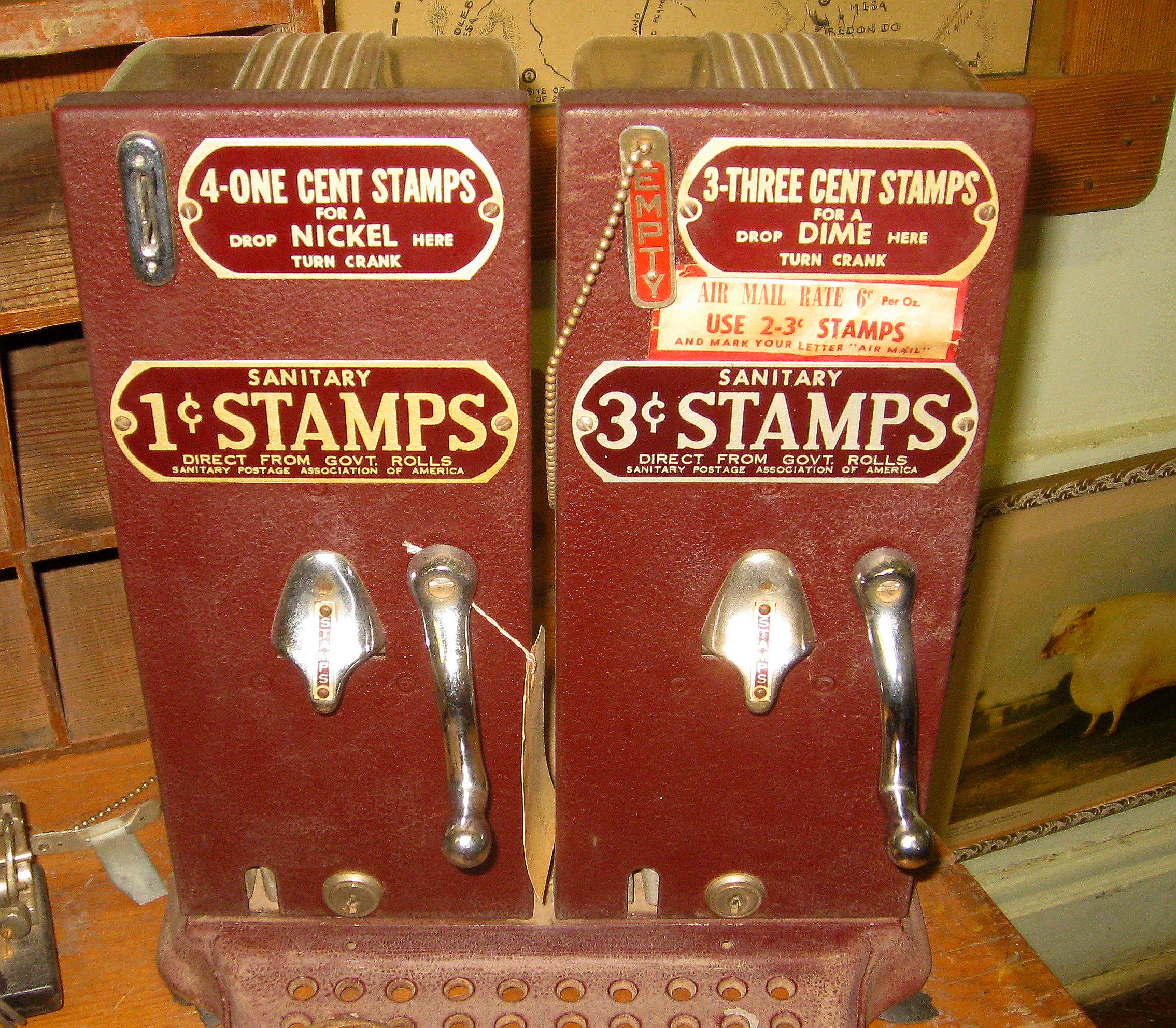
I remember paying only three cents to mail a letter. Does anybody else? — Photo by Pat Bean

The Good Old Days? Or Not?

When you get to be an old broad like me, historical museums let you relive your life. That was especially true of the recent morning I spent at the Tucumcari Historical Museum.

The telephone switchboard on display took me back in time to the late 1950s. I had worked one of those machines when I was a Western Union operator back in the 1950s, after teaching myself to type on a manual typewriter like the one that sat nearby the switchboard.

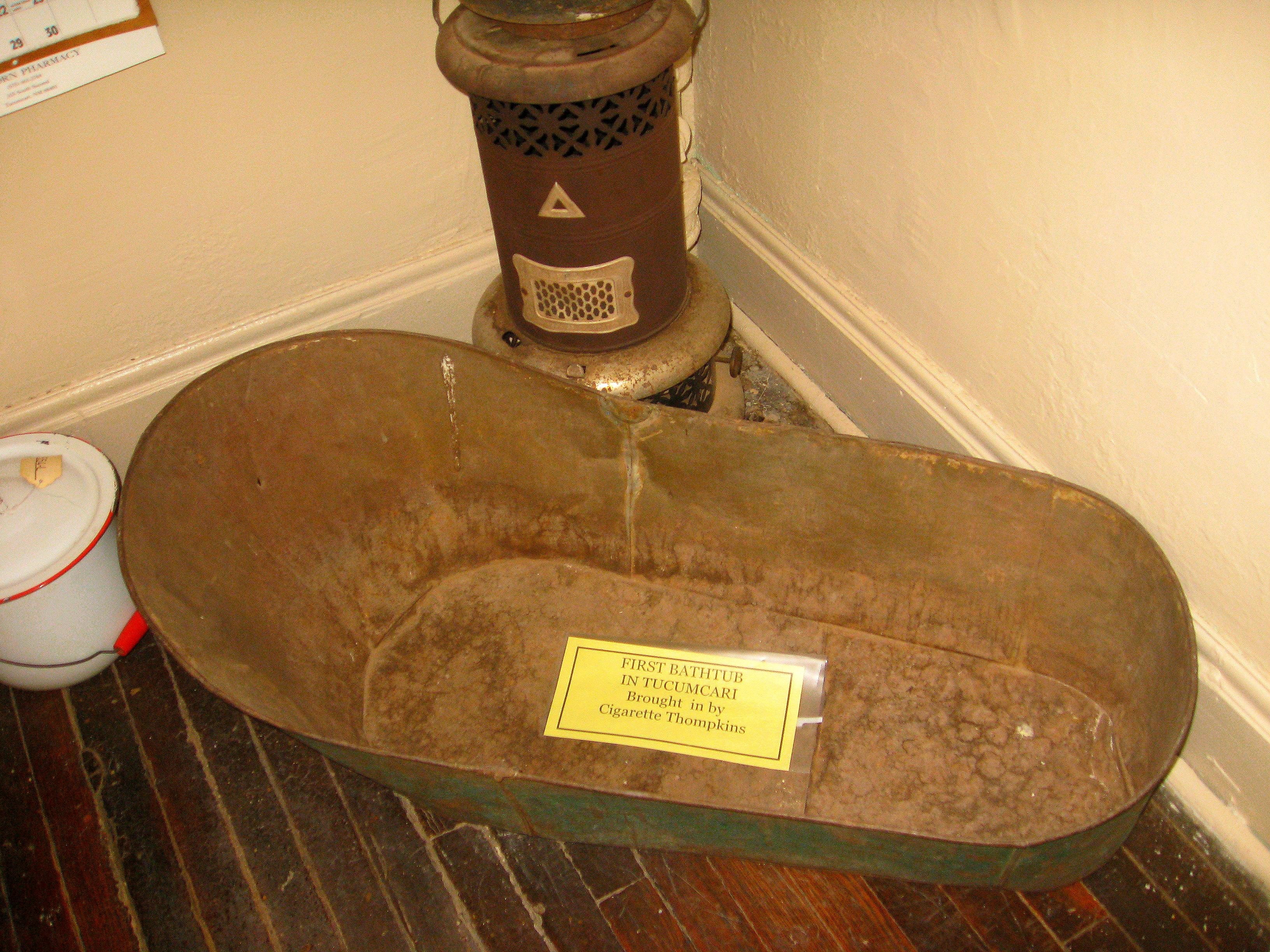
First Tucumcari bathtub the sign said. Thankfully this was an item that was before my time. Not only was this bathtub child size, you had to heat the water that went in it. As I said, everything wasn’t the good old days. — Photo by Pat Bean

The treadle sewing machine on display looked exactly like the one my grandmother used, like the one I put a needle through my finger with when I was five years old. .

And then there was the stamp vending machine. Remember when stamps only cost a penny for a postcard and three cents for a first-class letter?

The television set on exhibit, however, looked a lot bigger than the first one in our home. I was 15 when we got it, so essentially I grew up without one. That’s hard for my grandkids to believe.

Some say those were the good old days. I’m not so sure. I think, like all of life, we get some good mixed in with the bad, whatever year it is.

Bean’s Pat: Oliver’s Story http://tinyurl.com/7c5gc99 This story goes far beyond one lost bird

Read Full Post »

 “If you come to a fork in the road, take it.” Yogi Berra

Cactus Motor Lodge

Tucumcari, New Mexico, is a city full of Route 66 memories.

Until you take a closer look. — Photo by Pat Bean

One of those is the old Cactus Motor Lodge where I stayed this past week. Not in the lodge itself, but on the property where it once stood.

While the former well-used motel rooms, some with their own auto garages, sit vacant and ghostly, the grounds have been turned into a landscaped RV park. While I was there, it was popular with both travelers and western kingbirds, the latter an especially nice touch for this avid birdwatcher. The gray flycatchers with their bright yellow belllies were all over the place.

The historic stone lodge, once neatly trimmed with bright orange and yellow paint, was built in the 1930s. Its office was converted from an old dance hall, where gambling was conducted illegally in the basement, according to some unsubstantiated information I turned up on the internet.

The dance hall supposedly had an escape tunnel, which was most likely cemented in when a swimming pool was built at the lodge in the 1950s. At least that was the guess of new owners who looked for the tunnel, but couldn’t find it.

Memories from Route 66’s past, when gas was only 39 cents a gallon, seeped into my thoughts as I walked my canine traveling companion, Pepper, around and around and around the property. She’s a young dog with a gazillion tons of energy and I’m an old broad who needs to keep walking.

We’re the perfect pair of wanderers. And Route 66 is providing us with plenty of colorful opportunities to wander off the beaten track.

Bean’s Pat: This Man’s Journey http://tinyurl.com/7wkhksa A different take on the photo challenge.  Perhaps we all need to unfocus a bit.

Read Full Post »

 Buz Murdock: They make a pretty good map for cars don’t they? But what do they make for guys like me who turn left instead of right?

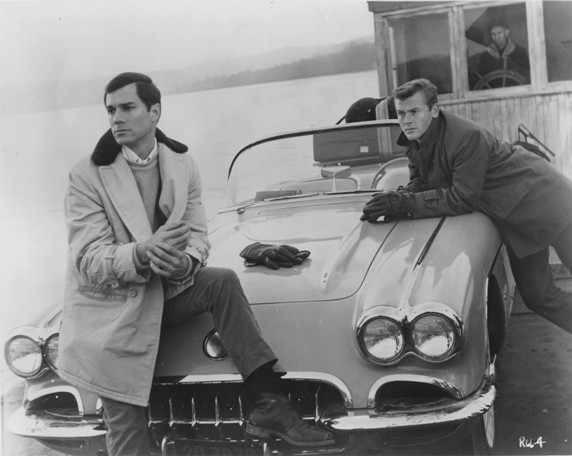
George Maharis as Buz and Martin Milner as Tod in a scene from the 1960s’ TV series, Route 66, I don’t think I missed an episode back then when my wanderlust life was still only a dream. — Wikipedia photo

Tod Stiles: We have to know we’re lost before we can find ourselves Buz. That sort of map you make up as you go along.

– Dialog from the 1960-64 TV series “Route 66

Driving Down Memory Lane

After days of plotting and replotting my route west, which is part of the fun of travel, I finally decided to follow Route 66 from Amarillo, Texas to Flagstaff, Arizona. Not much of the old Mother Highway remains, but the bits and pieces of it that do have been glamorized.

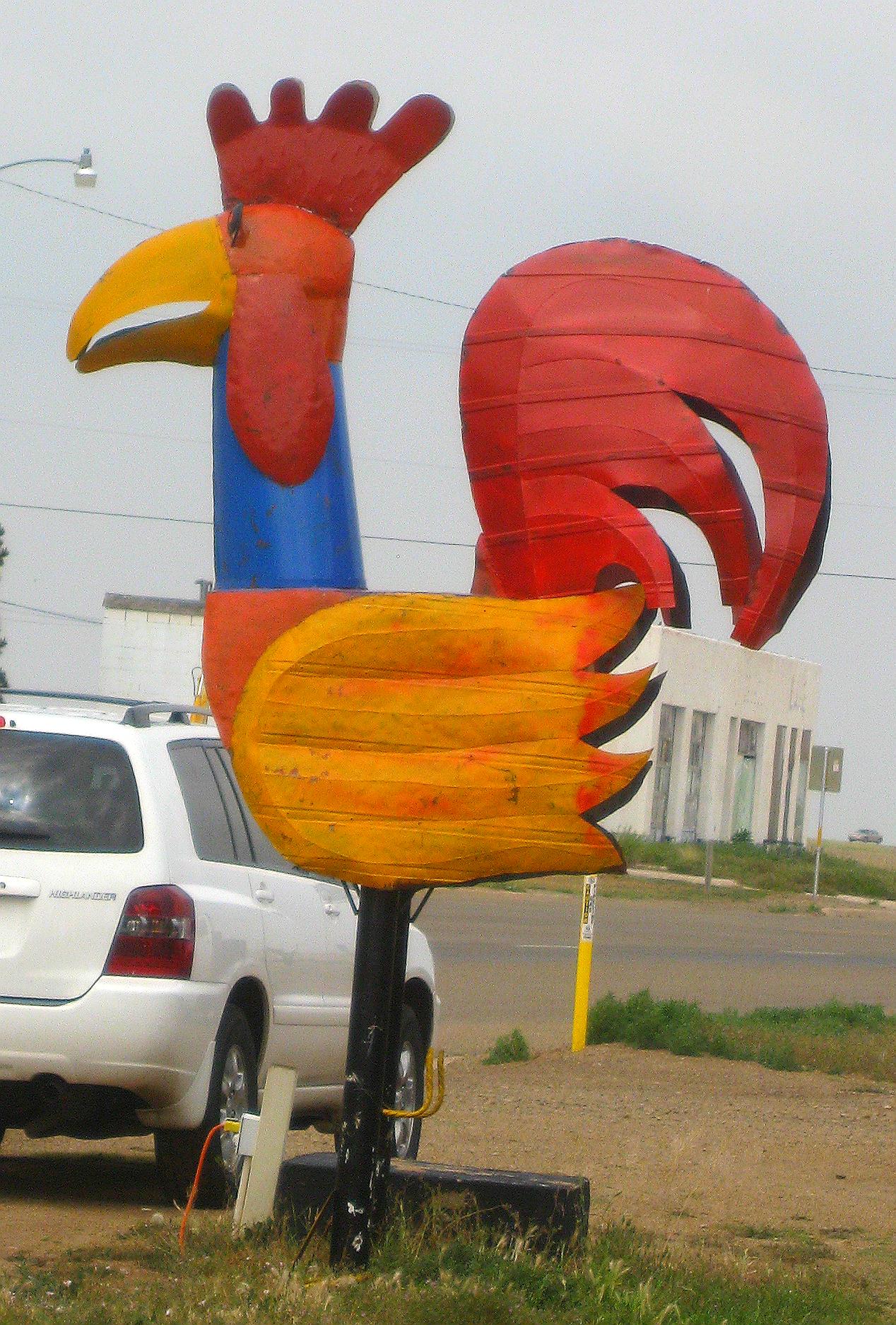
The chicken that sits in front of a Mexican restaurant in Vega. I found it the most interesting thing in this tiny remnant of a town. — Photo by Pat Bean

Trying to stay on as much of the original Route 66 as possible kept me off Interstate 40, which supplanted 66, at least some of the time. Often it was just driving the frontage road, but since I hate freeways and roaring semis, I enjoyed the slower pace.

Where the route across Texas’ Panhandle got interesting were the little towns 66 took me though, like Vega and Adrian. A few businesses during the route’s heydays still survived but there were many more dilapidated ruins of those that hadn’t.

I stopped in Vega just long enough to photograph a wooden chicken in front of a Mexican restaurant. But in Adrian, I stayed long enough to have lunch at the Midpoint Cafe.

In continuous operation since 1928, the cafe gets its name from its geological location, that being the midpoint of Route 66 between Chicago and Los Angeles. According to a sign in front of the restaurant, it was 1,139 miles to either city.

The Midpoint Sign directly across the street from the Midpoint Cafe, which offered an excellent lunch break for me. — Photo by Pat Bean

My reward for stopping in Adrian was a piece of the restaurant’s signature ugly crust chocolate pie. It came topped with ice cream. Thankfully my RV has a freezer, because it was enough for two desserts – and I wasn’t about to leave a bite of its scrumptiousness behind.

I ate the second piece the next morning for breakfast. I simply scraped off the remaining ice cream, plopped the leftover pie in the microwave oven for half a minute, then put the ice cream back on top.

Come journey with me tomorrow and I’ll take you through the ghost town of Glenrio.

Bean’s Pat: Another Header http://anotherheader.wordpress.com/2012/04/25/page-arizona/ Page, Arizona. This blog is a good example of how you need to get off the beaten path to really see what’s out there. Antelope Canyon, is especially a fantastic experience no one should miss. It easily makes my unending list of favorite places.

Read Full Post »

 “We always had Packards, until the war, when they stopped making them; then we had a Cadillac.” June Carter Cash

From the front -- Photo by Pat Bean

Adventures With Pepper

You can’t visit Amarillo and not take a little detour off of Interstate 40 to Cadillac Ranch. It just wouldn’t be, well Texan.

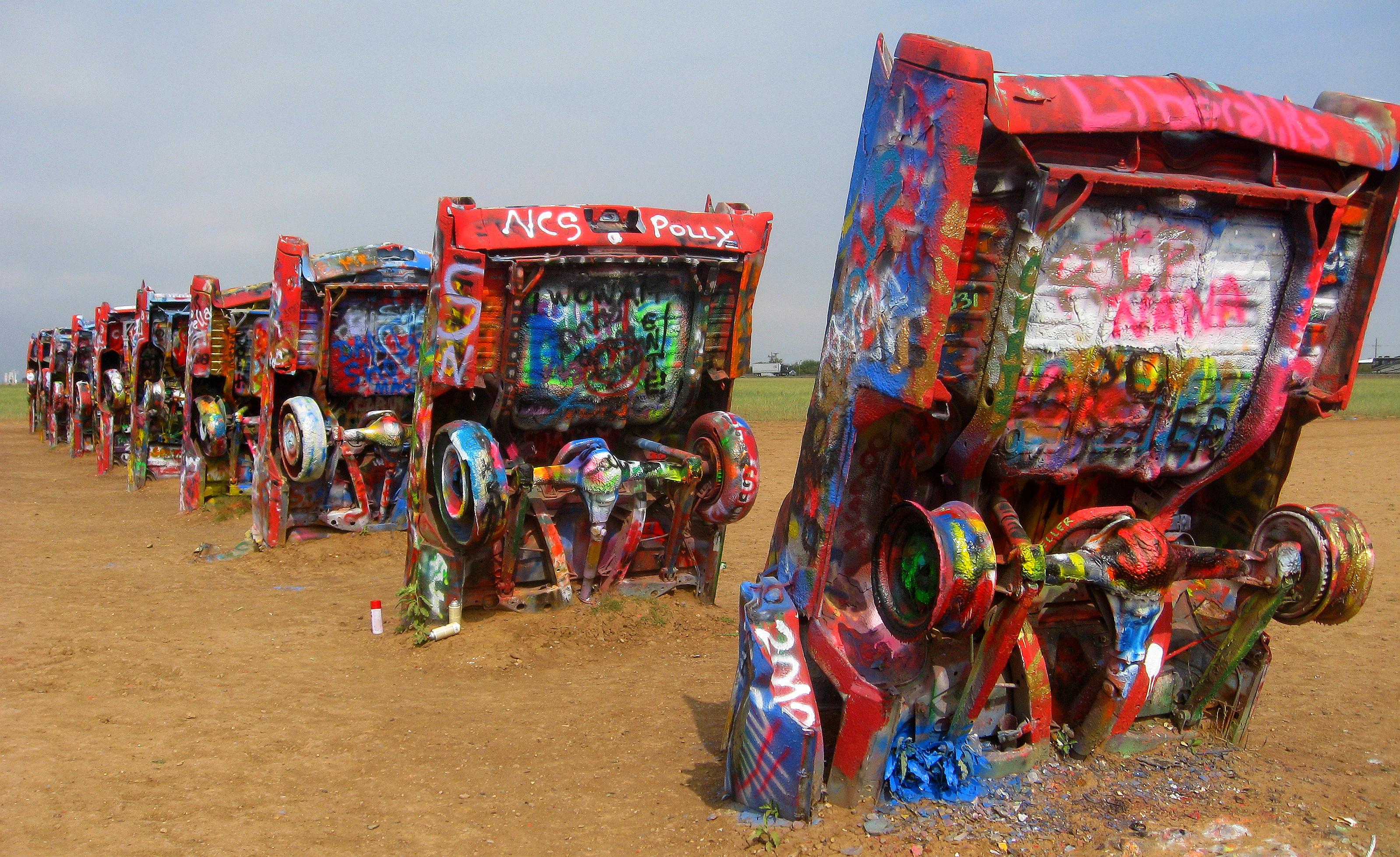
It’s not exactly a ranch, just a large field minus the cows. There’s not even a ranch house, just 10 half-buried old Cadillacs with psychedelic paint jobs, courtesy of whomever visits with a spray paint can. The color décor is constantly changing.

The Cadillacs are what Texas millionaire Stanley Marsh, who planted them back in 1973, calls an art installation.

And from the rear -- Photo by Pat Bean

I like it. It’s fun art. And the installation tells a story, part of which is the heydays of automobiles and Historical Route 66, which Interstate 40 replaced.

Back in the 1970s, I briefly owned an old Cadillac. It was a 1965 model if I recall correctly. I needed a car and back then, when the cost of gas started escalating, the Cadillac was the cheapest thing on the lot.

That old Cadillac was smooth running, but a big old gas guzzler and quite expensive to repair. It wasn’t long before the Cadillac was replaced with a used VW Bug, which cost more but was cheaper in the long run. .

According to Wikipedia, the eccentric millionaire Stanley probably paid only about $200 for each of his Cadillacs, which he picked up at junkyards before giving them a half-butted burial.

You just gotta love Texans.

Bean’s Pat: 400 Days ’til 40 http://tinurl/7fvkjjn You are never too old to live your dreams

Read Full Post »

 Oh What a Beautiful Morning …

“Every morning in Africa, a gazelle wakes up. It knows it must run faster than the faster lion or it will be killed. Every morning a lions wakes up. It knows it must outrun the slowest gazelle or it will starve to death. It doesn’t matter whether you are a lion or a gazelle … when the sun comes up, you’d better be running.”

First view of Lake Arrowhead's sunrise -- Photo by Pat Bean

A Howl of a Sunrise

Five minutes later ... Photo by Pat Bean

When Pepper and I stepped out of the RV on our last morning at Lake Arrowhead State Park. It was to a chorus of howling coyotes.

My new canine companion perked her ears up, listened for a couple of seconds and then joined their chorus. What a great traveler she’s going to make, I thought.

Then I stepped around the side of my RV, Pepper’s leash in one hand and a cup of cream-laced African coffee in the other hand, and watched the sun rise.

Every morning should have such a great start.

Bean’s Pat: The Greening of the Great Egret  http://tinyurl.com/br8fhd A great bird decked out in its courting colors.

Read Full Post »

Thomas Young together with Snow, his gyrfalcon/peregrine hybrid bird. Both were 37 years old in 2006 when I took this photo.

 “The greatness of a nation and its moral progress can be judged by the way its animals are treated.” – Mahatma Gandhi

One Man’s Love of Animals

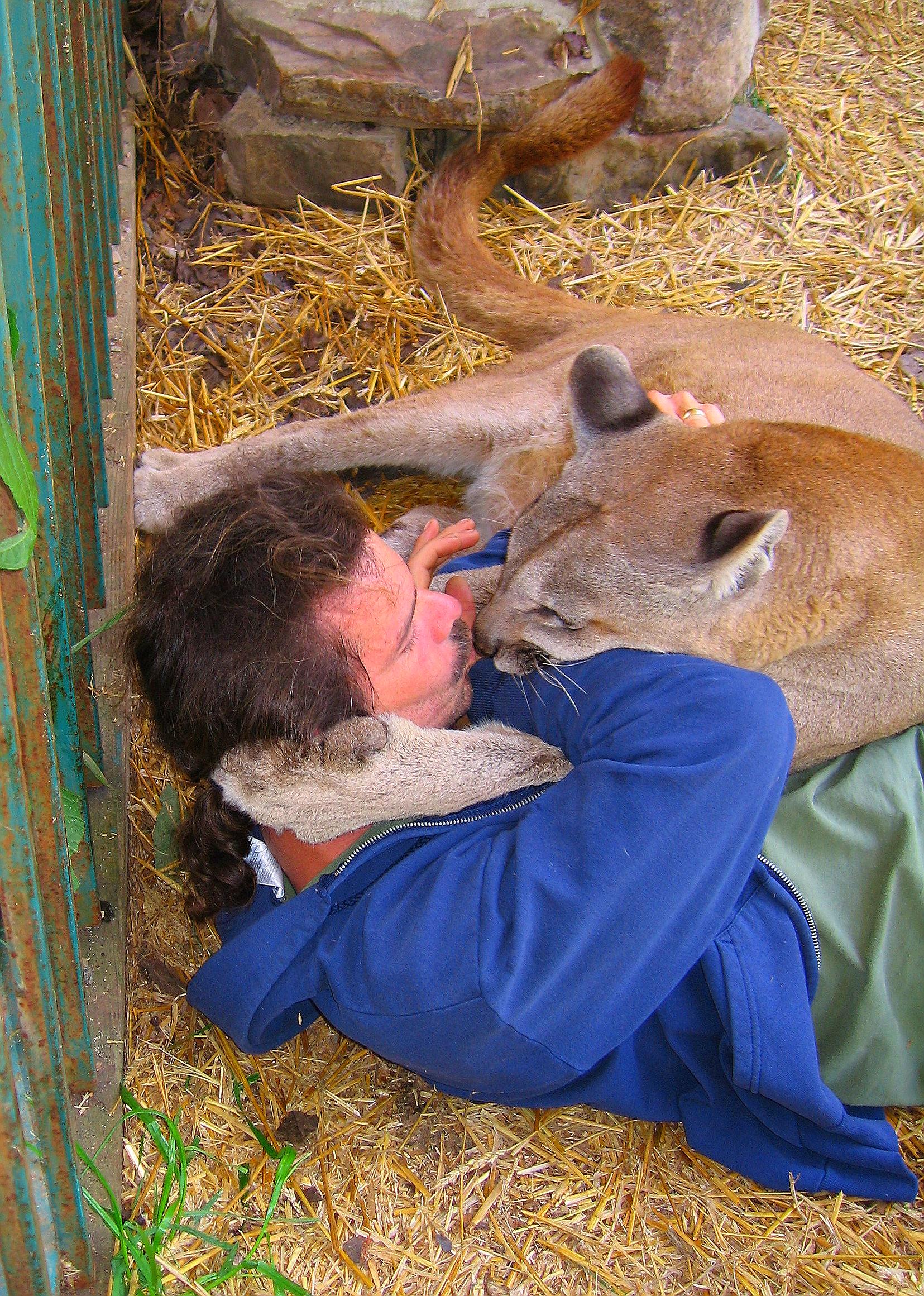
Togetherness: Sheena may be a cougar but she acts as if she's right where she belongs. -- Photo by Pat Bean

During my 2006 wanderings, I came across Queen Wilhelmina State Park near Mena. Arkansas. One of its attractions at that time was a small zoo and wildlife sanctuary operated by Thomas Young, a wildlife rehabilitator.

The zoo animals included a bear, a timber wolf cub, orphaned fawns, bobcats, wild turkeys, hawks, owls, raccoons – and a cougar named Sheena. Almost all of them had been injured at some point in time.

The side of a small unpainted wooden building on the property told the real story of this place. Large white lettering boldly announced that 12 bears, 5,000 hawks, 2,000 owls, 22 bald eagles, 18 golden eagles and thousands of small mammals had been released back into the wild by Young. The $4 entry fee to the zoo helped cover his expenses.

It was while I was questioning Paul, a volunteer and apprentice falconer working with Young, that I saw Tom for the first time.

Paul pointed him out to me as the long-haired man who had just appeared with a turkey neck in his hand to feed a wild turkey vulture that had just landed in the park.

As I watched the scene from about 30 feet away, the volunteer told me the vulture was a bird Tom had rehabilitated. Later Tom told me it was actually the parent of the rescued bird. He said it was the first time this particularly vulture had fed from his hand.

I was more amazed that he could tell the difference between two vultures than that a large, society-designated-ugly, wild bird had fed from his hand. .

“For some reason it’s come to trust me,” Tom said of his vulture friend. “A while back it brought its young here for me to babysit while it flew off on some business for about three hours.”

The volunteer had already told me this story in more detail but I was still fascinated with Tom’s less wordy rerun along with a sparse sketch of his life.

This man was a doer not a talker.

Tom said the park’s lofty location in the Ouachita Mountains made it ideal for releasing rehabilitated birds back to the wild. I was privileged to see one such release the next day, an awesome red-shouldered hawk that Tom released from the overlook just beyond the park’s lodge.

The bird simply fall off the edge of the mountain and glided away, one of the most beautiful sights any birder could ever hope to see.

Bean’s Pat: A Traveler’s Tale http://tinyurl.com/brbfpsh Take an armchair tour of a Papua, New Guinea, village.

Read Full Post »

 “The very idea of a bird is a symbol and a suggestion to the poet. A bird seems to be at the top of the scale, so vehement and intense his life … The beautiful vagabonds, endowed with every grace, masters of all climes, and knowing no bounds – how many human aspirations are realized in their free, holiday lives – and how many suggestions to the poet in their flight and song!” – John Burroughs

Delightful, Colorful, Awesome Birds

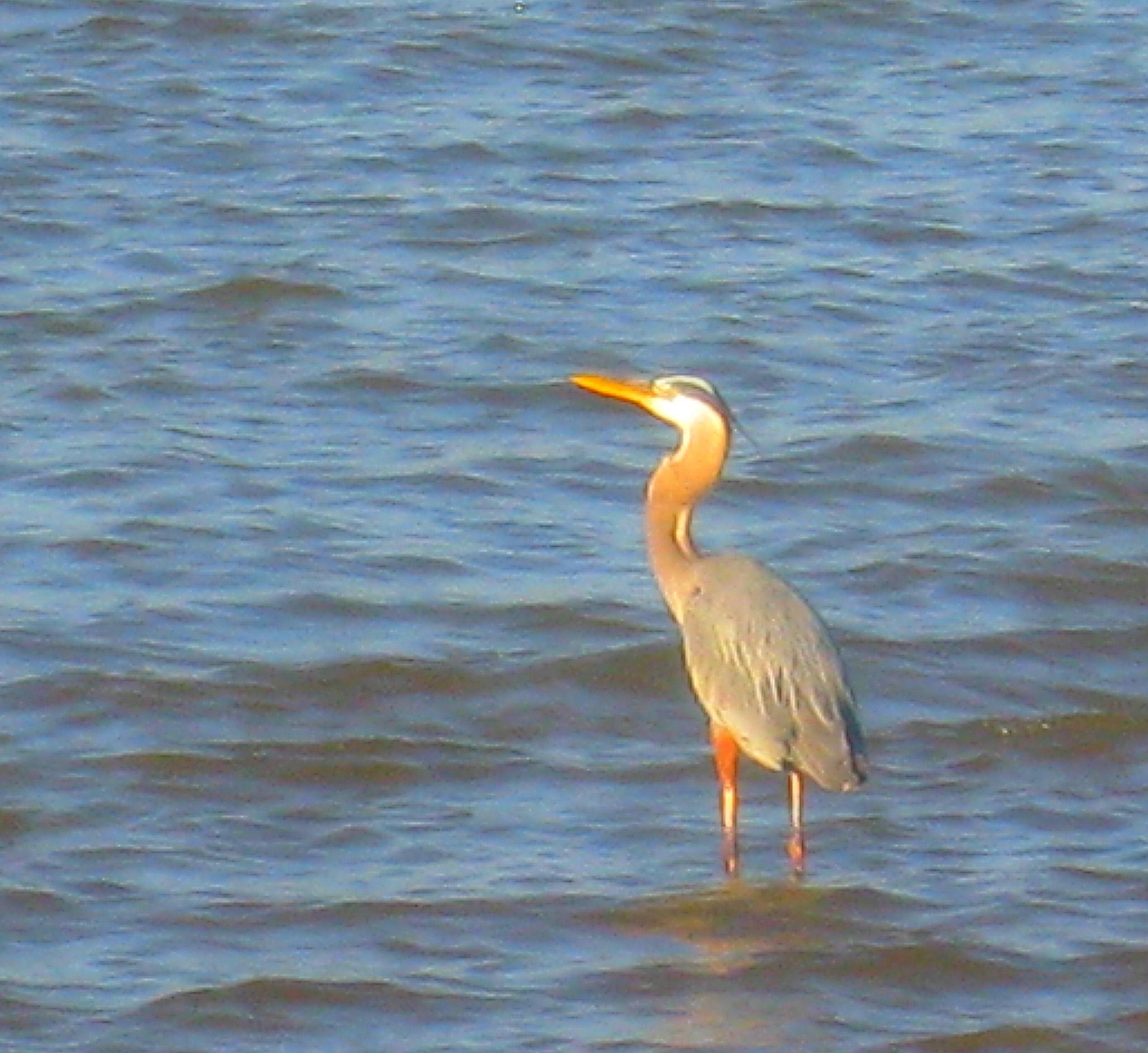
Great blue heron at Lake Arrowhead State Park -- Photo by Pat Bean

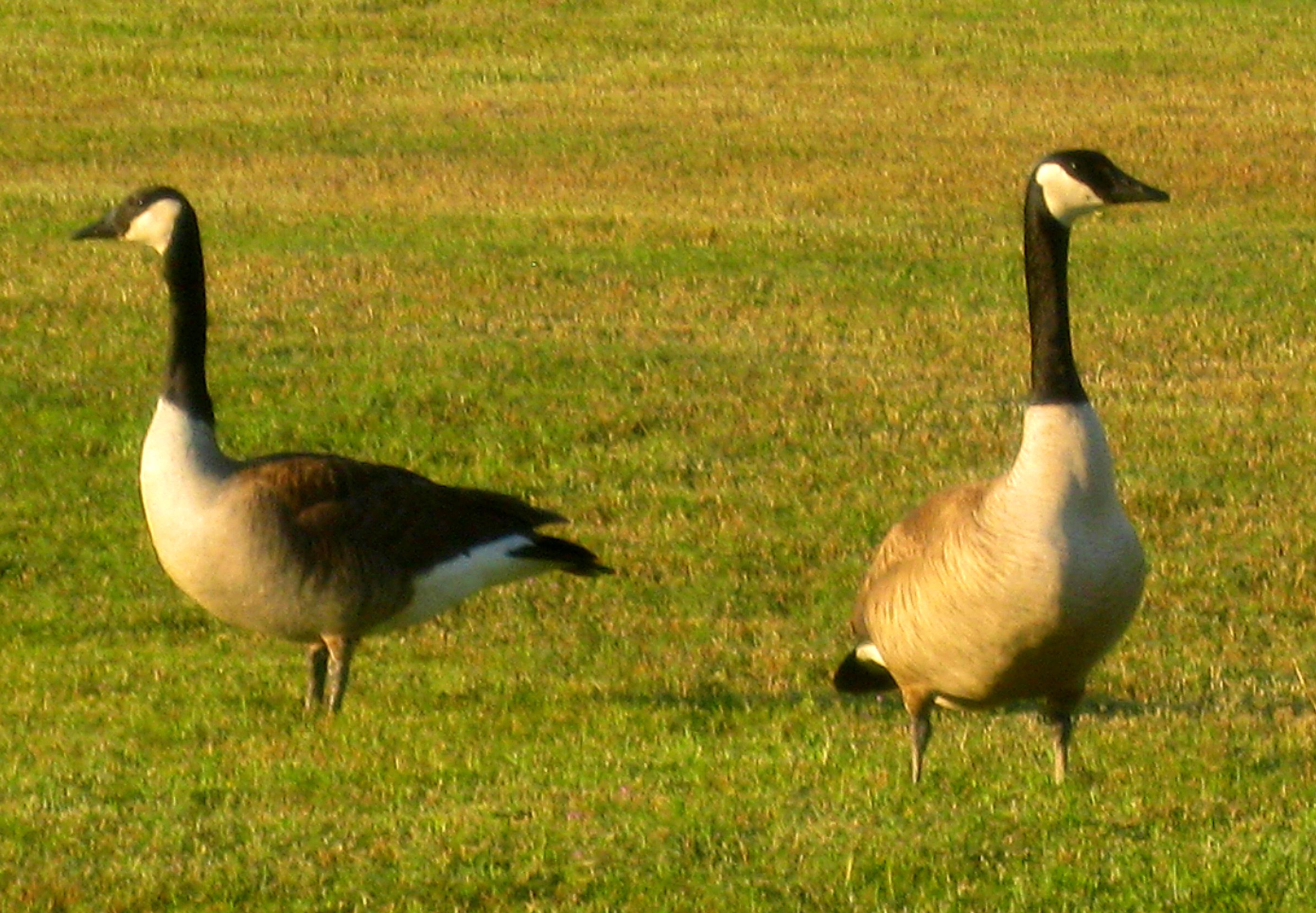
From the Bullock oriole’s flash of bright orange feathers as it flew across my path to the Canada geese that strutted down to the lake, birds were constantly making their presence known during my visit to Texas’ Lake Arrowhead State Park.

For an avid birder like myself, it was better than my favorite Jack-in-the-Box chocolate milkshake high — and came without the calories.

Mockingbirds were plentiful, making my mind play tricks on me when I saw one that didn’t quite fit in. I was thinking it might have been a tropical mockingbird, but then this quite-out-of-place species was on my mind from reports of one of them being seen in Texas’ Sabine Woods. I certainly wasn’t sure enough of my find to add it to my life list of birds.

Canada geese strutted across the manicured lawn near the fishing pier, making it easy to photograph them. I wish I had been able to capture the flock that had honked their way overhead earlier in the morning. But as I remind people often, I'm a writer not a photographer, and the only camera I own is a pocket Canon point and shoot. -- Photo by Pat Bean

I saw a great blue heron at the fish-cleaning station near the park’s fishing pier, but before I could get a picture,  it flew away. It landed in the lake on the opposite side of the pier and began fishing for its breakfast.

When I looked at it through my binoculars at it,  I saw a dozen or so spotted sandpipers cruising the shoreline in front of it, and a yellowlegs a bit farther out in the water. It had to have been a lesser yellowlegs because it was too close in size to the sandpipers to be a greater.

As I continued to watch the sandpipers, a red-winged blackbird flew in beside them. Its shoulder epaulets were so brilliantly red that they made my heart skip a beat.

Grackles, robins, snowy and great egrets, swallows (cave, I think), killdeer, scissor-tailed flycatchers and circling turkey vultures were among the many other birds at the park that I saw.

While I suspect the park is mostly favored by fishermen, it’s now on this birders list of favorite places, too.

Bean’s Pat: Trees for Arbor Day http://tinyurl.com/crhxqtu For tree huggers like me, a slide show from the National Wildlife Federation.

Read Full Post »

 “With all things and in all things, we are relatives.” Sioux proverb

A healthy crop of young prairie dog pups. -- Photo by pat Bean

Good Reasons to be Cautious

An adult prairie dog giving me the eagle eye after she shooed all the young ones below. -- Photo by Pat Bean

I don’t often get a chance to see prairie dogs, and even rarer do I get to walk among them.

But that’s the opportunity I had at Texas’ Lake Arrowhead State Park just outside of Wichita Falls.

To get some photographs of them, I left my canine traveling companion, Pepper, in the RV. She loves to chase anything on the ground that moves. So far, robins and butterflies have been her favorite targets, but I’m sure prairie dogs would also be high on her list.

While I keep her in check with a 10-foot retractable leash, I figured her quick dash toward a prairie dog would send them deep in their underground tunnel homes.

All about prairie dogs sign at Lake Arrowhead. -- Photo by Pat Bean

The truth is they didn’t let me get too close before they would dash below, especially since there were babies among them. On my approach an adult would shoo them below and then turn around and give me a chittery war cry while keeping an evil, eagle eye on my movements.

I did, however, manage to snag a few pictures.

I sort of feel I owe prairie dogs an apology. As a reporter I covered the release of rare and endangered black-footed ferrets in the middle of a prairie dog colony in the Browns Park area of Colorado back in the late 1990s.

Prairie dogs are ferrets preferred menu item. They are also on the coyote’s menu as well, and Lake Arrowhead is full of coyotes. Even so, I must say that the prairie dogs numbers don’t seem to have diminished since I last visited the park. Prey usually  reproduces quicker and more abundantly than predators.

Bean’s Pat: Love Thy Bike http://tinyurl.com/cdsrs2o See Los Angeles beaches from a bike seat.

Read Full Post »

“The Internet is becoming the town square for the global village of tomorrow.” – Bill Gates

Heading North on Highway 287

Decatur, Texas wall mural -- Photo by Pat Bean

Getting out of the mass traffic jam known as the Dallas-Fort Worth Metroplex area yesterday took far too long for my liking. But finally I made it to Highway 287, a road I traveled many times when I lived and worked in Northern Utah and made yearly trips to Texas to visit family.

Once it went through all the little podunk towns, like Rhome, Alvord, Sunset, Fruitland, Henrietta and Decatur, as it made its way from Fort Worth to Amarillo. Now, so as not to slow travelers down, the grown-up, four-lane 287 bypasses them.

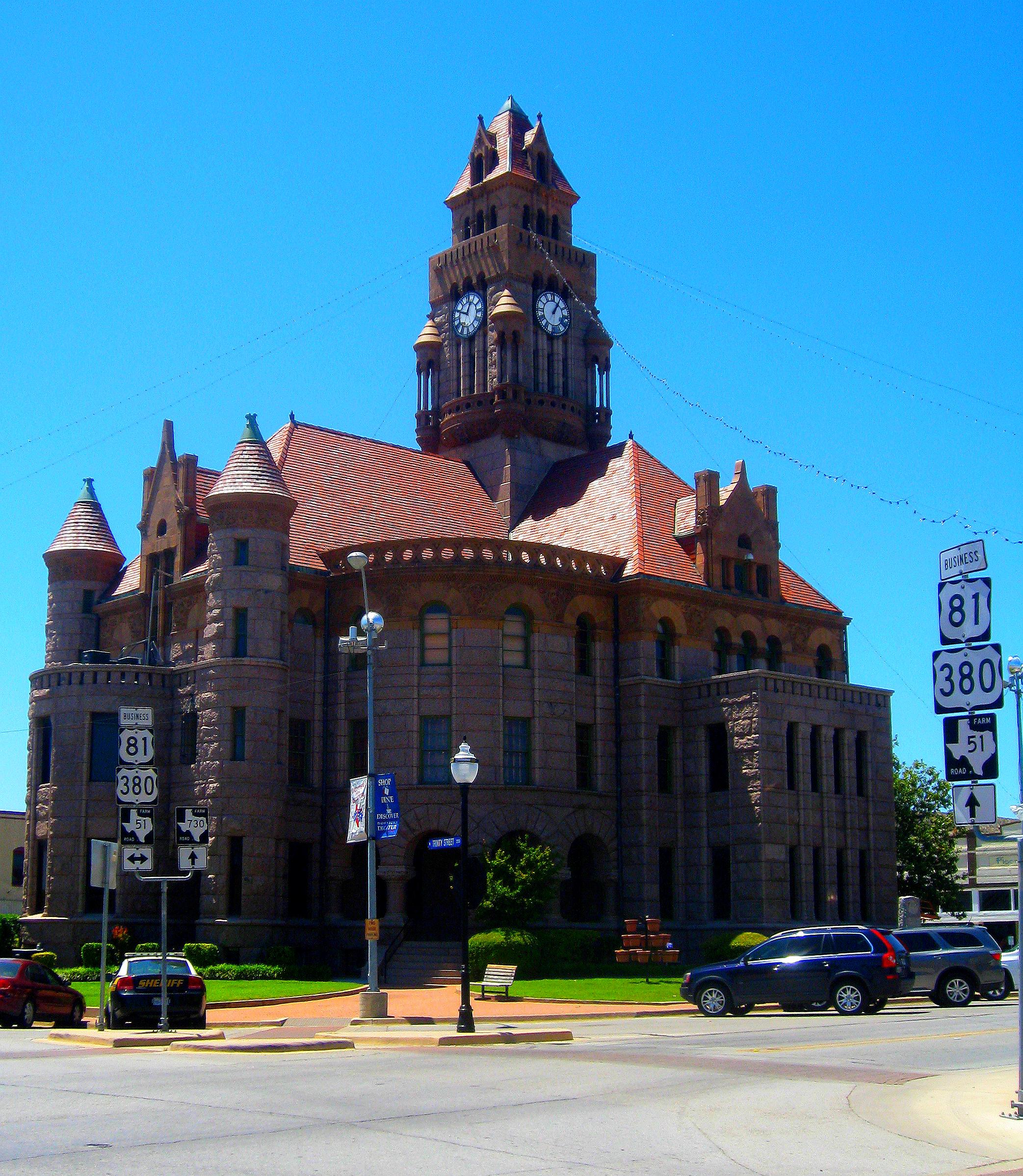
Decatyr courthouse. I love the town squares I find in many old Texas small towns. -- Photo by Pat Bean

I often rebel against this thirst for speed and quite often take the highway’s business routes so as to taste the flavor of each town’s unique personality. Decatur was one of the places I wanted to get to know better yesterday.

One of the first things I saw in Decatur, after passing the abandoned Petrified Wood Gas Station that is now a designated historical site, was a mural on the side of a dinky convenience store. It stopped me and my camera in its tracks.

While I’m not a craps player, I had heard the term eighter from Decatur and knew that it was slang for rolling an eight with dice.

But what was its origin? Did the saying actually begin here in Decatur? Wandering/wondering minds like mine always want to know.

One of the stories I came up with when I did some online evening research was that it began with Will Cooper, a Decatur boy who loved playing dice and also a servant girl named Ada.

Will was hired as a cook for Army regulars and some Home Guard members who were headed east to participate in a 1900 re-enactment of the Civil War battle of Manassas, also known as battle of Bull Run.

It was a long train ride to Virginia and the troops entertained themselves playing dice. Will’s lucky slang wish, “Ada from Decatur,” when he wanted a roll of eight spread among the Texas troops on the east-bound train.

Somewhere along the line it became eighter instead of Ada, or so this particular story goes. There’s always more than one when unrecorded memories are on the line.

Do you have another story to add?

Bean’s Pat: A Frank Angle  http://tinyurl.com/7ntltz7 On a cute couple. My kids grew up with Rocky and Bullwinkle, which meant I got to watch them too. Anybody else out there remember these two loveable crazies?

Read Full Post »

« Newer Posts - Older Posts »