Feeds:
Posts
Comments

Archive for the ‘Birds’ Category

“…we turned a point of the hill on our left, and came suddenly in sight of another and much larger lake, which, along its eastern shore, was closely bordered by the high black ridge which walled it in by a precipitous face … Spread out over a length of 20 miles, the lake, when we first came in view, presented a handsome sheet of water; and I gave to it the name Lake Albert, in honor of the chief of the corps to which I belong. …” John Fremont

Lake Albert's southeast end from Highway 395. -- Photo by Pat Bean

Travels With Maggie

Highway 395 stretches for 1,370 miles – from the Canadian border in Washington, down through Oregon, California, Nevada and back into California, where it ends just about 150 miles short of the Mexican border. .

I drove 730 miles of it heading south last month, beginning in Pendleton, Oregon, and ending when I turned west onto Highway 120 that would take me up and over 9,943-foot Tioga Pass through the Sierra Nevada Mountains and down into Yosemite Valley.

Much of the drive was on steep, narrow, winding roads with little traffic. I loved every moment of the journey.

Lake Albert from Albert Rim -- Wikipedia photo

The route winds through Oregon’s Battle Mountain State Park, the Umatilla, Malheur, Modoc, Toiyabe and Inyo national forests, and the X L Ranch Indian Reservation, passing numerous lakes on the way. There’s Goose Lake in Oregon, located near Fandango Pass that was used by early settlers to California; Nevada’s Washoe Lake, located between Reno and Carson City and popular with windsurfers; and Mono Lake in California, which was on my bucket list because of its importance to migrating shore birds.

A smaller lake that captured my attention was Oregon’s Lake Albert. Like Mono, it is too salty for fish to live in its waters. It has, however, a dense population of brine shrimp that make it a popular dining stopover for migrating grebes, phalaropes, terns, avocets, geese, stilts, ibis and other birds.

Albert Rim geology marker -- Photo by Pat Bean

Canada geese were the main occupants on the narrow lake the day I drove the 15-mile section of Highway 395 that overlooks the east side of the lake from just feet away. I stopped several times to admire the lonely and lovely view of pink hills reflecting onto the water from the opposite shore.

I also found myself fascinated by the geology marker that explained the lava ridge running parallel to the lake. Known as the Albert Rim, it’s one of the highest fault scarps in the United States.

Except for the highway, which ran between the basalt ridge and the lake, and an occasional passing vehicle, I suspected the landscape still looked pretty much as it did during John Fremont’s mapping expedition in central and southern Oregon back in the 1840s.

It’s rare to find a place so little impacted by we humans – and wonderful.

Read Full Post »

“A leaf fluttered in through the window this morning, as if supported by the rays of the sun, a bird settled on the fire escape, joy in the task of coffee, joy accompanied me as I walked.” Anais Nin
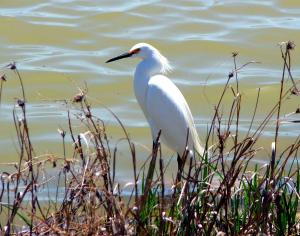
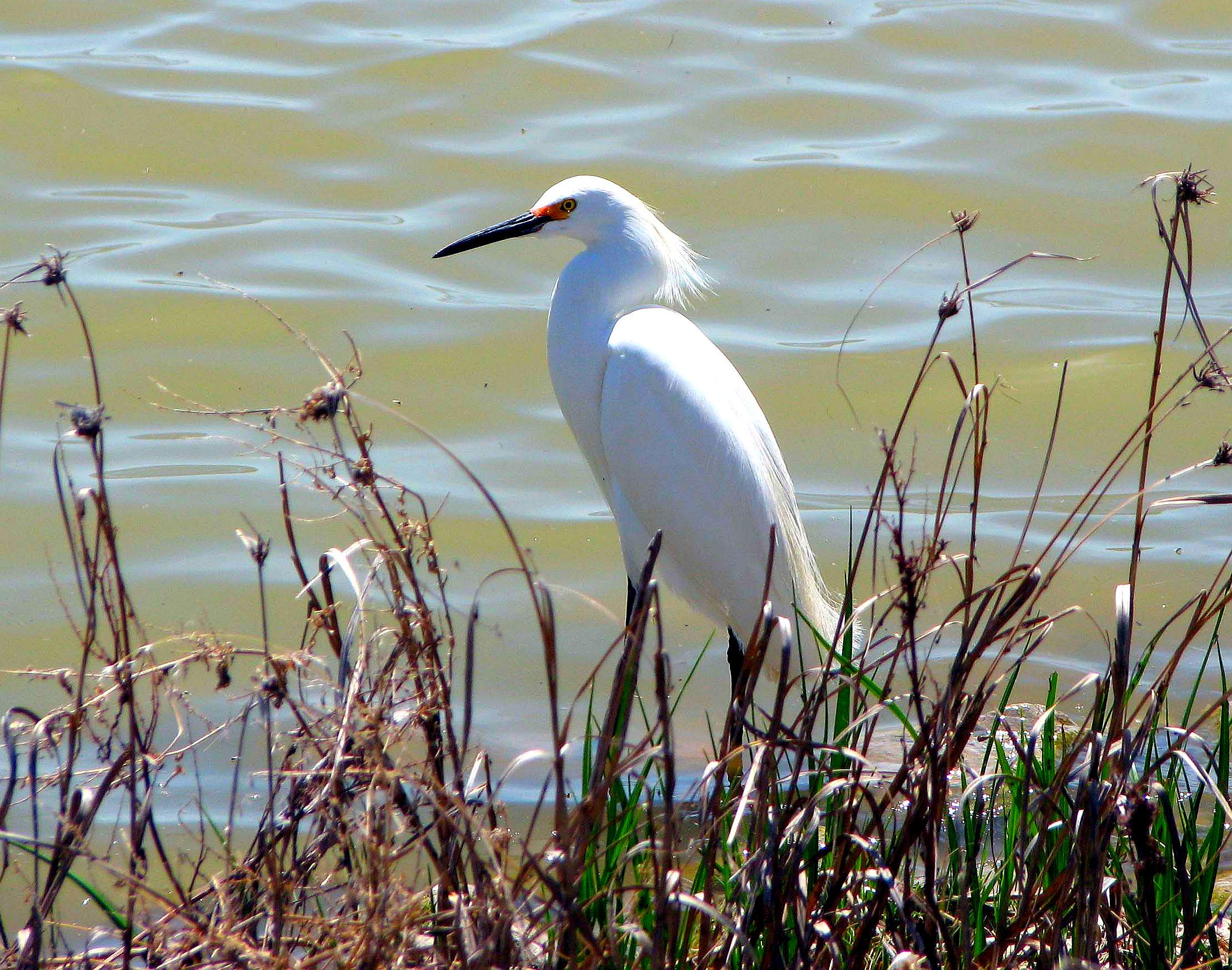
Snowy egret at the Bear River Migratory Bird Refuge in Utah. -- Photo by Pat Bean

Travels With Maggie

The landscape around the Texas Gulf Coast home of my son, Lewis, is always full of birds. It is why my binoculars are always sitting beside me when my RV, Gypsy Lee, is parked in his driveway.

Wrens, woodpeckers, warblers, hawks and ducks all visit or pass through his yard.

This morning, Carolina wrens inspected the gutters over his garage, a pair of cardinals sat on the utility wires attached to his roof and a flock of black-bellied whistling ducks flew overhead, alerting me to their presence with their high-pitched chorus as they winged past in V-formation.
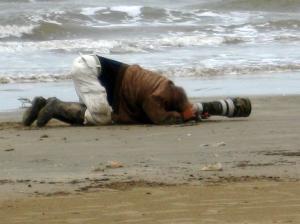
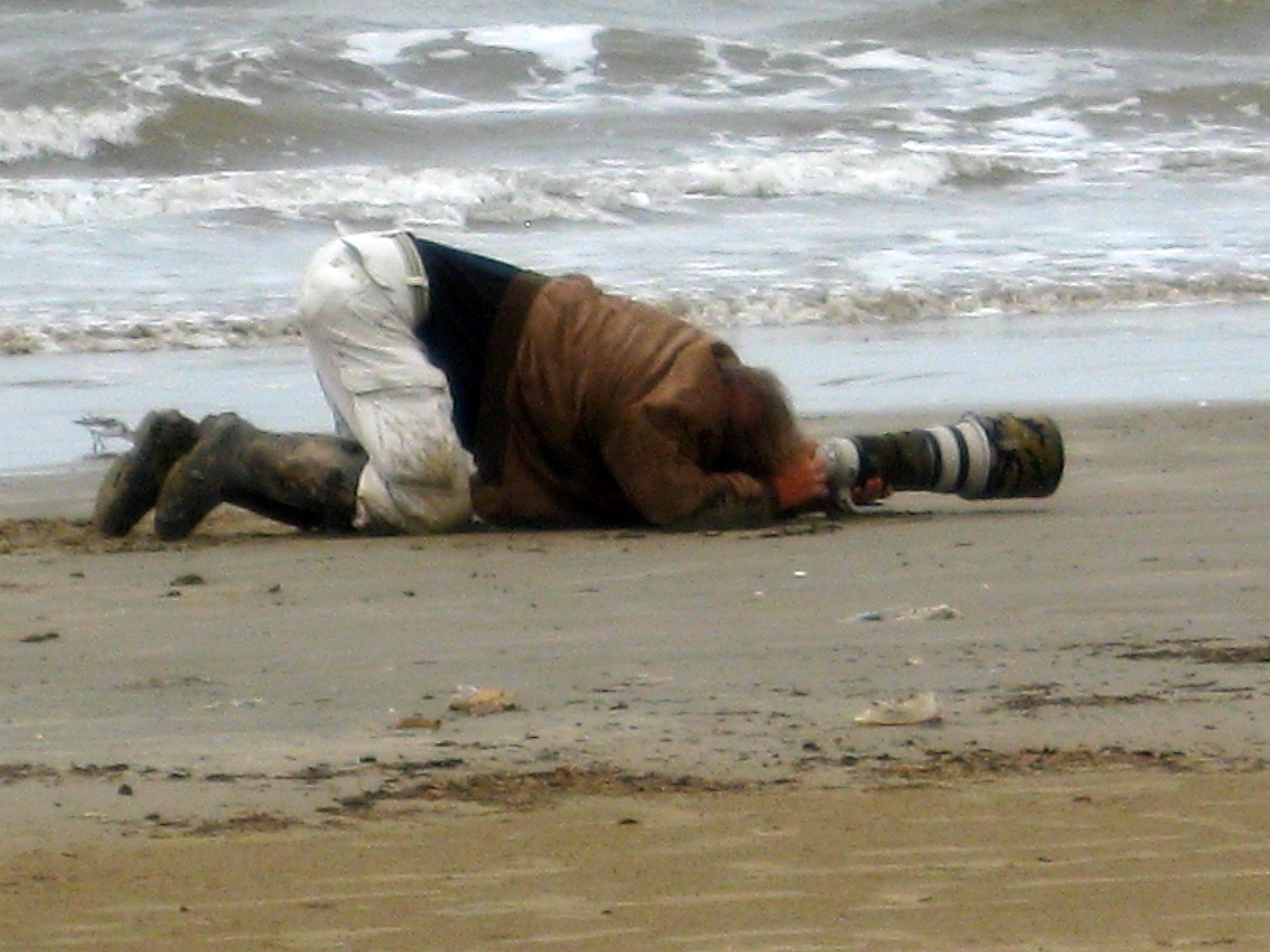
Is this a photographer taking picture of birds, or a birdwatcher photographing birds? -- Photo by Pat Bean

The park directly across the street from my son’s home offers even more entertainment for this passionate birder: Logger-head shrikes hang out in the trees, mockingbirds frequently chase away a red-tailed hawk when it comes around and goldfinches hang around the feeders in the yard next to the park.

I sometimes think I might be mistaken for a peeping Tom, or in my case a Jane, because I might appear to be looking in someone’s window when I’m simply watching a ruby-throated hummingbird flitting around the flowers.

If you really want to know how crazy we avid birders are, you should go see the movie, “The Big Year.” It’s about competitive bird watching. Or you can read the book, “The Big Year: A Tale of Man, Nature, and Fowl Obsession,” written by Mark Obmascik. It’s actually a true story and I couldn’t put it down once I started reading.


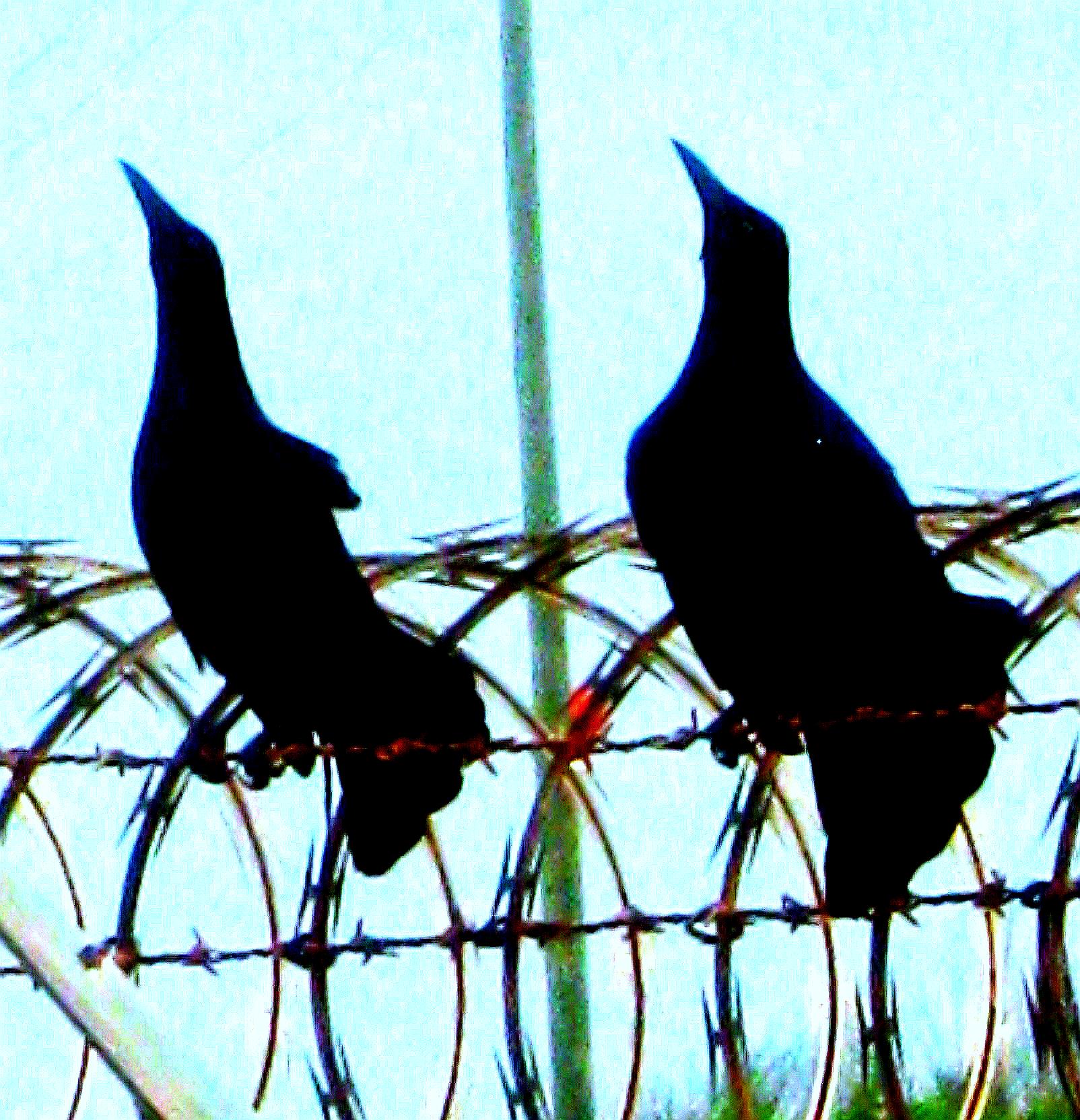
Great-tailed grackles near Surfside, Texas. -- Photo by Pat Bean

Recently, when I was down at the beach – to watch birds of course – I watched another bird watcher as he tried to take a picture of some skimmers. Watching him was almost as much fun as watching the skimmers myself. I wondered if he was more photographer than birder, or more birder than photographer, like me.

We birders are actually a funny, but much blessed lot. The day I realized I had joined the craziness was the day I took a 440-mile, one-day, round-trip drive just to see nesting ospreys.

In fact, many of the 122,000 miles I’ve put on Gypsy Lee the past seven years have been in pursuit of birds – from the elegant trogons in Southeast Arizona, to the marbled murrelets on the Oregon Coast, to the Atlantic puffins in Maine, and the Florida scrub jays in the Everglades.

It’s been one great feathered adventure after feathered adventure.

Perhaps that’s why, at least for a little while, I’m content to simply watch birds from the comfort of my RV that is parked in the driveway of my son.  

Read Full Post »

“Perhaps the truth depends on a walk around the lake.” Wallace Stevens


Looking down on Mono Lake from the Highway 395 overlook. -- Photo by Pat Bean

Travels With Maggie

My trip back to Texas from my summer in Idaho was a hurried affair. Usually I plan on arriving for my winter rounds with family just in time for Thanksgiving But a grandson’s wedding, which takes place tonight, moved that up by about six weeks.

Even so, I managed to knock two things off my to-do list, now more popularly called a bucket list, on my way back to my native Lone Star State.

Mono Lake and Yosemite National Park now have check marks beside them. .

It may be easier for some of you to understand why Yosemite was a place I wanted to visit than it is to understand why Mono Lake was on my list. After all, it’s simply a shallow, very salty, often smelly lake As we neared the lake basin, My canine traveling companion, Maggie, perked up at the smell, wrinkling her nose a bit as she caught the scent. . I’m not sure what she was thinking.


California gulls along the shoreline -- Photo by Pat Bean

 The odorous shoreline, however,  reminded me of Great Salt Lake, a place whose beauty I came to greatly appreciate while living next door to it for 25 years.

The Utah lake is larger and much younger than the smaller and much older California lake. Both, however, are part of the Western Hemisphere Shorebird Reserve Network that provides habitat for millions of migratory birds.

About the only species I saw on Mono Lake, however, was the California gull, which incidentally happens to be Utah’s state bird. It was given the honor after Mormon settlers in the Salt Lave Valley credited the gulls with saving their crops from a cricket infestation.

Neither lake has an outlet, and so remain the depository for everything that flows into them. Their importance to the ecosystem, however, has in recent years led to conservation practices engineered for their protection.

Mark Twain, in his “Roughing it,” called Mono Lake “a lifeless, treeless desert … the loneliest place on earth.”

I think otherwise.

Read Full Post »

 “A journey is a person in itself; no two are alike. And all plans, safeguards, policing, and coercion are fruitless. We find that after years of struggle that we do not take a trip; a trip takes us.” – John Steinbeck

My wandering mind waa on green jays as i drove Highway 36 toward Lake Jackson. -- Photo by Pat Bean

Travels With Maggie

With my canine traveling companion, Maggie, snoozing away in her co-pilot seat, I left Harker Heights, and my oldest son’s home, early for our drive to Lake Jackson, and my middle son’s home 250 miles away. It’s a very familiar drive for me, one I’ve made many times.

As I passed oil rigs, grazing cattle, cotton fields, mesquite trees and roadside sunflowers that let me know I was in Texas, I was glad to see the color green still existed. It had been missing on my drive two days earlier down Highway 190, clear evidence of the dastardly drought the state has been suffering. .

To all Texans living where heat and drought has scorched the landscape, I just wanted to show that green does still exist. This is the view from my RV window in Lake Jackson. -- Photo by Pat Bean

While admittedly things weren’t quite as lush as I remembered from past drives down Highway 36, the landscape was still a far cry from the brown and dying cedar trees, lack of grass and stunted and yellow cactus that had dominated my entry back into the Lone Star state on Tuesday.

The driving this day was easy with little traffic. As usual under such circumstances, my mind begins to wander. This day, it went south to the Rio Grande Valley, perhaps because I was thinking about when I would be able to go there and do some winter birding.

From Lake Jackson, where I was headed, it’s only a half day’s drive. I would have to see what bird festivals were going on down there in the coming months, I thought as I drove.

My mind must have still been with the fantastic green jays down there when I came to the Highway 35 turnoff, because I took it. I was looking for it in fact.

Oops!

I then realized that what I had actually been looking for was the Highway 36 turnoff that I always took when I returned from the valley. But then I had already been on Highway 36.
I guess I should have been paying more attention to where I was than where I wanted to go.

Anybody else out there have a mind that plays tricks on them like that?

If so, I hope you have a traveling companion like Maggie. She never yells at me when I take a wrong turn.

Read Full Post »
“I think we are bound to, and by, nature. We may want to deny this connection and try to believe we control the external world, but every time there’s a snowstorm or drought, we know our fate is tied to the world around us.” Alice Hoffman

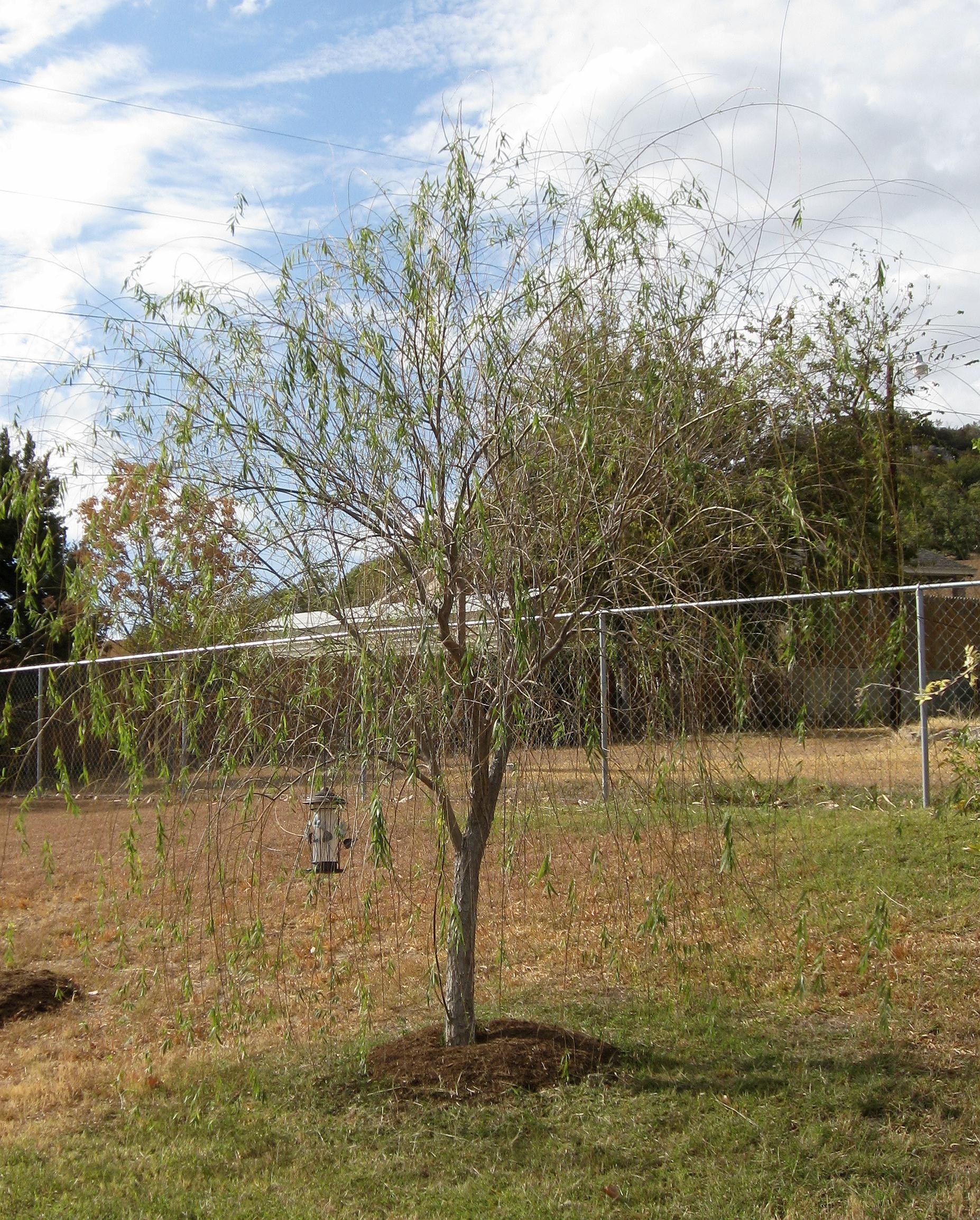
This isn't how a willow tree is supposed to look. -- Photo by Pat Bean

Travels With Maggie

From the heights of the morning’s glorious Texas sunrise, my first since mid-April, my journey to just north of Austin descended into horrifying reality of the drought the state has been suffering.

The sights hit me especially hard when I left Interstate 10 to follow Highway 190 for over 200 miles.

The scorched earth, brown and dying cedar trees, total lack of grass and yellow and stunted cactus were hard to stomach.. While I had been luxuriating beside a lake enjoying a mild Idaho summer, my native Texas had been suffering record temperatures without rain.

My Texas family had frequently informed me that this was so, but seeing it still broke my heart, especially when I saw skinny deer wandering the roadside huddled around one small patch of grass. It was very close to the road, and the deer stayed nearby instead of scampering away as my RV approached.

Laughter is not a bad thing when faced with hard times.

It made me glad I was traveling a lonely stretch of highway, especially since a bit farther on I passed two deer that had given their life for staying too close to the road. The turkey vultures seemed to be the only ones prospering on the landscape.

At my oldest son’s home in Harker Heights, I found his usual green lawn brown, and the limbs of the vibrant willow tree in his back yard scantily clad. And today, the water pipes buried in his front yard sprung a gigantic leak.

“It’s happening a lot all over the place,” said the plumber, who was too busy to come until the next day. As the landscape dries, it shifts around, often breaking things in the process.

Even Maggie noticed how things were different. A bit of a tenderfoot, she found the stiff dry grass on the edges of the road we walked not to her liking.

I watched as she carefully place one paw down, and then looked for a softer spot to place her next step. When she didn’t find it, she quickly came back onto the paved road to continue our evening walk.

In some places, this beautiful lantana plant is considered an invasive weed. It looked awfully good to me, however, when all else was suffering from the drought. -- Pat Bean

My daughter-in-law, meanwhile, has still managed to maintain a bit of color around their house. Her backyard flower bed , filled with what she called hardy plants, hinted that all was not lost.

 As I looked out on them this morning, I saw house wrens playing among the blossoms, while bright cardinals, finches, mockingbirds and sparrows visited the yard as well.

. I think they liked the color, too. And perhaps the bird feeders scattered about the yard as well.

Read Full Post »

 “Sometimes it’s important to work for that pot of gold. But other times it’s essential to take time off and to make sure that your most important decision in the day simply consists of choosing which color to slide down on the rainbow.” Douglas Pagels

Travels With Maggie`

A walk around Silverbell Lake helped clear the cobwebs from my crowded brain. -- Photo by Pat Bean

Life caught up with me this past week. Too many miles in not enough days, too many amazing sights and not enough time to linger among them, and only three days to enjoy loved ones before I’m back on the road.

My preferred style of travel – no more than 150 miles a day with a couple of days sitting in between – has been blown to hell in a hand basket, the same one my grandmother said would take me there if I didn’t shape up.

Something had to give. And it did. I stayed off my computer and missed two days of daily blogging.

Instead, I lazed around my youngest daughter’s Tucson home, took Maggie for short walks, enjoyed the company of three grandsons, hiked around Silverbell Lake while everyone else fished, read a lot, and watched the turkey vulture and red-tailed hawks soar above, and doves, rock wrens, curved-bill thrashers, gila woodpeckers, northern flickers and rabbits play among the saguaro cactus.

My daughter, Trish, lives on the outskirts of the city and coyotes and bobcats often visit, she said. As do quail that usually trot past their back porch daily.

My son-in-law, Joe, described them for me, and I suspect they’re Gambel’s quail, although they could just as easily be California quail. Both species have the C-shaped plume dangling forward over the front of their heads.


A landscaped yard without grass. Drought-stricken area residents should take note. -- Photo by Pat Bean

I haven’t seen them yet. I think they’re taking a break from their daily routine – like me.

It’s back on the road tomorrow. I’m heading to Texas’ Gulf Coast and a grandson’s wedding. It will be another four days of 300-mile a day drives, although thankfully, well except for the first 50 miles, it will not be freeway driving.

Interstates were something I could not avoid for two entire days on my way from Yosemite to Tucson. It made me never want to go back to California, that and the fact I was paying $4.15 a gallon for gas there. The cost immediately dropped to $3,39 a gallon once I crossed the border into Arizona.

I’ll post pictures nightly of my next four days of driving so you can enjoy the road with me. Just don’t expect me to be too wordy. I’ll save those for later when life has once again slowed down.  


Read Full Post »

“Morning is when the wick is lit. A flame ignited, the day delighted with heat and light, we start the fight for something more than before.” Jeb Dickerson 

One of the two northern flickers that visited me just as the sun was coming up this morning. -- Photo by Pat Bean

Travels With Maggie

My morning began at 5 a.m. with a phone call when I was still deep asleep, By the time I stumbled out of bed and figured out where my phone was – in the cab beneath my RV’s upper bunk – it had stopped ringing.

After crawling back into bed and snuggling back beneath the covers because it was quite a chilly morning here in Pendleton, Oregon, where I’m parked in the farmyard of a friend’s mother, I hit the redial button.

It was my daughter-in-law, Cindi, in Texas who rang to tell me the books I had ordered from Amazon had arrived. They included Susan Albert’s “Bleeding Heart,” the next in the China Bayles’ books I’m reading and one that hadn’t been available on Kindle.

A much better look at a northern flicker, this one a male. -- Photo by Joanne Kamo

I said, perhaps a bit snippy: “It’s o-dark-hundred here. I’m in the Pacific time zone and two hours earlier than where you are.”

“Oh,” she responded. But then of course we chatted for a while. I couldn’t be too angry because she’s my traveling guardian angel and has handled all my mail for the past seven years. .

After we hung up, I tried to go back to sleep, but unlike my dog, Maggie, who never even lifted her head at the phone call, sleep had vanished for the day. So I got up, fixed coffee and sat down in front of my computer, alternating between answering e-mails and watching the day arrive out my window.

I was rewarded with a pair of northern flickers messing around a tree near my RV. I tried to get a picture, but it was dark and my photo turned out poorly. I thought you might want to see it anyway, but I added a photo taken by Joanne Kamo  http://www.pbase.com/jitams to give you a better look.

Meanwhile, I did enjoy watching the pair of large woodpeckers – that’s the family to which northern flickers belong. They stayed around for quite a while poking around the tree, and sticking their heads into a couple of holes it contained. If Cindi hadn’t called I would have missed them all together.

Life’s like that. It throws you a curve ball, then apologizes with a slow pitch you can’t miss.

Read Full Post »

 “There are two lasting bequests we can give our children. One is roots, the other is wings.” Hodding Carter.

Bald Eagle in Baytown, Texas. -- Photo by Joanne Kamo

Travels With Maggie

I spotted a bald eagle yesterday. It was just outside the park hanging around the Snake River below the Minidoka Dam in Southern Idaho.

It’s a bird that always makes my heart beat a little faster. It was sitting up on a utility pole, then flew away to the other side of the river as I passed by.

I don’t know whether it was an early migrant from Alaska, where huge numbers of eagle spend the summer, of if it was one that had stuck around the area for the entire year. There’s always a few that do.

It really didn’t matter. Either way it was a magnificent sight. It’s pure white head caught the sunlight as it flew across the water and my breath ceased for a few seconds. The bird’s brilliant white head feathers indicated it was at least four years old. Before that age, bald eagles are ratty brown all over.

Of course there wasn’t time for me to get a picture, as if I even could take a decent shot of a moving target. So I turned to Joanne Kamo’s online art gallery http://www.pbase.com/jitams to illustrate my blog. Joanne, whose bird photos are among the most awesome I’ve ever seen, has given me permission to occasionally use one of her copyrighted pictures. She didn’t fail me.

While bald eagles are beyond my photographic capabilities, even I can take a decent picture of a wild turkey, such as this one in Palo Duro Canyon State Park in Texas. -- Photo by Pat Bean

Her bald eagle photo took my breath away as quickly as did the real thing. If it doesn’t also cause you to gasp in delight, you’re as cold-hearted as a glacier and not someone I care to meet.

The sight of yesterday’s bald eagle made me grateful Ben Franklin didn’t get his way in having the wild turkey be our nation’s symbol. He thought the bald eagle was too much of a thief to represent our country.

I know he was right because I was once privileged to watch a bald eagle snatch a freshly caught fish from an osprey as it flew. The osprey was so frustrated that it chased the eagle until it came to its senses.

But the bald eagle today is also a symbol of what’s best in humankind. These birds were on the verge of becoming extinct when we Americans acted. Since the passage of the Endangered Species Act in 1973, bald eagles have regained healthy populations.

Sightings of them in the lower 48 states are becoming more common. And so I wish you good luck in having one of them fly your way.

Read Full Post »

It may be hard for an egg to turn into a bird. It would be a jolly sight harder for it to learn to fly while remaining an egg. We are like eggs … We must be hatched or go bad.” C.S. Lewis

Travels With Maggie

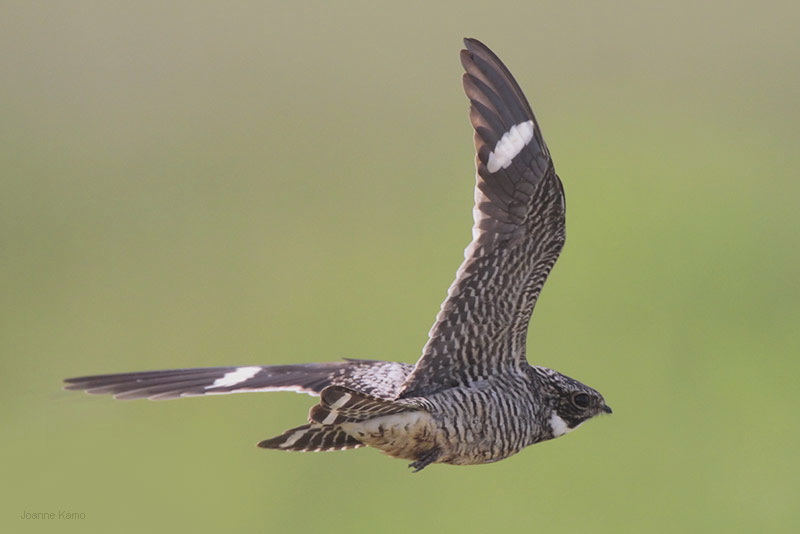
Common nighthawk -- Photo by Joanne Kamo, whose many other wonderful bird photographs can be seen at http://www.pbase.com/jitams

I try to time my last walk with Maggie so that it ends just as the sun goes down so as to catch the sunset. The days, in my opinion, are best when they begin with a sunrise and end with a sunset.

But late evening is also the time of day here at Lake Walcott State Park in Southern Idaho when the nighthawks come out to feed. For a kettle of common nighthawks that regularly takes place over the campground where my RV, Gypsy Lee, is parked.

They dine in the air on the many insects that also call this small park home. It’s always a treat to see them. Not only are they awesome to watch, my brain knows that every bug they eat is one that won’t bite me.

A fellow lone-female traveler, not a birder, who stopped by recently to visit me, asked what the birds flying overhead were as we shared our evening walk.

Common nighthawks, I told her. Then pointed out how to easily recognize them when in flight.


Common nighthawk -- Photo by Joanne Kamo

About the size of a robin, these birds have long, forked and pointed wings with a distinctive broad white bar about a third of the way up from the tip of the wing. The white bars are very prominent.

“Do they always fly that low,” she asked, as a couple of the birds zoomed in front of us at about head level.

“Nope. Usually they fly much higher,” I replied. “I guess the bugs are flying low tonight.”

The first time I saw these birds, whose large heads seem to lack a neck, they were flying even lower, however. I was fairly new to birding at the time, having only become addicted to the passion in 1999. The life sighting occurred while I was walking a trail at the Arizona-Sonora Desert Museum, where they were flying low over a small pond.

After watching them for a while, I realized they were skimming bugs off the water. Looking in my field guide to identify them, I discovered they were a member of the goatsucker family, whose name tickled my funny bone. According to folklore, these birds were thought to suck a goat’s milk at night.

The image this false legend flashed through my brain gave me an even more robust chuckle.

There are so many reasons why I’m passionate about birds, and such oddities as this, which I swear each species seems to enjoy, is just one.

Lake Walcott, meanwhile, has treated me to more common nighthawks in one night than all the others I’ve seen elsewhere. If you visit, I hope you take advantage of the nightly summer show.

Read Full Post »

 “You can know the name of a bird in all the languages of the world, but when you’re finished, you’ll know absolutely nothing whatever about the bird .. So let’s look at the bird and see what it’s doing – that’s what counts. I learned very early the difference between knowing the name of something and knowing something.” Richard P. Feynman

Hippos in the Mara River -- Photo by Pat Bean

African Safari: Busy Morning

Our morning game drive with Joseph started off with a lion chase, always exciting. While I’m not exactly blood thirsty, I was rooting for the lion. The gazelle won, however, and lived to run another day. I wasn’t all that disappointed actually.

We saw our first mongoose, and over 50 hippos in the Mara River, just up a bit from where we made daily crossings to and from our tent lodge. Just how close they were to our camp we would learn later that night when several hippos left the swamp and were wandering through the tent area.

Kim snapped a photo of Dave Richards and me at the end of our bird-watching lunch. -- Photo by Kim Perrin

We were required to stay in the main lodge area, where we saw one of the guards caring a large rifle. It would be only the second gun, and the last one we saw while in Africa. Our lodge hosts said the animals were allowed to come and go and we were simply warned to stay out of their way.

Lunch, after our morning game drive, was a real treat this day. And not because of the excellent food. On checking in I had learned that the lodge had an expert ornithologist on staff and that he was sometimes available for a guided bird tour.

Sadly he was all booked up during our stay, but he had agreed to have lunch with us this day.

My copy of Dave Richard's book.

He was Dave Richards, author of “A photographic Guide to Birds of East Africa.,” which of course I had bought at the lodge’s small gift shop and studied the night before. As promised, he joined us for lunch.

Dave was a small, gray-haired older man who quickly put us at ease. He had great charisma. At one time he had been a safari guide who specialized in birds. He said he tired of that because too many people just wanted to tick off birds.

As a number ticker on this trip, I later told Kim that long-time birders always seem to distain bird listers, but that’s always after they have their achieved their own lengthy lists. Besides, I said, there’s a difference between tickers who are only interested in seeing new birds, and true birders who also enjoy looking at the same birds over and over, even sparrows. I count myself among the latter.

In fact, at this point in our safari, I was as excited to recognize a bird I had seen earlier as I was to find a new one – well almost.

Ross' turaco -- Wikipedia photo

Meanwhile, our pleasant lunch was frequently interrupted as Dave would spot a special bird in the trees or swamp around us, and he and I would go off to look. Kim, who continued her lunch, snapped a few pictures of the two of us with our binoculars pointed up one tree or another.

Our luncheon bird sightings included white-faced whistling ducks, white-browed robin (which sat on a tree right next to our table), spectacled weaver, an da Ross’s turaco.

I had seen one of Richards’ photos of this latter bird in the gift shop earlier. They are truly a magnificent sight. Ours here at the lodge was way up in a tree and without Dave’s help I’m sure I would never have spotted it.

All in all it was one of the best lunches I’ve ever not eaten.

Read Full Post »

« Newer Posts - Older Posts »