Feeds:
Posts
Comments

Archive for the ‘Birds’ Category

“It is better to travel well than to arrive.” Buddha 

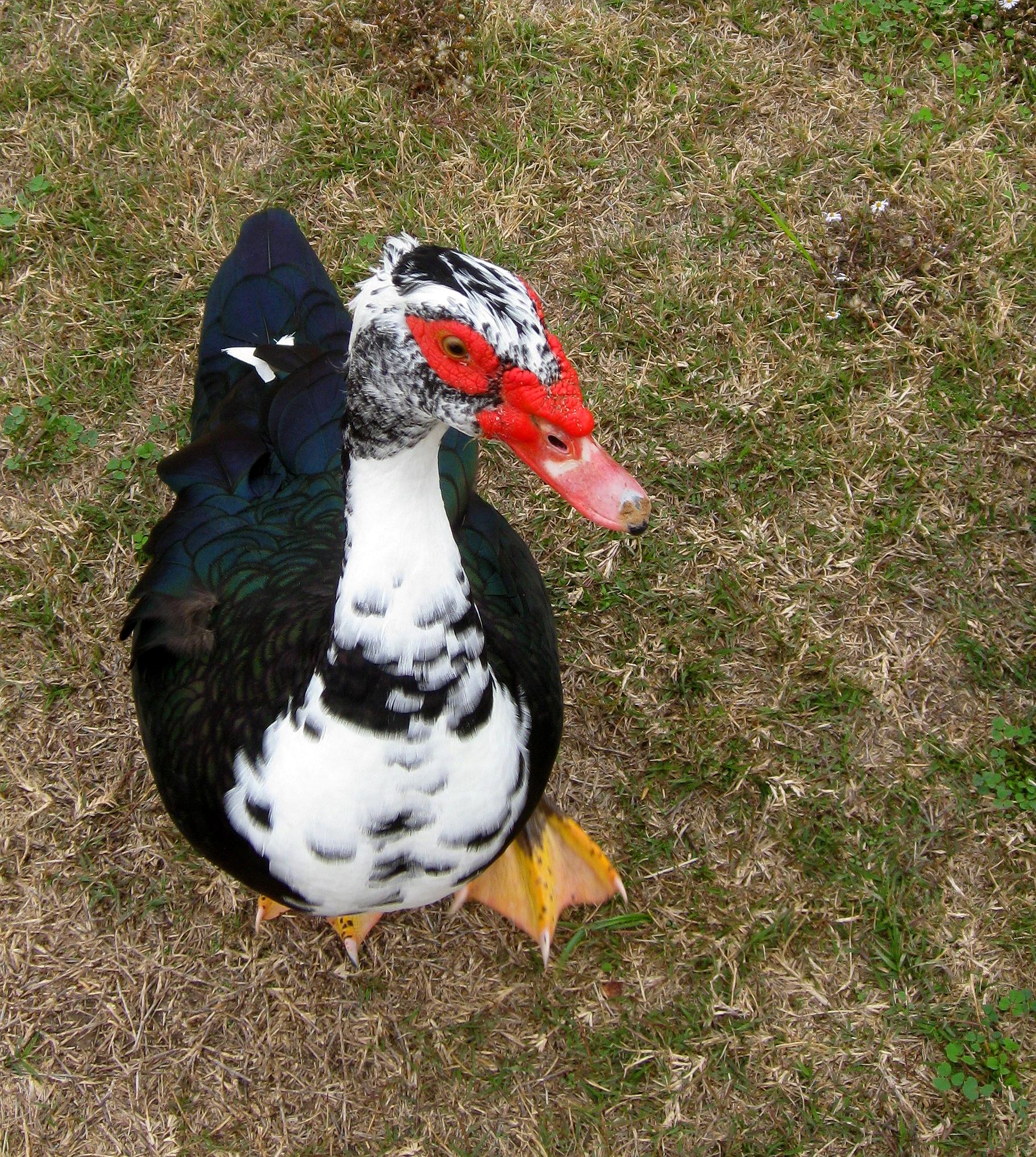
This Muscovy duck wasn't shy at all. -- Photo by Pat Bean

Bird Talk

“Want to go to Texas City with me?” My son, Lewis, asked yesterday.

Giving nary a thought to the writing and other items on my busy day’s agenda, I said: “Sure.”

While the trip was a business one for my son, I knew that there would still be plenty of opportunities to see birds along the way. Lewis is as passionate about bird watching as his bird-watching mom.

Besides, road trips are my thing. Nothing makes me happier than watching life through a vehicle’s windows, especially knowing one can stop at any time for closer looks. While I once had to hit an older son just to get him to stop and let his mom go to the restroom, Lewis has always been as eager to explore the roadsides as me.

The first stop on this overcast, foggy day was at an RV park near Angleton. I had been looking for a place to dump my holding tanks and this was a possibility. While we weren’t in my RV today, I still wanted to check out the possibility.

It turned out not to be an option, but the long driveway into the park passed by a field full of killdeer, meadowlarks and mourning doves.


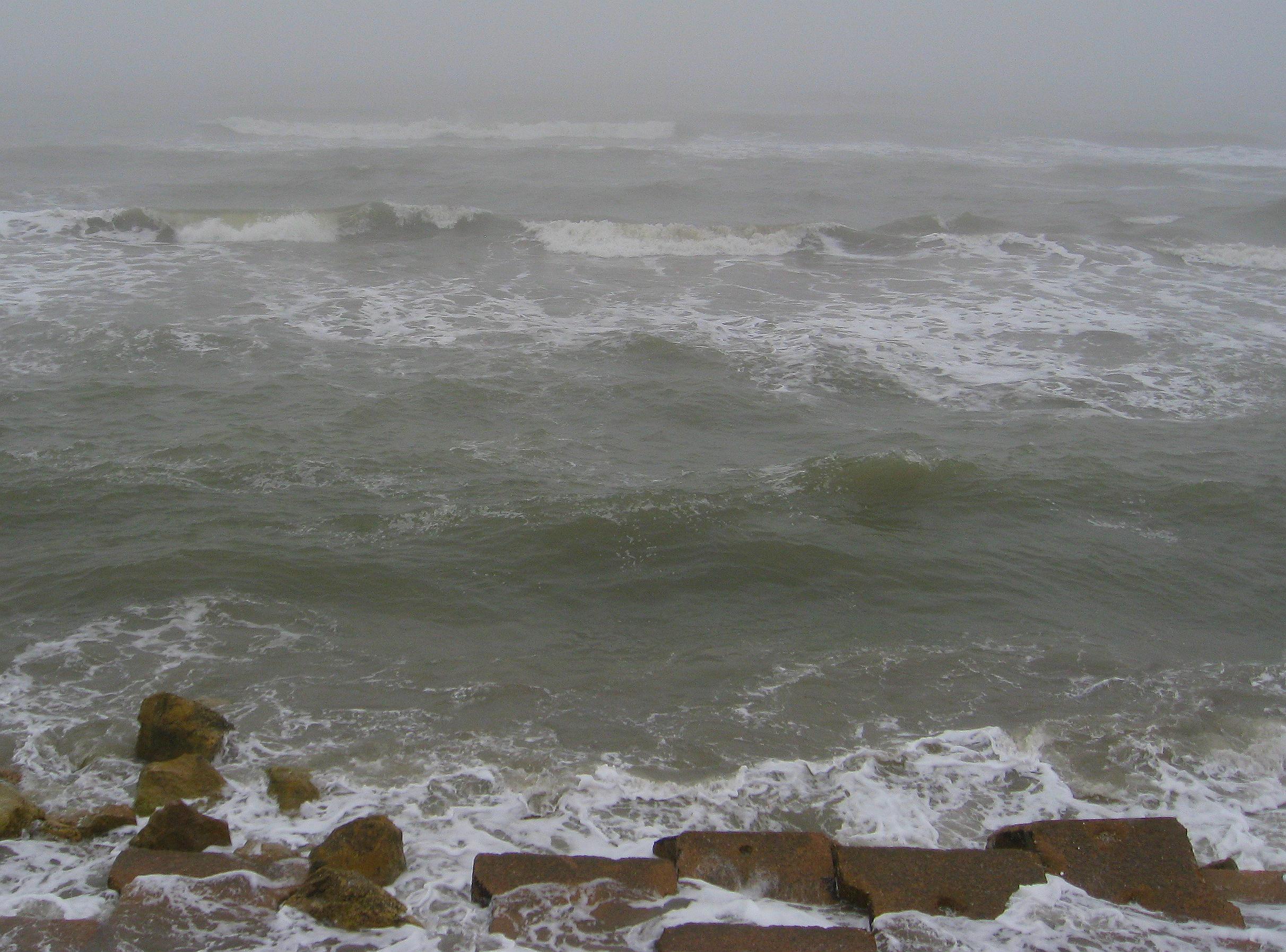
The waves rolled in from a horizon made invisible by the fog. I had my son stop along the Galveston Sea Wall so I could try and capture the day's mood. -- Photo by Pat Bean

And the park grounds turned up some Muscovy ducks, a Mexican species that’s beginning to be seen more and more of in North America. The ones we saw this day, although free to fly away, clearly preferred domestication.

They swarmed Lewis in hopes that he would have food to give them. I stood back and took pictures, enjoying the iridescent sheen of their feathers and the bright red nodules on their faces.

Back in the car, we drove on to Texas City. After my son had taken care of his business, we took the long way home through Galveston and over the San Luis Pass toll bridge to Surfside, birding as we drove.

Laughing gulls and brown and white pelicans were the seashore’s primary occupants along the Galveston Sea Wall. At LaFitte’s Cove, a small birding sanctuary in a residential section south of Galveston, the shallow pond area was full of ducks, teals, ibises, yellowlegs, coots and sandpipers.

“A good day for ducks,” said the one other birder we passed.

Indeed it was.

It was also a good day for a road trip. While I do so love sunshine, this day’s mist and fog added a hint of mystery and magic to the day’s drive – and 57 different bird species.

Read Full Post »

“An artist is a dreamer consenting to dream of the actual world.” George Santayana

Birdcage Mural at the St. Louis Zoo -- Photo by Pat Bean

Travels With Maggie

Inspiration for a blog topic eluded me this morning. After an hour spent reading e-mails, favorite blogs and the depressing news in the New York Times, I still hadn’t come up with a keyboard burner.

Spoonbill nest against the frame of the Birdcage -- Photo by Pat Bean

So I did what I usually do when this happens. I peruse the photos I’ve taken since my canine traveling companion, Maggie, and I began living and traveling full-time in our RV, Gypsy Lee. Thankfully I have seven years and over 123,00 miles of fodder to search for an idea. The walk back down memory lane is always pleasurable so I’m not complaining.

This morning my fancy was stopped at the St. Louis Zoo, home of the Birdcage. This walk-in aviary was built for the 1904 World’s Fair by the Smithsonian Institution at a cost of $17,500.

It was supposed to be moved to the organization’s National Zoo in Washington D.C. after the fair ended, but St. Louis residents protested, and the Smithsonian generously allowed the city to buy the flight cage for $3,500.

Pieces of sky framed by the Birdcage's ribs, with artfully placed birds. -- Photo by Pat Bean

Cost of the birds was extra. Records show that these charges included $7.50 for a pair of Mandarin ducks and $20 for four Canada geese.

Today it’s been turned into a cypress swamp that houses aquatic birds commonly found along the Mississippi River.

Looking through the pictures that I took back in 2006, I was struck by the amazing likeness between art and the real thing. The art is part of the glass tile mural outside the cage and the real things are the birds that live in the aviary.

I found both beautiful, particularly when I thought about the artist who created the mural.

Now I’m curious to know who was the artist.  Do you know?

Read Full Post »

“I have the world’s largest collection of seashells. I keep it on all the beaches of the world … perhaps you’ve seen it.” – Steven Wright

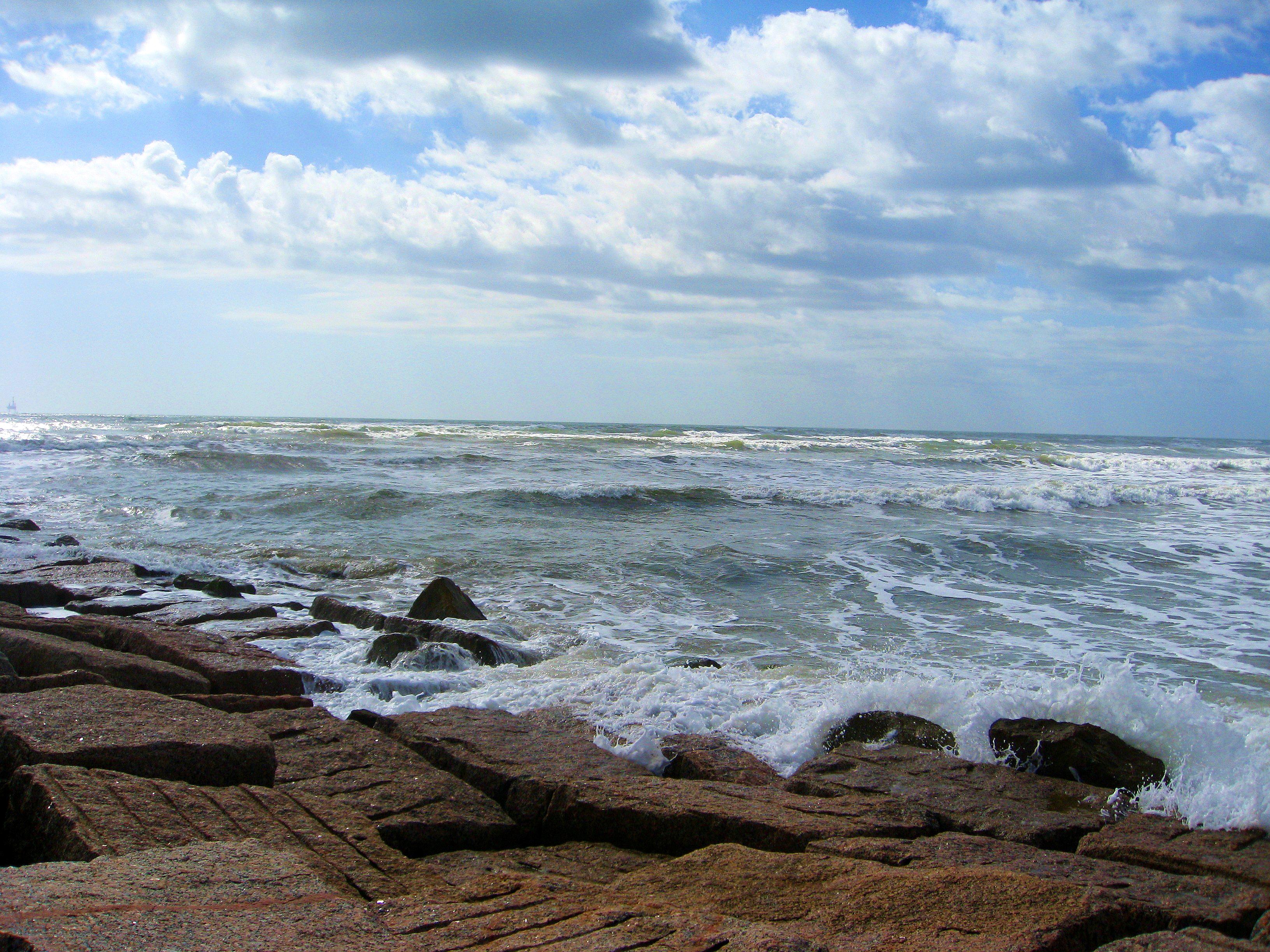
Wave-watching from the Quintana Jetty on the Texas Gulf Coast. -- Photo by Pat Bean

Travels With Maggie

Janet Evanovich’s Stephanie Plum’s latest antics in “Explosive Eighteen” called louder to me last night than the Cowboys and Giants.

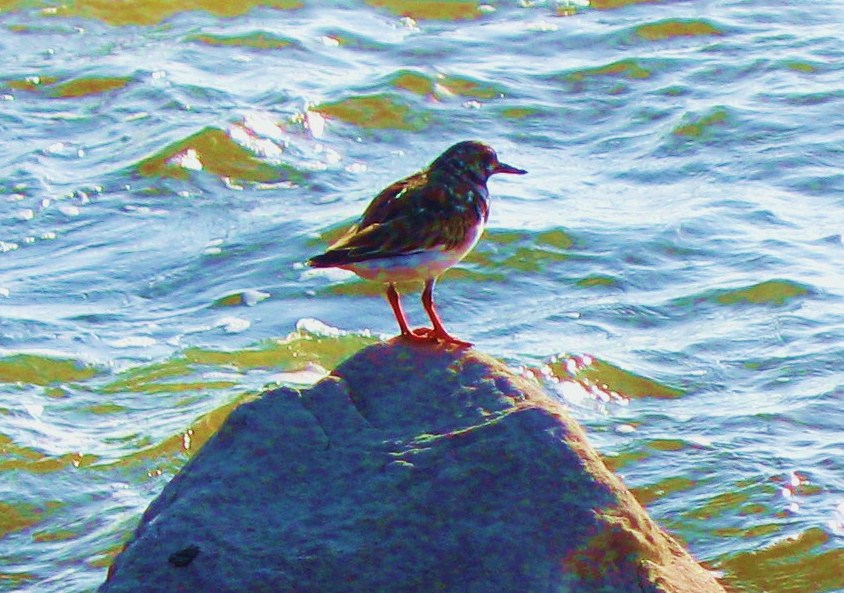
This ruddy turnstone was also wave-watching. -- Photo by Pat Bean

So after dinner with my son and his family, I escaped back out to my RV to read instead of watch the Dallas Cowboy?New York Giants football game. As a Dallas native, I’m an avid cowboy fan, but I seldom watch football these days, preferring instead to read about the game the next day.

I also knew that this particularly game was going to spark family tensions. My Texan son, Lewis, would be pulling for the Cowboys, while my fantastic New Yorker daughter-in-law, Karen, would be rooting for the Giants. Both of them are rabid followers of their teams.

My son left for work before I got up this morning, but my daughter-in-law stopped by my RV to say good-bye before she left for the day. I

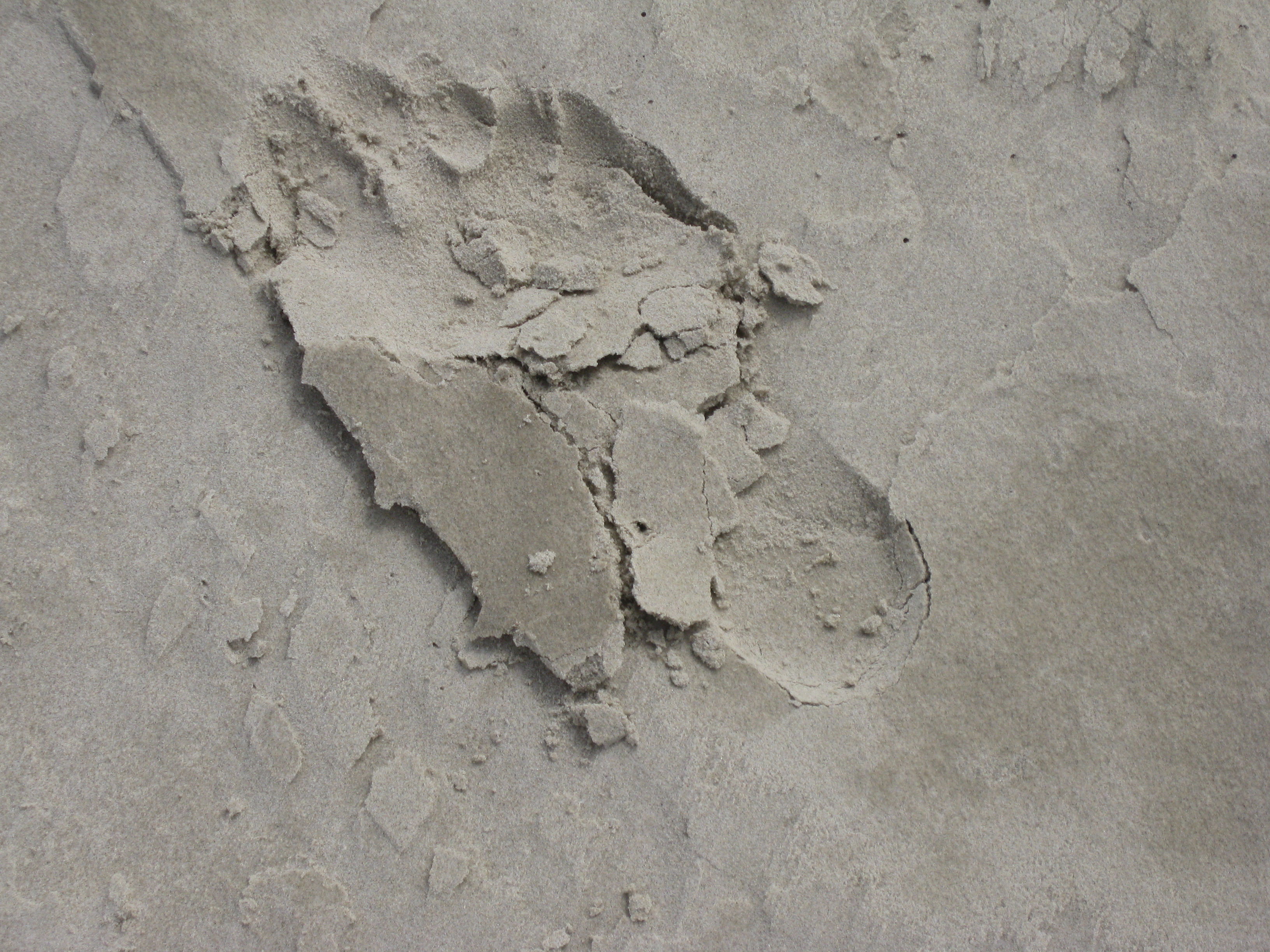
Footprints in the sand intrigue me. -- Photo by Pat Bean

didn’t need to ask who won. The smile on her face lit up the overcast dawn. Hopefully my son will have cheered up by the time he gets home.

In the meantime, I have errands to run. I have to mail off Christmas packages and get propane for my RV, which means a road trip from Lake Jackson to Brazoria.

After that, Maggie and I are going to the beach for a little bird-watching, wave-watching and sand-walking. I can’t think of a better way to spend the afternoon. Can you?

Read Full Post »

“Both the grand and the intimate aspects of nature can be revealed in the expressive photograph. Both can stir enduring affirmations and discoveries, and can surely help the spectator in his search for identification with the vast world of natural beauty and the wonder surrounding him. – Ansel Adams


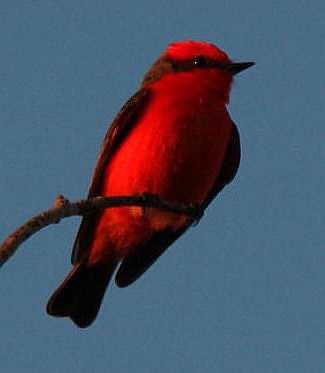
Vermilion flycatcher: Unlike many flycatchers that look alike, there is no mistaking this species. -- Photo by Pat Bean


Bird Talk

I’ve always wanted to know the names of things, but I wasn’t exactly pathetic about the need until I took up birding back in 1999.

I came late to this addictive passion, suddenly being amazed at all the birds around me. Where once these flying creatures were invisible, as if existing in a parallel world with a curtain drawn between them and me, suddenly I was seeing them everywhere.

My fascination with birds can be annoying to non-birders. A shadow flicks across the landscape and I lose my place in a conversation as my eyes turn upward searching for the source.

I constantly scan the tops of utility poles looking for familiar profiles. The sight of a red-tailed hawk sitting atop one causes me to yell “stop” to the car driver. A rustle or movement of leaves and I am distracted from a task. No roadside pond goes unscanned. Well, you get the idea.


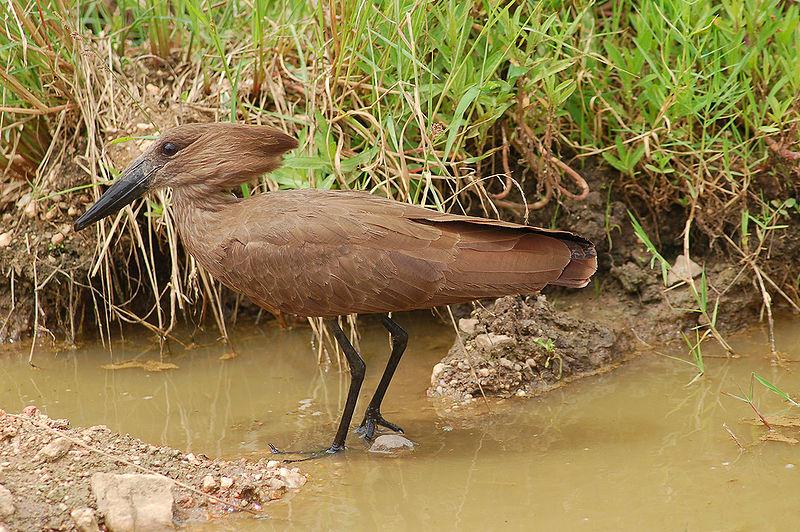
The unique profile of a hammerkop makes it a hard bird to misidentify. But you'll have to go to the African continent if you want to see one. -- Photo by Pat bean

But seeing a bird is not enough. I must know what bird it is.

Is that a crow or a raven was one of my first identification problems. The raven is larger but size, without a comparison, is not much help. So I learned that a crow’s tail is razor straight at the end, while a raven’s tail is wedge-shaped. Ravens also are the ones who suffer bad-hair days.

Many flycatchers, meanwhile, still puzzle me. Quite a few look almost exactly alike. A long look through a good scope, and knowing preferred ranges and habitats of each species, is necessary for identifying these birds.


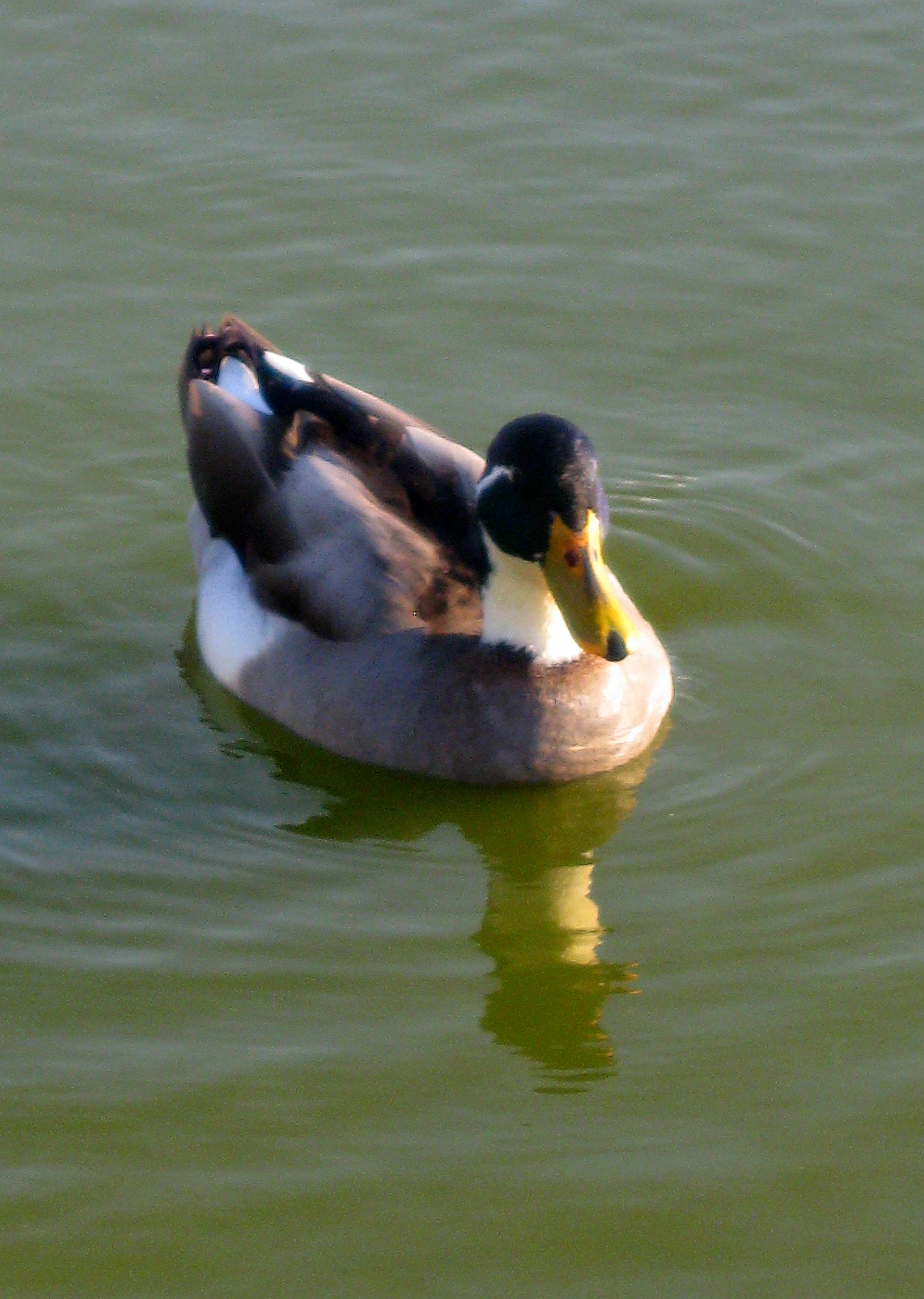
You won't find this bird in any field guide. It's a mallard hybrid. -- Photo by Pat Bean

Knowing that you’re looking at a flycatcher is easy, however. One usually sees them sitting up straight on a branch. They fly out to catch an insect and then most return to the same branch to repeat the process. If I have long enough to watch, and a good field guide, sometimes I can even figure out whether it’s a dusky or a willow, or one of several other flycatchers showing off for me.

When I was first learning to bird, there was this one particular duck that completely stumped me. While I had a really good look at the creature, I couldn’t find it in my field guide. I finally gave up and asked one of my birding mentors, who immediately broke into laughter.

The duck in question was a mallard hybrid. Since then I’ve seen a lot of these unique, but sterile offspring. Mallards, it seems, are sluts.

Read Full Post »

 “If you want to make your dreams come true, the first thing you have to do is wake up.” – J.M. Power


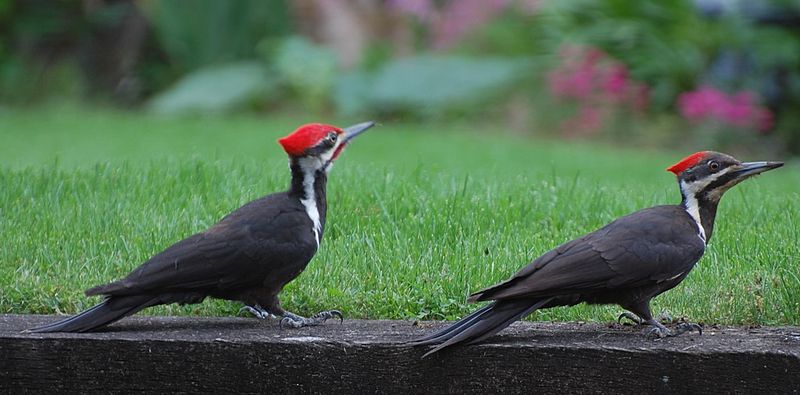
A pair of pileated woodpeckers -- Wikipedia photo


Travels With Maggie

I awoke this morning to a rapid knocking coming from outside my RV, which is now parked in the driveway at the home of my son, Lewis, who lives near the Texas Gulf Coast.

One side of Gypsy Lee faces my son’s house and the other a thick row of hedges and tall trees that daily host a vast variety of birds, squirrels, an occasional cat – and on the foliage-lined walkway every morning at 7 o’clock an elderly man walking his very vocal golden-red bloodhound.

Several small dogs on the far side of the woodsy public right of way, always bark when they hear the hound’s deep rumbling voice. Maggie, 14 and quite deaf, usually sleeps through the ruckus. Thankfully I’m almost always up at this time of morning.


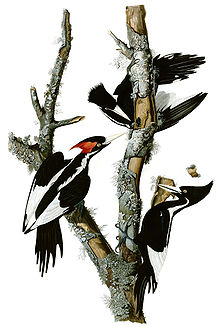
Ivory-billed woodpeckers -- Painting by John James Audubon

I was still abed, however, although awake reading while waiting for daylight, when the knocking begin. It was deeper and more persistence than that of a downy woodpecker, which is the most frequent morning visitor that lets me know it’s hovering nearby by knocking on a tree. The sound always triggers my brain to the tapping and rapping at Poe’s door by a raven.

I suspected my bird this morning, however, might be a pileated woodpecker. A look through my binoculars, which are always handy, confirmed my suspicions. Even in the morning’s dim light, this large woodpecker’s size and shape can’t be missed.

It wasn’t the first time I’ve seen and heard this close look-alike of the more famous ivory-billed woodpecker, which was thought to be extinct until recently. Several respected ornithologists now say they have seen this bird, whose last documented sighting happened in the 1940s. Other, also respected ornithologists, are skeptical.

I just hope that we humans don’t do to the pileated woodpeckers what we did to the ivory-billed, which is to destroy its last remaining habitat.

The pileated survived because it adapted to change. It’s a good lesson for us all in this fast-changing world.

Read Full Post »

 “My favorite weather is bird-chirping weather.” Terri Guillemets

Himalayan snowcock -- Wikipedia photo

Chasing Birds

While the recently released movie, “The Big Year,” hasn’t been a top box-office hit, I thought it was a great film. Of course I’m a passionate birder and could relate to the chase to be best North American Birder of the Year.

The record number of species seen between Jan. 1 and Dec. 31, by the way, is 745 species. I won’t tell you who holds the title, however, because that might spoil the movie for one of my readers who hasn’t yet seen it.

One of the scenes in the film, which shows just how crazy we birders can get, depicts a wild helicopter chase of Himalayan snowcocks in Nevada’s Ruby Mountains.

Chukar on Antelope Island ... Photo by Pat Bean

Boy I wish I had such a conveyance at my convenience. I’ve never seen this pheasant species, and these days am not up to the rough hike, which unless one is extra lucky, is the most likely way of spotting one.

I may still give it a try next year, however. Like a lot of other birders, “The Big Year” inspired me to step up my birding game. And my curiosity about snowcocks inspired me to see what I could find out about these birds. The Internet, which I have come to love, turned up a couple of interesting blogs from birders who have seen the Himalayan snowcocks in the Ruby Mountains.

I noticed, when looking at pictures of the birds on a couple of Web sites – http://tinyurl.com/3uya55p and http://tinyurl.com/3w6edbx– that the snowcocks look a lot like the chukars I have seen on Antelope Island in Utah’s Great Salt Lake.

The chukar, however, is not a difficult bird to add to one’s life list. It can be seen in at least nine western states, whereas the snowcock can only be found on this continent in the Ruby Mountains. And it wouldn’t even be there except that Nevada Fish and Game thought the bird would be a good game bird for hunters – and in the 1960s, transplanted about 200 of them there from Pakistan.

There may be 500 or more of the birds today roaming around the mountains near Wells, Nevada. Yes, I am for sure going to have to visit the Ruby Mountains soon. The snowcocks are calling to me.


Read Full Post »

“Reading about nature is fine, but if a person walks in the woods and listens carefully, he can learn more than what is in books … “  —  George Washington Carver

Chasing Birds


While I didn't have my camera the day I walked in the Dow Woods, I've taken it often to the San Bernard National Wildlife Refuge, where Lewis and I have trod this boardwalk through Bobcat Woods. -- Photo by Pat Bean

A new addition to Texas’ wildlife sanctuary complex, the Dow Woods, opened this past week. Located just five minutes from my son, Lewis’, home in Lake Jackson. We two avid birders had to check it out of course.

The 338-acre site, designated as part of the San Bernard National Wildlife Refuge, currently includes two loop trails, totaling 2.5 miles, that run along Bastrop Bayou. Plans are in the works to put in more trails in the near future.

The land was donated to the U.S. Fish and Wildlife Service by Dow Chemical, which was actually responsible for creating the town of Lake Jackson in the 1940s so its employees would have a place to live.

Lake Jackson, where our family lived from 1956-1971. is called the City of Enchantment, partly because of the vast number of trees that were spared when the swampy forest was cleared and drainage canals were dug so the land would be livable.


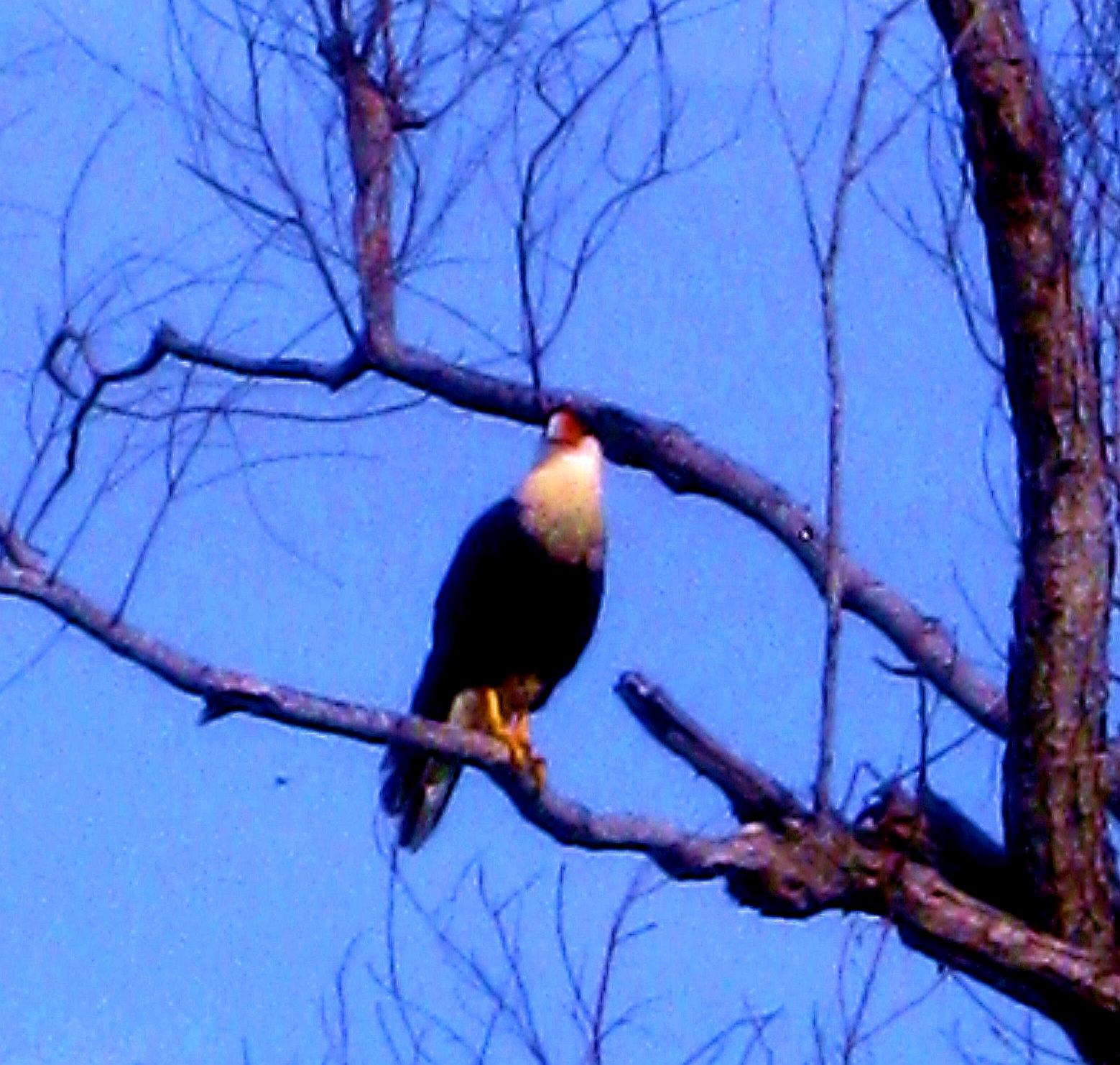
A crested caracara that I spotted at the San Bernard NWR. -- Photo by Pat Bean

 It’s nice to see that in a time when corporate greed is so rampant that a large employer is still both giving to the community and conserving the landscape.

The actions, along with the jobs the company provides the area, ease a bit the large footprint the chemical plant also has on the local landscape.

Lewis, whose favorite birding site, is the San Bernard National Wildlife Refuge’s main location, is delighted that this new addition to is so close to his home. And we both found it a delightful place to walk and look for birds.

I, however, was a bit upset with myself because while I remembered to bring my binoculars, I left my camera at home.

If you’re in the neighborhood, you should drop by. Dow Woods is located on Old Angleton (or County Road 288) about a mile north of FM 2004.

I plan to go back soon and take my camera. Perhaps I’ll see you there.

Read Full Post »

 “Accept that some days you are the pigeon, and some days you are the statue.” – David Brent


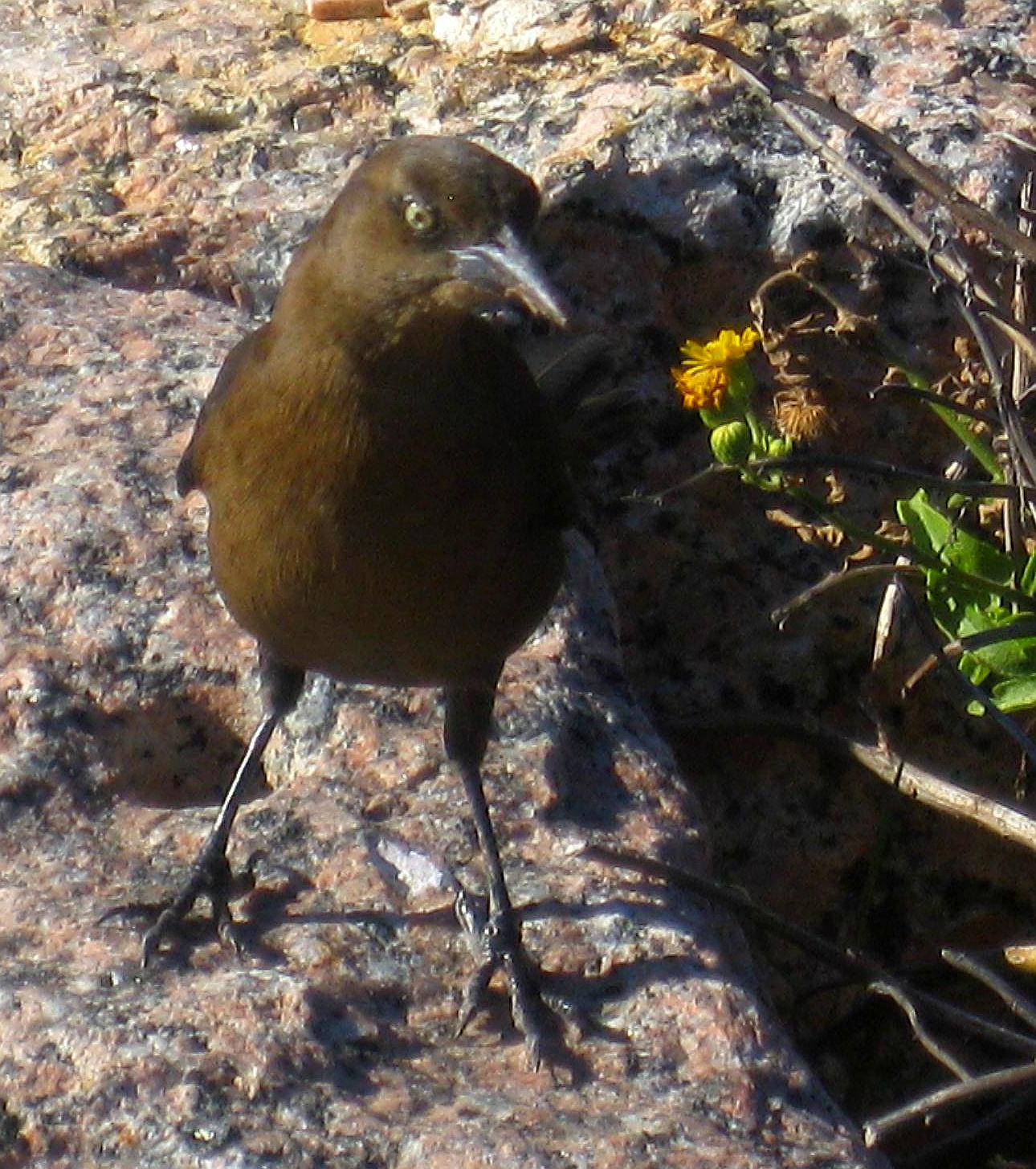
Female great-tailed grackle at Surfside -- Photo by Pat Bean


Chasing Birds

The photo on the left, taken this week at the Surfside Jetty where my son, Lewis, and I began a day of birding, shows the female great-tailed grackle that was pestering my son, Lewis, for a bite of his breakfast taco. Her male comrade was a bit more standoffish.

Great-tailed grackles are one of the birds that make every birder’s list if they live anywhere in Texas. The smaller common grackle is a bit more choosy about where it lives in the state, and the third North American grackle, the boat-tailed, even choosier. It can only be found along the shores of Texas’ Gulf Coast, and then mostly only on the more northern end. Florida is the boat-tail’s favorite habitat.

On this day of chasing down birds, the great-tailed grackle was the only one of the three species Lewis and I saw, although on most bird outings in the area we get the common, too, and occasionally even a boat-tailed grackle.


Male great-tailed grackle. Note the bright yellow eye.

It’s easy to tell the common and the great-tailed apart simply by size. The common is a 12-inch bird and the great-tailed a 15-18-inch bird, the male being the larger of the sexes.

The boat-tailed, meanwhile, is close in size to the great-tailed but with a very round head. compared to a very-flat head for the great-tailed. You can also easily tell the two apart if the boat-tailed is vocal – and it usually is. Its voice is more coarse and gravelly than those of the other two grackles. .

The females of all three species are varying shades of brown.

Grackles, which often roam about in large flocks, are considered nuisance birds by some. And while that might not be far off the mark, since they prefer harvesting a farmer’s crops more than living off uncultivated land, I still enjoying watching them.

Perhaps it’s because I admire their attitude, such as the one displayed by the female this day that wasn’t going to be intimidated out of any Taco droppings by we mere humans. Or perhaps it’s because I find the iridescent purple and green sheen on the males’ feathers a work of art.

Or perhaps it’s simply because all birds fascinate me.

Read Full Post »

“In all things of nature there is something of the marvelous.” Aristotle  

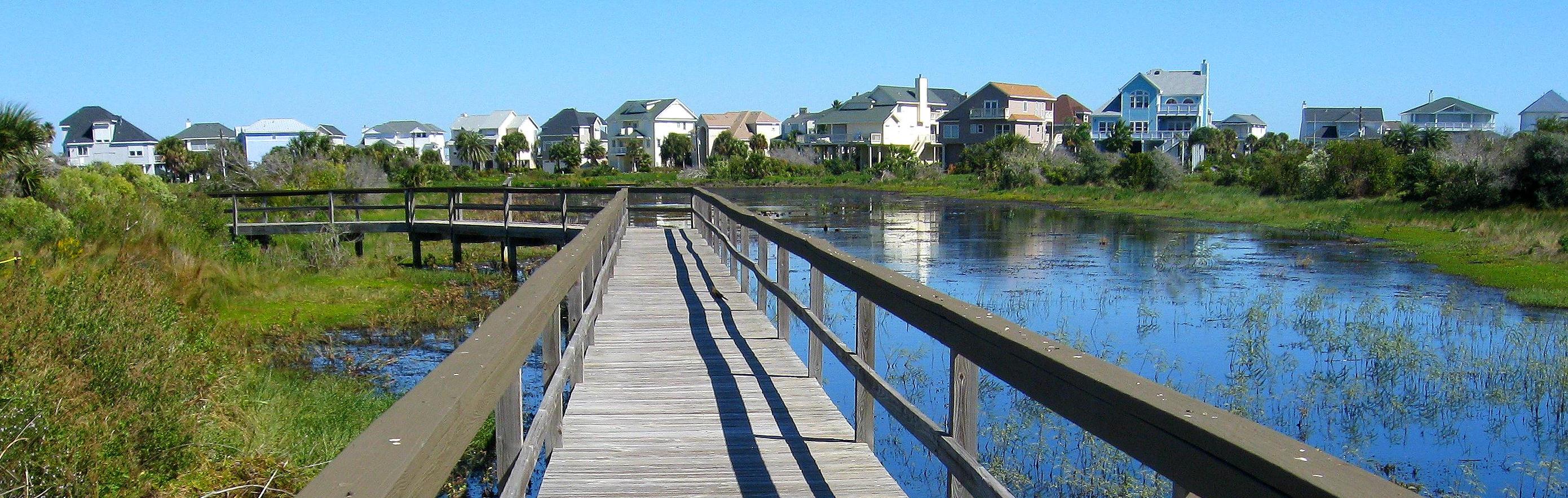
Boardwalk entry into Lafitte Cove Nature Preserve -- Photo by Pat Bean

Chasing Birds

I found myself surrounded by pricy homes this past week, walking a Galveston Island landscape that once belonged to the infamous Jean Lafitte. He came to the island in 1817, which at the time was mostly uninhabited except for Karankawa Indians. 

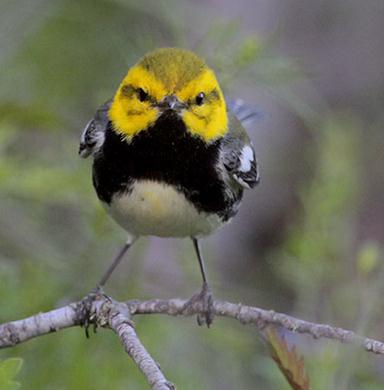
Black-throated green warbler -- Photo by Joanne Kamo http://www.pbase.com/jitams

Lafitte battled the Indians and used the island, with its protected bay, as a base for his smuggling and pirating activities until 1821, when he made the mistake of attacking an American merchant ship. The schooner, the USS Enterprise, was sent then to oust him.

Lafitte agreed to leave the island without a fight, but before he did he burned the settlement and fortress he had created, and is said to have taken a huge amount of treasure away with him.

I hadn’t come to the place for its historical significance, however. I had come in search of birds in the small sanctuary that sat in the middle of the residential neighborhood.

Marker near the nature preserve noting that Lafitte fought a battle with the Karankawa Indians at this site. -- Photo by Pat Bean

In honor of Lafitte– although I’m not sure what there is to honor, except that perhaps along with his nefarious pirating activities he helped Andrew Jackson defend New Orleans in 1815 – the sanctuary was dubbed Lafitte’s Cove Nature Preserve.

Its boardwalk and paved paths wander past a wetlands area, a small lake and though thick woodlands; its location, just inland from the gulf, makes it an ideal stopover for birds migrating along the coast.

On the day my son, Lewis, and I birded the preserve, we saw mottled ducks, blue-winged teals, mallards, white-eye vireos, orange-crowned warblers, cardinals, mockingbirds, brown thrashers, black-throated-green warblers and blue-headed vireos, which I thought was a pretty good number for a very windy day in October.

Lewis, who had birded the small sanctuary in May, said he had seen at least triple the number of species on that outing.

Wouldn’t it be nice, I thought, if every residential neighborhood saved a small patch of land for the birds. Don’t you agree?

Read Full Post »

“To find the universal elements enough; to find the air and the water exhilarating; to be refreshed by a morning walk or an evening saunter; to be thrilled by the stars at night; to be elated over a bird’s nest or a wildflower in spring – these are some of the rewards of the simple life.”  ~John Burroughs

Birding Day

I abandoned my blog this morning, and spent the day out birding with my son Lewis. I just barely got back, and words always fail me this time of day. So I’ll simply share one of the photos I took today. Hopefully you’ll think it worth my usual 350 words.

Great

Great egrets and roseate spoonbils at Surfside -- Photo by Pat Bean

Read Full Post »

« Newer Posts - Older Posts »