Feeds:
Posts
Comments

Posts Tagged ‘Joanne Kamo’

“In all things of nature there is something of the marvelous.” Aristotle  
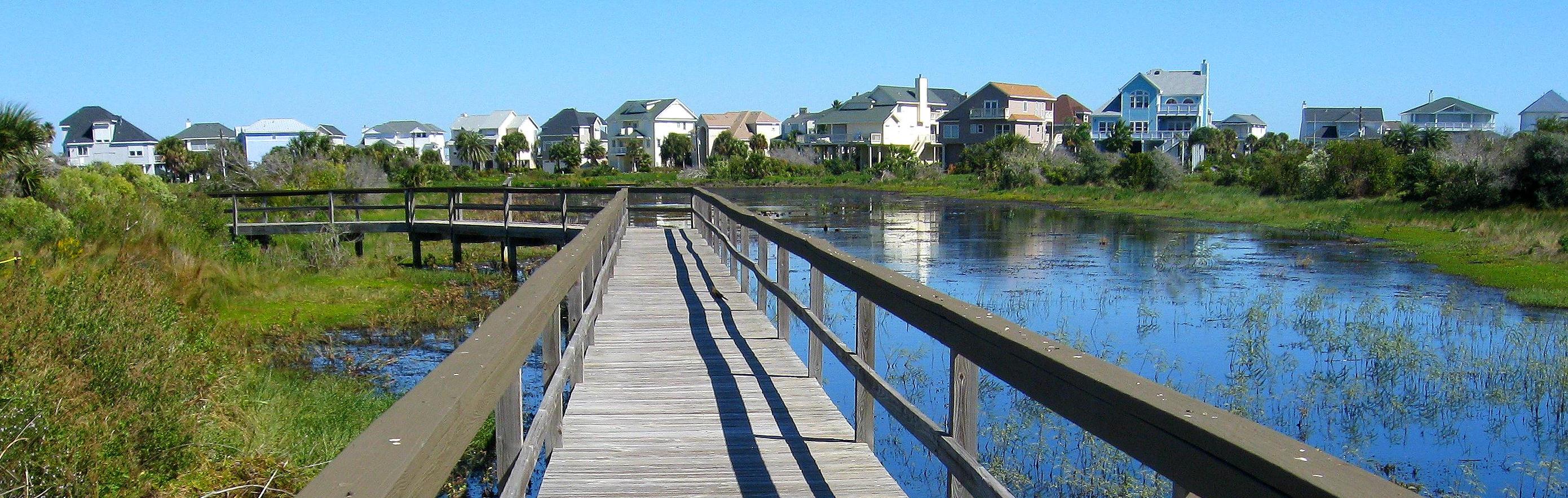
Boardwalk entry into Lafitte Cove Nature Preserve -- Photo by Pat Bean

Chasing Birds

I found myself surrounded by pricy homes this past week, walking a Galveston Island landscape that once belonged to the infamous Jean Lafitte. He came to the island in 1817, which at the time was mostly uninhabited except for Karankawa Indians. 
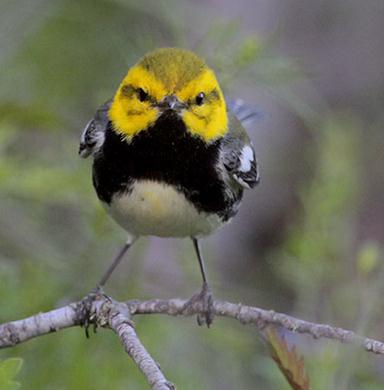
Black-throated green warbler -- Photo by Joanne Kamo http://www.pbase.com/jitams

Lafitte battled the Indians and used the island, with its protected bay, as a base for his smuggling and pirating activities until 1821, when he made the mistake of attacking an American merchant ship. The schooner, the USS Enterprise, was sent then to oust him.

Lafitte agreed to leave the island without a fight, but before he did he burned the settlement and fortress he had created, and is said to have taken a huge amount of treasure away with him.

I hadn’t come to the place for its historical significance, however. I had come in search of birds in the small sanctuary that sat in the middle of the residential neighborhood.

Marker near the nature preserve noting that Lafitte fought a battle with the Karankawa Indians at this site. -- Photo by Pat Bean

In honor of Lafitte– although I’m not sure what there is to honor, except that perhaps along with his nefarious pirating activities he helped Andrew Jackson defend New Orleans in 1815 – the sanctuary was dubbed Lafitte’s Cove Nature Preserve.

Its boardwalk and paved paths wander past a wetlands area, a small lake and though thick woodlands; its location, just inland from the gulf, makes it an ideal stopover for birds migrating along the coast.

On the day my son, Lewis, and I birded the preserve, we saw mottled ducks, blue-winged teals, mallards, white-eye vireos, orange-crowned warblers, cardinals, mockingbirds, brown thrashers, black-throated-green warblers and blue-headed vireos, which I thought was a pretty good number for a very windy day in October.

Lewis, who had birded the small sanctuary in May, said he had seen at least triple the number of species on that outing.

Wouldn’t it be nice, I thought, if every residential neighborhood saved a small patch of land for the birds. Don’t you agree?
Read Full Post »

It may be hard for an egg to turn into a bird. It would be a jolly sight harder for it to learn to fly while remaining an egg. We are like eggs … We must be hatched or go bad.” C.S. Lewis

Travels With Maggie

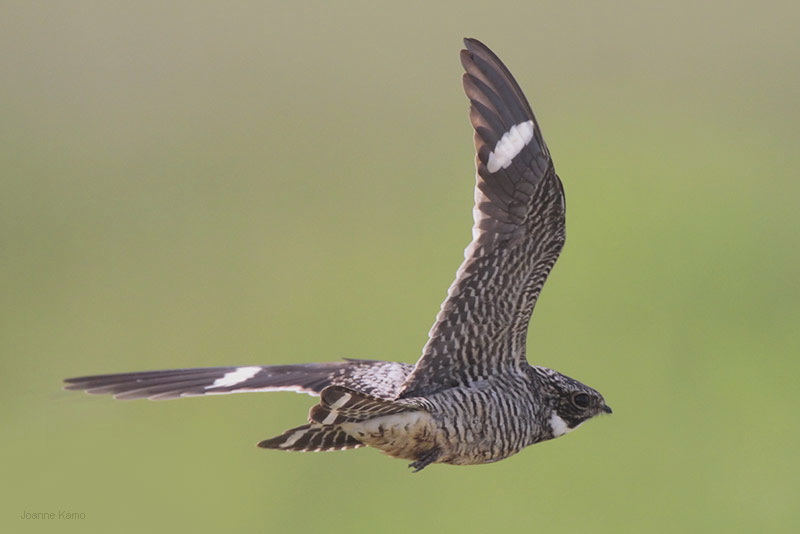
Common nighthawk -- Photo by Joanne Kamo, whose many other wonderful bird photographs can be seen at http://www.pbase.com/jitams

I try to time my last walk with Maggie so that it ends just as the sun goes down so as to catch the sunset. The days, in my opinion, are best when they begin with a sunrise and end with a sunset.

But late evening is also the time of day here at Lake Walcott State Park in Southern Idaho when the nighthawks come out to feed. For a kettle of common nighthawks that regularly takes place over the campground where my RV, Gypsy Lee, is parked.

They dine in the air on the many insects that also call this small park home. It’s always a treat to see them. Not only are they awesome to watch, my brain knows that every bug they eat is one that won’t bite me.

A fellow lone-female traveler, not a birder, who stopped by recently to visit me, asked what the birds flying overhead were as we shared our evening walk.

Common nighthawks, I told her. Then pointed out how to easily recognize them when in flight.


Common nighthawk -- Photo by Joanne Kamo

About the size of a robin, these birds have long, forked and pointed wings with a distinctive broad white bar about a third of the way up from the tip of the wing. The white bars are very prominent.

“Do they always fly that low,” she asked, as a couple of the birds zoomed in front of us at about head level.

“Nope. Usually they fly much higher,” I replied. “I guess the bugs are flying low tonight.”

The first time I saw these birds, whose large heads seem to lack a neck, they were flying even lower, however. I was fairly new to birding at the time, having only become addicted to the passion in 1999. The life sighting occurred while I was walking a trail at the Arizona-Sonora Desert Museum, where they were flying low over a small pond.

After watching them for a while, I realized they were skimming bugs off the water. Looking in my field guide to identify them, I discovered they were a member of the goatsucker family, whose name tickled my funny bone. According to folklore, these birds were thought to suck a goat’s milk at night.

The image this false legend flashed through my brain gave me an even more robust chuckle.

There are so many reasons why I’m passionate about birds, and such oddities as this, which I swear each species seems to enjoy, is just one.

Lake Walcott, meanwhile, has treated me to more common nighthawks in one night than all the others I’ve seen elsewhere. If you visit, I hope you take advantage of the nightly summer show.

Read Full Post »

An amazing photo by Joanne Kamo of the fork-tailed flycatcher at Galveston Island State Park.

“Obsession is a young man’s game, and my only excuse is that I never grew old.” — Michael Caine.

Travels With Maggie

It might have been nasty and c old outside yesterday, but that didn’t keep passionate birdwatchers away from Galveston Island State Park. Judging by the comments on Texbirds, an online birding report, many of them earned gold for their efforts, the gold being a rare feathered visitor to the Texas Gulf Coast: a fork-tailed flycatcher.

Because the bird was wet, Joanne was able to see and photograph the yellow spot on the bird's crown, indicating it's a male. -- Photo by Joanne Kamo

This exotic South American bird, whose tail is longer than its body, has been hanging out at the park for several days. Among those who saw it was Joanne Kamo, a fantastic photographer whose photos accompany this blog. I drooled over them, especially since circumstances hindered me from going to see this flycatcher myself.

It wasn’t a matter of distance. The park is only 40 miles from my son’s home in Lake Jackson, Texas, where my RV, Gypsy Lee, is currently parked. That’s a mere walk in the park compared to the 200 miles I once drove to see osprey parents with chicks – and that day didn’t end until I drove the 200 miles back home..

That was the day I realized I had become a diehard birder.. Unless you’re one you really won’t understand. But if you’re interested, read “The Big Year” by Mark Obmascik. It’s all about three men in a race to see who can see the most North American bird species during 1998.

Meanwhile, like me, you can enjoy Joanne’s awesome photos. Or if you’re in the neighborhood, you could go see the bird for yourself. The latest Texbirds’ e-mails indicate it’s still hanging around.

Read Full Post »