Feeds:
Posts
Comments

Posts Tagged ‘barbara kingsolver’

Mr. Eastern Bluebird on my RV Mirror — Photo by Pat Bean

Aging My Way

When I was traveling around the country in a small RV with my canine companion Maggie, I awoke one morning to find a bluebird, the eastern species to be exact, perched on my RV mirror. It stuck around long enough for me to take its photo, actually seeming to pose for me.

This avian visitor started my morning with a smile of happiness before Maggie and I continued on our way driving down the Natchez Trace Parkway, a historical route that began as a path used by animals and Native Americans, then was adopted by the multitude who followed. The designated scenic parkway is now a 444-mile drive through history, traversing through Tennessee, Arkansas and Mississippi.

 The bluebird’s own history as a symbol of happiness is said to have begun with a Chinese myth that goes back thousands of years. It has been included in depictions of a fairy queen who was the protector of women who didn’t comply with role of females in a traditional Chinese family.

Nice myth, I thought, when I came across it while researching the origins of the bluebird’s symbolism. Native American folklore identifies the bluebird as a spirit in animal form associated with the rising sun, while Russian fairy tales see the bluebird as a symbol of hope.

The myths have inspired more modern days song writers to come up with such tunes as: Somewhere, over the rainbow, bluebirds fly, which Dorothy sang in The Wizard of Oz. Or There’ll be bluebirds over the White Cliffs of Dover, which the British sang during World War II – despite the fact bluebirds have never flown over those cliffs. Even the Beatles sang about the bluebird of happiness.

Not to forget poets, I came across 44 poems during my research that used the bluebird to represent happiness, such as this simple ditty by A.S. Waldrop: This bluebird is special/so cheery and merry too/ He’s here for just one reason/to bring happiness to you!

Ah! It’s nice myth. But, as I’m mostly a happy person, I believe that happiness comes from moving on from bad things and finding your own silver linings, be it a hug from a friend or a change of circumstance. At 85, I have plenty of experiences doing just that. I choose to be happy. As Barbara Kingsolver says about having the strength to go on during bad times: “You stand up at sunrise and meet what they send you, and keep your hair combed.”

Or, as I have been doing lately, keep your hair short enough that it doesn’t need to be combed.

Pat Bean is a retired award-winning journalist who lives in Tucson with her canine companion, Scamp. She is an avid reader who always has many unanswered questions, an enthusiastic birder, Story Circle Network Journal staff writer, author of Travels with Maggie available on Amazon (Free on Kindle Unlimited), and is always searching for life’s silver lining. And she believes one is never too old to chase a dream.

Read Full Post »

When snow melts, the creeks do rise. — Watercolor by Pat Bean

“No matter what people tell you, words and ideas can change the world.” – Robin Williams

Remembering my Grandmother

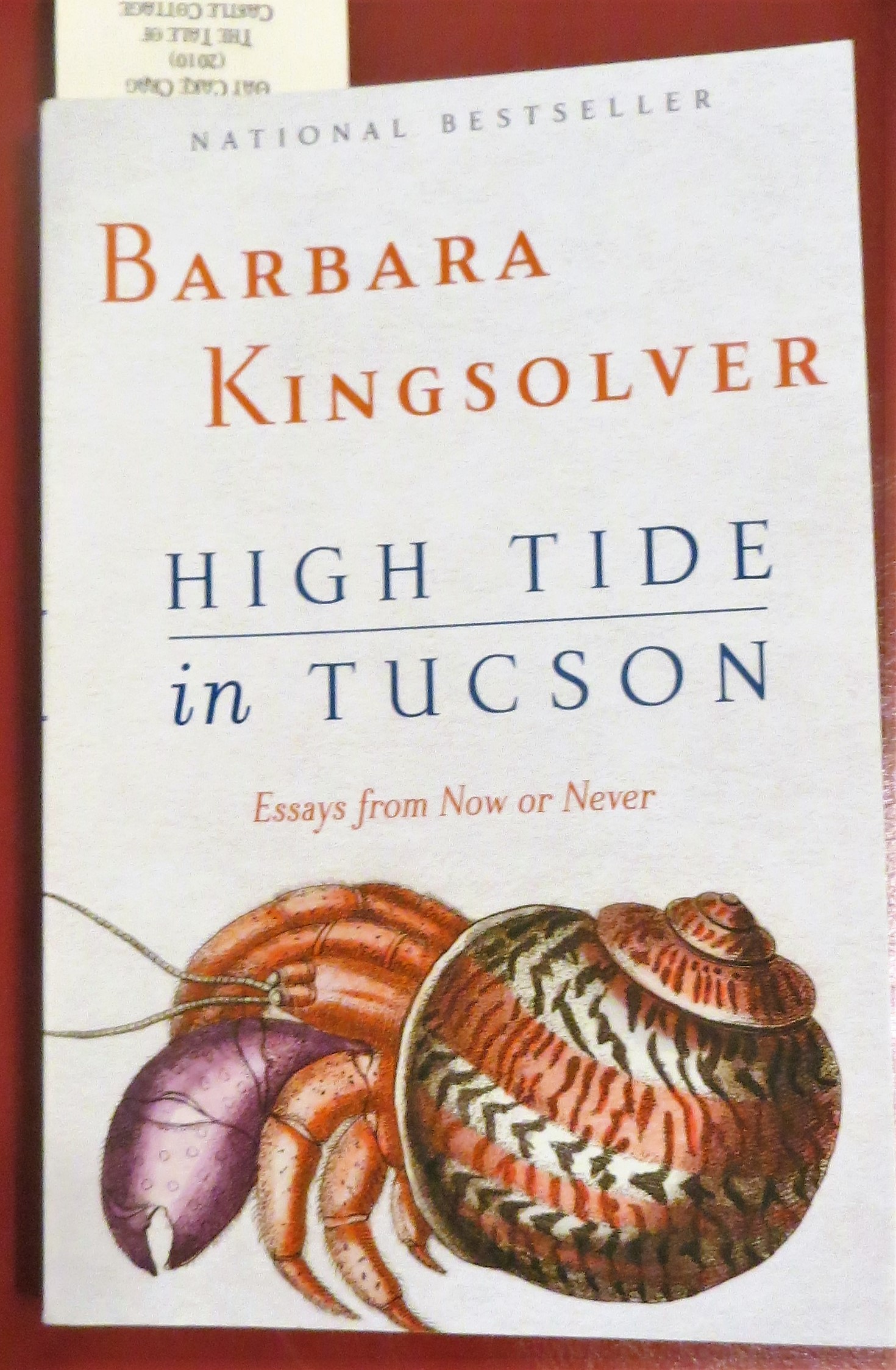
I was reading High Tide in Tucson, an essay anthology by Barbara Kingsolver who mentioned that she was often tempted to use one of her grandmother’s axioms when asked to commit to a future obligation. “Lord willing, and the creeks don’t rise,” she wrote.

My grandmother used to say exactly the same thing — and suddenly my wondering-brain was wanting to know the origin of the phrase  …  and then I was putting down Kingsolver’s book for a bit of research.

As usual, I came up with conflicting stories. One is that the phrase was first used by Benjamin Hawkins, U.S. General Superintendent for Indian Affairs between 1796 and 1818. Supposedly he used it in a letter to Thomas Jefferson requesting his presence in Washington D.C. in which he replied he would be there “God willing and the Creek don’t rise,” meaning the Creek Indians.

Barbara Kingsolver is one of my favorite authors — and I’m loving this book of essays by her.

Others believe that Creek merely refers to a stream, and that it was simply a hayseed rural term meaning if nothing stops me or all goes well. One example for this is a mock rustic speech from an 1851 Graham’s American Monthly Magazine: “Feller-citizens — I’m not ’customed to public speakin’ before sich highfalutin’ audiences. … Yet here I stand before you a speckled hermit, wrapt in the risen-sun counterpane of my popilarity, an’ intendin’, Providence permittin’, and the creek don’t rise, to go it blind!”

Another example of early use of the phrase, according to Wikipedia, is from the 1894 Lafayette Gazette: “We are an American people, born under the flag of independence and if the Lord is willing and the creeks don’t rise, the American people who made this country will come pretty near controlling it.”

It’s also said to be a sign-off tag line of the 1930s’ radio broadcaster Bradley Kincaid. My grandmother liked to listen to the radio so maybe this is where she picked it up. And finally, it has also been attributed to Abraham Lincoln and Andrew Jackson, among others, on the usual principle that attaching a famous name to a story validates it.

Well, that was enough information, if not exactly uncomplicated, to placate this wondering-brain of mine — until the next time it is wants answers. In the meantime, God willing and the creek don’t rise, I’ll go back to reading High Tide in Tucson. And in case you’re wondering about that title, Kingsolver explains it in her first essay.

Bean Pat: In tribute to Mary Oliver https://deborahbrasket.wordpress.com/2019/01/20/mary-oliver-washed-in-light/  Her words live on.

Now available on Amazon

Pat Bean is a retired journalist who lives in Tucson with her canine companion Pepper. She is a wondering-wanderer, avid reader, enthusiastic birder and is always searching for life’s silver lining. Check out her book Travels with Maggie, available on Amazon, to learn more. She can be reached at patbean@msn.com

Read Full Post »

 “Misunderstanding is my cornerstone. It’s everyone’s, come to think of it. Illusions mistaken for truth are the pavement under our feet.” – Barbara Kingsolver

What I Didn’t See


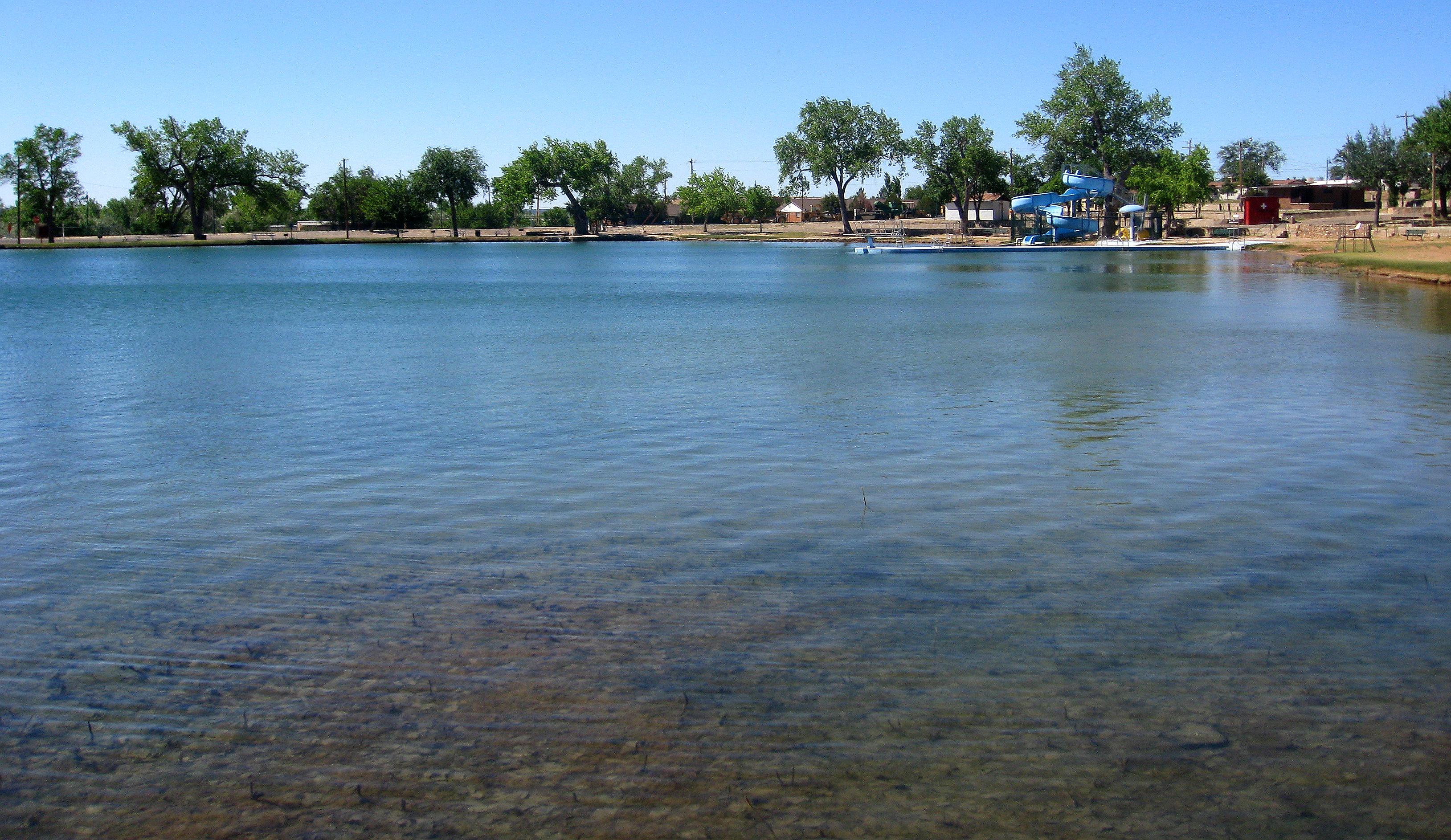
Looking across the deceptive shallow waters. — Photo by Pat Bean

There was only one thing left to do in Santa Rosa after my canine traveling companion, Pepper, and I left the Route 66 Auto Museum. Pay a visit to the Blue Hole.

Roadside signs advertising it had been tantalizing me for miles.

I found the attraction just a few blocks off Santa Rosa’s main Route 66 drag. I wasn’t impressed, seeing not at all what the hullabaloo was about. The Blue Hole looked like nothing more than a small, natural swimming hole that had been fancied up a bit.

Even the fancy diving pier didn’t clue me in. — Pat Bean

Pepper and I saw nary a soul as we walked all the way around it, which took about 10 minutes, before getting back on the road and heading to Albuquerque.

It was only later, when I did my usual curious-to-learn-more internet search, that I discovered why I should have paid the Blue Hole more attention. It was sort of like meeting a mild-mannered reporter named Clark never knowing that a Superman lay beneath.

What Pepper and I didn’t see was the 80-foot wide, 240-foot deep artesian well below the surface, its waters so crystal clear that scuba divers come for all over to dive in it.

There’s also a grate down there, blocking the hazardous entrance to some underwater caves that back in 1976 took the lives of two divers

There’s a lesson here. A familiar one. Never judge a book by its cover – or a pond by only what you can see.

Bean’s Pat: Pretty in Purple http://tinyurl.com/bqrz9vc If you’ve never seen a purple gallinule, then here’s your opportunity. And if you’ve seen one, I’m sure you’ll want another look.

Read Full Post »