Feeds:
Posts
Comments

Blue-footed booby ... Photo courtesy Wikimedia

The large white and brown bird with the blue feet didn’t recognize my right to the hiking path. Its home here in The Galapagos Islands, where man has not yet imposed his predatory nature, let it assume it was my equal.

I stopped about a foot away and was quickly mesmerized as the two of us, human and bird, stared eye-to-eye. My birding knowledge finally kicked in, however, and I identified the bird in front of me as a male blue-footed booby. The sex-distinguishing clue was that the pupil in its pale yellow eye was smaller than the pupil of the bird sitting on two eggs in a nest beside the path. I assumed the two birds were mates.

 As these birder thoughts filtered through my brain, the booby blocking my way lifted his right foot and gazed quizzically at me. I didn’t move. He put the right foot down and lifted his left foot and bobbed his head a few times. I smiled at him, and he repeated the maneuvers, the same ones I assumed he had used to woo his breeding female.

 When he lifted his left foot for the third time, I lifted my right foot in reply. For the next couple of minutes he and I continued this Hokey Pokey. It might have gone on longer except the rest of the tour group caught up.

 “Don’t tease the bird,” our guide said when he saw me.

“I’m not,” I replied. “He wanted to dance with me.”

 But since I could feel a thread of impatience coming from the people behind me, I moved off the path and started around the booby. We had been warned not to touch any of the Galapagos animals.

 The booby had no such compulsive restraint. He reached out and gave my leg a quick, non-threatening peck as I passed by him. It felt both like a good-bye handshake, and an invitation to “come back and dance with me.”


Black-billed magpie ... Photo by Stephen S. Skrzdlo

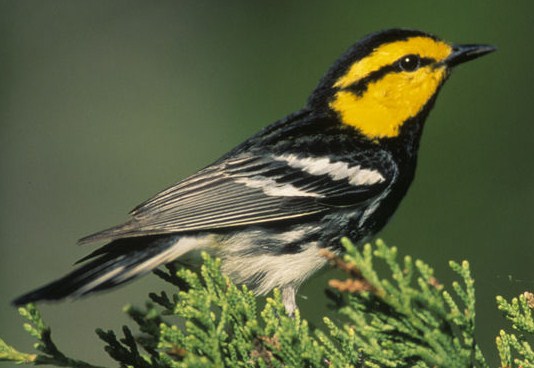
Back in the 1980s, and a few years before I noticed birds lived among us, I was visiting a friend who lived alongside the Snake River.  As she was showing me her farm, I spotted some long-tailed black and white birds flying over the water. I thought they were magnificent.

My friend laughed, and said the birds were pesky magpies, cousins to crows, and that farmers despised them.

This was the first magpie I could recall seeing. And never had I watched such a sight as the one before me. The magpies, their dark feathers glistening with an iridescent sheen in the sunlight, were swooping, circling and diving above the water with a winged grace that astounded me.

A few weeks later, I found myself hanging out with a group of New Agers at a “Back to the Goddess Worship.” As a feet-on-the-ground, cynical journalist I wasn’t a believer, but these people were my friends. Besides there there wasn’t much else to do in Twin Falls, Idaho.

Night found me sitting beneath a starry sky and a blazing campfire on the rim of the Snake River Gorge when the workshop leader asked each of us to tell us what animal was their totem. She began by divulging that hers was a mountain lion, and then passed the talking stick to the next person in the circle. I listened in amazement as the women talked about bears, foxes, golden eagles and wolves.

I didn’t have an animal totem and decided when it was my turn to speak, I would simply say so and pass the stick along.

As soon as the wooden rod touched my hand, however, this voice from out of nowhere said: “Magpie.” It took a minute for me to realize the words were coming from my own mouth, and that I was continuing to speak.

“… because the magpie is loud and raucous like a Texan which I am and can be, is playful and intelligent as I hope I am, and its black and white colors range across the entire color spectrum, which to me represents a broadminded way of thinking, which I like to think is one of my better traits.” I was certainly broadening my thinking now I thought as I numbly handed the stick to the person on my left.

And that’s how the black-billed magpie, pica hudsonia, became my animal totem. True story.

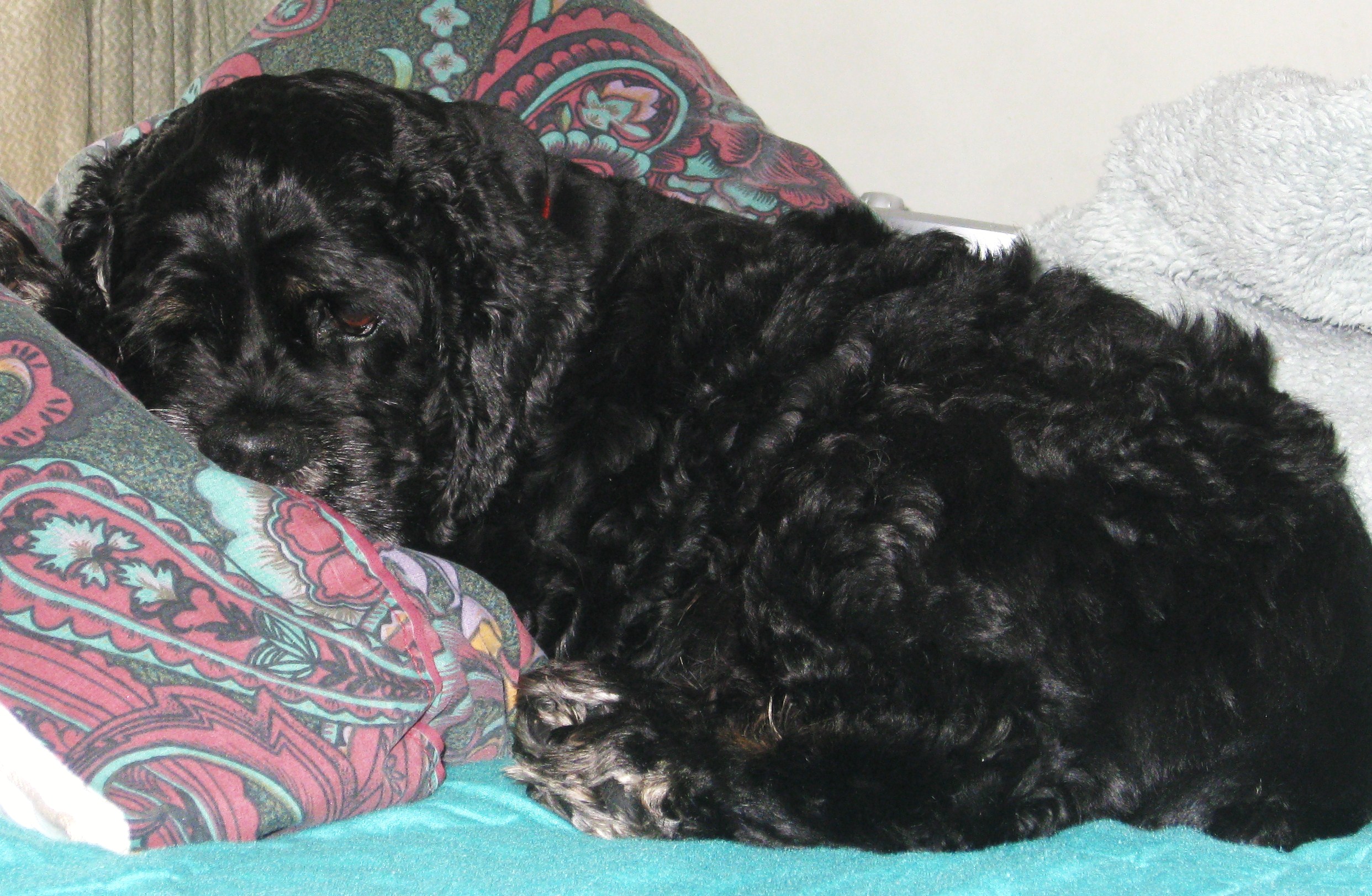
This New Year’s eve found me and my dog, Maggie, escaping rain and fog at Lake Bob Sandlin State Park. Located 10 miles south of Mount Pleasant. It’s a great place for some gentle hikes, my favorite being one that winds through the woods to a small pond where catfish and trout keep fishermen happy.

New Year's Eve at Lake Bob Sandlin ... Photo by Pat Bean

This day, however, I was lucky to find a few moments between downpour episodes for Maggie and I to take a quick walk around the paved Cherokee Trace camping loop where my RV was hooked up. I had chosen a spot right on the lake, a premium site that in less inclement weather would already have been taken when I arrived. It’s availability was the silver lining that always accommodates a storm, as were the raft of ducks that ignored the rain as they swam past my view near the lake’s shore, and the blue jays, mockingbirds, tufted titmice and fat squirrels that played in the trees outside my window when the rain slowed to a drizzle.

Instead of bemoaning my alone-ness on this celebratory night of the year, I found myself rejoicing in it. Maggie and I crawled into our above the cab bed early, but I set my alarm so as to be up to watch as 2009 would dissolve at the magic moment into 2010. It’s always been an exciting time in my life, a sheaf of 365 blank pages on which to write.

I awoke without the help of the alarm, fixed myself a hot chocolate, added a dash of Jack, and listened to fireworks off in the distance. I’m not sure exactly when Father Time whisked past my RV, but when I knew he had, I crawled back into bed. As usual, I had to scoot Maggie over. She had slept through the change of years. The warmth her body had imprinted on my side of the bed felt good, and helped push me back into the world of dreams.

 I awoke at 5 a.m. to a blaze of light streaming in the window by my head. By turning on by stomach, I could see it’s source. A full moon. And not just any moon, but a rare New Year’s Eve Blue Moon. The last time we had one of those was 1990.

 I got up and sat on the couch, wrapped in a bright red, gold, turquoise and black furry blanket a granddaughter had given me, and watched this glowing miracle melt into a morning sky. It just seemed the right thing to do on this first day of the year.

Afterward, I fixed myself some coffee and sat at my table. The ducks, blue jays, mockingbirds and titmice, joined by a couple of bright red cardinals, were back, but this time playing and singing beneath the rays of a golden sun that came with the dawn.

It wasn’t until I finished my second cup of coffee that I decided it was time for me to stop watching 2010 begin its 584 million-mile trek around our solar system and begin inking my own exploratory journey on those marvelous blank pages. And with that Dr. Seuss’ words rang through my head:

 “Oh the places you’ll go and the things you’ll see … Will you succeed? Yes you will indeed.”

A Wish for the New Year

Western sandpiper ... photo courtesy Wikimedia

I was sitting with my binoculars atop a canyon overlook of the Firehole River in Yellowstone National Park watching a western sandpiper make its way along the river’s shore. It would occasionally disappear behind a rock but soon appear on the other side as it slowly made a steady trek up the river’s edge.

 As I delighted in watching this small creature, a car pulled up near me and I became aware that a woman was eagerly scanning the direction I was looking. After awhile, she got out of her vehicle and came over to where I was sitting.

 “OK. I give up. What are you looking at,” she impatiently asked. ”

A sandpiper there on the shore.” I pointed in its direction, expecting her to take a look. I would even have shared my binoculars with her if she had showed some interest. To my surprise, however, she was annoyed.

 “Oh poo! she said. “I was looking for real animals. Like a moose, or an elk.”

She then got back in her car and sped off. The truth is I’ve seen more of what this woman considered “real” creatures since becoming an avid birder than ever before. For one thing, I’m in the outdoors more often, thereby increasing my chances to see elk, rabbits, antelope, squirrels, beavers, marmots and foxes. And while looking through binoculars or a scope for a tiny bird off in the distance there is no way I’m going to miss the five deer feeding on a hillside, or the porcupine curled among tree branches in a a tree that’s hosting a dozen red-winged blackbirds.

 My late-blooming passion for birds has been Mother’s Nature’s special gift to me. My wish to each of you for the new year is that you find your own special passions in life – and be wise enough to know that birds are “real creatures,” as well.

American robin ... Photo courtesy of Wikimedia

I live in cramped quarters in a 22-foot RV – but it has these marvelous picture windows that bring Mother Nature’s bounties inside my cozy abode. Having all these as my backyard is the upside of my skimpy lifestyle. Most mornings I watch the sun rise while sitting at my small table drinking coffee.

A Camden, Arkansas, sunrise ... Photo by Pat Bean

Sometimes I watch as it rises above the trees at my children’s homes, as I did this morning at my youngest daughter’s place in Camden, Ark. I’ve also watched it slip above red rocks toward the east in Zion National Park many times. The sight of the golden light it cast on the park’s western cliff faces made me think about Cortez’s unsuccessful search for the city of gold, and how fortunate I was that I had found mine.

A few times I’ve even watched, but not in my RV, as a blazing orange glob bloomed above an African savannah, bringing to life all the things I would see as I bounced across the land in an open Land Rover the rest of the day.

But after two days of being confined to my motor home because of sickness, I wanted something more than just a sunrise to start my day. It was time for a good walk – and my dog, Maggie, agreed. As usual, Mother Nature did her part to make it a special one’

I had awoke to the cherry, cheer-up, cheer-up call of a robin and expected to see a few – but not the huge flock that was searching for breakfast in my daughter’s horse pasture. They were spread out in a polka-dot pattern all across the pale ochre color of the winter grasses .

Only one other time had I seen so many robins at the same time.

I had taken the road off the Mirror Lake Scenic Byway in Utah’s High Uintas that would take me to Christmas Meadows. As I came across a rise, spread out before me were robins everywhere. Hundreds, if not thousands. Their red breasts seemed especially bright this day, especially those standing in the sun’s spotlight. It was one of those moments that time freezes in your memories.

It seemed only appropriate, seeing how close we are to Christmas, for that moment to be unfrozen as a treasured gift. I truly am a fortunate woman. And, believe it or not, robins are actually fortunate to have humans living among them.

While we’ve destroyed way too

much wildlife habitat in this country, we’ve actually provided additional food sources for these red-breasted thrushes. They’ve thrived on developed landscapes because of agriculture practices and bird feeders; and where they’ve found year-round food sources, they’ve stuck around instead of migrating to warmer climes, so much so that they’re losing their role as the harbingers of spring.

Give yourself a gift. Listen for the song of a robin and look for them whenever you’re outside. It’s bound to make any day bright, even if you haven’t been sick for a couple of days.

A Ship and a Park

Acadia National Park, located on Desert Island on Maine's eastern coastline. Photo by Pat Bean

The USS Acadia, a destroyer tender that served in Desert Shield and Desert Storm

Navy war ships are named after our national parks, which seems an oxymoron to me.


I thought about this when I visited Acadia National Park in Maine, for which the destroyer tender, USS Acadia, is named.

I had sailed aboard this ship in 1990 on a Tiger Cruise from Seattle to San Diego, a public relations sea-going event to show loved ones how safely their sailors lived. My youngest daughter, a welder and one of 400 women assigned to the ship’s 1,200 person crew, had invited me. .

Shortly after we had sailed out of Seattle, we heard that Iraq had invaded Kuwait. The sailors correctly assumed they would soon be sailing to Mideastern Gulf waters, not the kind of thing any mother of a child in the military wanted to hear. Activities for the guests aboard the USS Acadia, however, continued, and my daughter and I won a Pictograph Tournament during the three days we were at sea. My prize was a bright red sweatshirt with USS Acadia in gold lettering imprinted across the front. I still wear it on cool days.

Fall in Maine ... Photo by Pat Bean

Entering Acadia National Park on Maine’s Atlantic Ocean coast brought back memories of my days aboard the ship, and refreshed my question of why war ships are named after national parks. It didn’t make sense to me. Parks are places of peace and war are places of hell.


What had started out as pleasant memories as I drove dissolved into a tumultuous concern about death and dying. As I always do, when I finally accept there are things my worrying can’t solve, was to shift my focus to Mother Nature’s wonders. It’s never hard to find them.

This day it was the color of the seasons. I had reached Maine in time to watch the foliage turn from green to reds and golds. While my concerns about war and my hopes for peace didn’t go away, they disappeared for awhile in a closet of my brain, and the door shut with the help of cheerful lilac asters that grew along the edges of the road.

Perhaps the answer to why ships of war are named after parks is to remind our country’s soldiers that beauty awaits them at home to counteract the ugliness of battlegrounds.


Chihuly's Orange Herons. Photo by Pat Bean

Glass flower beside a waterfall. Photo by Pat Bean

In 2006, I spent six months traveling from Texas to Maine and back with my black cocker spaniel, Maggie, in which I avoided put-you-to-sleep freeways and crowed large cities. St. Louis was the exception.

I had decided this Gateway City to the West, where Lewis and Clark begin their historic trek to the Pacific, was worth enduring the hustling cacophony of a thriving metropolitan jungle. Despite the heat – it was July – and the crowded and cemented downtown RV park where I hooked up and left Maggie in air-conditioned comfort while I played the tourist role, I had a great time. I even found a place where man and nature came together: The Missouri Bontanical Gardens, where a Dale Chilhuly exhibit was on display in the gardens’ Climatron.

As I walked through the dome’s earthy rain forest, I couldn’t stop taking photos. I usually only snap a quick picture when sight-seeing, than bring out my notebook. While it’s said “one picture is worth a thousand words,” as a writer I appreciate that it takes words to express this.

But this day, staring at Chihuly’s colorful glass creations of reeds and Mexican hats and herons and meteorite balls plopped down among a bounty of foliage and exotic flowers, left me wordless. When I later looked at the images, I found I had mingled Chihuly’s art with the creations of nature so well that I sometimes had to stop and ask myself which was which.

That night, I pondered how a genius like Chihuly comes to be. The answer quickly came to me: Single-minded focus and dedication. For almost as long as I could remember, I had wanted to be a “great” writer, yet I was always finding excuses for not writing. I knew I lacked the focus of a Chihuly, or even that of an old boyfriend who religiously practiced his guitar four hours a day, seven days a week. I was always getting distracted, and when my writing suffered I flagellated myself.

Such abuse went on for years, until I finally realized that giving up riding roller coasters with my grandkids, arguing politics with my friends, exploring new hiking trails, white-water rafting with my river-rat buddies, mindlessly watching the sun rise and set, reading Harry Potter the day it came out, and sniffing every flower in life I came across were more important to me than being great.

Writing is a part of my life, and will always be, but it will never be my whole life. Knowing this, accepting this, and now content with this, I lay silently in bed listening to Maggie gently snoring at my feet and let the waves of sleep take me.


The trailhead at Poison Spring State Park near Camden, Arkansas. Photo by Pat Bean

Brown thrasher. Photo by Ken Thomas

Awhile back I visited Poison Spring State Park, a designated Civil War historical site located off Highway 24 near Camden, Arkansas. The time I spent to digest the historical exhibit that told the story of a battle fought where tree-shaded picnic tables and rusty barbecue grills now reigned left me depressed.

War, regardless of whether the cause is just or unjust, is always butt ugly. I needed an antidote for the worry that this memorial, commemorating the soldiers who lost their lives here in 1864, quickened within me worries about the safety of our military sons and daughters who are fighting overseas today. 

I found the peace where I always do. In the company of Mother Nature. She was on the park’s nature trail, whose existence beyond the picnic area was noted by a colorful carved wooden sign. The path followed a tiny stream bank dotted with lush green ferns. Dragonflies, their double wings glistening in the speckled sunlight that drifted through the tree canopy, darted here and there while chattering cardinals serenaded all. In such a setting one can easily forget all is not right with the world.

House sparrows, mockingbirds and common grackles frequently appeared as I followed the short path  to its end and back.  But it was the sight of a lone brown thrasher that especially thrilled this birder’s heart. The only others I had seen of this species were in my Camden daughter’s backyard, where a pair were raising several chicks in a thick patch of wisteria that grew on the lattice roof of a patio cover.

A rusty brown bird slightly larger than a mockingbird, the brown thrasher mostly skulks its life away in thick woods out of sight of the casual observer. I spotted today’s bird as I rounded a curve in the trail. On spotting me it quickly scooted into the bushes – but not before I had spotted the striped yellow breast and the yellow eyes that shouted its identity.

 War, at least for these few seconds, ceased to exist.

African sunrise, 2007 -- Photo by Pat Bean

African sunset, 2007 -- Photo by Pat Bean

1.The rose and purple glow of the eastern sky at sunrise.

 2.Health.

 3.Children who accept an imperfect mother.

 4.My black cocker spaniel, Maggie, who has been my sole traveling companion for the past five years.

 5.Listening to a storm rage outside while I’m cozy inside.

6.Friends, especially those who kick my butt when I get off track.

 7.My oldest son’s safe return from three tours in Iraq.

 8.A new journal and a good pen 9.

Learning something new. 10.Spell check.

 11.Soft fleece blankets.

 12.Books and the authors who write them.

13.Awaking to the sound of birds singing outside my RV.

 14.Wild flowers and manicured gardens.

 15.Hearing my children ask me to cook one of their favorite meals for them.

16.Citizenship in a country where a woman can safely travel the streets alone with her face uncovered without fear of    being stoned.

17.Spring fields of bluebonnets in Texas.

18.Grandchildren who keep me young.

 19.My passion for nature and wildlife.

 20.Drivers who don’t tailgate, or get in front of you and slow down.

 21.The magnificent view from the top of Angel’s Landing in Zion National Park and being able to still get to the top to see it.

 22.People who’ve helped me through hard times.

 23.Cargo pants and bright colored T-shirts.

 24.The 37 years I spent as a journalist.

 25.The Internet, where I can almost always find the answer to my many questions.

 26.Tough writing critiques that help me become a better writer.

 27.The opportunity to experience my teenage years, for the first time, in my 40s.

 28.The return of wolves to Yellowstone.

 29.Holding hands with family at Thanksgiving while everyone tells what they are thankful for.

30.PBS Television. 31.My zest for life. 32.The blue-footed boobies that danced and dived for me in the Galapagos. 33.My friend, Kim Perrin, who knows all my secrets and won’t tell because I know hers, too.

 34.A hot bath.

 35.The heady colors of fall leaves.

36.Personal achievements of family members and friends.

37.Cool Texas days.

38.Completing a difficult task.

 39.Comfortable shoes.

 40.My morning two cups of coffee laced heavily with half and half.

41. Funky, no nickle, earrings for my sensitive ears.

42. Rivers to float down and oceans to wade in.

 43.Travel to new places.

 44.Clean bathrooms whose toilet paper rolls are not empty.

45.Helen Reddy singing “I Am Woman, Hear Me Roar.”

 46.Immunizations

47.Getting to meet and interview Terry Tempest Williams and Maya Angelou.

48.That I finally learned to ski.

 49.People who work for peace.

 50.Moisturizing cream for my dry skin.

 51.People who greet you with a big smile on their faces.

 52.Laughter

 53.Pleasant surprises.

 54.Love, received and given.

 55.A good margarita shared with friends around a campfire.

 56.Giant redwoods

 57.That when my mother died it was in my home and with my growing-up anger toward her long vanished.

58.A crackling fireplace and a good book on a cold day.

 59.Waking up to a world made pristine by an overnight snowfall.

 60.Reading glasses.

 61.My youngest daughter’s caring ways – and her shepherd’s pie.

 62.My middle son’s shared love of birding.

 63.My oldest daughter’s shared love of writing.

 64.My oldest son’s concern for me. 65.

My youngest son’s search for himself, even though he is doing it outside the family fold at the present time.

 66. My oldest son’s wife who is my guardian travel angel.

67.My middle son’s second wife who cares for four of my grandchildren as if they were her own.

 68.My youngest daughter’s husband who is the handyman of the family.

 69.My oldest daughter’s husband’s quirky ways.

 70.Days when I can go braless.

71.Roger Tory Peterson, who created the first user friendly field guides for identifying birds.

 72.Washing machines and dryers

 73.Chocolate

74.Scenic byways and backroads

 75.Days when my mutual funds make money instead of losing it.

 76.Christmas carols.

 77.My Golden Age Passport.

78.A fresh hair cut and color.

 79.Good memories of my youngest brother who died of AIDS at the age of 35.

 80.Sailing on Great Salt Lake

 81.Van Gogh’s “Starry Night” and his sunflowers.

 82.Days when I don’t put my foot in my mouth.

 83.Pretty paper and stationery.

 84.Cell phone alarm clocks.

85.Back scratchers and fly swatters.

86.Good binoculars and birding scopes.

 87.The magic, silent gray minute between which night becomes day.

 88.Scenic hikes, like the one up Negro Bill Canyon outside of Moab, Utah. 89.Fireflies.

 90.That we still have whooping cranes and condors in this world.

91.Homemade ice cream.

 92.Digital cameras.

93.A good non-stick skillet.

 94.Soft flannel pajamas.

 95.Maps.

 96.Scented candles.

 97.My monthly Social Security check.

98.Roller coasters and tandem sky-diving jump masters.

 99.Mosquito repellant.

 100.Red and Orange sunsets that paint the western horizon.

 Brown Creeper, photo courtesy of Wikimedia

I never saw patience as a virtue, just an excuse for those too lazy to take action or those frozen into place because of fear of making a wrong decision. Right or wrong – and it was often the latter – I had to immediately plow the furrow.  Patience played no role in my life until the birds trapped me in their seductive net.

 I suddenly found myself sitting for hours in an effort to watch and identify a tiny bird that was building a nest in the corner of a shelter at the Bear River Migratory Bird Refuge. It was a barn swallow.

 The 10-minute trip across the causeway to Antelope Island, where I often hiked, began taking four hours. Is that a lone Barrow’s goldeneye in the middle of that flock of common goldeneyes? Yes! It is a Barrow’s! It’s the only duck in the group with a white crescent on its face instead of a white circle.

 Is that bird sitting on that tree limb at Beus Pond a loggerhead shrike or a northern shrike? Dang it! The bird flew away before I answered that question. But I did finally see a brown creeper that had eluded me for five years.

Dainty and delicately patterned to match the bark of a tree, the bird was clinging to the trunk of an oak about 30 feet away from me, and just two blocks from my daughter’s home in a populated subdivision in Dallas. I never would have seen it if I hadn’t been standing motionless for the past 15 minutes in the shade of a larger sprawling oak watching the antics of several butter butts.

 These birds are more properly known as yellow-rumped warblers, but one flash of their yellow butts and the nickname sticks in your mind. While the butter butts are hard to miss, the creeper is so well camouflaged that even once I knew it was there, my eyes sometimes fooled into thinking it was part of the tree. From my hidden vantage, I watched as the creeper spiraled upwards around the trunk, using its thin, down curved bill to search the bark for insects.

 OK. Uncle! Patience is a virtue – but you still have to get up off that couch and turn off the television to make it one.