Feeds:
Posts
Comments

“Be daring, be different, be impractical, be anything that will assert integrity of purpose and imaginative vision against the play-it-safers, the creatures of the commonplace, the slaves of ordinary.” – Cecil Beaton

Unfocused or  Focused: That is the Question

The sun reflecting through a colored glass canopy at the Albuquerque Zoo repeated itself on the sidewalk. I thought the reflections looked a bit unfocused. But then again perhaps not and I just chose to break the rules. What do you think? — Photo by Pat Bean

Route 66

 “It is better to fill your head with useless knowledge than no knowledge at all.” – Jim Hinckley, author of “Route 66 Backroads: Your Guide to Scenic Side Trips & Adventures from the Mother Road.”


Remains of The First Inn in Texas, named for its border location. Of course it was also the last inn, too. — Photo by Pat Bean


Glenrio, Texas/New Mexico
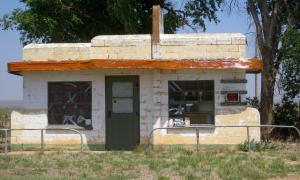
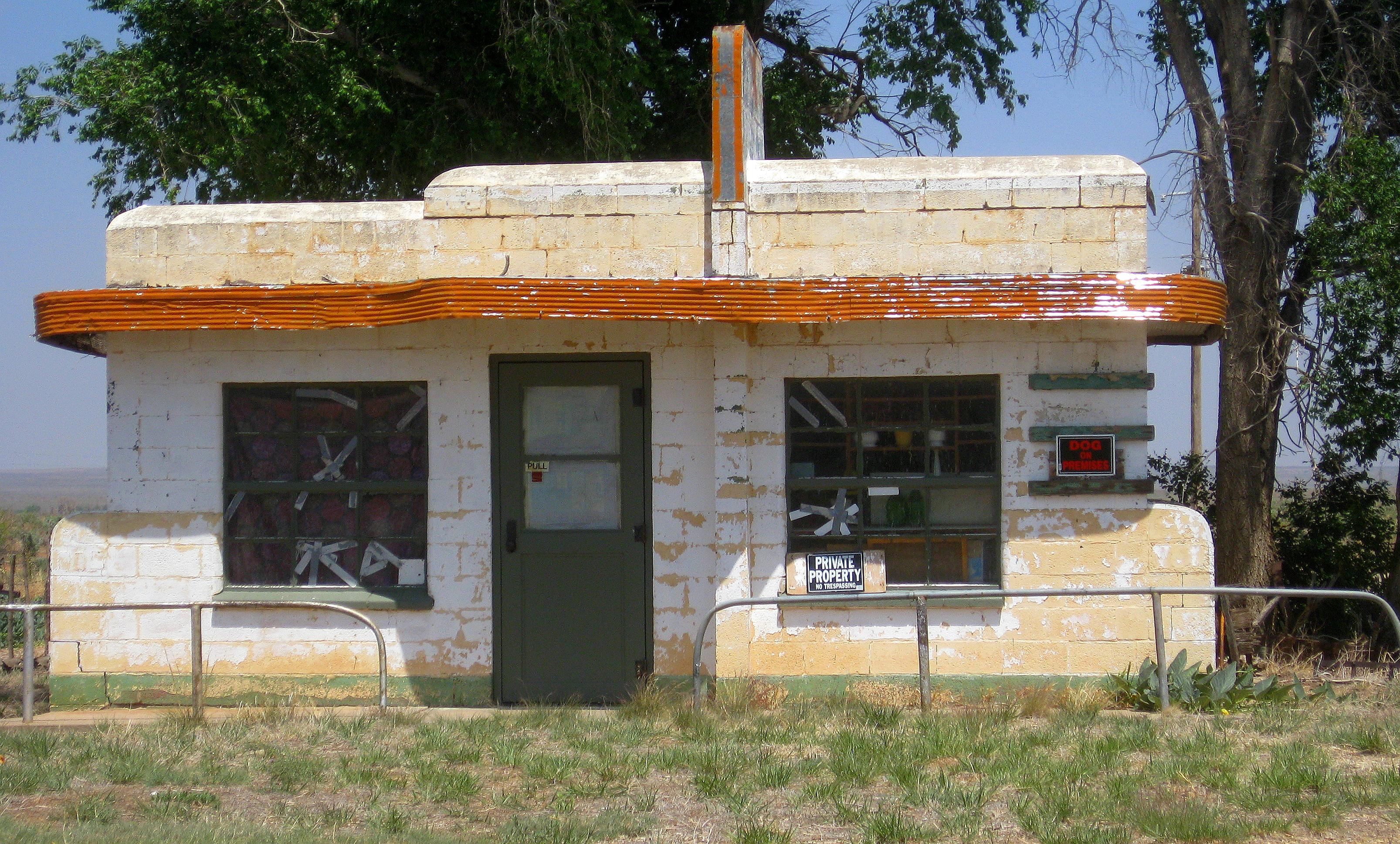
The old diner — Photo by Pat Bean

Once thriving with business, Glenrio today is a ghost town, its deserted buildings crumbling memories of brighter days that are fast disappearing with time.

Straddling the border between Texas and New Mexico, the town was given life by the railroad and outlying farmers and ranchers. It’s name means river valley, but oddly the description belies its arid location.

At the turn of the 20th century, Glenrio already had a post office, hotel, hardware store, land office, several grocery stores and a newspaper.

It also had, according to “Legends of America,” gas stations – but only on the Texas side of town because New Mexico’s gas tax was higher. New Mexico got the bars, however, because the Texas side of the town was in a dry county.

In 1938, when Route 66 was born, Glenrio, located midway between Amarillo, Texas, and Tucumcari, New Mexico, on the highway, boomed. It was also picked as one of the movie locations for John Steinbeck’s “The Grapes of Wrath.”

Route 66 casualty — Photo by Pat Bean

The prosperity tumbled when its railroad station was closed. But it was only when Interstate 40 replaced Route 66 in 1973, and bypassed Glenrio, that the town died.

I saw no other humans when Pepper and I took the detour to visit the ghost town. It was sad, yet I was fascinated by the decay, trying to imagine the vacant-eyed buildings filled with activity as I knew they once had been.

There was the diner where travelers stopped to eat, and the motel where they slept.

Were those passers-by on their way to Disneyland in California, or to grandfather’s funeral in Oklahoma? Perhaps they were excited about seeing the Grand Canyon in Arizona for the first time, or seeing a new grandchild in Texas?

They might even have been just traveling one-way, perhaps to the big city of Chicago for a new job.

I wandered and wondered, but the crumbling ruins didn’t answer.

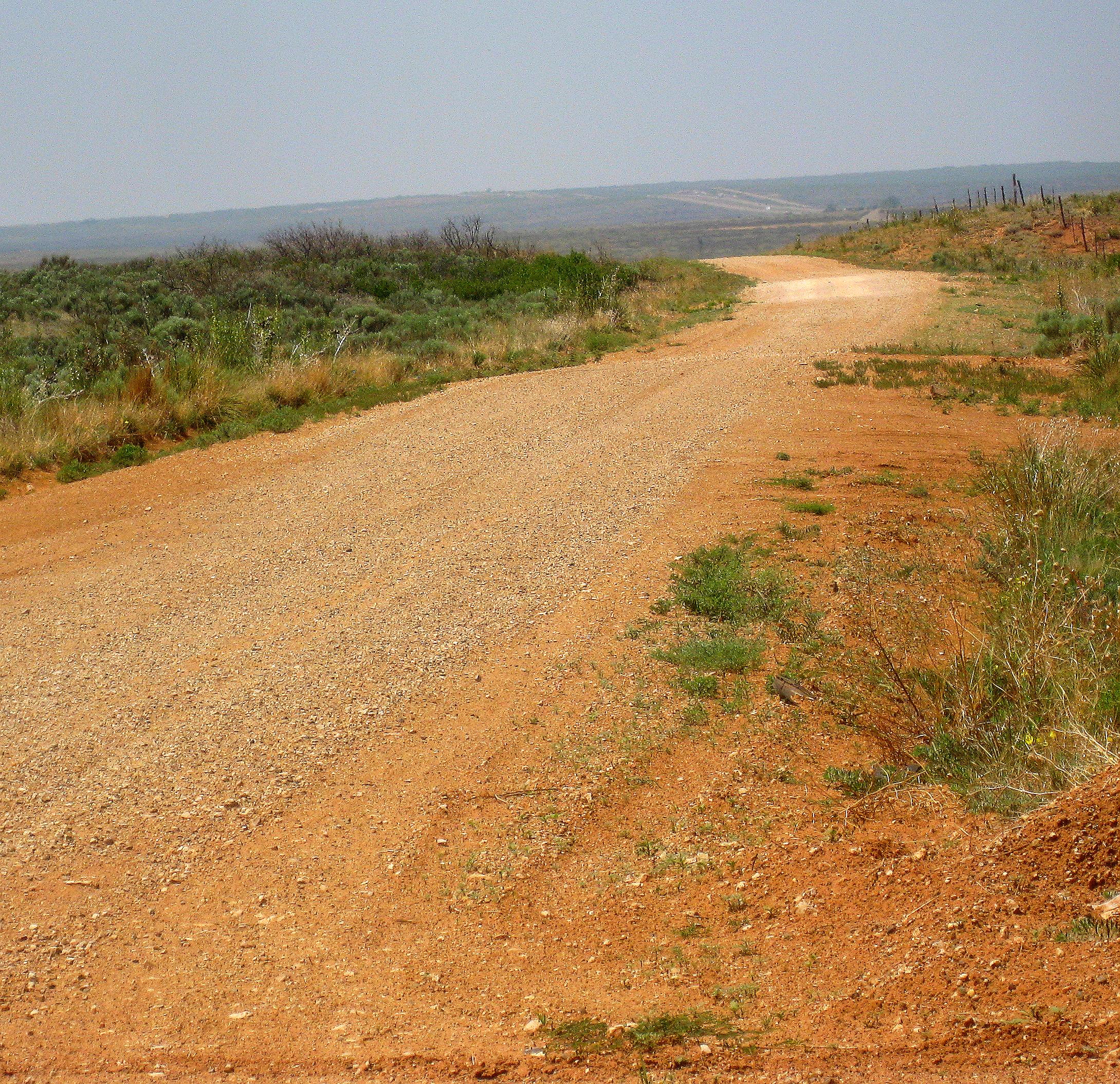
Even Route 66 to the west of Glenrio has returned to the earth. When maintaining its pavement got too expensive, New Mexico county workers removed it. I back-tracked to the interstateand exited at the next paved section of 66 still remaining. — Photo by Pat Bean

Perhaps I wondered because I was one of those travelers who had passed through Glenrio in 1950s. I was traveling with an aunt and uncle as a teenage baby-sitter for their young daughter. We were headed to Sequoia National Park.

It was the first time I had ever been out of Texas, and the first time I ever saw mountains. I haven’t been the same since.

Bean’s Pat: Wistfully Wandering http://tinyurl.com/7qzhv8r Say happy birthday. This blogger’s post turned a year old today. Let her take you to Chicago, where Route 66 begins.


Route 66

 Buz Murdock: They make a pretty good map for cars don’t they? But what do they make for guys like me who turn left instead of right?

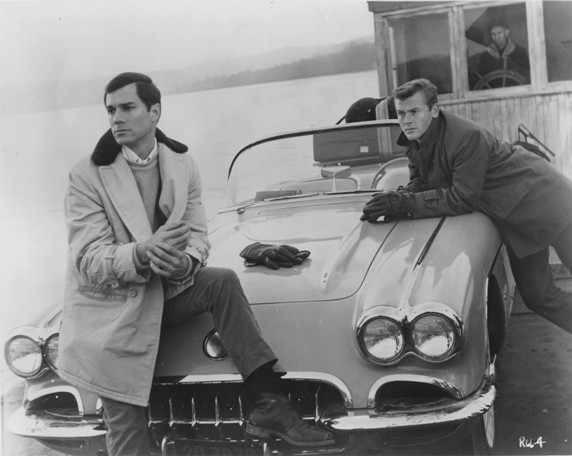
George Maharis as Buz and Martin Milner as Tod in a scene from the 1960s’ TV series, Route 66, I don’t think I missed an episode back then when my wanderlust life was still only a dream. — Wikipedia photo

Tod Stiles: We have to know we’re lost before we can find ourselves Buz. That sort of map you make up as you go along.

– Dialog from the 1960-64 TV series “Route 66

Driving Down Memory Lane

After days of plotting and replotting my route west, which is part of the fun of travel, I finally decided to follow Route 66 from Amarillo, Texas to Flagstaff, Arizona. Not much of the old Mother Highway remains, but the bits and pieces of it that do have been glamorized.

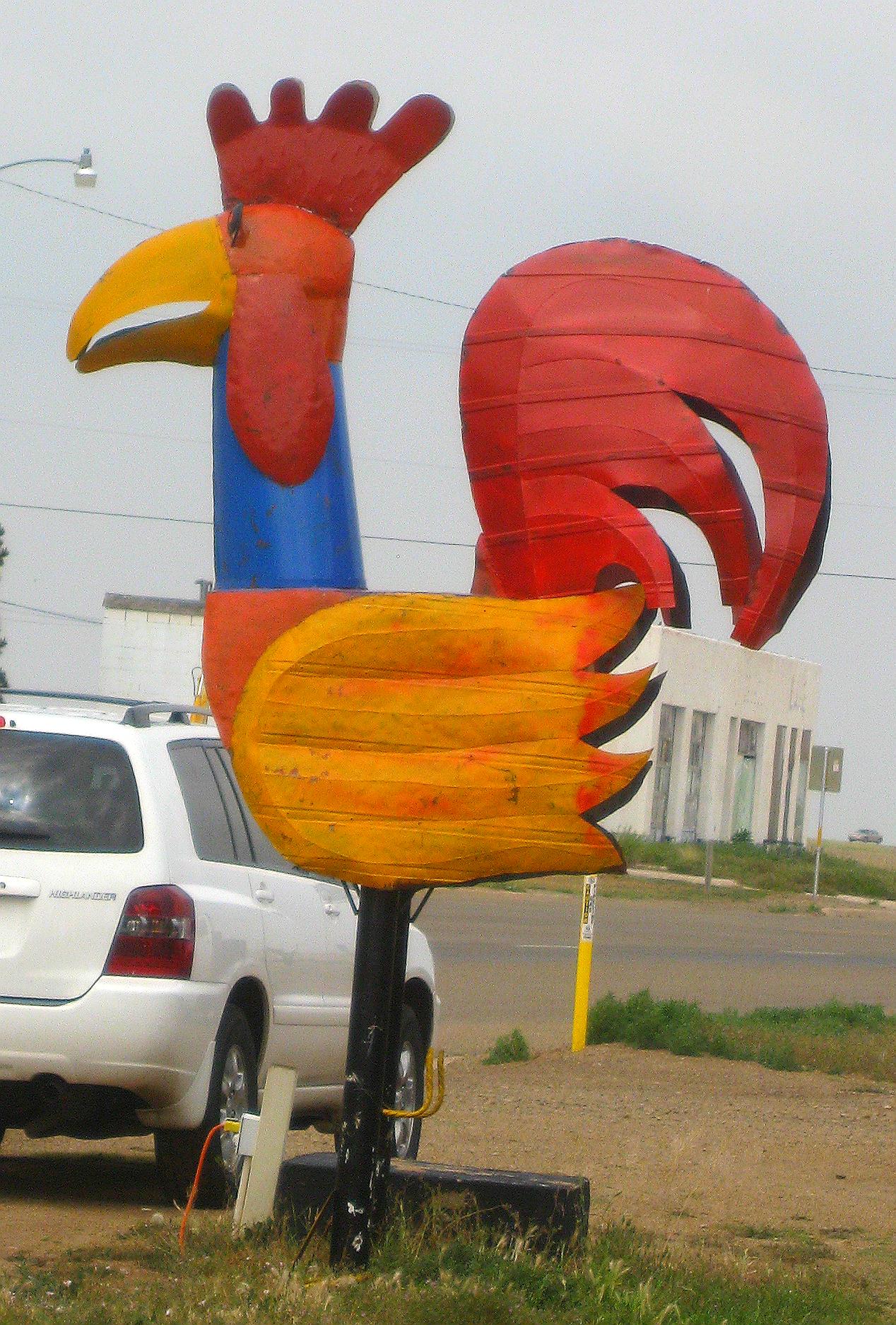
The chicken that sits in front of a Mexican restaurant in Vega. I found it the most interesting thing in this tiny remnant of a town. — Photo by Pat Bean

Trying to stay on as much of the original Route 66 as possible kept me off Interstate 40, which supplanted 66, at least some of the time. Often it was just driving the frontage road, but since I hate freeways and roaring semis, I enjoyed the slower pace.

Where the route across Texas’ Panhandle got interesting were the little towns 66 took me though, like Vega and Adrian. A few businesses during the route’s heydays still survived but there were many more dilapidated ruins of those that hadn’t.

I stopped in Vega just long enough to photograph a wooden chicken in front of a Mexican restaurant. But in Adrian, I stayed long enough to have lunch at the Midpoint Cafe.

In continuous operation since 1928, the cafe gets its name from its geological location, that being the midpoint of Route 66 between Chicago and Los Angeles. According to a sign in front of the restaurant, it was 1,139 miles to either city.

The Midpoint Sign directly across the street from the Midpoint Cafe, which offered an excellent lunch break for me. — Photo by Pat Bean

My reward for stopping in Adrian was a piece of the restaurant’s signature ugly crust chocolate pie. It came topped with ice cream. Thankfully my RV has a freezer, because it was enough for two desserts – and I wasn’t about to leave a bite of its scrumptiousness behind.

I ate the second piece the next morning for breakfast. I simply scraped off the remaining ice cream, plopped the leftover pie in the microwave oven for half a minute, then put the ice cream back on top.

Come journey with me tomorrow and I’ll take you through the ghost town of Glenrio.

Bean’s Pat: Another Header http://anotherheader.wordpress.com/2012/04/25/page-arizona/ Page, Arizona. This blog is a good example of how you need to get off the beaten path to really see what’s out there. Antelope Canyon, is especially a fantastic experience no one should miss. It easily makes my unending list of favorite places.

Cadillac Ranch

 “We always had Packards, until the war, when they stopped making them; then we had a Cadillac.” June Carter Cash

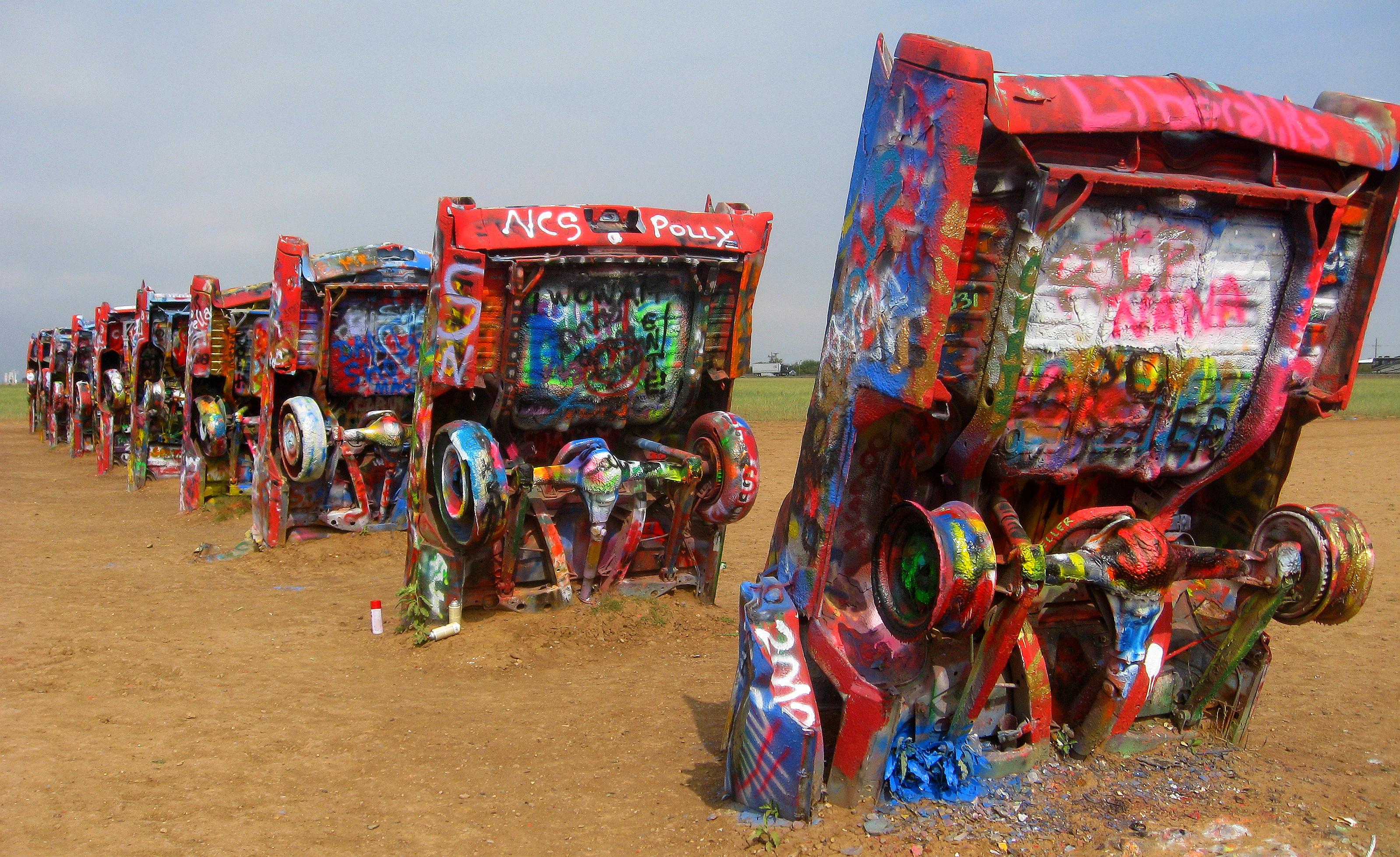
From the front -- Photo by Pat Bean

Adventures With Pepper

You can’t visit Amarillo and not take a little detour off of Interstate 40 to Cadillac Ranch. It just wouldn’t be, well Texan.

It’s not exactly a ranch, just a large field minus the cows. There’s not even a ranch house, just 10 half-buried old Cadillacs with psychedelic paint jobs, courtesy of whomever visits with a spray paint can. The color décor is constantly changing.

The Cadillacs are what Texas millionaire Stanley Marsh, who planted them back in 1973, calls an art installation.

And from the rear -- Photo by Pat Bean

I like it. It’s fun art. And the installation tells a story, part of which is the heydays of automobiles and Historical Route 66, which Interstate 40 replaced.

Back in the 1970s, I briefly owned an old Cadillac. It was a 1965 model if I recall correctly. I needed a car and back then, when the cost of gas started escalating, the Cadillac was the cheapest thing on the lot.

That old Cadillac was smooth running, but a big old gas guzzler and quite expensive to repair. It wasn’t long before the Cadillac was replaced with a used VW Bug, which cost more but was cheaper in the long run. .

According to Wikipedia, the eccentric millionaire Stanley probably paid only about $200 for each of his Cadillacs, which he picked up at junkyards before giving them a half-butted burial.

You just gotta love Texans.

Bean’s Pat: 400 Days ’til 40 http://tinurl/7fvkjjn You are never too old to live your dreams

 “Some people are always grumbling because roses have thorns; I am thankful that thorns have roses.” – Alphonse Karr

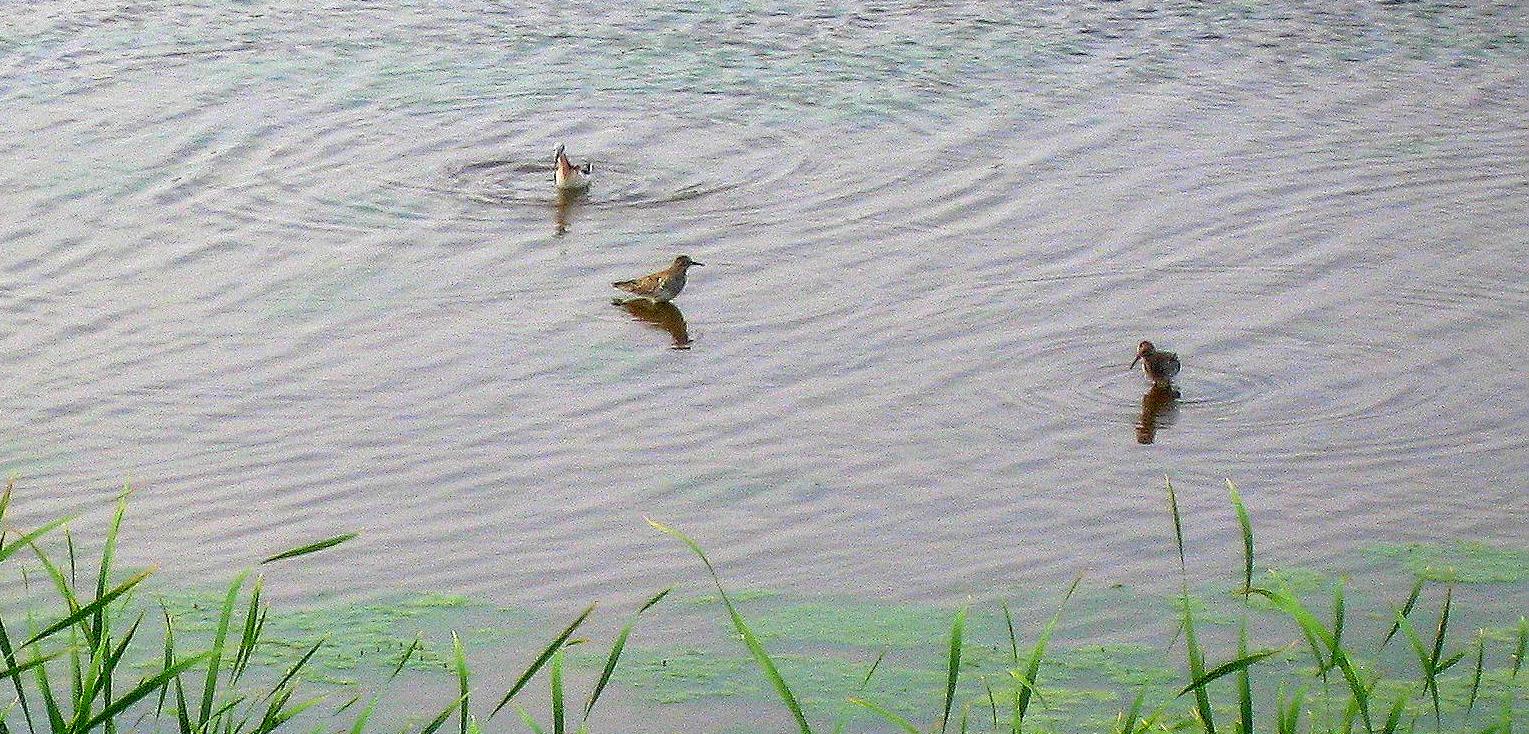
While I watched the red-necked phalaropes in the pond ..... -- Photo by Pat Bean

Adventures with Pepper

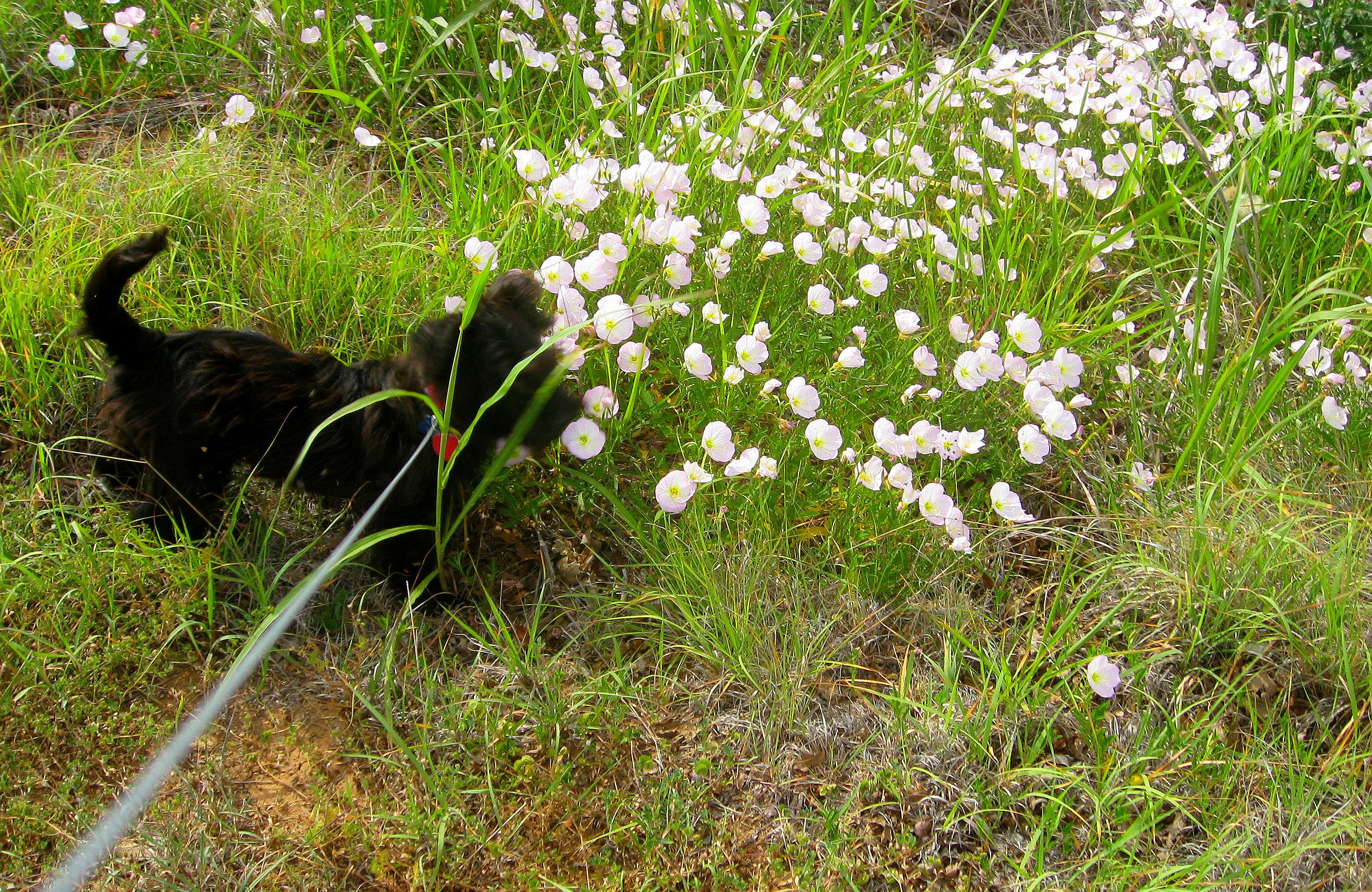
Pepper played around in the buttercups -- Photo by Pat Bean

The roadsides between Wichita Falls and Amarillo were strewn with wildflowers in abundance this past week. While Texas’ glorious spring bluebonnets have already disappeared, purple penstemons, golden coreopsis, scarlet Indian paintbrush, and white prickly poppy blossoms stood in nicely.

And then when Pepper and I pulled into a fancy rest stop, complete with a sign near the entrance to the information center that warned visitors to be aware of rattlesnakes, there was a large field of buttercups. I feel sorry for anyone who doesn’t thrill at such a sight.

Beyond the flowers, there was a small pond with a dozen or so phalaropes doing their thing.

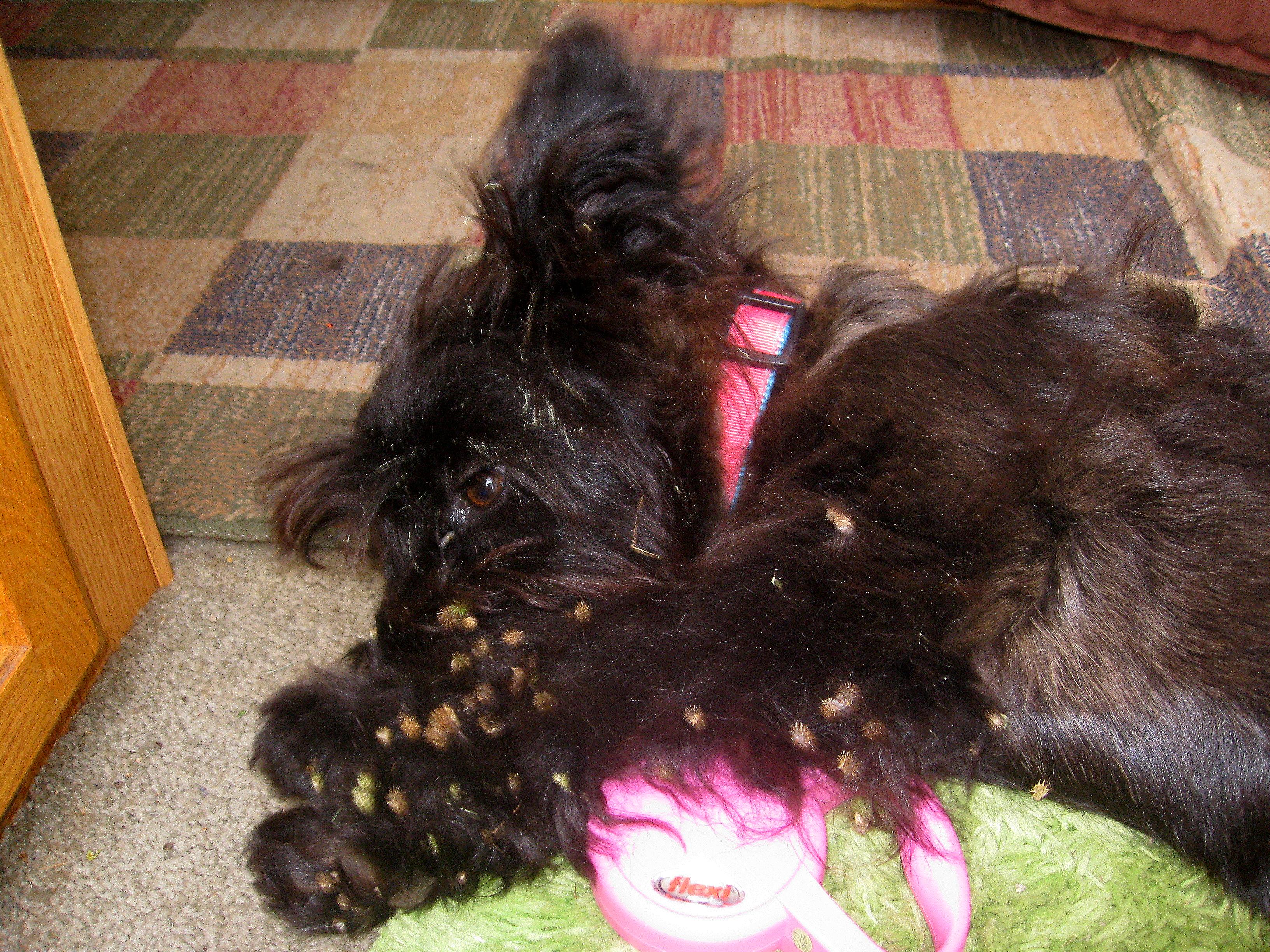
And the Texas nasties got her. -- Photo by Pat Bean

Phalaropes swim in circles to stir up the water and bring up their dinner. I’ve seen thousands of them do this on the Great Salt Lake in Utah, where they fill up on brine shrimp eggs before continuing their migration.

There were only about a dozen, however, on this small pond.

While I watched these small birds, Pepper decided to explore the buttercups. When I looked around, she was having a blast bounding among them. Watching her made me laugh out loud – well until she tired and came back to stand beside me.

It took me half an hour of picking and brushing and cutting of hair before Pepper wasn’t as prickly as a cactus. That sign that warned about snakes should have also mentioned Texas’ nasty burs.

Bean’s Pat: Peter Pan http://tinyurl.com/84j3cf9 How many of you have actually read J.M. Barrie’s book? I love the quotes.

 Oh What a Beautiful Morning …

“Every morning in Africa, a gazelle wakes up. It knows it must run faster than the faster lion or it will be killed. Every morning a lions wakes up. It knows it must outrun the slowest gazelle or it will starve to death. It doesn’t matter whether you are a lion or a gazelle … when the sun comes up, you’d better be running.”

First view of Lake Arrowhead's sunrise -- Photo by Pat Bean

A Howl of a Sunrise

Five minutes later ... Photo by Pat Bean

When Pepper and I stepped out of the RV on our last morning at Lake Arrowhead State Park. It was to a chorus of howling coyotes.

My new canine companion perked her ears up, listened for a couple of seconds and then joined their chorus. What a great traveler she’s going to make, I thought.

Then I stepped around the side of my RV, Pepper’s leash in one hand and a cup of cream-laced African coffee in the other hand, and watched the sun rise.

Every morning should have such a great start.

Bean’s Pat: The Greening of the Great Egret  http://tinyurl.com/br8fhd A great bird decked out in its courting colors.

Thomas Young together with Snow, his gyrfalcon/peregrine hybrid bird. Both were 37 years old in 2006 when I took this photo.

 “The greatness of a nation and its moral progress can be judged by the way its animals are treated.” – Mahatma Gandhi

One Man’s Love of Animals

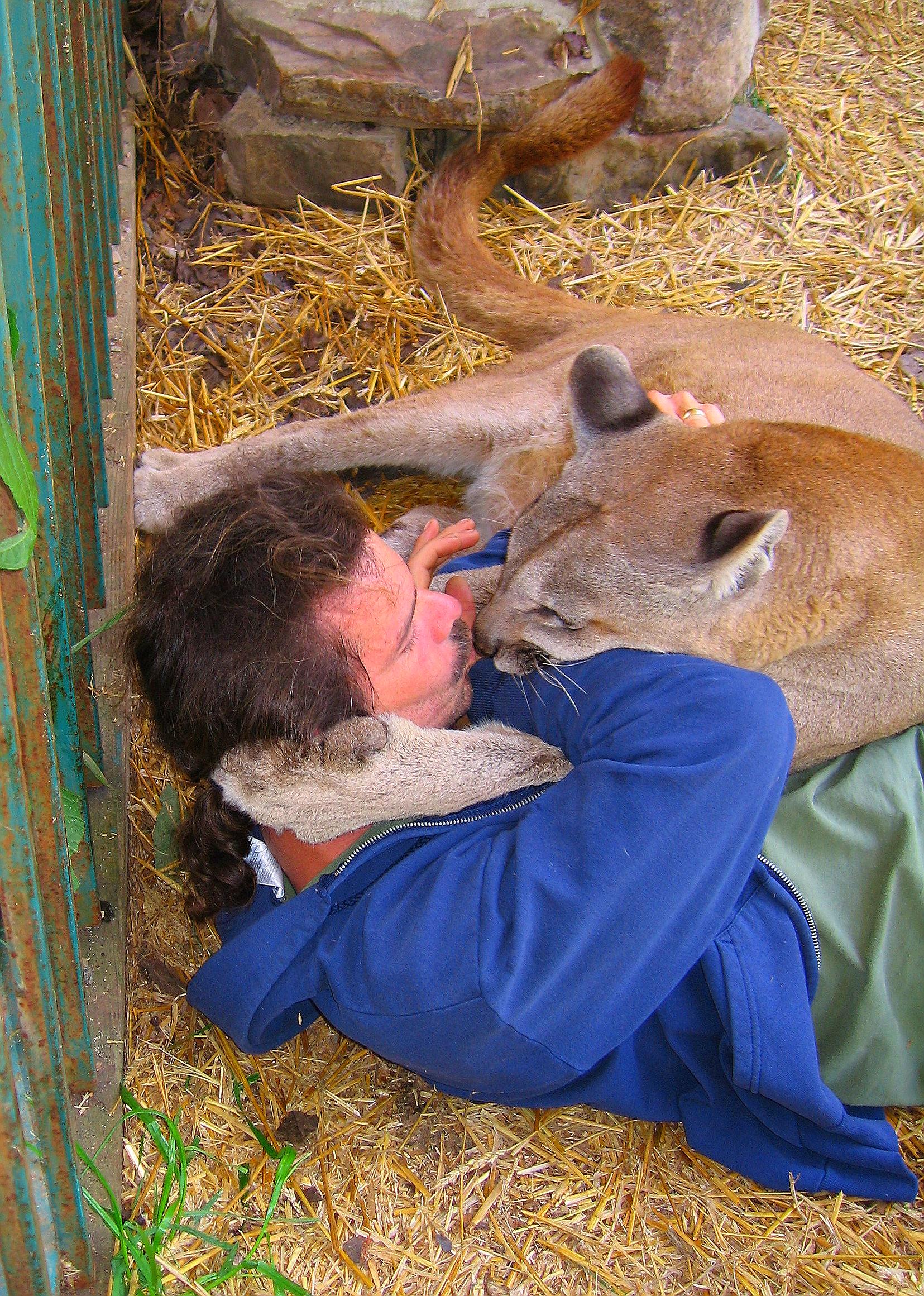
Togetherness: Sheena may be a cougar but she acts as if she's right where she belongs. -- Photo by Pat Bean

During my 2006 wanderings, I came across Queen Wilhelmina State Park near Mena. Arkansas. One of its attractions at that time was a small zoo and wildlife sanctuary operated by Thomas Young, a wildlife rehabilitator.

The zoo animals included a bear, a timber wolf cub, orphaned fawns, bobcats, wild turkeys, hawks, owls, raccoons – and a cougar named Sheena. Almost all of them had been injured at some point in time.

The side of a small unpainted wooden building on the property told the real story of this place. Large white lettering boldly announced that 12 bears, 5,000 hawks, 2,000 owls, 22 bald eagles, 18 golden eagles and thousands of small mammals had been released back into the wild by Young. The $4 entry fee to the zoo helped cover his expenses.

It was while I was questioning Paul, a volunteer and apprentice falconer working with Young, that I saw Tom for the first time.

Paul pointed him out to me as the long-haired man who had just appeared with a turkey neck in his hand to feed a wild turkey vulture that had just landed in the park.

As I watched the scene from about 30 feet away, the volunteer told me the vulture was a bird Tom had rehabilitated. Later Tom told me it was actually the parent of the rescued bird. He said it was the first time this particularly vulture had fed from his hand.

I was more amazed that he could tell the difference between two vultures than that a large, society-designated-ugly, wild bird had fed from his hand. .

“For some reason it’s come to trust me,” Tom said of his vulture friend. “A while back it brought its young here for me to babysit while it flew off on some business for about three hours.”

The volunteer had already told me this story in more detail but I was still fascinated with Tom’s less wordy rerun along with a sparse sketch of his life.

This man was a doer not a talker.

Tom said the park’s lofty location in the Ouachita Mountains made it ideal for releasing rehabilitated birds back to the wild. I was privileged to see one such release the next day, an awesome red-shouldered hawk that Tom released from the overlook just beyond the park’s lodge.

The bird simply fall off the edge of the mountain and glided away, one of the most beautiful sights any birder could ever hope to see.

Bean’s Pat: A Traveler’s Tale http://tinyurl.com/brbfpsh Take an armchair tour of a Papua, New Guinea, village.

 “The very idea of a bird is a symbol and a suggestion to the poet. A bird seems to be at the top of the scale, so vehement and intense his life … The beautiful vagabonds, endowed with every grace, masters of all climes, and knowing no bounds – how many human aspirations are realized in their free, holiday lives – and how many suggestions to the poet in their flight and song!” – John Burroughs

Delightful, Colorful, Awesome Birds

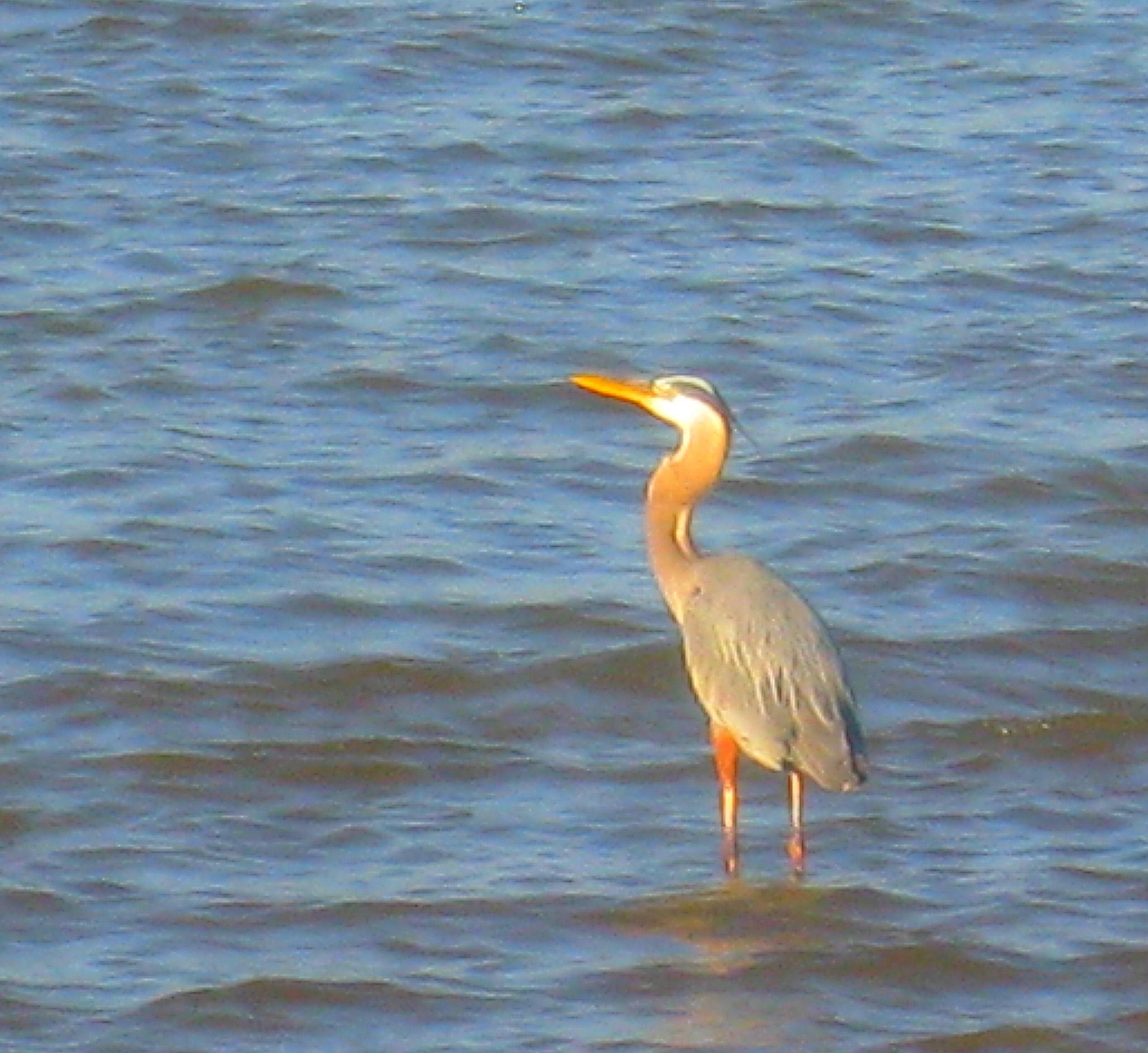
Great blue heron at Lake Arrowhead State Park -- Photo by Pat Bean

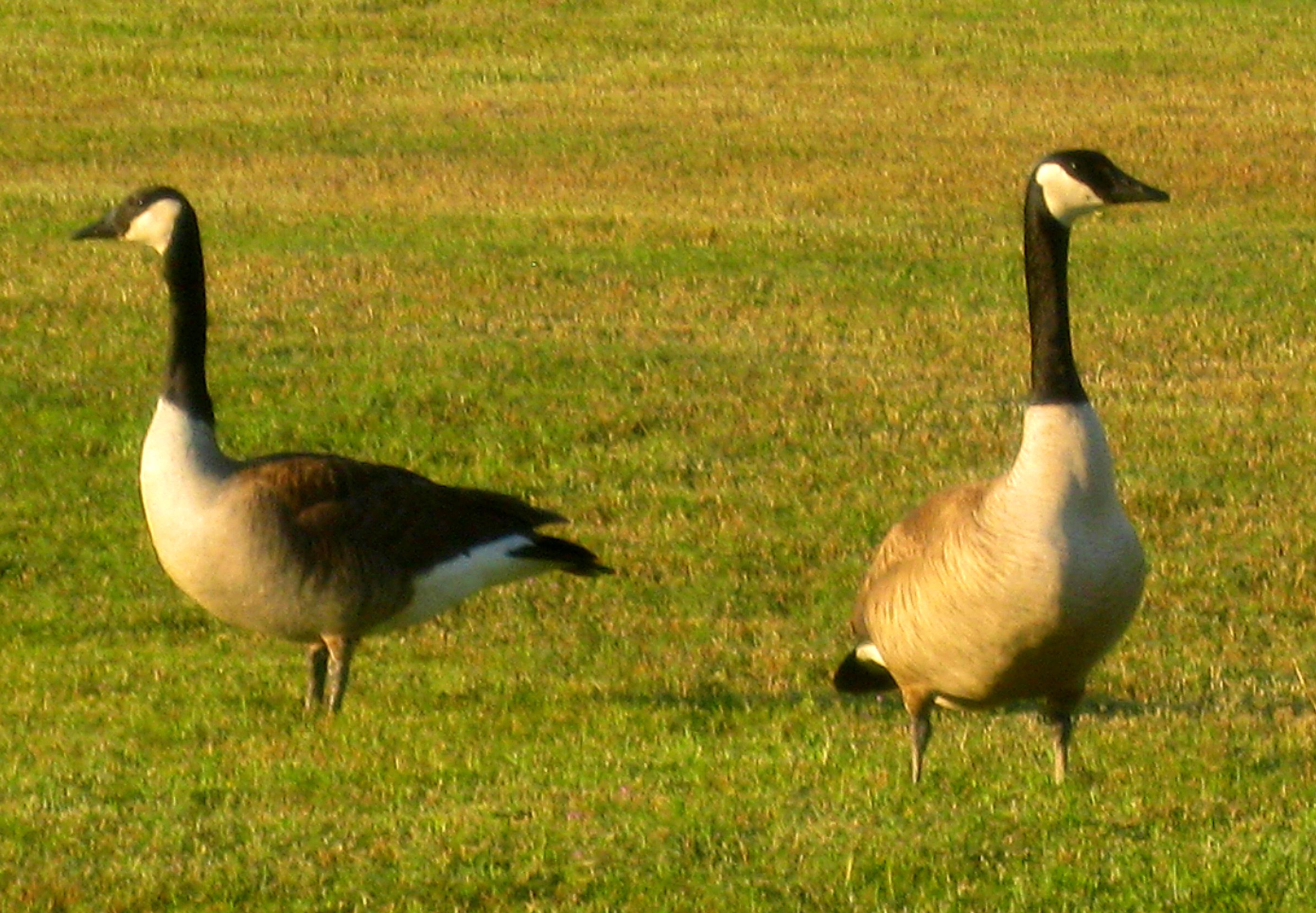
From the Bullock oriole’s flash of bright orange feathers as it flew across my path to the Canada geese that strutted down to the lake, birds were constantly making their presence known during my visit to Texas’ Lake Arrowhead State Park.

For an avid birder like myself, it was better than my favorite Jack-in-the-Box chocolate milkshake high — and came without the calories.

Mockingbirds were plentiful, making my mind play tricks on me when I saw one that didn’t quite fit in. I was thinking it might have been a tropical mockingbird, but then this quite-out-of-place species was on my mind from reports of one of them being seen in Texas’ Sabine Woods. I certainly wasn’t sure enough of my find to add it to my life list of birds.

Canada geese strutted across the manicured lawn near the fishing pier, making it easy to photograph them. I wish I had been able to capture the flock that had honked their way overhead earlier in the morning. But as I remind people often, I'm a writer not a photographer, and the only camera I own is a pocket Canon point and shoot. -- Photo by Pat Bean

I saw a great blue heron at the fish-cleaning station near the park’s fishing pier, but before I could get a picture,  it flew away. It landed in the lake on the opposite side of the pier and began fishing for its breakfast.

When I looked at it through my binoculars at it,  I saw a dozen or so spotted sandpipers cruising the shoreline in front of it, and a yellowlegs a bit farther out in the water. It had to have been a lesser yellowlegs because it was too close in size to the sandpipers to be a greater.

As I continued to watch the sandpipers, a red-winged blackbird flew in beside them. Its shoulder epaulets were so brilliantly red that they made my heart skip a beat.

Grackles, robins, snowy and great egrets, swallows (cave, I think), killdeer, scissor-tailed flycatchers and circling turkey vultures were among the many other birds at the park that I saw.

While I suspect the park is mostly favored by fishermen, it’s now on this birders list of favorite places, too.

Bean’s Pat: Trees for Arbor Day http://tinyurl.com/crhxqtu For tree huggers like me, a slide show from the National Wildlife Federation.

 “With all things and in all things, we are relatives.” Sioux proverb

A healthy crop of young prairie dog pups. -- Photo by pat Bean

Good Reasons to be Cautious

An adult prairie dog giving me the eagle eye after she shooed all the young ones below. -- Photo by Pat Bean

I don’t often get a chance to see prairie dogs, and even rarer do I get to walk among them.

But that’s the opportunity I had at Texas’ Lake Arrowhead State Park just outside of Wichita Falls.

To get some photographs of them, I left my canine traveling companion, Pepper, in the RV. She loves to chase anything on the ground that moves. So far, robins and butterflies have been her favorite targets, but I’m sure prairie dogs would also be high on her list.

While I keep her in check with a 10-foot retractable leash, I figured her quick dash toward a prairie dog would send them deep in their underground tunnel homes.

All about prairie dogs sign at Lake Arrowhead. -- Photo by Pat Bean

The truth is they didn’t let me get too close before they would dash below, especially since there were babies among them. On my approach an adult would shoo them below and then turn around and give me a chittery war cry while keeping an evil, eagle eye on my movements.

I did, however, manage to snag a few pictures.

I sort of feel I owe prairie dogs an apology. As a reporter I covered the release of rare and endangered black-footed ferrets in the middle of a prairie dog colony in the Browns Park area of Colorado back in the late 1990s.

Prairie dogs are ferrets preferred menu item. They are also on the coyote’s menu as well, and Lake Arrowhead is full of coyotes. Even so, I must say that the prairie dogs numbers don’t seem to have diminished since I last visited the park. Prey usually  reproduces quicker and more abundantly than predators.

Bean’s Pat: Love Thy Bike http://tinyurl.com/cdsrs2o See Los Angeles beaches from a bike seat.

Eighter from Decatur

“The Internet is becoming the town square for the global village of tomorrow.” – Bill Gates

Heading North on Highway 287

Decatur, Texas wall mural -- Photo by Pat Bean

Getting out of the mass traffic jam known as the Dallas-Fort Worth Metroplex area yesterday took far too long for my liking. But finally I made it to Highway 287, a road I traveled many times when I lived and worked in Northern Utah and made yearly trips to Texas to visit family.

Once it went through all the little podunk towns, like Rhome, Alvord, Sunset, Fruitland, Henrietta and Decatur, as it made its way from Fort Worth to Amarillo. Now, so as not to slow travelers down, the grown-up, four-lane 287 bypasses them.

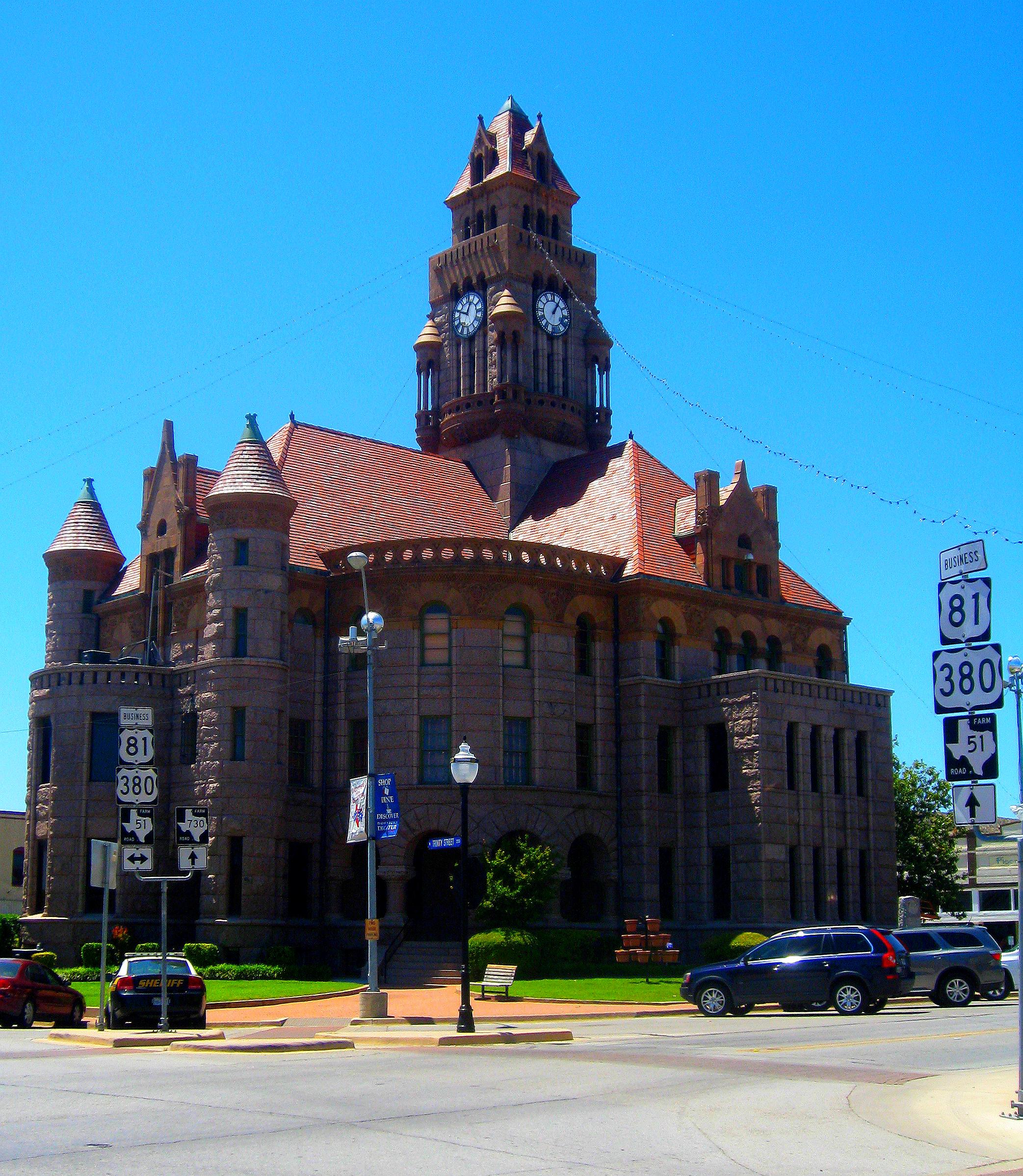
Decatyr courthouse. I love the town squares I find in many old Texas small towns. -- Photo by Pat Bean

I often rebel against this thirst for speed and quite often take the highway’s business routes so as to taste the flavor of each town’s unique personality. Decatur was one of the places I wanted to get to know better yesterday.

One of the first things I saw in Decatur, after passing the abandoned Petrified Wood Gas Station that is now a designated historical site, was a mural on the side of a dinky convenience store. It stopped me and my camera in its tracks.

While I’m not a craps player, I had heard the term eighter from Decatur and knew that it was slang for rolling an eight with dice.

But what was its origin? Did the saying actually begin here in Decatur? Wandering/wondering minds like mine always want to know.

One of the stories I came up with when I did some online evening research was that it began with Will Cooper, a Decatur boy who loved playing dice and also a servant girl named Ada.

Will was hired as a cook for Army regulars and some Home Guard members who were headed east to participate in a 1900 re-enactment of the Civil War battle of Manassas, also known as battle of Bull Run.

It was a long train ride to Virginia and the troops entertained themselves playing dice. Will’s lucky slang wish, “Ada from Decatur,” when he wanted a roll of eight spread among the Texas troops on the east-bound train.

Somewhere along the line it became eighter instead of Ada, or so this particular story goes. There’s always more than one when unrecorded memories are on the line.

Do you have another story to add?

Bean’s Pat: A Frank Angle  http://tinyurl.com/7ntltz7 On a cute couple. My kids grew up with Rocky and Bullwinkle, which meant I got to watch them too. Anybody else out there remember these two loveable crazies?