Feeds:
Posts
Comments

Archive for the ‘Nature’ Category


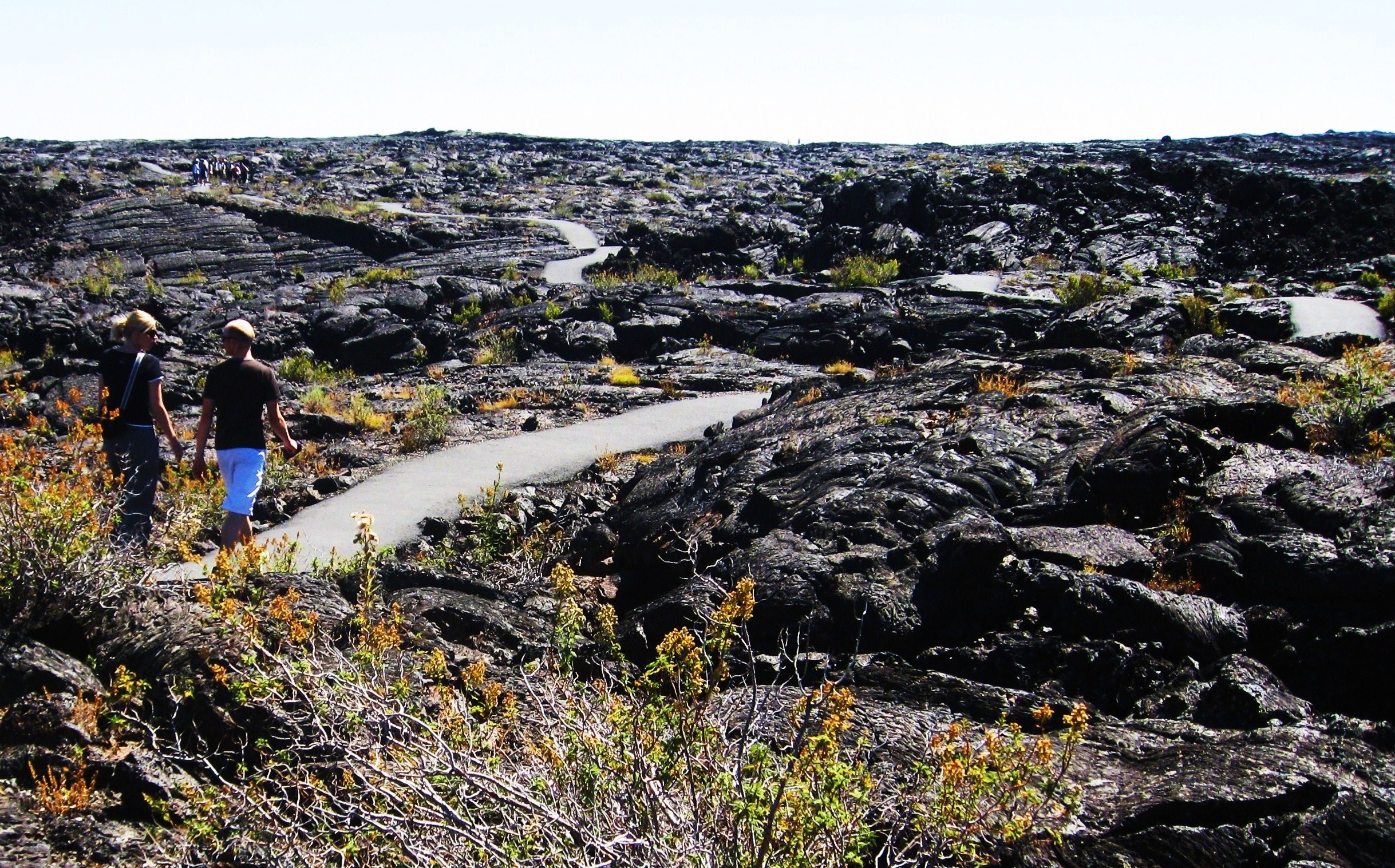
Trails through Craters of the Moon National Monument take one through a dark, angry landscape. Photo by Pat Bean


Volcanoes are one way the earth gives birth to itself.” — Robert Gros


The huge lava field that spreads out across Southern Idaho’s Snake River Plain was thought to resemble the moon’s surface, hence when the area was designated a national monument in 1924 it was called Craters of the Moon.

While the name remains today, Neil Armstrong and Buzz Aldrin’s two-hour walk on the moon’s surface 45 years later showed it was nothing like the moon’s surface. The name stuck, however, just as Junior remains Junior to his parents even when he’s 65 years old.

As I walked across the rugged blue-black lava flow on trails that took me into a world far removed from my daily existence, I couldn’t help but compare this adventure with my recent visit to Mount St. Helens.

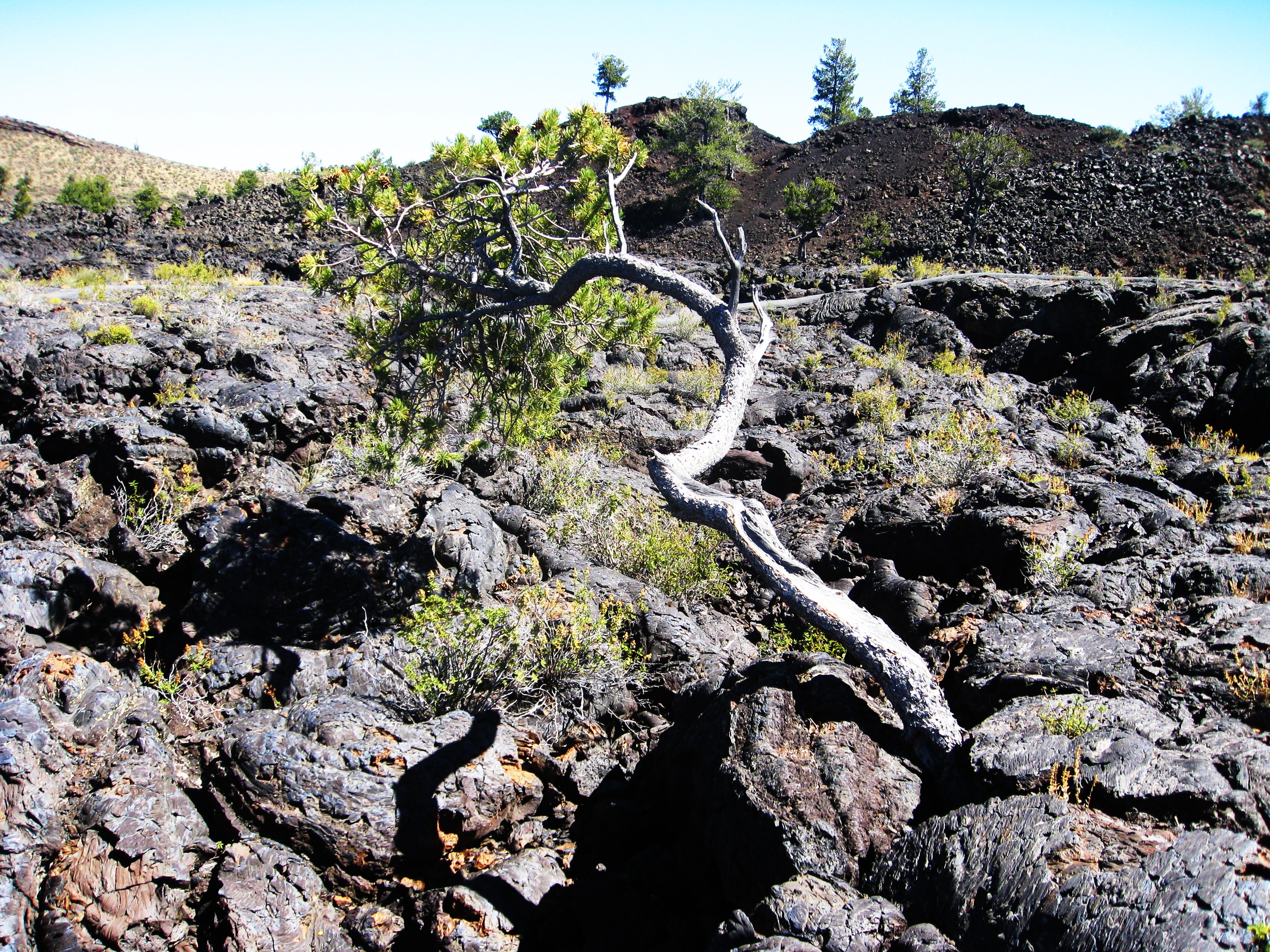
Yet even in this harsh landscape, life manages to exist. -- Photo by Pat Bean

The lava that covers the landscape for miles at Craters of the Moon is between 2,000 and 15,000 years old. Yet the scars it has left on the land looked younger than those caused only 30 years ago when Mount St. Helens erupted. Mother Nature has gentled the scars created by the Washington volcano with new grass, wildflowers and trees. While life certainly exists at Craters, it’s a place where the land shouts of volcanic action.


Less than two hours away from Lake Walcott State Park, where I was a volunteer campground host, the monument’s strange landscape had called out to me to visit. I answered but found that the dark rugged landscape agitated me. Where viewing St. Helens had been a calming experience, Craters of the Moon, with its twisting, roiling turmoil of anger still visible, reminded me too much of the world we live in today.

A sobering thought pushed itself to the forefront of my brain, telling me that both these dormant volcanoes will probably flow and blow again. As beautiful and as calming as Mother Nature can be to me, I was forced to admit she does have her destructive moods. Sadly, so do we humans.

Read Full Post »

 “In wilderness I sense the miracle of life, and behind it our scientific accomplishments fade to trivia.” — Charles A. Lindbergh.

My morning visitor -- Photo by Pat Bean

Travels With Maggie
Midges and flies, but thankfully not blood-sucking mosquitoes, were an almost a constant human nuisance during my stay at Lake Walcott. A few even found their way into my RV, which was sad. While I’m very respectful of wildlife, even bugs and snakes, once a wild critter intrudes into my home, it usually ends up being a dead critter. A cute little field mouse discovered this when it nibbled on the tasty peanut butter I had spread on a mouse trap after I had spotted it scooting across my narrow floor.

 But bugs and mice are part of the circle of life. And if you’re a birder you have to appreciate them. These fast-breeding creatures make it possible for the existence of the slower breeding feathered flyers that amaze me. I saw this almost daily at Lake Walcott as the midges provided a tasty meal for a dawn and dusk parade of circling nighthawks flying overhead.

And while they didn’t make a personal appearance, I’m sure the great horned owls that hoo-hoo-hooed me awake each morning dined elegantly on some of the field mice I occasionally saw scampering through the sagebrush. During my

Common nighthawk -- Photo by Mark B. Bartosik

 earlier spring visit to the park, I had been honored to spot a great horned owl nest that had a couple of tiny heads poking above its jumbled wall of sticks. The park is full of huge, magnificent cottonwood trees that I knew from past sightings were favorite nesting spots of these silent flying night hunters.

 One morning I woke to find a four-legged critter poking around my campsite, one that has included human handouts as part of its menu plan. It was a raccoon, whose photo I took from my dining room table while drinking my morning coffee. While he didn’t get any tasty tidbits from me, I saw evidence of his dining habits in the wake of trashed tin garbage cans most mornings.

 When Maggie finally noticed our visitor, she barked excitedly. The raccoon appeared familiar with such nonsense. It merely stared for a moment at our RV, then slowly sauntered back into the brush behind the campground. I hoped he found something tasty out of the trash can I later picked up on my morning walk through of the campground.

Read Full Post »

Sunset at Lake Walcott -- Photo by Pat Bean

 
 “What a joy it is to feel the soft, spring earth under my feet once more, to follow grassy roads that lead to ferny brooks where I can bathe my fingers in a cataract of rippling notes, or to clamber over a stone wall into green fields that tumble and roll in riotous gladness.” Helen Keller
 
From Twin Falls, it was just 58 miles to Lake Walcott State Park, where I would spend the next seven weeks. I arrived in the early evening and found the campground full, except for my host site, where a thoughtful park ranger had blocked it off with sawhorses to keep it vacant for my expected arrival.

Broad-tailed hummingbird

After hooking up, Maggie and I took one of the park’s paved trails down to the lake where a pair of western grebes floated gracefully on the water. I would see this same pair almost every day I was at the park. On the walk back to the RV, I watched a magnificent sunset turn the clouds a rosy pink, at times framing a full moon.

I awoke the next morning to an orange and purple sunrise and three broad-tailed hummingbirds playing king of the  mountain at the hummingbird feeder I had put out when I hooked up. The sunrise, which changed in intensity and colors to accommodate the weather, and the hummingbirds, which some days numbered up to eight, joined my cream-laced coffee and e-mail check morning ritual. 

Sunrise at Lake Walcott -- Photo by Pat Bean

By the time Maggie, who sleeps in until at least 9 a.m., woke and demanded a walk, we took it beneath fluffy white clouds floating in a robin’s egg blue sky. Western kingbirds, robins and western peewees kept us company as we walked through the campground, and then beside the lake to watch the western grebes. 

How could I do anything but look forward to my next 49 days. If home is where the heart is, I was there.

Read Full Post »

Shoshone Falls near Twin Falls, Idaho

“I long, as does every human being, to be at home wherever I find myself.” — Maya Angelou

They say you can’t go back home again. Of course you can. It’s just that nothing will be the same. Both people and cities change. Friendships, however, can be more durable. My stop for lunch in Twin Falls, Idaho, this day proved this.

While the huge Rose of Sharon bush, that had grown in my front yard and whose blooms I had treasured during the two years I lived in this Magic Valley city no longer existed, the bond between me and my friend, Kris, was as strong as ever. Over sandwiches at a new restaurant on Blue Lakes Boulevard, where businesses had expanded all the way from the city center to the edge of the Snake River Gorge since I moved away, she and I picked up just where we had left off 25 years ago.

 While we usually only see each other about once every three years, and seldom communicate between times, it always feels as if we had just talked the day before when we do finally get together. . I think people who have such friendships understand this miracle that time and distance can’t erode. I’m not sure how to explain the phenomenon to others.

 Kris is the person whose rough laughter cheered me when I was down or had made a fool of myself. Kris is also the person I nearly drowned when first learning to white-water raft. It happened on a section of the Snake River between Haggerman and Bliss before I knew that turning off the area’s irrigation water turned this stretch of water into a white water torrent that would capsize my small raft.

Fortunately all of us in the boat this day survived – although we had a five-mile walk back to our vehicles after the raft continued on down the river without us. Incidents like this can either destroy or strengthen friendships. I’m so glad for the direction ours took.

 While I always enjoy revisiting nature’s wonders in the Magic Valley – Shoshone Falls, The Snake River Gorge, Thousand Springs – it’s friendship that keeps me going back. It was the motivating factor this time for my choice of a driving route through Idaho.

Read Full Post »

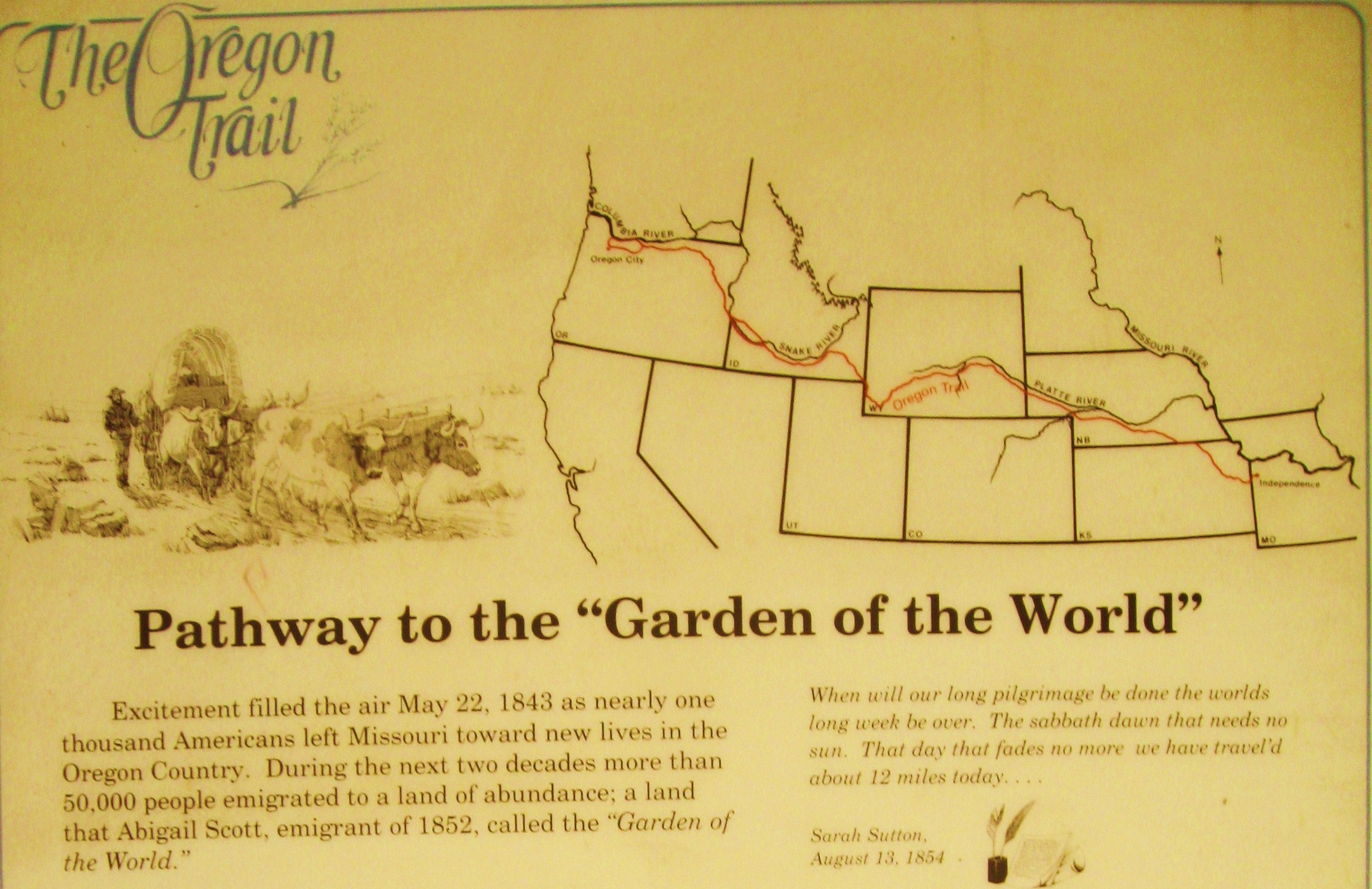
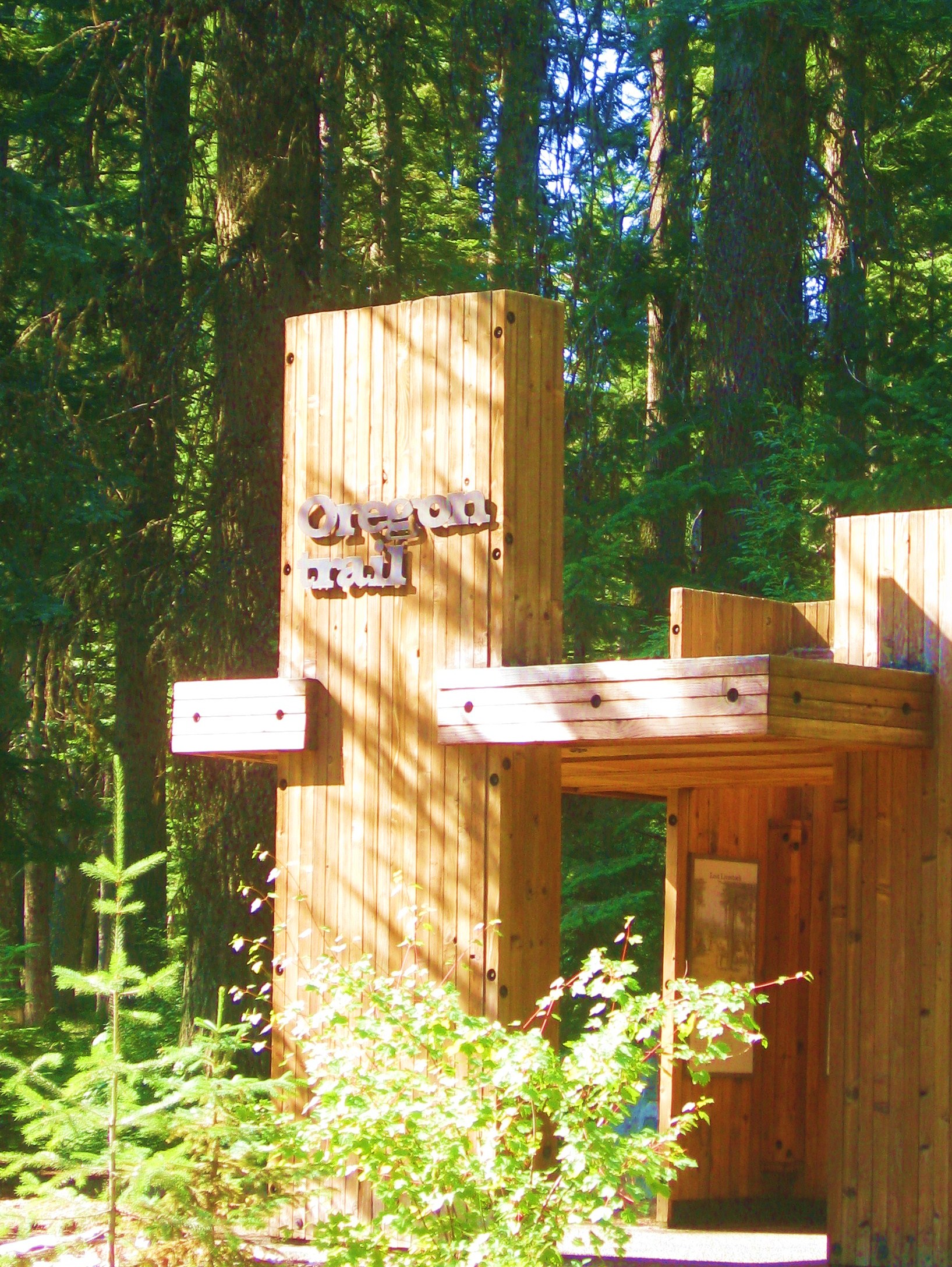
Oregon Trail marker -- Photo by Pat Bean

 “When you start over these wide plains, let no one leave dependent on his best friend for any thing; for if you do, you will certainly have a blow-out before you get far.” John Shively, 1846.

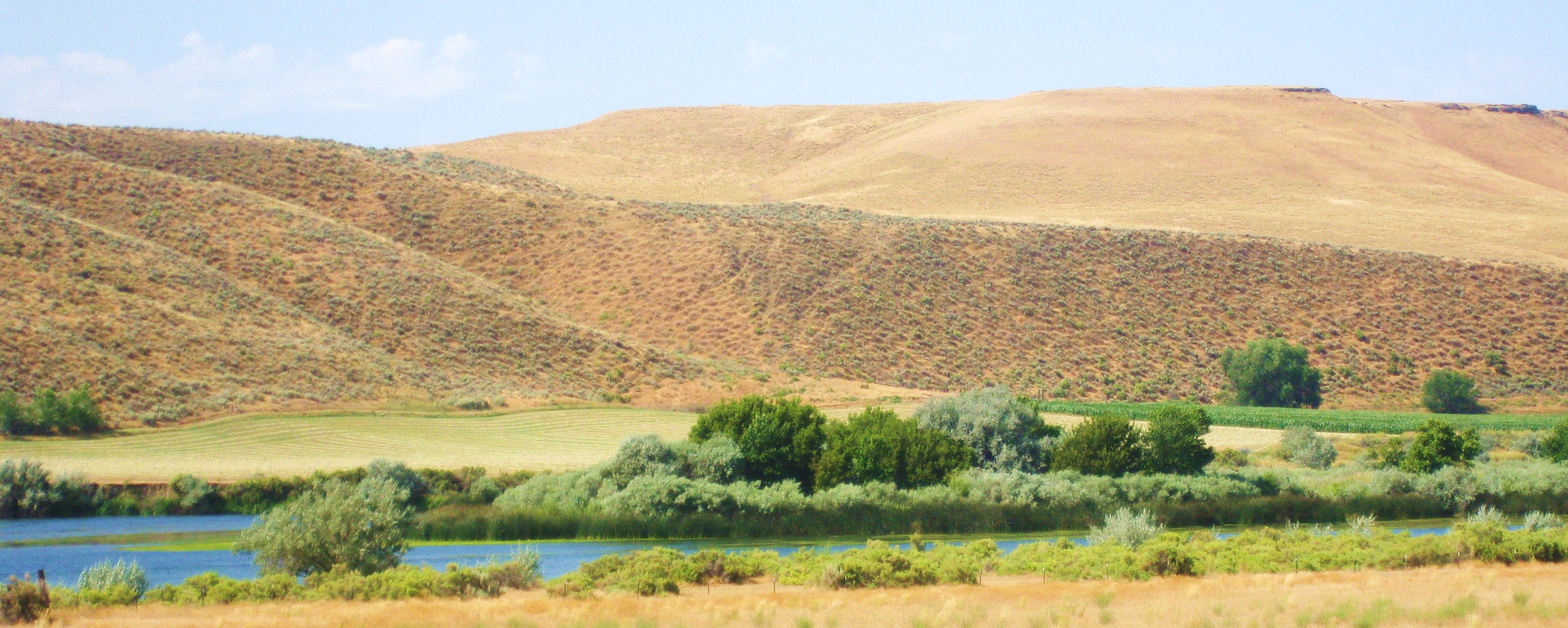
Looking across at the third of the three islands Oregon Trail travelers used as a stepping stone to cross the Snake River. -- Photo by Pat Bean

Travels With Maggie

 Once my RV had four operable wheels again, my journey continued to follow in the same footsteps as those of the 400,000 hardy souls who took the Oregon Trail west to a better life. Having read about some of their harrowing adventures, I knew my flat tire was nothing to whine about.

 Travelers along this mythical 2,000-mile scenic byway that began in Kansas and perhaps included a float on the Columbia River for the final leg, had only ruts of earlier travelers to follow. I call the trail mythical because there were places where early traces of this roadless way west disappeared. With my complete lack of a sense of direction, I would have probably ended up my journey on the shore of the Atlantic Ocean instead of the Pacific.

 I thought about these rugged ancestors as Maggie and I comfortably traveled in air-conditioned comfort to Three Island Crossing State Park in Idaho. It was 203 miles from where I had my flat to the night’s destination. I made it, including a few sight-seeing stops, in about five hours. I wondered how many days it took the mid-1800s’ travelers.

 Three Island park is located at a favored Snake River crossing of the Oregon Trail travelers. It was a place where they could use three small islands as stepping stones to make the crossing just a tiny bit safer. The trail, however, continued west on both sides of the river until Fort Boise. While crossing it meant an easier route ahead, some chose not to take the risk, especially if the river was running high and fast.

As a former river rat who rafted the Snake River in both Idaho and Wyoming, and who took a few dunkings while doing so, I can personally attest to the wiseness of this decision. I, fortunately, had a very good life jacket to save me the times I was eaten by the Snake’s fury, something the pioneers did not have.

Idaho State Park illustration of Three Island Crossing

 In 1869, Gus Glenn constructed a ferry to take wagons and freight across the river, an enterprise that is responsible for the town – Glenns Ferry – which now sits at this spot beside the Snake River. The ferry also made the lives of those traveling the Oregon Trail a bit easier. You can read all about Gus and his ferry at the Glenns Ferry Historical Museum in town, and all about the Three Island Crossing at the park’s museum.

 I visited both the next morning before heading on down the road, thankfully paved with well-marked signs to keep me heading in the right direction.

Read Full Post »

Bordellos, Wagon Ruts and the Cost of Ease

this day got an early start; in a few miles we came through the thick timber and came to large pines. the road smoother and not so hilly directly we came out of the pines and went down a long hill into the Umatilla Valley; the bottom and bluffs covered with Indian ponies and horses, too. came to the Umatilla river and camped.” Loren B. Hastings; October 8, 1847 

Travels With Maggie

Once across the Columbia River, I followed Highway 84 through Pendleton, Oregon, a town with an untamed past. It was once home to numerous bordellos and saloons, most of them below ground in underground tunnels dug by the Chinese beginning around 1870. The brothel trade stuck around until the late 1940s, when a Presbyterian minister finally put a damper on the business by announcing he was going to read the names of those patronizing the businesses in church. Today, the city is best known for its woolen mills and its annual rodeo, the Pendleton Round-Up.

South of Pendleton, Highway 84 follows the path of the Oregon Trail as it climbs through the Utmatilla Indian

Information on a historical kiosk along Highway 84 in Oregon -- Photo by Pat Bean

 Reservation and across the Blue Mountains. A kiosk at the top of Emigration Hill at a place known as Deadman’s Pass – it’s not hard to guess why it is so named — informed me that more than 50,000 emigrants headed West passed this way between 1840 and 1850. Their road, unlike mine, had not been paved. And instead of travel time easily measured in minutes, they spent days conquering the route’s rough and stony hills. Their wagon ruts, still visible today, are a testament to the heart and soul of people hoping for a better life.

I stopped for the night at Emigration Springs State Park, where my neighbors were a couple of grandparents introducing a young grandson to the joy of the outdoors. Maggie fascinated the youngster, and she obligingly let him pet her for a couple of minutes. While she’s always gentle with small children, she prefers her strokes to come from adults. After she gave me a painful look, I rescued her by continuing on our walk through the park.

Fireweed: So named because it is one of the first plants to bloom after an area has been destroyed by fire. The flower speaks to me of hope for the future and Mother Nature's survival from man's impacts. -- Photo by Pat Bean

Knowing that my footsteps were walking on top of those of the hardy pioneer souls who had spent the night here over 150 years ago heightened my enjoyment of the landscape around me. My night, however, was interrupted too much by the whoosh of passing vehicles on Highway 84 to let me linger in the past. And awakening in the morning to read about oil rigs using the Gulf of Mexico as a dumping ground so as to power those vehicles definitely brought me back into the present.


I’m thankful to have been born in this day and age, and to have conquered the Blue Mountains so easily in my small RV. But sometimes I ask myself what is the cost I’m paying for such an easy life. Hopefully it’s not one that’s going to deprive my future great-grandchildren of Mother Nature’s company.

Read Full Post »

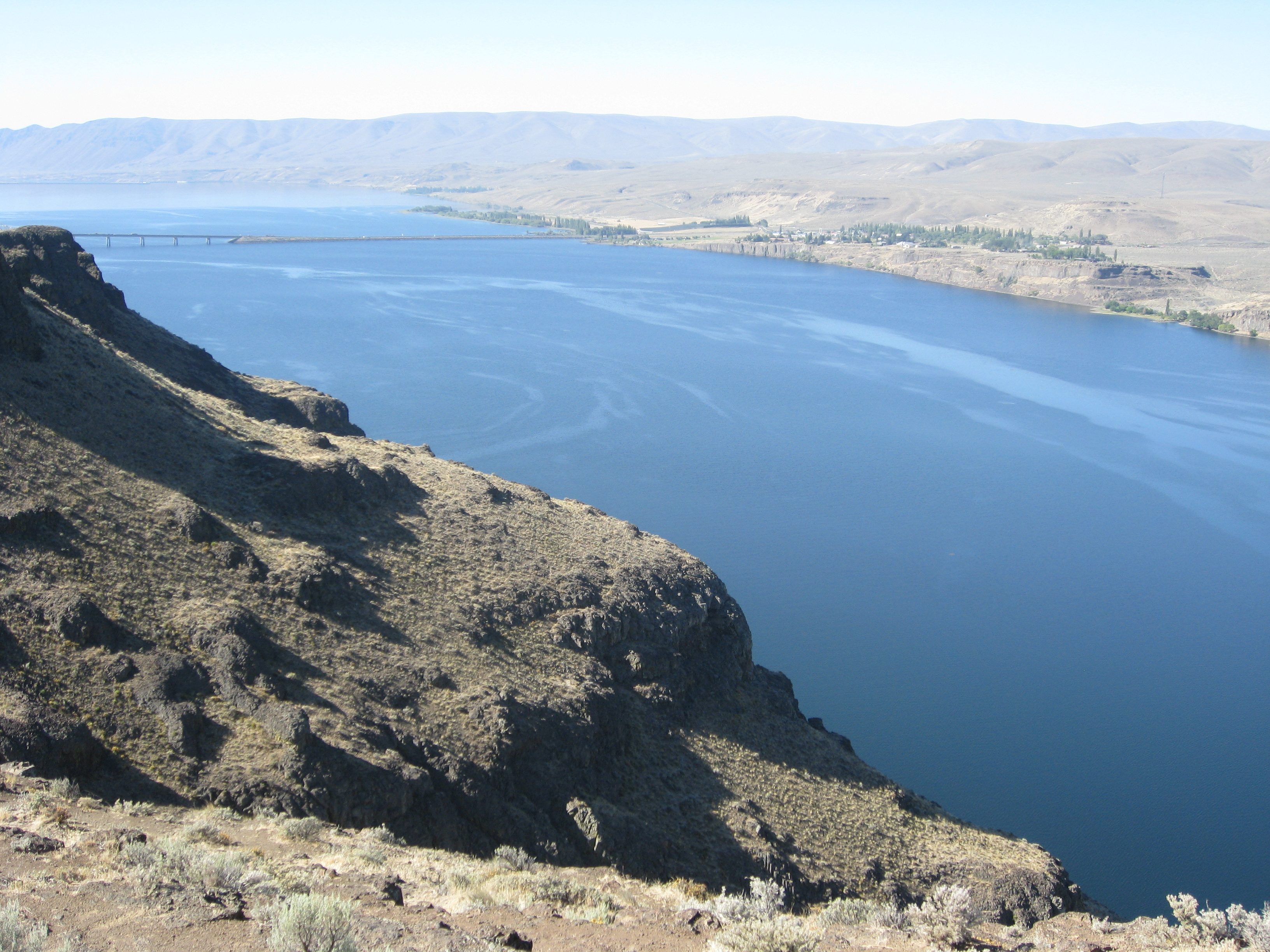
Looking down the Columbia River at the Vantage Bridge and across it at Washington's Ginko Petrified Forest State Park. -- Photo by Pat Bean

“Sometimes, if you stand on the bottom rail of a bridge and lean over to watch the river slipping slowly away beneath you, you will suddenly know everything there is to be known.” — Winnie the Pooh

Travels With Maggie

The mighty, 1,243-mile long Columbia River, begins in the Rocky Mountains of Canada, flows south through Spokane and then forms much of the border between Washington and Oregon on its way west to the Pacific Ocean. Maggie and I crossed it twice in the same week as we traveled to Mount Ranier and then down to Southern Idaho. Both times left me awed.

 The first crossing was on Highway 90’s Vantage Bridge, an impressive structure with overhead steel girders, the kind that always sets off a rare barking episode from Maggie. Passing motorcycles are about the only other thing she barks at during our road journeys.

Once across, the highway climbed steeply through a section of Ginko Petrified Forest State Park. From an

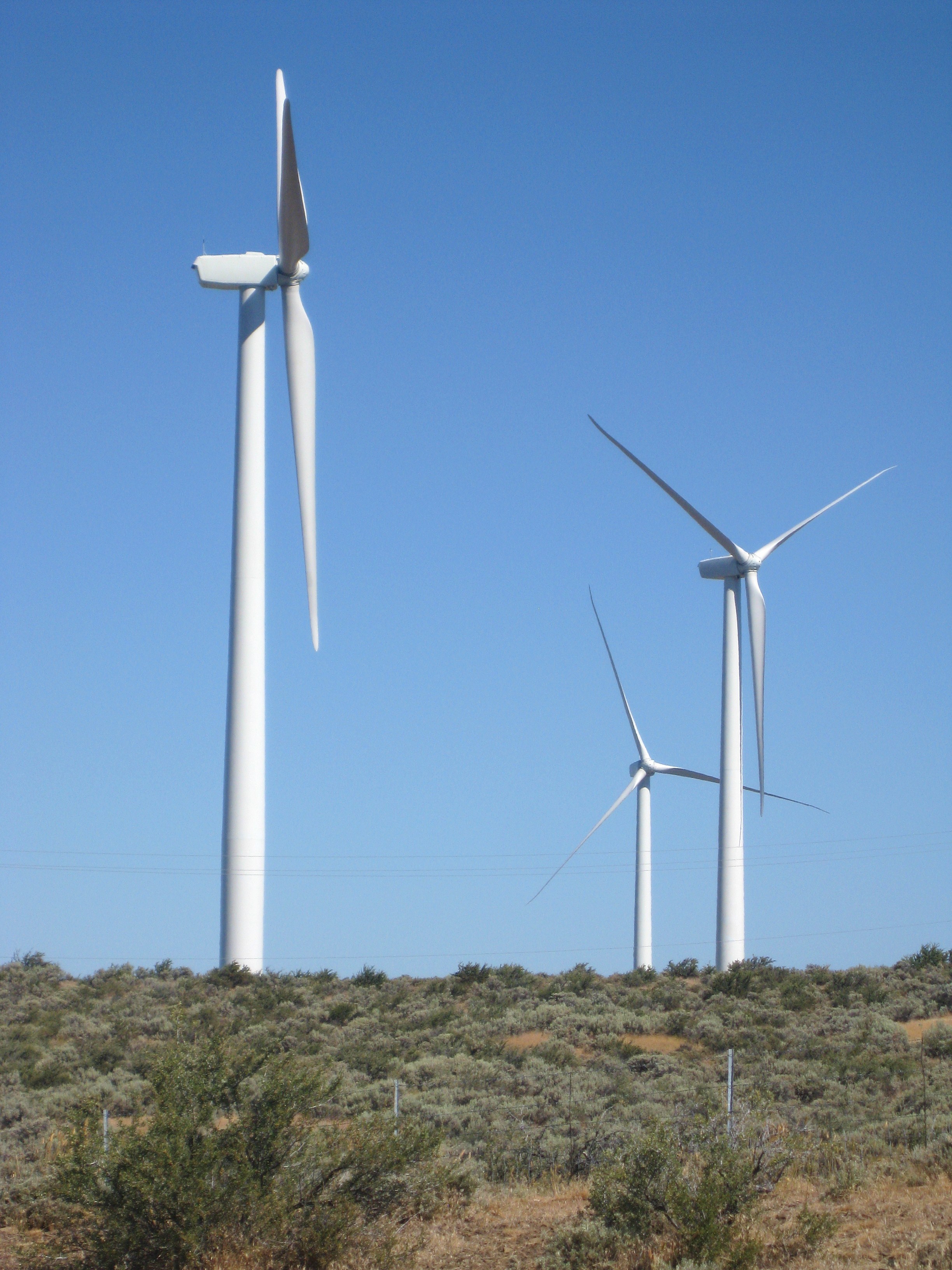
Turbine windmills, part of Washington's Wild Horse energy project, sit atop the Columbia River Gorge near the Vantage Bridge crossing. -- Photo by Pat Bean

 informational plaque at an overlook just east of the crossing, I had learned that the park, in addition to Ginko, the sacred tree of China now almost extinct in the wild, includes over 200 other kinds of woods preserved by million year old lava flows.

 I stopped at the top of the gorge at the Ryegrass Rest Area, where I got a hazy view of Mount Ranier, and a look at huge turbine windmills that take advantage of the winds created by the river gorge. During an earlier trip, when I followed the Columbia River Gorge’s path all the way through Washington, I stopped at Maryhill State Park, where I watched windsufers also take advantage of this same wind source. Mother Nature is so kind to us.

My second crossing of the river on this trip was over Highway 82’s Umatilla Bridge. Before crossing, I stopped briefly at Plymouth Park on the north side of the river, where I ate my lunch and watched robins and house sparrows stroll past, ever searching for a tasty treat of bugs, seeds or picnicker leftovers.

Lewis and Clark camped near this park, which is named after Plymouth Rock because of the huge basaltic rock that projects into the river at the site. The pair of explorers most likely saw robins in the area, but house sparrows hadn’t yet been brough over from England to America.

Joining my thoughts revisiting the Lewis and Clark expedition were one about the first white settlers who passed this

Highway 82 historical kiosk reminding travelers they are following the Oregon Trail route. -- Photo by Pat Bean

 way.   I was now seeing frequent signs reminding me that the smoothly paved road I was driving down was once little more than wagon ruts, and not even that for the first brave settlers heading west. My route across the Columbia River to Pendleton, Oregon, and continuing south was basically once known as the Oregon Trail.\

The pioneers’ crossing of the Columbia River would have taken much longer than mine and Maggie’s. How could one not be awed by the adventures of those hearty souls. Or by the Columbia River itself, I asked Maggie as I crossed the river on the Umatilla Bridge. There was no reply. Maggie was snoozing.

With no traffic in sight, I slowed my speed to better enjoy the river view.

Read Full Post »

‘Variety’s the very spice of life, that gives it all its flavor.” — William Cowper

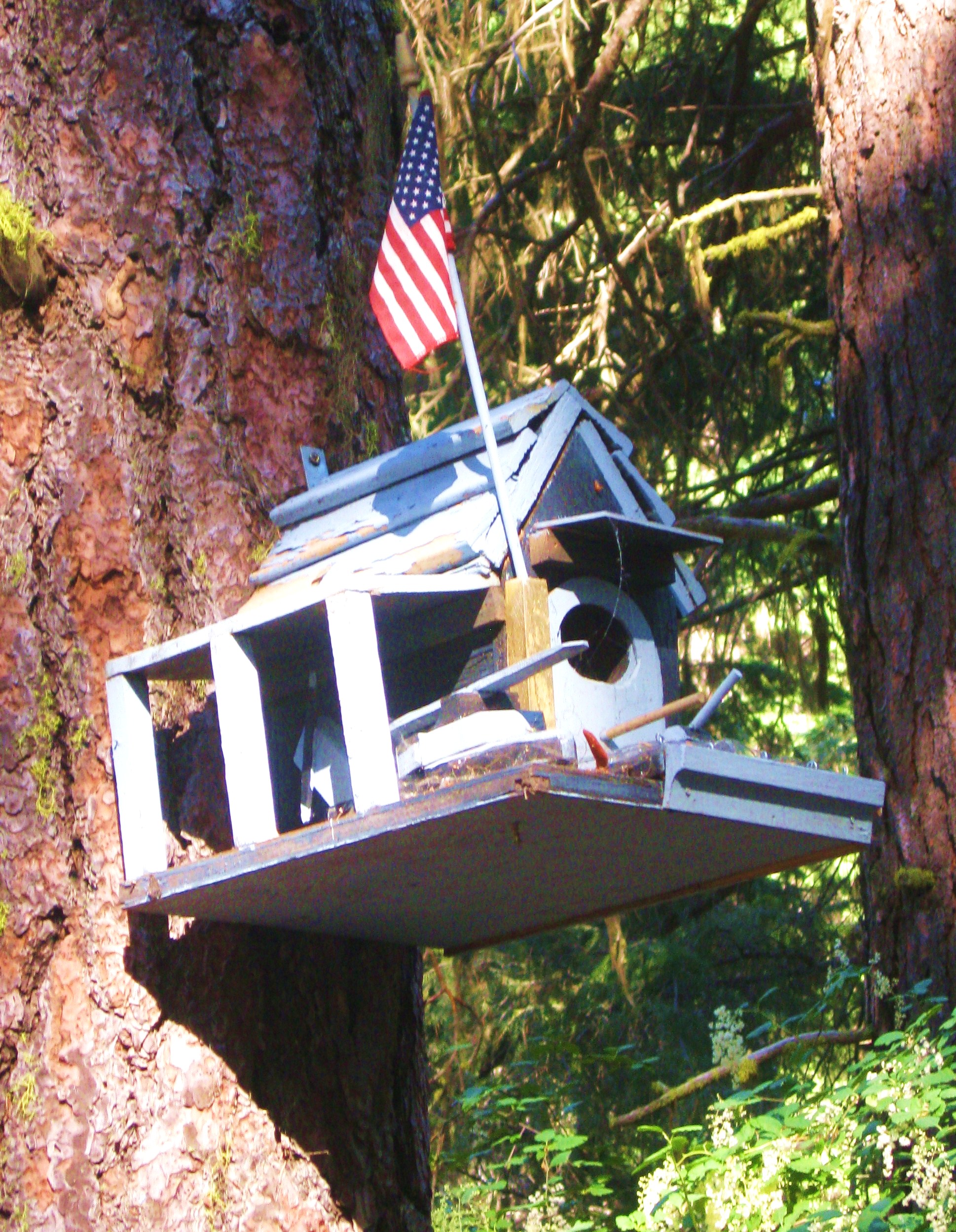
Patriotic birds at Silver Beach RV Resort -- Photo by Pat Bean

Travels With Maggie

I spent my last two nights in Washington at two commercial RV parks that were as different as a rude log cabin and a modern new home.

The first was Silver Beach RV Resort off Highway 12 right next to Rimrock Lake, an emerald gem that I first saw on my way to Mount St. Helen’s and Mount Ranier. I decided then that I would explore it more fully when I retraced my route back to Interstate 82.

The park had a rustic ambiance about it that took away its commercialism, as did the tiny, faded American flags flying from birdhouses. It cost me $20 for the night, which upon paying I was assigned campsite 34. .

By the time I located it, since the numbering was a bit odd, I had driven in a circle three times. I found the electrical outlet attached to a tree trunk. It was only 20-amp instead of 30-amp provided at almost all RV parks. Fortunately I had an adapter that I use when I occasionally park in one of my kids or friends’ driveway.

The view of the lake and the robins and warblers singing among the trees made up for any lack in facilities, however, and a breeze blowing through my open windows from off the lake lulled me into a sound, peaceful sleep.

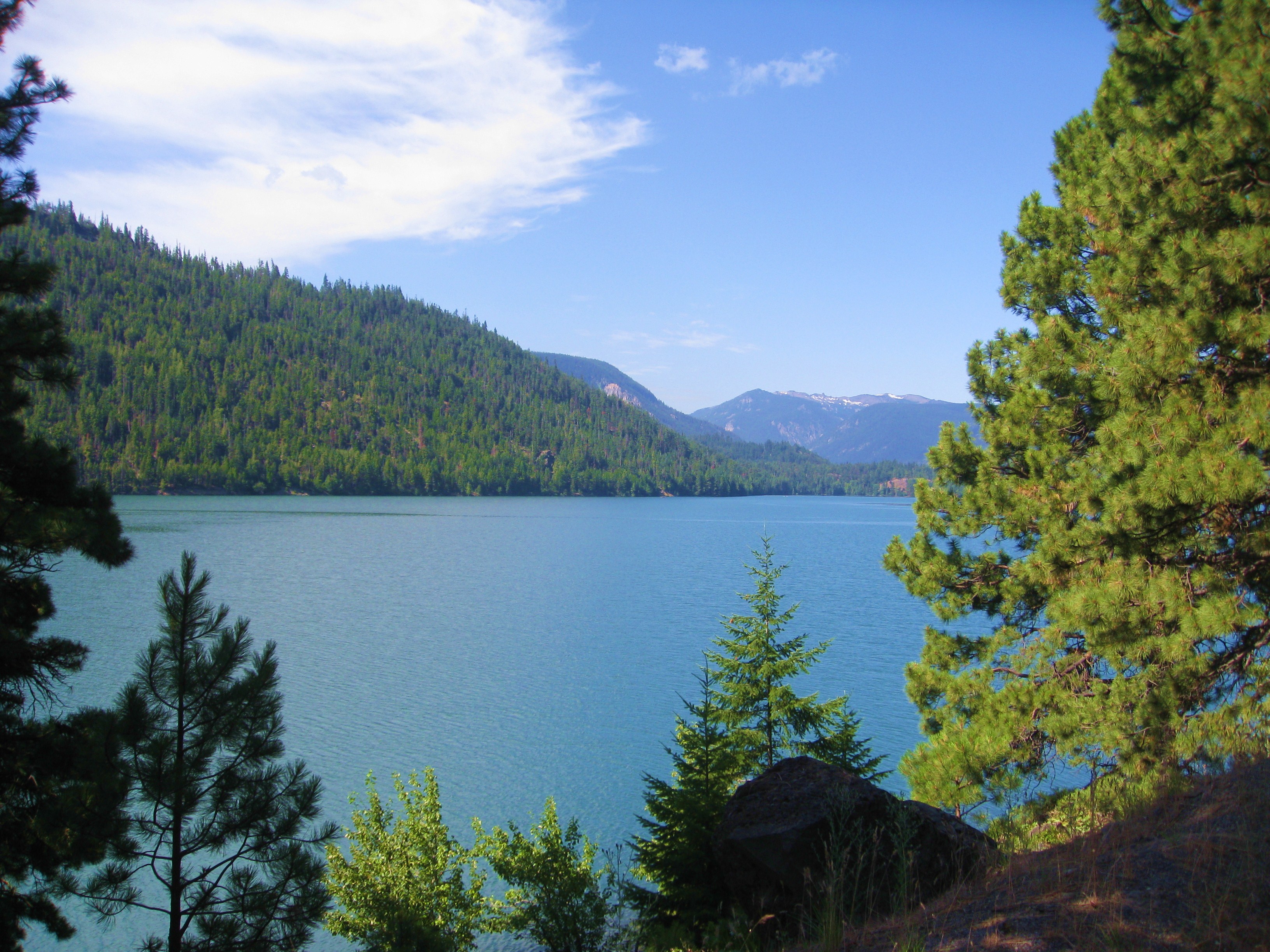
Rimrock Lake view from Highway 12 -- Photo by Pat Bean

The next morning, Maggie and I hiked a forest trail that began near my camp site before once again heading east on Highway 12. Several times I stopped to take pictures. Rimrock Lake ran parallel to the highway for about 10 miles, until passage through a rock tunnel across the road erased it from view.


I reached Yakima in early afternoon, where I treated myself to lunch at Red Lobster (I had been craving crab for several days) before seeking out the Travelers Inn RV Park. It was the kind of place where you camp on asphalt with a young lone tree and three feet of manicured lawn between you and other RVs – usually 40-footers. I always think of canned sardines when I’m put in this position, for which this night I paid $35.

So why did I stay here?

Two weeks of dirty clothes and the fact I was wearing my last pair of clean socks. Places like this always have clean laundry rooms. Sometimes a nature-loving-soul has to take it on the chin for the sake of cleanliness.

 I went to sleep this night with the buzz of some boring cable TV program in the background. It felt good to be back on the road early the next morning.

Read Full Post »

“If I had my life to live over … I’d dare to make more mistakes next time.”  — Nadine Stair

A view of Mount Ranier from the Box Canyon scenic overlook, where I finally realized I was headed the right way -- but in the opposite direction from which I had planned to travel. -- Photo by Pat Bean

Travels with Maggie

My plan was to enter Mount Ranier National Park through the Nisqually Entrance on the west side, visit Paradise Junction then return a few miles back to Cougar Rock Campground, where I had paid reservations for the night. I checked out my camp site on the way up to Paradise, and noted a nearby trail that I could hike the next morning

Scarlet paintbrush: Always take time to smell the flowers -- Photo by Pat Bean

 before backtracking to Highway 12 . I would still miss a good bit of the park but I had an appointment to keep in Southern Idaho and a lot of miles in between.

At Paradise Junction, I watched the film about the mountain in the visitor center, bought a few souvenirs for family members and then hiked a short trail for a view of the Nisqually Glacier. Though spectacular, it was a hot hike and I was glad to get back to my air conditioned RV where Maggie demanded a walk along the roadside before we moved on. Dogs aren’t allowed on trails in national parks.

 Back again in the RV, I was eager to get to camp and didn’t double check the route. My memory of the map recalled that the road simply looped around. I forgot I had no sense of direction. Somewhere along the way I zigged instead of zagged. While such is a frequent occurrence, I usually catch the boo-boo within a block or two. Not this time.

 So intent was I at watching the scenery and stopping to take photographs of sights, like the Reflection Lakes, that I had missed on the way up, that I was halfway across the park before I realized my error. Not wanting to backtrack at this point, I simply kept going. Sometimes you just have to go with the flow.

Silver Falls -- Photo by Pat Bean

I was glad I did. Otherwise I would have missed not only a spectacular drive all the way across the park, but Silver Falls and a visit to an old growth forest of hemlocks and firs near the Stevens Canyon Entrance. A walk through the Grove of the Patriarchs was ambrosia to this tree-huggers’ soul.

 Since daylight was close to ending at this point, I checked out the Ohanapecash Campground on the east side of the park and discovered it had vacancies. For a mere $7.50, using my Golden Age Passport, I camped in one of them. It would have cost me a lot more in gas to have driven back to Cougar Rock. Besides getting to see more of Mount Ranier than I had planned, I also had a head start on the next days’ travels.

This was a day that following a plan wasn’t in my best interests.

Read Full Post »

« Newer Posts - Older Posts »