Feeds:
Posts
Comments

Archive for the ‘Nature’ Category

Natural Falls -- Photo by Pat Bean


Travels With Maggie

“To be thrilled by the stars at night; to be elated over a bird’s nest or a wildflower in spring — these are some of the rewards of the simple life. — John Burroughs

Natural Falls State Park

The 1974 movie version of “Where the Red Fern Grows,” the story of the love between a boy and his dogs, was shot here where this 77-foot waterfall flows year-round. Trails take you both above and below this scenic Ozarks’ spot, which is located near where Cherokees were forcibly marched during the infamous Trail of  Tears in the 1830s.

I viewed it on a hot late spring day and relished the coolness that radiated from its flow.

The park is located off Highway 412,  six miles west of Siloam Springs, and has excellent full hook-up sites for RVs. If you can, plan to stay awhile.  


Read Full Post »


Not all beauty lies in the open air. -- Photo by Pat Bean

Travels With Maggie   


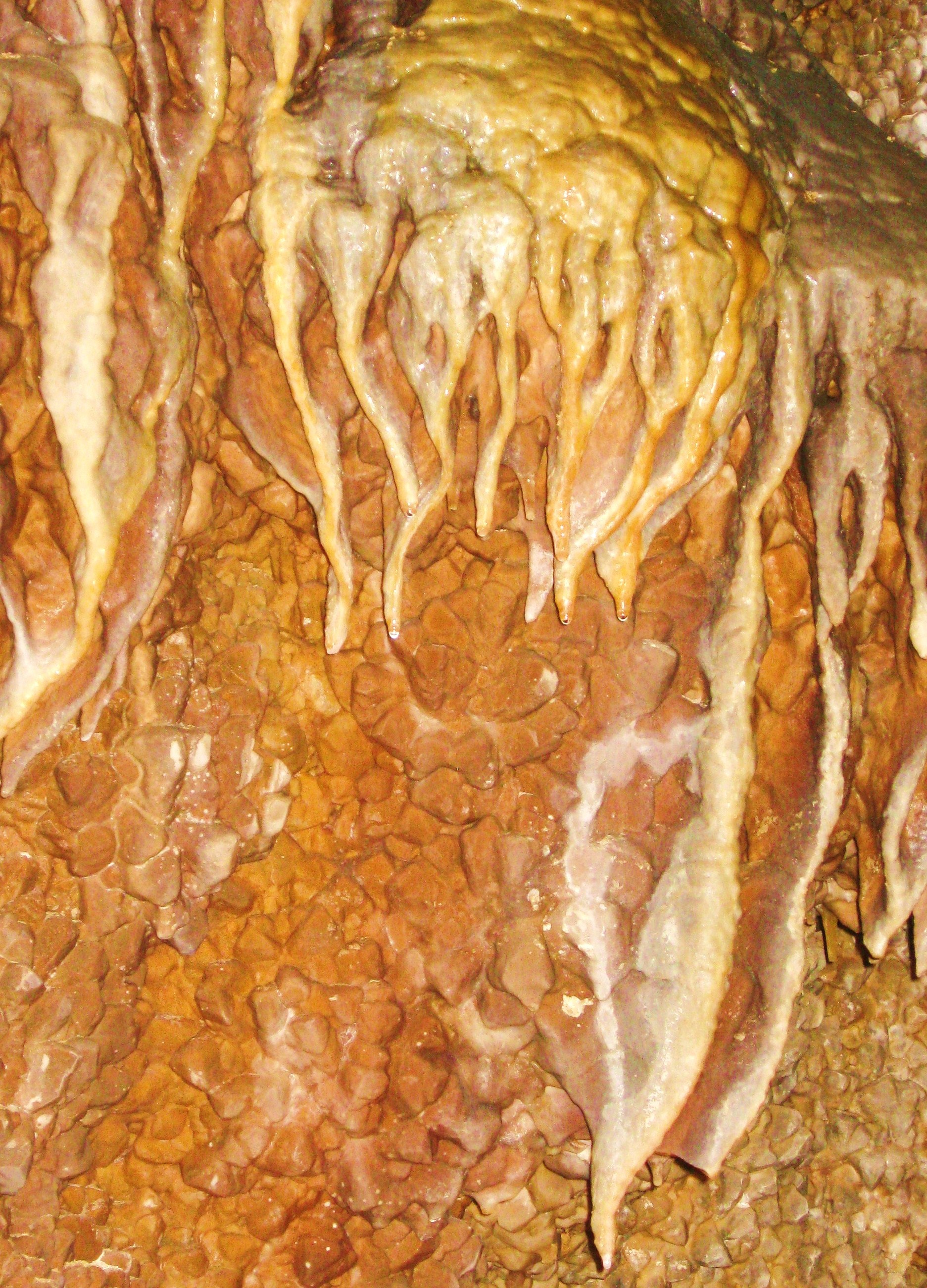
The walls of Jewel Cave flow with images created by dripping water. -- Photo by Pat Bean


“Calmness of mind is one of the beautiful jewels of wisdom.”  James Allen

While Maggie and I spend the next couple of months visiting with loved ones in Texas, I thought I’d share with readers and fellow travelers a few places that have enchanted, delighted, amused or awed me during my past six years of being on the road.

Jewel Cave National Monument

Located in South Dakota’s Black Hills near Custer, Jewel Cave is the second known largest in the world. Only Kentucky’s  Mammoth Cave is larger.  Calcite deposits in the wet part of the cave and gypsun deposits in the drier areas over a 60 million period are responsible for the cave’s fanciful formations.

Read Full Post »


A sulphur cloud butterfly was still flitting when I reached Arkansas -- Photo by Pat Bean

“Time is a companion that goes with us on a journey. It reminds us to cherish each moment because it will never come again.” Captain Jean-Luc Picard.

And the Gardenia's were still blooming. -- Photo by Pat Bean


Travels With Maggie

Come take a jaunt with me, I asked, as I headed to Idaho’s Panhandle some seven months ago. Along the way I gathered new friends and five new life birds and enjoyed the company of old friends and all the other birds along the way.

I saw the gaping hole in Mount St. Helens that was created when the volcanic mountain blew its top. I fed wild turkeys from my hand and almost got blown to Kansas during a West Texas wind storm. I gazed at waterfalls and glaciers on Mount Ranier, took a boat ride on a deep lake where the Navy conducts submarine experiments, and survived a blowout in my RV.

Since leaving Texas in April, I’ve also put an extra 6,000 miles on Gypsy Lee, bringing her total now up to 112,000 miles that we’ve shared on the road together. Thankfully, she still acts like she’s got many more miles in her. I know I do.

Meanwhile, after seven months away it was good to see family again. My two daughters were first. I stopped overnight in Dallas after leaving Vernon to spend an evening with my oldest daughter. Then it was on to Camden, Arkansas, where my youngest daughter lives. I spent a week there babysitting three grandsons while their parents took off for business and pleasure to San Diego.

The boys – 9, 10 and 11 – and I had a great time. We rode bikes, skinned knees, played games and watched Disney videos together. It seemed as if their parents returned home much too quickly.


Grandsons Patrick, JJ and Tony look pleased with themselves after scrubing down Gypsy Lee for their Nana. -- Photo by Pat bean

But soon Maggie and my itchy feet were ready to return to the road. As Jack Kerouac said; “What is that feeling when you’re driving away from people and they recede on the plain till you see their specks dispersing? It’s the too-huge world vaulting us, and its good-bye. But we lean forward to the next crazy venture beneath the skies.”

 My travels will continue and you’re still welcome to come along.

Read Full Post »

  “A true friend is someone who thinks that you are a good egg even though he knows that you are slightly cracked.” — Nernard Meltzer

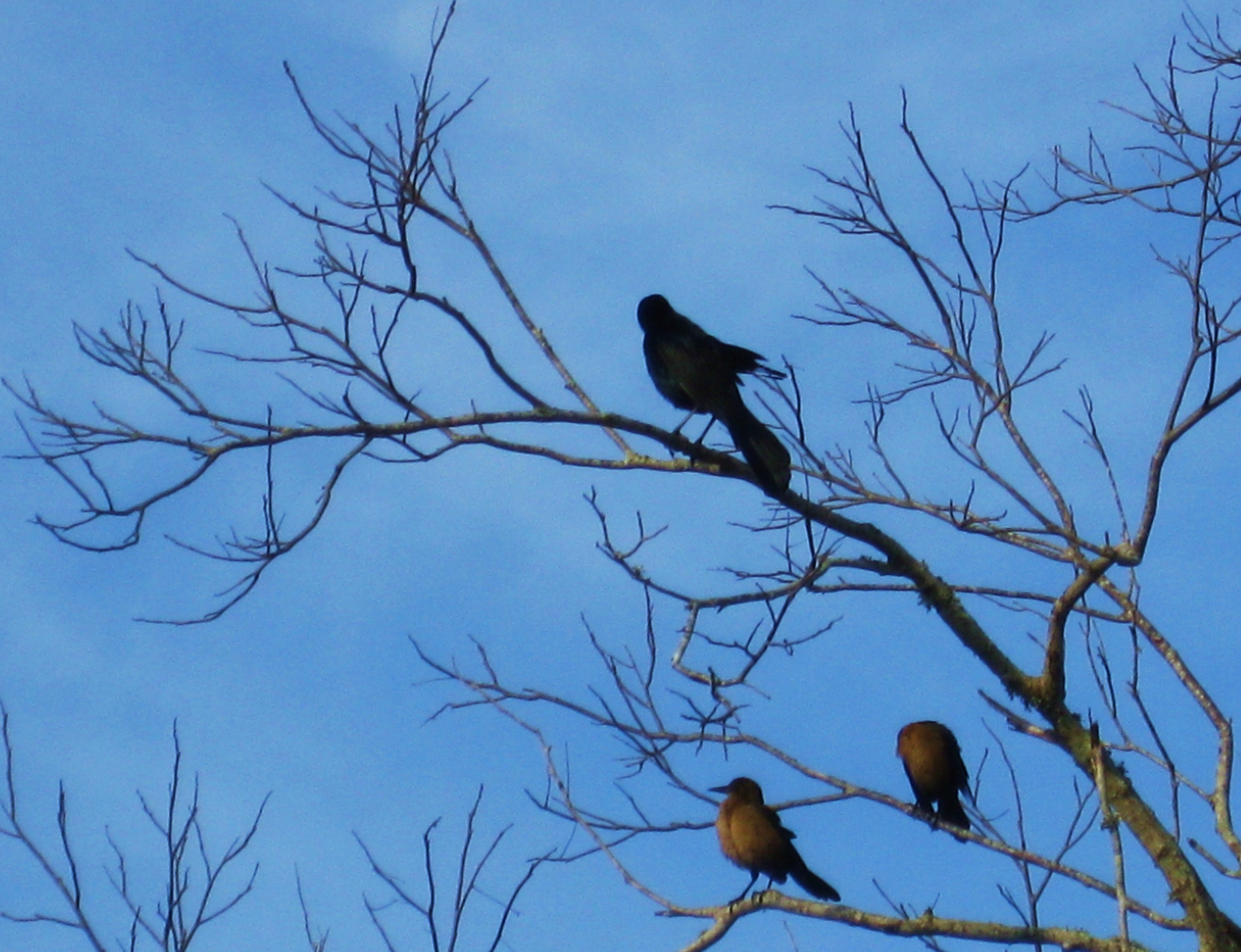
Great-tailed grackles entertain me while I eat my eggs. -- Photo by Pat Bean

Travels With Maggie

   My long-time Utah friend, Kim, cooks the best eggs I’ve ever tasted. Nothing fancy, just plain eggs cooked in butter. Her whites are solid and firm while her yolks are left soft enough to spread out over the plate when broken. The image of these beautiful eggs on a plate beside a piece of buttered toast that I would use to sop up the last drop of golden goodness flickered through my head during my walk with Maggie.

I think the golden sunrise I had just viewed made me think of the gooey roundness of Kim’s perfectly cooked eggs. Or it could be I was just hungry, I decided when the image stayed with me.

Now while I consider myself a good cook – as do my grandkids who urge me to cook for them when I visit – eggs have always been my nemesis. I either undercook the whites or overcook the yolks. I think it has something to do with my lack of patience. Even so, I knew I wanted eggs before I got back on the road for the 200-plus miles I needed to drive today.

I settled for my version of a quick egg breakfast for the road without leaving a single dish to wash up after the meal. I call it my King/Donald/Jack RV Breakfast.

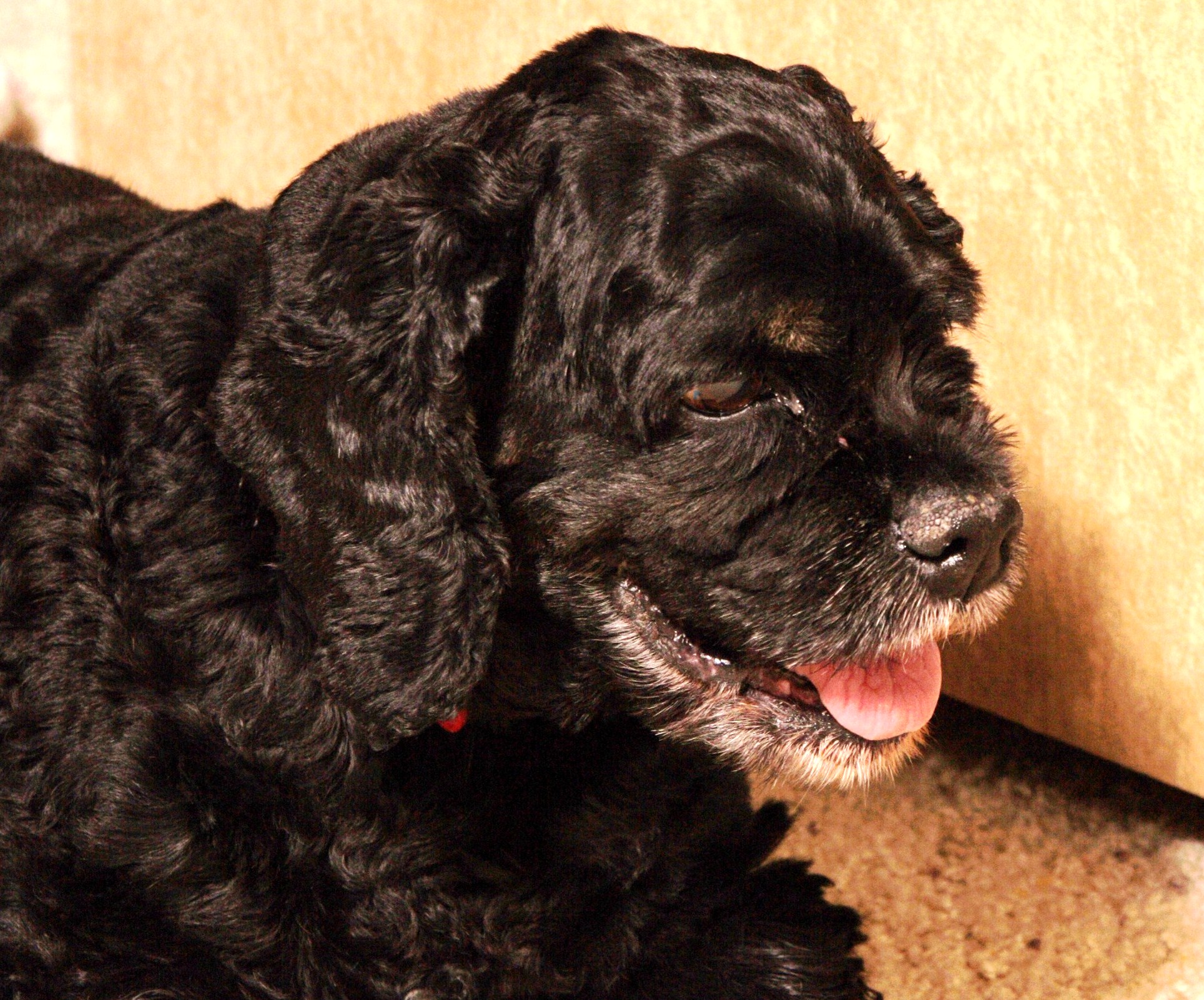
In a small sturdy paper bowl, I break three eggs and lightly scramble. Two are adequate unless you plan to share with a doe-eyed black cocker spaniel whom you know is going to drool as she watches you eat. To this I add two sliced cooked link sausages and a tiny bit of seasoned salt with garlic.

I pop the bowl in the microwave for one minute – covered with a second paper bowl that I use afterward to hold Maggie’s portion. In the meantime I pop two slices of whole grain bread into my toaster. When the minute is up, I take the bowl out of the microwave, stir it up (using a plastic throw away spoon) and add a bit of grated cheese and pop it back in the microwave for another 30 seconds, or until done to preference. I like my scrambled eggs soft and moist not dry.

Maggie waiting for the last bite -- Photo by Pat Bean

While this cooks, I butter my toast and put away the toaster. After giving Maggie her generous portion of the egg mixture, I laddle the rest onto the bread and sit at my table and stare out at the birds while I eat. Maggie always finishes first and usually gets the last bite of mine.
The dirty bowls and plastic silverware go into the trash and once again I find myself driving down the road. Almost before I get out of the RV park, Maggie is snoozing in her co-pilot seat beside me. We are both contented travelers.

                                                     Copyrighted by Pat Bean 

Read Full Post »


Vernon, Texas, sunrise -- Photo by Pat bean


 “To the dull mind nature is leaden. To the illumined mind the whole world burns and sparkles with Light.” –Ralph Waldo Emerson

Travels With Maggie

 The 304 miles I drove this day – from Clayton, New Mexico to Vernon, Texas – took me through cattle, oil and agriculture lands with only a few small aging towns scattered between. The exception was Amarillo, but I skirted around this large “Yellow Rose of Texas” city, so nicknamed because amarillo is the Spanish word for yellow.

It was a day when roadside birds were few and flat boring scenery dominated the landscape. In fact, the only interesting thing I recorded in my journal about this day’s drive was a sign I saw in Chillicothe, Texas, where a tinge of poverty pervaded everything. This sign let me know that not all had given up hope.

“Cute Texas stuff for sale,” it read. Not a bad sales ploy I thought. Texans do like to display native doodads.

Meanwhile, I did what I usually do when I have miles to go and scenery that becomes mindless. I put a book on tape in my CD player. The one of choice for this day was a recording of early Agatha Christie’s Hercule Poirot stories.

Before I knew it, I was pulling into the Rocking A RV Park in Vernon, This city of about 12,000, located on the Old Chisholm Trail and home of rock-and-roller Roy Orbison, had the only decent RV park for miles around.

That evening when Maggie and I strolled around the park, I looked out over an industrial site and though how drab it looked. Fortunately I looked again early the next morning. The above photograph changed my mind about the local scenery. Suddenly things didn’t look so dull at all.

Read Full Post »

  “Sometimes if you stand on the bottom rail of a bridge and lean over to watch the river slipping slow away beneath you, you will suddenly know everything there is to be known.” — Winnie the Pooh


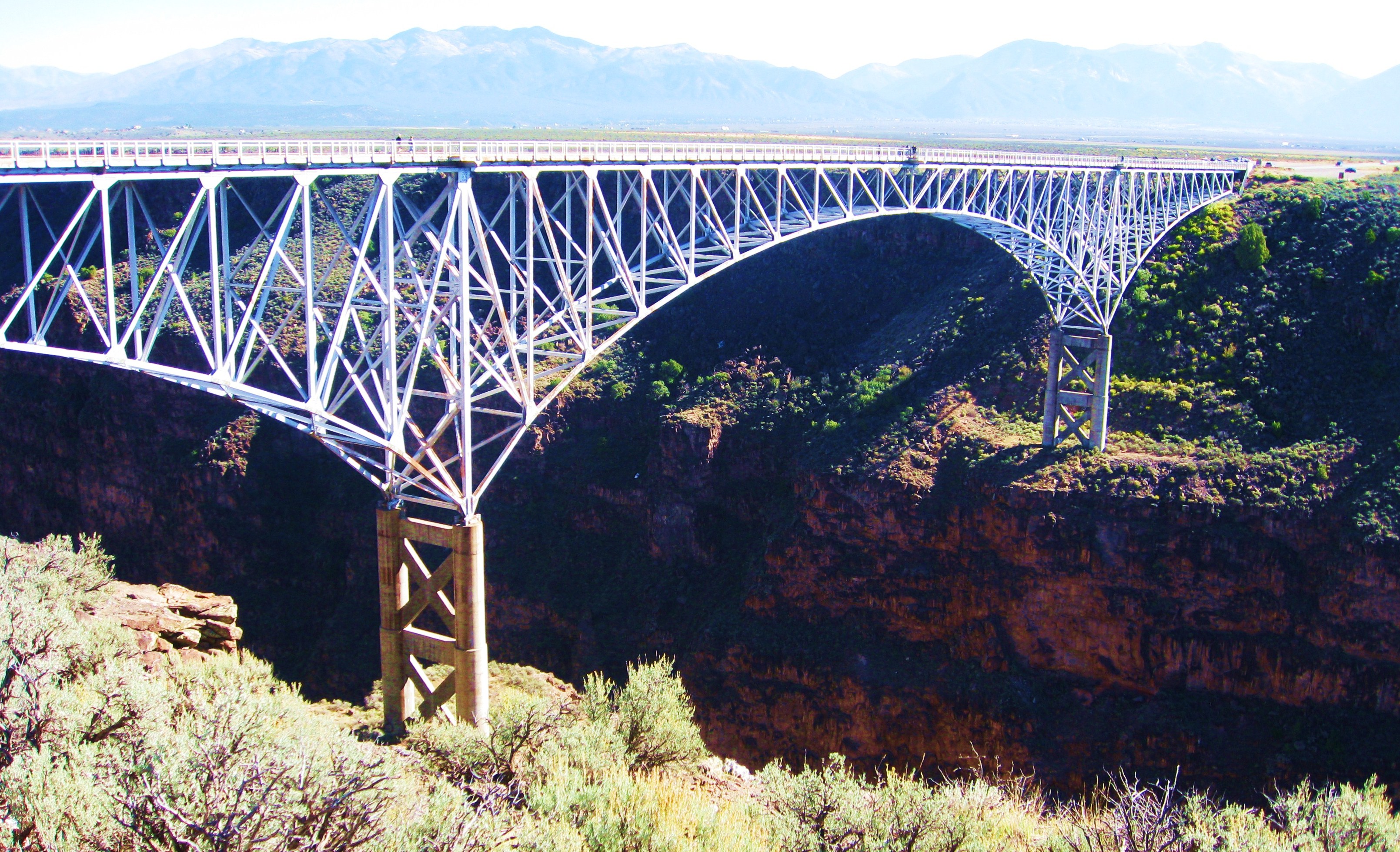
The bridge across the Rio Grande Gorge near Taos, New Mexico. The river 1,500 feet below is near the beginning of a nearly 2,000 mile journey to the Gulf of Mexico. -- Photo by Pat Bean


Travels With Maggie


Rio Grande Gorge State Park

Just a few miles past Taos, which I drove through without stopping, I came upon Rio Grande Gorge State Park. Here I did call a brief stop to my travels. I mean who can resist at least a peak at a 1,500-foot deep gorge – and a river that one knows is near the start of an almost 2,000 mile journey to the Gulf of Mexico.

As I looked down at the river from the park’s high, fenced overlook, I thought about a day at Big Bend State Park in Texas when a grandson and I had waded in its shallow warm waters and stared across it at Mexico. Most of the clear rushing water I was looking at below would never make it that far. Human development sometimes reduces the flow reaching the gulf to merely a trickle. Gypsy Lee settled in for the night in Clayton, New Mexico. Photo by Pat Bean

Soon, I was back on the road. I still had 150 more miles to drive before I could stop for the night. I seldom have such a long driving day, but on this trip I was facing a deadline to be in Arkansas to babysit three grandsons for a week – and I only had three more days to get there. 

I spent the night in Clayton, New Mexico, a small town where one has to drive 89 miles to the nearest Walmart, or so the desk clerk told me when she checked me in at the only RV park for miles around.

The town, a former livestock shipping center, sits along the old Cimarron Cutoff of the Santa Fe Trail. I had passed through Cimarron earlier in the day and had been seeing historic roadsigns since then telling me I was following the old cattle trail.

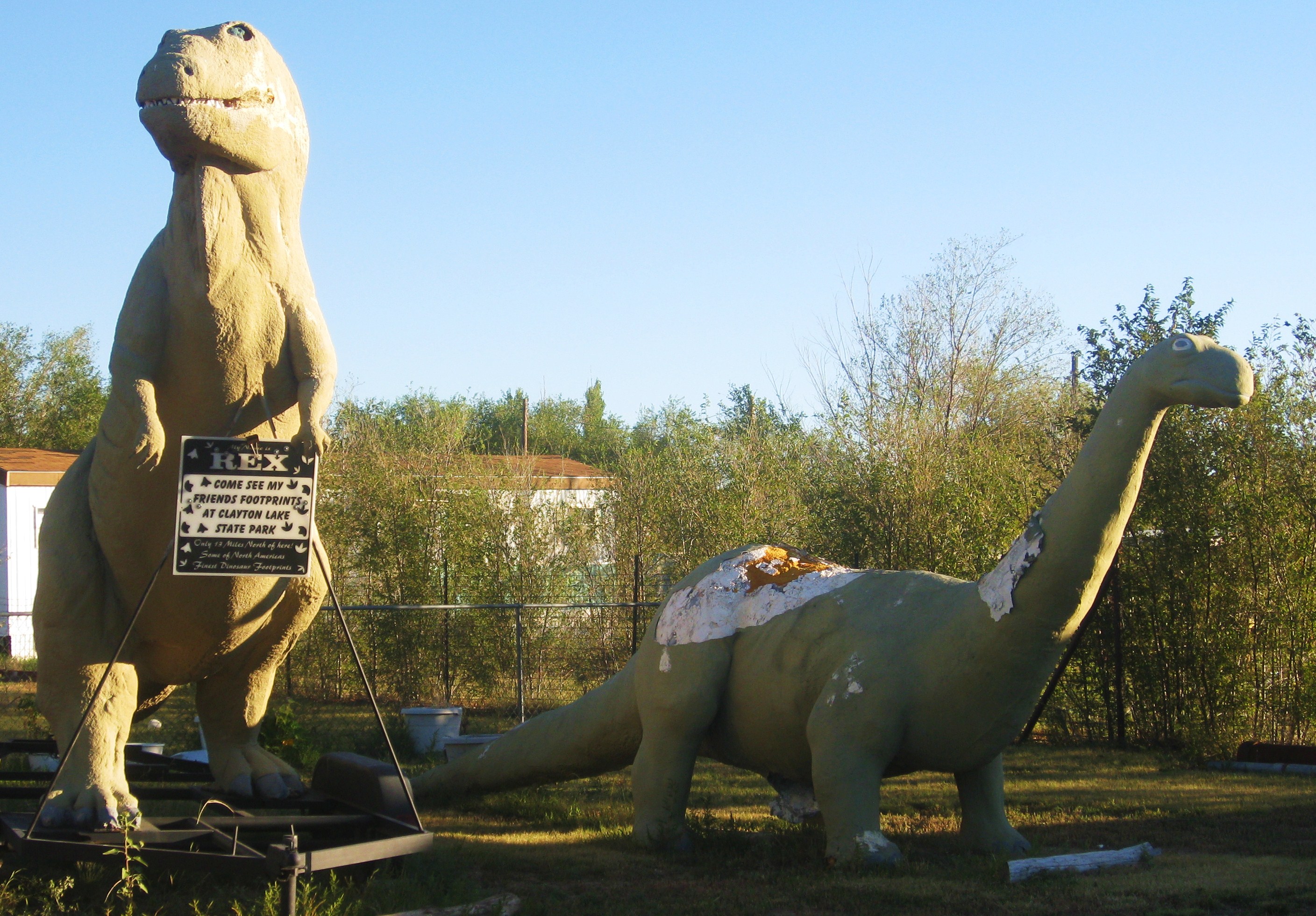
The Clayton KOA was a quiet, clean place with a run-down miniature golf course and dinosaur creations that had seen better days. I watched a croaking murder of crows fly past in search of a roosting spot as we took our evening stroll. Maggie sniffed around at the feet of the dilapidated dinosaurs, which advertised nearby Clayton Lake State Park where tracks of these prehistoric beasts attract passing tourists.


Statues showing their age advertise to visitors that dinosaurs once roamed the area. -- Photo by Pat Bean


Perhaps next time I pass through the area I wouldn’t be on a deadline and could do my own investigation of them. Dr. Seuss’ words: “Oh the places you’ll go, and the things you’ll see,” then flowed through my brain for the umpteenth time. I sighed – and added: “Too many places, too little time.”

Read Full Post »

Fall in Colorado's San Juan National Forest -- Photo by Pat Bean

“If I had my life to live over, I’d dare to make more mistakes next time.” — Nadine Stair

Travels With Maggie

I thought I knew what route I wanted to drive today, but the travel gods knew differently.

Outside of Chama, New Mexico, I zigged instead of zagged. Never have I been more delighted for my lack of a sense of direction.

I had been at this same intersection several times before, but always when I was headed to Santa Fe. This time I planned to pass through Taos– so it just seemed logical that I would turn left instead of right. Perhaps I was distracted by that magical moment of sunrise that was happening when I reached the fork in the road. That fraction of a second when the world goes from a quiet gray that hides all details to a glowing glow that brings the world to life is my favorite part of any day. I don’t experience this moment often so when I do, I absorb it fully.

Cumbres and Toltec Railroad engine warming up at the summit -- Photo by Pat bean

Up where the air is thin.

For whatever reason, however, I didn’t notice my mistake until a road marker told me I was crossing back into Colorado. By this time I was driving through a landscape so fantastic that there was no way I would have turned around, even if it meant adding 200 miles to the trip.

In reality, it only made my day’s drive 19 miles longer. My error had put me on Highway 17 instead of Highway 64, and took me on a northern instead of a southern loop to Taos. My mistake took me high into the San Juan National Forest and over the 10,000-foot-plus Cumbres and Conejos passes.

At the top of Cumbres Pass, a Cumbres and Toltec Railroad engine was warming up for one of its scenic tourist expeditions that begin in Chama. I would have stopped to explore the train museum in Chama except it hadn’t yet opened when I passed through the rustic town. Seeing the engine here, with smoke churning from its stack as it sat on the narrow guage tracks, made up for that. Before catering to tourists, trains ran through this beautiful landscape to serve the area’s silver mines.

A view from Cumbres Pass -- Photo by Pat Bean

The best part of my day, however, were the golden mountain sides. Autumn was in full bloom – and I knew I was fortunate to get to see it because I was headed to Texas where fall is mostly a matter of leaves turning brown and falling off the trees. Of course there are exceptions, but nothing as vast and brilliant as what I was seeing this day.

By the time I got to Taos, which was late in the afternoon because I lingered so long in the high forest, I abhorred its trendy and crowded atmosphere and drove through without stopping. Mother Nature had fulfilled all my sight-seeing needs this day.

Read Full Post »
 

And the Fish

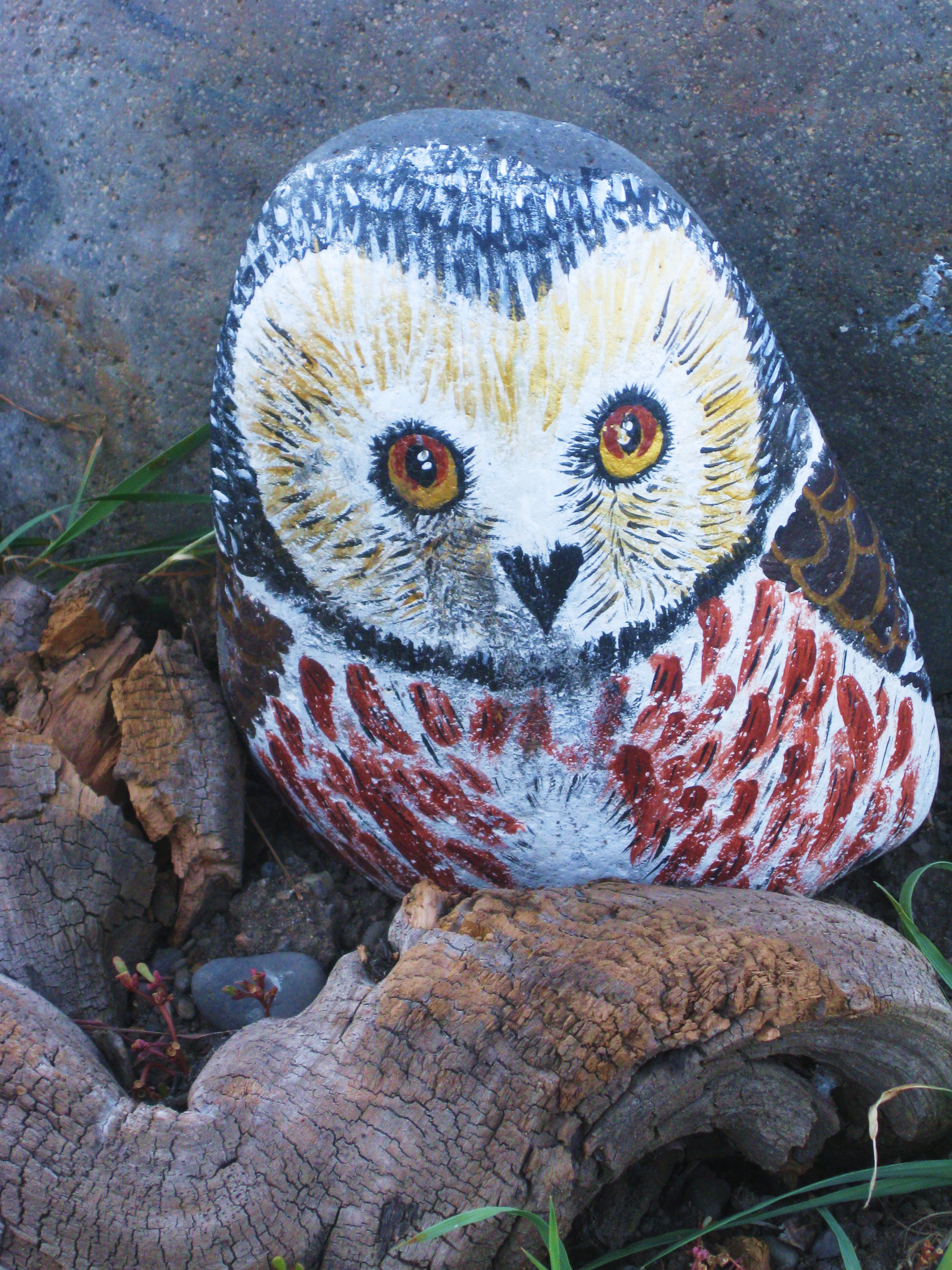
The owl

“He who postpones the hour of living is like the rustic who waits for the river to run out before he crosses.” — Horace

Travel’s With Maggie

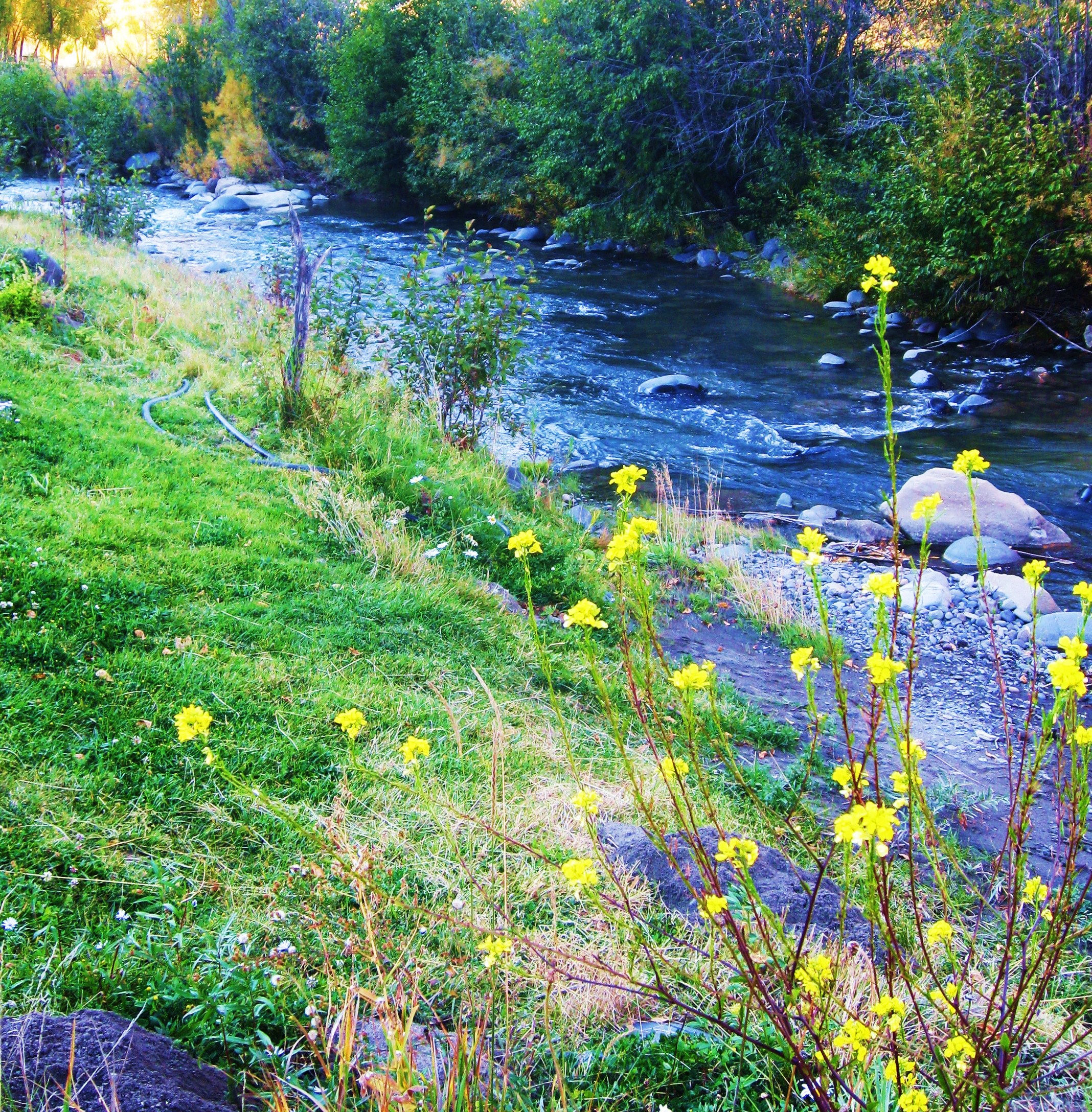
Today’s drive took me from Southern Utah’s red-rock high desert to Colorado’s San Juan National Forest. I spent the night at an RV park just outside of Pagosa Springs parked next to the Blanco River. It doesn’t get much better than this, I thought.

The Blanco River as seen from my RV window. -- Photo by Pat Bean


Our early September afternoon arrival left plenty of time for Maggie and I to take a hike along the river bank and among the wildflowers. Maggie kept her nose to the ground in search of exotic smells to follow, while I looked to the sky. A circling red-tailed hawk overhead drew my attention, as did a couple of chattering magpies in a nearby cottonwood tree.

I pity the poor person whose heart doesn’t skip a beat at the sight of this hawk’s red tail spread wide and flashing in the sunlight. On the other hand, I think some people pity my love for the playful but loud, long-tailed magpies they consider nuisance birds. Being a Texan not known for her quiet ways, I always feel these birds and I share a connection.

This would be the fourth time I had stayed at this Blanco River RV Park off Highway 84. It’s a welcome and convenient spot for campers traveling between Utah and Texas, a trip I’ve made annually since becoming a full-time RV-er. Each visit here has left me enchanted with both the setting and the little touches the campground owners have made to make the place special.

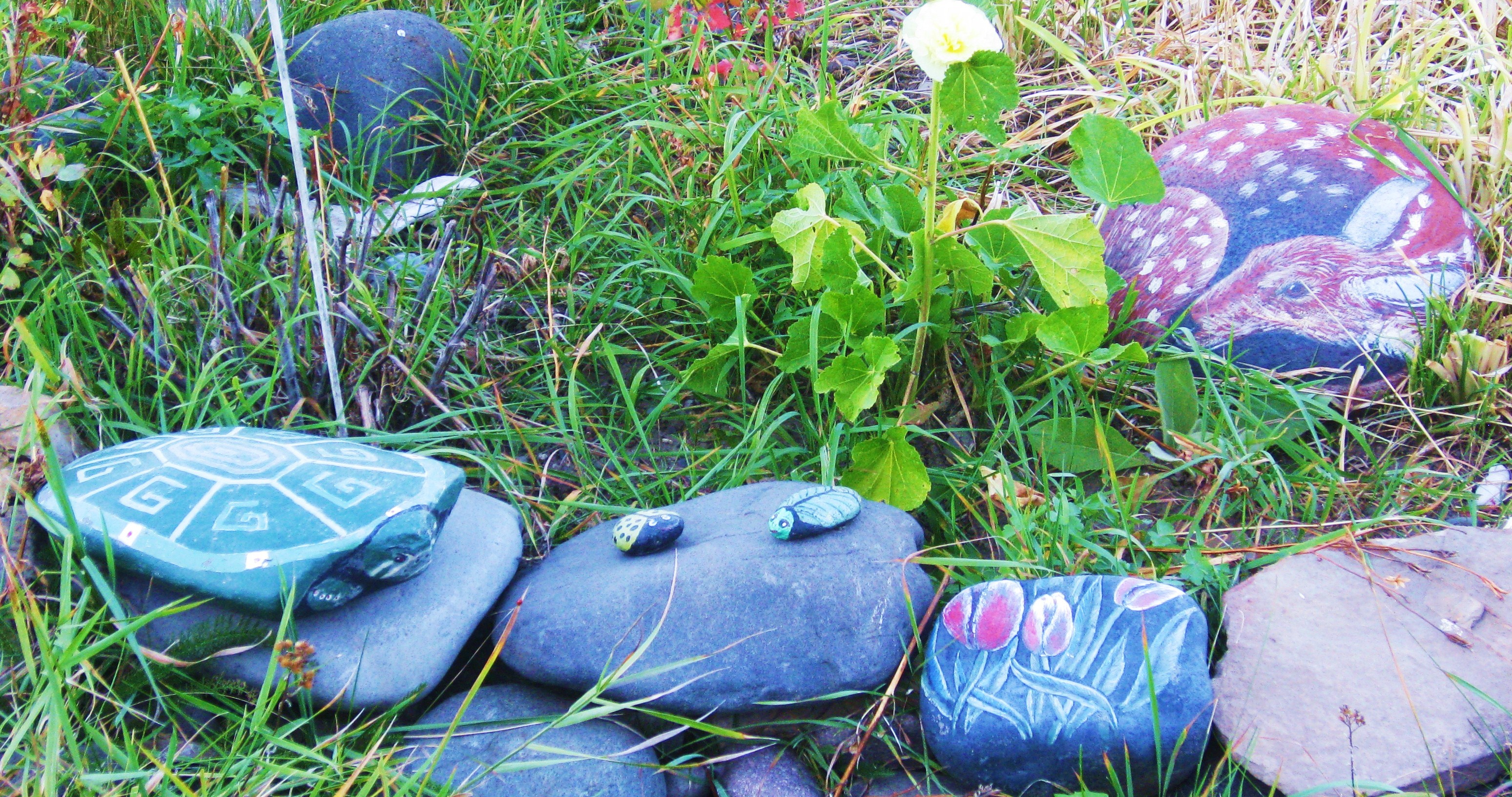
Modern day rock art -- Photo by Pat Bean

 I consider the rocks someone has painted and scattered about the park as fascinating as I find the pictographs and petroglyphs of earlier cultures.

 As I watched the sun disappear at the end of the day, a feeling of contentment oozed from my  pores. I realized I didn’t miss at all the fact that I had no phone, internet or television connections. Tomorrow would be soon enough to hook back up to the world.

Soon after, Maggie and I crawled into bed and went to sleep to the music of the river rippling over rocks.

Read Full Post »
Downtown Moab with its red-rock backdrop. -- Photo by Pat Bean

“Every crag and gnarled tree and lonely valley has its own strange and graceful legend attached to it.” — Douglas Hyde

Travels With Maggie

 Images of the humpbacked flute player, known as Kokopelli – sometimes depicted with an exaggerated pecker – is a common sight around Moab. You can find evidence of this southwest Indian fertility deity all around the city’s arch, cave and red-rock landscape. And he’s been around for over 3,000 years.

Kokopelli petroglyph

I was fortunate that in the 1990s a Moab native led me on a hike to see an ancient Kokopelli image that had been carved in stone. Because of vandalism, the location of some of the more precious of these historical links to the past are now not divulged to the general public. I thought at the time that it was a horrid shame that the destructive action of a few were depriving so many respectful viewers of the past from access.

Archeological evidence of Kokopelli was first found on similar petroglyphs across the southwest, and historians place the flute player’s beginnings to the Pueblo and Aztec Indian eras. In some of these myths, the hump on his back is said to be babies that he delivers to young women. In this, he’s shares a common goal with our own culture’s baby-delivering stork.

In Moab today, however, Kokopelli is often seen as an advertising gimmick. Both a local lodge and art gallery

The Moab Diner's version of Kokopelli. -- Photo by Pat Bean

 plagiarize his name and image. You can also take a Kokopelli hot air balloon ride or a Kokopelli bicycle tour on the Kokopelli Trail that continues into Colorado.

My thoughts about Kokopelli began this morning at breakfast at the Moab

Modern day Kokopelli

 Diner, which if you ever visit this fascinating city you should not miss. It has the best breakfast in town. This small restaurant is also known for its backward clock, which baffles tourists until they realize what’s different.

As I ate my sausage and eggs and studied a map for my day’s drive, my eyes were caught by another difference. The neon wall hanging of Kokopelli was a chicken. I, of course, had to go get my camera and take a picture. It’s these little kinds of oddities that add spice to my travels.

Read Full Post »


A view of Antelope Island, which appears moody this day. -- Photo by Pat Bean

Travels With Maggie

Antelope Island is a favorite place of birders wanting to add a chukar to their life list.

 Antelope Island is a 28,000-acre bird haven in Utah’s Great Salt Lake accessed by a seven-mile toll causeway. It is home to a thriving herd of bison, playful antelope, sly coyotes and prickly porcupines.

 Migrating warblers visit, as do shorebirds and ducks that feed on the surrounding lake’s tiny brine shrimp and brine flies. California gulls nest each year on the rocky outcrops along the shoreline, bald eagles drop by in winter, and every spring hundreds of western meadowlarks, with their brilliant golden throats and song, nest on the island. The males sit on a high perch to melodiously proclaim their brooding territory while the females sit on nests hidden so well in the grasses below that you can walk within inches of them and not know they are there.

I visited this island almost every single week for two years after I caught bird-watching fever in 1999. It was my birding 101 lab. And every time I go back home to Ogden these days, I make time to once again visit this protected — the entire island is a Utah state park — wonderland.

A buffalo sculture looks out over the lake. Photo by Pat Bean


While a live version takes a sandy bath. Photo by Pat Bean

This trip, the drive across the causeway was made with more land than water to the sides of me. Once again, Great Salt Lake is nearing the 1960s record low of 4,191 feet above sea level. In the mid-80s, it was at a record high of 4,212 feet. I was present during this latter period when its high levels and wind-pushed waves tore out the causeway to the island as well as chunks of Highway 80 that stretches across Utah’s Bonneville Salt Flats to Wendover, Nevada.

Now, 25 years later, I was getting to see it at its lowest. Was it Mother Nature’s drought and warm weather affecting the level, or was it the human diversion of water before it reached the lake driving the lake’s current low level? The question taunted the edges of my brain as I watched a pair of ravens circle overhead where the causeway curved. I wondered if these were the same ravens I had watched raise chicks in a huge nest several years earlier.

Antelope seen on the way to the island's historic Garr Ranch. Photo by Pat Bean

I spent four hours on the island this day. I watched with camera in hand as a buffalo took a sandy bath and kept my eyes glued to rocks for the sight of chukars surveying the landscape. Maggie and I took a hike around the point from the Bridger Bay Campground. Meadowlarks and red-winged blackbirds joined their voices to the drum beat of the lakes’s waves against the shoreline. I found the tune calming and marveled at the purepeacefulness of the day.

  While I still had questions and concerns about the lake and the island’s ever-changing future, Mother Nature’s magic was still all around me. I look forward to my next visit, and hope she can still be found.

Read Full Post »

« Newer Posts - Older Posts »