Feeds:
Posts
Comments

Archive for the ‘Birds’ Category

 “Precisely the least, the softest, lightest, a lizard’s rustling, a breath, a flash, a moment – a little makes the way of the best happiness.” – Fredrich Nietzsche


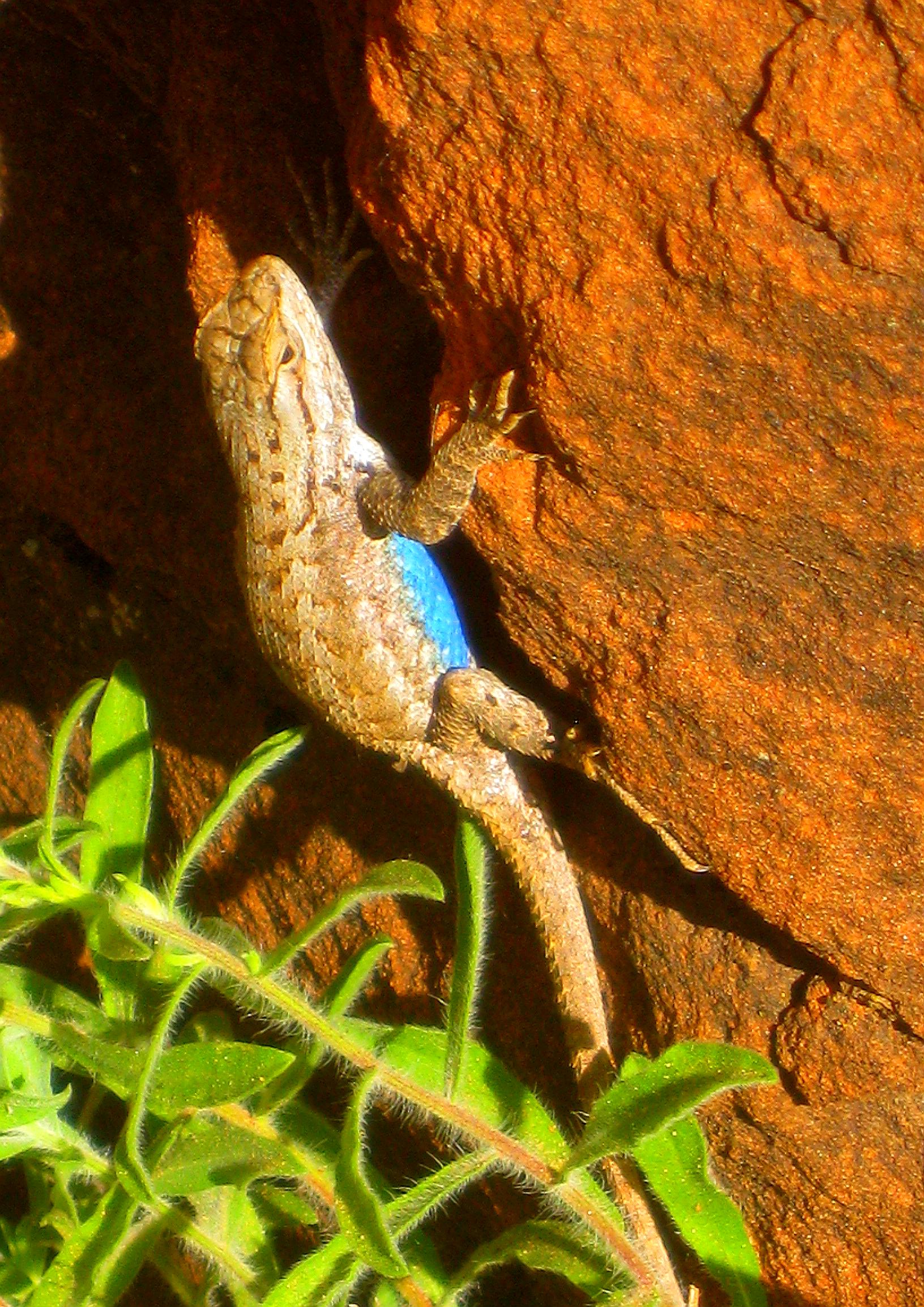
Blue-bellied lizard — Photo by Pat Bean


Blue-Bellied Lizard

When I hiked the Kayenta Trail Saturday, instead of Angel’s Landing, I came across a blue-bellied lizard, a sight I had never seen before.

I’d say this is a lizard with attitude. Don’t you agree? — Photo by Pat Bean

Well that’s probably not accurate. I had just never seen this lizard’s belly before. This lizard, however, was propped up in such a way that the cobalt blue underside was clearly visible. It even posed long enough for me to take a picture before it scrambled away to safety.

The next day, when my son and his family and I were hiking, we came across a northern pygmy owl sitting in a tree not far off the trail to Weeping Rock.

My son, Lewis and his wife, Karen, were thrilled. They’re avid birders, like me – and the owl was a lifer for both of them. While I had seen this cute little owl before, I had never seen one eating a blue-bellied lizard. And this is exactly what it was doing.

While I didn’t bemoan the loss of a lizard to the owl, I kinda hoped it wasn’t the same lizard I had seen the day before. I had grown sort of fond of that one.

The one being eaten by the pygmy owl brought some Shakespeare words to mind. I know, my brain’s a bit warped. Anyway:

“Eye of newt and toe of frog, Wool of bat and tongue of dog, Adder’s fork and blind-worm’s sting, lizard’s leg and owlet’s wing, For a charm of powerful trouble,Like a hell-broth boil and bubble.”

Bean’s Pat: Shakespeare Geek http://blog.shakespearegeek.com/ I wondered after I wrote the above quote if there were any blogs devoted to Shakespeare. Quite a few. This is just one. I thought you might find it fun.


Read Full Post »

 “Some people are always grumbling because roses have thorns; I am thankful that thorns have roses.” – Alphonse Karr

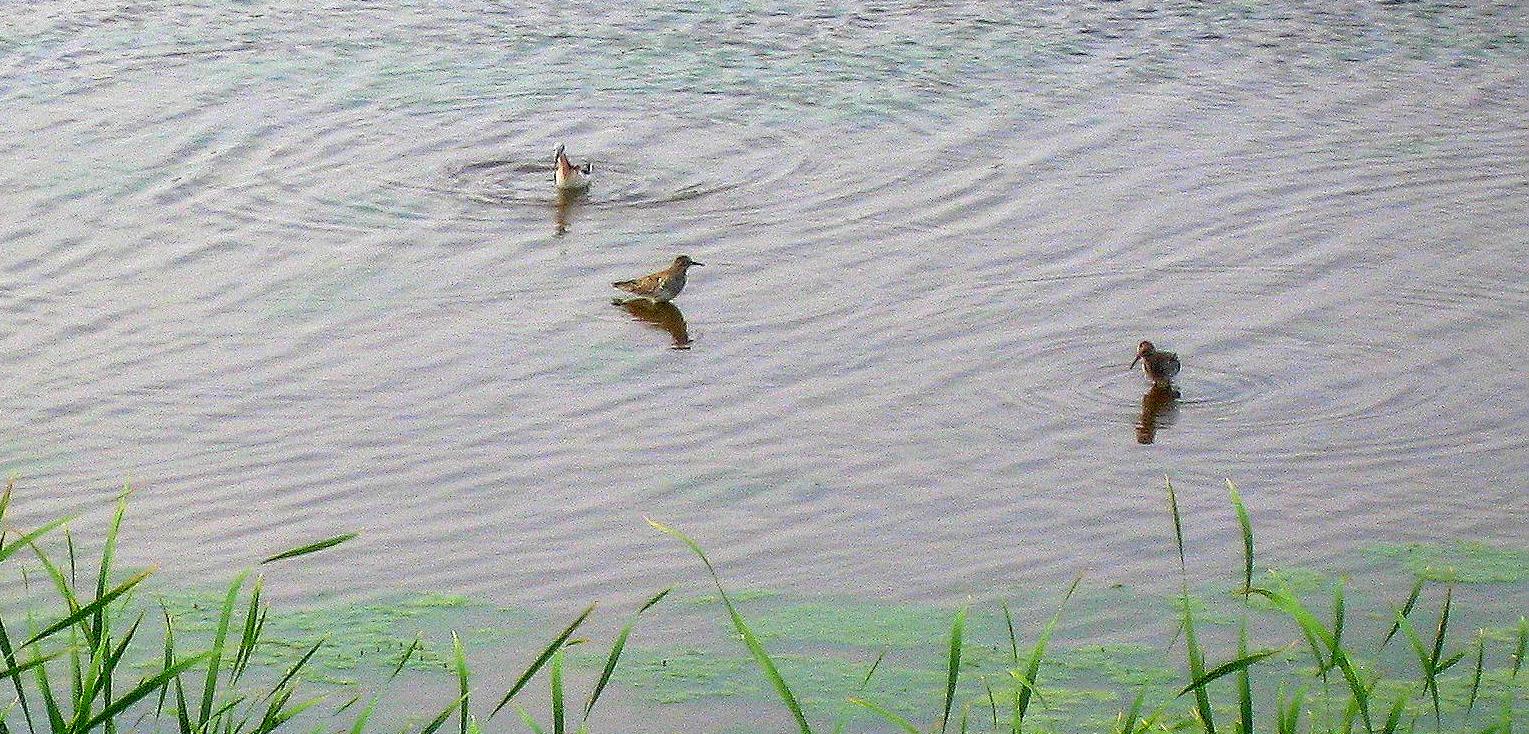
While I watched the red-necked phalaropes in the pond ..... -- Photo by Pat Bean

Adventures with Pepper

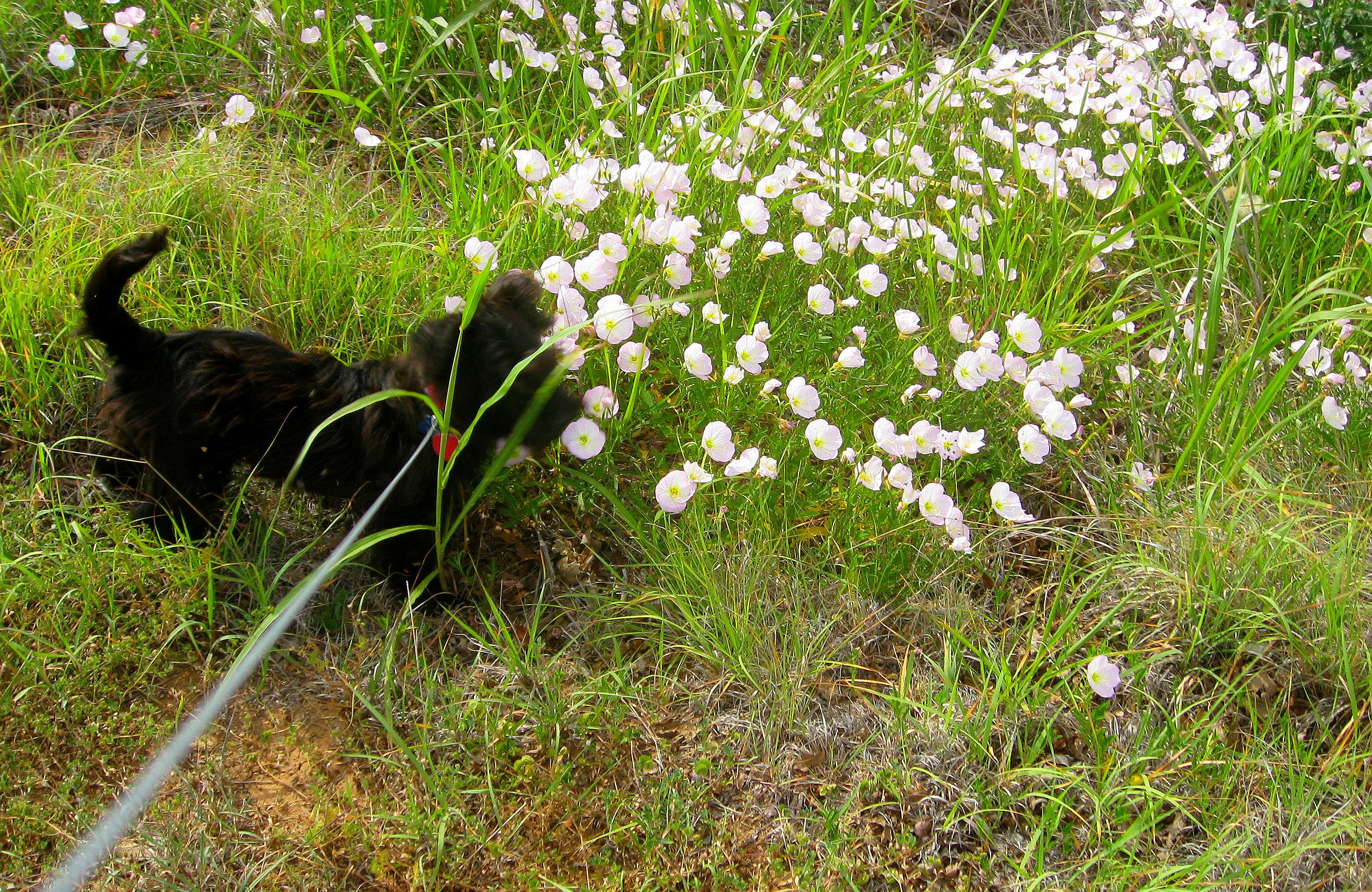
Pepper played around in the buttercups -- Photo by Pat Bean

The roadsides between Wichita Falls and Amarillo were strewn with wildflowers in abundance this past week. While Texas’ glorious spring bluebonnets have already disappeared, purple penstemons, golden coreopsis, scarlet Indian paintbrush, and white prickly poppy blossoms stood in nicely.

And then when Pepper and I pulled into a fancy rest stop, complete with a sign near the entrance to the information center that warned visitors to be aware of rattlesnakes, there was a large field of buttercups. I feel sorry for anyone who doesn’t thrill at such a sight.

Beyond the flowers, there was a small pond with a dozen or so phalaropes doing their thing.

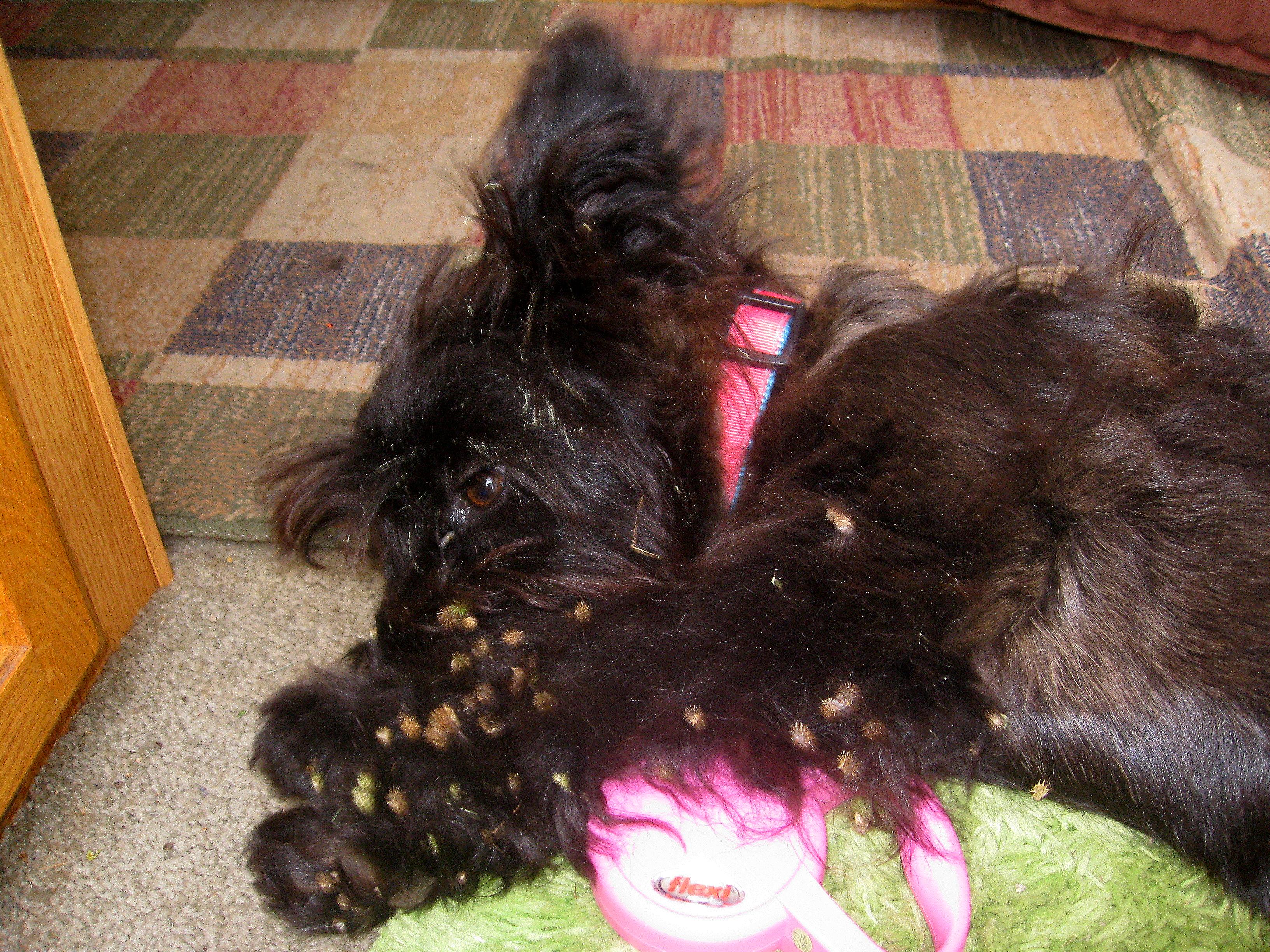
And the Texas nasties got her. -- Photo by Pat Bean

Phalaropes swim in circles to stir up the water and bring up their dinner. I’ve seen thousands of them do this on the Great Salt Lake in Utah, where they fill up on brine shrimp eggs before continuing their migration.

There were only about a dozen, however, on this small pond.

While I watched these small birds, Pepper decided to explore the buttercups. When I looked around, she was having a blast bounding among them. Watching her made me laugh out loud – well until she tired and came back to stand beside me.

It took me half an hour of picking and brushing and cutting of hair before Pepper wasn’t as prickly as a cactus. That sign that warned about snakes should have also mentioned Texas’ nasty burs.

Bean’s Pat: Peter Pan http://tinyurl.com/84j3cf9 How many of you have actually read J.M. Barrie’s book? I love the quotes.

Read Full Post »

 Oh What a Beautiful Morning …

“Every morning in Africa, a gazelle wakes up. It knows it must run faster than the faster lion or it will be killed. Every morning a lions wakes up. It knows it must outrun the slowest gazelle or it will starve to death. It doesn’t matter whether you are a lion or a gazelle … when the sun comes up, you’d better be running.”

First view of Lake Arrowhead's sunrise -- Photo by Pat Bean

A Howl of a Sunrise

Five minutes later ... Photo by Pat Bean

When Pepper and I stepped out of the RV on our last morning at Lake Arrowhead State Park. It was to a chorus of howling coyotes.

My new canine companion perked her ears up, listened for a couple of seconds and then joined their chorus. What a great traveler she’s going to make, I thought.

Then I stepped around the side of my RV, Pepper’s leash in one hand and a cup of cream-laced African coffee in the other hand, and watched the sun rise.

Every morning should have such a great start.

Bean’s Pat: The Greening of the Great Egret  http://tinyurl.com/br8fhd A great bird decked out in its courting colors.

Read Full Post »

Thomas Young together with Snow, his gyrfalcon/peregrine hybrid bird. Both were 37 years old in 2006 when I took this photo.

 “The greatness of a nation and its moral progress can be judged by the way its animals are treated.” – Mahatma Gandhi

One Man’s Love of Animals

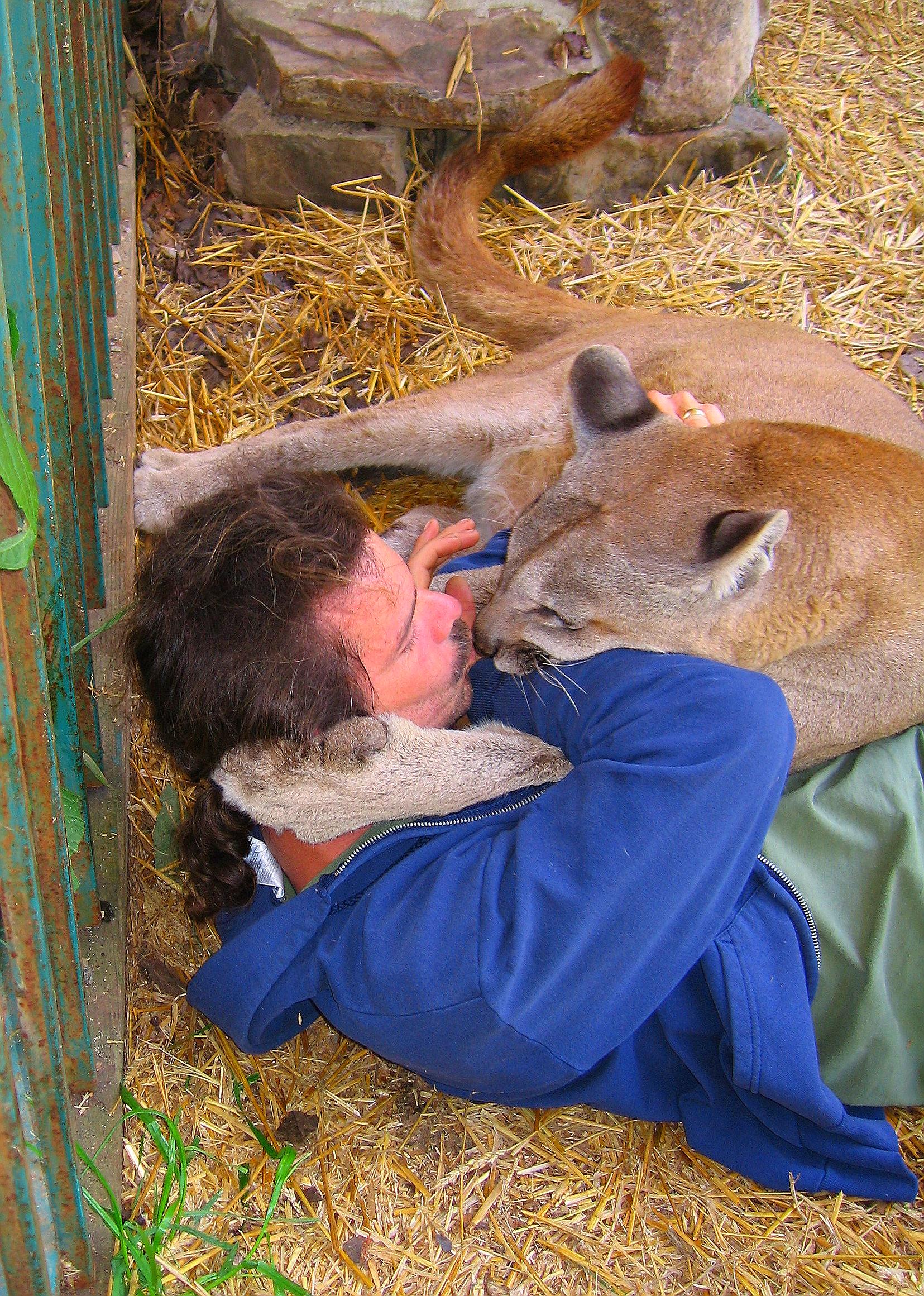
Togetherness: Sheena may be a cougar but she acts as if she's right where she belongs. -- Photo by Pat Bean

During my 2006 wanderings, I came across Queen Wilhelmina State Park near Mena. Arkansas. One of its attractions at that time was a small zoo and wildlife sanctuary operated by Thomas Young, a wildlife rehabilitator.

The zoo animals included a bear, a timber wolf cub, orphaned fawns, bobcats, wild turkeys, hawks, owls, raccoons – and a cougar named Sheena. Almost all of them had been injured at some point in time.

The side of a small unpainted wooden building on the property told the real story of this place. Large white lettering boldly announced that 12 bears, 5,000 hawks, 2,000 owls, 22 bald eagles, 18 golden eagles and thousands of small mammals had been released back into the wild by Young. The $4 entry fee to the zoo helped cover his expenses.

It was while I was questioning Paul, a volunteer and apprentice falconer working with Young, that I saw Tom for the first time.

Paul pointed him out to me as the long-haired man who had just appeared with a turkey neck in his hand to feed a wild turkey vulture that had just landed in the park.

As I watched the scene from about 30 feet away, the volunteer told me the vulture was a bird Tom had rehabilitated. Later Tom told me it was actually the parent of the rescued bird. He said it was the first time this particularly vulture had fed from his hand.

I was more amazed that he could tell the difference between two vultures than that a large, society-designated-ugly, wild bird had fed from his hand. .

“For some reason it’s come to trust me,” Tom said of his vulture friend. “A while back it brought its young here for me to babysit while it flew off on some business for about three hours.”

The volunteer had already told me this story in more detail but I was still fascinated with Tom’s less wordy rerun along with a sparse sketch of his life.

This man was a doer not a talker.

Tom said the park’s lofty location in the Ouachita Mountains made it ideal for releasing rehabilitated birds back to the wild. I was privileged to see one such release the next day, an awesome red-shouldered hawk that Tom released from the overlook just beyond the park’s lodge.

The bird simply fall off the edge of the mountain and glided away, one of the most beautiful sights any birder could ever hope to see.

Bean’s Pat: A Traveler’s Tale http://tinyurl.com/brbfpsh Take an armchair tour of a Papua, New Guinea, village.

Read Full Post »

 “The very idea of a bird is a symbol and a suggestion to the poet. A bird seems to be at the top of the scale, so vehement and intense his life … The beautiful vagabonds, endowed with every grace, masters of all climes, and knowing no bounds – how many human aspirations are realized in their free, holiday lives – and how many suggestions to the poet in their flight and song!” – John Burroughs

Delightful, Colorful, Awesome Birds

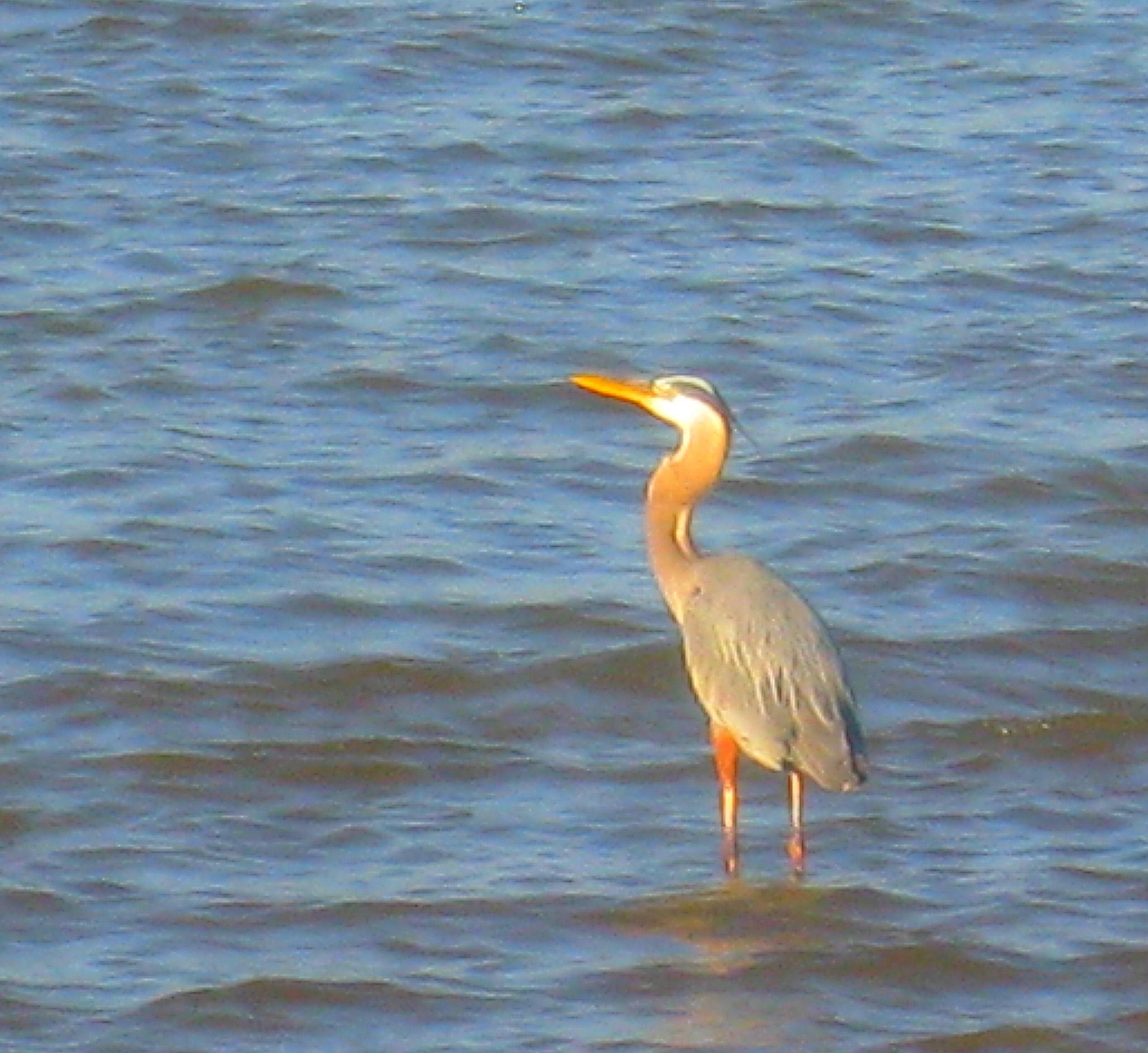
Great blue heron at Lake Arrowhead State Park -- Photo by Pat Bean

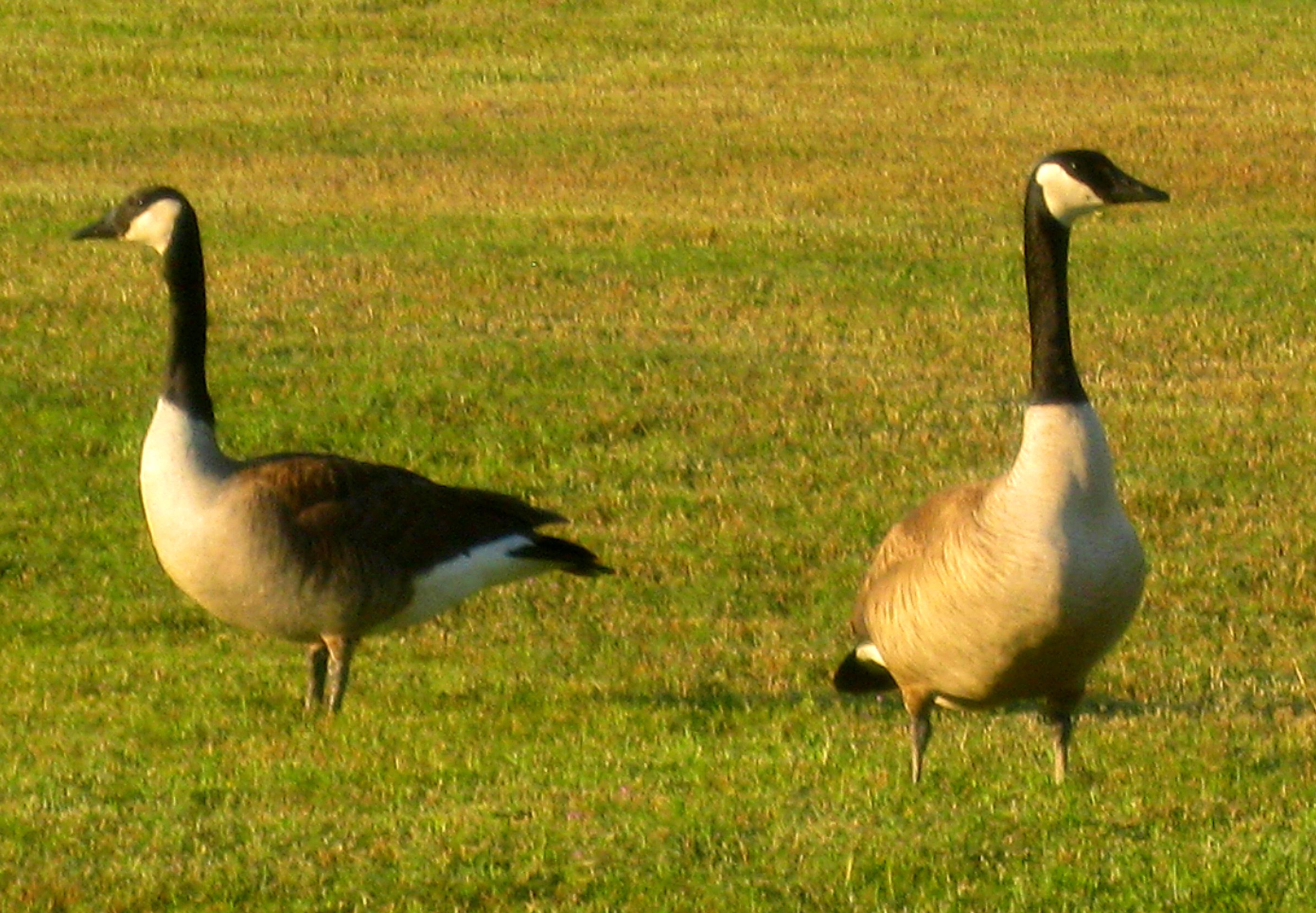
From the Bullock oriole’s flash of bright orange feathers as it flew across my path to the Canada geese that strutted down to the lake, birds were constantly making their presence known during my visit to Texas’ Lake Arrowhead State Park.

For an avid birder like myself, it was better than my favorite Jack-in-the-Box chocolate milkshake high — and came without the calories.

Mockingbirds were plentiful, making my mind play tricks on me when I saw one that didn’t quite fit in. I was thinking it might have been a tropical mockingbird, but then this quite-out-of-place species was on my mind from reports of one of them being seen in Texas’ Sabine Woods. I certainly wasn’t sure enough of my find to add it to my life list of birds.

Canada geese strutted across the manicured lawn near the fishing pier, making it easy to photograph them. I wish I had been able to capture the flock that had honked their way overhead earlier in the morning. But as I remind people often, I'm a writer not a photographer, and the only camera I own is a pocket Canon point and shoot. -- Photo by Pat Bean

I saw a great blue heron at the fish-cleaning station near the park’s fishing pier, but before I could get a picture,  it flew away. It landed in the lake on the opposite side of the pier and began fishing for its breakfast.

When I looked at it through my binoculars at it,  I saw a dozen or so spotted sandpipers cruising the shoreline in front of it, and a yellowlegs a bit farther out in the water. It had to have been a lesser yellowlegs because it was too close in size to the sandpipers to be a greater.

As I continued to watch the sandpipers, a red-winged blackbird flew in beside them. Its shoulder epaulets were so brilliantly red that they made my heart skip a beat.

Grackles, robins, snowy and great egrets, swallows (cave, I think), killdeer, scissor-tailed flycatchers and circling turkey vultures were among the many other birds at the park that I saw.

While I suspect the park is mostly favored by fishermen, it’s now on this birders list of favorite places, too.

Bean’s Pat: Trees for Arbor Day http://tinyurl.com/crhxqtu For tree huggers like me, a slide show from the National Wildlife Federation.

Read Full Post »

“…On the road again

goin’ places that I’ve never been

Seein’ things that I may never see again

And I can’t wait to get on the road again …”

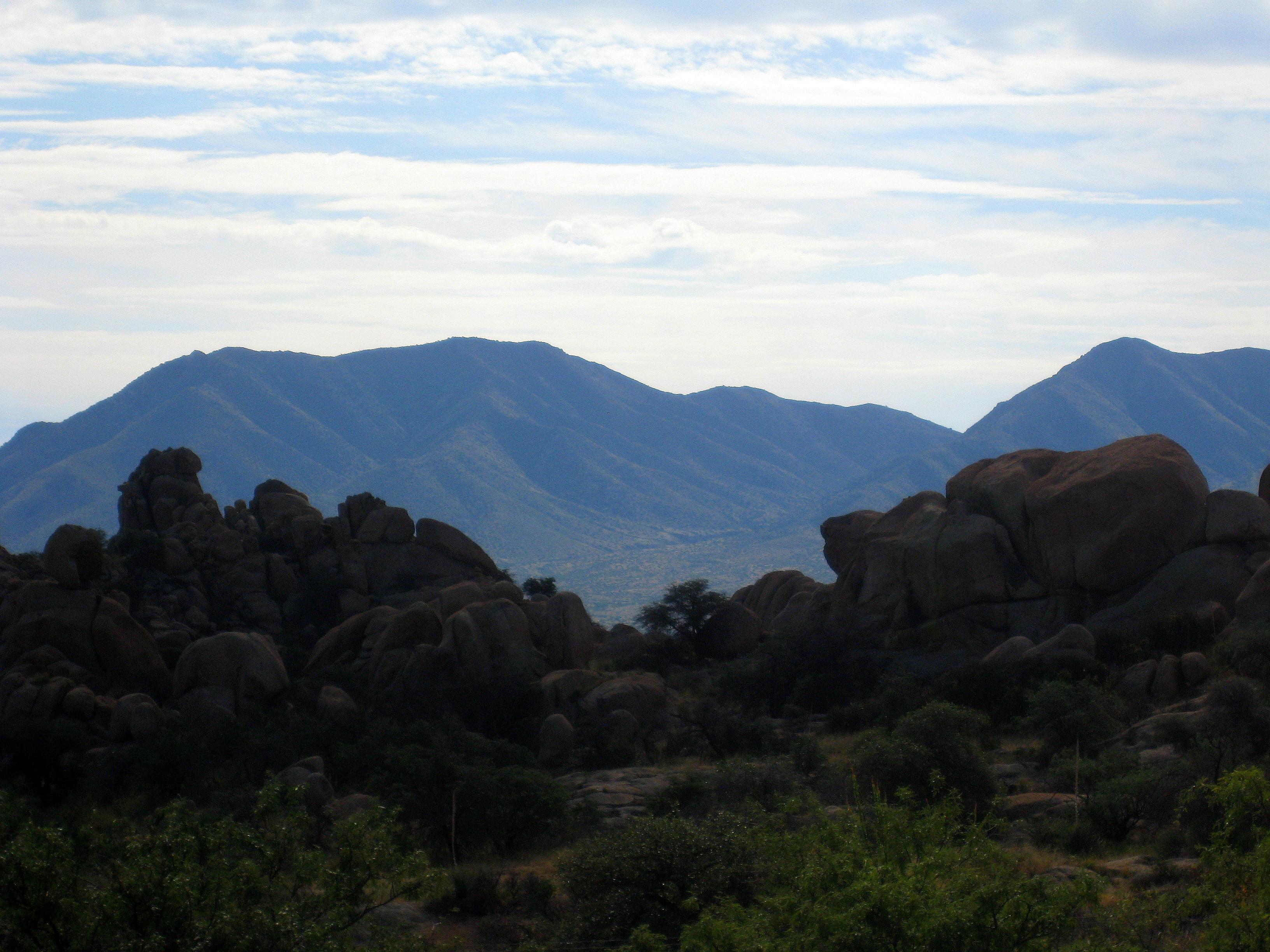
Purple mountain majesties -- Photo by Pat Bean

Me, Pepper and Willie Nelson

I’m a big Willie Nelson fan, and there’s nothing better than slipping his “On the Road Again’ tune into my CD player when I take off for someplace new. I’ll do just that later this morning when Pepper, my new canine traveling companion and I began to take leave of Texas.

I have 18 days to travel 1,300 miles to my destination. This means I can, as Frank Sinatra, sang: “Do It My Way.” And my way is slow and easy with lots of stops to take in this beautiful country.

 Just thinking about the sights I’ll see already has another tune whirling through my brain. This one is the song  I believe should be our national anthem, “America, The Beautiful:”

When i see flowers survivng harsh conditions to give us their beauty, I think of the tough times we Americans are facing these days, and gain confidence that we're tough enough to take it -- and survive. -- Photo by Pat Bean

“O beautiful for spacious skies, For amber waves of gain; for purple mountain majesties, above the fruited plain! America! America. God shed his grace on thee, and crown they good with brotherhood, from sea to shining sea…

These word easily bring tears to my eyes.  I’m so very blessed in that I have seen this country from sea to shining sea. I’ve seen its amber waves of grain and its majestic mountains.”

So now if you’ll excuse me, I’m going to pack up and Me. Pepper and Willie Nelson will get on the road again to see it some more.

Bean’s Pat: 10,000 Birds, http://tinyurl.com/87y7am3 Montana landscapes and the Charles M. Russell National Wildlife Refuge.

Read Full Post »

“An essential aspect of creativity is not being afraid to fail.” – Edwin Land

“And by the way, everything in life is writable about if you have the outgoing guts to do it, and the imagination to improvise. The worst enemy to creativity is self-doubt.” – Sylvia Plath

Great blue heron hunting for its dinner along the Anhinga Trail in the Everglades.

Two Photographs

When I haven’t a clue as to what I’m going to write about, I first turn to my list of potential blog topics.

That didn’t work this time. In fact it might be time for me to clean up the long list as I didn’t understand half my suggestions. Bright ideas, I’ve discovered, often lose meaning if left stagnating too long.

There is also the fact that what you write one day will never be the same thing you will write about the next day. Our perceptions about the meaning of life, or whatever, are constantly changing. Knowing this, I think, is why I’m such a fanatic journal keeper.

"Won't you step into my Everglades parlor?" -- Photo by Pat Bean

Anyway, with my written list failing me, I turned to my photographs and came across two that actually turned on the electricity in my brain. One was of an alligator lying in wait for a meal, and the other was of a great blue heron quietly waiting for its dinner to come into reach.

The differences had me thinking how all living things on this planet have the same needs. And about where each of the species fit in the food chain.

The two photos also spoke to me of patience, a thing I seriously lack. Without a bit of patience, neither of these species would have their next meal.

Then I thought of the different reactions the two photos would elicit from viewers. Oohs and aahs for the heron of course, and probably some yucks for the alligator. When I post a photo of one of these reptiles I usually get an e-mail from a daughter-in-law telling me not to get too close.

Putting two unlike things together, according to some of the self-help books I’ve read, is a good way to spark one’s creativity. I haven’t done it much, but I’m now convinced I should do it more. I mean it got me off the hook for today’s blog.

Now I’m curious as to readers’ reactions to the two photos. Tell, please.

Bean’s Pat: A Word in Your Ear; http://tinyurl.com/74zt46m For those of us who miss too many sunsets.

Read Full Post »

Egrets
 
Where the path closed
down and over,
through the scumbled leaves,
fallen branches,
through the knotted catbrier,
I kept going. Finally
I could not
save my arms
from thorns; soon
the mosquitoes

This great egret regally watched all the comings and goings from its perch aboard a boat at a Key West, Florida, dock. -- Photo by Pat Bean

smelled me, hot
and wounded, and came
wheeling and whining.
And that’s how I came
to the edge of the pond:
black and empty
except for a spindle
of bleached reeds
at the far shore
which, as I looked,
wrinkled suddenly
into three egrets – – –
a shower
of white fire!
Even half-asleep they had
such faith in the world
that had made them – – –
tilting through the water,
unruffled, sure,
by the laws
of their faith not logic,
they opened their wings
softly and stepped
over every dark thing.

        — Mary Oliver
 
Snoweys, Greats, and Cattle
 

Snowy egret on left, great egret on right, northern shoveler in the water in Texas' Rio Grande Valley. -- Photo by Pat Bean

When I first became one of those crazy birders, it was easy to identify a snowy egret, which for a long time was the only egret that I saw.  They were these tall, white, graceful birds with a long, slender black bill, and black legs with golden-yellow feet, which I liked to think of as their slippers.  I saw these delightful shorebirds just about anywhere there was water when I lived in Northern Utah.

 
The next egret I saw was a shorter, chunkier one that looked like parts of its body had been dipped in liquid wheat. occasionally I would see one with a wheat-colored crest, which I learned was its breeding cap. These were cattle egret, and wandering around a herd of the four-legged critters were where you almost always found them.
 
It took me a long while before I saw a great egret in Northern Utah, although when I traveled east of the Rockies, this was suddenly the most common egret I started seeing. It’s a tall, lanky bird with a long, slender yellow bill and black legs and feet.
 
Egrets, well the snowy and the great since the cattle egret didn’t migrate to America until the 1950s, were the inspiration for the creation of the Audubon Society. The main purpose of the conservation organization, of which I’m a proud member, when it was first formed was to protect the egrets from extinction. They were being killed by the thousands simply to provide fanciful plumes for women’s hats.
 
Tsk! Tsk! I’d like to think we vain females know better these days. Most of us do, I believe.  
 
Bean’s Pat: Serenity Spell http://tinyurl.com/6wgdtdd Since it’s a bird day, read all about red-winged blackbirds.
 

Read Full Post »

“Wilderness begins in the human mind.” Edward Abbey

The Poteau River

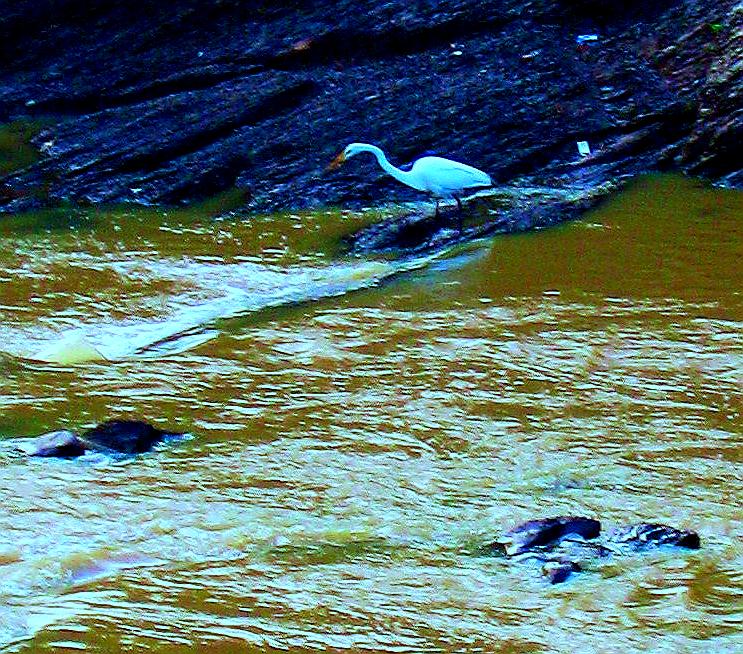
Letting the worries about tomorrow and finding help for my ailing RV, Gypsy Lee,go, I watched as a great egret fished for its dinner on the opposite bank of the Poteau River. -- Photo by Pat Bean

It was late evening when I arrived at Lake Wister State Park, a place of refuge for the night while I pondered my first on-the-road crisis in my RV, Gypsy Lee.

I watched the sun as it sank beneath the horizon and allowed it and the river to soothe my soul. I felt grateful just to be alive. -- Photo by Pat Bean

The crisis turned out to be simply a need for new brake pads. The pads, however, had to be specially ordered, which gave me three days to enjoy the park.

The first night, a Sunday when all the places that could service my RV were closed, began as a tense one at the park, where I had parked below the dam beside the Poteau River.

A walk along the river with my canine traveling companion just as the sun was bidding a good-night to all on this side of the world with a pink glowing sky, massaged away the tension in my body.

Mother Nature has a way of doing that to me. Despite my RV woes, it’s a night that I remember fondly.

Bean’s Pat: Mike’s Look at Life http://m5son.wordpress.com A gentle landscape and thoughtful blog that lets me see the world through fresh eyes.

Read Full Post »

“Delicious autumn! My very soul is wedded to it, and if I were a bird I would fly about the earth seeking the successive autumns.” George Eliot

Lake Claiborne, Issac Creek Campground, Alabama -- Photo by Pat Bean

Issac Creek Campground

http://pixilatedtoo.wordpress.com commented that she was new to Alabama, and looked forward to reading more about Alabama parks after reading yesterday’s blog about the state’s Frank Jackson State Park.

I’m happy to oblige, especially since my brain is in a can’t-think-of-what-to-write-about fog this morning.

The  Issac Creek Campground on Lake Claiborne near Monroeville is a Corps of Engineers’ facility, which meant I could use my Golden Age Passport and camp for half-price, which in 2006 when I stayed there was just $8 a night for a site by the lake.

Maggie at Lake Claiborne. I can now look at photos of my beloved pet and recall memories of our good times together instead of crying. Well, almost. -- Photo by Pat Bean

The park, which had been recommended to me by two fishing enthusiasts from Louisiana, was awesomely scenic and pleasant – and well off the beaten path. I got lost several times before I finally found it.

I asked a park staff volunteer why it wasn’t listed in my Trailer Life campground directory. The answer was that the Corps of Engineers couldn’t advertise and compete with commercial parks.

I did, however, learn that I could purchase a book listing all Corps’ campgrounds from Cottage Publications (PO Box 2832, Elkhart, Indiana, 46515). I did and it now sits alongside my other campground directories.

Following is a few bits and pieces from my journal during the three days my canine traveling companion, Maggie, who died last month, and I stayed at the park:

A walk along Issac Creek was always a delight. -- Photo by Pat Bean

Saucy squirrels are everywhere, and while the species of birds aren’t numerous, each one seems special. I heard a cackling rumble, and back-tracked it to a red-bellied woodpecker…

Blue jays seem to be everywhere, and delightful to watch as they swoop back and forth above the lake. One actually rippled the water while playing this game, sending sunlit droplets splashing into the air…

This morning there was a hazy mist over the lake that broke to reveal a blue canvas on which was painted an echo of the fall dressed trees on the opposite shore…

Winter is an etching, spring a watercolor, summer an oil painting, and autumn a mosaic of them all” – Stanley Horowitz

Lake Claiborne is a fantastic place to be in the autumn. The days are warm and pleasant and the nights cool enough to warrant snuggling up in a quilt at night, which is how I sleep best ….

I learned today that female pine cones are fatter than their male counterparts and have harder scales. Well, that explains why we ladies have wider hips then men and an inner toughness that has nothing to do with brawn …  

On the morning of my third day at Lake Claiborne, and after receiving a phone call the night before from my granddaughter, I said a reluctant good-bye to this great Corps of Engineers campground. Heidi wanted me to meet her in Shreveport, La., for her 24th birthday, which was less than a week away. I enthusiastically accepted the invitation and replotted my journey’s route.

Read Full Post »

« Newer Posts - Older Posts »