Feeds:
Posts
Comments

Archive for the ‘Birds’ Category

”  Hunter S. Thompson
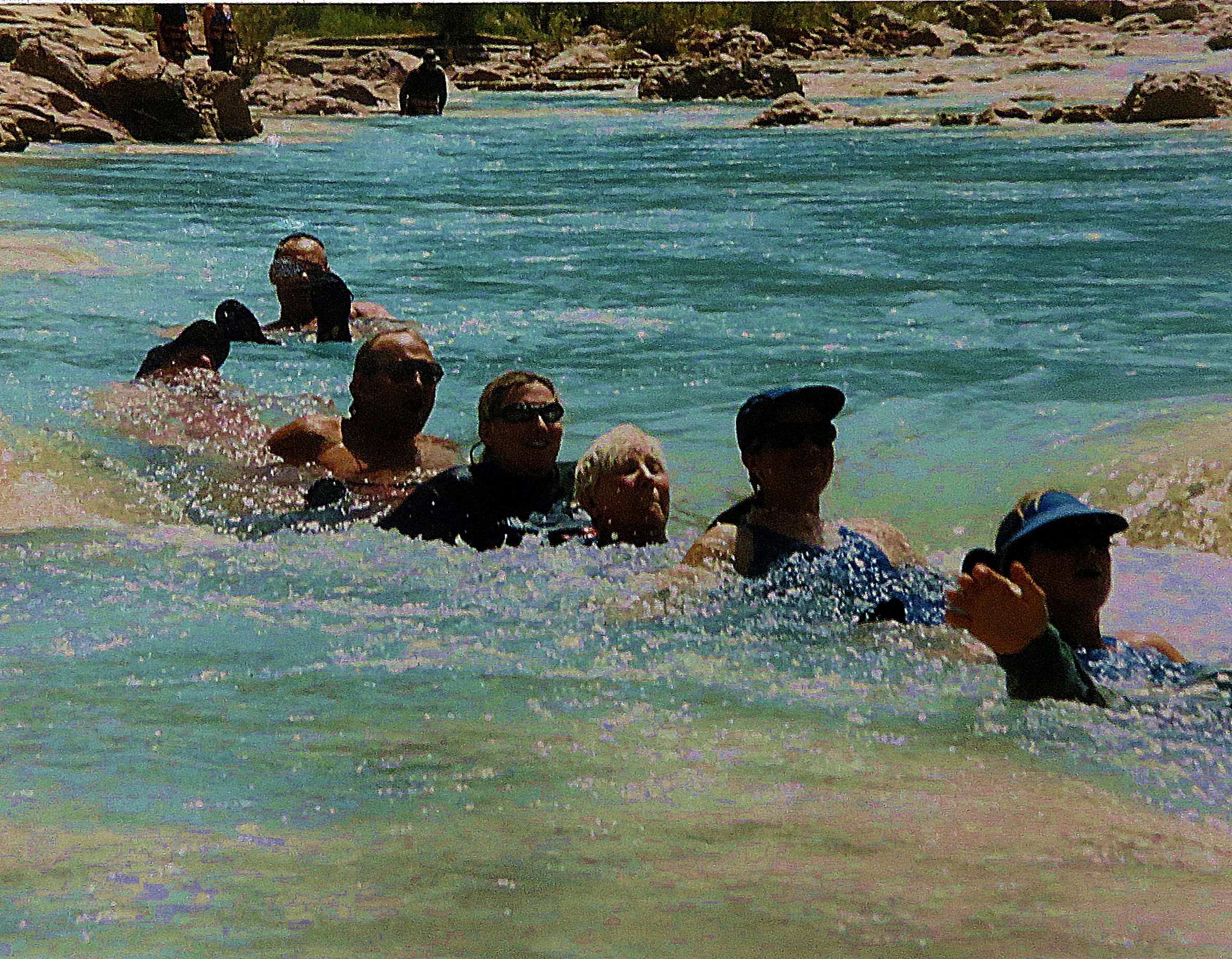
The first time I  rafted down the Grand Canyon, the Little Colorado River entrance to the mightier Colorado River was red and thick with mud from recent upstream rains. The second time it was crystal clean, and we floated in its current. I'm the middle blonde, and I was 60 when the photograph was taken.

The first time I rafted down the Grand Canyon, the Little Colorado River entrance to the mightier Colorado River was red and thick with mud from recent upstream rains. The second time it was crystal clean, and we floated in its current. I’m the middle blonde, and I was 60 when the photograph was taken.
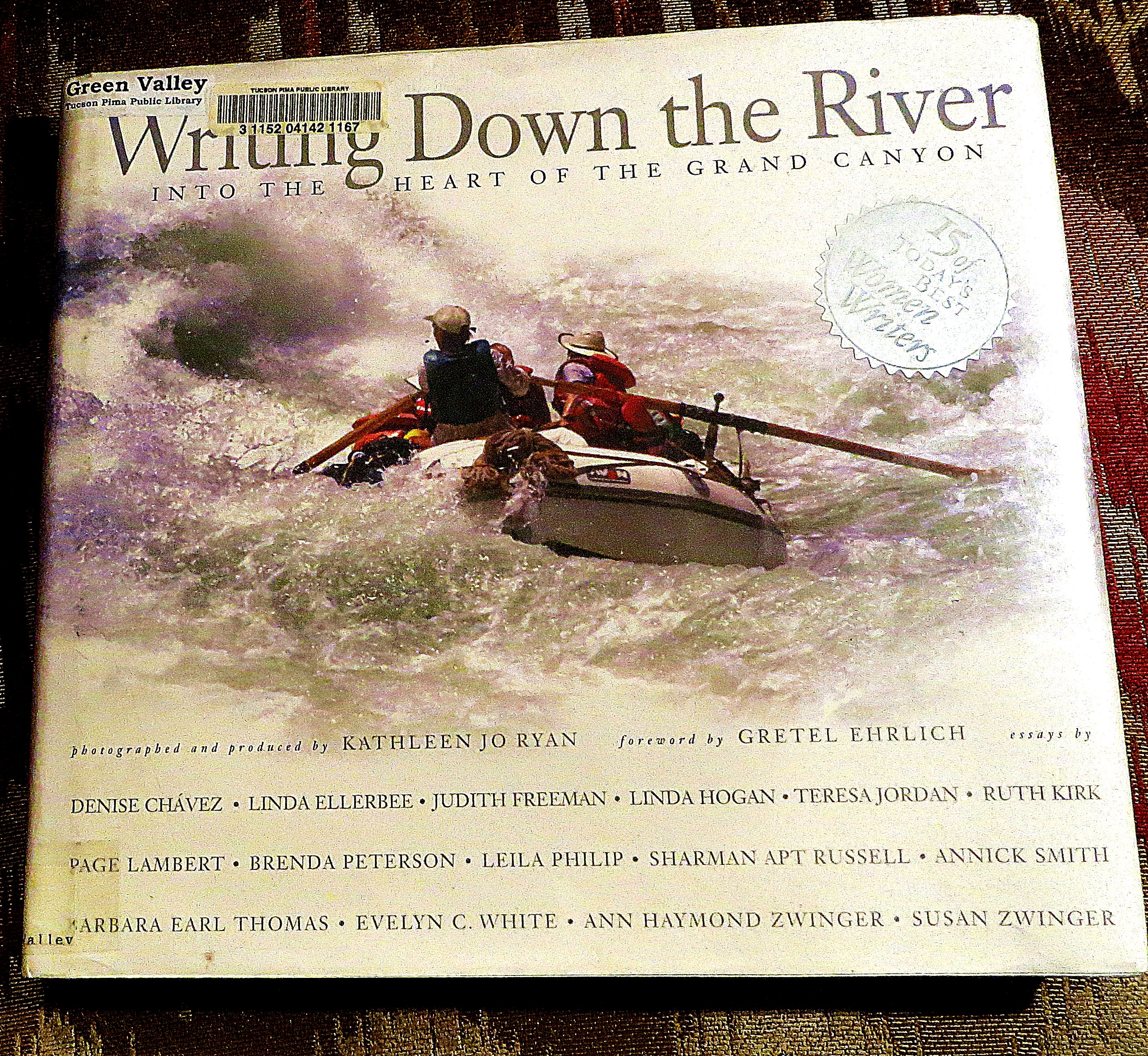
A fantastic read.

A fantastic read.


Bookish Wednesday

A fairy tale begins with “Once upon a time.” And a river story with “No shit! There I was,” said outspoken journalist Linda Ellerbee in her essay about rafting down the Colorado River through the Grand Canyon.

And there she was — on an adventure one summer taken by 14 other fantastic female writers. The 15 women ranged in age, and in lifestyles that went from city women who had never peed outdoors to athletic women who considered nature their true homes. They each wrote about the Grand Canyon from their own perspective, and about how the fickle river and the high rock walls affected and changed them.

Being a female writer who has been on this same adventure twice in my life – the last time as a birthday present to myself when I turned 60 – my soul triumphed with joy when I came across their book, “Writing Down the River (1998, Northland Publishing, photographed and produced by Kathleen Jo Ryan) in the public library.

Of course I checked it out. Reading the book these past few days has brought back many memories of 32 days, 16 for each trip, that rank high on my list of the best days of my life.

Among my own writings about my Grand Canyon trip was one about the canyon wren, which often serenaded us during our early mornings on the river.

Among my own writings about my Grand Canyon trip was a bird column about the canyon wren, which often serenaded us during our early mornings on the river.

The first time I went down the river, I paddled myself almost the entire 225 miles in a small raft. I came away from the experience a whole person, accepting both my strengths and my weaknesses.

The second time I let the boatman (she was female but she was still called a boatman) oar me down the river, an admission that time had come for me to slow down a bit and take more time to smell the flowers and watch the birds – but also that my adventuring days were still far from over.

I highly recommend this trip for all women who are at turning points in their lives – and if you can’t go, at least read the book. The words and photographs can’t help but touch your heart and make you stronger.  

The Wondering-Wanderer's blog pick of the day.

The Wondering-Wanderer’s blog pick of the day.

  Bean/s Pat: Where Have All the Flowers Gone  http://tinyurl.com/l89g62e In honor of Pete Seeger and my generation of flower-child music.
Read Full Post »

          “The ancestor of every action is a thought.” – Ralph Waldo Emerson

          “It’s surprising how much of memory is built around things unnoticed at the time.” – Barbara Kingsolver

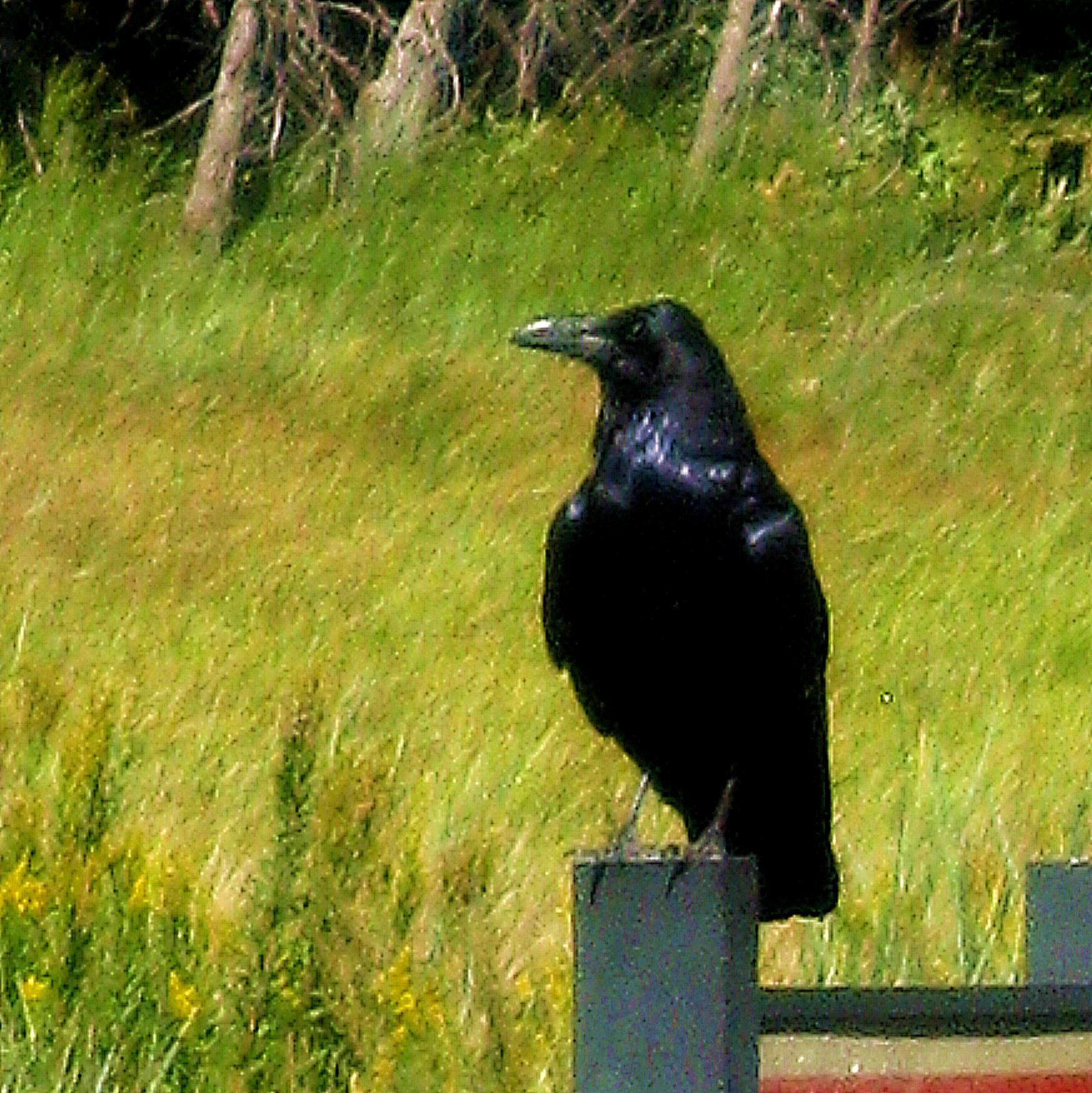
A raven in Yosemite. -- Photo by Pat Bean

A raven in Yosemite. — Photo by Pat Bean

Huginn and Muginn  

According to  legend, Odin, the Norse God of  Asgard, had two ravens. One was  named Huginn, meaning thought, and the other Muginn, meaning memory.

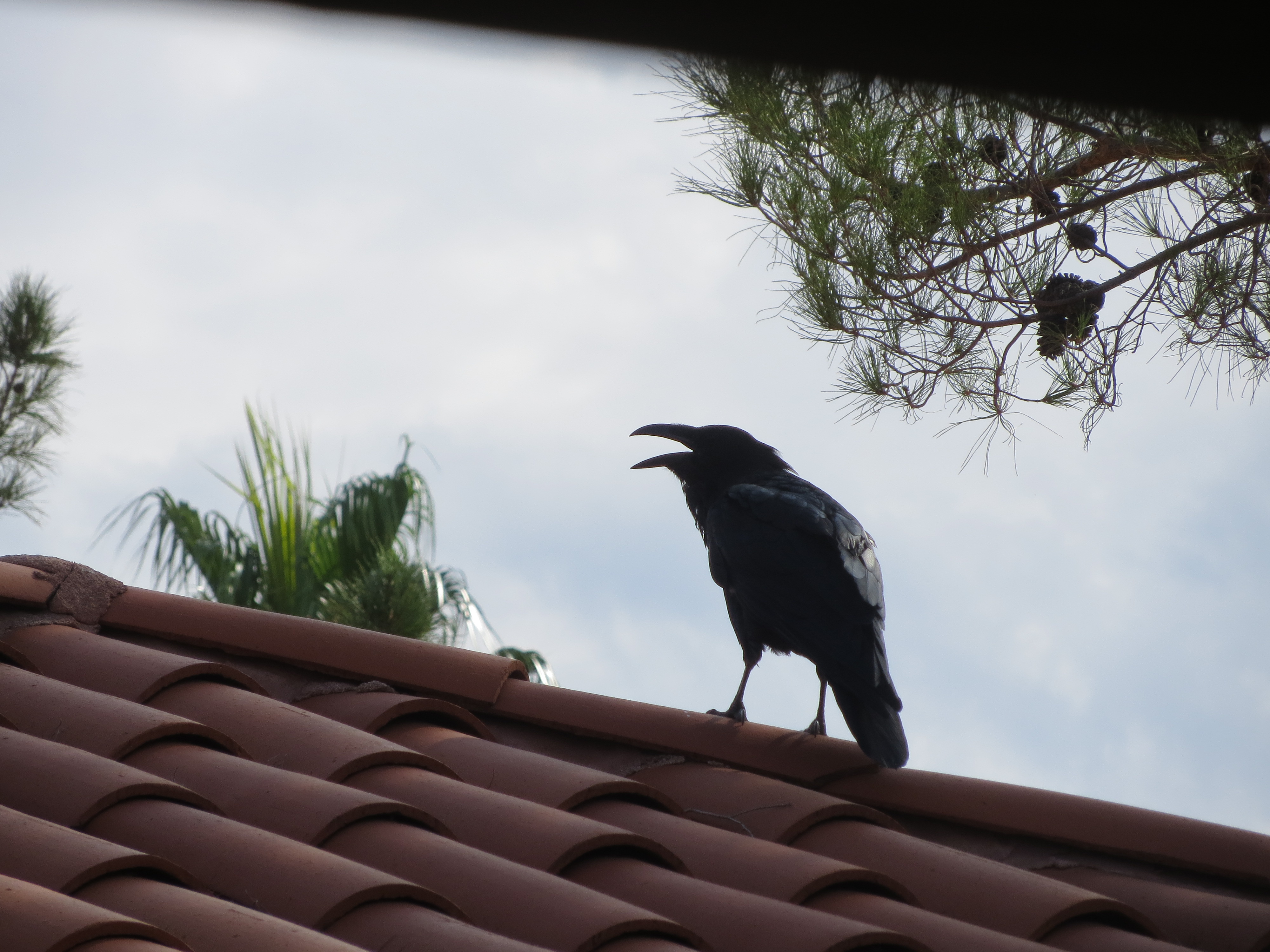
One of my roof-top ravens on an earlier day. -- Photo by Pat Bean

One of my roof-top ravens on an earlier day. — Photo by Pat Bean

I thought about these two mythical birds this morning as I watched, from my bedroom balcony, a pair of ravens skittering about on the red tile roof of an adjacent building. I see these, or other, ravens often. Sometimes I’m amazed at how the sheen of their midnight black feathers appear almost white when the sun strikes them in a peculiar way.

There were no ravens in Texas, where I grew up. I only became familiar with these members of the corvid family when I moved West. And then when I became a passionate birder, I spent hours learning to tell them apart from their cousins, the crows.

Huginn and Muninn sit on Odin's shoulders in an illustration from an 18th-century Icelandic manuscript.

Huginn and Muninn sit on Odin’s shoulders in an illustration from an 18th-century Icelandic manuscript.

It’s an easy task if you see the two species together. The raven is quite a bit larger with a thick sturdy beak. But when they’re at a distance and flying overhead, it’s not so easy, well at least until you realize the raven has a wedge-shaped tail and the outer edge of the crow’s tail is straight.

Smiling to myself, and perhaps thinking like Dr. Seuss, I wondered which of my two roof-hopping ravens was Huginn, and which was Muginn. Then I laughed at my thoughts, while memories of watching ravens in other places and other times danced through my head.

Thoughts and memories – that’s really all we are.

The Wondering-Wanderer's blog pick of the day.

The Wondering-Wanderer’s blog pick of the day.

Bean’s Pat:  Birding Southern Baja  http://tinyurl.com/kgud9e6  A bit of armchair birding and travel gleamed from this delightful blog.

Read Full Post »

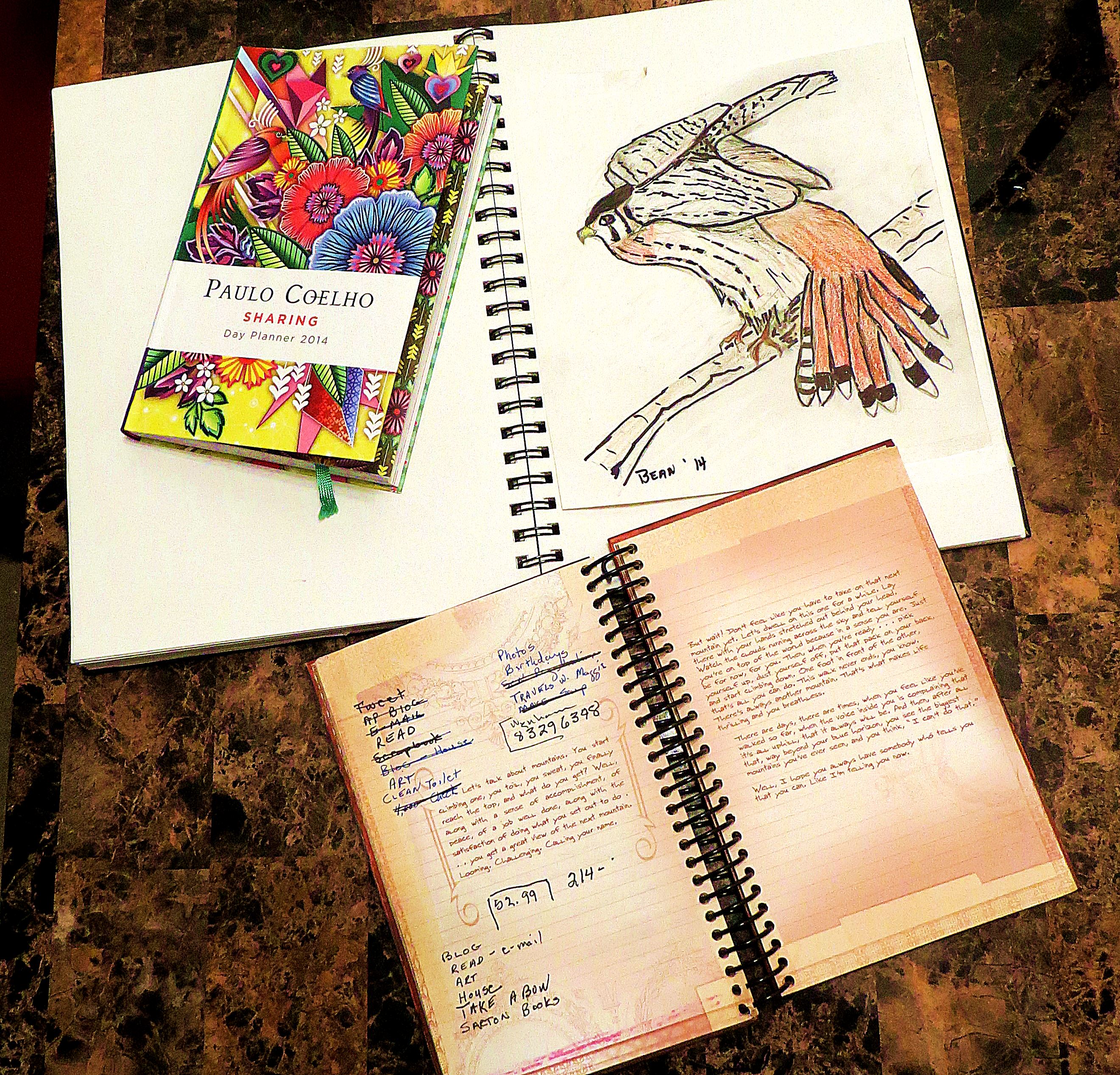
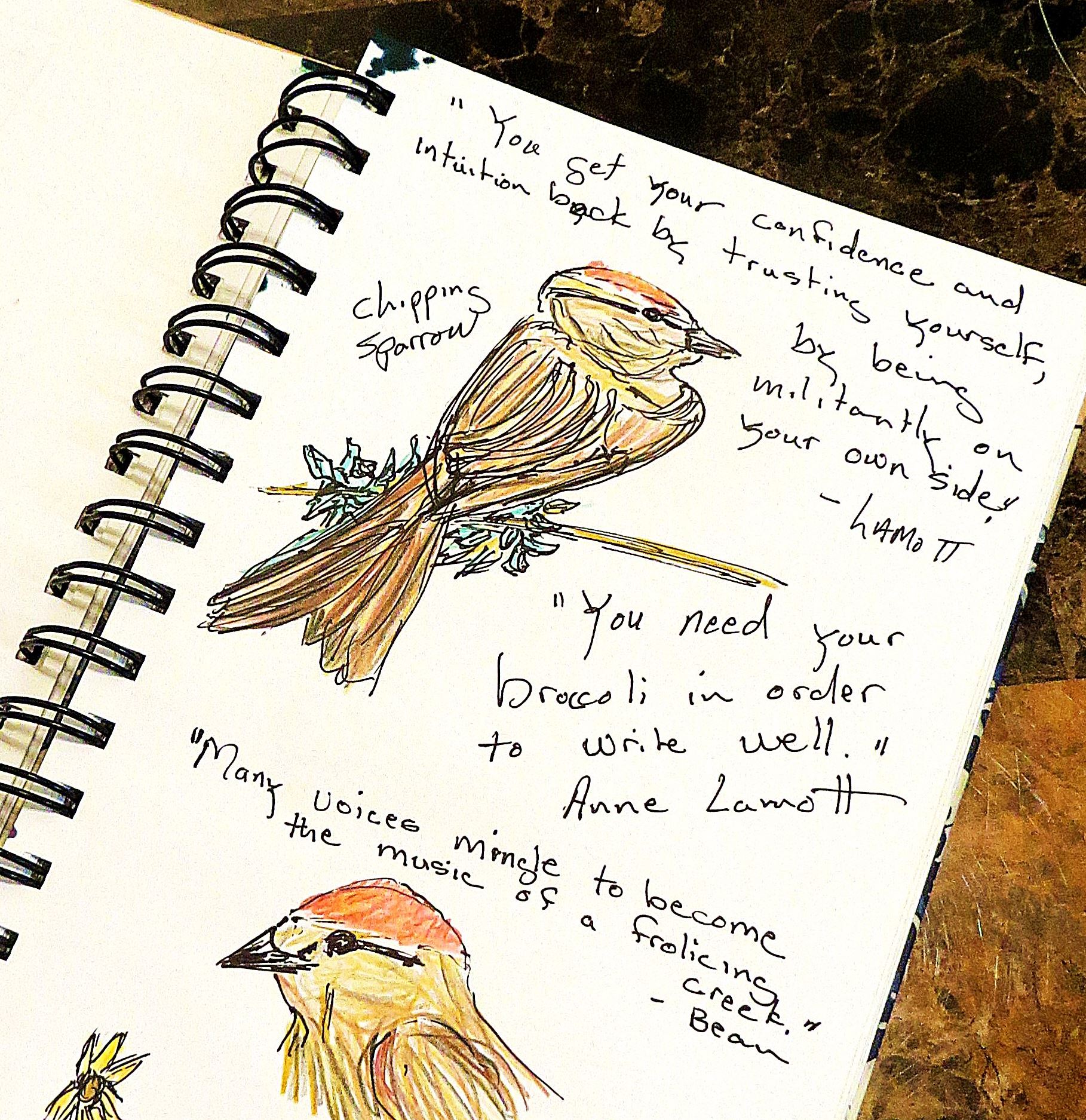
Yesterday's use of paper included adding a kestrel painting to my sketchbook, writing down dates to remember in my diary calendar, which is full of paintings and quotes, and writing in my to-do journal, which includes a hodgepodge of notes and ideas to myself. -- Photo by Pat Bean

Yesterday’s use of paper included adding a kestrel painting to my sketchbook, writing down dates to remember in my diary calendar, which is full of paintings and quotes, and writing in my to-do journal, which includes a hodgepodge of notes and ideas to myself. — Photo by Pat Bean

            “Words mean more than what is set down on paper. It takes the human voice to infuse them with meaning.” – Maya Angelou

I’m So Sorry My Beloved Trees

            I love paper, crisp new pages in a book, cold pressed and textured artist sheets, fanciful stationary, designer pages for my scrapbooking and even the thick block of white for my printer.

But I especially love the blank pages that fill new journals, even more so when their artistic creators have filled bits and pieces of the pages with fairies, flowers, dragons or animal images, and even more when they have left words behind to tickle my little gray cells.

Like these words, which I came across yesterday:  “Let’s talk about mountains. You start climbing one, you toil, you sweat, you finally reach the top, and what do you get? Well, along with a sense of accomplishment, of peace, of a job well done, along with the satisfaction of doing what you set out to do … you get a great view of the next mountain. Looming, Challenging, Calling your name.”  These words were left me behind to ponder from the journal creators, Mark Sanders and Tia Sillers —  And ponder I did.

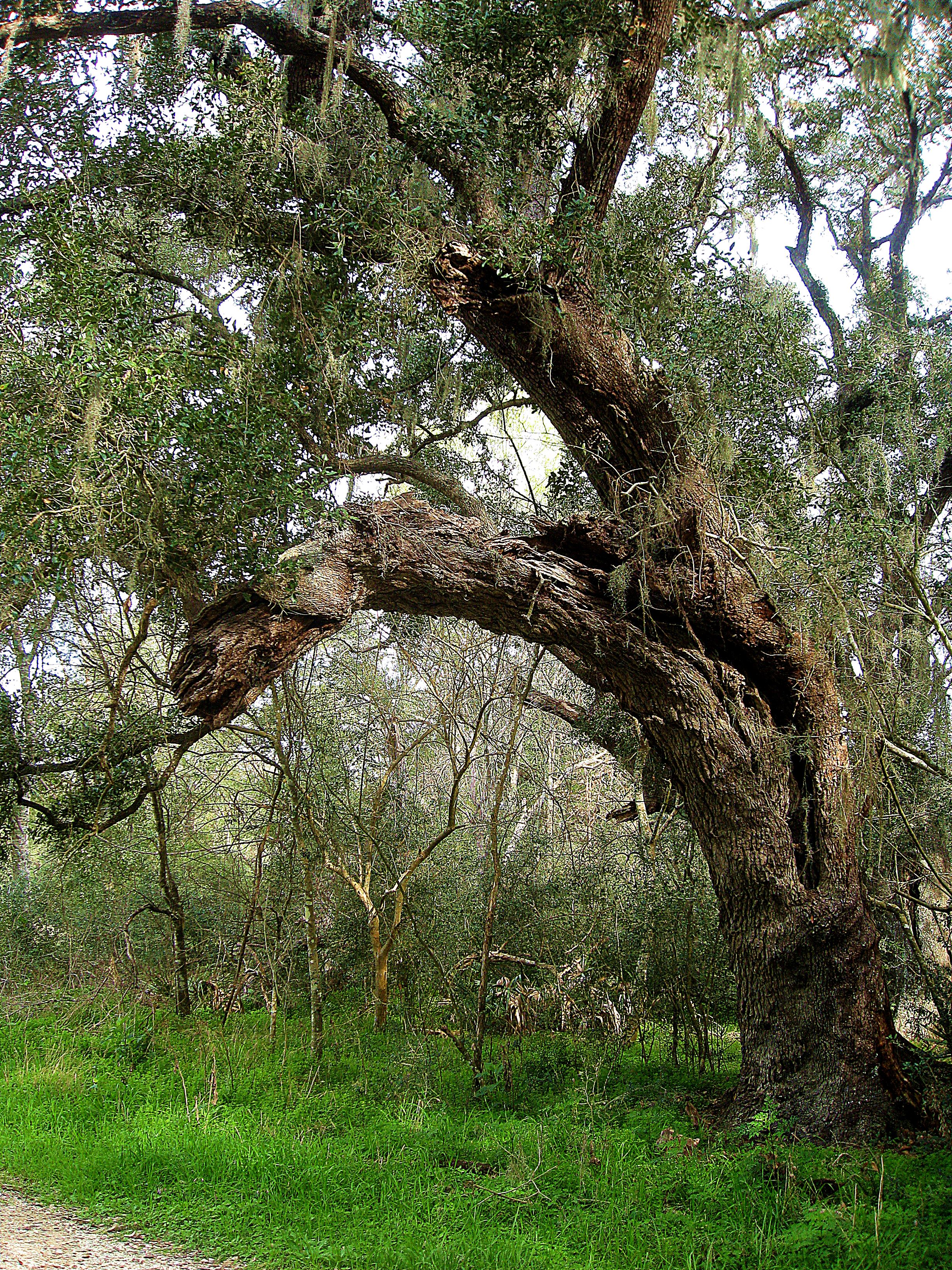
I wonder if the spirits of trees like this beauty in Brazos Bend State Park in Texas are infused into the paper I touch and use daily.

I wonder if the spirits of trees, like this beauty in Brazos Bend State Park in Texas, are infused into the paper I touch and use daily.

These days, I usually have several journals going at once, the most used being a daily journal in which I write to-do lists (Things I want to keep from this journal get rewritten into my computer journal, which I began several years ago to preserve my writing fingers from cramping),  and  a  journal that I keep beside me when I read, and use to write down quotes and a mishmash of thoughts and ideas.

Even though I love computer journaling, which these days includes this blog, I can’t imagine a day without putting my hands on real paper. It’s an oxymoron for me, because I also love trees. Sometimes I wonder about the origin of the paper I write on, and almost feel the trees talking to me. I hope they forgive me.

The Wondering-Wanderer's blog pick of the day.

The Wondering-Wanderer’s blog pick of the day.

Bean’s Pat: The Blood-Red Pencil http://tinyurl.com/lm2k2pg This is for all the writers who have procrastinated until the deadline monster is close enough to bite off our noses.

Read Full Post »

“Yes sir, I am a tortured man for all seasons, as they say, and I have powerful friends in high places. Birds sing where I walk, and children smile when they see me coming.” – Hunter S. Thompson

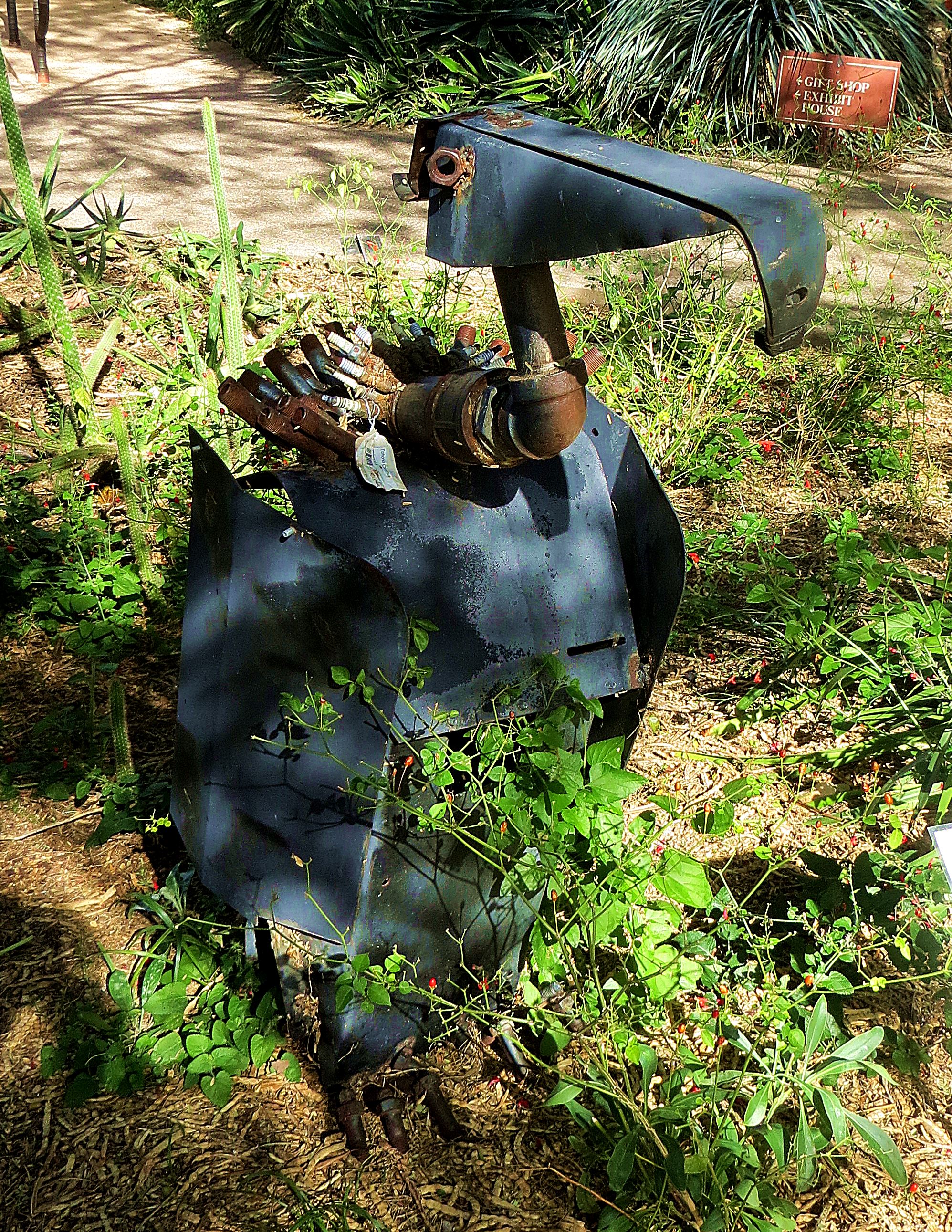
Metal bird sculpture at Tohono Chul Park in Tucson. -- Photo by Pat Bean

Metal bird sculpture at Tohono Chul Park in Tucson. — Photo by Pat Bean

Fooled by the Eyes

            Searching for birds has its surprises. Sometimes what you think is a yellow-rumped warbler turns out just to be the profile of a

I like it that this bird was created from junked metal parts. -- Photo by Pat Bean

I like it that this bird was created from junked metal parts. — Photo by Pat Bean

quirky tree twig lit by a spit of sunlight, or a snowy egret turns out to be a white trash bag that someone carelessly tossed away, and which was blown up against some weeds by the wind.

I’ve seen leaf birds, shadow birds, bottle birds (a blue one floating on the water that from a far distance looked like a blue heron), stump birds and thousands of litter birds of flotsam,  jetsam and abandoned debris.

I thought about these non-birds during a recent stroll in Tucson’s Tohono Chul Park. Unlike all the litter birds I’ve seen, the park]s birds made me smile.

Are you smiling, too.

The Wondering-Wanderer's blog pick of the day.

The Wondering-Wanderer’s blog pick of the day.

Bean’s Pat: The Currents of Life http://tinyurl.com/kenqp2u Just some things to ponder.


Read Full Post »

“Nobody can go back and start a new beginning, but anyone can start today and make a new ending.”  — Maria Robinson

Fly free and high in the New Year. --  Quick sketch of bald eagle doing just that by Pat Bean

Fly free and high in the New Year. — Quick sketch of bald eagle doing just that by Pat Bean

I Call Horse Manure

I’m not sure what is in the air, but all this past week – during which I was on hiatus from writing this blog – I kept running across quotes that in essence said that everything happens for a reason.

A page from my sketchbook, which I hope to use more during 2014.

A page from my sketchbook, which I hope to use more during 2014.

Put bull and my one and only cuss word together and that’s what I say to that idea.

Not everything happens for a reason. The good, the bad, the beautiful and the horribly ugly things happen randomly to everyone.  While there may be causes, no baby dies of crib death for a reason, no beloved pet gets run over by a vehicle for a reason, and no one dies in a nature  disaster for a reason.

We can add reason into the equation by learning and growing from the experiences when life boosts us up, or knocks us down, but there is no reason why things happen in this chaotic world in which we live.

In essence, we are not what happens to us, we are what we make of what happens to us.

What do you think?

Bean’s Pat:  The Philosophy of Old Age: http://tinyurl.com/k63qnas I thought this was worth sharing. Even you youngsters might enjoy it.

Read Full Post »

“Birds sing after a storm; why shouldn’t people feel as free to delight in whatever remains to them?” Rose Kennedy

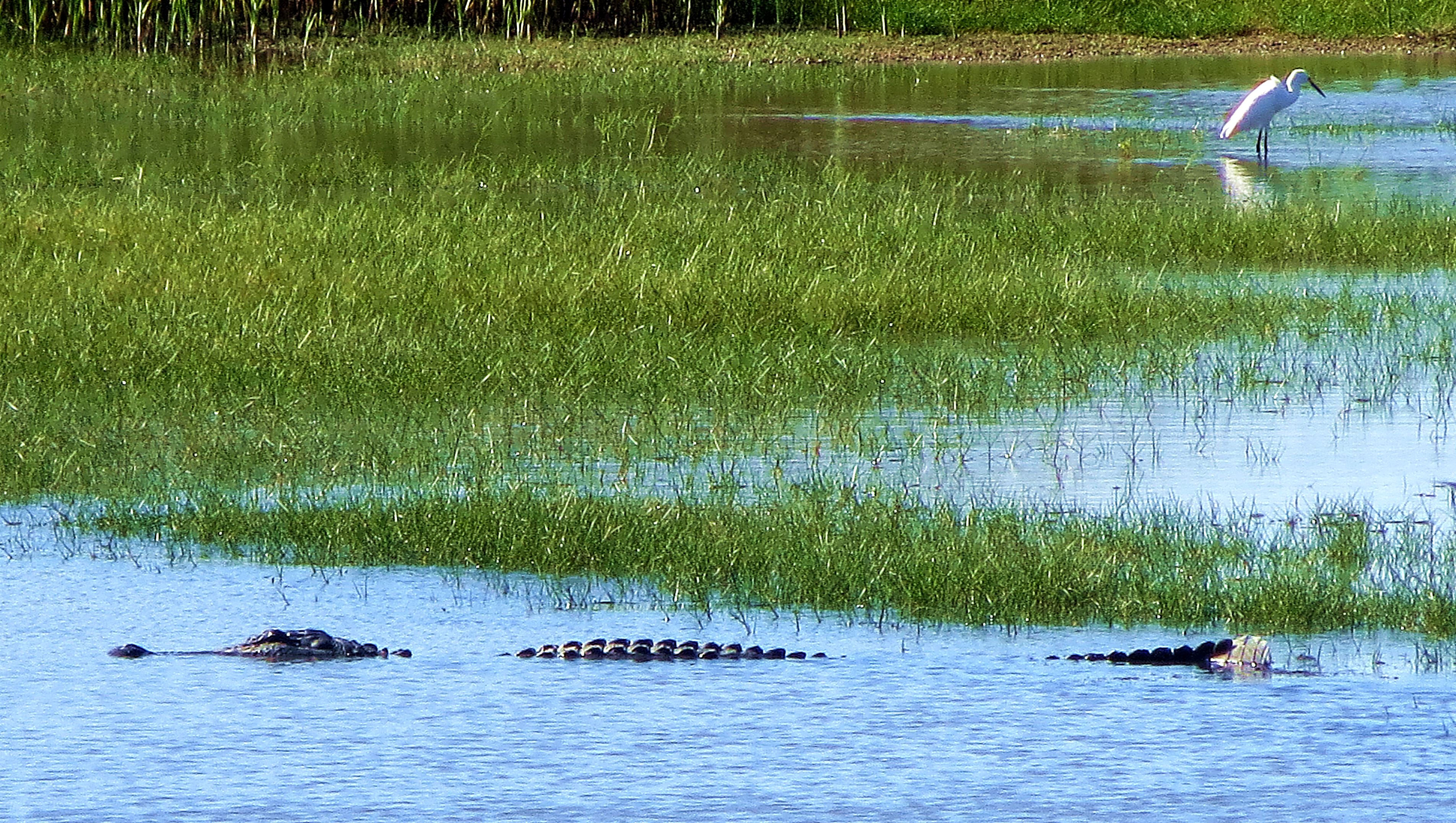
This alligator was shot from the viewing platform in Wolfweed Wetlands and was more than a football field away. -- Photo by PatBean

This alligator was shot from the viewing platform in Wolfweed Wetlands and was more than a football field away. — Photo by PatBean

And a Hissing Alligator

It was a busy day for my son, who had chores, errands and Community Theater rehearsal – He’s playing Marley in an upcoming production of “A Christmas Carol.” But he chose to play hooky from them for a couple of hours on the last day of my visit with his Texas Gulf Coast family.

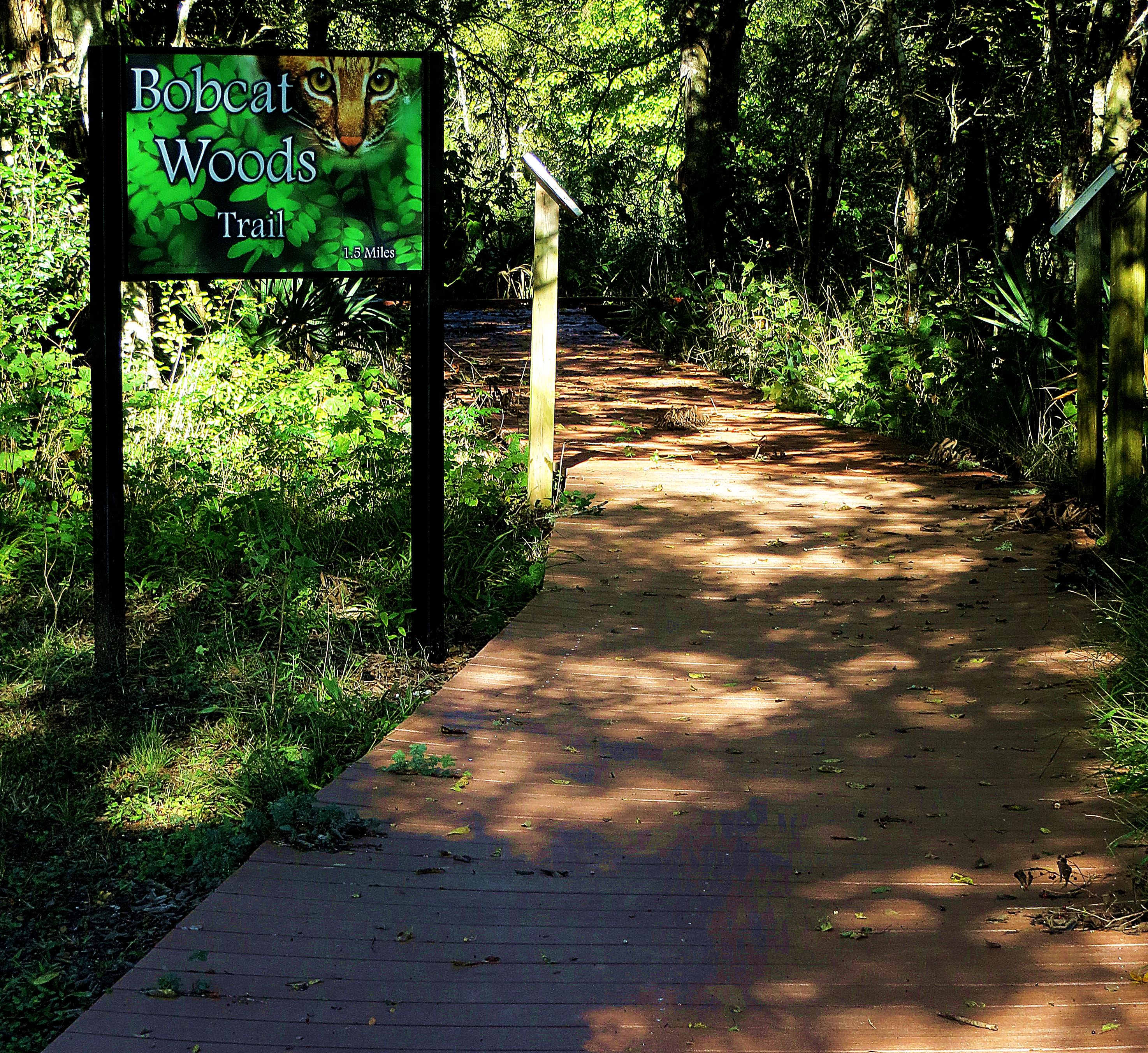
The magical path leading into Bpbcat Woods at San Bernard National Wildlife Refuge. -- Photo by Pat Bean

The magical path leading into Bpbcat Woods at San Bernard National Wildlife Refuge. — Photo by Pat Bean

We two passionate birders stuck out of the house early to continue our birding adventures, which had been rudely interrupted the day before by a heavily weeping storm. This day, which shone bright and clear with bird song echoing from the trees, the two of us headed to San Bernard National Wildlife Refuge.

The birds were out in good numbers this morning, we noted, as their musical tweets came through the open windows of our vehicle. On the drive we saw a field of cattle egrets, which like yesterday’s scissor-tailed flycatchers were late in migrating south for the winter.

A great blue heron stood as still as a statue near a pond that we passed, and a magnificent broad-winged hawk atop a tall pole stayed in place as my son stopped and backed up the car so we could get a better look at it through our binoculars.

The hissing alligator. -- Photo by Pat Bean

The hissing alligator. — Photo by Pat Bean

I had only seen one other broad-winged hawk before so I was especially thrilled at this sighting. Our drive also turned up a flock of red-winged blackbirds and a few kestrels, which were just migrating back into the area for the winder.

At the refuge, we walked the refuge’s Bobcat Woods boardwalk, where we saw cardinals, ruby-crowned kinglets, eastern phoebes, red-bellied woodpeckers and yellow-bellied sapsuckers.

The plants, tree leaves and moss were thick along the boardwalk, letting us hear more than we saw. I surprised myself, however, that by sound I identified an orange-crowned warbler, whose sweet, single note call is so different from that of the single call of a yellow-rumped warbler.

Also identified by sound was a red-shouldered hawk, whose high-pitched keah, keah  screeches cannot be mistaken for anything else. We both spotted, at the same time, a cute belted-kingfisher flying low above a small stream. We both pointed and uttered the word “Look” at the same time, then we simply grinned at each other.

It was also a day for butterflies. You just never know what beauty will turn up in just a couple of stolen hours. -- Photo by Pa Bean

It was also a day for butterflies. You just never know what beauty will turn up in just a couple of stolen hours. — Photo by Pa Bean

It was when we had left the boardwalk, headed toward the viewing platform of the Wolfweed Wetlands that we were startled by a strange sound. I at first thought it might be a sudden gust of wind that had stirred the foliage.

Lewis, walking toward the sound to investigate, suddenly jumped back. It’s an alligator and it’s hissing at us. It certainly was, I saw, as I stepped closer to the small pond so I could take its picture. It wasn’t a big alligator; still we didn’t long in the area.

“I’ve never before been hissed at by an alligator,” Lewis said.

A little bit later, in another area of the refuge, Lewis was looking for rails in a reed-filled pond when he heard something popping into the water. He thought at first it was turtles, but on closer examination saw that it was baby alligators.

He left that area pretty quickly, perhaps because from the viewing platform that had looked out over a huge wetlands area we had spotted a second alligator – and it wasn’t small at all.

The Wondering-Wanderer's blog pick of the day.

The Wondering-Wanderer’s blog pick of the day.

Bean’s Pat: Jamaica Bay Shorebirds http://tinyurl.com/l83rlso A great birding photo blog

Read Full Post »

            “Loving Life is easy when you’re in love with it.” – Author unknown

Scissortails and a Whistler in the Rain

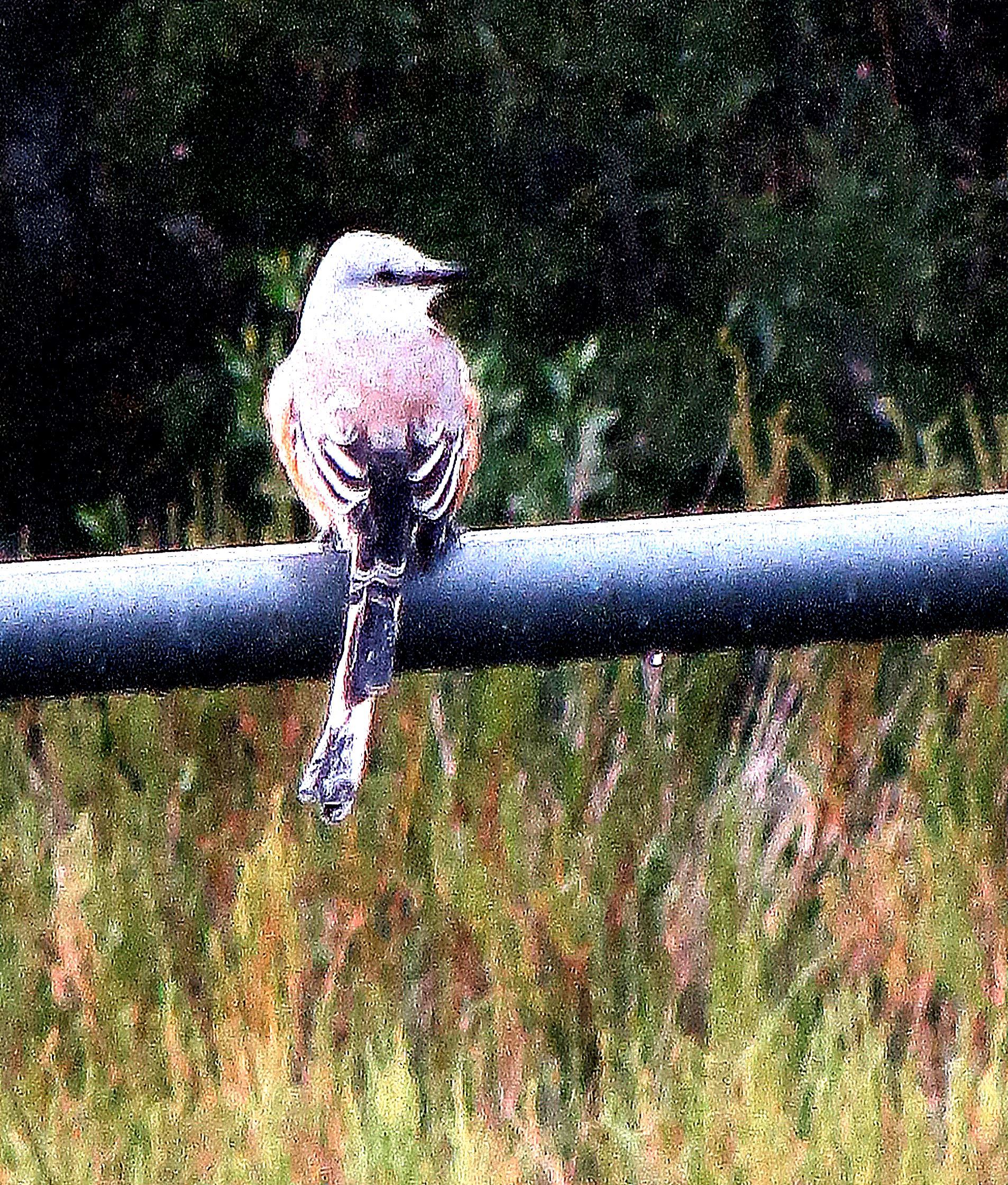
A scissor-tailed flycatcher sitting in the rain at Brazoria National Wildlife Refuge. -- Photo by Pat Bean

A scissor-tailed flycatcher sitting in the rain at Brazoria National Wildlife Refuge. — Photo by Pat Bean

My son Lewis caught his birding addiction from me. I make no apologies. The shared craziness has given the two of us many hours of delightful magic and wonder.

So when I recently visited him and his family for a few days at his Texas Gulf Coast home in Lake Jackson, we decided to ignore the stormy weather forecast and go look for birds. . Sure, it was drizzling, but that could stop at any time. And besides, it would be our only chance to spend a day birding before I would be moving on to visit other Texas family, which includes two other kids and 10 grandchildren scattered far and wide across the Lone Star State.

We decided to go to Brazoria National Wildlife Refuge, which is located only eight miles away from my son’s home. It holds memories of Lewis’ first bird outing with me, and the moment he identified a tropical cormorant — which was the exact moment he was hooked on birding.  We laughingly relived that moment on our way to the refuge.

This is where Lewis and I were standing when the temperature dropped and the sky opened wide. -- Photo by Pat Bean

This is where Lewis and I were standing when the temperature dropped and the sky opened wide. — Photo by Pat Bean

We were standing on a boardwalk near the entrance to the refuge – ignoring a gentle rain while watching a chummy trio that included a dowitcher and two yellowlegs foraging in a pond – when a stiff breeze dropped the temperature several degrees.

In minutes we were standing in a deluge, but fortunately were standing under a roofed portion of the boardwalk. We waited, and waited, but it was soon evident that the rain wasn’t going to stop and we should head back to the car. The umbrella we shared did little to keep us dry, such was the fury of the storm.

I expected Lewis to turn toward the exit once we were in the car, but he headed deeper into the refuge.

“We can do a little car birding. Maybe we’ll spot some ducks,” he said. I laughed, knowing this is exactly what I would have done if I had been by myself. I have mentioned before, haven’t I, that passionate birders are a bit crazy.

“I’m sure we’ll have the place to ourselves,” I answered, as Lewis turned on the car defroster to keep the windows from fogging up.

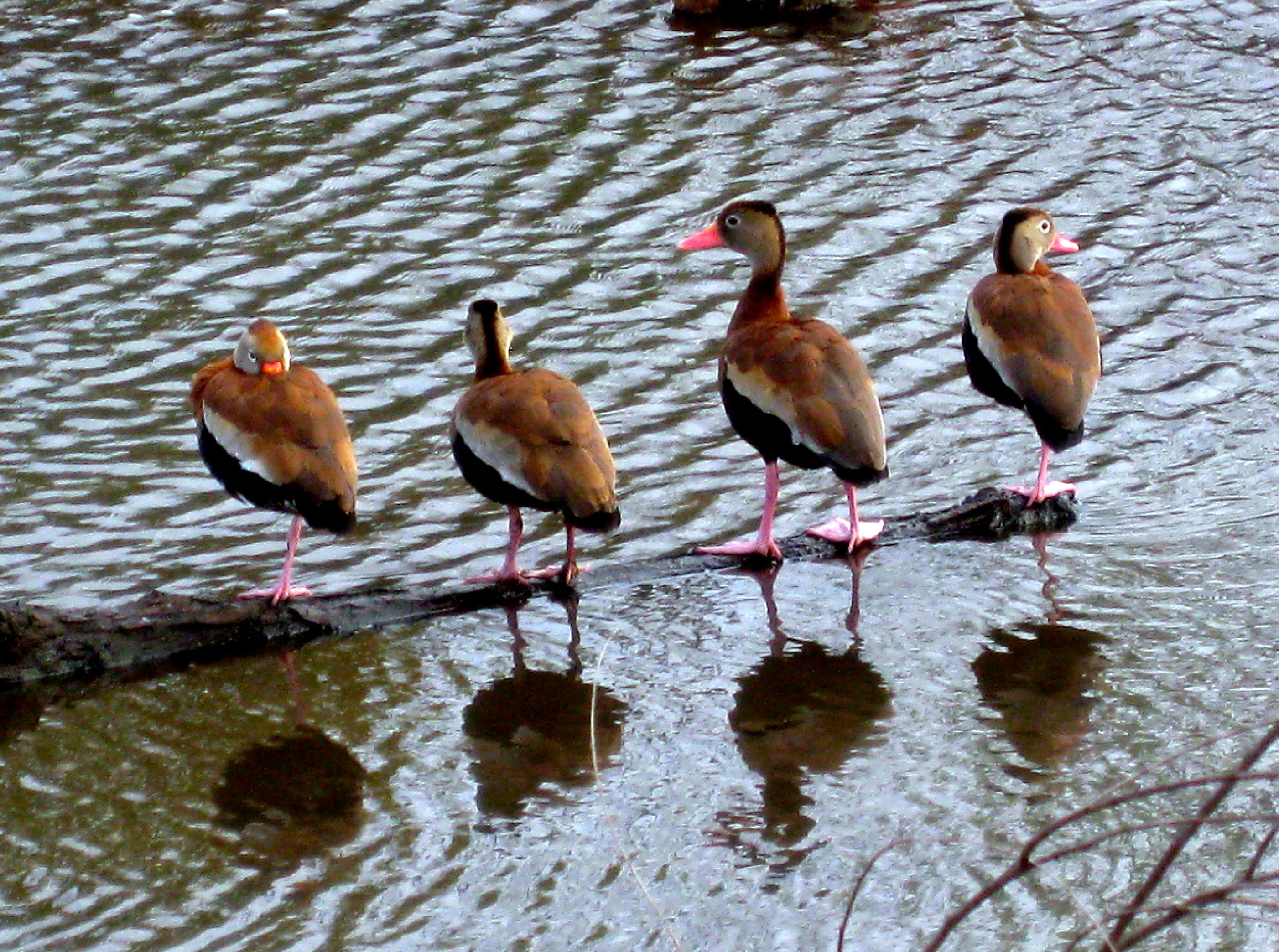
I didn't get a picture this day of the black-bellied whistler, but here's a shot I took of them at Texas' Brazos Bend State Park a while back. -- Photo by Pat Bean

I didn’t get a picture this day of the black-bellied whistler, but here’s a shot I took of four of them at Texas’ Brazos Bend State Park a while back. — Photo by Pat Bean

We ended the soggy day with the car splashing through puddles so deep I was surprised the vehicle didn’t stall. What a great adventure. We even spotted 24 bird species on our outing. For the birders among you, I’ll enumerate: Forster’s tern, blue jay, killdeer, common and great-tailed grackles, laughing gull, European starling, black vulture, mourning dove, mockingbird, meadowlark, scissor-tailed flycatcher, white ibis, lesser yellowlegs, short-billed dowitcher, western sandpiper, willet, great egret, greater yellowlegs, snowy egret, bank swallow, savannah sparrow, black-bellied whistler and pied-billed grebe.

The scissor-tailed flycatchers and the lone black-bellied whistler were my top two favorite sightings. It was late for the scissor-tails to still be in the area, and along with a colorful pair of adults, there was also a tree full of less bright and shorter tailed juvenile scissor-tails.

The whistler stood in the middle of the refuge’s gravel road beneath the dripping sky, and didn’t budge until we were almost on top of it. Whistlers are a species that I love, especially when a flock of them fly overhead belting out a tune.

The Wondering-Wanderer's blog pick of the day.

The Wondering-Wanderer’s blog pick of the day.

Bean’s Pat: The Iris and the Lily http://tinyurl.com/lnt5xz4 Back road landscape. If you are a fan of Mother Nature, you will love this blog.


Read Full Post »

            “The story never ends. There’s always a new corner, a new chapter – and who knows what wonders await there.” – Don George

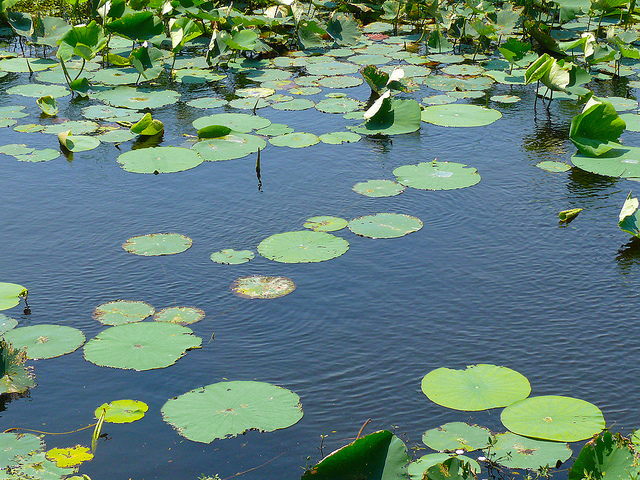
A lily pad pond at Atwater's National Wildlife Refuge. -- Flick'r photo

A lily pad pond at Attwater’s Prairie Chicken National Wildlife Refuge. — Flick’r photo

O Frabjous Day! Callooh! Callay

            Lewis Carroll’s inventive words — a victorious chortle uttered after the Jabberwock was slain — popped into my head this morning.

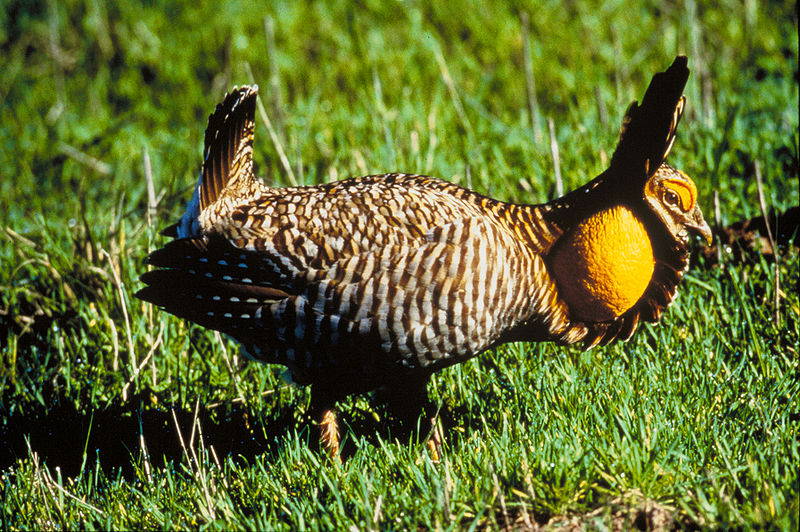
In 1900, a million Atwater prairie chickens roamed the coastal prairies, by 1998 less than 300 remained. Like the passenger pigeon, this species is headed toward extinction. -- Wikimedia photo

In 1900, a million Atwater prairie chickens roamed the coastal prairies, by 1998 less than 300 remained. Like the passenger pigeon, this species is headed toward extinction. — Wikimedia photo

While my canine companion, Pepper, and my RV, Gypsy Lee, are staying behind at my daughter’s home, I’m going to be on the road for a couple of weeks, beginning with an airplane flight early tomorrow morning.

It will only be to my native Texas, and I will only be traveling between the familiar landscapes of Austin, San Antonio, Houston and Dallas in a rental car to visit family members. But, as is always my plans when traveling, I will make sure I drive down new roads and try and see things I’ve never seen before.

These birds today can only be found in the will at the Attwater Prairie Chicken National Wildlife Refuge near Eagle Lake, Texas, and the Texas City Prairie Preserve near Texas City.  -- Wikimedia photo

These birds today can only be found in the wild at the Attwater Prairie Chicken National Wildlife Refuge near Eagle Lake, Texas, and the Texas City Prairie Preserve near Texas City. — Wikimedia photo

The one thing in concrete on this part of my traveling agenda is a side trip to visit the Attwater Prairie Chicken National Wildlife Refuge. The wildlife sanctuary  is located off Highway 36 — between a son who lives north of Austin and a son who lives south of Houston.

I’ve passed by the turnoff to this refuge many times, but never allowed time to stop. Hopefully on this trip I’ll be able to add this rare bird to my life list. I’ve been forewarned that this might not happen. But even if I don’t see the prairie chicken, I know I will see many other wonders; national refuge visits have never failed me in this way.

And that’s why I’m chortling with job, “O frabjous day. Callooh! Callay!

The Wondering-Wanderer's blog pick of the day.

The Wondering-Wanderer’s blog pick of the day.

Bean’s Pat: A Time to Write: http://tinyurl.com/k6378j5 It’s not Musical Monday, but I think you’ll find this just as enjoyable on a hump-day Wednesday.

Read Full Post »

Dove on a Wire

            “How come the doe gets to be the peace symbol? How about the pillow? It has more feather than the dove, and it doesn’t have that dangerous beak.” – Jack Handy

A white-winged dove that watched Pepper and I take a walk this morning. -- Photo by Pat Bean

A white-winged dove that watched Pepper and I take a walk this morning. — Photo by Pat Bean

Just Pondering?

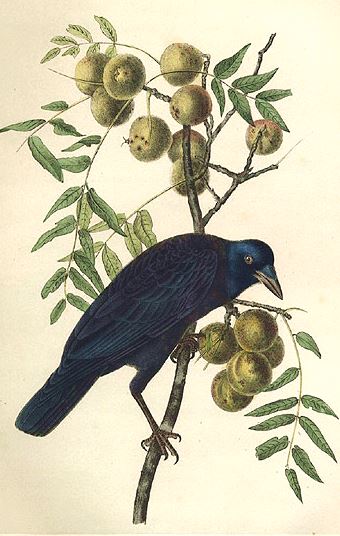
Even John James Audubon depicted a crow as looking a little wicked. Don't you agree.

Even John James Audubon depicted a crow as looking a little wicked. Don’t you agree.

Why is a crow seen as evil and a dove seen as pure? Who made this decision? As a passionate bird-watcher, I enjoy watching crows as much as doves. Maybe even more, because crows are smarter.

And why is a group of doves called a flight and a group of crows a murder?

Read Full Post »


This great photo of a Merlin in pursuit of a blue jay was taken by John Harrison who put it up on Wikimedia. You can see his photos at:  http://flickr.com/photos/15512543@N04/

This great photo of a Merlin in pursuit of a blue jay was taken by John Harrison who put it up on Wikimedia.


“Whatever you think you can do or believe you can do, begin it. Action has magic, grace and power in it.” – Johann Wolfgang von Goethe

Yet I Think It’s Magical

I had been seeing this dark bird shape flash overhead for several days, but hadn’t got a good enough look to identify it. Solving the mystery of what bird I’m observing is part of my bird-watching passion.

A close up look at a merlin. -- Wikimedia photo

A close up look at a merlin. — Wikimedia photo

It was mourning dove size, but it flew nothing like a dove. I thought it flew like a hawk but it was too small for the Cooper’s hawks that have been keeping the apartment complex company all year.

The brief glimpses I had of the bird were tantalizingly frustrating. It would fly overhead past me, and by the time I looked up after seeing its shadow, it had disappeared into the trees.

Merlins, before they grew up and became majestic birds of prey. -- Wikimedia photo

Merlins, before they grew up and became majestic birds of prey. — Wikimedia photo

Finally a few mornings ago, as I sat drinking my cream-laced coffee and watching dawn break, I identified it as a merlin. It whizzed past my third floor balcony at eye level, probably after one of the small song birds that had been flitting around waiting to catch the morning sun, too.

Merlins are not year-round residents of the Tucson area, but they do migrate through and winter here, according to my birding field guide. Since I haven’t seen the merlin in the past couple of days, and since it’s not yet winter, I suspect it was just passing through on its way farther south.

With all the small birds around the complex, it probably decided this was a good place to fuel up. Merlins, according to Cornell University’s ornithological web site, rely on speed and agility to hunt their prey. The merlins often hunt by flying fast and low, using trees and large shrubs to take prey by surprise. While they actually capture most birds in flight, they will also tail-chase a bird to catch it.

. While not a lifer, I’ve only been able to identify this member of the falcon family a few times. But bird experts say the merlin is becoming more numerous in urban areas, so perhaps there are more “magical” merlin sightings in my future.

The Wondering-Wanderer's blog pick of the day.

The Wondering-Wanderer’s blog pick of the day.

Bean’s Pat: Ian Butler Photographer http://tinyurl.com/ledqorr Great photo of a dunlin for all you birders out there.


Read Full Post »

« Newer Posts - Older Posts »