Feeds:
Posts
Comments

Archive for the ‘Birds’ Category

            “Loving Life is easy when you’re in love with it.” – Author unknown

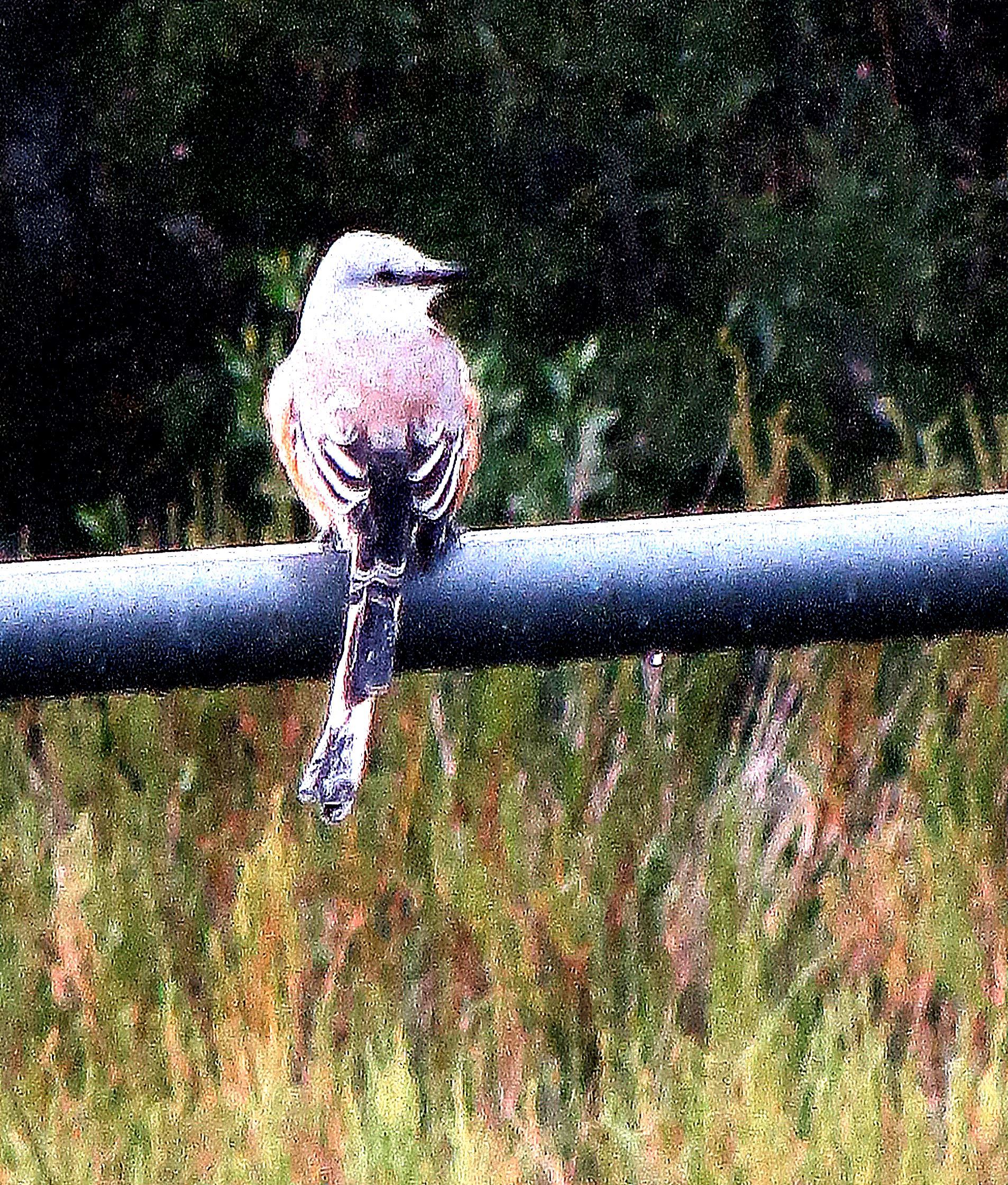
Scissortails and a Whistler in the Rain

A scissor-tailed flycatcher sitting in the rain at Brazoria National Wildlife Refuge. -- Photo by Pat Bean

A scissor-tailed flycatcher sitting in the rain at Brazoria National Wildlife Refuge. — Photo by Pat Bean

My son Lewis caught his birding addiction from me. I make no apologies. The shared craziness has given the two of us many hours of delightful magic and wonder.

So when I recently visited him and his family for a few days at his Texas Gulf Coast home in Lake Jackson, we decided to ignore the stormy weather forecast and go look for birds. . Sure, it was drizzling, but that could stop at any time. And besides, it would be our only chance to spend a day birding before I would be moving on to visit other Texas family, which includes two other kids and 10 grandchildren scattered far and wide across the Lone Star State.

We decided to go to Brazoria National Wildlife Refuge, which is located only eight miles away from my son’s home. It holds memories of Lewis’ first bird outing with me, and the moment he identified a tropical cormorant — which was the exact moment he was hooked on birding.  We laughingly relived that moment on our way to the refuge.

This is where Lewis and I were standing when the temperature dropped and the sky opened wide. -- Photo by Pat Bean

This is where Lewis and I were standing when the temperature dropped and the sky opened wide. — Photo by Pat Bean

We were standing on a boardwalk near the entrance to the refuge – ignoring a gentle rain while watching a chummy trio that included a dowitcher and two yellowlegs foraging in a pond – when a stiff breeze dropped the temperature several degrees.

In minutes we were standing in a deluge, but fortunately were standing under a roofed portion of the boardwalk. We waited, and waited, but it was soon evident that the rain wasn’t going to stop and we should head back to the car. The umbrella we shared did little to keep us dry, such was the fury of the storm.

I expected Lewis to turn toward the exit once we were in the car, but he headed deeper into the refuge.

“We can do a little car birding. Maybe we’ll spot some ducks,” he said. I laughed, knowing this is exactly what I would have done if I had been by myself. I have mentioned before, haven’t I, that passionate birders are a bit crazy.

“I’m sure we’ll have the place to ourselves,” I answered, as Lewis turned on the car defroster to keep the windows from fogging up.

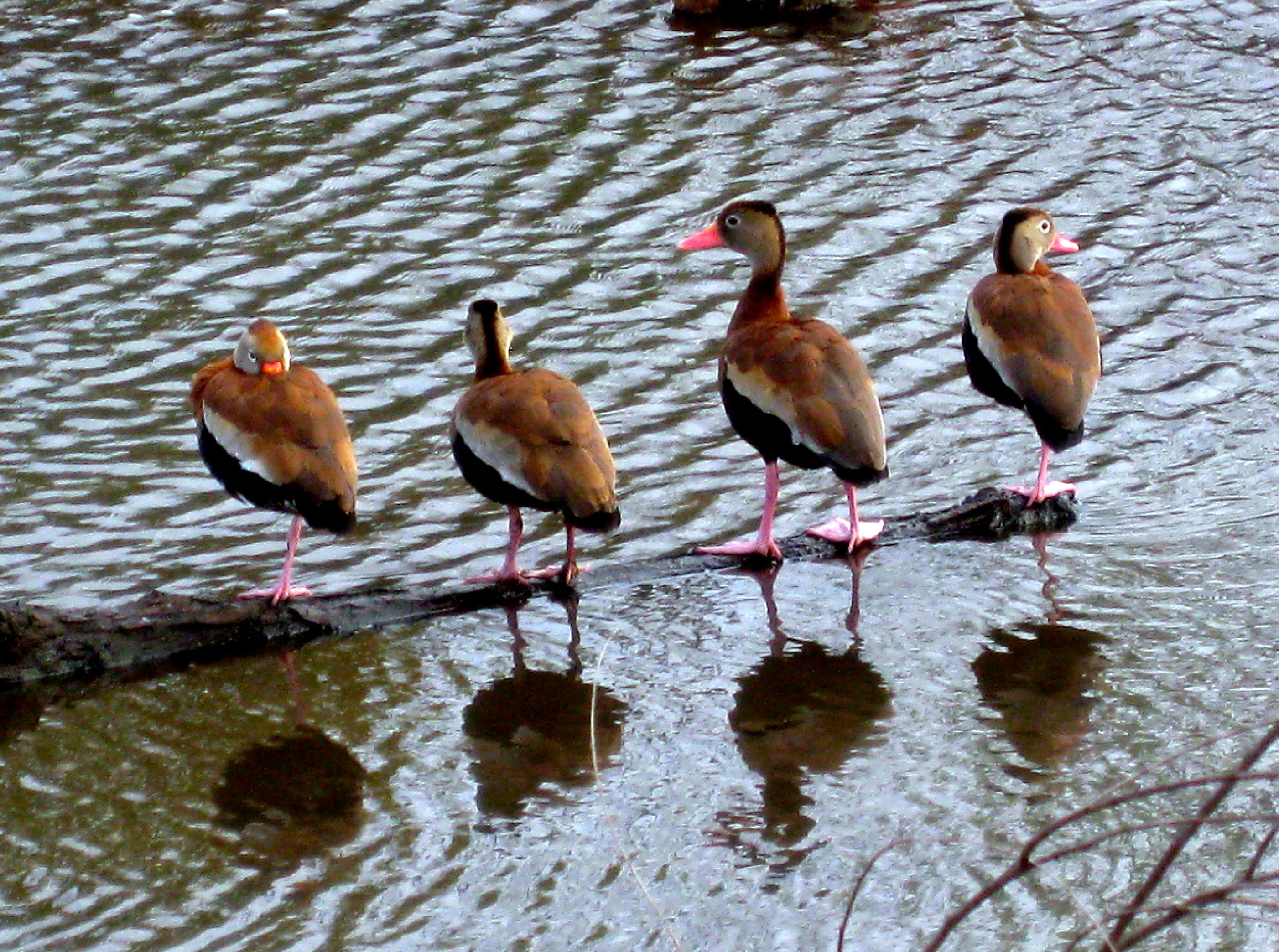
I didn't get a picture this day of the black-bellied whistler, but here's a shot I took of them at Texas' Brazos Bend State Park a while back. -- Photo by Pat Bean

I didn’t get a picture this day of the black-bellied whistler, but here’s a shot I took of four of them at Texas’ Brazos Bend State Park a while back. — Photo by Pat Bean

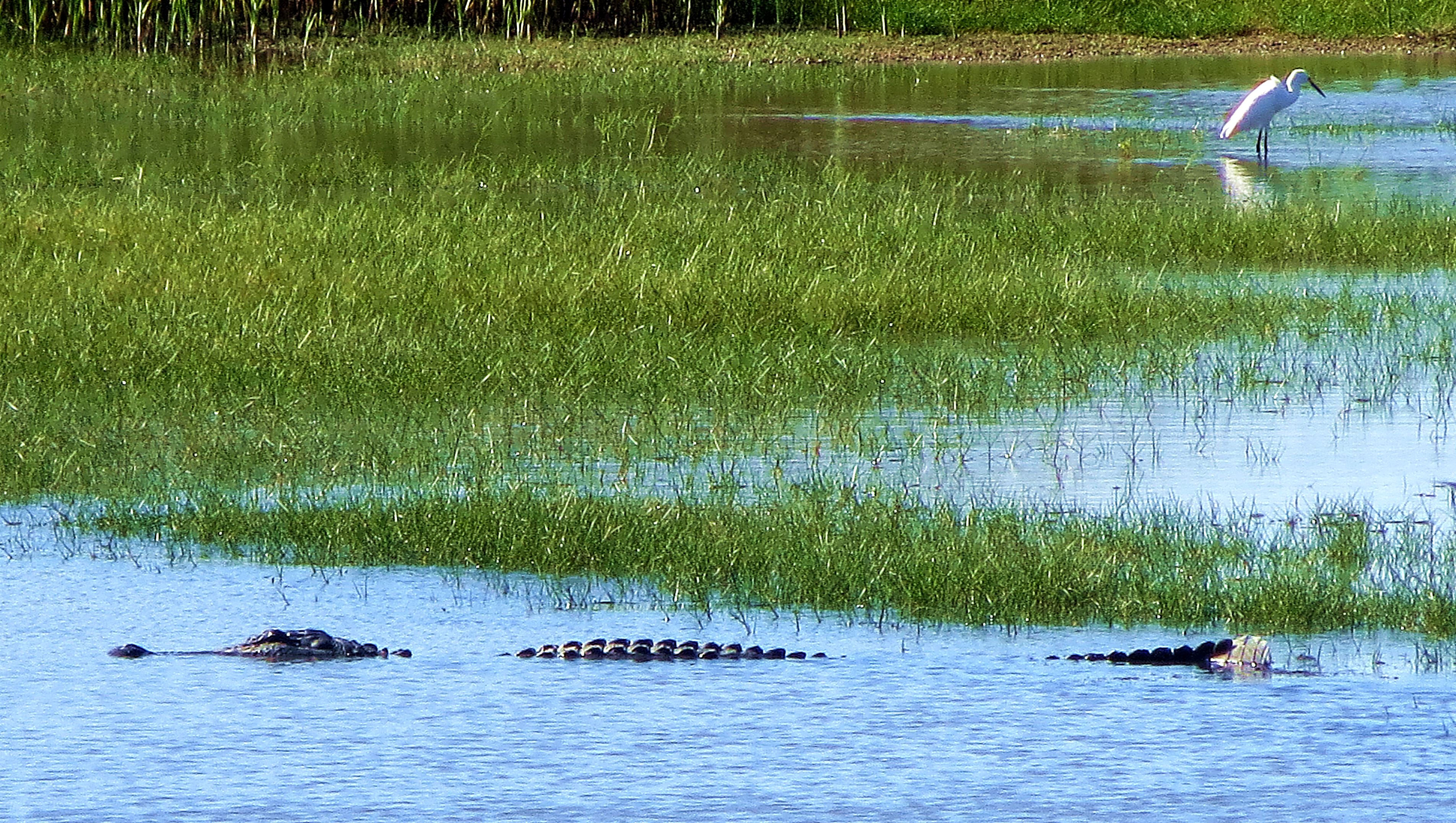
We ended the soggy day with the car splashing through puddles so deep I was surprised the vehicle didn’t stall. What a great adventure. We even spotted 24 bird species on our outing. For the birders among you, I’ll enumerate: Forster’s tern, blue jay, killdeer, common and great-tailed grackles, laughing gull, European starling, black vulture, mourning dove, mockingbird, meadowlark, scissor-tailed flycatcher, white ibis, lesser yellowlegs, short-billed dowitcher, western sandpiper, willet, great egret, greater yellowlegs, snowy egret, bank swallow, savannah sparrow, black-bellied whistler and pied-billed grebe.

The scissor-tailed flycatchers and the lone black-bellied whistler were my top two favorite sightings. It was late for the scissor-tails to still be in the area, and along with a colorful pair of adults, there was also a tree full of less bright and shorter tailed juvenile scissor-tails.

The whistler stood in the middle of the refuge’s gravel road beneath the dripping sky, and didn’t budge until we were almost on top of it. Whistlers are a species that I love, especially when a flock of them fly overhead belting out a tune.

The Wondering-Wanderer's blog pick of the day.

The Wondering-Wanderer’s blog pick of the day.

Bean’s Pat: The Iris and the Lily http://tinyurl.com/lnt5xz4 Back road landscape. If you are a fan of Mother Nature, you will love this blog.


Read Full Post »

            “The story never ends. There’s always a new corner, a new chapter – and who knows what wonders await there.” – Don George

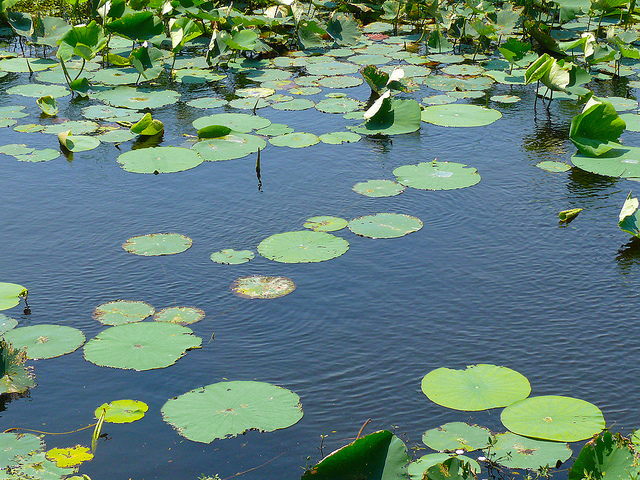
A lily pad pond at Atwater's National Wildlife Refuge. -- Flick'r photo

A lily pad pond at Attwater’s Prairie Chicken National Wildlife Refuge. — Flick’r photo

O Frabjous Day! Callooh! Callay

            Lewis Carroll’s inventive words — a victorious chortle uttered after the Jabberwock was slain — popped into my head this morning.

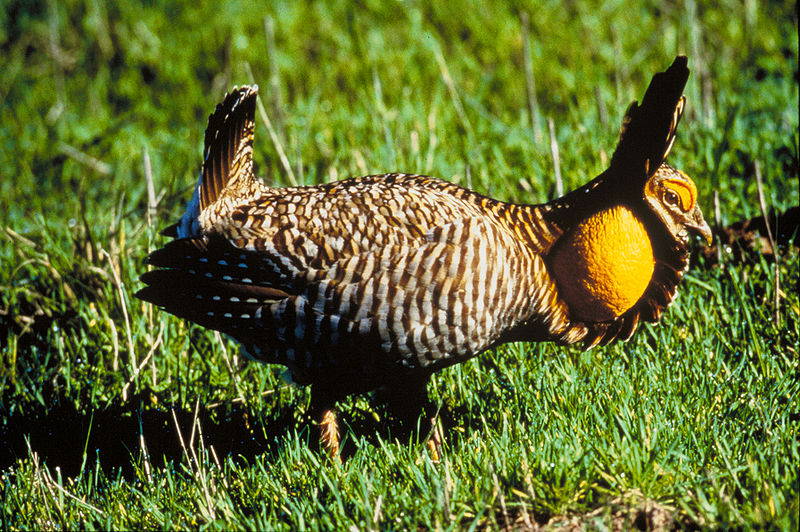
In 1900, a million Atwater prairie chickens roamed the coastal prairies, by 1998 less than 300 remained. Like the passenger pigeon, this species is headed toward extinction. -- Wikimedia photo

In 1900, a million Atwater prairie chickens roamed the coastal prairies, by 1998 less than 300 remained. Like the passenger pigeon, this species is headed toward extinction. — Wikimedia photo

While my canine companion, Pepper, and my RV, Gypsy Lee, are staying behind at my daughter’s home, I’m going to be on the road for a couple of weeks, beginning with an airplane flight early tomorrow morning.

It will only be to my native Texas, and I will only be traveling between the familiar landscapes of Austin, San Antonio, Houston and Dallas in a rental car to visit family members. But, as is always my plans when traveling, I will make sure I drive down new roads and try and see things I’ve never seen before.

These birds today can only be found in the will at the Attwater Prairie Chicken National Wildlife Refuge near Eagle Lake, Texas, and the Texas City Prairie Preserve near Texas City.  -- Wikimedia photo

These birds today can only be found in the wild at the Attwater Prairie Chicken National Wildlife Refuge near Eagle Lake, Texas, and the Texas City Prairie Preserve near Texas City. — Wikimedia photo

The one thing in concrete on this part of my traveling agenda is a side trip to visit the Attwater Prairie Chicken National Wildlife Refuge. The wildlife sanctuary  is located off Highway 36 — between a son who lives north of Austin and a son who lives south of Houston.

I’ve passed by the turnoff to this refuge many times, but never allowed time to stop. Hopefully on this trip I’ll be able to add this rare bird to my life list. I’ve been forewarned that this might not happen. But even if I don’t see the prairie chicken, I know I will see many other wonders; national refuge visits have never failed me in this way.

And that’s why I’m chortling with job, “O frabjous day. Callooh! Callay!

The Wondering-Wanderer's blog pick of the day.

The Wondering-Wanderer’s blog pick of the day.

Bean’s Pat: A Time to Write: http://tinyurl.com/k6378j5 It’s not Musical Monday, but I think you’ll find this just as enjoyable on a hump-day Wednesday.

Read Full Post »

Dove on a Wire

            “How come the doe gets to be the peace symbol? How about the pillow? It has more feather than the dove, and it doesn’t have that dangerous beak.” – Jack Handy

A white-winged dove that watched Pepper and I take a walk this morning. -- Photo by Pat Bean

A white-winged dove that watched Pepper and I take a walk this morning. — Photo by Pat Bean

Just Pondering?

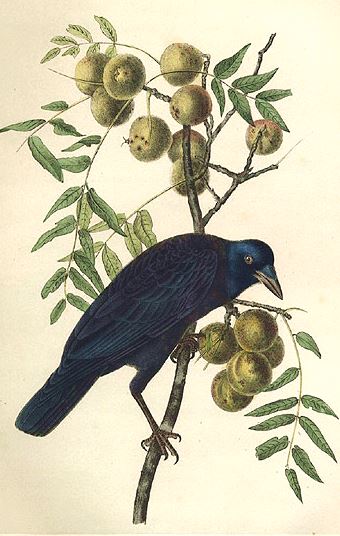
Even John James Audubon depicted a crow as looking a little wicked. Don't you agree.

Even John James Audubon depicted a crow as looking a little wicked. Don’t you agree.

Why is a crow seen as evil and a dove seen as pure? Who made this decision? As a passionate bird-watcher, I enjoy watching crows as much as doves. Maybe even more, because crows are smarter.

And why is a group of doves called a flight and a group of crows a murder?

Read Full Post »


This great photo of a Merlin in pursuit of a blue jay was taken by John Harrison who put it up on Wikimedia. You can see his photos at:  http://flickr.com/photos/15512543@N04/

This great photo of a Merlin in pursuit of a blue jay was taken by John Harrison who put it up on Wikimedia.


“Whatever you think you can do or believe you can do, begin it. Action has magic, grace and power in it.” – Johann Wolfgang von Goethe

Yet I Think It’s Magical

I had been seeing this dark bird shape flash overhead for several days, but hadn’t got a good enough look to identify it. Solving the mystery of what bird I’m observing is part of my bird-watching passion.

A close up look at a merlin. -- Wikimedia photo

A close up look at a merlin. — Wikimedia photo

It was mourning dove size, but it flew nothing like a dove. I thought it flew like a hawk but it was too small for the Cooper’s hawks that have been keeping the apartment complex company all year.

The brief glimpses I had of the bird were tantalizingly frustrating. It would fly overhead past me, and by the time I looked up after seeing its shadow, it had disappeared into the trees.

Merlins, before they grew up and became majestic birds of prey. -- Wikimedia photo

Merlins, before they grew up and became majestic birds of prey. — Wikimedia photo

Finally a few mornings ago, as I sat drinking my cream-laced coffee and watching dawn break, I identified it as a merlin. It whizzed past my third floor balcony at eye level, probably after one of the small song birds that had been flitting around waiting to catch the morning sun, too.

Merlins are not year-round residents of the Tucson area, but they do migrate through and winter here, according to my birding field guide. Since I haven’t seen the merlin in the past couple of days, and since it’s not yet winter, I suspect it was just passing through on its way farther south.

With all the small birds around the complex, it probably decided this was a good place to fuel up. Merlins, according to Cornell University’s ornithological web site, rely on speed and agility to hunt their prey. The merlins often hunt by flying fast and low, using trees and large shrubs to take prey by surprise. While they actually capture most birds in flight, they will also tail-chase a bird to catch it.

. While not a lifer, I’ve only been able to identify this member of the falcon family a few times. But bird experts say the merlin is becoming more numerous in urban areas, so perhaps there are more “magical” merlin sightings in my future.

The Wondering-Wanderer's blog pick of the day.

The Wondering-Wanderer’s blog pick of the day.

Bean’s Pat: Ian Butler Photographer http://tinyurl.com/ledqorr Great photo of a dunlin for all you birders out there.


Read Full Post »

  “The Bluebird of Happiness long absent from his life, Ned is visited by the Chicken of Depression.” – Gary Larson

Three Choices 

Male mountain bluebird. Have you ever seen anything bluer? -- Wikipedia photo

Male mountain bluebird. Have you ever seen anything bluer? — Wikipedia photo

           North America has three bluebirds, an eastern, a western and the mountain bluebird. My tiny blue, glass figurine that represents the symbol of happiness — which is still hidden somewhere in the bins I stored away before taking to the road in my RV — most certainly represents the mountain variety. I hope I find it soon.

A mountain bluebird’s feathers, in my experience, are the bluest of blues. So blue that I was startled the day I first saw one. It seemed to sparkle in the cool, high mountain air where a recent snowfall had frosted the spruces and firs.

It was April 10, 1999. The day is etched in my memory because it was the day I began a passionate love affair with all birds – from the gigantic California condor, whose recovery from near extinction I have often wrote about, to the tiny calliope who once flashed me with its brilliant purple neck feathers.

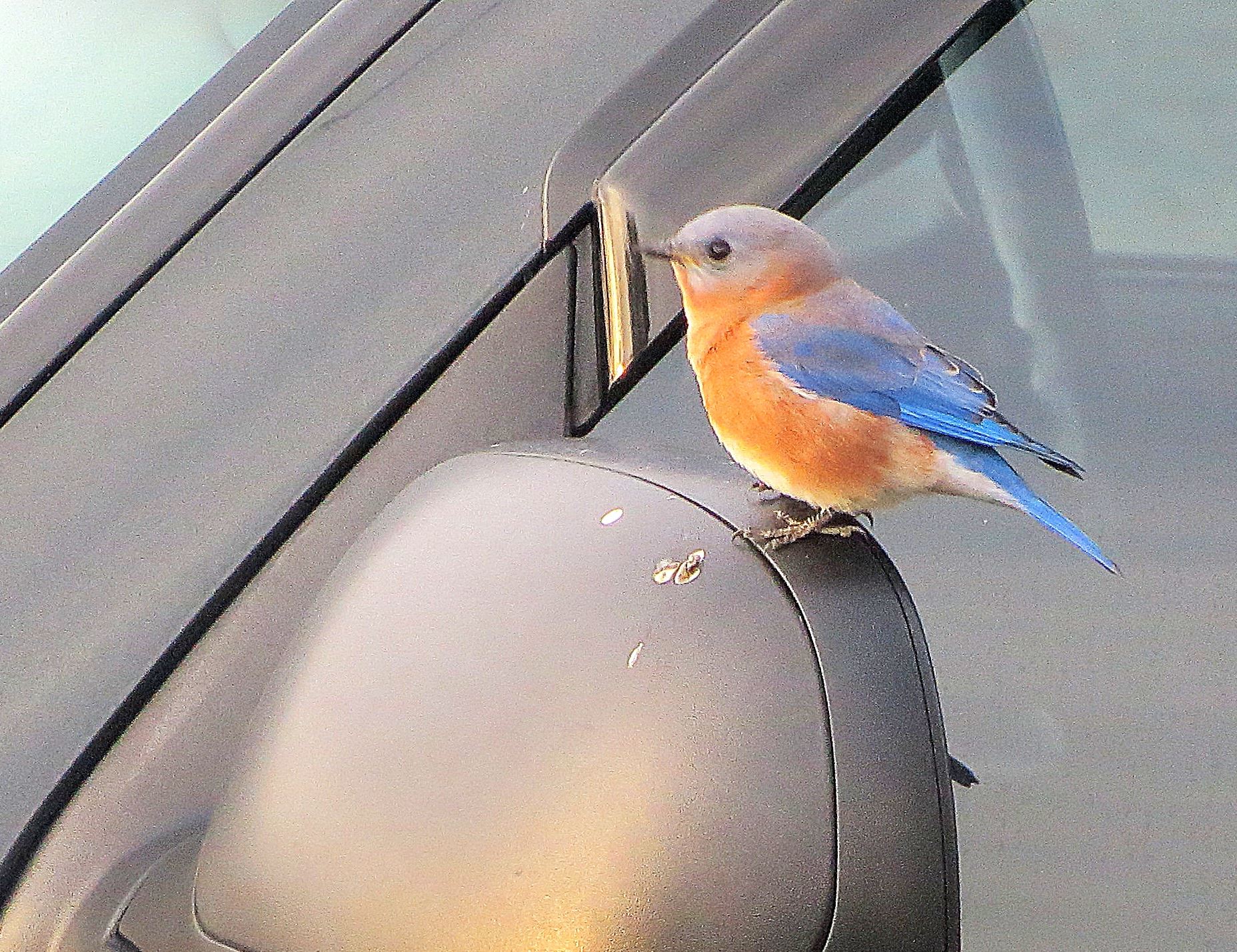
This is an eastern bluebird that I photographed in the Natchez Trace as he sat on the rearview mirror of my RV. Hes cute, too, isn't he? == Photo by Pat Bean

This is an eastern bluebird that I photographed in the Natchez Trace as he sat on the rearview mirror of my RV. He’s cute, too, isn’t he? — Photo by Pat Bean

I’ve seen many mountain bluebirds since then, including at least 300 the time I was driving Highway 95 through the Glen Canyon Recreation Area. For about 10 miles of the drive, small flocks of the birds flittered along the roadside as I passed them by. I occasionally pulled off the road for a better look through my binoculars. The red-rock settings of the canyon made the blue feathers of the bird stand out — and glitter like stars on a dark night away from city lights.

Once, I participated in an Audubon check of bluebird boxes near the top of Monte Cristo in Northern Utah. During one of the nest box inspections, the leader of this long-term project was dive-bombed by two agitated bird parents as he unscrewed the top of the box so we could all check what was inside. I held my breath as I observed six baby mountain bluebirds with developing soft smoky gray feathers. It was truly a magical moment, especially when we all retreated and the parents saw that their babies were unharmed.

And so was the moment I had yesterday, when I observed my first mountain bluebird in the foothills of the Catalina Mountains, which are now my backyard.

The Wondering Wanderer's blog pick of the day.

The Wondering Wanderer’s blog pick of the day.

Bean’s Pat: 23 Thorns http://tinyurl.com/qbdv4fk I started this blog because it was titled Baobab Tree. I can’t resist trees — or blogs about them. But the blog talked about a lot more than trees, including rhinos and fish eagles, and I was fascinated and charmed by the conversation, lengthy though it was – and with more to come. .

Read Full Post »

“Poetry is just the evidence of life.  If your life is burning well, poetry is just the ash.” – Leonard  Cohen

The Worst Poetry Ever, I Do Admit

I’m sorry. I couldn’t help myself.

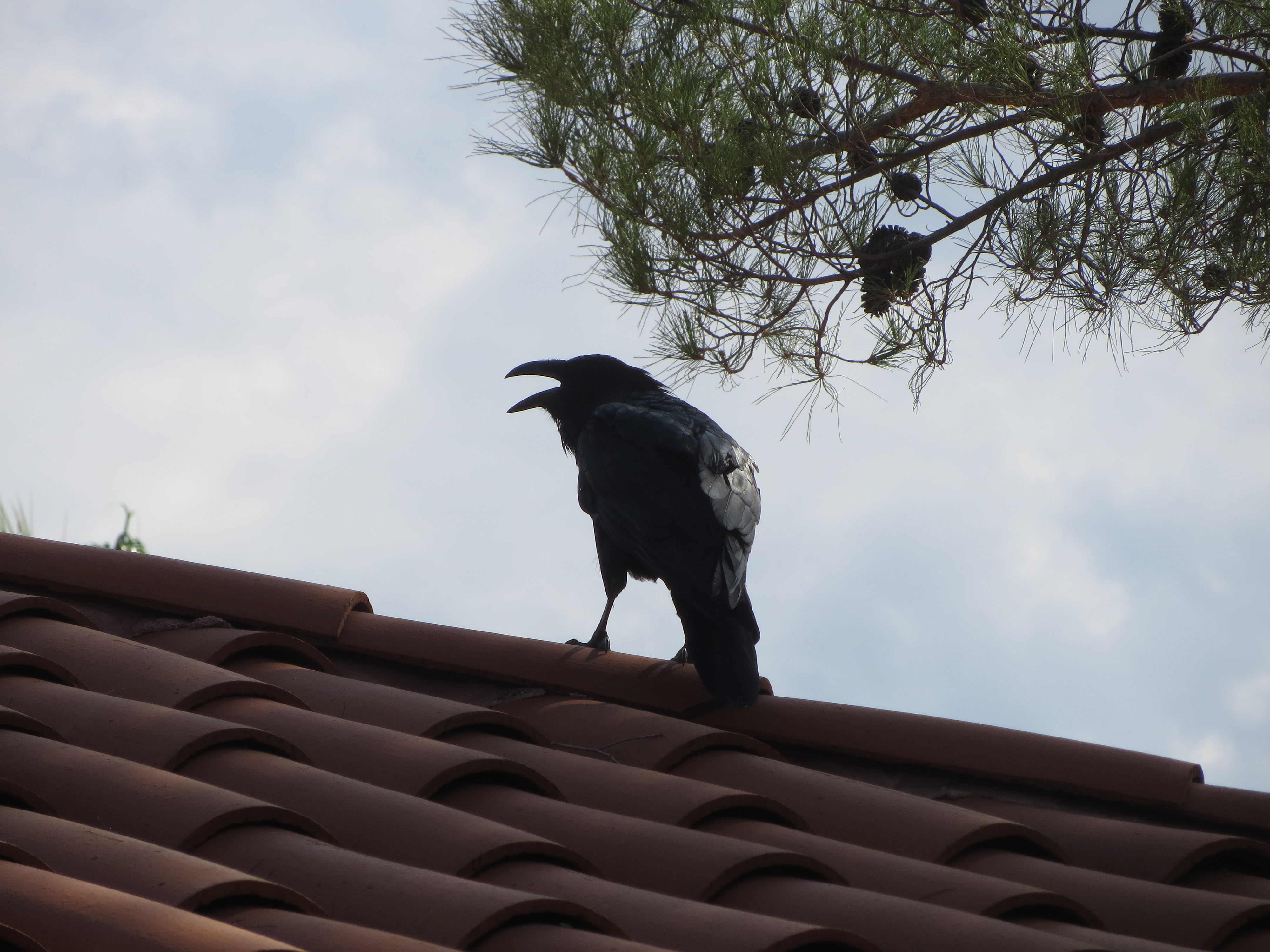
My morning visitor. -- Photo by Pat Bean

My morning visitor. — Photo by Pat Bean

The Raven

While I welcomed the morning cheerily

While I drank my coffee dearly

While I sat upon my balcony pondering

Over my daily list, wondering

There came a cawing, cawing

Tis’ a bird, I muttered smiling

Only this and nothing more

And it is August, I said and more

And it’s sunny on the desert floor

Now who is cawing outside my window

I know for certain it’s not Lenore

Because it is black and feathery

This it is and nothing more

I went for my camera

To capture an image for ever more

But alas I failed, as I was told

This device cannot record.

Would this bird too soon fly away?

Before I could retrieve the disk

From my computer inside the door

Only this and nothing more

Quickly I ran inside

And retrieved the tiny disk

That would make the camera work.

Black feathers still perched upon the roof

Waiting and cawing, cawing

Tis a raven, I said.

And nothing more.

Bean’s Pat:  Travels and Trifles  http://tinyurl.com/lsm93un  Love the quote, and the trees

Read Full Post »

“The bird that would soar above the level plain of tradition and prejudice must have strong wings.” — Unknown

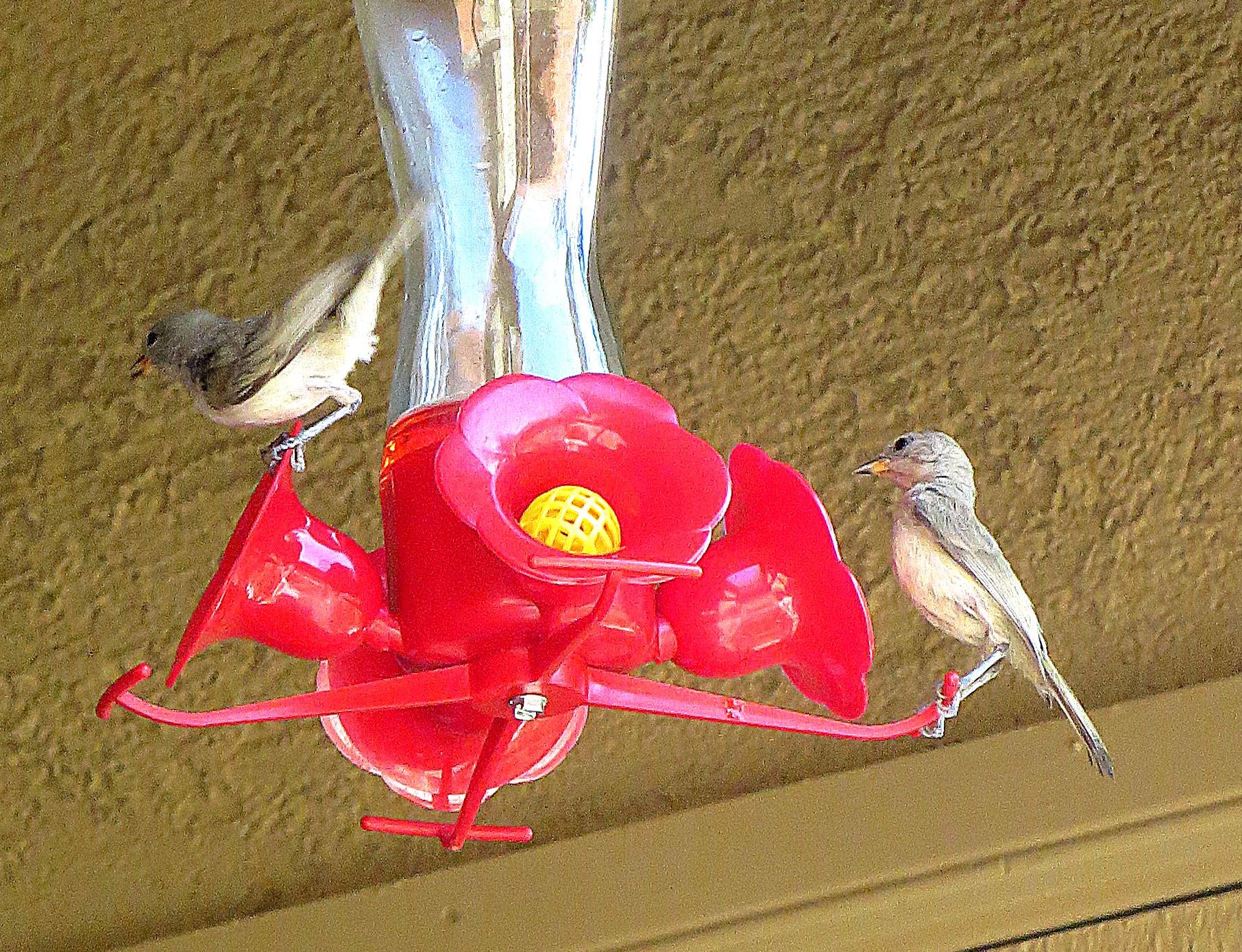
First came the hummingbirds to my nectar feeder. Then one day I looked out and the verdins had come to dinner, too.

Young verdins taking advantage of my nectar feeder. -- Photo by Pat Bean

Young verdins taking advantage of my nectar feeder. — Photo by Pat Bean

Then came another guest. A gila woodpecker.

A hungry gila woodpecker. He drank for about five minutes. -- Photo by Pat Bean

A hungry gila woodpecker. He drank for about five minutes. — Photo by Pat Bean

No wonder my nectar feeder is empty before day’s end.

Bean’s Pat:  Great Friends http://tinyurl.com/mdplxmy It makes me wonder if the hummingbirds had sent out invitations to dinner for their unusual

friends.

Read Full Post »

Time for Nonsense

The Llama Song – Listen to it: http://tinyurl.com/2jy2tc

            Here’s a llama. There’s a llama. And another little llama. Fuzzy llama. Funny llama. Llama llama duck. Llama Llama. Cheesecake llama. Tablet. Brick. Potato llama. Llama llama, duck.

            I was once a tree house. Lived in a cake. But I never saw the way the orange slayed the rake. I was only three years dead. But it told a tale. And now listen little child. To the safety rail.

            Did you ever see a llama? Kiss a llama. On the llama. Llamas llamas. Taste of llamas. Llama llama duck.

            Is that how it’s told now? Is it all so old?  Doorknob. Ankle. Cold. Now my song is getting thin. I’ve run out of luck! Time for me to retire now. And become a duck.

IMG_3743

Here’s the llama… — Photo by Pat Bean

Laughter is Good for the Soul

And here's the duck. They were both photographed at Riverside Park in Bayfield, Colorado -- Photo by Pat Bean

And here’s the duck. They were both photographed at Riverside Park in Bayfield, Colorado — Photo by Pat Bean


And this crazy song makes me laugh and laugh, Supposedly it was written by someone called Burton Earny in 2004, who has since gone into hibernation.

What makes you laugh?


The Wondering Wanderer's blog pick of the day.

The Wondering Wanderer’s blog pick of the day.

Bean’s Pat: Pete Scully http://tinyurl.com/mwtwo5o One of the artists whose blogs I’ve begun following. I love Pete’s sketches.

Read Full Post »

“I still find each day too short for all the thoughts I want to think, all the walks I want to take, all the books I want to read, and all the friends I want to see.” — John Burroughs

Because of What Happens when I Don’t

            I had this great idea about what today’s blog would be about just as I was dozing off to sleep last night.

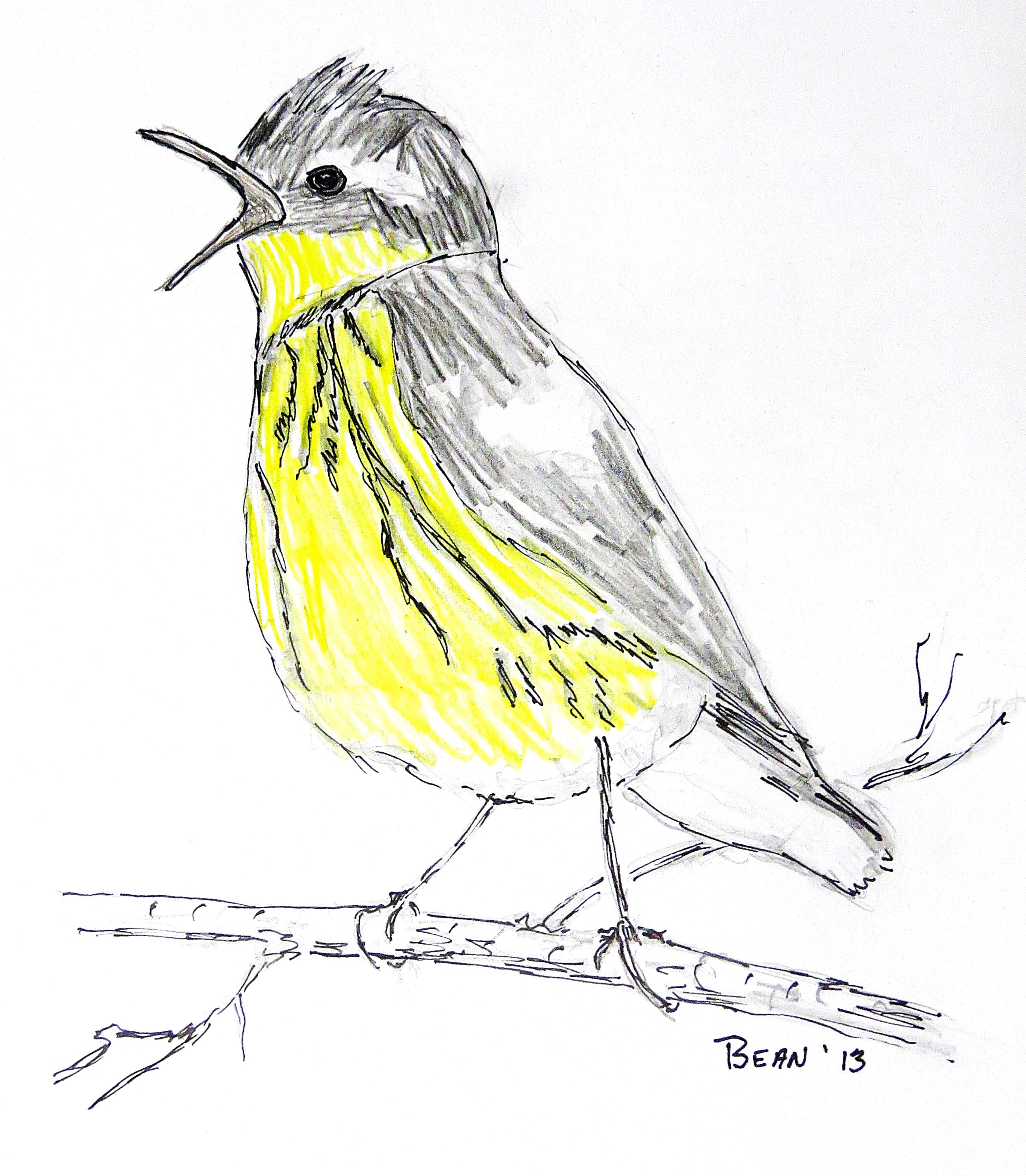
I love it when I wake up to the twitter of birds, even if I've forgotten the great idea I had the night before.  -- Pat Bean sketch. .

I love it when I wake up to the twitter of birds, even if I’ve forgotten the great idea I had the night before. — Pat Bean sketch. .

I slept easier knowing the subject of today’s blog had been found. I even awoke remembering that I had this great blog idea – then realized Mr. Sandman had stolen it during the night.

Maybe I’ll find it again, I thought, as I looked at the unused note pad and pen that is always on my night table – just in case a great thought runs through my mind while I’m in bed.

Of course there are mornings, when I have remembered to record my great idea on that same note pad — and I find what I’ve written laughable. In the light of the morning sun, I discover it isn’t a great idea at all.

Isn’t life fun? I just bet you have such moments, too. Come on. Admit it.

Bean’s Pat: Happy Birthday Miss Mitchell http://tinyurl.com/mvehh4v I’ve told my granddaughters they owe me a debt for fighting for equal pay, for equal work, for women – which today my granddaughters may, or may not, receive. Maria Mitchell deserves much credit, too.

Read Full Post »

“And the day came when the risk to remain tight in a bud was more painful than the risk it took to blossom.” Anais Nin

One of the pair of Cooper's hawks flying around the apartment complex earlier this year. -- Photo by Pat Bean

One of the pair of Cooper’s hawks flying around the apartment complex earlier this year. — Photo by Pat Bean

First the Lovers, Then the Juveniles

            Earlier this year, I blogged about seeing a pair of Cooper’s hawks that appeared to be courting. For the past week, the results of that courtship have been entrancing residents. The hawks built a nest in a tall tree visible from my bedroom balcony and raised two young in it

And a quick sketch of one of the less-colorful juveniles now flying around my apartment complex. --  Pat Bean sketch

And a quick sketch of one of the less-colorful juveniles now flying around my apartment complex. — Pat Bean sketch

Those two juveniles have now fledged, and are so much less wary of we humans than their parents that I’ve been seeing them daily for over a week.  A few days ago, I actually saw one of the birds dehead a songbird in the air.

The luckless songbird’s body fell near where Pepper and I were walking. The hawk watched as we passed by.  I hoped that it retrieve its meal, as it would have been a shame for the songbird’s death not to have served a purpose.

As one who is an avid nature watcher, I’ve learned to accept the circle of life, which puts hawks at the top of the bird food chain. While many small birds can produce up to three large broods of chicks annually, hawks rarely raise more than one or two each year.

House wrens, for example, can go from egg to fledging in less than a month. Cooper’s Hawks’ eggs take over twice that time, and larger birds of prey, like the bald eagle, require more than four months to develop from an egg to a fledgling. And the parent will continue to feed it long after that.

I’m thankful that I still view birds, and all the rest of nature, with the wonder of a child, but also with the awe of learning the details of how everything fits into the environment.

Bean’s Pat: Discovering Myself http://tinyurl.com/mfhqdro Yes, yes and yes!

Read Full Post »

« Newer Posts - Older Posts »