Feeds:
Posts
Comments

Archive for the ‘Birds’ Category

“Perhaps travel cannot prevent bigotry, but by demonstrating that all peoples cry, laugh, eat, worry, and die, it can introduce the idea that if we try and understand each other, we may even become friends. “– Maya Angelou

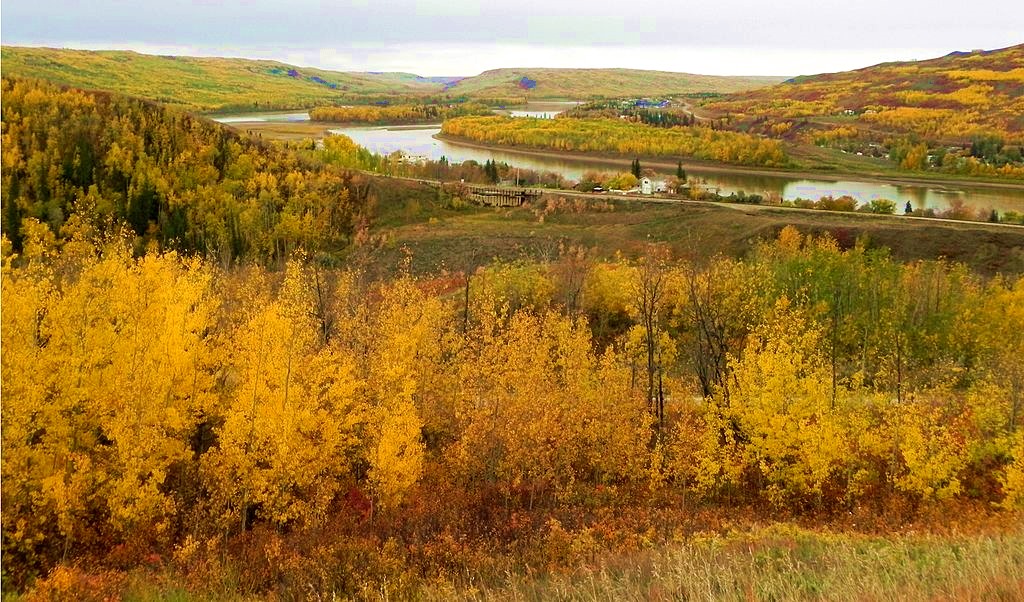
An autumn scene along the Peace River, not exactly the view I saw during my trip but I certainly saw river-side landscapes that were just as awesome. -- Wikimedia photo

An autumn scene along the Peace River, not exactly the view I saw during my trip but I certainly saw river-side landscapes that were just as awesome. — Wikimedia photo

2001 Memories of a Non-Wandering Wanderer

          I compared my first day of driving the Alaska Highway through Canada to a day of riding steep roller coasters. The route crossed many creeks and rivers, and most of the driving was done in the rain.

A page from my 2001 Alaska Trip journal.

A page from my 2001 Alaska Trip journal.

My guide for the Alaska Highway was the 2001, 53rd edition of The Milepost, which listed all the sights of the route in milepost numbers. As much as my interests, and time, demanded, I took short detours to see them, including one off road adventure to find Peace River Park, supposedly on an island across a causeway. I noted in my journal that the causeway was dinky.

The only animals I saw this day were brilliant blue Steller jays (visit my September 24 blog for a picture of a Steller jay) at a dump, lots of ravens, one llama, two hawks I couldn’t identify, and one deer. Signs along the way frequently claimed “moose and caribou on road” – but they lied.

I ended the day in Fort Nelson at Mile 300. The small town was named in honor of British naval hero, Horatio Nelson. It was established by The Northwest Trading Company in 1805 to accommodate fur traders. Because of fires, floods, and feuds, according to one history source, Fort Nelson is currently situated in its fifth location.

While in town, I visited the Fort Nelson Heritage Museum, an interesting step back in time that included exhibits of a “Hardly Davidson” scooter, and the first curling stones on the Alaskan Highway.

Blog pick of the Day. Check it out.

Blog pick of the Day. Check it out.

Bean Pat: A funny comics blog http://tinyurl.com/jy9sqhn This is so me!

Read Full Post »

I didn't capture the rainbow in Jasper National Park, but I did manage to get one on another road trip when I visited South Dakota. -- Photo by Pat Bean

I didn’t capture the rainbow in Jasper National Park, but I did manage to get one on another road trip when I visited South Dakota. — Photo by Pat Bean

2001 Memories of a Non-Wandering Wanderer

I left Jasper at sunrise, and with a magnificent rainbow welcoming in the day. The first part of the drive took me through Jasper National Park, the largest national park in the Canadian Rockies. Elk, longhorn sheep, deer and Stone Mountain sheep (which I hope stayed in the park because these cousins of Dall sheep are popular with trophy hunters made themselves visible on the road between Jasper, Grand Cache and Grand Prairie.

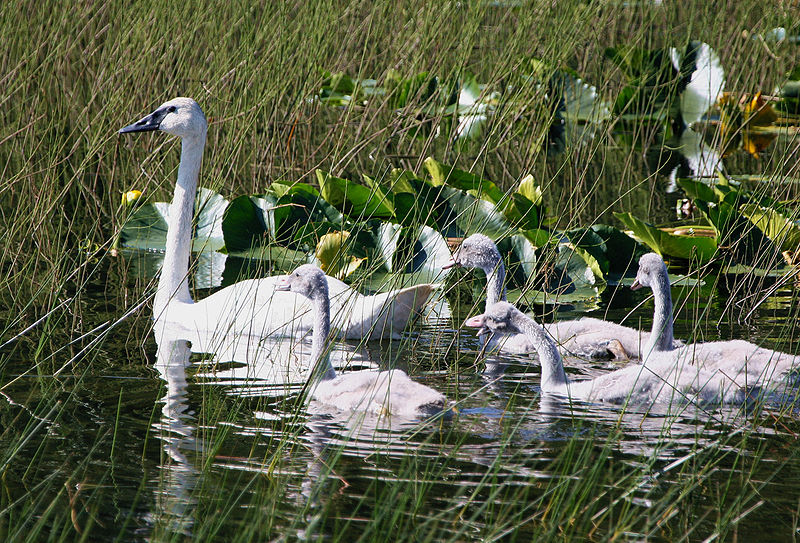
Alberta’s Grand Prairie, aptly named and then nicknamed the Swan City, adopted the trumpeter swan as its symbol because of its proximity to the bird’s migration route and its summer nesting grounds. The trumpeter is North America’s largest water bird. It can weigh up to 25 pounds, almost double the weight of the tundra swan that was a familiar sight in Northern Utah where I lived back then.

Of course I hoped to see a trumpeter this day. But I didn’t. Drat it!

Dawson Creek and the Mile 0 Post that represents the start of the Alaskan Highway. -- Wikimedia photo

Dawson Creek and the Mile 0 Post that represents the start of the Alaskan Highway. — Wikimedia photo

I made it to Dawson Creek in time for lunch, even though it was a 325-mile drive from Jasper. Three hundred miles was usually the goal I set for myself most of the days on the month-long adventure.

Dawson Creek, named after the creek that runs through it, which was named after George Mercer Dawson, a member of his land survey team that passed through the area in 1879. The small town’s primary claim to fame is that it is where the Alaskan Highway begins. The town’s population was larger when the highway was being constructed during World War II. The highway, at first unpaved and with almost too many bridges to count, was built to connect the United States with its Alaskan Territory through Canada. Alaska didn’t become a state until 1959.

When completed in 1942, the highway was 1,700 miles long. Today it’s about 300 miles less because of constant straightening and restoration work. When I drove the highway in 2001, it was said to be paved the entire distance – Not true, I discovered.

Bean Pat: This one is for writers who receive rejections: https://millieschmidt.wordpress.com/2016/11/16/ And isn’t that all of us?

Read Full Post »

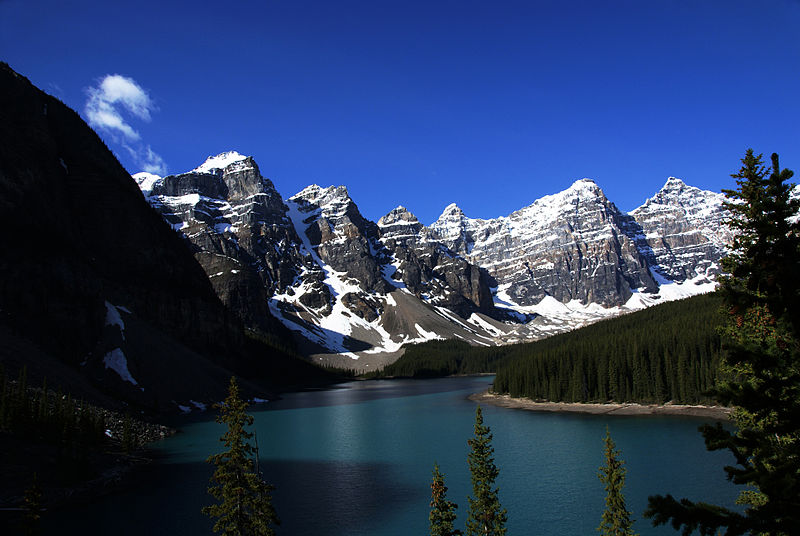
Of all the marvelous sights I saw this day, Moraine Lake touched my soul the most. -- Wikimedia photo

Of all the marvelous sights I saw this day, Moraine Lake touched my soul the most. — Wikimedia photo

But the beauty of Lake Louise, with its grand hotel and ski runs visible in the background, was still appreciated. -- Wikimedia photo

But the beauty of Lake Louise, with its grand hotel and ski runs visible in the background, was still appreciated. — Wikimedia photo

   “In all things of nature there is something of the marvelous.” – Aristotle

            “Look deep into nature, and then you will understand everything better.” – Albert Einstein

2001 Memories of a Non-Wandering Wanderer

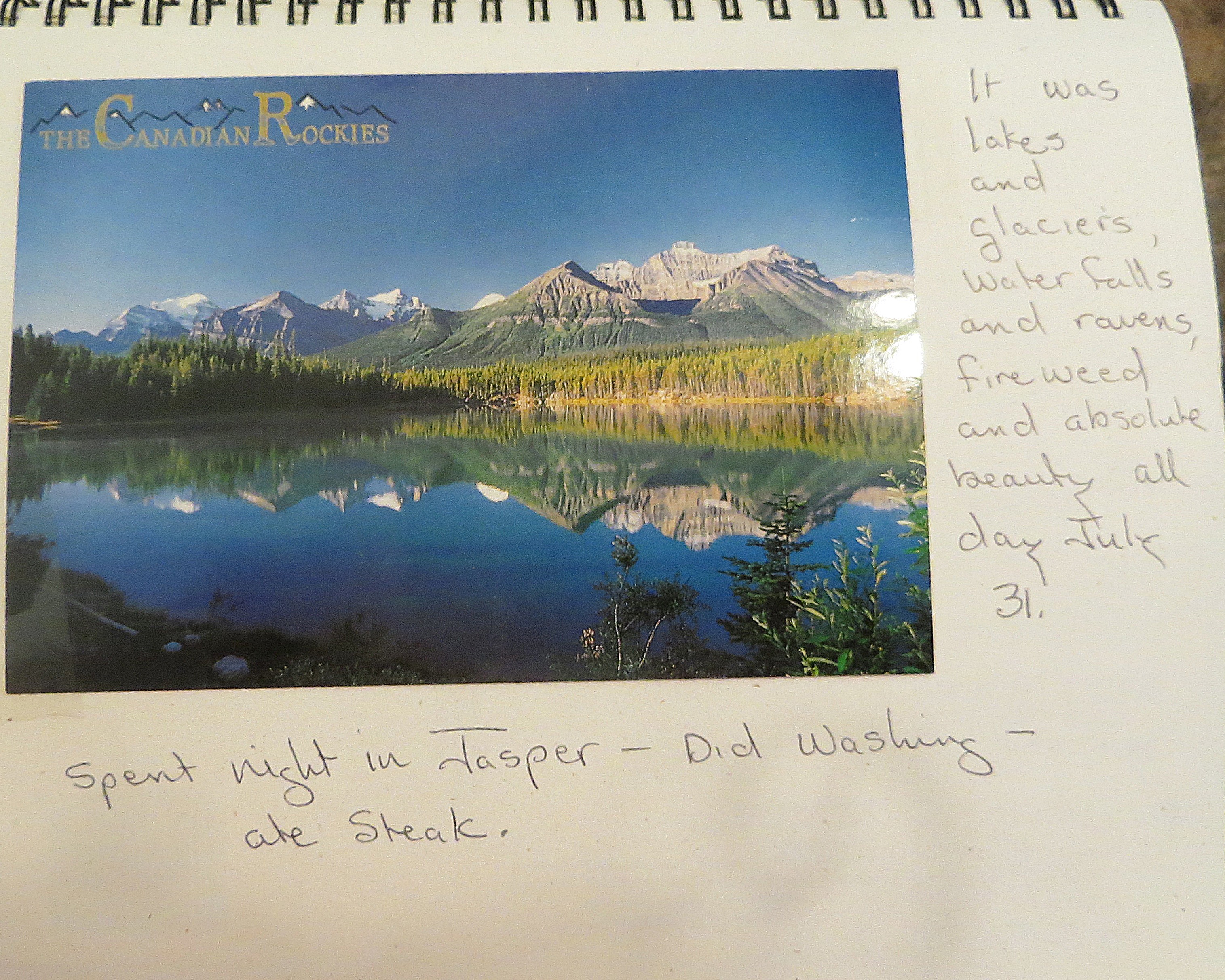
It was a day of lakes, glaciers, waterfalls, glades of scarlet fireweed, birds – and beauty that stirred the soul everywhere.

Page from my jouranl. noting my bald eagle sighting. .

Page from my journal noting my bald eagle sighting. .

`           The first stop of the day was the Vermillion Lakes just outside of Banff, where the first bird of the day was a bald eagle. It doesn’t get much better for a birder – but it did. I got a lifer, a common loon. I was excited at seeing this bird for the first time, but later learned I didn’t have to go so far away from home to see them. Common loons could be seen in winter on Causey Lake in Ogden Valley, Utah, just minutes away from my home.

Also on the lakes were mallards with baby chicks, always a treat to see, as were the darting killdeer that were running around near the shorelines.

A red-breasted nuthatch showed itself at Cascade Pond; barn swallows swarmed around a bridge; lots of prairie dogs stood sentry along the route; and at Two-Jack Lake, I got another lifer, a red-breasted merganser.

I added the feather of a Clark's nutcracker to one of my journal pages.

I added the feather of a Clark’s nutcracker to one of my journal pages.

And the day was just getting started.

At Lake Louise, the next stop of the day, I did a bit of hiking, ate lunch, and marveled at a flock of Clark’s Nutcrackers, another lifer, and one that seemed to be everywhere around the lake. Although not nearly as crowded as the town of Banff, the lake resort, and its Chateau Lake Louis, are also quite popular Canadian attractions.

The turquoise/emerald color of Lake Louise, which pleasantly aroused my sense of sight, is the result of rock flour carried into it by glacier melt. The lake was named after Princess Louise Caroline Alberta, daughter of Queen Victoria and the wife of the marquess of Lorne, who was the governor-general of Canada from 1878 to 1883.

It was a wondrous day and I captured a mere bit of it in my ournal

It was a wondrous day and I captured a mere bit of it in my journal.

But as awesome as Lake Louise was to my sight-seeing day, it was the nearby smaller Lake Moraine that stole my heart. The isolation and serenity of the scene before me stirred a longing in me to visit again n the future — when I could stay awhile. Doing so is still on my bucket list.

My day ended in Jasper, where I found a place to do laundry and ate a steak dinner. It was the last day of July – and Alaska still lay ahead. .

Bean Pat: 20 Minutes a Day http://tinyurl.com/z9vcrwq Comfort food. Len is a dear friend, one who teaches writers, and whose major thesis is that all writers should write for at least 20 minutes a day. I adhere to her philosophy. She and I are in the same Story Circle Network online writing group. SCN is the best writing support I’ve had in my life. It’s helped me find the personal voice I needed to replace the journalism voice I used for 37 years. The circle is for women only. If you’re interested, check it out at: http://www.storycircle.org/frmjoinscn.php (more…)

Read Full Post »


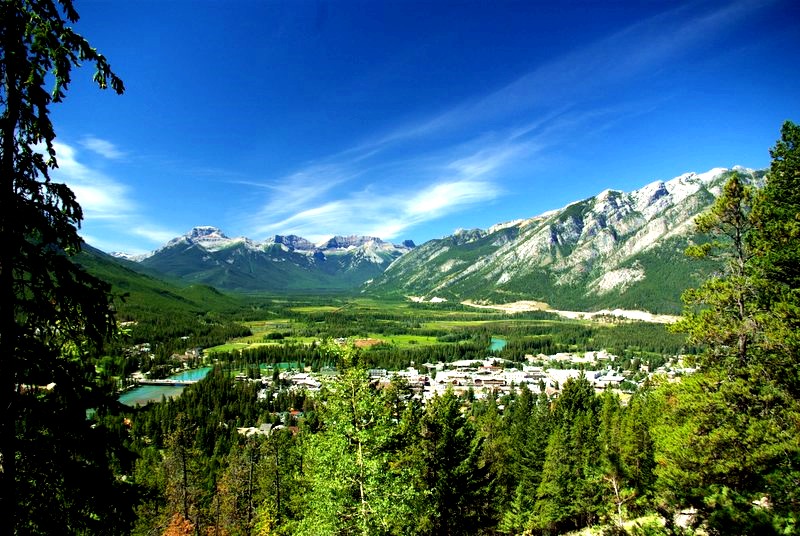
Banff, a tiny town nestled in Banff National Park's eye-dropping-mouth-opening-wow! landscapes. -- Wikimedia photo

Banff, a tiny town nestled in Banff National Park’s eye-dropping-mouth-opening-wow! landscapes. — Wikimedia photo

Memories of a Non-Wandering Wanderer 

Golden eagle -- Wikimedia photo by Martin_Mecnarowski

Golden eagle — Wikimedia photo by Martin_Mecnarowski

Shortly after leaving Kalispell, Montana, and my two-night-stay at the historic Grande Hotel, I crossed into Canada and entered Kootenay National Park at about the same time a golden eagle soared overhead. It was a joyful sight, and I drank in the day like cold champagne.   While Benjamin Franklin thought our national bird should have been the turkey, I thought I would favor the magnificent golden eagle. It was the second time I had this thought. The first was the day I watched a pair of golden eagles harass a pair of bald eagles until the white-headed birds of prey flew away.


A page from my journal

A page from my journal

Today’s drive lived up to its spectacular welcome to Canada from the golden eagle. The day was sunny and clear, the scent of evergreens heightened the senses of the forest landscapes, and there were birds to see and impressive mountains to view.

And then, suddenly, there were people, crowds and crowds and crowds of them as I made slowly maneuvered my way down a narrow Banff street in search of a parking place somewhere near my room lodging. Located in the splendor of Banff National Park, Banff is one of Canada’s busiest tourist towns – and today to say it was over-crowded would have been an under-exaggeration.

I finally found a parking spot and escaped to my small room for air in which to breathe freely for a few minutes. I then took in a few of the popular sights, such as the Banff hot springs. But after standing in a long-line to get food, I retired back to room, and went to bed early. I only breathed easier after I had left the thick wall of people behind the next morning.

Blog pick of the Day. Check it out.

Blog pick of the Day. Check it out.

Bean Pat: Overcoming fear http://tinyurl.com/zmoye84 Caution X-rated language. That doesn’t bother me, but it might you. I especially loved the laughter this blog gave me at a time when I’m fearing what’s now going to happen to our world. I’m really trying to think positive — and laughter helps.

Read Full Post »

The Big Hole River accompanied me on my drive this day...

The Big Hole River accompanied me on my drive this day…

            “It is better to travel well, than to arrive.” Buddha

And I stopped at the Nez Perce Battle Ground -- and noted all the signs along the drive that announced "Mushroom Buyer." ... A Page from my journal

And I stopped at the Nez Perce Battle Ground — and noted all the signs along the drive that announced “Mushroom Buyer.” … A Page from my journal

Memories of a Non-Wandering Wanderer

            Today’s drive found me driving beside the Big Hole River, a 153 mile-long Montana waterway that is famed for its fly-fishing opportunities, with trout being the best catch of the day. But humans aren’t the only ones to fish the stream.

A successful catch by this female belted kingfisher. The males don't have the rust-colored belly band. -- Wikimedia photo

A successful catch by this female belted kingfisher. The males don’t have the rust-colored belly band. — Wikimedia photo

I noticed a bird sitting on a limb hanging over the water, and stopped to investigate. My heart leaped into my throat when I identified it as a belted kingfisher, the first of its species for my life bird list. I’ve seen hundreds of these kingfishers since that day, but this one will always be a vivid image in my mind.

It was a good day for birds. In addition to my lifer, I also saw cliff, barn and bank swallows, a peregrine falcon, common mergansers, Brewer’s blackbirds and ospreys with babies.

The birds might have been attracted by all the grasshoppers swarming about. At one point, I drove through a cloud of them , many of which left their bodies embedded on my windshield, and everything else as well. I had to find a car wash in the first available town before I could continue my journey in peace.

The day also came with a visit to the Big Hole Nez Perce Battle Field, where on Aug. 9, 1877, U.S. Army soldiers attacked a sleeping Indian Village. It was a big loss for both sides. The soldiers lost 29 men with 40 wounded, while 89 Nez Perce were found dead, mostly women and children. I could almost feel the anguish as I walked the grounds.

In Kalispell, I spent the night at the historic Grande Hotel. It had been a busy day, and I slept soundly.

Blog pick of the Day. Check it out.

Blog pick of the Day. Check it out.

Bean Pat: The Iris and the Lily http://tinyurl.com/h6tc8b8 I’m a sucker for butterflies.


Read Full Post »

  There are grander and more sublime landscapes – to me. There are more compelling cultures. But what appeals to me about central Montana is that the combination of landscape and lifestyle is the most compelling I’ve seen on this earth. Small mountain ranges and open prairie, and different weather, different light, all within a 360-degree view. Sam Abell

Page 1 of my Alaska trip journal.

Page 1 of my Alaska trip journal.

Non-Wandering Wanderer Memories

Yesterday I came across the journal I kept during my 30-day journey from Ogden to Alaska, most of which was driven on the Alaskan Highway. I thought I would blog about the trip this November as my time is precious – I’ve signed up to do NANO – that is write a 50,000 word novel in 30 days. I’m writing a bird memoir, and when I did the Alaska trip, I was just beginning my late-blooming bird-watching passion.

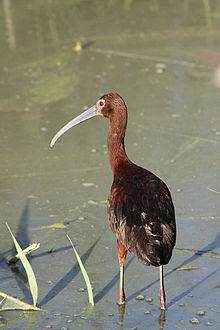
A white-faced ibis was the first bird on my Alaska trip birding list.

A white-faced ibis was the first bird on my Alaska trip birding list.

On the first day of my 2001 Alaskan adventure, I drove from Ogden, Utah, to Dillon Montana. It was July 27.

Like Ogden, where my journey began, Dillon is a railroad town. It was founded in 1880 by Union Pacific Railroad President Sydney Dillon, hence its name. Its location was selected because of its close location to gold mines then in the area, the first of which was discovered in 1862. And because of its large sheep-ranching community, Dillon, which was incorporated in 1884 and has a current population of about 4,000, was once the largest exporter of sheep wool in Montana.

The odd fact I still recall, because of research I had done prior to my journey, is that a circus elephant named Old Pitt was struck by lightning in the town in 1943, and was buried at the fairgrounds.

While I don’t remember too much else about the town, where I slept that first day on the road, I still have memories of my excitement about the coming month. And of course the birds I was going to see along the way.

Blog pick of the Day. Check it out.

Blog pick of the Day. Check it out.

Bean Pat: Pit’s Fritztown News http://tinyurl.com/z64x46l One of my favorite bloggers, who writes from Fredericksburg, Texas. Today he’s talking about Day Zero of a road trip that appealed to me, and seemed to go with my Day 1 of my trip to Alaska, which of course started with my own Day Zero.

Read Full Post »

   “The more often we see the things around us – even the beautiful and wonderful things – the more they become invisible to us. That is why we often take for granted the beauty of this world: the flowers, the trees, the birds, the clouds – even those we love. Because we see things so often, we see them less and less.” — Joseph B. Wirthlin

A male house finch sitting on the tree limb  next to my third-floor balcony. -- Photo by Pat Bean

A male house finch sitting on the tree limb next to my third-floor balcony. — Photo by Pat Bean

A Spot of Cheer

            Almost anywhere you live in North America, your day could easily be brightened by a house finch, a seemingly common name for a little brown bird, whose scarlet bib and head band worn by the male lights up any gray day. The female wears only a pale brown feather coat whose white front is brown streaked, as is the male’s lower belly. Both have a sturdy bill for their dainty size.

House finches are the most widely distributed songbirds in America. And since they love backyards and bird feeders, they’re also one of the easiest birds to identify. Here in Tucson I see them almost daily.

This house finch decided to watch me as I watched it. -- Photo by Pat Bean

This house finch decided to watch me as I watched it. It’s in full breeding colors with more red on it than usual. — Photo by Pat Bean

Because of their coloring and whistle punctuated song, these birds were once popular pets. A crackdown on keeping wild birds in this country, however, pinched off most of that activity – and also is the reason these birds can now be found in all 48 mainland states. Before 1940, when New York house finch breeders loosed their breeding stock because of the new laws, house finches were only found in the West. The freed pet birds, however, quickly dispersed, and today their North America numbers are estimated at a billion.

I only learned the bird’s history this morning, when I was reading Feather Brained by Bob Tarte, a late-blooming birder like myself. I was 60 years old before I begin fully seeing all the birds that share our spaces. Today I can’t not see birds. And that is a gift I’ve come to treasure.

Blog pick of the Day. Check it out.

Blog pick of the Day. Check it out.

Bean Pat: Ruffed Grouse http://tinyurl.com/jjfnxpm Great photo of a ruffed grouse for birdwatchers. This blog also took me back to my 2012 drive down the Skyline Drive through Shenandoah National Park, where if you look hard enough you’ll find this species of grouse.


Read Full Post »

  “A woman’s mind is cleaner than a man’s. She changes it more often.” – Oliver Herford

            “You have power over your mind – not outside events. Realize this, and you will find strength.” – Marcus Aurelius

The story of how the magpie became my animal totem would make a good first chapter  for my bird book. -- Photo by Pat Bean

The story of how the magpie became my animal totem would make a good first chapter for my bird book. — Photo by Pat Bean

It’s OK to Change One’s Mind

I’m not sure where I got it in my head that once I made a decision I had to follow through on it, but it got me in trouble in my earlier years. Young minds don’t always make the right choices.

Old minds don’t either.

But more often than not, the choices and decisions we make in life, especially those we make on a daily basis, have nothing to do with right or wrong. They are simply choices, like the one I made recently to do NANO in November, which is to write a 50,000 word novel in 30 days.

m

And I can write about my experience of seeing California condors flying free  over Zion National Park, and all the times I wrote about them when I was a reporter. -- Wikimedia phoot by Phil Armitage.

And I can write about my experience of seeing California condors flying free over Zion National Park, and all the times I wrote about them when I was a reporter. — Wikimedia photo by Phil Armitage.

Along with making that choice, I also made a decision to make my proposed book a mystery, and dedicated yesterday to working on an outline for it. Instead, I kept putting the task off and spent most of the day reading. The truth was I couldn’t come up with a good plot.

Then this morning I got to thinking. I have three completed (not sure how many uncompleted) first drafts of mysteries in my writing files, which I have no inclination to take to polished completion. I don’t think I need another.

Meanwhile, for the past year I have been outlining a book about my bird-watching experiences. I have numerous anecdotes about this late-blooming passion of mine. Why not, I thought, write my bird book for my NANO project?

The decision felt right. And suddenly I was more enthusiastic about my November writing marathon. Of course, I could change my mind again.

Learning to be comfortable with not having one’s decisions written in cement, even for life-changing choices, has made life a lot easier and more pleasant for me. Perhaps that’s because I make a lot of hummingbird-wing-quick decisions without thinking everything out fully first.

Patience simply isn’t a virtue in my mind. And while I believe, unlike Oliver Herford whose quote began this blog, that men change their minds as often as woman, I do believe I have a very clean mind.

Bean Pat: Hanging out: in Puerto Iguazu http://tinyurl.com/h6rg4vm A nice and easy day of armchair travel

Read Full Post »

A Novel Idea

“There are times when a feeling of expectancy comes to me, as if something is there, beneath the surface of my understanding, waiting for me to grasp it.” – Sylvia Plath

Laughing gulls on Mustang Island on the Texas Gulf Coast, not too far from where Ridley sea turtles have nested. -- Photo by Pat Bean

Laughing gulls on Mustang Island on the Texas Gulf Coast, not too far from where Ridley sea turtles have nested. — Photo by Pat Bean

A November Challenge

This makes the seventh year I’ve signed up to do NANO, which is short for National Novel Writing Month that takes place November. The goal is to write a 50,000-word novel in 30 days.

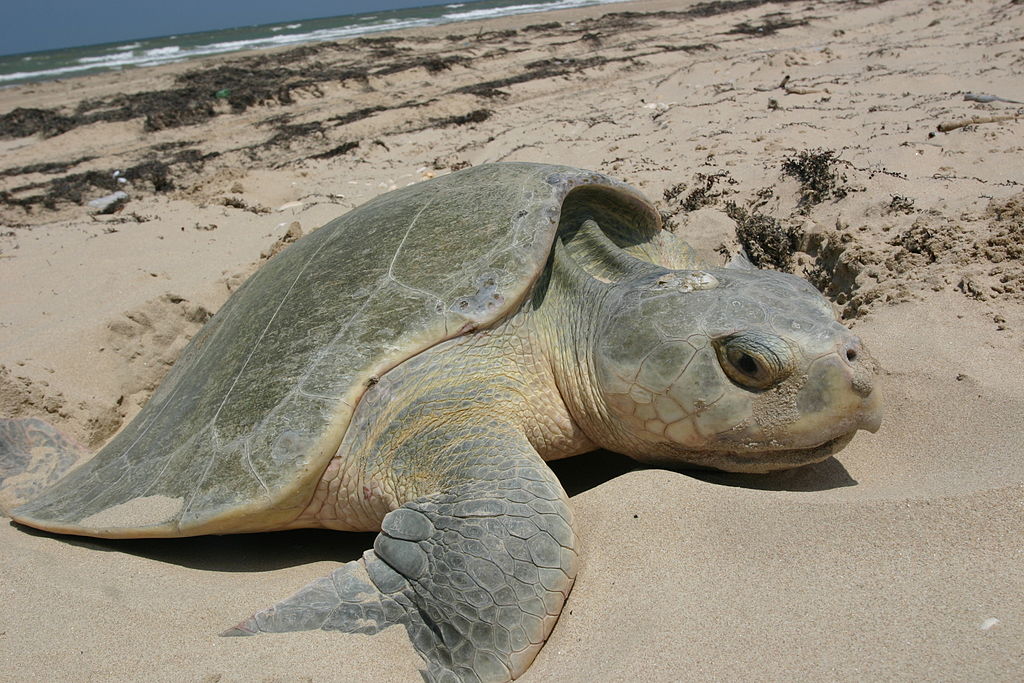
A Ridley sea turtle laying her eyes on a Texas Gulf Coast beach. -- National Park Service photo.

A Ridley sea turtle laying her eyes on a Texas Gulf Coast beach. — National Park Service photo.

I actually completed the goal, and got my certificate, once. It was a great writing exercise but I ended up with a wobbly first draft whose protagonist I had fallen out of love with, and so that’s as far as I took the project. I’m hoping to do a little better this time around, which is why I’m now working on an outline of the mystery novel I’m planning on writing in November.

The last time I flew by the seat of my pants only. I wrote a mystery the first time around as well, and am repeating the genre because I love reading mysteries – the ones that focus on who-dun-it instead of blood and gore.

A just hatched sea turtle ready to battle its way to the ocean. -- U.S. Fish and Wildlife photo

A just hatched sea turtle ready to battle its way to the ocean. — U.S. Fish and Wildlife photo

I’m going to use the things I liked from my first NANO completion, mainly the setting along the Texas Gulf Coast and the story of the endangered Ridley sea turtles, but with new characters and a new plot.

Anyone interested in joining the challenge with me can sign up at: http://nanowrimo.org/   It’s free, and not a contest. The only person you have to please is yourself.

My goal for doing the challenge, besides completing a first draft of a novel, is to get myself back into the habit of writing more consistently on a daily basis.

Blog pick of the Day. Check it out.

Blog pick of the Day. Check it out.

Wish me luck!

Bean Pat: Glassine Visions http://tinyurl.com/h7gfdxn For Dale Chihuly fans.

P.S. Re NANO: Since 2006, hundreds of novels first drafted during NANO have been published. You can check out the list at: http://nanowrimo.org/published-wrimos

Read Full Post »

“Lavender clouds sail like a fleet of ships across the pale green dawn.” – Edward Abbey. The Opposite of Bird Watching

White-winged doves to the left, mourning doves to the right. -- Photo by Pat Bean

White-winged doves on the ends, mourning doves in the middle. — Photo by Pat Bean

It is a dawn like what Abbey describes that makes me often wake before the sun rises. After watching the gray turn the landscape into a fleeting moment of golden glow, I began looking around for birds, knowing that when I return to my apartment I will note in my journal the first species of the day. More often than not it will be a dove, either a white-winged or a mourning dove.

White-winged dove on top of a blooming saguaro.  -- Photo by Pat Bean

White-winged dove on top of a blooming saguaro. — Photo by Pat Bean

Both these species are as common here in the Sonoran Desert as are the saguaro, which normally can only be found in Southern Arizona or just across the border into Mexico.

You can see a mourning dove anyway in the mainland 48 states, but white-winged doves can only be found in the more southern states. Here where I live, I often see them sitting atop a saguaro, especially when it is in bloom (like the photo on the left). Mourning doves more commonly tend to flock on the ground in bunches of two to six.

If I listen, as my canine companion Pepper and I make our morning circuit, I can hear the doves murmuring to one another. It’s an interesting chatter. The mourning doves have a mellow, cooing song, which sounds like a lament, but which also is close to the sound of our resident great horned owls. White-winged doves, named for just that, also coo, but there is more variation and cheeriness to their songs. It sounds to me like they’re happy to be up and moving, while the mourning doves are bemoaning having to get up.

Recently I added a bird feeder to the nectar feeder that hangs on my third-floor apartment balcony. Both the mourning and white-winged doves have been feeding from it. They empty it way too quickly, which is why I only partially fill it each morning. There is only so much bird seed my budget can afford.

The doves, having become familiar with my custom of putting out seeds after my morning walk, often gather on the tile roof across from my apartment in anxious anticipation. I think you can call that people watching.

Blog pick of the Day. Check it out.

Blog pick of the Day. Check it out.

Bean Pat: With Less Weight in my Back Pack http://tinyurl.com/z5kco7l Sedona area landscape — and the way I feel these days.

Read Full Post »

« Newer Posts - Older Posts »