Feeds:
Posts
Comments

Posts Tagged ‘wetlands’

Canada Geese at the Great Salt Lake Nature Center -- Photo by Pat Bean

 “Poets who know no better rhapsodize about the peace of nature, but a well-populated marsh is a cacophony.” — Bern Keating

Looking across Farmington Bay at the Wasatch Mountains. -- Photo by Pat Bean

Favorite Hikes:

 One of my favorite hikes when I lived in Northern Utah was a gentle trek on a circular boardwalk found at the Great Salt Lake Nature Center. http://tinyurl.com/45jykl6

Located in the Farmington Bay Waterfowl Management Area just north of Salt Lake City, the mile and a half circular trail provides excellent views of wetlands wildlife.

 It was a trail I hiked early on weekend mornings, or in the early evenings after getting off from work. Whatever the time, however, my walk always began with a chorus of marsh wrens that was soon joined by a background of croaky frog chirps.

Hike slowly and look closely so you don't miss such things as the yellow-headed blackbird hiding in the rushes. -- Photo by Pat Bean

And there always surprises, like coming around a corner of cattail or bulrush to see coots or pied-billed grebes floating in a small bit of open water. Or climbing to the top the 30-foot observation tower to see avocets and northern shovelers off in the distance, and song sparrows and red-winged blackbirds flitting around below.

On a couple of occasions I even saw red foxes, including a den of young ones. And I almost always saw northern harriers and kestrels circling overhead. In the winter, bald eagles were a frequent sight, as were tundra swans in the spring.

Once a flock of graceful sandhill cranes flew close overhead, their rattling trumpet call echoing through the air. It was an experience that stirred my soul and made me grateful just to be alive. If you’re ever in the area, it’s a hike not to miss.

Just be sure and take some mosquito repellent with you. Mother Nature is kind, but not always considerate.

Read Full Post »

Bridge standoff at Okefenokee Swamp Park. -- Photo by Pat Bean

 “We have met the enemy, and he is us.” Pogo

Travel With Maggie

 It was a fall day in 2006 when I visited the Okefenokee Swamp, a place I had once thought was as fictional as Anne McCaffrey’s Pern. I knew it only as the imaginary home of the animals in Walt Kelly’s comic strip “Pogo,” which ran in newspapers across the country from 1948 to 1975.

 Many a Sunday morning would find me curled up somewhere reading all about Pogo the possum, Albert the alligator, Howland the owl, Porky Pine the porcupine and a host of other animals that grew out of Kelly’s imagination.

 In its early days, I saw Walt’s colorful drawings as simply a comic strip about the four-legged and winged creatures that lived in a swamp. As an observant animal lover, I understood the human attributes he gave his creatures, but it wasn’t until I was about 25 that I realized he was satirizing human nature as well.

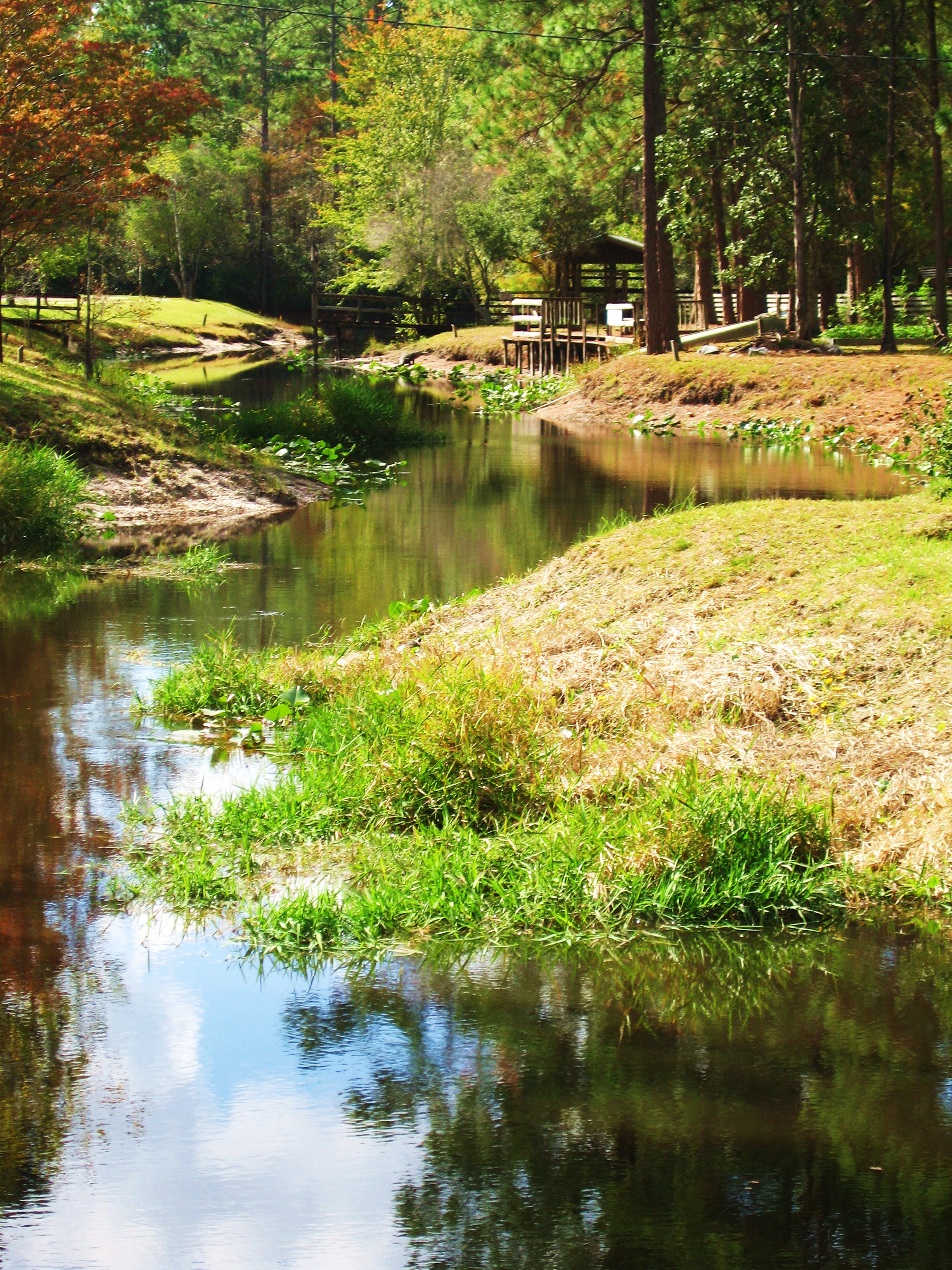
When the water levels are higher, visitors to Okefenokee Swamp Park are given a boat ride as part of the swamp experience. A drought in the park in 2006 meant no boat ride for me. -- Photo by Pat Bean

 My discovery that the Okefenokee was more than the byproduct of a vivid imagination came even later than that. While the Texas school I attended taught me a lot about the geography of Texas and the rich oil fields that lay off its Gulf of Mexico shoreline, it skipped completely any information about Georgia’s Okefenokee Swamp adjacent to the Atlantic Ocean.

 I had to learn that on my own.

For the record, the Okefenokee Swamp was once an ocean floor. It lay beneath the salt water until a sandbar, formed about a million years ago, cut the basin off from the sea. Time and the elements eventually turned it into the freshwater wetlands that today extends Georgia’s eastern coastline by about 75 miles.

Of course I compared what I saw on my day in the Okefenokee to my memories of it from Kelly’s comic strip.  What I saw made me glad Pogo’s home was not just an imaginary place.

Read Full Post »