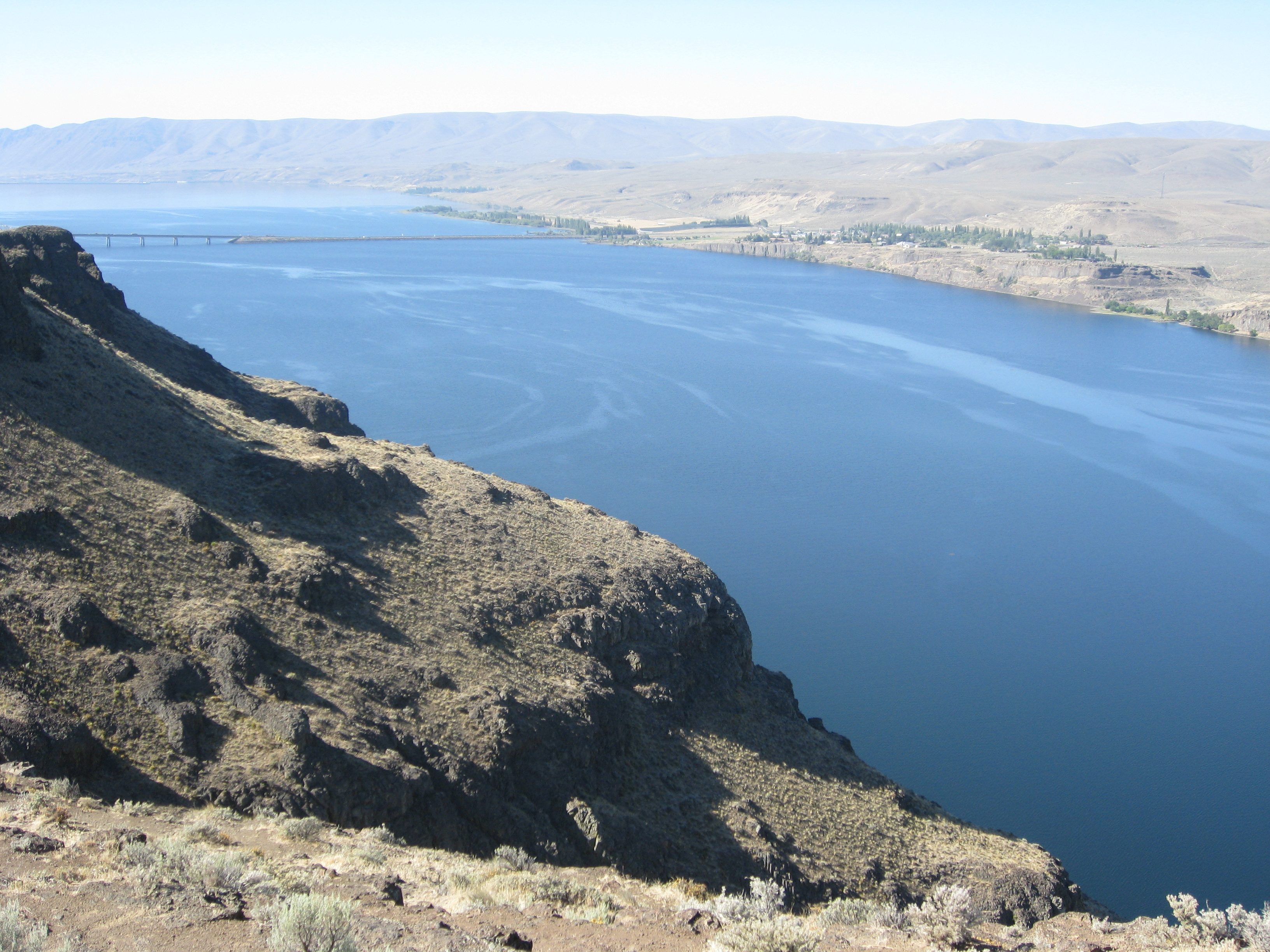
Looking down the Columbia River at the Vantage Bridge and across it at Washington's Ginko Petrified Forest State Park. -- Photo by Pat Bean
“Sometimes, if you stand on the bottom rail of a bridge and lean over to watch the river slipping slowly away beneath you, you will suddenly know everything there is to be known.” — Winnie the Pooh
Travels With Maggie
The mighty, 1,243-mile long Columbia River, begins in the Rocky Mountains of Canada, flows south through Spokane and then forms much of the border between Washington and Oregon on its way west to the Pacific Ocean. Maggie and I crossed it twice in the same week as we traveled to Mount Ranier and then down to Southern Idaho. Both times left me awed.
The first crossing was on Highway 90’s Vantage Bridge, an impressive structure with overhead steel girders, the kind that always sets off a rare barking episode from Maggie. Passing motorcycles are about the only other thing she barks at during our road journeys.
Once across, the highway climbed steeply through a section of Ginko Petrified Forest State Park. From an
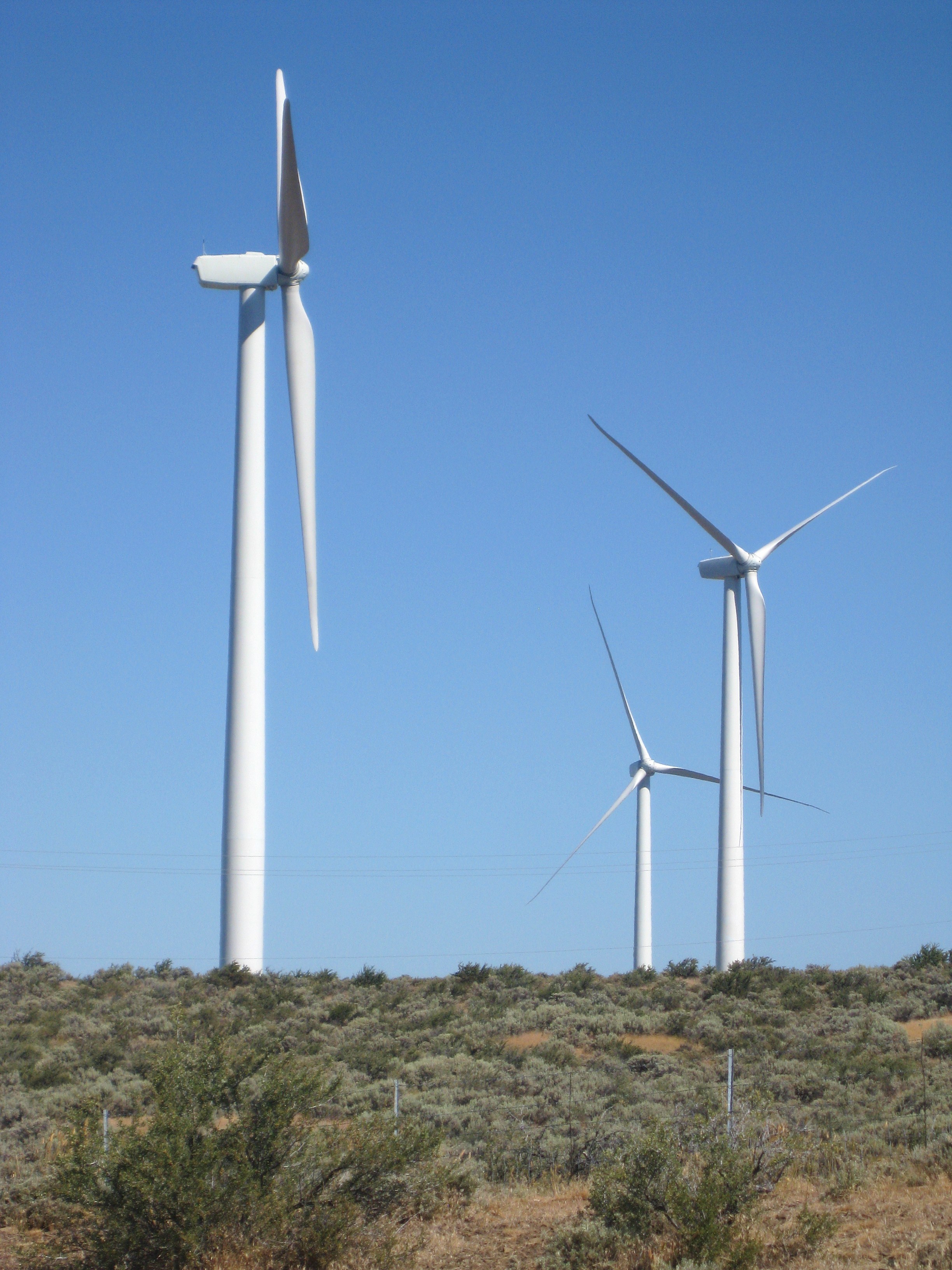
Turbine windmills, part of Washington's Wild Horse energy project, sit atop the Columbia River Gorge near the Vantage Bridge crossing. -- Photo by Pat Bean
informational plaque at an overlook just east of the crossing, I had learned that the park, in addition to Ginko, the sacred tree of China now almost extinct in the wild, includes over 200 other kinds of woods preserved by million year old lava flows.
I stopped at the top of the gorge at the Ryegrass Rest Area, where I got a hazy view of Mount Ranier, and a look at huge turbine windmills that take advantage of the winds created by the river gorge. During an earlier trip, when I followed the Columbia River Gorge’s path all the way through Washington, I stopped at Maryhill State Park, where I watched windsufers also take advantage of this same wind source. Mother Nature is so kind to us.
My second crossing of the river on this trip was over Highway 82’s Umatilla Bridge. Before crossing, I stopped briefly at Plymouth Park on the north side of the river, where I ate my lunch and watched robins and house sparrows stroll past, ever searching for a tasty treat of bugs, seeds or picnicker leftovers.
Lewis and Clark camped near this park, which is named after Plymouth Rock because of the huge basaltic rock that projects into the river at the site. The pair of explorers most likely saw robins in the area, but house sparrows hadn’t yet been brough over from England to America.
Joining my thoughts revisiting the Lewis and Clark expedition were one about the first white settlers who passed this
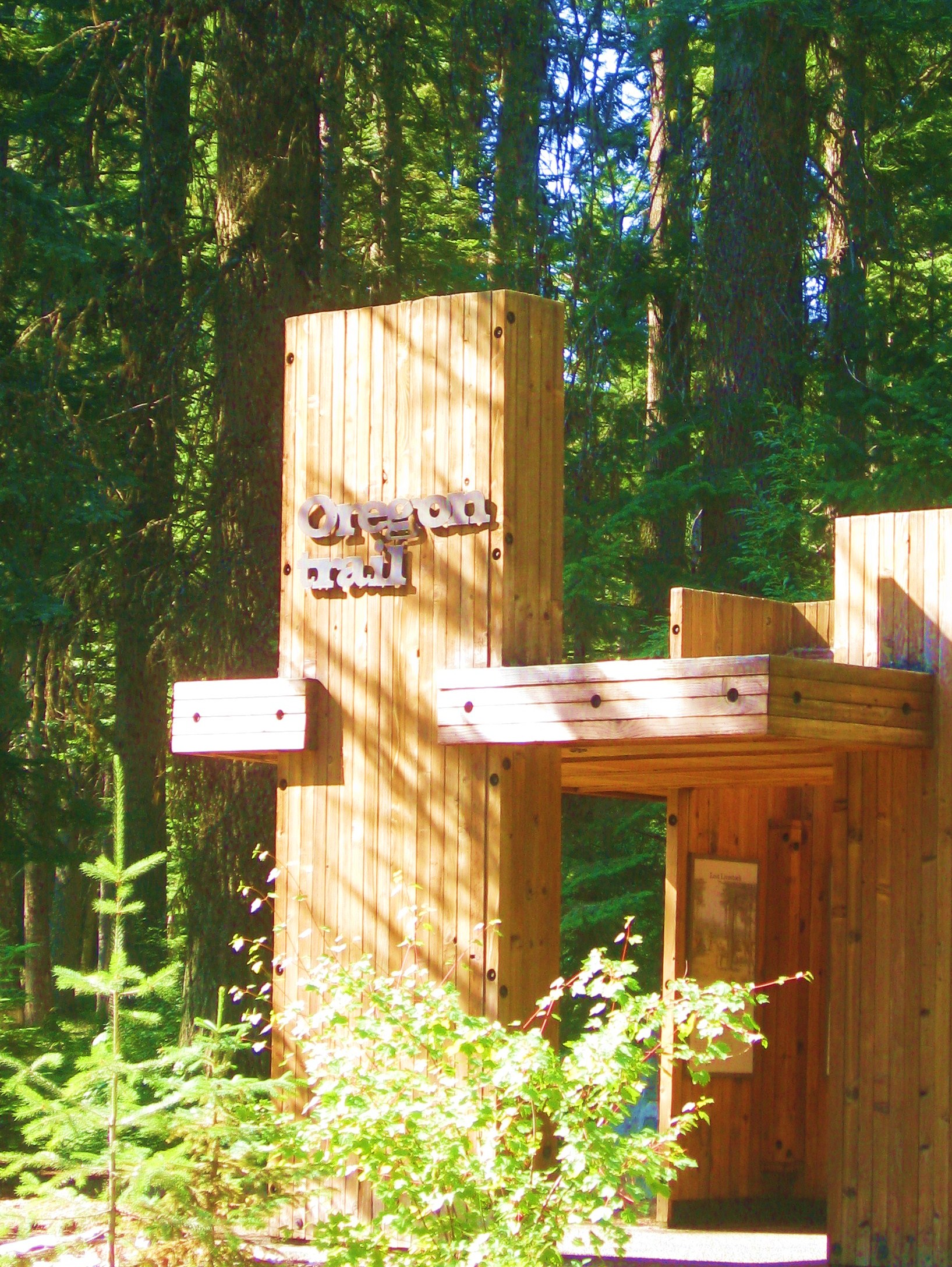
Highway 82 historical kiosk reminding travelers they are following the Oregon Trail route. -- Photo by Pat Bean
way. I was now seeing frequent signs reminding me that the smoothly paved road I was driving down was once little more than wagon ruts, and not even that for the first brave settlers heading west. My route across the Columbia River to Pendleton, Oregon, and continuing south was basically once known as the Oregon Trail.\
The pioneers’ crossing of the Columbia River would have taken much longer than mine and Maggie’s. How could one not be awed by the adventures of those hearty souls. Or by the Columbia River itself, I asked Maggie as I crossed the river on the Umatilla Bridge. There was no reply. Maggie was snoozing.
With no traffic in sight, I slowed my speed to better enjoy the river view.


 Pat Bean's blog