Feeds:
Posts
Comments

Posts Tagged ‘Pendleton’

“Morning is when the wick is lit. A flame ignited, the day delighted with heat and light, we start the fight for something more than before.” Jeb Dickerson 

One of the two northern flickers that visited me just as the sun was coming up this morning. -- Photo by Pat Bean

Travels With Maggie

My morning began at 5 a.m. with a phone call when I was still deep asleep, By the time I stumbled out of bed and figured out where my phone was – in the cab beneath my RV’s upper bunk – it had stopped ringing.

After crawling back into bed and snuggling back beneath the covers because it was quite a chilly morning here in Pendleton, Oregon, where I’m parked in the farmyard of a friend’s mother, I hit the redial button.

It was my daughter-in-law, Cindi, in Texas who rang to tell me the books I had ordered from Amazon had arrived. They included Susan Albert’s “Bleeding Heart,” the next in the China Bayles’ books I’m reading and one that hadn’t been available on Kindle.

A much better look at a northern flicker, this one a male. -- Photo by Joanne Kamo

I said, perhaps a bit snippy: “It’s o-dark-hundred here. I’m in the Pacific time zone and two hours earlier than where you are.”

“Oh,” she responded. But then of course we chatted for a while. I couldn’t be too angry because she’s my traveling guardian angel and has handled all my mail for the past seven years. .

After we hung up, I tried to go back to sleep, but unlike my dog, Maggie, who never even lifted her head at the phone call, sleep had vanished for the day. So I got up, fixed coffee and sat down in front of my computer, alternating between answering e-mails and watching the day arrive out my window.

I was rewarded with a pair of northern flickers messing around a tree near my RV. I tried to get a picture, but it was dark and my photo turned out poorly. I thought you might want to see it anyway, but I added a photo taken by Joanne Kamo  http://www.pbase.com/jitams to give you a better look.

Meanwhile, I did enjoy watching the pair of large woodpeckers – that’s the family to which northern flickers belong. They stayed around for quite a while poking around the tree, and sticking their heads into a couple of holes it contained. If Cindi hadn’t called I would have missed them all together.

Life’s like that. It throws you a curve ball, then apologizes with a slow pitch you can’t miss.
Read Full Post »

Bordellos, Wagon Ruts and the Cost of Ease

this day got an early start; in a few miles we came through the thick timber and came to large pines. the road smoother and not so hilly directly we came out of the pines and went down a long hill into the Umatilla Valley; the bottom and bluffs covered with Indian ponies and horses, too. came to the Umatilla river and camped.” Loren B. Hastings; October 8, 1847 

Travels With Maggie

Once across the Columbia River, I followed Highway 84 through Pendleton, Oregon, a town with an untamed past. It was once home to numerous bordellos and saloons, most of them below ground in underground tunnels dug by the Chinese beginning around 1870. The brothel trade stuck around until the late 1940s, when a Presbyterian minister finally put a damper on the business by announcing he was going to read the names of those patronizing the businesses in church. Today, the city is best known for its woolen mills and its annual rodeo, the Pendleton Round-Up.

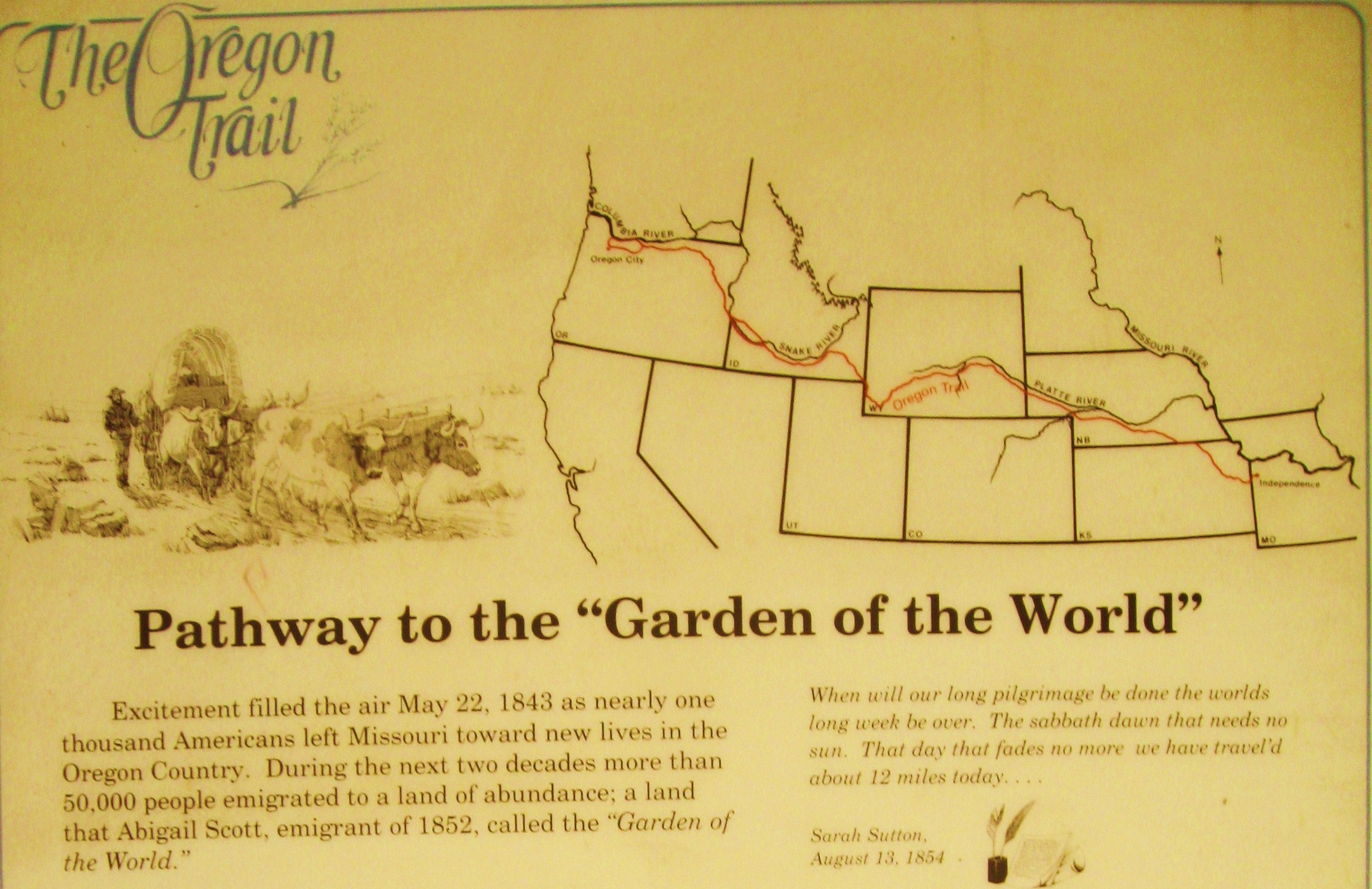
South of Pendleton, Highway 84 follows the path of the Oregon Trail as it climbs through the Utmatilla Indian

Information on a historical kiosk along Highway 84 in Oregon -- Photo by Pat Bean

 Reservation and across the Blue Mountains. A kiosk at the top of Emigration Hill at a place known as Deadman’s Pass – it’s not hard to guess why it is so named — informed me that more than 50,000 emigrants headed West passed this way between 1840 and 1850. Their road, unlike mine, had not been paved. And instead of travel time easily measured in minutes, they spent days conquering the route’s rough and stony hills. Their wagon ruts, still visible today, are a testament to the heart and soul of people hoping for a better life.

I stopped for the night at Emigration Springs State Park, where my neighbors were a couple of grandparents introducing a young grandson to the joy of the outdoors. Maggie fascinated the youngster, and she obligingly let him pet her for a couple of minutes. While she’s always gentle with small children, she prefers her strokes to come from adults. After she gave me a painful look, I rescued her by continuing on our walk through the park.

Fireweed: So named because it is one of the first plants to bloom after an area has been destroyed by fire. The flower speaks to me of hope for the future and Mother Nature's survival from man's impacts. -- Photo by Pat Bean

Knowing that my footsteps were walking on top of those of the hardy pioneer souls who had spent the night here over 150 years ago heightened my enjoyment of the landscape around me. My night, however, was interrupted too much by the whoosh of passing vehicles on Highway 84 to let me linger in the past. And awakening in the morning to read about oil rigs using the Gulf of Mexico as a dumping ground so as to power those vehicles definitely brought me back into the present.


I’m thankful to have been born in this day and age, and to have conquered the Blue Mountains so easily in my small RV. But sometimes I ask myself what is the cost I’m paying for such an easy life. Hopefully it’s not one that’s going to deprive my future great-grandchildren of Mother Nature’s company.

Read Full Post »

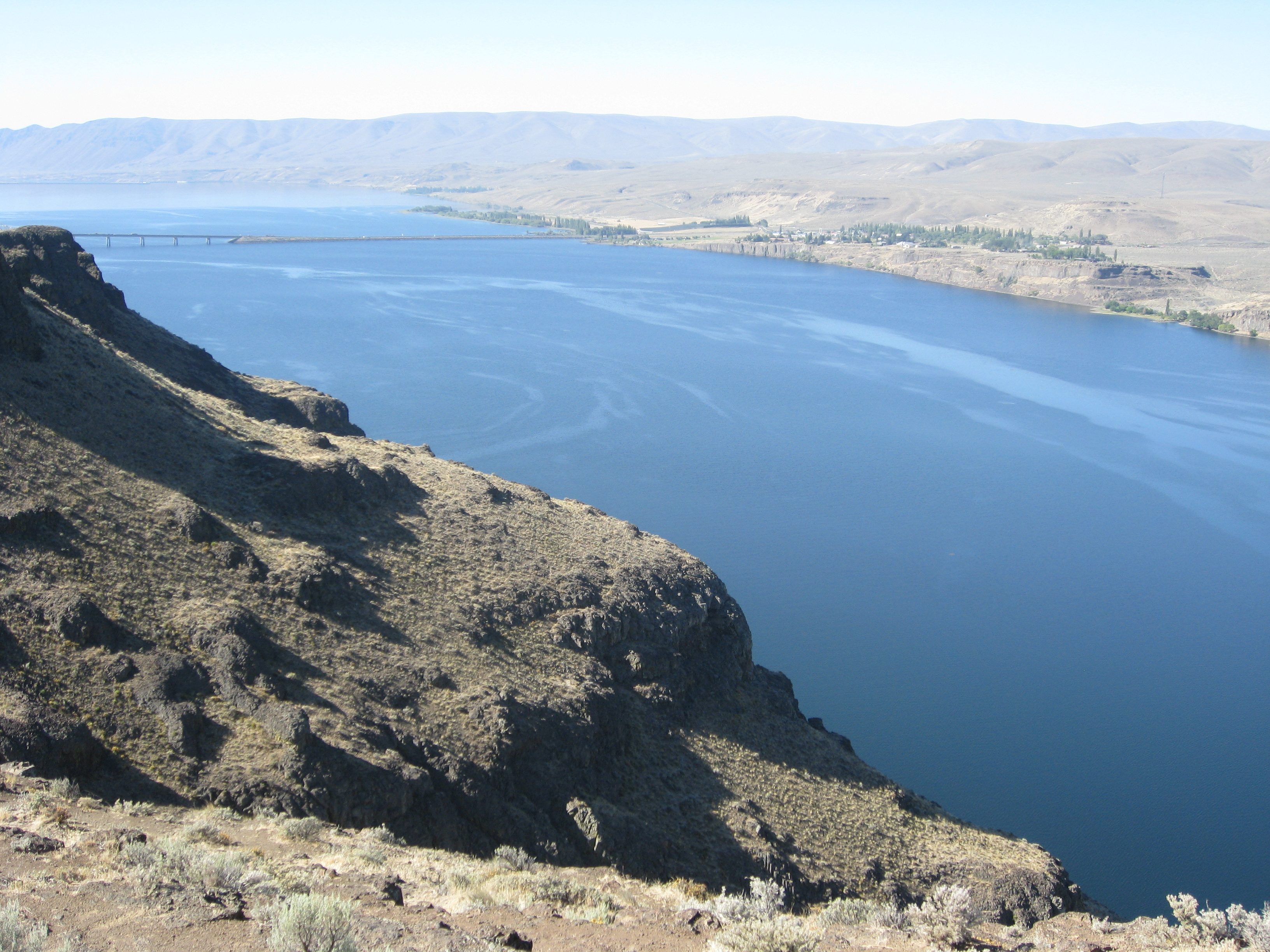
Looking down the Columbia River at the Vantage Bridge and across it at Washington's Ginko Petrified Forest State Park. -- Photo by Pat Bean

“Sometimes, if you stand on the bottom rail of a bridge and lean over to watch the river slipping slowly away beneath you, you will suddenly know everything there is to be known.” — Winnie the Pooh

Travels With Maggie

The mighty, 1,243-mile long Columbia River, begins in the Rocky Mountains of Canada, flows south through Spokane and then forms much of the border between Washington and Oregon on its way west to the Pacific Ocean. Maggie and I crossed it twice in the same week as we traveled to Mount Ranier and then down to Southern Idaho. Both times left me awed.

 The first crossing was on Highway 90’s Vantage Bridge, an impressive structure with overhead steel girders, the kind that always sets off a rare barking episode from Maggie. Passing motorcycles are about the only other thing she barks at during our road journeys.

Once across, the highway climbed steeply through a section of Ginko Petrified Forest State Park. From an

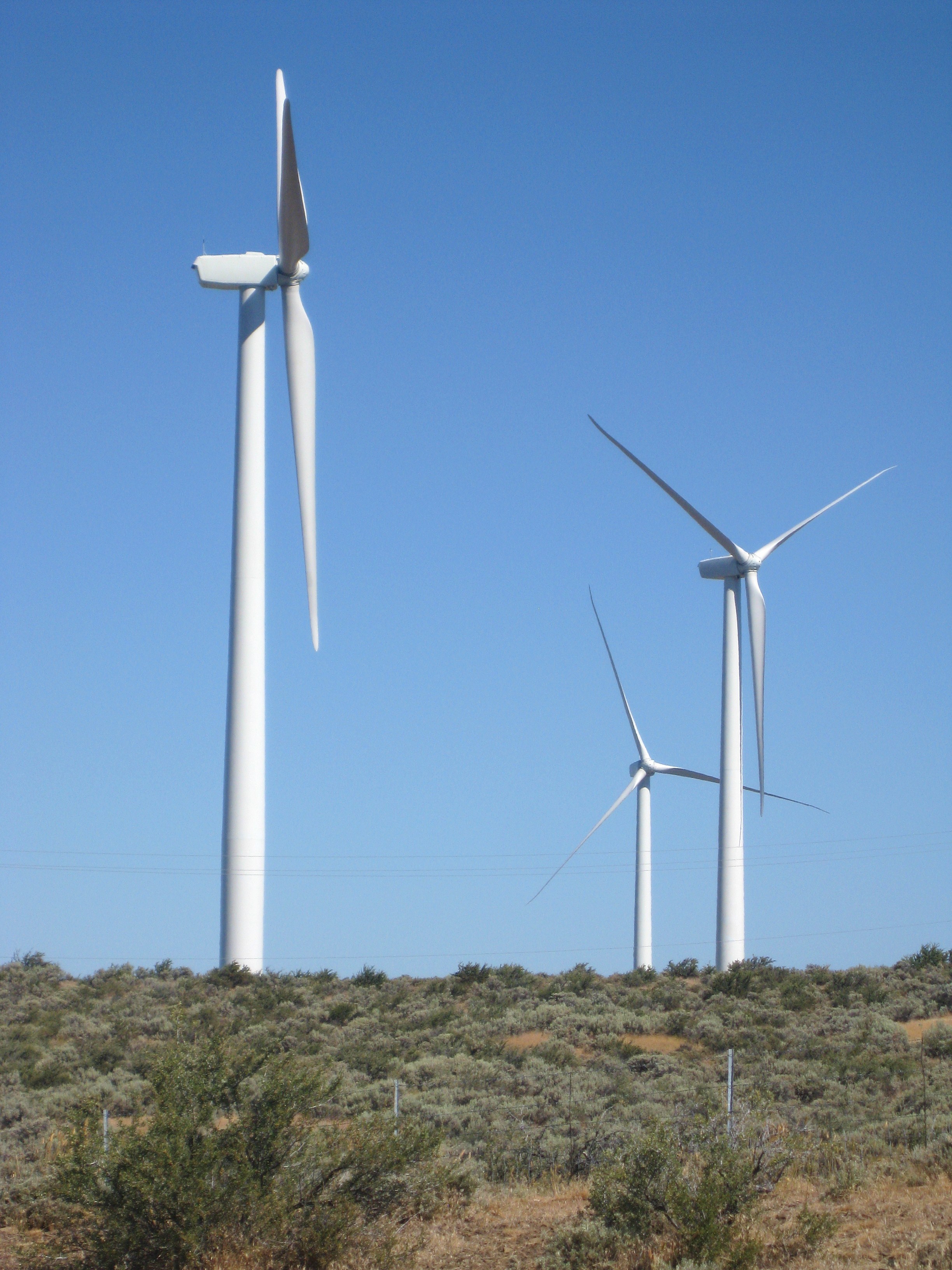
Turbine windmills, part of Washington's Wild Horse energy project, sit atop the Columbia River Gorge near the Vantage Bridge crossing. -- Photo by Pat Bean

 informational plaque at an overlook just east of the crossing, I had learned that the park, in addition to Ginko, the sacred tree of China now almost extinct in the wild, includes over 200 other kinds of woods preserved by million year old lava flows.

 I stopped at the top of the gorge at the Ryegrass Rest Area, where I got a hazy view of Mount Ranier, and a look at huge turbine windmills that take advantage of the winds created by the river gorge. During an earlier trip, when I followed the Columbia River Gorge’s path all the way through Washington, I stopped at Maryhill State Park, where I watched windsufers also take advantage of this same wind source. Mother Nature is so kind to us.

My second crossing of the river on this trip was over Highway 82’s Umatilla Bridge. Before crossing, I stopped briefly at Plymouth Park on the north side of the river, where I ate my lunch and watched robins and house sparrows stroll past, ever searching for a tasty treat of bugs, seeds or picnicker leftovers.

Lewis and Clark camped near this park, which is named after Plymouth Rock because of the huge basaltic rock that projects into the river at the site. The pair of explorers most likely saw robins in the area, but house sparrows hadn’t yet been brough over from England to America.

Joining my thoughts revisiting the Lewis and Clark expedition were one about the first white settlers who passed this

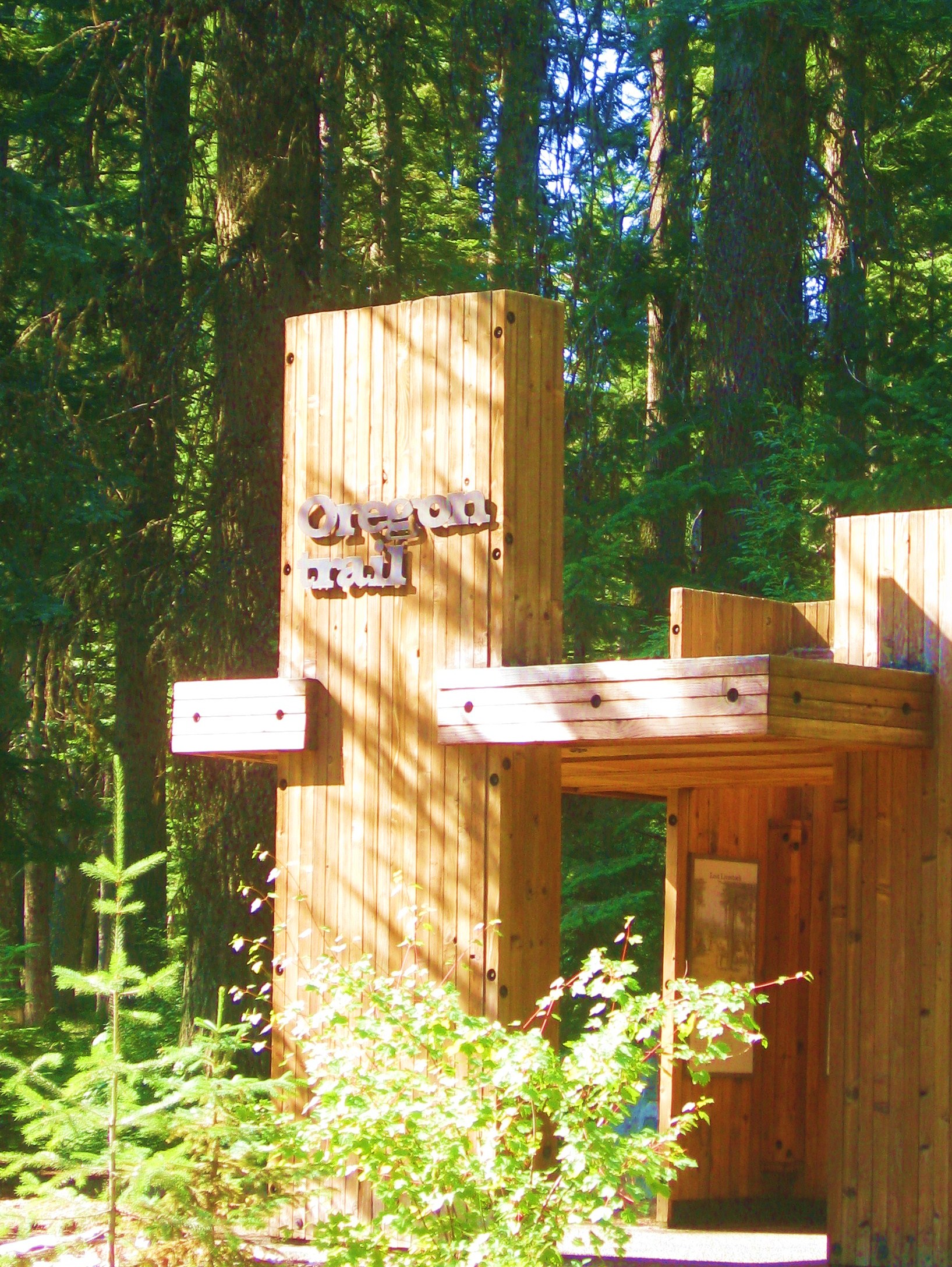
Highway 82 historical kiosk reminding travelers they are following the Oregon Trail route. -- Photo by Pat Bean

 way.   I was now seeing frequent signs reminding me that the smoothly paved road I was driving down was once little more than wagon ruts, and not even that for the first brave settlers heading west. My route across the Columbia River to Pendleton, Oregon, and continuing south was basically once known as the Oregon Trail.\

The pioneers’ crossing of the Columbia River would have taken much longer than mine and Maggie’s. How could one not be awed by the adventures of those hearty souls. Or by the Columbia River itself, I asked Maggie as I crossed the river on the Umatilla Bridge. There was no reply. Maggie was snoozing.

With no traffic in sight, I slowed my speed to better enjoy the river view.

Read Full Post »