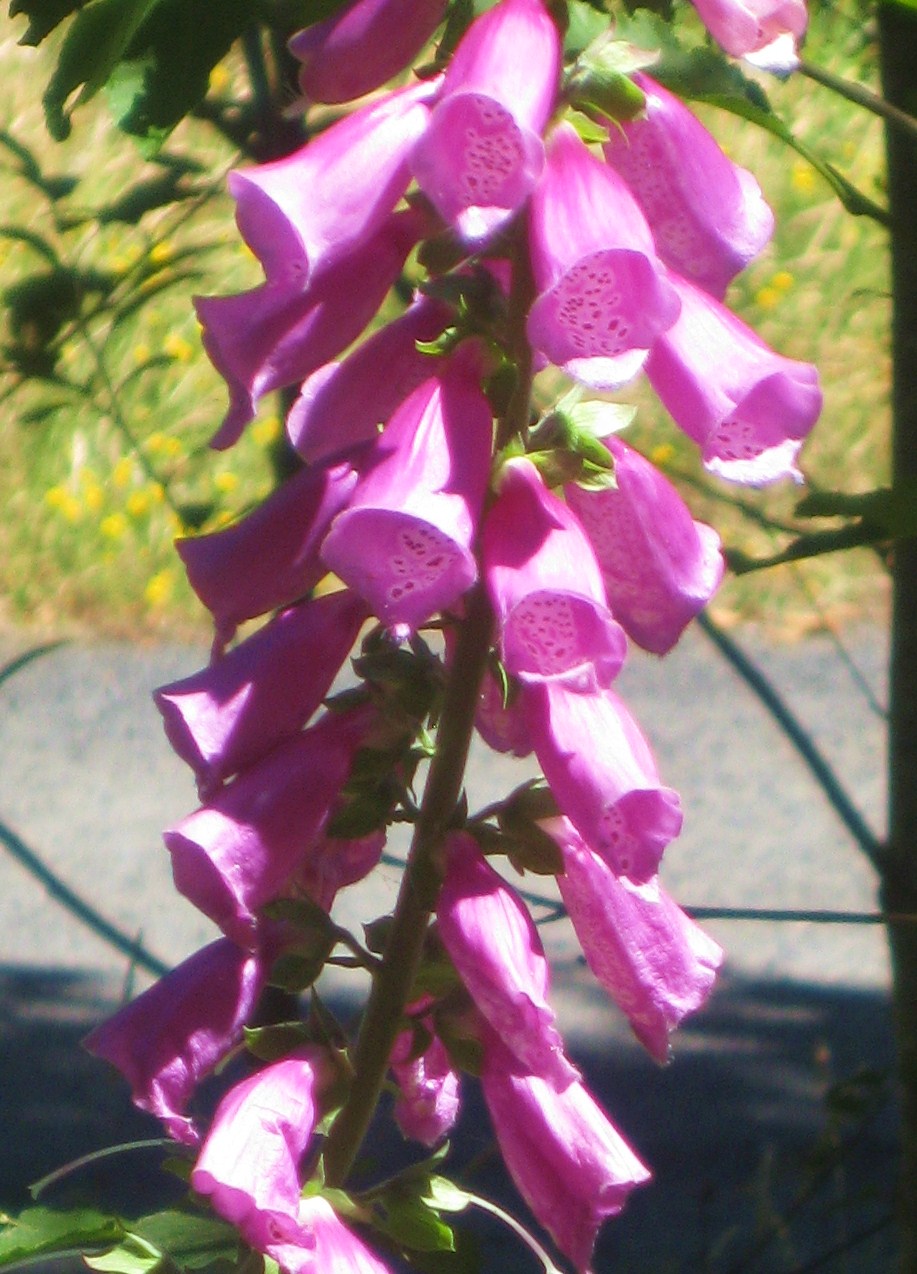
Foxglove: A wildflower for good and evil ... Photo by Pat Bean
“… change comes like a little wind that ruffles the curtains at dawn, and it comes like the stealthy perfume of wildflowers hidden in the grass.” — John Steinbeck
Travels With Maggie
If money were no object, I would have my own personal botanist handy every time I saw a wildflower.
I find these delightful unattended blossoms almost everywhere I look. They grow along roadsides, in shady forests, beside gurgling brooks and from bare rock crevices. Some splash color across an entire meadow, like the California poppy that announces itself to the world with its golden orange shout. Others are a whisper barely heard as their tiny blooms grow beneath our feet requiring knees bent and head bowed to see their fragile daintiness.
While seeing wildflowers of all colors, shapes and sizes is no problem for one who gets out in nature, which I’m constantly doing, I find it very frustrating when I can’t identify each and every one. Unlike those who are fortunate enough just to be able to enjoy their beauty, I want to know the name of each and every flower.
Perhaps it’s the writer in me that was taught to not be generic with my words. I can still hear a writing teacher expound that a tree is not just a tree, it’s a yew, or a cypress, or a Douglas fir. So it is that I want a flower not to be just a flower.
Since I can’t afford the services of a full-time botanist, I resort to photos that I later use as I peruse wildflower books – sadly, with far less than perfect results. The vast number, multiple names and variances of wildflowers constantly stump me. Every wildflower book, at least the ones with pictures, I’ve come across identifies only the common species while it seems fully half of my discoveries are of the uncommon variety.
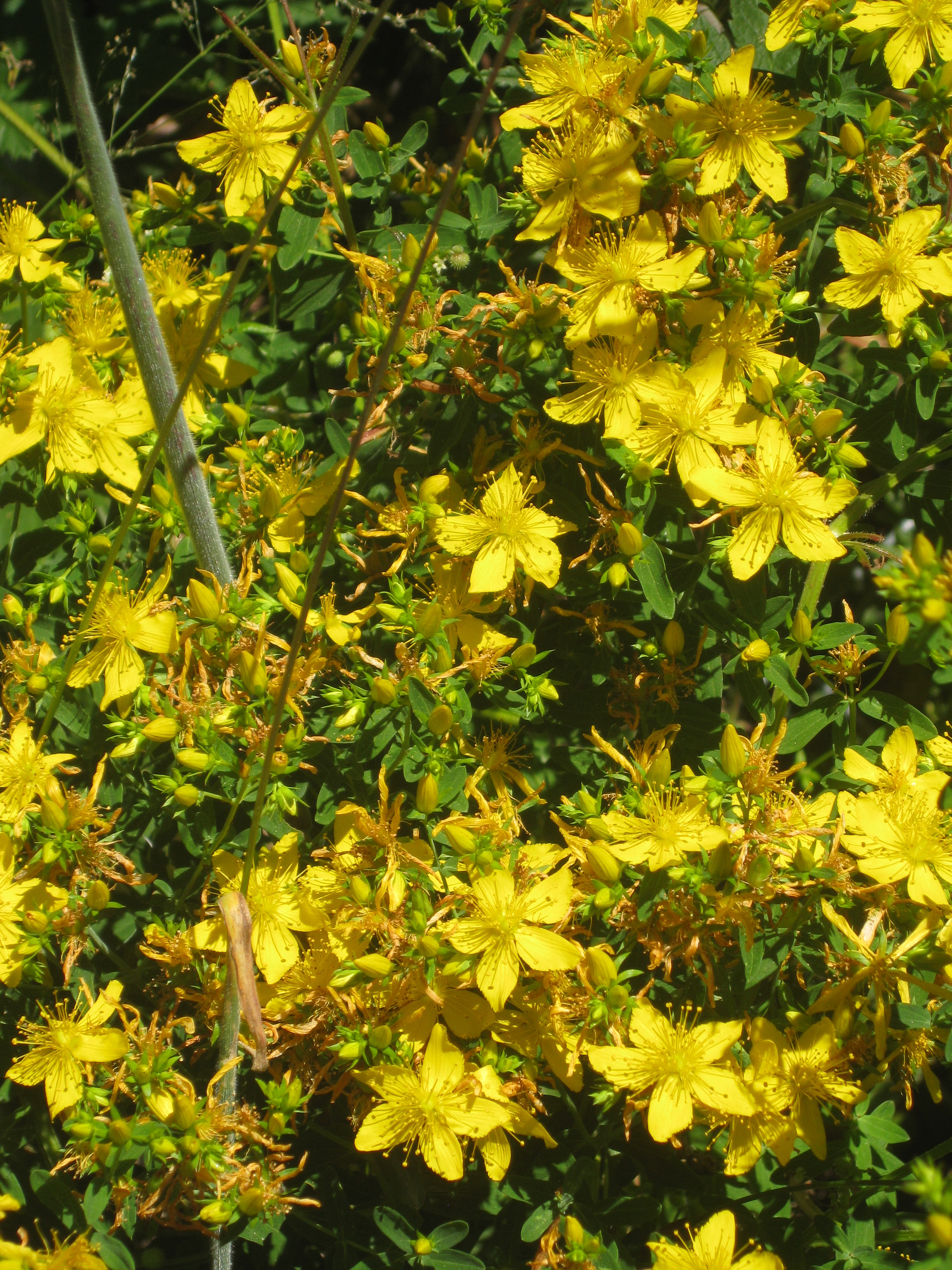
So what's the name of these wildflowers? An inquisitive writer really wants to know. ... Photo by Pat Bean
Therefore, I try to be happy when I can make an identification, such as the one of the foxglove pictured here. These tall rosy pink flowers, whose bell-like shapes are lined with purple spots, have been frequent sights as I’ve traveled across the state of Washington. Perhaps that’s because it’s the state’s wildflower.
While trying to identify the flower, I also discovered that foxglove is the source of digitalis, a drug used as a heart stimulant. It’s also a poison. Its properties, according to my Reader’s Digest field guide of common wildflowers, were discovered by physician-poet William Withering in the late 1770s. After testing the drug on a charity patient, he wrote both a medical paper and a poem.
The poem, in part, reads: “The foxglove’s leaves, with caution given …The rapid pulse it can abate/the hectic flush can moderate.”
By the way, Maggie, my canine traveling companion, always take time to smell the flowers when we’re out walking. I wonder if I’m contagious.


 Pat Bean's blog