Feeds:
Posts
Comments

Posts Tagged ‘Birds’

“I soon realized that no journey carries one far unless, as it extends into the world around us, it goes an equal distance into the world within.” Lillian Smith

Has life shaped you like a gulf wind has shaped this Goose Island State Park tree? -- Photo by Pat Bean

Travels With Maggie

Standing in a field of grass patterned with bluebonnets at Goose Island State Park is a tree that’s allowed wind blowing in from the Gulf of Mexico to shape its profile.

It wasn’t much different, I thought on first seeing it, then how life shapes us humans.

For some odd reason, I thought again this morning about that tree, which I had photographed last April when I spent a week with my dog, Maggie, on Goose Island birdwatching. I think my brain was triggered in that direction after reading the quote: “Normal is a setting on a washing machine.”

On finding the photograph, I decided to blog about the message the tree had conveyed to me.

I’m not sure now that was such a good idea.

My thoughts, just as I placed my fingers on the keyboard, became such a jungle of contradictions that I’ was suddenly struck wordless. That’s a rarity by the way.

Do I write about how walking into a newsroom the first time pushed the rest of my life into a direction as slanted as that tree? Or about how coming out of a raft and being pulled beneath it gave me more appreciation of life? Or about how travel has opened up new worlds and new ways of thinking?

I couldn’t decide.

Perhaps some less confused blog readers can help me out. How has life shaped you? I’d really like to know.
Read Full Post »

 One does not meet oneself until one catches the reflection from an eye other than human.” Loren Eiseley (Quote on Mark B Bartosik’s profile page at http://www.pbase.com/mbb/profile )

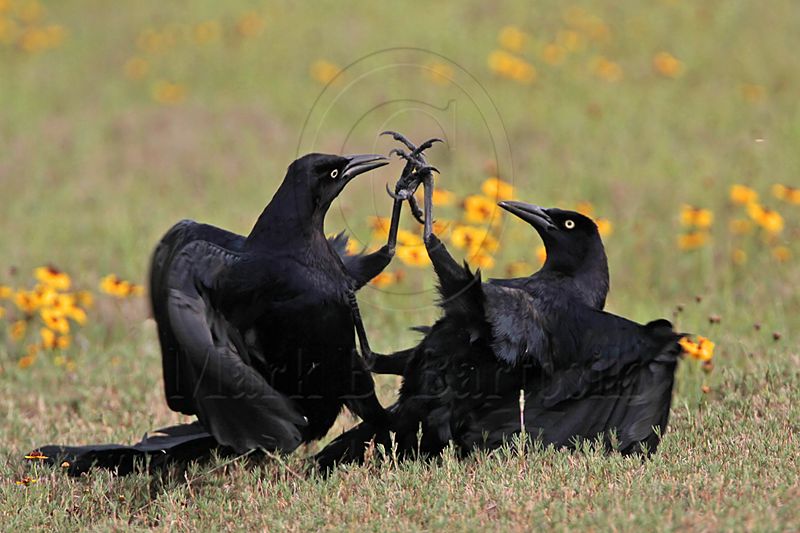
Take that, and that, and that -- Photo by Mark B Bartosik

Travels With Maggie

If I were on the road, instead of waiting around for my RV to get ready for the road, I’d probably be walking around somewhere with a pair of binoculars looking for birds. Instead I’m perusing them from my armchair via the internet.

I’m subscribed to two birding chat groups: Birdtalk and Texbirds. The first discusses birds seen in Utah, where I lived for 25 years, and the second is about bird sightings in Texas, where I was born and now spend my winters.

While I usually just quickly scan and delete most of the many messages I receive from these chatty birders, one Texbird name always slows me down: Mark B Bartosik.

The entanglement continues in flight. -- Photo by Mark B Bartosik

While he downplays his talent, I count him as about the best bird photographer around. This is especially notable because Mark’s focus is so often simply on the common birds anyone of us can easily find.

A recent example are the photos he took of some male great-tailed grackles engaged in a full contact battle, probably fought over some yellow-eyed chick. He caught the magnificence of a bird species that many people consider pests.

I was absolute spellbound by the life and attitudes of these birds that Mark captured with his camera in a three-minute period. I think you will be too.

If you want to prove me right or wrong, check them out at http://tinyurl.com/69crrr6 The two photos I’ve posted here are only a sample.

Read Full Post »

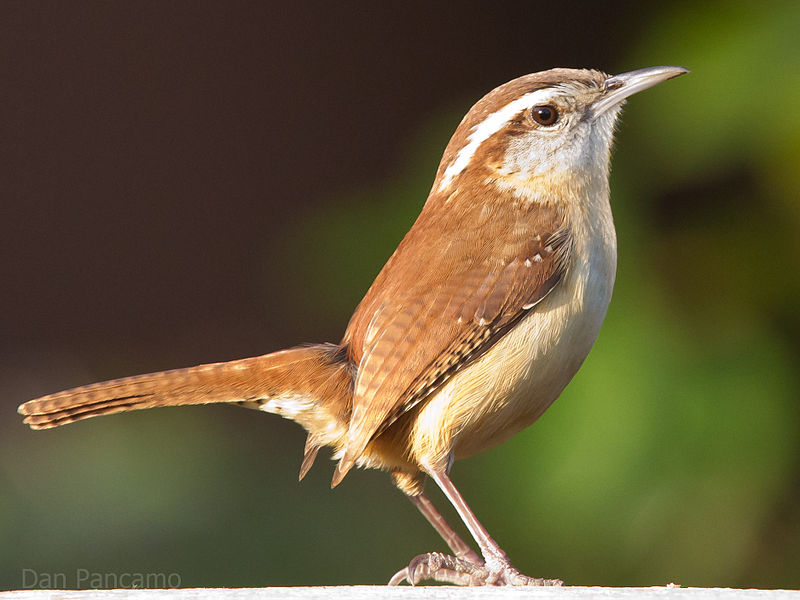
Carolina wren -- Photo by Dan Pancamo

“I do not know whether I was then a man dreaming I was a butterfly, or whether I am now a butterfly dreaming I am a man.” — Chuang Tzu.

Travels With Maggie

A tiny bird sang and sang and sang all day yesterday from a perch high in the trees in my daughter’s Southern Arkansas home. It was frustrating because I could never find the songster. My son-in-law, Joe, even joined in the search.

I mean this was a persistent bird that serenaded us hour after hour. But every time we got close to where we thought the sound was coming from, the bird would shut up.

While many birders easily identify birds by their songs, I’m not one of them.

Finally able to stand it no longer, I did what any computer savvy birder does these days. I got online and begin checking out bird sounds on the Cornell Lab of Ornithology’s website. http://tinyurl.com/dbbobp

My suspicion that our loud, high-pitched songster might be a Carolina wren, which is a common bird in the area, was confirmed.

I was once again a happy birder.

Read Full Post »

Canada Geese at the Great Salt Lake Nature Center -- Photo by Pat Bean

 “Poets who know no better rhapsodize about the peace of nature, but a well-populated marsh is a cacophony.” — Bern Keating

Looking across Farmington Bay at the Wasatch Mountains. -- Photo by Pat Bean

Favorite Hikes:

 One of my favorite hikes when I lived in Northern Utah was a gentle trek on a circular boardwalk found at the Great Salt Lake Nature Center. http://tinyurl.com/45jykl6

Located in the Farmington Bay Waterfowl Management Area just north of Salt Lake City, the mile and a half circular trail provides excellent views of wetlands wildlife.

 It was a trail I hiked early on weekend mornings, or in the early evenings after getting off from work. Whatever the time, however, my walk always began with a chorus of marsh wrens that was soon joined by a background of croaky frog chirps.

Hike slowly and look closely so you don't miss such things as the yellow-headed blackbird hiding in the rushes. -- Photo by Pat Bean

And there always surprises, like coming around a corner of cattail or bulrush to see coots or pied-billed grebes floating in a small bit of open water. Or climbing to the top the 30-foot observation tower to see avocets and northern shovelers off in the distance, and song sparrows and red-winged blackbirds flitting around below.

On a couple of occasions I even saw red foxes, including a den of young ones. And I almost always saw northern harriers and kestrels circling overhead. In the winter, bald eagles were a frequent sight, as were tundra swans in the spring.

Once a flock of graceful sandhill cranes flew close overhead, their rattling trumpet call echoing through the air. It was an experience that stirred my soul and made me grateful just to be alive. If you’re ever in the area, it’s a hike not to miss.

Just be sure and take some mosquito repellent with you. Mother Nature is kind, but not always considerate.

Read Full Post »

Green Jays at a feeder in Bentsen State Park in the Rio Grande Valley. -- Photo by Pat Bean

 “Hear! Hear!: screamed the jay from a neighboring tree, where I had heard a tittering for some time, “winter has a concentrated and nutty kernel, if you know where to look for it.” — Henry David Thoreau, 28 November 1858 journal entry.

 Travels With Maggie

 I was sitting here in my RV, currently parked in my oldest son’s Central Texas driveway, pondering what to write about on my travel blog this morning. The answer came to me when my daughter-in-law, Cindi, brought me an article about colorful birds that she had clipped from the Killeen Daily Herald.

 She had been awed by the photo of a green jay that accompanied the story, and knew that this avid birder would probably be awed as well. It was a bird she had never seen, and had no idea that it was quite common in Texas’ Rio Grande Valley, where South American birds hang out in the winter. 

An Altamira oriole lights up a tree branch in the Rio Grande Valley. -- Photo by Pat Bean

 If you want to see colorful birds and escape from cold weather as well, this is the place to go. Thousands of RV dwellers spend entire winters here, cozily hooked up in towns like Harlingen, Welasco, Padre Island and Brownsville.

I’ve spent a few winter weeks there myself, always coming away with new birds for my life list. This southern tip of Texas is home to Laguna Atacosa National Wildlife Refuge, where I saw my first aplomado falcons; Estero Llano Grande State Park, where last year I got my first tropical kingbird and pauraque; Santa Ana State Park where my first great kiskadee called to me from an overhead branch; and the World Birding Center at Bentsen State Park in Mission, where green jays abound at bird feeders scattered about the park and flame-colored Altamira orioles decorate the trees like Christmas lights.

 While you might not take notice of all those plain little brown birds in your backyard, the colorful ones you’ll see in the Rio Grande Valley just might amaze you.

My favorite hangout when visiting the area is the 1015 RV Park in Welasco. It’s not fancy and the sites are small, but it’s inexpensive and within easy walking distance of Estereo Llano Grande State Park, where I spent most of my time anyway.

 It’s one of those numerous Rio Grande Valley places where the birds hang out.

Read Full Post »


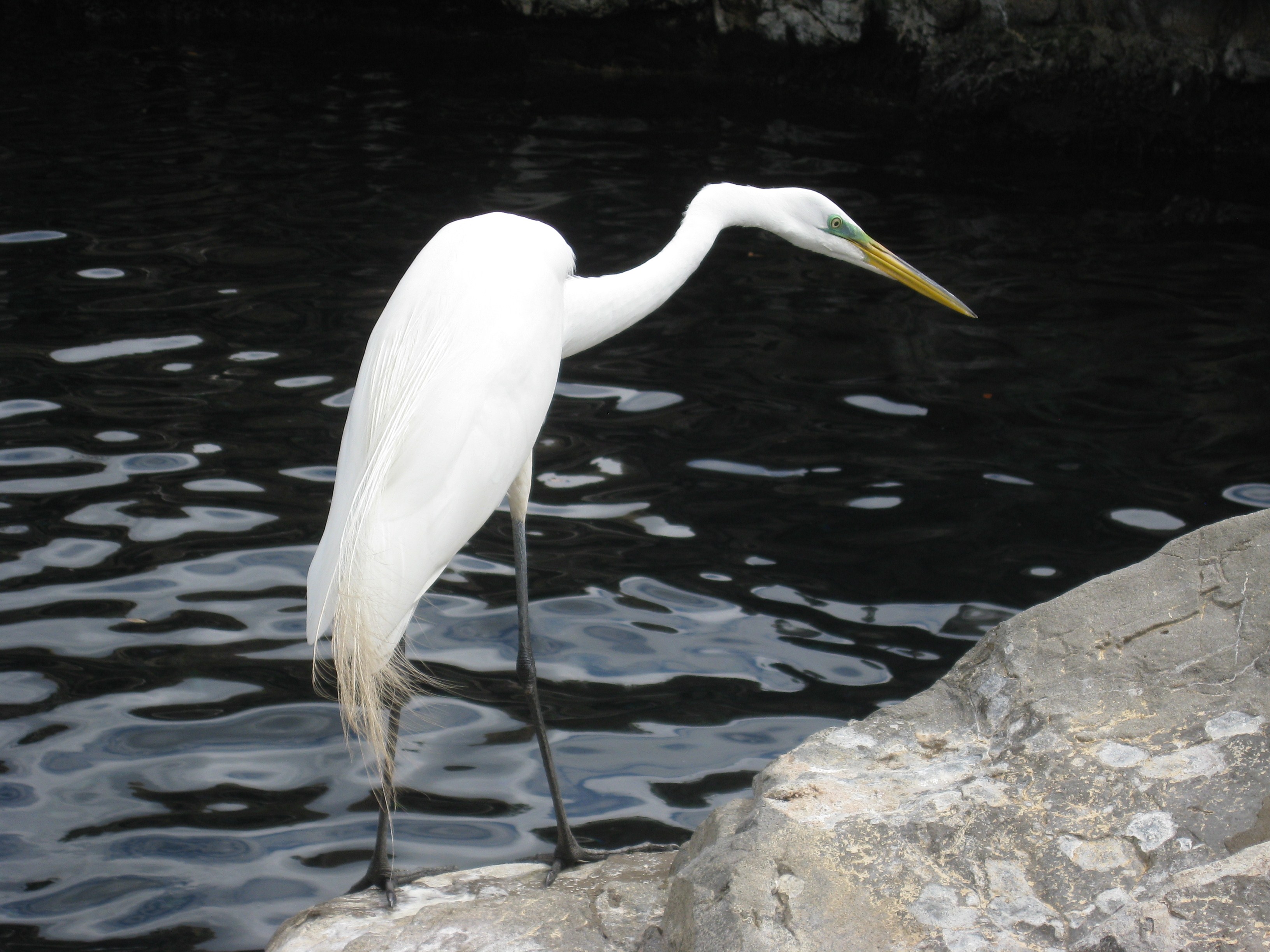
Birds, like this great egret that flew into Sea World in Orlando for a closer look, are what this traveler seeks. -- Photo by Pat Bean

“When you are strong enough to love yourself one-hundred percent – good and bad – you will be amazed at the opportunities that life presents you.” Stacy Charter.

Travels With Maggie

 Many of today’s travel books seem to be written by young women in search of love. One reason this old broad enjoys reading them is because they show me travel in a way I’ve never experienced.

I didn’t get on the road until I was in my 60s, and I spend my days in search of new life birds, like the elegant trogon that  I saw for the first time my third day on the road in my RV, or the golden-cheeked warbler I finally saw last year after five years of searching for one.

Once upon a time, I could probably have been like the women who write about the wonderful or not-so-wonderful men they meet in their exotic travels. I certainly spent many a night after I was divorced dreaming that I would find my perfect soul mate, or crying into my pillow because I didn’t think I would ever find him.

Take time in your journey to smell the flowers and watch the butterflies. -- Photo by Pat Bean

Fortunately I spent my days in a job I enjoyed and my time off in getting on with my life. I finally woke up one morning realizing, man or no man, what a great life I had.

It seems even more perfect since my dog, Maggie, and I got on the road. She, my friends and family, give me all the love I need these days.

I don’t envy my younger, female comrades, and truly hope they find what they are looking for – or have the sense to get on with life if they don’t.

I’m just grateful the journey itself is enough for me.

Read Full Post »

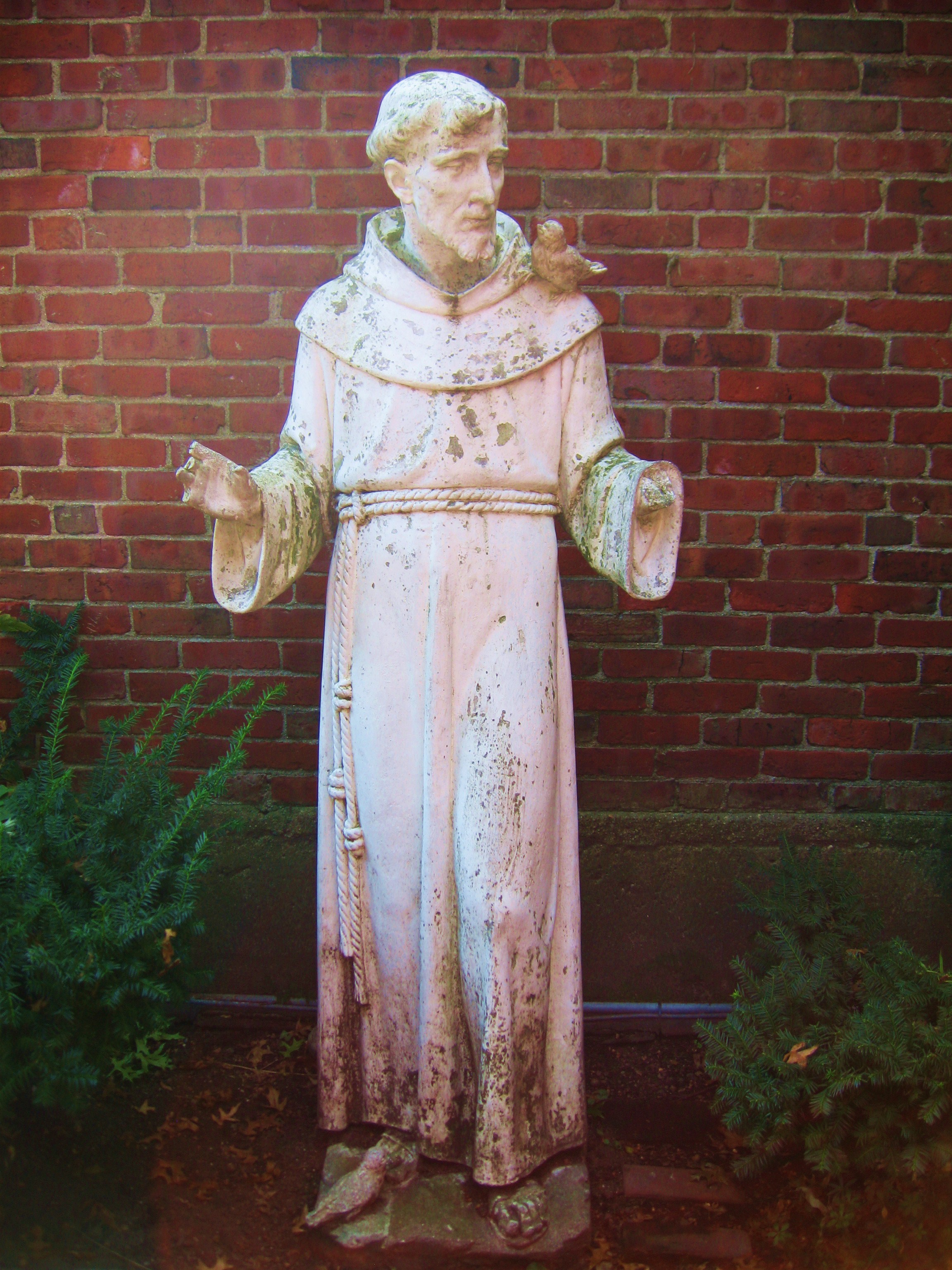
St. Francis, patron saint of animals, was being honored by sparrows until I frightened them away. -- Photo by Pat Bean

All of the animals except for man know that the principle business of life is to enjoy it.” — Samuel Butler

Travels With Maggie

Boston has a lot of statues, the most notable probably being the one of George Washington in Boston Commons. My favorite is much less majestic. It’s the weather-worn statue of St. Francis tucked away in a small downtown walkway between streets.

St. Francis, a 12th century Catholic friar, is best known as the patron saint of animals. It was this knowledge that drew my attention during a walking tour of Boston (yesterday’s blog). In fact, I might not even have seen the statue if it hadn’t been for the house sparrows perched on the unobtrusive sculpture with its back up against a brick building.

Being an avid birder, I never miss seeing birds.

I grabbed for by camera, not wanting to miss such an appropriate photo of birds paying homage to the patron saint of animals. Big mistake. My movement scared all the birds away. The sole one remaining was the one the sculpture had created to sit on St. Francis’ shoulder.

The George Washington statue in Boston Commons. -- Photo by Pat Bean

I snapped the picture anyway. Later, where comparing St. Francis to the photo I had taken of George Washington sitting proudly astride his horse in the city’s public gardens, I saw the extreme disparity between the two.

Now while I respect our country’s first president and approve of his prominent position on a pedestal in Boston’s most popular park, the modest image of St. Francis, who loved animals, touched my heart. And that’s why it’s my favorite Boston statue.

Read Full Post »

An amazing photo by Joanne Kamo of the fork-tailed flycatcher at Galveston Island State Park.

“Obsession is a young man’s game, and my only excuse is that I never grew old.” — Michael Caine.

Travels With Maggie

It might have been nasty and c old outside yesterday, but that didn’t keep passionate birdwatchers away from Galveston Island State Park. Judging by the comments on Texbirds, an online birding report, many of them earned gold for their efforts, the gold being a rare feathered visitor to the Texas Gulf Coast: a fork-tailed flycatcher.

Because the bird was wet, Joanne was able to see and photograph the yellow spot on the bird's crown, indicating it's a male. -- Photo by Joanne Kamo

This exotic South American bird, whose tail is longer than its body, has been hanging out at the park for several days. Among those who saw it was Joanne Kamo, a fantastic photographer whose photos accompany this blog. I drooled over them, especially since circumstances hindered me from going to see this flycatcher myself.

It wasn’t a matter of distance. The park is only 40 miles from my son’s home in Lake Jackson, Texas, where my RV, Gypsy Lee, is currently parked. That’s a mere walk in the park compared to the 200 miles I once drove to see osprey parents with chicks – and that day didn’t end until I drove the 200 miles back home..

That was the day I realized I had become a diehard birder.. Unless you’re one you really won’t understand. But if you’re interested, read “The Big Year” by Mark Obmascik. It’s all about three men in a race to see who can see the most North American bird species during 1998.

Meanwhile, like me, you can enjoy Joanne’s awesome photos. Or if you’re in the neighborhood, you could go see the bird for yourself. The latest Texbirds’ e-mails indicate it’s still hanging around.

Read Full Post »

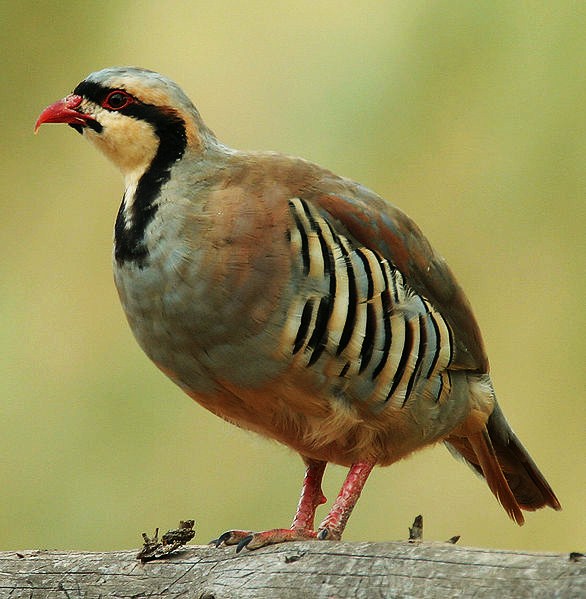
A chukar on Antelope Island, where this game bird was transplanted, is usually easy for a birdwatcher to find. I've seen many of them, and each time was as delightful as the first time.

 “Life is a great and wondrous mystery, and the only thing we know that we have for sure is what is right here right now. Don’t miss it.” — Leo Buscaglia

Travels With Maggie

I keep a list of every bird species I see for the first time and a list of the all the places I’ve been. I’m always delighted when I add to these two lists. But thankfully, I’m not like the birder who passed me on a trail on Antelope Island in Great Salt Lake a couple of years ago. .

Maggie and I were dawdling along, she sniffing the flowers and everything else we passed as cocker spaniels do, and me watching red-winged blackbirds flash their scarlet marked wings while listening to a couple of breeding male meadowlarks trying to out sing each other.

Barely slowing his pace, the middle-aged hiker asked if I had seen a chukar. I replied that I often saw this partridge-like bird in the rocks near the bend up ahead. About 10 minutes later, the man ran past me going the other way.

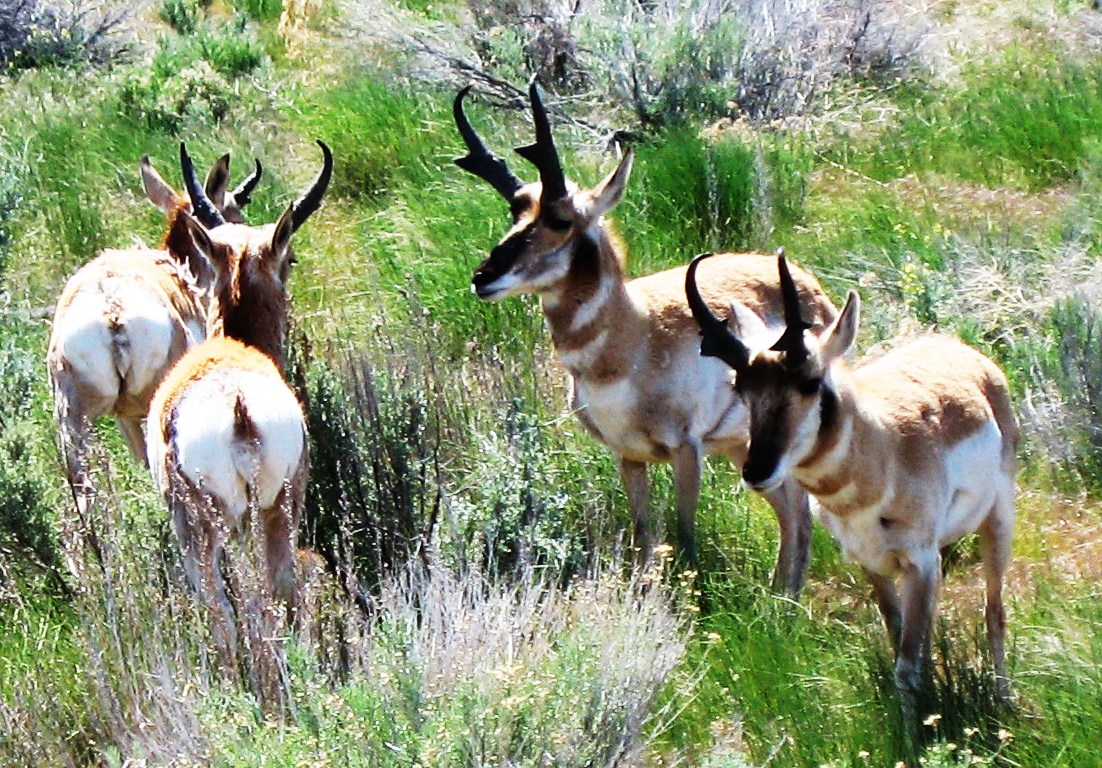
Prong-horned antelope are also easy to find on Antelope Island if one takes the time to drive around and look. -- Photo by Pat Bean

“Got it … that’s 713 birds for me now.” His voice was like the rumble of a passing freight train.

How sad, I thought, that he didn’t take a minute to admire the flashy scarlet markings on the blackbirds or to enjoy the melodic voices of the two meadowlarks.

Numbers on a list are only that. It’s being present in the moment – seeing the golden hue on a meadowlark’s throat as it tilts its head toward the sky in song, or the magic of a sunrise slowly coloring the sides of a canyon – that makes my heart beat faster. I enjoy such wonders whether I’m seeing it for the first or the hundredth time.

But I’ll still keep my lists. I like making them. They’re also a great way to recall the wonders I’ve taken the time to enjoy.

Read Full Post »


Great Egret

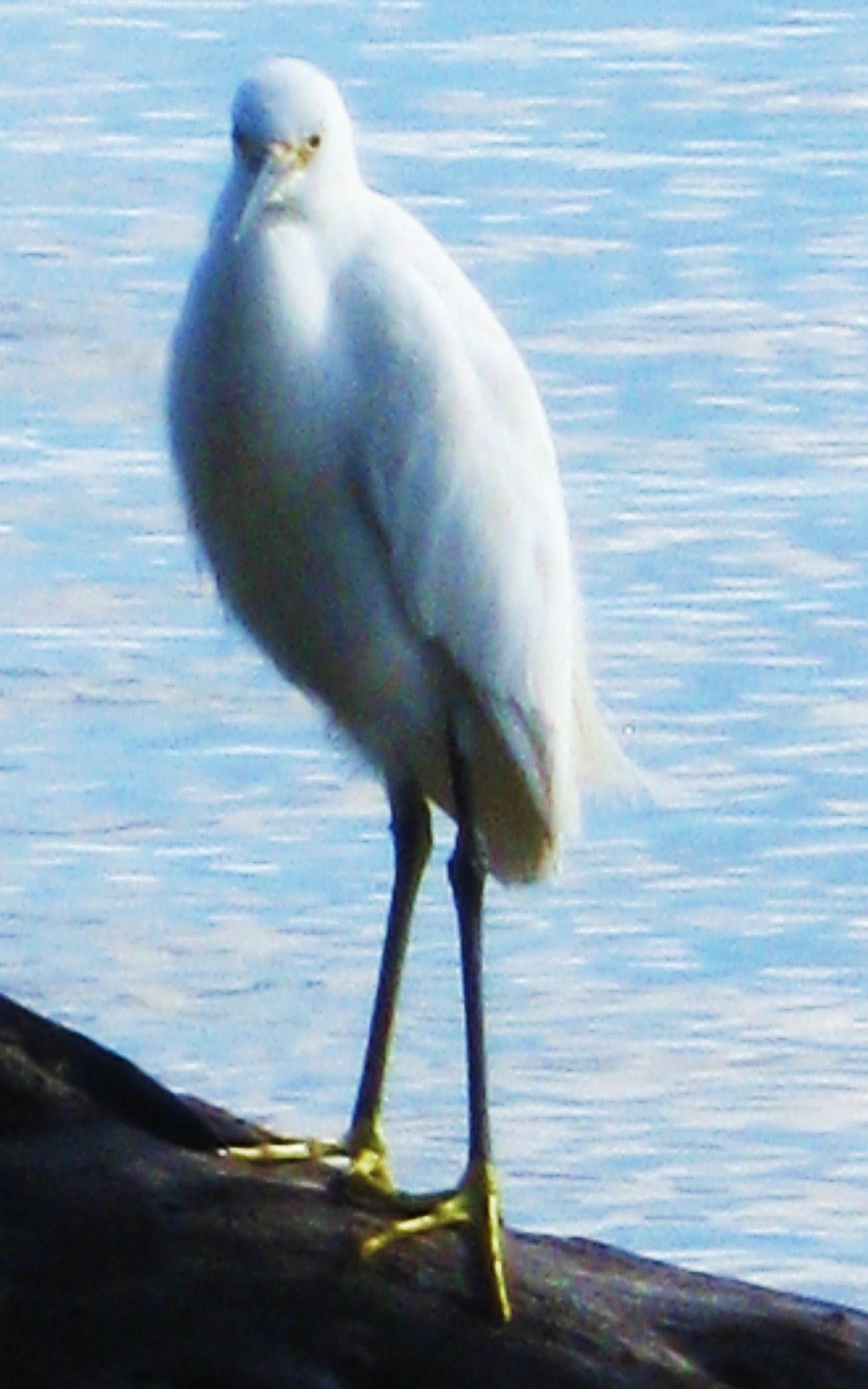
Snowy egret

 If you just see the photos of the two egrets on the right, you might think they were the same size, or even that the one on the left was the largest of the two. It’s all a matter of perspective — as you can see from the picture  below of the two of them together. 

                 — Photos by Pat Bean

                                                _____________

“You have your way. I have my way. As for the right way, the correct way, and the only way, it does not exist.” — Friedrich Nietsche

Travels With Maggie

One of my proudest accomplishments when I was a journalist was to get comments about a story I had written from people representing two sides of a polarized issue, each claiming my article had taken their opponent’s side. It was only then did I pat myself on the back for getting the story “mostly” right.

How each of us view life is colored by a unique perspective – our own. Truth is usually somewhere in the middle.

Eyewitnesses accounts of events can vary so greatly they sound like two different happenings. I see this frequently when I read accounts by two different reporters covering the same speech.

As you can see when you get the full picture, the snowy egret on the left is quite a bit smaller than the great egret on the right. These two were sharing a log at Estero Llano State Park in Texas' Rio Grande Valley.

For example, an environmental reporter might lead with a lumber industry spokesman’s quote: “A tree can produce enough oxygen to keep five or more people alive for a year.” But a business reporter’s lead would more likely be: “Logging is the life blood of hundreds of small communities; stop cutting trees and people will starve or turn to welfare.”

Both reporters, in the space they were allowed, quoted the speaker accurately. And the speaker was correctly quoted both times. The stories just came from different perspectives.

Travel has broadened my perspectives. I’m constantly reminded it’s a very complex world out there and that answers to problems do not come easily, nor without compromise.

Even through my camera lens – when indulging in my birdwatching passion – things aren’t always what they seem.

Read Full Post »

« Newer Posts - Older Posts »