Feeds:
Posts
Comments

, whn contc

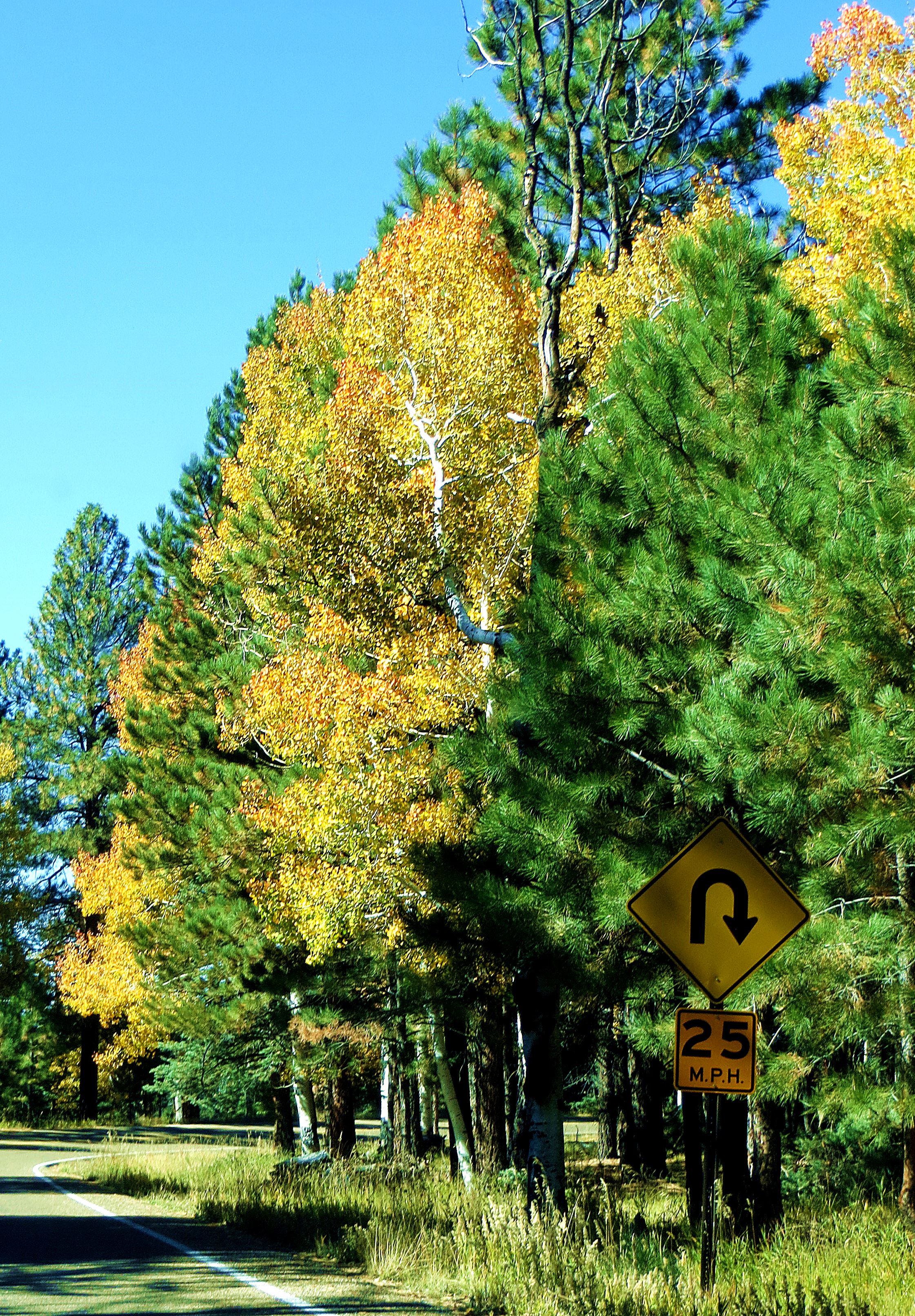
The first aspens I saw were off in the distance, where their golden deliciousness stood out in contrast to the dark evergreens -- Photo by Pat Bean

The first aspens I saw were off in the distance, where their golden deliciousness stood out in contrast to the dark evergreens — Photo by Pat Bean

“Willows whiten, aspens quiver, Little breezes dusk and shiver” – Alfred Lord Tennyson

“Late in August the lure of the mountains becomes irresistible. Seared by the everlasting sunfire, I want to see running water again, embrace a pine tree, cut my initials in the bark of an aspen, bet bit by a mosquitos, see a mountain bluebird, find a big blue columbine, get lost in the firs, hike above timberline, sunbathe on snow and eat some ice, climb the rocks and stand in the wind at the top of the world on the peak of Tukuhnikivats. – Edward Abbey            

Aspens at Last

            Jacob Lake, a tiny community that sits at the junction of Highway 89A and State Road 67 and which is the turnoff to the North Rim of the Grand Canyon, sits at an elevation of 8,000 feet.   I had expected to see aspen trees by this elevation, but none came into my view, although I usually began seeing these scarred, white-trunk trees around 7,000 feet. Of course that was when I lived in Utah, and now I’m in Arizona.

The second grove of aspens was right next to the road. I stood beneath this one and let it sing to me.

The second grove of aspens was right next to the road. I stood beneath this one and let it sing to me. — Photo by Pat Bean

Still hopeful that the goal of this particular road trip, to see aspen trees in their golden autumn colors, would be met, I took the turnoff  for the Grand Canyon. There was still 44 miles to go before I reached the rim of what many people consider to be one of the seven natural wonders of the world, so there was still time for this road trip’s mission to be accomplished.

And it was – although I was closer to Grand Canyon National Park than I expected before the landscape began to be dotted with patches of yellow that challenged the color of the sun. I was delighted.

Aspen trees gown in colonies from a single seedling that sends up its children through the earth into the sunlight. If you look closely, you’ll see how similar each tree in close proximity looks like its neighbor; and how different they look from a nearby patch of aspens that also hover close together with roots and branches entangled.


Near the top of the North Rim of the Grand Canyon. -- Photo by Pat Bean

Near the top of the North Rim of the Grand Canyon. — Photo by Pat Bean

Until its death, only the mother tree can send up new seedlings. Then another tree takes its place. It has to do with some chemical or such that the mother tree sends out as a birth control pill to the other trees, is how it was once explained to me. While an aspen tree can live only up to about 150 years, there is one large aspen grove in Utah near Fish Lake that is 80,000 thousand years old. Just thinking about this sends shivers through by brain neurons.

As I stopped to stand beneath one of the aspen groves, I was reminded that not only are these trees pleasing to the eye, but to the ear as well. The breeze rippling through their coin-sized leaves sent a pleasing melody into the air. The aspens sang for me.


Blog pick of the Day. Check it out.

Blog pick of the Day. Check it out.

Bean Pat: Life’s Purpose   http://tinyurl.com/ocjqsok  Why limit yourself to one passion. As a person who has many passions, this blog appealed to me. Even though I know that it’s the people with only one passion who may accomplish the greatest things in life. But oh what they miss.


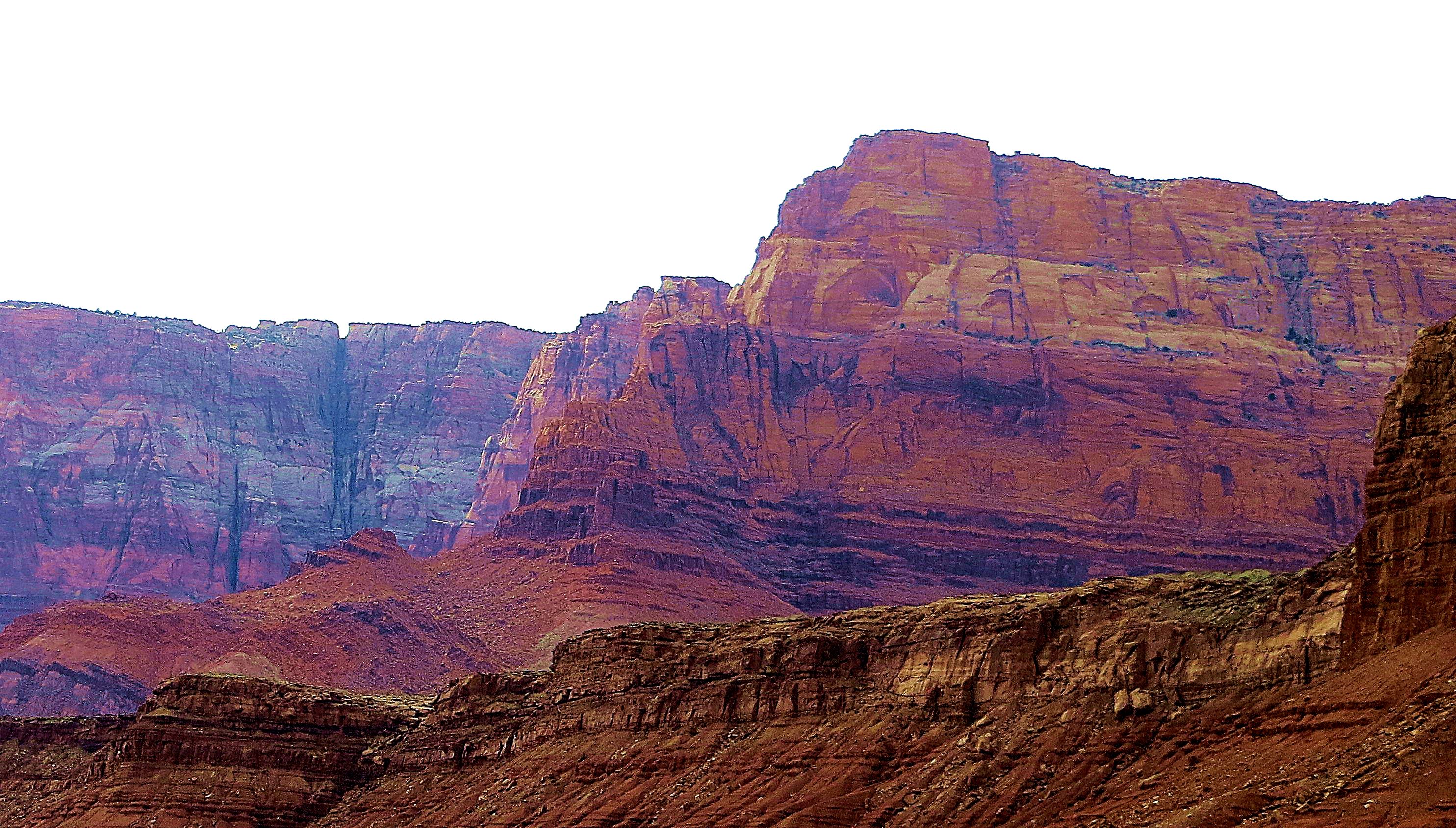
The Vermilion Cliffs -- Photo by Pat Bean

The Vermilion Cliffs — Photo by Pat Bean

“When in doubt, wear red.” Bill Blass

            “Green is the prime color of the world, and that from which its loveliness arises.” – Pedro Calderon de la Barca

Red, Black and Green

If you’re driving north from Flagstaff to Zion National Park’s east entrance, you have a choice of two routes, Highway 89 or Highway 89A. Both are scenic. The first will take you up past Lake Powell and the second past the Vermilion Cliffs and the Kaibab National Forest.

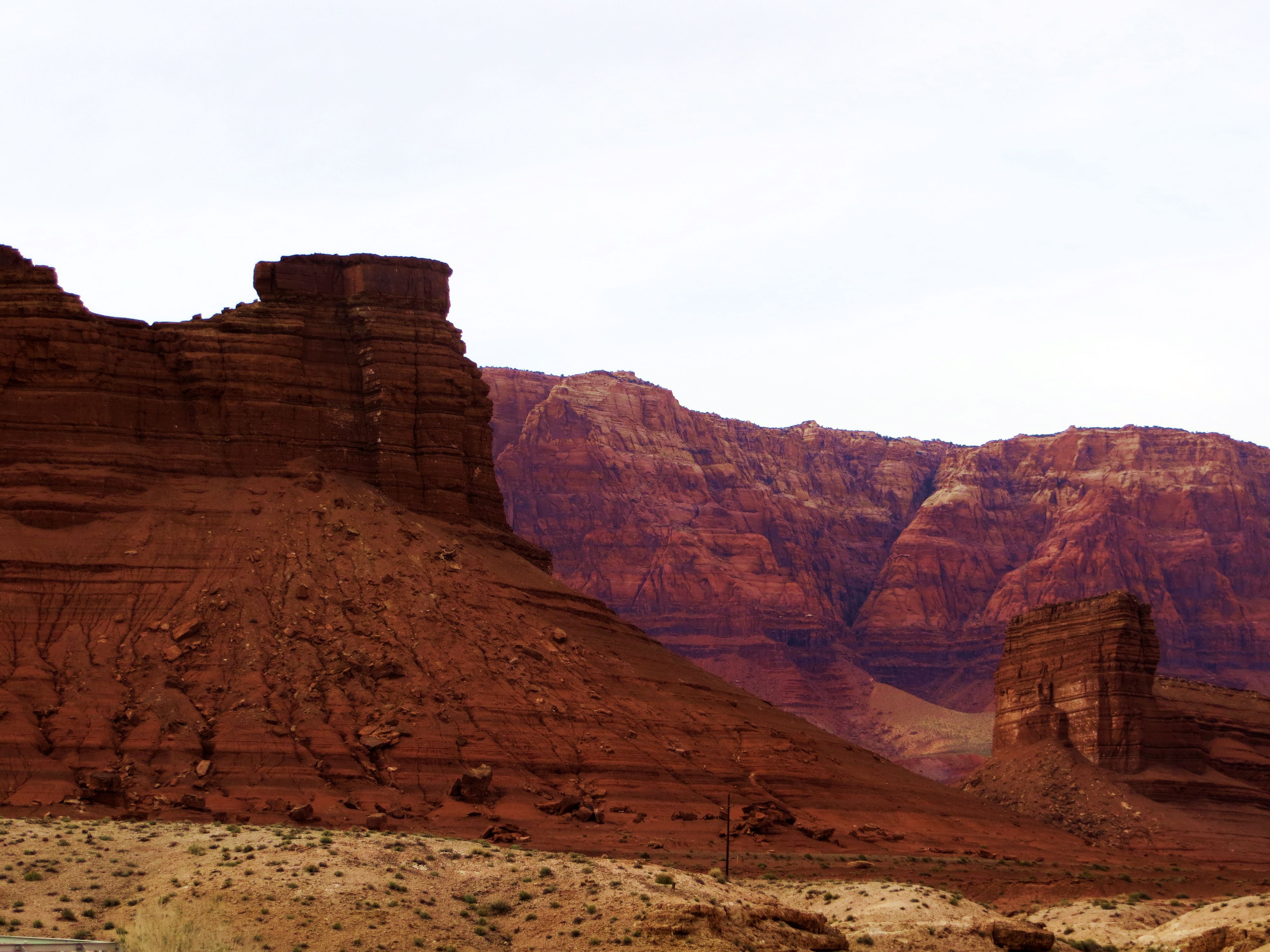
Just red for miles and miles. -- Photo by Pat Bean

Just red for miles and miles. — Photo by Pat Bean

I’ve driven both many times, but since I was going to the North Rim of the Grand Canyon, my only choice was to take 89A, which is where I passed over the Colorado River via Navajo Bridge.

Red is the dominant color of the scenery as you pass by the Vermilion Cliffs, which are the second step-up in the five-step Grand Staircase of the Colorado Plateau. These red-rock escarpments dominate the landscape for miles in Northern Arizona and Southern Utah.

I cannot pass by them without looking up toward the blue sky, however. The Vermilion Cliffs was one of the release sights for returning California condors to the wild, The population of these nearly 10-foot wing-span giants dwindled to a population of only 22 birds in 1987, all of which were in zoos or sanctuaries. By the end of 2014, thanks to efforts to save this endangered species by we humans, California condors numbered over 400, of which half had been released back to the wild.

One of the condors soaring once again in the wild. Note the attached number on its wings.  -- Wikimedia photo

One of the condors soaring once again in the wild. Note the attached number on its wings. — Wikimedia photo

I didn’t see one soaring high in the sky this day, but several years ago, I saw two flying overhead in nearby Zion National Park. Since I had followed the first condor born in captivity in 1983, when I had placed the story and a photo of the hatchling on the front page of the newspaper I was working for at the time, it was a triumphant moment for this birdwatcher, as well as a monument to the efforts of the human race for saving a species from extinction, whose cause of near death had been the pesticide DDT.

I was still reflecting on this momentous achievement, when the red of the landscape turned to green. In the last few miles, the highway had left the red cliffs to zigzag up in elevation until I found myself surrounded on both sides by the green of pines, spruces, oaks and firs that thrive in the Kaibab National Forest .

But I would have to climb higher, still, to find the golden aspens I sought. … To be continued. 

Blog pick of the Day. Check it out.

Blog pick of the Day. Check it out.

Bean Pat: Winter Syntax http://tinyurl.com/q6wb5ct As a writer and nature lover, I found this blog’s poetry appealing.

Navajo Bridges


This is an aerial view of the two Navajo Bridges, with the original one on the left. -- Wikimedia Photo

This is an aerial view of the two Navajo Bridges, with the original one on the left. — Wikimedia Photo

          “No man ever steps in the same river twice, for it’s not the same river and he’s not the same man.” — Heraclitus

Beneath Which Flows the Colorado River


Looking down at the Colorado River from the original Navajo Bridge. -- Photo by Pat Bean

Looking down at the Colorado River from the original Navajo Bridge. — Photo by Pat Bean

           The first time I ever crossed the original Navajo Bridge was in the 1960s, and it was night. Built in 1929, and then the highest bridge in the world with the next bridge crossing the Colorado River 600 miles away, were facts which I knew at the time, and facts that sent a shiver of anticipation down my spine , and a bit of dread because of the dark night.

After that first crossing, I drove over the narrow bridge probably over a dozen times more over the next 30 years, and then I walked across it, and stared across it at the new, wider, stronger Navajo Bridge that was built in 1995. The old bridge was kept for foot traffic, with a parking area and a historical museum at one end, and a parking area and Native American open-air market stalls at the other end.

I’ve never crossed the bridge without stopping, and this morning was no different. Pepper and I walked to the middle of the bridge, where I looked down on the river, this time with camera in hand.

My two rafting trips through the Grand Canyon had started just a few miles upstream at Lee’s Ferry, the only easy crossing of the Colorado River within a hundred miles before the first Navajo Bridge was erected. The site is named after John Doyle Lee, who operated a ferry across the Colorado at this spot for many years.

Looking across at the Colorado River as it flows beneath the new Navajo Bridge. -- Photo by Pat Bean

Looking across at the Colorado River as it flows beneath the new Navajo Bridge. — Photo by Pat Bean

Just a short distance downstream Navajo Bridge crosses the Colorado River at Marble Canyon, which marks the start of the 277-mile long Grand Canyon. This spectacular gorge varies from up to 18 miles wide and 6,000 feet deep. But it’s only a little over 800 feet wide at the Navajo Bridge crossing, and a little less than 500 feet deep.

Looking down on the river from the original bridge this day, I envision myself floating beneath it, and a flood of wonderful memories canter through my brain. Sixteen days, each trip, of river baths, sleeping on sandy beaches, sunbaked skin, watching stars pass overhead through a slim ribbon skylight, hikes to waterfalls and fairy-like hidden canyons, no phones, no mirrors and, most memorable, an unexpected swim through Granite Rapid.

My excuse for taking this road trip was to see aspens in their autumn splendor. I suspect, however, that once again crossing Navajo Bridge was never far from my mind. To be continued …

Blog pick of the Day. Check it out.

Blog pick of the Day. Check it out.

Bean Pat: There was a man http://tinyurl.com/peztncx Poetry and Flowers. Who could ask for anything more? A little bread and wine, maybe?

Horseshoe Bend

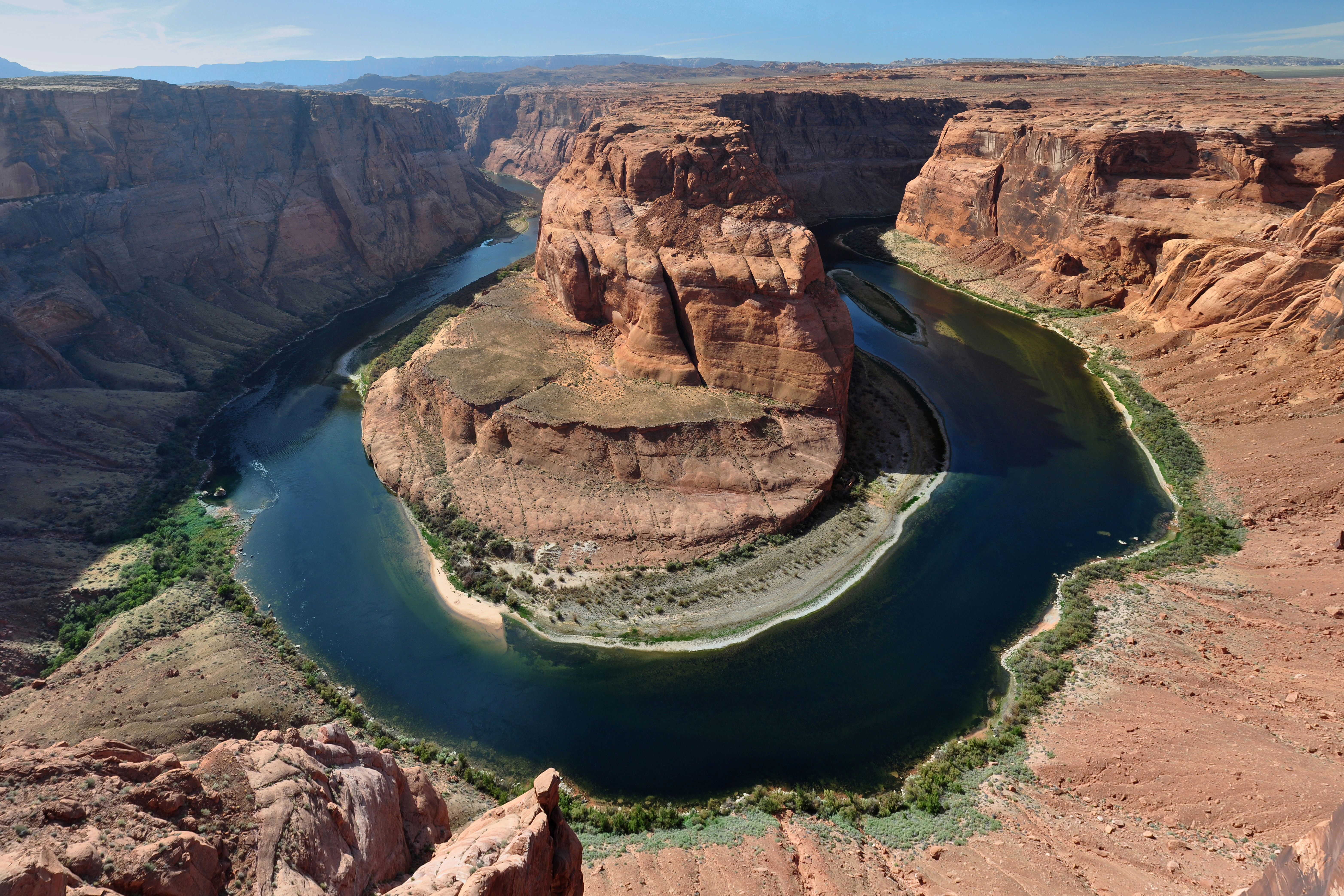
Thank Heavens for Wikimedia and generous photographers for this fabulous stitched panorama of Horseshoe Bend because halfway down to the overlook I remembered I didn't have my camera with me. But even if I had, I couldn't have taken such a magnificent photo. -- Wikimedia photo

Thank Heavens for Wikimedia and generous photographers for this fabulous stitched panorama of Horseshoe Bend because halfway down to the overlook I remembered I didn’t have my camera with me. But even if I had, I couldn’t have taken such a magnificent photo. — Wikimedia photo


“Walking is magic … The movement, the meditation, the health of the blood pumping, and the rhythm of footsteps. This is a primal way to connect with one’s deeper self. – Paula Cole

On Being the Caboose

            Pepper and I set out for the North Rim of the Grand Canyon shortly after dawn, but stopped just south of Page for a quick hike to Horseshoe Bend. It didn’t turn out to be as quick, however, as I remembered it from my younger days.

The hike started with a steep trek up a sandy hill, where you got a good look at the long downhill path ahead of you leading to the edge of a cliff overlooking perhaps the most photographed spot on the Colorado River.

Pepper, the little engine that could to my caboose. -- Photo by Pat Bean

Pepper, the little engine that could to my caboose. — Photo by Pat Bean

Just coming off a serious episode of heavy-duty back pain – from being stupid and lifting way too many pounds for an old broad my age – I questioned my sanity about going on instead of turning back. It wasn’t the next downhill section that worried me, but the trip back up it.

Pepper, however, was still quite frisky and eager for the hike to continue. As for me, I wanted to prove to myself that I still had some go left in me. As I trudged, step at a time in the quickly warming day, I thought back to 1999 when my 60th birthday present to myself was a rafting trip down the Colorado River through the Grand Canyon.

I had made the same trip earlier in time, when I had paddled through the canyon in a six-person paddle raft, enjoying a wondrous up close, personal connection with the rapids. The second trip down the Colorado through the canyon was made in an oar boat with someone else doing all the hard work, which wasn’t too bad because I got to carefully study the passing scenery.

But then, on a side hike up one canyon, over a ridge and them down a second canyon to meet back up with the rafts, I reached a point where I had to have someone help me over a boulder in the path because I couldn’t manage it on my own. I shed a few tears at that. I wasn’t used to having to be helped on a hiking adventure. Usually I led the way – and was never the caboose.

On this day’s adventure to the Horseshoe Bend viewpoint of the Colorado River, I was following my canine companion Pepper. But at least I was going – and of course the viewpoint was worth the effort. In fact, it was magnificent.

On the hike back, I followed Pepper up the hill, and didn’t resist, nor cry, when she trotted far enough ahead to pull me along with her. I’m quite thankful to have such a wonderful hiking companion, and doubly thankful that I still have at least a little bit of go left in me, even if I have to be the caboose on my adventures. .

Back in our vehicle, with its air conditioning blasting away, Pepper and I continued on our day’s journey to the North Rim of the Grand Canyonas Dr. Seuss’s words danced in my head. Oh the places you’ll go and the things you’ll see. To be continued           

Blog pick of the Day. Check it out.

Blog pick of the Day. Check it out.

Bean Pat: Wednesday Vignettes http://tinyurl.com/qape662 Tranquil

Flagstaff to Page

View across Lake Powell from Wahweap Marina. -- Photo by Pat Bean

View across Lake Powell from Wahweap Marina. — Photo by Pat Bean

“The power of the river is to flow wildly. The power of the lake is to think calmly. Wise man both flows like a river and thinks like a lake.” – Mehmet Merat ildan

Then Lake Powell before Dark

            After joining up with Highway 89 in Flagstaff, where I made a quick stop for gas and snacks — Cheetos and a Coke despite my resolution not to eat such road trip fare — I didn’t stop again until Page, where I checked into the Super 8 Motel.

Lone Rock as seen from the beach where I camped my first night in Gypsy Lee. -- Photo by Pat Bean

Lone Rock as seen from the beach where I camped my first night in Gypsy Lee. — Photo by Pat Bean

While the accommodation was definitely economy with no frills, the cost of my room, $150 a night, definitely wasn’t. I had gotten one of the last free rooms available in town when I had called five days earlier. The only room free at the Super 8 — and it was the cheapest of what was still available — had been a three-bed unit. It was a bit of overkill for me and my canine companion Pepper, for whom I paid an additional $10 pet fee. But I was thankful for it when I arrived because the people in the check-in line, both ahead and behind me, were turned away because they had no reservations and there were no vacancies.

This motel, one couple said, was their last hope. Page sits pretty much in the middle of nowhere on its northern edge with the Utah border.  Kanab, if the unlucky travelers were headed west was 75 miles away, and Flagstaff, if they were headed south, was 135 miles away. Little else was located in between.

Page, with only about 8,000 residents, has about 15 hotels – and sees about 3 million tourists annually. The town sprang up in the late 1950s as a housing community for workers and their families during the construction of the nearby Glen Canyon Dam, which backed up the Colorado River to form Lake Powell. The 17-square mile city of Page, land for which was purchased from the Navajo Nation, is perched atop a 4,300-foot mesa, about 600 feet above Lake Powell..

View from a scenic overlook near Wahweap. -- Photob y Pat Bean

View from a scenic overlook near Wahweap. — Photo by Pat Bean

It was still a couple hours before dark after I was checked in, so I decided to check out Lake Powell from the Utah side of the border. You can see the lake from Page, but the better views, I knew, were on the Utah side.

This would be a nostalgic trip back in time for me. I had camped at Lake Powell’s campgrounds several times when I was living in my RV, Gypsy Lee, and toured its lake aboard a boat before that. As an environmental reporter, I had also written about its controversial construction that flooded Glen Canyon, and its environmental impacts on the Colorado River. As in all things, there were two sides to the story. Actually, there were a hundred sides as I now recall.

But this late afternoon was not for thinking, just for seeing – and remembering. And the very best memory of all came when I looked upon Lone Rock. This unimproved beach was where I spent my first night in Gypsy Lee back in April of 2004.  What a great sundown ending to my first day of this road trip. To be continued …

Blog pick of the Day. Check it out.

Blog pick of the Day. Check it out.

Bean Pat: The Open Suitcase http://tinyurl.com/nfg6823 This is a great blog for those of us who can’t afford to visit Europe, And if you don’t live in New York, you can even have fun trying to find Europe in your own backyard.

Oak Creek Canyon

            Climb the mountains and get their good tidings. Nature’s peace will flow into you as sunshine flows into trees. The winds will blow their own freshness into you, and the storms their energy, while cares will drop off like autumn leaves. As age comes on, one source of enjoyment after another is closed, but Nature’s sources never fail. – John Muir

Looking down from the top of Oak Creek Canyon at Highway 89A's hairpin curves. -- Photo by Pat Bean

Looking down from the top of Oak Creek Canyon at Highway 89A’s hairpin curves. — Photo by Pat Bean

Autumn Wasn’t There

            The steep winding drive up Oak Creek Canyon was magnificent, and my vehicle, Cayenne, took it gracefully, without the hiccups she suffered in Sedona. But the fall colors I hoped to see as I gained in elevation from the upper Sonoran Desert were pitifully few, only a couple of low and faded patches of rusty red beside the road.

I always stop for butterflies. -- Photo by Pat Bean

I always stop for butterflies. — Photo by Pat Bean

I had hoped for more, but the beauty of the river gorge was enough to satisfy me. I strongly believe in the words of Garth Brooks:  “Happiness isn’t getting what you want; it’s wanting what you got.”

And I was on a road trip, so who could ask for anything more? Well, perhaps a little less traffic. But that was wishful thinking. The Sedona –Oak Creek Canyon area is the second most popular tourist destination in Arizona, surpassed only by the Grand Canyon.

The Oak Creek Canyon Scenic Drive on Highway 89A has been called of one the top five most scenic drives in America by map makers Rand McNally. The winding road climbs 4,500 feet from Sedona to the top of the Mogollon Rim. I had driven it once before, but that time was from the top to the bottom. Going up it was a new experience, like learning the other side of a story, which there always is.

The 12-mile river gorge, sometimes called the smaller cousin of the Grand Canyon, winds through a forest of oaks and evergreens with backdrop views of red-faced rocks and cliffs.

Oak Creek -- Wikimedia photo

Oak Creek — Wikimedia photo

The long, narrow parking lot at the top of the canyon overlook was full, but I squeezed Cayenne into one of the last spaces at the very end. That put us in position for about a quarter-mile walk to the overlook, which was fine with both Pepper and me. We had been driving, with only short stops, for 265 miles and we still had 135 more miles to go. We needed to stretch our legs.

Autumn was nowhere to be seen, but the views were still worth the walk, which held its own reward. After about a half hour of meandering,  and looking down to the road we had driven up and across the canyon, Pepper and I strolled back to Cayenne to continue our journey. To be continued …

Blog pick of the Day. Check it out.

Blog pick of the Day. Check it out.

Bean Pat: Ranting Crow:  http://tinyurl.com/oo7zotb  Thought of the day. I think I already said this, but it’s worth repeating.


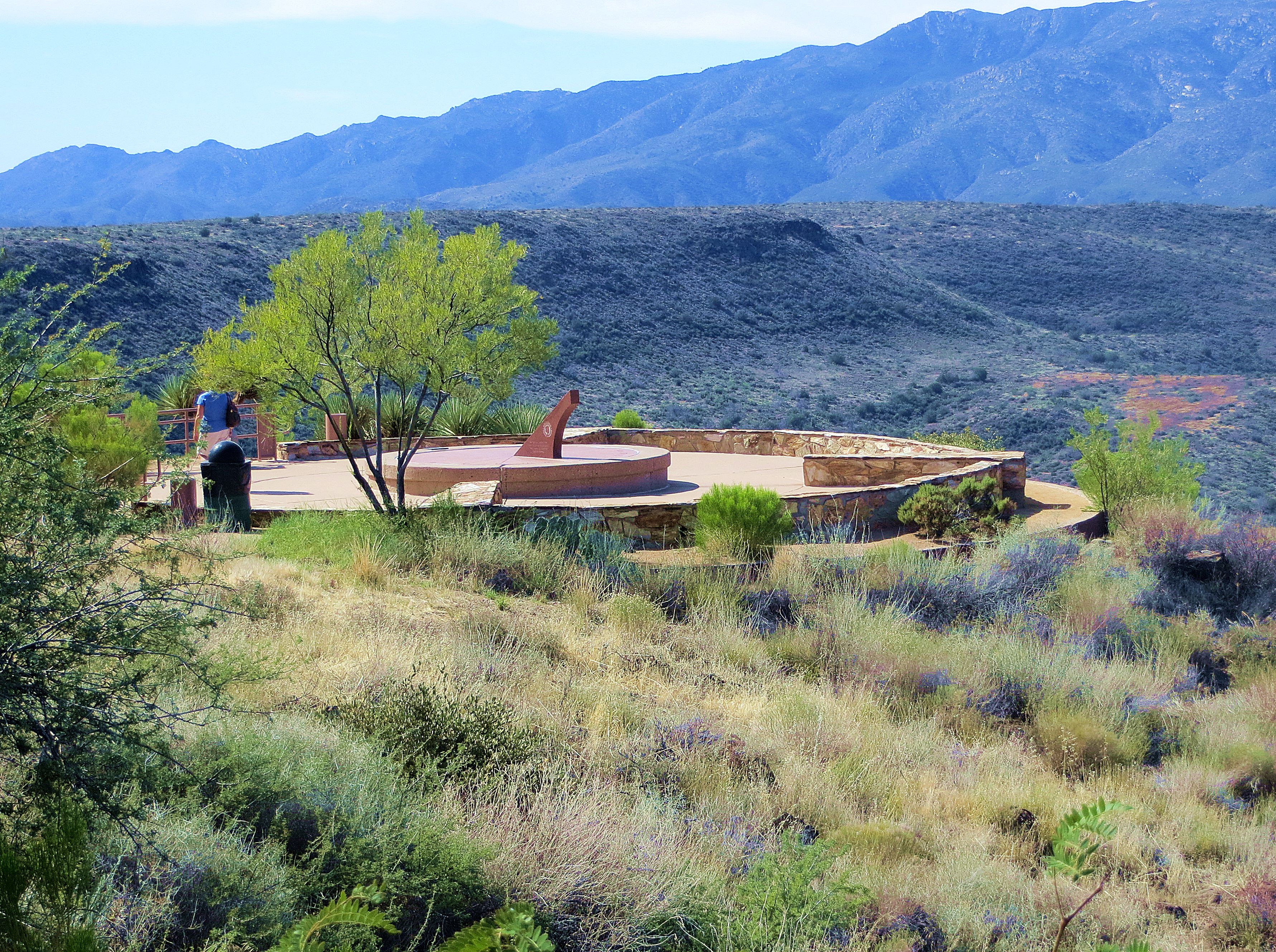
I made a brief stop at Sunset Point Rest Area north of Phoenix, but didn't stay long as it was crowded. -- Photo by Pat Bean

I made a brief stop at Sunset Point Rest Area north of Phoenix, but didn’t stay long as it was crowded. — Photo by Pat Bean

“Travel can be one of the most rewarding forms of introspection.” – Lawrence Durrell

Then Sedona Side Trip Woes

My favorite road trips include backroads. But this day’s road trip, I knew, would not include them. I had 400 miles to drive before I would lay my head to rest at a Super 8 Motel in Page, Arizona, and most of that would be on freeways.  I did expect, however, that Interstate 17, once past Phoenix, would have less traffic than Interstate 10. I was wrong, it had more.

I stopped in Sedona to enjoy the red-rock scenery, despite Cayenne's woes. Road trips are too precious to be wasted. -- Photo by Pat Bean.

I stopped in Sedona to enjoy the red-rock scenery, despite Cayenne’s woes. Road trips are too precious to be wasted. — Photo by Pat Bean.

The scenery, however, was somewhat more interesting, and during the 150-mile journey from Phoenix, where I-17 begins, and Flagstaff, where it ends. the landscapes and my journey climbed 6,000 feet in elevation.

Just outside Phoenix, my route took me through Black Canyon Recreation Area, with marked exits to such places as Horsethief Basin and Bloody Basin Road, leaving me wondering how those places had gotten their names. If I had time, I would have loved to have explored them. My mother claimed that I had inherited my grandfather’s wanderlust, and the need to explore every sideroad I came across. The only thing is there are way more sideroads these days then there were in his time – and I’ve discovered I can’t explore them all.


Cayenne, Pepper and me shortly after I bought my  Ford Focus.

Cayenne, Pepper and me shortly after I bought my Ford Focus.

On this day, I did get off the interstate to take the back route through Sedona and Oak Creek Canyon to Flagstaff. I expected to leave the traffic behind but nearing Sedona it became even more congested. And the stop-and-go 15 mph and roundabouts in Sedona brought out the worst in my 2014 Ford Focus, which has a stuttering/rattling problem when it’s in first gear, a problem that already had my car on a waiting list for the manufacturer to fix. I’m just one of many Focus owners with the default.

I believed my mechanic when he said it was OK for me to drive Cayenne, and that the problem wouldn’t leave me stranded; I just hadn’t expected it to be so grumpy and loud, but then that’s what I was when I returned to my Ford dealer back home. The mechanic drove my car when I returned to Tucson, but of course it’s didn’t misbehave as badly for him as it did for me in Sedona, where it was almost constantly in first gear.

But once past Sedona, Cayenne drove fine, with only an occasional and silent stutter in first gear, and gave me 40 mpg as well. Maybe I’ll forgive her, and Ford, too, if she drives as good as they tell me she will once she’s fixed. Too be continued …

            Bean Pat: Glenrosa Journeys http://tinyurl.com/ocb7n5n  Fall birds you might see if you live in Arizona. I especially liked the juvenile green heron photos.

Palo Verde Trees

The trunk and branches of a Palo Verde at Sacaton Rest Area. -- Photo by Pat Bean

The trunk and branches of a Palo Verde at Sacaton Rest Area. — Photo by Pat Bean

“The more often we se the things around us — even the beautiful and wonderful things — the more they become invisible to us. That is why we often take for granted the beauty of this world: the flowers, the trees, the birds, the clouds — even those we love. Because we see things so often, we see them less and less.” — Joseph B. Wirthin

In a Historical Setting

            My second stop of the day was at the Sacaton Rest Area at Mile Marker 183 on Interstate 10. I wasn’t tired, (Pepper and I were only about 75 miles from where we started our road trip) but I had discovered that Arizona Rest Stops are usually scenic and informational – and this one didn’t disappoint.

In remembrance of two Arizona police officers who died in the line of duty near Mile Marker 183 on Interstate  10. -- Photo y Pat Bean

In remembrance of two Arizona police officers who died in the line of duty near Mile Marker 183 on Interstate 10. — Photo y Pat Bean

A large bronze marker at the site informed me the rest area had been the site of the first Government Indian School for Pimas and Maricopas, as well as Pima villages that served as friendly resting places for travelers heading west during the Gold Rush. The site was also the birth place of Ira Hayes, a Pima Indian who was one of the flag-raising Marines at Iwo Jima.

I remembered seeing the 1949 movie, “Sands of Iwo Jima,” in which Hayes actually portrayed himself.  It was one of those unexpected memory recalls that left me wondering what other trivia was  hidden in my brain that might never be brought into the light without a jolt to shake it loose.

Continuing its tribute to heroes, the rest area also contained grave markers of two Arizona police officers, Mark Dryer and Johnny Garcia, who had died in the line of duty.

A nice place for a road trip stop. -- Photo by Pat Bean

A nice place for a road trip stop. — Photo by Pat Bean

After reading all the honorary plaques and informational posters, and pondering their meanings, I finally let myself simply enjoy the landscaped picnic area and the Sacaton Mountains that formed the rest area’s backdrop. What I liked best were the Palo Verde trees with their green trunks and branches.

The Palo Verde is Arizona’s State Tree. Numerous of these trees grow around my Tucson apartment, where they turn the landscape into yellow eye-candy when they blossom in early spring.  Then, depending on the desert’s dicey water situation, they drop some or even all their leaves to conserve moisture. Their green bark can do everything that leaves do, making these trees one of the most drought-tolerant in nature. Appropriately, their name in Spanish simply means green stick.

This second stop of my road trip, where Pepper and I took a short walk taking in the views, reminded me, yet once again, just how amazing Mother Nature is. Don’t you agree? To be continued …

Blog pick of the Day. Check it out.

Blog pick of the Day. Check it out.

Bean Pat: Extraordinary http://tinyurl.com/pzc6svh Beautiful photographs, meaningful words.

Picacho Peak looking north. This is a Wikimedia photo because there never seemed to be a safe  spot to pull over and take a photograph from this angle on Interstate 10 -- and it's the view of the peak I like best. -- Wikimedia

Picacho Peak looking north. This is a Wikimedia photo because there never seemed to be a safe spot to pull over and take a photograph from this angle on Interstate 10 — and it’s the view of the peak I like best. — Wikimedia

It’s about finding something interesting in an ordinary place … I’ve found it has little to do with the things you see and everything to do with the way you see them.” – Elliott Erwitt

Road Trip 

            I began the first day of my road trip to the North Rim of the Grand Canyon, so I could see aspens in their shivering-in-the-wind golden fall leaves, by singing and dancing around to Willie Nelson’s “On the Road Again.” The song put me exactly where I wanted to be: excited about my upcoming adventure.

The overcast sky that started my day soon gave way to a sunny day. -- Photo by Pat Bean

The overcast sky that started my day soon gave way to a sunny day. — Photo by Pat Bean

When I had the car all packed and ready to go, it was 7 a.m., a great time to start a trip. Five minutes down the road I realized I had forgotten my binoculars, something no birder – which I am – never travels without. Fifteen minutes later, I was back at the spot I made the U-turn.

Fifteen minutes after that, I realized I hadn’t had my morning cup of coffee, which I had planned on making and pouring in my to-go cup for the trip. I assume it slipped my mind when I packed a cooler with sandwiches and other goodies for the trip, since I didn’t want to spend money for food.

Another 15 minutes later, my pocket book $4 lighter after waiting in a lengthy line at Starbucks for a latte, I again headed out of town. It was after 8 a.m. when my canine companion Pepper and I finally took the ramp to Interstate 10, leaving Tucson in the rearview mirror.

It was a pretty typical start for one of my road trips.

The morning was overcast and dusty, as a stiff breeze rolled across the desert roadsides. But I was upbeat, unhooked from all electronics, including my car radio, and scanning the landscape for surprises on a route I had traveled quite a few times before since moving to Tucson almost three years ago.

Those trips, however, were for taking my daughter to the doctor in Phoenix, or to the Phoenix airport, not just for the pleasure of it, which in my experience is the beginning of a whole new book. The first thing that caught my attention after I turned onto the interstate was Picacho Peak. It intrigues me because of how it stands out in the Sonoran Desert landscape, presenting different and distinct profiles depending on the viewing angle.

What I didn’t know before the trip was that Picacho Peak is the site of a Civil War Battle. The skirmish was fought between an advance party of Confederate soldiers from Texas and a Union Cavalry patrol from California. The site marks the westernmost battle of the war.   The Confederates won the April 1862 battle, but by May of the same year, a stronger force of Union soldiers from California pushed the Confederates back to Texas.

But the history of the 1,500 peak, which served as a landmark for travelers well before my time,  goes back much farther than that, It’s all explained by exhibits at Picacho Peak State Park that now sits at the base of the 1,500-foot peak. It was well worth a stop on my way.  — To be continued


Blog pick of the Day. Check it out.

Blog pick of the Day. Check it out.

   Bean Pat: Write like a weed http://tinyurl.com/nwtm53n  Good writer’s advice.

October

“There is something in October sets the gypsy blood astir. We must rise and follow her. When from every hill of flame, she calls and calls each vagabond by name.” — William Bliss Carman

Autumn color in my son Lewis' Texas Gulf Coast front yard. -- Photo by Pat Bean

Autumn color in my son Lewis’ Texas Gulf Coast front yard. — Photo by Pat Bean

            “Listen! The wind is rising, and the air is wild with leaves. We have had our summer evenings, now for October eves!” – Humbert Wolfe

Road Trip Fever

            October is my favorite month of the year. I thought about this while I drank my cream-laced coffee this morning and looked out over the Catalina Foothills from my third-floor balcony.

I slept in until after seven, and so the sun had already crept down the mountain, bathing Mount Lemon and the valley with a warm glow while a brisk October breeze brought the feel and scent of desert freshness, after two days of on and off again showers, to my body and nose. It felt and smelled delicious. From my viewpoint, the valley was dominated by a rustling green sea of tree tops, their verdant hues enhanced by the monsoon rains that visit the Sonoran Desert.

And the color of October in Maine's Scarborough Marsh.  -- Photo by Pat Bean

And the color of October in Maine’s Scarborough Marsh. — Photo by Pat Bean


But elsewhere, in higher climes, the aspen trees are turning golden, the maple leaves are burning with fire, and the forests are wearing coats woven of lemon yellows, apple reds, pumpkin oranges and plum purples.

Such splendor calls to my heart. I especially want to see the sun-illuminated glow of aspen leaves as they wink to me in the wind. I’ve got road fever.

So o-dark-hundred tomorrow, I am heading to the North Rim of the Grand Canyon on a route that will take me through some of this country’s most scenic landscapes, which hopefully will be lit up with the colors of autumn.

It will just be me and my canine companion, Pepper. And that’s my favorite way to travel. I’ll tell you all about my trip in upcoming blogs. So stay tuned.

Blog pick of the Day. Check it out.

Blog pick of the Day. Check it out.

Bean Pat: Dreaming in all the right ways http://tinyurl.com/ph982gs Give somebody a hug today, for me.