Feeds:
Posts
Comments

Archive for the ‘Travel’ Category

  “Sometimes if you stand on the bottom rail of a bridge and lean over to watch the river slipping slow away beneath you, you will suddenly know everything there is to be known.” — Winnie the Pooh
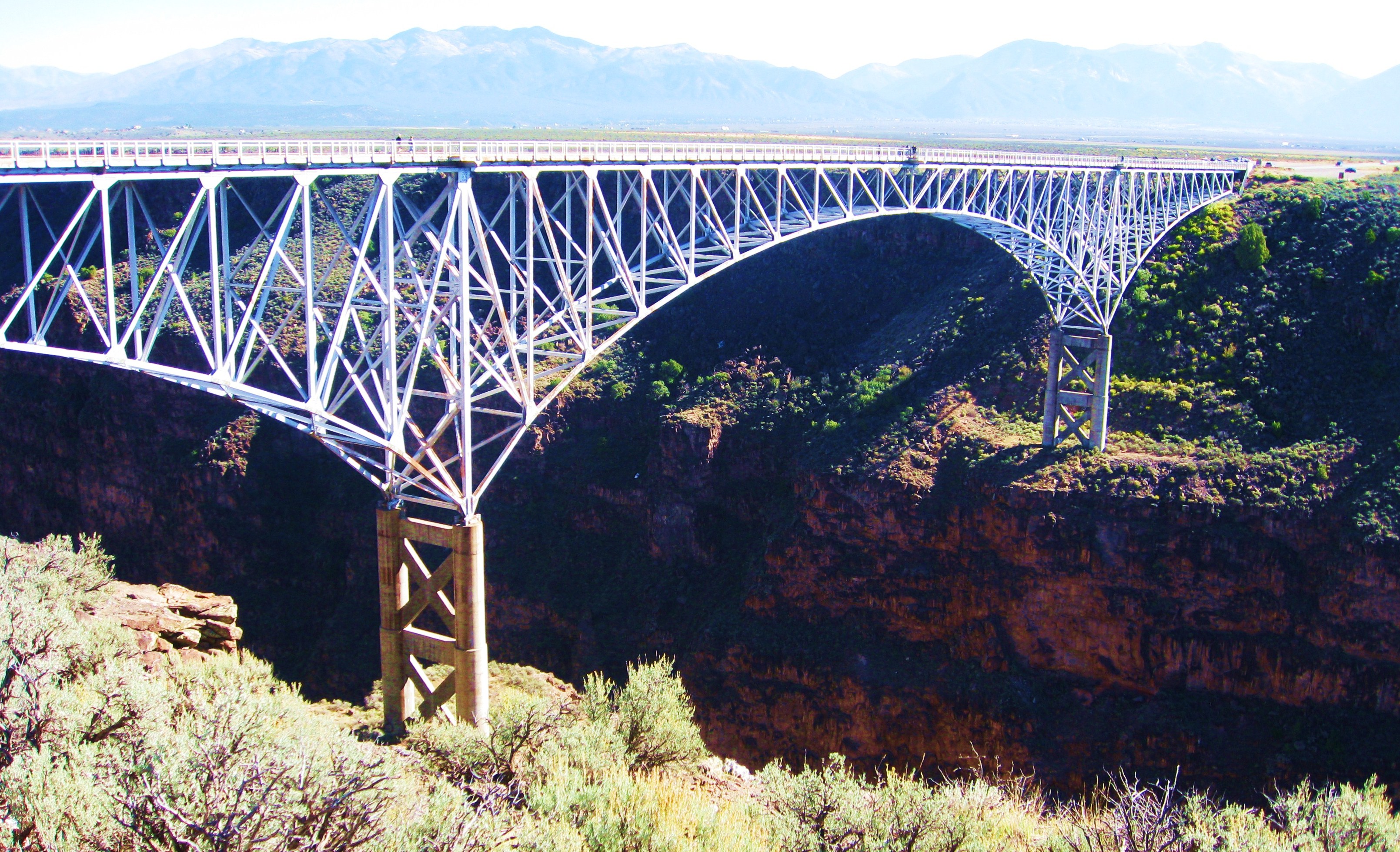
 

The bridge across the Rio Grande Gorge near Taos, New Mexico. The river 1,500 feet below is near the beginning of a nearly 2,000 mile journey to the Gulf of Mexico. -- Photo by Pat Bean


Travels With Maggie


Rio Grande Gorge State Park

Just a few miles past Taos, which I drove through without stopping, I came upon Rio Grande Gorge State Park. Here I did call a brief stop to my travels. I mean who can resist at least a peak at a 1,500-foot deep gorge – and a river that one knows is near the start of an almost 2,000 mile journey to the Gulf of Mexico.

As I looked down at the river from the park’s high, fenced overlook, I thought about a day at Big Bend State Park in Texas when a grandson and I had waded in its shallow warm waters and stared across it at Mexico. Most of the clear rushing water I was looking at below would never make it that far. Human development sometimes reduces the flow reaching the gulf to merely a trickle. Gypsy Lee settled in for the night in Clayton, New Mexico. Photo by Pat Bean

Soon, I was back on the road. I still had 150 more miles to drive before I could stop for the night. I seldom have such a long driving day, but on this trip I was facing a deadline to be in Arkansas to babysit three grandsons for a week – and I only had three more days to get there. 

I spent the night in Clayton, New Mexico, a small town where one has to drive 89 miles to the nearest Walmart, or so the desk clerk told me when she checked me in at the only RV park for miles around.

The town, a former livestock shipping center, sits along the old Cimarron Cutoff of the Santa Fe Trail. I had passed through Cimarron earlier in the day and had been seeing historic roadsigns since then telling me I was following the old cattle trail.

The Clayton KOA was a quiet, clean place with a run-down miniature golf course and dinosaur creations that had seen better days. I watched a croaking murder of crows fly past in search of a roosting spot as we took our evening stroll. Maggie sniffed around at the feet of the dilapidated dinosaurs, which advertised nearby Clayton Lake State Park where tracks of these prehistoric beasts attract passing tourists.
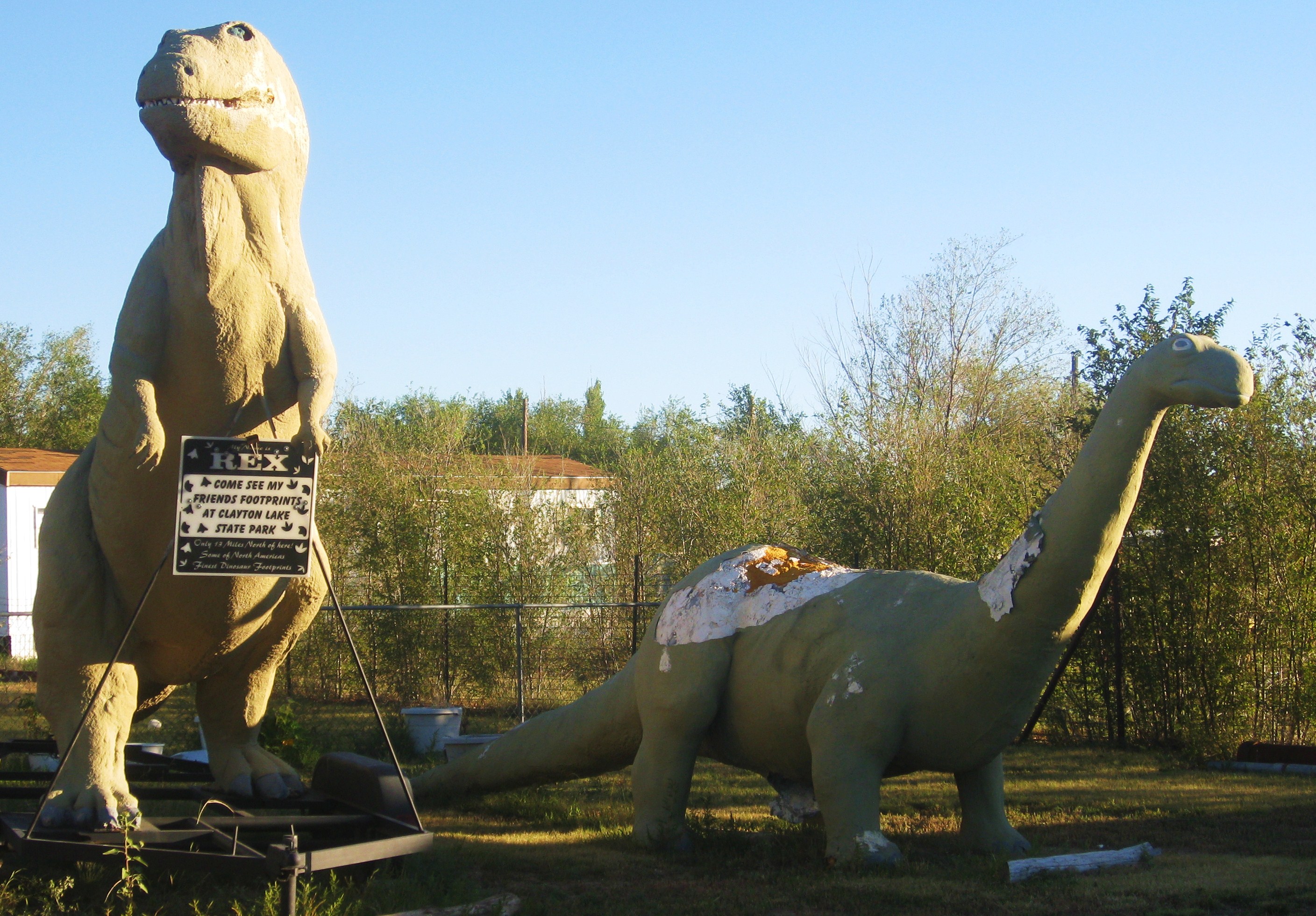
 

Statues showing their age advertise to visitors that dinosaurs once roamed the area. -- Photo by Pat Bean


Perhaps next time I pass through the area I wouldn’t be on a deadline and could do my own investigation of them. Dr. Seuss’ words: “Oh the places you’ll go, and the things you’ll see,” then flowed through my brain for the umpteenth time. I sighed – and added: “Too many places, too little time.”

Read Full Post »

Fall in Colorado's San Juan National Forest -- Photo by Pat Bean

“If I had my life to live over, I’d dare to make more mistakes next time.” — Nadine Stair

Travels With Maggie

I thought I knew what route I wanted to drive today, but the travel gods knew differently.

Outside of Chama, New Mexico, I zigged instead of zagged. Never have I been more delighted for my lack of a sense of direction.

I had been at this same intersection several times before, but always when I was headed to Santa Fe. This time I planned to pass through Taos– so it just seemed logical that I would turn left instead of right. Perhaps I was distracted by that magical moment of sunrise that was happening when I reached the fork in the road. That fraction of a second when the world goes from a quiet gray that hides all details to a glowing glow that brings the world to life is my favorite part of any day. I don’t experience this moment often so when I do, I absorb it fully.

Cumbres and Toltec Railroad engine warming up at the summit -- Photo by Pat bean

Up where the air is thin.

For whatever reason, however, I didn’t notice my mistake until a road marker told me I was crossing back into Colorado. By this time I was driving through a landscape so fantastic that there was no way I would have turned around, even if it meant adding 200 miles to the trip.

In reality, it only made my day’s drive 19 miles longer. My error had put me on Highway 17 instead of Highway 64, and took me on a northern instead of a southern loop to Taos. My mistake took me high into the San Juan National Forest and over the 10,000-foot-plus Cumbres and Conejos passes.

At the top of Cumbres Pass, a Cumbres and Toltec Railroad engine was warming up for one of its scenic tourist expeditions that begin in Chama. I would have stopped to explore the train museum in Chama except it hadn’t yet opened when I passed through the rustic town. Seeing the engine here, with smoke churning from its stack as it sat on the narrow guage tracks, made up for that. Before catering to tourists, trains ran through this beautiful landscape to serve the area’s silver mines.

A view from Cumbres Pass -- Photo by Pat Bean

The best part of my day, however, were the golden mountain sides. Autumn was in full bloom – and I knew I was fortunate to get to see it because I was headed to Texas where fall is mostly a matter of leaves turning brown and falling off the trees. Of course there are exceptions, but nothing as vast and brilliant as what I was seeing this day.

By the time I got to Taos, which was late in the afternoon because I lingered so long in the high forest, I abhorred its trendy and crowded atmosphere and drove through without stopping. Mother Nature had fulfilled all my sight-seeing needs this day.

Read Full Post »


And the Fish

The owl

“He who postpones the hour of living is like the rustic who waits for the river to run out before he crosses.” — Horace

Travel’s With Maggie

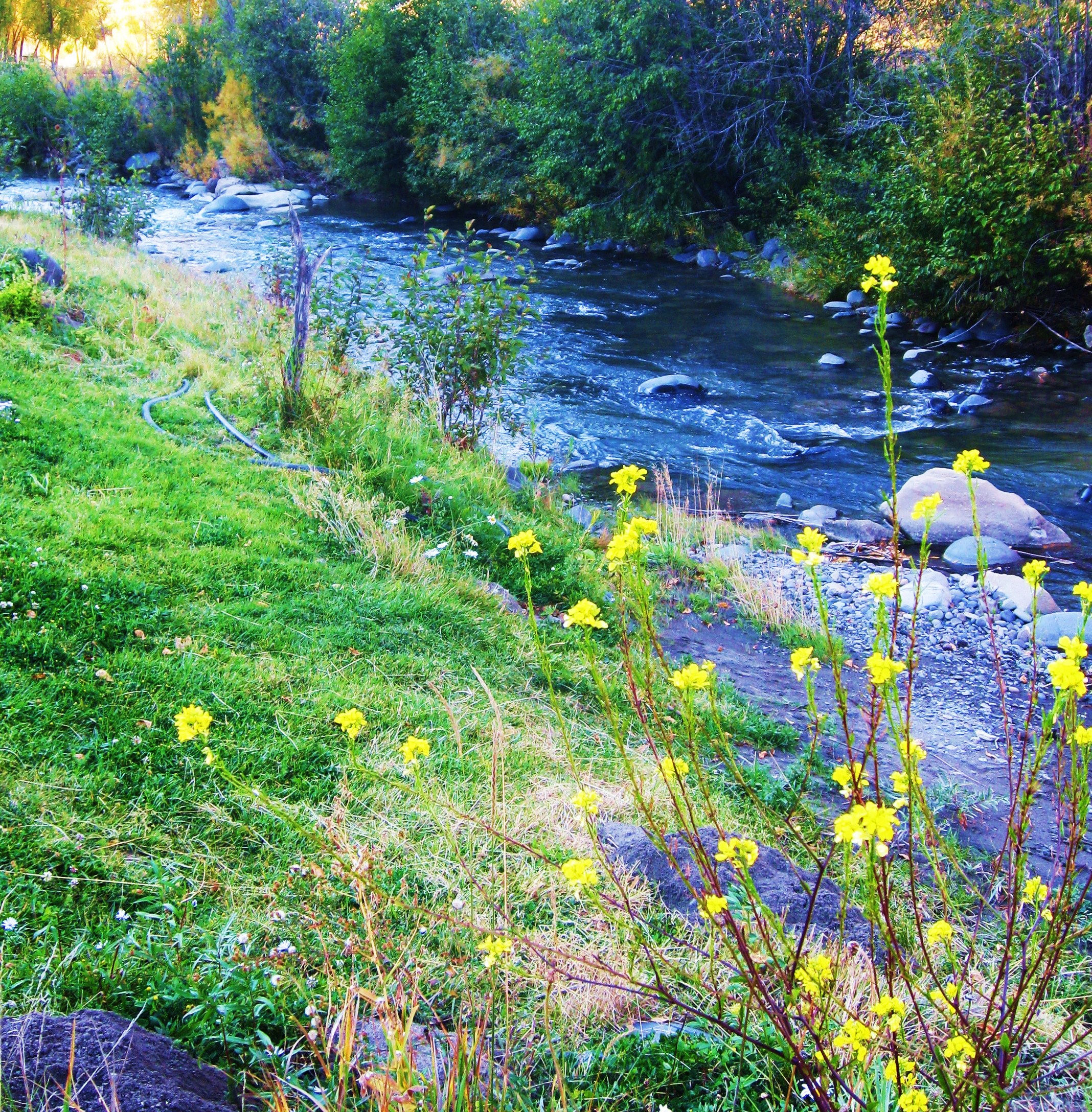
Today’s drive took me from Southern Utah’s red-rock high desert to Colorado’s San Juan National Forest. I spent the night at an RV park just outside of Pagosa Springs parked next to the Blanco River. It doesn’t get much better than this, I thought.

The Blanco River as seen from my RV window. -- Photo by Pat Bean


Our early September afternoon arrival left plenty of time for Maggie and I to take a hike along the river bank and among the wildflowers. Maggie kept her nose to the ground in search of exotic smells to follow, while I looked to the sky. A circling red-tailed hawk overhead drew my attention, as did a couple of chattering magpies in a nearby cottonwood tree.

I pity the poor person whose heart doesn’t skip a beat at the sight of this hawk’s red tail spread wide and flashing in the sunlight. On the other hand, I think some people pity my love for the playful but loud, long-tailed magpies they consider nuisance birds. Being a Texan not known for her quiet ways, I always feel these birds and I share a connection.

This would be the fourth time I had stayed at this Blanco River RV Park off Highway 84. It’s a welcome and convenient spot for campers traveling between Utah and Texas, a trip I’ve made annually since becoming a full-time RV-er. Each visit here has left me enchanted with both the setting and the little touches the campground owners have made to make the place special.

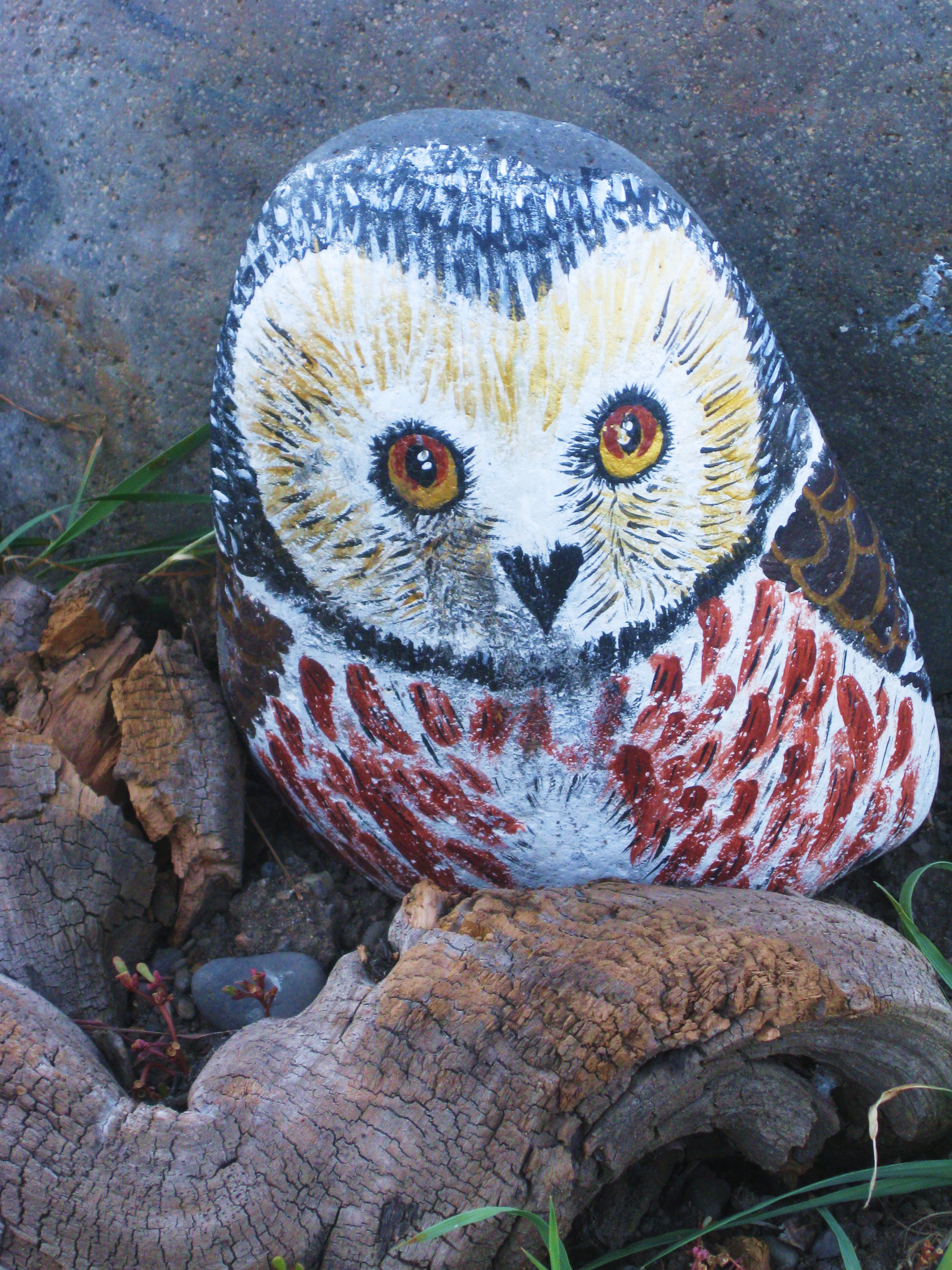
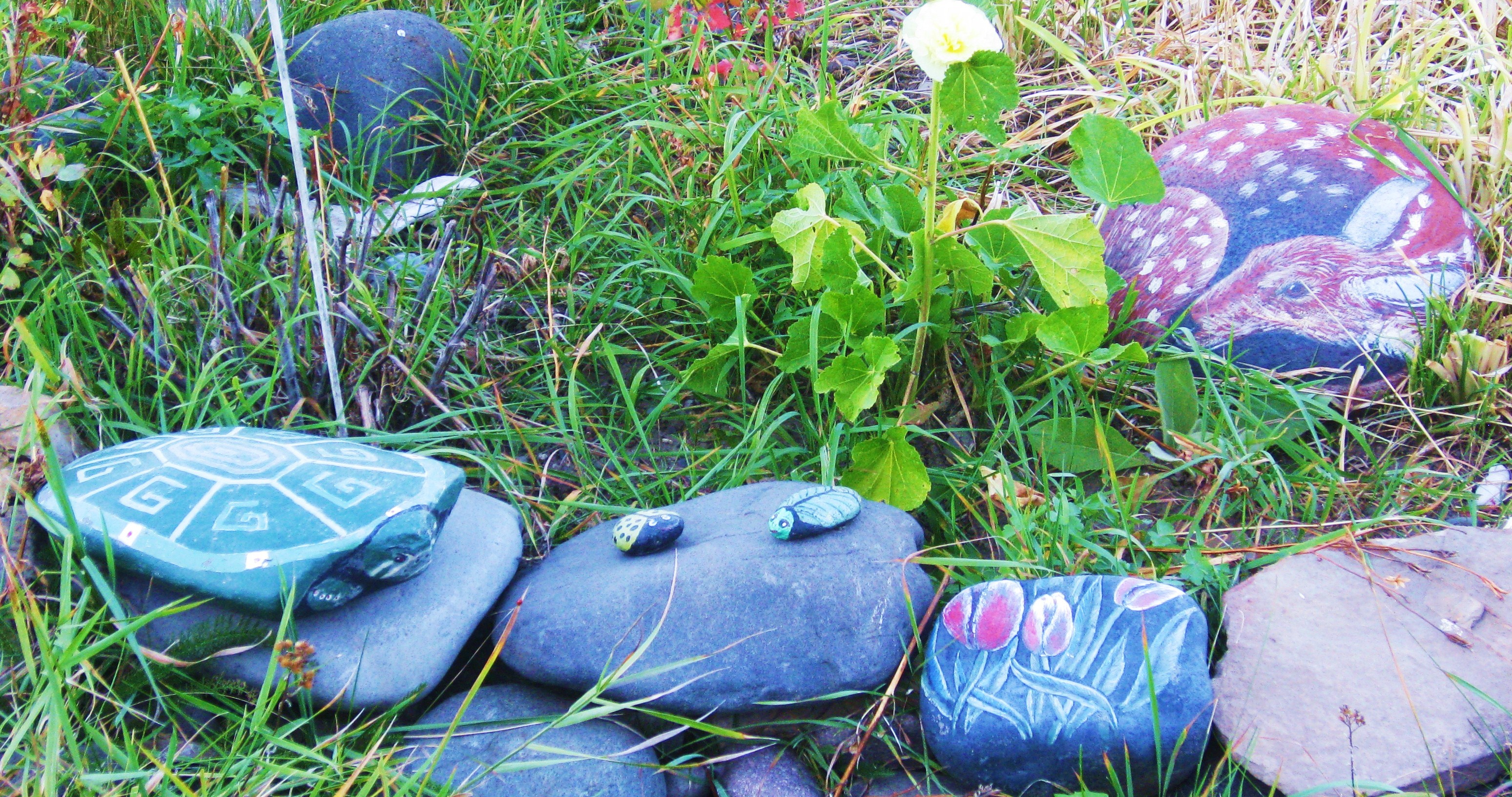
Modern day rock art -- Photo by Pat Bean

 I consider the rocks someone has painted and scattered about the park as fascinating as I find the pictographs and petroglyphs of earlier cultures.

 As I watched the sun disappear at the end of the day, a feeling of contentment oozed from my  pores. I realized I didn’t miss at all the fact that I had no phone, internet or television connections. Tomorrow would be soon enough to hook back up to the world.

Soon after, Maggie and I crawled into bed and went to sleep to the music of the river rippling over rocks.

Read Full Post »

Downtown Moab with its red-rock backdrop. -- Photo by Pat Bean

“Every crag and gnarled tree and lonely valley has its own strange and graceful legend attached to it.” — Douglas Hyde

Travels With Maggie

 Images of the humpbacked flute player, known as Kokopelli – sometimes depicted with an exaggerated pecker – is a common sight around Moab. You can find evidence of this southwest Indian fertility deity all around the city’s arch, cave and red-rock landscape. And he’s been around for over 3,000 years.

Kokopelli petroglyph

I was fortunate that in the 1990s a Moab native led me on a hike to see an ancient Kokopelli image that had been carved in stone. Because of vandalism, the location of some of the more precious of these historical links to the past are now not divulged to the general public. I thought at the time that it was a horrid shame that the destructive action of a few were depriving so many respectful viewers of the past from access.

Archeological evidence of Kokopelli was first found on similar petroglyphs across the southwest, and historians place the flute player’s beginnings to the Pueblo and Aztec Indian eras. In some of these myths, the hump on his back is said to be babies that he delivers to young women. In this, he’s shares a common goal with our own culture’s baby-delivering stork.

In Moab today, however, Kokopelli is often seen as an advertising gimmick. Both a local lodge and art gallery

The Moab Diner's version of Kokopelli. -- Photo by Pat Bean

 plagiarize his name and image. You can also take a Kokopelli hot air balloon ride or a Kokopelli bicycle tour on the Kokopelli Trail that continues into Colorado.

My thoughts about Kokopelli began this morning at breakfast at the Moab

Modern day Kokopelli

 Diner, which if you ever visit this fascinating city you should not miss. It has the best breakfast in town. This small restaurant is also known for its backward clock, which baffles tourists until they realize what’s different.

As I ate my sausage and eggs and studied a map for my day’s drive, my eyes were caught by another difference. The neon wall hanging of Kokopelli was a chicken. I, of course, had to go get my camera and take a picture. It’s these little kinds of oddities that add spice to my travels.

Read Full Post »


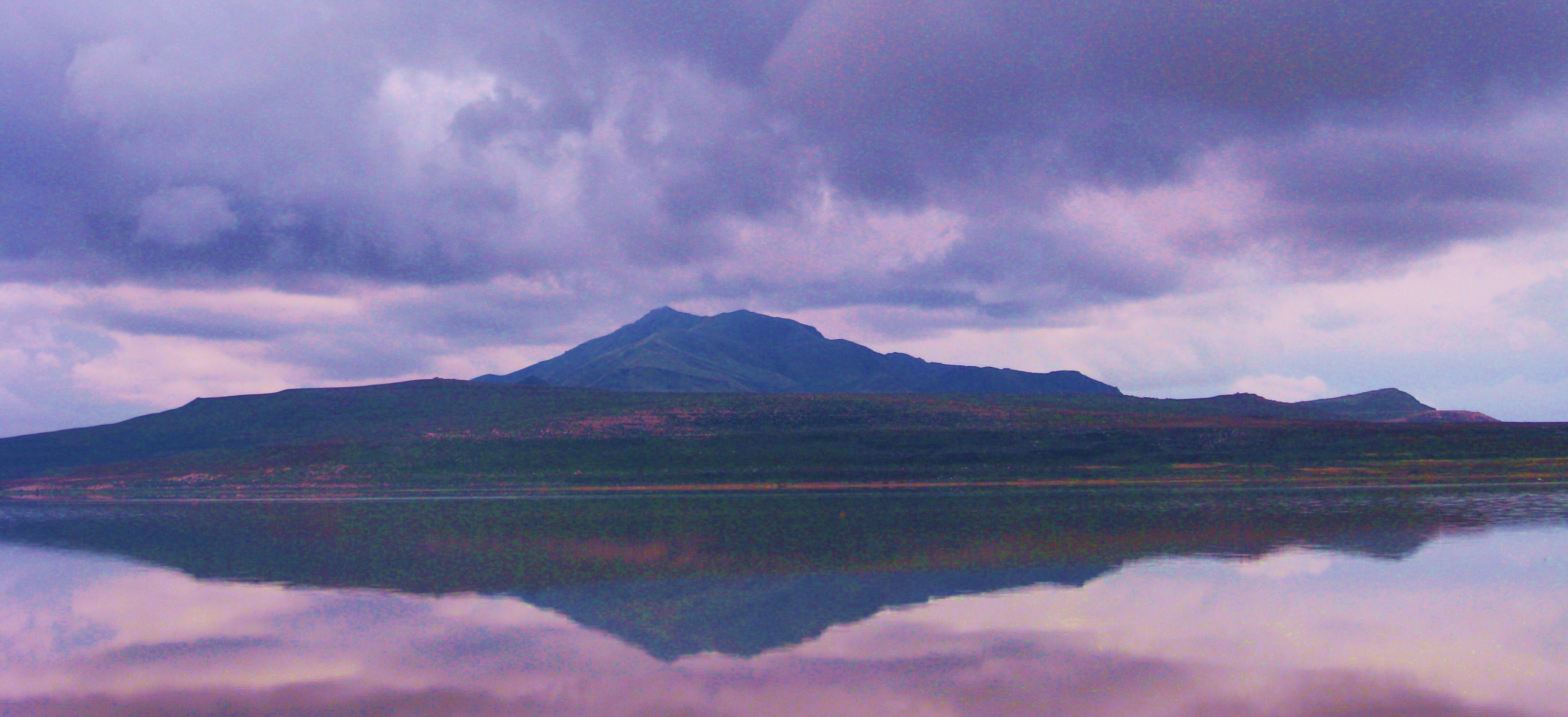
A view of Antelope Island, which appears moody this day. -- Photo by Pat Bean

Travels With Maggie

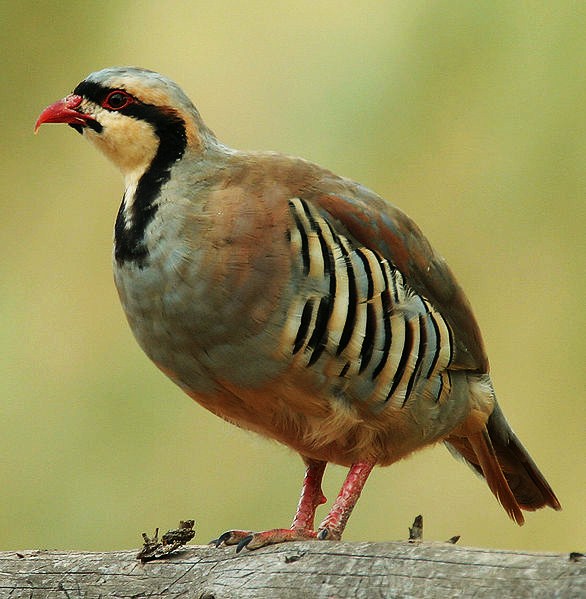
Antelope Island is a favorite place of birders wanting to add a chukar to their life list.

 Antelope Island is a 28,000-acre bird haven in Utah’s Great Salt Lake accessed by a seven-mile toll causeway. It is home to a thriving herd of bison, playful antelope, sly coyotes and prickly porcupines.

 Migrating warblers visit, as do shorebirds and ducks that feed on the surrounding lake’s tiny brine shrimp and brine flies. California gulls nest each year on the rocky outcrops along the shoreline, bald eagles drop by in winter, and every spring hundreds of western meadowlarks, with their brilliant golden throats and song, nest on the island. The males sit on a high perch to melodiously proclaim their brooding territory while the females sit on nests hidden so well in the grasses below that you can walk within inches of them and not know they are there.

I visited this island almost every single week for two years after I caught bird-watching fever in 1999. It was my birding 101 lab. And every time I go back home to Ogden these days, I make time to once again visit this protected — the entire island is a Utah state park — wonderland.

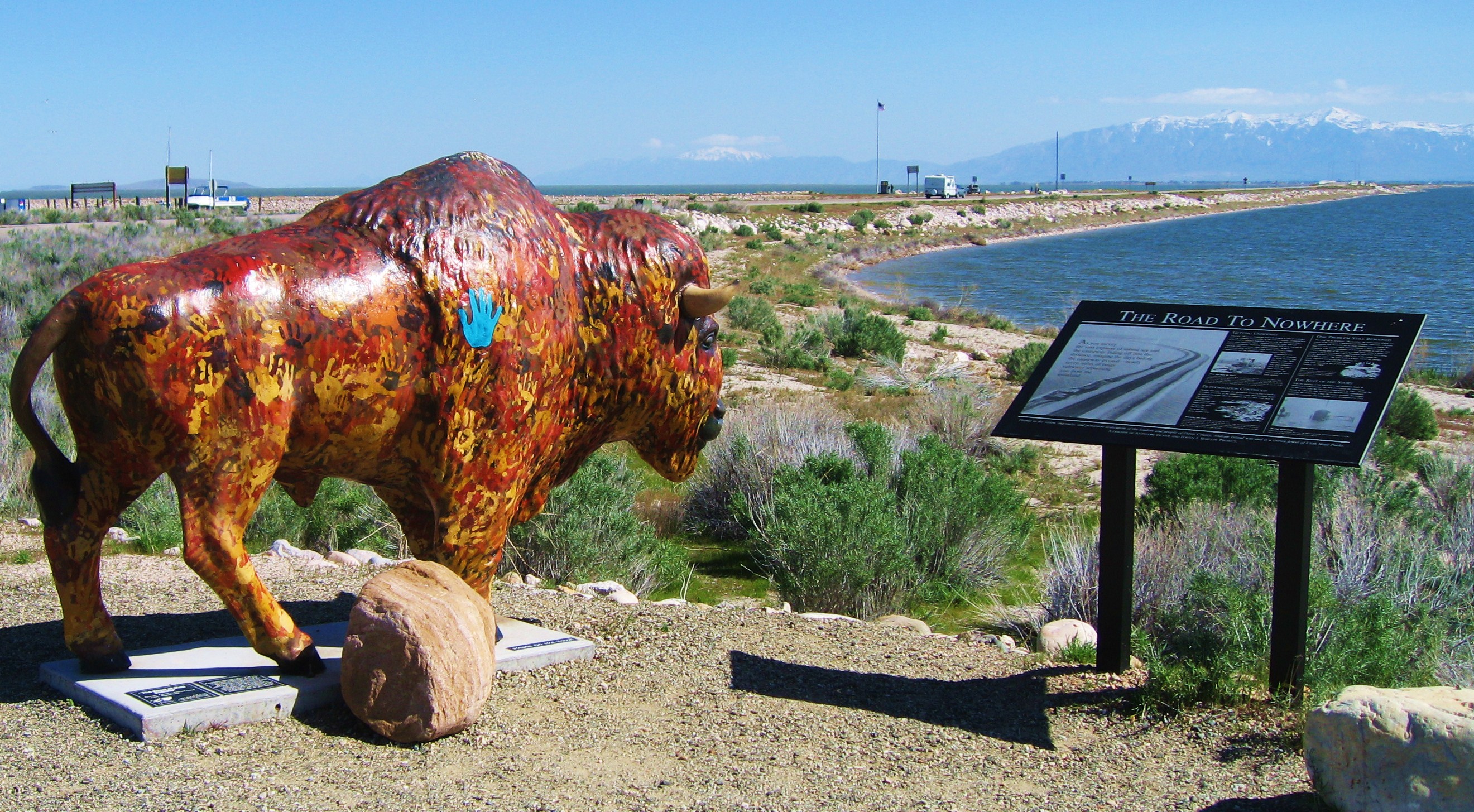
A buffalo sculture looks out over the lake. Photo by Pat Bean


While a live version takes a sandy bath. Photo by Pat Bean

This trip, the drive across the causeway was made with more land than water to the sides of me. Once again, Great Salt Lake is nearing the 1960s record low of 4,191 feet above sea level. In the mid-80s, it was at a record high of 4,212 feet. I was present during this latter period when its high levels and wind-pushed waves tore out the causeway to the island as well as chunks of Highway 80 that stretches across Utah’s Bonneville Salt Flats to Wendover, Nevada.

Now, 25 years later, I was getting to see it at its lowest. Was it Mother Nature’s drought and warm weather affecting the level, or was it the human diversion of water before it reached the lake driving the lake’s current low level? The question taunted the edges of my brain as I watched a pair of ravens circle overhead where the causeway curved. I wondered if these were the same ravens I had watched raise chicks in a huge nest several years earlier.

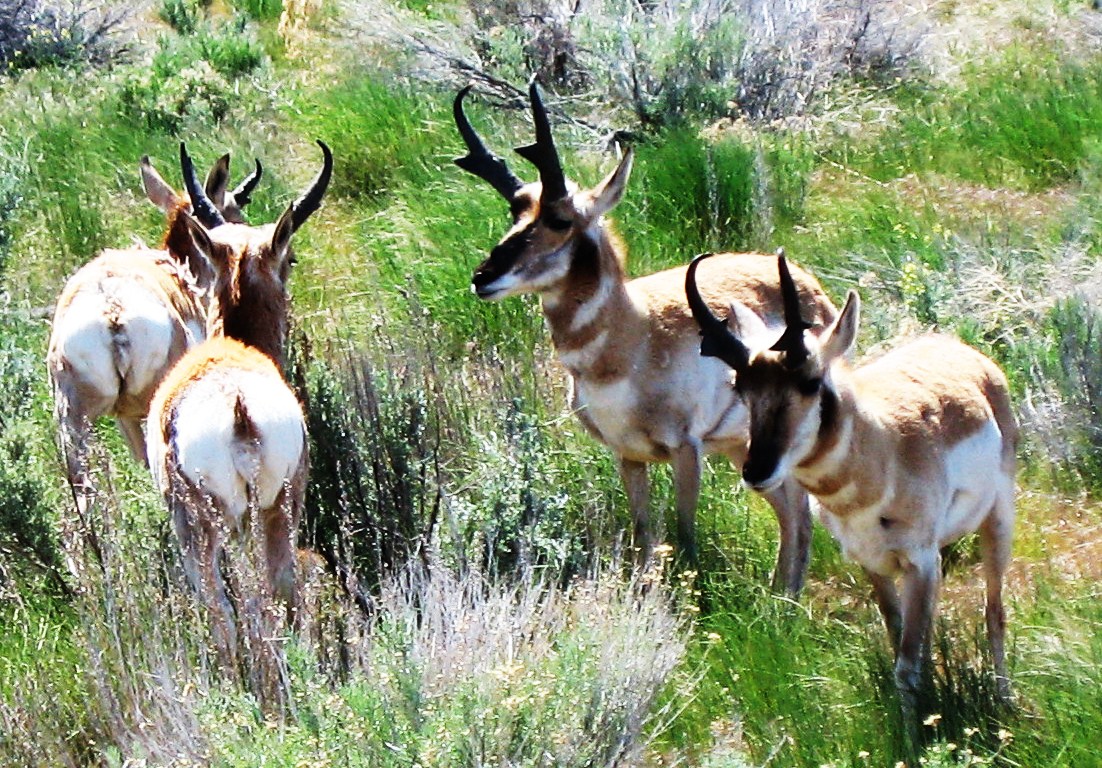
Antelope seen on the way to the island's historic Garr Ranch. Photo by Pat Bean

I spent four hours on the island this day. I watched with camera in hand as a buffalo took a sandy bath and kept my eyes glued to rocks for the sight of chukars surveying the landscape. Maggie and I took a hike around the point from the Bridger Bay Campground. Meadowlarks and red-winged blackbirds joined their voices to the drum beat of the lakes’s waves against the shoreline. I found the tune calming and marveled at the purepeacefulness of the day.

  While I still had questions and concerns about the lake and the island’s ever-changing future, Mother Nature’s magic was still all around me. I look forward to my next visit, and hope she can still be found.

Read Full Post »


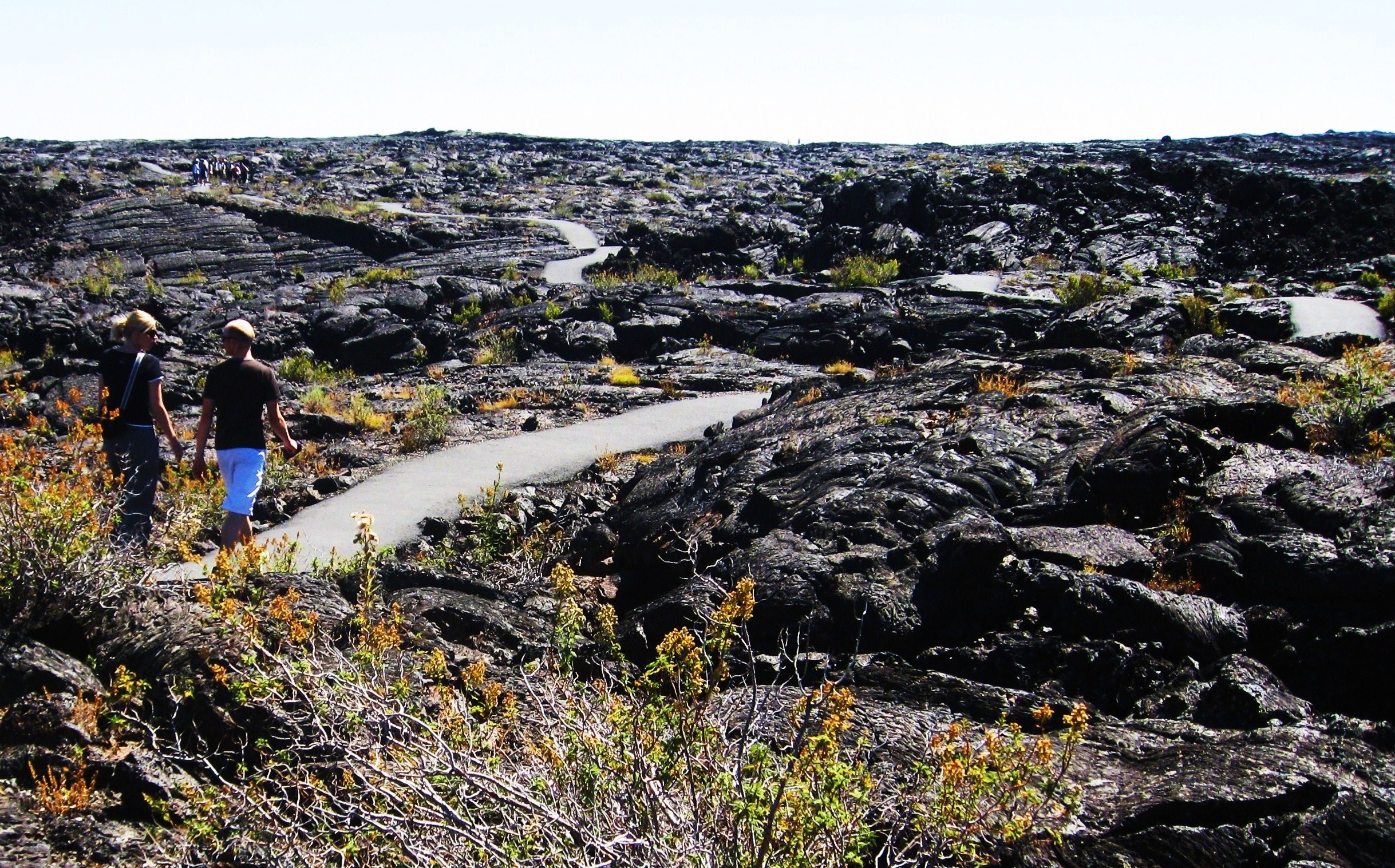
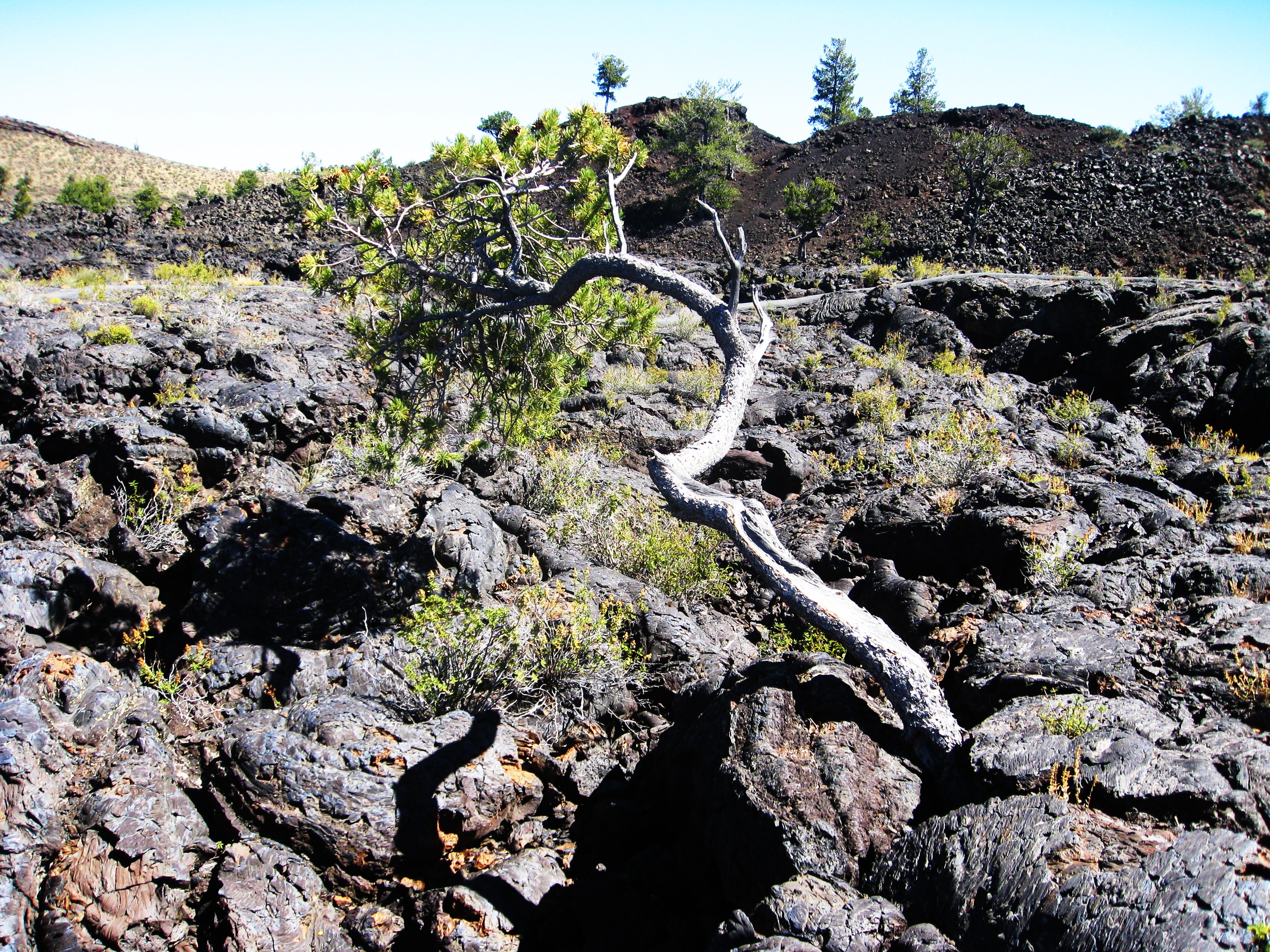
Trails through Craters of the Moon National Monument take one through a dark, angry landscape. Photo by Pat Bean


Volcanoes are one way the earth gives birth to itself.” — Robert Gros


The huge lava field that spreads out across Southern Idaho’s Snake River Plain was thought to resemble the moon’s surface, hence when the area was designated a national monument in 1924 it was called Craters of the Moon.

While the name remains today, Neil Armstrong and Buzz Aldrin’s two-hour walk on the moon’s surface 45 years later showed it was nothing like the moon’s surface. The name stuck, however, just as Junior remains Junior to his parents even when he’s 65 years old.

As I walked across the rugged blue-black lava flow on trails that took me into a world far removed from my daily existence, I couldn’t help but compare this adventure with my recent visit to Mount St. Helens.

Yet even in this harsh landscape, life manages to exist. -- Photo by Pat Bean

The lava that covers the landscape for miles at Craters of the Moon is between 2,000 and 15,000 years old. Yet the scars it has left on the land looked younger than those caused only 30 years ago when Mount St. Helens erupted. Mother Nature has gentled the scars created by the Washington volcano with new grass, wildflowers and trees. While life certainly exists at Craters, it’s a place where the land shouts of volcanic action.


Less than two hours away from Lake Walcott State Park, where I was a volunteer campground host, the monument’s strange landscape had called out to me to visit. I answered but found that the dark rugged landscape agitated me. Where viewing St. Helens had been a calming experience, Craters of the Moon, with its twisting, roiling turmoil of anger still visible, reminded me too much of the world we live in today.

A sobering thought pushed itself to the forefront of my brain, telling me that both these dormant volcanoes will probably flow and blow again. As beautiful and as calming as Mother Nature can be to me, I was forced to admit she does have her destructive moods. Sadly, so do we humans.

Read Full Post »

 “In wilderness I sense the miracle of life, and behind it our scientific accomplishments fade to trivia.” — Charles A. Lindbergh.

My morning visitor -- Photo by Pat Bean

Travels With Maggie

Midges and flies, but thankfully not blood-sucking mosquitoes, were an almost a constant human nuisance during my stay at Lake Walcott. A few even found their way into my RV, which was sad. While I’m very respectful of wildlife, even bugs and snakes, once a wild critter intrudes into my home, it usually ends up being a dead critter. A cute little field mouse discovered this when it nibbled on the tasty peanut butter I had spread on a mouse trap after I had spotted it scooting across my narrow floor.

 But bugs and mice are part of the circle of life. And if you’re a birder you have to appreciate them. These fast-breeding creatures make it possible for the existence of the slower breeding feathered flyers that amaze me. I saw this almost daily at Lake Walcott as the midges provided a tasty meal for a dawn and dusk parade of circling nighthawks flying overhead.

And while they didn’t make a personal appearance, I’m sure the great horned owls that hoo-hoo-hooed me awake each morning dined elegantly on some of the field mice I occasionally saw scampering through the sagebrush. During my

Common nighthawk -- Photo by Mark B. Bartosik

 earlier spring visit to the park, I had been honored to spot a great horned owl nest that had a couple of tiny heads poking above its jumbled wall of sticks. The park is full of huge, magnificent cottonwood trees that I knew from past sightings were favorite nesting spots of these silent flying night hunters.

 One morning I woke to find a four-legged critter poking around my campsite, one that has included human handouts as part of its menu plan. It was a raccoon, whose photo I took from my dining room table while drinking my morning coffee. While he didn’t get any tasty tidbits from me, I saw evidence of his dining habits in the wake of trashed tin garbage cans most mornings.

 When Maggie finally noticed our visitor, she barked excitedly. The raccoon appeared familiar with such nonsense. It merely stared for a moment at our RV, then slowly sauntered back into the brush behind the campground. I hoped he found something tasty out of the trash can I later picked up on my morning walk through of the campground.

Read Full Post »

Sunset at Lake Walcott -- Photo by Pat Bean

 
 “What a joy it is to feel the soft, spring earth under my feet once more, to follow grassy roads that lead to ferny brooks where I can bathe my fingers in a cataract of rippling notes, or to clamber over a stone wall into green fields that tumble and roll in riotous gladness.” Helen Keller
 
From Twin Falls, it was just 58 miles to Lake Walcott State Park, where I would spend the next seven weeks. I arrived in the early evening and found the campground full, except for my host site, where a thoughtful park ranger had blocked it off with sawhorses to keep it vacant for my expected arrival.

Broad-tailed hummingbird

After hooking up, Maggie and I took one of the park’s paved trails down to the lake where a pair of western grebes floated gracefully on the water. I would see this same pair almost every day I was at the park. On the walk back to the RV, I watched a magnificent sunset turn the clouds a rosy pink, at times framing a full moon.

I awoke the next morning to an orange and purple sunrise and three broad-tailed hummingbirds playing king of the  mountain at the hummingbird feeder I had put out when I hooked up. The sunrise, which changed in intensity and colors to accommodate the weather, and the hummingbirds, which some days numbered up to eight, joined my cream-laced coffee and e-mail check morning ritual. 

Sunrise at Lake Walcott -- Photo by Pat Bean

By the time Maggie, who sleeps in until at least 9 a.m., woke and demanded a walk, we took it beneath fluffy white clouds floating in a robin’s egg blue sky. Western kingbirds, robins and western peewees kept us company as we walked through the campground, and then beside the lake to watch the western grebes. 

How could I do anything but look forward to my next 49 days. If home is where the heart is, I was there.

Read Full Post »

Shoshone Falls near Twin Falls, Idaho

“I long, as does every human being, to be at home wherever I find myself.” — Maya Angelou

They say you can’t go back home again. Of course you can. It’s just that nothing will be the same. Both people and cities change. Friendships, however, can be more durable. My stop for lunch in Twin Falls, Idaho, this day proved this.

While the huge Rose of Sharon bush, that had grown in my front yard and whose blooms I had treasured during the two years I lived in this Magic Valley city no longer existed, the bond between me and my friend, Kris, was as strong as ever. Over sandwiches at a new restaurant on Blue Lakes Boulevard, where businesses had expanded all the way from the city center to the edge of the Snake River Gorge since I moved away, she and I picked up just where we had left off 25 years ago.

 While we usually only see each other about once every three years, and seldom communicate between times, it always feels as if we had just talked the day before when we do finally get together. . I think people who have such friendships understand this miracle that time and distance can’t erode. I’m not sure how to explain the phenomenon to others.

 Kris is the person whose rough laughter cheered me when I was down or had made a fool of myself. Kris is also the person I nearly drowned when first learning to white-water raft. It happened on a section of the Snake River between Haggerman and Bliss before I knew that turning off the area’s irrigation water turned this stretch of water into a white water torrent that would capsize my small raft.

Fortunately all of us in the boat this day survived – although we had a five-mile walk back to our vehicles after the raft continued on down the river without us. Incidents like this can either destroy or strengthen friendships. I’m so glad for the direction ours took.

 While I always enjoy revisiting nature’s wonders in the Magic Valley – Shoshone Falls, The Snake River Gorge, Thousand Springs – it’s friendship that keeps me going back. It was the motivating factor this time for my choice of a driving route through Idaho.

Read Full Post »

« Newer Posts - Older Posts »