Feeds:
Posts
Comments

Archive for the ‘Journeys’ Category

Two Dogs


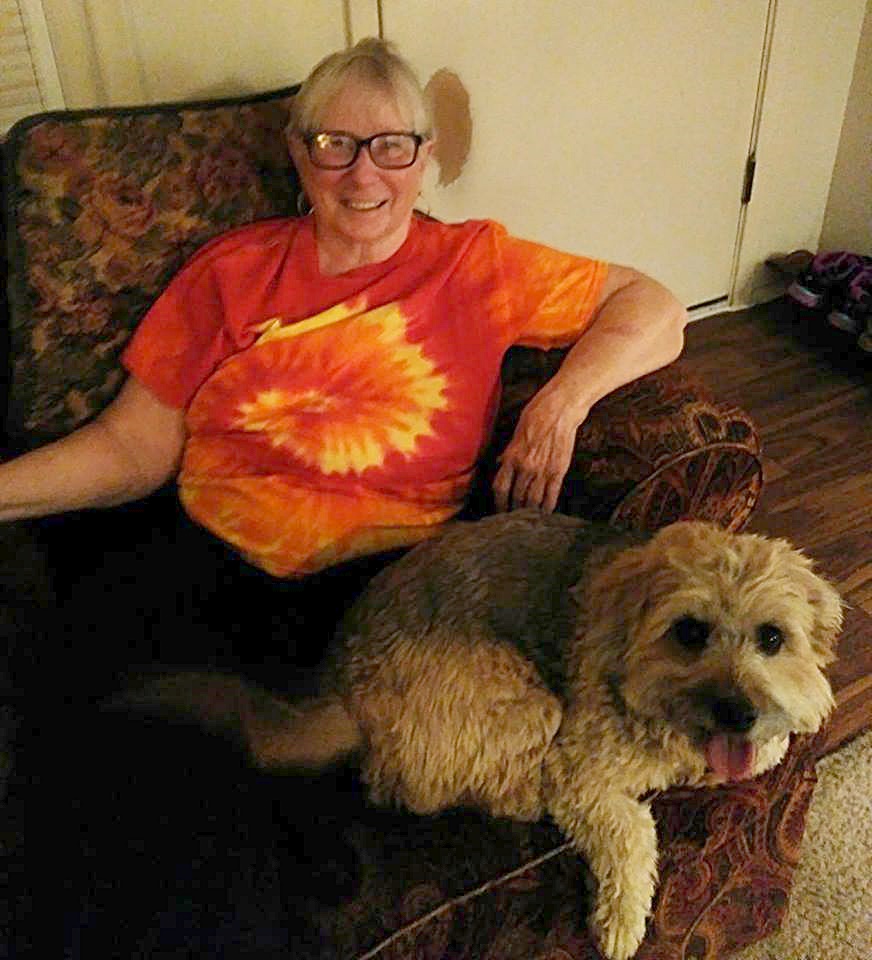
Dusty and me relaxing at Jean’s place. — Photo by Jean Gowen

If dogs could talk it would take a lot of the fun out of owning one.” Andy Rooney A Blonde and A Brunette

            Pepper and Dusty are the best of friends.

Pepper is my canine companion, a black Scottie mix who adopted me at an animal shelter in Plano, Texas in April of 2012. I had just recently lost my canine traveling companion, Maggie, who is featured in my soon to be released book, Travels with Maggie, and I still was quite sad.

 

Dusty did it. Well, OK, we did it together. — Photo by Pat Bean

When I visited the animal sanctuary, my fourth of the day, I sat down to watch the dogs playing in the yard. Pepper saw me, ran over and jumped up in my lap, looked into my eyes and communicated that she was going home with me. It took all of 15 seconds for us to bond, never mind that I was looking for a bit older cocker spaniel and not a rowdy four-month old terrier.

My sadness, however, lessened, although I still think of, and miss, Maggie, and her predecessor, Peaches, too.

Dusty, the blonde and an undetermined mixed-breed, belongs to my good friend, Jean. She was also rescued from an animal shelter – and is the first dog Jean has ever owned. It was a match made in heaven between them, as far as love goes, but there were immediate problems. Jean is a high school culinary teacher, and Dusty turned out to be a dog who couldn’t stand being alone while her mistress was at work.

Before Dusty could completely tear up her owner’s apartment, or get her owner evicted, Jean and I met, and I began baby-sitting Dusty at my apartment. Pepper eagerly waits for her arrival each morning, around 7 a.m. When Jean leaves, the two dogs begin their day of shenanigans. They gang up on me when they want treats, have frequent friendly tussles and games of tug of war, and stare meaningfully into my eyes when they want a walk or their water or food bowl is empty.

When I have to run errands, I cue them to “Guard the Castle,” at which time they both retreat to a different corner and give me woeful looks. They behave while I’m gone, but on my return I am savaged with their kisses and attention.

About 4 p.m., they both settle in by the front door, waiting for Jean’s return. By this time Dusty is ready to once again become an only child, as is my Pepper. When Jean arrives, they both greet her with the same savage attention and kisses I get when I return from being gone, even if it’s only five minutes to take out the garbage.

The two dogs make sure we two humans never feel unloved.

I think we’re doubly-blessed. Don’t you?

Blog pick of the Day. Check it out.

Bean Pat: Sanctuary for the Wild Soul http://tinyurl.com/lnqy3u7 These photos speak a thousand words that all say serenity.
Read Full Post »

fr

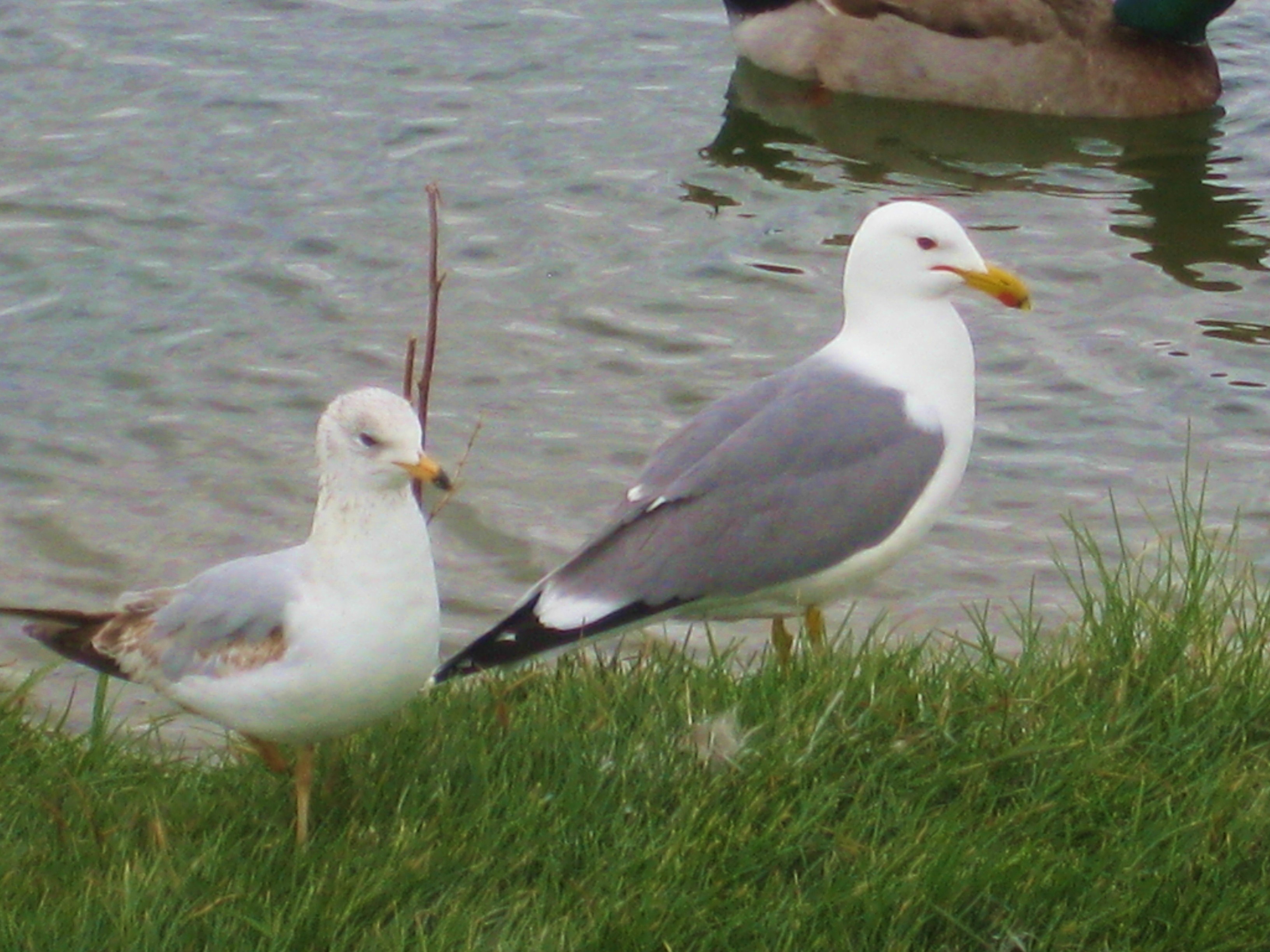
The gull on the left is a ring-billed, and the gull on the right is a California Gull, both of which are frequent visitors to Utah’s Great Salt Lake. For years I thought they were simply seagulls. — Photo by Pat Bean


In order to arrive at knowledge of the motions of birds in the air, it is first necessary to acquire knowledge of the winds, which we will prove by the motions of water in itself, and this knowledge will be a step enabling us to arrive at the knowledge of beings that fly between the air and the wind.” – Leonardo da Vinci

Just Ask Any Avid Birder

            In 1999, I became addicted to watching, identifying and listing birds. While I had always loved being outdoors in nature, these flying creatures, until this point in my life, had mostly gone unnoticed.

Then suddenly I was seeing them everywhere. I couldn’t not see them. Every profile on a utility pole, every rustle in a tree on a calm day, every small shadow flickering across my path had me looking to see a bird, and to identify it.

How had I lived for half a century and been so blind to their amazing numbers and varied activities?

My addiction didn’t happen overnight, however. I should have paid more attention to the warning signs, which included my suddenly finding opportunities to write about birds as part of my then assignment as an environmental reporter. Along with taking every opportunity to get out of the office for the day to research stories about things like forest management, wildlife habitat and water issues, I began writing stories that involved birds.

The Seagull Monument in Salt Lake City’s Temple Square. — Wikimedia photo

I wrote about backyard birding, hawk watching atop the Goshute Mountains, and the local Audubon field trips. But it was the story about Egg Island, a tiny bit of land in Great Salt Lake, that should have warned me about how crazy birders can be.

In writing the story, I called the gulls that nested on the island seagulls. As soon as the paper hit the streets, I had birders calling to tell me that there was no such thing as a seagull, that the birds nesting on the island were mostly California gulls. From the callers, I also learned that there were over 25 different species of gulls in North America – and none of them were seagulls.

I guess the artist who created the Seagull Statue that sits in Temple Square in Salt Lake City (to honor the “seagulls” that saved the crops of Mormon pioneers from a grasshopper infestation) wasn’t a birder.

Since writing that story about the birds that nest on Egg Island, I have personally seen and identified 15 species of North American gulls. In addition to the California gull, they include Sabine, Little, Bonaparte’s, Franklin, Laughing, Heerman’s, Mew, Ring-billed, Herring, Glaucous, Glaucous-winged, Western, Lesser Black-backed, and Great Black-backed.

I’m still looking for all the gulls I haven’t seen. But then I’m a crazy birder who now knows there is no such thing as a seagull.

Blog pick of the Day. Check it out.

Bean Pat: Travels and Trifles http://tinyurl.com/kcblvks Don’t Fence Me In.

Read Full Post »

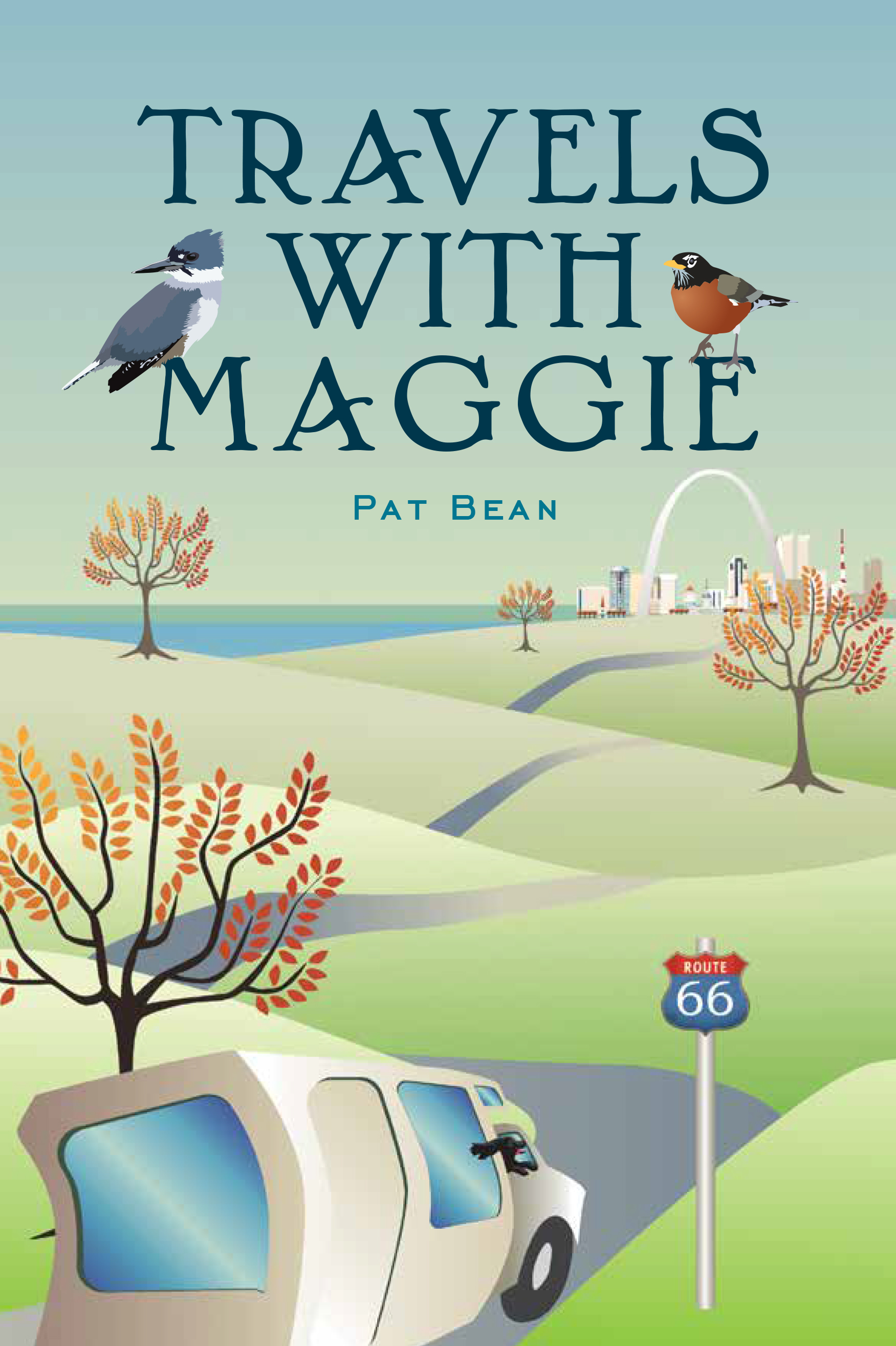
The cover for Travels with Maggie, which I had designed back in 2014.

“It is always better when you give a damn.” – John D. MacDonald

Coming to the End of a Long Road

In May of 2006, I left my youngest daughter’s home in Camden, Arkansas. Six months later, in time for Thanksgiving dinner, I arrived at my oldest daughter’s home on the outskirts of Dallas.

In-between, my canine companion, Maggie, and I traveled 7,000 miles in a small RV, through 23 states and Canada, to Maine, where we stood on top of Cadillac Mountain in Acadia National Park one morning to get this country’s first ray of sunlight.

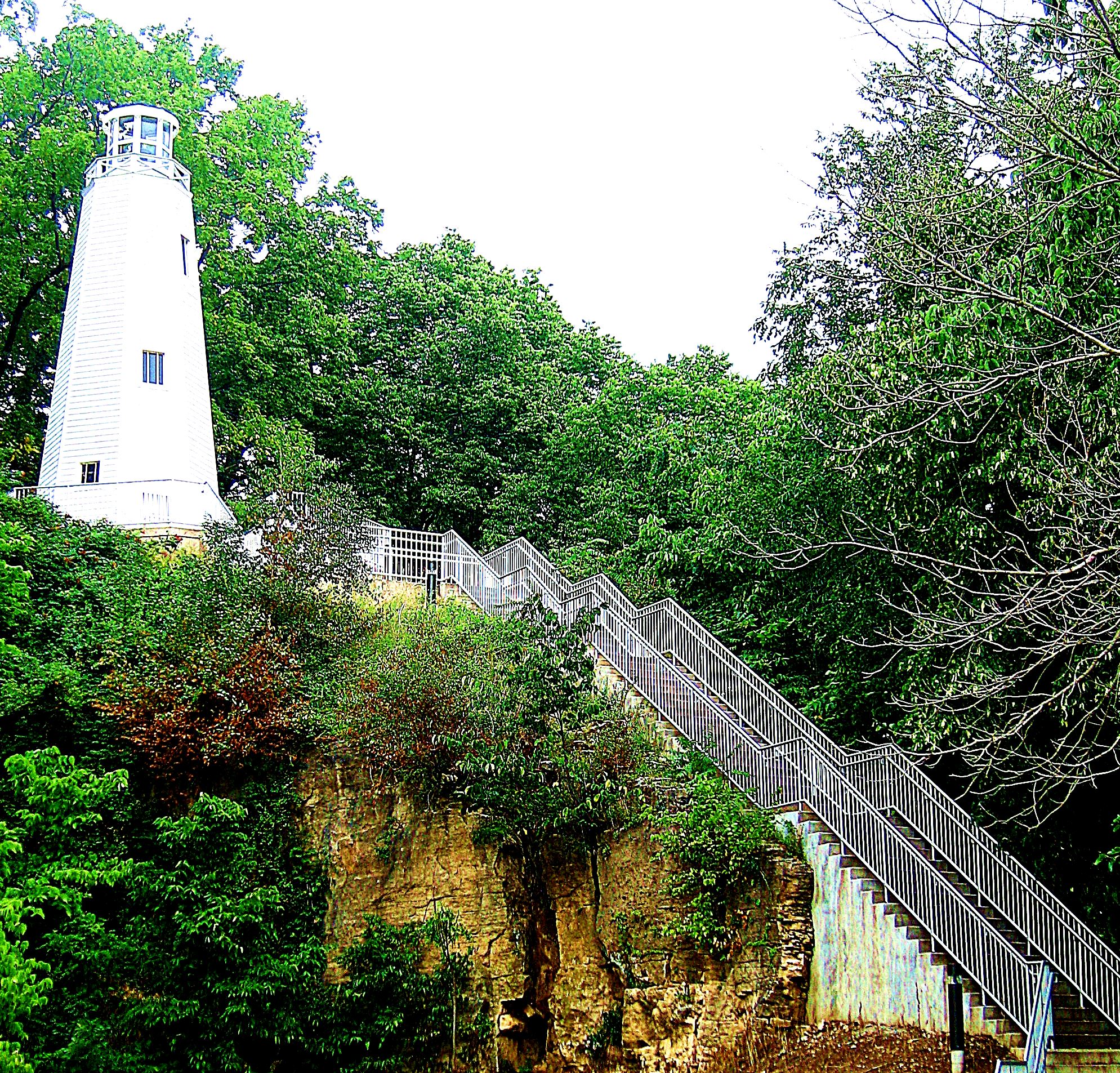
The Mark Twain Lighthouse in Hannibal, Missouri, which I climbed up to explore during my Travels with Maggie. — Photo by Pat Bean

The in-between miles are the topics of my book, Travels with Maggie, which soon will be available at Amazon. It’s part travelogue, part memoir, part bird book, part nature book, and part about one woman’s conversations with her dog. I think it would fit nicely on a book shelf between John Steinbeck’s Travels with Charley and Charles Kuralt’s On the Road, with Peter Cashwell’s The Verb to Bird nearby.

But this book is written with a feminine voice, that of an old-broad, wandering-wonderer.

This week I put the mechanics of putting Travels with Maggie up on Amazon into the hands of an angel who, unlike me, knows what she is doing. I spent three frustrated weeks trying before I finally gave up.

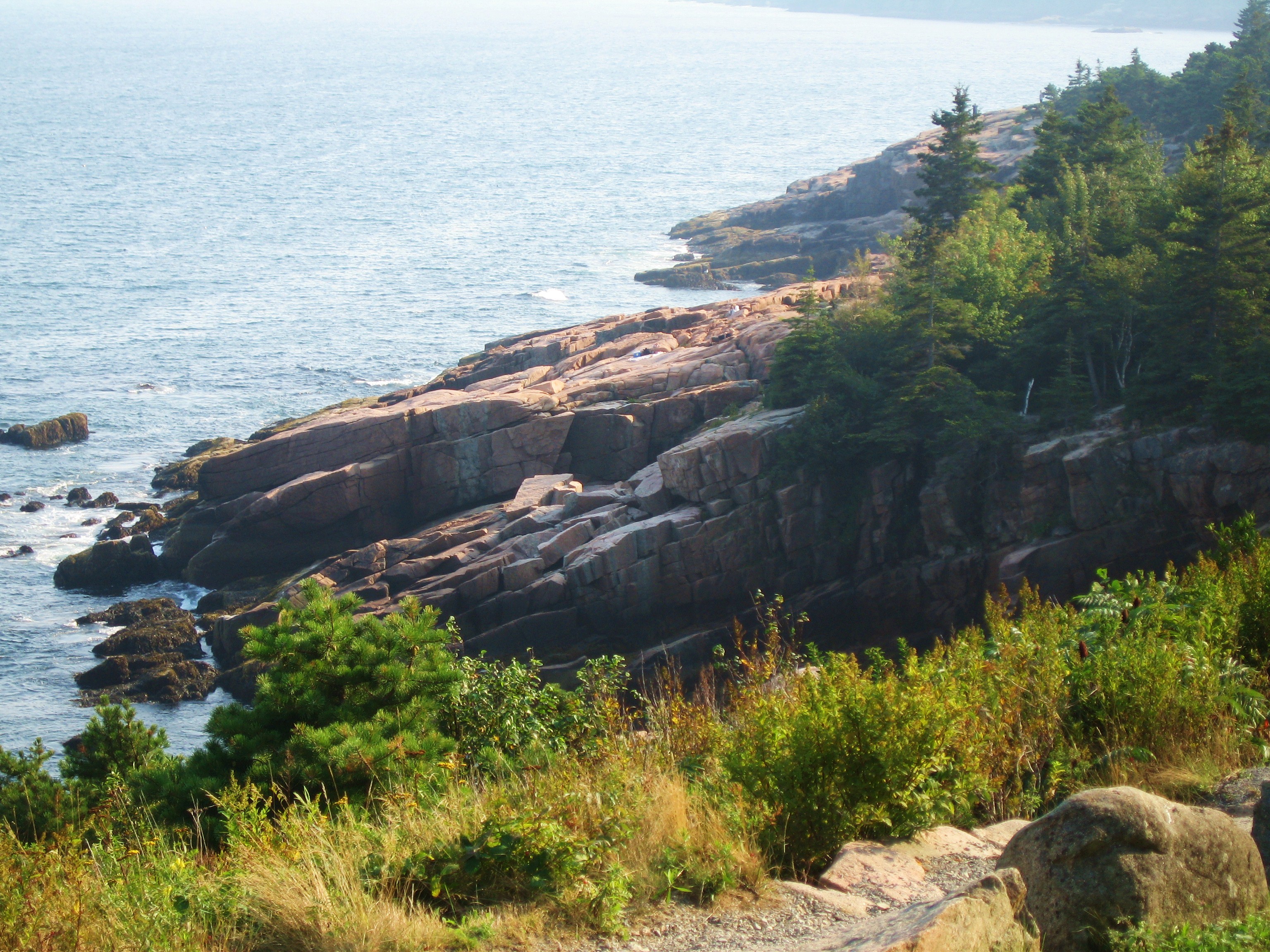
A view from Acadia National Park in Maine, which was the destination of my journey. — Photo by Pat Bean

Late yesterday evening, when I was having a Jack and Coke on my back balcony with my friend, Jean, who needed it after her high school teaching day, to celebrate the new stage of my book, I suddenly found myself crying.

I’m not exactly sure why.

My book, whose first draft was named one of the top 10 when it was entered in a Mayborn Non-Fiction Writing Workshop contest, has now been through five rewrites, edits and proofings.

The second rewrite was a major one to add voice, which I had omitted because I was trying to hide the fact I was an old-broad. The Mayborn critiques, all of them, said this was the book’s one major fault – and I knew immediately they were right.

The third rewrite was mostly a polishing of my writing, as was the fourth. The fifth was

Mostly a typo-catching read-through. And there will be a sixth proofing yet to come. This is a 75,000-word manuscript so each of these steps took some time.

My dream of writing just such a book is over a half-century old, during which time the whole world of publishing changed. I was reluctant to let go of the traditional world, but finally decided I didn’t have the time to wait around any longer. In the traditional world, the publisher would have done the marketing for the book. In today’s world, most writers are now having to accomplish this step themselves.

It’s what I am going to have to do – and telling my blog readers about my book is a first step toward that goal. Whew! I feel a weight lifted off my shoulders for writing this. I’ll now let you follow each step of getting Travels with Maggie out there with me. Maybe you’ll even buy my book when it’s finally out to the public.

Bean Pat: Citizen Sketcher http://tinyurl.com/k9xrpq4 I love the watercolors on this blog, and the artist’s celebration of them. Reminds me of my current celebration.

Read Full Post »

Wouldn’t it be nice if our futures followed a path that led to world peace? — Photo taken at Point Pelee National Park in Canada by Pat Bean

“My first wish is to see this plague of mankind, war, banished from the earth.” – George Washington.

My Wondering Mind Goes Amuck

When I was a young kid in the 1940s and ‘50s, the most popular game for the neighborhood kids was war, with cowboys being the heroes and Indians the villains. I always played Roy Rogers. He was my hero, and if I couldn’t be him, I wouldn’t play.

Instead of asking for a doll for Christmas, I wanted a pair of guns, which I got. They were made from cheap plastic, and painted silver, which quickly wore off. I remember practicing my fast-draw for hours.

Perhaps we should get our children and grandchildren out into nature more, so they can enjoy the peaceful settings of Mother Nature. — Photo taken on Florida’s Merritt Island by Pat Bean

Eventually I grew up, and realized war was real, and butt ugly. I refused to buy toy guns for my children, although others did, and I didn’t take them away from them. They, too, played war.

These days I understand American children, at least those whose lives aren’t trapped by computer war games, still play war with siblings and neighborhood kids. But their heroes are more likely to be Han Solo or Luke Skywalker, or perhaps G.I. Joe. Sadly, in many war-torn countries, children play war emulating real role models, and real events.

Is war a part of our psyche, I ask myself? How did it become a children’s game?

Why are computer war games among the most popular? How do we influence kids to want to place peaceful games? Can we?

As usual this wondering mind of mine is running amuck with questions to which I have no answers. All I can do is try to continue believing that someday war will be a word that has outlived its usefulness.

Blog pick of the Day. Check it out.

Bean Pat: Telling Herstories https://storycirclenetwork.wordpress.com/ A blog for female writers sponsored by Story Circle Network, to which I belong.

Read Full Post »

“There is no end to education. It is not that you read a book, pass an examination, and finish with education. The whole of life, from the moment you are born to the moment you die, is a process of learning.” – Jiddu Krishnamurti

The Caryatid Porch of the Erechtheion in Athens. Wikimedia photo

A New Word for my Vocabulary

I love analogies, especially ones that are as fresh as the smell of baby powder, as bright as the shine on a new car in a showroom, and as unused as a heavy wool court on a summer day in the desert.

Austrian Parliament Building. … Encyclopedia Britannica.

A writer can say a lot with a few words and a good analogy. But I recently came across one that left me puzzled because it contained a word that wasn’t yet in my vocabulary. The phrase that threw me was: “as straight-backed as a caryatid,” which was part of a sentence in Rosemary Mahoney’s Down the Nile: Alone in a Fisherman’s Skiff.

What in the heck is a caryatid, I wondered, then copied the word down in the notebook that is always beside me when I read.

Usually I can guess what a word means because of how it is used by the

Intricate hairstyle of Caryatid, displayed at the Acropolis Museum in Athens. — Wikimedia photo

writer, and I usually discover I’ve pretty much hit the mark when I finally look the word up in a dictionary, but caryatid had me fully stumped. I used to actually have a dictionary by my reading chair, but these days, having kept up with the computer age, I use an online version.

When I finally got on my computer, I learned, according to Wikipedia, that a caryatid is a sculpted female figure serving as an architectural support that takes the place of a column or a pillar, and that the karyatides is a Greek term that means “maidens of Karyai.”

Who are the maidens of Karvai, and who are what is Karvai? This wondering mind of mine never seems to stop.

Karvai was an ancient Peloponnese village with a temple dedicated to the goddess Artemis, where maidens held dances in which they carried baskets of live reeds on their heads, as if they were dancing plants.

But, as a good journalist always does, I went to a second source. And the answers here were a bit different. According to the online version of the Encyclopedia Britannica:

A Caryatid, in classical architecture, is a draped female figure used instead of a column. They first as appeared in pairs in three small buildings at Delphi  (550–530 bc), and their origin can be traced back to mirror handles of nude figures carved from ivory in Phoenicia, and draped figures cast from bronze in archaic  Greece. According to a story related by the 1st-century-bc Roman architectural writer Vitruvius, caryatids represented the women of Caryae, who were doomed to hard labor because the town sided with the Persians in 480 bc during their second invasion of Greece.

And so went my morning of research instead of writing. But I did add a new word to my vocabulary.

Blog pick of the Day. Check it out.

Bean Pat: Something to Think About http://tinyurl.com/lmab4qh And do — in a world gone mightily mad.

Read Full Post »

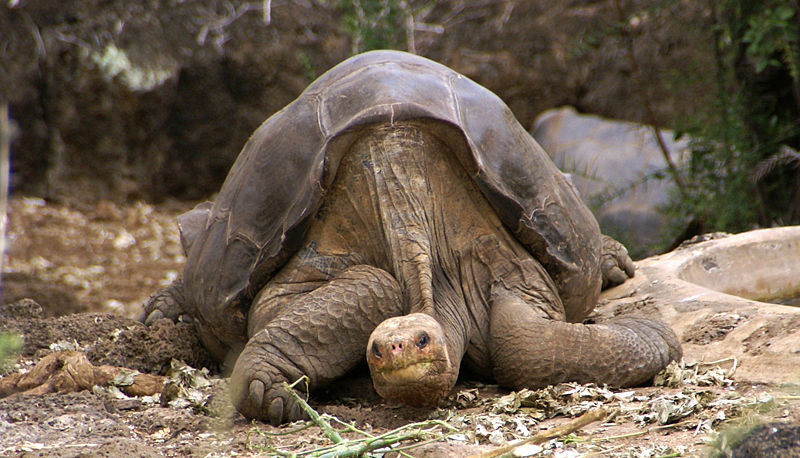
The photo I took of a tortoise on Santa Cruz Island in the Galapagos in 2004. — Photo by Pat Bean

“The tortoise only moves forward by sticking his neck out. I think it’s the same with humans.” – Pat Bean

I Met the Two Famous Ones

            There was a story about Diego in the New York Times this week that brought back memories of my 2004 trip to the Galapagos Islands. Diego is a tortoise that was taken from Espanola Island to the San Diego Zoo sometime in the 1930s. He belongs to the species of giant tortoises scientifically known as Chelonoidis hoodensis, or more commonly the Espanola tortoises.

Diego, the 100-year-old tortoise who has helped bring his species back from the brink of extinction.

There were originally 15 tortoise species in the Galapagos, but five of them are now extinct, with the last of the five dying out with the death of Lonesome George in 2012. I got to see both George and Diego at the Charles Darwin Research Station on Santa Cruz Island during the week that I spent cruising from island to island in a 16-passenger catamaran. Both of the tortoises stories fascinated me.

Lonesome George’s because he was the last of his species, and Diego, who had been brought back to the Galapagos in 1977 to help his species avoid extinction. At that time, there were only a dozen of his species known to still be alive, and while 10 of those were females, the two males were too young, too inexperienced, or too stand-offish to mate with them.

Diego’s male macho instincts on being returned to the Galapagos solved that problem. By some estimates, Diego, who is now 100 years old, has fathered over 800 tortoise babies.

Lonesome George before his death in 2012, He was the last of his tortoise species.

The Galapagos tortoises, which can weigh up to 900 pounds or so, have shells of various sizes and shapes. The ones living on humid highland islands are larger with domed shells and short necks. On islands with dry lowlands, the tortoises are smaller with long necks. Darwin noted these differences during his second visit to the islands in 1835, and they most likely, along with his observation of finches, helped him contemplate the theory of evolution.

As stories go, Diego’s is the one I like best. While the demise of the tortoises from about 250,000 in the 16th century to only about 3,000 in the 1970s is primarily due to the fact that humans think they tasted good, it was humans who also helped bring their numbers back up. Currently, there are about 20,000 tortoises in the wild – and Diego, who is scheduled to be released back on Santa Cruz Island will be one of them.

Blog pick of the Day. Check it out.

Bean Pat: My Botanical Garden http://tinyurl.com/jbswvwm I love the thought behind this blog. It’s sort of like my desire to always look for that silver lining, like the fact there are more tortoises in the world today than there were 50 years ago.

Read Full Post »

“If you don’t have time to read, you don’t have the time (or the tools) to write. Simple as that.”  — Stephen King

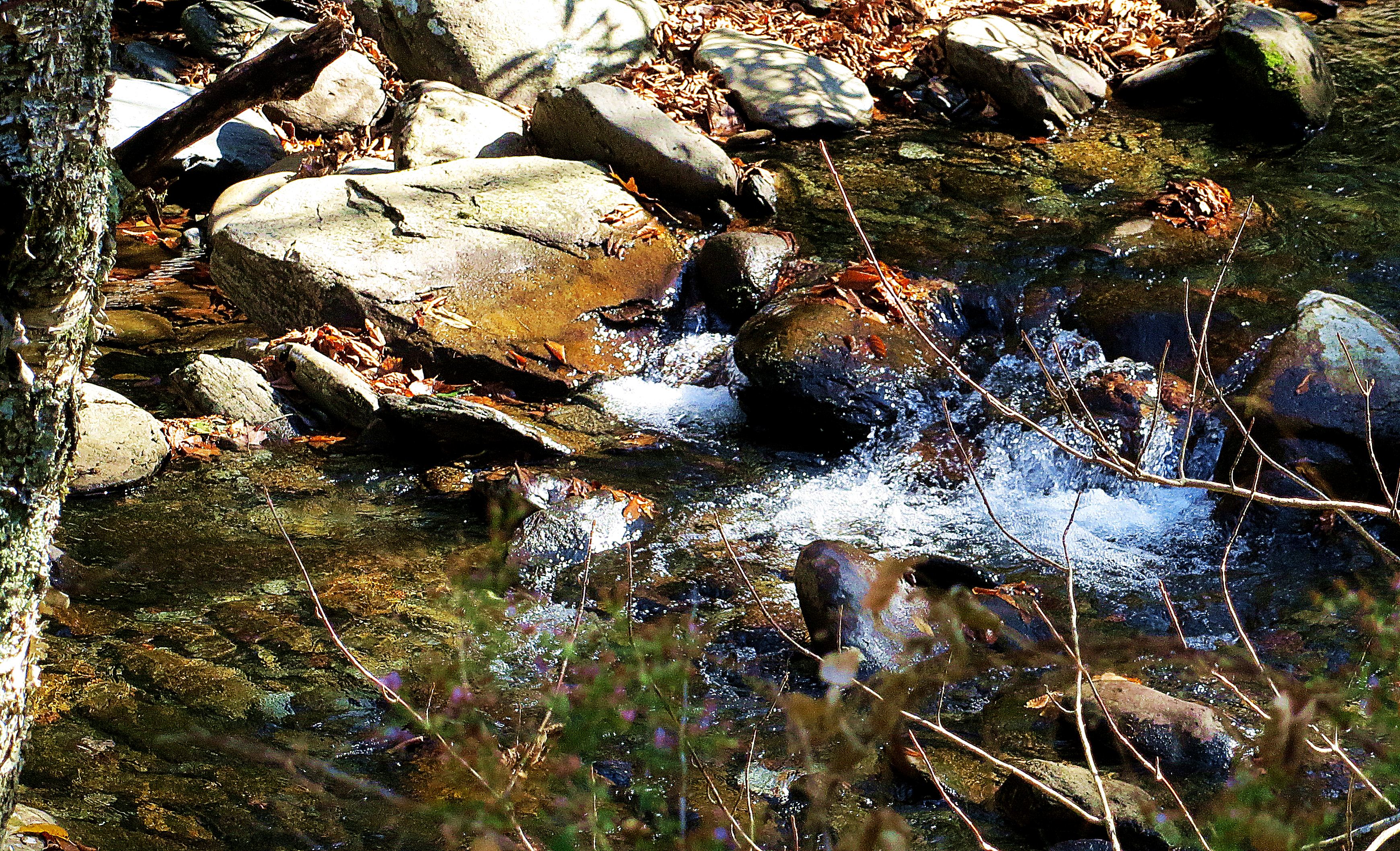
A good writer will let you see beyond the picture and hear the water gurgling. — Photo by Pat Bean in Smoky Mountain National Park.

Five Books at a Time

My reading table always contains five books. In addition, there are books scattered all around my house – many waiting to become one of the five that are currently being read. I usually read the selected five one chapter at a time, rotating between them in order.

Well that’s what I do until one of the five demands I continue reading until I finish it without stopping, which I have to admit, is not a rare occurrence. And if that happens, nothing else gets done until the book is finished – and I love it when this happens.

I started my unusual reading habit for two reasons. The first is that there are books that I knew I wanted to read, but couldn’t seem to get into them. If I recall correctly, the first time that happened was with a James Michener novel, The Source. So I began reading just a few pages in it every night, and then I would pick up a book that held my attention better, At some point in Michener’s book, my interest took hold and I finished it quickly.

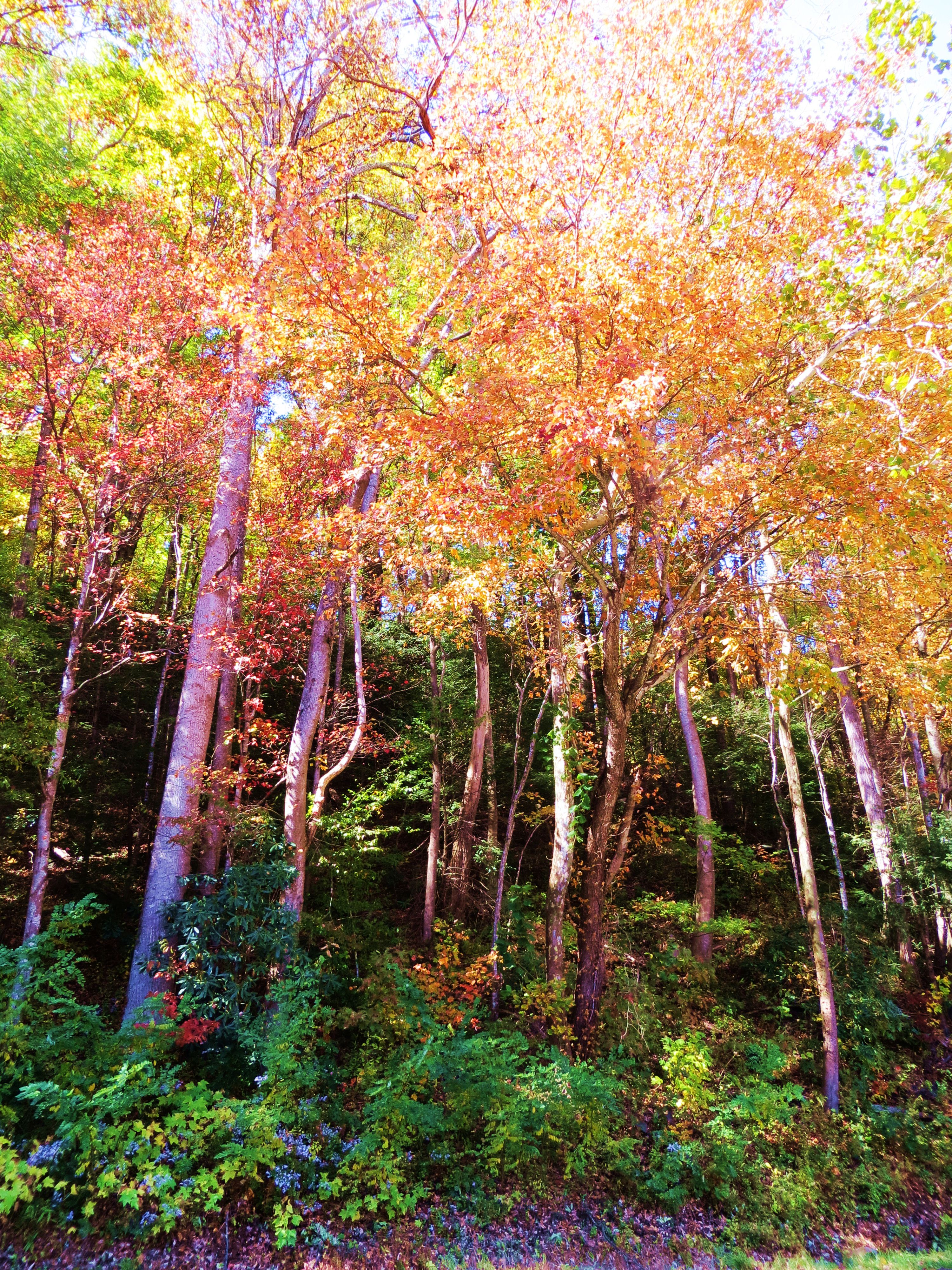
A good writer can place you in this forest and let you see the colors. — Photo by Pat Bean

I’m not a speed reader, but I can read fast when my attention is harnessed. On average, I read two complete books in a week. Reading too fast, however, was my second reason for reading several books at a time. Once a book takes hold of me, especially if I want to know what is going to happen next, I find myself reading so fast I don’t digest what I’m reading,

By reading several books at a time, I find myself better able to remember what I’ve read, maybe because I have to recall what went before when I return to the book. It works for me is all I can say.

Another habit I have is reading with both my journal and my daily to-do list nearby. In the journal, I write down quotes from the books, and my own thoughts about things I read. On my to-do list, I often jot down names of places that are mentioned, which I will later locate on a map or read more about. I also write down any words I do not know the meaning of, and will later look them up in a dictionary. This habit means nary a day goes by that I don’ learn something new.

Meanwhile, this slow-down ritual of reading that I’ve developed is also a tool for studying good writing, a habit that hundreds of authors have suggested makes for good writing. And good writing is definitely something I’ve come to love and appreciate. It was actually a piece of good writing that inspired this blog. After copying the paragraph down in my journal, I was inspired to share it.

I came across the paragraph in an essay by Eric Hansen that was included in his book, The Bird Man and the Lap Dancer: Close Encounters with Strangers.

It is the story of an elderly Russian woman who narrowly escaped with her life during World War II, and who now lives in a rent-controlled apartment in one of New York City’s worst sections of town. The woman, known as Madame Zova, warns Eric not to visit at night because it is too dangerous. He admits he is afraid to visit in the day, too, But he does. Later, when Eric has moved to California, he talks to Zoey, as he came to call her, on the phone, and asks if she is afraid to live alone. It is her reply, which Eric recalls in a marvelous piece of writing, that moves me intensely.

“No,” she said. “I am not afraid because I know what it means to love life and survive. People with no belief and no faith and no hope are like empty box. They have nothing. Miracles happen every day. You think red tulip growing from black soil is not a miracle?”

So what good books are you reading?

Blog pick of the Day. Check it out.

Bean Pat: The Day After http://tinyurl.com/htebvmj As a person with wanderlust in my soul, these photos made me want to take a walk. Perhaps they will affect you the same way.

Read Full Post »

img_3981

2001 Memories of a Non-Wandering Wanderer

Among the first new sights I saw, as the M.V. Columbia as the large ferry left Haines, were sea otters and porpoises in the water around the boat. Then, farther out, I watched as a humpback whale surfaced. It was as if this portion of my journey had been blessed.

I can't think of too many animals cuter than a sea otter. Can you? And seeing them in the wild was as good as it gets. -- Wikimedia photo.

I can’t think of too many animals cuter than a sea otter. Can you? And seeing them in the wild was as good as it gets. — Wikimedia photo.

Despite being tired from a half day of driving and a half day of sight-seeing, the spirit of the voyage encouraged me to stay up late and watch as our boat maneuvered through the Wrangell Narrows in the dark hours of the early morning.

The Narrows is a 22-mile long winding channel that is too shallow and narrow for the larger cruise ships to navigate. It requires an expert pilot to maneuver through the passage’s sharp turns. I could almost feel the tension as the ferry approached the town of Petersburg, which marks the north entrance to the channel. I dutifully watched the lighted buoys marking the path ahead – but that was pretty much all I could see in the dark.

Shortly after Petersburg, I gave up and went to bed in my tiny room on my tiny bunk.

Bean Pat: In search of snow http://tinyurl.com/hlolo66 Beautiful snowy photos that I enjoyed traveling through in my armchair.

Read Full Post »

A page from my journal with a picture of the ferry that I took.

A page from my journal with a picture of the ferry that I took.

            “Travel is like love, mostly because it’s a heightened state of awareness, in which we are mindful, receptive, undimmed by familiarity and ready to be transformed. That is why the best trips, like the best love affairs, never really end.” — Pico Iyer

2001 Memories of a Non-Wandering Wanderer

Map of the Alaskan Marine Highway.

Map of the Alaskan Marine Highway.

            It was early afternoon when I arrived in Haines, where I continued to see bald eagles, plus puffins and a big-eyed seal. I still had plenty of time before I would drive myself aboard the M.V. Columbia for the three-day cruise down the Inside Passage to Bellingham, Washington.

To pass the time, I explored the small town, and visited the local history museum, where I learned all about Tlingit symbols, which I had been seeing on totem poles. Originally, totem poles were carved and raised to represent a family clan’s dignity, accomplishments, adventures and stories. Learning what the symbols meant helped me better appreciate the totem poles I would see later.

Afterwards I went in search of a Coke to quench a sudden craving – and couldn’t find one. I had to laugh at that – and be thankful for the surprises of travel. I then got in the vehicle line to board the ferry.

Haines, Alaska. -- Wikimedia photo

Haines, Alaska. — Wikimedia photo

After parking my car in the large space below, I went up on deck to find my cabin, a tiny like hall with a small porthole at the far end, and just enough room to squeeze in and sit on its bunk bed. I noted that passengers without rooms simply claimed a lounge chair on deck. I wished I had done the same. But when I booked the reservation, I hadn’t known that was possible.

Hmmm. Perhaps I should add taking the Alaska Ferry a second time to my bucket list. It was an exciting adventure.

Bean Pat: Morning Walk http://tinyurl.com/zhrr7rs With coffee and reflections. One of my favorite bloggers.

Read Full Post »

“The real voyage of discovery consists not in seeking new landscapes, but in having new eyes.” Marcel Proust

Forget-me-nots by the roadside. -- Wikimedia photo

Forget-me-nots by the roadside. — Wikimedia photo

2001 Memories of a Non-Wandering Wanderer

I remember clearly when Alaska became a state in 1959. It had been an issue that had been discussed in the news for several years before it actually happened. And it had been one of the issues I debated in school.

Bald Eagles near Haines ... Wikimedia photo

Bald Eagles near Haines … Wikimedia photo

I remember that I took the opposing view, and one of my arguments against Alaska becoming a state was that it would mean Texas would then be only the second smallest state. Dumb argument, but what do you expect from a 14-year-old native Texan. And as I recall that argument was met by another 14-year-old who said: Alaska wouldn’t be bigger if all the snow and ice were melted away.

I thought about those school days as I drove from Haines Junction, Yukon, to Haines, Alaska, where I would catch a Ferry that would take me and my vehicle on the Inland Passage to Vancouver, Washington.

It was yet again another scenic drive, one with quite a few lake overlooks, an abundance of ground squirrels flittering here and there, trees full of bald eagles and roadsides full of small blue flowers.

Forget-me-not, up close and personal

Forget-me-not, up close and personal

I identified the flowers as Forget-me-nots, and learned it was Alaska’s state flower. From an Alaska guidebook, I also learned that the For-get-me not was first adopted in 1907 as the official flower of the “Grand Igloo,” an organization formed by pioneers that had arrived in Alaska before 1900, and that in 1917 it was proposed that the flower be declared the official emblem of the newly created Alaskan Territory. Esther Birdsall Darling wrote a poem for the occasion:

        So in thinking for an emblem

        For this Empire of the North

        We will choose this azure flower

         That the golden days bring forth,

        For we want men to remember

        That Alaska came to stay  

       Though she slept unknown for ages

        And awakened in a day.

        So although they say we’re living  

       In the land that God forgot,  

       We’ll recall Alaska to them

        With our blue Forget-me-not.

The Alaska Flag

The Alaska Flag

In 1927, Benny Benson, a 13-year old Aleut boy, referenced the Forget-me not with his winning flag design for the territory. He said the blue field represented the sky and the blue of the Forget-me-not flower. The North Star is for the future state of Alaska, and the Dipper is for the Great Bear – symbolizing strength, he added.

When Alaska entered the Union as the 49th state, Benny flag was retained as the state flag – and the Forget-me-not was adopted as the official state flower.

And it seemed that everywhere I looked on the drive this day, I saw Forget-me-nots. And I never will forget them.

Bean Pat: Forest Garden http://tinyurl.com/hk8rssn Flowers and Words, lovely.

Read Full Post »

« Newer Posts - Older Posts »