Feeds:
Posts
Comments

Archive for the ‘Birds’ Category

 “If you want to make your dreams come true, the first thing you have to do is wake up.” – J.M. Power
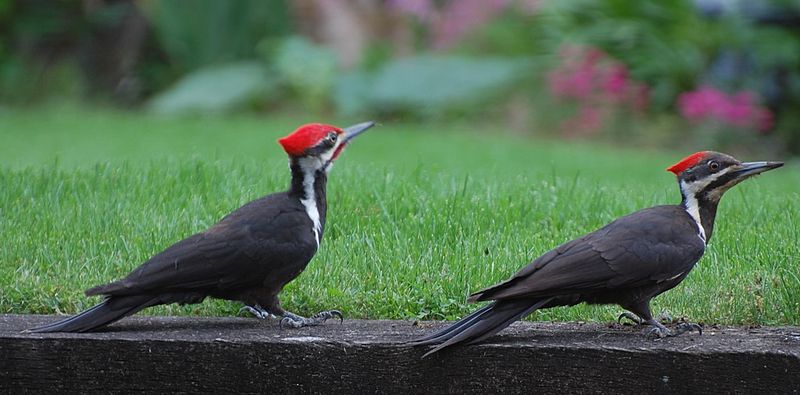
 

A pair of pileated woodpeckers -- Wikipedia photo


Travels With Maggie

I awoke this morning to a rapid knocking coming from outside my RV, which is now parked in the driveway at the home of my son, Lewis, who lives near the Texas Gulf Coast.

One side of Gypsy Lee faces my son’s house and the other a thick row of hedges and tall trees that daily host a vast variety of birds, squirrels, an occasional cat – and on the foliage-lined walkway every morning at 7 o’clock an elderly man walking his very vocal golden-red bloodhound.

Several small dogs on the far side of the woodsy public right of way, always bark when they hear the hound’s deep rumbling voice. Maggie, 14 and quite deaf, usually sleeps through the ruckus. Thankfully I’m almost always up at this time of morning.
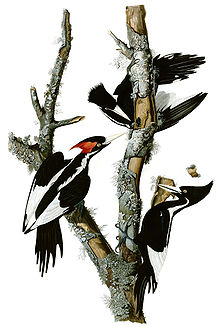
 

Ivory-billed woodpeckers -- Painting by John James Audubon

I was still abed, however, although awake reading while waiting for daylight, when the knocking begin. It was deeper and more persistence than that of a downy woodpecker, which is the most frequent morning visitor that lets me know it’s hovering nearby by knocking on a tree. The sound always triggers my brain to the tapping and rapping at Poe’s door by a raven.

I suspected my bird this morning, however, might be a pileated woodpecker. A look through my binoculars, which are always handy, confirmed my suspicions. Even in the morning’s dim light, this large woodpecker’s size and shape can’t be missed.

It wasn’t the first time I’ve seen and heard this close look-alike of the more famous ivory-billed woodpecker, which was thought to be extinct until recently. Several respected ornithologists now say they have seen this bird, whose last documented sighting happened in the 1940s. Other, also respected ornithologists, are skeptical.

I just hope that we humans don’t do to the pileated woodpeckers what we did to the ivory-billed, which is to destroy its last remaining habitat.

The pileated survived because it adapted to change. It’s a good lesson for us all in this fast-changing world.

Read Full Post »

 “My favorite weather is bird-chirping weather.” Terri Guillemets

Himalayan snowcock -- Wikipedia photo

Chasing Birds

While the recently released movie, “The Big Year,” hasn’t been a top box-office hit, I thought it was a great film. Of course I’m a passionate birder and could relate to the chase to be best North American Birder of the Year.

The record number of species seen between Jan. 1 and Dec. 31, by the way, is 745 species. I won’t tell you who holds the title, however, because that might spoil the movie for one of my readers who hasn’t yet seen it.

One of the scenes in the film, which shows just how crazy we birders can get, depicts a wild helicopter chase of Himalayan snowcocks in Nevada’s Ruby Mountains.

Chukar on Antelope Island ... Photo by Pat Bean

Boy I wish I had such a conveyance at my convenience. I’ve never seen this pheasant species, and these days am not up to the rough hike, which unless one is extra lucky, is the most likely way of spotting one.

I may still give it a try next year, however. Like a lot of other birders, “The Big Year” inspired me to step up my birding game. And my curiosity about snowcocks inspired me to see what I could find out about these birds. The Internet, which I have come to love, turned up a couple of interesting blogs from birders who have seen the Himalayan snowcocks in the Ruby Mountains.

I noticed, when looking at pictures of the birds on a couple of Web sites – http://tinyurl.com/3uya55p and http://tinyurl.com/3w6edbx– that the snowcocks look a lot like the chukars I have seen on Antelope Island in Utah’s Great Salt Lake.

The chukar, however, is not a difficult bird to add to one’s life list. It can be seen in at least nine western states, whereas the snowcock can only be found on this continent in the Ruby Mountains. And it wouldn’t even be there except that Nevada Fish and Game thought the bird would be a good game bird for hunters – and in the 1960s, transplanted about 200 of them there from Pakistan.

There may be 500 or more of the birds today roaming around the mountains near Wells, Nevada. Yes, I am for sure going to have to visit the Ruby Mountains soon. The snowcocks are calling to me.


Read Full Post »

“Reading about nature is fine, but if a person walks in the woods and listens carefully, he can learn more than what is in books … “  —  George Washington Carver

Chasing Birds


While I didn't have my camera the day I walked in the Dow Woods, I've taken it often to the San Bernard National Wildlife Refuge, where Lewis and I have trod this boardwalk through Bobcat Woods. -- Photo by Pat Bean

A new addition to Texas’ wildlife sanctuary complex, the Dow Woods, opened this past week. Located just five minutes from my son, Lewis’, home in Lake Jackson. We two avid birders had to check it out of course.

The 338-acre site, designated as part of the San Bernard National Wildlife Refuge, currently includes two loop trails, totaling 2.5 miles, that run along Bastrop Bayou. Plans are in the works to put in more trails in the near future.

The land was donated to the U.S. Fish and Wildlife Service by Dow Chemical, which was actually responsible for creating the town of Lake Jackson in the 1940s so its employees would have a place to live.

Lake Jackson, where our family lived from 1956-1971. is called the City of Enchantment, partly because of the vast number of trees that were spared when the swampy forest was cleared and drainage canals were dug so the land would be livable.


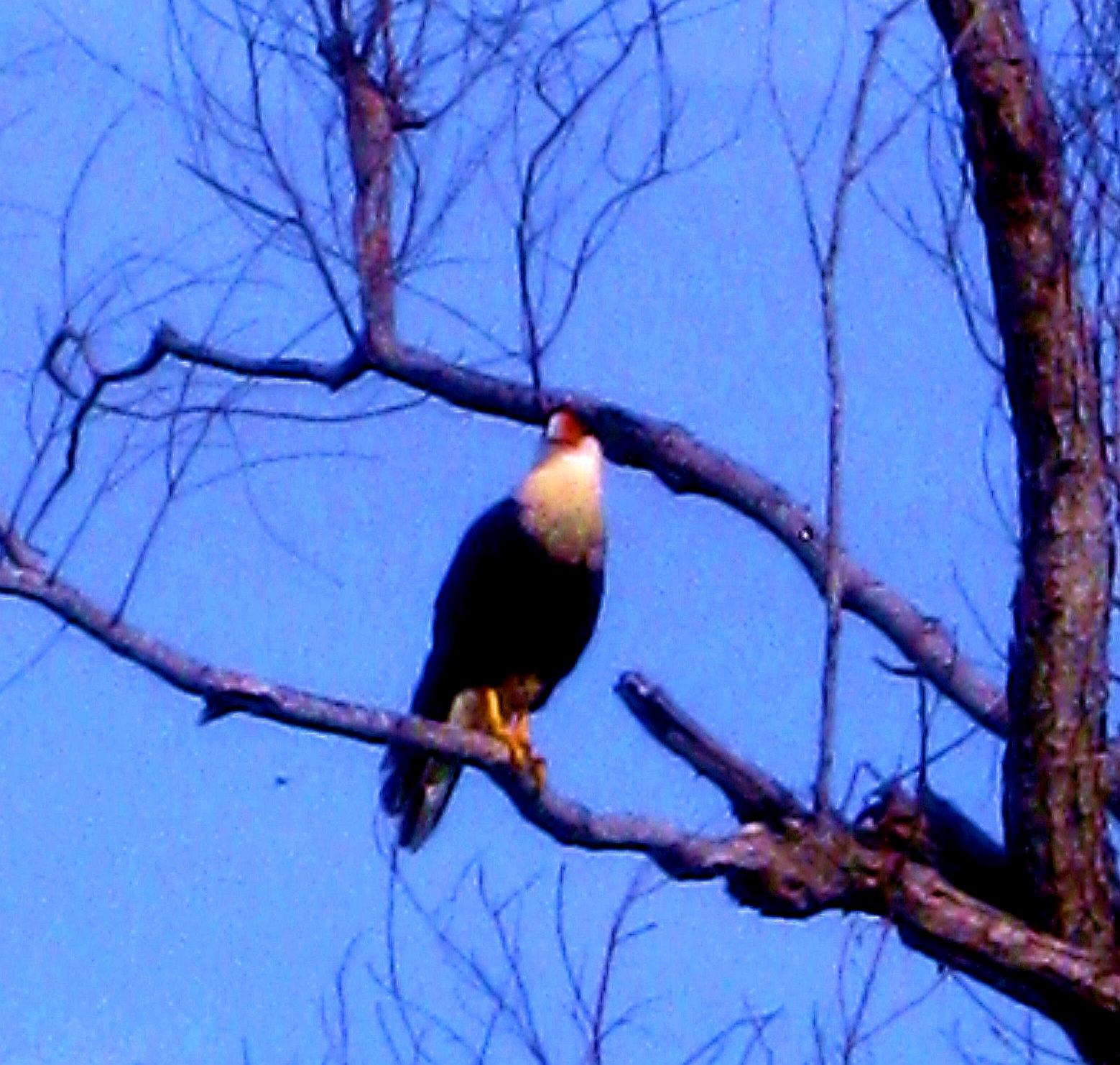
A crested caracara that I spotted at the San Bernard NWR. -- Photo by Pat Bean

 It’s nice to see that in a time when corporate greed is so rampant that a large employer is still both giving to the community and conserving the landscape.

The actions, along with the jobs the company provides the area, ease a bit the large footprint the chemical plant also has on the local landscape.

Lewis, whose favorite birding site, is the San Bernard National Wildlife Refuge’s main location, is delighted that this new addition to is so close to his home. And we both found it a delightful place to walk and look for birds.

I, however, was a bit upset with myself because while I remembered to bring my binoculars, I left my camera at home.

If you’re in the neighborhood, you should drop by. Dow Woods is located on Old Angleton (or County Road 288) about a mile north of FM 2004.

I plan to go back soon and take my camera. Perhaps I’ll see you there.

Read Full Post »

 “Accept that some days you are the pigeon, and some days you are the statue.” – David Brent


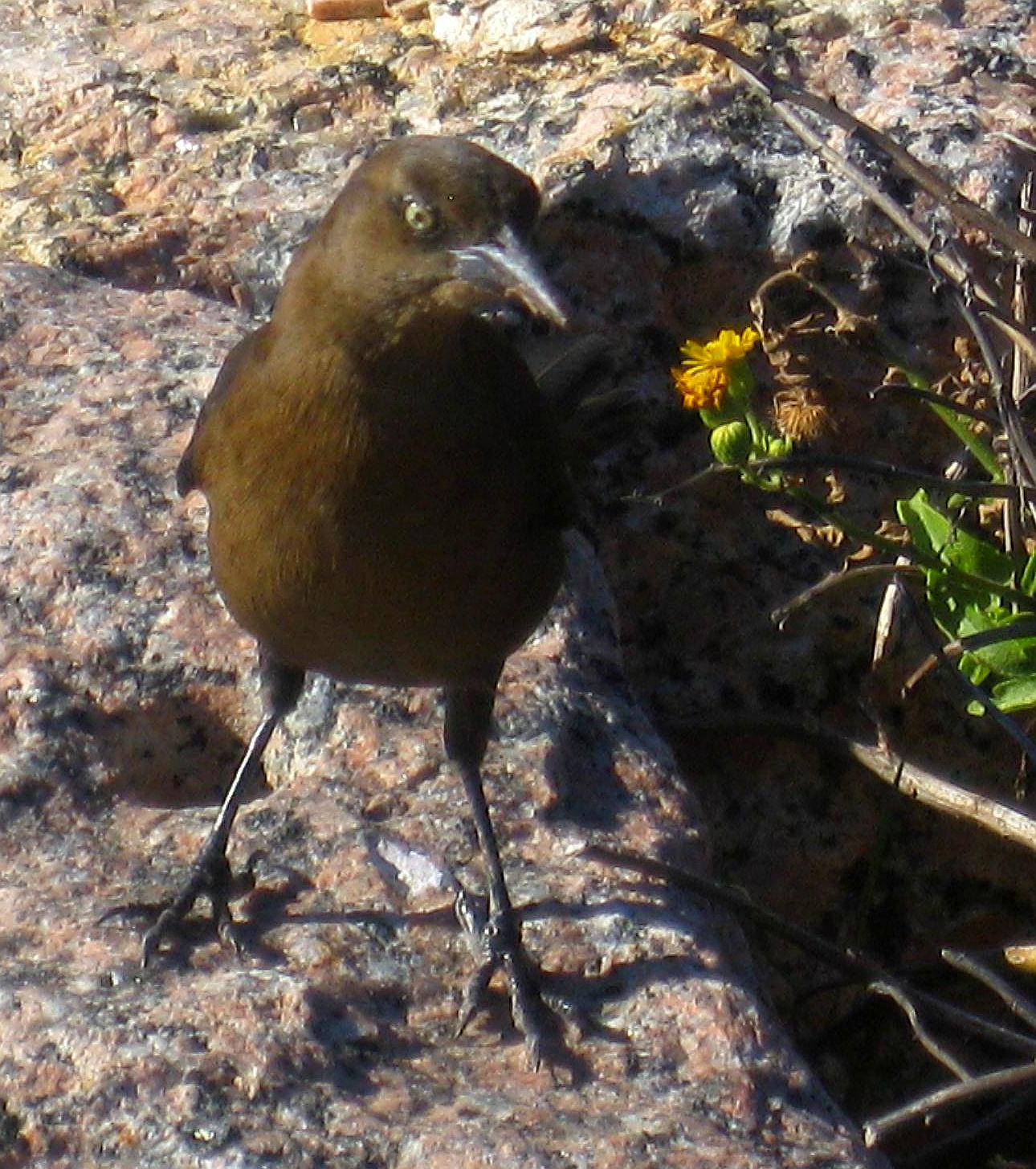
Female great-tailed grackle at Surfside -- Photo by Pat Bean


Chasing Birds

The photo on the left, taken this week at the Surfside Jetty where my son, Lewis, and I began a day of birding, shows the female great-tailed grackle that was pestering my son, Lewis, for a bite of his breakfast taco. Her male comrade was a bit more standoffish.

Great-tailed grackles are one of the birds that make every birder’s list if they live anywhere in Texas. The smaller common grackle is a bit more choosy about where it lives in the state, and the third North American grackle, the boat-tailed, even choosier. It can only be found along the shores of Texas’ Gulf Coast, and then mostly only on the more northern end. Florida is the boat-tail’s favorite habitat.

On this day of chasing down birds, the great-tailed grackle was the only one of the three species Lewis and I saw, although on most bird outings in the area we get the common, too, and occasionally even a boat-tailed grackle.


Male great-tailed grackle. Note the bright yellow eye.

It’s easy to tell the common and the great-tailed apart simply by size. The common is a 12-inch bird and the great-tailed a 15-18-inch bird, the male being the larger of the sexes.

The boat-tailed, meanwhile, is close in size to the great-tailed but with a very round head. compared to a very-flat head for the great-tailed. You can also easily tell the two apart if the boat-tailed is vocal – and it usually is. Its voice is more coarse and gravelly than those of the other two grackles. .

The females of all three species are varying shades of brown.

Grackles, which often roam about in large flocks, are considered nuisance birds by some. And while that might not be far off the mark, since they prefer harvesting a farmer’s crops more than living off uncultivated land, I still enjoying watching them.

Perhaps it’s because I admire their attitude, such as the one displayed by the female this day that wasn’t going to be intimidated out of any Taco droppings by we mere humans. Or perhaps it’s because I find the iridescent purple and green sheen on the males’ feathers a work of art.

Or perhaps it’s simply because all birds fascinate me.

Read Full Post »

“In all things of nature there is something of the marvelous.” Aristotle  

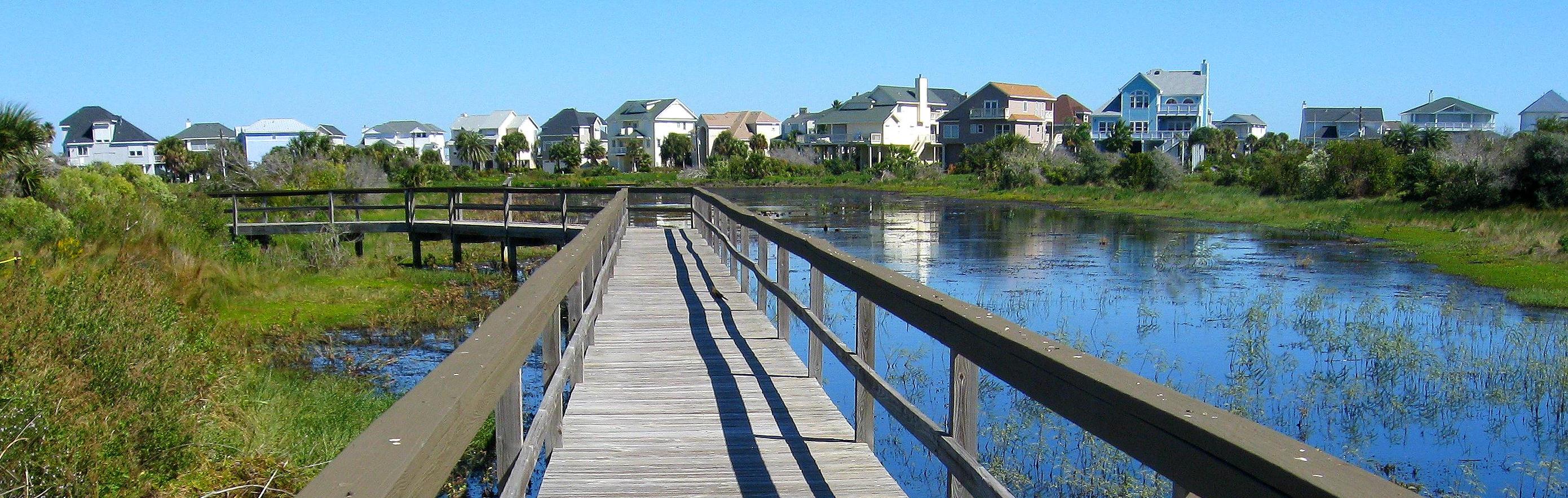
Boardwalk entry into Lafitte Cove Nature Preserve -- Photo by Pat Bean

Chasing Birds

I found myself surrounded by pricy homes this past week, walking a Galveston Island landscape that once belonged to the infamous Jean Lafitte. He came to the island in 1817, which at the time was mostly uninhabited except for Karankawa Indians. 

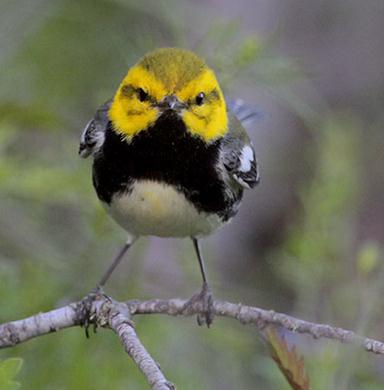
Black-throated green warbler -- Photo by Joanne Kamo http://www.pbase.com/jitams

Lafitte battled the Indians and used the island, with its protected bay, as a base for his smuggling and pirating activities until 1821, when he made the mistake of attacking an American merchant ship. The schooner, the USS Enterprise, was sent then to oust him.

Lafitte agreed to leave the island without a fight, but before he did he burned the settlement and fortress he had created, and is said to have taken a huge amount of treasure away with him.

I hadn’t come to the place for its historical significance, however. I had come in search of birds in the small sanctuary that sat in the middle of the residential neighborhood.

Marker near the nature preserve noting that Lafitte fought a battle with the Karankawa Indians at this site. -- Photo by Pat Bean

In honor of Lafitte– although I’m not sure what there is to honor, except that perhaps along with his nefarious pirating activities he helped Andrew Jackson defend New Orleans in 1815 – the sanctuary was dubbed Lafitte’s Cove Nature Preserve.

Its boardwalk and paved paths wander past a wetlands area, a small lake and though thick woodlands; its location, just inland from the gulf, makes it an ideal stopover for birds migrating along the coast.

On the day my son, Lewis, and I birded the preserve, we saw mottled ducks, blue-winged teals, mallards, white-eye vireos, orange-crowned warblers, cardinals, mockingbirds, brown thrashers, black-throated-green warblers and blue-headed vireos, which I thought was a pretty good number for a very windy day in October.

Lewis, who had birded the small sanctuary in May, said he had seen at least triple the number of species on that outing.

Wouldn’t it be nice, I thought, if every residential neighborhood saved a small patch of land for the birds. Don’t you agree?

Read Full Post »

“To find the universal elements enough; to find the air and the water exhilarating; to be refreshed by a morning walk or an evening saunter; to be thrilled by the stars at night; to be elated over a bird’s nest or a wildflower in spring – these are some of the rewards of the simple life.”  ~John Burroughs

Birding Day

I abandoned my blog this morning, and spent the day out birding with my son Lewis. I just barely got back, and words always fail me this time of day. So I’ll simply share one of the photos I took today. Hopefully you’ll think it worth my usual 350 words.

Great

Great egrets and roseate spoonbils at Surfside -- Photo by Pat Bean

Read Full Post »

“…we turned a point of the hill on our left, and came suddenly in sight of another and much larger lake, which, along its eastern shore, was closely bordered by the high black ridge which walled it in by a precipitous face … Spread out over a length of 20 miles, the lake, when we first came in view, presented a handsome sheet of water; and I gave to it the name Lake Albert, in honor of the chief of the corps to which I belong. …” John Fremont

Lake Albert's southeast end from Highway 395. -- Photo by Pat Bean

Travels With Maggie

Highway 395 stretches for 1,370 miles – from the Canadian border in Washington, down through Oregon, California, Nevada and back into California, where it ends just about 150 miles short of the Mexican border. .

I drove 730 miles of it heading south last month, beginning in Pendleton, Oregon, and ending when I turned west onto Highway 120 that would take me up and over 9,943-foot Tioga Pass through the Sierra Nevada Mountains and down into Yosemite Valley.

Much of the drive was on steep, narrow, winding roads with little traffic. I loved every moment of the journey.

Lake Albert from Albert Rim -- Wikipedia photo

The route winds through Oregon’s Battle Mountain State Park, the Umatilla, Malheur, Modoc, Toiyabe and Inyo national forests, and the X L Ranch Indian Reservation, passing numerous lakes on the way. There’s Goose Lake in Oregon, located near Fandango Pass that was used by early settlers to California; Nevada’s Washoe Lake, located between Reno and Carson City and popular with windsurfers; and Mono Lake in California, which was on my bucket list because of its importance to migrating shore birds.

A smaller lake that captured my attention was Oregon’s Lake Albert. Like Mono, it is too salty for fish to live in its waters. It has, however, a dense population of brine shrimp that make it a popular dining stopover for migrating grebes, phalaropes, terns, avocets, geese, stilts, ibis and other birds.

Albert Rim geology marker -- Photo by Pat Bean

Canada geese were the main occupants on the narrow lake the day I drove the 15-mile section of Highway 395 that overlooks the east side of the lake from just feet away. I stopped several times to admire the lonely and lovely view of pink hills reflecting onto the water from the opposite shore.

I also found myself fascinated by the geology marker that explained the lava ridge running parallel to the lake. Known as the Albert Rim, it’s one of the highest fault scarps in the United States.

Except for the highway, which ran between the basalt ridge and the lake, and an occasional passing vehicle, I suspected the landscape still looked pretty much as it did during John Fremont’s mapping expedition in central and southern Oregon back in the 1840s.

It’s rare to find a place so little impacted by we humans – and wonderful.

Read Full Post »

“A leaf fluttered in through the window this morning, as if supported by the rays of the sun, a bird settled on the fire escape, joy in the task of coffee, joy accompanied me as I walked.” Anais Nin

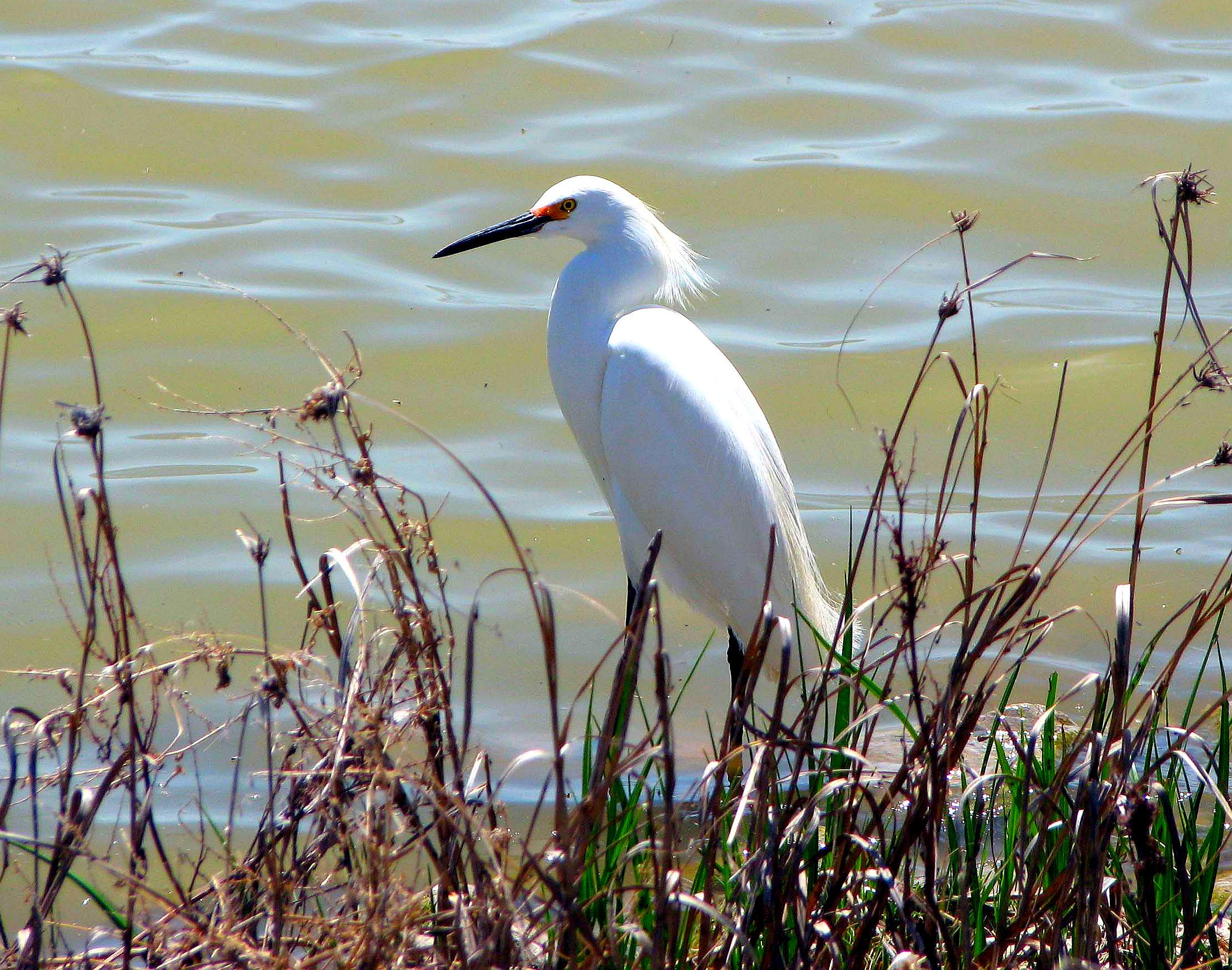
Snowy egret at the Bear River Migratory Bird Refuge in Utah. -- Photo by Pat Bean

Travels With Maggie

The landscape around the Texas Gulf Coast home of my son, Lewis, is always full of birds. It is why my binoculars are always sitting beside me when my RV, Gypsy Lee, is parked in his driveway.

Wrens, woodpeckers, warblers, hawks and ducks all visit or pass through his yard.

This morning, Carolina wrens inspected the gutters over his garage, a pair of cardinals sat on the utility wires attached to his roof and a flock of black-bellied whistling ducks flew overhead, alerting me to their presence with their high-pitched chorus as they winged past in V-formation.

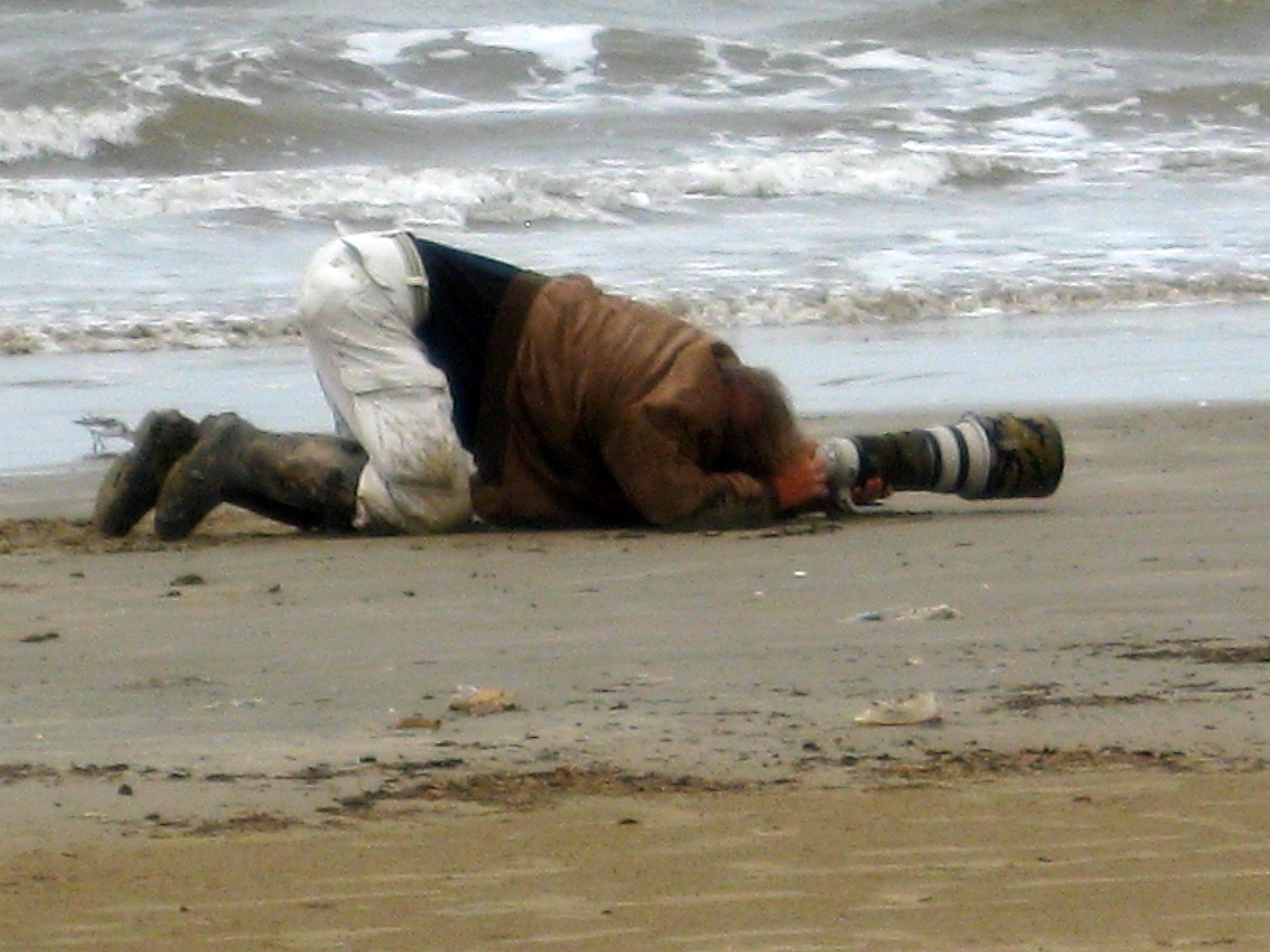
Is this a photographer taking picture of birds, or a birdwatcher photographing birds? -- Photo by Pat Bean

The park directly across the street from my son’s home offers even more entertainment for this passionate birder: Logger-head shrikes hang out in the trees, mockingbirds frequently chase away a red-tailed hawk when it comes around and goldfinches hang around the feeders in the yard next to the park.

I sometimes think I might be mistaken for a peeping Tom, or in my case a Jane, because I might appear to be looking in someone’s window when I’m simply watching a ruby-throated hummingbird flitting around the flowers.

If you really want to know how crazy we avid birders are, you should go see the movie, “The Big Year.” It’s about competitive bird watching. Or you can read the book, “The Big Year: A Tale of Man, Nature, and Fowl Obsession,” written by Mark Obmascik. It’s actually a true story and I couldn’t put it down once I started reading.


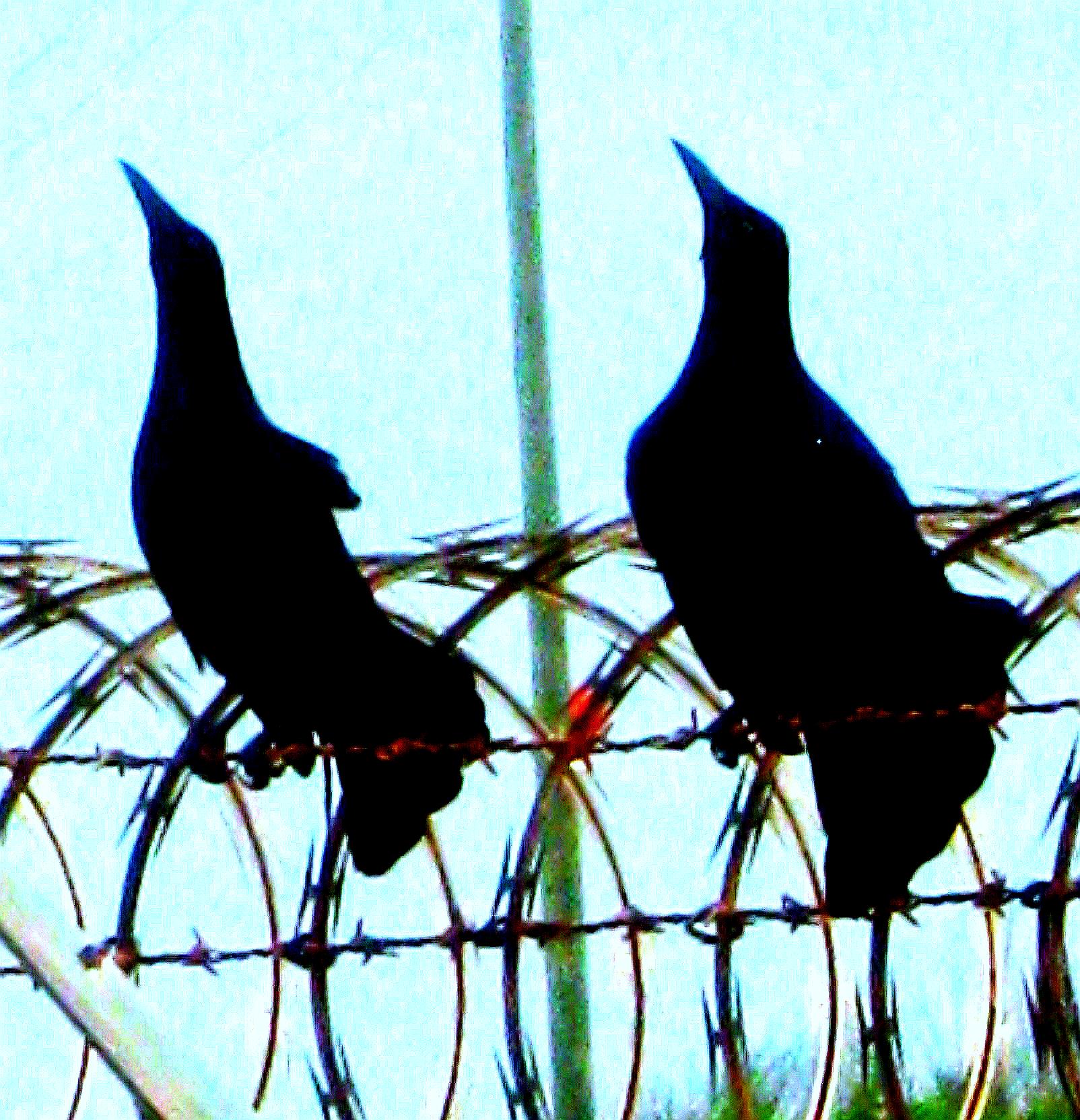
Great-tailed grackles near Surfside, Texas. -- Photo by Pat Bean

Recently, when I was down at the beach – to watch birds of course – I watched another bird watcher as he tried to take a picture of some skimmers. Watching him was almost as much fun as watching the skimmers myself. I wondered if he was more photographer than birder, or more birder than photographer, like me.

We birders are actually a funny, but much blessed lot. The day I realized I had joined the craziness was the day I took a 440-mile, one-day, round-trip drive just to see nesting ospreys.

In fact, many of the 122,000 miles I’ve put on Gypsy Lee the past seven years have been in pursuit of birds – from the elegant trogons in Southeast Arizona, to the marbled murrelets on the Oregon Coast, to the Atlantic puffins in Maine, and the Florida scrub jays in the Everglades.

It’s been one great feathered adventure after feathered adventure.

Perhaps that’s why, at least for a little while, I’m content to simply watch birds from the comfort of my RV that is parked in the driveway of my son.  

Read Full Post »

“Perhaps the truth depends on a walk around the lake.” Wallace Stevens


Looking down on Mono Lake from the Highway 395 overlook. -- Photo by Pat Bean

Travels With Maggie

My trip back to Texas from my summer in Idaho was a hurried affair. Usually I plan on arriving for my winter rounds with family just in time for Thanksgiving But a grandson’s wedding, which takes place tonight, moved that up by about six weeks.

Even so, I managed to knock two things off my to-do list, now more popularly called a bucket list, on my way back to my native Lone Star State.

Mono Lake and Yosemite National Park now have check marks beside them. .

It may be easier for some of you to understand why Yosemite was a place I wanted to visit than it is to understand why Mono Lake was on my list. After all, it’s simply a shallow, very salty, often smelly lake As we neared the lake basin, My canine traveling companion, Maggie, perked up at the smell, wrinkling her nose a bit as she caught the scent. . I’m not sure what she was thinking.


California gulls along the shoreline -- Photo by Pat Bean

 The odorous shoreline, however,  reminded me of Great Salt Lake, a place whose beauty I came to greatly appreciate while living next door to it for 25 years.

The Utah lake is larger and much younger than the smaller and much older California lake. Both, however, are part of the Western Hemisphere Shorebird Reserve Network that provides habitat for millions of migratory birds.

About the only species I saw on Mono Lake, however, was the California gull, which incidentally happens to be Utah’s state bird. It was given the honor after Mormon settlers in the Salt Lave Valley credited the gulls with saving their crops from a cricket infestation.

Neither lake has an outlet, and so remain the depository for everything that flows into them. Their importance to the ecosystem, however, has in recent years led to conservation practices engineered for their protection.

Mark Twain, in his “Roughing it,” called Mono Lake “a lifeless, treeless desert … the loneliest place on earth.”

I think otherwise.

Read Full Post »

 “A journey is a person in itself; no two are alike. And all plans, safeguards, policing, and coercion are fruitless. We find that after years of struggle that we do not take a trip; a trip takes us.” – John Steinbeck

My wandering mind waa on green jays as i drove Highway 36 toward Lake Jackson. -- Photo by Pat Bean

Travels With Maggie

With my canine traveling companion, Maggie, snoozing away in her co-pilot seat, I left Harker Heights, and my oldest son’s home, early for our drive to Lake Jackson, and my middle son’s home 250 miles away. It’s a very familiar drive for me, one I’ve made many times.

As I passed oil rigs, grazing cattle, cotton fields, mesquite trees and roadside sunflowers that let me know I was in Texas, I was glad to see the color green still existed. It had been missing on my drive two days earlier down Highway 190, clear evidence of the dastardly drought the state has been suffering. .

To all Texans living where heat and drought has scorched the landscape, I just wanted to show that green does still exist. This is the view from my RV window in Lake Jackson. -- Photo by Pat Bean

While admittedly things weren’t quite as lush as I remembered from past drives down Highway 36, the landscape was still a far cry from the brown and dying cedar trees, lack of grass and stunted and yellow cactus that had dominated my entry back into the Lone Star state on Tuesday.

The driving this day was easy with little traffic. As usual under such circumstances, my mind begins to wander. This day, it went south to the Rio Grande Valley, perhaps because I was thinking about when I would be able to go there and do some winter birding.

From Lake Jackson, where I was headed, it’s only a half day’s drive. I would have to see what bird festivals were going on down there in the coming months, I thought as I drove.

My mind must have still been with the fantastic green jays down there when I came to the Highway 35 turnoff, because I took it. I was looking for it in fact.

Oops!

I then realized that what I had actually been looking for was the Highway 36 turnoff that I always took when I returned from the valley. But then I had already been on Highway 36.
I guess I should have been paying more attention to where I was than where I wanted to go.

Anybody else out there have a mind that plays tricks on them like that?

If so, I hope you have a traveling companion like Maggie. She never yells at me when I take a wrong turn.

Read Full Post »

« Newer Posts - Older Posts »