Feeds:
Posts
Comments

Archive for the ‘Birds’ Category

“Nature always wears the colors of the spirit.” – Ralph Waldo Emerson

One Colorful Bird. No, Make That Two Birds

Elegant trogon. — Wikimedia photo

at Two

I hunted for the elegant trogon twice in Madera Canyon here in Southeastern Arizona – and did not find it. For my third try, a detour on one of my annual trips from Utah to Texas, I hired a bird guide out of Sierra Vista, and made a reservation at a Sierra Vista hotel to spend a couple of nights.

Three days before my trip was to begin, I bought Gypsy Lee, the small RV in which I would soon live in and travel in for nine years. I then switched my hotel reservation to an RV park reservation, which is how Sierra Vista became the first place I hooked up my RV. I still remember the trepidation I felt about that virgin event. I had to purchase a special sewer connection sold by the park. It was a connection that I never had to use again, and once I had the hang of it, I could hook up the water, electricity and sewer to my RV in just a couple of minutes.

I found my elegant trogon up Garden Canyon in Huachuca Mountains, just an hour and a half away from Tucson. . — Wikimedia photo

But back to that elegant trogon, which at the time was just as important to me as getting familiar with my new home on wheels.

The guide took me and two other birders onto Fort Huachuca in his VW Camper, and then on a hike up Garden Canyon. We hadn’t gone far when he pointed out an elegant trogon quietly sitting on a branch above a small stream. I could hardly breathe. This is one colorful bird.

I was the one, meanwhile, who saw the second trogon, and pointed it out. As our quartet of gazes shifted between the two birds, the first flew over to the second, and mated with her. It was all over in a matter of seconds.

I thought about this sighting, which took place on May 9, 2004, because I’m been thinking of a return trip to Garden Canyon, which I have never visited again. Nor have I seen another trogon.

Blog pick of the Day. Check it out.

Bean Pat: Mammoth Cave http://tinyurl.com/kap7kxd For the armchair traveler – and my bucket list.

Read Full Post »

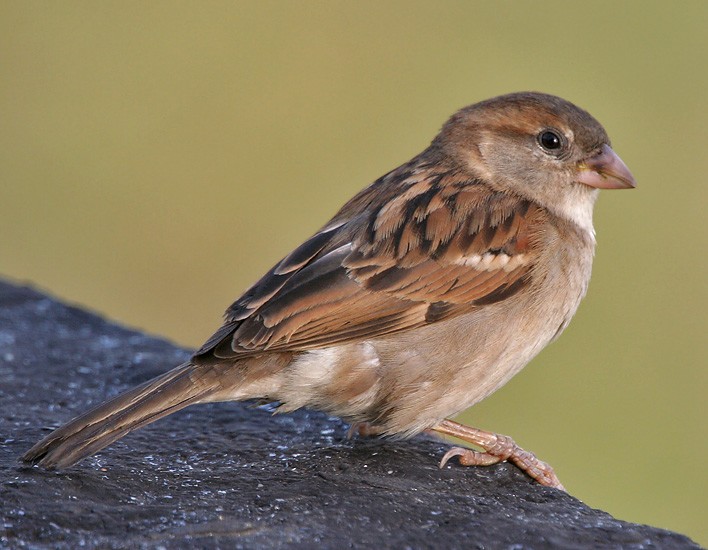
House sparrow. — Wikimedia photo

“To find the universal elements enough; to find the air and the water exhilarating; to be refreshed by a morning walk or an evening saunter… to be thrilled by the stars at night; to be elated over a bird’s nest or a wildflower in spring – these are some of the rewards of the simple life.” — John Burroughs

Chirp, Chirp, Chirp

My home in Ogden, Utah, had a huge Rose of Sharon bush growing in front of my bedroom window that brought me much delight and pleasure. It grew wild and free, and I let it have its way. I loved that bush, and so did the house sparrows, which also gave me many hours of pleasure.

A female house sparrow. — Wikimedia photo

Until I began seriously watching birds, I had never really noticed these seemingly plain brown birds. At least that’s how I thought of them until I looked more closely and saw that the male, especially in breeding season, was actually quite eye-catching.

On a Jan. 31, 2001, morning, not too long after I became an addicted bird watcher, I watched one such male, and wrote: “I have a gorgeous male house sparrow perched in my Rose of Sharon bush right outside my window. It’s sitting in the sunlight so I can clearly see it in all its splendid colors, rust brown, white and black, a perfect copy of the house sparrow illustration in my bird guide, complete with the white dot next to its eye.”

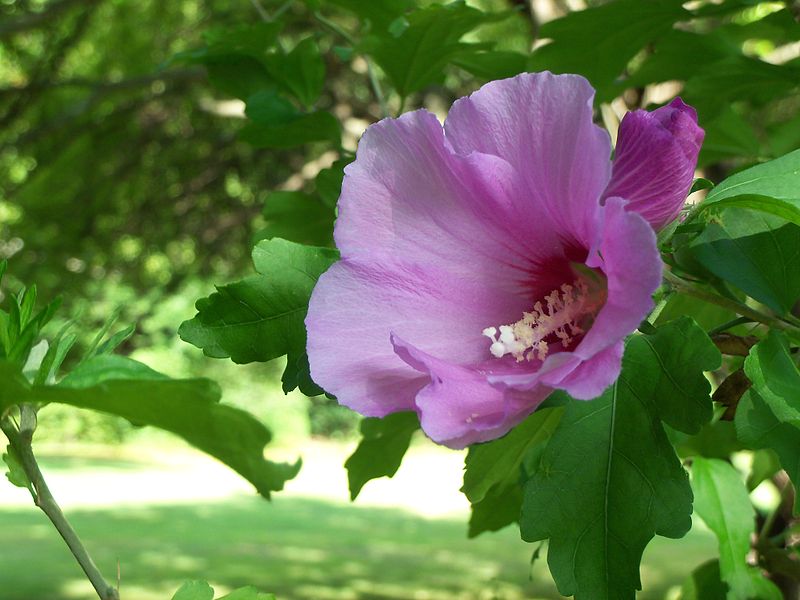
My Rose of Sharon bush always bloomed profusely in spring, and the blossoms stayed around for a long time. I miss that bush — and its resident sparrows. — Wikimedia photo

On another day, I wrote: “My house sparrow is chirping outside my window. The morning light is still dull so his colors aren’t showing well. But having once seen him in the light, I can pick the colors out. He’s really chirping this morning. Maybe he’s trying to attract a female.”

And so he did. And for the next couple of years, I watched as that first pair of house sparrows to take up residence in my Rose of Sharon raised babies. And I watched one morning as another female flew in, and was then chased away by the resident female while the male just looked on from his perch. And from that time forward, my morning wake-up call was always a chirp, chirp, chirp, which is about all these sparrows ever say.

House sparrows are one of about 25 sparrow species world-wide. They thrive near human populations, and love to forage just about everywhere on the planet where humans drop crumbs, from service stations to picnic grounds. I’ve seen them in Japan and Africa looking just like they did in my Rose of Sharon bush.

I’m sure if you look around you, wherever you live, you will find one, too.

            Bean Pat: Meditate Your Way http://tinyurl.com/n62noxy For all of us who find it impossible to sit still and control our minds. Bird watching works for me.

Read Full Post »

fr

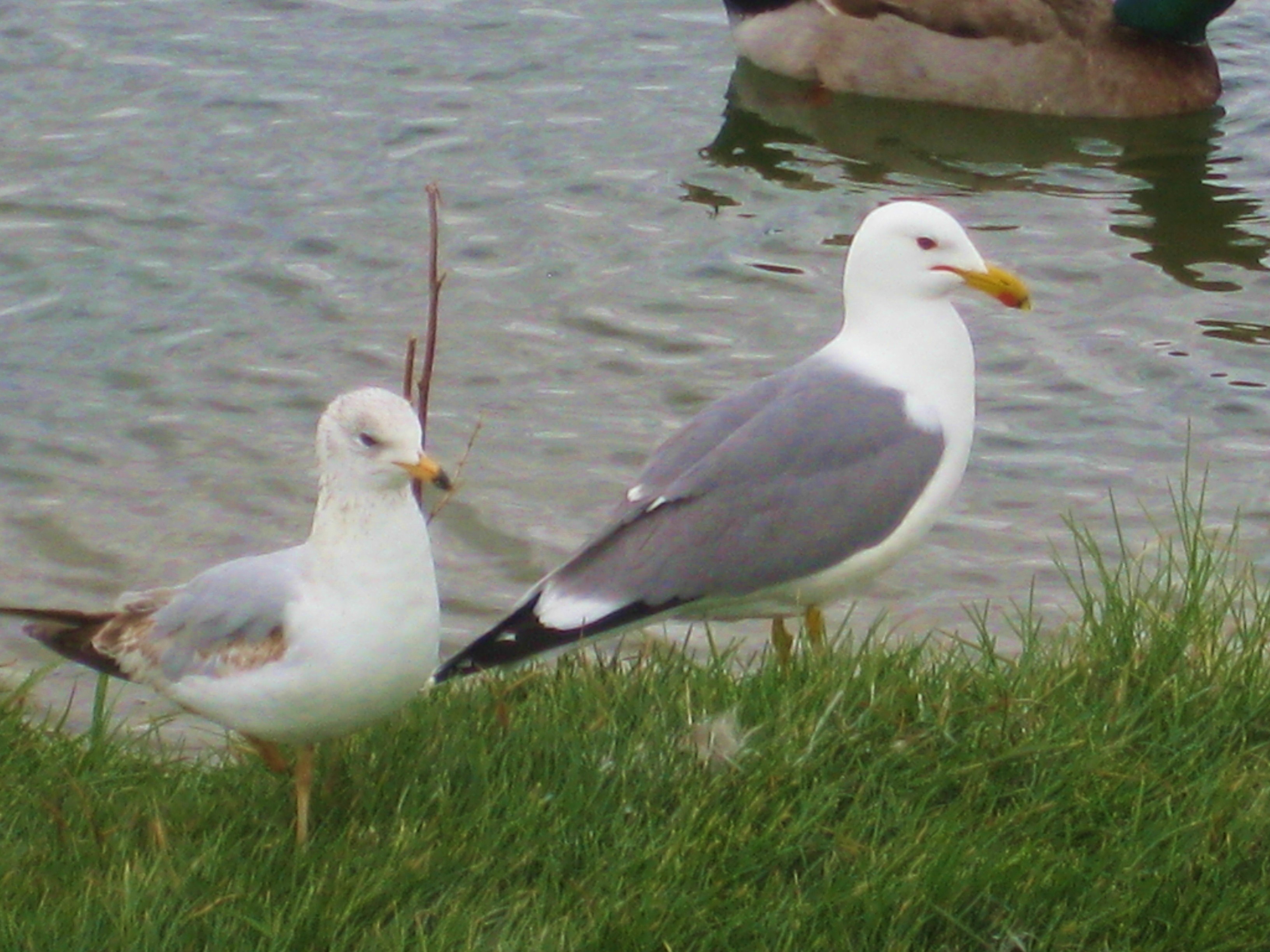
The gull on the left is a ring-billed, and the gull on the right is a California Gull, both of which are frequent visitors to Utah’s Great Salt Lake. For years I thought they were simply seagulls. — Photo by Pat Bean


In order to arrive at knowledge of the motions of birds in the air, it is first necessary to acquire knowledge of the winds, which we will prove by the motions of water in itself, and this knowledge will be a step enabling us to arrive at the knowledge of beings that fly between the air and the wind.” – Leonardo da Vinci

Just Ask Any Avid Birder

            In 1999, I became addicted to watching, identifying and listing birds. While I had always loved being outdoors in nature, these flying creatures, until this point in my life, had mostly gone unnoticed.

Then suddenly I was seeing them everywhere. I couldn’t not see them. Every profile on a utility pole, every rustle in a tree on a calm day, every small shadow flickering across my path had me looking to see a bird, and to identify it.

How had I lived for half a century and been so blind to their amazing numbers and varied activities?

My addiction didn’t happen overnight, however. I should have paid more attention to the warning signs, which included my suddenly finding opportunities to write about birds as part of my then assignment as an environmental reporter. Along with taking every opportunity to get out of the office for the day to research stories about things like forest management, wildlife habitat and water issues, I began writing stories that involved birds.

The Seagull Monument in Salt Lake City’s Temple Square. — Wikimedia photo

I wrote about backyard birding, hawk watching atop the Goshute Mountains, and the local Audubon field trips. But it was the story about Egg Island, a tiny bit of land in Great Salt Lake, that should have warned me about how crazy birders can be.

In writing the story, I called the gulls that nested on the island seagulls. As soon as the paper hit the streets, I had birders calling to tell me that there was no such thing as a seagull, that the birds nesting on the island were mostly California gulls. From the callers, I also learned that there were over 25 different species of gulls in North America – and none of them were seagulls.

I guess the artist who created the Seagull Statue that sits in Temple Square in Salt Lake City (to honor the “seagulls” that saved the crops of Mormon pioneers from a grasshopper infestation) wasn’t a birder.

Since writing that story about the birds that nest on Egg Island, I have personally seen and identified 15 species of North American gulls. In addition to the California gull, they include Sabine, Little, Bonaparte’s, Franklin, Laughing, Heerman’s, Mew, Ring-billed, Herring, Glaucous, Glaucous-winged, Western, Lesser Black-backed, and Great Black-backed.

I’m still looking for all the gulls I haven’t seen. But then I’m a crazy birder who now knows there is no such thing as a seagull.

Blog pick of the Day. Check it out.

Bean Pat: Travels and Trifles http://tinyurl.com/kcblvks Don’t Fence Me In.

Read Full Post »

“The real voyage of discovery consists not in seeking new landscapes, but in having new eyes.” Marcel Proust

Forget-me-nots by the roadside. -- Wikimedia photo

Forget-me-nots by the roadside. — Wikimedia photo

2001 Memories of a Non-Wandering Wanderer

I remember clearly when Alaska became a state in 1959. It had been an issue that had been discussed in the news for several years before it actually happened. And it had been one of the issues I debated in school.

Bald Eagles near Haines ... Wikimedia photo

Bald Eagles near Haines … Wikimedia photo

I remember that I took the opposing view, and one of my arguments against Alaska becoming a state was that it would mean Texas would then be only the second smallest state. Dumb argument, but what do you expect from a 14-year-old native Texan. And as I recall that argument was met by another 14-year-old who said: Alaska wouldn’t be bigger if all the snow and ice were melted away.

I thought about those school days as I drove from Haines Junction, Yukon, to Haines, Alaska, where I would catch a Ferry that would take me and my vehicle on the Inland Passage to Vancouver, Washington.

It was yet again another scenic drive, one with quite a few lake overlooks, an abundance of ground squirrels flittering here and there, trees full of bald eagles and roadsides full of small blue flowers.

Forget-me-not, up close and personal

Forget-me-not, up close and personal

I identified the flowers as Forget-me-nots, and learned it was Alaska’s state flower. From an Alaska guidebook, I also learned that the For-get-me not was first adopted in 1907 as the official flower of the “Grand Igloo,” an organization formed by pioneers that had arrived in Alaska before 1900, and that in 1917 it was proposed that the flower be declared the official emblem of the newly created Alaskan Territory. Esther Birdsall Darling wrote a poem for the occasion:

        So in thinking for an emblem

        For this Empire of the North

        We will choose this azure flower

         That the golden days bring forth,

        For we want men to remember

        That Alaska came to stay  

       Though she slept unknown for ages

        And awakened in a day.

        So although they say we’re living  

       In the land that God forgot,  

       We’ll recall Alaska to them

        With our blue Forget-me-not.

The Alaska Flag

The Alaska Flag

In 1927, Benny Benson, a 13-year old Aleut boy, referenced the Forget-me not with his winning flag design for the territory. He said the blue field represented the sky and the blue of the Forget-me-not flower. The North Star is for the future state of Alaska, and the Dipper is for the Great Bear – symbolizing strength, he added.

When Alaska entered the Union as the 49th state, Benny flag was retained as the state flag – and the Forget-me-not was adopted as the official state flower.

And it seemed that everywhere I looked on the drive this day, I saw Forget-me-nots. And I never will forget them.

Bean Pat: Forest Garden http://tinyurl.com/hk8rssn Flowers and Words, lovely.

Read Full Post »

            “We live in a wonderful world that is full of beauty, charm and adventure. There is no end to the adventures we can have if only we seek them with our eyes open.” — Jawaharal Nehru

I saw my first trumpeter swan in Alaska. -- Wikimedia photo by Donna Dewhurst.

I saw my first trumpeter swan in Alaska. — Wikimedia photo by Donna Dewhurst.

2001 Memories of a Non-Wandering Wanderer

            Less wild, but just as beautiful, the 275 or so miles from Denali National Park to Alaska, took quite a bit more than the average six hours to drive because of sightseeing stops along the way.

A postcard of the Anchorage bed and breakfast where I stayed for two days.

A postcard of the Anchorage bed and breakfast where I stayed for two days.

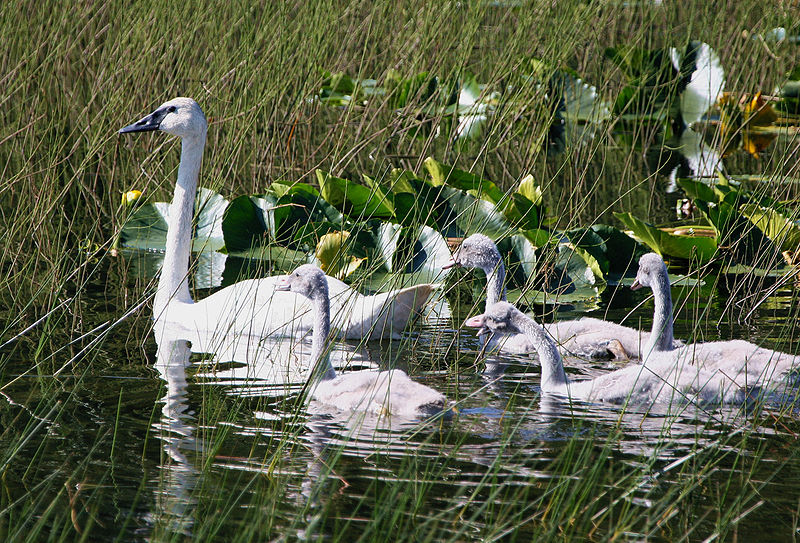
One of those first sights along the way was a pair of beautiful trumpeter swans on a lake. I immediately did a U-turn for a closer, and longer look. It was a lifer for me. Although looking much like the tundra swan, of which I had seen thousands at Bear River Migratory Bird Refugee in Utah, the trumpeter is much larger. It is, with a wing span of six feet and weighing in at about 25 pounds, North America’s largest waterfowl.

What a great start, I thought, for the day.

Another spot along my drive that slowed my progress was the small and quaint village of Talkeetna, which felt very Alaskan. It was exactly the opposite of how I felt when I drove into Anchorage for the first time. Even the weather here is different, with more moderate winters because of its location in the southern portion of the state.

Talkeetna welcome sigh

Talkeetna welcome sigh

Anchorage’s large population, close to half a million residents, and yuppie espresso shops made the city feel more like California than Alaska.

The bed and breakfast  I had booked for two nights, however, had the feel of Alaska that I preferred. It was run by two great old ladies, one who cooked and took care of the flowers, and the other who took care of the business.

Yet another great day!


Blog pick of the Day. Check it out.

Blog pick of the Day. Check it out.

Bean Pat: Something to keep in mind. http://tinyurl.com/jfrz43y

Read Full Post »

“Perhaps travel cannot prevent bigotry, but by demonstrating that all peoples cry, laugh, eat, worry, and die, it can introduce the idea that if we try and understand each other, we may even become friends. “– Maya Angelou

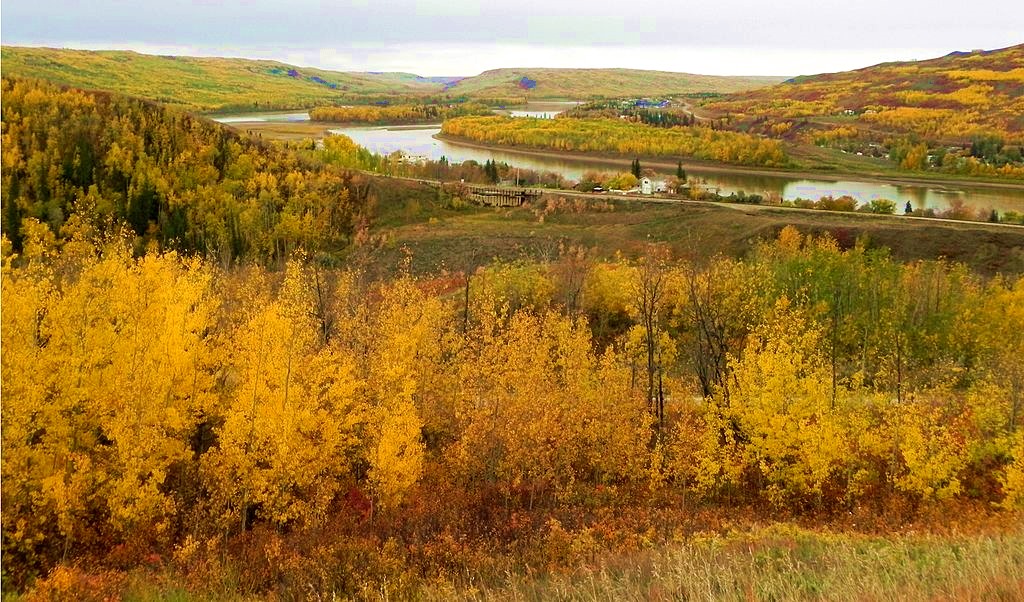
An autumn scene along the Peace River, not exactly the view I saw during my trip but I certainly saw river-side landscapes that were just as awesome. -- Wikimedia photo

An autumn scene along the Peace River, not exactly the view I saw during my trip but I certainly saw river-side landscapes that were just as awesome. — Wikimedia photo

2001 Memories of a Non-Wandering Wanderer

          I compared my first day of driving the Alaska Highway through Canada to a day of riding steep roller coasters. The route crossed many creeks and rivers, and most of the driving was done in the rain.

A page from my 2001 Alaska Trip journal.

A page from my 2001 Alaska Trip journal.

My guide for the Alaska Highway was the 2001, 53rd edition of The Milepost, which listed all the sights of the route in milepost numbers. As much as my interests, and time, demanded, I took short detours to see them, including one off road adventure to find Peace River Park, supposedly on an island across a causeway. I noted in my journal that the causeway was dinky.

The only animals I saw this day were brilliant blue Steller jays (visit my September 24 blog for a picture of a Steller jay) at a dump, lots of ravens, one llama, two hawks I couldn’t identify, and one deer. Signs along the way frequently claimed “moose and caribou on road” – but they lied.

I ended the day in Fort Nelson at Mile 300. The small town was named in honor of British naval hero, Horatio Nelson. It was established by The Northwest Trading Company in 1805 to accommodate fur traders. Because of fires, floods, and feuds, according to one history source, Fort Nelson is currently situated in its fifth location.

While in town, I visited the Fort Nelson Heritage Museum, an interesting step back in time that included exhibits of a “Hardly Davidson” scooter, and the first curling stones on the Alaskan Highway.

Blog pick of the Day. Check it out.

Blog pick of the Day. Check it out.

Bean Pat: A funny comics blog http://tinyurl.com/jy9sqhn This is so me!

Read Full Post »

I didn't capture the rainbow in Jasper National Park, but I did manage to get one on another road trip when I visited South Dakota. -- Photo by Pat Bean

I didn’t capture the rainbow in Jasper National Park, but I did manage to get one on another road trip when I visited South Dakota. — Photo by Pat Bean

2001 Memories of a Non-Wandering Wanderer

I left Jasper at sunrise, and with a magnificent rainbow welcoming in the day. The first part of the drive took me through Jasper National Park, the largest national park in the Canadian Rockies. Elk, longhorn sheep, deer and Stone Mountain sheep (which I hope stayed in the park because these cousins of Dall sheep are popular with trophy hunters made themselves visible on the road between Jasper, Grand Cache and Grand Prairie.

Alberta’s Grand Prairie, aptly named and then nicknamed the Swan City, adopted the trumpeter swan as its symbol because of its proximity to the bird’s migration route and its summer nesting grounds. The trumpeter is North America’s largest water bird. It can weigh up to 25 pounds, almost double the weight of the tundra swan that was a familiar sight in Northern Utah where I lived back then.

Of course I hoped to see a trumpeter this day. But I didn’t. Drat it!

Dawson Creek and the Mile 0 Post that represents the start of the Alaskan Highway. -- Wikimedia photo

Dawson Creek and the Mile 0 Post that represents the start of the Alaskan Highway. — Wikimedia photo

I made it to Dawson Creek in time for lunch, even though it was a 325-mile drive from Jasper. Three hundred miles was usually the goal I set for myself most of the days on the month-long adventure.

Dawson Creek, named after the creek that runs through it, which was named after George Mercer Dawson, a member of his land survey team that passed through the area in 1879. The small town’s primary claim to fame is that it is where the Alaskan Highway begins. The town’s population was larger when the highway was being constructed during World War II. The highway, at first unpaved and with almost too many bridges to count, was built to connect the United States with its Alaskan Territory through Canada. Alaska didn’t become a state until 1959.

When completed in 1942, the highway was 1,700 miles long. Today it’s about 300 miles less because of constant straightening and restoration work. When I drove the highway in 2001, it was said to be paved the entire distance – Not true, I discovered.

Bean Pat: This one is for writers who receive rejections: https://millieschmidt.wordpress.com/2016/11/16/ And isn’t that all of us?

Read Full Post »

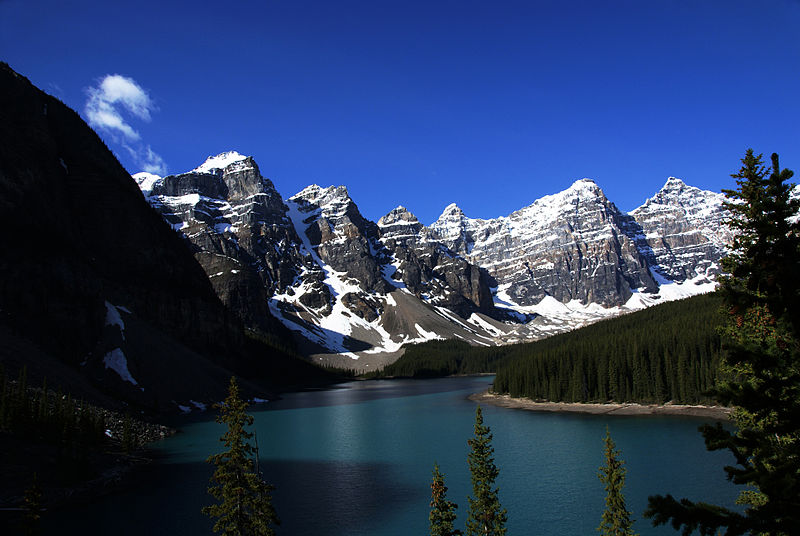
Of all the marvelous sights I saw this day, Moraine Lake touched my soul the most. -- Wikimedia photo

Of all the marvelous sights I saw this day, Moraine Lake touched my soul the most. — Wikimedia photo

But the beauty of Lake Louise, with its grand hotel and ski runs visible in the background, was still appreciated. -- Wikimedia photo

But the beauty of Lake Louise, with its grand hotel and ski runs visible in the background, was still appreciated. — Wikimedia photo

   “In all things of nature there is something of the marvelous.” – Aristotle

            “Look deep into nature, and then you will understand everything better.” – Albert Einstein

2001 Memories of a Non-Wandering Wanderer

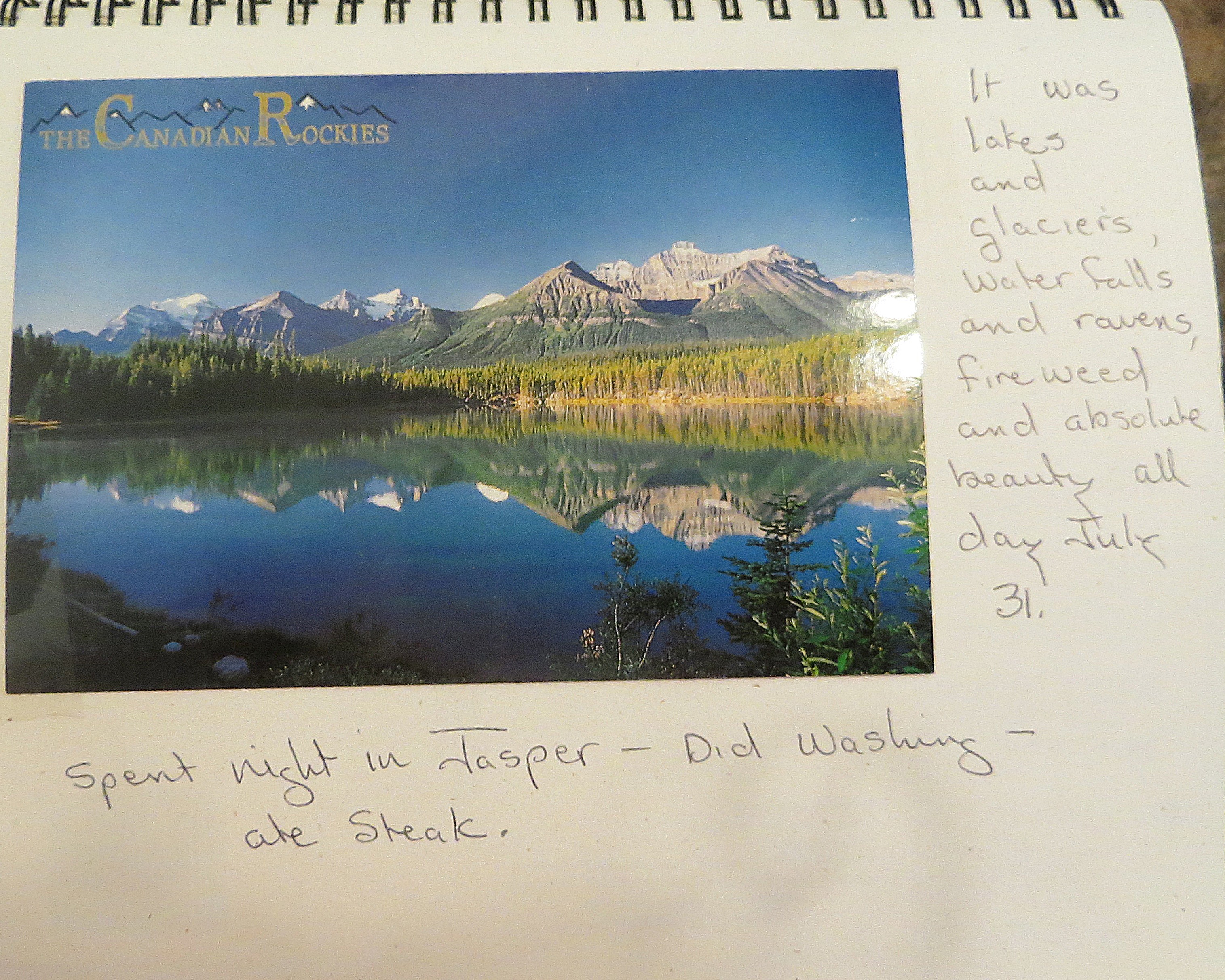
It was a day of lakes, glaciers, waterfalls, glades of scarlet fireweed, birds – and beauty that stirred the soul everywhere.

Page from my jouranl. noting my bald eagle sighting. .

Page from my journal noting my bald eagle sighting. .

`           The first stop of the day was the Vermillion Lakes just outside of Banff, where the first bird of the day was a bald eagle. It doesn’t get much better for a birder – but it did. I got a lifer, a common loon. I was excited at seeing this bird for the first time, but later learned I didn’t have to go so far away from home to see them. Common loons could be seen in winter on Causey Lake in Ogden Valley, Utah, just minutes away from my home.

Also on the lakes were mallards with baby chicks, always a treat to see, as were the darting killdeer that were running around near the shorelines.

A red-breasted nuthatch showed itself at Cascade Pond; barn swallows swarmed around a bridge; lots of prairie dogs stood sentry along the route; and at Two-Jack Lake, I got another lifer, a red-breasted merganser.

I added the feather of a Clark's nutcracker to one of my journal pages.

I added the feather of a Clark’s nutcracker to one of my journal pages.

And the day was just getting started.

At Lake Louise, the next stop of the day, I did a bit of hiking, ate lunch, and marveled at a flock of Clark’s Nutcrackers, another lifer, and one that seemed to be everywhere around the lake. Although not nearly as crowded as the town of Banff, the lake resort, and its Chateau Lake Louis, are also quite popular Canadian attractions.

The turquoise/emerald color of Lake Louise, which pleasantly aroused my sense of sight, is the result of rock flour carried into it by glacier melt. The lake was named after Princess Louise Caroline Alberta, daughter of Queen Victoria and the wife of the marquess of Lorne, who was the governor-general of Canada from 1878 to 1883.

It was a wondrous day and I captured a mere bit of it in my ournal

It was a wondrous day and I captured a mere bit of it in my journal.

But as awesome as Lake Louise was to my sight-seeing day, it was the nearby smaller Lake Moraine that stole my heart. The isolation and serenity of the scene before me stirred a longing in me to visit again n the future — when I could stay awhile. Doing so is still on my bucket list.

My day ended in Jasper, where I found a place to do laundry and ate a steak dinner. It was the last day of July – and Alaska still lay ahead. .

Bean Pat: 20 Minutes a Day http://tinyurl.com/z9vcrwq Comfort food. Len is a dear friend, one who teaches writers, and whose major thesis is that all writers should write for at least 20 minutes a day. I adhere to her philosophy. She and I are in the same Story Circle Network online writing group. SCN is the best writing support I’ve had in my life. It’s helped me find the personal voice I needed to replace the journalism voice I used for 37 years. The circle is for women only. If you’re interested, check it out at: http://www.storycircle.org/frmjoinscn.php (more…)

Read Full Post »


Banff, a tiny town nestled in Banff National Park's eye-dropping-mouth-opening-wow! landscapes. -- Wikimedia photo

Banff, a tiny town nestled in Banff National Park’s eye-dropping-mouth-opening-wow! landscapes. — Wikimedia photo

Memories of a Non-Wandering Wanderer 

Golden eagle -- Wikimedia photo by Martin_Mecnarowski

Golden eagle — Wikimedia photo by Martin_Mecnarowski

Shortly after leaving Kalispell, Montana, and my two-night-stay at the historic Grande Hotel, I crossed into Canada and entered Kootenay National Park at about the same time a golden eagle soared overhead. It was a joyful sight, and I drank in the day like cold champagne.   While Benjamin Franklin thought our national bird should have been the turkey, I thought I would favor the magnificent golden eagle. It was the second time I had this thought. The first was the day I watched a pair of golden eagles harass a pair of bald eagles until the white-headed birds of prey flew away.


A page from my journal

A page from my journal

Today’s drive lived up to its spectacular welcome to Canada from the golden eagle. The day was sunny and clear, the scent of evergreens heightened the senses of the forest landscapes, and there were birds to see and impressive mountains to view.

And then, suddenly, there were people, crowds and crowds and crowds of them as I made slowly maneuvered my way down a narrow Banff street in search of a parking place somewhere near my room lodging. Located in the splendor of Banff National Park, Banff is one of Canada’s busiest tourist towns – and today to say it was over-crowded would have been an under-exaggeration.

I finally found a parking spot and escaped to my small room for air in which to breathe freely for a few minutes. I then took in a few of the popular sights, such as the Banff hot springs. But after standing in a long-line to get food, I retired back to room, and went to bed early. I only breathed easier after I had left the thick wall of people behind the next morning.

Blog pick of the Day. Check it out.

Blog pick of the Day. Check it out.

Bean Pat: Overcoming fear http://tinyurl.com/zmoye84 Caution X-rated language. That doesn’t bother me, but it might you. I especially loved the laughter this blog gave me at a time when I’m fearing what’s now going to happen to our world. I’m really trying to think positive — and laughter helps.

Read Full Post »

The Big Hole River accompanied me on my drive this day...

The Big Hole River accompanied me on my drive this day…

            “It is better to travel well, than to arrive.” Buddha

And I stopped at the Nez Perce Battle Ground -- and noted all the signs along the drive that announced "Mushroom Buyer." ... A Page from my journal

And I stopped at the Nez Perce Battle Ground — and noted all the signs along the drive that announced “Mushroom Buyer.” … A Page from my journal

Memories of a Non-Wandering Wanderer

            Today’s drive found me driving beside the Big Hole River, a 153 mile-long Montana waterway that is famed for its fly-fishing opportunities, with trout being the best catch of the day. But humans aren’t the only ones to fish the stream.

A successful catch by this female belted kingfisher. The males don't have the rust-colored belly band. -- Wikimedia photo

A successful catch by this female belted kingfisher. The males don’t have the rust-colored belly band. — Wikimedia photo

I noticed a bird sitting on a limb hanging over the water, and stopped to investigate. My heart leaped into my throat when I identified it as a belted kingfisher, the first of its species for my life bird list. I’ve seen hundreds of these kingfishers since that day, but this one will always be a vivid image in my mind.

It was a good day for birds. In addition to my lifer, I also saw cliff, barn and bank swallows, a peregrine falcon, common mergansers, Brewer’s blackbirds and ospreys with babies.

The birds might have been attracted by all the grasshoppers swarming about. At one point, I drove through a cloud of them , many of which left their bodies embedded on my windshield, and everything else as well. I had to find a car wash in the first available town before I could continue my journey in peace.

The day also came with a visit to the Big Hole Nez Perce Battle Field, where on Aug. 9, 1877, U.S. Army soldiers attacked a sleeping Indian Village. It was a big loss for both sides. The soldiers lost 29 men with 40 wounded, while 89 Nez Perce were found dead, mostly women and children. I could almost feel the anguish as I walked the grounds.

In Kalispell, I spent the night at the historic Grande Hotel. It had been a busy day, and I slept soundly.

Blog pick of the Day. Check it out.

Blog pick of the Day. Check it out.

Bean Pat: The Iris and the Lily http://tinyurl.com/h6tc8b8 I’m a sucker for butterflies.


Read Full Post »

« Newer Posts - Older Posts »