Feeds:
Posts
Comments

Archive for July, 2010

 “As you grow older, you’ll find the only things you regret are the things you didn’t do.” — Zachary Scott. 

Mount St. Helens … Photo by Pat Bean 

Travels With Maggie
Looking out at the gaping mouth of Mount St. Helens from a point once known as Coldwater Ridge triggered goose pimples on my arms. I knew that David Johnston – the first to report the volcano’s eruption with the words “Vancouver! Vancouver! This is It!” — had been standing on this same ridge that deadly May 18, 1980, morning when the mountain exploded.

 I also knew from the many reports I’ve read about that day that those had been Johnston’s last words. Although six miles away from the volcano, he had still been directly in its blast zone. Johnston was one of 57 people who lost their lives to the angry mountain. 

 Johnston’s body was never found, and the ridge I was standing atop had been renamed in his honor, as had been the visitor center, the Johnston Ridge Observatory, that was built on the ridge so people like me could gaze on the mountain. 
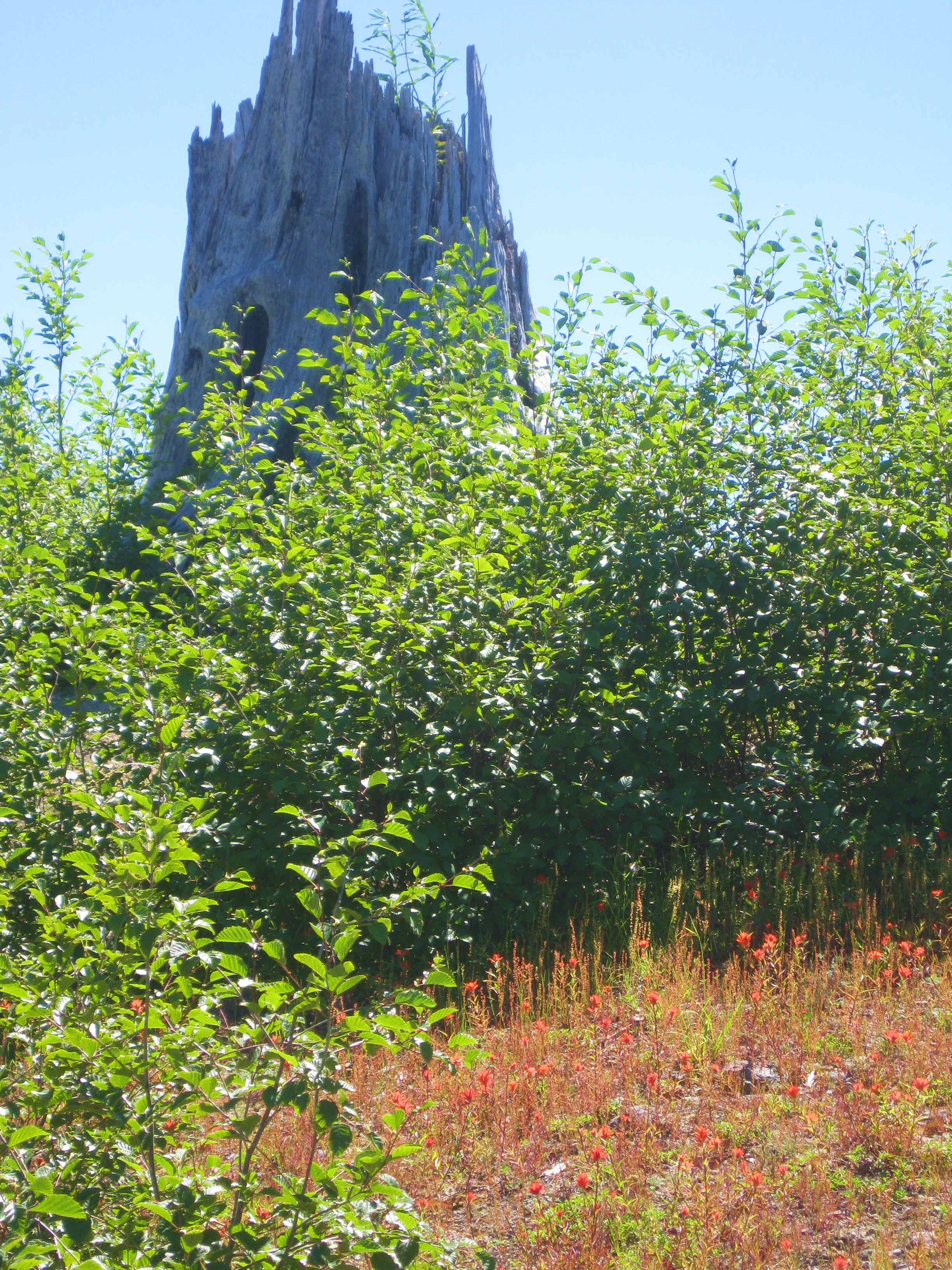
Scarlet paintbrush colors the ground in front of a tree stump near the top of Johnston Ridge ... Photo by Pat Bean


It was a solemn moment for me as I pondered if the 30-year-old Johnston, a trained and enthusiastic volcanologist who knew the risks, would have thought his brief moment in destiny’s grasp was worth his life. I wasn’t sure. Could anybody ever be. 
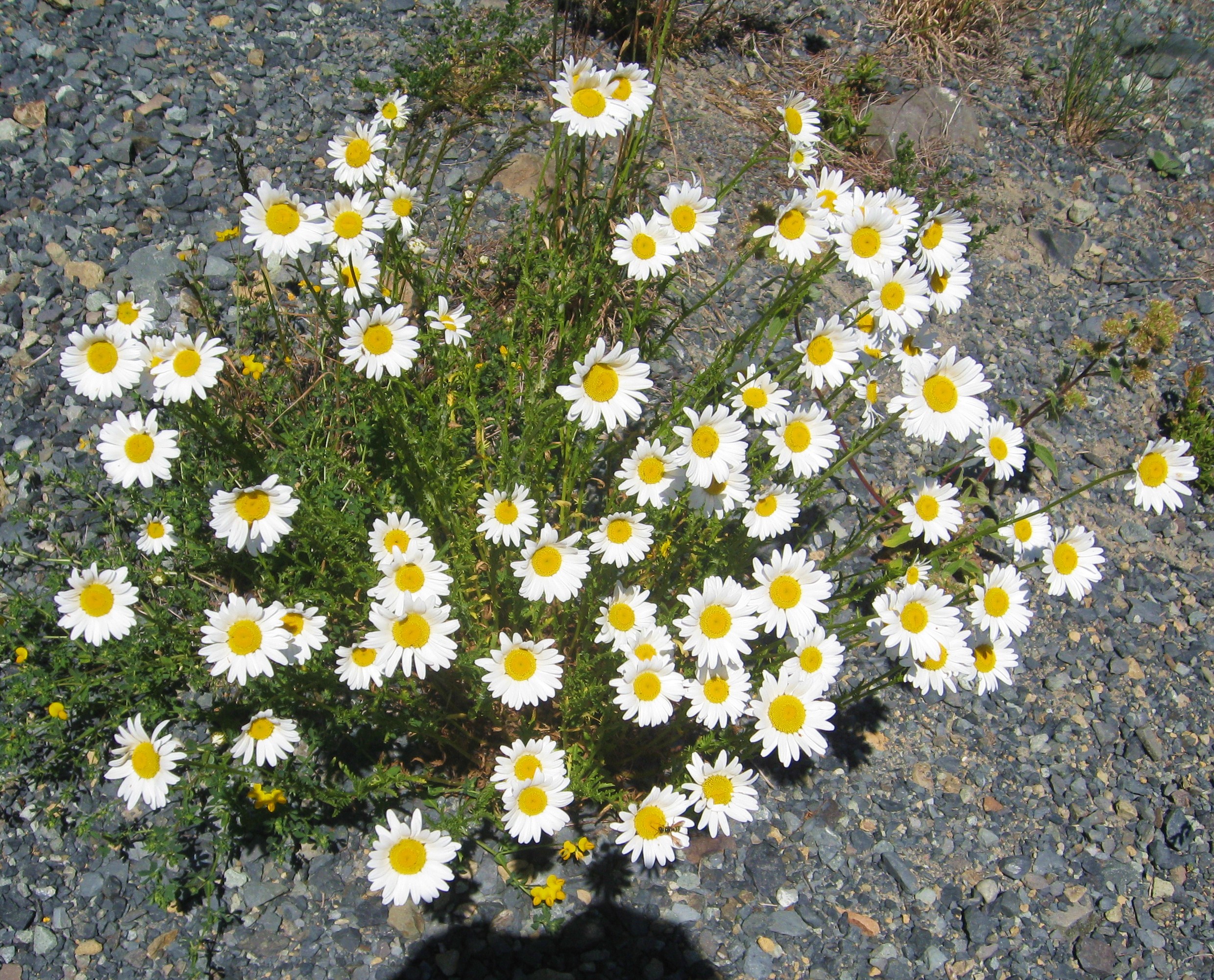
Daisies once again flourish in the volcano's blast zone ... Photo by Pat Bean


I do know, however, the great respect I have for Johnston and others who are unwilling to hold back living their lives to the fullest. And as I look at nature’s beauty surrounding me, and the verdant life that has returned to Mount St. Helens, I’m also grateful that the fears I’ve overcome in my life have been less life threatening. 

 Travel has as much to do with internal discovery as it has with seeing the world. New places, new sights, new experiences wash away stereotypes. Standing here on top of this ridge, surrounded by tree stumps whose tops were swept away with the mountain’s roar and where a life was blinked out, touched my soul. 

 I know that for a long time to come I will think of this moment when I looked out on Mount St. Helens from Johnston Ridge. It will remind me both of how precious life is and how important it is to savor every moment because tomorrow may not come. 

 “Every man dies. Not every man really lives.” — Braveheart

Read Full Post »

Lake Mayfield at Harmony Lakeside RV Park in Mossyrock, Washington. ... Photo by Pat Bean


If you look closely you can see my RV on the other side of this small grove of trees at Harmony Lakeside RV Park ... Photo by Pat Bean

 Cat’s Motto: “No matter what you’ve done wrong, always try to make it look like the dog did it.” — Unknown

Travels With Maggie

 On my way to Mount St. Helen’s, I stopped at Harmony Lakeside RV Park in Mossyrock, Wash. I planned on making the scenic park my base for three days while I explored the volcano and surrounding area. The park, however, had no record of my reservation, which had been made a month earlier.

 Their computer suffered a melt down and I was most likely, the friendly mother and daughter running the office said, one of the glitches they were discovering after getting back online. To give them credit, they did the best they could for me on this fully-booked Saturday night. I was squeezed into the one remaining vacant site, which the pair apologetic explained was seldom used because it was so small and close quartered, they apologized.

This totem pole that sits beside a small pond full of koi gives the park a northwest flavor ... Photo by Pat Bean

Hermit thrush ... Wikipedia photo

My evening was spent with only a view of six large RVs that had a return view directly into my windows. To get any privacy, I had to pull down my RV shades. I hate doing that.

Thankfully, things got better the next day. I was reassigned to a large site that had a view of Mayfield Lake out one side and its own small forest grove – four large trees, three double-trunked smaller trees and several bushes – on the other.

 That evening, as I was sitting at my dining room table catching up on my e-mail, a hermit thrush made its appearance in the grove. Now I’m always excited to see any bird, but this one was special, both because it’s not one I often see and because it was a new addition to my 2010 bird list. I first suspected it was a hermit thrush when I saw its plain brown-back and rusty red tail. The identification was confirmed when it faced me and I caught a glimpse of its white-rimmed eye and the dark brown spotches that decorated its white chest.

I had been watching the thrush for several minutes from inside my RV, which makes a perfect bird blind, when a sudden rustling in the underbrush scared it away. The noise was accompanied by a tiny mouse scampering up one of the larger trees. Immediately on its tail was a a black and white cat.

The pair both made it about 30 feet up the tree trunk before the cat stopped and appeared to realize where it was. The hesitation gave the mouse time enough to escape. The cat quickly reversed its direction and them jumped to the ground. It landed two feet away from my RV, took time to lick one of its paws, then casually strolled away, as if to say “I didn’t want that mouse anyway.”

I laughed out loud. As much as I had been enjoying my birdwatching, I had to admit that the sight of the cat and mouse running up the tree had been an even better show. I never saw the cat or the mouse again, but the hermit thrush made several more appearances in the grove.

Watching the world outside my RV window is always better than television.

Read Full Post »

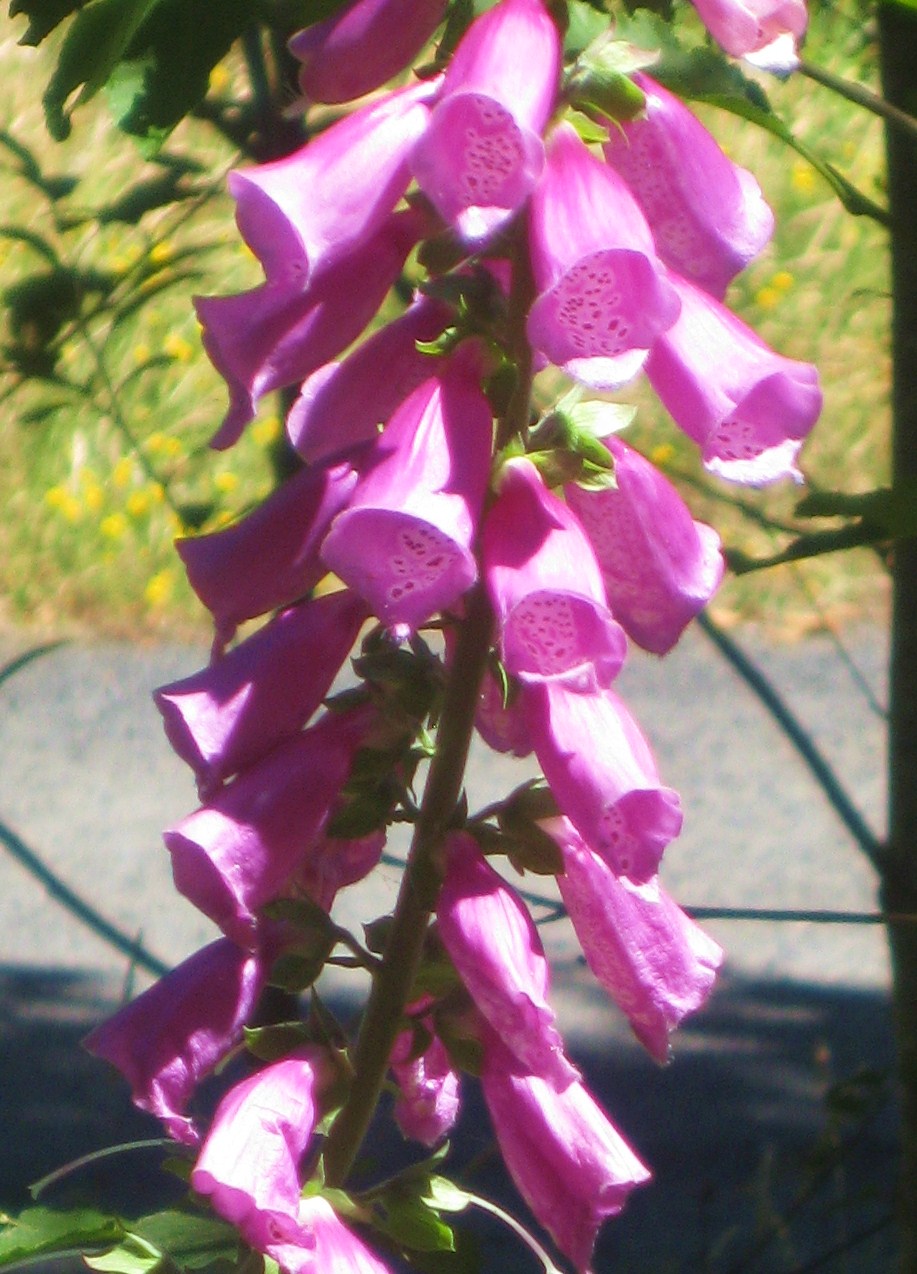
Foxglove: A wildflower for good and evil ... Photo by Pat Bean

“… change comes like a little wind that ruffles the curtains at dawn, and it comes like the stealthy perfume of wildflowers hidden in the grass.” — John Steinbeck

Travels With Maggie

 If money were no object, I would have my own personal botanist handy every time I saw a wildflower.

I find these delightful unattended blossoms almost everywhere I look. They grow along roadsides, in shady forests, beside gurgling brooks and from bare rock crevices. Some splash color across an entire meadow, like the California poppy that announces itself to the world with its golden orange shout. Others are a whisper barely heard as their tiny blooms grow beneath our feet requiring knees bent and head bowed to see their fragile daintiness.

 While seeing wildflowers of all colors, shapes and sizes is no problem for one who gets out in nature, which I’m constantly doing, I find it very frustrating when I can’t identify each and every one. Unlike those who are fortunate enough just to be able to enjoy their beauty, I want to know the name of each and every flower.

Perhaps it’s the writer in me that was taught to not be generic with my words. I can still hear a writing teacher expound that a tree is not just a tree, it’s a yew, or a cypress, or a Douglas fir. So it is that I want a flower not to be just a flower.

Since I can’t afford the services of a full-time botanist, I resort to photos that I later use as I peruse wildflower books – sadly, with far less than perfect results. The vast number, multiple names and variances of wildflowers constantly stump me. Every wildflower book, at least the ones with pictures, I’ve come across identifies only the common species while it seems fully half of my discoveries are of the uncommon variety.

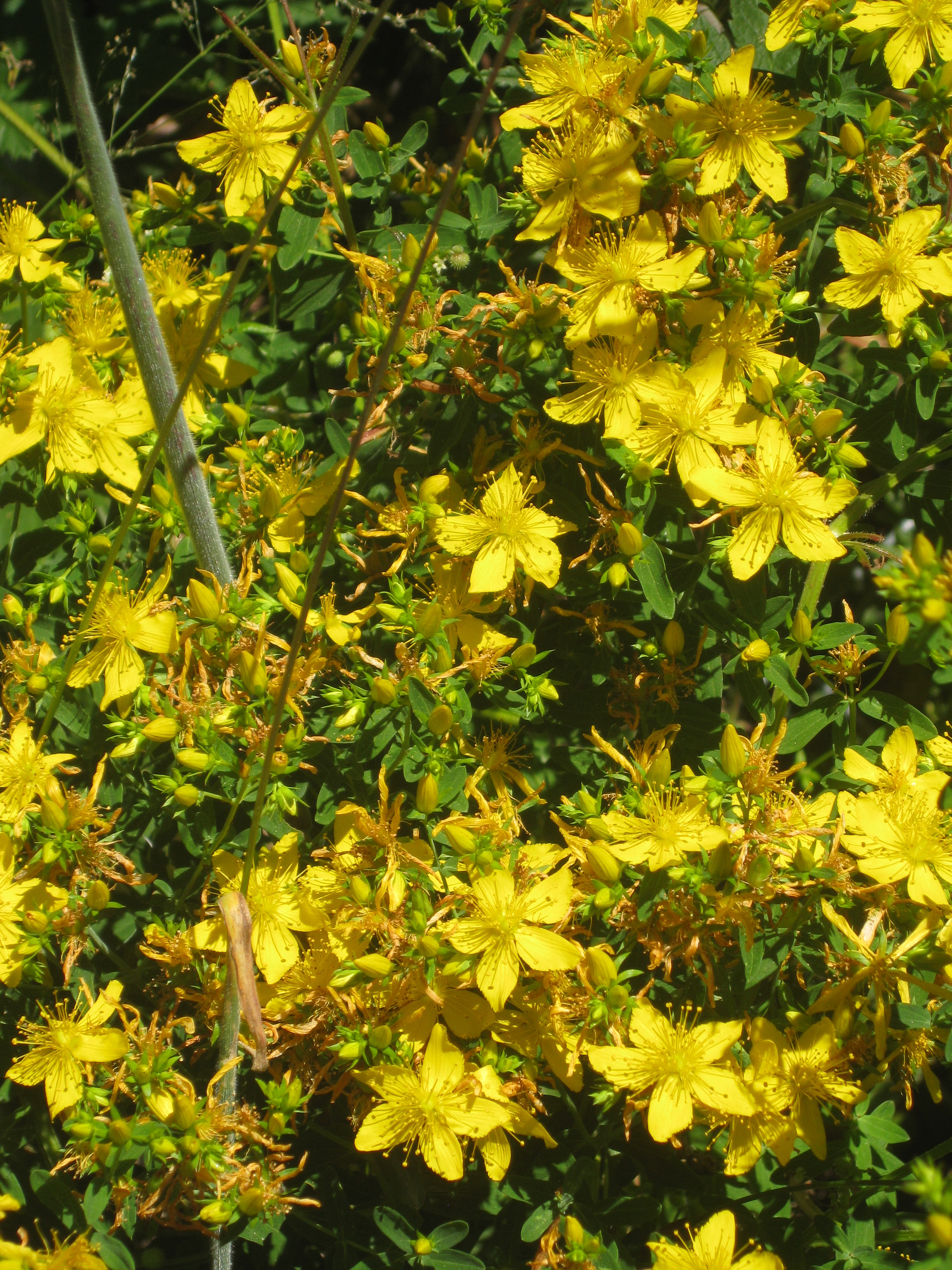
So what's the name of these wildflowers? An inquisitive writer really wants to know. ... Photo by Pat Bean

 Therefore, I try to be happy when I can make an identification, such as the one of the foxglove pictured here. These tall rosy pink flowers, whose bell-like shapes are lined with purple spots, have been frequent sights as I’ve traveled across the state of Washington. Perhaps that’s because it’s the state’s wildflower.

 While trying to identify the flower, I also discovered that foxglove is the source of digitalis, a drug used as a heart stimulant. It’s also a poison. Its properties, according to my Reader’s Digest field guide of common wildflowers, were discovered by physician-poet William Withering in the late 1770s. After testing the drug on a charity patient, he wrote both a medical paper and a poem.

 The poem, in part, reads: “The foxglove’s leaves, with caution given …The rapid pulse it can abate/the hectic flush can moderate.”

By the way, Maggie, my canine traveling companion, always take time to smell the flowers when we’re out walking. I wonder if I’m contagious.

Read Full Post »

“Come Fairies, take me out of this dull world, for I would ride with you upon the wind and dance upon the mountains like a flame! “ — William Butler Yeats

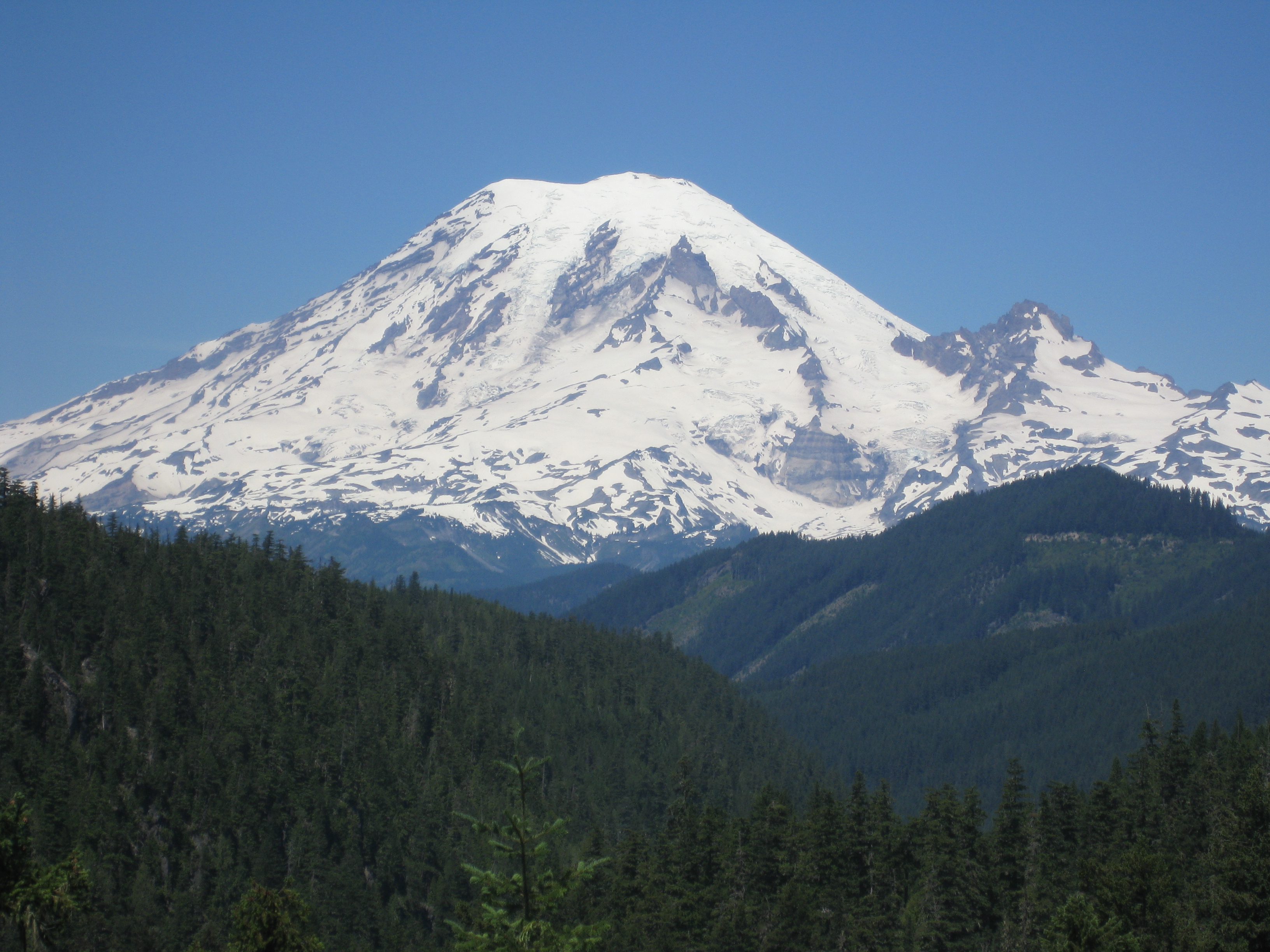
Mount Ranier from White Pass ... Photo by Pat Bean

Travels With Maggie

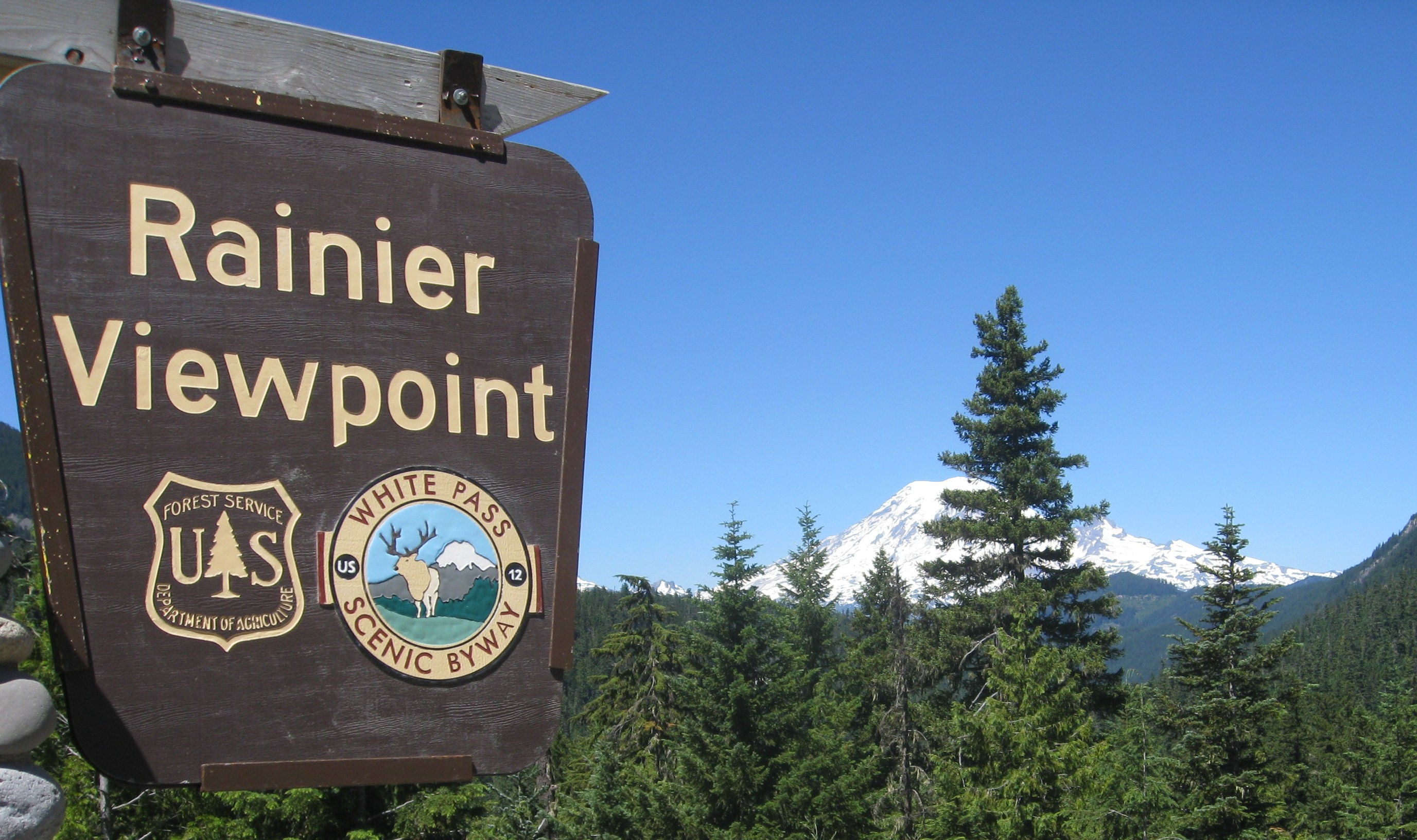
I got my first good look at Mount Ranier from Highway 12 while crossing White Pass, whose 4,500 foot summit looks out over the Cascade Range of the Rocky Mountains. The view of the 14,411-foot mountain was impressive. My look was shared with a couple of scruffy looking motorcyclists riding Harley Davidsons.

 I smiled at them and they smiled back. The magnificence of Mother Nature’s mountain gift vanished all differences between us. I’ve experienced this uniting phenomenon time and again. Besides, I had an inkling these two “Hogs” were probably doctors or lawyers in another life – since they could afford to own what looked like brand new Harleys.

Mount Ranier, which sits about 50 miles southeast of Seattle, is considered an active volcano, just like Mount St. Helen’s which erupted in 1980, killing 54 people. While Helen’s eruption had been expected, its roar was larger than expected. Ranier could one day throw a similar temper tantrum. It’s a sobering thought.

 But what amazed me this hot July day was Ranier’s shining whiteness. The mountain, which is Washington’s tallest, has

Mount Ranier ... Photo by Pat Bean

 numerous glaciers and a snowfield that never melts completely. From my current viewpoint its white cap was made even more prominent by the forest of green trees that stood between it and me.

 Finally, both myself and the two motorcyclists were able to turn away from the mountain view and get back on the road. We waved at each other before they headed east and I headed west, all three of us in search of more of Mother Nature’s wonders.

 I knew, from experience, that we wouldn’t have to travel far.

Read Full Post »

Travels With Maggie

Laughter not only makes the journey endurable and even enjoyable, it also helps keep us healthy.” — Joyce Meyer

 Seventeen female volunteers and staff workers from Farragut State Park met this week for dinner and drinks at the Floating Patio. The small bar and restaurant sits atop Lake Pend Oreille in the tiny tourist town of Bayview. Idaho.

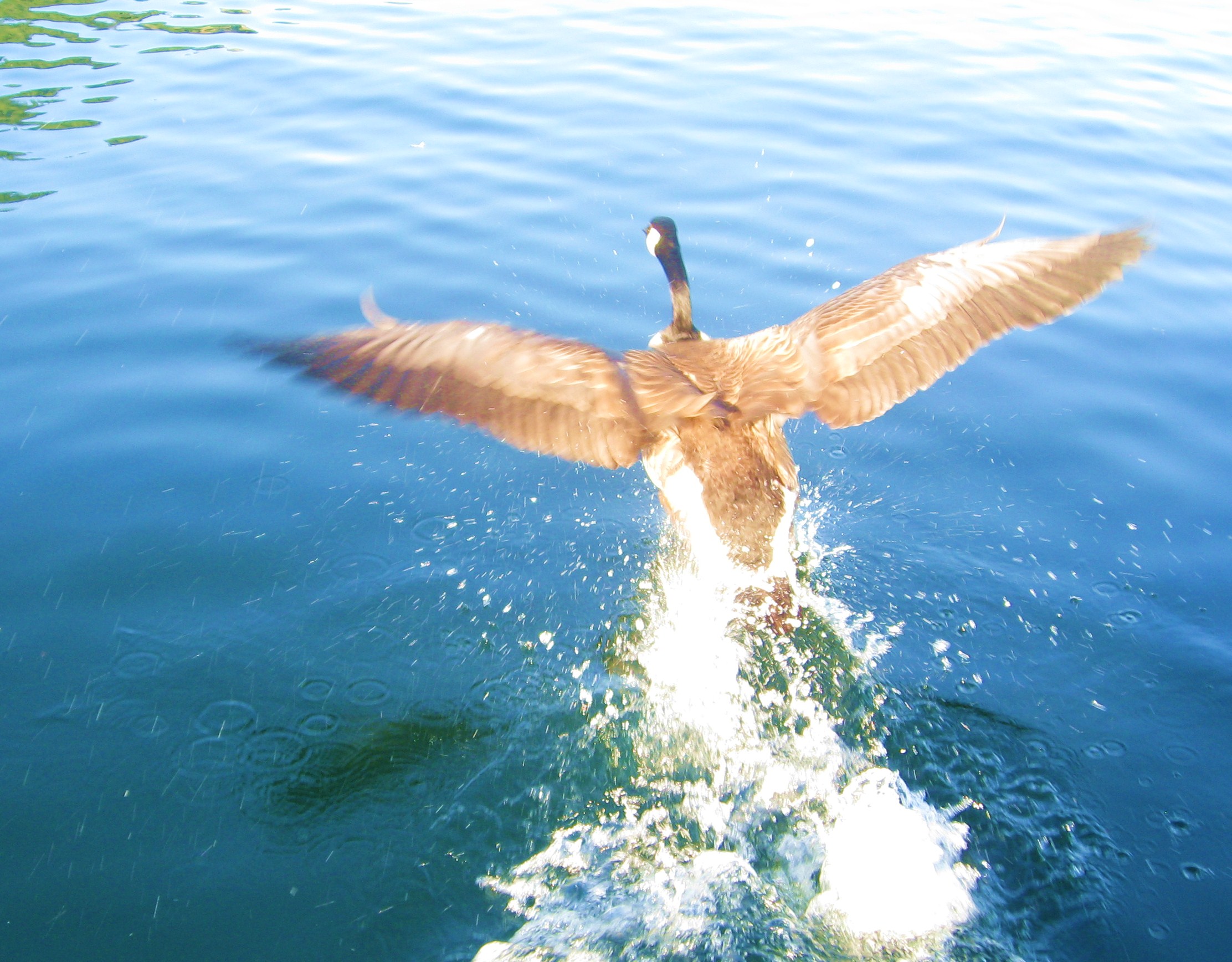
A Canada goose takes off in front of our pontoon boat ... Photo by Pat Bean

The deep blue, 65-mile long lake’s name is a sure give away of who’s a local and who’s a tourist just passing through. It’s pronounced Pon-da-ray, which is sort of French for ear, or so I’ve been told, not Pend-o-rye-ly, as I called it before I was corrected.

I’ve learned that when a group of females get together – be they giggling teenagers to wrinkled and post menopausal old broads – irreverent laughter often rules.

Heading into the Floating Patio for Drinks and Dinner ... Photo by Pat Bean

 So it was this night as we drank our wine and Diet Cokes, snacked on pre-dinner popcorn and then ate our hamburgers, chicken Caesar salads or barbecue specials. Without boyfriends or husbands to please, compete with, impress or cater to, women often lose their inhibitions of proper-ness. Men, I think, do the same when women are not present. It has nothing to do with liking or loving the opposite sex, it just feels good once in awhile to be in a group that best understands you.

The laughter and camaraderie we shared getting to know one another better during the meal continued as we boarded two pontoon boats for a cruise of the lake. Ours was captained by Scott Bjergo, owner with his wife of Floating Patio Boat Rentals and Bayview Merc. You can reach him at bayviewboatrentals.com.

Shoreline reflections paint the lake's canvas ... Photo by Pat Bean

 I asked because I was impressed by Scott, who put up with our female kidding of him being the boy toy on the boat, and because I thought of how great it would be to spend a day on the water with friends and loved ones. You might think the same if you’re ever in Idaho’s panhandle just 100 miles away from the Canadian border.

I was truly looking forward to the boat ride. Being on the water makes me giddy. It’s a comfortable feeling of both awe and belonging. I sometimes wonder if its my ancestral cells calling to me.

The avid bird-watcher in me also got a treat when a gaggle of geese led our pontoon boat away from the Floating Patio. They floated ahead of us so close I was afraid our boat was going to run over them. One in particular was slow to get out of the way, but finally took a running, flapping scramble into the sky. Droplets of water from its spray hit me as I leaned out to snap a photo of the awkward aerial takeoff and then its graceful flight as its wings caught the air.

Women on the second boat excitedly point out the mountain goats high on the escarpment. ... Photo by Pat Bean

 Long evening shadows of color from sailboats, trees, cliffs and houses painted the dark water. Pend Oreille, is over 1,000 feet deep in places, which makes it an excellent spot for the Navy’s testing of submarines, albeit miniature unmanned ones that could have even now been passing beneath us. We passed by the Navy’s lake facilities, both onshore and lake anchored, where the testing is done.

 The highlight of the evening aboard the boat would have to have been the sighting of the mountain goats on the steep

 glacial carved escarpment surrounding the lake. After a few white rocks fooled us, we finally got a glimpse of four of the goats near the top heading upward. We had missed a closer view of them coming down to the water to drink. The goats were too far away for my camera to capture them, but I did get a photo of the passengers in the other boat as the women excitedly pointed at the animals.

 The evening ended all too soon, with everyone heading back to the park, most to loved ones of the opposite human sex. Maggie, my faithful cocker spaniel travel companion was waiting for me to tell her about my ladies’ night out. And I did. She’s been my soul mate for the six years I’ve been traveling the country in my RV.

It’s always ladies night out for the two of us.

Read Full Post »

“Climb the mountains and get their good tidings. Nature’s peace will flow into you as sunshine flows into trees. The winds will blow their own freshness into you, and the storms their energy, while cares will drop off like autumn leaves.” … John Muir

"Rite of Passage" sculpture at Farragut State Park ... Photo by Pat Bean

 He’s called Mack.  He’s the “Rite of Passage” sculpture that sits outside the Museum at the Brig at Farragut State Park, and he represents the 293,381 sailors trained here during World War II.

 I had no idea the park was a former naval base when I accepted an opportunity to volunteer here. I quickly jumped at the offer based on the park’s Idaho Panhandle location. I spent last summer in Texas wilting from too many hot humid summer days and I had no intention of repeating the foolish action.

 I chose well. Today will be my first 90-degree day, and without my native state’s humidity I’m still quite comfortable, although I’ll probably turn on my air conditioner when the sun hits my RV later in the day for a couple of hours. The rest of the time, my campground site is well shaded.

I’m rather fond of Mack. Possibly because my daughter spent 10 years in the Navy, serving in the Gulf War, and possibly because yesterday my son, a career Army man and Blackhawk helicopter pilot, was deployed to Afghanistan. It’s nice to know people care enough about our military sons and daughters to create a work of art memorializing them.

Apple blossoms

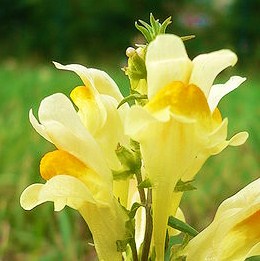
Butter and eggs' blossoms

 Meanwhile, sitting here in such a tranquil setting where butter and egg, two-toned yellow blossoms color the landscape beneath the pink flowers of an apple tree and robins raise their babies, it’s hard to imagine the ugliness of a battle field. Sadly I know that most people don’t want to imagine that scene. Perhaps if more people would, an end to war would come sooner.

 I’m a flower child. I want peace. When I was younger I believed I might live to see such a day. I now know I won’t. All I’m left with believing is that perhaps my grandchildren will – and hoping that my son returns safely from Afghanistan.

Read Full Post »

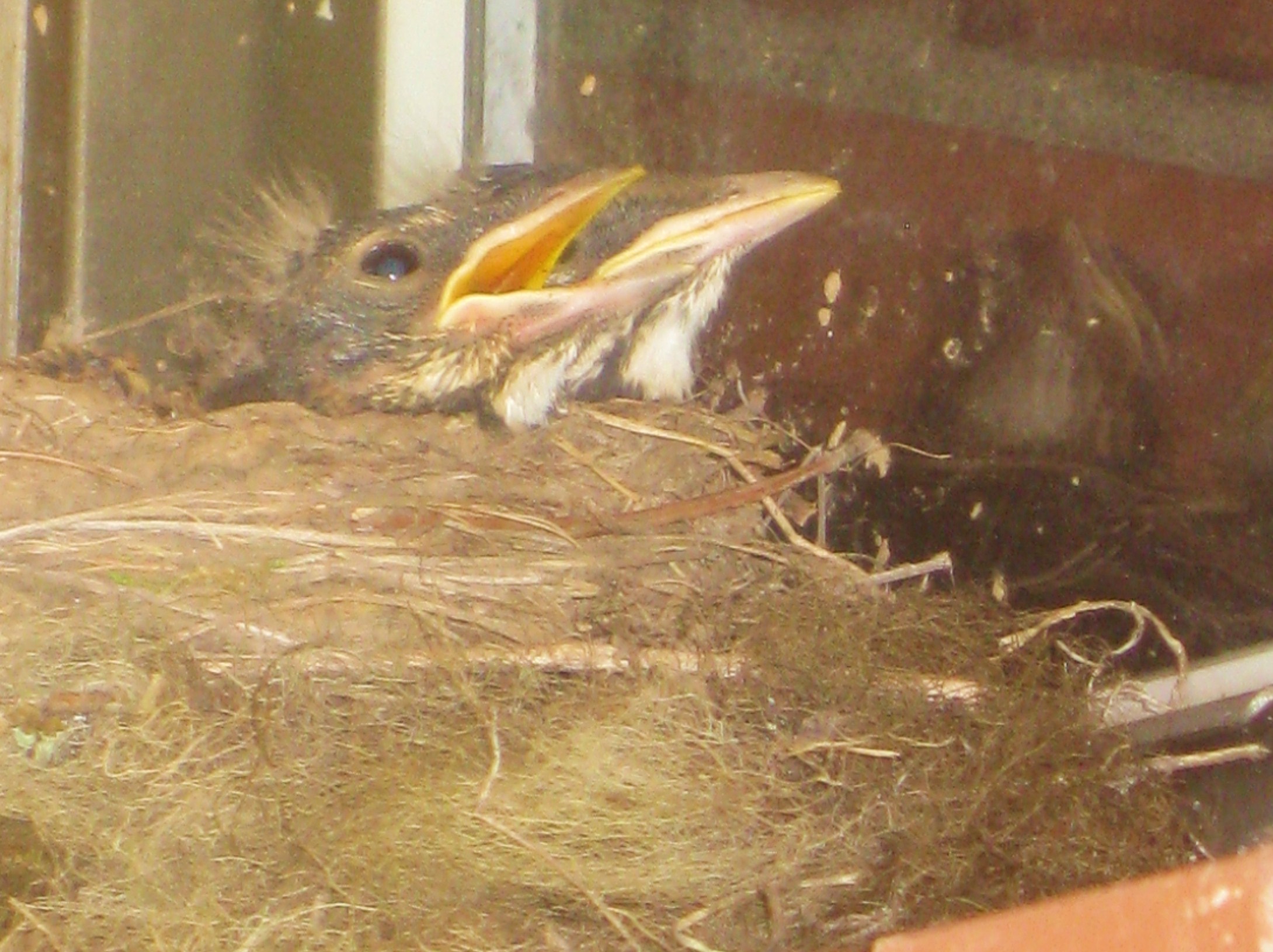
Hungry mouths

Growing a little

Photos by Pat Bean  

“It may be hard for an egg to turn into a bird: it would be a jolly sight harder for it to learn to fly while remaining an egg. We are like eggs at present. And you cannot go on indefinitely being just an ordinary, decent egg. We must be hatched or go bad.” C. S. Lewis

From helpless and naked to spouting feathers for flying in only two weeks at Farragut State Park

"Mama we're hungry"

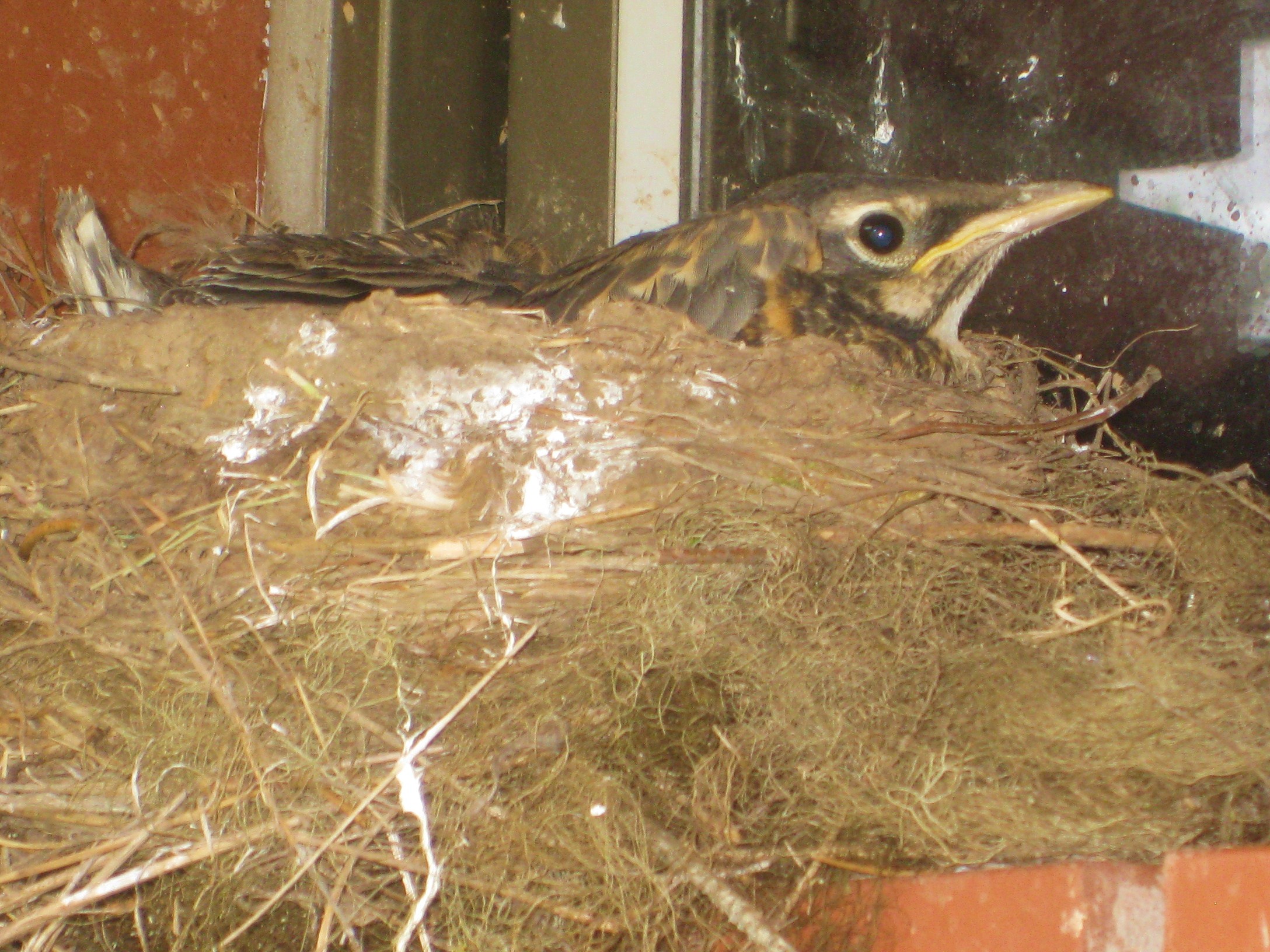
The good-mother robin I’ve been watching the past few weeks is now raising three chicks. The first time I visited her after they had hatched, she dive-bombed me. After quickly snapping a photo I left the scene. The second time I came, she sat on a tiny tree four feet from the nest and gave me a concerned, dirty look. The third time, she sat on the same tree, but seemed more peaceful.

Her growing chicks mouths were about all I could see at first. The birds are born naked and helpless, depending completely on their parents for warmth and nourishment. They now have feathers and look almost ready to leave the nest, a process that takes only about 13 days. It’s been an awesome joy daily watching this transformation.

I suspect this is my mother robin’s second brood of the year. When I first discovered her nest a fallen portion of an earlier nest beneath it contained remains of an empty egg shell that appeared to have hatched. Robins can raise three broods in a good year, and can live up to 14 years – if Mother Nature is kind to them.

It's getting a bit crowded in the nest

Most, however, don’t survive beyond about 7 years, and only about 40 percent of chicks reach adulthood. Magpies find baby robins quite tasty, as do snakes, cats and many other predators.

Considering this mother robin’s attentive care, I suspect her babies may have a higher percentage rate. And whether that’s true or not, the optimist in me will continue to believe it to be so.

Read Full Post »