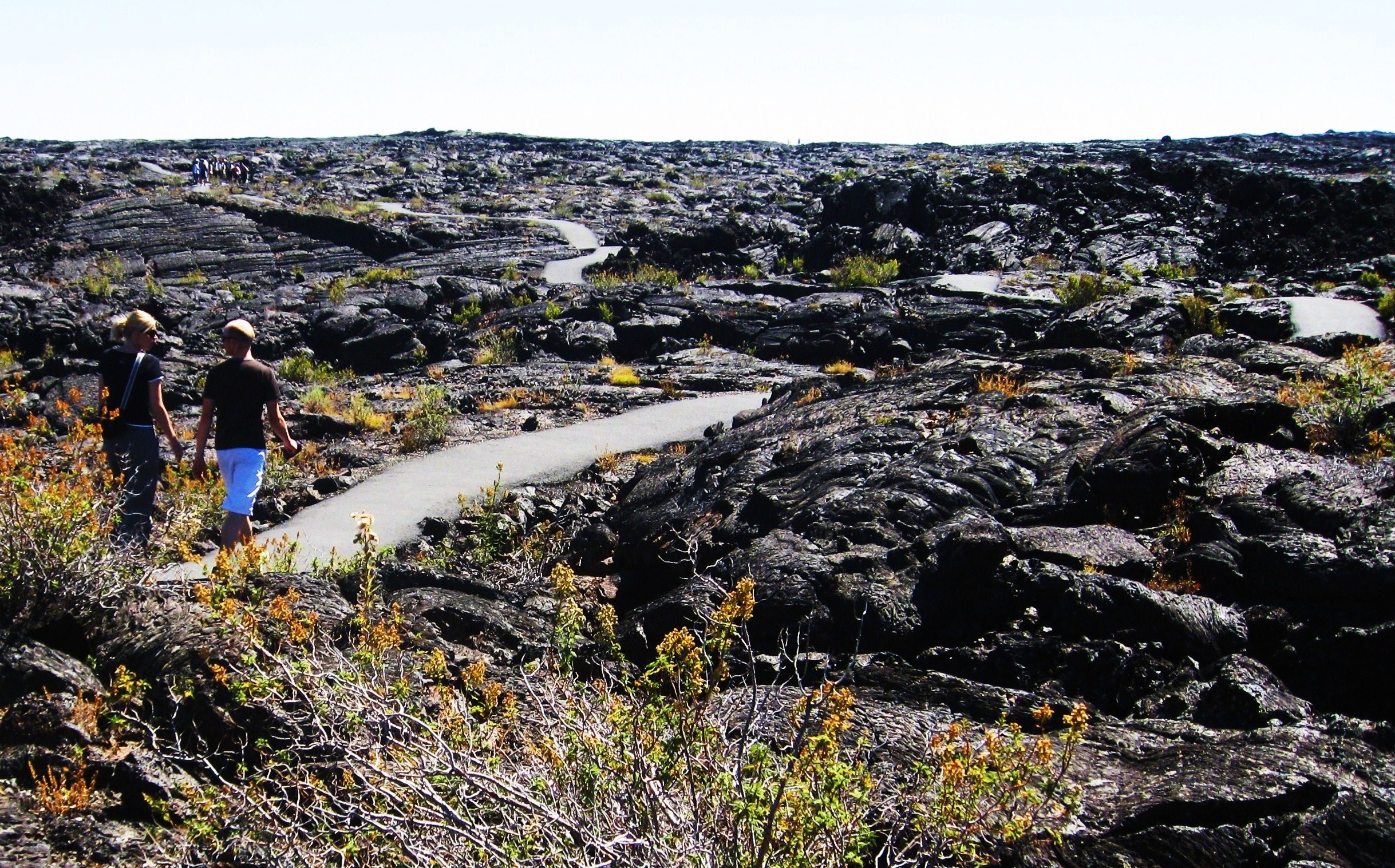
Trails through Craters of the Moon National Monument take one through a dark, angry landscape. Photo by Pat Bean
The huge lava field that spreads out across Southern Idaho’s Snake River Plain was thought to resemble the moon’s surface, hence when the area was designated a national monument in 1924 it was called Craters of the Moon.
While the name remains today, Neil Armstrong and Buzz Aldrin’s two-hour walk on the moon’s surface 45 years later showed it was nothing like the moon’s surface. The name stuck, however, just as Junior remains Junior to his parents even when he’s 65 years old.
As I walked across the rugged blue-black lava flow on trails that took me into a world far removed from my daily existence, I couldn’t help but compare this adventure with my recent visit to Mount St. Helens.
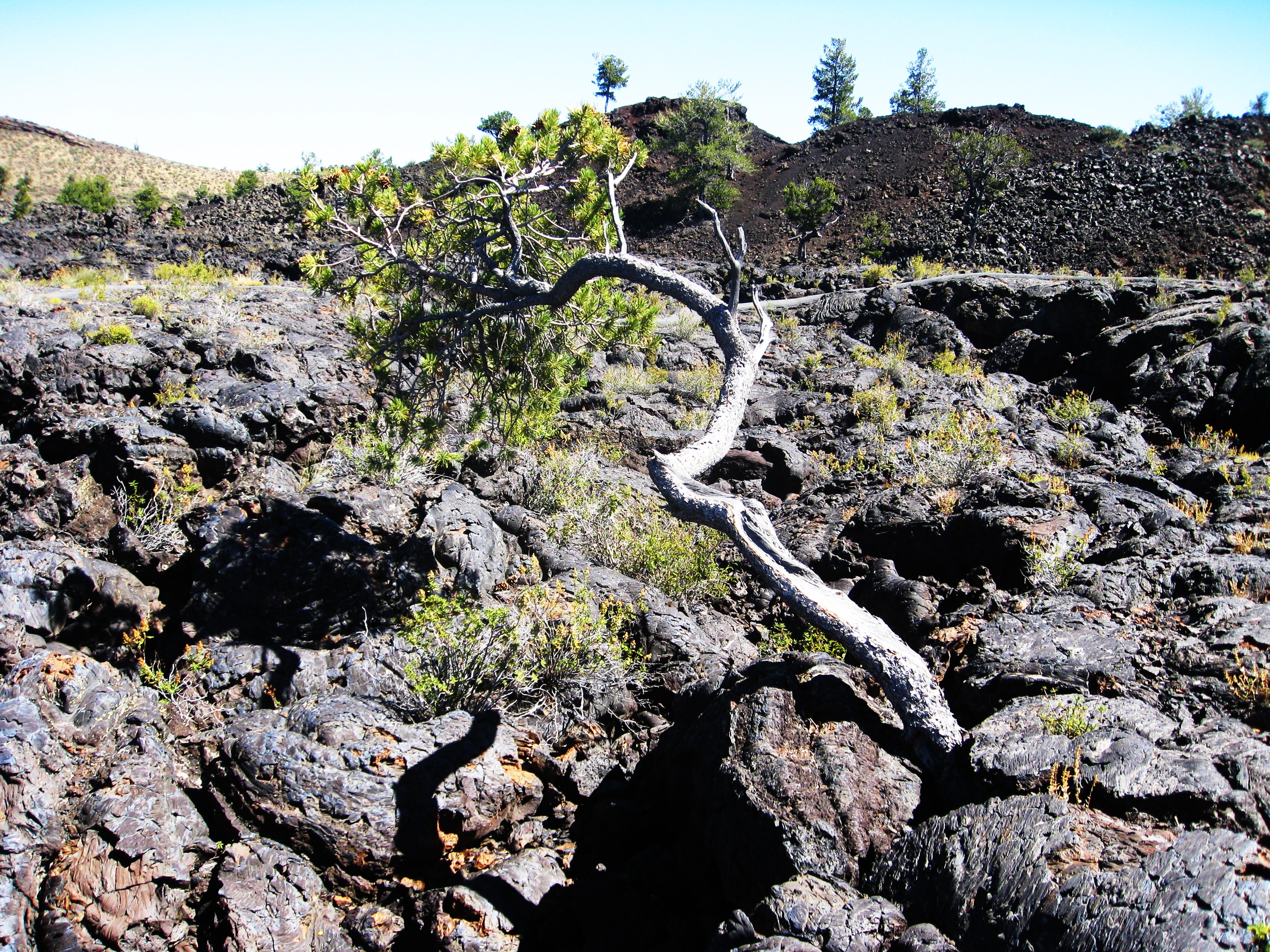
Yet even in this harsh landscape, life manages to exist. -- Photo by Pat Bean
Less than two hours away from Lake Walcott State Park, where I was a volunteer campground host, the monument’s strange landscape had called out to me to visit. I answered but found that the dark rugged landscape agitated me. Where viewing St. Helens had been a calming experience, Craters of the Moon, with its twisting, roiling turmoil of anger still visible, reminded me too much of the world we live in today.
A sobering thought pushed itself to the forefront of my brain, telling me that both these dormant volcanoes will probably flow and blow again. As beautiful and as calming as Mother Nature can be to me, I was forced to admit she does have her destructive moods. Sadly, so do we humans.


 Pat Bean's blog