Feeds:
Posts
Comments

Posts Tagged ‘Utah’

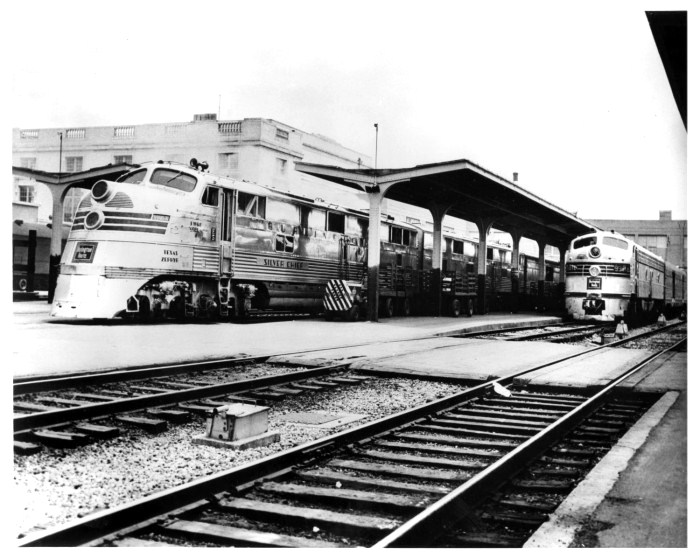
The Texas Zephyr, left, and the Sam Houston Zephyr in Dallas in 1955. Photo from Portal to Texas History

 “Fair laughs the morn, and soft the zephyr blows, while proudly rising o’er the azure realm in gallant trim the gilded vessel goes. Youth on the prow, and pleasure at the helm.” Thomas Gray

Journeys

Zephyr is a wind from the west. It was also a train that blew past my grandmother’s home every day around noon.

I recalled it yesterday when I wrote about picking blackberries in an empty field on the outskirts of Dallas. Seems my journey into the past, much as my journey on the road today, is full of interesting detours.

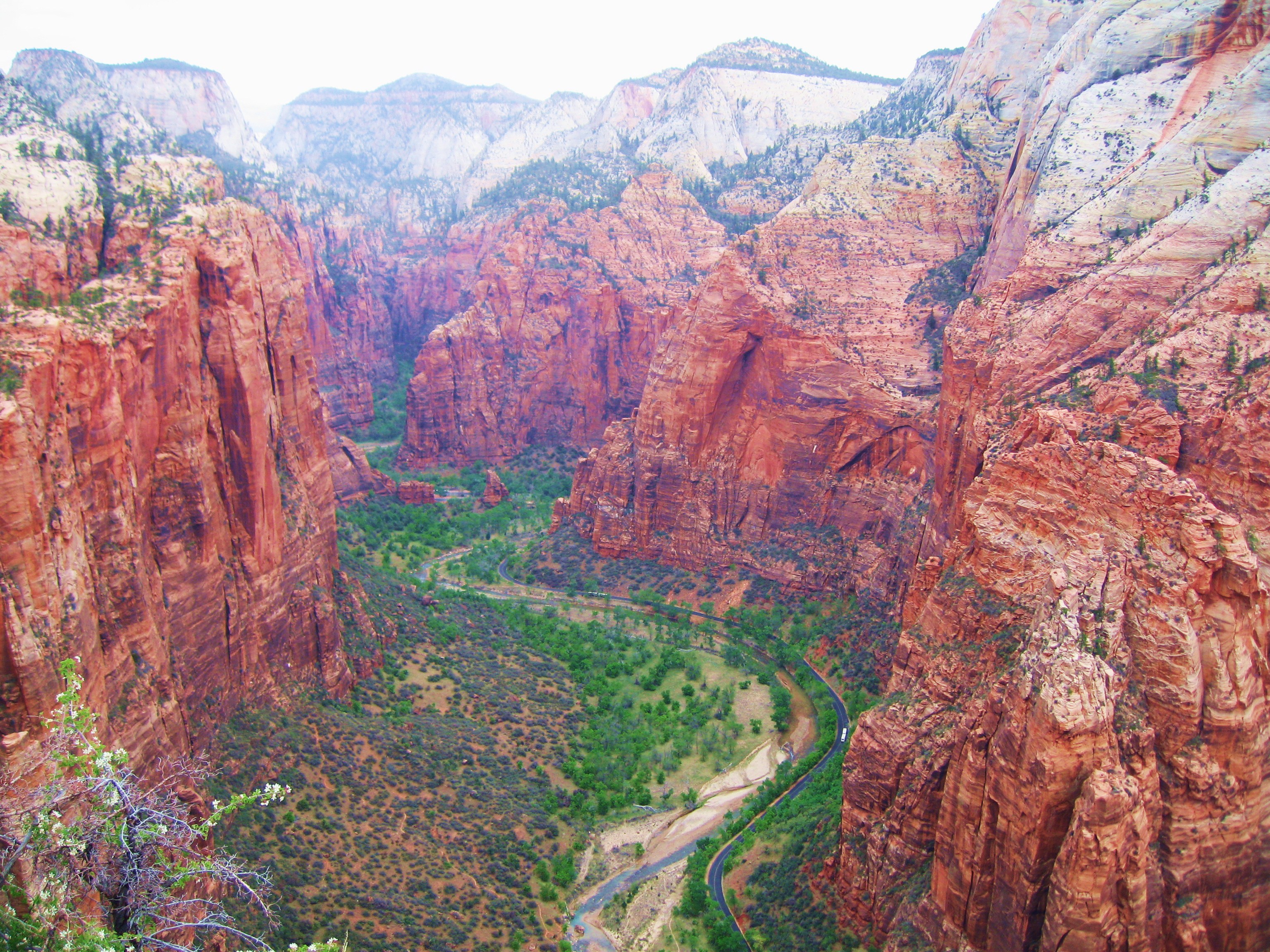
While I never did get to ride a Zephyr, I did eventually ride on a train from Ogden, Utah, to Las Vegas through the Virgin River Gorge. Shown above is the Virgin River in Zion National Park before it enters the gorge. -- Photo by David Scarbrough

I always wanted to know where that silver bullet, as my grandmother called it, was going. Over half a century later, I finally know the answer – thanks to the ease of internet research.

There were more than one streamlined silver zephyrs operating out of Dallas. One, the Texas Zephyr, went between Dallas and Denver, stopping in Ogden, Utah, where I ended up living for 25 years. Ogden was a big railroad town, still is although today it’s mostly freight trains that pull through its Union Station terminal.

But it was here, some 30 years ago, that I boarded my first train – an Amtrak traveling from Ogden to Las Vegas through the awesome Virgin River Gorge between St. George, Utah, and Littlefield, Arizona. I’ve ridden a number of trains since, but I couldn’t have asked for a better initiation to riding the rails.

The second silver train operating out of Dallas, from 1936 to 1966, was the Sam Houston Zephyr that traveled back and forth daily between Fort Worth, Dallas and Houston. It was probably this train I watched for with my young impressionable eyes.

I suspect that speeding zephyr, as it roared past my grandmother’s home, might have nurtured my wanderlust as much as the travel adventure books I was addicted to reading as a child.

I was never cured of my travel-book reading addiction – and I also still get a little chill in my soul at the sound of a train whistle.
Read Full Post »

“Having once decided to achieve a certain task, achieve it at all costs of tedium and distaste. The gain in self-confidence of having accomplished a tiresome labor is immense.” Thomas A. Bennett

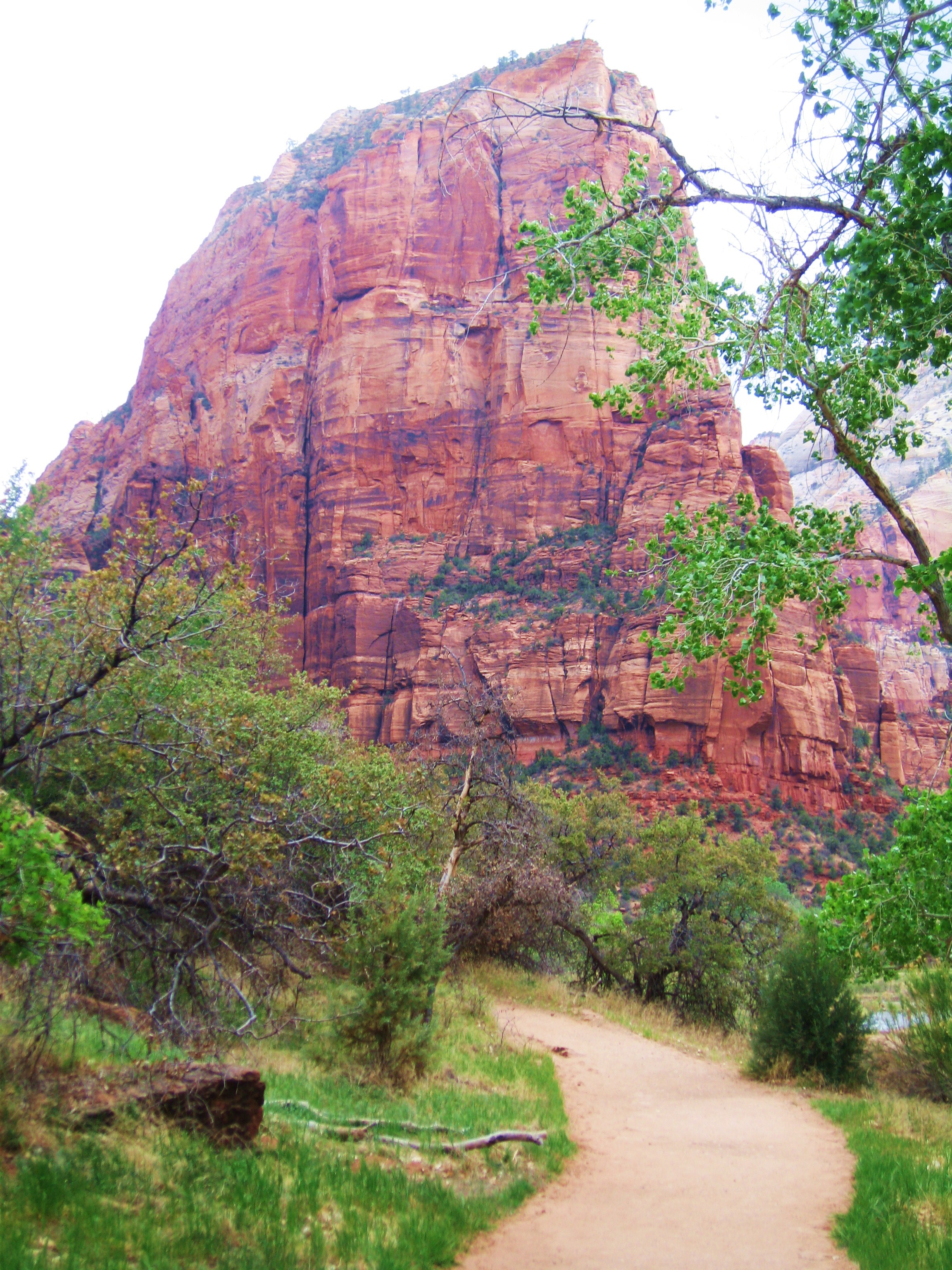
 The first time I climbed Angel’s Landing in Zion National Park, the five-mile round-trip hike felt like little more than a walk in the park. I noted, on returning, that I had done the trip in about half the time the trail guide said to allow.

Angel's Landing as seen from near the start of the trail. -- Photo by Pat Bean


 My last hike to the top two years ago took quite a bit longer than allowed, but the feeling of looking out on the magnificent view of the landscape below, as always, gave me energy I needed for whatever the year ahead might bring.

Perhaps that is why I keep returning and returning, over 30 times now, to repeat this scramble to the top of this Zion Canyon landmark. Actually, one does have to scramble but only the last half mile. The first two miles of steps are taken on a steep, but non-threatening trail.

The slower pace I set these days as I go up the path – with its hairpin turns from one mountain to a second mountain with a short canyon cool-off walk in between – have allowed me to better see and enjoy Mother Nature’s bounties: Bright red Indian paintbrush growing from rock cracks, a bird’s view of the Virgin River below, color variations in the sandstone walls, and the peregrine falcons that return to nest each year near the top of the landing.

Looking down from the top of Angel's Landing. -- Photo by Pat Bean

Guide books warn that this hike is not for those who fear heights. A warning not to be taken lightly as several people have fallen to their deaths while hiking it. I find this hard to believe. I’ve never feared falling on this trail — but then I respect the cliff edges and always hold to the chains when crossing narrow junctures.

I’ve hiked to the top of this special place in scorching hot weather, in high winds, in rain, once in a snow flurry and once with a knee wrapped in support bandages. I’ve done the trip alone and with friends and once with three young granddaughters in tow.

Angel’s Landing is a part of me. I have no better words to describe it, even though I fear only readers who have their own special place will understand.

This morning, as I sit here and write with the chill of a Central Texas winter still lingering outside my RV, I hear Angel’s Landing calling me.

I’ll see you in April, I reply. And I’ll sit on top of you once again no matter how long it take me to get up there.

Journeys

Read Full Post »


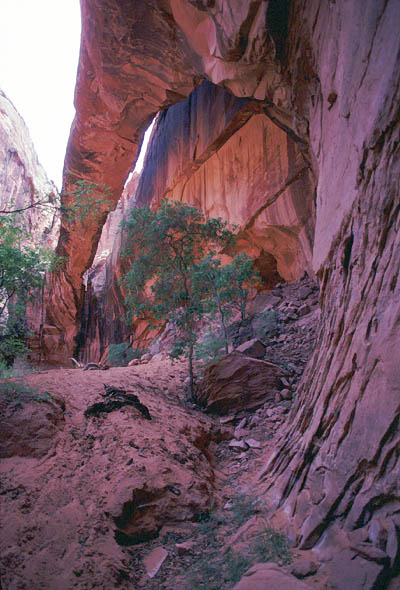
Morning Glory Natural Bridge -- Photo by Jay Wilbur

“I still find each day too short for all the thoughts I want to think, all the walks I want to take, all the books I want to read and all the friends I want to see.” John Burroughs  

Travels With Maggie

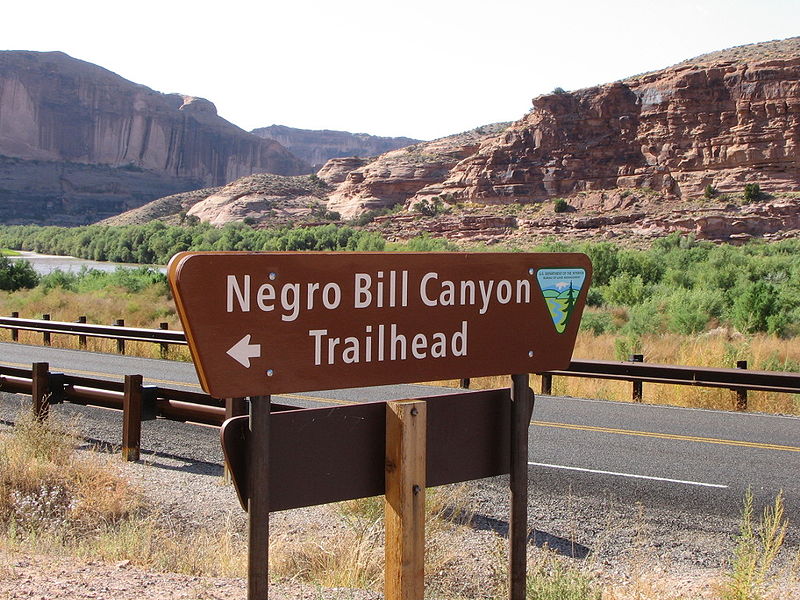
 I learned about Negro Bill Canyon Trail at the visitor center in Moab, Utah, where I asked if there was a good hiking trail on which I could take my dog.

Moab is located adjacent to Arches National Park that has fantastic trails, but dogs are not allowed on them. The kindly desk clerk directed me to take Highway 191 north to Highway 128, which parallels the Colorado River, and then to look for a small parking area at the trailhead after about three miles.

It was easy to find and soon my dog and I were hiking up a narrow canyon trail that weaved across a small stream.

My hiking companion at the time was not Maggie. It was Peaches, a beautiful golden cocker spaniel who was then 15 years old. Since this was my first significant hike since foot surgery, the dawdling footsteps of her four legs and my two legs were perfectly matched.

It was actually a great pace as the trail, with its tinkling stream, red rock walls, willow groves and other wonders of nature, deserved adequate time to be properly admired. After about two miles, the trail forked. Peaches and I took the path veering to the right, which went about another half mile before ending at Morning Glory Natural Bridge, a 75-foot tall, 243 foot arch span overseeing an alcove.

Here, in this grand and peaceful setting, with a canyon wren serenading us, Peaches and I ate a leisurely lunch from my small backpack before heading back. It was the last hike Peaches and I took together.

Negro Bill Canyon Trailhead sign off Highway 128 with the Colorado River flowing past on the far side of the road.

The next time I hiked the trail, I had Maggie, a black cocker spaniel whom I had rescued from a life of abuse. She had been a year old at the time, and from her actions on the trail I realized this was probably her first off-pavement walk, certainly her first time to cross a stream. She either had to be coaxed or carried across. .

While she never became the great hiker Peaches was, Maggie’s now quite eager to get off the beaten path. In that, she and I are alike.

*Negro Bill Canyon is named after William Granstaff, a cowboy who ran cattle in the canyon in the late 1870s. While the name is not exactly politically correct, it’s more so now since the name was changed from the original “N” word.

Read Full Post »

Maya Angelou reading her poetry to the nation during Clinton's 1993 presidential inauguration. -- Photo courtesy of Wikipedia


“I always love to hear people laugh. I never trust people who don’t laugh … I also like people who love themselves. I don’t trust people who don’t love themselves.” — Maya Angelou

Travels With Maggie

I was asked this week, after I wrote about David Hasselhoff (Feb. 17th blog), who had been my favorite person to interview during my 37 years as a journalist. Without a second’s hesitation, I replied, “Maya Angelou.”

I had the honor of spending an hour with this earthy, acclaimed poet before she gave the 1997 “Familes Alive” address at Weber State University in Ogden, Utah. Amazingly, I found this very same speech online at http://tinyurl.com/63tg8eo I suggest, if you have time, that you read it.

Angelou had been 69 at the time, She stood six-feet tall and had an ample body that should have made her look grandmotherly. It didn’t. She oozed confidence, and sexuality in a way I had never seen before. I remember thinking back then that if this what age had in store for me, bring it on.

My first introduction to Maya Angelou came in the early 1970s when I read her "I Know Why the Caged Bird Sings."

A huge audience had come to hear Maya speak. I, for one, drank in every word she spoke. Here was a woman who had risen from suffering racial discrimination to reading her poetry before the nation during a presidential inauguration.

Her life is clear evidence for all of us that where we start out in life isn’t where we have to stay.

The newspaper story I wrote from my interview and Angelou’s speech stirred one angry letter, however.

I quoted Anglelou quoting a 1950s’ folk song that had a Black man saying: “The woman I love is fat and chocolate to the bone, and every time she shakes some skinny woman loses her home.” Angelou demonstrated the shaking, and said she loved to make people laugh. And everyone in the audience obliged her.

In response, the letter writer accused me of encouraging discrimination against “skinny women.” I suspected she was a woman who had never laughed at herself. How sad.

Read Full Post »

The view through Mesa Arch -- Photo by Pat Bean

A close up view through Mesa Arch -- Photo by Pat Bean

“I see my path, but I don’t know where it leads. Not knowing where I’m going is what inspires me to travel it.” — Rosalia de Castro

Travels With Maggie

The trail to Mesa Arch seems too short and too gentle for the magnificent reward it gives hikers. Midway in the half-mile loop is a window to the La Salle Mountains 35 miles away, and a view of the Colorado River 1,000 feet below.

Although you may have never hiked the trail, you’ve probably unknowingly seen the arch, which stands on a ridge edge in the Island in the Sky section of Canyonlands National Park. It is a favorite subject for photographers and is a common image found in outdoor magazines, like National Geographic Adventure, and on post cards and T-shirts.

A view of the La Salle Mountains over the top of Mesa Arch. -- Photo by Pat Bean

All the guide books say the best time to hike this half-mile trail is sunrise, and photos I’ve seen of it in this light are magnificent. Sadly, I’ve never seen it at this time of day, and my photographs lack the brilliance of the morning sunrise. Even so, it was a view I would not have wanted to miss.

Actually, there were many other views I wouldn’t have wanted to miss in this Southern Utah Park, especially the Island in the Sky section, which is so aptly named. Sticking up over 1,000 feet from the terrain below, this sandstone mesa offers 360-degree views of the terrain below.

In addition to the Mesa Arch Trail, there are plenty of  not-so-short and not-so-gentle hikes for the more adventurous. I’ve done a few, all with scenic beauty around every turn. I hope you have, or will, walk some of those paths. You should have plenty of energy left to do so after you visit Mesa Arch.

Read Full Post »

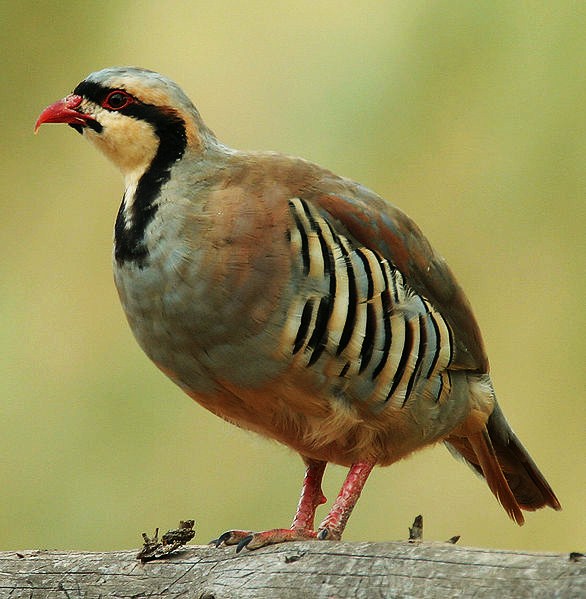
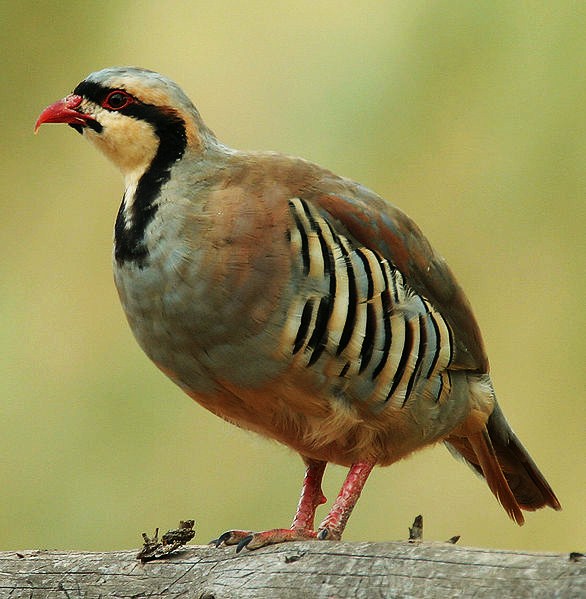
A chukar on Antelope Island, where this game bird was transplanted, is usually easy for a birdwatcher to find. I've seen many of them, and each time was as delightful as the first time.

 “Life is a great and wondrous mystery, and the only thing we know that we have for sure is what is right here right now. Don’t miss it.” — Leo Buscaglia

Travels With Maggie

I keep a list of every bird species I see for the first time and a list of the all the places I’ve been. I’m always delighted when I add to these two lists. But thankfully, I’m not like the birder who passed me on a trail on Antelope Island in Great Salt Lake a couple of years ago. .

Maggie and I were dawdling along, she sniffing the flowers and everything else we passed as cocker spaniels do, and me watching red-winged blackbirds flash their scarlet marked wings while listening to a couple of breeding male meadowlarks trying to out sing each other.

Barely slowing his pace, the middle-aged hiker asked if I had seen a chukar. I replied that I often saw this partridge-like bird in the rocks near the bend up ahead. About 10 minutes later, the man ran past me going the other way.

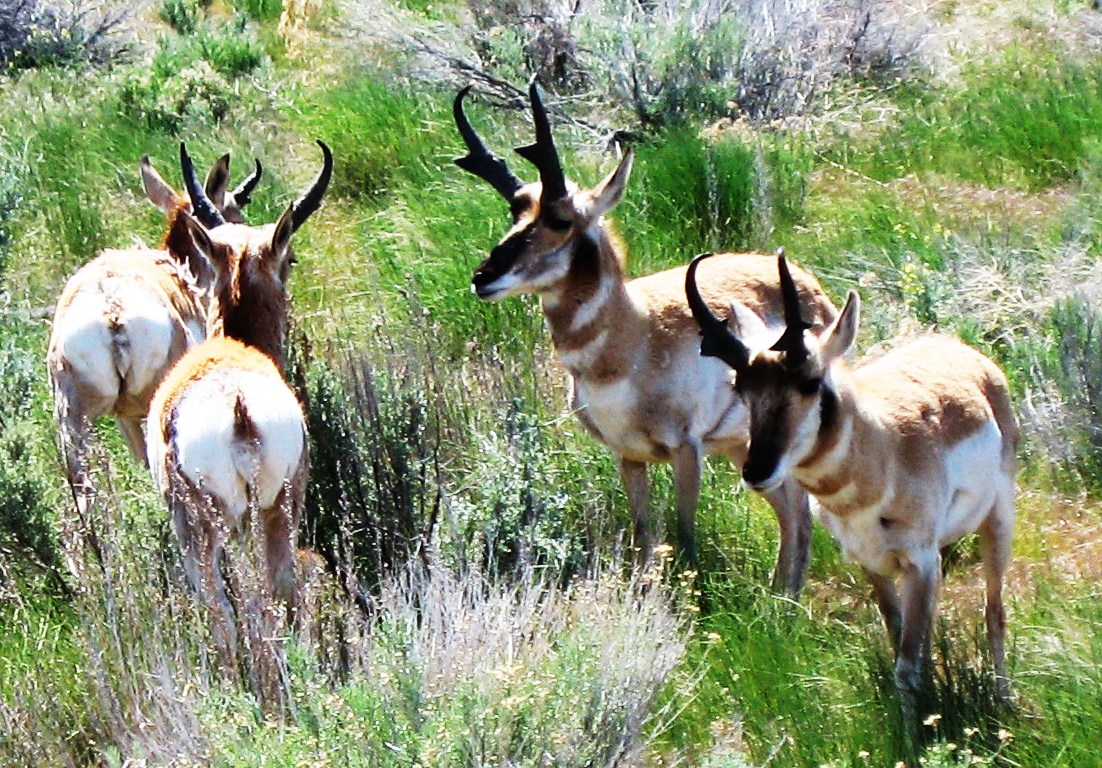
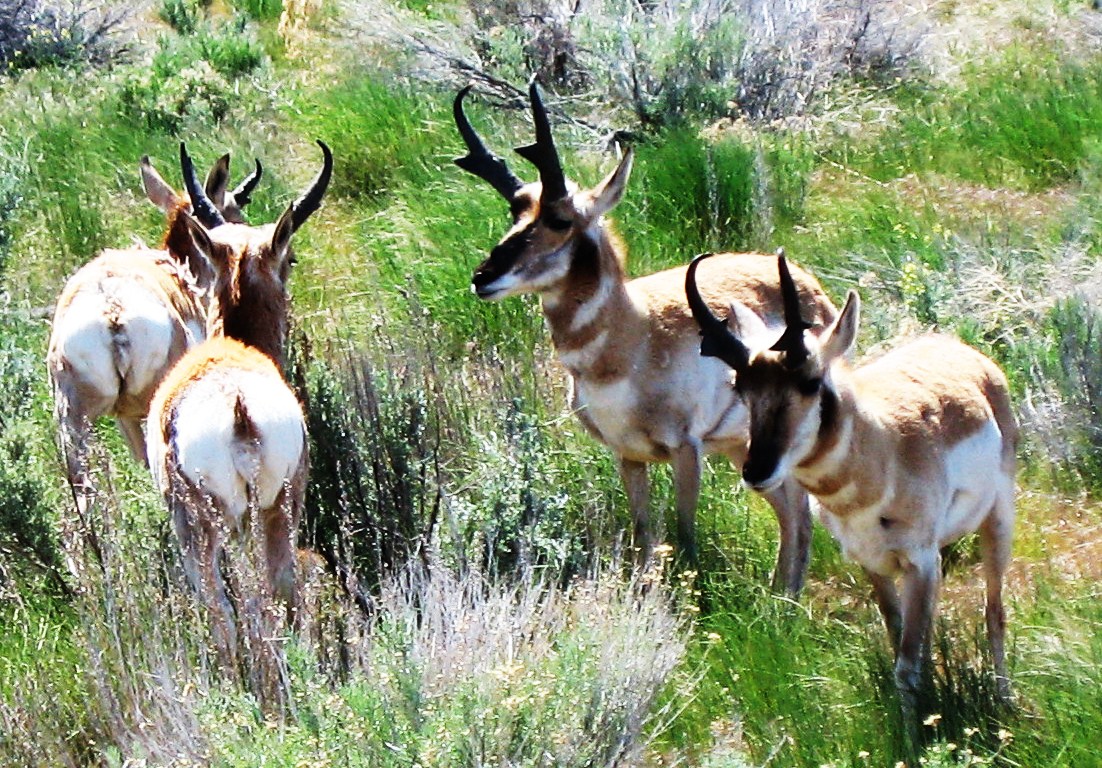
Prong-horned antelope are also easy to find on Antelope Island if one takes the time to drive around and look. -- Photo by Pat Bean

“Got it … that’s 713 birds for me now.” His voice was like the rumble of a passing freight train.

How sad, I thought, that he didn’t take a minute to admire the flashy scarlet markings on the blackbirds or to enjoy the melodic voices of the two meadowlarks.

Numbers on a list are only that. It’s being present in the moment – seeing the golden hue on a meadowlark’s throat as it tilts its head toward the sky in song, or the magic of a sunrise slowly coloring the sides of a canyon – that makes my heart beat faster. I enjoy such wonders whether I’m seeing it for the first or the hundredth time.

But I’ll still keep my lists. I like making them. They’re also a great way to recall the wonders I’ve taken the time to enjoy.

Read Full Post »

Downtown Moab with its red-rock backdrop. -- Photo by Pat Bean

“Every crag and gnarled tree and lonely valley has its own strange and graceful legend attached to it.” — Douglas Hyde

Travels With Maggie

 Images of the humpbacked flute player, known as Kokopelli – sometimes depicted with an exaggerated pecker – is a common sight around Moab. You can find evidence of this southwest Indian fertility deity all around the city’s arch, cave and red-rock landscape. And he’s been around for over 3,000 years.

Kokopelli petroglyph

I was fortunate that in the 1990s a Moab native led me on a hike to see an ancient Kokopelli image that had been carved in stone. Because of vandalism, the location of some of the more precious of these historical links to the past are now not divulged to the general public. I thought at the time that it was a horrid shame that the destructive action of a few were depriving so many respectful viewers of the past from access.

Archeological evidence of Kokopelli was first found on similar petroglyphs across the southwest, and historians place the flute player’s beginnings to the Pueblo and Aztec Indian eras. In some of these myths, the hump on his back is said to be babies that he delivers to young women. In this, he’s shares a common goal with our own culture’s baby-delivering stork.

In Moab today, however, Kokopelli is often seen as an advertising gimmick. Both a local lodge and art gallery

The Moab Diner's version of Kokopelli. -- Photo by Pat Bean

 plagiarize his name and image. You can also take a Kokopelli hot air balloon ride or a Kokopelli bicycle tour on the Kokopelli Trail that continues into Colorado.

My thoughts about Kokopelli began this morning at breakfast at the Moab

Modern day Kokopelli

 Diner, which if you ever visit this fascinating city you should not miss. It has the best breakfast in town. This small restaurant is also known for its backward clock, which baffles tourists until they realize what’s different.

As I ate my sausage and eggs and studied a map for my day’s drive, my eyes were caught by another difference. The neon wall hanging of Kokopelli was a chicken. I, of course, had to go get my camera and take a picture. It’s these little kinds of oddities that add spice to my travels.

Read Full Post »


Utah's new Tie Fork Rest Stop near Soldier Summit on Highway 6. --Photo by Pat Bean

Annual income twenty pounds, annual expenditure nineteen six, result happiness. Annual income twenty pounds, annual expenditure twenty pound ought and six, result misery.” — Charles Dickens

Travels With Maggie

My first day back on the road after leaving Ogden took me to Moab on Utah roads I had traveled many times before. Traffic, as usual, was horrid until I turned off Interstate 15 and began winding my way up Spanish Fork Canyon on Highway 6.

Winter sunset on Mount Timpanogas. Photo courtesy of Wikipedia

I had passed this same way in April, Then the mountains had been dressed in snow. Now, in late September, they look naked, especially the 11,749-foot Mount Timpanogas. Its profile is said to be that of a sleeping Indian maiden, the legend of which is yet another version of the Romeo and Juliet story.

A cave sits within the mountain that contains a geological feature, enhanced by red lights, that is said to be the maiden’s heart.

Recollections of that powerful image, along with the effort of the steep mile and a half hike up the mountain to see it, tickled my brain as I drove past Provo this day. I prefer driving to the sound of silence instead of music to better focus on such memories and the current passing landscape.

Near Soldier Summit, which marks the end or beginning of Spanish Fork Canyon depending on which way you’re headed, a new sight greeted me, one that hadn’t been there when I had passed this way earlier. Now sitting at Milepost 202 on Highway 6 was the new Tie Fork Rest Stop.

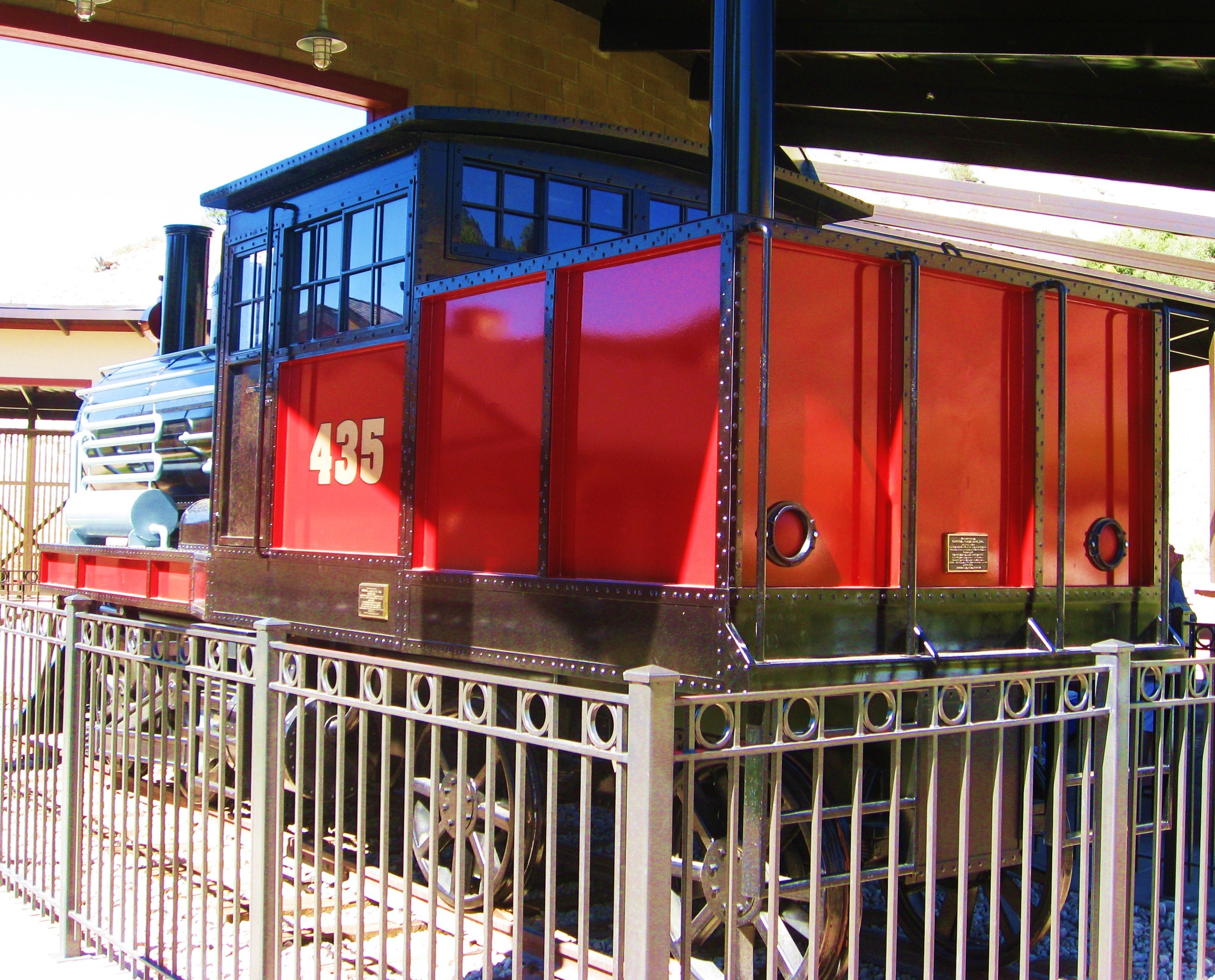
Shiny and bright but going nowhere. -- Photo by Pat Bean

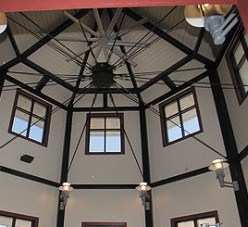
Dedicated just a month earlier, it was not just any old rest stop.Its place to do business looked more like a cathedral than an outhouse.

A high two-story building enclosed the restrooms and the pit stop was designed like a railroad roundhouse, complete with a shiny red and black engine with No. 435 emblazoned on its sides. The site was well landscaped with plenty of picnic tables scattered around for the outdoor dining pleasure of visitors, of which this day there were quite a few. I suspected it was the actual destination for some curious locals as well as a rest stop for us travelers.

Maggie got to enjoy the stop, too, as there was an area marked off just for pets.

The project is supposed to be in remembrance of the old railroad town of Tucker located just two miles away. I think I would have enjoyed it more if my thoughts hadn’t strayed to its cost.

Tie Fork's cathedral ceiling restroom

It seemed a bit too extravagant for me when our country is going through such economic woes. I suspected the money spent here could have been more thoughtfully spent reducing the country’s debt or better educating its children.

Read Full Post »


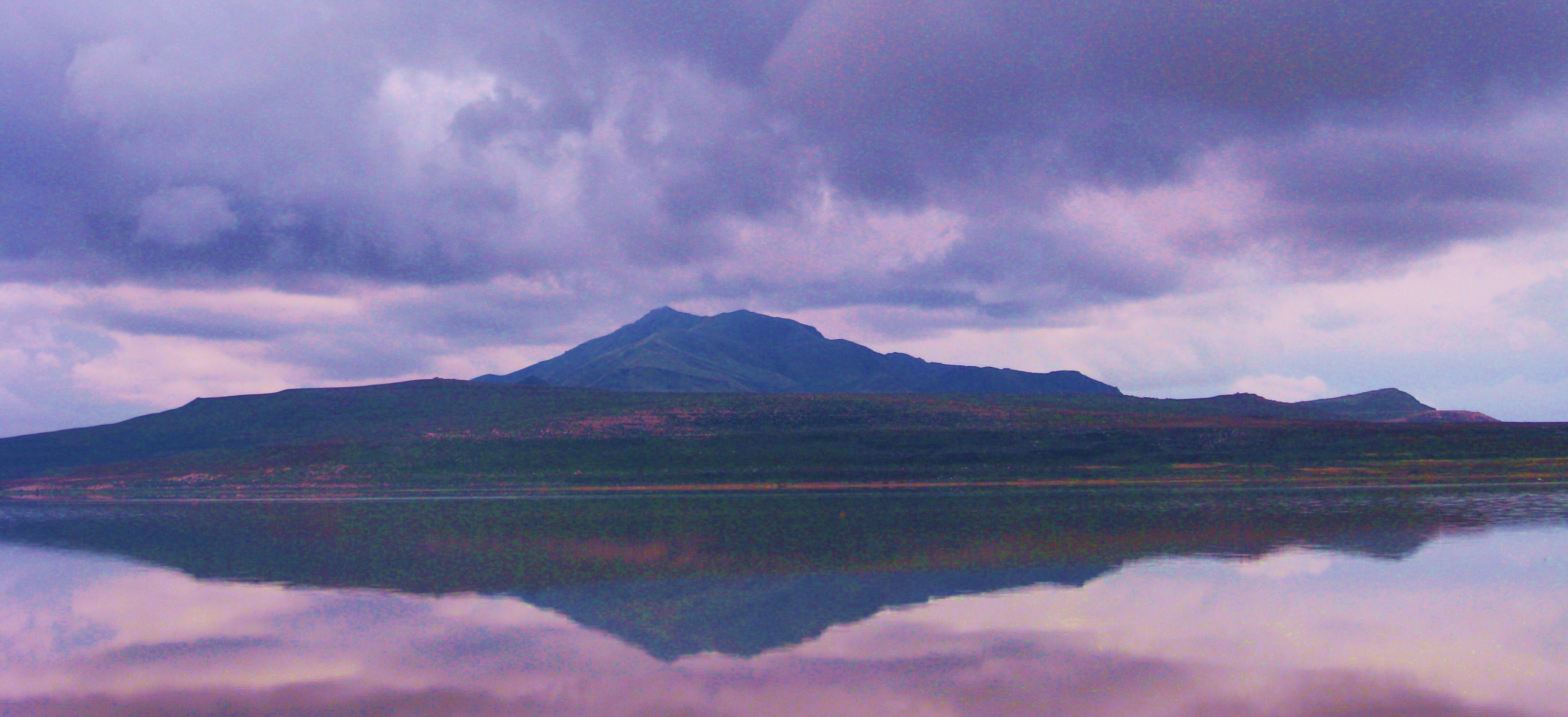
A view of Antelope Island, which appears moody this day. -- Photo by Pat Bean

Travels With Maggie

Antelope Island is a favorite place of birders wanting to add a chukar to their life list.

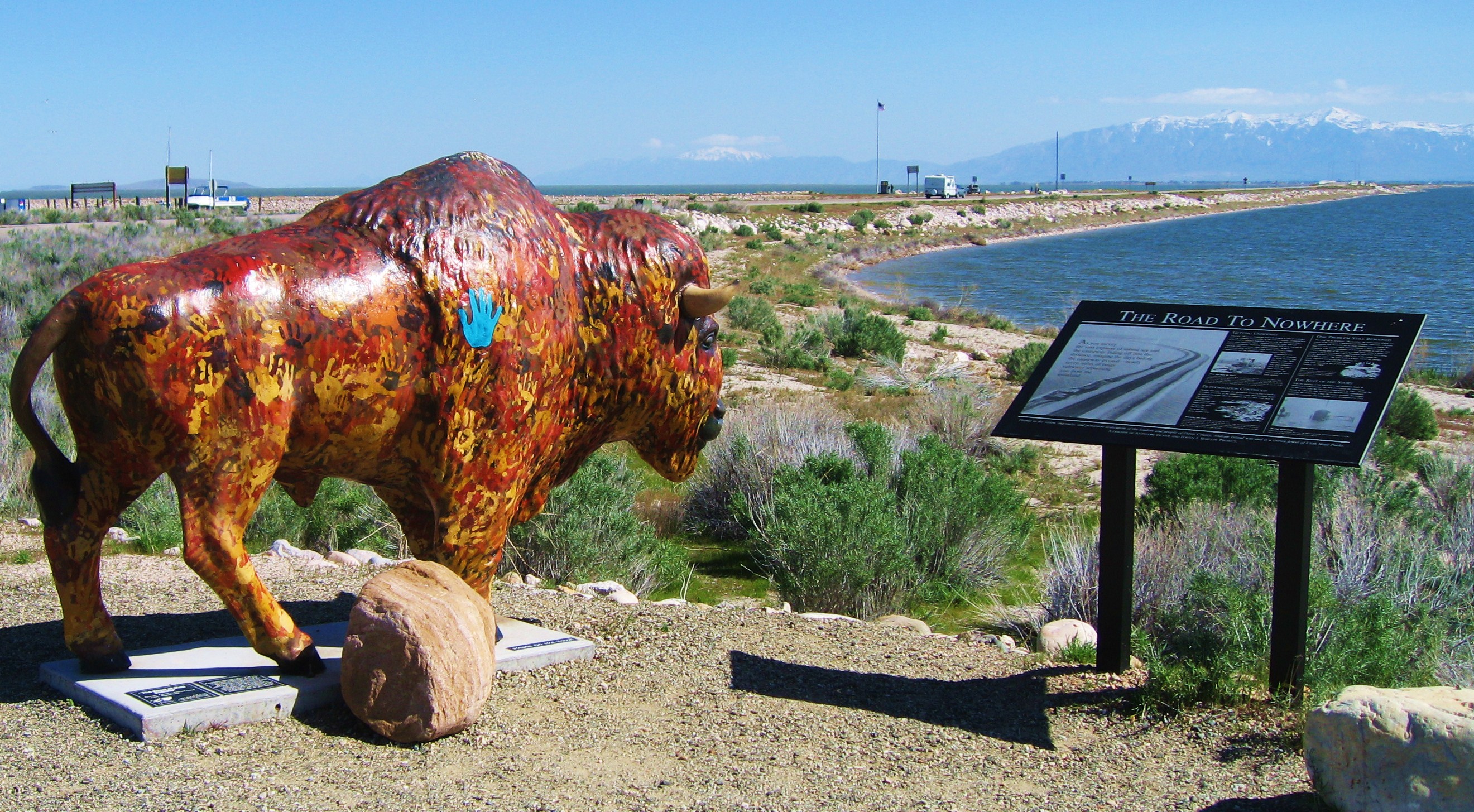
 Antelope Island is a 28,000-acre bird haven in Utah’s Great Salt Lake accessed by a seven-mile toll causeway. It is home to a thriving herd of bison, playful antelope, sly coyotes and prickly porcupines.

 Migrating warblers visit, as do shorebirds and ducks that feed on the surrounding lake’s tiny brine shrimp and brine flies. California gulls nest each year on the rocky outcrops along the shoreline, bald eagles drop by in winter, and every spring hundreds of western meadowlarks, with their brilliant golden throats and song, nest on the island. The males sit on a high perch to melodiously proclaim their brooding territory while the females sit on nests hidden so well in the grasses below that you can walk within inches of them and not know they are there.

I visited this island almost every single week for two years after I caught bird-watching fever in 1999. It was my birding 101 lab. And every time I go back home to Ogden these days, I make time to once again visit this protected — the entire island is a Utah state park — wonderland.

A buffalo sculture looks out over the lake. Photo by Pat Bean


While a live version takes a sandy bath. Photo by Pat Bean

This trip, the drive across the causeway was made with more land than water to the sides of me. Once again, Great Salt Lake is nearing the 1960s record low of 4,191 feet above sea level. In the mid-80s, it was at a record high of 4,212 feet. I was present during this latter period when its high levels and wind-pushed waves tore out the causeway to the island as well as chunks of Highway 80 that stretches across Utah’s Bonneville Salt Flats to Wendover, Nevada.

Now, 25 years later, I was getting to see it at its lowest. Was it Mother Nature’s drought and warm weather affecting the level, or was it the human diversion of water before it reached the lake driving the lake’s current low level? The question taunted the edges of my brain as I watched a pair of ravens circle overhead where the causeway curved. I wondered if these were the same ravens I had watched raise chicks in a huge nest several years earlier.

Antelope seen on the way to the island's historic Garr Ranch. Photo by Pat Bean

I spent four hours on the island this day. I watched with camera in hand as a buffalo took a sandy bath and kept my eyes glued to rocks for the sight of chukars surveying the landscape. Maggie and I took a hike around the point from the Bridger Bay Campground. Meadowlarks and red-winged blackbirds joined their voices to the drum beat of the lakes’s waves against the shoreline. I found the tune calming and marveled at the purepeacefulness of the day.

  While I still had questions and concerns about the lake and the island’s ever-changing future, Mother Nature’s magic was still all around me. I look forward to my next visit, and hope she can still be found.

Read Full Post »

« Newer Posts - Older Posts »