Feeds:
Posts
Comments

Posts Tagged ‘Travel’

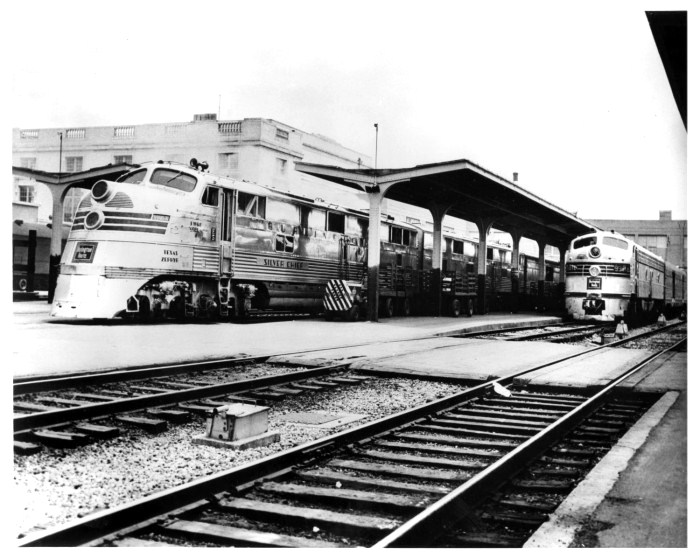
The Texas Zephyr, left, and the Sam Houston Zephyr in Dallas in 1955. Photo from Portal to Texas History

 “Fair laughs the morn, and soft the zephyr blows, while proudly rising o’er the azure realm in gallant trim the gilded vessel goes. Youth on the prow, and pleasure at the helm.” Thomas Gray

Journeys

Zephyr is a wind from the west. It was also a train that blew past my grandmother’s home every day around noon.

I recalled it yesterday when I wrote about picking blackberries in an empty field on the outskirts of Dallas. Seems my journey into the past, much as my journey on the road today, is full of interesting detours.

While I never did get to ride a Zephyr, I did eventually ride on a train from Ogden, Utah, to Las Vegas through the Virgin River Gorge. Shown above is the Virgin River in Zion National Park before it enters the gorge. -- Photo by David Scarbrough

I always wanted to know where that silver bullet, as my grandmother called it, was going. Over half a century later, I finally know the answer – thanks to the ease of internet research.

There were more than one streamlined silver zephyrs operating out of Dallas. One, the Texas Zephyr, went between Dallas and Denver, stopping in Ogden, Utah, where I ended up living for 25 years. Ogden was a big railroad town, still is although today it’s mostly freight trains that pull through its Union Station terminal.

But it was here, some 30 years ago, that I boarded my first train – an Amtrak traveling from Ogden to Las Vegas through the awesome Virgin River Gorge between St. George, Utah, and Littlefield, Arizona. I’ve ridden a number of trains since, but I couldn’t have asked for a better initiation to riding the rails.

The second silver train operating out of Dallas, from 1936 to 1966, was the Sam Houston Zephyr that traveled back and forth daily between Fort Worth, Dallas and Houston. It was probably this train I watched for with my young impressionable eyes.

I suspect that speeding zephyr, as it roared past my grandmother’s home, might have nurtured my wanderlust as much as the travel adventure books I was addicted to reading as a child.

I was never cured of my travel-book reading addiction – and I also still get a little chill in my soul at the sound of a train whistle.
Read Full Post »


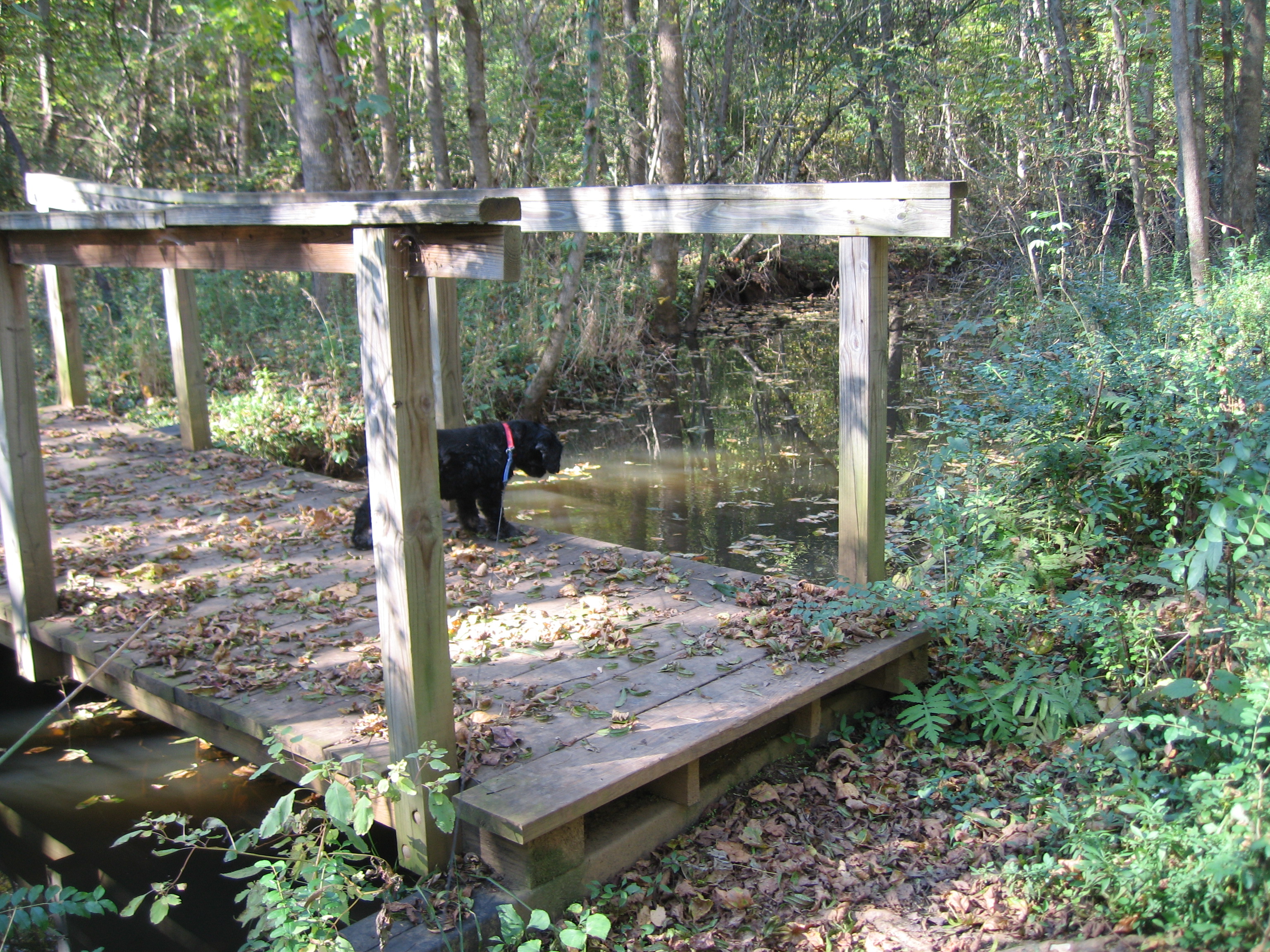
The daily walks Maggie and I take together help us get close to the landscape. Here, Maggie's crossing a bridge over a small stream at Andrew Jackson State Park in South Carolina. -- Photo by Pat Bean


“Nothing is so awesomely unfamiliar as the familiar that discloses itself at the end of a journey.” Cynthia Ozick

Travels With Maggie

 Since taking up the challenge to blog daily, I’ve slowly worked my way up to getting about 100 hits a day, with perhaps half a dozen comments. So when I checked my dashboard this past Tuesday, and noted I had over 500 hits in a very short period of time, I knew something was up. But what?

On checking it out, I discovered my March 1 post on Waterfalls had made WordPress’ daily FreshlyPressed list of blogs readers might want to check out. The honor – Thank you WordPress – resulted in nearly 5,000 hits on Pat Bean’s Blog in a three-day period, quite a few new subscribers and over 100 comments and “like” hits.

I was overwhelmed. I found I couldn’t personally answer every single comment, which has been my habit, and get any writing done. Besides this blog, I’m writing a travel book about traveling across the country with my dog, Maggie. The two of us have been living and traveling down the road in a small RV now for seven years.

So this morning I’m using my blog as a way to thank all the readers out there who waved as my blog passed their way. I

Smelling the flowers and watching the butterflies, like this cloud sulphur photographed at my youngest daughter's home in Camden, Arkansas, are part of the journey. -- Photo by Pat Bean

feel the weight of your support and hope those of you who continue with me will not be disappointed.

My blog is primarily one about travel, with a big emphasis on Mother Nature’s awesome landscape.

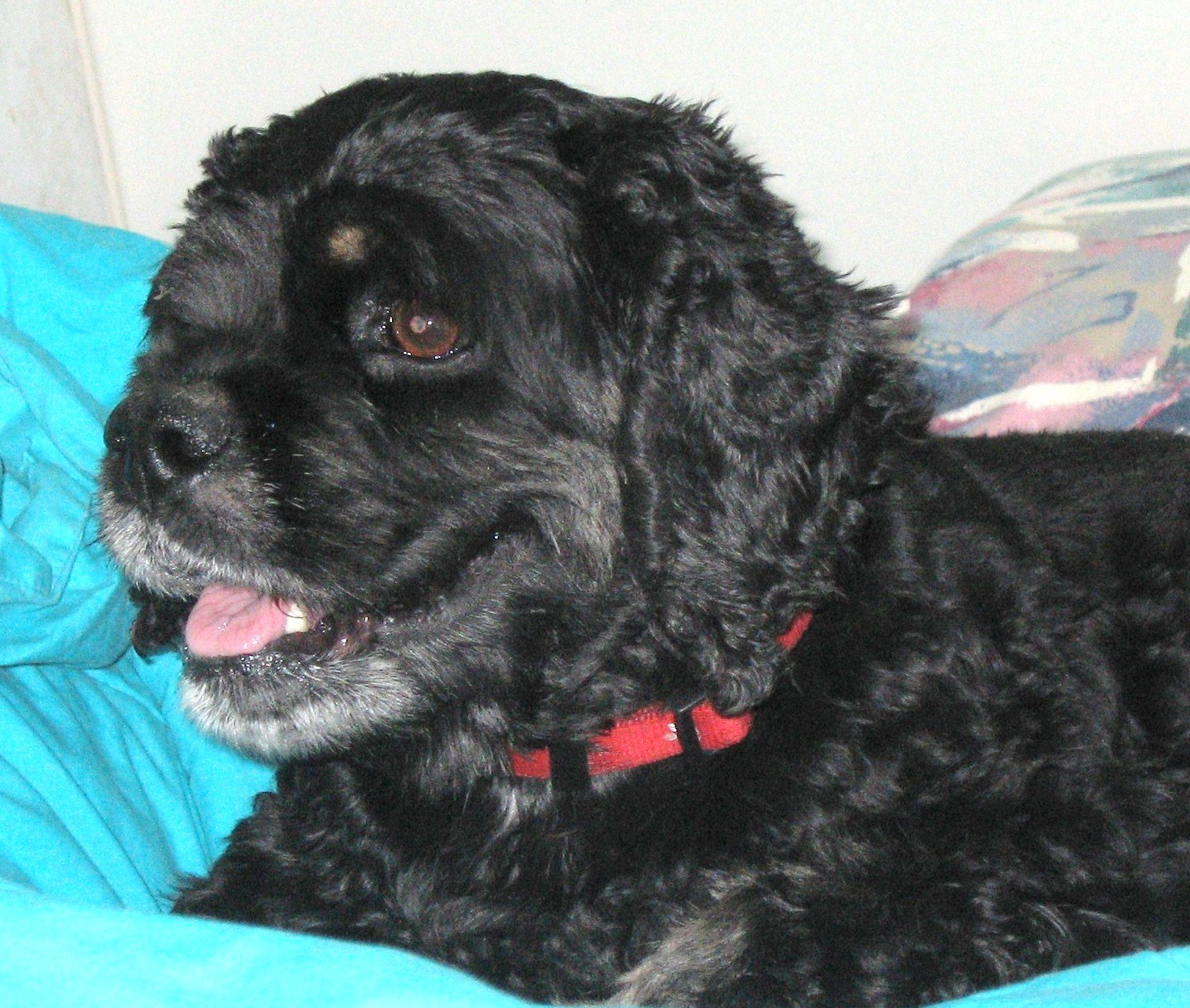
But it’s also a blog about celebrating life, of discovering joy in little things and in seeing the world through new eyes; it’s about finding my writer’s voice; of finding ways to relate to my large family of children, grandchildren and great-grandchildren; and it’s about the special relationship I have with a spoiled black cocker spaniel that I rescued 12 years ago. .

It’s my journey, but I welcome all of you along for the ride.

Read Full Post »

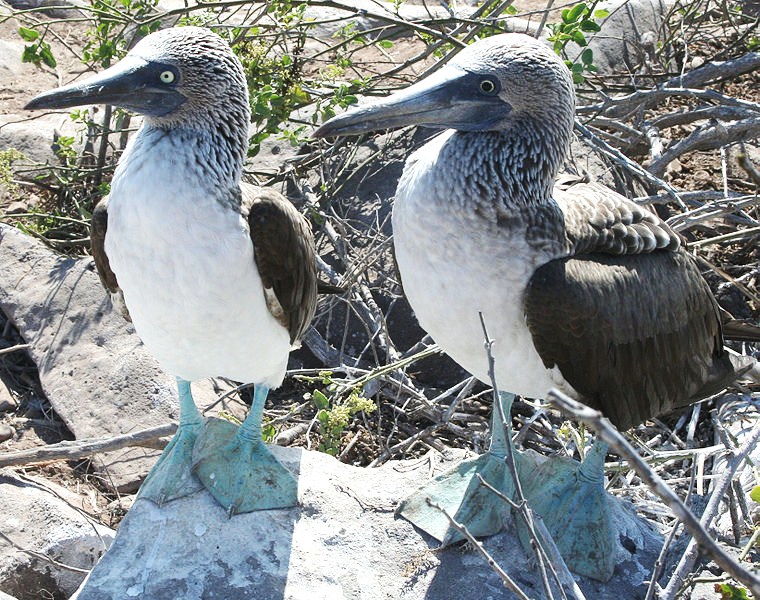
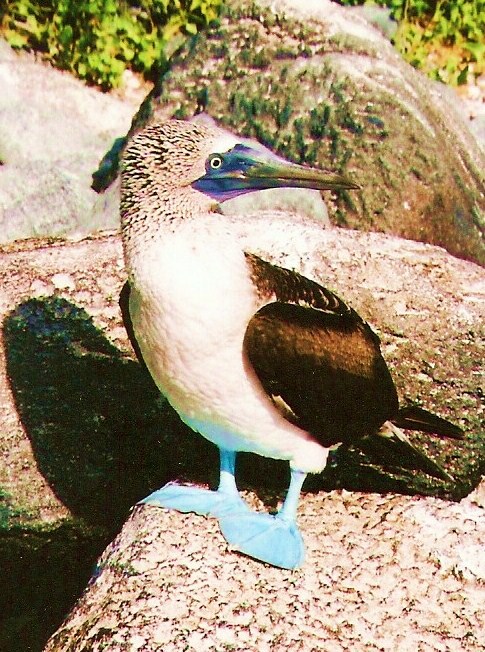
Blue-footed booby. The male is on the left. Note the smaller appearing pupil. -- Photo courtesy Wikipedia

 “Work like you don’t need the money, love like your heart has never been broken, and dance like no one is watching.” — Aurora Greenway

Journeys

The large white and brown bird with the blue feet didn’t recognize my right to the hiking path. Its Galapagos Island home, where man has not yet imposed his predatory nature, let it assume it was my equal.

I stopped about a foot away and was quickly mesmerized as the two of us, human and bird, stared eye-to-eye. Since the pupils in its pale yellow eyes appeared smaller than that of the bird sitting on two eggs beside the path, I knew I was being confronted by a male booby.

Without taking its eyes from me, the booby blocking my path lifted his bright blue right foot. He gave me a quizzical look, then lifted his blue left foot and then his right foot again. Finally I lifted my tennis-shoe clad right food in reply.

A blue-footed booby, looking as if he was searching for a Dr. Seuss book in which to be a star.

 For the next couple of minutes, he and I did a Hokey Pokey. It probably was the same dance he used in courting his mate.  Our comedic interlude with music playing only in our heads might have gone on longer if it hadn’t been  interrupted by our group’s tour guide, who chaperoned us to keep the Galapagos wildlife safe.

“Don’t tease the bird,” he said when he saw me.

“I’m not,” I replied. “The booby invited me to dance with him.”

At the guide’s disbelieving frown, I moved on down the trail. When I turned back around for one last look at my dancing partner, he raised a blue foot as if saying good-bye.

Such unexpected moments are what travel is all about.

Read Full Post »


Maasai women look on as men of their village demonstrate their jumping skills. -- Photo by Pat Bean

“The great thing is the world is not so much where we stand, as in what direction we are moving.” Oliver Wendell Holmes

Journeys

While drinking my morning coffee, I read that today was International Women’s Day. My first thought was how the world has changed for women during my time on this earth.

I’ve gone from marrying young and being barefoot and pregnant to being a homemaker who also brought home the bacon – if you can call that progress. I successfully fought for equal opportunity and equal pay in the workplace. Today, I take pride in the role I played so my granddaughters can take such things for granted. .

And then I remembered the Maasai women I had seen in Africa just three years ago. These beautiful women have such hard, difficult lives that our native guide, who was not a Maasai, expressed sorrow for them – and called their men lazy turds. This remark came every time he saw a man walking carrying nothing and a woman walking behind him loaded down with water or firewood.

It is the Maasai women who build the mud and dung huts for the family. It is the women who walk miles every day for water and firewood, unarmed among dangerous wildlife. It is the women who milk the cows and cook the food and tend the children. And yet it is the men who own everything.

This young girl, looking on at the jumping men, is surely thinking she can do that, too. -- Photo by Pat Bean

This young girl, looking on at the jumping men, is surely thinking she can do that, too. -- Photo by Pat Bean

While I appreciate ethnic cultures, this is one aspect of the Maasai way of life that needs to be changed. And I make no apology for saying that.

I definitely thought this after a visit to a Maasai village in Kenya, where the men demonstrated a game they played with stones then noted that it was too difficult for the women to master. I was not impressed and huffed off.

But then a young girl in the tribe offered me hope that change might already be sniffing at the men’s heels.

It happened when the men were showing off their jumping skills, something young boys began practicing almost as soon as they can walk. Off to the side, where the shaved-head Maasai women stood quietly looking on, a young girl, ignoring the disapproving looks coming her way, jumped in rhythm with the men.

She, I thought, was the beginning. I hope one day she will be able to look back on how far she’s come, too.

Read Full Post »

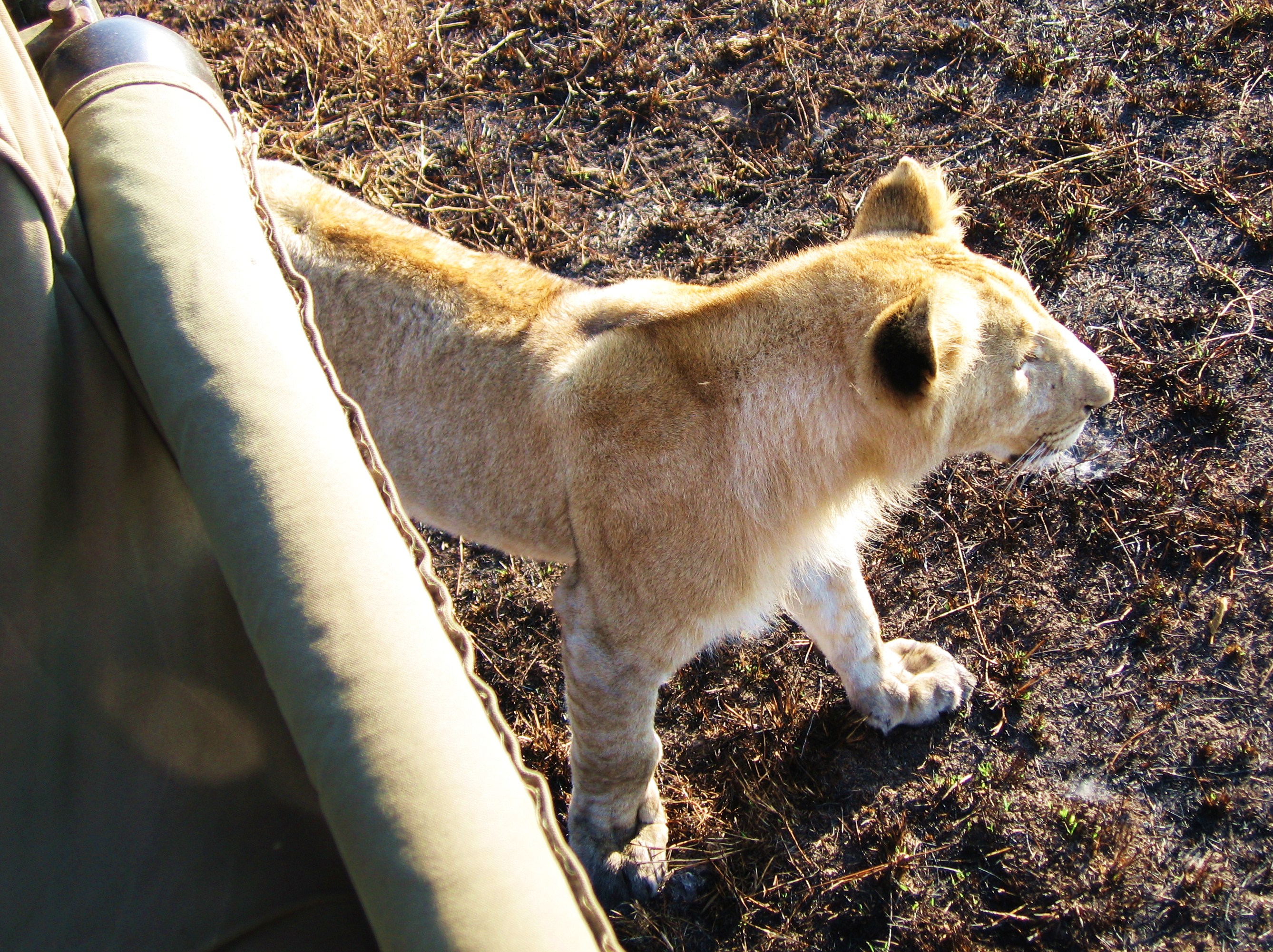
This young lion, which came close enough for me to lean over and touch if I had been so inclined -- I wasn't -- provided a tall-tale to relate to my grandchildren. -- Photo by Pat Bean


“An optimist is someone who gets treed by a lion but enjoys the scenery.” — Walter Winchell

Journeys:

My early mornings are reserved for writing, but I played hooky today to run errands with my daughter-in-law.

When I moaned to her that I didn’t have an idea for today’s blog that I was going to have to write when we returned from gadding about – That’s the downside of signing up for this blog-a-day challenge – she suggested I write about my encounter with a lion.

The story is one of the anecdotes from my African safari that I tell to impress my grandkids, whom I want to think that Nana is cool, or whatever term they use for it these days. I know such self-serving promotion smacks of Frank Lloyd Wright’s decision to choose “honest arrogance” over “hypocritical humility,” but I do it anyway.

Lions sleep the day away as tourists gawk from metal contraptions that African wildlife consider just part of the landscape -- Photo by Pat Bean

And since it’s now past time for my brain to be at its writing peak, I’ll accept the suggestion and repeat the story. Once upon a time, on an August day in 2007, I had the experience of a lifetime…

All three of the native guides who chauffeured my friend Kim and I through Tanzania and Kenya for two weeks were experts at finding wildlife. On this particular morning, our guide had spotted three lions, a mother and two almost fully grown males, headed our way.

He parked and we waited for them to pass by our Land Rover. These tourist-transporting vehicles have become so common to African wildlife that they’re merely considered an indigestible part of the landscape. And Kim and I had been assured we would be perfectly safe as long as we stayed inside the metal contraptions.

As our guide had so correctly assumed, the lions passed not far from our vehicle. That is to say two of them passed. One of the younger males took a short detour to scratch his back on the tire of our Land Rover, whose canvas tops and sides had been rolled back to give us better views.

I froze, but then couldn’t resist a single shot from the camera I had in my hand. Here I was, standing mere inches away from the king of the beasts. I wanted proof – and I got it.

How “cool” is that?

Read Full Post »

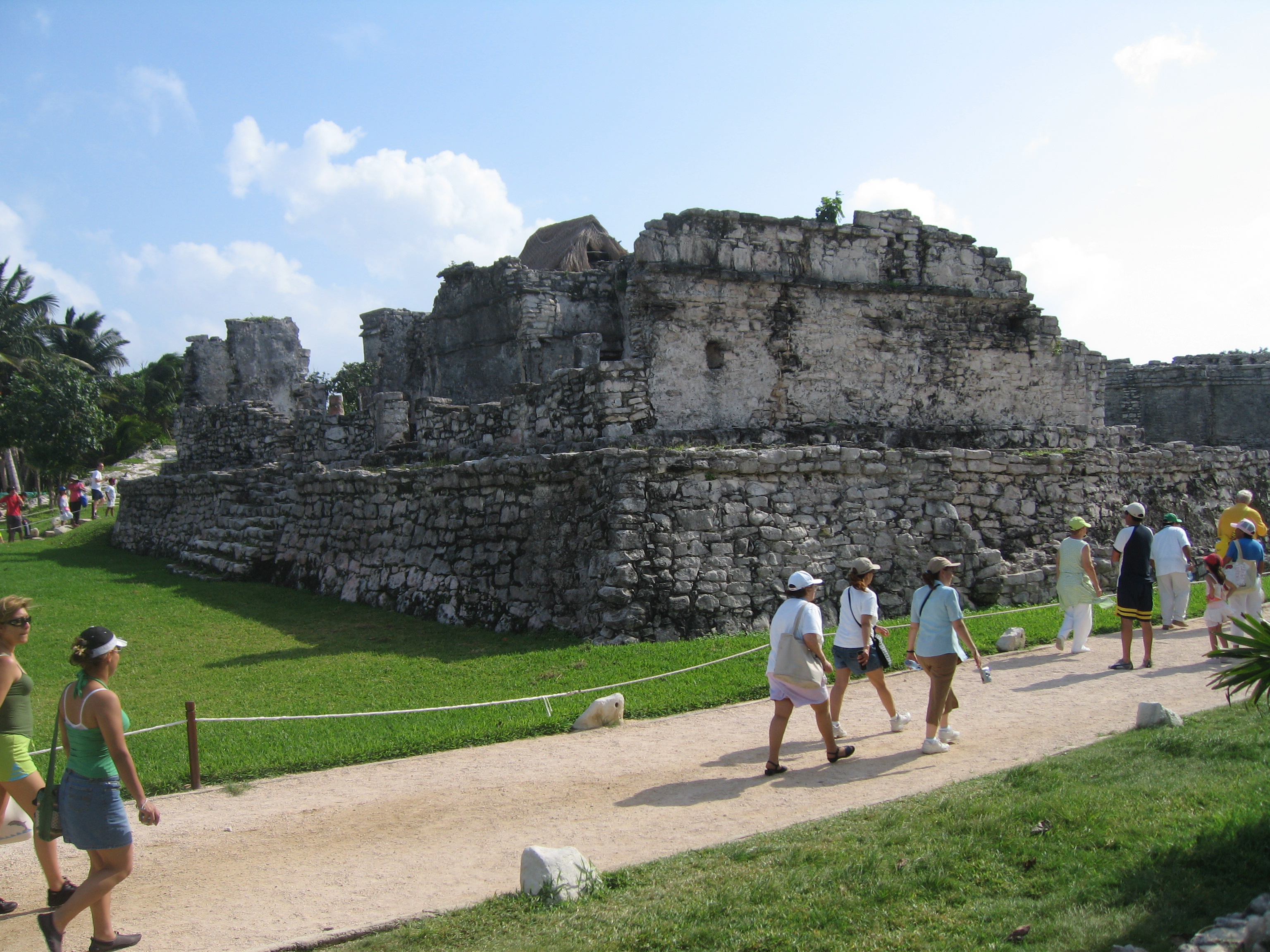
Ruins and tourists are all that remain of Tulum, a walled town by the Caribbean Sea built by the Mayans. -- Photo by Pat Bean

 One’s destination is never a place, but a new way of seeing things.” — Henry Miller

About 800 or so years ago, Mayans built a walled city on the Yucatan Peninsula that today we call Tulum. The citizens of this fort-like town that stood on a scenic bluff overlooking the Caribbean Sea were decimated by European diseases after a Spanish Expedition discovered the place in 1518.

Time and the elements reduced it to the ruins that today attracts hundreds of daily tourists. I was one of them a few years ago.

This journey back in time required an hour’s ride in a passenger ferry from Cozumel, followed by another hour’s ride in a bus to access the historic site. The day I took the tour, the water was exuberantly choppy, turning several of the passengers green.

Hamming it up for the camera, and tourist dollars. -- Photo by Pat Bean

The bus ride, however, was more gentle and flavored by the anecdotes of Angel, our tour guide. He filled our ears with tall tales of the Mayans, of which he was a descendent. He was an excellent press agent for his people, both those of ancient times and their kin who still live on the Yucatan Peninsula.

As I wandered among the ruins, ghosts from the past haunted my thoughts, their spirits floating through the air and hiding inside the cracks of the rock structures they built. What were these people really like, I wondered.

Walking back to our bus parked at the market plaza, where souvenir venders were loudly hawking their exotic wares – Angel had told us to wait to spend our money at a genuine Mayan gift shop that we would stop at on the ride back to the ferry – I sorta got an answer.

While I didn’t buy any souvenirs, I did pay to take the picture of two young Mayan boys dressed up as their ancient ancestors might have looked getting ready for battle – or a celebration.

These theatrical youths had found an ingenious way to support themselves. In this they were probably not all that different from the early Mayans. Or us. We all struggle to put foot on our tables and a roof over our heads as we search for a purpose to life and the secret to happiness.

It’s merely the methods of doing so that separate us from past generations and other cultures.

Read Full Post »


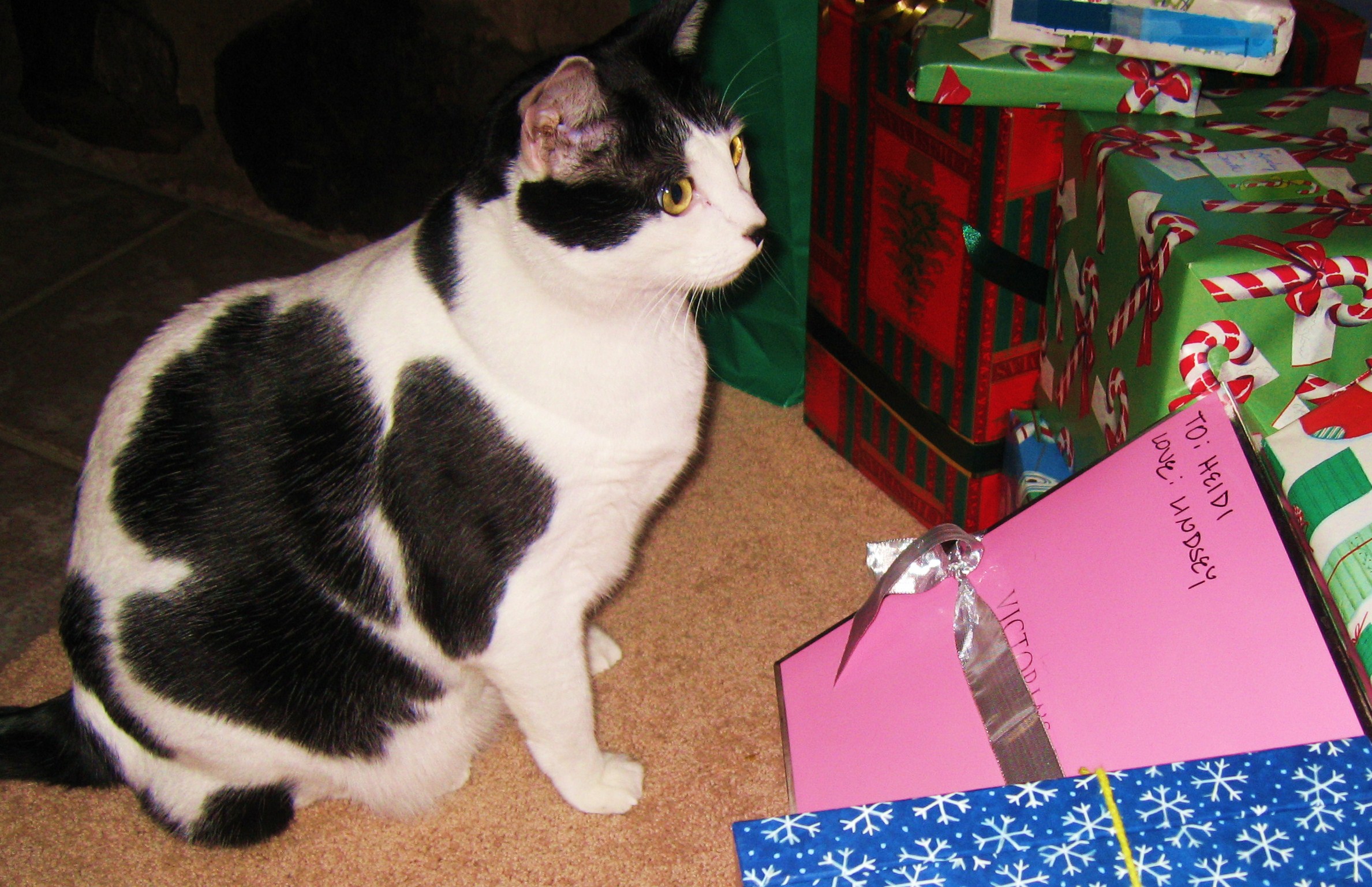
This is Rocky. He was rescued during a typhoon when my youngest daughter lived in Guam. He's never met a lap he didn't like. -- Photo by Pat Bean


“Dogs have owners. Cats have staff.” Unknown.

 My dog, Maggie, must be a cat in disguise.

Travels With Maggie

We never had a cat when I was growing up, only dogs. I didn’t have anything against cats, but never really wanted one of my own. I thought them too unfriendly, a stereotype that was confirmed by the first one that came into my life.

It was a beautiful, silky black feline that adopted my then eight-year-old daughter, Deborah. She adored this creature and named it Mai Ling. The enchantment was lost on the rest of the family. Mai Ling was cleverly mean, with a heart as dark as her fur.

One of her favorite activities was to hide beneath the couch and claw the legs of unsuspecting passers-by. Even worse, were her frequent full-body tackles on innocent sleepers.

One day, just as Mai Ling had left her former home to follow my daughter home, it adopted a new family down the street. Deborah brought the cat back repeatedly, but at the first opportunity Mai Ling always escaped again.

Deborah greatly mourned the loss of her pet, but the rest of the family rejoiced.

The next cat to enter my life was an ugly, skinny, dirty-haired calico that one of my sons had rescued from some boys who were teasing her.

This is Maggie, a cat in disguise. She considers me her personal slave. -- Photo by Pat Bean

“Well, we’re going to have to feed this one for a while before we can find it a new home,” I told him. At this point, not even Deborah, wanted to adopt another cat.

Two weeks later our ugly, rescued feline had turned into a beautiful princess that had stolen all our hearts. We named her Kitterick, after a sexy, albeit a kid’s show, mascot for Houston’s KTRK-TV.

Kitterick had a long and happy life with our family, including our dog. We would often find the two of them curled up together.

The moral of this story is as old as Methuselah. And it applies to a lot more in our lives than cats, including the journeys we make. As Aldous Huxley once said: “To travel is to discover that everyone is wrong about other countries.”

Read Full Post »

Life's "no problem" when you're cruising Jamaica's Black River. -- Photo by Pat Bean


“Yesterday is dead, tomorrow hasn’t arrived yet. I have just one day, today, and I’m going to be happy in it.” Groucho Marx

Travels With Maggie

Lonely Planet’s lead article in this month’s newsletter (http://www.lonelyplanet.com/us) features one day itineraries for five cities: Barcelona, Toronto, London, Paris and Istanbul.

I wanted to both scream and cry at the audacity of such a notion. The thought of spending so few hours in these fabulous cities, which I’ve not yet visited, made me quite sad.

Then I thought about places I’ve visited when circumstances only allowed me a single day, like Jamaica, Guayaquil, Fairbanks, Glacier National Park and Nairobi. While each of these places deserved more than a mere day to explore, there would be some big holes left in my experiences if I had missed them.

George, the alligator that responded to the Black River boatman's summons. Honest! -- Photo by Pat Bean

In Jamaica, which I visited while on a Caribbean Christmas cruise, I spent several hours in a giggley-jiggly bus with a guide explaining the sights and Jamaica’s “no problem mon” attitude, then took a float trip down the Black River where egrets ganged up in mangrove trees and an alligator named George came at the boatman’s call. Honest.

Guayaquil was the Ecuadorian starting point for my trip to the Galapagos Islands. Here I was served chicken and watermelon for breakfast at the quaint Andaluz Hotel before taking a walk on the city’s beautiful Waterfront Parkway. That night I watched the stars come out from a rooftop restaurant that overlooked the Guayas River.

In Fairbanks, Alaska, I spent a night at a quaint bed-and-breakfast and then the better part of the next day at the fantastic University of Alaska Museum before moving on to Denali National Park .

Glacier National Park in Montana was a detour when I drove the Alaskan Highway. The main event here was simply driving the awesome and scenic 57-mile Going to the Sun Highway. The frosting on the  entrée was a grizzly bear that stopped traffic. Fortunately my halt offered a good view of this magnificent creature.

Nairobi, Kenya, was the starting point for my magnificent two-week African safari. Here I stayed in the same hotel favored by Ernest Hemingway, explored the grounds of the University of Nairobi, which was just next door, and toured the home (now a museum) of Karen Blixen, alias Isek Dineson and author of “Out of Africa.”

I guess if that’s all you have, one day is quite enough. But I sure hope that if I ever get to Lonely Planet’s big five that I have more than 24 hours to linger.

Read Full Post »

 Buttercup: That’s the fire swamp! We’ll never survive.                                                                                                                      Wesley: Nonsense! You’re only saying that because no one ever has.                                                                                                                                                                                                                                                 — The Princess Bride

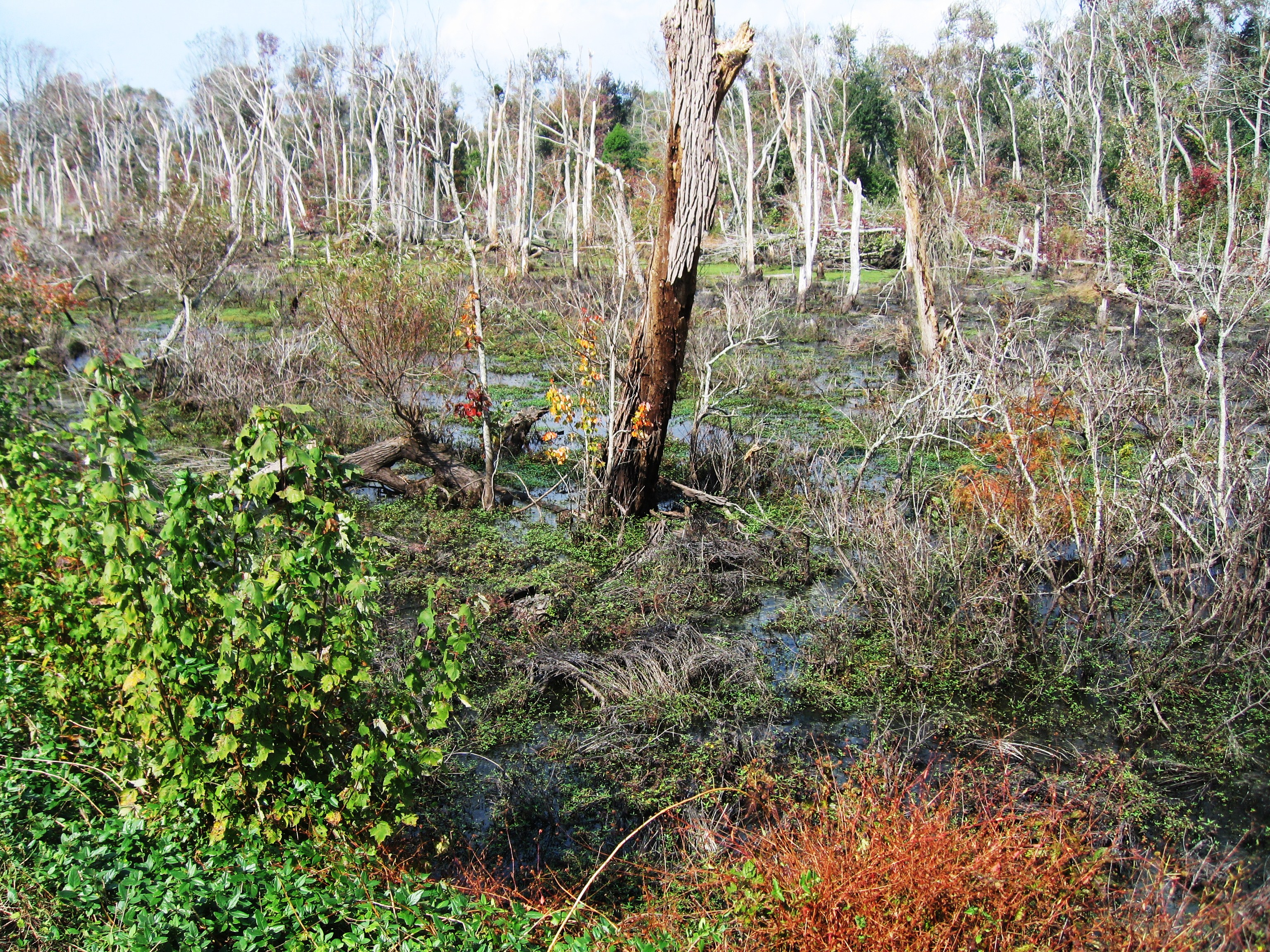
View of The Great Dismal Swamp from Highway 17 -- Photo by Pat Bean

Travels With Maggie

 It was a beautiful fall day that found Maggie and I driving south on Highway 17. We had no plans except for making it 100 miles farther down the road, a necessity if we were to be back in Texas in time for Thanksgiving with family.

 I had just crossed from Virginia into North Carolina when I came upon the Great Dismal Swamp Canal Welcome Center. Of course I stopped to investigate.

 Maggie, who was recovering from one of her recurring bouts of the infamous cocker-spaniel-ear infections, gave me her: Don’t bother me, I’m napping look. No problem, I told her as I climbed down from the RV.

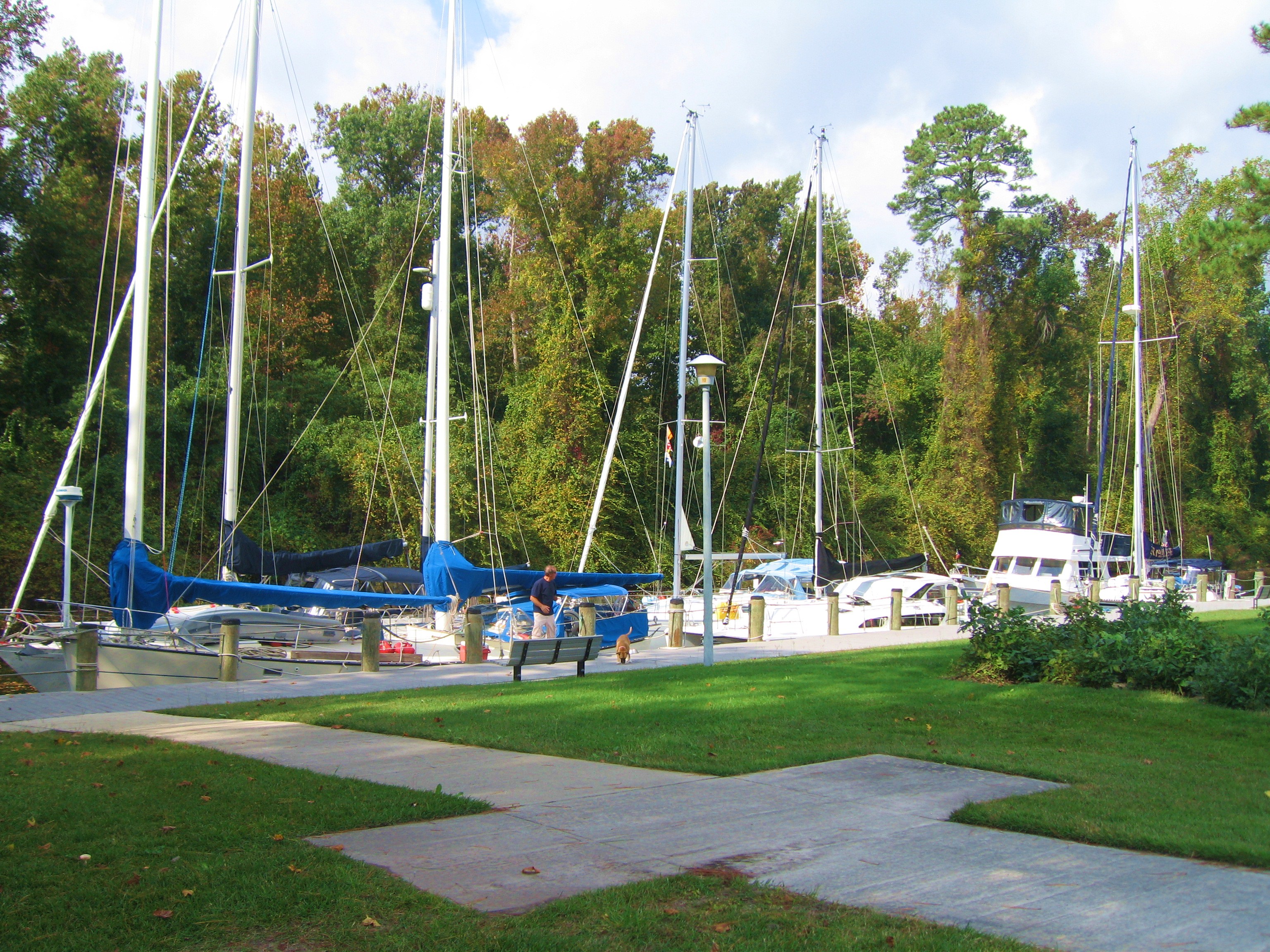
Sailboats tied up at the Dismal Swamp Canal Welcome Center in North Carolina. -- Photo by Pat Bean

From information available in the visitor center, I learned that the swamp stretched from Virginia into North Carolina, and that 110, 000 acres of it was a designated national wildlife refuge. The more fascinating information concerned the canal that ran behind the visitor center.

This 22-mile long waterway was the idea of George Washington, who saw it as an investment to accommodate trade between Virginia and an isolated region of North Carolina. In George’s day, such a canal was the only easy way through the swampy muck.

 Given the year it was begun, 1793 (finished in 1805), it’s a given that slaves were the digging tools. But the swamp was also a place of hiding for runaway slaves, which “Unce Tom’s Cabin” author, Harriet Beecher Stow, wrote about in her less known work, “Dred.” This is the story of an escaped slave who lives in the Great Dismal Swamp.

Civilized trail -- no snakes -- Photo by Pat Bean

 Today, the canal provides access to Lake Drummond , and is a shortcut for boaters traveling between the Elizabeth River and Chesapeake Bay in Virginia to the Pasquotank River in North Carolina. Six large sailboats tied up this morning at the welcome center dock told me it was a popular passage.

 By the time I got back to the RV, Maggie had decided she wanted to investigate, too. I took her for a walk on a short nature trail on the civilized and landscaped side of the swamp.

 Back on the road, Highway 17 traversed the swamp for another 60 miles. From my comfortable seat behind the steering wheel, with the tires of my RV humming a pavement tune, I didn’t find the swamp dismal at all.

Read Full Post »

A real "Survivor" moment in Kenya. This young male lion actually scratched its back on the tire of the Land Rover just beneath my feet. -- Photo by Pat Bean

  “I don’t want to be thought of as a survivor because you have to continue getting involved in difficult situations to show off that particular gift, and I’m not interested in doing that anymore.” — Carrie Fisher

Travels With Maggie

I’m hooked on the TV series, “Survivor.” I’m not proud of the addiction. It means I can no longer boast that I’ve never watched a soap opera. “Survivor,” with all its melodrama, plotting and backstabbing, is certainly that.

It’s a rare contestant who doesn’t lie, cheat, gossip maliciously and betray. That’s the way to play the game. Being a good guy or gal usually means you get voted out early because the competition knows you’ll most likely be the one to win the million-dollar prize.

I’m a peace-loving person who wants everybody on the planet to get along and respect each other. More than once I’ve gotten up on a soapbox to spread this message. Yet Survivor nights find me watching a group of rowdy, inconsiderate, half-naked – sometimes even naked although CBS censors the privates — buffoons make war against each other.

Why am I hooked? It’s a question I’ve asked myself. When I do, this old-broad traveler actually comes up with answers. .

No adrenalin moment here, but an elephant coming out of a river at Tarangire National Park in Tanzania looked for awhile like it was going to charge our vehicle. While I didn't pee my pants, I was too afraid to move to take a picture during that "Survivor" moment. -- Photo by Pat Bean.

First there’s the exotic settings, like Australia and Africa, that appeal to my wanderlusted soul. Then there’s the idea of surviving the new and the strange, which on a more sedate scale, my dog, Maggie, and I do every time we head down the road to places we’ve never been or seen before.

“Survivor” is arm-chair travel at its adrenalin best. I find myself living vicariously through the actions of the players, standing in their shoes – or standing shoeless beside them – asking myself what I would do if I were them.

Sitting in front of my motor home’s small TV, or watching the show on my computer when I have no digital or cable connections, I fantasize winning each immunity challenge while still being the good gal who doesn’t lie, cheat or betray. Of course I always win. Such fantasy keeps my brain stimulated – and that’s a good thing. Or so I tell myself.

According to the ratings I have a lot of company. So why do you watch “Survivor?”

Read Full Post »

« Newer Posts - Older Posts »