Feeds:
Posts
Comments

Posts Tagged ‘Santa Fe Trail’

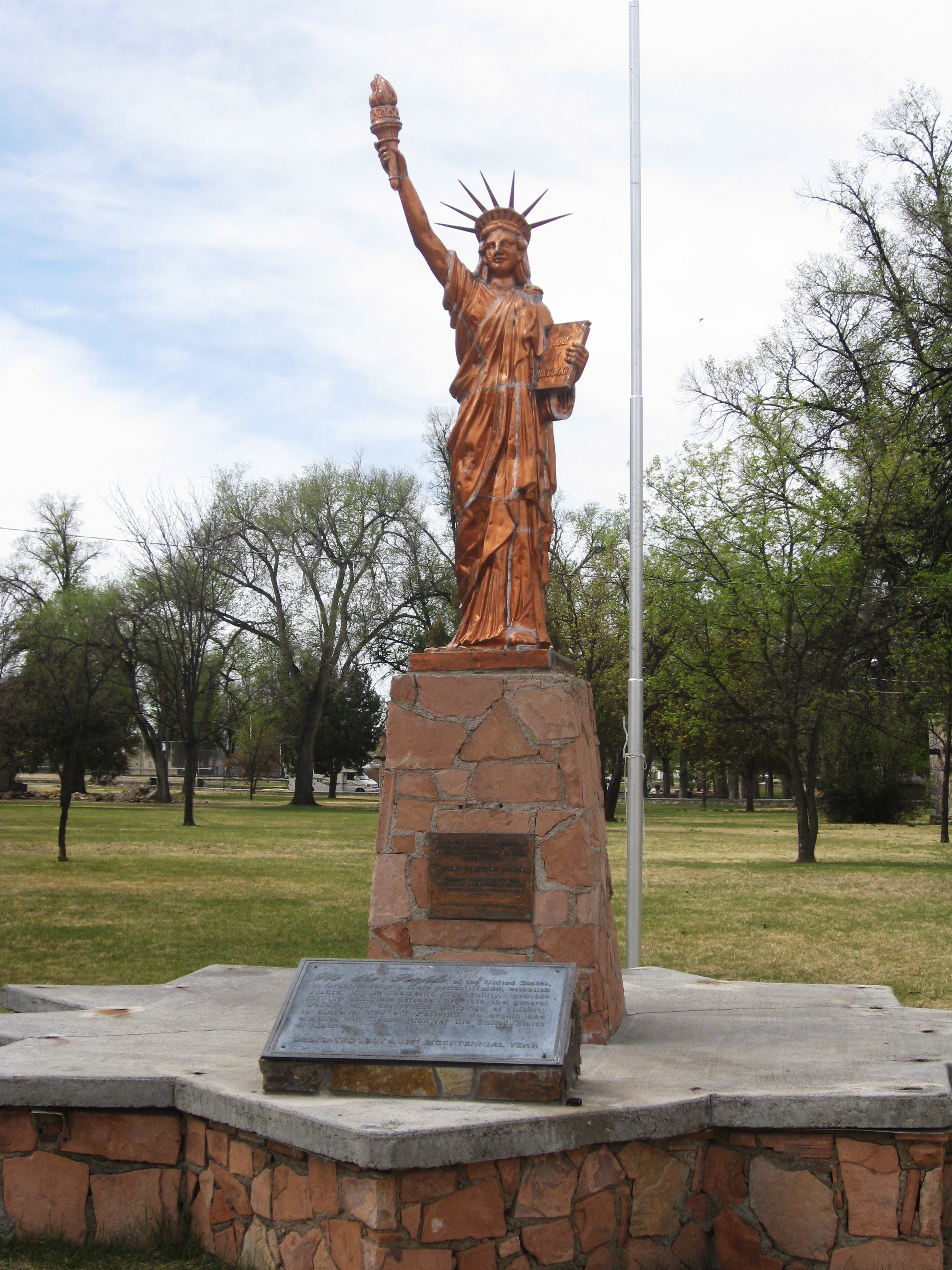
Lady Liberty in La Junta, Colorado. -- Photo by Pat Bean
Redbud blossoms say spring — Photo by Pat Bean


“Education is learning what you didn’t even know, you didn’t know.” — Daniel J. Boorstin

Travels With Maggie*

I stopped at La Junta, Colorado, to see the Koshare Indian Museum, but it was closed. Instead I took a walk in the City Park adjacent to the museum, where I was surprised to see the Statue of Liberty.

Of course not the real thing, just a miniature replica presented to the city by local Boy Scouts. Why was it here in this small town that sat on the banks of the Arkansas River (which by the way I had already crossed several times since leaving Texas just six days ago) and in the path of the old Santa Fe Trail?

This inquiring mind needed to know. It was the homework I set myself for the evening.

La Junta, I learned first, had its beginnings as a construction camp for the Santa Fe Railroad, which, when completed, marked the beginning of the end for the Missouri to New Mexico foot path. After the railroad work was completed the construction camp almost died, but then the railroad built a depot and roundhouse at the site and it bustled once again.

In 1881, the camp was incorporated and named La Junta, which in Spanish means the junction.

As to the Statue of Liberty replica, I learned there are over 200 of them scattered around the country in 39 states. Iowa, with 27, has the most, with Kansas coming in a close second with 26, and Missouri, with 25, taking third place.

The statue in La Junta is one of 17 for Colorado. A complete list of the statue sites, just in case you have an inquiring mind, too, can be found at: http://tinyurl.com/4q5a7gw

The statues were Kansas City Scout Commissioner J.P. Whitaker’s idea for celebrating the Boy Scouts’ 40th anniversary in the 1950s. Anyone with $350 plus the cost of freight for the 290-pound, 8.5-foot tall copper statues could get one.

Homework completed, I was once again a satisfied traveler.

A road trip is so much more than just traveling down the road taking in the sights with the eyes. The brain needs a bit of stimulating vistas to make it a complete travel experience. Well, at least that’s the way I prefer to travel.

*Continuing Day 6 of the journey, April 24, 2011

Read Full Post »

Kansas in the rear-view mirror -- Photo by Pat Bean

“Life becomes precious and more special to us when we look for the little everyday miracles and get excited about the privileges of simply being human.” — Tim Hansel.

Travels With Maggie

Maggie and I left Kansas and its winds behind today as we drove west on Highway 50 to John Martin Reservoir State Park in Colorado. Route 50, like the more famous Route 66, was created in 1926 as part of the original U.S. Highway System.

But while only bits and piece of the more famous Route 66, which stretched from Chicago to Los Angeles, remains today, the longer Highway 50 is almost intact, stretching from the Atlantic in Maryland to Sacramento, California. Originally it went all the way to San Francisco, but that section got eaten up by larger roads, not much different from what Highway 50 did to earlier travel routes.

Portions of Highway 50 used to be part of the Santa Fe Trail, back when travel depended on feet, human or animal. That unpaved trail, stretching from Missouri to Santa Fe, New Mexico, was heavily used from 1822 until the railroad came to Santa Fe about 1880.

Today’s drive was quite peaceful, with little traffic, giving me time to consider how fortunate I was to have four wheels carrying me smoothly to my destination. My passing RV spooked a striking male ring-necked pheasant in the grasses beside the road and I got to see him skitter away, his red and green head bobbing and his long tail waving behind him.

As I drove, gaining elevation, I could see father behind me than ahead. It was a puffy-white cloud day, and the sky looked like a sea with white-capped waves. The image in my rear-view mirror was striking enough that I snapped a picture of it as I drove. Not too smart probably but there were no other cars in sight.

Time passed fast and soon we were pulling into the campground, where I backed my RV, Gypsy Lee, up next to Hasty Lake. Robins, Eurasian doves, great-tailed grackles, blue-winged teal floating in the lake and a twittering titmouse welcomed us.

Read Full Post »

  “Sometimes if you stand on the bottom rail of a bridge and lean over to watch the river slipping slow away beneath you, you will suddenly know everything there is to be known.” — Winnie the Pooh


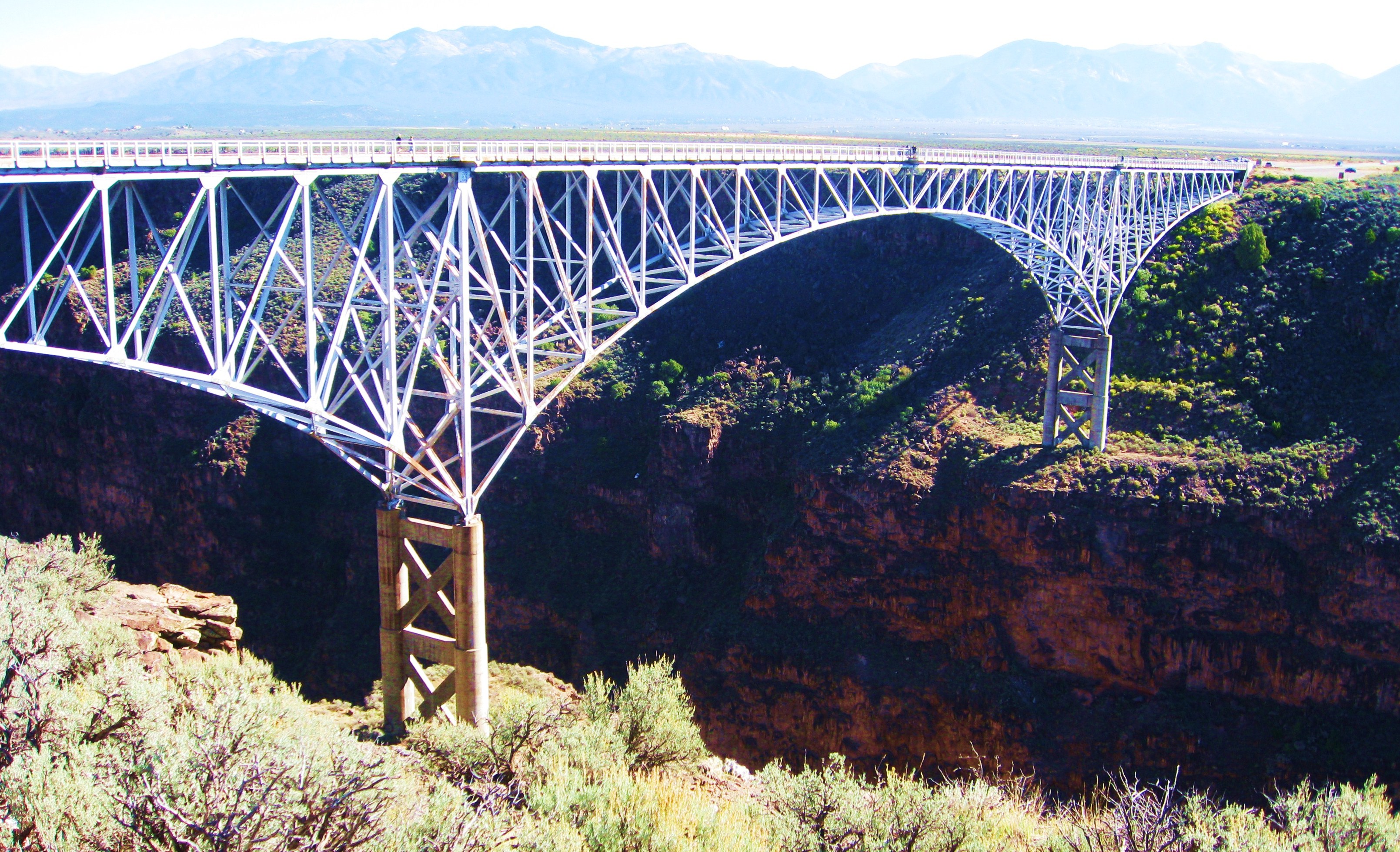
The bridge across the Rio Grande Gorge near Taos, New Mexico. The river 1,500 feet below is near the beginning of a nearly 2,000 mile journey to the Gulf of Mexico. -- Photo by Pat Bean


Travels With Maggie


Rio Grande Gorge State Park

Just a few miles past Taos, which I drove through without stopping, I came upon Rio Grande Gorge State Park. Here I did call a brief stop to my travels. I mean who can resist at least a peak at a 1,500-foot deep gorge – and a river that one knows is near the start of an almost 2,000 mile journey to the Gulf of Mexico.

As I looked down at the river from the park’s high, fenced overlook, I thought about a day at Big Bend State Park in Texas when a grandson and I had waded in its shallow warm waters and stared across it at Mexico. Most of the clear rushing water I was looking at below would never make it that far. Human development sometimes reduces the flow reaching the gulf to merely a trickle. Gypsy Lee settled in for the night in Clayton, New Mexico. Photo by Pat Bean

Soon, I was back on the road. I still had 150 more miles to drive before I could stop for the night. I seldom have such a long driving day, but on this trip I was facing a deadline to be in Arkansas to babysit three grandsons for a week – and I only had three more days to get there. 

I spent the night in Clayton, New Mexico, a small town where one has to drive 89 miles to the nearest Walmart, or so the desk clerk told me when she checked me in at the only RV park for miles around.

The town, a former livestock shipping center, sits along the old Cimarron Cutoff of the Santa Fe Trail. I had passed through Cimarron earlier in the day and had been seeing historic roadsigns since then telling me I was following the old cattle trail.

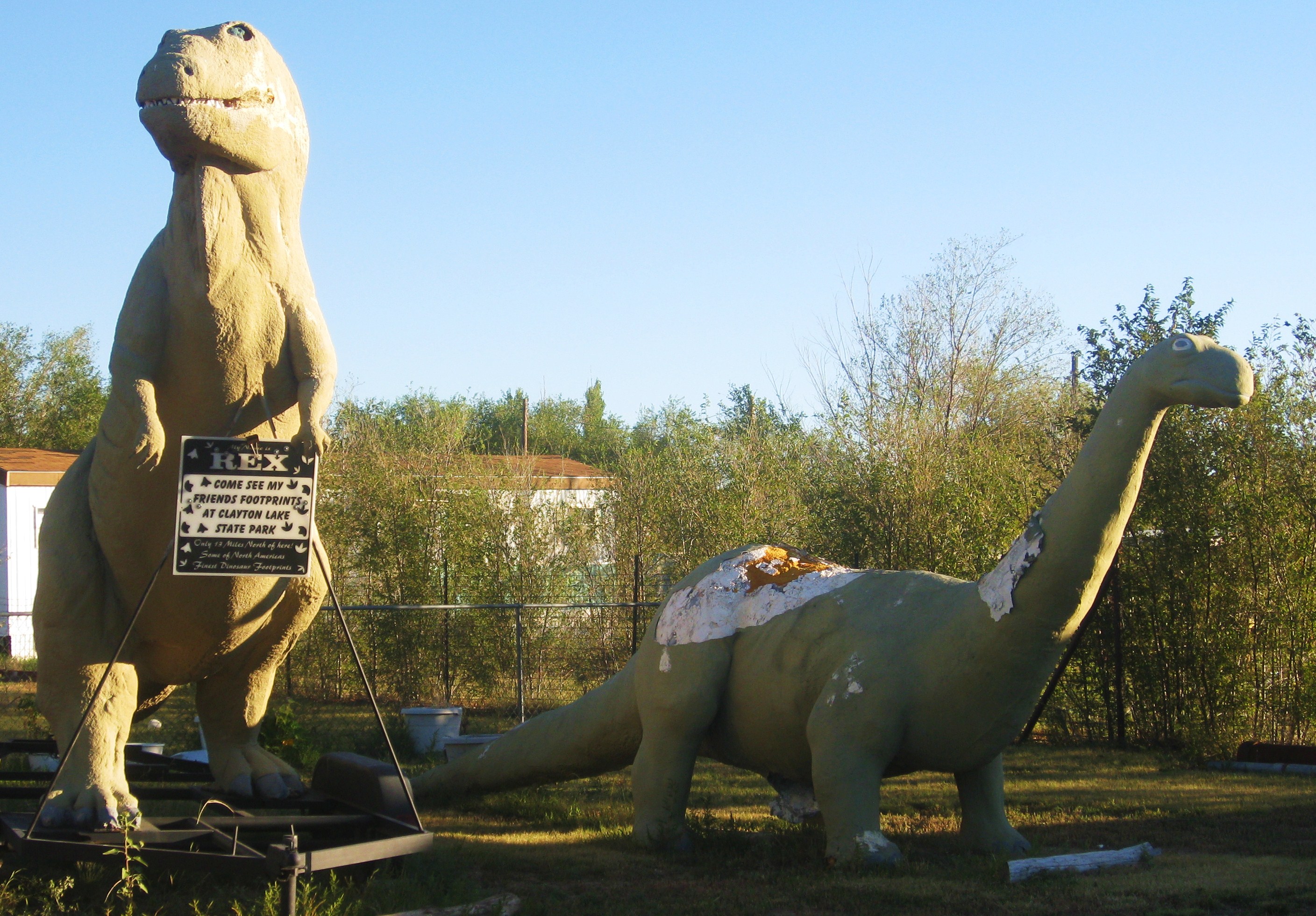
The Clayton KOA was a quiet, clean place with a run-down miniature golf course and dinosaur creations that had seen better days. I watched a croaking murder of crows fly past in search of a roosting spot as we took our evening stroll. Maggie sniffed around at the feet of the dilapidated dinosaurs, which advertised nearby Clayton Lake State Park where tracks of these prehistoric beasts attract passing tourists.


Statues showing their age advertise to visitors that dinosaurs once roamed the area. -- Photo by Pat Bean


Perhaps next time I pass through the area I wouldn’t be on a deadline and could do my own investigation of them. Dr. Seuss’ words: “Oh the places you’ll go, and the things you’ll see,” then flowed through my brain for the umpteenth time. I sighed – and added: “Too many places, too little time.”

Read Full Post »