Feeds:
Posts
Comments

Posts Tagged ‘RV travel’

“The grand show is eternal. It is always sunrise somewhere, the dew is never dried all at once; a shower is forever falling, vapor is ever rising. Eternal sunrise, eternal dawn and gloaming on sea and continents and islands, each it its turn, as the round earth rolls.” — John Muir

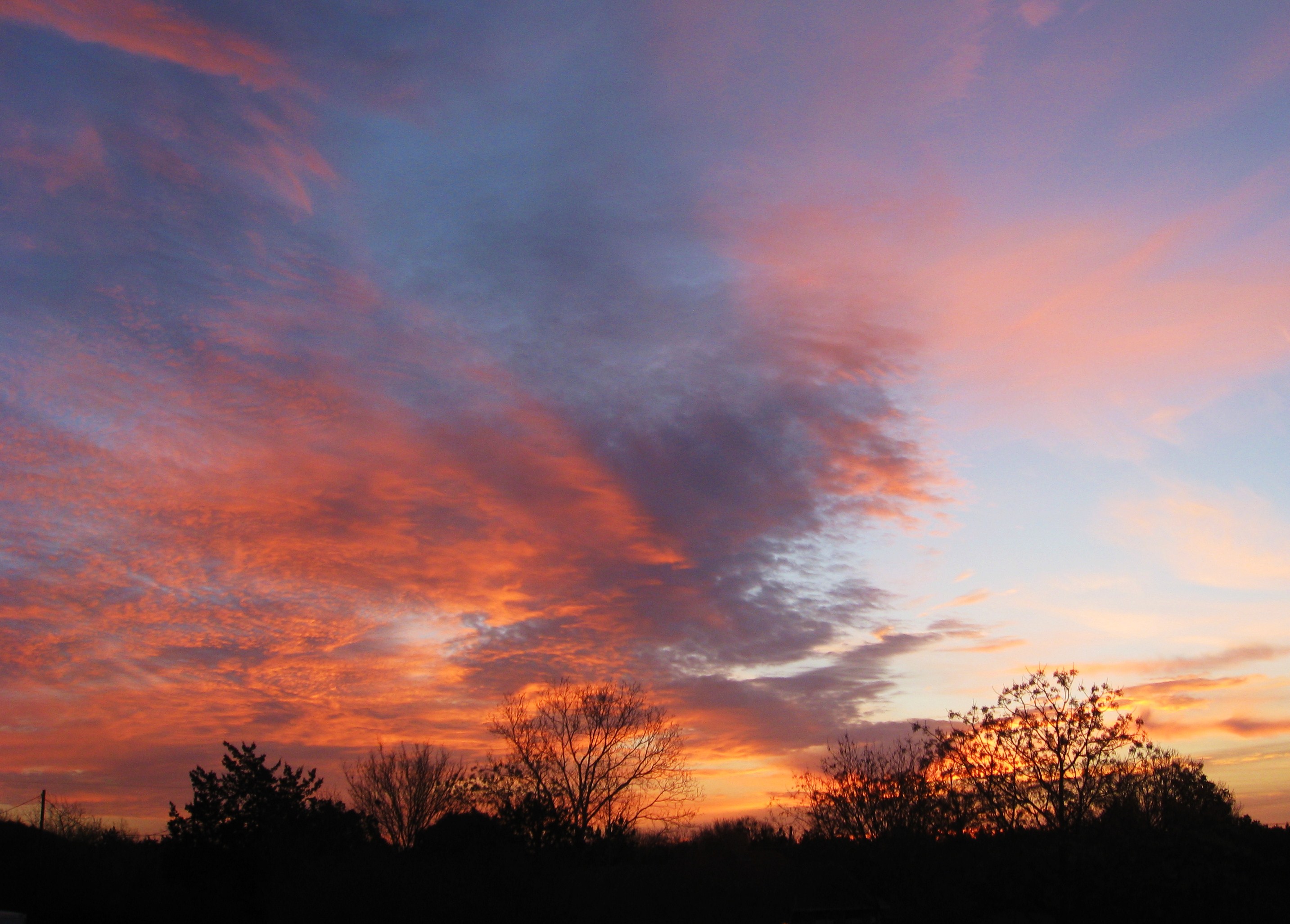
Harker Heights, Texas, sunrise, Jan. 3, 2011. -- Photo by Pat Bean

Maggie, who normally likes to sleep in, woke up early this morning and spoke loudly to me with demanding eyes. I am ready for my walk now.

Yes your majesty, I told her as I put on my shoes and bundled up. My MSN home page said it was 35 degrees outside here in Harker Heights, Texas, where my RV is parked in my son’s driveway for the coming week.

A chill went through my body when, with Maggie on her leash, I stepped down from my RV. It wasn’t from the cold, however. It was from the thrill of seeing this morning’s glowing sunrise. I quickly grabbed my camera and captured its warm brilliance  so I could share. 

John Muir has it so right. We don’t have to travel to see the wonders of Mother Nature.

When we got back from our walk, I gave Maggie extra treats for dragging me out into the cold so early. She gobbled them down, then retreated to her favorite spot on our shared bed. She is now serenading me with her funny, soft snores. Life is good.

Travels With Maggie

Read Full Post »

 “In old age one should do something mounmental.” — Xiao Qiam

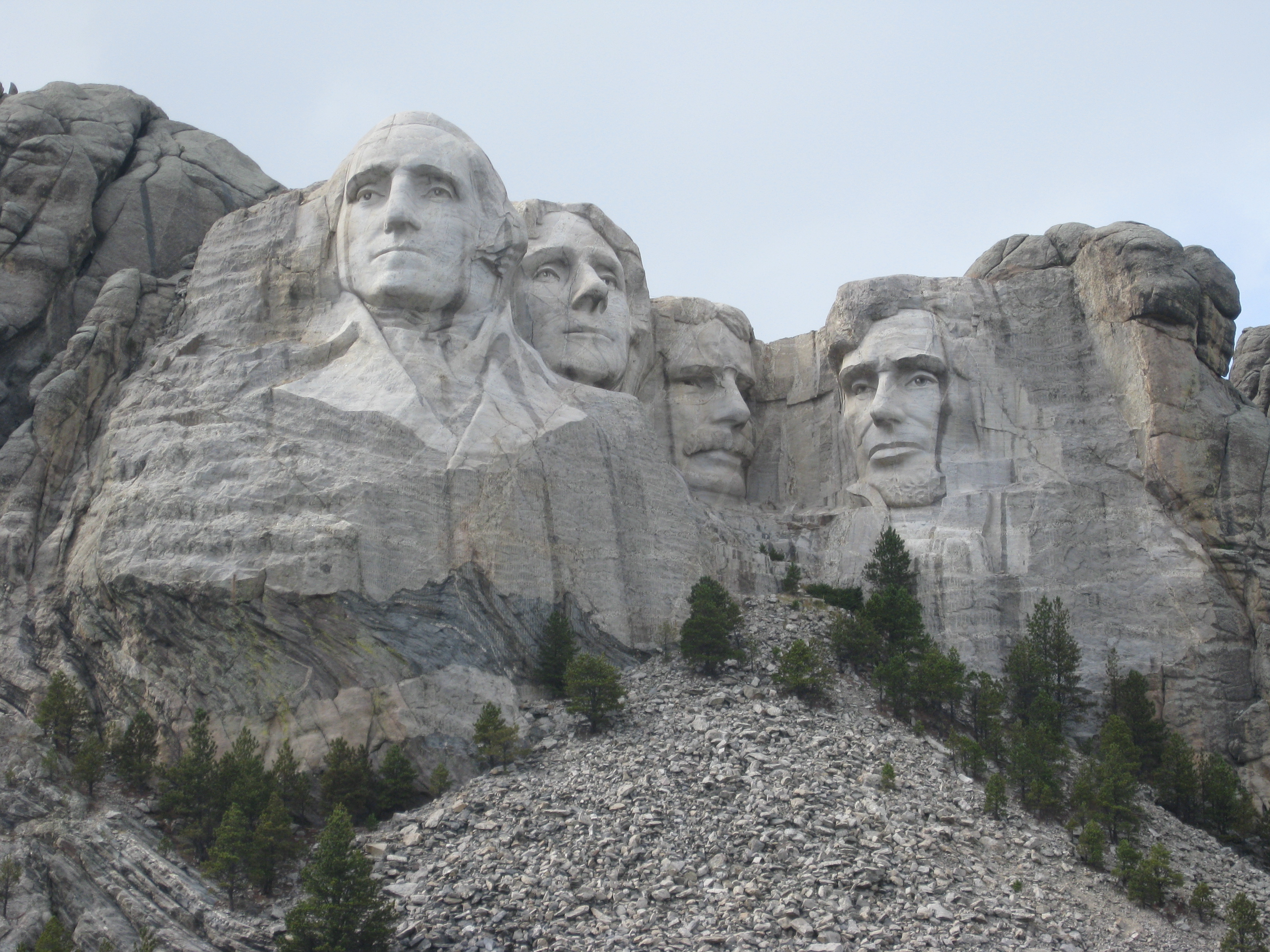
Mount Rushmore -- Photo by Pat Bean

Travels With Maggie

 I finally made it to Mount Rushmore. So much of my sight-seeing before I began doing it full time had to be squeezed in during trips from Utah, where I lived and worked,” and places where my kids lived, mostly Texas and Southern California. There was never time to detour through South Dakota.

Although I’m one who doesn’t believe Mother Nature can be improved upon, I still found this mountainous granite sculpture of four U.S. Presidents – Washington, Jefferson, Lincoln and Roosevelt – impressive. To understand the size of these heads, with their 20-foot noses, one has to visualize them atop men 465-feet tall.

The retooling of the mountain, originally undertaken to attract tourists to South Dakota, took 14 years, and included the removal of 800 million pounds of stone in the process.

The man behind the sculpture was Gutzon Borglum, a student of renown French artist sculptor Auguste Rodin. Borglum was 60 years old when he began the monumental task, and sadly died just months before it was completed in 1941. His son, Lincoln Borglum, finished the politically controversial task his father had begun in 1927.

Some historians allege the monument’s underlying theme is one of racial superiority, a suggestion encouraged because of Borglum’s membership in the Ku Klun Klan. I admit that learning this bit of information dimmed my admiration for Borglum. But South Dakota thrives on the tourist attention it gets from the presidential memorial. And it’s certainly not an American wonder I would have wanted to miss.

Read Full Post »

The sign stopped me, the park enchanted me -- Photo by Pat Bean

 “Peace is not the product of a victory or a command. It has no finishing line, no final deadline, no fixed definition of achievement. Peace is a never-ending process. The work of many decisions.” — Oscar Hammerstein

Travels With Maggie

Located on the Arkansas side of the Talimena Scenic Drive before it crosses into Oklahoma, Queen Wilhemina State Park was created in the late 1800s and named after Queen Wilhelmina in hopes the young ruler of the Netherlands would visit.

While the park was only 15 miles from where I had spent the previous night, it looked too inviting to pass by – or stay for just one night. That’s the beauty of having no deadlines to meet. The rain storm that blanked the area for the next few days, and which I wouldn’t have wanted to drive through, confirmed my instincts

Turtles, along with birds, deer and squirrels called Arkansas' Queen Wilhemina park home. -- Photo by Pat Bean

During one break in the storm, I walked up to the Queen Wilhelmina Lodge, where I devoured one of the tastiest cheeseburgers of my life while watching dark storm clouds build up for another burst. There’s something in me that loves a storm, and the sound of rain drumming on my RV roof is as enjoyable as a well-played concert. I was glad, however, that I made it back to the coziness of my RV, with my last bite of cheeseburger wrapped in a napkin for Maggie, before the downpour began anew.

Flowers grew all over the park -- Photo by Pat Bean

Finally the storm ended and I spent the next two days hiking the park’s trails, and watching birds and other wildlife. It was with reluctance that I finally left this special place. It’s too bad Queen Wilhelmina never visited. I’m sure she would have enjoyed her stay.

Read Full Post »

 “I consider myself to have been the bridge between the shotgun and the binoculars in bird watching. Before I came along, the primary way to observe birds was to shoot them and stuff them.” — Roger Tory Peterson

Travels With Maggie

Nothing could be finer than an early morning outing with fellow birders of the Wasatch Chapter of Audubon. Ever since I seriously began birding, which was back in 1999, the chapter has had a Wednesday morning bird walk. When I first hooked up with the group, I had to play hooky from work to join them.
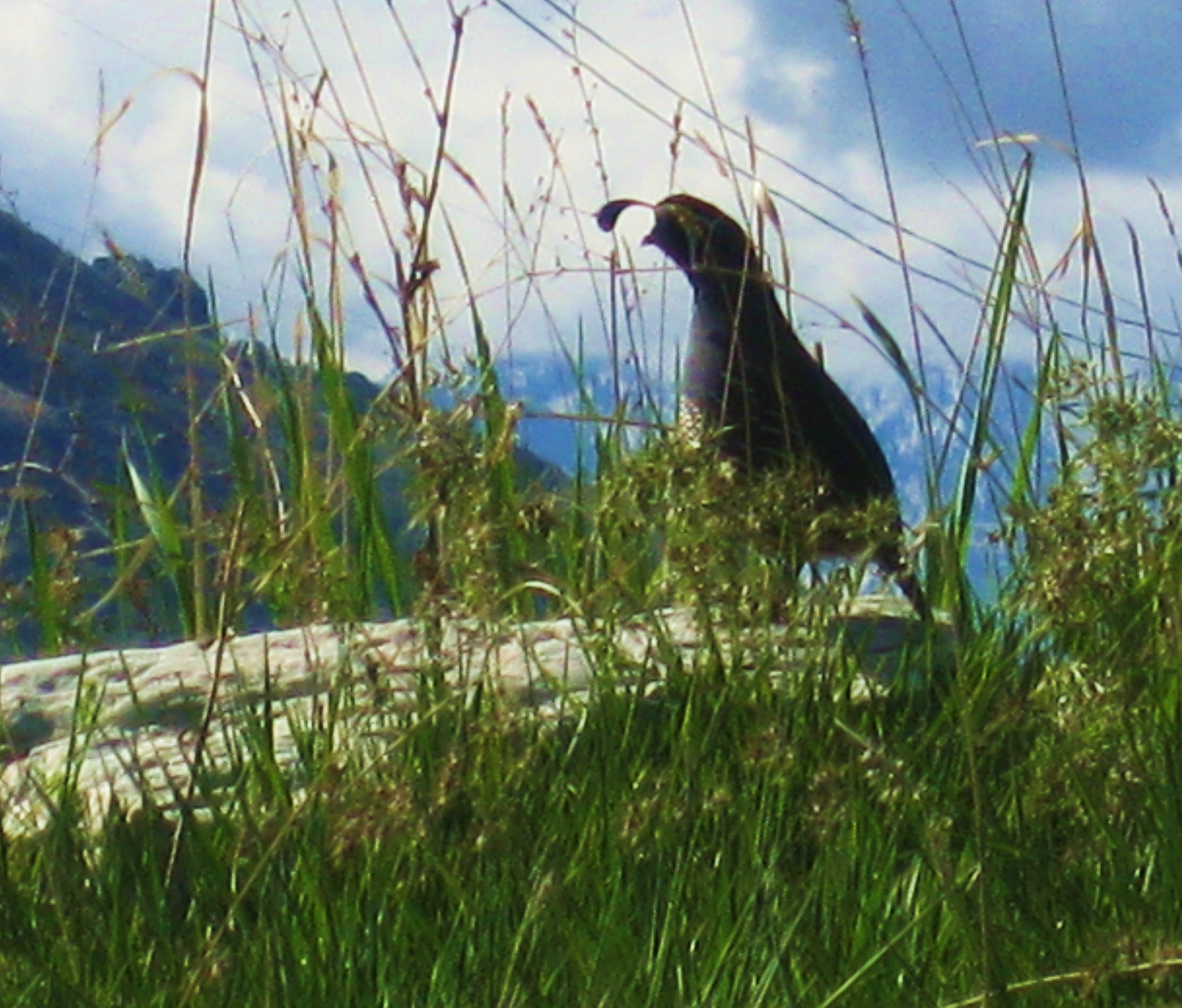
A California quail hides among the weeds. I spotted him on an outing to Willard Bay in Northern Utah while birding this past May with old friends. -- Photo by Pat Bean

 Shortly thereafter I was inspired to write a weekly bird column. So instead of playing hooky while I was roaming all over Utah’s Wasatch Front on these Wednesdays, I could honestly report that I was doing research.

 Since I knew next to nothing about birds, the research included a lot of that, plus the generous help of the chapter’s birding experts, Jack Rensel and Keith Evans. Both these guys had been at this sport since they were young boys – and both had tales to tell of being suspected of unsavory deeds because of wandering around alone with binoculars in hands. They grew up at a time when birding wasn’t a well known hobby, and certainly not one boys took up.

 Thankfully, Roger Tory Peterson, who put together the first field guide that made birding possible for us non-ornithologists, watched birds as a boy even before Jack and Keith’s time.

 My oldest son makes fun of my birdwatching, considering it a little old lady’s sport. Well, it can be that. But it can also involve long hikes in the dark so as to arrive in time to watch male sage grouse play drums with their chest sacs to attract the ladies, or a hike over treacherous lava to watch Flamingos at a small lake in the Galapagos.

 Birding gives my travels that extra bit of oomph. For example, the boat ride to Matagorda Island off the coast of Texas was pleasant enough in itself, but getting to see whooping cranes as well was like the salt around the glass of a good margarita. And the climb up a ridge to see a black-capped vireo at Lost Maples State Park gave me a good dose of needed exercise.

 Looking for birds in the landscape has also enriched my travels in yet other ways. One who is looking for a tiny bird in the bush is not likely to miss the moose in the stream. And when I’m visiting Northern Utah, my passion for birds gives me a legitimate reason to once again hook up with my old Wednesday morning birding buddies.

 And, as I said, nothing could be finer than time spent with them.

Read Full Post »
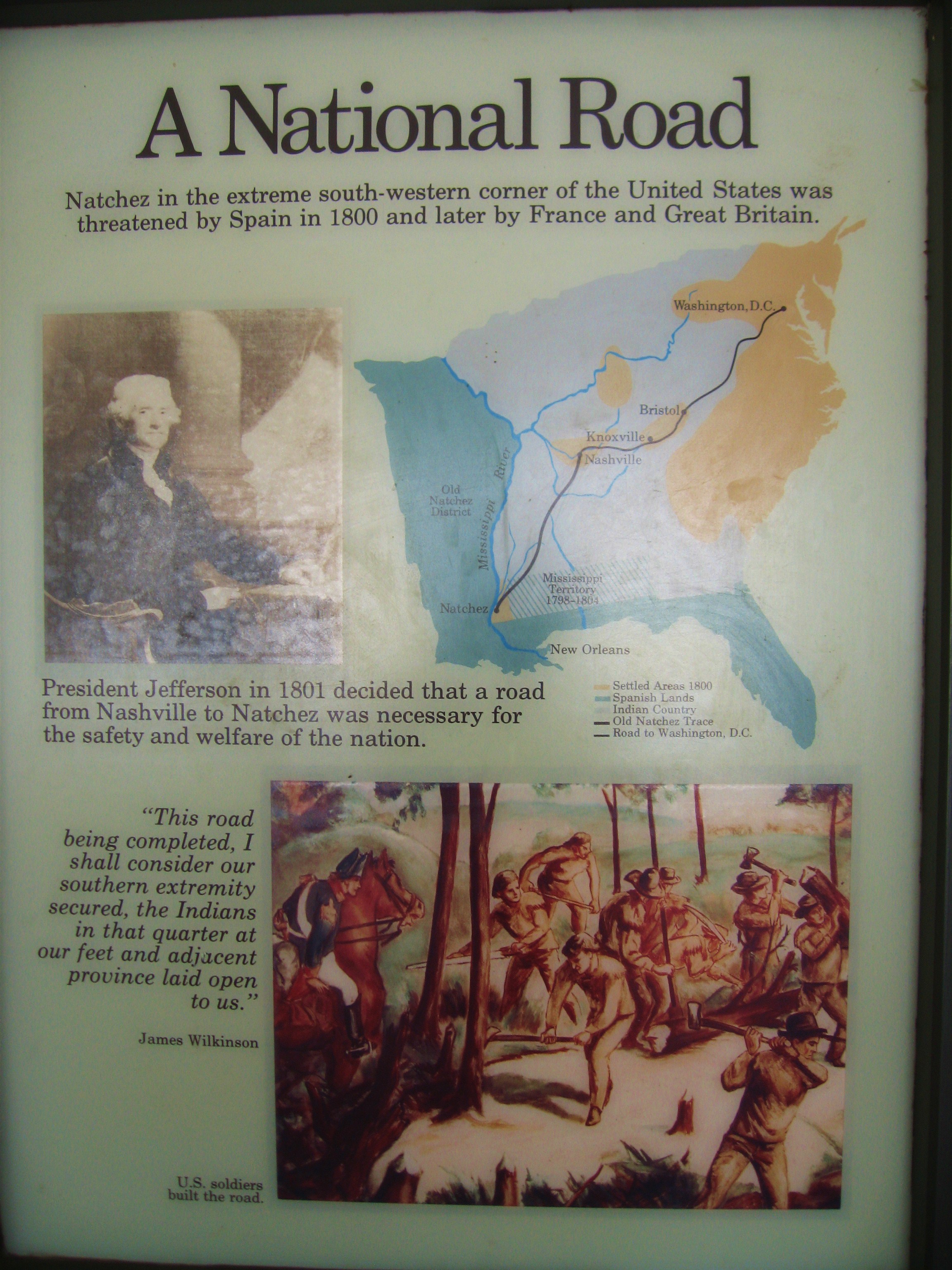
This remnant of the Natchez Trace took me back in history -- and made me think of fairy tale warnings about dark forests. -- Photo by Pat Bean


“Do not go where the path may lead; go instead where there is no path and leave a trail.” — Ralph Waldo Emerson

Travels With Maggie

 I was in Mississippi, headed west on Highway 84, with no campground reservation for the night. I was hoping the road would provide – and it did. Just outside the city of Natchez, I came across signs pointing the way to Natchez State Park.

 The public campground was yet another of those southern gems that had been enriching my travels for the past couple of weeks. It sits near the western terminus of the Natchez Trace, a 440-mile long ridge-line trail created by prehistoric animals traveling between bottom grasslands along the Mississippi River and salt licks near what is now Nashville, Tennessee.  The animal foot path was discovered and used by the Indians, and then by early European explorers and settlers.

I found the park so delightful that I spent three nights before altering my route to drive a short section of the trace. My eagerness to do so might have been influenced by the fact I had just recently read Nevada Barr’s murder mystery “Deep South,” which is set along the parkway, and the images she had painted of the scenery were still vivid in my mind. 

 It was a pleasant drive with almost no traffic through a landscape where human development has been banned. When I came across a place where the original trace was still visible, I stopped for a closer look. A National Park Service marker here informed me that “… The Natchez Trace was politically, economically, socially, and militarily important for the United States in its early development. Among those that traveled the road were American Indians, traders, soldiers, ‘Kaintucks,’ postriders, settlers, slaves, circuit-riding preachers, outlaws, and adventurers.”

Road marker along the parkway -- Photo by Pat Bean

 I felt like one of the latter when Maggie and I set foot on the remnants of that old footpath. It was if we were walking back in time. This section of the trail was closely hemmed in by trees whose limbs formed a roof above our heads. It was like walking through a tunnel, and the dim light that penetrated the ground brought to mind all those fairy tales that warned about being caught alone in the forest.

Back in my RV,  I followed the path of the Natchez Trace on my map all the way up to Nashville, but left it physically after only 28 miles. Driving the trace in its entirety is now on my bucket list.

Read Full Post »

My dream vehicle when I was a working journalist. -- Photo by Pat Bean

Travels With Maggie

 “The everyday kindness of the back roads more than makes up for the acts of greed in the headlines.” Charles Kuralt

The first time I saw an “On the Road” television segment with Charles Kuralt, I knew that was the kind of journalist I wanted to be. I partially achieved that goal in my 37 years as a journalist with the stories I wrote about interesting upbeat people and aspects of a nature, along of course with my coverage of ditty-gritty city council and crime news.

I even got, albeit rarely, to go on the road to cover stories for my newspaper. But I never had the freedom to take it to his level – to travel cross-country in an RV and write only what pleased me.

 Today, however, that’s exactly what I do. And it pleases me greatly to tell you about the Henry Ford Museum in Dearborn, Michigan, outside of Detroit. It offers so much more than just the progression of the automobile down through the years.

Life used to move at a slower pace, and you can experience it at the Henry Ford Museum in Dearborn, Michigan. -- Photo by Pat Bean

 One can wander through Thomas Edison’s Menlo Park Laboratory and imagine the excitement exuded when that first light bulb cast its glow. Or marvel at the dreams of fanciful flight Orville and Wilbur shared while working at their Wright Brothers Bicycle Shop. You can visit the home where Noah Webster wrote America’s first dictionary and walk through the first Ford Motor Home factory.

I almost wept when I viewed the sleek black Lincoln in which President John F. Kennedy lost his life in on that fateful November day in 1963. The vehicle represented a loss of innocence for my generation.

Thankfully, my tears, if I had shed them, would only have been of joy when I saw the next vehicle that moved me. It was the “On the Road” RV. If there is a heaven, and former free-spirited TV journalist happens to be looking down, I hope he realizes how much he inspired one lone female traveler.

Thank you Charles Kuralt for crystallizing my dreams.

Read Full Post »

Mesa Falls, complete with rainbow, was my reward for divorcing my planned driving route. -- Photo Pat Bean

Travels With Maggie

 “Establishing goals is all right if you don’t let them deprive you of interesting detours.” — Doug Larson

It was the best of times without any worse. Maggie and I were peacefully driving the Teton Scenic Byway (Highway 20) west out of Yellowstone and past Henry’s Lake when we came upon a fork in the road.

 Taking Robert Frost’s advice, we zigged to take the one less traveled, which was the Mesa Falls Scenic Byway (Highway 47).  We would hook up again down the road with Highway 20 but only after stops and short hikes for spectacular views of Mesa Falls.

I usually travel with a plan, but thankfully am willing to divorce it at my slightest whim.  To be willing to follow my example is the best advice I can offer my fellow travelers this day.

Read Full Post »

Prophetstown State Park in Battle Ground, Indiana, was me and Maggie's peaceful and scenic home for three days. Photo by Pat Bean


Travels With Maggie

“We need the tonic of wildness, to wade sometimes in marshes where the bittern and the meadow-hen lurk, and hear the booming of the snipe: to smell the whispering sedge where only some wilder and more solitary fowl builds her nest, and the mink crawls with its belly close to the ground.” — Henry David Thoreau

Prophetstown State Park

This peaceful Indiana park is named for Shawnee Indian leader Tenskwatawa (the Prophet) and his brother, Temcumseh, who established a village here in the early 1800s. Located near where the Walbash and the Tippecanoe rivers join, it was my Indiana home for three days.

Volunteer hosts in my previous campground had recommended it after Maggie, my friendly four-legged traveling companion,  and I stopped to visit with them on one of our morning walks.  I always tell people where I’m headed and ask for recommendations. This had been a great one.

Harrison, on his second attempt to become president, used the slogan “Tippecanoe and Tyler, Too,” and held a huge campaign rally in Battle Ground to implant the idea that he was the man who won the war against the Indians.

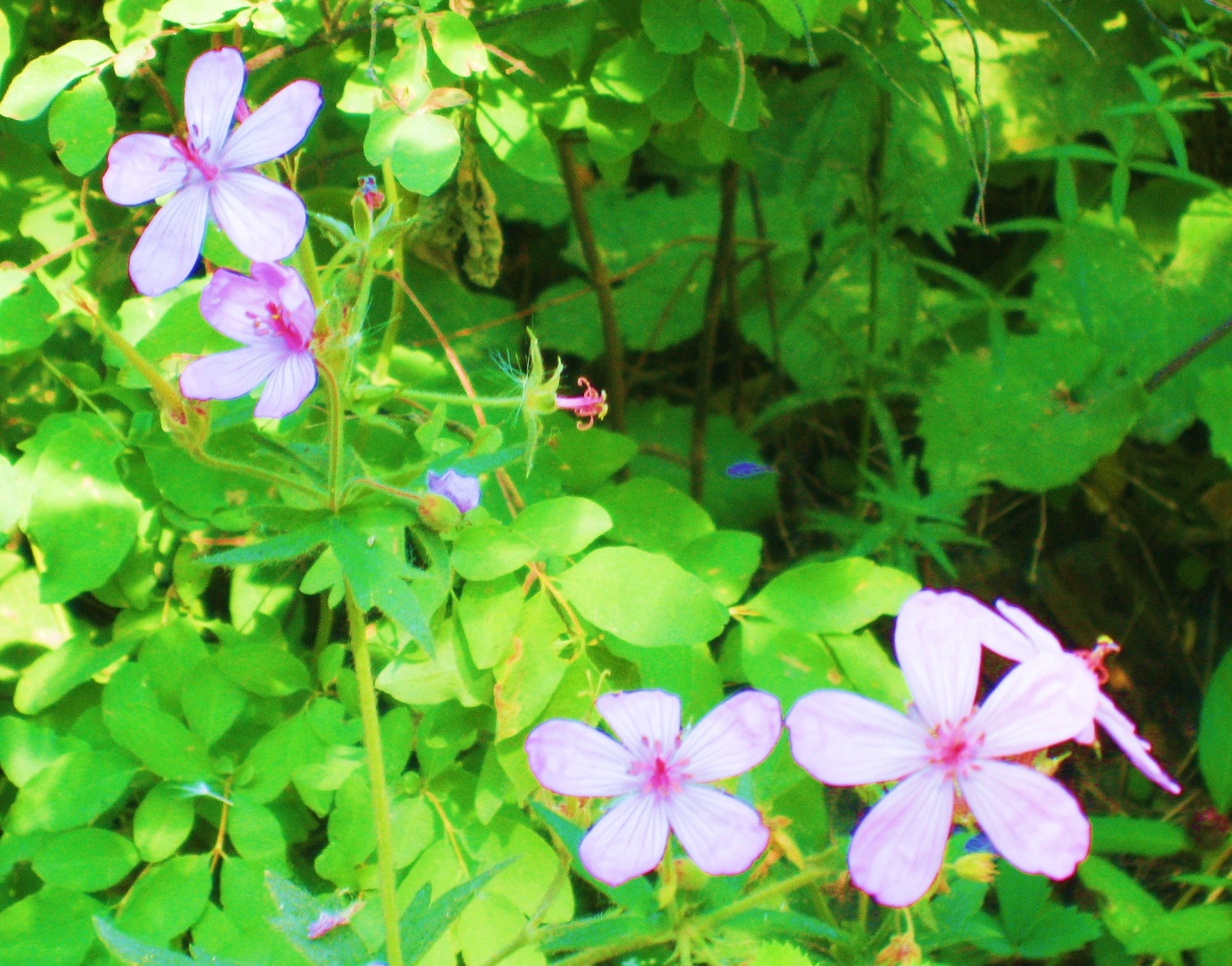
Meadow wildflowers, such as these wild geranium, colored me and Maggie's walks. Photo by Pat Bean


The ploy was successful and Harrison became this country’s ninth president. Thirty-two days later he died of pneumonia and John Tyler became our 10th president.

As I looked out over the awesome meadow where Mother Nature had woven her magic, I was saddened to think of the blood that had fallen on land that now looked so peaceful.

Not only did the park look out over a breathtaking meadow full of purple, pink and yellow wildflowers, I was sitting on top of history. The park is located in Battle Ground, Indiana, where William Henry Harrison defeated the two Shawnee brothers who had threatened revenge on the settlers for taking their land, hence the town’s name.

Read Full Post »

Surprise discover of a Marlin Perkins statue in a small Carthage, Missouri, park. -- Photo by Pat Bean


Travels With Maggie

“If we are strong, and have faith in life and its richness of surprises, and hold the rudder steadily in our hands. I am sure we will sail into quiet and pleasant waters for our old age.” — Freya Stark   

Marlin Perkins

 When you’re on the road, you know you’re going to visit the Mount Rushmores and the Niagara Falls. Perhaps, like me, you even do a little bit of research about these great places beforehand to enhance your understanding and enjoyment.

These mega-star travel sites, the Grand Canyons and the Old Faithfuls, are – and should be – musts on bucket lists. But it’s the little surprises along the way that give meaning to my journeys.

In Carthage, Missouri, one of these surprises was a statue in a small park. I asked my traveling companion, a single female traveler like myself whom I had hooked up with for the day’s outing at the Red Barn RV Park, whom the statue honored. She didn’t know, but she was as curious as I was to know the answer. So we stopped.

Nothing could have delighted me more than to discover the statue was Marlin Perkins. This gentle man’s exotic animal adventures on TV’s Mutual of Omaha’s Wild Kingdom back in the 1960s and early ’70s had fed both my love of nature and my wanderlust. A native of Carthage, Perkins was among the first to bring exotic wildlife into America’s living rooms.

The bronze statue of Perkins, created by Carthage artists Bob Tommey and Bill Snow, has him kneeling with a giant pair of binoculars in his hand. As a birder whose binoculars are never far from hand, I felt a renewed kinship with this man who loved and worked to protect nature and all that exists in it.

May I always remember to allows take time in my traveling schedule for such surprises.

Read Full Post »

Travels With Maggie

“In all things of nature there is something of the marvelous.” — Aristotle 

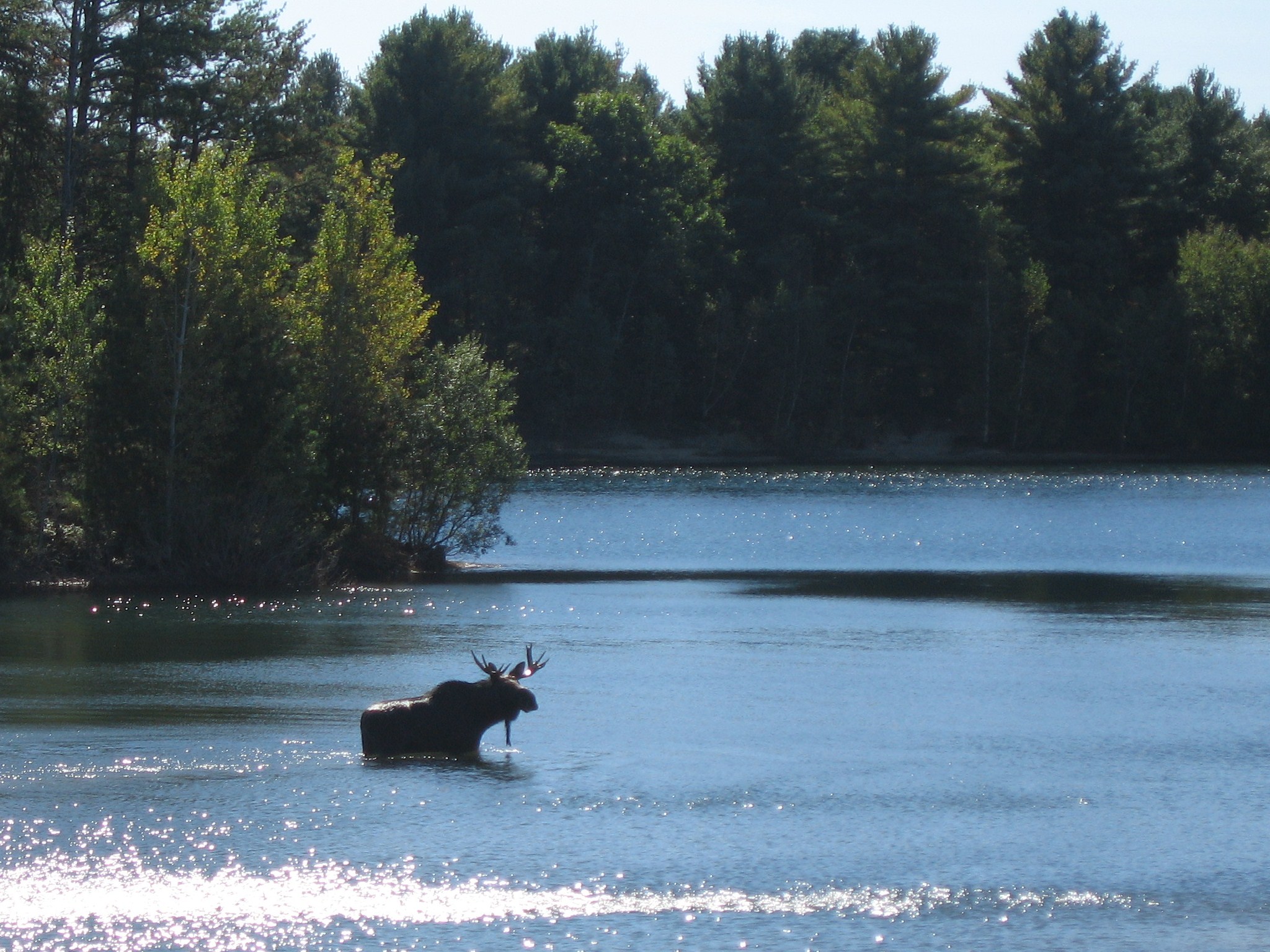
The floating log that first I saw morphed into a magnificent moose. -- Photo by Pat Bean

Wassamki Springs, Scarborough, Maine 

A revolving scenic landscape as a front yard is one of the best things about living in a home on wheels. Between lakes, mountains, red rocks, forests, wildflowers and visiting wildlife, it would be hard to pick one of nature’s gardens as my favorite view. But the one that riveted my attention at Wasssamki Springs Campground in Scarborough, Maine, on a September morning is certainly one I will never forget. 

 At first I thought it was just a log floating in the misty lake beside which my RV was parked. But as the object came closer it grew antlers, large ones that spread out across the top of its head. The huge moose ended its swim on a spit of sand just about 30 yards away from my front door. 

Then, casually, ignoring several of us campers who had stepped out of our motorhomes for a better look, it lumbered through the campground and then into the forest behind us. 

Maggie’s preference for sleeping in caused her miss the event. She only woke as I returned inside. She wagged her tail at the smile on my face, then clearly informed me she was ready for her morning walk now.

Read Full Post »

« Newer Posts - Older Posts »