Feeds:
Posts
Comments

Posts Tagged ‘postaday2011’

 “Wilderness is not a luxury but a necessity of the human spirit.” Edward Abbey
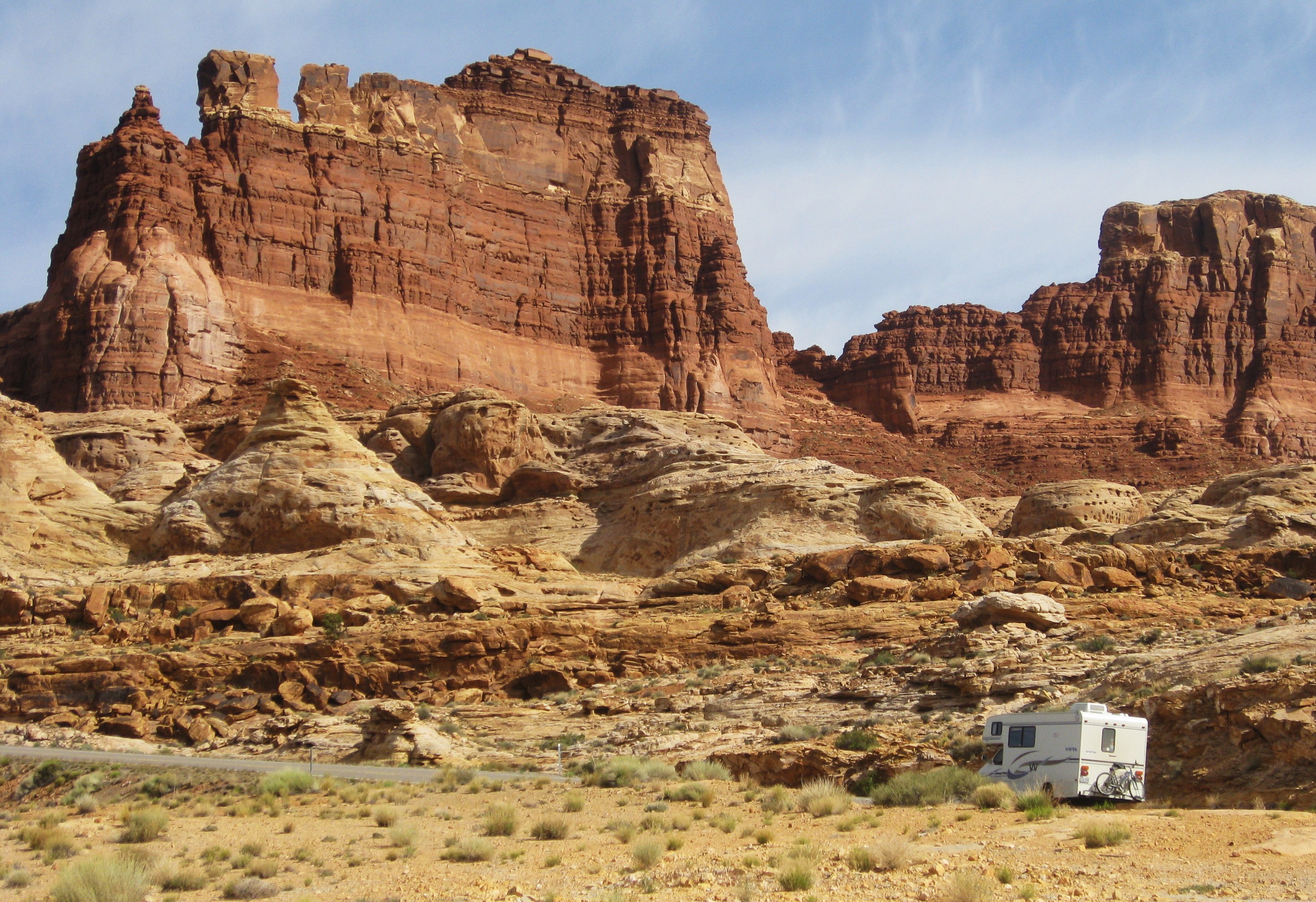
It wasn't enough to just drive through this red-rock landscape, I had to sometimes get out and touch the ground. Pictured above, my RV, Gypsy Lee, is dwarfed by this giant landscape near where the Colorado River crosses Highway 95. -- Photo by Pat Bean

Travels With Maggie*

I had an amazing scenic drive this day through some of Southern Utah’s most spectacular scenery, the landscape to which Edward Abbey first introduced me to in his irreverent “Monkey Wrench Gang.”

I read it first, then fate offered me an opportunity to explore and write about this awesome landscape when I was an environmental reporter writing about Utah land issues.

I would like to linger over this blog today, fully describing my eye-popping drive from Monticello to Capitol Reef National Park for you. But I’m sure I would get a bit redundant with the awesomes, fantastics and panoramics I would need to use to describe my emotions about the landscape found along Highway 95 and places like White Canyon, Fry Canyon, Dirty Devil River The Glen Canyon Recreation Area, Lake Powell, the Colorado River and Natural Bridges — just for the big starters.

So instead, I’m going to leave you with a few of my favorite Edward Abbey quotes, which I suspect will bore you less than my constant oohing and ahing superlatives.
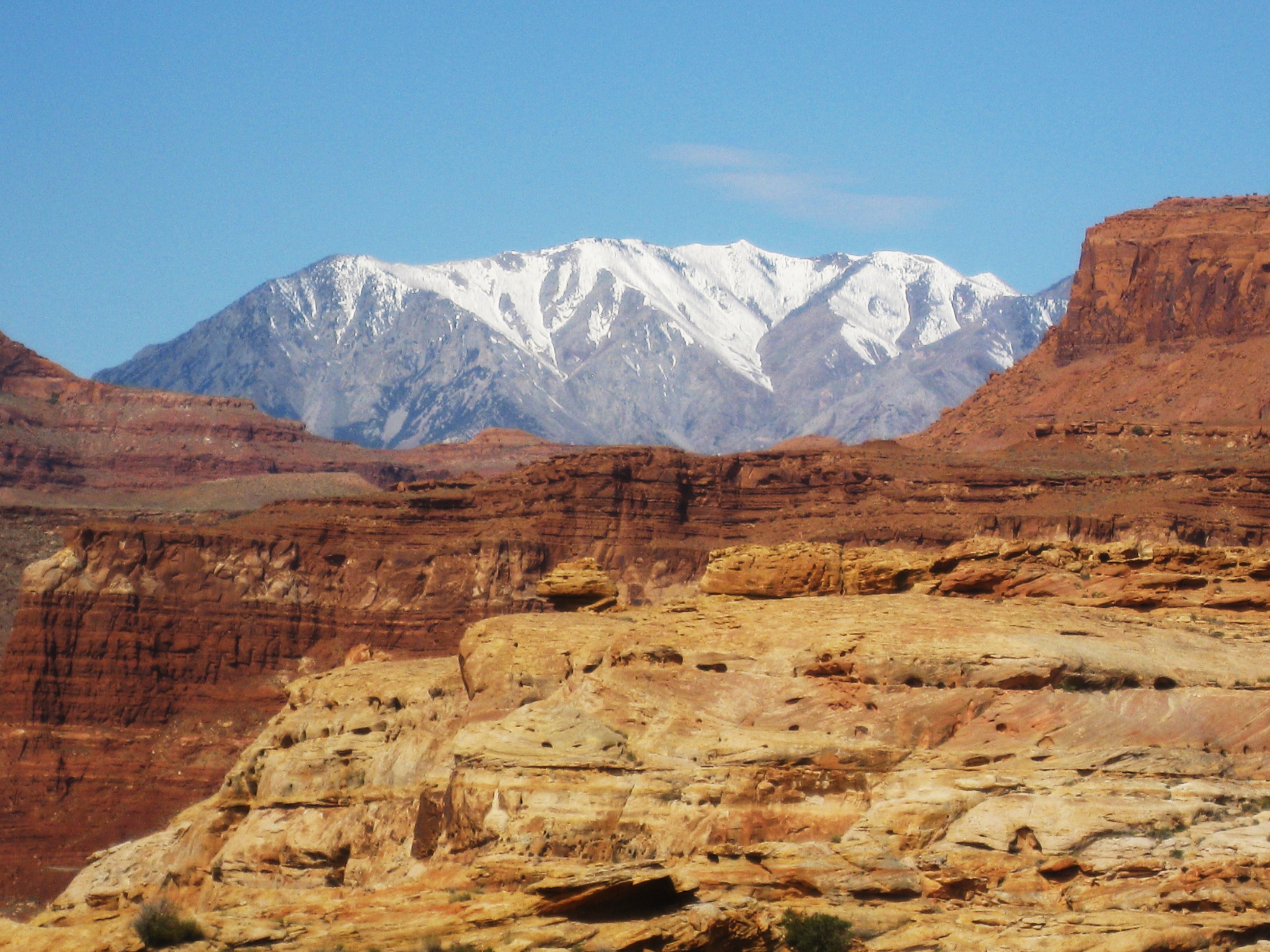
Red desert rock and snow-covered mountains, the perfect oxymoron. -- Photo by Pat Bean

Enjoy.

“May your trails be crooked, winding, lonesome, dangerous, leading to the most amazing view. May your mountains rise into and about the clouds.”

“I pledge my allegiance to the damned human race, and my everlasting love to the green hills of Earth, and my intimations of glory to the singing stars, to the very end of space and time.”

“The idea of wilderness needs no defense, it only needs defenders.”

“What is the purpose of the giant sequoia tree? The purpose of the giant sequoia tree is to provide shade for the tiny titmouse.

“One final paragraph of advice: Do not burn yourself out. Be as I am-a reluctant enthusiast… a part-time crusader, a half-hearted fanatic. Save the other half of yourselves and your lives for pleasure and adventure. It is not enough to fight for the land; it is even more important to enjoy it. While you can. While it is still there. So get out there and mess around with your friends, ramble out yonder and explore the forests, encounter the grizz, climb the mountains. Run the rivers, breathe deep of that yet sweet and lucid air, sit quietly for a while and contemplate the precious stillness, that lovely, mysterious and awesome space. Enjoy yourselves, keep your brain in your head and your head firmly attached to your body, the body active and alive, and I promise you this much: I promise you this one sweet victory over our enemies, over those deskbound people with their hearts in a safe deposit box and their eyes hypnotized by desk calculators. I promise you this: you will outlive the bastards.”

*Day 10 of the journey, April 28, 2011 

Read Full Post »

“It’s a dangerous business, Frodo, going out your door. You step onto the road, and if you don’t keep your feet, there’s no knowing where you might be swept off to.” J.R.R. Tolkien

An aerial view of Wolf Creek Pass and its ski area taken in August, 2008, after the snow melt. -- Photo by Doc Searls

Travels With Maggie*

“Way up high on the Great Divide” sang C. W. McCall in his 1975 recording of “Wolf Creek Pass.”

I experienced McCall’s lyrics,  although without the chickens, first hand this day, topping out my drive through the San Juan Mountains at 10,857 feet. Fresh snow had fallen during the night, and the trees on the sides of the steep mountains I traveled between were still draped in white.

In case you’re interested, McCall’ song can be heard at: http://tinyurl.com/3dvdo24

While the road, Highway 160, had been cleared of the storm’s droppings, it was still wet and slick – and quite icy in the two tunnels cutting through mountain rock.

Unlike the driver in McCall’s tune, however, my foot was frequently on my brakes. But since almost no other vehicles were on the road, and since I kept my speed slow enough to feel safe, my heart pounded only with the pleasant thrill of being privileged to drive through such a fantastic landscape.

I love dandelions, but then perhaps that's because I now don't have a lawn to maintain. -- Photo by Pat Bean

I passed quite a few large, scenic RV parks along my drive up and over Wolf Creek Pass, which traverses the mountains from South Fork to Pagosa Springs. But all were closed.

They reminded me why I usually took the more southerly route through New Mexico when heading northwest this time of year.

But I had no regrets. I may be an old broad, but I’m still up for an adventure.

I was quite happy, however, when I came upon the Riverside RV Park just outside Durango. It was open. While it had been a short day in miles, only 131, I was ready to take a break from sitting behind Gypsy Lee’s wheel.

And that I was assigned a site right next to a small pond, where mallards were floating, the ground was littered with dandelions, and where I could watch a robin pulling up a worm for dinner from the damp ground, was the cherry on the top of a hot fudge sundae.

Life was good once again. .

Day 8 of the journey, April 26, 2011.

Read Full Post »

“Finish each day and be done with it. You have done what you could. Some blunders and absurdities no doubt crept in, forget them as soon as you can. Tomorrow is a new day, you shall begin it well and serenely…” Ralph Waldo Emerson

Gypsy Lee in a better place than a dinky RV park in Alamosa. -- Photo by Pat Bean

Travels With Maggie*

My grandmother believed that trouble came in threes. I can’t tell you how many times in my life she was proved right, which is why I should have been more worried at the first setback of my perfect day.

My two previous overnight campgrounds were Colorado state parks with trails to walk, lakes to sit by, scenic landscapes out my window and birds to sing me awake in the morning. I expected tonight’s stay at San Luis State Park, just 20 miles down the road from the Great Sand Dunes, would offer much the same.

And well it might have if it hadn’t still been closed for the season – even though my Trailer Life Directory of RV campgrounds, my travel bible, said it opened for the season April 15.

The next closest campground I could locate was a KOA in Alamosa. It was another 25 miles to drive, but the directory’s ratings gave it a thumbs up, along with noting that it opened for the season on March 13.

Wrong again. It didn’t open until May 1.

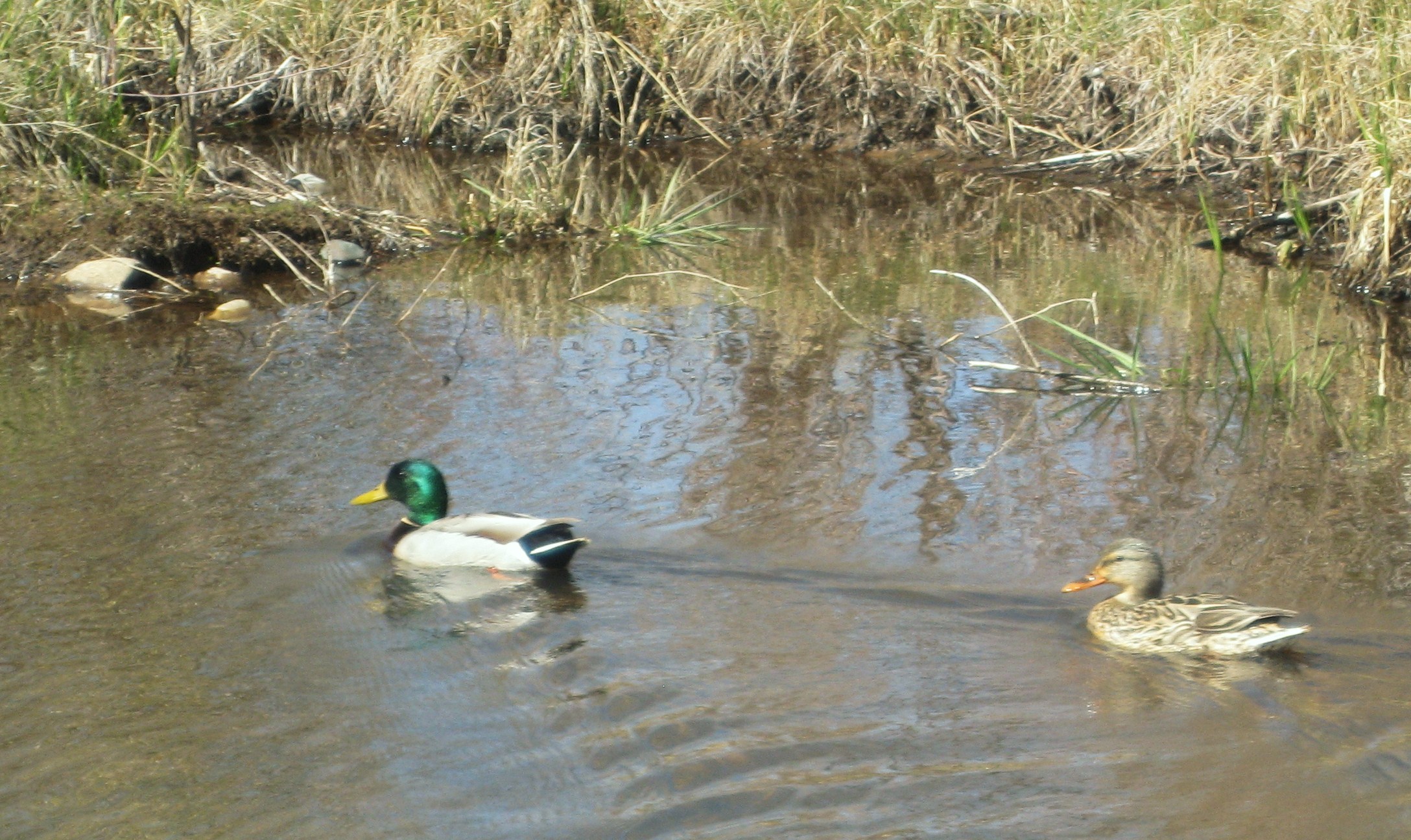
A pair of mallards cheer up any day. -- Photo by Pat Bean

I then realized my RV was pulling to the right and discovered the front passenger tire was low. My nearly new tire, I saw, had a nail in it. Quickly, I retreated to a tire store I had passed about five miles back up the road, thinking it would be an easy fix. Wrong.

Before beginning this trip, Gypsy Lee, which has over 115,000 miles on her, underwent some major wear and tear repairs, including new wheels to replace the corroded and cracked old ones. They were shiny, spiffy and expensive – and required a special key to unscrew their lug nuts, which someone had forgotten to give me.

The small Alamosa tire store, which was also a service station, couldn’t solve my problem. And by now it was after 6 p.m. and every place else was closed for the evening, even the place in Texas where I had bought the wheels. As a last resort, I called them thinking they could FedEx the part to Alamosa overnight.

I had air put in my tire, hoping it was a very slow leak, and retreated to a dinky RV park a few miles away where campers were allowed to dump their gray (dish-washing and/shower) water on the ground. I was not a happy camper. I might have whined a bit, except Gypsy Lee has a rule against such self-pity.

The best thing I have going for me as a lone female traveling this great country of ours is the confidence that I can handle what the road throws at me. This wasn’t the first, or the worse mishap, I had overcome in seven years of traveling.

So while I didn’t get a peaceful night’s sleep because of worrying about my situation, I awoke ready to solve it.

Thankfully my tire still had air in it, and the local Firestone tire shop I called as soon as they were open, said they could solve my problem. If they broke the studs getting the locks off, the sensible woman on the other end of the line told me, then they would just replace them. It wouldn’t be all that expensive.

It turned out they actually had a key for my wheels in stock, which they sold me for future emergencies. I was back on the road, my pocketbook only $22 thinner, within about 15 minutes.

Now let’s see. If I count the two closed RV parks and the nail-in-the-tire, that makes three things that went wrong yesterday.

If my grandmother was right, I had another perfect day ahead of me.

Continuing Day 7, April 25, 2001

Read Full Post »

Great Sand Dunes National Park in the shadow of the Sangre de Cristo Mountains. -- Photo by Pat Beab

The more sand that has escaped from the hourglass of our life, the clearer we should see through it.” Niccolo Machiavelli.

Travels With Maggie*

I reached John Denver’s “Rocky Mountain High” today. My journey west on Highway 160 took me through the Sangre de Cristo Mountains, the highest being 14,351-foot tall Mount Blanco. The steep winding road through the mountains topped out at a 9,468-foot snow-enhanced summit.

Since Maggie and I hit the mountains a bit past sunrise and well before sunset, we didn’t get to see why the mountain was given its Spanish name, Blood of Christ. The name is supposedly for the reddish glow the mountains take on in morning and evening light.

Even so, I was properly awed by the Sangre de Cristos’ splendor – and I was properly thankful for the new brake pads on my RV, Gypsy Lee, as Maggie and I dropped down the far side of them. And properly surprised at the detour we took off Highway 160 to see the Great Sand Dunes.

Located at the base of the snow-covered Sangre de Cristos were giant pink piles of sand, some as tall as 750-feet. I couldn’t help but feel they were geographically out of place. Which of course made them all that much more special.

Estimated to be anywhere from 12,000 to a million years old, the dunes were formed by mountain erosion transported by the Rio Grande River and its tributaries. The sand pile grew, and in some places is still growing, because the tiny wind-blown granules are trapped in a curved valley.

The dunes became a national monument in 1922, and a national park in 2000. I lingered at the visitor center and among the sand for a couple of hours before ending my detour and getting back on Highway 160.

Up to this point in time, it had been a perfect traveling day. Little did I know the pitfalls of travel that lay ahead of me. Tune in again tomorrow and I’ll tell you the tale.

Continuing Day 7, April 25, 2001

Read Full Post »

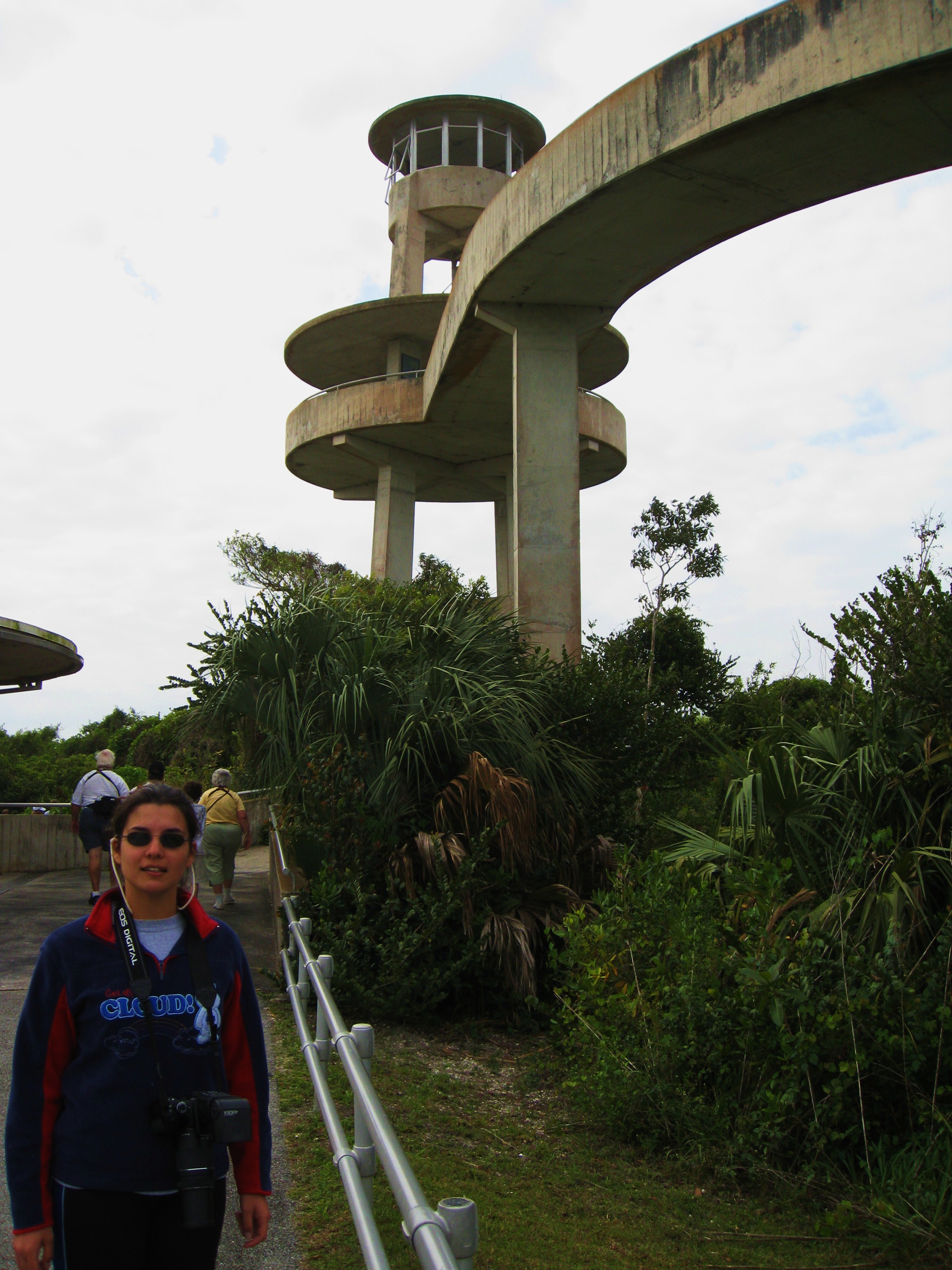
Observation tower in the Everglades and my granddaughter, Keri. -- Photo by Pat Bean


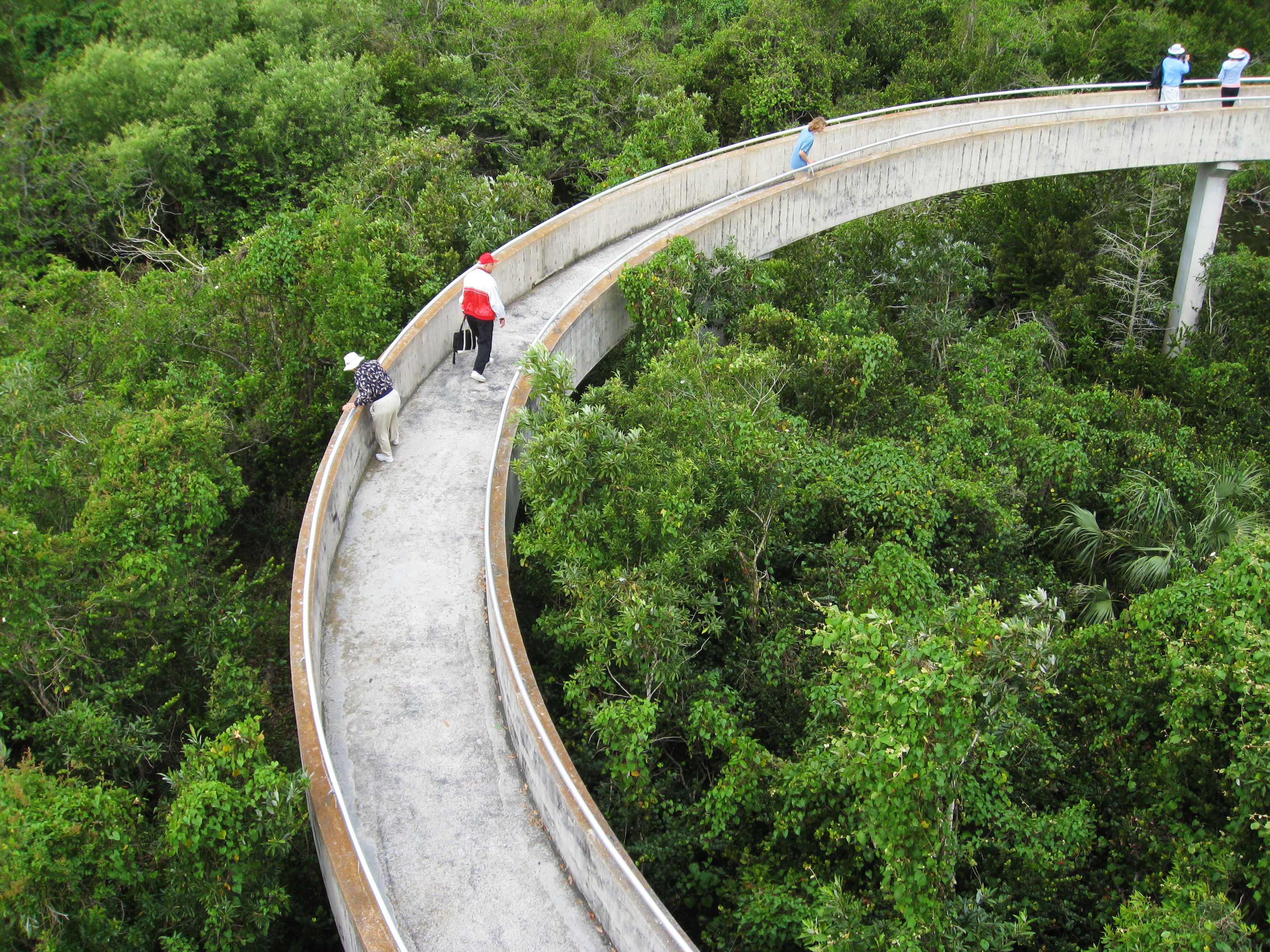
And round we go -- Photo by Pat Bean

Read Full Post »

I found the brown seed pods of the yucca plant as beautiful in their own way as the tall white blossoms that would burst forth when spring finally came to Lathrop State Park. -- Photo by Pat Bean

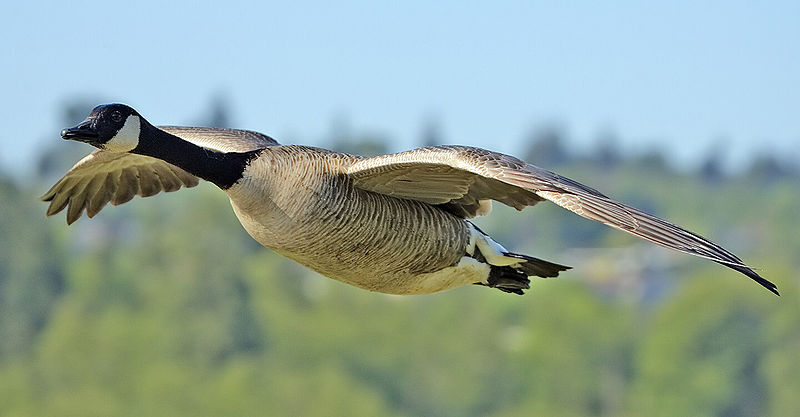
Who can not hear the honk of wild geese flying overhead and not yearn to be up there with them. Not I. -- Photo by Alan D. Wilson


 “There must be a positive and negative in everything in the universe in order to complete a circuit or circle, without which there would be no activity, no motion.” John McDonald

Travels With Maggie*

Before leaving Lathrop State Park this morning, Maggie and I took a walk along the park’s Hogback Trail. The path was heavily dotted with juniper trees, some full of berries, and yucca plants full of left-over brown seed pods. The few oaks we passed were still leafless.

That’s because winter still ruled this 6,500-foot elevation Colorado Park, where sparse sprinkles of snow fell during the night. I suspected it would still be awhile before the yucca plants’ tall white blossoms showed themselves to the world.

Maggie and I startled a couple of deer as we came around the corner, although they took their time in scampering away, as if knowing we meant them no harm. Maggie has never shown an interest in deer. Her preferred animal to chase are lizards, to the point that she once followed them into a mass of cactus, with the expected result.

We also passed sandstone boulders, whose pinkish orange and pale brown hued surfaces showed patterns of their life long ago beneath the sea. Lichens added more color to the rocks and would eventually wear them back down to the sand they were before pressure glued the grains together.

It seems Mother Nature is always pointing out to us that life is indeed a circle, just as in Disney’s “The Lion King.”  The more I travel and observe the more I know this is true.

Back at the RV, Maggie and I drove around the park for one last look at this stunning place with twin lakes, Martin and Horseshoe, that sits in the shadow of the Spanish Peaks. If I hadn’t planned on meeting up with a friend at Zion National Park on the 29th, I would definitely have stayed longer.

The park’s parting gift to us was a flock of honking geese flying overhead. Maggie was already snoozing and didn’t hear them, but they sounded to me like the opening prelude to the day’s travel ahead. I was eager to begin the adventure.

Day 7 of the Journey, April 25, 2011

Read Full Post »

A view of the Spanish Peaks, two Colorado volcanic mountains,  beyond Lathrop State Park's Martin Lake. The peaks were a popular landmark for Santa Fe Trail travelers. -- Photo by Pat Bean

A view of the Spanish Peaks, two Colorado volcanic mountains, beyond Lathrop State Park's Martin Lake. The peaks were a popular landmark for Santa Fe Trail travelers. -- Photo by Pat Bean

 “A mountain is composed of tiny grains of earth. The ocean is made up of tiny drops of water. Even so, life is but an endless series of little details, actions, speeches, and thoughts. And the consequences wherher goor or bead of even the least of them are far reaching.” — Sivananda

Travels with Maggie*

At La Junta, I left Highway 50, dropping down to Highway 10, not to be confused with busy Interstate 10 that rolls across the country between the two big oceans. This 10 was a narrow, two-lane Colorado backroad with practically no traffic – exactly the kind I seek out in my travels.

It was a hilly route, surrounded mostly by small farms and agricultural fields with an occasional sign announcing the owners considered their property a ranch and not a farm.

Soon I began seeing cholla cactus, and then magpies, my first since leaving Texas, which except for a rare one in the Panhandle, has no magpies. Since I consider the magpie my animal totem, I was excited to once again be in their landscape

As I drove west, I gained enough elevation to pop my ears, and watched as the fields gave way to cholla cactus and the land took on a more 3D appearance.

Ahead, I knew, lay mountains, big ones. So as Maggie, who as usually was snoozing in the co-pilot seat, and I crested each new hill, I scanned the horizon for my first peek at the peaks.

Finally, despite low hanging clouds this day, I had it. And as usual, after months of absence from them, my eyes became moist.

A short time later, Maggie and I reached our day’s destination, Colorado’s Lathrop State Park, where I parked with a view of the Spanish Peaks out my window.

I wasn’t born in the mountains, but I felt I was home.

*Continuing Day 6 of the journey, April 24, 2011

Read Full Post »

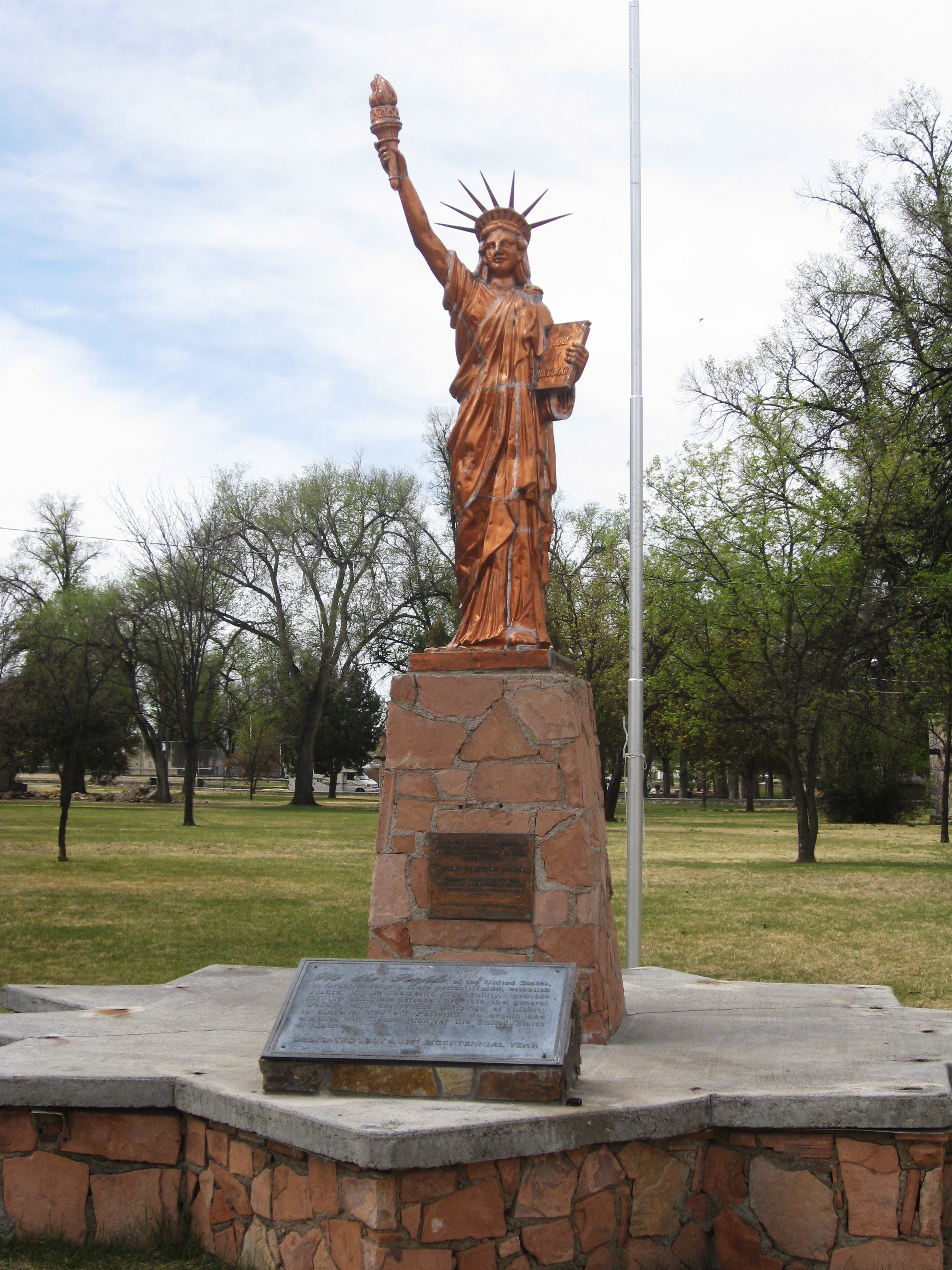
Lady Liberty in La Junta, Colorado. -- Photo by Pat Bean

Redbud blossoms say spring — Photo by Pat Bean


“Education is learning what you didn’t even know, you didn’t know.” — Daniel J. Boorstin

Travels With Maggie*

I stopped at La Junta, Colorado, to see the Koshare Indian Museum, but it was closed. Instead I took a walk in the City Park adjacent to the museum, where I was surprised to see the Statue of Liberty.

Of course not the real thing, just a miniature replica presented to the city by local Boy Scouts. Why was it here in this small town that sat on the banks of the Arkansas River (which by the way I had already crossed several times since leaving Texas just six days ago) and in the path of the old Santa Fe Trail?

This inquiring mind needed to know. It was the homework I set myself for the evening.

La Junta, I learned first, had its beginnings as a construction camp for the Santa Fe Railroad, which, when completed, marked the beginning of the end for the Missouri to New Mexico foot path. After the railroad work was completed the construction camp almost died, but then the railroad built a depot and roundhouse at the site and it bustled once again.

In 1881, the camp was incorporated and named La Junta, which in Spanish means the junction.

As to the Statue of Liberty replica, I learned there are over 200 of them scattered around the country in 39 states. Iowa, with 27, has the most, with Kansas coming in a close second with 26, and Missouri, with 25, taking third place.

The statue in La Junta is one of 17 for Colorado. A complete list of the statue sites, just in case you have an inquiring mind, too, can be found at: http://tinyurl.com/4q5a7gw

The statues were Kansas City Scout Commissioner J.P. Whitaker’s idea for celebrating the Boy Scouts’ 40th anniversary in the 1950s. Anyone with $350 plus the cost of freight for the 290-pound, 8.5-foot tall copper statues could get one.

Homework completed, I was once again a satisfied traveler.

A road trip is so much more than just traveling down the road taking in the sights with the eyes. The brain needs a bit of stimulating vistas to make it a complete travel experience. Well, at least that’s the way I prefer to travel.

*Continuing Day 6 of the journey, April 24, 2011

Read Full Post »

I named the upper one Peter, as in Cottontail. -- Photo by Pat Bean

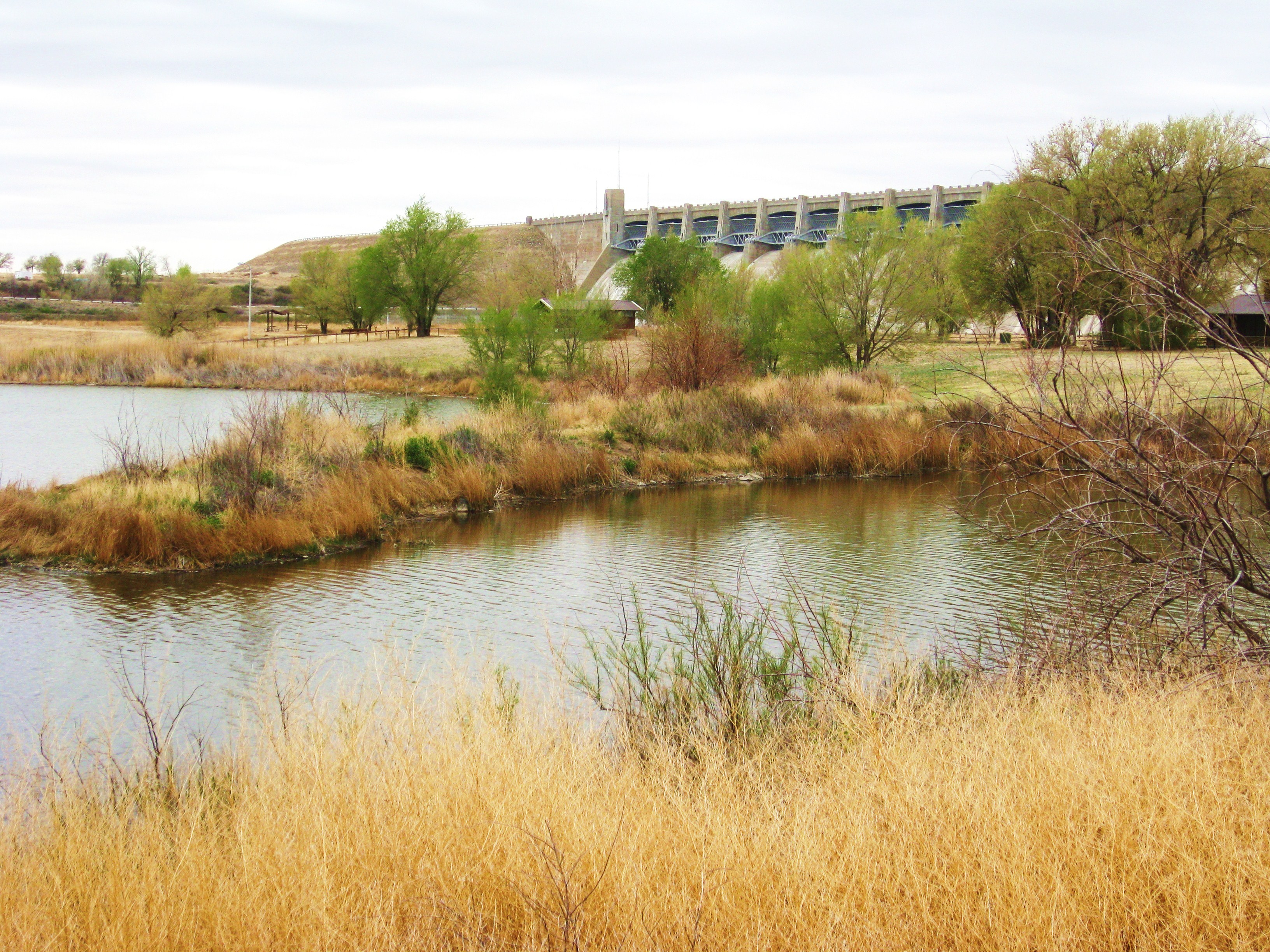
The view out my rear window looking toward the John Martin Reservoir Dam. — Photo by Pat Bean


NOTE: I’ve been taking my blog readers on a journey from Texas to Idaho with me as Maggie and I go down the road. But while I’m writing a mile-by-mile travelogue so readers can actually follow me on a map or Google Earth, I may take three days of blogging to describe one day.

The result is that I’m farther down the road than my blog, which has confused readers. I know because they’ve told me. To solve that problem, I’m now adding a footnote to any blogs that are about a specific day of travel that happened earlier in time.

For example, today’s blog is about happenings that took place this past Sunday, and the footnote reads: April 24, Day 6 of the journey.

Travels With Maggie*

I realized when I woke this morning at John Martin Reservoir State Park in Colorado that it was Easter.

And a lovely one it was. Hasty Lake was winking at me in the morning light, robins were searching for worms beside my RV and a pair of mallards were floating and quacking among the reeds along the shoreline. Did you know that the mallard is the only duck that actually quacks.

As I sat, drinking my coffee and reading the news, or as much of it as I could handle for the day, I had a couple of visitors. Most appropriate ones, I might add.

Two small cottontails spent about 10 minutes roaming around my RV. I named the larger of the two Peter, and thought about Thornton Burgess’ “Adventures of Peter Cottontail” that I had so loved as a child. He wrote 26 books about the beloved rabbit, and while I’m sure I didn’t read all of them, I certainly read quite a few.

And now, since I was alone, I sang as much as I could remember of “Here comes Peter Cottontail, hopping down the bunny trail, hippity hop ….”  I suddenly felt like a child again, and at my age that’s a good way to feel.

The tune was still going through my head when Maggie and I got back on Highway 50, which we followed west through several small rural towns to La Junta. Along the way, I noticed quite a few redbud trees just popping with brand new hot-pink buds

They looked exactly like the blossoms of the redbud trees that I had photographed in early March in Harker Heights, Texas. I laughed, thinking that summer was just around the corner when I had left Texas.

It was sort of like being transported in a time machine. First remembering my childhood reading habits and now here I was enjoying spring all over again.

Pat Conroy, one of my favorite authors, sums it up: “Once you have traveled, the voyage never ends, but is played out over and over again in the quietest chambers. The mind can never break off from the journey.”

Read Full Post »

Kansas in the rear-view mirror -- Photo by Pat Bean

“Life becomes precious and more special to us when we look for the little everyday miracles and get excited about the privileges of simply being human.” — Tim Hansel.

Travels With Maggie

Maggie and I left Kansas and its winds behind today as we drove west on Highway 50 to John Martin Reservoir State Park in Colorado. Route 50, like the more famous Route 66, was created in 1926 as part of the original U.S. Highway System.

But while only bits and piece of the more famous Route 66, which stretched from Chicago to Los Angeles, remains today, the longer Highway 50 is almost intact, stretching from the Atlantic in Maryland to Sacramento, California. Originally it went all the way to San Francisco, but that section got eaten up by larger roads, not much different from what Highway 50 did to earlier travel routes.

Portions of Highway 50 used to be part of the Santa Fe Trail, back when travel depended on feet, human or animal. That unpaved trail, stretching from Missouri to Santa Fe, New Mexico, was heavily used from 1822 until the railroad came to Santa Fe about 1880.

Today’s drive was quite peaceful, with little traffic, giving me time to consider how fortunate I was to have four wheels carrying me smoothly to my destination. My passing RV spooked a striking male ring-necked pheasant in the grasses beside the road and I got to see him skitter away, his red and green head bobbing and his long tail waving behind him.

As I drove, gaining elevation, I could see father behind me than ahead. It was a puffy-white cloud day, and the sky looked like a sea with white-capped waves. The image in my rear-view mirror was striking enough that I snapped a picture of it as I drove. Not too smart probably but there were no other cars in sight.

Time passed fast and soon we were pulling into the campground, where I backed my RV, Gypsy Lee, up next to Hasty Lake. Robins, Eurasian doves, great-tailed grackles, blue-winged teal floating in the lake and a twittering titmouse welcomed us.

Read Full Post »

« Newer Posts - Older Posts »