Feeds:
Posts
Comments

Posts Tagged ‘postaday2011’

 A Wild Race to Lake Manyara’s Park Gate

This was our first truly close-up look at an elephant. There would be many more before the trip ended. -- Photo by Pat Bean

“…nature has ceased to be what it always had been, what people needed protection from. Now nature tamed, endangered, mortal, needs to be protected from people.” – Susan Sontag

African Safari: The Ugly Poaching Business

There is no nighttime wildlife viewing in Tanzania’s national parks. That’s when the poachers come out, Bilal told us.

It used to be, he said, that the poachers made war on the park rangers, but now the park rangers are shooting back. And Tanzania doesn’t want tourists caught in the crossfire.
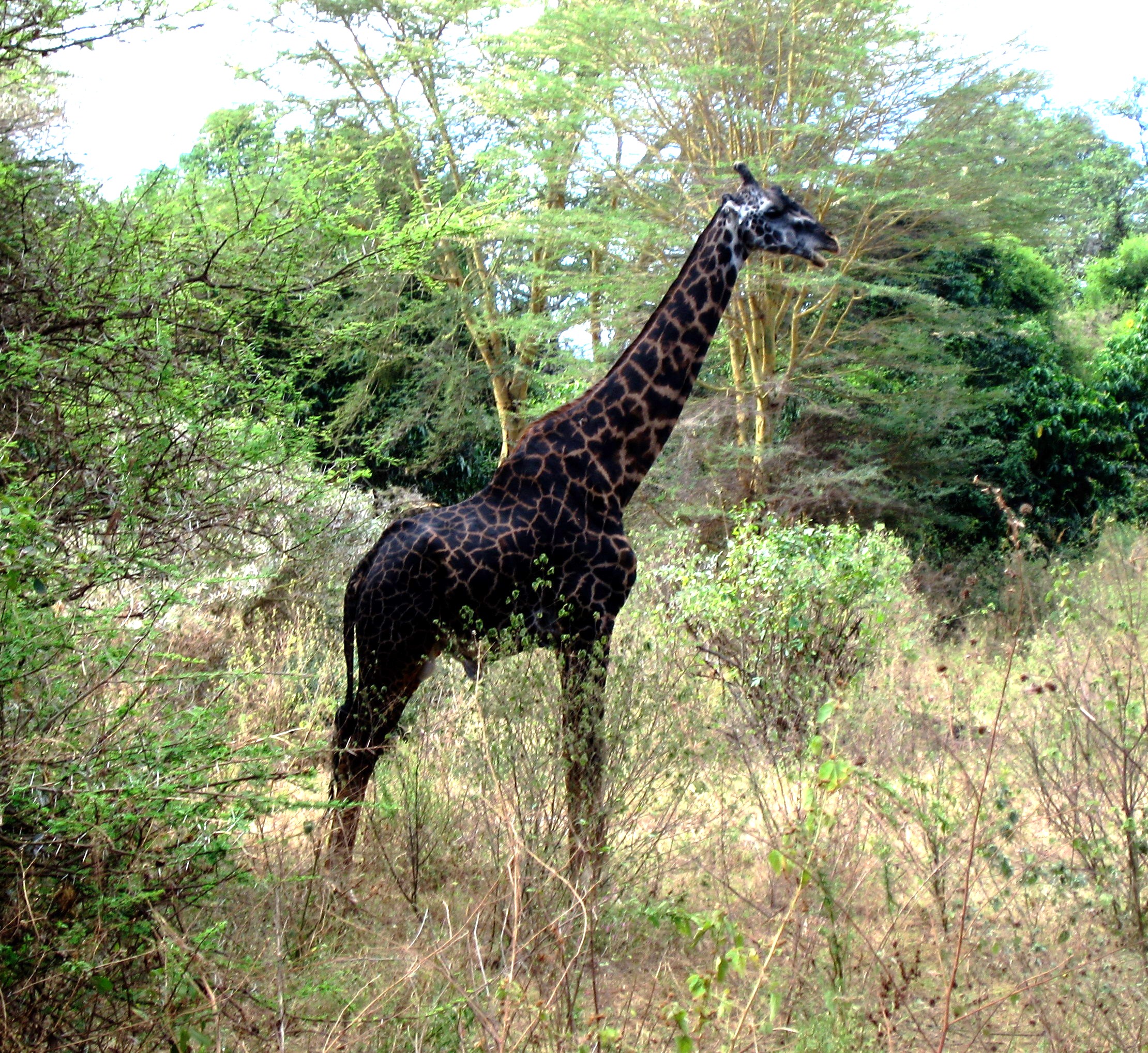
This is a Masai giraffe, the largest of the several subspecies of giraffe found in Africa. It is a bit darker than the other subspecies, has jagged spots and tuft of hair on its tail. -- Photo by Pat Bean

But despite the government’s crackdown, according to several recent news articles that I’ve read, poaching is still a major problem in Tanzania, as well as some other African countries, and in some areas is even increasing.

What Tanzania’s official crackdown on the illegal activity meant to us in 2007 was that the park closed its gates at 6:30 p.m. – and there was a big fine for not checking out of it by that time.

Perhaps because of some great last-minute sightings of an elephant dusting herself off and a mother giraffe with a young one that were too terrific to pass up, Bilal may have lost track of time. That was one of the great things about our guide. He always seemed as excited at watching wildlife as we were – well unless it was small, nondescript birds.

Anyway, all of a sudden Kim and I found ourselves being

Yellow-billed oxpeckers. We would see these on the backs of giraffes and water buffalo. -- Wikipedia photo

bounced around in the back of the Land Rover, holding on tightly but with grins on our faces, as a worried Bilal put the pedal to the metal in a race to get back to the entrance before the deadline. It was a deliciously wild ride that added a touch of adventure to our already full day.

We made it with two minutes to spare, and we could audibly hear Bilal exhale a sigh of release, and see the smile return to his face.

He slowed down for the drive back to our Lake Manyara Serena Lodge, and stopped to let us photograph our first spectacular African sunset.
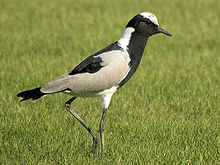
Blacksmith plover: We would see many of these during our drives across Kenya and Tanzania's grasslands. -- Wikipedia photo

I’ve heard artists and photographers talk about Africa’s great light, and now I was getting to see it for myself.

What a great day.

Bird Log of New Lifers: Little egret, white stork, sulphur-breasted bush shrike, common bulbul, tawny eagle, white-rumped swift, emerald-spotted wood dove, blacksmith plover, grey-headed kingfisher, Egyptian goose,
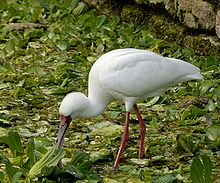
African spoonbill -- Wikipedia photo

black-headed gull, grey-headed gull, great cormorant, lesser flamingo, great white pelican, yellow-billed egret, yellow-billed stork, black-winged stilt, African spoonbill, pied avocent, two-banded courser, southern ground hornbill, yellow-billed oxpecker, fish eagle, long-tailed fiscal, silvery-cheeked hornbill, crowned plover, marsh sandpiper, Hilderbrant’s francolin, helmeted guinea fowl, dark-capped yellow warbler, great reed warbler, cliff chat , August 22 afternoon drive in Lake Manyara State Park.

Next: Drive to Serengeti National Park

Read Full Post »

 “We all should know that diversity makes for a rich tapestry, and we must understand that all the threads of the tapestry are equal in value ..” – Maya Angelou

One of Lake Manyara National Park's famed tree-climbing lions. -- Wikipedia photo

African Safari:Where the Wild Things Are

At the entrance to Lake Manyara National Park is a sign that reads: “Take nothing from the park but nourishment for the soul, consolation for the heart and inspiration for the mind.”

The next few hours would provide Kim and I with plenty of all three.

As a normal rule, lions don’t climb trees. But if we were lucky, we were told, we would see some tree-climbing lions in Lake Manyara National Park.

Southern ground hornbill.

We were lucky.

And along with lions sprawled out on tree limbs, we saw oxpecker birds gleaning insects from the backs of giraffes, watched the comical antics of baboon families, including one small one that would taunt his bigger cousins then rush back to his big male papa for protection.

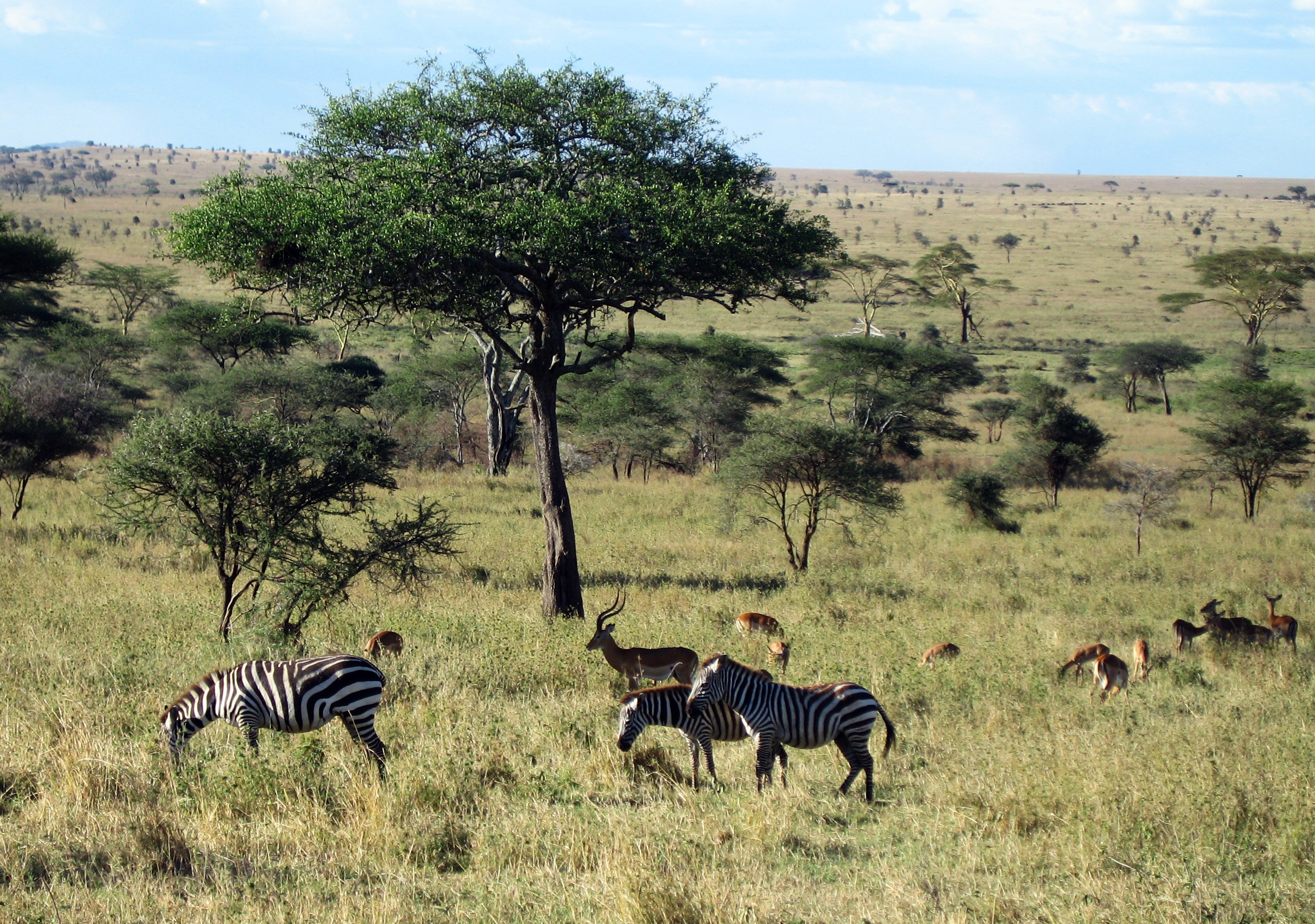
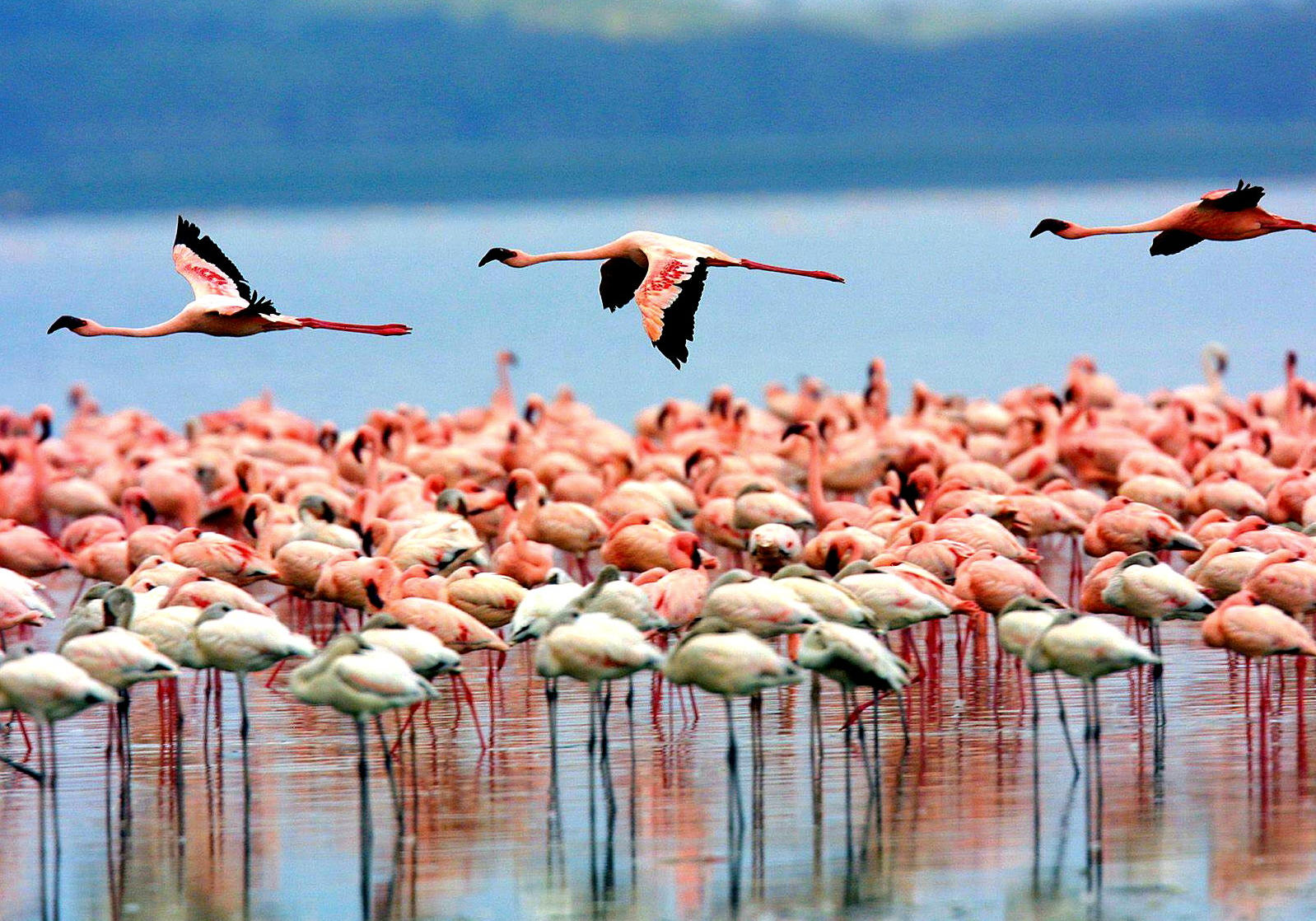
We saw a few lingering flamingos of the millions that feed on the lake before migrating elsewhere, and dozens of colorful birds. And we came across zebra and gazelles dining together, with a few keeping watch for lions and cheetahs that wanted them for dinner.

Zebras and gazelles dining together in a grassy plain area of the park. -- Photo by Pat Bean

In fact, I don’t think there was even a single moment during our afternoon game drive when we were out of sight of wildlife going about their business. So accustomed to Land Rovers were they, that we were totally ignored, which would not be the case, Bilal warned us, if we were on foot

Lake Manyara, named after the Masaai word manyara for a plant that is used to grow stockades for livestock., has a quite diverse habitat, which accounts for its broad range of species. The landscapes go from lake to jungle, and includes an acacia woodland forest, open grassland, and a swamp.

Lesser flamingoes at Lake Manyara -- Kuru Travel photo

At one of our stops, we had southern ground hornbills strutting around on one side of us, giraffes on the other side of us and both elephants and water buffalo nearby.

I didn’t know which way to look, but I think the hornbills got the majority of my attention. These large black and red birds have voices that some say sound human.

And according to a Masaai  folk tale, their conversation is as a man speaking to a woman. He says: I want more cows, and she replies: You’ll die before you get them.

Next: A wild race to the park gate

Read Full Post »


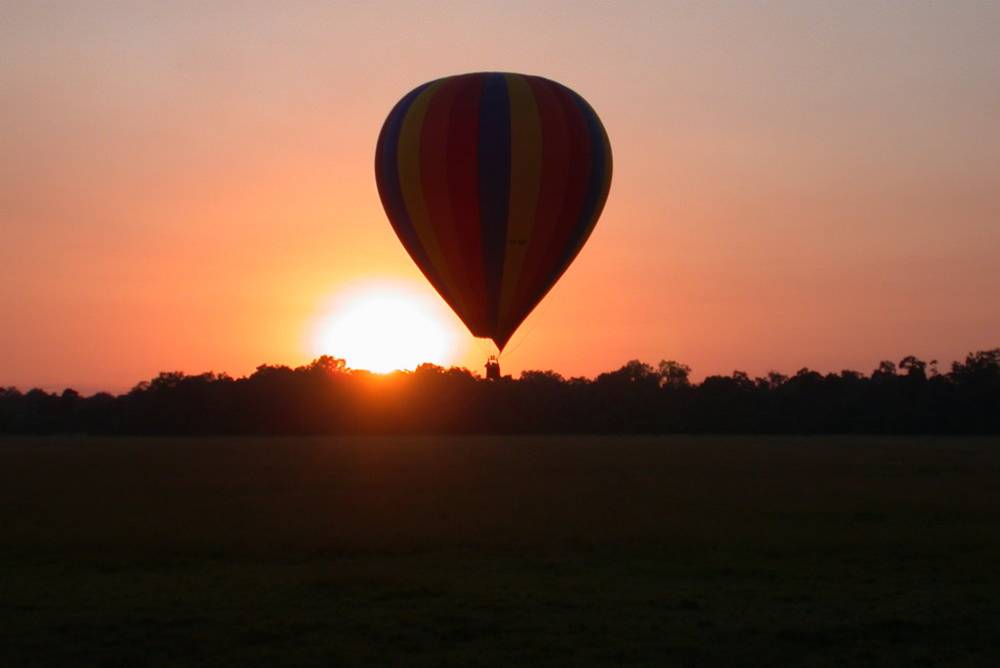
Early morning balloon ride over the Serengeti toward the rising sun.


Read Full Post »

Overview of Lake Manyara -- Wikipedia photo

There are no foreign lands. It is the traveler only who is foreign.” – Robert Louis Stevenson.

African Safari: A Morning of Firsts

These tall fellows that eat leaves shape the acacia trees so they look like umbrellas. -- Photo by Pat Bean

Our morning agenda, according to the carefully arranged plans detailed in the booklet of our journey prepared by the African Adventure Company, was a two-hour drive to the Serena Lodge at Lake Manyara for lunch.

Such a terse description now seems obscene.

On our way there, we saw our first lions, a mating pair, which made the sighting more special, even if it also made us voyeurs. We also got our first view of giraffes and cheetahs, the later being a mom with three youngsters.

New life birds, meanwhile, were coming into view so fast that I truly couldn’t keep

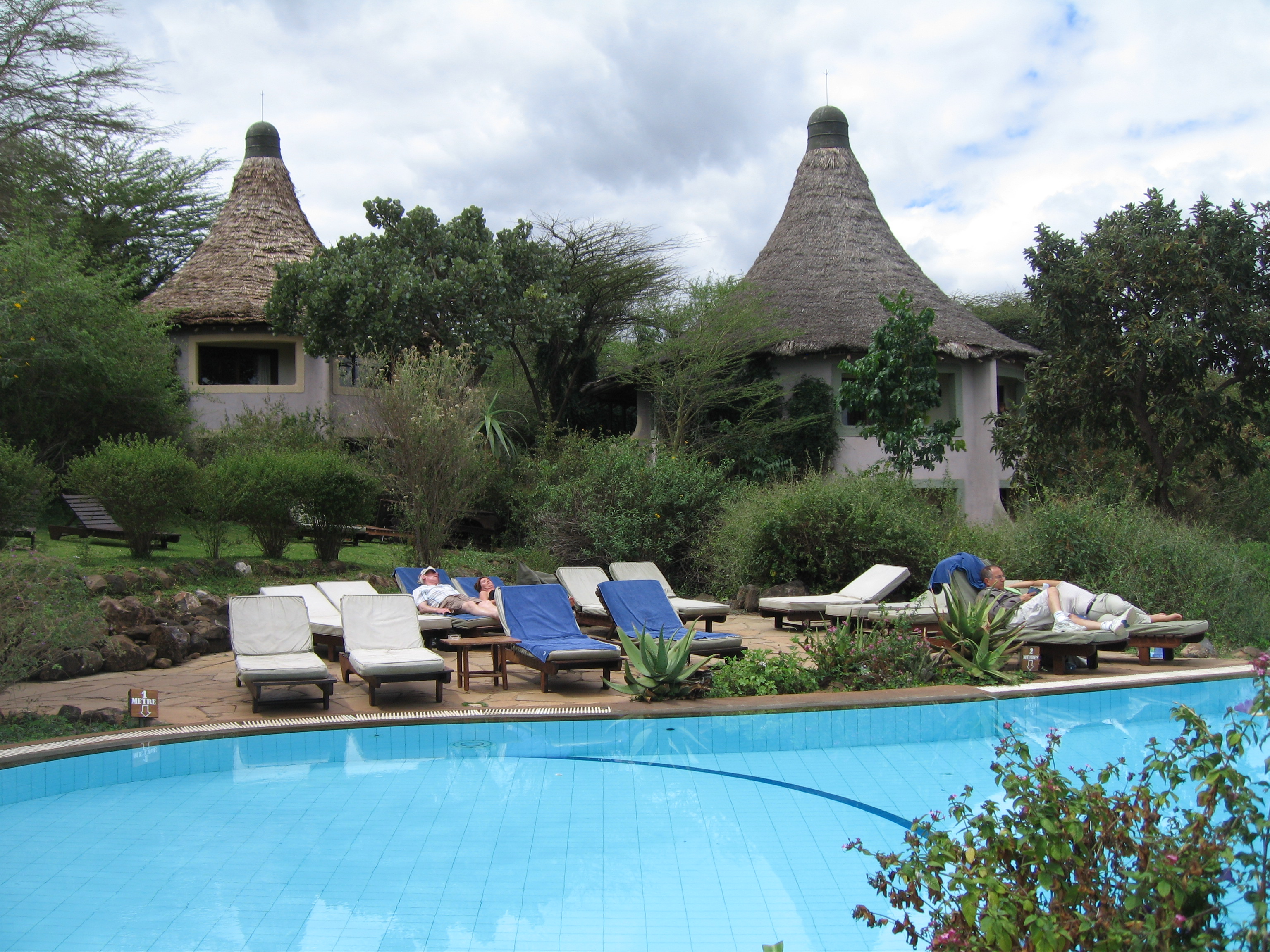
The Serena Lodge as viewed from the compound's pool. -- Photo by Pat Bean

up with identifying them. Bilal helped, but I later realized that while he was great at putting a name to the larger and more common birds, he was not quite as good at the smaller, obscure birds of interest only to crazily addicted birders like myself.

Lake Manyara, located along an escarpment of the great rift, and called “the loveliest … setting in Africa” by Ernest Hemingway, provides habitat to over 400 bird species, including marabou storks, which when I saw a flock of them in some overhead trees thought were the ugliest birds I had ever seen.

White-headed buffalo weaver -- Wikipedia photo

They were hanging about an outdoor market just outside the Serena Lodge compound. As we passed it, my attention was taken away from the birds to an exhibit of colorful African paintings. When I expressed interest in them, Bilal quickly cautioned us not to visit the market unescorted.

As we passed through a fence and guards to get to our accommodations, I realized that our safety was important not just to Bilal, but the country’s entire tourist interests. Harm to any one safari participant would mean bad publicity for business.

As beautiful as this superb starling is, it soon list its glamour because it was so common. We saw them everywhere. -- Wikipedia photo

The Serena Lodge, where we were to spend the night, was owned by India businessmen and staffed by local natives – as were most of the places we stayed at during our trip. It was a grandiose eye-popper.

Our rooms were circular, situated in tall, white-washed roundavels with thatched roofs. The structures sat on a cliff that provided panoramic views of the landscapes and wildlife below. A large swimming pool went right up to the edge of the escarpment.

Taita fiscal -- Wikipedia photo

Lunch was served in an outdoor setting, with birds frequently flittering about. It made for very distracted eating, but a perfect meal, especially with the bottled Coke we ordered to go with it. It was so much tastier than the ones we get in America.

Everything about the Serena Lodge was delightful, and everyone catered to our slightest needs. But the real Africa, both Kim and I knew, lay outside this guarded sanctuary where Bilal didn’t want us to go without him.

I had that decadent feeling again – but I was enjoying every minute of it.

Bird log of New Lifers: Augur buzzard, gray heron, yellow-necked spurfowl, black-shouldered kite, white-headed buffalo weaver, African gray hornbill, superb starling, northern white-crowned shrike, taita fiscal and marabou stork. (August 22, drive from Arusha Coffee Lodge to Serena Lodge near the main entrance to Lake Manyara National Park).

We also saw lots of cattle egrets, is a bird now common in North America, having first migrated to the United States from Africa in the 1940s. I would see many more of them on our wildlife outings while in Africa.

Next: An Afternoon in Lake Manyara National Park.

Read Full Post »

“Let your mind start a journey thru a strange new world. Leave all thoughts of the world you knew before. Let your soul take you where you long to be … let your spirit start to soar, and you’ll live as you’ve never lived before.” Erich Fromm

Bilal, in an unguarded moment. He was a bit camera shy. -- Photo by Pat Bean

African Safari: Bilal

Breakfast the next morning was interrupted by a black and white bird strutting around on the open-air dining room floor. I chased it out to the pool, East Africa guide book in hand, before finally identifying it as an African pied wagtail. Cute little black and white bird.

This interruption of meals for bird and other wildlife watching would become a common, and delightful, routine for the next two weeks.

After breakfast we met up with Evans, a Ranger Safaris supervisor who carefully went over our arranged itinerary with us, and then introduced us to Bilal, our native guide and driver for the rest of our stay in Tanzania.

“Bilal’s our best guide, but don’t let him push you around,” Evans said.

I figured Evans said that about all the guides when introducing them to their clients. As for pushing us around, well both Kim and I are assertive women not prone to letting anyone direct our actions.

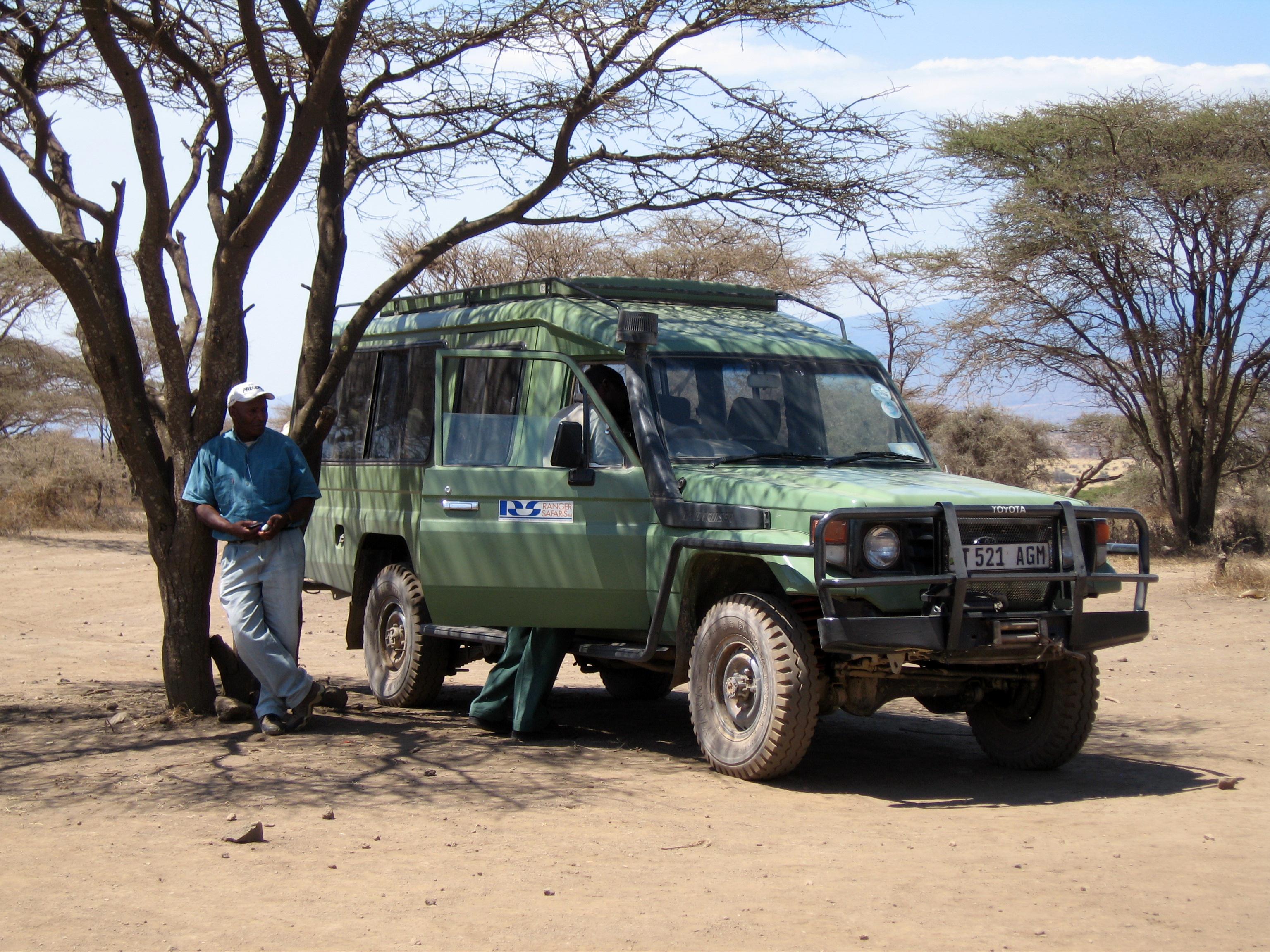
Bilal standing beside his Land Rover, whose top and sides were removed for our sight-seeing pleasure as he bounced the two of us across the African landscape. -- Photo by Pat Bean

Bilal actually did try to push a few times, but it was always only out of concern for our safety. Mostly we let him, but a few times we didn’t. As to him being the best guide, Kim and I quickly came to the conclusion that Evans had spoke the absolute truth.

Bilal, who was older and looked out after some of the younger guides working in our general area, spoke very good English, drove his Land Rover down rutted roads and rough off-road terrain with great skill, and always knew where to find wildlife.


African pied wagtail -- Wikipedia photo

Some of the best moments of my time in Africa were spent standing up and bouncing around in his Land Rover – overjoyed at the lack of seat-belt rules – as Bilal rushed to a lion, cheetah or leopard sighting.

Kim and I finally discovered that Bilal was divorced. While he expected his son to look out for him in his old age – he worried that we also had sons to take care of us in our later years – it was his daughter, who had recently presented him with a grandson, whom he talked with regularly on his radio

Like Africa, Bilal was a bundle of contradictions. But then aren’t we all.

Next: The drive to Lake Manyara

Read Full Post »

“A leaf fluttered in through the window this morning, as if supported by the rays of the sun, a bird settled on the fire escape, joy in the task of coffee, joy accompanied me as I walked.” Anais Nin

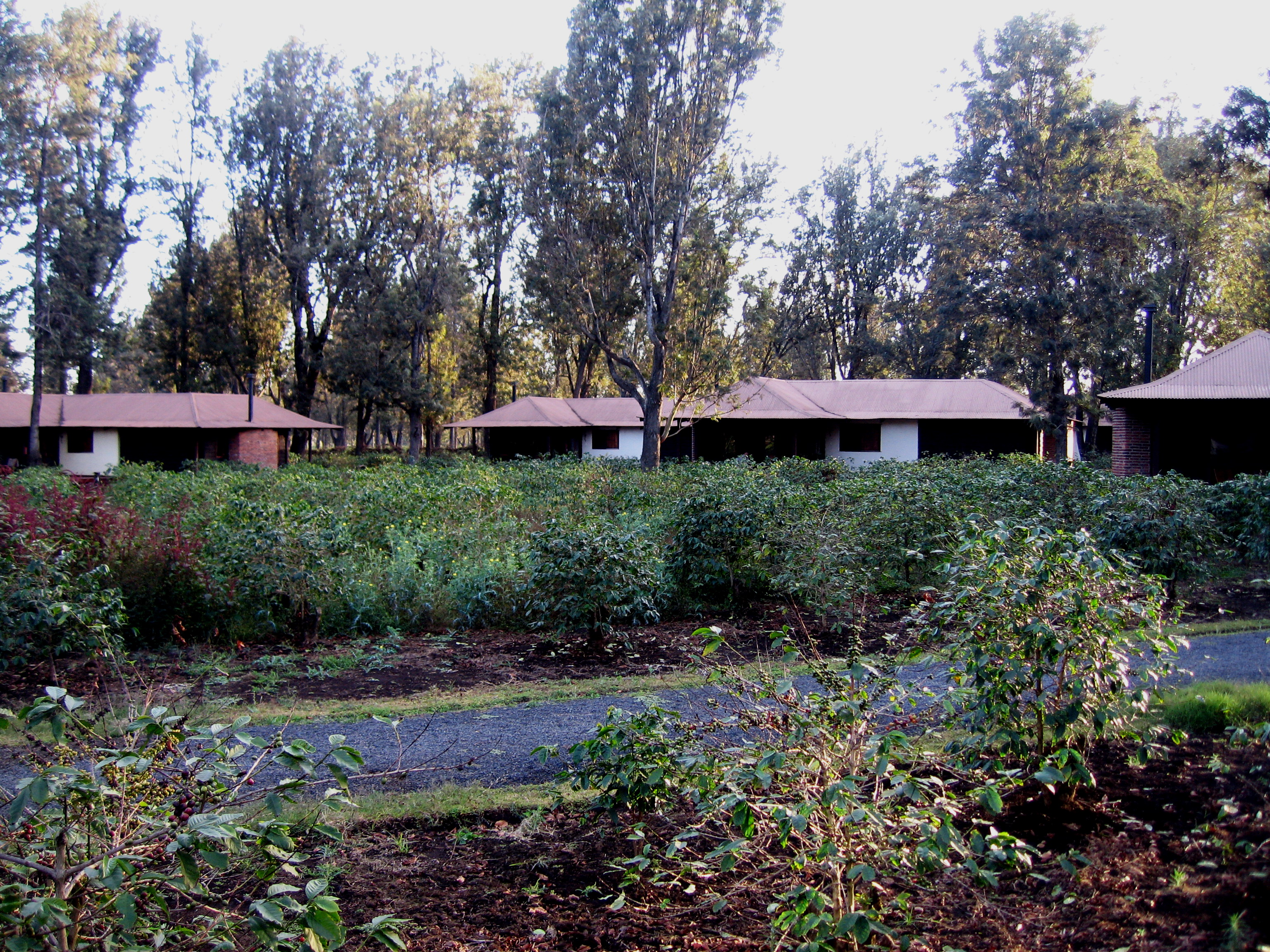
A rock path took us through the coffee plants to our luxurious suites. -- Photo by Pat Bean

African Safari: A Night Among the Coffee Beans

Our final destination for this our first full day in Africa was a working coffee plantation on the outskirts of Arusha, where we were warmly greeted after our chaotic ride with wet wash rags to wipe the dust from our hands and faces, and a delicious glass of iced coffee to soothe our parched throats. .

I immediately became addicted to African coffee, so much so that I usually drink nothing but whenever possible. In fact, as I’m writing this recap of my days in Africa – while also watching a pair of magpies investigating the picnic table beside my RV here at Lake Walcott in Idaho – I’m drinking a cup of it, generously laced with cream, right now.

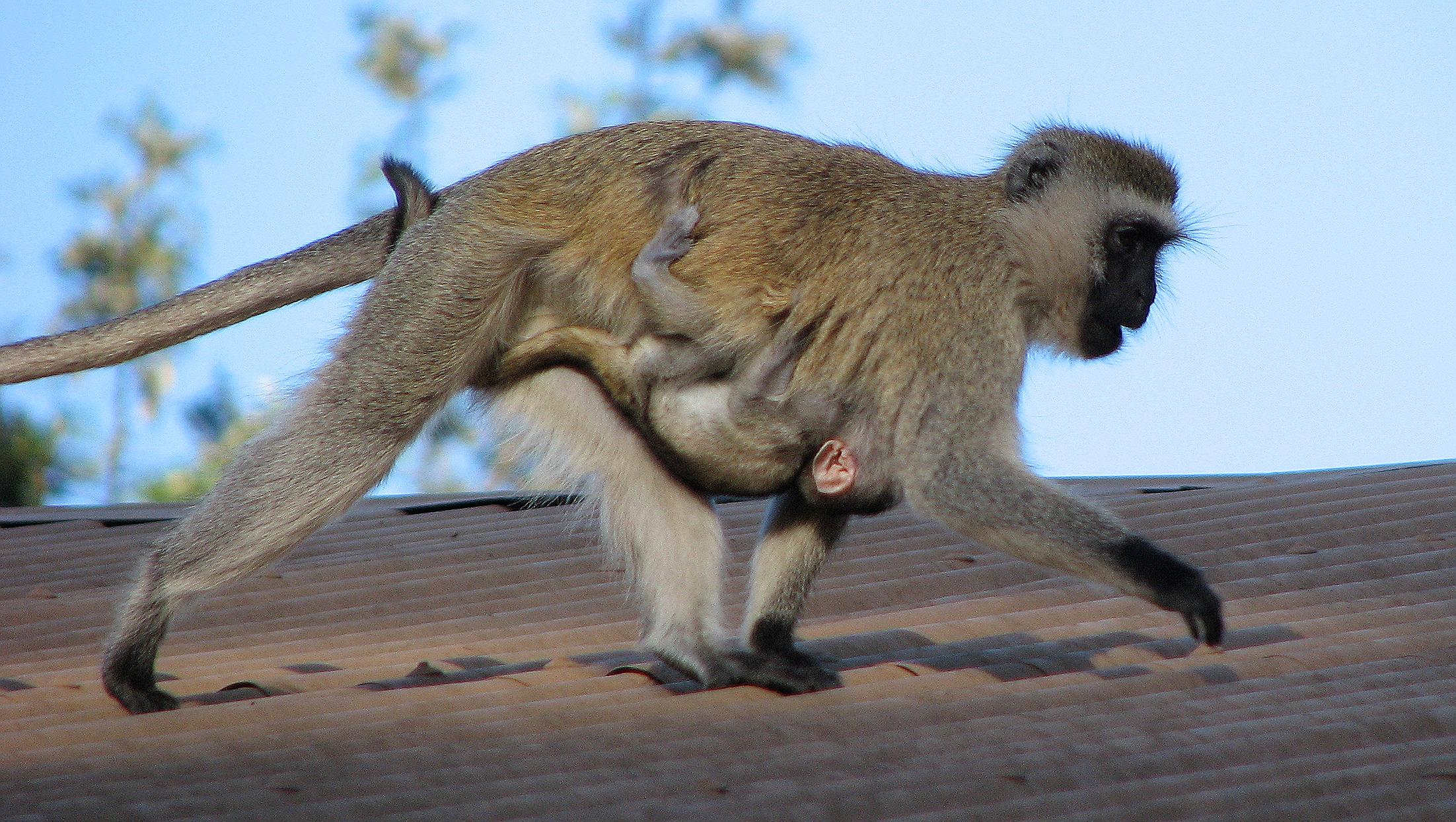
Vervet monkey mom with hitchhiking baby -- Photo by Kim Perrin

Life is good.

Back in Africa, meanwhile, after the greeting and the refreshment offered by our coffee plantation hosts, Kim and I were led to our assigned sleeping quarters, a large, bedroom, bath and sitting room duplex suite reached by a rock path that wound through the coffee plants.

Ours was No. 18, the last one to be reached. Beyond it was a dirt path that led to employee quarters for the coffee plantation, which, we were told, is the largest one in Tanzania. Our driver, before letting us off, said the operation was owned by Greeks, who once had a large community in the area.

Our six-course dinner that evening, served in the main lodge, was a formal affair. I can’t recall what we had, but I do remember it was delicious

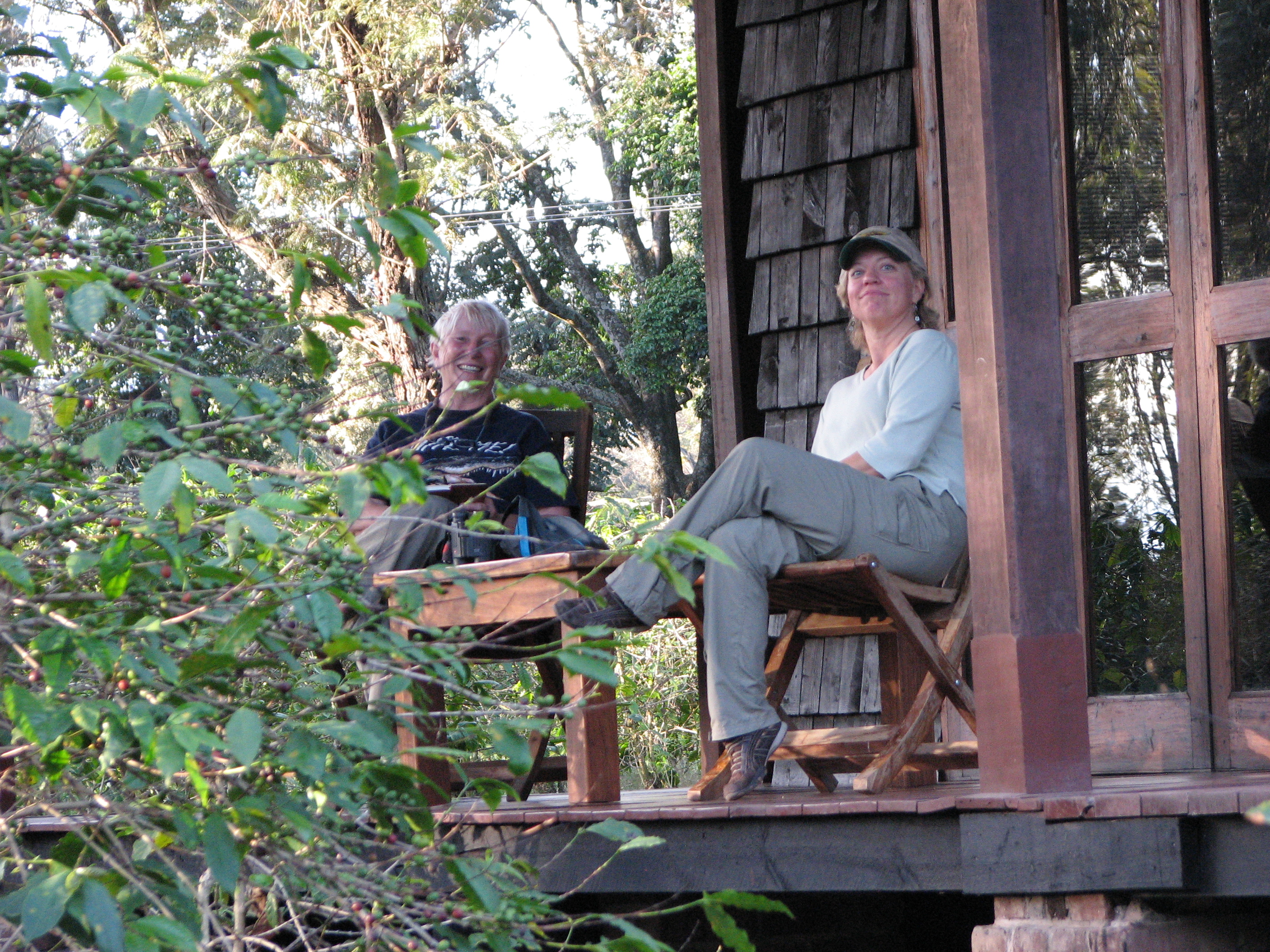
Kim set the timer on her camera so she could get a photo of the two of us on the porch of our lodge accommodations.

Afterward, Kim and I walked among the plants – and the vervet monkeys. The black-faced agile climbers were delightful to watch as they scampered around on the roof tops. Our favorite was a mom carrying a youngster beneath her belly as she gadded about.

Back at our suite, we sat on its porch together watching birds, listening to what sounded like party noises from the employee quarters,  and then watching the sky for the stars to come out. While we were sitting there, quite enamored with our present state of being, a lodge employee came and sprayed our room for mosquitoes and arranged the insect netting around our beds.

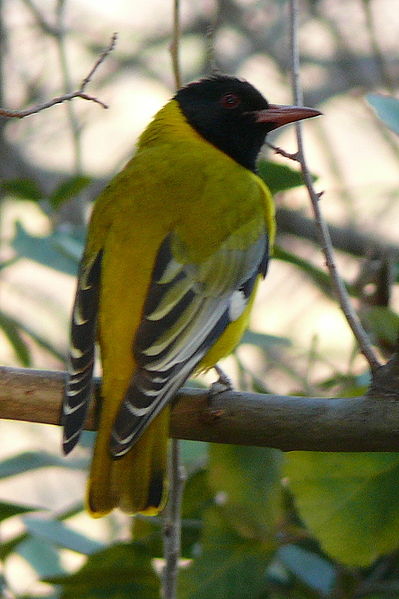
Black-headed oriole -- Wikipedia photo

I don’t know about Kim, but once I got beneath its filtered walls, I slept deeply. Life was really good.

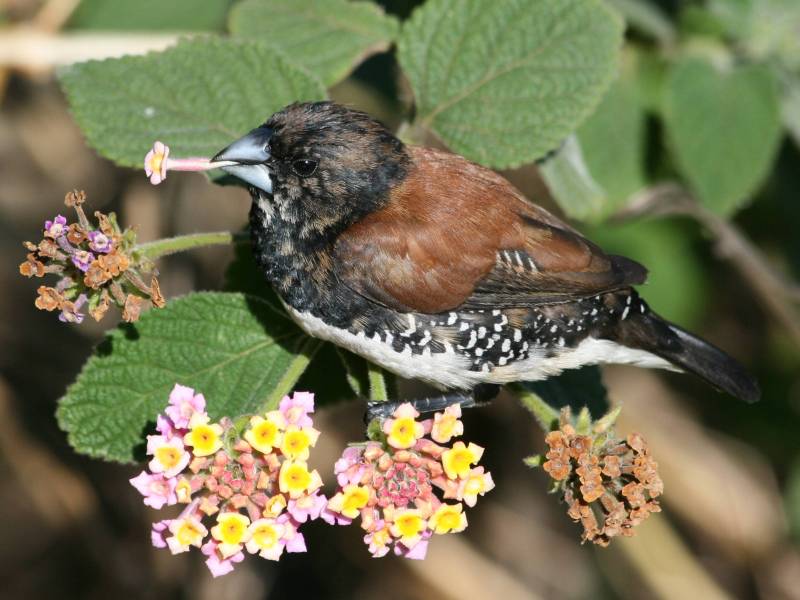
Rufous-backed mannikin -- Photo by Alan Manson

Bird Log of new lifers for the day: hadada ibis, baglaflecht weaver, pied crow, black kite, rufous-backed mannikin and black-headed oriole.

Next Episode: Our Native Driver/Guide, Bilal

Read Full Post »

 “Honest poverty is a gem that even a king might be proud to call his own – but I wish to sell out.” – Mark Twain

African Safari: No Sale

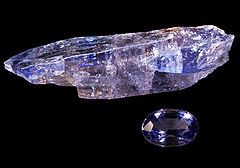
Tanzanite: The rough stone and a polished stone. -- Photo courtesy Wikipedia

Tourists to Africa, like Kim and myself, are valued for the dollars they bring. Knowing that made it easier for me to understand the royal and polite treatment we received at all the places we stayed, and helped erase the guilt I frequently suffered for having so much while others had so little.

I would like to think that some of the kindnesses extended us was real, but I’m sure some of it was just for the generous tips both Kim and I diligently handed out. It seemed only just that we do so.

The Africa Adventure Company that had arranged our tour, meanwhile, had gone the extra mile to make sure we traveled safely and enjoyed our stay. This included providing us an opportunity to spend our money on souvenirs from sanctioned local shops and native co-ops. .

I realized this fully for the first time when our Ranger Safaris’ driver stopped at a place where they sold tanzanite, a rare gem first discovered in 1967 in the hills near Mount Kilimanjaro. Neither Kim nor I had ever heard of this brilliantly blue and violet crystal-like stone.

The mining of the gem was nationalized by the Tanzania government in 1972; and its original name of blue zoisite, was changed to tanzanite by Tiffany when the company began marketing the jewel.

Company big wigs thought a stone named after the country where it was found would sell better than one whose name sounded like “blue suicide.”

Monkeys by the side of a road were a common sight in Tanzania. -- Photo by Kim Perrin

According to Wikipedia, “the mining of tanzanite nets the Tanzanian government $20 million annually,” while retail sales, mostly in the United States, total “approximately $500 million annually.”

The largest tanzanite stone discovered, 252 carats and known as the “Queen of Kilimanjaro,” sits in a tiara owned by Michael Scott, Apple Computers’ first CEO.

I found the tanzanite trivia fascinating, but wasn’t interested in owning one. Both Kim and I, after noting the cost of the jewelry, agreed we would rather spend our money on more travel instead.

Next Episode: Coffee Plantation Lodging

Read Full Post »

“At dawn in East Africa the sky bleeds raw swatches of color … the sun rises with passion, like a reckless dangerous lover. It ignites the world in reds and golds and vaporizes cool mists collected overnight. Within minutes the passion burns itself out.” –David Ewing Duncan

African Safari: The President Passes By

An African sunrise, enough in itself to warrant traveling to the Dark Continent. -- Photo by Pat Bean

As I look over the notes I took about the drive from the Kilimanjaro airport, through Arusha, to a coffee plantation where we were to spend the night, I find myself almost as overwhelmed again as I was observing it originally.

Color was everywhere. African men and women on bicycles wrapped in blue, red, orange and purple robes making their way over packed red earth. A pickup truck with a gigantic load of yellow oranges bouncing on the rutted road ahead of us. Grey burros plodding beside the road with green leaves of some sort loaded on their backs.

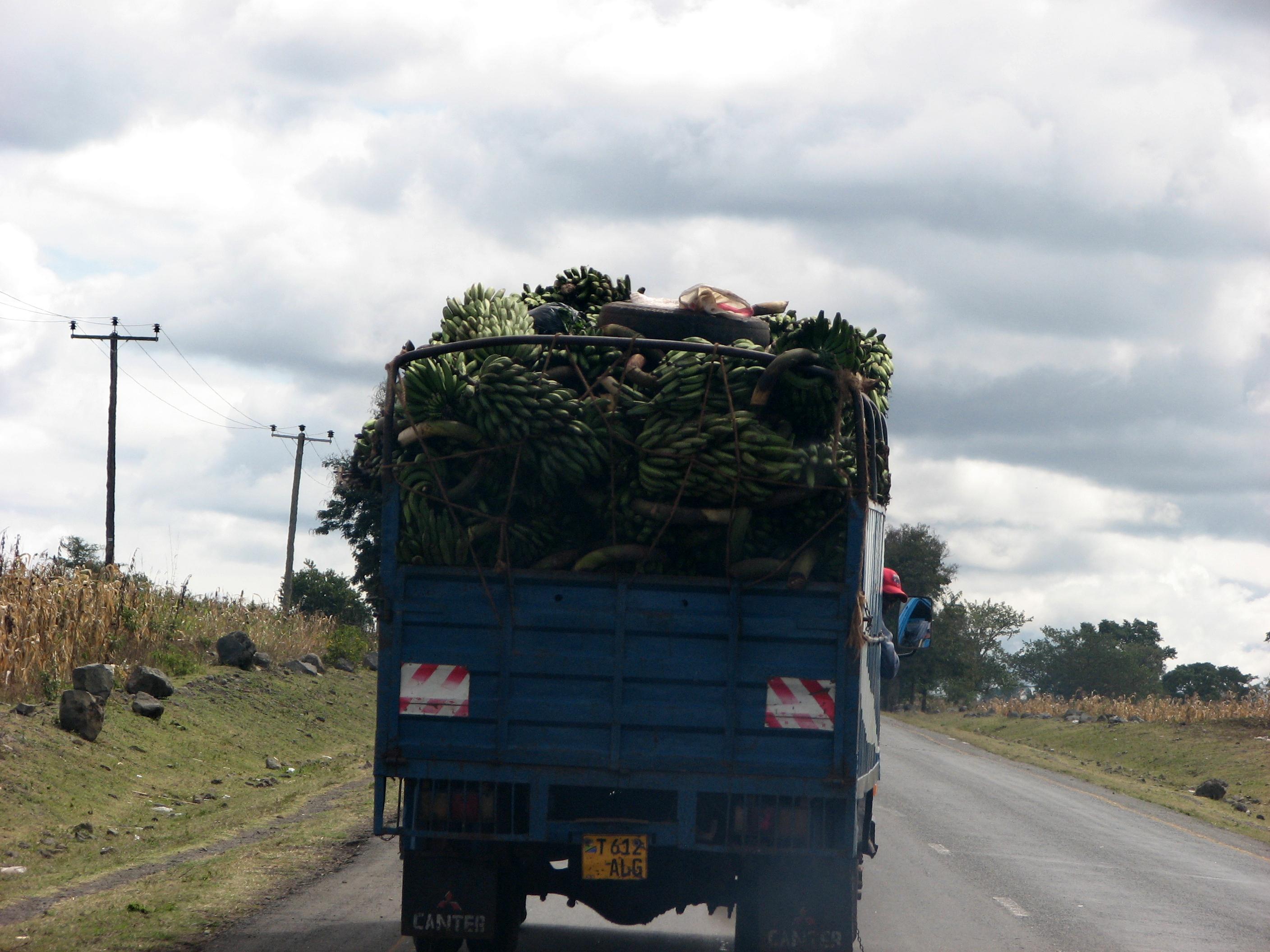
The banana truck -- Photo by Kim Perrin

There were small boys, whom I thought should have been in school, herding cattle and goats; and women in long dresses walking purposefully with huge bundles on their heads, sometimes with an empty-handed man walking ahead of them.

I watched, and smiled to myself, as a man pulled a load of squawking chickens down from the top of one of the smoke-belching over-packed buses we frequently passed.

And I was amazed at the way our Ranger Safaris driver weaved in and out among traffic and people. I was sure he was going to hit something or someone. But he didn’t. Even when a car decided to create a passing lane down the middle of our narrow two-lane highway and we passed him three abreast.

From my journal -- Photo by Pat Bean

But the strangest thing of all was when a bully of a policeman came along and made everyone pull off to the side of the road. Our driver, who was on the cell phone at the time, didn’t respond quick enough and so was singled out for a Swahili chastising.

Kim and I sat unusually quiet during the confrontation, wondering what was going on. .

A few minutes later, a pickup truck with armed guards standing in the back passed us, and soon traffic was back to its chaotic normalcy.

“That was the Tanzania president,” our unfazed native driver said.

Next Episode: African Tanzanite

Read Full Post »

 “Travel is more than the seeing of sights; it is a change that goes on, deep and permanent, in the ideas of living.” – Miriam Beard

African Safari: From Nairobi to Kilimanjaro

This is a view of Mount Kilimanjaro that Kim and I did not get to see. I post it so as not to disappoint readers, including one who was looking forward to seeing it,. The Wikipedia photo was taken by Muhammad Mahdi Karim.

Our plane to Tanzania from the small Wilson airport on the outskirts of Nairobi was a Twin Otter with single seats separated by a narrow aisle that held much of our luggage. It was a bottleneck one late-arriving passenger had to stumble through to sit down.

The aircraft’s non-uniformed, Anglo pilot, a grin on his weathered face, twisted around and gave us our flight briefing. He ignored the luggage. It was as different from our KLM attendant’s memorized agenda on our flight to Africa, as our scrumptious breakfast at the Norfolk was to the in-flight meal we were served in a paper sack on boarding.

The entire lunch consisted of a slice of zucchini, a slice of carrot and a leaf of lettuce on a miniature hamburger bun.

The meal reminded me of the sign noting that millions of Kenyans lived in poverty that I had seen on arrival in the city. Just how thankful some people would be for just such a meal was impressed even more on me as the plane flew over an area of Nairobi where salvaged crate box homes were crowded on top of one another.

I decided right there and then that there would be no complaints from me during my stay in Africa. Kim had the same reaction.

Meanwhile, my seat near the front of the plane gave me a pilot’s view of the 50-minute flight. I could easily tell I was not flying over the United States. The landscape below lacked the tidy borders of fences, parallel streets and plowed fields that consume Americans’ sense of tidiness.

But by my own personal criteria and desire for adventure, today’s flight was perfect – even though Mount Kilimanjaro was hidden by clouds, both from the air and when we landed at the tiny Kilimanjaro airport near its base.

“Perhaps it will be less cloudy tomorrow,” said our pilot as he bade us good-bye. I think he was more disappointed than his passengers. Kim and I were already thinking about our  next leg of the day’s journey, one in which all traffic rules, if there were any, were broken.

Next Episode: The Chaotic Drive to Arusha

Read Full Post »

The Norfolk Gardens

“Every man’s life ends the same way. It is only the details of how he lived and how he died that distinguish one man from another.” Ernest Hemingway

African Safari: Rum and Chocolate at Midnight

A hadada ibis. -- Photo courtesy of Wikipedia

As late as it was, and as tired as we were, Kim and I weren’t ready for bed when we finally got checked into the Norfolk Hotel. We stood awhile on the balcony drinking in the night air and looking out over a lush garden beneath us.

Then we raided the room’s mini bar, making ourselves a couple of Captain Morgan Jamaican rum and cokes, and toasting ourselves on the adventure we were about to begin. There’s something to be said for not being rich enough to be well-traveled. The excitement of finally getting away to strange and exotic places that once existed only in your dreams is delicious – as was the small box of “Out of Africa” chocolates that we ate with our midnight drinks.


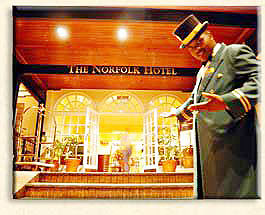
We were met in the evening and seen off the next morning by the Norfolks Green clad doorman.

It all felt a bit decadent. But I loved the feeling. .

The next morning I roamed through the hotel, where it seemed the décor and furnishings were of another era. The Norfolk Hotel opened on Christmas day 1904. It is said no other hotel in Kenya captures as much of Nairobi’s past. President Teddy Roosevelt, Lord Baden-Powell, the Earl of Warwick and the Baron and Baroness von Blixen are all part of the Hotel’s history.

And so is Ernest Hemingway. As a writer, I got a thrill peeking into the bar where he is said to have sat for hours at a time. I was only brought back to the present day when I observed a maid talking on a cell phone.

Out in the garden, I saw my first African bird. It was a hadada ibis, and a dozen or so of them were hanging out in the garden’s trees. I identified it using the East Africa bird guide Kim had given me for my birthday earlier in the year.

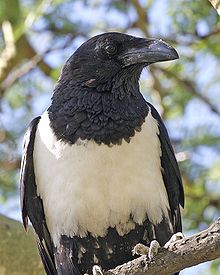
My second and third lifers (bird species seen for the very first time) were a baglaflect weaver and a pied crow.

I was as eager to see birds as I was to see Africa’s more famed four-legged wildlife. So much so that I occasionally annoying to my traveling companion, who likes watching birds but was more excited about Africa’s four-legged wildlife than its winged species on this trip.

A modernistic wildlife scupture on the University of Nairobi campus. -- Photo by Pat Bean

There’s the possibility I might also annoy my blog readers. It’s a risk I’ll take, however. I came to Africa to see birds every bit as much as to see lions and elephants.

Pied crow -- Photo courtesy of Wikipedia

Meanwhile, Kim joined me in the garden, and we went into breakfast, which included some yummy African sausages that we would eat many times again during our African stay.

Afterward, we took a short walk on the grounds of the University of Nairobi across the street from the hotel. Our stroll was accompanied by a black kite flying overhead, whose sighting I added to my daily bird log.

And then it was off to the small Wilson Regional Airport for our flight to Tanzania to begin our safari for real.

Next episode: A view of Mount Kilimanjaro

Read Full Post »

« Newer Posts - Older Posts »