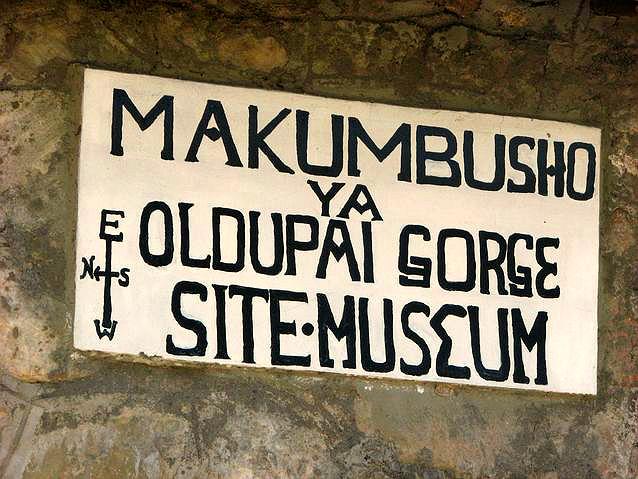
Museum sign
“We are the only beings on the planet who lead such rich internal lives that it’s not the events that matter most to us, but rather, it’s how we interpret those events that will determine how we think about ourselves and how we will act in the future.” Anthony Robbins
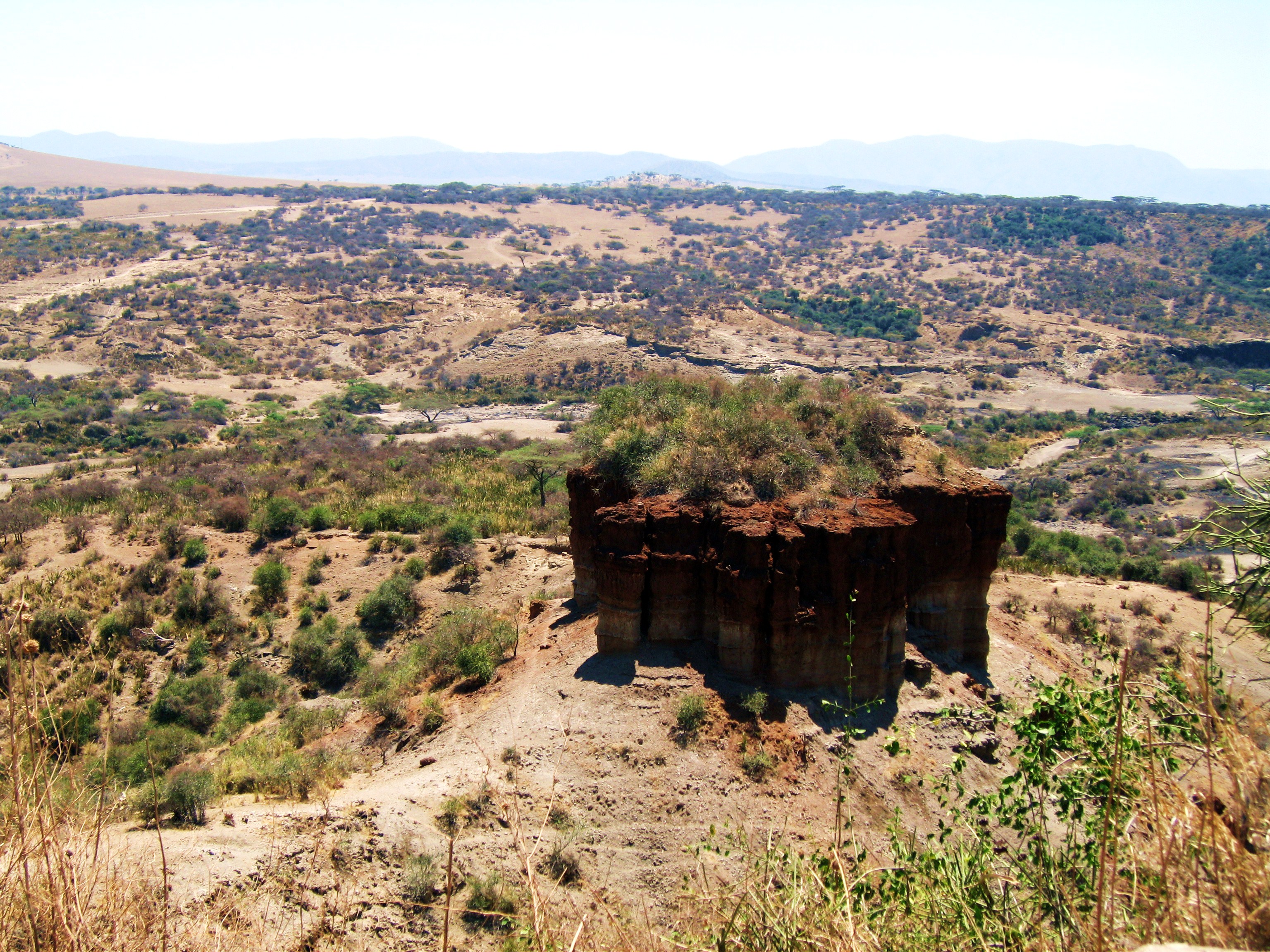
The monolith in Oldupai Gorge, the view behind the young man who told us the story of the landscape here. -- Photo by Pat Bean
African Safari: A Place of Beginnings
Places call to me. Africa called twice. The second call was for the wildlife safari adventure Kim and I enjoyed for two weeks in 2007, which also answered the first call.
I had long had a desire to see Africa’s Great Rift, where human life is thought to have begun. I had read much about the anthropology discoveries of Mary and Louis Leaky in Oldupai (also called Olduvai) Gorge in Tanzania, and wanted to see this place for myself.
The rift, a continuous geographic trench, stretches across Africa for over 3,000 miles, but the section in Tanzania’s Ngorongoro Crater is where the most important discoveries about our human beginnings have been made.
It was why, of the many safari choices offered of Africa, I had chosen the one that brought us to Tanzania.
And now I was here, looking out over the spot where in 1975 Mary Leakey had discovered a series of footprints showing our pre-human ancestors walking upright over 2 million years ago. .
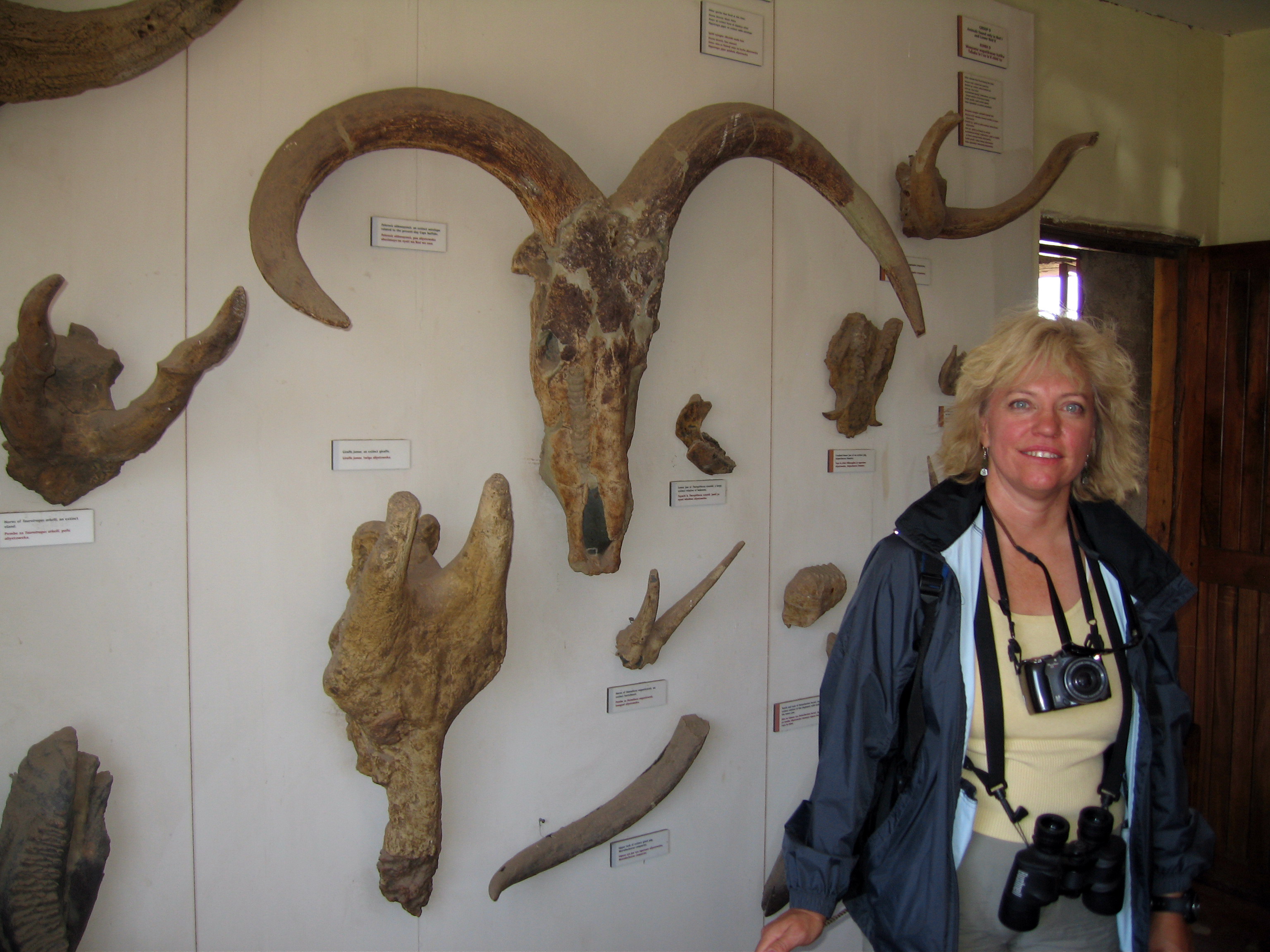
Kim standing in front of some non-human remains found in Oldupai Gorge. -- Photo by Pat Bean
I even got to see a replica of these footprints in the small Leaky Oldupai Museum – after listening to a young man, whom I assumed was an anthropology student, explain the wonders found in this landscape.
I could hardly understand his heavily accented English, but it was accompanied by a theatrical performance that filled in the details of the words I missed. It was one of the most unusual, and delightful, lectures I ever sat through.
It was given on a high overlook of the gorge, beneath a thatched shelter for shade, looking out at
landscape that once was a lake. The lake was covered by a succession of volcanic ash; then, about a half million years ago, seismic activity diverted a stream that cut down into the sediments, revealing seven layers of the past. In doing so, it created an awesome research lab for the Leakeys and other anthropologists.
The site was used as the first monolith in the movie “2001: A Space Odyssey.” And the small Oldupai Museum here reminded me of those one used to find, and occasionally still does, while traveling across America on Route 66.
It’s both strange and wonderful how all of life seems to connect.


 Pat Bean's blog