Feeds:
Posts
Comments

Posts Tagged ‘names of things’

 “What’s in a name? That which we call a rose by any other name would smell as sweet.” – William Shakespeare

Favorite Places: Sardine Canyon, Utah

A sunny fall day in Sardine Canyon. I snapped this photo while up the canyon on an Audubon field trip. -- Photo by Pat Bean

It was January 1971 before this native Texan saw a snow storm, unless you count the piddling snow fall that Dallas gets about once every four years.

My family had just moved to Logan, Utah, where snow stays on the ground sometimes from December to April, which it did this year. I gave up driving because I was a wimp, walking instead the half-dozen blocks to my job at Utah State University.

Then came the night that I got an unexpected call from my brother, who was paying me a surprise visit and wanted me to pick him up at the Salt Lake City airport, 80 miles from Logan – and in a snow storm .

My southern belle hospitality personality clicked into place and I said “Sure!”

The 160-mile round-trip took hours, and I almost ran off the road in Sardine Canyon between Wellsville and Brigham City. I was using the edge of the road as a guide, and suddenly the edge disappeared, eaten by a snow slide that came close to blocking the entire road.
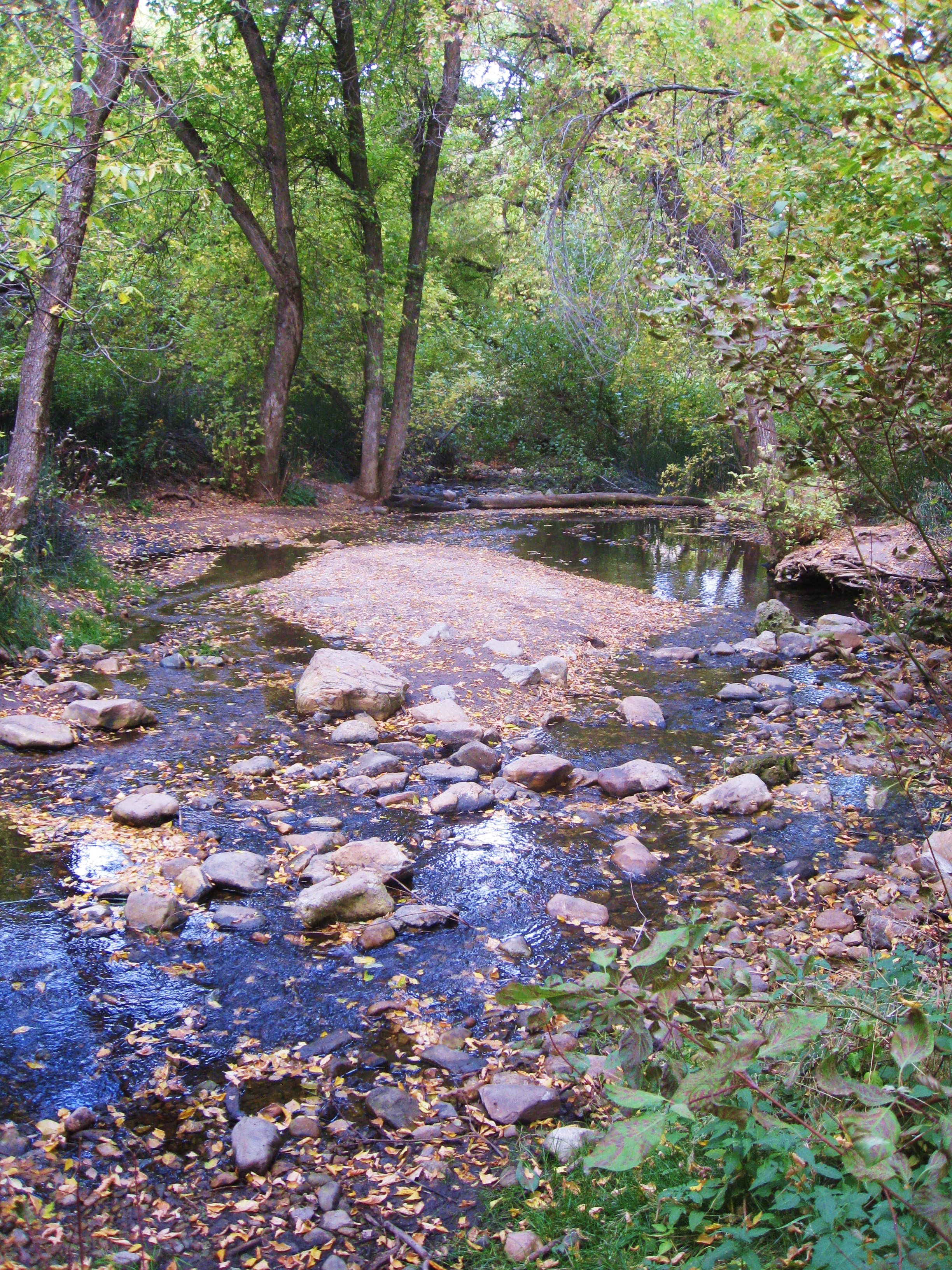
 

One of the many small creeks, fed by snowpack, that flow down from the mountains in Sardine Canyon. -- Photo by Pat Bean

I’ve driven Sardine Canyon many, many times since. And having an inquiring mind, I asked: “How did the canyon get such a fishy name?”

Nobody knew.

The most common guess was that travelers to the valley had sardines for lunch and left the cans along the way as trail markers. Coming in second was the suspicion that it had been named because of the small fish that packed the canyon’s creeks.

And then came the knowledge that the canyon everyone referred to as Sardine was actually Wellsville Canyon – and always had been.

Sardine Canyon, which the settlers actually did use, is located south of Wellsville next to Mount Sterling. Even those who know this, however, continue to call the larger canyon Sardine. Perhaps it’s because, fishy sounding or not, the name still carries more romance in its character than plain old Wellsville.

Whatever name it goes by, this Northern Utah canyon route, also called Highway 89/91 is awesome to drive. If you every get to do so, hopefully it’ll be a sunny day.

Bean’s Pat: frizztext: Aurora Borealis http://tinyurl.com/6uq7hmx I’m a suck for aurora borealis photos. Seeing one in person is high on my To-Do list.
 

Read Full Post »

“Both the grand and the intimate aspects of nature can be revealed in the expressive photograph. Both can stir enduring affirmations and discoveries, and can surely help the spectator in his search for identification with the vast world of natural beauty and the wonder surrounding him. – Ansel Adams


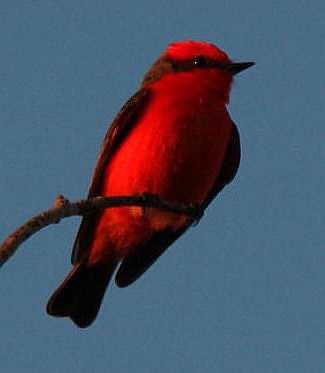
Vermilion flycatcher: Unlike many flycatchers that look alike, there is no mistaking this species. -- Photo by Pat Bean


Bird Talk

I’ve always wanted to know the names of things, but I wasn’t exactly pathetic about the need until I took up birding back in 1999.

I came late to this addictive passion, suddenly being amazed at all the birds around me. Where once these flying creatures were invisible, as if existing in a parallel world with a curtain drawn between them and me, suddenly I was seeing them everywhere.

My fascination with birds can be annoying to non-birders. A shadow flicks across the landscape and I lose my place in a conversation as my eyes turn upward searching for the source.

I constantly scan the tops of utility poles looking for familiar profiles. The sight of a red-tailed hawk sitting atop one causes me to yell “stop” to the car driver. A rustle or movement of leaves and I am distracted from a task. No roadside pond goes unscanned. Well, you get the idea.


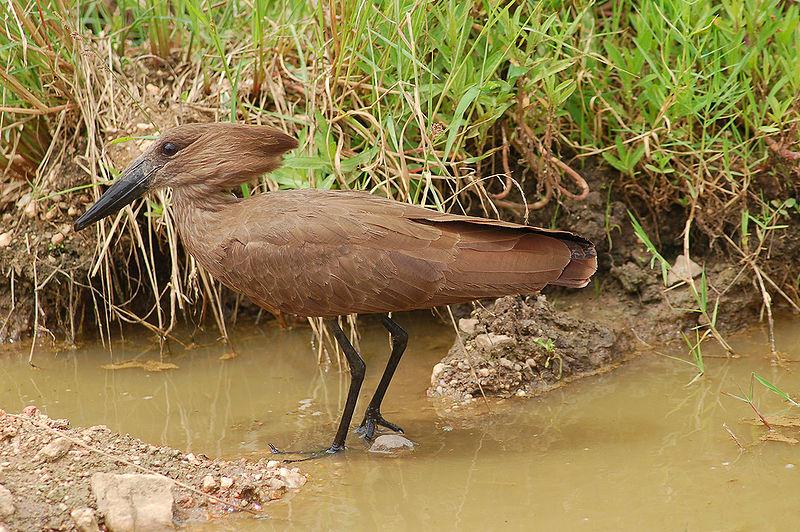
The unique profile of a hammerkop makes it a hard bird to misidentify. But you'll have to go to the African continent if you want to see one. -- Photo by Pat bean

But seeing a bird is not enough. I must know what bird it is.

Is that a crow or a raven was one of my first identification problems. The raven is larger but size, without a comparison, is not much help. So I learned that a crow’s tail is razor straight at the end, while a raven’s tail is wedge-shaped. Ravens also are the ones who suffer bad-hair days.

Many flycatchers, meanwhile, still puzzle me. Quite a few look almost exactly alike. A long look through a good scope, and knowing preferred ranges and habitats of each species, is necessary for identifying these birds.


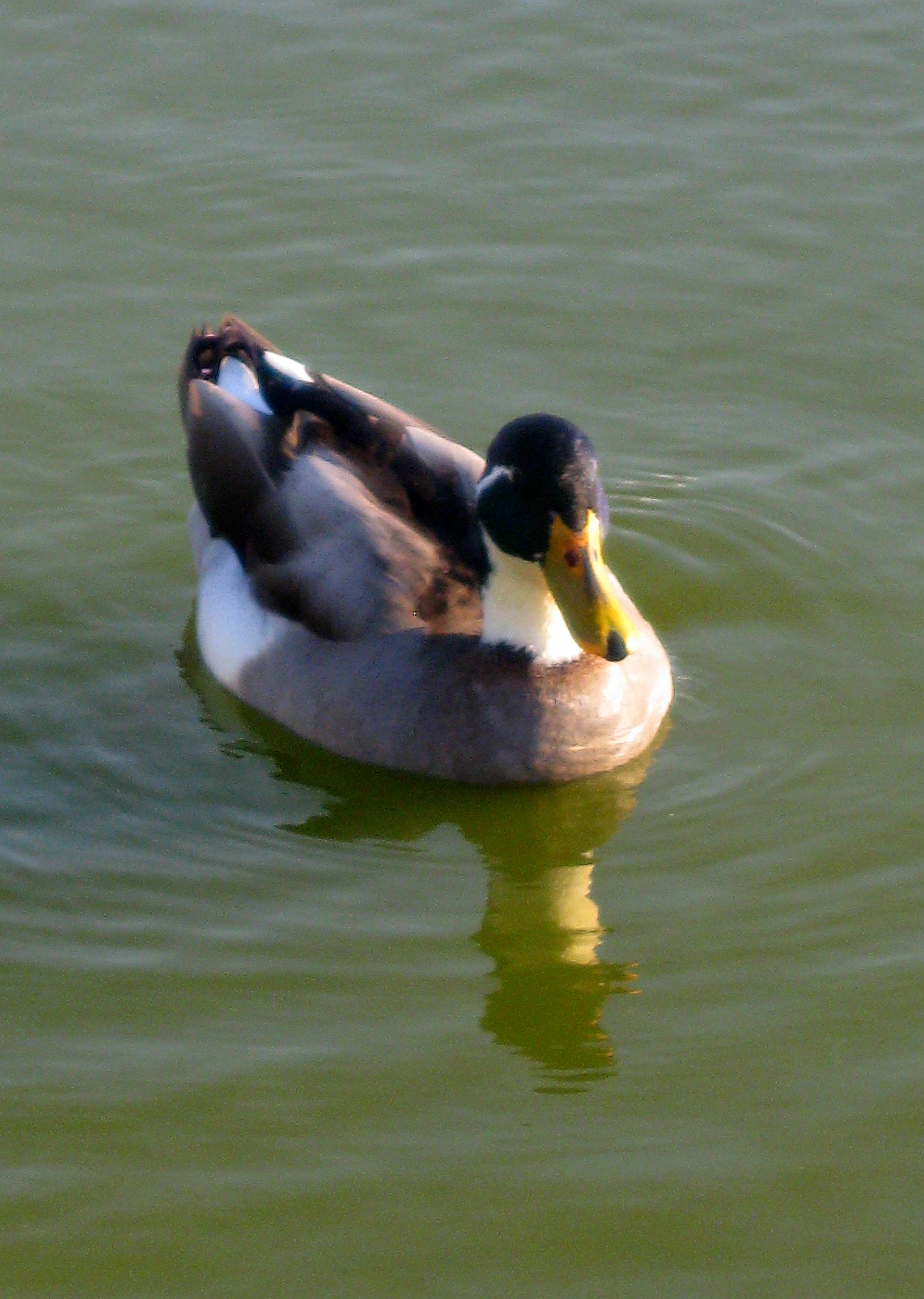
You won't find this bird in any field guide. It's a mallard hybrid. -- Photo by Pat Bean

Knowing that you’re looking at a flycatcher is easy, however. One usually sees them sitting up straight on a branch. They fly out to catch an insect and then most return to the same branch to repeat the process. If I have long enough to watch, and a good field guide, sometimes I can even figure out whether it’s a dusky or a willow, or one of several other flycatchers showing off for me.

When I was first learning to bird, there was this one particular duck that completely stumped me. While I had a really good look at the creature, I couldn’t find it in my field guide. I finally gave up and asked one of my birding mentors, who immediately broke into laughter.

The duck in question was a mallard hybrid. Since then I’ve seen a lot of these unique, but sterile offspring. Mallards, it seems, are sluts.

Read Full Post »