Feeds:
Posts
Comments

Posts Tagged ‘Mother Nature’

 “Compassion, in which all ethics must take root, can only attain its full breadth and depth if it embraces all living creatures and does not limit itself to mankind.” – Albert Schweitzer
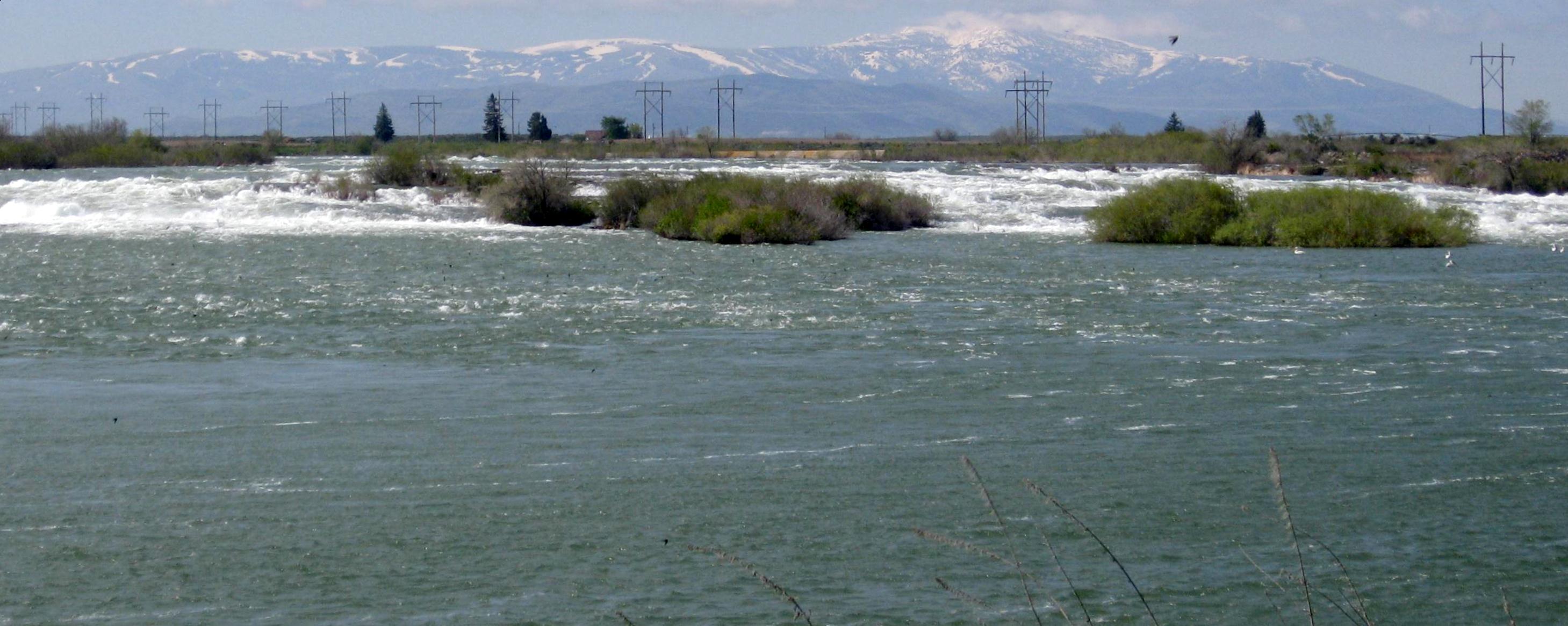
Water gushing down into the Snake River during a release at the Minidoka Dam. -- Pat Bean

Travels With Maggie

The siren letting people downstream know they are letting water out of the dam here at Lake Walcott has been blaring frequently the past few days.

The lake’s high, the irrigation canals are full and the Snake River is flowing fast and furious.

I watched yesterday as the siren blew and the water gushed down from behind the dam. The white pelicans floating near where the water splashed as it cascaded down a short incline watched, too.

Occasionally I see pelicans in the lake, but sitting below the falls seems to be their favorite hang out, probably because fish like the oxygen rich spot, too. And pelicans like fish dinners.
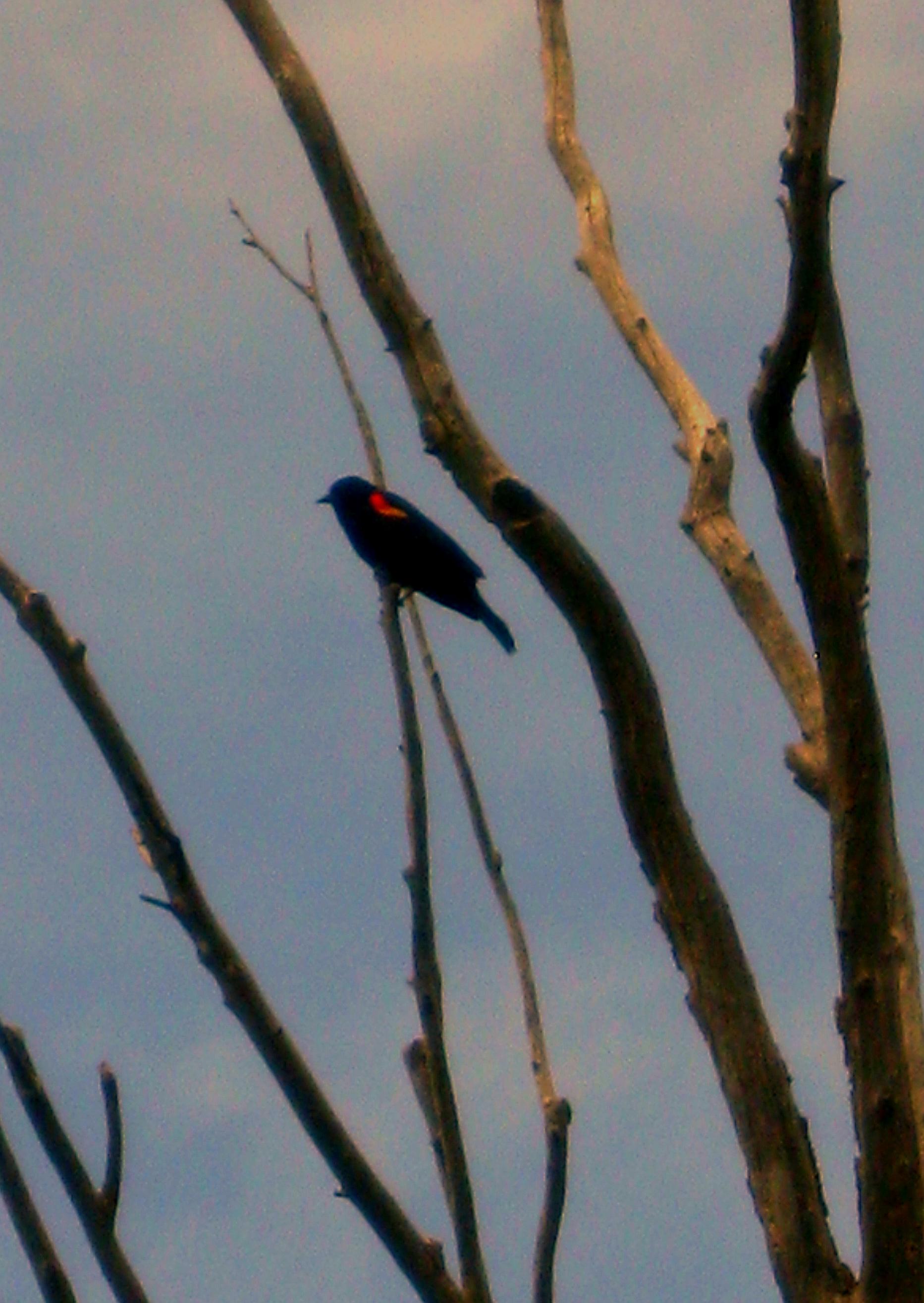
Red-winged blackbirds build their nest in foilage growing in the shallow waters along Lake Walcott's shoreline. -- Photo by Pat Bean

The Minidoka Dam here that created Lake Walcott has been around since 1906, and a power generating plant added soon after, giving local farmers both water and electricity. Teddy Roosevelt, in 1909, created the 25,000-acre Minidoka National Wildlife Refuge around the lake, and the state park, which came much later and which is full of families, fishermen, RV-ers, tenters and boaters for the memorial weekend,, is within the refuge boundaries.

While too often someone suffers when man interferes with Mother Nature, this time it seems like it’s mostly been a win-win situation for human and wildlife species alike.

This is  all too rare these days.

Read Full Post »

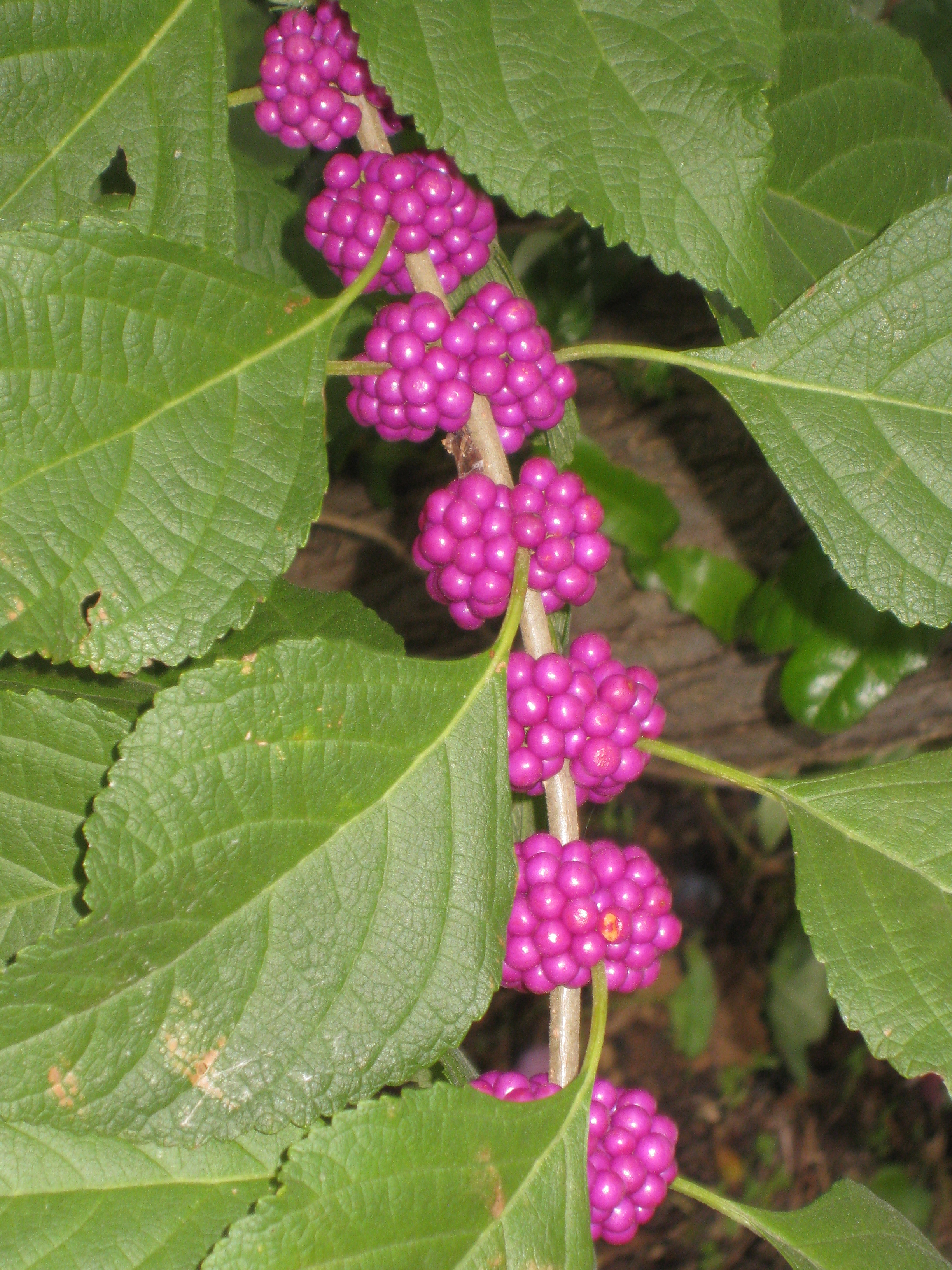
Worthy of a Georgia O'Keeffe painting. -- Photo by Pat Bean

“When you take a flower in your hand and really look at it, it’s your world for the moment. I want to give that world to someone else. Most people in the city rush around so, they have no time to look at a flower. I want them to see it whether want to or not.” Georgia O’Keeffe

Just for Today

Mother Nature has her secret treasures, even in big cities.

For example, I spent five years looking in prime birding habitat for a brown creeper, which although illusive isn’t rare. I finally found it just three blocks away from my oldest daughter’s Dallas suburb home.

The Dallas Metroplex is also full of small parks, like the one just off Miller Road in Rowlett, where there’s a small pond, and where I got my grandson, David, first interested in birding. As we started off on a trail that would lead us behind backyards to the edge of Lake Ray Hubbard, we came upon a red-shouldered hawk just as it caught a mouse.

Orange is such a cheerful color. Don't you agree? -- Photo by Pat Bean

Boys being boys, he found that quite exciting – actually so did I.

But purple makes the heart sing.

For a bit more of Mother Nature when I’m in the Dallas area, I escape to nearby Cedar Hill State Park, where I volunteered for a few months as campground host a couple of years back.

 It was here that I saw my first painted bunting and my first yellow-billed cuckoo – and watched as a rainy winter gave way to a colorful spring.

I thought this morning, which is going to turn into a busy day, might be the perfect opportunity to share a bit of the park’s color with you. Then I can go exploring with my daughter, Deborah, in search of more big city sights.

We’re celebrating her birthday a couple of days late by going out on the town. I’ll probably tell you all about it soon.

Read Full Post »


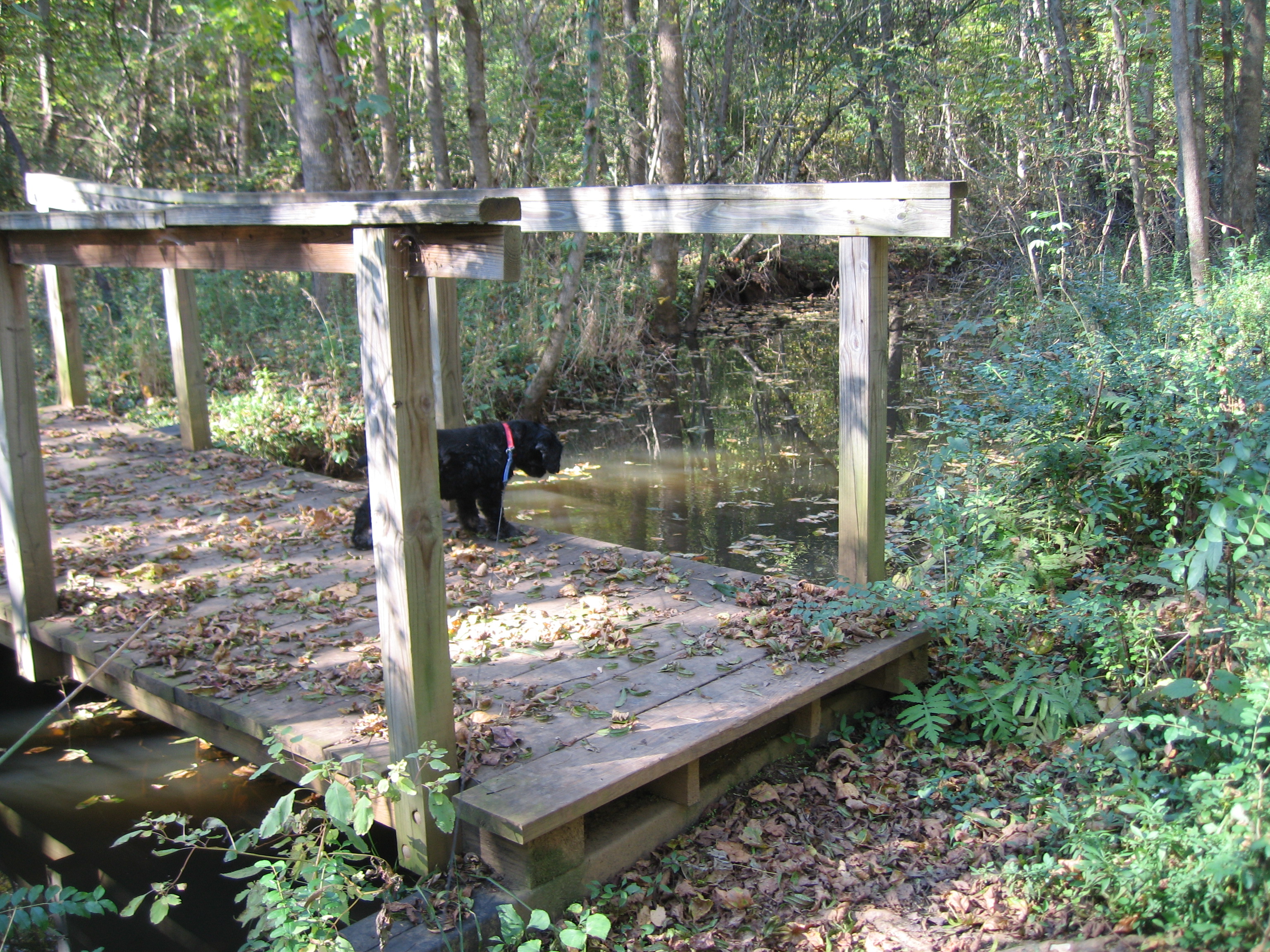
The daily walks Maggie and I take together help us get close to the landscape. Here, Maggie's crossing a bridge over a small stream at Andrew Jackson State Park in South Carolina. -- Photo by Pat Bean


“Nothing is so awesomely unfamiliar as the familiar that discloses itself at the end of a journey.” Cynthia Ozick

Travels With Maggie

 Since taking up the challenge to blog daily, I’ve slowly worked my way up to getting about 100 hits a day, with perhaps half a dozen comments. So when I checked my dashboard this past Tuesday, and noted I had over 500 hits in a very short period of time, I knew something was up. But what?

On checking it out, I discovered my March 1 post on Waterfalls had made WordPress’ daily FreshlyPressed list of blogs readers might want to check out. The honor – Thank you WordPress – resulted in nearly 5,000 hits on Pat Bean’s Blog in a three-day period, quite a few new subscribers and over 100 comments and “like” hits.

I was overwhelmed. I found I couldn’t personally answer every single comment, which has been my habit, and get any writing done. Besides this blog, I’m writing a travel book about traveling across the country with my dog, Maggie. The two of us have been living and traveling down the road in a small RV now for seven years.

So this morning I’m using my blog as a way to thank all the readers out there who waved as my blog passed their way. I

Smelling the flowers and watching the butterflies, like this cloud sulphur photographed at my youngest daughter's home in Camden, Arkansas, are part of the journey. -- Photo by Pat Bean

feel the weight of your support and hope those of you who continue with me will not be disappointed.

My blog is primarily one about travel, with a big emphasis on Mother Nature’s awesome landscape.

But it’s also a blog about celebrating life, of discovering joy in little things and in seeing the world through new eyes; it’s about finding my writer’s voice; of finding ways to relate to my large family of children, grandchildren and great-grandchildren; and it’s about the special relationship I have with a spoiled black cocker spaniel that I rescued 12 years ago. .

It’s my journey, but I welcome all of you along for the ride.

Read Full Post »

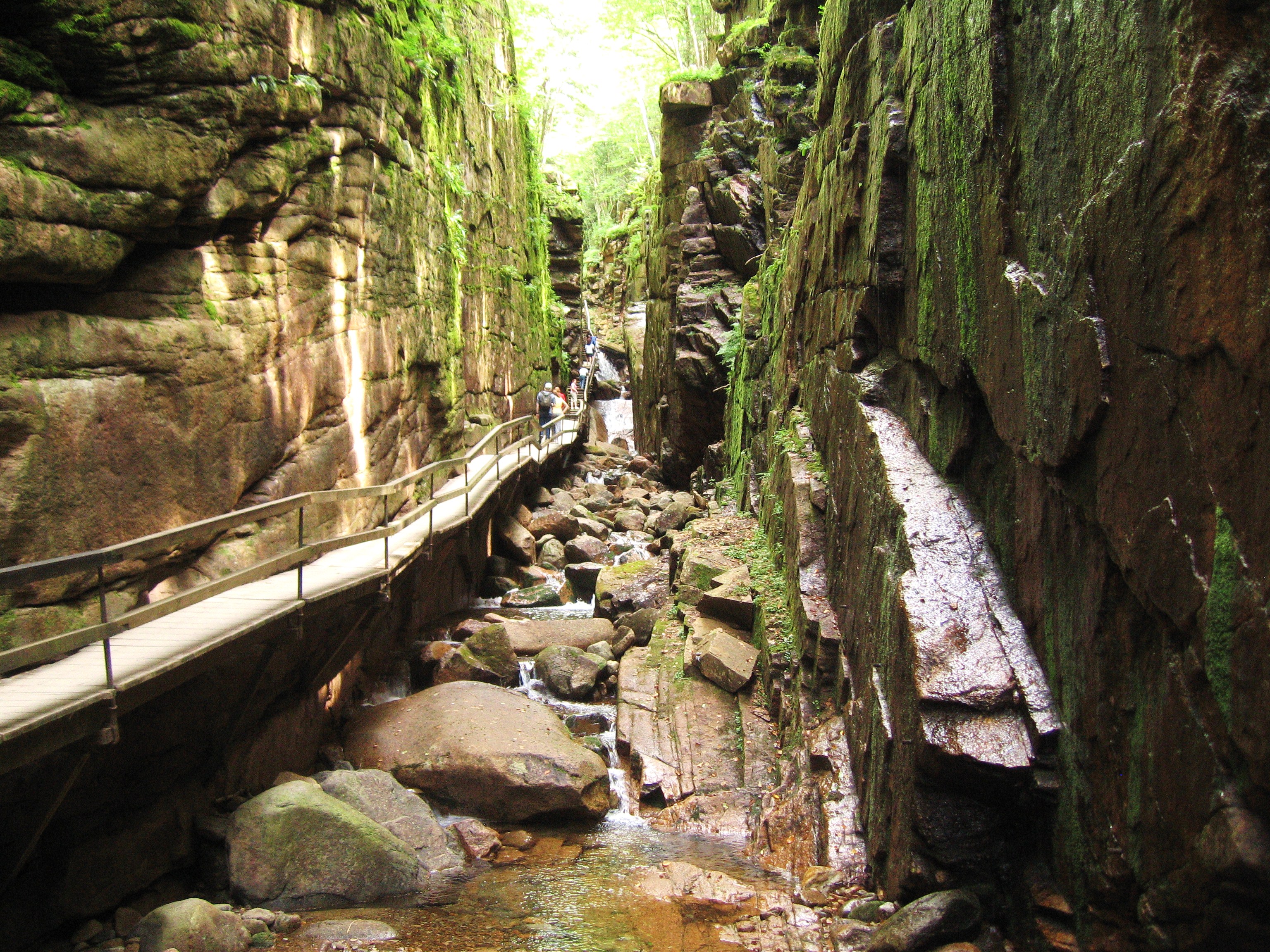
A wooden walkway anchored to moss covered rock walls keep your feet dry on the Franconia Notch Flume Gorge Trail. -- Photo by Pat Bean

“It is only when we silence the blaring sounds of our daily existence that we can finally hear the whispers of truth that life reveals to us, as it stands knocking on the doorsteps of our hearts.” — K.T. Jong.

Travels With Maggie

 Yesterday I took you on a summer day hike in the shadow of Wyoming’s Grand Tetons. Today I’ve decided we should take a fall walk up Flume Gorge in New Hampshire’s White Mountains.

The trail begins in Franconia Notch State Park. You have to pay $12 to access it, but I doubt you’ll regret the expense.

After crossing over the the Pemigewasset River, the path begins its ascent up the flume, a geologic wonder created from molten rock deep below the surface millions of years ago. The rock cooled, fractured and was eventually exposed by the forces of erosion.

The narrow gorge section of the trail consists of a series of bridges and steps anchored to steep moss-covered walls below which flows a rippling stream. The final section of the trail requires squeezing past a torrent of plunging water known as Avalanche Falls, an appropriate name because the falls was created in 1883 after a storm washed away a huge overhanging boulder.

The water level in the stream bed below the trail was low the fall day I hiked this scenicl trail. -- Photo by Pat Bean At the top, hikers can either take a shortcut back to the visitor center or continue on to Liberty Gorge, where another cascading stream makes its way down to the Pemigewasset River.

I continued onward, along with about half of the dozen or so hikers who had made it to the top the same time as me. While they set a fast pace on the trail, I dawdled, taking time to identify the birds and flowers and to photograph the beauty around me.

The result was that I soon had the path to myself. Miraculously it continued that way. I slowed my pace even more, drinking in the tranquility of nature’s whimsies right down to my little toes. Hug-able trees, fragrant flowers, a mysterious dark pool, water singing as it splashed playfully about, and scattered glacial rocks, one as large as a cabin with an interpretive sign to denote its importance.

“Life is good,” I told Maggie when I finally returned to my RV. Dogs weren’t allowed on the trail.

She wagged her tail and asked: So where’s my treat?

I gave her two

Read Full Post »

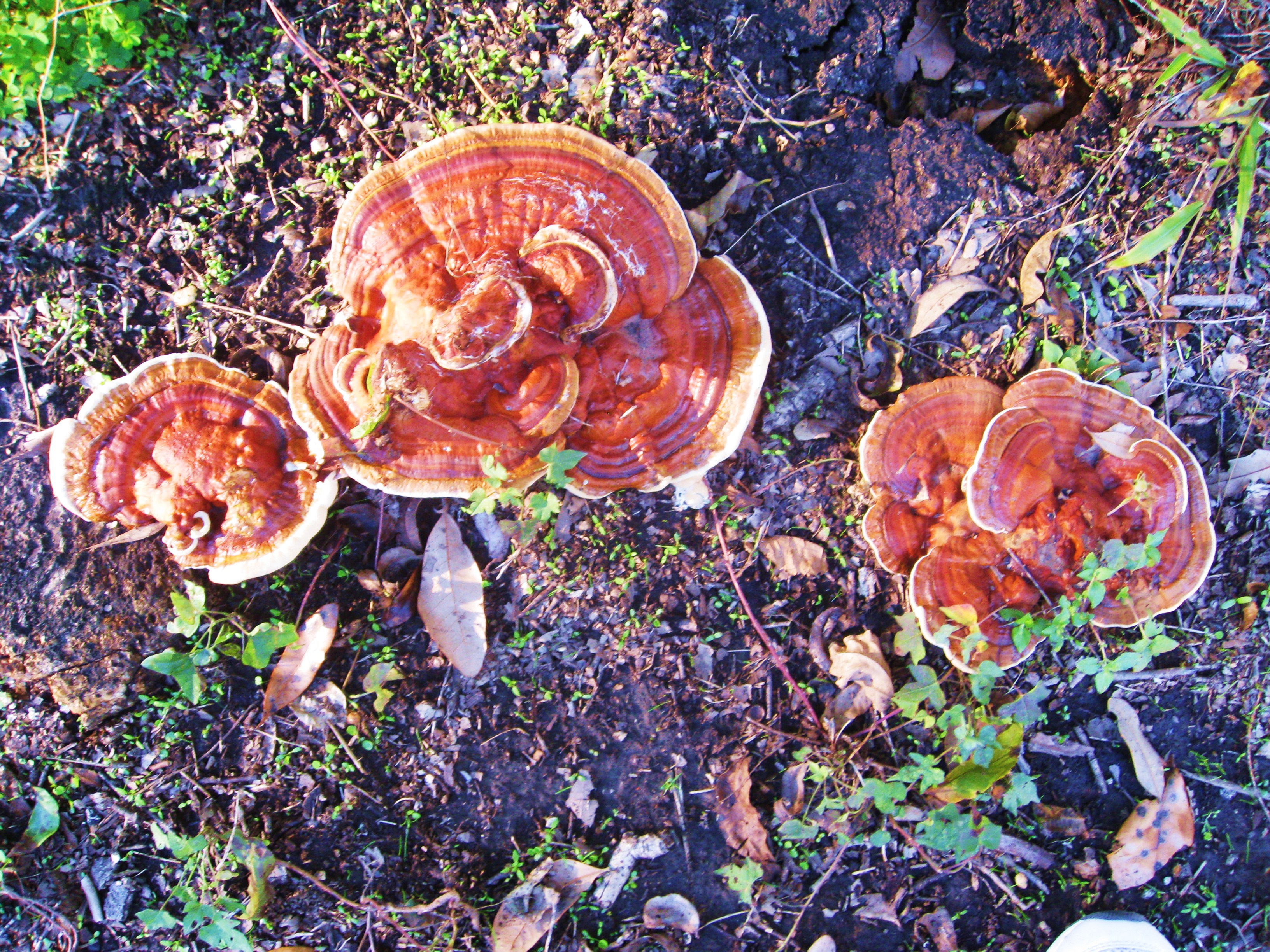
Photo by Pat Bean


Whose to say these mushrooms, which appeared to have sprung up almost overnight after a rainstorm aren’t as spectacular on a small scale as the Grand Canyon is on a large scale?

What small creation of Mother Nature do you find magical?

                   _________________________________

  “Enjoy the little things, for one day you may look back and realize they were the big things.” — Robert Brault

 Travels With Maggie

 My first look, many years ago, out over the sprawling grandeur of the Grand Canyon dazzled my soul. More recently, my bow-front ride on the Maid of Mist into the mighty spray of Niagara Falls’ filled me with exhilaration. It is, I’m sure, the same reactions the majority of tourists have to these two wonders of Mother Nature.

The last three leaves on a winter tree suprised and amazed me. -- Photo by Pat Bean

 I’ve learned, however, that I can be just as dazzled and exhilarated by less grand things, for example three magical leaves. I use the word magical because against all odds they were the only leaves left on a tree that Maggie and I passed on one of our recent winter morning walks.

They reminded me of an O’Henry’s story, “The Last Leaf.” The tale is about a little girl with pneumonia who was determined to live until the last leaf fell from a tree outside her window. It never did – because it was painted on the brick wall behind the tree – and the girl never died.

 But my three leaves were not painted. They were as green as new grass on a spring day. And they amazed me. As did the colorful mushrooms that appeared in a city park overnight after a rain storm. And the one yellow cactus blossom on a plant with dozens of magenta colored blooms at Pancho Villa State Park in New Mexico. Or the Gambel’s quail that I almost missed because it blended in so well with its surroundings.

 Mother Nature’s canvases are both huge and tiny. While everyone may not be able to visit the ones we humans have identified as spectacular, everyone can see Mother Nature at work in the small things. You simply have to walk out your front or back door with your eyes wide open.

Read Full Post »


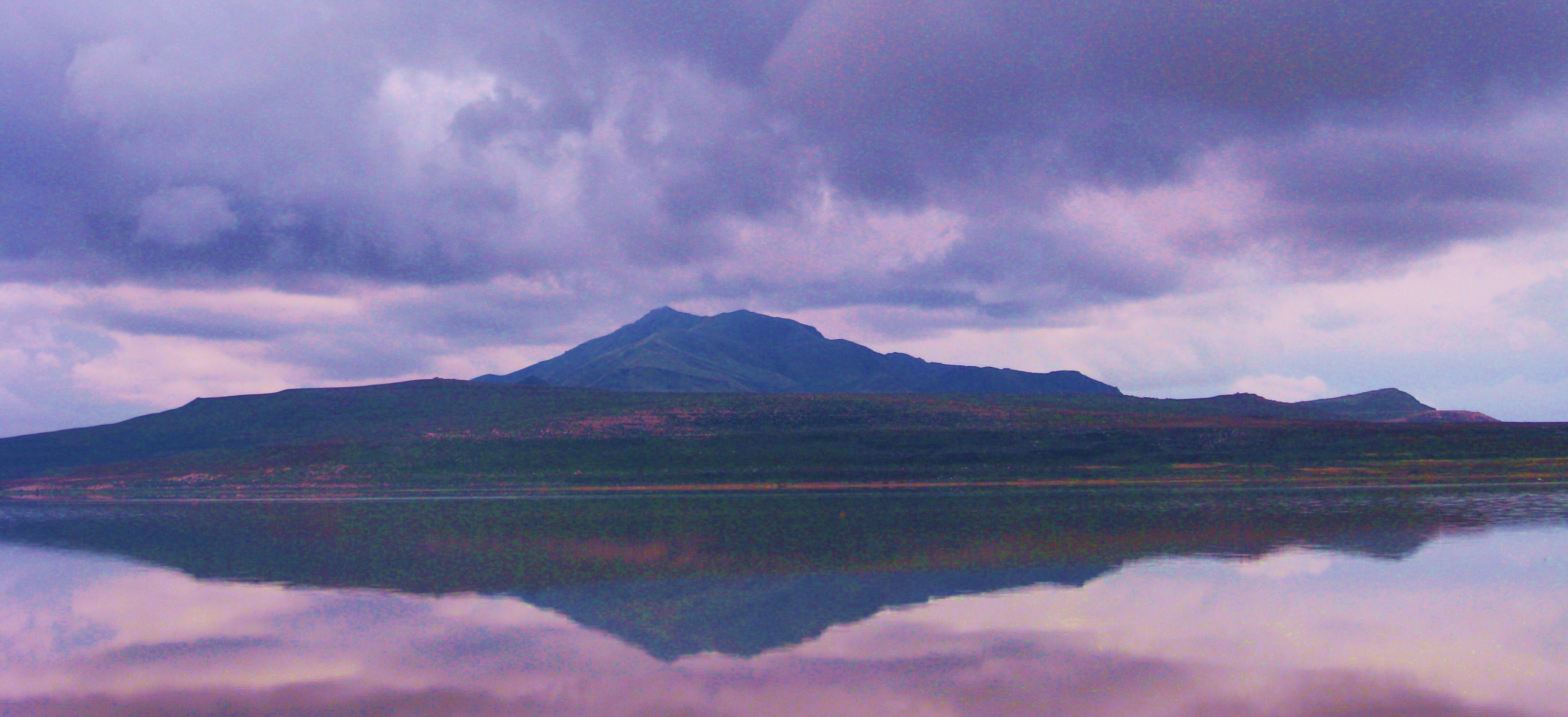
A view of Antelope Island, which appears moody this day. -- Photo by Pat Bean

Travels With Maggie

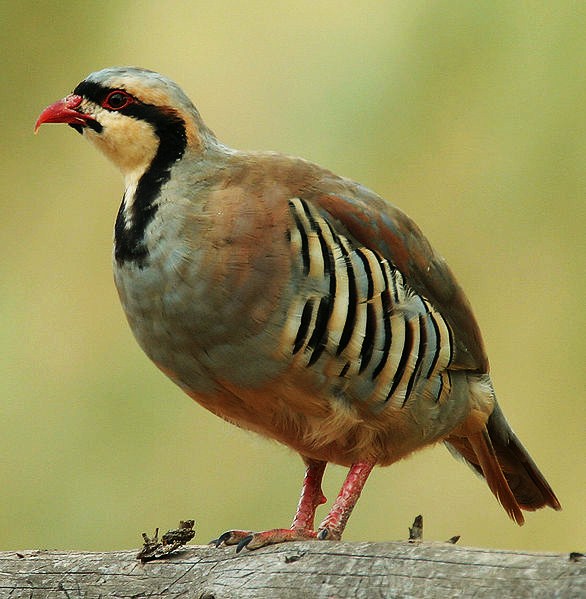
Antelope Island is a favorite place of birders wanting to add a chukar to their life list.

 Antelope Island is a 28,000-acre bird haven in Utah’s Great Salt Lake accessed by a seven-mile toll causeway. It is home to a thriving herd of bison, playful antelope, sly coyotes and prickly porcupines.

 Migrating warblers visit, as do shorebirds and ducks that feed on the surrounding lake’s tiny brine shrimp and brine flies. California gulls nest each year on the rocky outcrops along the shoreline, bald eagles drop by in winter, and every spring hundreds of western meadowlarks, with their brilliant golden throats and song, nest on the island. The males sit on a high perch to melodiously proclaim their brooding territory while the females sit on nests hidden so well in the grasses below that you can walk within inches of them and not know they are there.

I visited this island almost every single week for two years after I caught bird-watching fever in 1999. It was my birding 101 lab. And every time I go back home to Ogden these days, I make time to once again visit this protected — the entire island is a Utah state park — wonderland.

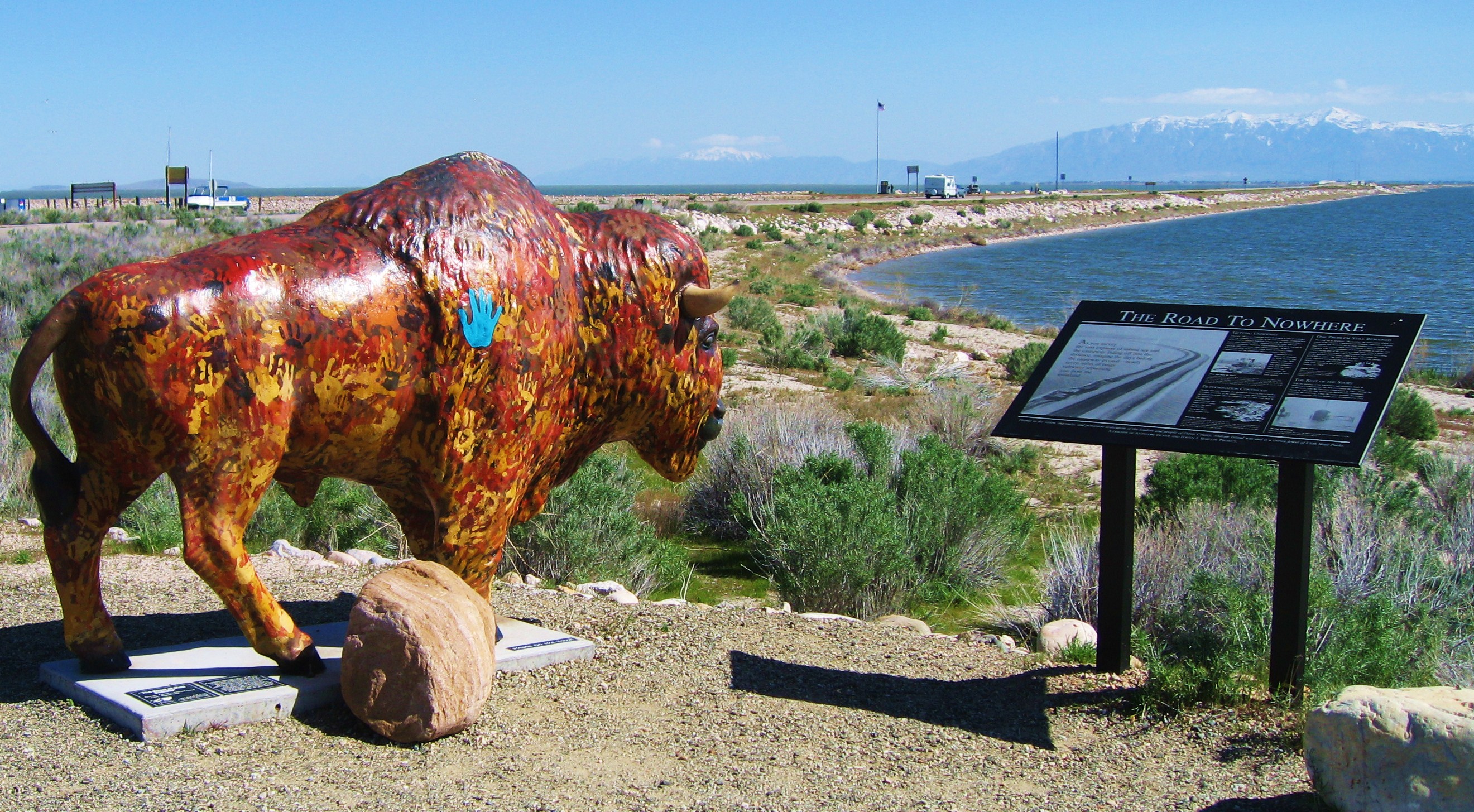
A buffalo sculture looks out over the lake. Photo by Pat Bean


While a live version takes a sandy bath. Photo by Pat Bean

This trip, the drive across the causeway was made with more land than water to the sides of me. Once again, Great Salt Lake is nearing the 1960s record low of 4,191 feet above sea level. In the mid-80s, it was at a record high of 4,212 feet. I was present during this latter period when its high levels and wind-pushed waves tore out the causeway to the island as well as chunks of Highway 80 that stretches across Utah’s Bonneville Salt Flats to Wendover, Nevada.

Now, 25 years later, I was getting to see it at its lowest. Was it Mother Nature’s drought and warm weather affecting the level, or was it the human diversion of water before it reached the lake driving the lake’s current low level? The question taunted the edges of my brain as I watched a pair of ravens circle overhead where the causeway curved. I wondered if these were the same ravens I had watched raise chicks in a huge nest several years earlier.

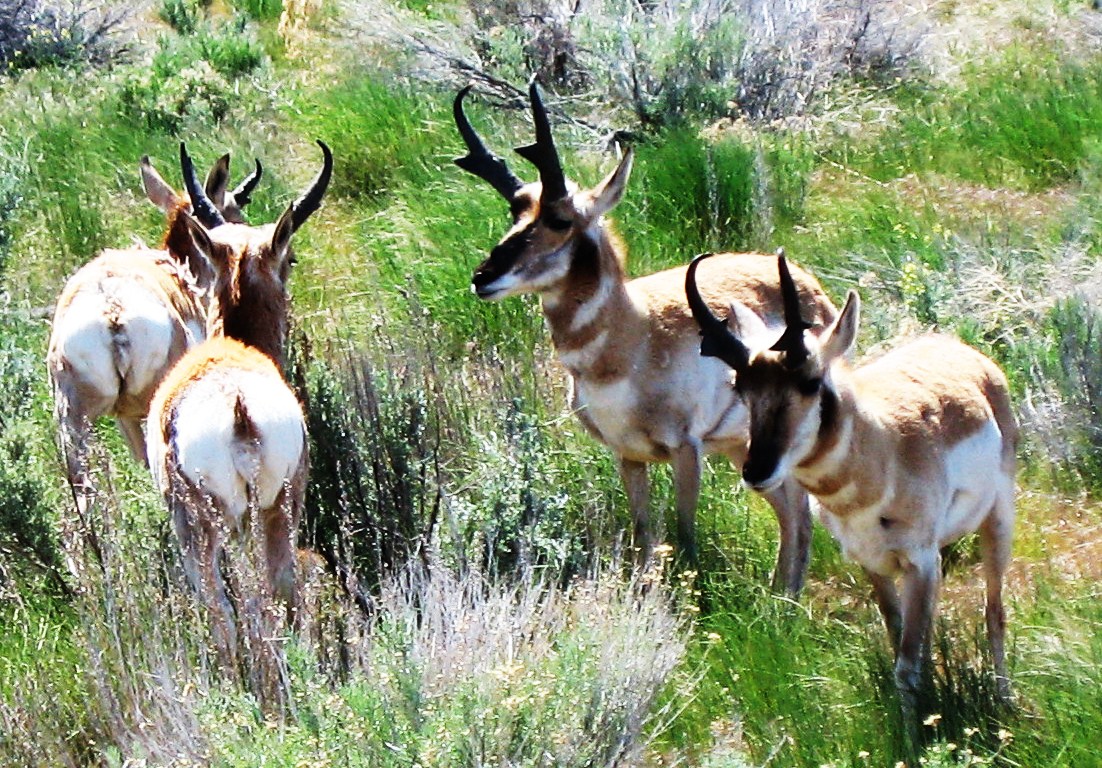
Antelope seen on the way to the island's historic Garr Ranch. Photo by Pat Bean

I spent four hours on the island this day. I watched with camera in hand as a buffalo took a sandy bath and kept my eyes glued to rocks for the sight of chukars surveying the landscape. Maggie and I took a hike around the point from the Bridger Bay Campground. Meadowlarks and red-winged blackbirds joined their voices to the drum beat of the lakes’s waves against the shoreline. I found the tune calming and marveled at the purepeacefulness of the day.

  While I still had questions and concerns about the lake and the island’s ever-changing future, Mother Nature’s magic was still all around me. I look forward to my next visit, and hope she can still be found.

Read Full Post »


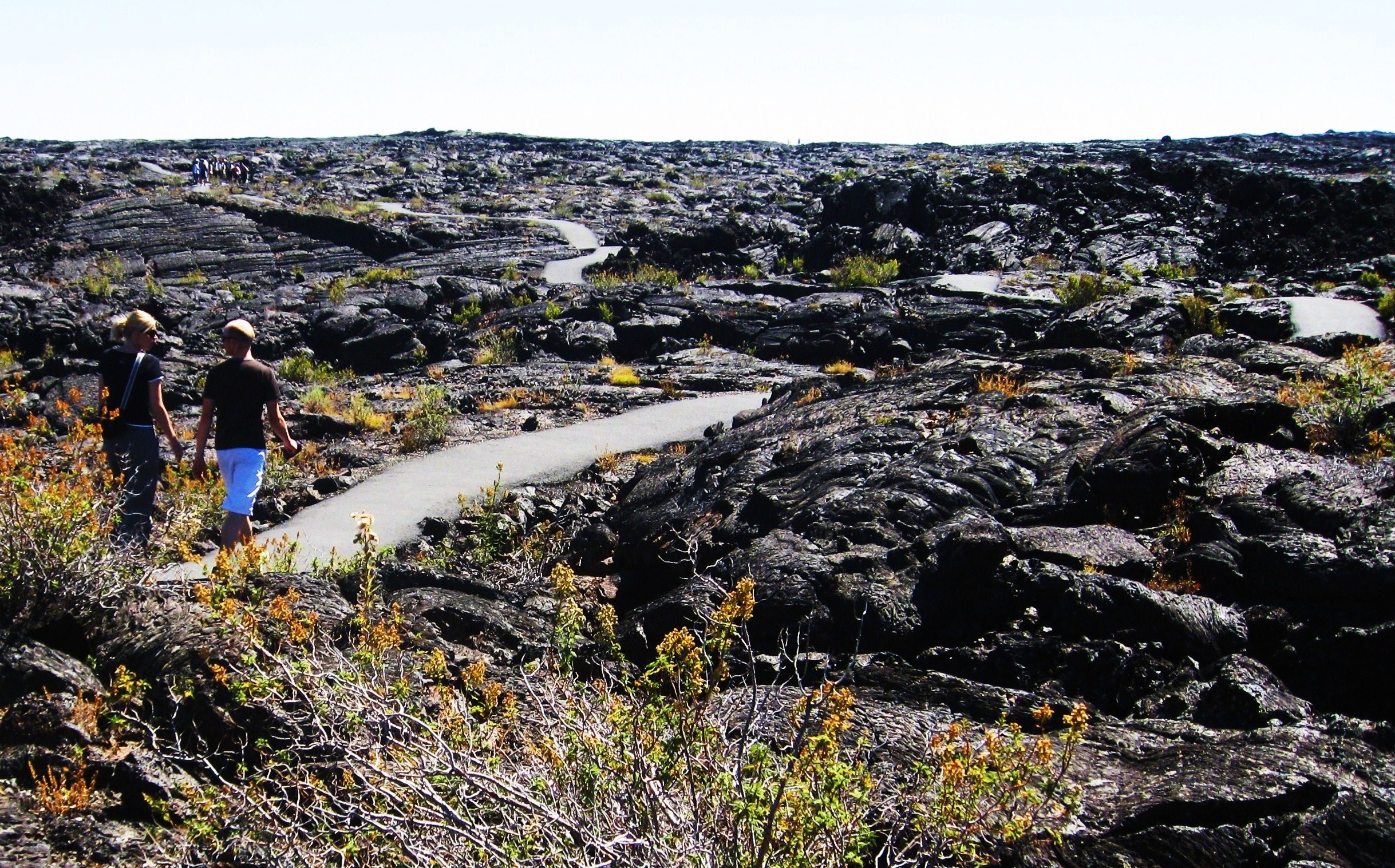
Trails through Craters of the Moon National Monument take one through a dark, angry landscape. Photo by Pat Bean


Volcanoes are one way the earth gives birth to itself.” — Robert Gros


The huge lava field that spreads out across Southern Idaho’s Snake River Plain was thought to resemble the moon’s surface, hence when the area was designated a national monument in 1924 it was called Craters of the Moon.

While the name remains today, Neil Armstrong and Buzz Aldrin’s two-hour walk on the moon’s surface 45 years later showed it was nothing like the moon’s surface. The name stuck, however, just as Junior remains Junior to his parents even when he’s 65 years old.

As I walked across the rugged blue-black lava flow on trails that took me into a world far removed from my daily existence, I couldn’t help but compare this adventure with my recent visit to Mount St. Helens.

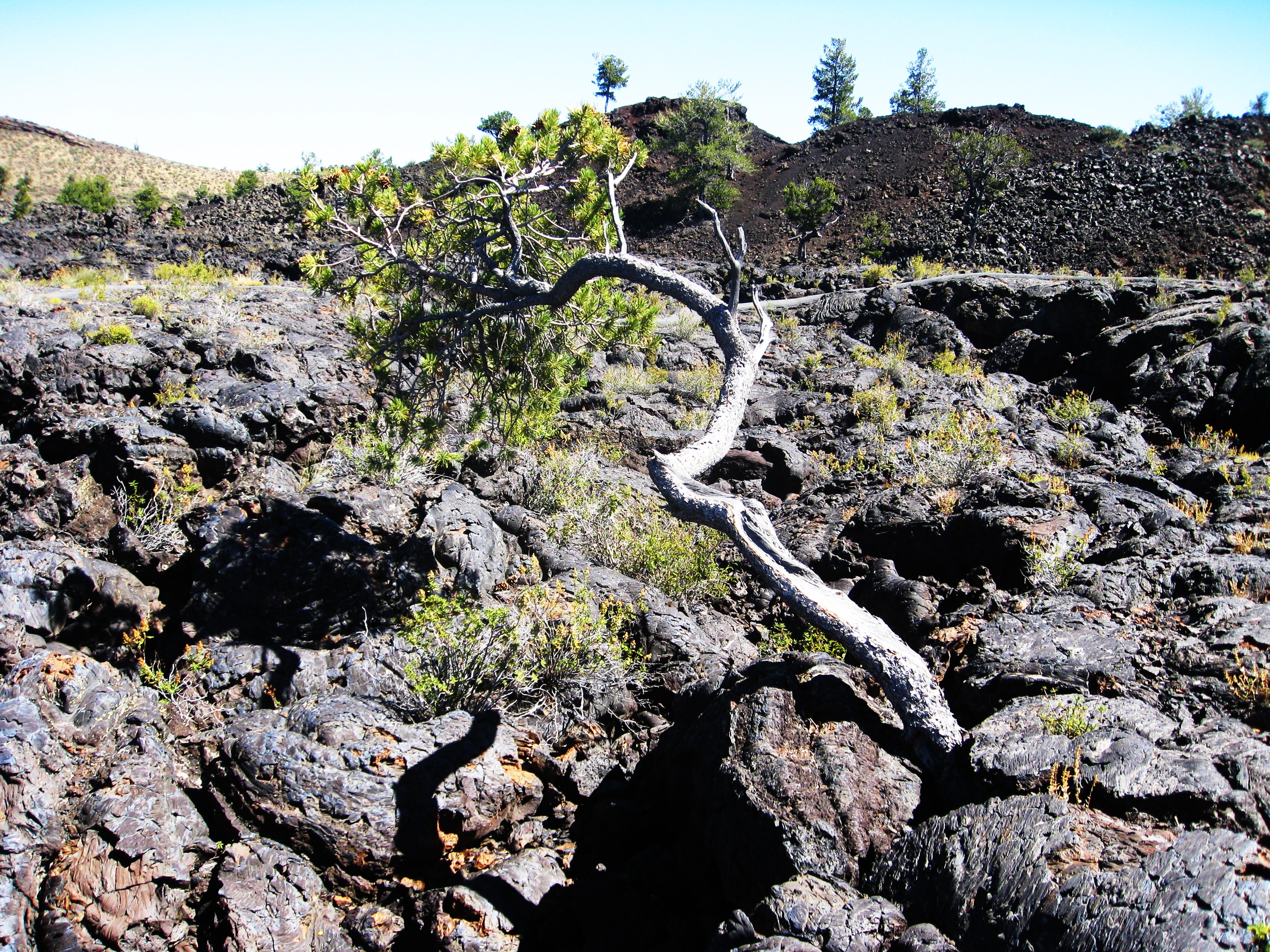
Yet even in this harsh landscape, life manages to exist. -- Photo by Pat Bean

The lava that covers the landscape for miles at Craters of the Moon is between 2,000 and 15,000 years old. Yet the scars it has left on the land looked younger than those caused only 30 years ago when Mount St. Helens erupted. Mother Nature has gentled the scars created by the Washington volcano with new grass, wildflowers and trees. While life certainly exists at Craters, it’s a place where the land shouts of volcanic action.


Less than two hours away from Lake Walcott State Park, where I was a volunteer campground host, the monument’s strange landscape had called out to me to visit. I answered but found that the dark rugged landscape agitated me. Where viewing St. Helens had been a calming experience, Craters of the Moon, with its twisting, roiling turmoil of anger still visible, reminded me too much of the world we live in today.

A sobering thought pushed itself to the forefront of my brain, telling me that both these dormant volcanoes will probably flow and blow again. As beautiful and as calming as Mother Nature can be to me, I was forced to admit she does have her destructive moods. Sadly, so do we humans.

Read Full Post »

Bordellos, Wagon Ruts and the Cost of Ease

this day got an early start; in a few miles we came through the thick timber and came to large pines. the road smoother and not so hilly directly we came out of the pines and went down a long hill into the Umatilla Valley; the bottom and bluffs covered with Indian ponies and horses, too. came to the Umatilla river and camped.” Loren B. Hastings; October 8, 1847 

Travels With Maggie

Once across the Columbia River, I followed Highway 84 through Pendleton, Oregon, a town with an untamed past. It was once home to numerous bordellos and saloons, most of them below ground in underground tunnels dug by the Chinese beginning around 1870. The brothel trade stuck around until the late 1940s, when a Presbyterian minister finally put a damper on the business by announcing he was going to read the names of those patronizing the businesses in church. Today, the city is best known for its woolen mills and its annual rodeo, the Pendleton Round-Up.

South of Pendleton, Highway 84 follows the path of the Oregon Trail as it climbs through the Utmatilla Indian

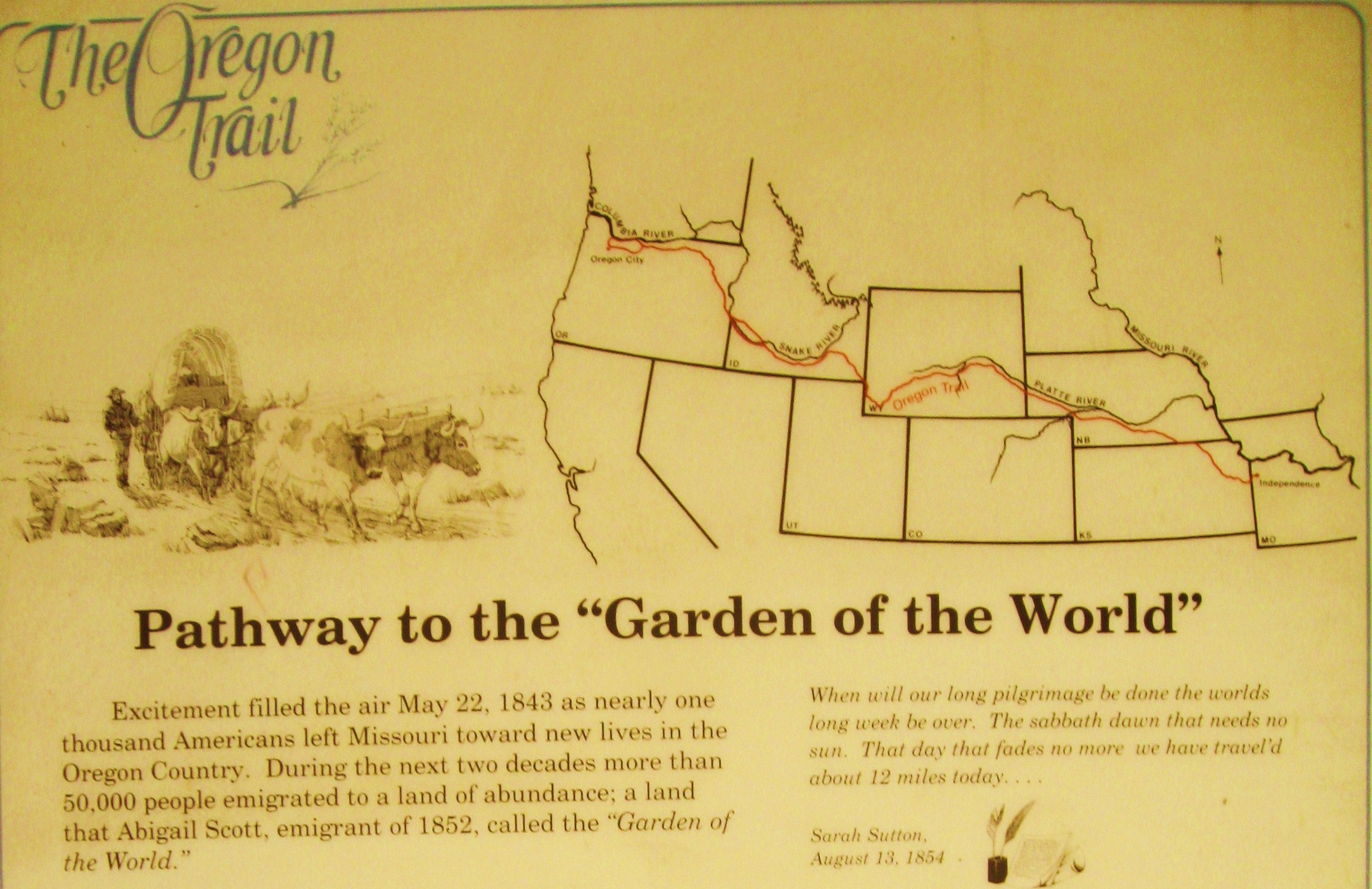
Information on a historical kiosk along Highway 84 in Oregon -- Photo by Pat Bean

 Reservation and across the Blue Mountains. A kiosk at the top of Emigration Hill at a place known as Deadman’s Pass – it’s not hard to guess why it is so named — informed me that more than 50,000 emigrants headed West passed this way between 1840 and 1850. Their road, unlike mine, had not been paved. And instead of travel time easily measured in minutes, they spent days conquering the route’s rough and stony hills. Their wagon ruts, still visible today, are a testament to the heart and soul of people hoping for a better life.

I stopped for the night at Emigration Springs State Park, where my neighbors were a couple of grandparents introducing a young grandson to the joy of the outdoors. Maggie fascinated the youngster, and she obligingly let him pet her for a couple of minutes. While she’s always gentle with small children, she prefers her strokes to come from adults. After she gave me a painful look, I rescued her by continuing on our walk through the park.

Fireweed: So named because it is one of the first plants to bloom after an area has been destroyed by fire. The flower speaks to me of hope for the future and Mother Nature's survival from man's impacts. -- Photo by Pat Bean

Knowing that my footsteps were walking on top of those of the hardy pioneer souls who had spent the night here over 150 years ago heightened my enjoyment of the landscape around me. My night, however, was interrupted too much by the whoosh of passing vehicles on Highway 84 to let me linger in the past. And awakening in the morning to read about oil rigs using the Gulf of Mexico as a dumping ground so as to power those vehicles definitely brought me back into the present.


I’m thankful to have been born in this day and age, and to have conquered the Blue Mountains so easily in my small RV. But sometimes I ask myself what is the cost I’m paying for such an easy life. Hopefully it’s not one that’s going to deprive my future great-grandchildren of Mother Nature’s company.

Read Full Post »

« Newer Posts