“Daylight follows a dark night.” – Maasai proverb
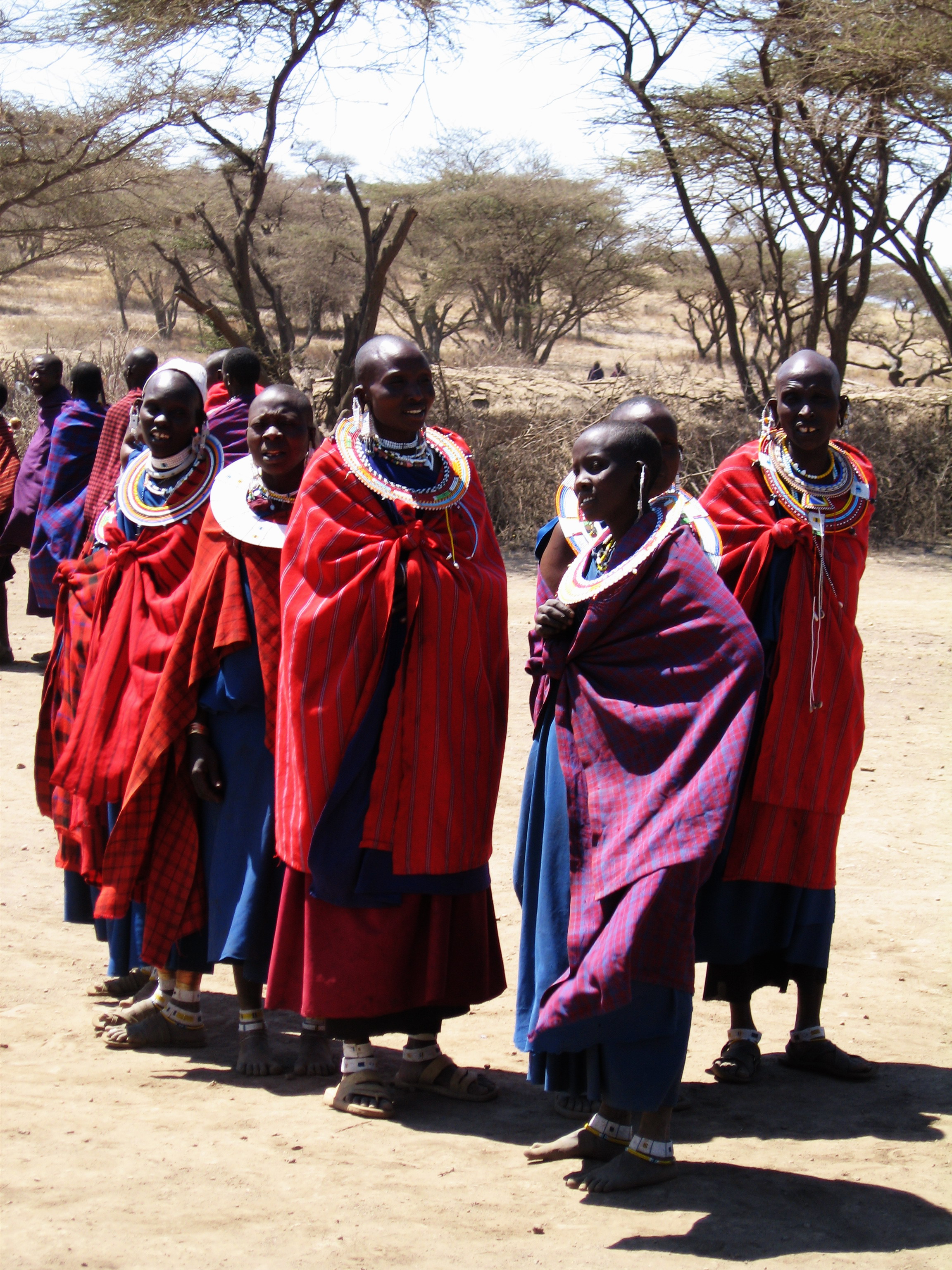
A group of Maasai women getting ready to dance for us. They live in a model Maasai community set up for tourist visits. -- Photo by Pat Bean
African Safari: A Hard Life for Women
It was the opportunity to see African wildlife, lions, leopards, elephants, giraffes and all the rest, that brought me to Africa. Kim and I came, or so we have been told, just in time to get at least a tiny glimpse of the continent as it once was.
The poachers, the developers, the fur trade, the masses of humankind are fast changing Africa, with many animals pushed to the brink of extinction – just as the buffalo, wolf and other wildlife numbers came near extinction as settlers moved west across America.
And just as our country finally and wisely set aside land to protect American’s spectacular landscapes and wildlife, Tanzania and Kenya have created national parks to do the same. But the conservation efforts have had a devastating effect on the Maasai, a nomadic tribe that formerly lived and grazed their cattle on what is now protected lands.
The Maasai were once famed warriors of legend who fought all comers – both to maintain their hold on their lands and to capture more. Their downturn began at the beginning of the 20th century when the British reduced their holdings by 60 percent to make way for their own settlers.
And in the 1940s, most of the Maasai’s remaining fertile cattle-crazing lands were confiscated and set aside as wildlife sanctuaries – conservation efforts I applaud. .
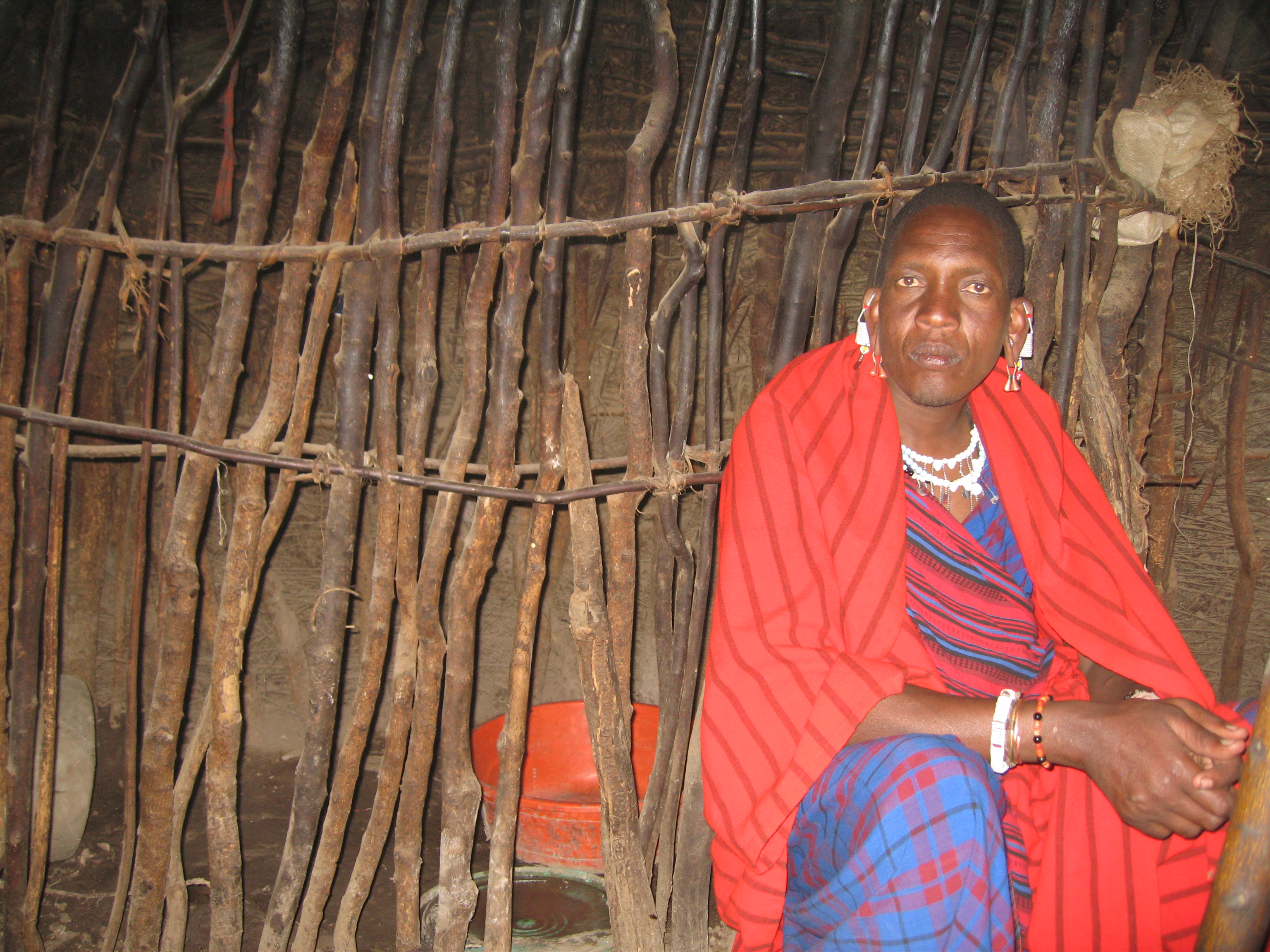
The Maasai leader of the model community sitting in his home of sticks and dung as he explained the Maasai lifestyle to Kim and I. -- Photo by Pat Bean
But I also feel said for the the Maasai fallout, which appears to me very similar to what happened to our own native Americans when white settlers moved in and began to dominate our own landscape.
The solution to the Maasai problem, as proposed by the Kenya and the Tanzania goverments, is for the Maasai to give up their nomadic way of life and assimilate with the rest of the country. While it seems a bit heartless, based on what we saw of the Maasai lifestyle, I agree.
Kim and I often saw many Maasai men wandering aimlessly along the roadsides in the Serengeti, and many very young boys herding a few cattle or goats as we traveled. The women, however, were left to build their stick and dung homes, gather firewood unprotected in lands where lions roam, transport water long distances, and to do everything else necessary to maintain a very meager hold on life.
Not only is the Maasai infant death rate high, many women die in childbirth as well because of the primitive conditions in which they give birth, and because of the lack of medical help. .
Bilal was uncharacteristically outspoken about the “lazy Maasai men,” and frequently expressed concern for the Maasai women. Kim and I certainly felt the same way about them.
I know it’s presumptuous of me, who spent only two weeks in Africa, and most of that wildlife watching in the national parks, to comment on such an emotional ethnic issue. But it was part of the experience. And I feel strongly that it should be shared. .
Recalling those observations, and the emotions that even now they continue to stir, I unashamedly weep for my Maasai sisters.
Next: Bird sightings on the drive from Lake Manyara and the Serengeti


 Pat Bean's blog