Feeds:
Posts
Comments

Posts Tagged ‘flamingos’

 “We all should know that diversity makes for a rich tapestry, and we must understand that all the threads of the tapestry are equal in value ..” – Maya Angelou

One of Lake Manyara National Park's famed tree-climbing lions. -- Wikipedia photo

African Safari:Where the Wild Things Are

At the entrance to Lake Manyara National Park is a sign that reads: “Take nothing from the park but nourishment for the soul, consolation for the heart and inspiration for the mind.”

The next few hours would provide Kim and I with plenty of all three.

As a normal rule, lions don’t climb trees. But if we were lucky, we were told, we would see some tree-climbing lions in Lake Manyara National Park.

Southern ground hornbill.

We were lucky.

And along with lions sprawled out on tree limbs, we saw oxpecker birds gleaning insects from the backs of giraffes, watched the comical antics of baboon families, including one small one that would taunt his bigger cousins then rush back to his big male papa for protection.

We saw a few lingering flamingos of the millions that feed on the lake before migrating elsewhere, and dozens of colorful birds. And we came across zebra and gazelles dining together, with a few keeping watch for lions and cheetahs that wanted them for dinner.
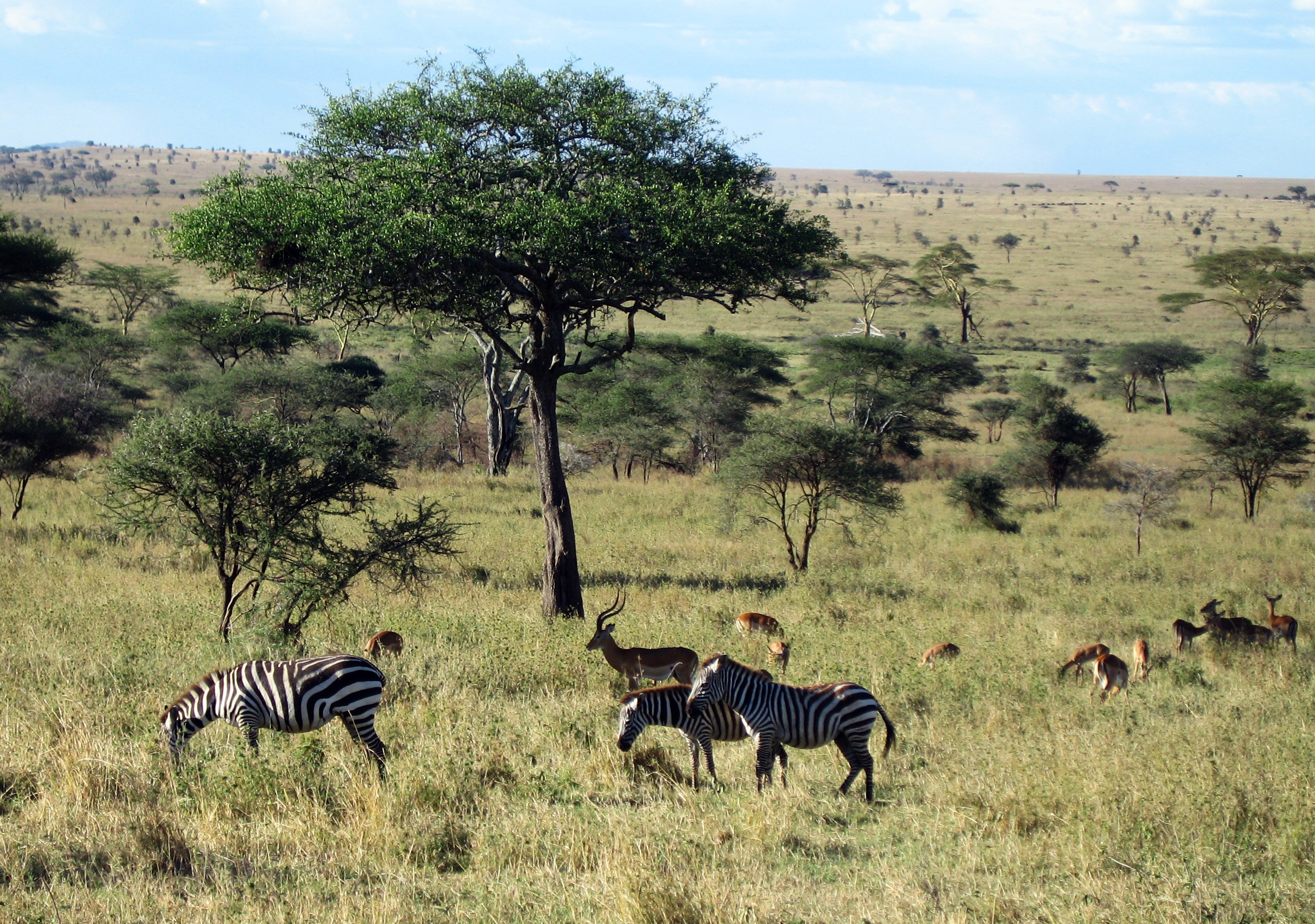
Zebras and gazelles dining together in a grassy plain area of the park. -- Photo by Pat Bean

In fact, I don’t think there was even a single moment during our afternoon game drive when we were out of sight of wildlife going about their business. So accustomed to Land Rovers were they, that we were totally ignored, which would not be the case, Bilal warned us, if we were on foot

Lake Manyara, named after the Masaai word manyara for a plant that is used to grow stockades for livestock., has a quite diverse habitat, which accounts for its broad range of species. The landscapes go from lake to jungle, and includes an acacia woodland forest, open grassland, and a swamp.
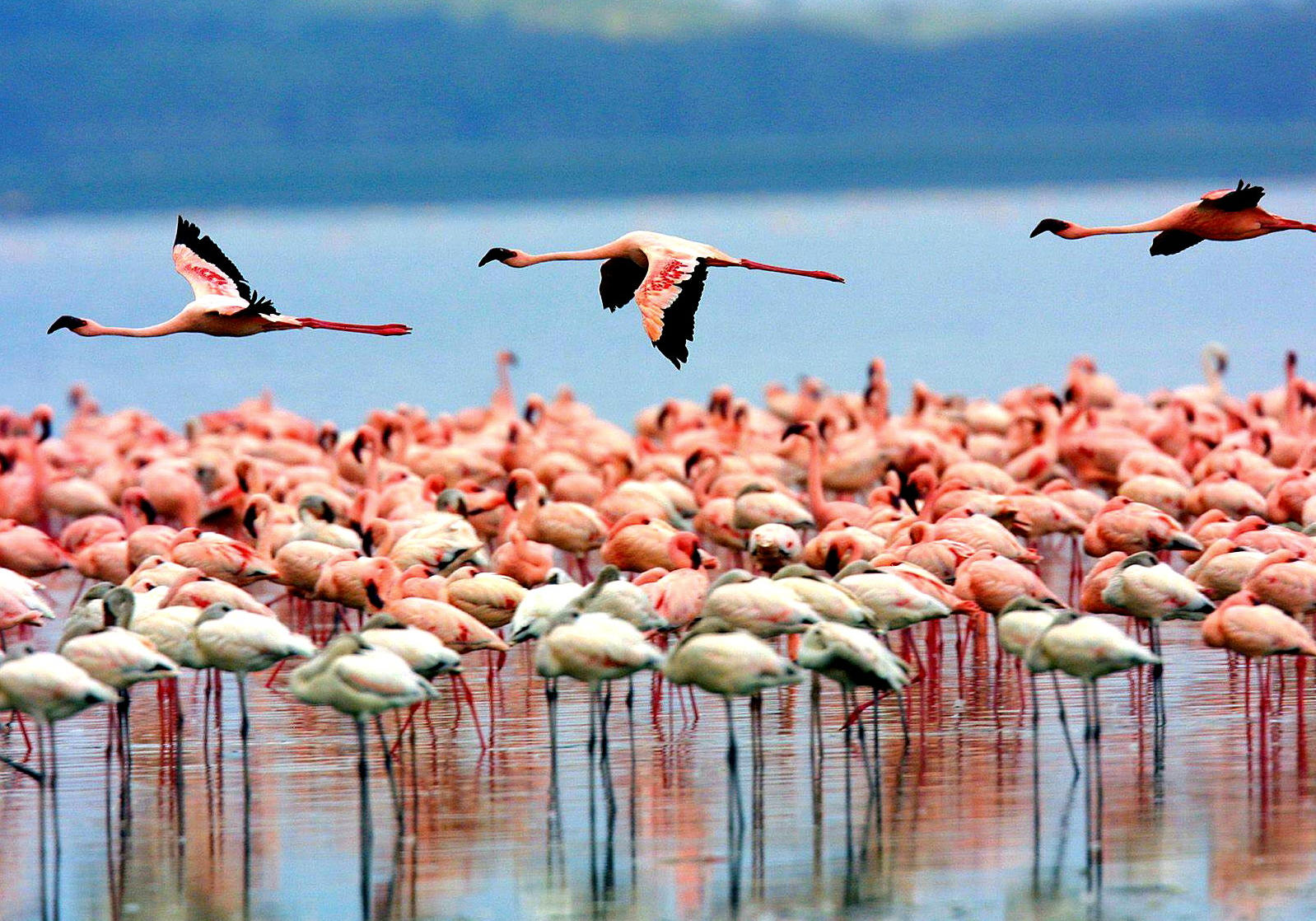
Lesser flamingoes at Lake Manyara -- Kuru Travel photo

At one of our stops, we had southern ground hornbills strutting around on one side of us, giraffes on the other side of us and both elephants and water buffalo nearby.

I didn’t know which way to look, but I think the hornbills got the majority of my attention. These large black and red birds have voices that some say sound human.

And according to a Masaai  folk tale, their conversation is as a man speaking to a woman. He says: I want more cows, and she replies: You’ll die before you get them.

Next: A wild race to the park gate
Read Full Post »

 “I consider myself to have been the bridge between the shotgun and the binoculars in bird watching. Before I came along, the primary way to observe birds was to shoot them and stuff them.” — Roger Tory Peterson

Travels With Maggie

Nothing could be finer than an early morning outing with fellow birders of the Wasatch Chapter of Audubon. Ever since I seriously began birding, which was back in 1999, the chapter has had a Wednesday morning bird walk. When I first hooked up with the group, I had to play hooky from work to join them.

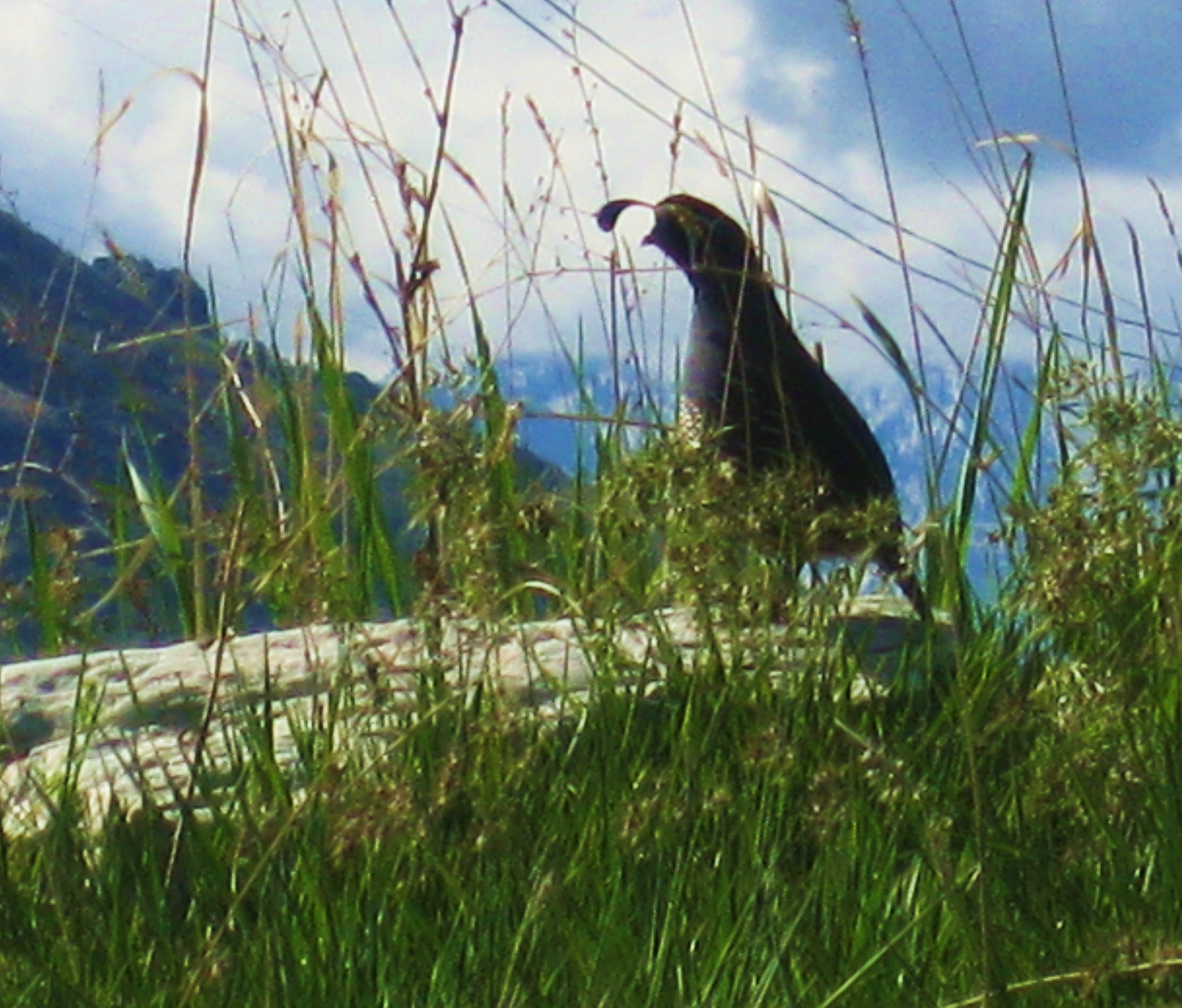
A California quail hides among the weeds. I spotted him on an outing to Willard Bay in Northern Utah while birding this past May with old friends. -- Photo by Pat Bean

 Shortly thereafter I was inspired to write a weekly bird column. So instead of playing hooky while I was roaming all over Utah’s Wasatch Front on these Wednesdays, I could honestly report that I was doing research.

 Since I knew next to nothing about birds, the research included a lot of that, plus the generous help of the chapter’s birding experts, Jack Rensel and Keith Evans. Both these guys had been at this sport since they were young boys – and both had tales to tell of being suspected of unsavory deeds because of wandering around alone with binoculars in hands. They grew up at a time when birding wasn’t a well known hobby, and certainly not one boys took up.

 Thankfully, Roger Tory Peterson, who put together the first field guide that made birding possible for us non-ornithologists, watched birds as a boy even before Jack and Keith’s time.

 My oldest son makes fun of my birdwatching, considering it a little old lady’s sport. Well, it can be that. But it can also involve long hikes in the dark so as to arrive in time to watch male sage grouse play drums with their chest sacs to attract the ladies, or a hike over treacherous lava to watch Flamingos at a small lake in the Galapagos.

 Birding gives my travels that extra bit of oomph. For example, the boat ride to Matagorda Island off the coast of Texas was pleasant enough in itself, but getting to see whooping cranes as well was like the salt around the glass of a good margarita. And the climb up a ridge to see a black-capped vireo at Lost Maples State Park gave me a good dose of needed exercise.

 Looking for birds in the landscape has also enriched my travels in yet other ways. One who is looking for a tiny bird in the bush is not likely to miss the moose in the stream. And when I’m visiting Northern Utah, my passion for birds gives me a legitimate reason to once again hook up with my old Wednesday morning birding buddies.

 And, as I said, nothing could be finer than time spent with them.

Read Full Post »