Bordellos, Wagon Ruts and the Cost of Ease
“this day got an early start; in a few miles we came through the thick timber and came to large pines. the road smoother and not so hilly directly we came out of the pines and went down a long hill into the Umatilla Valley; the bottom and bluffs covered with Indian ponies and horses, too. came to the Umatilla river and camped.” Loren B. Hastings; October 8, 1847
Travels With Maggie
Once across the Columbia River, I followed Highway 84 through Pendleton, Oregon, a town with an untamed past. It was once home to numerous bordellos and saloons, most of them below ground in underground tunnels dug by the Chinese beginning around 1870. The brothel trade stuck around until the late 1940s, when a Presbyterian minister finally put a damper on the business by announcing he was going to read the names of those patronizing the businesses in church. Today, the city is best known for its woolen mills and its annual rodeo, the Pendleton Round-Up.
South of Pendleton, Highway 84 follows the path of the Oregon Trail as it climbs through the Utmatilla Indian
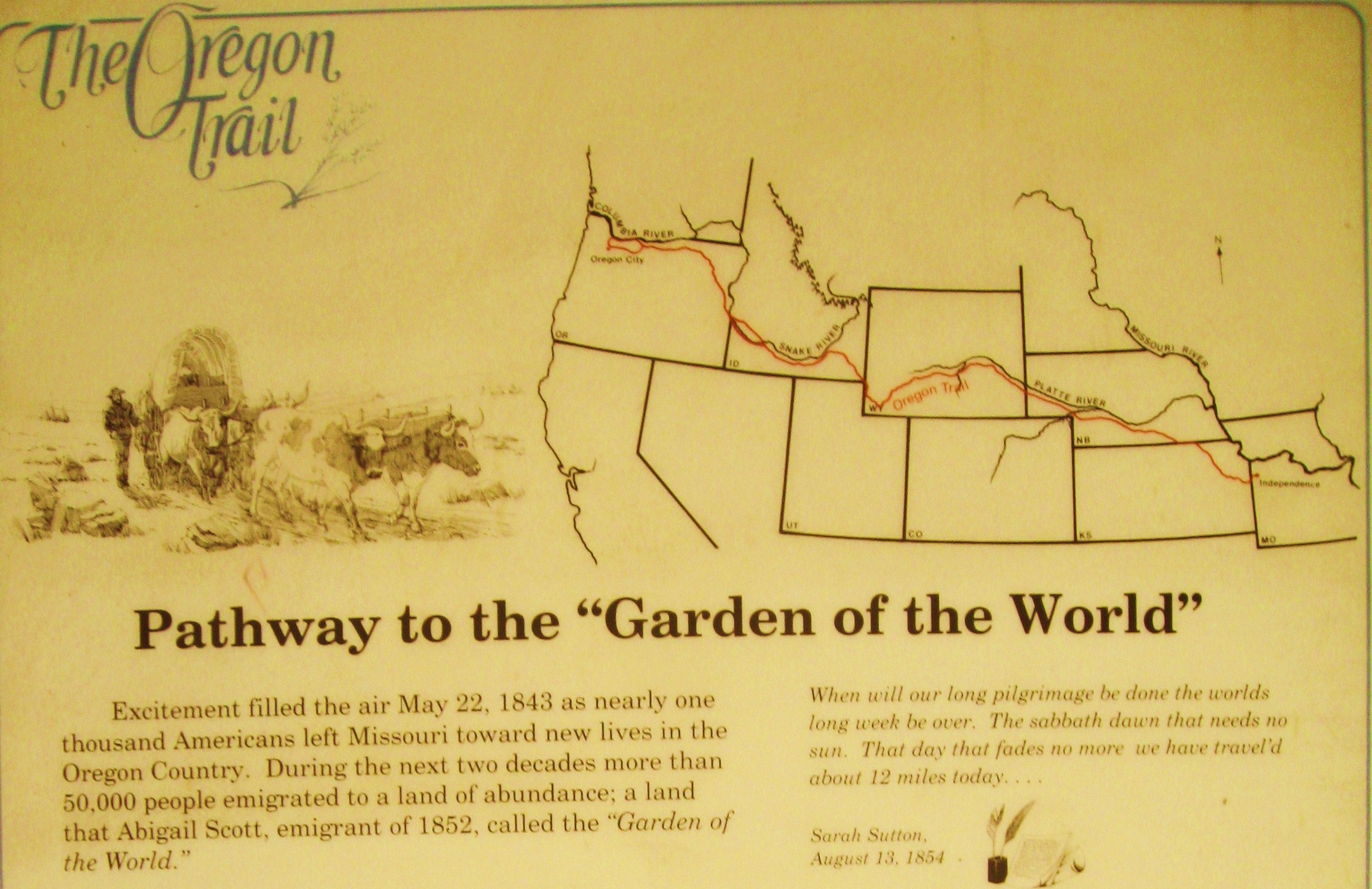
Information on a historical kiosk along Highway 84 in Oregon -- Photo by Pat Bean
Reservation and across the Blue Mountains. A kiosk at the top of Emigration Hill at a place known as Deadman’s Pass – it’s not hard to guess why it is so named — informed me that more than 50,000 emigrants headed West passed this way between 1840 and 1850. Their road, unlike mine, had not been paved. And instead of travel time easily measured in minutes, they spent days conquering the route’s rough and stony hills. Their wagon ruts, still visible today, are a testament to the heart and soul of people hoping for a better life.
I stopped for the night at Emigration Springs State Park, where my neighbors were a couple of grandparents introducing a young grandson to the joy of the outdoors. Maggie fascinated the youngster, and she obligingly let him pet her for a couple of minutes. While she’s always gentle with small children, she prefers her strokes to come from adults. After she gave me a painful look, I rescued her by continuing on our walk through the park.

Fireweed: So named because it is one of the first plants to bloom after an area has been destroyed by fire. The flower speaks to me of hope for the future and Mother Nature's survival from man's impacts. -- Photo by Pat Bean
Knowing that my footsteps were walking on top of those of the hardy pioneer souls who had spent the night here over 150 years ago heightened my enjoyment of the landscape around me. My night, however, was interrupted too much by the whoosh of passing vehicles on Highway 84 to let me linger in the past. And awakening in the morning to read about oil rigs using the Gulf of Mexico as a dumping ground so as to power those vehicles definitely brought me back into the present.
I’m thankful to have been born in this day and age, and to have conquered the Blue Mountains so easily in my small RV. But sometimes I ask myself what is the cost I’m paying for such an easy life. Hopefully it’s not one that’s going to deprive my future great-grandchildren of Mother Nature’s company.


 Pat Bean's blog