Feeds:
Posts
Comments

Posts Tagged ‘Birds’

 “Sometimes it’s important to work for that pot of gold. But other times it’s essential to take time off and to make sure that your most important decision in the day simply consists of choosing which color to slide down on the rainbow.” Douglas Pagels

Travels With Maggie`

A walk around Silverbell Lake helped clear the cobwebs from my crowded brain. -- Photo by Pat Bean

Life caught up with me this past week. Too many miles in not enough days, too many amazing sights and not enough time to linger among them, and only three days to enjoy loved ones before I’m back on the road.

My preferred style of travel – no more than 150 miles a day with a couple of days sitting in between – has been blown to hell in a hand basket, the same one my grandmother said would take me there if I didn’t shape up.

Something had to give. And it did. I stayed off my computer and missed two days of daily blogging.

Instead, I lazed around my youngest daughter’s Tucson home, took Maggie for short walks, enjoyed the company of three grandsons, hiked around Silverbell Lake while everyone else fished, read a lot, and watched the turkey vulture and red-tailed hawks soar above, and doves, rock wrens, curved-bill thrashers, gila woodpeckers, northern flickers and rabbits play among the saguaro cactus.

My daughter, Trish, lives on the outskirts of the city and coyotes and bobcats often visit, she said. As do quail that usually trot past their back porch daily.

My son-in-law, Joe, described them for me, and I suspect they’re Gambel’s quail, although they could just as easily be California quail. Both species have the C-shaped plume dangling forward over the front of their heads.


A landscaped yard without grass. Drought-stricken area residents should take note. -- Photo by Pat Bean

I haven’t seen them yet. I think they’re taking a break from their daily routine – like me.

It’s back on the road tomorrow. I’m heading to Texas’ Gulf Coast and a grandson’s wedding. It will be another four days of 300-mile a day drives, although thankfully, well except for the first 50 miles, it will not be freeway driving.

Interstates were something I could not avoid for two entire days on my way from Yosemite to Tucson. It made me never want to go back to California, that and the fact I was paying $4.15 a gallon for gas there. The cost immediately dropped to $3,39 a gallon once I crossed the border into Arizona.

I’ll post pictures nightly of my next four days of driving so you can enjoy the road with me. Just don’t expect me to be too wordy. I’ll save those for later when life has once again slowed down.  


Read Full Post »

“Morning is when the wick is lit. A flame ignited, the day delighted with heat and light, we start the fight for something more than before.” Jeb Dickerson 

One of the two northern flickers that visited me just as the sun was coming up this morning. -- Photo by Pat Bean

Travels With Maggie

My morning began at 5 a.m. with a phone call when I was still deep asleep, By the time I stumbled out of bed and figured out where my phone was – in the cab beneath my RV’s upper bunk – it had stopped ringing.

After crawling back into bed and snuggling back beneath the covers because it was quite a chilly morning here in Pendleton, Oregon, where I’m parked in the farmyard of a friend’s mother, I hit the redial button.

It was my daughter-in-law, Cindi, in Texas who rang to tell me the books I had ordered from Amazon had arrived. They included Susan Albert’s “Bleeding Heart,” the next in the China Bayles’ books I’m reading and one that hadn’t been available on Kindle.

A much better look at a northern flicker, this one a male. -- Photo by Joanne Kamo

I said, perhaps a bit snippy: “It’s o-dark-hundred here. I’m in the Pacific time zone and two hours earlier than where you are.”

“Oh,” she responded. But then of course we chatted for a while. I couldn’t be too angry because she’s my traveling guardian angel and has handled all my mail for the past seven years. .

After we hung up, I tried to go back to sleep, but unlike my dog, Maggie, who never even lifted her head at the phone call, sleep had vanished for the day. So I got up, fixed coffee and sat down in front of my computer, alternating between answering e-mails and watching the day arrive out my window.

I was rewarded with a pair of northern flickers messing around a tree near my RV. I tried to get a picture, but it was dark and my photo turned out poorly. I thought you might want to see it anyway, but I added a photo taken by Joanne Kamo  http://www.pbase.com/jitams to give you a better look.

Meanwhile, I did enjoy watching the pair of large woodpeckers – that’s the family to which northern flickers belong. They stayed around for quite a while poking around the tree, and sticking their heads into a couple of holes it contained. If Cindi hadn’t called I would have missed them all together.

Life’s like that. It throws you a curve ball, then apologizes with a slow pitch you can’t miss.

Read Full Post »

It may be hard for an egg to turn into a bird. It would be a jolly sight harder for it to learn to fly while remaining an egg. We are like eggs … We must be hatched or go bad.” C.S. Lewis

Travels With Maggie

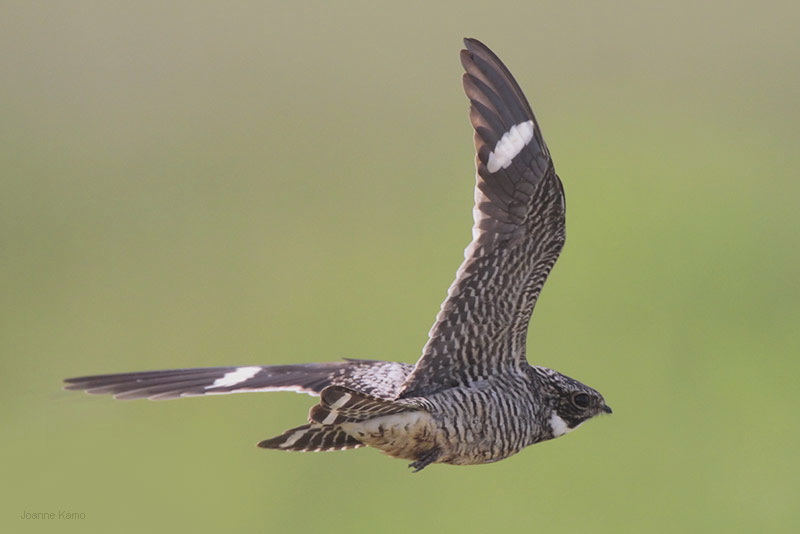
Common nighthawk -- Photo by Joanne Kamo, whose many other wonderful bird photographs can be seen at http://www.pbase.com/jitams

I try to time my last walk with Maggie so that it ends just as the sun goes down so as to catch the sunset. The days, in my opinion, are best when they begin with a sunrise and end with a sunset.

But late evening is also the time of day here at Lake Walcott State Park in Southern Idaho when the nighthawks come out to feed. For a kettle of common nighthawks that regularly takes place over the campground where my RV, Gypsy Lee, is parked.

They dine in the air on the many insects that also call this small park home. It’s always a treat to see them. Not only are they awesome to watch, my brain knows that every bug they eat is one that won’t bite me.

A fellow lone-female traveler, not a birder, who stopped by recently to visit me, asked what the birds flying overhead were as we shared our evening walk.

Common nighthawks, I told her. Then pointed out how to easily recognize them when in flight.


Common nighthawk -- Photo by Joanne Kamo

About the size of a robin, these birds have long, forked and pointed wings with a distinctive broad white bar about a third of the way up from the tip of the wing. The white bars are very prominent.

“Do they always fly that low,” she asked, as a couple of the birds zoomed in front of us at about head level.

“Nope. Usually they fly much higher,” I replied. “I guess the bugs are flying low tonight.”

The first time I saw these birds, whose large heads seem to lack a neck, they were flying even lower, however. I was fairly new to birding at the time, having only become addicted to the passion in 1999. The life sighting occurred while I was walking a trail at the Arizona-Sonora Desert Museum, where they were flying low over a small pond.

After watching them for a while, I realized they were skimming bugs off the water. Looking in my field guide to identify them, I discovered they were a member of the goatsucker family, whose name tickled my funny bone. According to folklore, these birds were thought to suck a goat’s milk at night.

The image this false legend flashed through my brain gave me an even more robust chuckle.

There are so many reasons why I’m passionate about birds, and such oddities as this, which I swear each species seems to enjoy, is just one.

Lake Walcott, meanwhile, has treated me to more common nighthawks in one night than all the others I’ve seen elsewhere. If you visit, I hope you take advantage of the nightly summer show.

Read Full Post »

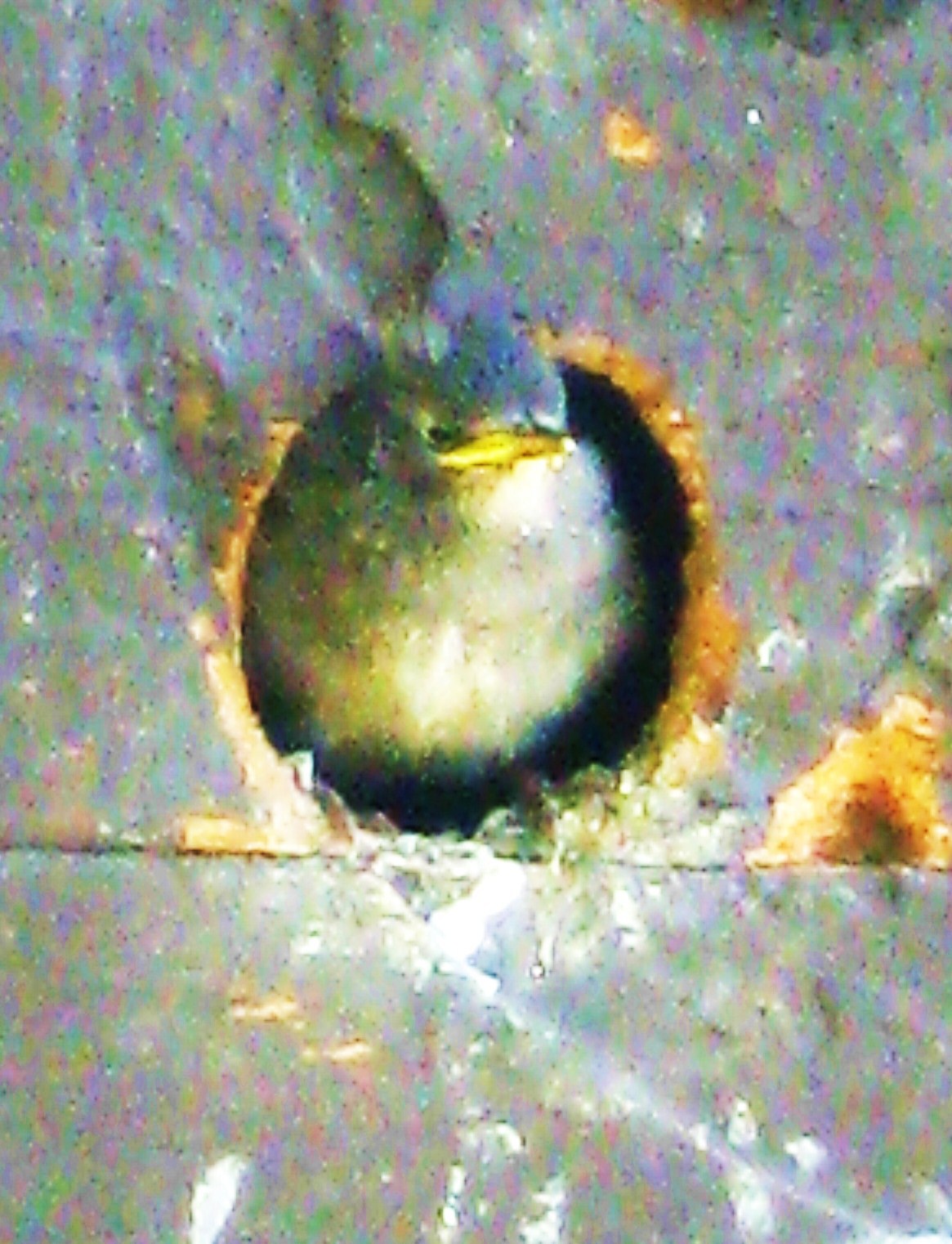
A starling chick getting its first look at the world. -- Photo by Pat Bean

“Now and then it’s good to pause in our pursuit of happiness and just be happy.” — Guillaume Apollinaire.

Travels With Maggie

I seldom get in funk, but that’s what I found myself in this past week. I’m not sure it was just my computer problems either. Thankfully Mother Nature stuck around to hold my hand and point out how precious every minute of life really is.

A pair of European starlings have been nesting in the self-pay kiosk here in the campground at Lake Walcott State Park. For weeks I’ve been watching as they disappear and reappear from a hole in the back of the small structure.

Yesterday morning I was rewarded with the end result of all the starlings’ hard work. I watched as a chick emerged from the hole for a look at the outside world. It sat on the rim of the hole looking amazed, and totally unafraid of the strange new sights.

It made me recall all the birds I saw in the Galapagos Islands that hadn’t yet, and hopefully never, been given reason to fear humans. I had a Galapagos mockingbird actually land on my shoe, and a blue-footed booby that refused to move off a trail to let me pass. I was the one who had to go around.

Later, when Maggie and I took our daily circuit around the park, Mother Nature continued to share her wonders with me.

Mother Nature is generous with her gifts here at Lake Walcott State Park. -- Photo by Pat Bean

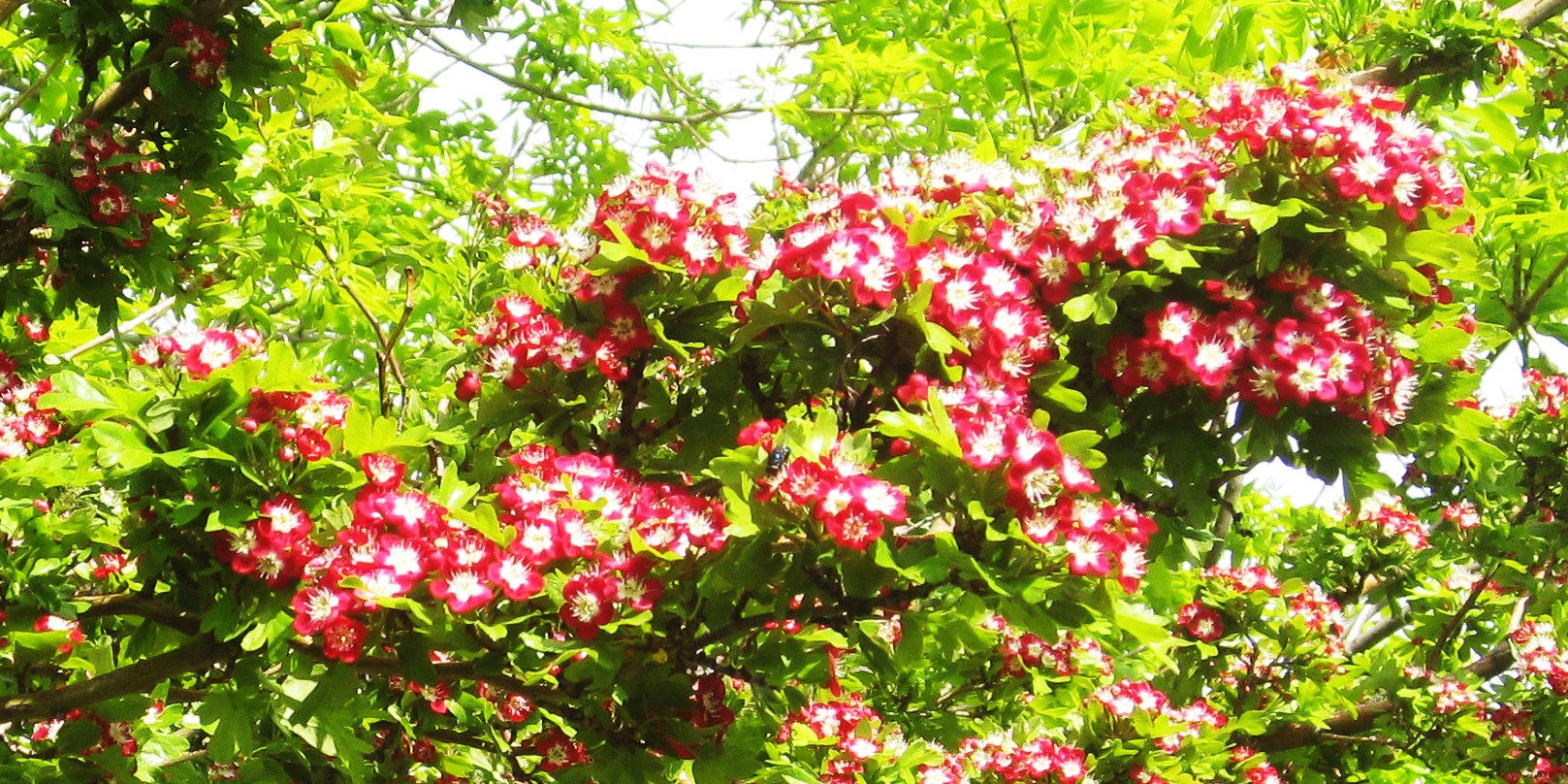
The huge willow trees that were leafless when I first arrived in May are now bursting with lush green leaves that dip down to the ground. The frosty green Russian olive trees add texture to the park’s lively green landscape, while the flowering trees give it color.

Honking geese, giggles coming off rushing rapids on the Snake River that feeds the lake, screeching killdeer, rustling tree branches and cheery robins provide the musical background.

It’s as if Mother Nature is laughing at my funk and telling me to get over it. I heeded her advice.


Read Full Post »

            “If you feel the urge, don’t be afraid to go on a wild goose chase. What do you think wild geese are for anyway? – Will Rogers

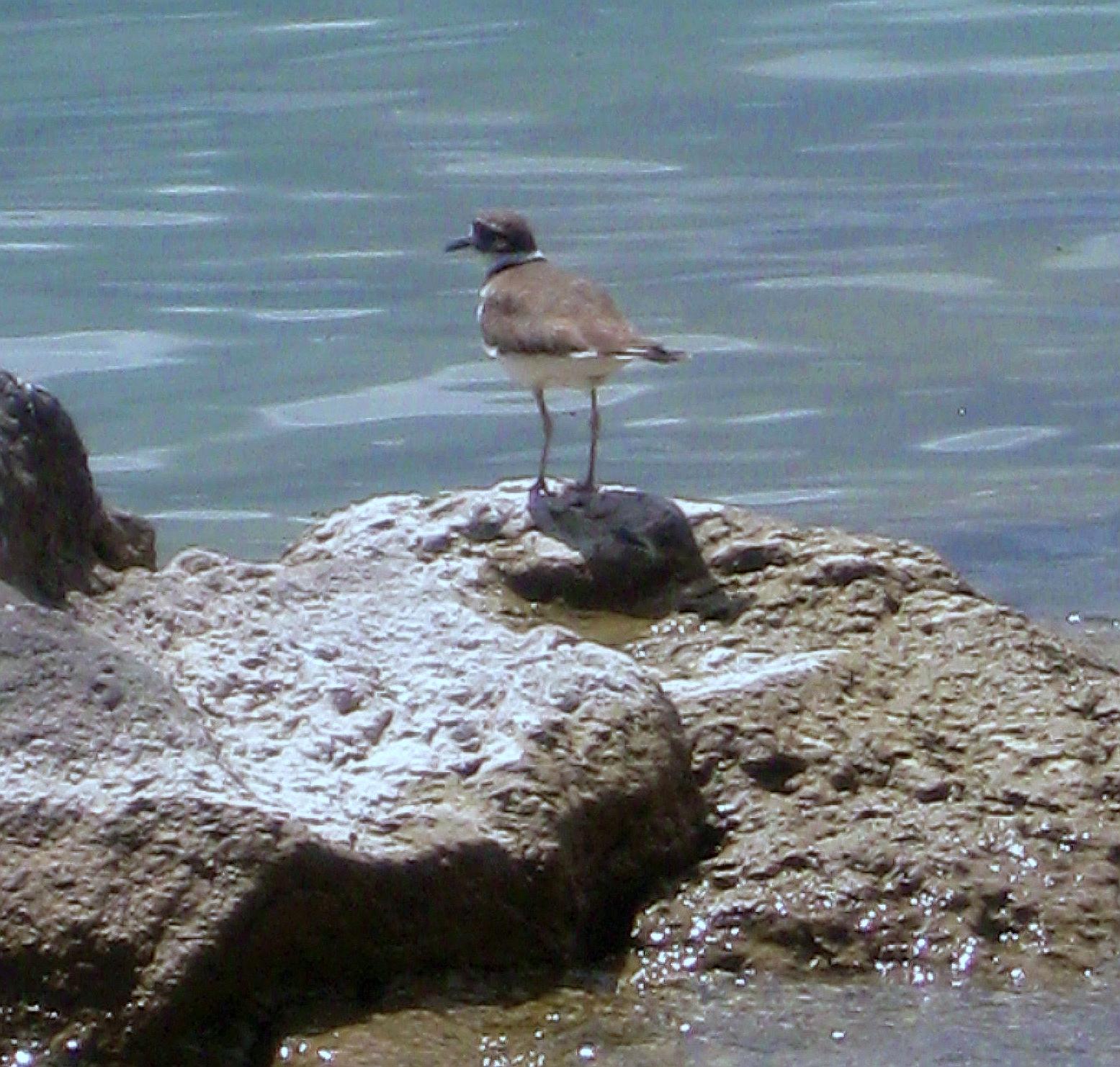
This killdeer is acting more like the plover shorebird it is, than all the others I've seen here at Lake Walcott. The many others I've seen have all been in the grass away from the water. -- Photo by Pat Bean

Travels With Maggie

            My morning stroll this morning was punctuated with killdeer along every path. Although a shorebird, the killdeer is more often than not found in grassy areas, where it builds its nest and raises its chicks. Whenever trespassers enter the nesting zone the killdeer, both male and female, will attempt to lure you away.

            They do so by walking on the ground, often holding out one wing as if broken, until you are a goodly distance away from their nest or chicks. Then they’ll fly out of harm’s way.

             A pair Maggie and I came across this morning stayed barely six feet ahead of us, screeching as they hurried along to make sure they had our attention.

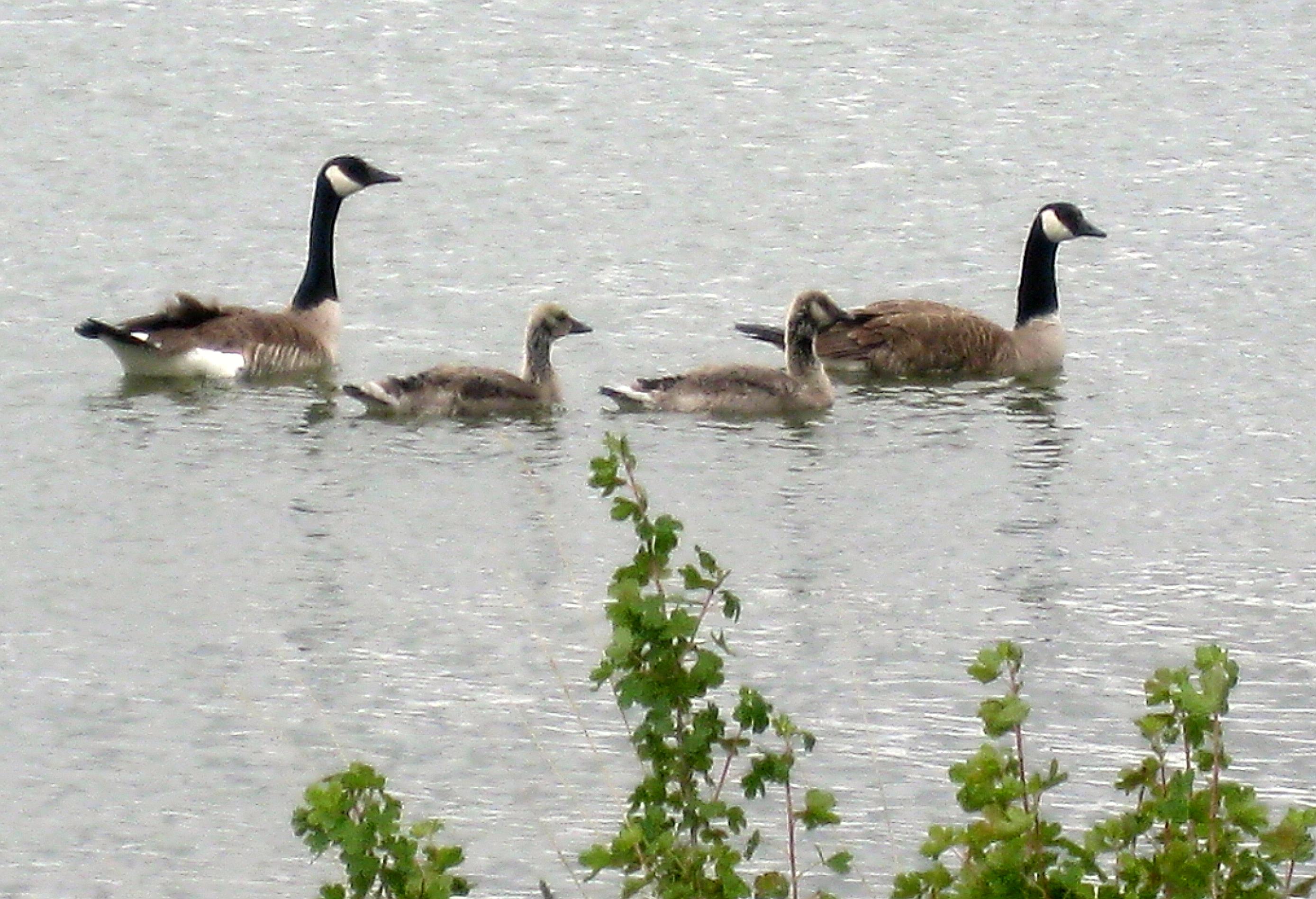
These young Canada geese are looking more and more like their adult parents every day. -- Photo by Pat Bean

            I once found a nest of killdeer chicks by ignoring the adults, who hopped away in different directions, by looking where they didn’t want me to look. I didn’t stick around long watching the long-legged bits of fluff, however. The parents’ wails quickly pierced my heart, and after only a couple of minutes I left the family in peace.

            I haven’t seen any killdeer chicks here at Lake Walcott yet, but I have been watching a pair of Canada geese with two chicks. They were already past the frothy yellow fuzz stage when I arrived mid-May, and are quickly taking on a more adult appearance.

This morning I found the family just off shore, where they felt safe enough to not swim away immediately. Thankfully I hadn’t forgotten my camera.

Read Full Post »

“For the man sound in body and serene of mind there is no such thing as bad weather; every sky has its beauty, and storms which whip blood do but make it pulse more vigorously.” – George Gissing

The late afternoon rain at Lake Walcott was merely Mother Nature's preamble for the night ahead. -- Photo by Pat Bean

Travels With Maggie

Mother Nature threw a hissy fit last night.

She began the day with ominous clouds playing with the sun, blew up gusts of wind about midday that tumbled my bike and lawn chair about, then drizzled a little rain in the late afternoon here at Lake Walcott State Park in Southern Idaho.

All was merely a preamble to the thunderous symphony she had in store as night fell over the park’s lush green landscape.

Her daytime mood hardly bothered the birds at all. Brown-headed cowbirds, black-headed grosbeaks, house finches, house sparrows, mourning doves, robins, killdeer, starlings, and one northern flicker continued to eat my birdseed or flit about just outside my RV window.

But hopefully they were tucked away some place safe when Mother Nature discarded her lamb’s persona for a hungry lion’s roar.

The rain pelting on the roof of my wind-rocked RV sounded like Thor was frantically beating overhead with his hammer. The trees around me, spotlighted by lightning flashes, swayed deeply to the frenzied beat of surround-sound thunder that came in rolls.

This black-headed grosbeak is a regular visitor to my campground site. -- Photo by Pat Bean

My canine traveling companion, Maggie, is not one to be afraid of storms, but for this one she decided she wanted to curl up next to me on the couch where I was reading “A Sense of the World” by Jason Roberts. It’s the true story of James Holman, who despite being blind became one of the world’s greatest travelers during the early 1800s.

Its seemed an appropriate book for me to be reading during the storm, although I did more watching the disharmonious, strobe-flashed world out my window than I did absorbing the words on the page of my Kindle.

The sightless Holman, who used all his remaining senses to experience the world, would have loved this storm.

And so did I.

Read Full Post »

 “Nothing great in the world has been accomplished without passion.” – Georg Wilhelm Hegel

Gray partridge -- the pair disappeared too quickly for me to get a photo of them, so thanks to Wikipedia for this one.

Travels With Maggie

I was on the phone with my daughter in Arkansas when I saw two quail-like birds trot across the manicured lawn beside my RV.

I quickly cut the call short, and rushed over to the window for a better look. I knew if I went outside my RV they would quickly disappear. As it was they pretty much did that anyway, although not before I had a quick study.

They were short and plump, gray and brown, and sported a rusty-red face and throat design. I suspected they belonged to the quail or grouse family of birds that spend more time on the ground than in the air.

I was right, which is a clue to how far I’m come since becoming a birder 12 years ago when I couldn’t tell a gull from a tern or a swallow from an oriole.

Back then, I spent many hours thumbing through an entire bird book just to identify one species, or to tell a ruddy duck from a mallard. Today I quickly narrowed the possibilities, and with the help of my National Geographic “Field Guide to the Birds of North American, soon decided the birds were gray partridges.

Maggie and I daily stroll Lake Walcott's many paths, always finding new wonders of Mother Nature. -- Photo by Pat Bean

The guide’s range map, which let me know this partridge could be found in Southern Idaho, and the bird’s facial color,  were the deciding factors. Later, when I mentioned the sighting to a park worker, he told me gray partridges were commonly found here at Lake Walcott State Park.

I was an ecstatic birder. The gray partridge was a life bird for me, my 697th species.

Birding, as a passion, came at exactly the right time of my life. My journalism career was nearing an end, and I was planning for a traveling retirement. Chasing birds not only gave me a new interest in life, it fit in perfectly with my upcoming life as a vagabond.

While you can see robins and red-tailed hawks everywhere, in North America you can only see a Florida scrub jay in one small parcel of land in Florida, or a white-tailed hawk only in the Rio Grande Valley of Texas, or an elegant trogan in Southeast Arizona.

I still have a long way to go to see all of North America’s nearly 1,000 bird species, and even farther to go to see the world’s nearly 10,000 species. But that’s OK, because there will always be birds to chase.

Learning about birds, and boy is there a lot of fascinating stuff to learn, has also been great exercise for my brain. But the most important word here is passion.

While of course there’s the male-female sex thing, it can also mean anything in life that moves us. Adding birds to my passion, along with the passions I have for family, writing, art, reading and travel has made my life richer.

If not a gray partridge, what’s your passion?

Read Full Post »

“Spring’s last-born darling, clear-eyed sweet, Pauses a moment with white twinkling feet, And golden locks in breezy play, Half teasing and half tender, to repeat her song of May.” –Susan Coolidge

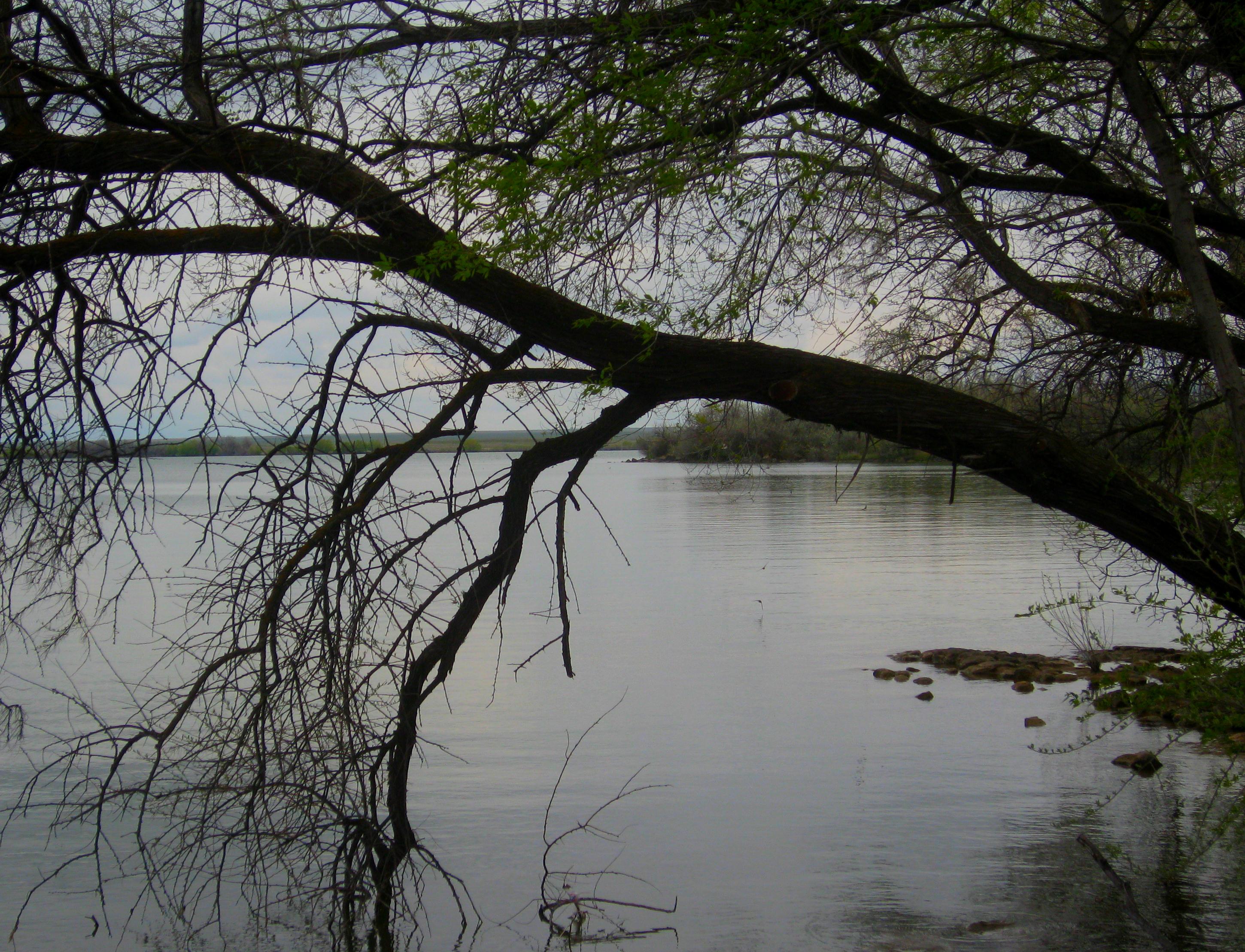
Looking out over Lake Walcott on a cool day through tree branches that are just now beginning to green up. -- Photo by Pat Bean

Travels With Maggie

Today is the last day of May, and supposedly summer should be on the way. In fact, it was already being felt mid-April when I left my family behind in Texas, where yesterday they had temperatures in the 90s.

Here in Southern Idaho, yesterday’s temperatures were only in the 40s, but the weather gurus say it’ll be in the 60s today.

I think the birds, who have mostly been staying sheltered during the past few days of cold, wind and rain, might have heard the news as well. I was awakened by their blaring symphony outside my RV.

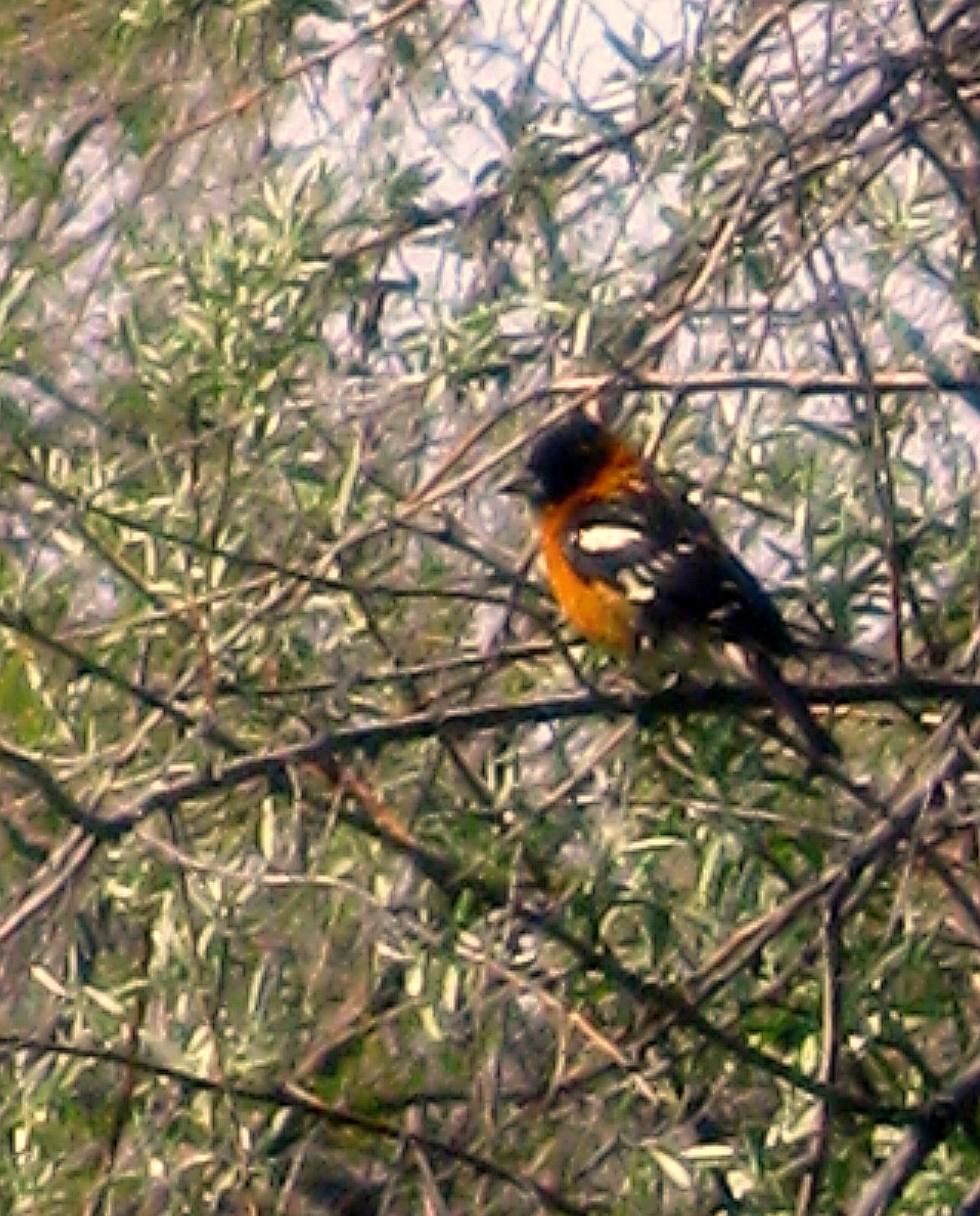
Barn, rough-winged, violet-green and bank swallows are making the landscape outside my window look as if it’s full of moving polka dots. Bright orange-chested robins are courting and building nests. Canada geese are already raising goslings. Western grebes are dancing on the lake. Common nighthawks are circling overhead in the evenings.

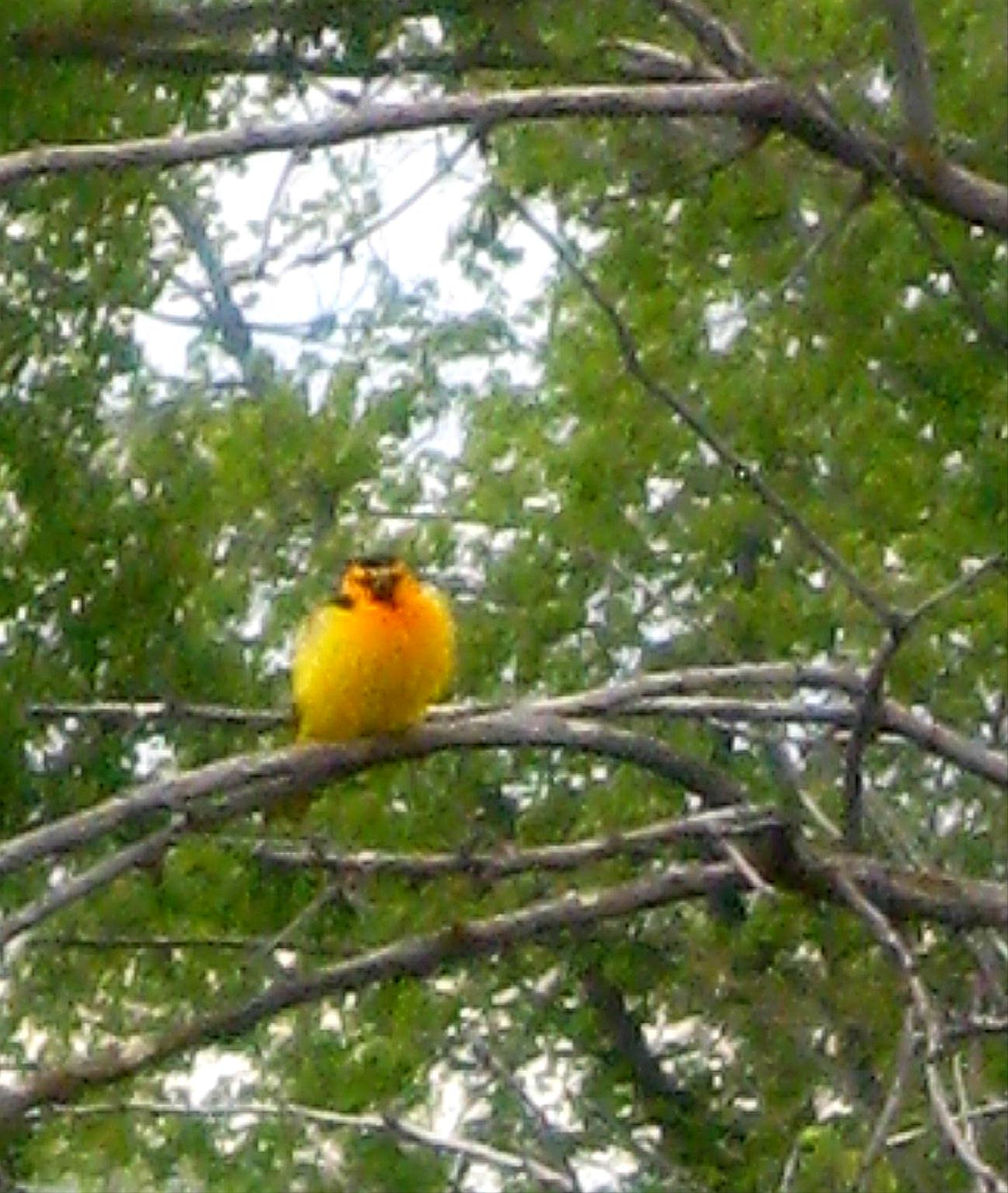
American goldfinch have already emptied my thistle bag twice. Killdeer are loudly squealing on the ground as they lead trespassers away from their nests in the grass. Starlings are going in and out of a hole in the self-pay kiosk outside my RV. Mourning doves are gobbling up the birdseed I threw on the ground. And brightly colored Bullock’s orioles are preening their puffed-out feathers.

I’m a happy birder.

It’s also been a delight the past two weeks to watch spring, which everyone says is quite late this year, come out of hiding.

A Bullock's oriole outside my RV in a cottonwood tree with his feathers all puffed up to ward off yesterday's wet coolness. -- Photo by Pat Bean

While the process happened almost overnight in Texas before I left there, the cool weather here has caused the change to take place in slow motion. It’s been a delight to be able to watch it in such detail.

Daily, I’ve seen leafless tree branches green up, beginning to hide the nests being built there by stick-transporting birds. I’ve watched as dainty lavender and yellow wildflowers have slowly peeked up through the grass, while the dandelions that came before them have shed their blossoms and are now scattering their puffy white seeds.

And now I’m going to walk Maggie and see what other wonders I’ll discover this last day of May. Life is good.

Read Full Post »

A break from Travels with Maggie and our journey from Texas to Idaho to post a photo for the weekly photo challenge. 

The photo below was taken on Merritt Island in Florida. It was a spectacular place to watch birds. 

Northern Pintails: Heads or Tails — Photo by Pat Bean

“The most difficult thing is the decision to act, the rest is merely tenacity. The fears are paper tigers. You can do anything you decided to do. You can act to change and control your life, and the procedure, the progress is its own reward.” — Amelia Earhart.

Read Full Post »

 Let your mind start a journey thru a strange new world. Leave all thoughts of the world you knew before. Let your soul take you where you long to be … Close your eyes and let your spirit start to soar, and you’ll live as you’ve never lived before.” Erich Fromm

Lake Arrowhead fishing pier -- Photo by Pat Bean

Travels With Maggie

It was a helaciously windy drive on this first day of my journey to Idaho for the summer, but the splendidly colorful buttercups that brightened the roadside cheered me up.

I was even welcomed with bluebonnets when I hit Lake Arrowhead State Park just about 15 miles outside of Wichita Falls and 150 miles from my journey’s beginning in Rowlett. It’s the first of several public campgrounds I plan to hit as I slowly hop West and North to escape summer’s heat.

Since it’s now 92 degrees outside, I would say I’m escaping just in time.

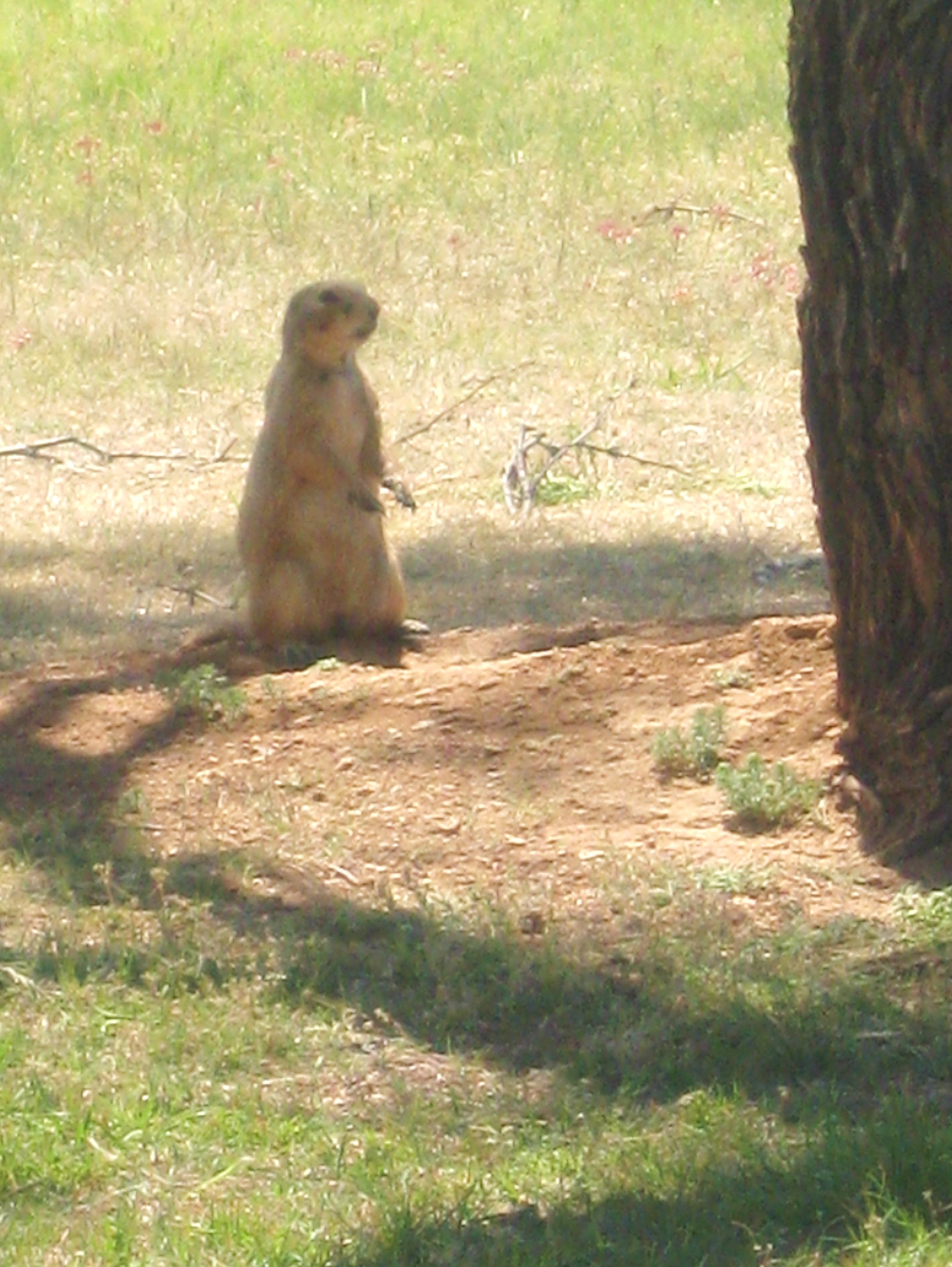
Black-tailed prairie dogs call Lake Arrowhead State Park home. -- Photo by Pat Bean

I took Maggie on a short walk as soon as I hooked up, then afterward went on a quick bike ride to snap a few pictures for the blog. I’ll go again when it cools off but for now I’m vegging in air-conditioned comfort in my RV.

Maggie, meanwhile, is in her favorite spot, sprawled out on our over-the-cab bed directly in front of the air-conditioning vent.

Lake Arrowhead is a reservoir on the Little Wichita River that supplies water to Wichita Falls’ residents and recreational opportunities, especially fishing, for visitors. It’s pretty all right for birders, too.

I saw my first of the year scissor-tailed flycatcher just as I drove past the entrance and other birds everywhere including, great blue herons, great egrets, mockingbirds, red-bellied woodpecker, mockingbirds, coots, Canada geese, great-tailed grackles (including a pair mating), barn swallows, red-winged blackbirds and killdeer within 15 minutes of arriving.

Life is good.

P.S. If you’re in the Wichita Falls area May 13-14, and enjoy 1800s history, drop by for the park’s Buffalo Soldier Encampment.

Read Full Post »

« Newer Posts - Older Posts »