Feeds:
Posts
Comments

20-Minute Cliff

“The high road of the Blue Ridge Mountains is like a long museum corridor lined with nature’s treasures.” — National Park Service

A sign to ponder. -- Photo by Pat Bean

A sign to ponder. — Photo by Pat Bean

Back to Pondering

I was looking through the many photos I took a couple of years ago when I drove the Blue Ridge Parkway when I came across the one pictured above. The sign left me pondering its significance.
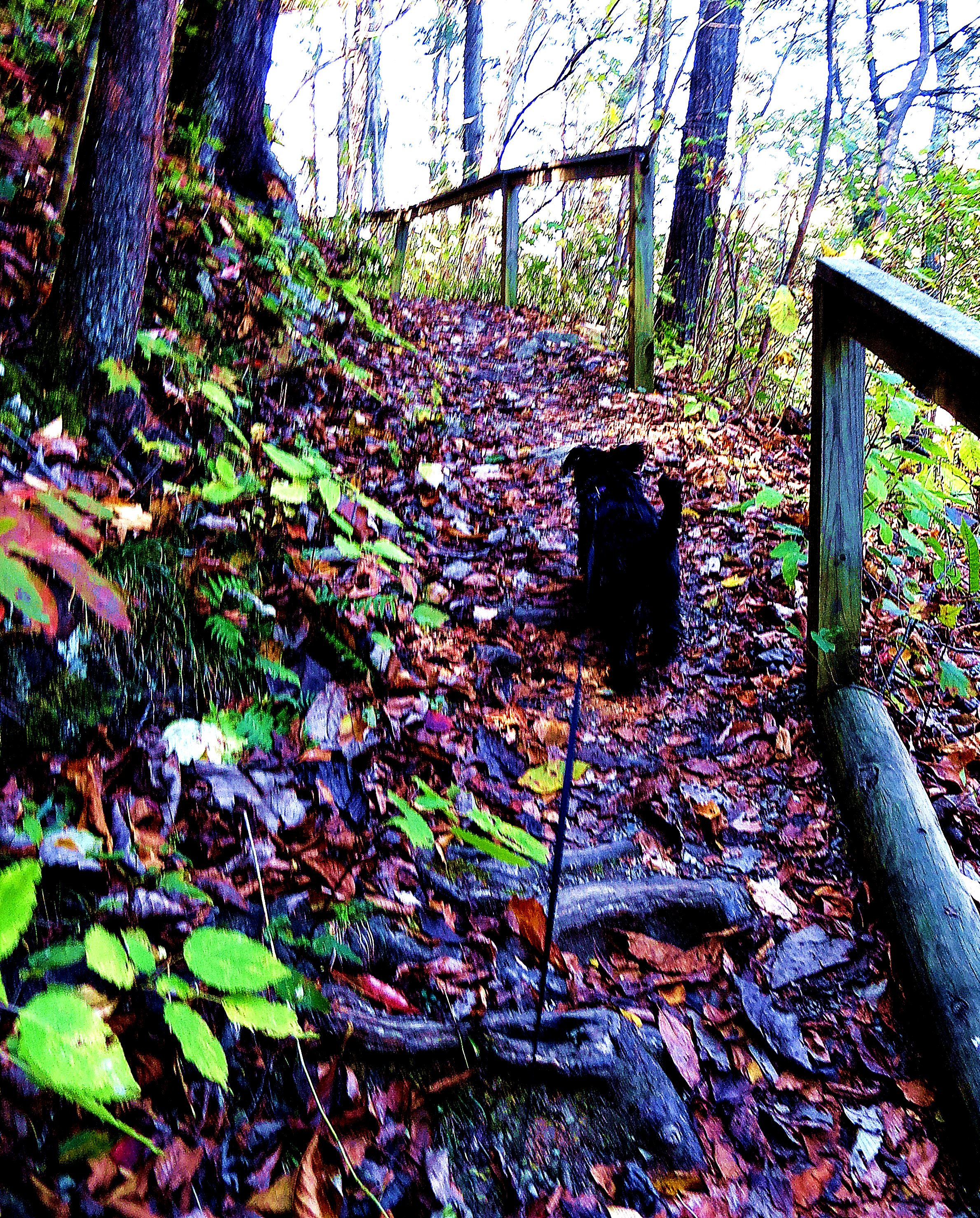
Along with sight-seeing and pondering as we drove the Blue Ridge Parkway, Pepper (who joined me after Maggie died for the last eight months of my full-time RV travels) and I did a a lot of exploring of the parkway's many trails. -- Photo by Pat Bean

Along with sight-seeing and pondering as we drove the Blue Ridge Parkway, Pepper (who joined me after Maggie died for the last eight months of my full-time RV travels) and I did a a lot of exploring of the parkway’s many trails. — Photo by Pat Bean

But it was autumn when I was on the parkway, and the golden, scarlet, purple, lemon and orange hues along the way kept me from pondering too long. It was more important for me to drink in the Technicolor views, which often magically appeared from behind layers of thick white fog and mist as each day grew older.

Now, seeing the sign without the awesome scenery to distract me, I’m back to pondering again.

The sign reads: In June and July, during corn-choppin’ time, this cliff serves the folks in White Rock community as a time piece. Twenty minutes after sunlight strikes the rock face, dusk falls on the valley below.”

Who in the heck figured this timetable out, and what would people be doing at this exact spot on the ridge right before dusk? Pondering, I guess, is what a wondering, wanderer does best.
Blog pick of the day. Check it out.

Blog pick of the day. Check it out.

Bean Pat: Ranting Crow http://tinyurl.com/p9qsfk6 Thought of the day. If you get to be my age, you have to wonder why history keeps repeating itself. Perhaps it’s time for a change.
Once upon a Time

“Technology can be our best friend, and technology can also be the biggest party pooper of our lives. It interrupts our own story, interrupts our ability to have a thought or a daydream, to imagine something wonderful, because we’re too busy bridging the walk from the cafeteria back to the office on the cell phone.” — Steven Spielberg

When not looking at my cell phone, I see the amazing details of Mother Nature's wonders all around me. -- Photo by Pat Bean

When not looking at my cell phone, I see the amazing details of Mother Nature’s wonders all around me. — Photo by Pat Bean

Before Phones Depended on Air Waves

            I’ve lived long enough to remember when phone numbers began with words and were only five digits long. If my memory serves me well, but no excuses if it doesn’t, the first word of my grandmother’s heavy black phone was Wright, which meant that the first number you dialed was a 9.

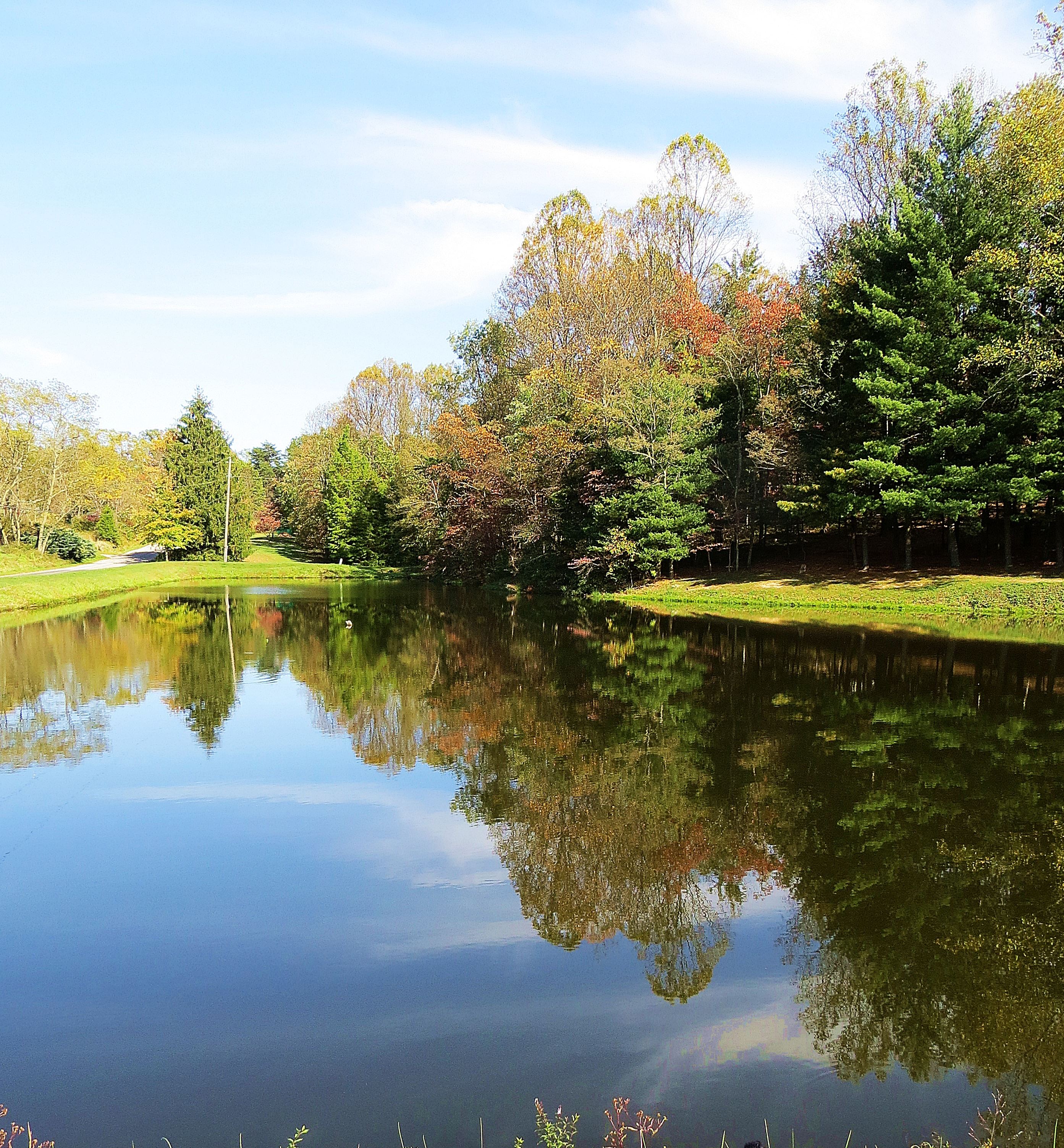
A quiet pond reflecting the world above and around. May I never be engrossed with a cell phone when I pass it by. -- Photo by Pat Bean

A quiet pone reflecting the world above and around. May I never be engrossed with a cell phone when I pass it by. — Photo by Pat Bean

I balked at getting a cell phone until my work, which wanted to reach me at all hours of the day and night, finally bought me one and paid for the service. Actually you didn’t usually have to purchase a phone back then. You got a free one when you signed a contract for a year or two of service.

Not too long ago, I watched a Verizon customer come in with a stupid phone that he had for many years, and which had died. The only free phone they would give him was a smart phone, which of course came with a higher monthly service charge. He opted to pay for a dumber version. Then they charged him to download what he had saved on his old phone to his new phone.

My son bought me one of those smart phones when I was traveling around the country in an RV so he could track my movements. But when I settled down here in the Sonoran Desert, I put the smart phone in the closet and reconnected my old cell phone. It texts, but if I want to write a W I have to punch 9 (and so on) as my phone doesn’t have a keyboard.

I chose to go back to my dumb phone because the monthly charge is less and everything smart phones can do, I can do on my laptop. Well except take photos, and I have a good, pocket digital, PowerShot Canon for that. And besides I’m not sure I want my kids tracking my every movement.

My problem is that, more often than not, I forget to take my cell phone with me when I go somewhere. It wouldn’t be a problem unless I needed to call someone, like if my car wouldn’t start. There are no phone books for cell phone numbers, and the only number I have memorized in my head is my own, and sometimes I have to think hard to remember it. All the phone numbers of friends, family, and care providers are saved on my dumb phone.

The upside of my forgetfulness is that I’m not missing the world around me.

Blog pick of the day. Check it out.

Blog pick of the day. Check it out.

Bean Pat: Before I Forget http://tinyurl.com/obk8j96 Dishpans and Buckets – and Joy – another trip down memory lane.

Arivaca Cienega

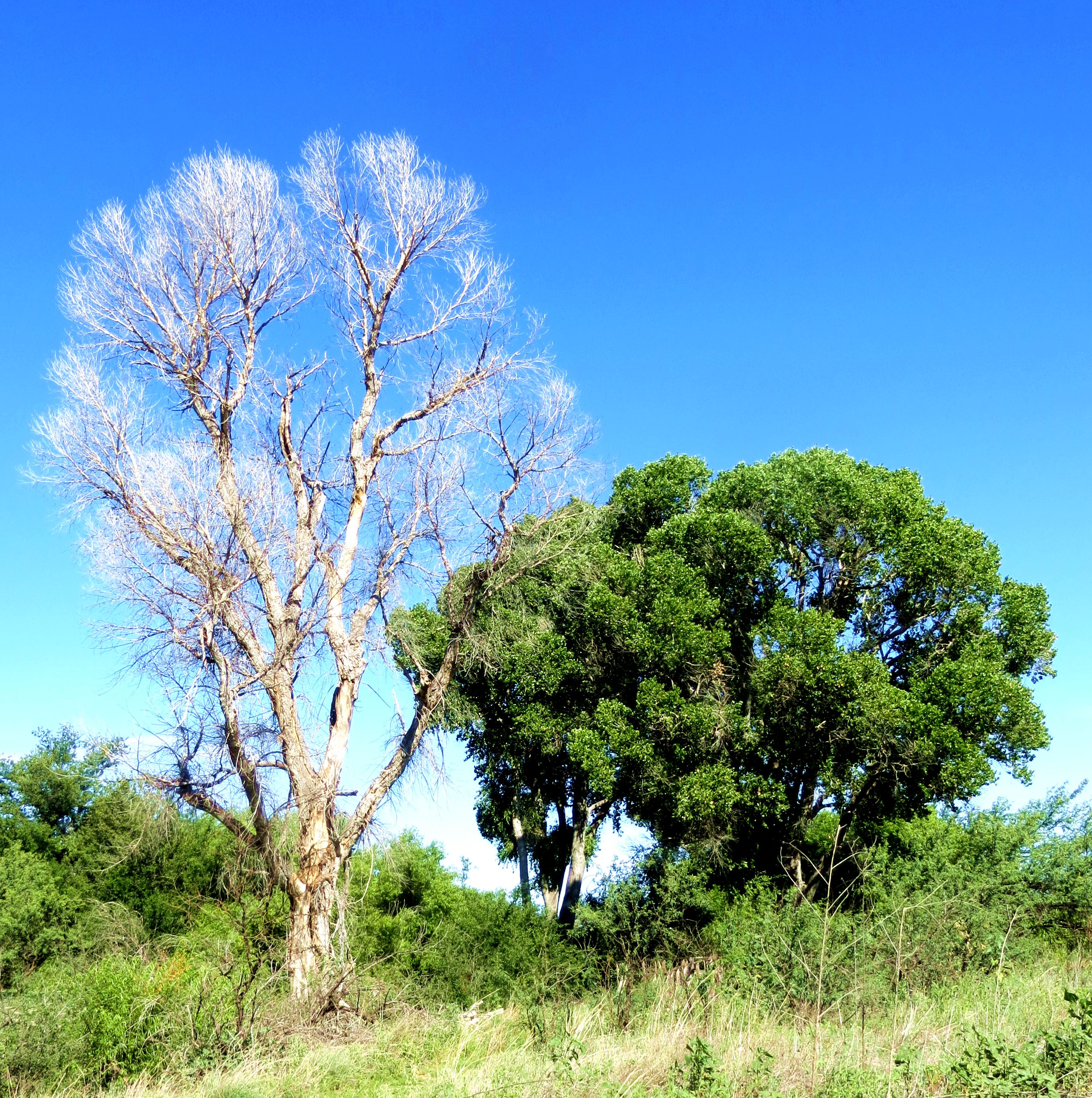
These two trees captured my attention along the Arivaca Cienega Trail because they so accurately represent the circle of life. -- Photo by Pat Bean

These two trees captured my attention along the Arivaca Cienega Trail because they so accurately represent the circle of life. — Photo by Pat Bean

I am not bound for any public place, but for ground of my own where I have planted vines and orchard trees, and in the heat of the day climbed up into the healing shadow of the woods. Better than any argument is to rise at dawn and pick dew-wet red berries in a cup. ~Wendell Berry

Birdy Backroad Heaven

I woke up restless the other morning, and solved it by reviving a weekend morning tradition from back when I was putting in 50-hour work weeks. I packed a picnic lunch, gathered up my canine companion, Pepper, and we took off looking for a backroad and hoping it took us someplace where we could be away from the crowds and in one of Mother Nature’s wondrous landscapes.

Not the best picture, but in person it was magnificent. -- Photo by Pat Bean

Not the best picture, but in person it was magnificent. — Photo by Pat Bean

I found my backroad off Interstate 19 near Arizona’s border with Mexico. It led to the small town of Arivaca 23 miles away. I passed a Border Patrol stop near the interstate, but was waved on and told I only had to stop on the way back.

Speed limit on the narrow, twisting and bumpy back lane was mostly 45 mph, but it wasn’t often I was able to go that fast. But traffic, except for a couple of pickup trucks and a half-dozen motorcyclists traveling together, was non-existent. It was exactly what I had been hoping to find.

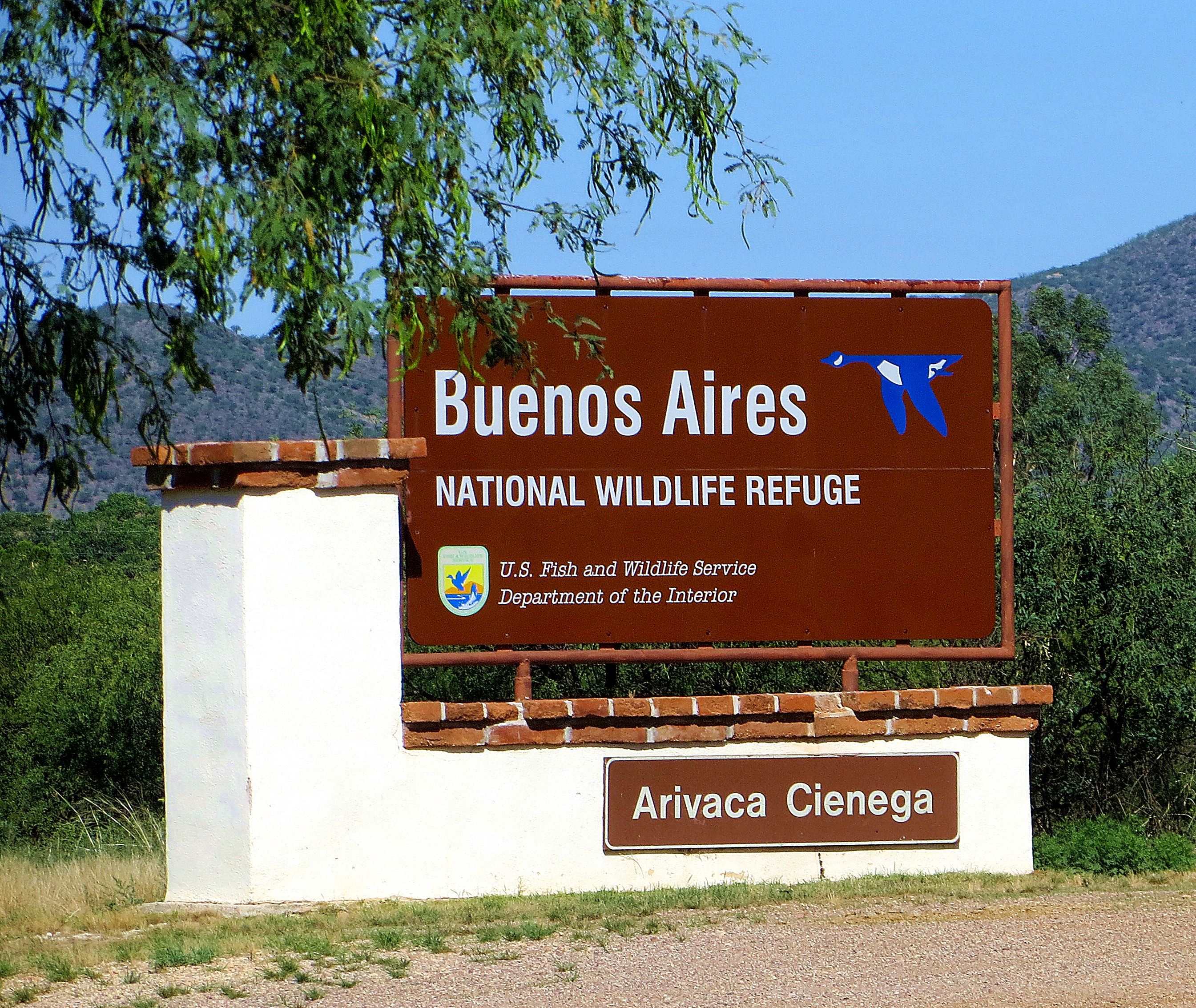
I didn't have to search hard to find this abode of Mother Nature. This sign set right beside the road just east of Arivaca. -- Photo by Pat Bean

I didn’t have to search hard to find this abode of Mother Nature. This sign set right beside the road just east of Arivaca. — Photo by Pat Bean

I found myself singing “On the Road Again.” I couldn’t belt it out with the grace of Willie Nelson but, it was good enough to put me in a yippy-I-got-away-from-the-world mood, especially when I had to dodge a greater roadrunner dashing across the road.

Just outside downtown Arivaca, which sits on the edge of Buenos Aires National Wildlife Refuge. Pepper and I stopped at the refuge’s Arivaca Cienega site, which is a designated Audubon Important Birding Area. Thankfully, leashed pets were allowed on the trail, which cut through what was clearly a marsh during the desert area’s monsoon season. Cienega, in fact, translates as swamp. Birds twittered all around us, and among others I identified song sparrows, cardinals, Bell’s vireos and western kingbirds. A deer watched us a minute or two as we rounded a bend in the trail before scampering out of sight.

I didn’t think my morning, which was cooled by a light breeze still fresh from the desert night, could have been any more perfect. Then a pair of red-tailed hawks circled overhead and it did.

Blog pick of the day. Check it out.

Blog pick of the day. Check it out.

Bean Pat: Luckenbach Loop http://tinyurl.com/n9cgt9v One of my favorite bloggers also enjoys a backroad trip.

Falling Down

A blast from the past: Me and Maggie hiking Mount Ogden's foothills.  -- Photo by Pat Bean.

A blast from the past: Me and Maggie hiking Mount Ogden’s foothills. — Photo by Pat Bean.

It is necessary for a man to go away by himself, to sit on a rock and ask, ‘Who am I, where have I been, and where am I going?” Carl Sandburg

We Should All Do It More

            When I was learning to ski, I would sit down the second I felt out of control. But eventually I learned to stay in control and then I seldom ever fell down.

So what does my skiing instructor tell me? “You’re not falling down enough,” he said.

It was a strange comment, but I immediately understood what he meant. He was telling me that I was playing it too safe, and that this was keeping me from getting better.

The fear of falling, call it failure, is still a fault of mine. Looking back now, I realize that this fear held me back from moving forward many times over the years. I don’t know about you, but getting up seems to be the easy part for me. .

Bean Pat: Remembering http://tinyurl.com/p7byop4 I’ve had writer’s block the past couple of weeks, which is almost a first for me. This blog gave me a helpful push in the right direction.

Thoughts about Writing

“Not writing for me would be like not breathing.” – Pat Bean

It's hot in Tucson right now, so I have been doing more inside reading than outside birdwatching, which I love to do as much as I love writing. But I saw this gila woodpecker on a recent early morning walk with Pepper. -- photo by Pat Bean

It’s hot in Tucson right now, so I have been doing more inside reading than outside birdwatching, which I love to do as much as I love writing. But I saw this gila woodpecker on a recent early morning walk with Pepper.  — photo by Pat Bean

And Writers  

            “A writer who hates the actual writing, who gets no joy out of the creation of magic by words, to me is simply not a writer at all … how can you hate the magic which makes a paragraph or sentence or a line of dialogue or a description something in the nature of a new creation? – Raymond Chandler, who liked to think of his words as those that got up and walked.

Chandler introduced his hard-boiled detective, Phillip Marlowe, in The Big Sleep, which was published the year I was born. He decided to become a become a mystery writer after losing his job as an oil company executive during the Great Depression at the age of 44. The Big Sleep has been named one of the top 100 fiction novels of the century.   

And right beneath the woodpecker, in the same tree, was a white-winged dove. -- Photo by Pat Bean

And right beneath the woodpecker, in the same tree, was a white-winged dove. — Photo by Pat Bean

         “The first thing you have to know about writing is that it is something you have to do every day. There are two reasons for this: Getting the work done, and connecting with your unconscious mind.” – Walter Mosely.

Mosely is Black, Jewish and grew up in poverty. One of his writing teachers told him that these things provided him with riches for the page. Mosley started writing when he was 34, and says he has written every day since, turning out over 40 books in a variety of genres. Perhaps his best known are the Easy Rawlins detective series, which are a favorite of Bill Clinton, and which became more popular when the president said as much.

I remember back when JFK said his favorite author was Ian Fleming, creator of the James Bond series. I had already read all of Flemings’ books at the time, but they got more popular after Kennedy said he liked them.

“Writing is really a way of thinking – not just feeling but thinking about things that are disparate, unresolved, mysterious, problematic or just sweet.” –Toni Morrison

Morrison, who has writing awards too numerous to list that include a Pulitzer and a Nobel, takes on epic themes in her books,  the best known of which are Beloved, The Bluest Eye, Sula and the Song of Solomon.

Blog pick of the day. Check it out.

Blog pick of the day. Check it out.

Bean Pat: Laughter Therapy http://tinyurl.com/qxpht3q I’m all about the chocolate – and belly laughing.

Great Horned Owls

             “There was an old man with a beard, who said: ‘It is just as I feared! Two owls and a hen, four larks and a wren have all built their nests in my beard.’” – Edward Lear

Two of the three great horned owl juveniles now making themselves at home in my apartment complex that sits in the shadow of the Catalina Mountains -- Photo by Pat Bean

Two of the three great horned owl juveniles now making themselves at home in my apartment complex that sits in the shadow of the Catalina Mountains — Photo by Pat Bean

Treasured Moments

            Pepper and I were taking a walk late yesterday evening when we came upon two great horned owls sitting on the lawn, one no more than 30 feet away. They stopped Pepper in her tracks. She stared long and hard at them, but made no move in their direction.

The third owl mostly watched me, but this was the only usable photo I was able to take in the late evening light. The others were too blurry to redeem. -- Photo by Pat Bean

The third owl mostly watched me, but this was the only usable photo I was able to take in the late evening light. The others were too blurry to redeem. — Photo by Pat Bean

I watched for a while, and then hurried Pepper along, thinking to return her to our apartment, grab my camera and return to the owls. The light had pretty much faded by the time I did just that, but the owls were still in place. I snapped of a couple of dozen shots, but they were too far away for the flash to work, and my hands weren’t steady enough to get any good shots, although I did manage, with the help of PhotoScape, to salvage two of them.

The owl farthest away got nervous and flew away, joining a third owl sitting on the roof of one of the complex’s buildings. The other stayed put, until I got within about 15 feet of it.

This was the second time I had come across the trio. The other time was in broad daylight, when they were high up in a tree with about a dozen people ogling them. I was walking Pepper that time, too – and again did not have my camera with me. Darn it!

Earlier in the year, I had watched and listened to a lot of hooting as the owl parents had courted, chased off ravens and a red-tailed hawk, and nested here in the apartment complex for the third year in a row.

And each year, their offspring take a while to learn to fear humans, popping up unexpectedly and unconcerned about who is watching them.  It’s the same with the young Cooper’s Hawk, whose parents also like to nest in the tall trees here.

It brings to mind a song from the from the 1949 Rodgers and Hammerstein musical, South Pacific:

You’ve got to be taught To hate and fear, You’ve got to be taught From year to year, It’s got to be drummed In your dear little ear. You’ve got to be carefully taught.

You’ve got to be taught to be afraid Of people whose eyes are oddly made, And people whose skin is a different shade, You’ve got to be carefully taught.

You’ve got to be taught before it’s too late, Before you are six or seven or eight, To hate all the people your relatives hate,  You’ve got to be carefully taught!

Bean Pat: Writing Advice http://tinyurl.com/p2lkjof This is really good.

The Passing Years

“Youth is the gift of nature, but age is the work of art.” – Stanislaw Jerzy Lec

Chicago, from the top of the Hancock Building. Jan Morris wrote about the city, as have I.  -- Photo by Pat Bean

Chicago, from the top of the Hancock Building. Jan Morris wrote about the city, as have I. — Photo by Pat Bean

Through the Eyes of Jan Morris

I picked up The World, a travel book by Jan Morris, at the library last week and am fascinated by it.  The book contains a collection of the writer’s work, beginning with the story of the 1953 summiting of Everest for the first time, and ending with an article on Britain’s relinquishment of Hong Kong in 1997.

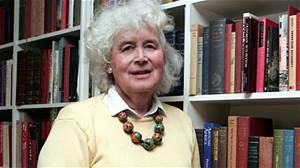
Jan Morris, who is now 88 to my 76. -- Wikimedia photo

Jan Morris, who is now 88 to my 76. — Wikimedia photo

I was 14 years old in 1953, seeing world happenings through my own eyes – well at least when I was aware of what going on around me – and thus, as I said, fascinated by seeing events and places a second time through both mine and Morris’ eyes and thoughts, veiled in the gauzy haze of half a century.

I had, over the years, read many magazine travel articles by Morris, but none of the writer’s many books, of which the most noted is his history of the British Empire trilogy, Pax Britannica. I knew little, however, about Morris’ personal life. And for some strange reason, or so I thought, I truly didn’t know if the writer was male or female, perhaps because. I knew people of both sexes called Jan.

I laughed when I discovered the answer in The World’s prologue written by Morris. Jan began life as James, completing an eight-year sex transition in 1972. So he wrote over time as both genders.  I guess my instincts were right on target.

Meanwhile, I’m simply enjoying his writing, and traveling back in time to the many eras Jan and this old wondering-wanderer broad have lived through. Morris, in his prologue, could have been speaking for me, when he sums up his feelings about the world over the years.

“I was twenty-four years old at the start of the 1950s, seventy-four at the end of the 1990s, so the passage of the globe described in this book is the passage of a life, too, from the twilight of adolescent to the dawn of senility, all its judgments, unreliable in any case, are colored by the grand change of life from youth to old age … Few of us are consistent in our opinions and values for fifty years, and we are affected not only by experience and maturation, but by moods, fickle tastes, boredom and personal circumstance.”

            Ain’t it the truth!

Bean Pat Morning song http://tinyurl.com/pzn3qla If you love to be woken by bird twitter, you’ll like this house wren’s salute to the day.

America the Beautiful


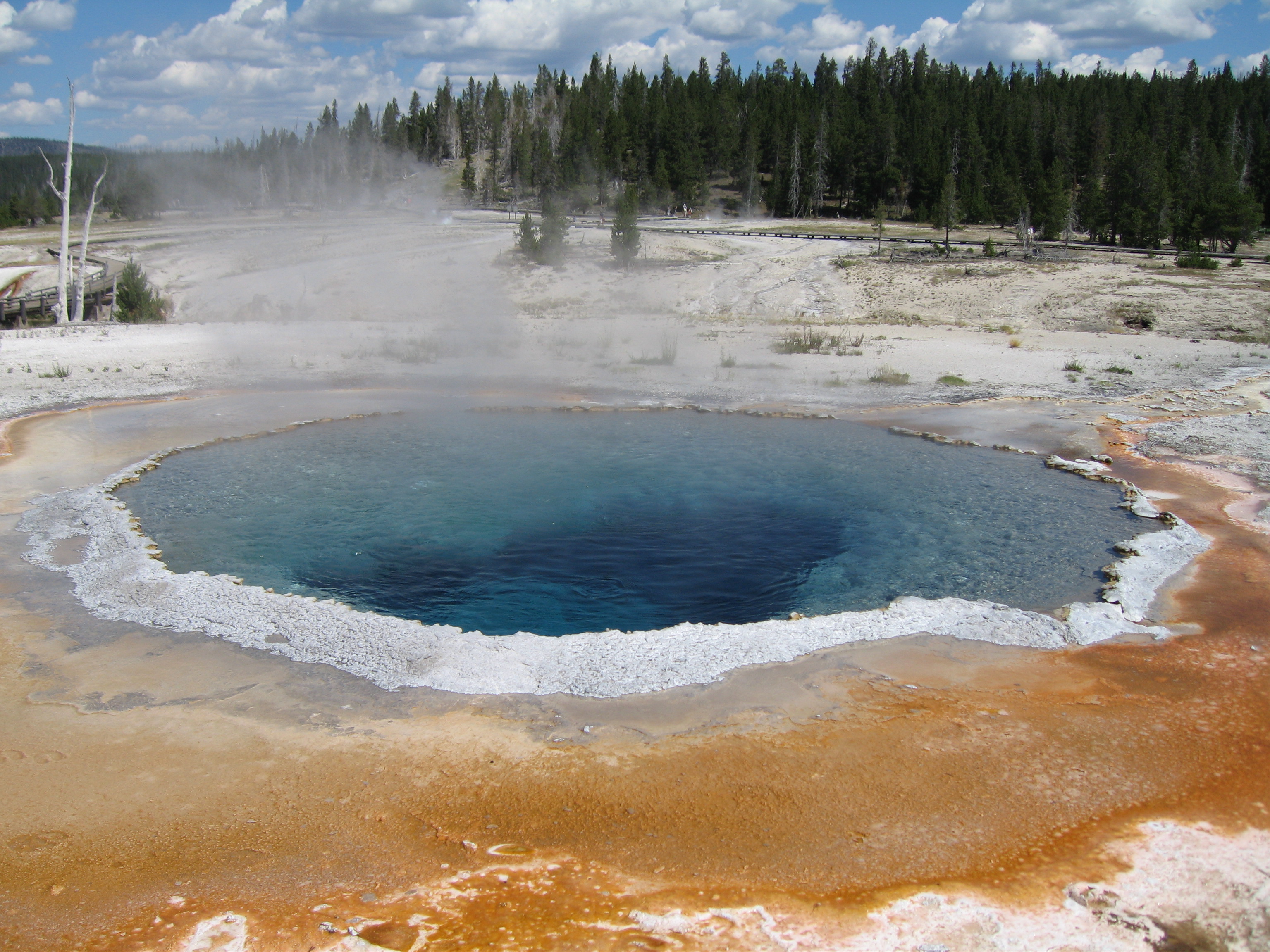
A thermal pool on the Morning Glory Trail in Yellowstone, which was on Budget Magazine's list of most beautiful sites.

A thermal pool on the Morning Glory Trail in Yellowstone, which was on Budget Magazine’s list of most beautiful sites. — Photo by Pat Bean

Awesome is Everywhere You Look

Budget Travel recently had an article listing the 33 most beautiful sights in the United States. I counted my blessings when I saw that I had seen 28 of the magazine’s 33 selected sites.

It seems that during the nine years I lived in and drove across this country in a small RV, I didn’t miss much. And to make up for those five sites I missed, I saw hundreds of other that easily could have made the list.

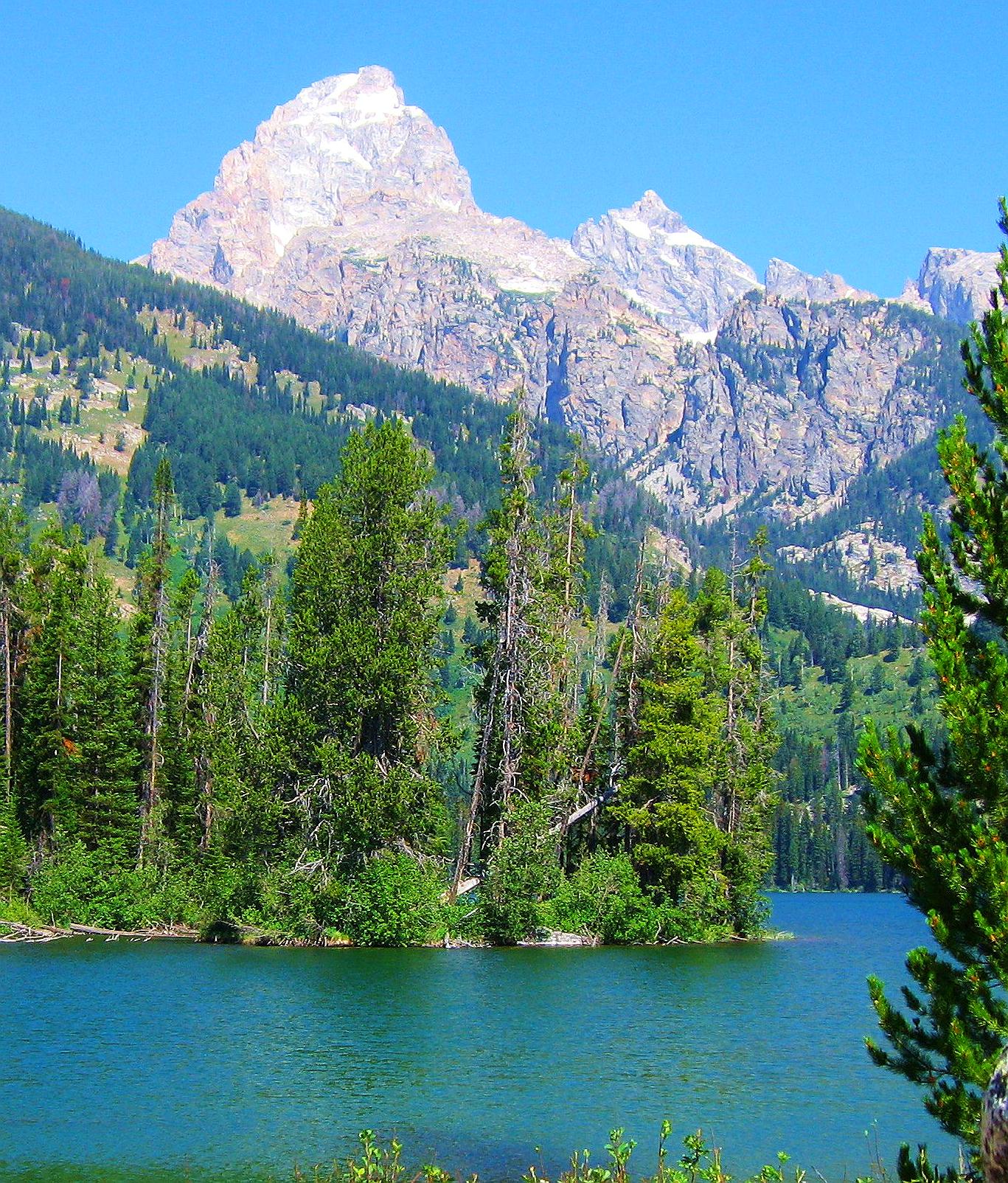
Taggart Lake in Teton National Park, which wasn't on the magazine's list.  -- Photo by Pat Bean

Taggart Lake in Teton National Park, which wasn’t on the magazine’s list. — Photo by Pat Bean

            What was your most favorite place? I’m often asked this question when people learn about my travels. And I’m always stuck for an answer. How do you choose one from so many?    The truth is, I look out my third-floor balcony window and see beauty almost every day. This morning it was two brown-headed cowbirds flitting in a tree.  Every time the sun caught their black, back feathers, iridescent greens and purples shimmered in the air.

I guess I’m blessed because I saw beauty in these two unpopular birds just as I saw beauty in places like Yellowstone, Grand Canyon or Glacier national Parks.

Bean Pat: the ancient eavesdropper http://tinyurl.com/o8h4avw Degrees of shade. Another blogger who looks at the world as I do.

Names

“You’ve got to invest in the world, you’ve got to read, you’ve got to go to art galleries, you’ve to find out the names of plants. You’ve got to start to love the world and know about the whole genius of the human race. We’re amazing people.” — Vivienne Westwood.

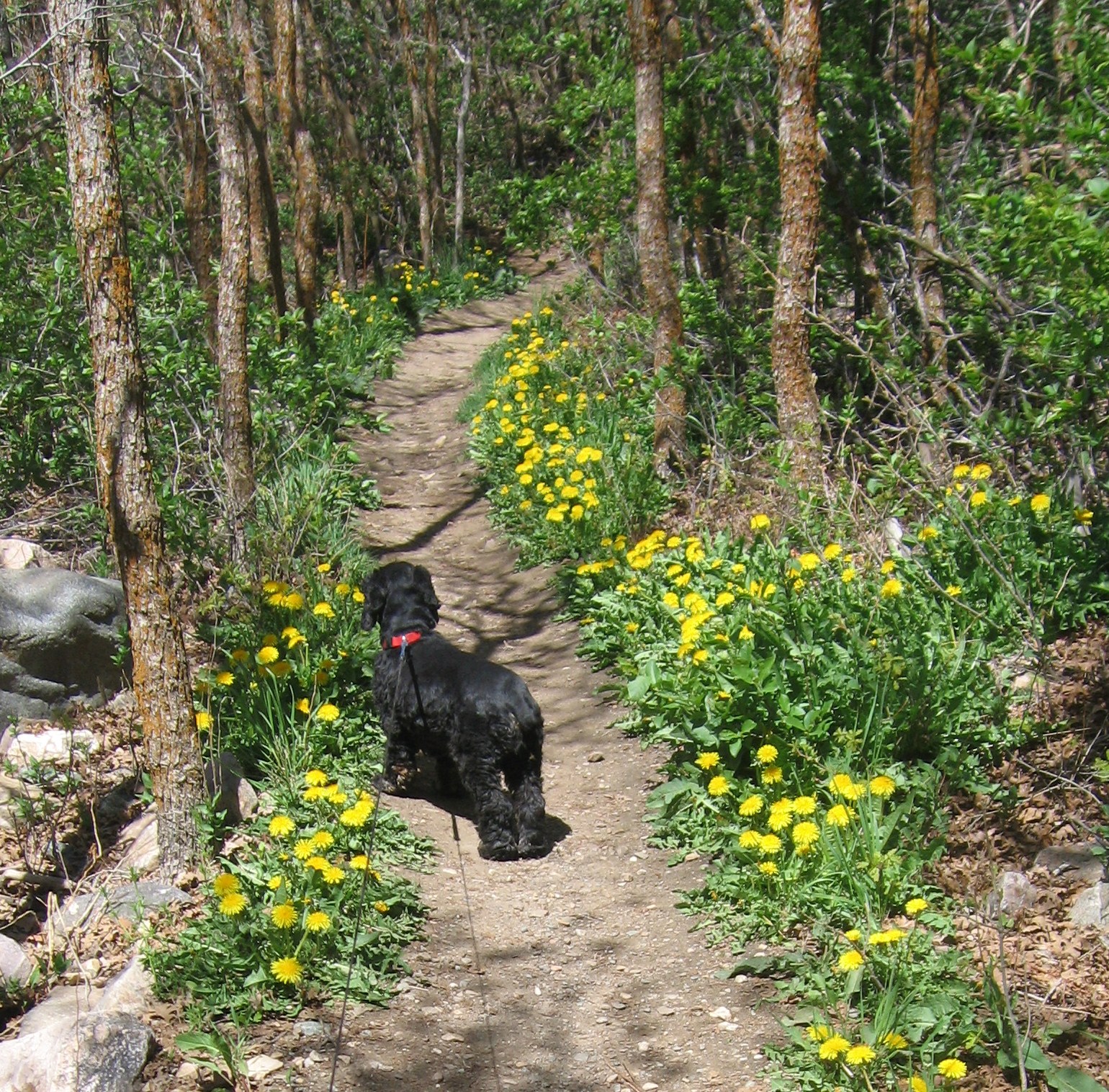
The name of this butterfly is  orange sulfur alfalfa, and while I know that the flower (I don't like to think of them as weeds), I have no idea which of the 150 varieties of dandelions this is. Do you? -- Photo by Pat Bean

The name of this butterfly is orange sulfur alfalfa, and while I know that the flower is a dandelion (I don’t like to think of them as weeds), I have no idea which of the 150 varieties of dandelions this is. Do you? — Photo by Pat Bean

Mine Fits
One of  the traits of a good writer is that he or she quickly learns that a tree is not a tree. It’s a cypress or a live oak, and a bird is not a bird, it’s a red-tailed hawk or a black-capped chickadee. Such proper names paint clearer images for readers to add pictures to your go with your words.
I thought about this when the recent writing prompt for my Story Circle Network online writing group was to explain the meaning of our names.  I wondered if  my name explains me.  I think it does. This is what I wrote:
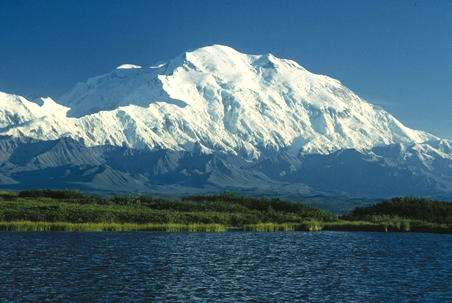
And this mountain, the tallest in North America, has two names: Denali and Mount McKinley.-- Wikimedia photo

And this mountain, the tallest in North America, has two names: Denali and Mount McKinley.– Wikimedia photo

I was named Patricia Lee Joseph, the last name being a gift from my great- great-grandfather, who was a Portuguese sailor who jumped ship in Connecticut. The choice of Patricia  was because it was the name my mother had randomly punched out on a once-popular raffle board. She paid a quarter for the punch in hopes of winning a small cedar box.

My mother, who was pregnant with me at the time, said if she won she would name me Patricia. She won, and that box was part of her possessions for as long as I knew her. My middle name is my mother’s maiden name. She used to say it was quite appropriate because I had inherited  my wanderlust from her father, and my grandfather, Charles Forest Lee.

I have never been called Patricia, however. Well, except for the few times my mother was extremely angry at me and yelled: Patricia Lee Joseph!!!

Growing up, I was called the very southern Patsy Lee, which was OK until my first-grade valentine day when someone wrote Pasty instead of Patsy on my card.  One kid noticed, and for the rest of the week, I was taunted by kids calling me Pasty. Usually they called me Cootie Brain.

I realize now how well that unkindly moniker fit. I was like Hermione in Harry Potter, the girl who was a know-it-all who constantly waved her hand in the air to answer every question posed by a teacher. And my hair was always tangled with knots in it that could easily have hidden cooties.

I laugh at the image these days, but back then the nickname was the source of daily tears.

I always wanted to be called Pat in school, but a popular classmate already had claimed that name. I wasn’t called Pat until the sixth grade, when my family moved and I attended another school. From that time forward, I’ve always been Pat — and I never uttered Cootie Brain again until I was almost 40 and the hurt of my younger years had vanished.

By the time I divorced my wrong choice of a mate, when I also was almost 40,  I was already published as Pat Bean, and I chose to keep Bean instead of reverting back to my maiden name. I think Pat Bean makes a great byline, and it feels like me.

Bean Pat: Brevity http://tinyurl.com/ot64fuz One of my very favorite writing blogs

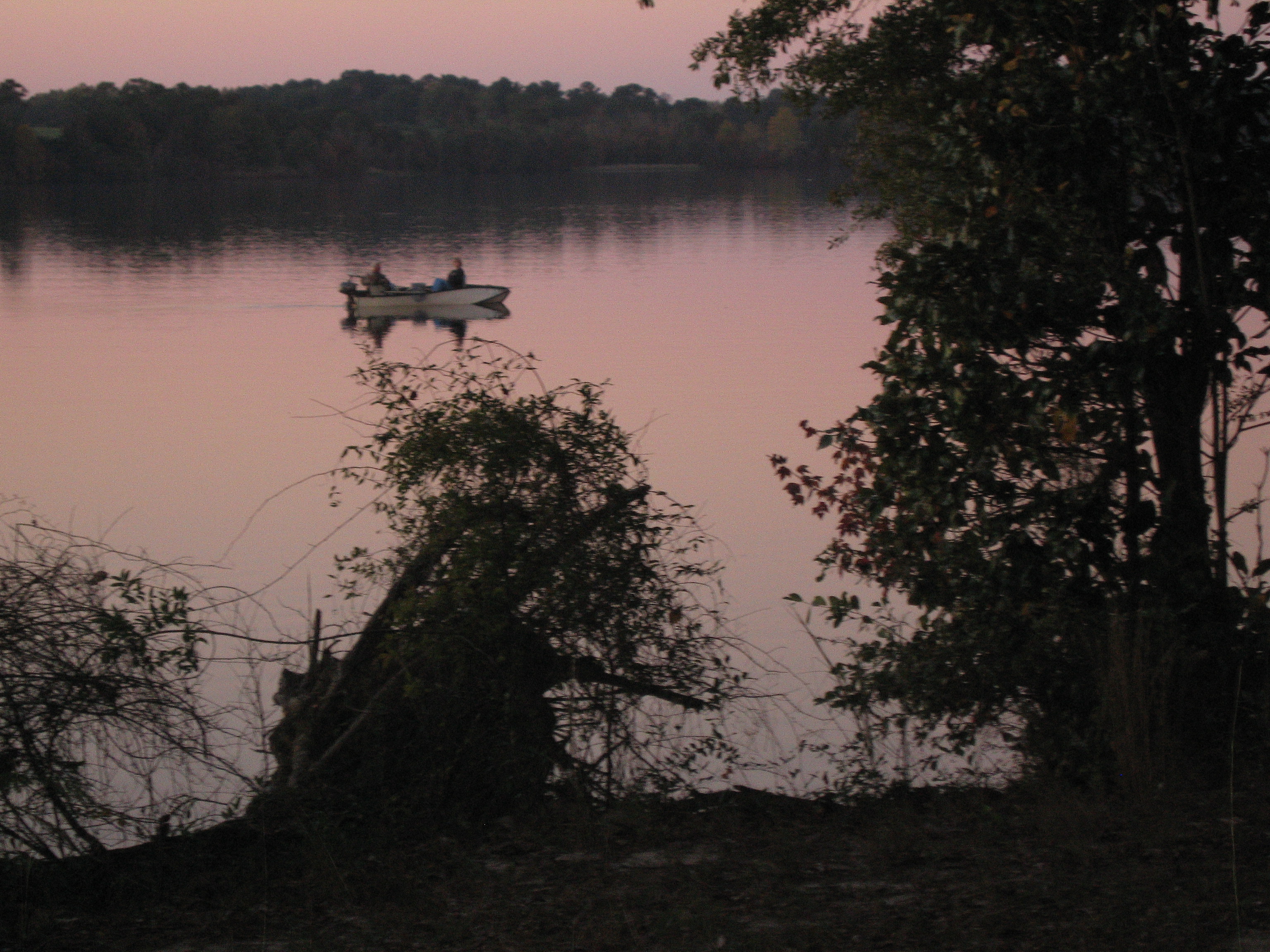
A magical moment at W.F. Jackson Park in Alabama -- at crepuscular.

A magical moment at W.F. Jackson Park in Alabama — at crepuscular. — Photo by Pat Bean

   “Every spring I hear the thrush singing in the glowing woods. He is only passing through. His voice is deep, then he lifts it until it seems to fall from the sky. I am thrilled. I am grateful. Then, by the end of morning, he’s gone, nothing but silence out of the tree where he rested for a night. And this I find acceptable. Not enough is a poor life. But too much is, well, too much. Imagine Verdi or Mahler every day, all day. It would exhaust anyone.” – Mary Oliver

My Curiosity Never Killed a Cat  

            I’m reading Luke Dempsey’s “A Supremely Bad Idea,” which I had checked out from the local Tucson Audubon Library. It’s a book along the lines of Mark Obmascik’s “The Big Year,” which is about three’s men’s obsession to see the most bird species in 1998. Bad Idea is also about three birders chasing birds. .

A tri-colored heron, once known as a Louisiana heron, spotted on the Blue Water Highway between Surfside and Galveston, Texas. -- Photo by Pat Bean

A tri-colored heron, once known as a Louisiana heron, spotted on the Blue Water Highway between Surfside and Galveston, Texas. — Photo by Pat Bean

Anyway, Dempsey mentions seeing a Louisiana heron, which sets my mind roiling. I’ve seen every species of herons this country has to offer, and I had never heard of a Louisiana heron. So off I chase to Bing it, which is the same as Googling it, only I use Bing as my internet explorer. In no time at all, my curiosity is slated. A Louisiana heron is what a tri-colored heron was once called.

The discovery left me pleased that I had learned something new. Then Dempsey used the word crepuscular, which sent back to my computer and my online dictionary. Crepuscular, I learned, means twilight, and can refer to animals that come out at twilight, and which are often wrongly referred to as nocturnal.

I don’t know about you, but I love it when writers send me to a dictionary.

Bean’s Pat: Dawn Downey’s Blog http://tinyurl.com/q3l3vvb A blog that will make you thankful for only having to walk to exercise. I also love this author’s book, “Stumbling Toward the Buddha,” which I recently read.