Feeds:
Posts
Comments

“I see my path but don’t know where it leads. Not knowing where I’m going is what inspires me to travel it.” — Rosalia de Castro

A view of Wolf Creek Pass from Highway 160 — Wikimedia photo

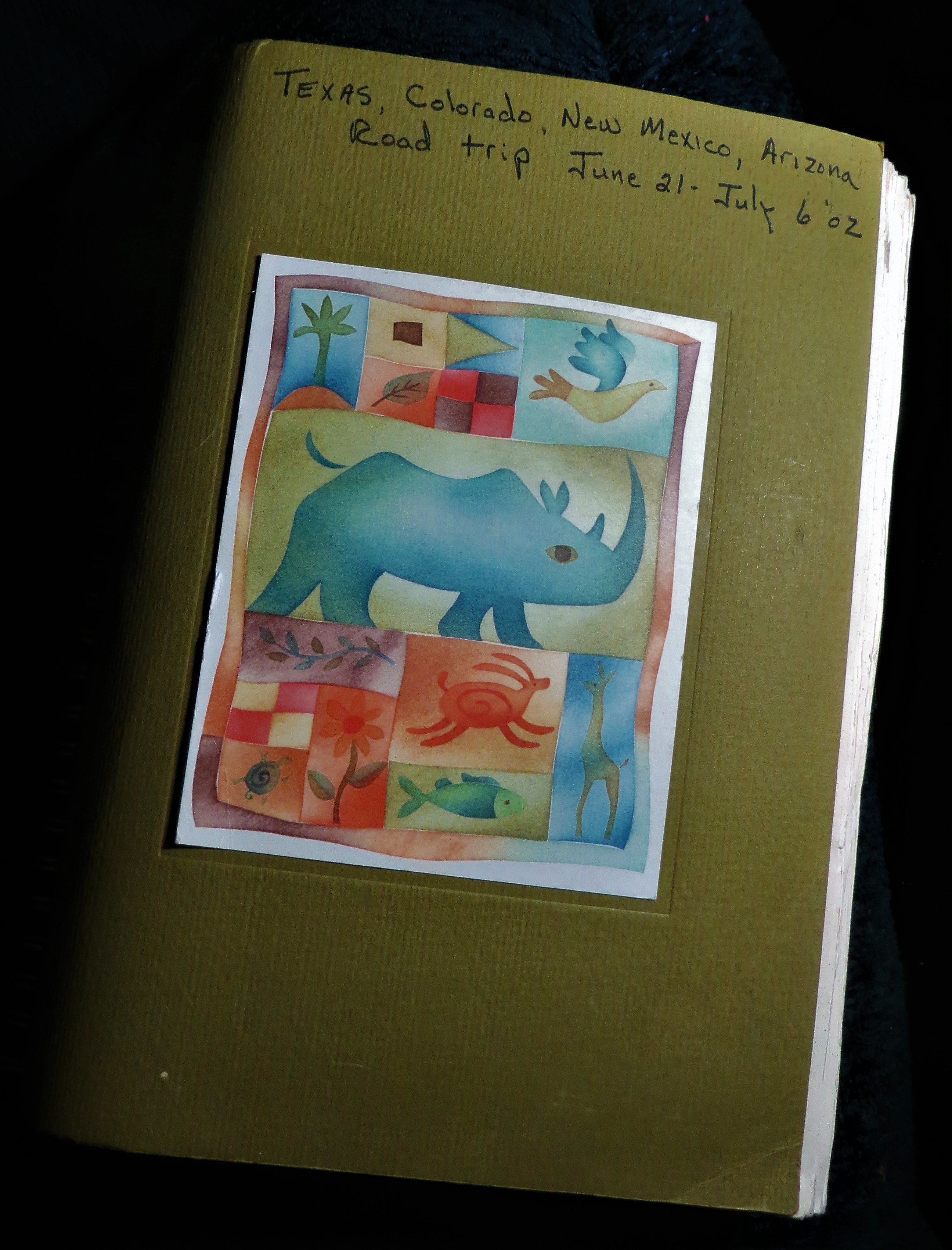
Road Trip: June 21 – July 6, 2002

The drive on Highway 160 between Cortez and Pagosa Springs, Colorado, is one of my favorites. The most scenic section is Wolf Creek Pass, a high mountain drive that takes travelers across the Continental Divide through the San Juan Mountains. I first drove this route in the 1970s when it was a simple two-lane highway, which, of course, it no longer is.

Wolf Creek Pass tunnel that was completed in 2006.

Thankfully, I never had to drive it in the winter, a trip that  C.W. McCall sings about in his song “Wolf Creek Pass.” He calls the drive “37 miles of hell.” I call it a road trip not to be missed.

Near Pagosa Springs, I took a four-mile detour off Highway 160 to visit Echo Canyon Lake State Wildlife Area. The small, but about 50-foot deep reservoir that sits above 7,000 feet in elevation, is surrounded by scenic mountains,, It is mostly used by fishermen, but is also listed as a “hot birding spot” and is one of the sites on Colorado’s birding trail maps. The latter is what brought it to my attention.

Coots at Echo Canyon Lake. — photo by Pat Bean

While I didn’t have long to explore the area, I felt well-rewarded for taking the time to visit. There was not another soul around. I had the place to myself and could drink in its peaceful scenery, and the birds, in wonderful solitude. That doesn’t happen too often these days.

Birds at the reservoir included coots with babies, yellow-headed blackbird, red-winged blackbird, redhead duck, cinnamon teal and brown-headed cowbird.

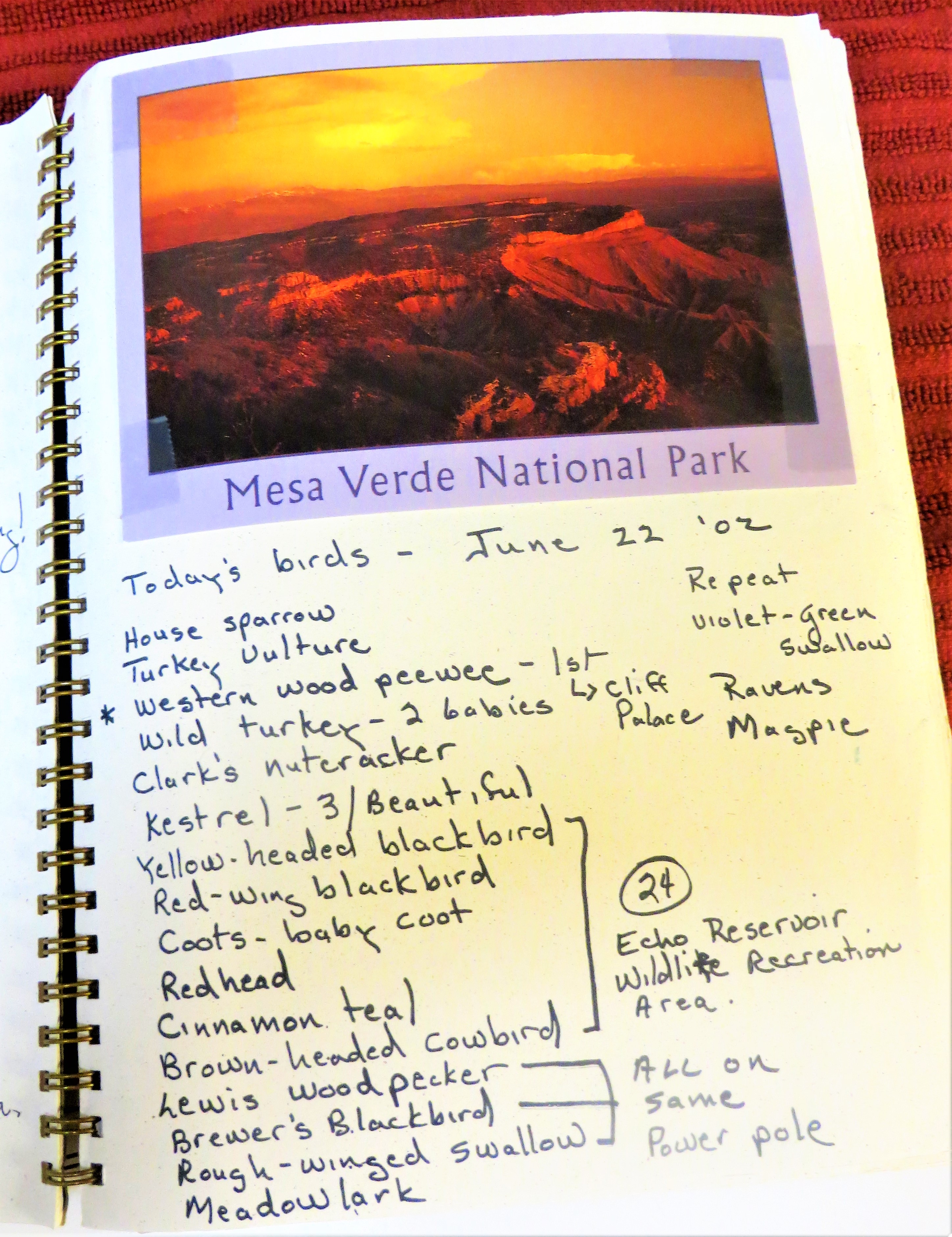
On the way back to the highway, I spotted a Lewis woodpecker, a Brewer’s blackbird and a rough-winged swallow all on the same power pole. I thought that was kind of neat. In addition to these, the other birds seen this day included house sparrow, turkey vulture, western wood peewee (my lifer at Mesa Verde), a wild turkey with two chicks, Clark’s nutcracker, kestrel, violet-green swallow, raven and magpie.  … to be continued.

Now available on Amazon

Bean Pat: A simple way to travel https://simpletravelourway.woodpress.com/2019/03/13/car-camping-our-way/   This was my way of traveling for many years.

Pat Bean is a retired journalist who lives in Tucson with her canine companion Pepper. She is a wondering-wanderer, avid reader, Lonely Planet Community Pathfinder, Story Circle Network board member, author of Travels with Maggie available on Amazon, enthusiastic birder and is always searching for life’s silver lining. She can be reached at patbean@msn.com

*You can listen to McCall sing “Wolf Creek Pass “on YouTube 

National parks are the best idea we ever had. Absolutely American, absolutely democratic, they reflect us at our best rather than our worst.” — Wallace Stegner. 

Cliff dwellings at Mesa Verde National Park. — Photo by Pat Bean

Road Trip: June 21 – July 6, 2002

            Today would be the fourth time I visited Mesa Verde National Park, a place that because of its beauty and its history would never bore me. But today would be the first time I had visited this park since I had become addicted to bird watching.

A page from my journal.

So along with looking at the high mesa scenery and cliff dwellings, I was always on the lookout for birds. Of the 1,000 or so bird species found in North American, about 200 of them have been sighted in the park. I didn’t see too many of them, but it was still fun looking.

I enjoyed the 45-minute drive up to the top of the 8,600-foot mesa because of the scenic views as much as I enjoyed stopping at overviews of the cliff dwellings and the hike down to one of them, the Spruce Tree House. The cliff dwellings were used by those often called the Anasazi sometime after 650 and through the end of the 12th century. The occupants used a combination of hunting, gathering, and subsistence farming of crops such as corn, beans and squash to survive.

Before hiking down to the ancient dwellings, I spent 50 cents to purchase a guide to the site, which also identified the plants along the trail. While I enjoy the historical aspects of the places I visit, the truth is I enjoy the handiwork of nature even more.

And the highlight of this morning of sightseeing on the high mesa (perhaps because this wasn’t my first sight

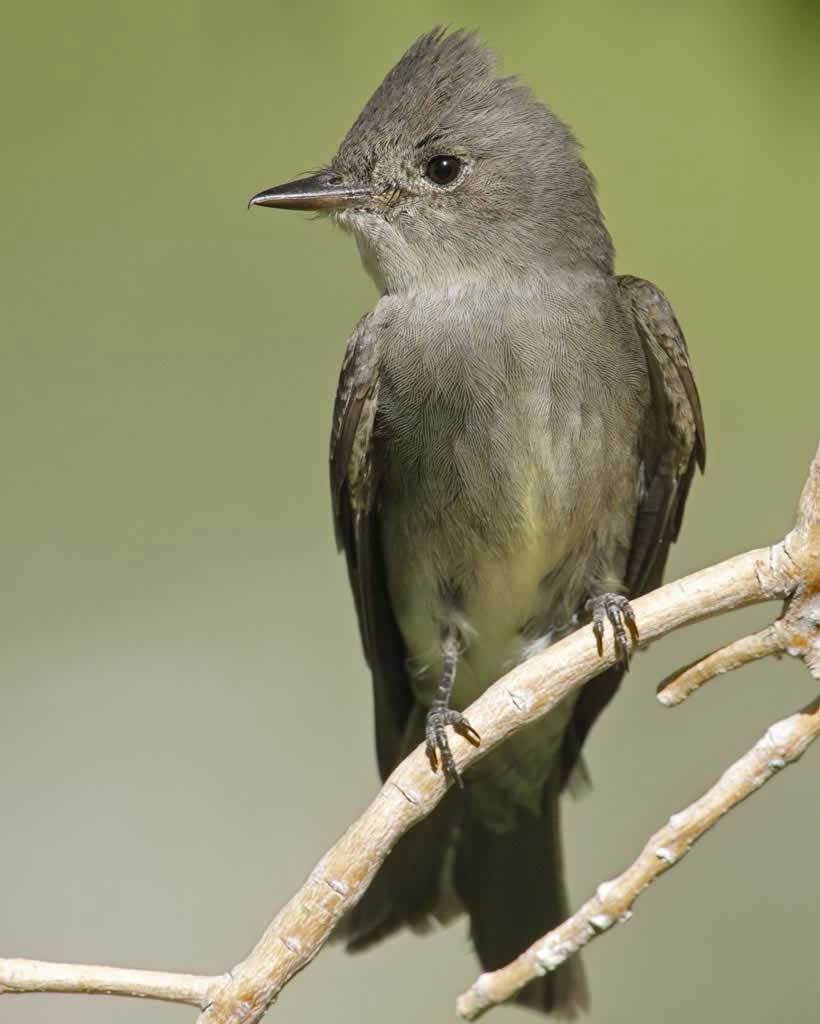
Western wood peewee 

of the cliff dwellings) was seeing a western wood peewee for the first time. It was my second lifer for the trip. This peewee is a rather plain grayish-brownish bird five to six inches in size. Its most distinguishing feature is a peaked crown that gives a triangular shape to the bird’s head. The peewees belong to the flycatcher family, and like them can be seen sitting up tall and then flying out to catch a spotted insect, then flying back to the same perch.

It was this action that gave me a clue to the bird’s identification, followed by a close look at my bird field guide…. To be continued.

Bean Pat: Mesa Verde  https://www.nps.gov/meve/index.htm   Check out the video about the park. 

Pat Bean is a retired journalist who lives in Tucson with her canine companion Pepper. She is a wondering-wanderer, avid reader, Lonely Planet Community Pathfinder, Story Circle Network board member, author of Travels with Maggie available on Amazon, enthusiastic birder and is always searching for life’s silver lining. She can be reached at patbean@msn.com


Road Trip: June 21 – July 6, 2002

“The real voyage of discovery consists in not seeing new landscapes, but in having new eyes.” – Marcel Proust

A page from my Journal.

After spending way too much time driving to the end of the road in Canyonlands National Park, I knew most of the rest of the day’s explorations would have to come through the windshield of my vehicle. That was OK because I was traveling through familiar territory that I had been through many times.

My Journal

While I often tried to drive new roads and see new sights on my trips to Texas to visit family once or twice a year, the one I was traveling this time was the shortest and the most used. Shortly after leaving Canyonlands, I stopped in Moab, one of my favorite towns, to gas up and get snacks for the road. Cheetos and a Coke, I suspect, as this is my usual travel fare.

But even in my hurry to get down the road, I did stop for about 10 minutes at Wilson Arch to take a few pictures.  Wilson Arch is about 25 miles south of Moab and quite visible from the road (Highway 191). There is also a half-mile trail leading up to and around it.

The first time I spotted the 46-foot-high by 91-foot-wide arch,, I had been amazed. It simply stood there without fanfare.

Today there are turnouts and interpretive signs noting that Wilson Arch was named after Joe Wilson, a local pioneer who had a cabin nearby. Additionally, the signs say the rock formation is entrada sandstone and that the arch was formed when ice-filled cracks formed and caused parts of the rock to break off. At least that’s my interpretation of the more scientific data.

Whale Rock in Canyonlands National Park. — Photo by Pat Bean

On the same page of my journal that I noted my stop at Wilson Arch this day, I also listed the birds I saw, a habit I followed each day of my journey and one I continued in my book, Travels with Maggie about my later RV-ing years. And yes, the same Maggie who made this trip with me is the same one in the book.

The birds this day included American robin, European starling, California gull, magpie, raven, violet-green swallow, Say’s phoebe and pinyon jay, the latter being a species I saw for the first time and which I added to my then-growing life list.

Bean Pat: All about the Everglades https://earthstonestation.com/2019/03/06/two-people-that-saved-the-everglades-earnest-coe-marjory-stoneman-douglas/  Great blog for nature lovers like me.

Now available on Amazon

Pat Bean is a retired journalist who lives in Tucson with her canine companion Pepper. She is a wondering-wanderer, avid reader, Lonely Planet Community Pathfinder, Story Circle Network board member, author of Travels with Maggie available on Amazon, enthusiastic birder and is always searching for life’s silver lining. She can be reached at patbean@msn.com

Pothole Trail: A page from my journal

            I did not wish to take a cabin passage, but rather to go before the mast and on the deck of the world, for there I could best see the moonlight amid the mountains. — Henry David Thoreau       

Road Trip: June 21 – July 6, 2002

I was recently looking through my bins of journals hoping to find some specific details. I knew was in one of them. I didn’t find it, but I did come across a journal I kept during a 16-day trip from Ogden, Utah, to Texas back in 2002.

Saw my first pinyon jay at a rest area up Spanish Fork Canyon, then another one in Canyonlands National Park.

This was the first time I had looked at this particular journal since completing it nearly 19 years ago.  Perusing it brought back many good memories, including those of my former canine companion Maggie* who later traveled with me in my RV for eight years.

Anyway, I thought it might be fun to retake the journey on my blog.

The journal contains more photos and brochures of places I visited than words, but with them to guide me, I think I can fill in the blanks. The one thing I did note carefully were the birds I saw each day, since I had only recently taken up bird watching.

I drove from Ogden, Utah, to Cortez, Colorado, the first day, just slightly less than 400 miles. I started before dawn to get past Salt Lake City and Provo before traffic, looking forward to my turnoff from heavily-trafficked Interstate 10 to Highway 6 that would take me through Spanish Fork Canyon. My first stop of the day was at the Spanish Fork rest area where Maggie and I took a short walk around the area, and where I saw a pinyon jay, a new bird for my life list.

Pothole Trail landscape. — Photo by Pat Bean

Then it was up and over Soldier Summit, almost always a scenic drive – unless it’s during a winter storm – like the one I once drove through to get to Price for a newspaper story. It also wouldn’t be a good drive through the canyon this week as snows are predicted. But that June day in 2002, as I recall, was sunny, with a wildflower-filled meadow near the 7,477-foot summit.

After Price, the highway followed the Book Cliffs, a line of desert mountains east of Highway 6, to Green River, where after a jog on Interstate 79, it joined Highway 191. Just before Moab, I took a detour to the Islands in the Sky section of Canyonlands National Park, where I hiked the half-mile Pothole Trail before continuing on my journey.

I had hiked, and enjoyed, this short trail before, and knew it would be a great way to break up the long drive and enjoy a bit of spectacular scenery as well. I wasn’t disappointed. – To be continued….

Bean Pat: Texas Tweeties https://bobzeller.wordpress.com/2019/03/03/post-number-1000-yee-haw/?wref=pil 1,000th post.

Pat Bean is a retired journalist who lives in Tucson with her canine companion Pepper. She is a wondering-wanderer, avid reader, Lonely Planet community pathfinder, enthusiastic birder and is always searching for life’s silver lining. She can be reached at patbean@msn.com

*Maggie, is the same canine companion featured in Bean’s book Travels with Maggie, available on Amazon. 

Snow in Tucson

“The Eskimos had fifty-two names for snow because it was important to them: there ought to be as many for love.: — Margaret Atwood

The view this morning from my living room balcony. — Photo by Pat Bean

Yea! A Pajama Day

I sat comfortably near my Living Room window this morning, drinking cream-laced coffee, reading the New York Times, and watching snow fall outside. What a great moment.

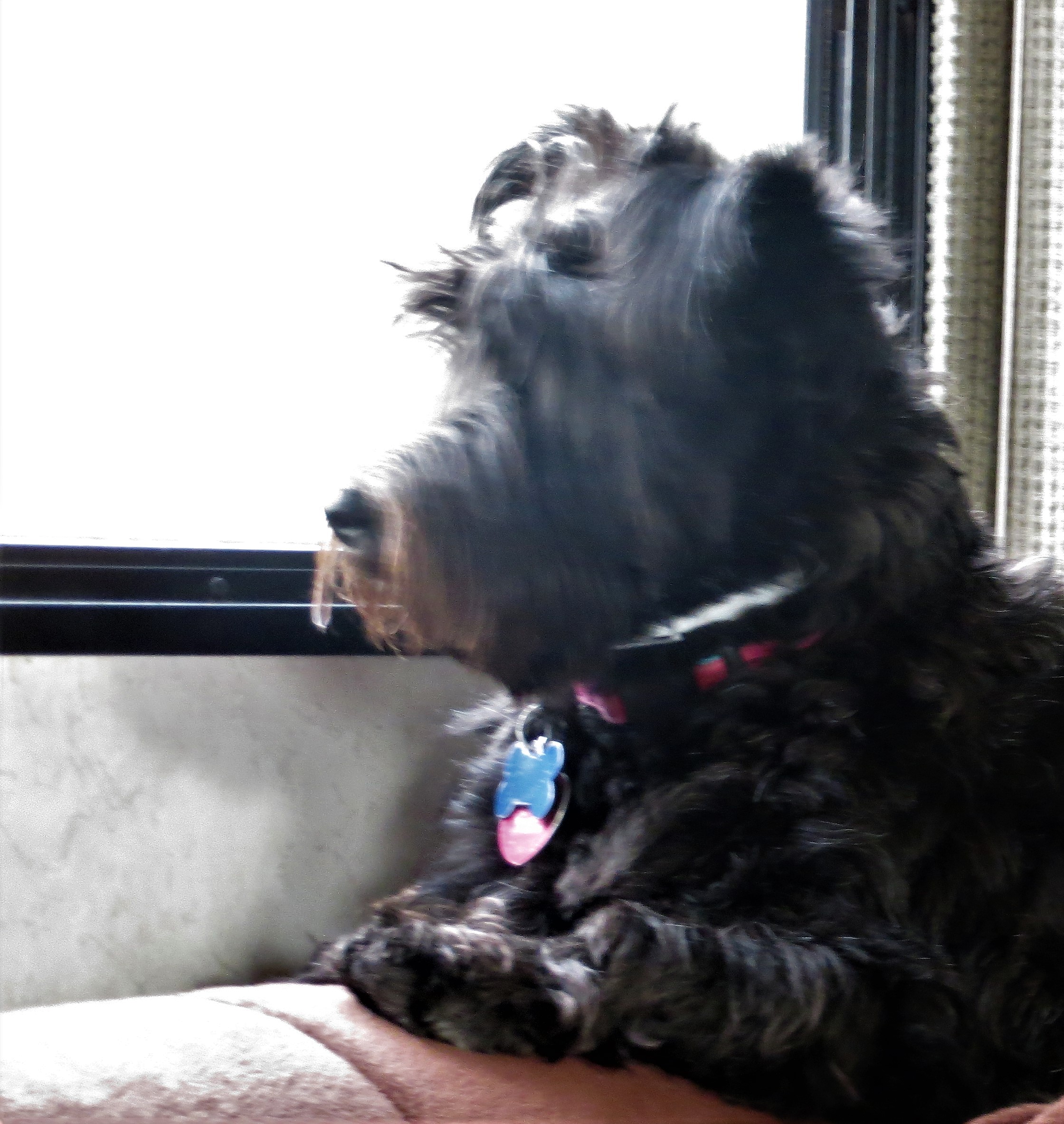
Pepper would rather watch the snow than walk in it. — Photo by Pat Bean

It made up for the fact that just a short time earlier, I had walked my canine companion Pepper in drizzling rain. Neither of us was too happy about it. Thankfully, instead of her usual dawdling, Pepper did her business quickly and headed briskly back to the stairs leading to our third-floor walkup apartment, where we both shook ourselves off before opening the door.

Pepper and those stairs are this old broad’s exercise program, so I’m not complaining.

Nor am I complaining about the snow. It’s a rare occurrence in Tucson, which sits in the Sonoran Desert. Besides, a snowy day is a good pajama day with a good book. I might even finish the two I am currently reading: Around the World in 50 Years by Albert Podell, and One More Warbler: A Life with Birds by Victor Emanuel and then start reading the next book on my reading list, My Own Words by Ruth Bader Ginsburg.

Let it snow, let it snow.

Now available on Amazon

Bean Pat: Forest Garden https://forestgardenblog.wordpress.com/2019/02/22/still-learning-how-to-see/  Thoughtful words and powerful images.

Pat Bean is a retired journalist who lives in Tucson with her canine companion Pepper. She is a wondering-wanderer, avid reader, enthusiastic birder and is always searching for life’s silver lining. Check out her book Travels with Maggie, available on Amazon, to learn more. She can be reached at patbean@msn.com

What is Beauty?

Looking down from the top of Angel’s Landing. It’s a beautiful sight. — Photo by Pat Bean

“Life is full of beauty. Notice it. Notice the bumble bee, the small child, and the smiling faces. Smell the rain, and feel the wind. Live your life to the fullest potential and fight for your dreams.” – Ashley Smith

I recently came across a post that listed the 29 most beautiful places in America. I laughed at the audacity of such a list — even though I had visited 15 of them and agreed they were indeed beautiful. The word beautiful is totally subjective, especially if you give credence to the oft-quoted saying that beauty is in the eye of the beholder.

Of course, butterflies are beautiful, but so are dandelions, even in a manicured lawn. — Photo by Pat Bean

By this definition, as a birder, I think red, featherless and wrinkled newborn California condors are beautiful

Often, when people discover that I spent nine years in a small RV traveling this country from border-to-border and ocean-to-ocean, I’m asked: “What’s the most beautiful place you have visited.”

I’ve never had an answer to this question. I saw beauty not just in every state I visited, but every place I passed through. So, let me now be as audacious as the person who came up with that 29-most-beautiful-place list with my own list of things I consider beautiful.

Well, maybe not quite so audacious. I won’t use the adjective “most” and I’ll keep the list to 10 and invite readers to add the remaining 19.

1 – A bright yellow dandelion bursting up from a manicured, green lawn.

2 – A smile on the wrinkled face of a man or woman whose years on earth have been many.

3 – A red-tailed hawk circling above with the sun illuminating its red tail feathers.

Mesa Falls in Idaho. I’ve never seen an ugly waterfall. Have you? — Photo by Pat Bean

4 – Just about any waterfall in the world.

5 – An act of kindness in any form.

6 – Dark, stormy days that are ideal for staying indoors and reading.

7 – Two trees growing together as if in eternal friendship.

8 – A trail that beckons one to follow and discover Mother Nature’s wonders.

9 – The view from the top of Angel’s Landing in Zion National Park.

10 – Fresh, home-baked brownies.

Now, feel free to share the beautiful places or things that you would add to this list.

Now available on Amazon

Bean Pat: Beautiful wildlife https://sfkfsfcfef.wordpress.com/2019/02/20/lens-artists-photo-challenge-nature/

          Pat Bean is a retired journalist who lives in Tucson with her canine companion Pepper. She is a wondering-wanderer, avid reader, enthusiastic birder and is always searching for life’s silver lining. Check out her book Travels with Maggie, available on Amazon, to learn more. She can be reached at patbean@msn.com

New York Library Lions

“When I have bad days, I just eat chocolate ice cream and dance to the “Lion King” soundtrack. It’s really odd, but it’s true.” Blake Lively

I discovered that this now out of print book about New York Cities Top Cats can be bought for $40 used.

Two Top Cats 


I recently started attending a writing group at my local library. It’s about the sixth group I’ve attended, searching for one that fit me, since moving to Tucson a few years ago. The others were all quite nice, but not exactly what I needed as a writer. This last one fits me perfectly. It’s a small group of serious writers who want to become both better writers and published writers.

Fortitude

That’s me — exactly.

During weekly meetings, up to six members submit a short piece for critique by the other writers in attendance. One of the more recent pieces was quite polished and excellent.  It was a section from an essay about the National Census, with a focus on counting the homeless in New York City.  The author used the two New York Public Library lion statues as an analogy, noting that they looked out and saw all. It was a piece of writing that I wished I had written, perhaps because of my long intrigue about the history of those two lions.

This native Texan, who has always lived well West of the East, has been blessed to have spent time in that magical – well you can’t be a writer and not think of it in that way – New York Library three times. And on each visit, I spent part of that time staring at those two killer felines, who are the stars in the book Top Cats: The Life and Times of the New York Public Library Lions published in 2006.  I would have bought the book when I discovered it had been written, except it is out of print and a used copy these days is selling for $40.  Instead, I tracked down what information I could about them from free website sources that included  Wikimedia, the New York Library, and New York City history pages.

Patience

What I discovered, briefly, first from Henry Hope Reed’s book, The New York Public Library, is that sculptor Edward Clark Potter was paid $8,000 to create the modeling for the two lions and the Piccirilli Brothers carved the statues for $5,000 using pink Tennessee marble. The lions were completed in time for the library’s official dedication in 1911.

Not particularly admired at first, The New York Times, which kept a close watch on the public reaction to the sculptures, reported that letter writers found the lions too tame. They were “mealy-mouthed,” “complacent,” and “squash-faced.” One critic compared their appearance to a cross between a hippopotamus and a cow and declared them “monstrosities.”

The lions were first called Leo Astor and Leo Lenox, after The New York Public Library founders John Jacob Astor and James Lenox. Later, they were known as Lady Astor and Lord Lenox – even though they are both male lions.

In the 1930s, they were renamed Patience and Fortitude for the qualities New York Mayor Fiorello LaGuardia felt New Yorkers needed to survive The Depression. These names stuck. Patience guards the south side of the Library’s steps and Fortitude the north.

After World War II, the two began to symbolize holidays – wreaths and floral arrangements accompanied seasonal changes and sports fandom, with Mets or Yankees hats sometimes perched atop their heads.

Decades of pigeon deposits, climbing children, and decoration eventually took its toll. In 2004, the city spent two weeks and $114,000 to steam-clean and scrub the lions with a toothbrush before applying mortar to expanding cracks.

I think a revisit to Patience and Fortitude, and that magical library, is back on my ever-growing bucket list, which for this wandering-wonderer never seems to get any shorter.

Bean Pat: Brevity https://brevity.wordpress.com/2019/02/13/how-to-be-a-writer-in-five-steps/ Good writing advice for those of us with words in our brains that cry to be let out. This is one of my favorite blogs for writers.

           Pat Bean is a retired journalist who lives in Tucson with her canine companion Pepper. She is a wondering-wanderer, avid reader, enthusiastic birder and is always searching for life’s silver lining. Check out her book Travels with Maggie, available on Amazon, to learn more. She can be reached at patbean@msn.com

“We must go beyond textbooks, go out into the bypaths and untrodden depths of the wilderness and travel and explore and tell the world the glories of our journey.” John Hope Franklin

The Four Hoodoos in Devil’s Garden. — Wikimedia photo

Grand Staircase-Escalante Monument 

It was an April day in 1997, just a few months after the creation of the Grand Staircase-Escalante National Monument. I was on assignment as a reporter to write a story about this wild Southern Utah Landscape. And for four days, I wandered through its nearly 2 million acres* of mostly wild, uninhabited lands.

The explorations included a drive on the then unpaved Burr Trail, about which I wrote about the impressive silence away from the hum of refrigerators. Another day, I drove the Hogsback stretch of Highway 12, which some have called the most beautiful road in America. The Hogsback portion follows a narrow high mesa flanked by deep canyons on either side. If you’ve ever driven it you can never forget it.

It was an amazing journey and I was one lucky reporter to have been assigned to write about this magnificent landscape.

Metate Arch in Devil’s Garden. — Wikimedia photo

This day, my last before heading back to Ogden in Northern Utah, found me in a place called Devil’s Garden, located off Highway 12 about 17 miles southeast of Escalante. Except for the photographer accompanying me on this assignment, and he was off somewhere on his own, I was alone in this isolated place of strange red rock formations.

There was a slight breeze that made the day a bit too cool in the shade, and a hot sun above that made it a bit too warm outside of it. The undersides of the few fluffy clouds overhead were pin-tinged, a reflection from the red rocks, I assumed. The shadows among the rock formations were deep as if holding a mystery that demanded to be explored..

Occasionally I would hear a bird chirp, but mostly it was silent. It was peaceful. I was content. All the cares of the world, my hectic life, my worries. The didn’t exist. It’s nice to go back to that place every once in a while — if only in my memories.

*In 2017, President Trump reduced the size of the Grand-Staircase Escalante Monument to 1.3 million acres

Bean Pat: Derby Poo Ponds http://www.10000birds.com  A great place to find birds.

Pat Bean is a retired journalist who lives in Tucson with her canine companion Pepper. She is a wondering-wanderer, avid reader, enthusiastic birder and is always searching for life’s silver lining. Check out her book Travels with Maggie, available on Amazon, to learn more. She can be reached at patbean@msn.com

Hometown Brags

Welcome sign at the entrance to Hico, Texas. — Photo by Pat Bean


 “I always wanted to be somebody, but now I realize I should have been more specific.” — Lily Tomlin

Say What?

When entering a new town while I was living on the road in a small RV with my canine companion Maggie, I was often greeted by bragging welcome signs.

My favorite was the one that greeted me as I drove into the small Texas town of  Hico: “Where Everybody is Somebody.”

If you visit Knox during Horse Thief Days, don’t forgt to buy a T-shirt.

That was much better than Knox’s claim to fame as ‘The Horse Thief Capital of the World.’ The name referred to a former resident, Sebastian “Boss” Buck, who got rich by stealing horses and printing fake money. Unashamed of its past, the Pennsylvania town holds an annual event called Horse Thief Days that is popular with residents and visitors alike.

Seven cities, meanwhile, claim to be the Watermelon Capital of the World: Cordelle, Georgia; Weatherford and Naples, Texas; Green River, Utah; Beardstown, Illinois; Rush Springs, Oklahoma; and Hope, Arkansas. Common sense says six of them are exaggerating.

Show Low, Arizona, meanwhile, proclaims itself as the only city named by the turn of a card, which occurred during a poker game between rival ranchers. The pair agreed to draw cards, and the one who got the lowest got to keep the land and start the town.

Certainly, one of the weirdest claims to fame is held by Berrien Springs. This Michigan town calls itself “The Christmas Pickle Capital of the

The Christmas Pickle

World.”  There are several tall tales about how the Christmas Pickle came to be, but the most common one is that Santa Claus saved two boys who had been imprisoned in a pickle barrel by an innkeeper who had stolen all their possessions.

Berrien Springs, located in a pickle-producing community, celebrates the pickle with an annual parade led by the Grand Dillmeister, who hands out pickles along the route. Entrepreneurs, meanwhile, hype the tradition to sell pickle ornaments, pickle earrings and even chocolate covered pickles.

I searched for my current home town’s claim to fame, but found nothing definitive. But if I had to name one, I would say Tucson is the World Capital of Saguaro Cacti.

So, what’s your town’s claim to fame?

Bean Pat: A morning walk with observant eyes https://portraitsofwildflowers.wordpress.com/2019/01/28/more-from-nature-on-december-25-2018/ 

Pat Bean is a retired journalist who lives in Tucson with her canine companion Pepper. She is a wondering-wanderer, avid reader, enthusiastic birder and is always searching for life’s silver lining. Check out her book Travels with Maggie, available on Amazon, to learn more. She can be reached at patbean@msn.com

When snow melts, the creeks do rise. — Watercolor by Pat Bean

“No matter what people tell you, words and ideas can change the world.” – Robin Williams

Remembering my Grandmother

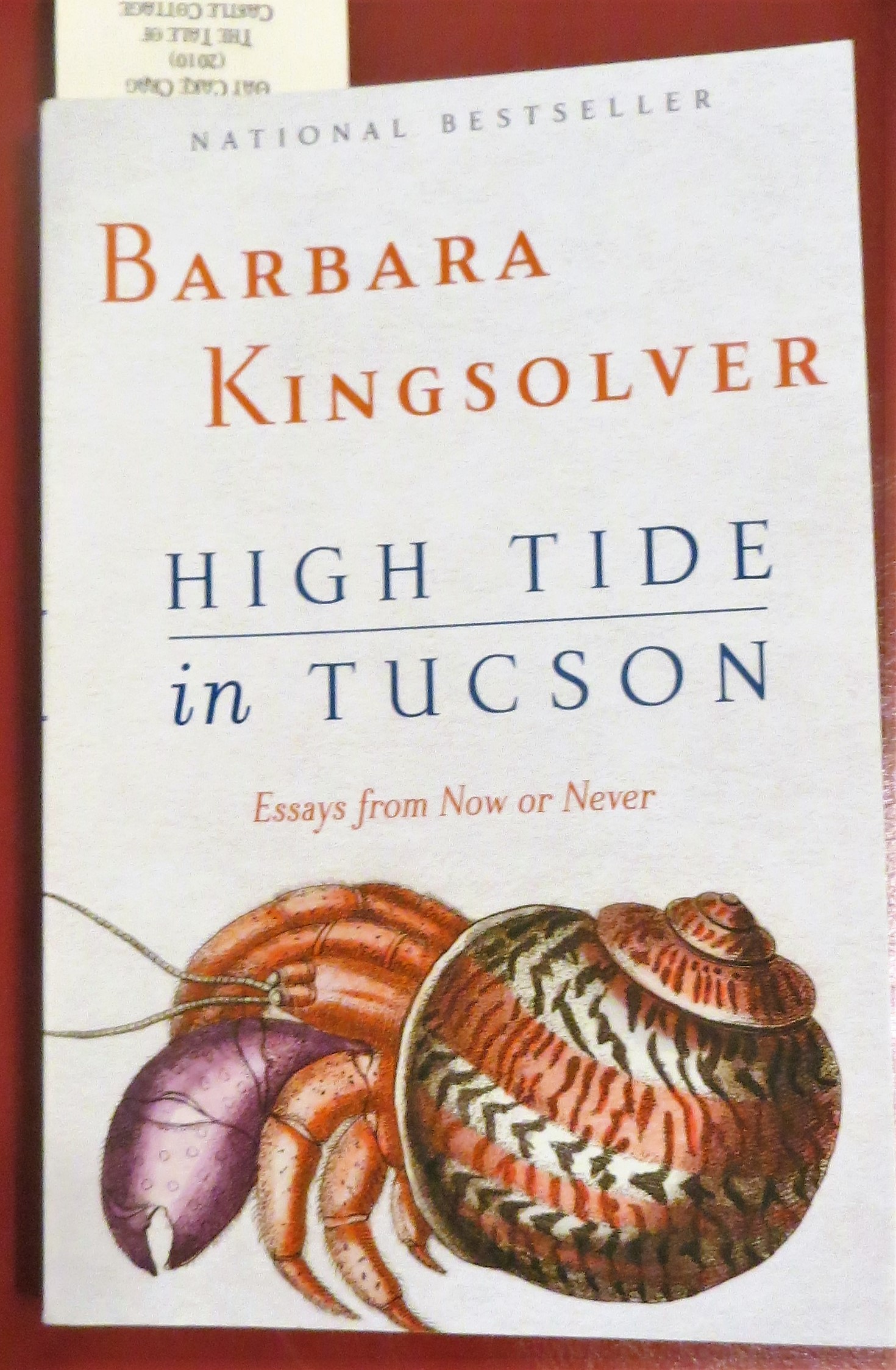
I was reading High Tide in Tucson, an essay anthology by Barbara Kingsolver who mentioned that she was often tempted to use one of her grandmother’s axioms when asked to commit to a future obligation. “Lord willing, and the creeks don’t rise,” she wrote.

My grandmother used to say exactly the same thing — and suddenly my wondering-brain was wanting to know the origin of the phrase  …  and then I was putting down Kingsolver’s book for a bit of research.

As usual, I came up with conflicting stories. One is that the phrase was first used by Benjamin Hawkins, U.S. General Superintendent for Indian Affairs between 1796 and 1818. Supposedly he used it in a letter to Thomas Jefferson requesting his presence in Washington D.C. in which he replied he would be there “God willing and the Creek don’t rise,” meaning the Creek Indians.

Barbara Kingsolver is one of my favorite authors — and I’m loving this book of essays by her.

Others believe that Creek merely refers to a stream, and that it was simply a hayseed rural term meaning if nothing stops me or all goes well. One example for this is a mock rustic speech from an 1851 Graham’s American Monthly Magazine: “Feller-citizens — I’m not ’customed to public speakin’ before sich highfalutin’ audiences. … Yet here I stand before you a speckled hermit, wrapt in the risen-sun counterpane of my popilarity, an’ intendin’, Providence permittin’, and the creek don’t rise, to go it blind!”

Another example of early use of the phrase, according to Wikipedia, is from the 1894 Lafayette Gazette: “We are an American people, born under the flag of independence and if the Lord is willing and the creeks don’t rise, the American people who made this country will come pretty near controlling it.”

It’s also said to be a sign-off tag line of the 1930s’ radio broadcaster Bradley Kincaid. My grandmother liked to listen to the radio so maybe this is where she picked it up. And finally, it has also been attributed to Abraham Lincoln and Andrew Jackson, among others, on the usual principle that attaching a famous name to a story validates it.

Well, that was enough information, if not exactly uncomplicated, to placate this wondering-brain of mine — until the next time it is wants answers. In the meantime, God willing and the creek don’t rise, I’ll go back to reading High Tide in Tucson. And in case you’re wondering about that title, Kingsolver explains it in her first essay.

Bean Pat: In tribute to Mary Oliver https://deborahbrasket.wordpress.com/2019/01/20/mary-oliver-washed-in-light/  Her words live on.

Now available on Amazon

Pat Bean is a retired journalist who lives in Tucson with her canine companion Pepper. She is a wondering-wanderer, avid reader, enthusiastic birder and is always searching for life’s silver lining. Check out her book Travels with Maggie, available on Amazon, to learn more. She can be reached at patbean@msn.com