Feeds:
Posts
Comments

Chihuly's orange herons among the plants -- Photo by Pat Bean

 What marriage of art and nature has amazed you?

                 ________________________________

“Great art picks up where nature ends.” Marc Chagall

Travels With Maggie

I love plants and I love art. And when I visited St. Louis a few years ago, I came across the perfect marriage of the pair. Famed glass artist Dale Chihuly and the internationally acclaimed Missouri Botanical Gardens had temporarily married for a wondrous exhibit. .

The joining had taken place in the garden’s geodesic dome greenhouse. As I wandered through the dome, I found myself constantly snapping pictures of man and Mother Nature’s amazing teamwork. When I later looked at the photos I had taken, I sometimes found it difficult to distinguish between glass and plants.
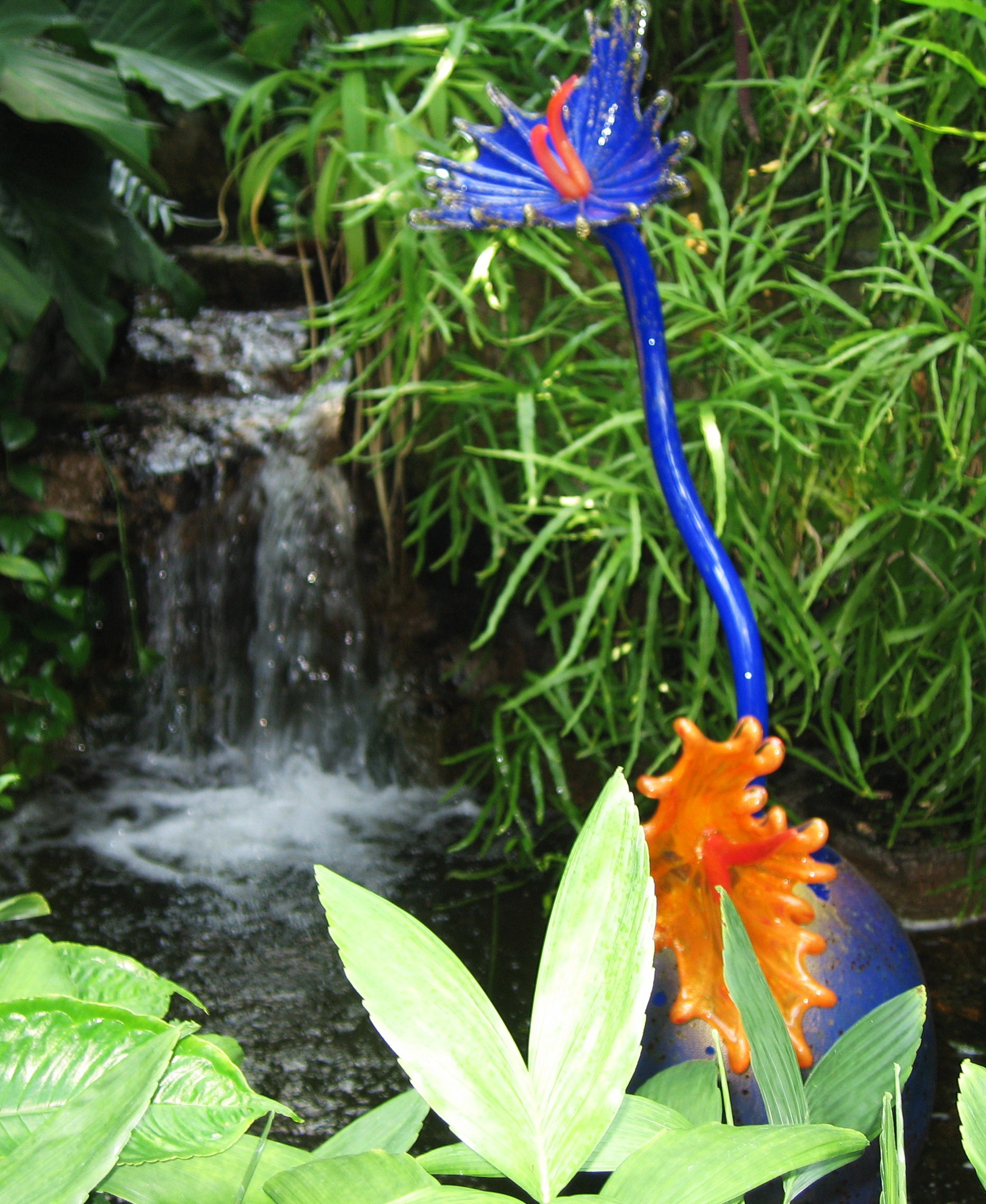
Blooming glass -- Photo by Pat Bean

I was reminded again of this memorable summer afternoon when I read a comment made on yesterday’s blog. The reader had noted that the mushrooms illustrating my blog looked like pieces of Chihuly art. I looked at the picture posted on my blog again, and agreed with the observation.

I remember lying awake that night after visiting the gardens, asking myself how a genius like Chihuly had been created. Dedication to his calling? Love of his work? A willingness to make mistakes to learn new methods? Hard work? Patience? A natural talent? Probably all these and more I decided before falling asleep that night.

Dr. Seuss words: “Oh the places you’ll go, and the things you’ll see,” have accompanied me on my journeys in my RV, Gypsy Lee, with my dog, Maggie, now for seven years. Seuss forgot, however, to add “And oh the things you’ll remember.” That’s OK. I did it for him.
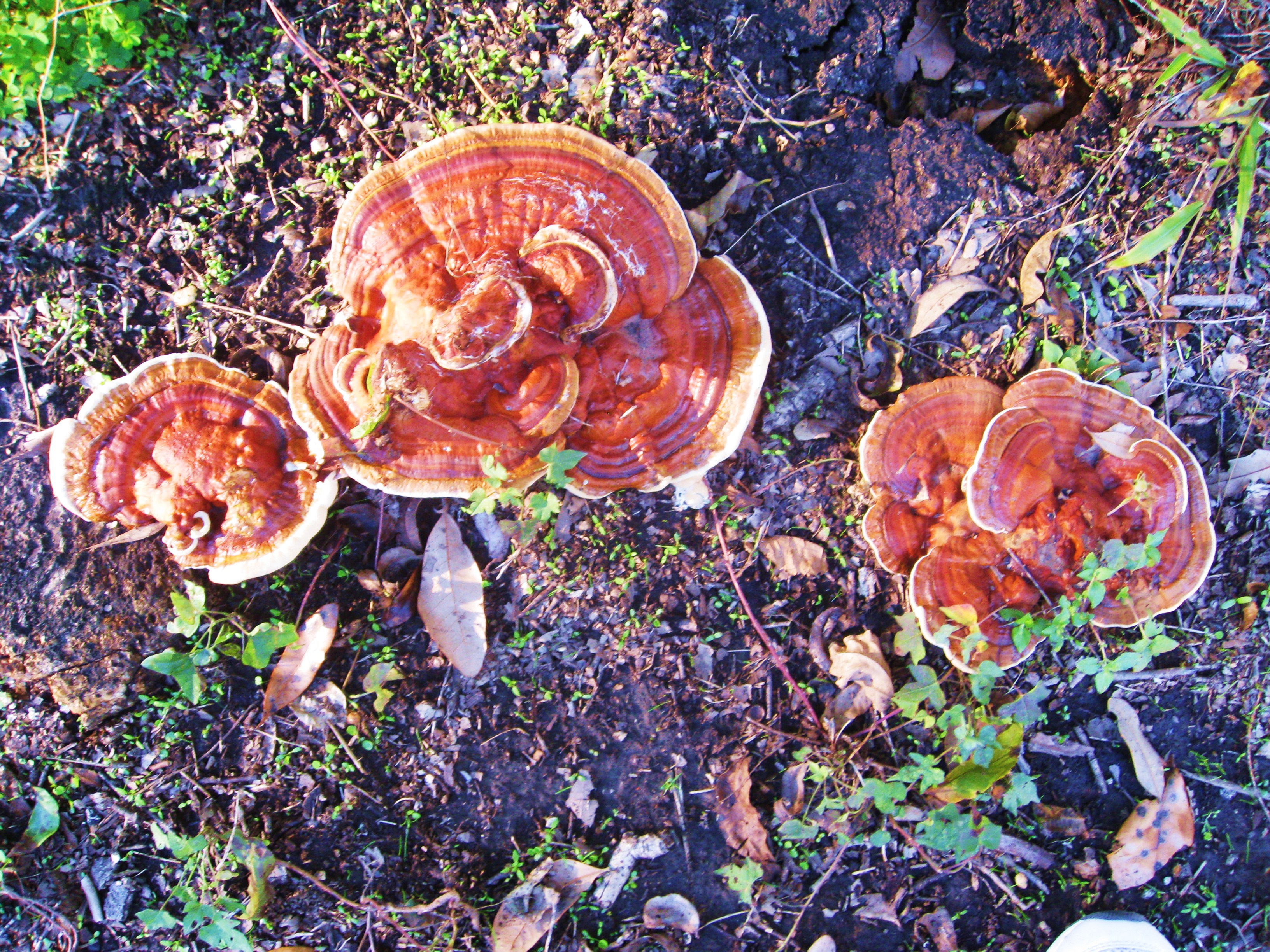
Photo by Pat Bean


Whose to say these mushrooms, which appeared to have sprung up almost overnight after a rainstorm aren’t as spectacular on a small scale as the Grand Canyon is on a large scale?

What small creation of Mother Nature do you find magical?

                   _________________________________

  “Enjoy the little things, for one day you may look back and realize they were the big things.” — Robert Brault

 Travels With Maggie

 My first look, many years ago, out over the sprawling grandeur of the Grand Canyon dazzled my soul. More recently, my bow-front ride on the Maid of Mist into the mighty spray of Niagara Falls’ filled me with exhilaration. It is, I’m sure, the same reactions the majority of tourists have to these two wonders of Mother Nature.

The last three leaves on a winter tree suprised and amazed me. -- Photo by Pat Bean

 I’ve learned, however, that I can be just as dazzled and exhilarated by less grand things, for example three magical leaves. I use the word magical because against all odds they were the only leaves left on a tree that Maggie and I passed on one of our recent winter morning walks.

They reminded me of an O’Henry’s story, “The Last Leaf.” The tale is about a little girl with pneumonia who was determined to live until the last leaf fell from a tree outside her window. It never did – because it was painted on the brick wall behind the tree – and the girl never died.

 But my three leaves were not painted. They were as green as new grass on a spring day. And they amazed me. As did the colorful mushrooms that appeared in a city park overnight after a rain storm. And the one yellow cactus blossom on a plant with dozens of magenta colored blooms at Pancho Villa State Park in New Mexico. Or the Gambel’s quail that I almost missed because it blended in so well with its surroundings.

 Mother Nature’s canvases are both huge and tiny. While everyone may not be able to visit the ones we humans have identified as spectacular, everyone can see Mother Nature at work in the small things. You simply have to walk out your front or back door with your eyes wide open.


Mount Pisgah -- Photo courtesy of Wikipedia

“And when it rains on your parade, look up rather than down. Without the rain, there would be no rainbow.” __ Gilbert K. Chesterton.

 Travels With Maggie

 It’s raining, a steady pitter-patter on the metal roof of the RV carport that’s currently sheltering my RV. The world from. my window is tinted with dripping grayness, broadcasting a message for Maggie and I to enjoy the warm coziness inside our tiny home on wheels this morning.

 This travel writer actually enjoys such lazy days. They give me time to make traveling plans, which currently include sheltering from winter in Arkansas for a few more weeks, visiting Texas’ Gulf Coast, squeezing in some bird watching in the state’s Rio Grande Valley, and finally attending a grandson’s wedding in Dallas.

Mount Pisgah from Black Balsam Knob -- Photo courtesy of Wikipedia

 These activities should keep me busy until mid-March when Maggie and I begin our real travels for the year. First on our agenda map is to drive the Blue Ridge Parkway between Smokey Mountain and Shenandoah national parks. It’s been a trip long in the planning, and one of the scheduled stops is the Mount Pisgah Campground.

 I mention this because in response to a recent question (Jan. 13 blog) about special places, one reader said hers was North Carolina’s “ Mt. Pisgah, up high where the Rhododendrons grow.”

I did a bit more detailed research about the peak, and learned there’s a “moderately difficult,” 1.6-mile path to the summit from Milepost 407 of the parkway. I think these old broad legs can handle that, especially since reviews of the trail report that the view from the top “is spectacular.”

 Thinking about that landscape almost has me urging March to get here sooner. But I don’t. I know it’s better to continue putting my own color to the magical grayness outside – and to continue listening to the wondrous composition of pinging rain and Maggie’s contented snores as she slumbers on the couch.

Life is too precious to miss one present moment of it.

A Small Arkansas Town

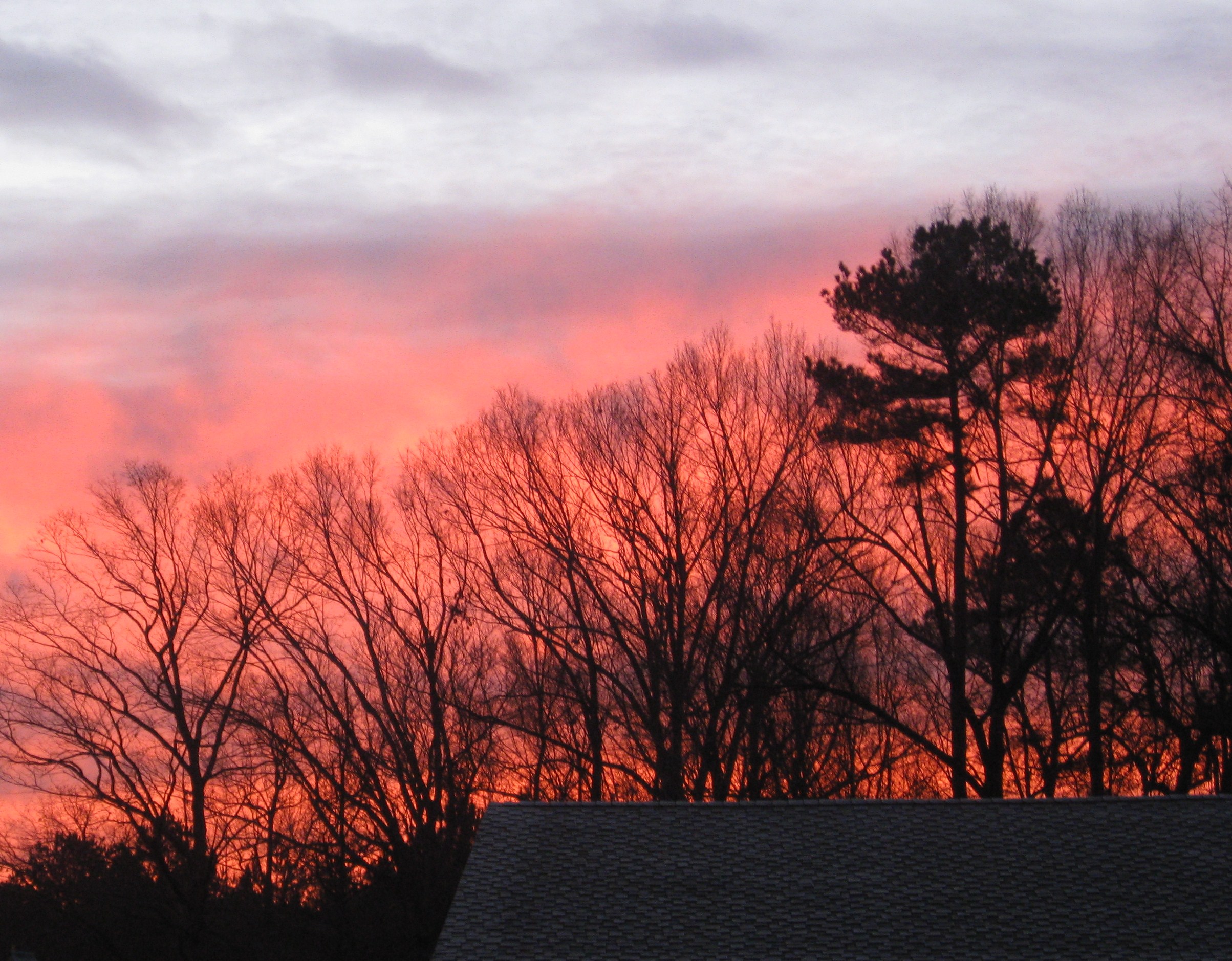
A Camden, Arkansas, sunrise -- Photo by Pat Bean

“To read the papers and to listen to the news … one would think the country is in terrible trouble. You do not get that impression when you travel the back roads and the small towns …” — Charles Kuralt

 Travels With Maggie

I flushed a northern cardinal and a brown thrasher and startled a flock of Brewer’s blackbirds this morning when I first opened my RV door. This trio, along with mockingbirds, sparrows and crows, are regular visitors to my youngest daughter’s five-acre home in Camden, Arkansas.

 This small friendly town, where strangers you meet act as if you had been a dear friend for years, has no traffic jams (which I love) but also no Starbucks (which I occasionally miss). It’s greatest claims to fame are Grapette and Camark.

Gypsy Lee snug in her Arkansas temporary winter home -- Photo by Pat Bean

The first is the dark purple soda introduced in Camden in 1940. Although not ranking up there on the popularity meter with Coke or Pepsi, one can still buy and drink Grapette today. Remembering how I used to love its sweet grape flavor, I drink half of one every few years or so before overdosing on the sugary taste. These days I don’t even put sugar in my coffee or tea.

Camark was the name of a pottery plant that opened its doors in Camden in 1926. It was a thriving industry in the town for many years, but sold its last piece of pottery here in 1982. The pottery is considered quite collectible today, at least according to those who supposedly know such things.

 What I know is that Camden is a nice place to recharge my batteries for a few weeks in winter in anticipation of getting back on the road in the spring. Bonus features include a perfect sunrise view out my RV window, a visiting armadillo, an occasional ride on one of my daughter’s horses, being lulled to sleep by coyotes howling in the adjacent woods, and sightings of a pileated woodpecker that likes to sit in a tall tree at the end the long driveway.

 Oh yes! Let’s not forget the bonus of visiting with my daughter and her husband, and three young grandsons.

 Life is good in Camden, Arkansas.


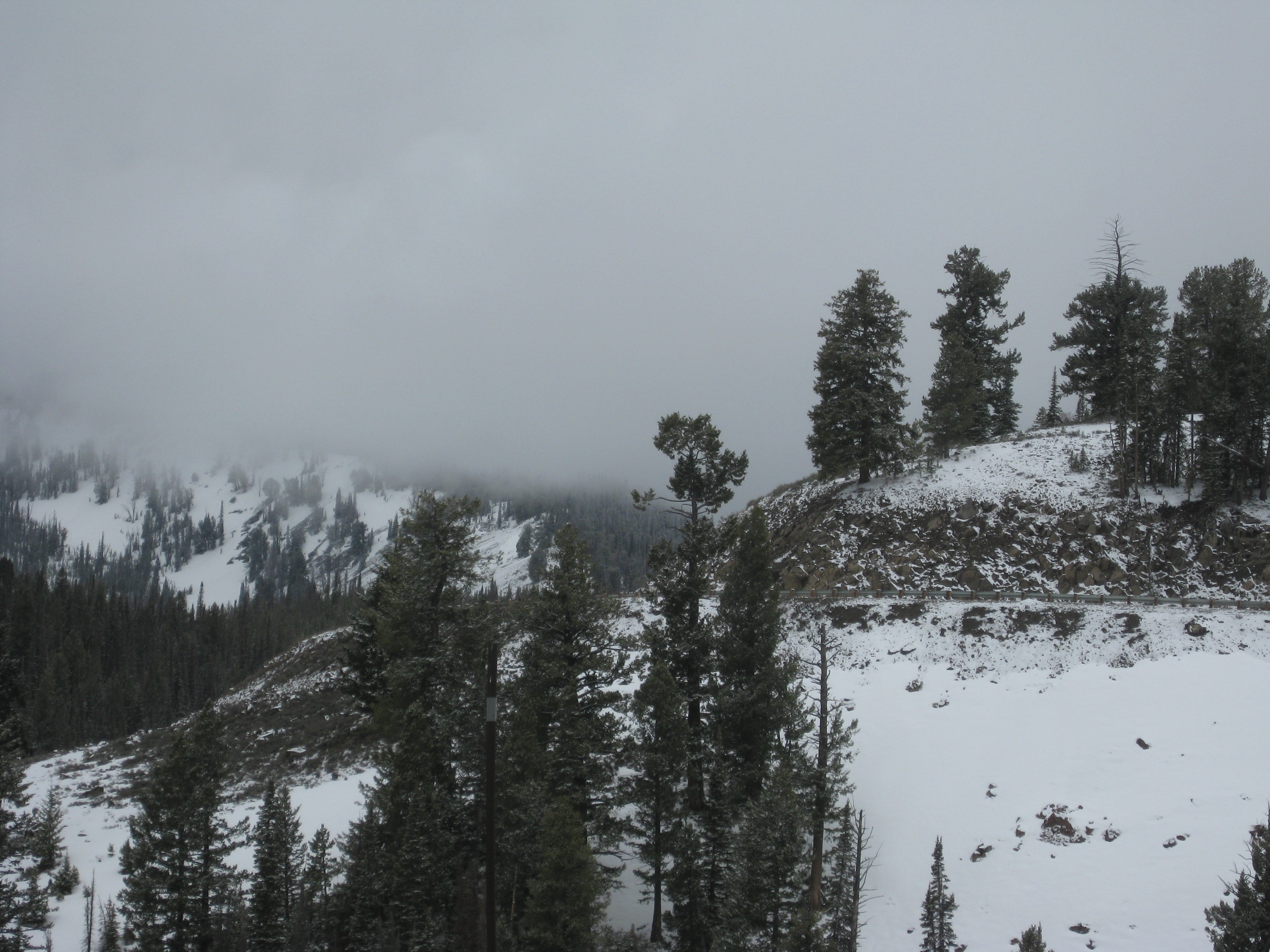
I got caught in unexpected snow this past May near Idaho's Galena Summit, proving that snowy mountain passes are not just a thing of my past. -- Photo by Pat Bean

“If all difficulties were known at the outset of a long journey, most of us would never start out at all.” — Dan Rather

Travels With Maggie

It was Sunday, Nov. 5, 1987, and I had been sitting for over an hour in a Continental plane on the runway at Denver’s International Airport. The weather outside was freezing and frightful while the temperature inside the plane was getting more heated and cantankerous by the moment.

Finally, our plane retreated back to the terminal, where we learned Continental Flight 1713, just two planes ahead of us, had crashed on takeoff and the airport had been shut down.

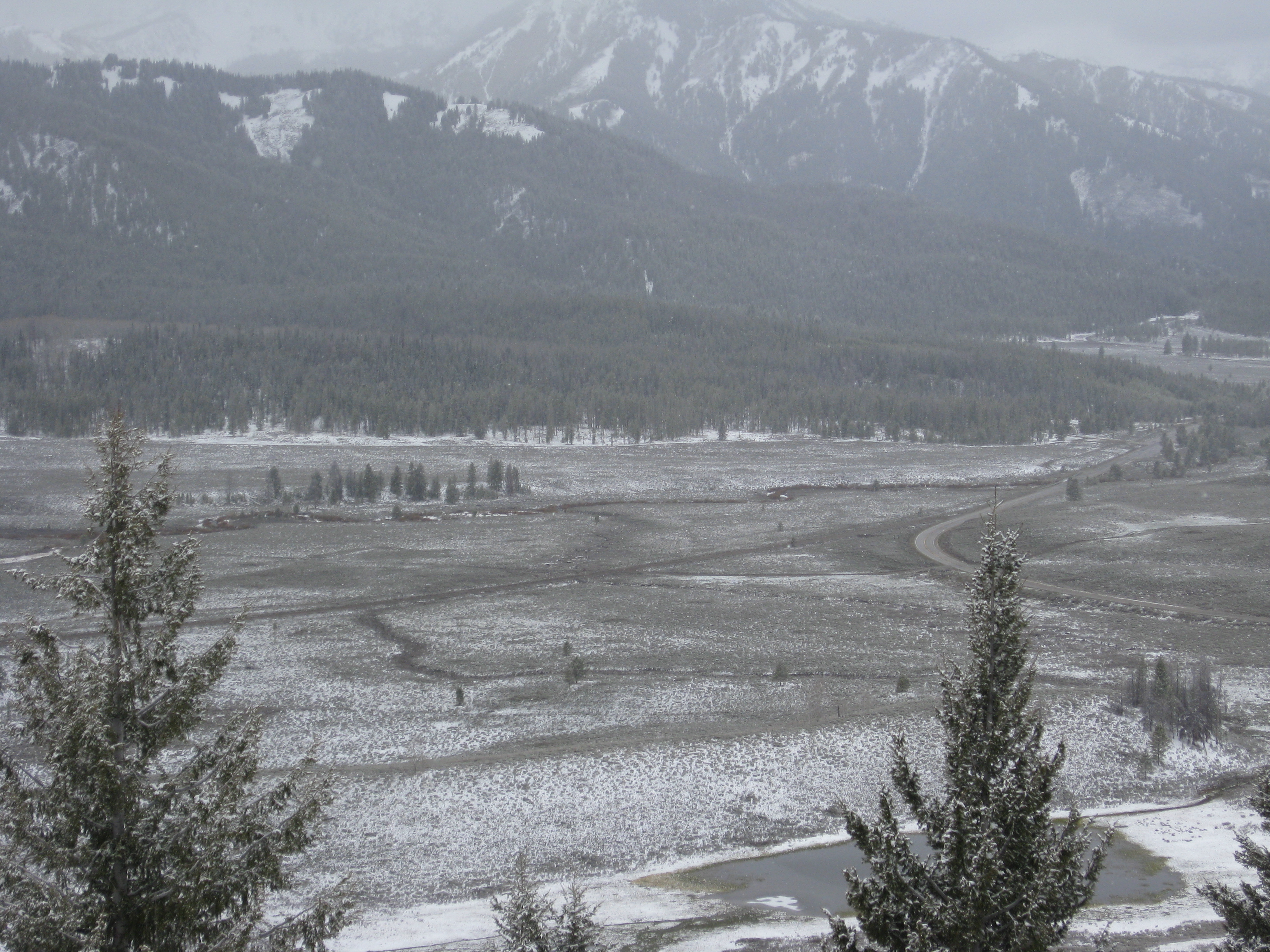
Looking down on the headwaters of the Salmon River after safely getting over Galena Pass. -- Photo By Pat Bean

The passengers jamming the terminal mostly headed to get in long lines to reschedule their flights and get lodging freebies for the night. I didn’t bother. I had a space available ticket, courtesy of my Continental flight attendant son. No freebie lodging for delays and the lowest priority for getting assigned another flight.

Fortunately my son lived in Denver; and he graciously loaned me his small compact car so I could drive home to Ogden. That my solo 525-mile journey would take me through snow-covered passes crossed my mind, but didn’t daunt my decision to make it. I needed to get back to work.

I hadn’t thought of this story in years until this morning when I read Susan Tweit’s Blog (found at http://wp.me/p14fQq-eE ) about her journey returning from Denver to her home over the mountains. She wrote: “It seems to me that the important point of any journey, literal or figurative, is the spirit we bring to it. If we can adapt to the unexpected with grace – whether highway closures, brain cancer or hospice care, appreciating the light, the aspens, and the ravens playing on the streams of wind, the trip will be easier and perhaps full of gifts we could not have expected.”

It wasn’t an easy drive back to Ogden. Sometimes, or so it seemed, I didn’t just follow the snow plows, I led them. But it had been a journey I had felt compelled to take. Perhaps I needed it to find out if I had the stuffing inside me to eventually follow my dream of being a road gypsy who could face whatever the road tossed her way. I did.

And I still do.

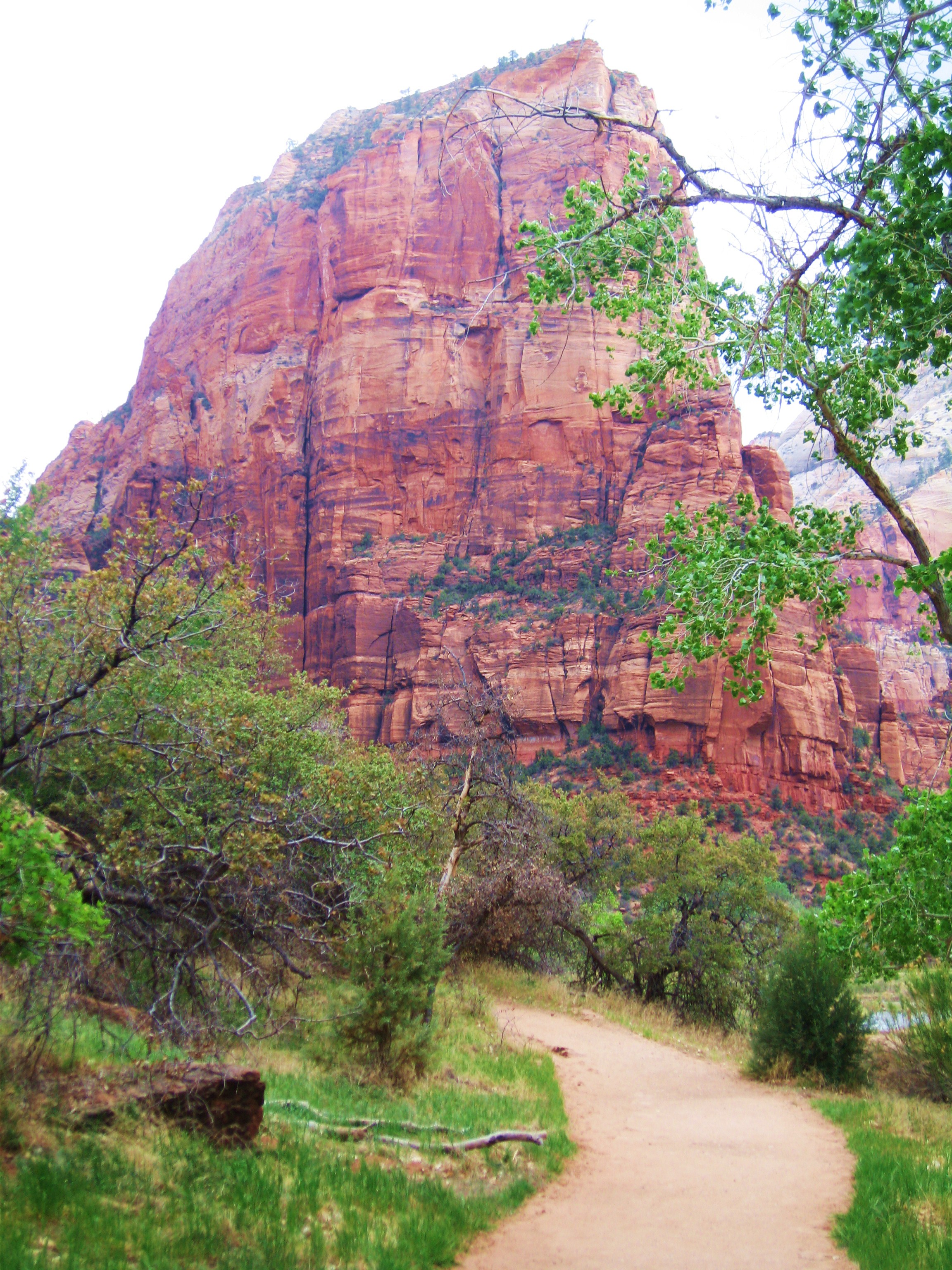
The best view of Angel's Landing comes at the end of the hike where you look back up and say to yourself: I did it. -- Photo by Pat Bean

“Everybody needs beauty as well as bread, places … where nature may heal and give strength to body and soul.” — John Muir

 Travels With Maggie

It’s 6 a.m. in Dallas right now, and 27 degrees outside. I’m just waiting for it to warm up a bit before my dog, Maggie, and I get on the road to my youngest daughter’s home in Arkansas.

 The week here at my oldest daughter’s has been one of recharging batteries. Except for a dinner at On The Border one night and a trip to the vet because Maggie had an eye problem (better now), I haven’t left the house.

 My daily blogs while here have been recaps of earlier adventures in the area. So what, I worried when I woke up at 5 a.m. this morning is this travel writer going to post today. Well, my brain whispered to me, what about telling them about your special place? Perhaps readers will even return the favorite and tell you about their special place.

 While I don’t always listen to my chatty brain, I was delighted with this suggestion. My favorite spot in the whole universe is the top of Angel’s Landing in Zion National Park. I made the five-mile round-trip hike to stand up there for the first time in the 1960s – and have repeated it over 30 times since.

 Two of those miles zigzag up the mountain, while the last half mile is an actual scramble over rocks. While coming down is easier on the lungs, it’s harder on the legs. The climb used to be as easy as a walk in the park. These days, it’s a slow uphill/downhill battle.

Walter's Wiggles is a series of 21 hairpin turns up to Scout's Landing, where the half mile rock scramble to the top of Angel's Landing begins. I'm catching my breath halfway up the wiggles. -- Photo by Kim Perrin

That’s OK. It gives me plenty of time to take pictures of the Indian paintbrush growing out of rock cracks, to look for the peregrine falcons that nest near the top, and to listen to the cheery chickadees that flit along the rough trail.

My favorite trip to the top was made the year when friends who were going with me had to cancel. I went alone, but instead of camping, I stayed at the Thunderbird Lodge in nearby Mount Carmel Junction. The day I made the climb was windy, really windy.

Perhaps that’s why, for the one and only time, I had the mountain top to myself for a whole hour. I wrote in my journal while I listened to my all-knowing brain tell me what it always tells me when I stand on Top of Angel’s Landing:  You made it to the top. Now you can handle anything the coming year throws at you.

 And I always do.

So what’s your special place? I’d really like to know.

 “If you do not change direction, you may end up where you are heading.” — Lao Tzu


If I had turned right, as planned, I would have missed Chama, New Mexico, and a quick visit to this quaint art gallery. -- Photo by Pat Bean


Travels With Maggie

 I drove my son-in-law to work in my daughter’s new SUV, which came equipped with a fancy GPS system. It was a 45-minute commute across Dallas in rush hour. To make sure I wouldn’t get lost on the return trip, my daughter programmed her GPS for me.

All well and good – until I foolishly fiddled with it halfway back home. The map screen went blank and I had no idea how to reset it – and definitely no idea where I was. Needless to say the trip home took a lot longer than 45 minutes.

That was my first and only experience with a GPS. Instead, I continue to use my Microsoft Streets and Trip program – but I do it my way.

Maggie: Have you got us lost again?

While the computer mapping program likes major highways, I prefer backroads. So I manipulate the route planner to take smaller highways instead of interstates, or to take me through Santa Fe instead of Denver when I’m driving between Texas and Utah.

I carefully plot out each leg of a trip before beginning a journey, going so far as to distinguish between left and right turns on a cheat sheet for the dashboard. One would think I would never get lost.

But I do. And I’m thankful for it.

Of course, if I am going to get lost, I’d rather it be on a scenic backroad in New Mexico instead of rush hour on a Dallas freeway.

“A journey is a person in itself; no two are alike. And all plans are fruitless … we do not take a trip; a trip takes us.” John Steinbeck.

Icicles on Gypsy Lee as she sits outside my daughter's home on the outskirts of Dallas. -- Photo by Pat Bean

Travels With Maggie

I’m in Dallas. It’s currently 6:30 a.m. and 23 degrees outside, where my RV, Gypsy Lee, is parked on the street. My cocker spaniel and I, however, are warm and snug inside the home of my oldest daughter, Deborah.

 It’s a rare occasion when Maggie and I don’t sleep in our own above-the-cab bed. But since running the heater constantly all night would have drained the battery in my unplugged home, we had no choice.

It’s a day, I decided on waking, for a cozy chair, a blanket to snuggle beneath and a good book. I have all three, the book being Susan Albert’s “An Extraordinary Year of Ordinary Days,” a writer’s journal.

 It’s also a day that reminds me of the first time Deborah, who thinks spending a night at a Holiday Inn is camping, decided she wanted to experience my vagabond life for a few days. The plan was that I would pick her up in Odessa, Texas, where her contract job had ended, and the two of us would take a few days driving back to Dallas, which was almost 400 miles away.

 When we had made these plans the weather was sunny and warm. The day I picked her up in Odessa, it was cold and rainy. We made it to San Angelo, where we spent the night at Spring Creek Marina and RV Park on Lake Nasworthy. I had stayed here before and loved that I could walk Maggie beside the lake.

That's my daughter, Deborah, on the left during our stop at the Dr. Pepper plant in Dublin, Texas. -- Photo by Pat Bean

But the next morning was not a day for walking. Icicles hung from my RV and the windows inside had ice on them. We defrosted everything and got back on the road for a miserable day of driving in fog and sleet.

By afternoon, Deborah was ready for a long, hot shower and a warm soft bed. But hot water in my tiny shower is limited and my couch isn’t t exactly soft. We spent the night in a Holiday Inn in the small town of Brownwood – and hoped for a better tomorrow.

It wasn’t.

 We decided to forgo our lollygagging and drive as quickly back to Dallas as Gypsy Lee would take us. As far as giving my daughter a taste of what I consider a fantastic lifestyle, the trip had been a big bust. Then we came to Dublin, Texas, home of the oldest Dr. Pepper plant in the world. More importantly, it’s a rare facility that still uses the original recipe calling for pure cane sugar instead of high fructose corn syrup.

My daughter, who loves the original Dr. Pepper, hadn’t known the city was on our route. She was ecstatic and eager to stop. We spent a pleasant hour in the plant’s soda shoppe drinking Dr. Pepper and eating a hamburger lunch. My daughter then bought a couple of cases of the original Dr. Pepper to take home with her.

She was finally a happy camper, one who now knew one of my travel secrets: The unexpected is as important to a successful journey as the weather.


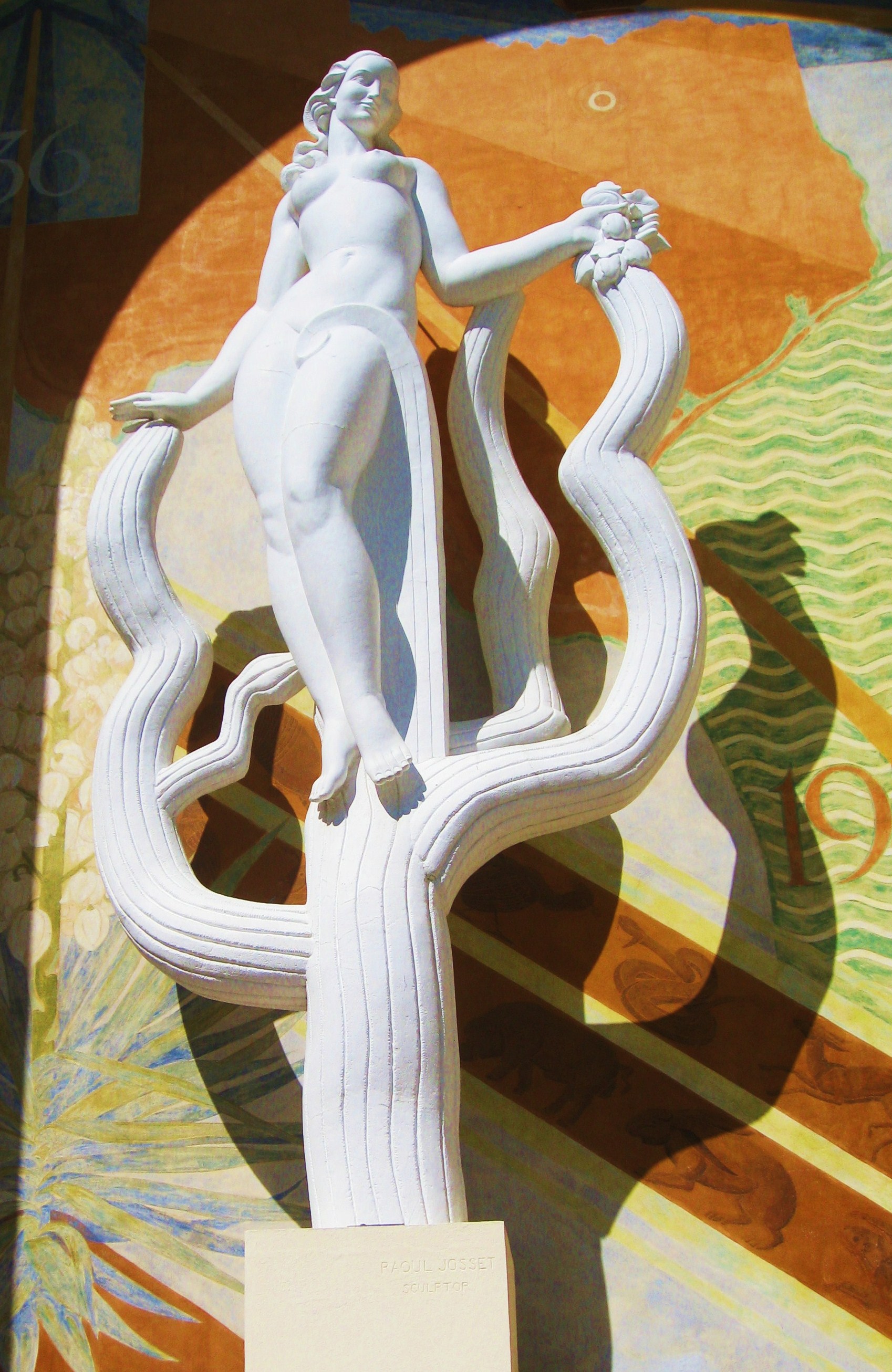
Statue outside entrance to Women's Museum in Dallas -- Photo by Pat Bean

“The future belongs to those who believe in the beauty of their dreams.” — Eleanor Roosevelt.

Travels With Maggie

Hank Williams Jr. loves ’em. I’m talking, of course, about Texas women. But while he prefers them in jeans, I prefer them strong like Texas Governor Anne Richards or Congresswoman Barbara Jordan, both of whom so aptly set a path for Texas women to follow before their deaths.

I like to think of myself as sharing a gene or two in common with them, and also with another of my Texas female heroes, the late outspoken Texas political columnist Molly Ivins, who was mistakenly born in California.

I understood her dilemma from the opposite direction. Utah claimed me for much of the latter half my life, And while I loved its spectacular mountain scenery, I continued to know I was a Texas woman – from the tips of my short blonde hair to the nail on my crooked little toe.

If you’re in the neighborhood of Dallas, where my RV is parked in front of my oldest daughter’s home for the next few days, and want to learn more about strong Texas women – and those from other states as well – you should drop by the Women’s Museum, a permanent exhibit located in Fair Park, home to the Texas State Fair.

My daughter and I did just that, spending several hours roaming the museum’s 70,000 square feet of exhibits that bring to life the contributions of women to this nation’s history. Opened in 2000 in affiliation with the Smithsonian, the museum began as a dream of one woman, Cathy Bonner, and a reality through the financial support of tens of thousands of mostly female supporters.

If you visit before April 10, you can even catch a special exhibit put together by famed photographer Annie Leibovitz and  simply entitled “Women.” The recommendation of this Texas woman is that you should go.

 “I have decided to stick with love. Hate is too great a burden to bear.” — Martin Luther King 

A city's reflection -- Photo by Pat Bean


Travels With Maggie

“Did you know Dallas is one of the most hated cities in America,” my daughter, Deborah, asked as we sat around the table in her Dallas suburb home yesterday morning. I didn’t, but I’m not surprised, I replied, then began ticking off the reasons why I wasn’t amazed at the news.

 President John Kennedy was shot in Dallas; its police force is infamous for acts of brutality; J. R. Ewing wasn’t exactly a poster child for the city; people love to hate the Dallas Cowboys football team; and Dallas didn’t integrate nicely after the civil rights act was passed.

 There may be other reasons why the pollsters say Dallas will always be one of the top 10 hated cities. These five merely came off the top of my head because I’m a Dallas native who has visited the city yearly since leaving it as a 16-year-old bride. Sadly, in the 1950s that wasn’t an especially uncommon age for Dallas girls to wed.

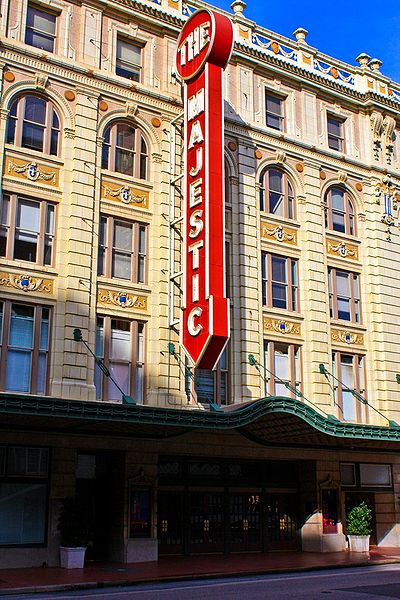
Not as glamorous as I remember, but the Majestic Theater is still there.

 I watched over the years as flocks of Whites from middle-class neighborhoods moved to the suburbs to escape integration, while those from poor neighborhoods were forced to stay put. The rich, meanwhile, simply sent their kids to private schools. It made for an unbalanced city population.

 I was living south of Houston when JFK was shot. I cried with the world for this loss, but also grieved because he was assassinated in my hometown. That it happened at a place I had passed many times made the tragedy agonizingly vivid for me.

The Glory Window, one of the largest stained glass pieces in the world adorns the ceiling of Thanksgiving Square's chapel. -- Photo by Pat Bean


 My daughter, Deborah, who was born in Houston, moved to the Dallas Metropolitan area 22 years ago for career reasons. She and I recently took the opportunity to see another side of Dallas. We took the train to downtown, where I showed her some of the places I visited as a child. One of my favorites back then was the Majestic Theater, which is now a performing arts theater owned by the city. I used to take the bus to downtown with my younger brothers on Saturday afternoons to catch an afternoon movie here.

Another placed we visited, Thanksgiving Square, is one that didn’t exist back then. Dedicated in 1976, it’s a city block dedicated as a sanctuary where people of all races and creeds can meet to give thanks. Despite its location in the midst of the city’s bustling skyscrapers, it’s a place that exudes a quiet peacefulness. The square’s glass-stained chapel ceiling, and wall of praise with its Norman Rockwall mosaic depiction of the Golden Rule represents hope for a better future.

 Maybe the pollsters are wrong. Maybe Dallas will one day not be one of the top 10 hated cities.