Feeds:
Posts
Comments
   

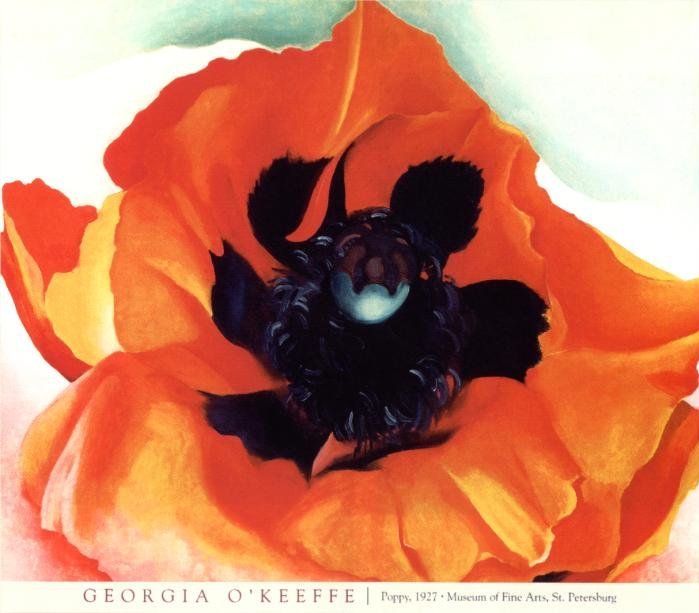
Poppy by Georgia O'Keeffe

 “When you take a flower in your hand and really look at it, it’s your world for the moment. I want to give that world to someone else. Most people in the city rush around so, they have no time to look at a flower. I want them to see it whether they want or not.” Georgia O’Keeffe

Travels With Maggie

 I love art museums. I can wander through them for hours, admiring the miracles created by the likes of O’Keeffe, Monet, Van Gogh and Homer, as well as those in an exhibit of work by second-graders, whose works usually contain a colorful freshness.
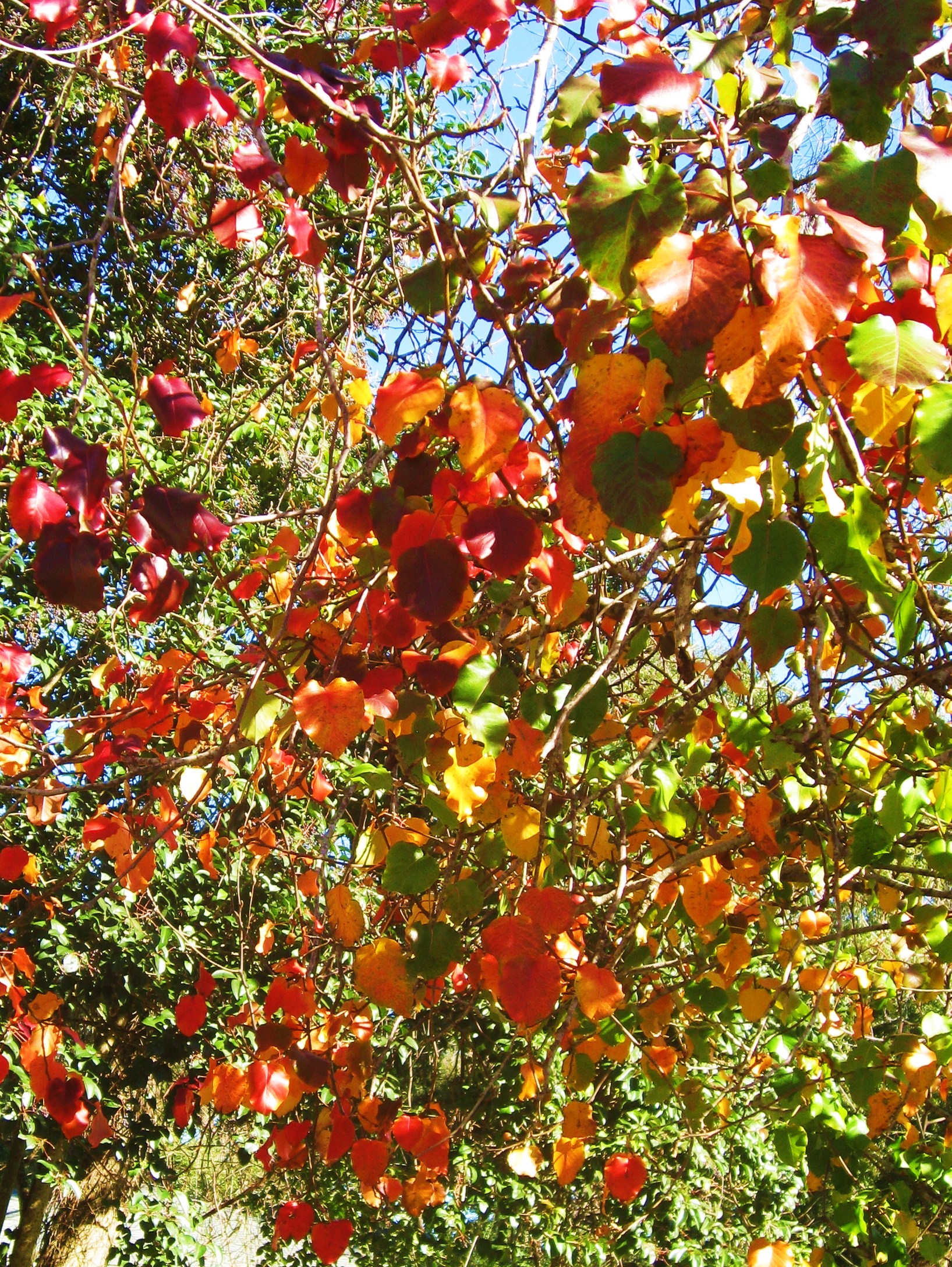
Winter never fully comes to the Texas Gulf Coast town of Lake Jackson, where the leaves on a tree in my son's front yard still linger. Its colors reminded me of Georgia O'Keeffe's painting above. -- Photo taken yesterday by Pat Bean

The two most important factors in art are the eyes of the artist and the eyes of the viewer. Anyone who has ever been in an art class, where all the students paint the same subject, know that each of the finished canvases will be different, perhaps even drastically different.

Whether we are creating or viewing, what each of us sees is unique to ourselves.

But one doesn’t have to go to a museum to see art. It’s all around us. Simply pulling my RV into my son’s Lake Jackson, Texas, driveway this week, was almost as good as walking through the doors of the Louvre, which someday I hope to do. But until that day comes, if ever, I’ll happily console myself with beauty closer to home.

I captured some of Mother Nature’s artistic miracles when I went walking with Maggie yesterday. And since this really is one of those times when a picture is worth more than words, I’ll now shut up.
“He who can take no great interest in what is small will take false interest in what is great.” — John Ruskin

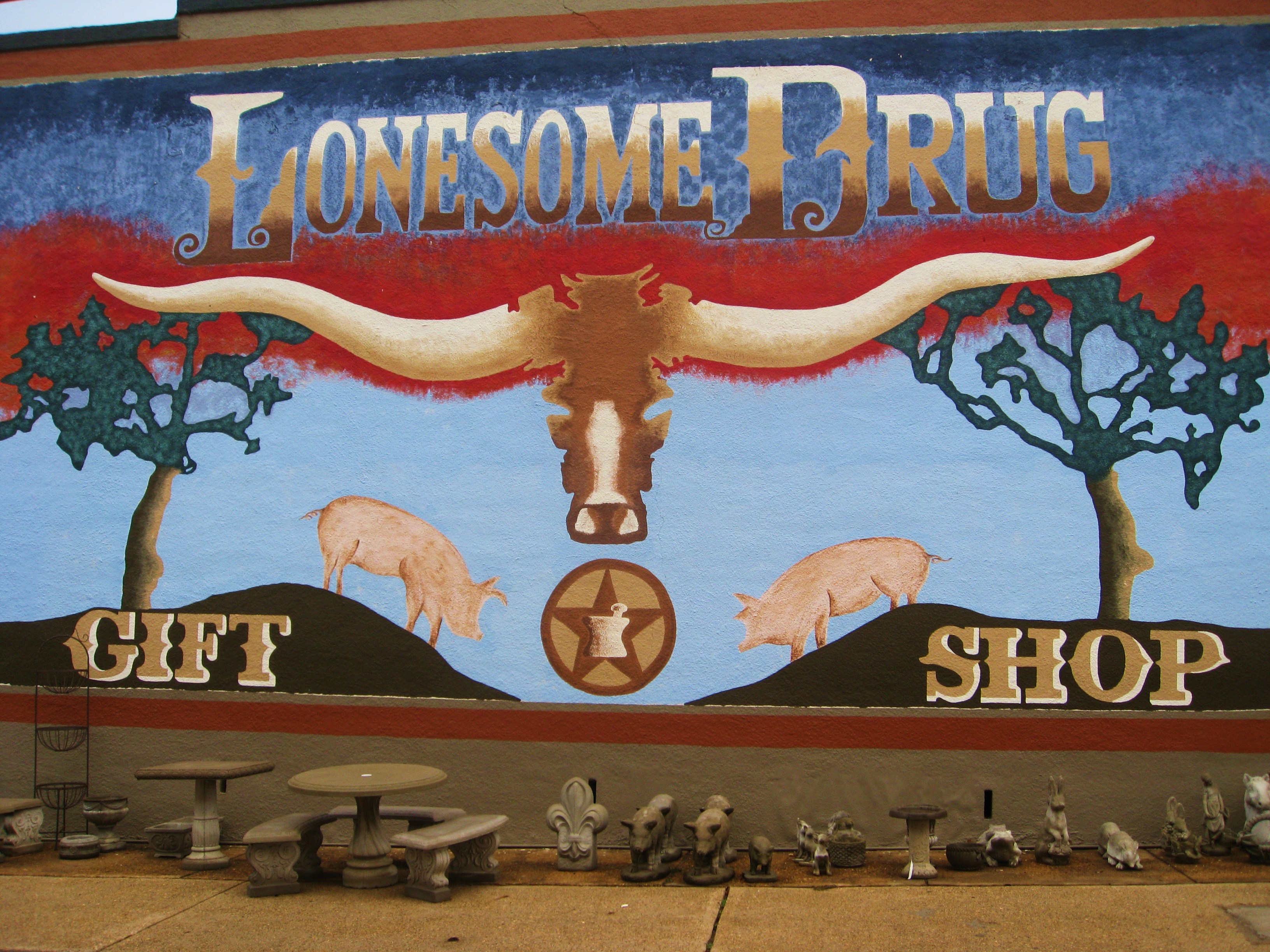
I snapped this picture of a mural painted by a local artist while waiting at a stop light.

Travels With Maggie

 I sat behind the wheel of my car for 430 miles yesterday, yet time seemed to fly by and I was never bored. Like Alice, there was a whole new world out there for me to see, and contemplate.

Stephens, the small town just down the road from Camden, Arkansas, where the day’s journey began, still had their downtown Christmas tree lights up. I suspect it was because the lights took away the town’s drabness and not because some city worker was lazy.

I was welcomed to Emerson, a bit farther down the road, with a huge sign noting that the town is home of the Purple Hull Pea Festival and the World Championship Tiller Race. In case you’re interested this year’s event will be held June 24-25.

With Arkansas in the rear-view mirror, a Haynesville billboard let me know this town was the Butterfly Capital of Louisiana. While stopped at a red light, I snapped a picture out my RV window of a mural painted on the side of a gift shop. It was one of several murals I saw while passing through the town.

My wheels rumbled gruffly on quaint red brick roads through downtown areas of both Minden, Louisiana, and Nacogdoges, Texas. Even on a long drive, I prefer traveling the smaller highways that take you through the middle of towns along the route. Freeways put me to sleep while backroads keep my brain occupied and alert.

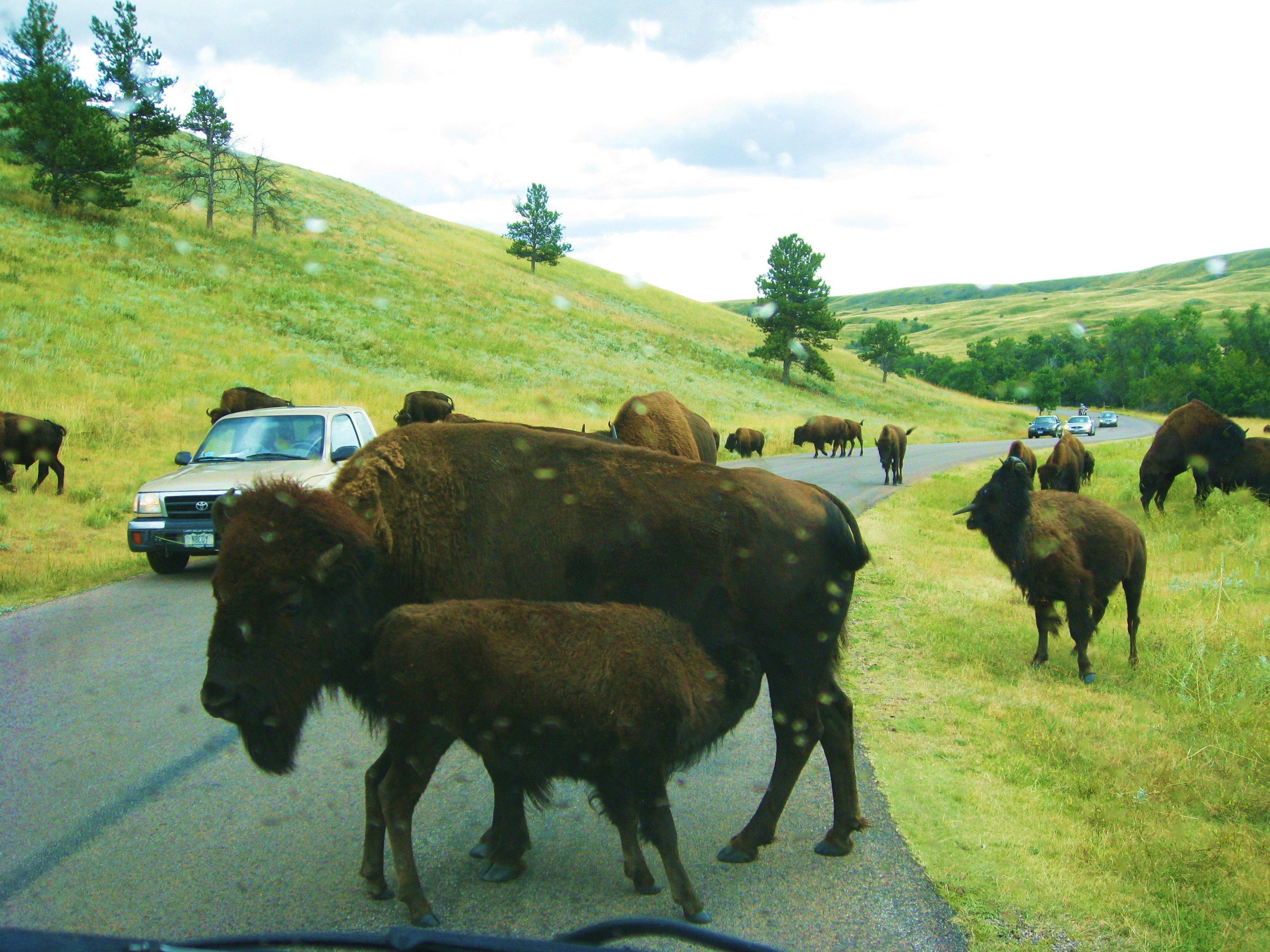
It's not every day that one gets to see a bison mom nursing her calf through their windshield, so I'm glad that I also enjoy the less dramatic glimpses of the world around us. The photo was taken in Custer State Park, South Dakota. -- Photo by Pat Bean

I wanted to stop and explore more, but I also wanted to get to my destination before dark. My rush to get there reminded me of Disney’s version of Lewis Carroll White Rabbit muttering: “I’m late! I’m late! For a very important date! No time to say goodbye, hello! I’m late! I’m late! I’m late!”

My only stop, except for gas, was at a Texas roadside park where my dog, Maggie, and I took a too short walk to stretch our legs.

Given Houston’s traffic, which I was going to drive through on Highway 59 during the commuter hour, I figured I’d just make it to my son’s home in Lake Jackson by dark. But amazingly – I say this as one who’s spent three hours getting through Houston more than once – it didn’t take long at all.

I reached Lake Jackson in plenty of time to share dinner with my son and his family.

I don’t recommend long-distance driving, preferring instead much shorter drives with plenty of time to get out of my RV and explore. But, as Garth Brooks says, “Happiness isn’t getting what you want, it is wanting what you’ve got.”

And what I had yesterday was one fantastic day on the road.

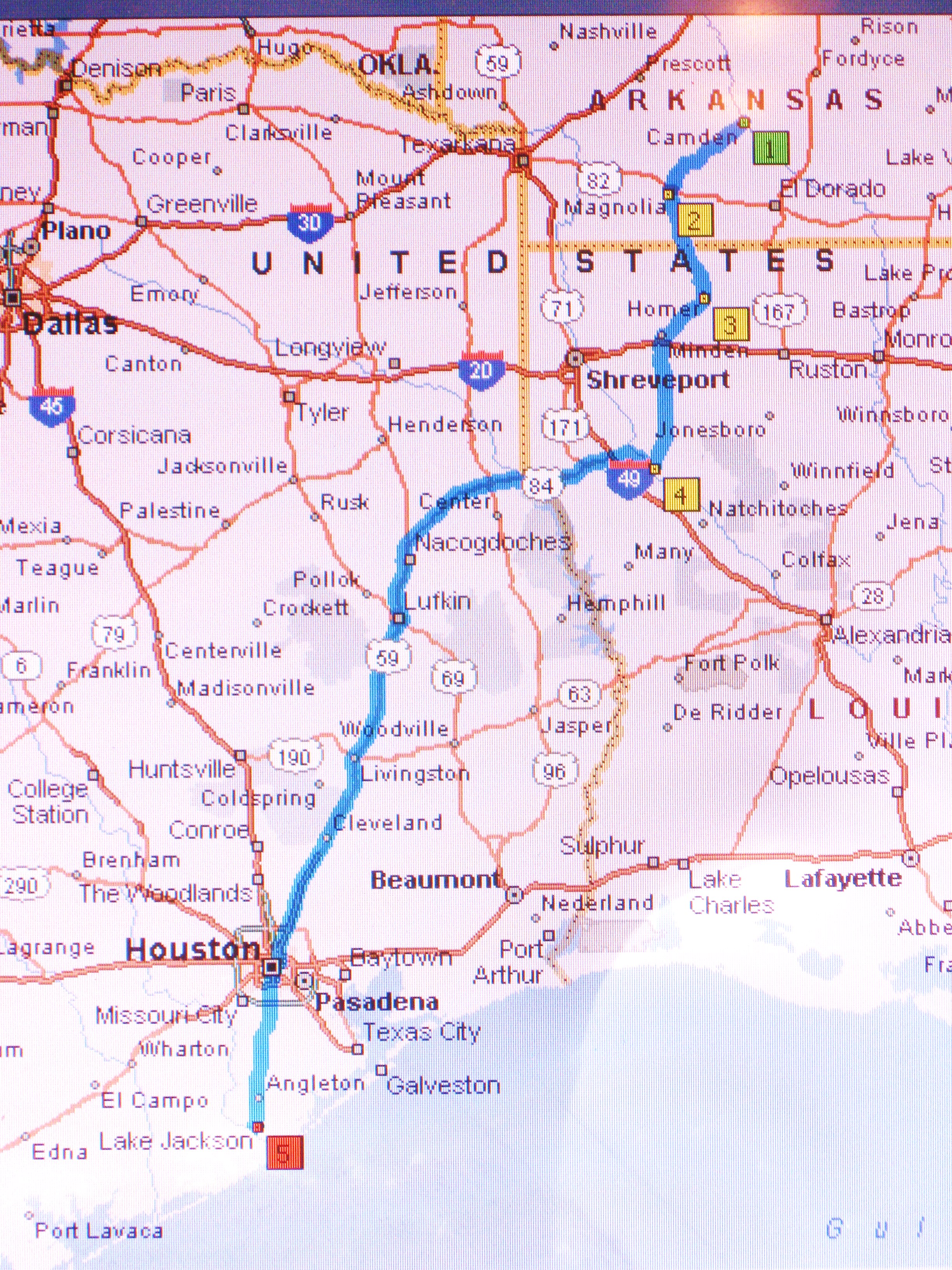
I can drool over maps for hours in anticipation of an upcoming journey. This is the route I chose for today's drive. I always right up a cheat sheet for my dashboard that includes right and left-turn directions.

 “… On the road again/ Going places that I’ve never been/ Seein’ thing that I may never see again/ And I can’t wait to get on the road again.” — Willie Nelson

 Travels With Maggie

 Willie Nelson and I share this love of being “on the road again.” And today I get to indulge myself. I’ve been up since before dawn, drinking coffee and reviewing the route I will take from my daughter’s home in Camden, Arkansas, to a son’s home in Lake Jackson, Texas.

 My dog, Maggie, is as eager as I am. She started getting excited as soon as I began packing things snugly away in the RV.

The journey is 427 miles long and I’ll be making it in one run, which means most of my sight-seeing will take place from behind the wheel. If it were spring, and I was truly on the road again and not just hiding out the winter catching up with family, it would probably take me two weeks to go this far.

To speed the time along, I’ll probably be listening to my audible copy of Ken Follett’s “Fall of Giants” along the way. But certainly not during the sections of road that will be new to me.

Mike Nomilini captured this picture of the bridge in Coushatta that crosses the Red River at sunset. While I'll be crossing the river today, it's going to be well before noon so my view will be much different.

 I added 15 miles to the shortest route  so I would pass through a few places I’ve never been before. Coushatta, Louisiana, for one. The Red River passes through this rural town. And I’ll be crossing over it on a 900-ton bridge that was  built in 1989 — not crossing it on horseback as John Wayne did in the 1948 film, “Red River.” 

 It was many years ago when I saw the film, but I still remember it.

There’s something in me that also loves river crossings. While the Red River might not compare to the thrill I had crossing the Yukon on a ferry in 1999, I’m still looking forward to it.

 Did I tell you, “I just can’t wait to get on the road again.”


The Women's Museum and the statue that prompted a question.

“There’s something that’s been bugging us Texans. And it’s time that we set the record straight … There ain’t no saguaro in Texas. It’s not the kind of cactus we’ve got.” Rev. Horton Heat

TRAVELS WITH MAGGIE

It’s always been my belief that every question deserves an answer. So today I’m going to answer the one from a reader who commented on the photograph of a statue that went with my Jan. 10th blog about the Women’s Museum in Dallas.

The statue features a woman atop a huge saguaro cactus, and the question was: “Do saguaro cacti grow in Texas?” Honky-Tonk comic singer Rev. Horton Heat says; ”No.” The plant experts agree, but with an addendum: No wild saguaro grow in Texas.

You might be able to forgive Rauol Jossett, the statue’s creator. He was a native Frenchman, who carved the plaster and cement statue in 1935, just two years after immigrating to the United States. Perhaps he got his idea from western movies of the period that featured huge saguaro in their supposedly Texas backdrops. Or maybe he copied the idea from other artists whose work depicts the huge armed cacti in their Texas landscapes.

No wonder Horton Heat wanted to set the record straight.

The Centennial Building and another of Raoul Jossett's giant ladies found at Dallas Fair Park

But now that I’ve answered the reader’s question, let me tell you what else I learned in my research. The Women’s Museum statue is called “Spirit of the Centennial.” It was created as part of the renovations to turn a 1910, double-duty stock coliseum-by-day/music-hall-by-night building into an administration building for Texas’ 1936 Centennial Celebration.

The model for Jossett’s sculpture was Georgia Carroll, the lead singer for the Kay Kyser Band. She later became the band leader’s wife and an actress. She just died earlier this month.

The administration building was converted into the Women’s Museum in 2000, and is located in Dallas’ Fair Park, where a stroll through its Texas sized, 277-acre grounds can turn up six other giant-sized ladies created by Jossett. Let me know if you find them all.

Meanwhile, I love questions. Anybody else with one?

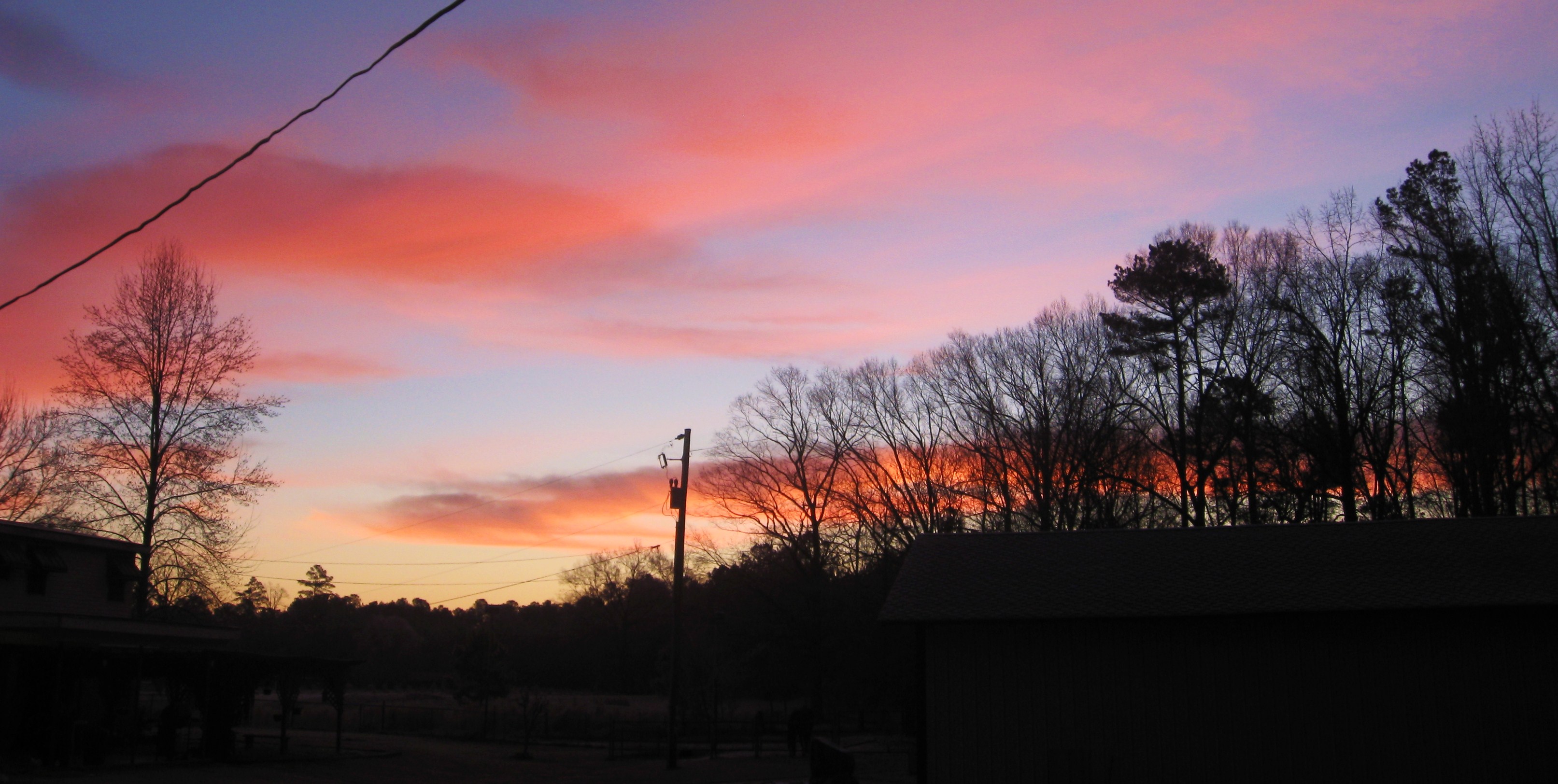
Camden, Arkansas, sunrise -- Photo by Pat Bean

My perfect day begins with a beautiful sunrise. What makes up your perfect day?

“If the world was perfect, it wouldn’t be.” Yogi Berra

Travels With Maggie

Most of my days begin with cream-laced coffee, which I drink while tapping away at the keys of my computer. If one is a klutz like me, that can be a dangerous combination. Coffee and a computer keyboard don’t go well together.

My early morning northern cardinal visitor -- Photo by Pat Bean

I should know. I’ve mixed them a couple of times, one of which cost me $100.

I’d have to say that a morning that begins with spilled coffee usually doesn’t bode well for the rest of the day. While I’m not particularly suspicious, it does seem that catastrophes are quite likely to follow my grandmother’s conviction of coming in threes.

This morning, thankfully, didn’t begin with my favorite Sumatran coffee spilling out onto my computer. It begin with a beautiful sunrise and a bright red northern cardinal outside my window. I took that as a good sign, and then begin thinking about what went into the making of a perfect day.

I had the first three: luscious coffee; blazing pink, orange and purple sunrise; and a cheery bird. What else did I want? Name seven more, I ordered myself. Here’s what I came up with.

            *Learn something new.

            *Finish rewriting a chapter in my travel book

           *A long walk in the sunshine with Maggie – Old Sol’s  supposed to come out today.

           *A flyby of the red-shouldered hawk that has been hanging out nearby.

           *An e-mail from my son who is in Afghanistan.

          *Something to give me a good belly laugh.

          * Hugs from three young grandsons, whom I’m currently visiting.

Of course winning the lottery would be nice, too. But then I forgot to buy a ticket.


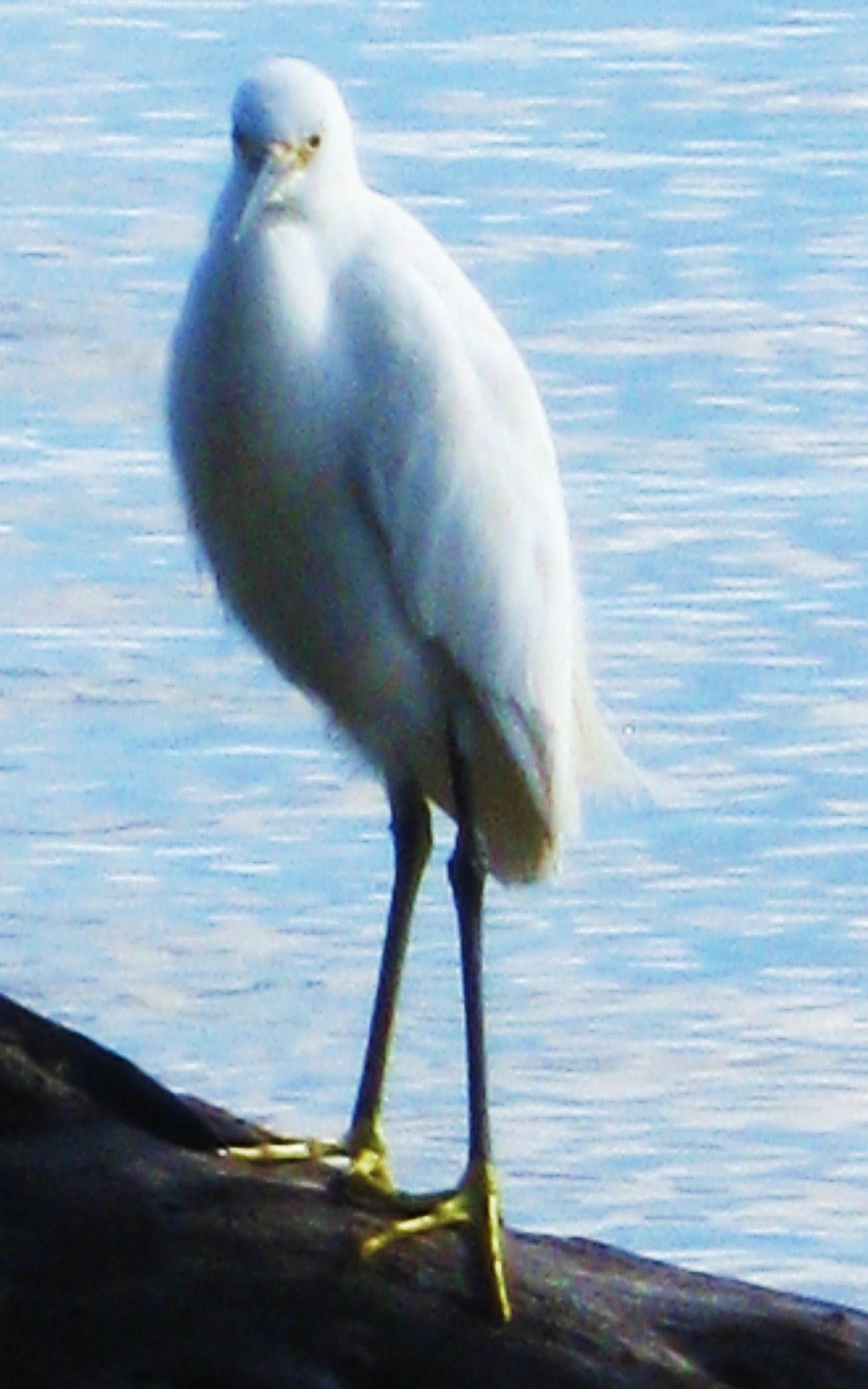
Great Egret

Snowy egret

 If you just see the photos of the two egrets on the right, you might think they were the same size, or even that the one on the left was the largest of the two. It’s all a matter of perspective — as you can see from the picture  below of the two of them together. 

                 — Photos by Pat Bean

                                                _____________

“You have your way. I have my way. As for the right way, the correct way, and the only way, it does not exist.” — Friedrich Nietsche

Travels With Maggie

One of my proudest accomplishments when I was a journalist was to get comments about a story I had written from people representing two sides of a polarized issue, each claiming my article had taken their opponent’s side. It was only then did I pat myself on the back for getting the story “mostly” right.

How each of us view life is colored by a unique perspective – our own. Truth is usually somewhere in the middle.

Eyewitnesses accounts of events can vary so greatly they sound like two different happenings. I see this frequently when I read accounts by two different reporters covering the same speech.

As you can see when you get the full picture, the snowy egret on the left is quite a bit smaller than the great egret on the right. These two were sharing a log at Estero Llano State Park in Texas' Rio Grande Valley.

For example, an environmental reporter might lead with a lumber industry spokesman’s quote: “A tree can produce enough oxygen to keep five or more people alive for a year.” But a business reporter’s lead would more likely be: “Logging is the life blood of hundreds of small communities; stop cutting trees and people will starve or turn to welfare.”

Both reporters, in the space they were allowed, quoted the speaker accurately. And the speaker was correctly quoted both times. The stories just came from different perspectives.

Travel has broadened my perspectives. I’m constantly reminded it’s a very complex world out there and that answers to problems do not come easily, nor without compromise.

Even through my camera lens – when indulging in my birdwatching passion – things aren’t always what they seem.

 “Behold the turtle. He makes progress only when he sticks his neck out.” — James Bryant Conant

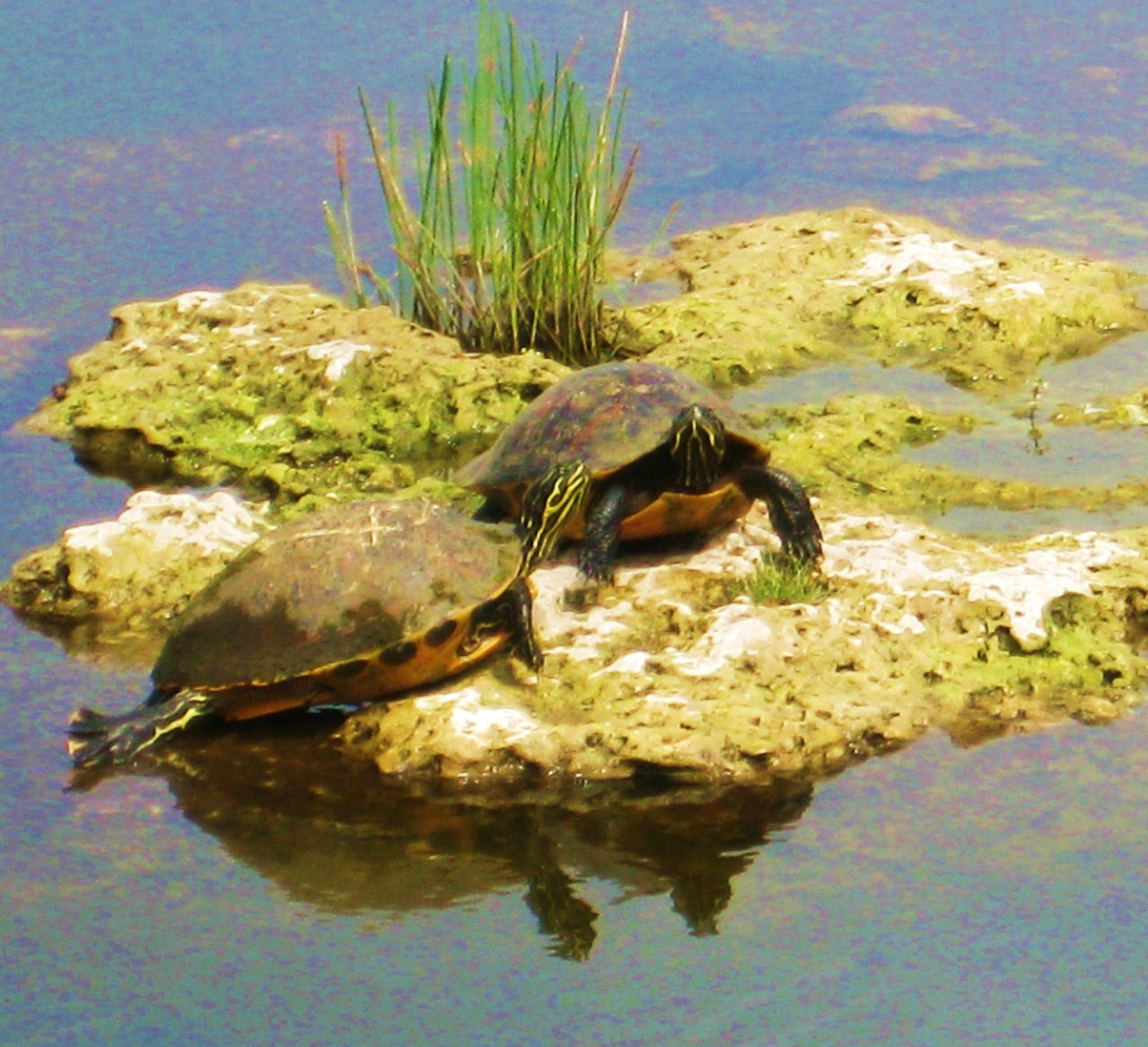
These two turtles claimed a pond at Queen Wilhelmina State Park in Arkansas as home. -- Photo by Pat Bean

 Travels With Maggie

 My youngest daughter collects turtles. I gave her one made out of St. Helen’s ash for Christmas that I picked up last July when I visited the volcano. I’ve also given her carved wooden turtles bought during my Africa and Galapagos Island trips a few years back.

 Finding turtle replicas as I travel is not hard. You can find them in any souvenir store and being hawked by local, enterprising street venders. I guess my daughter isn’t the only turtle collector out there.

Having something to collect is part of the fun of traveling. In my earlier days, after realizing I didn’t want a lot of dust collectors around my home, I started a collection of Christmas ornaments. I reasoned I could get them out once a year, enjoy the memories they brought to mind, and then put them away.

 When my home became a 22-foot RV, I passed the collection down to my daughter. It was a good choice because I still get to recall my past travels when I spend Christmas with her. 

These two turtle made their home beside the Anhinga Trail in Florida's Everglades. -- Photo by Pat Bean

 Today I collect books and pictures as my souvenirs. The books I give away after I’ve read, and the pictures I keep stored on my computer. A recent perusal of these photos made me realize, in my own way, that I was a collector of turtles, too.

There’s something about the composition of light on water and turtles on a log or rock that prompts me to reach for my camera. I’ve got pictures of the sea turtle I swam with in the Caribbean, pictures of giant tortoises, the land version of the turtle, taken on Isabelle Island in the Pacific Ocean, and numerous pictures of turtles taken all across America.

So what’s your favorite souvenir to bring home from your travels?

A Tale of Two Dogs

Maggie in her favorite spot in the RV -- Photo by Pat Bean

Maggie in her favorite spot in the RV -- Photo by Pat Bean


I’ve seen a look in dogs’ eyes, a quickly vanishing look of amazed contempt, and I am convinced that basically dogs think humans are nuts.” — John Steinbeck.

Travels With Maggie

 I once had a golden cocker spaniel, beloved by all my friends. Her name was Peaches and her greatest joy was to please and protect me.. The day she died, I knew I would never love a dog quite as much every again.

My current four-legged companion is Maggie, a black cocker spaniel I rescued in 1999. She peed on a colleague’s shoe the day I picked her up from the Ogden (Utah) Animal Shelter, and clearly lets me know that it’s my duty to please and protect her.

 Maggie’s first year had been hard, I was told by the shelter worker when I adopted her. She had been found roaming the streets as a tiny puppy, either as a runaway or abandoned by a heartless human. Maggie was then, sadly, adopted by an abusive family. The animal cruelty was serious enough that on learning about it the shelter reclaimed her.

Maggie leads the way on our hikes. She's not a dog that easily obeys a heel command. -- Photo by Pat Bean

 For our first two weeks together, Maggie was an escape artist. She never went far, however. It was as if she quickly realized she had no where else to go. Then came the day when I was in my backyard and a neighbor stopped by and left the gate open. Maggie made a mad dash for it, then stopped short, looked around and backed up.

 Now we had another problem. Maggie didn’t want to leave her newly found sanctuary. She would shiver and huddle on the floorboard when forced to ride in a vehicle. This was not a good thing as her owner was an avid vagabond. It took a round-trip from Utah to Texas before Maggie finally decided a vehicle could also be a sanctuary.

 It took just as long for the two of us to bond. The deciding factor was that I started sharing the last bite of whatever I was eating with her. It was only then that this intelligent, independent, mischievous – bossy and spoiled, say my kids – creature decided I was worthy of her affection.

I’m just thankful she finally enjoys traveling down the road and exploring new landscapes as much as her wandering owner.  For seven years now, Maggie and I have been perfect RV traveling companions.

And by now you must know I love her every bit as much as I once loved Peaches.


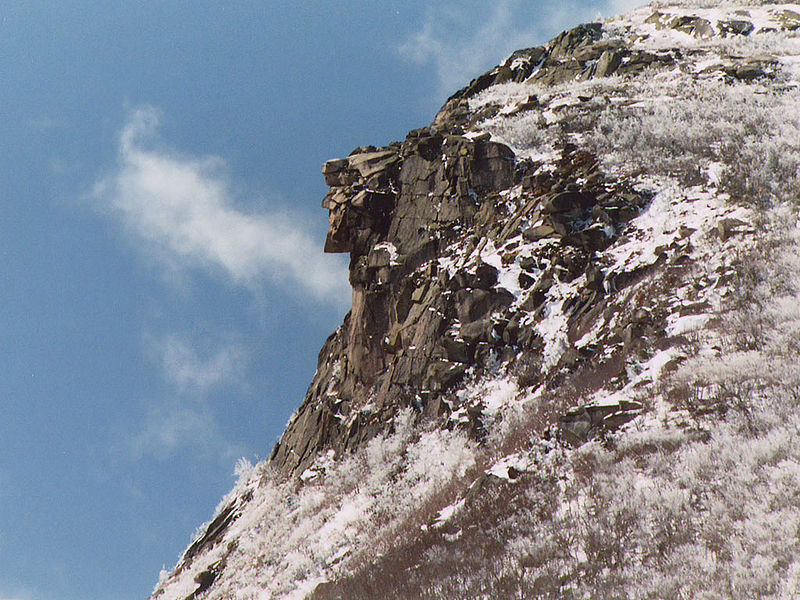
New Hampshire's "Old Man," seven days before he disappeared in an avalanche. -- Photo by Jeffrey Joseph


“Men hang out their signs indicative of their respective trades; shoe makers hang out a gigantic shoe; jewelers a monster watch, and the dentist hangs out a gold tooth; but up in the Mountains of New Hampshire, God Almighty has hung out a sign to show that there He makes men.”

— Daniel Webster

Travels With Maggie

For years I had read about New Hampshire’s Old Man of the Mountain. But when I finally had the opportunity to meet him in 2006, I discovered he had died in 2003. I’m not sure how I missed the obituary.

If you haven’t already guessed, I’m referring to the former granite profile of a man’s face that looked out over the landscape from high atop Cannon Mountain. It’s the same profile that was used on New Hampshire’s state quarter, issued three years before an avalanche killed off the old man.

I remember standing at the base of Cannon Mountain, binoculars in hand, gazing in disappointment at the spot where the rock that looked like a craggy old man’s face should have been. The one word that burned fiercely through my brain was procrastination. I had been too late, and an opportunity was lost.

I promised myself at that moment in time that I would never procrastinate again. Silly woman. Of course I have. Many times. Most recently about a writing project that I promised myself would be finished by the end of February.

I woke up this morning with an excuse in my head to avoid working on it today. It was a different excuse than the one I used yesterday. Then I thought of New Hampshire’s old man. Guess I had better throw those excuses out my RV window.

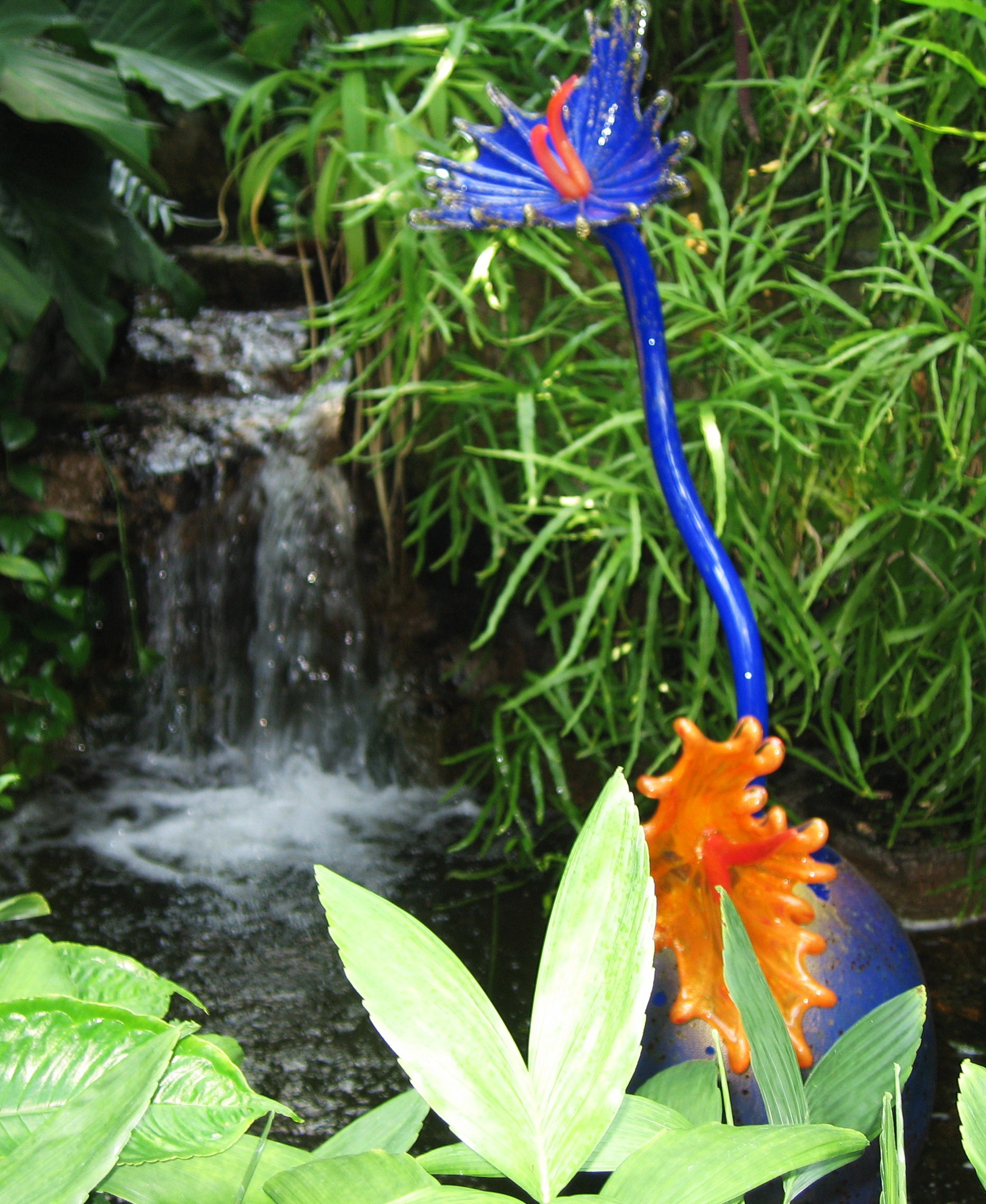
Chihuly's orange herons among the plants -- Photo by Pat Bean

 What marriage of art and nature has amazed you?

                 ________________________________

“Great art picks up where nature ends.” Marc Chagall

Travels With Maggie

I love plants and I love art. And when I visited St. Louis a few years ago, I came across the perfect marriage of the pair. Famed glass artist Dale Chihuly and the internationally acclaimed Missouri Botanical Gardens had temporarily married for a wondrous exhibit. .

The joining had taken place in the garden’s geodesic dome greenhouse. As I wandered through the dome, I found myself constantly snapping pictures of man and Mother Nature’s amazing teamwork. When I later looked at the photos I had taken, I sometimes found it difficult to distinguish between glass and plants.

Blooming glass -- Photo by Pat Bean

I was reminded again of this memorable summer afternoon when I read a comment made on yesterday’s blog. The reader had noted that the mushrooms illustrating my blog looked like pieces of Chihuly art. I looked at the picture posted on my blog again, and agreed with the observation.

I remember lying awake that night after visiting the gardens, asking myself how a genius like Chihuly had been created. Dedication to his calling? Love of his work? A willingness to make mistakes to learn new methods? Hard work? Patience? A natural talent? Probably all these and more I decided before falling asleep that night.

Dr. Seuss words: “Oh the places you’ll go, and the things you’ll see,” have accompanied me on my journeys in my RV, Gypsy Lee, with my dog, Maggie, now for seven years. Seuss forgot, however, to add “And oh the things you’ll remember.” That’s OK. I did it for him.