Feeds:
Posts
Comments


This was the first travel book I read. Do you remember your first. -- Photo courtesy Wikipedia

“I travel not to go anywhere, but to go. I travel for travel’s sake. The great affair is to move.” — Robert Louis Stevenson

Travels With Maggie

Osa Johnson wrote I Married Adventure the year after I was born. I think I was about 10 years old when I came across her book in the public library. It was the first travel book I ever read, and I was enthralled. From that moment on, I dreamed of having her kind of adventures.

It wasn’t until 2007 that I finally made it to Africa and went on a safari. Things had tremendously changed from Osa’s days, but at least I got to see wild lions and leopards and monkeys and elephants and all the other animals she wrote about in the book that captured my dreams. My great-grandchildren may not be so fortunate.

I’ve read hundreds of travel books since then. There’s always one by my bedside. Choosing just 10 to list here was difficult. I could easily have listed 10 different ones and been just as truthful. The ones I’ve chosen, however, have special meaning to me. I’ve just told you about the first. Here are the other nine – in no particular order.

Blue Highways by William Least Heat Moon. It was this book that was the role model for my present-day RV travels.
If your funny bone is like mine, this will tickle it.

On the Road

by Charles Kuralt. I was an upbeat journalist with a desire to travel. How could this book not be on my list?

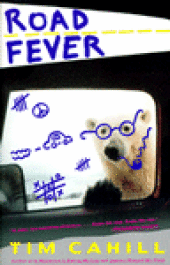
Road Fever by Tim Cahill. I’ve read just about everything this crazy Montanan has written. I get his sense of humor.

The Snow Leopard by Peter Matthiessen. An author with a strong sense of conservation and the value of both the landscape and wildlife.

Dessert Solitaire by Edward Abbey. An irreverent writer who writes about the landscapes I’ve trod and who loves them as much as I do.

Into Thin Air by Jon Krakauer. One person’s account of an Everest expedition in which lives were lost, one of whom I had met and interviewed. His is not the only version of events but his writing can’t be faulted. I couldn’t stop reading.

Out of Africa by Isek Dineson. Once again my adventurous spirit is touched. I visited the home, now a museum, of Karen Blixen (alias Dineson) when I was in Africa.

John Steinbeck and Charley. Maggie and I are their counterparts but we don't follow in their wheel tracks. -- Photo courtesy of Wikipedia

 Around the World in 80 Days

by Jules Verne. Does a fictional book count as   a travel book? I vote that this one does.

Travels With Charley by John Steinbeck. When I first began planning my RV travels, I reread this book after a friend said Maggie and I were the female version of Steinbeck and Charley. I even toyed with the idea of retracing this great writer’s journey, but then wisely decided I needed to find my on path on the road.
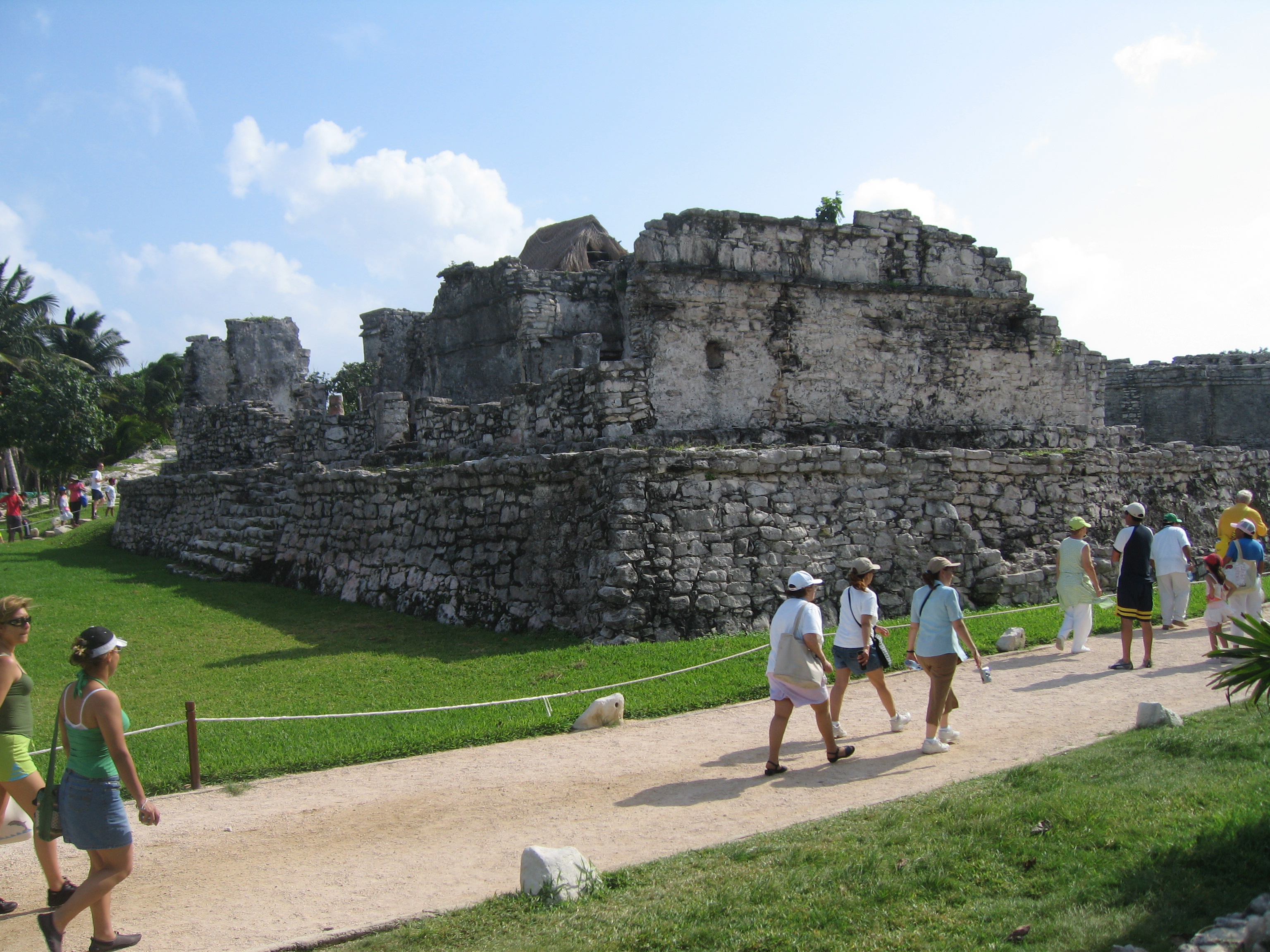
Ruins and tourists are all that remain of Tulum, a walled town by the Caribbean Sea built by the Mayans. -- Photo by Pat Bean

 One’s destination is never a place, but a new way of seeing things.” — Henry Miller

About 800 or so years ago, Mayans built a walled city on the Yucatan Peninsula that today we call Tulum. The citizens of this fort-like town that stood on a scenic bluff overlooking the Caribbean Sea were decimated by European diseases after a Spanish Expedition discovered the place in 1518.

Time and the elements reduced it to the ruins that today attracts hundreds of daily tourists. I was one of them a few years ago.

This journey back in time required an hour’s ride in a passenger ferry from Cozumel, followed by another hour’s ride in a bus to access the historic site. The day I took the tour, the water was exuberantly choppy, turning several of the passengers green.

Hamming it up for the camera, and tourist dollars. -- Photo by Pat Bean

The bus ride, however, was more gentle and flavored by the anecdotes of Angel, our tour guide. He filled our ears with tall tales of the Mayans, of which he was a descendent. He was an excellent press agent for his people, both those of ancient times and their kin who still live on the Yucatan Peninsula.

As I wandered among the ruins, ghosts from the past haunted my thoughts, their spirits floating through the air and hiding inside the cracks of the rock structures they built. What were these people really like, I wondered.

Walking back to our bus parked at the market plaza, where souvenir venders were loudly hawking their exotic wares – Angel had told us to wait to spend our money at a genuine Mayan gift shop that we would stop at on the ride back to the ferry – I sorta got an answer.

While I didn’t buy any souvenirs, I did pay to take the picture of two young Mayan boys dressed up as their ancient ancestors might have looked getting ready for battle – or a celebration.

These theatrical youths had found an ingenious way to support themselves. In this they were probably not all that different from the early Mayans. Or us. We all struggle to put foot on our tables and a roof over our heads as we search for a purpose to life and the secret to happiness.

It’s merely the methods of doing so that separate us from past generations and other cultures.


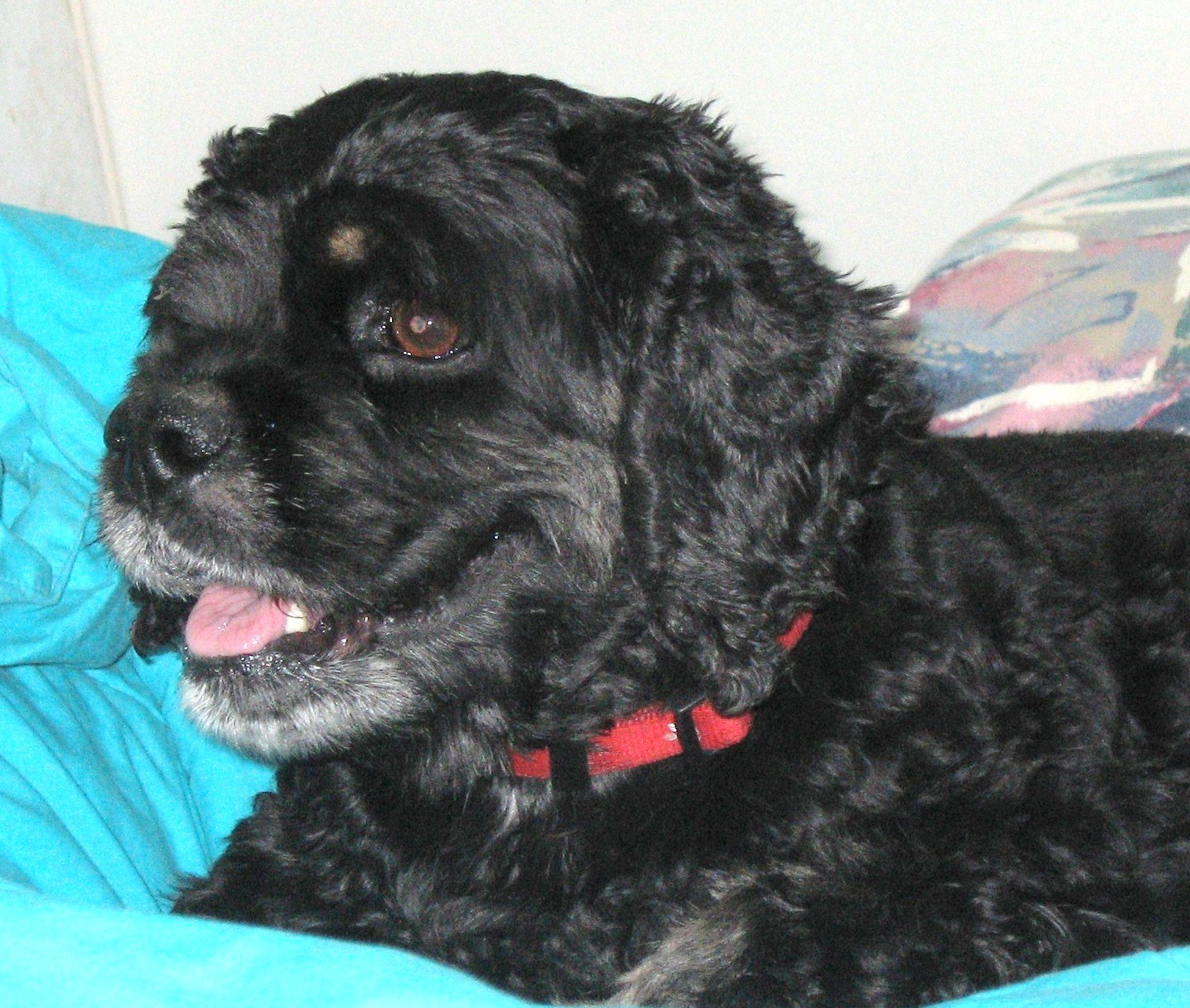
This is Rocky. He was rescued during a typhoon when my youngest daughter lived in Guam. He's never met a lap he didn't like. -- Photo by Pat Bean


“Dogs have owners. Cats have staff.” Unknown.

 My dog, Maggie, must be a cat in disguise.

Travels With Maggie

We never had a cat when I was growing up, only dogs. I didn’t have anything against cats, but never really wanted one of my own. I thought them too unfriendly, a stereotype that was confirmed by the first one that came into my life.

It was a beautiful, silky black feline that adopted my then eight-year-old daughter, Deborah. She adored this creature and named it Mai Ling. The enchantment was lost on the rest of the family. Mai Ling was cleverly mean, with a heart as dark as her fur.

One of her favorite activities was to hide beneath the couch and claw the legs of unsuspecting passers-by. Even worse, were her frequent full-body tackles on innocent sleepers.

One day, just as Mai Ling had left her former home to follow my daughter home, it adopted a new family down the street. Deborah brought the cat back repeatedly, but at the first opportunity Mai Ling always escaped again.

Deborah greatly mourned the loss of her pet, but the rest of the family rejoiced.

The next cat to enter my life was an ugly, skinny, dirty-haired calico that one of my sons had rescued from some boys who were teasing her.

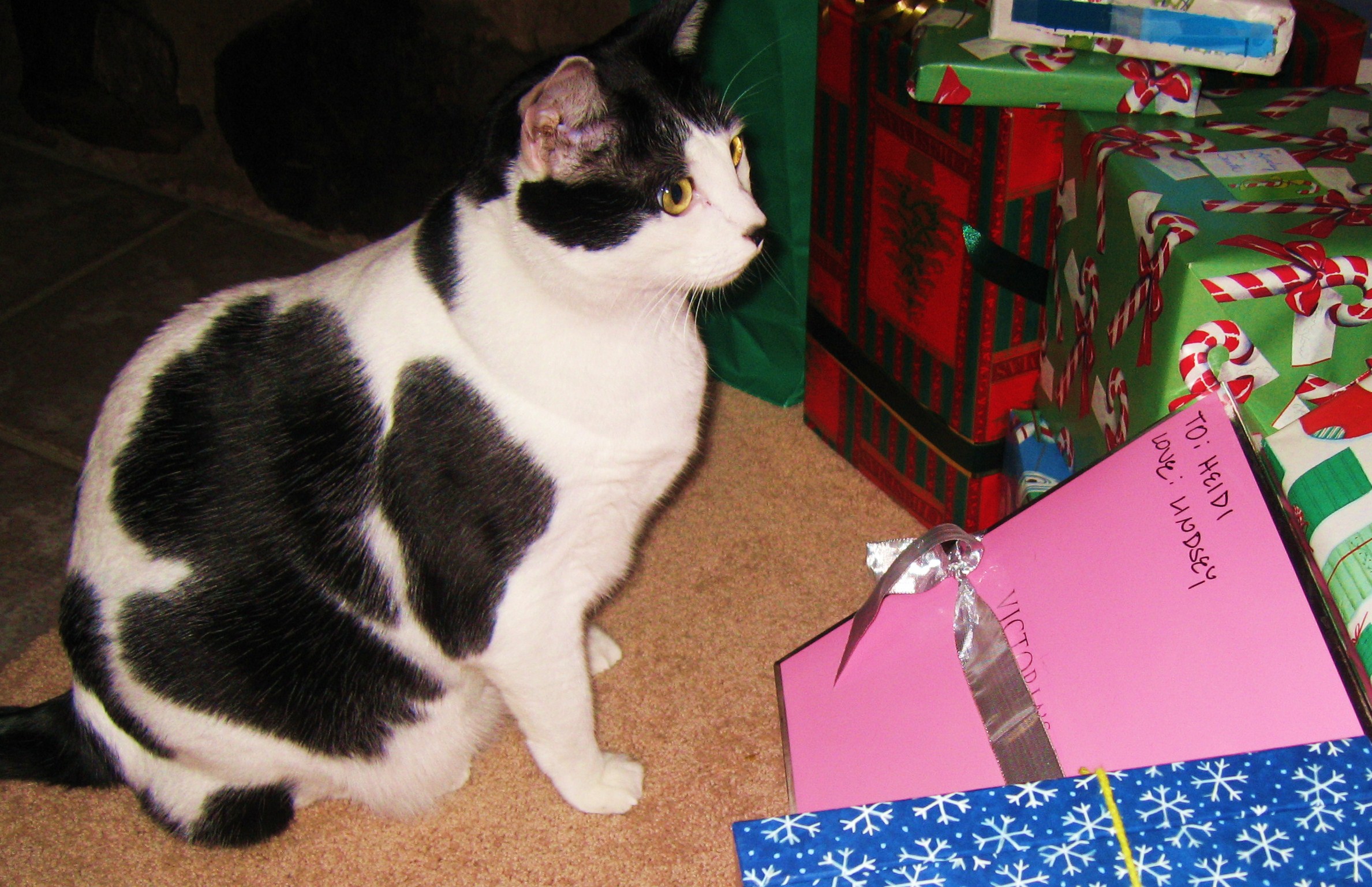
This is Maggie, a cat in disguise. She considers me her personal slave. -- Photo by Pat Bean

“Well, we’re going to have to feed this one for a while before we can find it a new home,” I told him. At this point, not even Deborah, wanted to adopt another cat.

Two weeks later our ugly, rescued feline had turned into a beautiful princess that had stolen all our hearts. We named her Kitterick, after a sexy, albeit a kid’s show, mascot for Houston’s KTRK-TV.

Kitterick had a long and happy life with our family, including our dog. We would often find the two of them curled up together.

The moral of this story is as old as Methuselah. And it applies to a lot more in our lives than cats, including the journeys we make. As Aldous Huxley once said: “To travel is to discover that everyone is wrong about other countries.”

Life's "no problem" when you're cruising Jamaica's Black River. -- Photo by Pat Bean


“Yesterday is dead, tomorrow hasn’t arrived yet. I have just one day, today, and I’m going to be happy in it.” Groucho Marx

Travels With Maggie

Lonely Planet’s lead article in this month’s newsletter (http://www.lonelyplanet.com/us) features one day itineraries for five cities: Barcelona, Toronto, London, Paris and Istanbul.

I wanted to both scream and cry at the audacity of such a notion. The thought of spending so few hours in these fabulous cities, which I’ve not yet visited, made me quite sad.

Then I thought about places I’ve visited when circumstances only allowed me a single day, like Jamaica, Guayaquil, Fairbanks, Glacier National Park and Nairobi. While each of these places deserved more than a mere day to explore, there would be some big holes left in my experiences if I had missed them.

George, the alligator that responded to the Black River boatman's summons. Honest! -- Photo by Pat Bean

In Jamaica, which I visited while on a Caribbean Christmas cruise, I spent several hours in a giggley-jiggly bus with a guide explaining the sights and Jamaica’s “no problem mon” attitude, then took a float trip down the Black River where egrets ganged up in mangrove trees and an alligator named George came at the boatman’s call. Honest.

Guayaquil was the Ecuadorian starting point for my trip to the Galapagos Islands. Here I was served chicken and watermelon for breakfast at the quaint Andaluz Hotel before taking a walk on the city’s beautiful Waterfront Parkway. That night I watched the stars come out from a rooftop restaurant that overlooked the Guayas River.

In Fairbanks, Alaska, I spent a night at a quaint bed-and-breakfast and then the better part of the next day at the fantastic University of Alaska Museum before moving on to Denali National Park .

Glacier National Park in Montana was a detour when I drove the Alaskan Highway. The main event here was simply driving the awesome and scenic 57-mile Going to the Sun Highway. The frosting on the  entrée was a grizzly bear that stopped traffic. Fortunately my halt offered a good view of this magnificent creature.

Nairobi, Kenya, was the starting point for my magnificent two-week African safari. Here I stayed in the same hotel favored by Ernest Hemingway, explored the grounds of the University of Nairobi, which was just next door, and toured the home (now a museum) of Karen Blixen, alias Isek Dineson and author of “Out of Africa.”

I guess if that’s all you have, one day is quite enough. But I sure hope that if I ever get to Lonely Planet’s big five that I have more than 24 hours to linger.

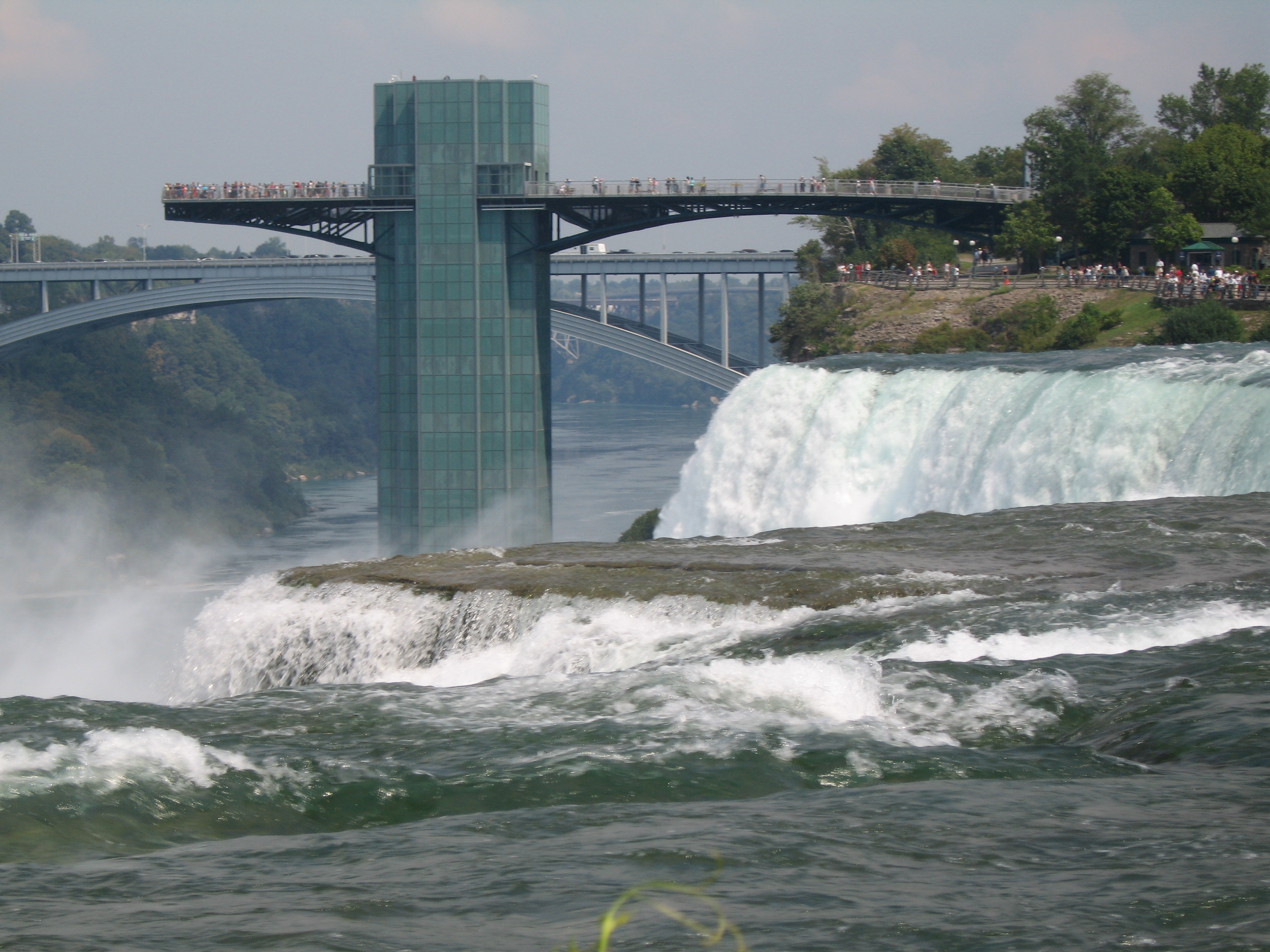
A lofty observation tower provides a spectacular view of Niagara Falls. -- Photo by Pat Bean

What’s your favorite waterfall?

                 ____________

“Thousands of tired, nerve-shaken, over-civilized people are beginning to find out that going to the mountain is going home; that wildness is necessity; that mountain parks and reservations are useful not only as fountains of timber and irrigating rivers, but as fountains of life.” — John Muir

Travels With Maggie

 There’s a large Barnes and Noble located on Interstate 15 between Ogden and Salt Lake City. I drove by it frequently when I lived in Utah. Well, not exactly by it. Whatever vehicle I was driving, as if programmed, always took the turn leading into the bookstore’s parking lot.

Gypsy Lee, my RV, does the same thing these days for waterfalls. In fact, it will even detour many miles for a view of falling water.

OK! I admit it. I’m the vehicle programmer. The four-wheels moving my dog, Maggie, and I along only go where I tell them to go. But rarely do they pass up an opportunity to let me walk the aisles of a bookstore – Back of Beyond Books in Moab, Utah, is one of my favorites – or gaze at the tinkling splash of falling water, be it the thunderous Niagara Falls or the less noisy Firehole Falls in Yellowstone National Park.

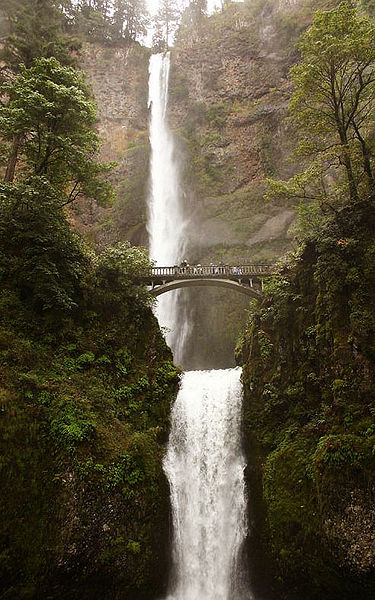
Multnomah Falls just off Interstate 84 outside of Portland, Oregon, is one of my very favorite waterfalls. -- Photo by Kevin Kay.

While books open up the world of reality and imagination to our minds, waterfalls unfold one’s soul to magic. While logic tells us it’s simply water falling from someplace above, it appears to be so much more. I see waterfalls as Mother Nature showing off, the equivalent of a rainbow in the sky.

More importantly, a waterfall’s symphony of water pinging off rocks and into a pool below never fails to calm my spirit. You should envy me if a waterfall’s wonder doesn’t touch you in a similar way, too.

Now here’s 10 of my favorite waterfalls to add to your bucket list.

Shoshone Falls, Twin Falls, Idaho.

Multnomah Falls, Highway 84, 30 minutes from Portland, Oregon.

Yellowstone Falls, Firehole Falls and Lewis Falls, Yellowstone Falls National Park, Wyoming

Niagara Falls, New York/Canada

Gorman Falls, Colorado Bend State Park, Texas

Upper Emerald Pools’ waterfalls, Zion National Park, Utah

St. Mary’s Falls, Glacier National Park, Montana

Natural Falls, Natural Falls State Park, Oklahoma

Bridal Veil Falls, Provo Canyon, Utah

Bridal Veil Falls, Jasper National Park, Alberta, Canada


Each sunset makes yet another mark on the calendar of our lives. I don't want to miss a single one. -- Photo by Pat Bean


The illimitable, silent, never-resting thing called Time, rolling, rushing on, swift, silent, like an all-embracing ocean-tide, on which we and all the universe swim like exhalations, like apparitions which are, and then are not.” — Thomas Carlyle

Travels With Maggie

As I typed the date in my journal this morning, I wanted to scream. Where in Hades has two months of the year gone already?

Time, as someone who no longer has to spend a third of it making a living, is my friend. But time, as someone who has less of it ahead than behind, is my enemy. This latter is true for both me and my dog, Maggie, who sadly at 13 most likely has fewer days ahead of her than I do.

Just the thought of losing her brings tears to my eyes. But that’s the reality of loving something. Maggie won’t be the first pet I’ve lost. And if Father Time is kind to me might not even be the last.

One day bare twigs, the next day bursting with color. -- Photo by Pat Bean

The pain of loss, however, is outweighed by the richness my feline and canine companions have added to my life over the years. I truly believe Alfred Lord Tennyson’s words: “Tis better to have loved and lost than never to have loved at all.” I’m sure he was speaking about human relationships, but those count in my book, too.

I was thinking on this during this morning’s walk when I came upon a patch of purple. A lilac bush – which Maggie and I have passed daily while waiting for winter to end so we can get back on the road – appeared to have budded overnight.

It was another example of how time, which once moved slow as a snail when I was a child awaiting Christmas, is now going 200 miles-per-hour in a 20 miles-per-hour school zone.

I can’t slow Father Time. All I can do is go along for the ride. Getting off and standing still is not an option for Maggie and me.


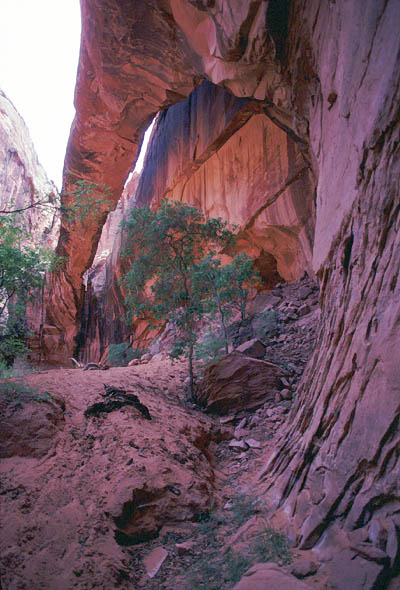
Morning Glory Natural Bridge -- Photo by Jay Wilbur

“I still find each day too short for all the thoughts I want to think, all the walks I want to take, all the books I want to read and all the friends I want to see.” John Burroughs  

Travels With Maggie

 I learned about Negro Bill Canyon Trail at the visitor center in Moab, Utah, where I asked if there was a good hiking trail on which I could take my dog.

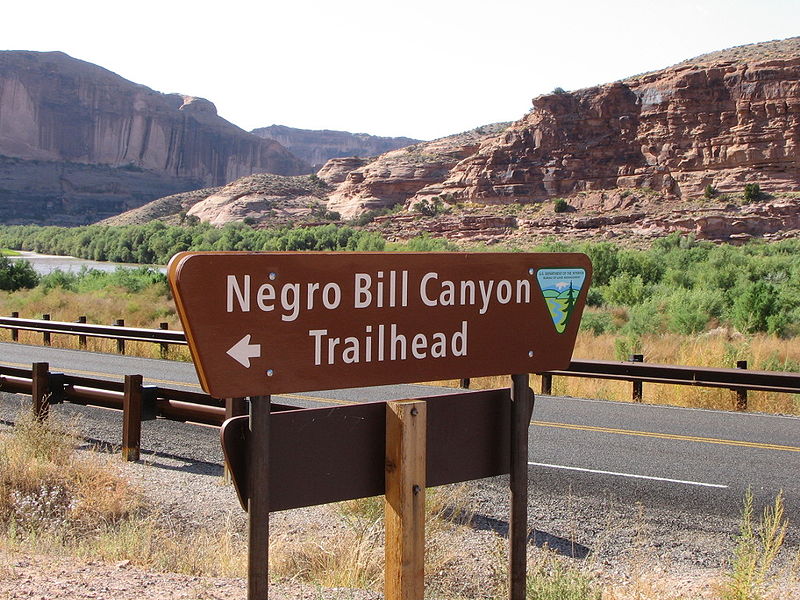
Moab is located adjacent to Arches National Park that has fantastic trails, but dogs are not allowed on them. The kindly desk clerk directed me to take Highway 191 north to Highway 128, which parallels the Colorado River, and then to look for a small parking area at the trailhead after about three miles.

It was easy to find and soon my dog and I were hiking up a narrow canyon trail that weaved across a small stream.

My hiking companion at the time was not Maggie. It was Peaches, a beautiful golden cocker spaniel who was then 15 years old. Since this was my first significant hike since foot surgery, the dawdling footsteps of her four legs and my two legs were perfectly matched.

It was actually a great pace as the trail, with its tinkling stream, red rock walls, willow groves and other wonders of nature, deserved adequate time to be properly admired. After about two miles, the trail forked. Peaches and I took the path veering to the right, which went about another half mile before ending at Morning Glory Natural Bridge, a 75-foot tall, 243 foot arch span overseeing an alcove.

Here, in this grand and peaceful setting, with a canyon wren serenading us, Peaches and I ate a leisurely lunch from my small backpack before heading back. It was the last hike Peaches and I took together.

Negro Bill Canyon Trailhead sign off Highway 128 with the Colorado River flowing past on the far side of the road.

The next time I hiked the trail, I had Maggie, a black cocker spaniel whom I had rescued from a life of abuse. She had been a year old at the time, and from her actions on the trail I realized this was probably her first off-pavement walk, certainly her first time to cross a stream. She either had to be coaxed or carried across. .

While she never became the great hiker Peaches was, Maggie’s now quite eager to get off the beaten path. In that, she and I are alike.

*Negro Bill Canyon is named after William Granstaff, a cowboy who ran cattle in the canyon in the late 1870s. While the name is not exactly politically correct, it’s more so now since the name was changed from the original “N” word.

One of the lesser goldfinches Maggie and I saw on our morning walk. -- Photo by Pat Bean

Our greatest strength as a human race is our ability to acknowledge our differences, our greatest weakness is our failure to embrace them.” — Judith Henderson

 Travels With Maggie

 Some days I wake up eager to write on a topic that burned itself into my brain as I slept, usually because the subject was on my mind before I went to bed. I consider these good days.

 On others, I wake brain-dead, wondering what in the heck I’m going to write about. This morning was one of these.

 Some days, Maggie sleeps in until 10 a.m. Others, like this morning, she wakes up early and immediately demands that I take her for a walk. Yes. I know. My children already have informed me that my canine companion bosses me around.

 But I welcomed her demands this morning, knowing that walks fertilize my brain. The birds clinging to a thistle finch bag feeder we passed did the rest.

I jumped to the conclusion that they were American goldfinches, which are extremely common all across the country. A closer inspection of the birds through binoculars, however, and I discovered my mistake. I was looking at lesser goldfinches, whose range rarely extends farther east than my current location in Central Texas.

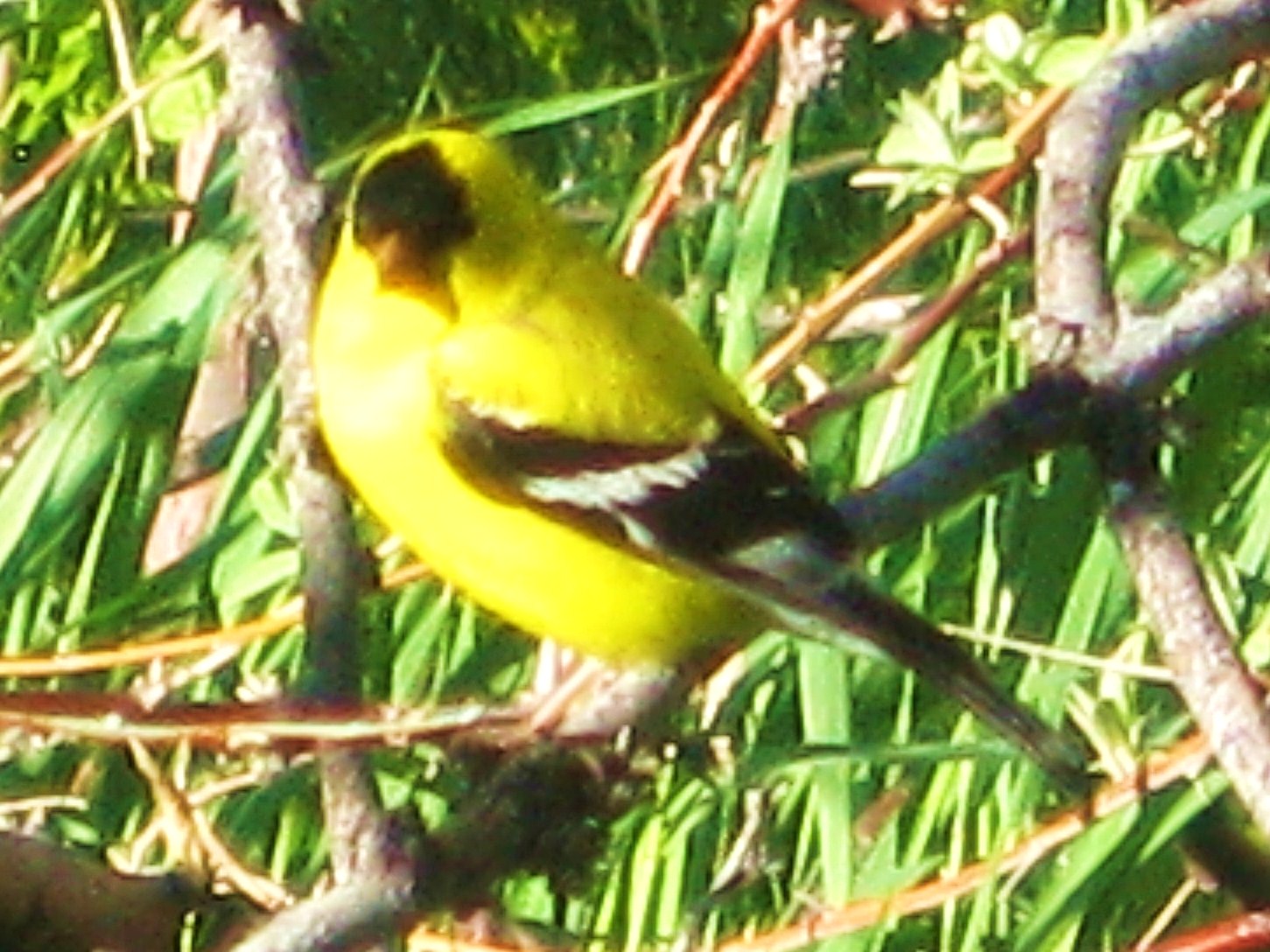
An American goldfinch -- Photo by Pat Bean

 The adult males of both species are brilliant yellow and black (females are duller and in the case of the lesser more green than yellow), but the lesser has a black head and back, while the American only wears a black cap and has black wings that contrast with a yellow back. Both species are beautiful birds.

 And that got me thinking about the assumptions people make when confronted with differences in general. I suspect that erroneous assumptions, like my confusion as to which goldfinch I was seeing, are way too common. And just like my goldfinches, most of our assumptions usually have nothing to do with right or wrong.

One kind of beauty, one color of skin or one way of thinking may be no better or no worse than another kind of beauty, a different color of skin or a second, third or fourth way of thinking.

I suspect the world could do with fewer assumptions and more appreciation of differences. What do you think?

A front-yard daffodil tells us spring is not too far way. -- Photo by Pat Bean

“I wandered lonely as a cloud

That Floats on high o’er vales and hills,

When all at once I saw a crowd

A host of golden daffodils;

Beside the lake, beneath the trees,

Fluttering and dancing in the Breeze.”

   — William Wordsworth.   

I saw my first daffodils for the year yesterday. Five golden blooms had popped themselves up beneath a juniper tree.

“Quick. Take a picture. Before the deer eat them,” said my daughter-in-law, Cindi. “And then e-mail it to D.C.” The daffodils were still there this morning, however. The deer were evidently satisfied with the corn she put out for them. Like me, she worries about the neighborhood deer because development in this once rural area is destroying all their habitat.

D.C. is my son, the one who never wants a thermostat to drop beneath 78, but who is currently in Afghanistan, at a place where a frigid winter is still very much in charge of the landscape. While a picture of a daffodil might not warm his body, hopefully it will warm his spirit.

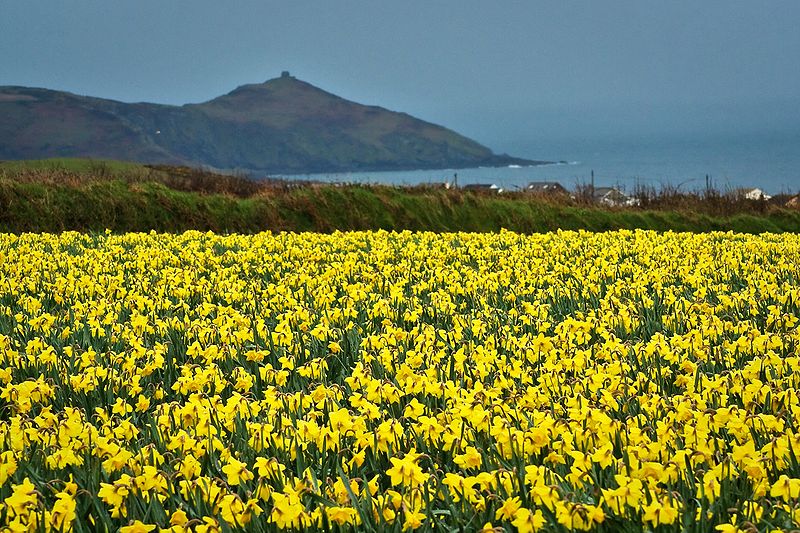
A field of daffodils in Cornwall, England -- Photo by Mark Robinson

Daffodils do that to people. It’s as if the energy that pushes up daffodils – sometimes through several inches of snow – is transferred from the golden petals to the human soul.

Camden, Arkansas, where my youngest daughter lives, hosts an annual Daffodil Festival, with this year’s event scheduled March 11-12. You might want to catch it if you’re anywhere nearby. If not, perhaps you can attend one of these other daffodil events:

       Annual Daffodil Parade, Puyallup, Washington, April 9

       Meriden, Connecticutt, Daffodil Festival April 30-May 1

       Gloucester, Virginia, Daffodil Festival, March 26-27

       Junction, Oregon, Daffodil Drive Festival, March 12-13

       Nantuckett Island, Massachusetts, Daffodil Festival Weekend April 29-May 1

       Fremont, North Carolina, Daffodil Festival, March 26

I could continue on for a while, but you get the idea. I’m not the only one who thinks daffodils are worthy of notice.

Have you seen your first one this year yet?


Hundreds of cedar waxwings swooped from the sky and landed in the tree tops as Maggie and I walked past them this morning. -- Photo by Pat Bean

 “Happiness isn’t getting what you want, it is wanting what you got.” Garth Brooks

 Travels With Maggie It’s cool, damp and overcast here in Central Texas this morning. No sliver of golden sun, or even a rose-tinted cloud to brighten the day.

 The birds, however, seem to love it.

 I watched a pair of northern cardinals, a scarlet male and a yellow and red female, chase each other around a row of cedar trees outside my RV. A chatty mockingbird watched the courtship from a utility line above the trees, then flew off, perhaps in search of its own soul-mate.

The cardinals’ splash of color helped make up for the missing sunrise. But it wasn’t until later, after my dog, Maggie, finally woke and demanded her morning walk, that the day truly seemed cheery. Hundreds of cedar waxwings swooped down and settled in the tops of several trees our walk took us past.  Immediately they began calling back and forth among themselves, filling the air with bird twitter.

Cedar Waxwing -- Photo by Ken Thomas ( http://kenthomas.us/ )

 The light was such that the birds seemed little more than dark blobs against a gray sky. A look at them through my binoculars added a bit of their color, but my knowledge and imagination had to add the rest.

Cedar waxwings are striking birds with fancy crests, rosy-brown heads and yellow bellies. Red splotches on their wings, yellow on their tail tips and a black mask across their eyes make them look as if they’ve dressed in their best feathers for a masquerade ball.

 They’re actually the partying kind. I can’t recall ever seeing just one cedar waxwing.

 These birds only visit Texas in the winter. They migrate north for the summer. Smart birds. Come warmer weather, Texans will be yearning for a cool, damp, overcast morning like today.