Feeds:
Posts
Comments

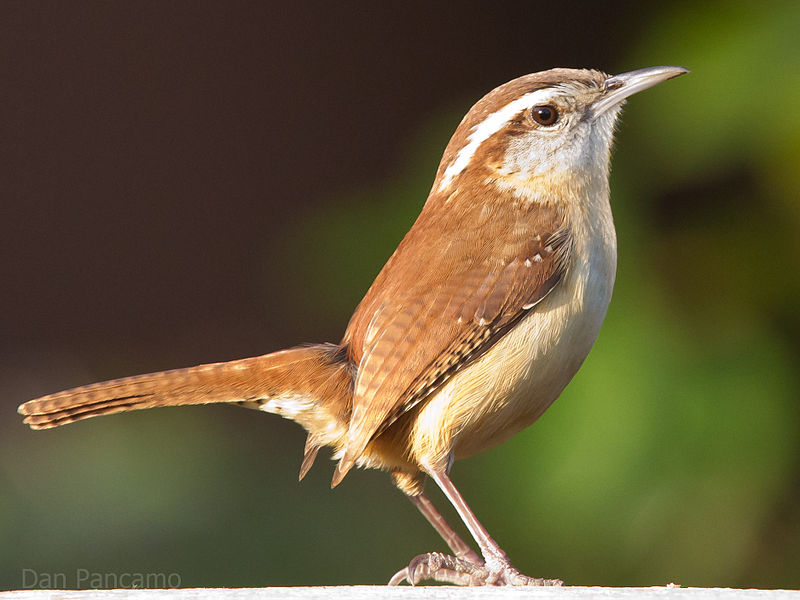
Carolina wren -- Photo by Dan Pancamo

“I do not know whether I was then a man dreaming I was a butterfly, or whether I am now a butterfly dreaming I am a man.” — Chuang Tzu.

Travels With Maggie

A tiny bird sang and sang and sang all day yesterday from a perch high in the trees in my daughter’s Southern Arkansas home. It was frustrating because I could never find the songster. My son-in-law, Joe, even joined in the search.

I mean this was a persistent bird that serenaded us hour after hour. But every time we got close to where we thought the sound was coming from, the bird would shut up.

While many birders easily identify birds by their songs, I’m not one of them.

Finally able to stand it no longer, I did what any computer savvy birder does these days. I got online and begin checking out bird sounds on the Cornell Lab of Ornithology’s website. http://tinyurl.com/dbbobp

My suspicion that our loud, high-pitched songster might be a Carolina wren, which is a common bird in the area, was confirmed.

I was once again a happy birder.

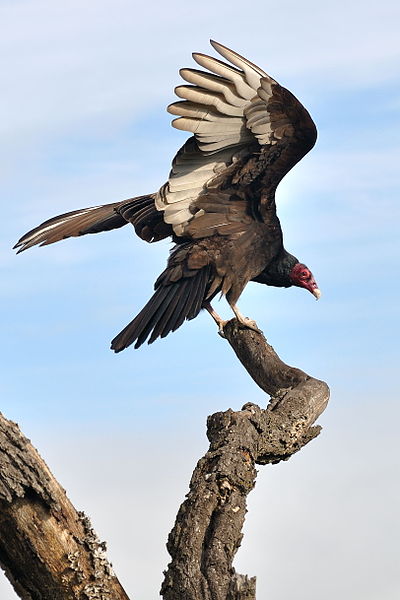
A turkey vulture looking almost as graceful as a bald eagle. -- Photo by Don DeBold

“We must accept finite disappointment, but we must never lose infinite hope.” — Martin Luther King.

Travels With Maggie

My daughter, Trish, who one day may laugh again, lives at the end of a narrow road on the outskirts of Camden, Arkansas.

She’s learned to be careful driving the lane at night as deer lurk alongside the road and have been known to spook in the direction of bright headlights. It’s also common to see skunk, raccoon, squirrels, or armadillo scampering across the road – or lying dead along this rural stretch of rough pavement.

It was roadkill armadillo a few days ago when we were driving into town in Trish’s brand new minivan. And feasting on the upturned armadillo carcass were half a dozen vultures.

“Gads I hate those birds,” she moaned as we passed, to which I described their valuable role in helping keep our environment clean.

“I know. I know. But they’re still ugly.”

I don't think I'll ever convince my daughter there's beauty in this red-headed turkey vulture, but photographer Samuel Blanc, http://www.sblanc.com, caught the beauty in this picture.

Being one of those crazy birders who has never met a bird she didn’t like, I disagreed but then shut up as I knew convincing her otherwise was a lost cause. Now the cause is not just lost, it’s found its way into a parallel universe.

While driving home from work, my daughter came upon another roadkill scene and yet more vultures dining inelegantly. One of them, it seems, was even more reluctant than usual to forsake its evening meal.

The end of this tale is less pretty than the vulture. Seems the last one to fly away decided it might look good as a hood ornament on my daughter’s new car, which hadn’t yet 1,000 miles on the odometer.

The vulture put a dent on the vehicle’s hood before realizing this wasn’t such a good idea.

Dang (actual word used censored) turkey vultures and their ugly red faces,” she darkly muttered when she finally got home and showed me the minor damage. She was gleeful that the bird staggered as it flew away.

I think all hope is lost for me to convince Trish that vultures are actually beautiful and a gift to the world. Wouldn’t you agree.

White Oak lake State Park: A place to sit a while and watch the clouds roll by. -- Photo by Pat Bean

Travels With Maggie

Arkansas has 52 state parks, 26 of which have facilities to accommodate RVs.

I know because finding state parks along my route is part of my regular trip-planning routine. If it were possible, I would spend all my on-the-road nights at state parks rather than commercial ones.

These public campgrounds are usually less expensive, have larger sites, and almost always come with a view and trails that Maggie and I can hike.

Hollyhocks growing near the Wonder House at Queen Wilhelmina State Park in Arkansas. -- Photo by Pat Bean

Two of my favorite Arkansas campgrounds are White Oak Lake and Queen Wilhelmina. The first is located just 20 miles away from Camden, where I will start my travels for the year next week. I’ve visited it a couple of times but never stayed overnight because of its close proximity.

In a perfect traveling world – well the one that I prefer – I travel about 150 miles than camp for two to three days so I can become more personally acquainted with a landscape.

Queen Wilhelmina, meanwhile, is almost exactly 150 miles from my daughter’s home. I came upon it a few years back when I was driving the Talamina Scenic Byway between Arkansas and Oklahoma.

The park, located high on a ridge in the Ouachita Mountains was too inviting to pass by. I decided to stop for the night, although I had only traveled 20 miles this day.  Five days later I finally left to continue my journey.

This time around I’m planning to spend my first night on the road at yet another Arkansas State Park. Stay tuned and I’ll tell you all about it next week.

“What you’ve done becomes the judge of what you’re going to do – especially in other people’s minds. When you’re traveling, you are what you are right there and then. People don’t have your past to hold against you. No yesterdays on the road.” William Least Heat Moon, “Blue Highways”


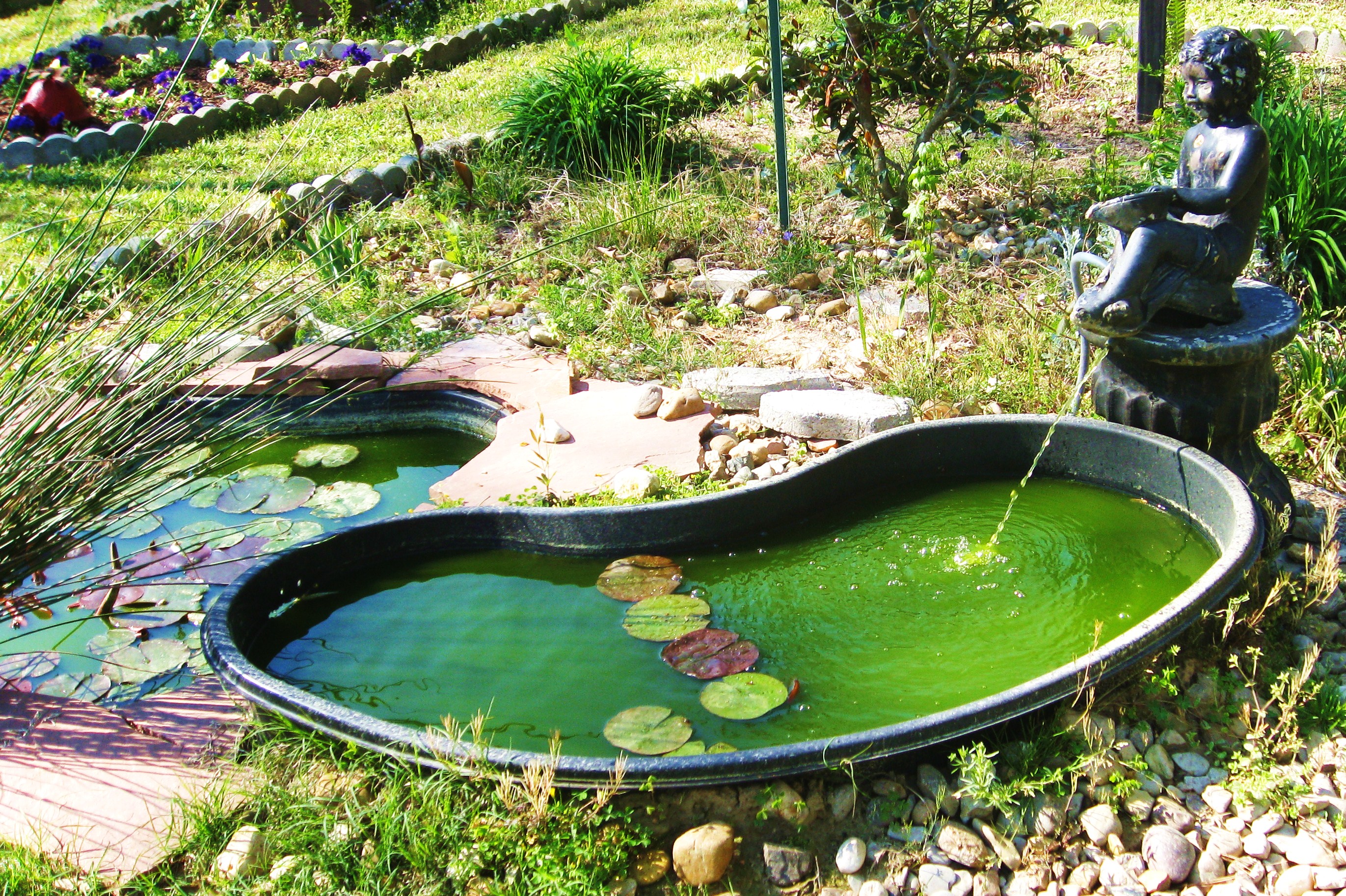
Every garden should have a pond -- Photos by Pat Bean

“Where you tend a rose, my lad, a thistle cannot grow.” — Frances Hodgson Burnett

Travels With Maggie

News in the world today is not good. Anybody who doesn’t know this is suffering from reality disorder.

We may soon be eating radioactive fish. There are shooting wars aplenty including gang wars in our own country. We’re suffering from loss of freedoms because of terrorist threats, and from corporate greed that’s making the rich richer and the poor poorer. We have a melting ice cap, diminishing wetlands and rain forests, and politicians running amok all over the globe.

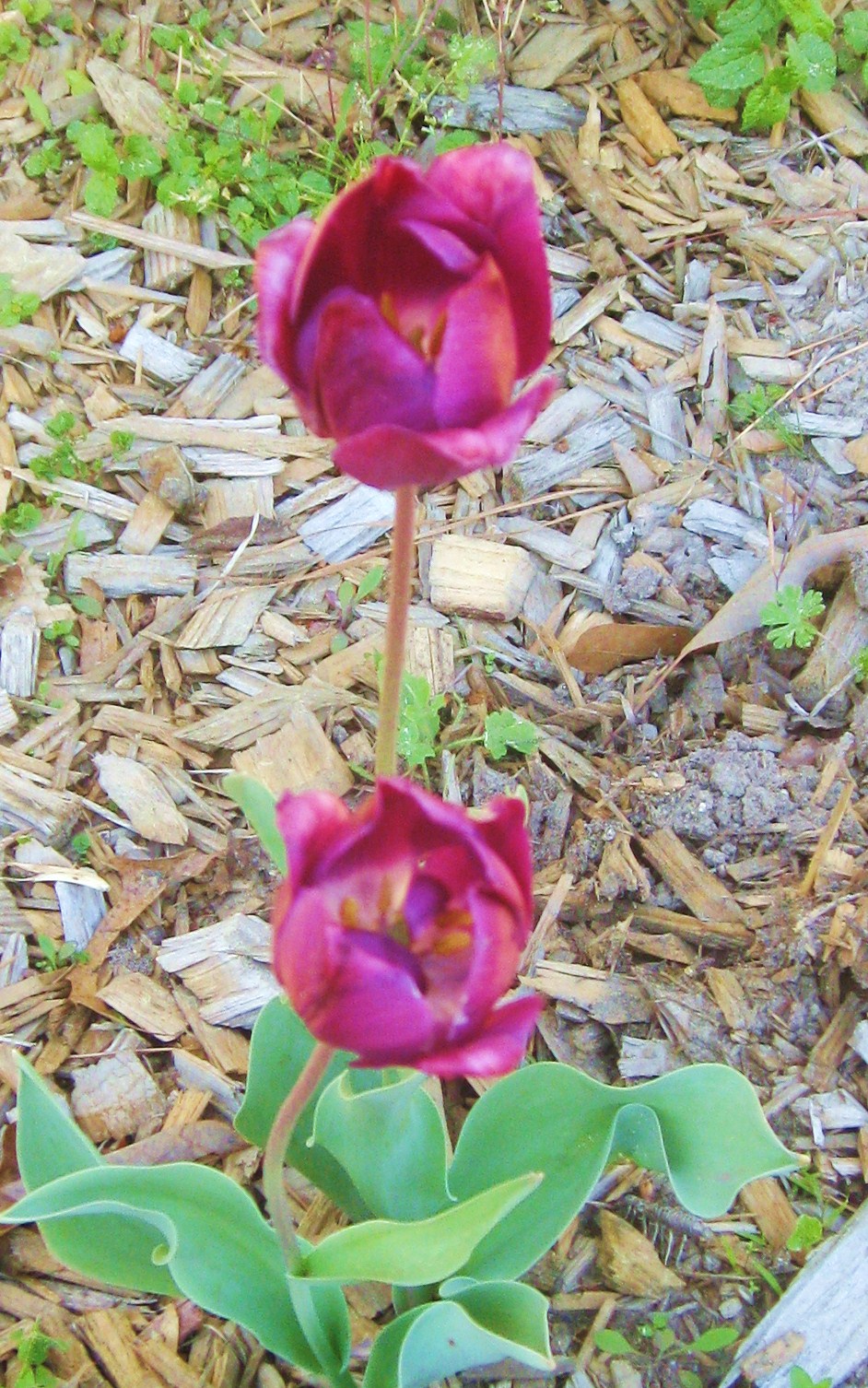
The purple tulips

How does a person stay sane amidst all the chaos? It’s not easy.

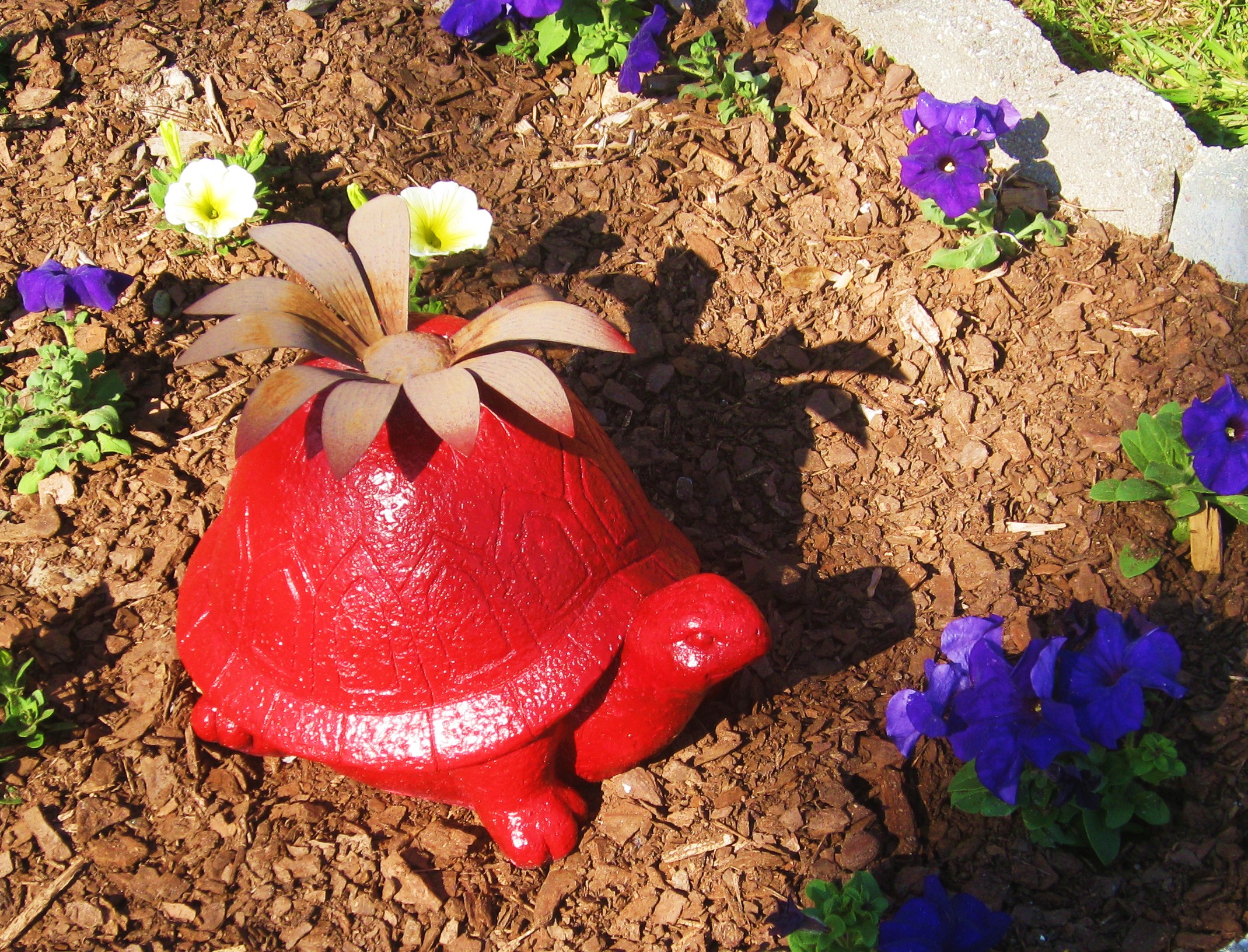
The red turtle

As a former journalist who was deeply embedded in world affairs for 37 years, I spent the first six months in retirement rarely reading a newspaper. It was a nice reprieve.

But I’ve now returned to my morning dose of worldly events, and because it’s still one of this country’s few newspapers that doesn’t believe Britney Spears, Charlie Sheen or Lindsey Lohan’s shenanigans belong on its front page, the online version of the New York Times is my first newspaper-with-coffee choice of information these days.

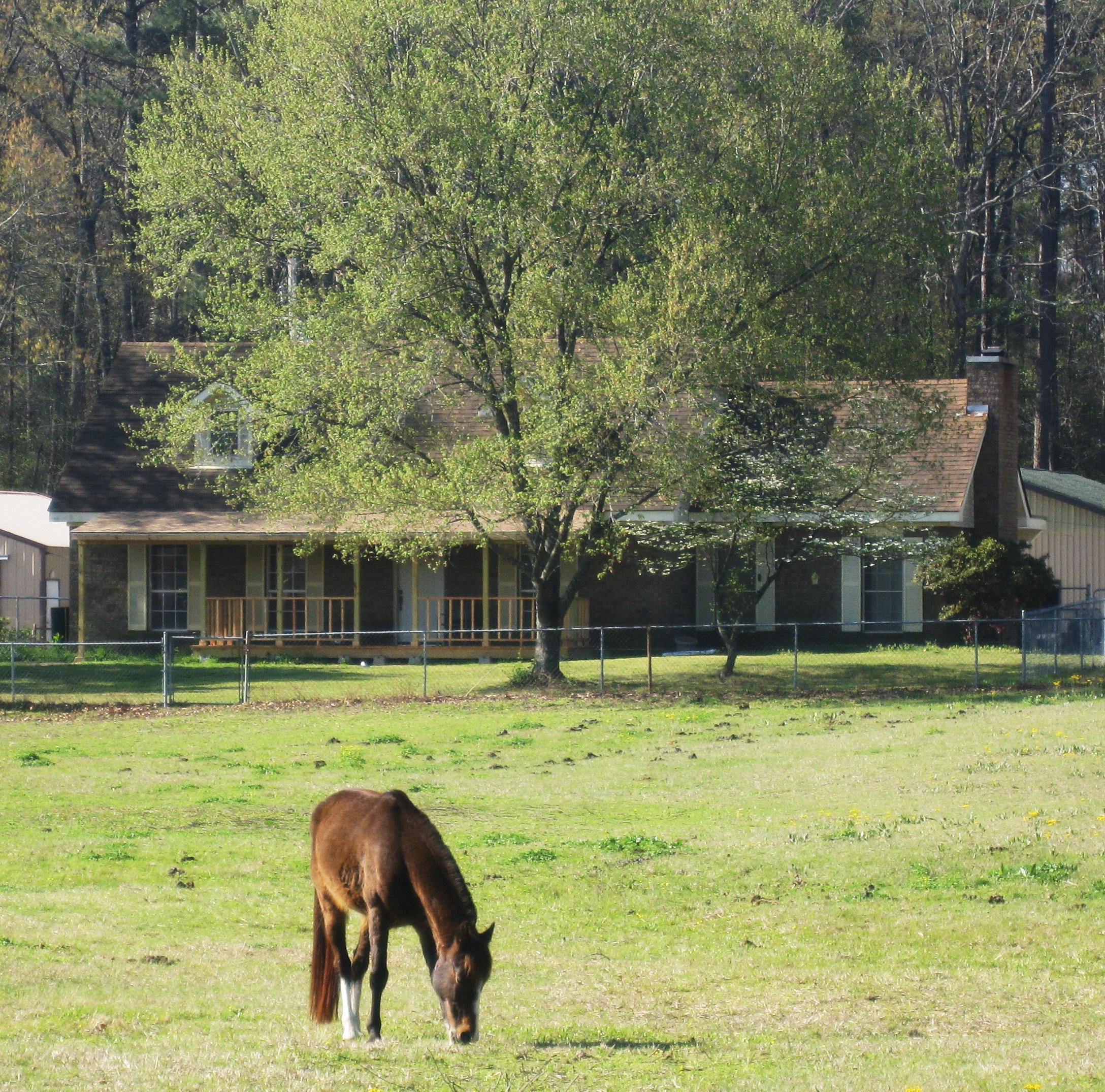
Belle in the meadow -- Photo by Pat Bean

What I read rarely cheers me up. But I have an antidote, my morning walk with Maggie, where I let Mother Nature’s reality convince me there is still hope for the world. For the past week the walk has simply been around my daughter’s five-acres of land in Camden, Arkansas.

The view includes my daughter’s “Secret Garden,” which is still under construction. And yes, it is named after the book of the same name by Frances Hodgson Burnett written in 1910. It was one of my favorite books as a child, and one each of my children also read and loved.

If you haven’t read it, you should. It’s still in print and you can even download it for free on your Kindle. Meanwhile here are a few of the peaceful sights Maggie and I have been seeing this past week.

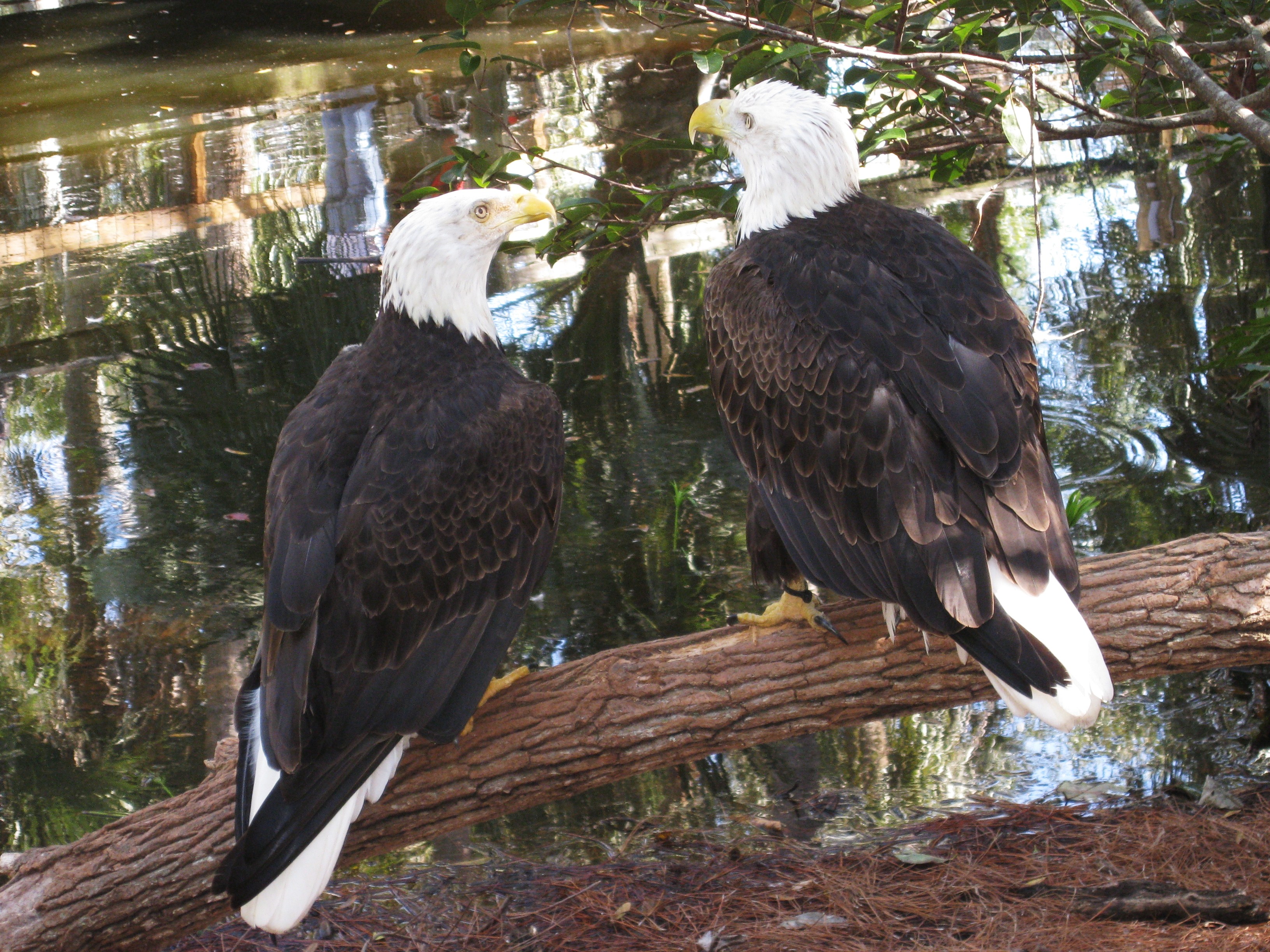
A pair of bald eagles, injured in the wild, that are living out their lives at the Brevard Zoo in Florida. -- Photo by Pat Bean

“There is an eagle in me that wants to soar, and there is a hippopotamus in me that wants to wallow in the mud.” — Carl Sandburg

Just for Today

Ever since I counted 149 eagles wintering at the Farmington Bay Wildlife Management Area in Northern Utah, I’ve been a bit blase when spotting a lone bald eagle. Of course I still look for this symbol of our American heritage, and even experience a shiver or two when I do see one flying overhead or sitting atop a tall tree.

I appreciate the sightings all the more  because of this great bird’s comeback from near extinction with the passage of the Endangered Species Act and the banning of DDT.

This morning, however, the adrenalin-pumping thrill of eagle watching was back, thanks to a live, streaming video cam in Iowa that I watched on my computer here in Arkansas. The cam is aimed at a 1.5 ton eagle nest, 80 feet up in a cottonwood tree on the bank of Trout Run Creek at the Decorah Fish Hatchery. The large nest is being attended by a coupled pair of eagles.

When I first looked, all I saw was one of the adults sitting on the nest, on what I had read were three eggs. When next I looked, one of the adult eagles was gently feeding two chicks while the third egg was still unhatched. Reading a bit more, I learned that the first chick hatched Saturday, and the second yesterday. Perhaps the third will hatch today. The pair successfully fledged three chicks in 2010.

Great blue herons at Farmington Bay in Northern Utah, where I once counted 149 bald eagles on a February day. -- Photo by Pat Bean

As I write this, the eagle is now back sitting on her chicks to keep them warm. What appears to be a healthy breeze is ruffling the feathers of the adult eagle.

 You can hear the wind blowing, the creek babbling, the chicks peeping and just now the honk of geese flying somewhere overhead.

I plan to keep the feed to the site open on my computer today. Perhaps you would like to join me for the show. http://www.ustream.tv/decoraheagles

Male ruby-throated hummingbird on guard duty. -- Photo by Joe Schneid

“Two birds disputed about a kernel, when a third swooped down and carried it off.” Proverb from the Congo.

Travels With Maggie

I usually start my morning with the first hint of gray coloring over the ebony of the night. It’s as if my body stirs with the announcement that the golden globe creeping up from the eastern horizon might bring with it a spectacular sunrise.

This morning in Camden, however, the sun was hiding behind an overcast sky. Instead Mother Nature graced me with a different gift. As I lay abed, thinking about which of the things on my to-do list I would tackle first, a hummingbird landed on the nectar feeder I had put out yesterday, carefully placing it so I could easily see any winged visitors from my RV window.

While all the bird presented to me in the dim morning light was its dark profile, I knew it was probably one of the two ruby-throated hummingbirds that I had watched play king of the nectar feeder the day before. Identifying hummingbird species in Arkansas is a snap for anyone – if it’s anything other than a ruby-throated, it’s a rare bird sighting.

Female ruby-throated hummingbird. -- Photo by Joe Schneid

As I had watched the two scrappers find the nectar feeder within minutes of my hanging it up, the pair had been a blur of whirring wings performing a territorial dance. As soon as one would land on the red lip of the feeder, the other would come zinging down at it.

This morning, my lone, dawn visitor sat still as a bittern stretching its long neck in the weeds to camouflage itself. About every 30 seconds or so, the hummer would dip its thin bill down into the feeder to sip up nectar. It was warming up its fragile body from the cool night – raising its resting 250-per-minute heart rate back up to its daytime rhythm of about 1,200 heart beats a minute.

Such numbers fascinate me, as does the fact that this tiny dynamo weighs less than half an ounce , beats its wings over 50 times a second and can hover and fly in any direction, including upside down.

Meanwhile, I wondered where the second hummer from yesterday was this morning, perhaps at the duplicate feeder hanging from my daughter’s patio roof on the other side of her property. I suspect ed that once they had refueled, they might resume their territorial game.

I can’t wait for the show to begin. But in the meantime I have a to-do list to tackle.


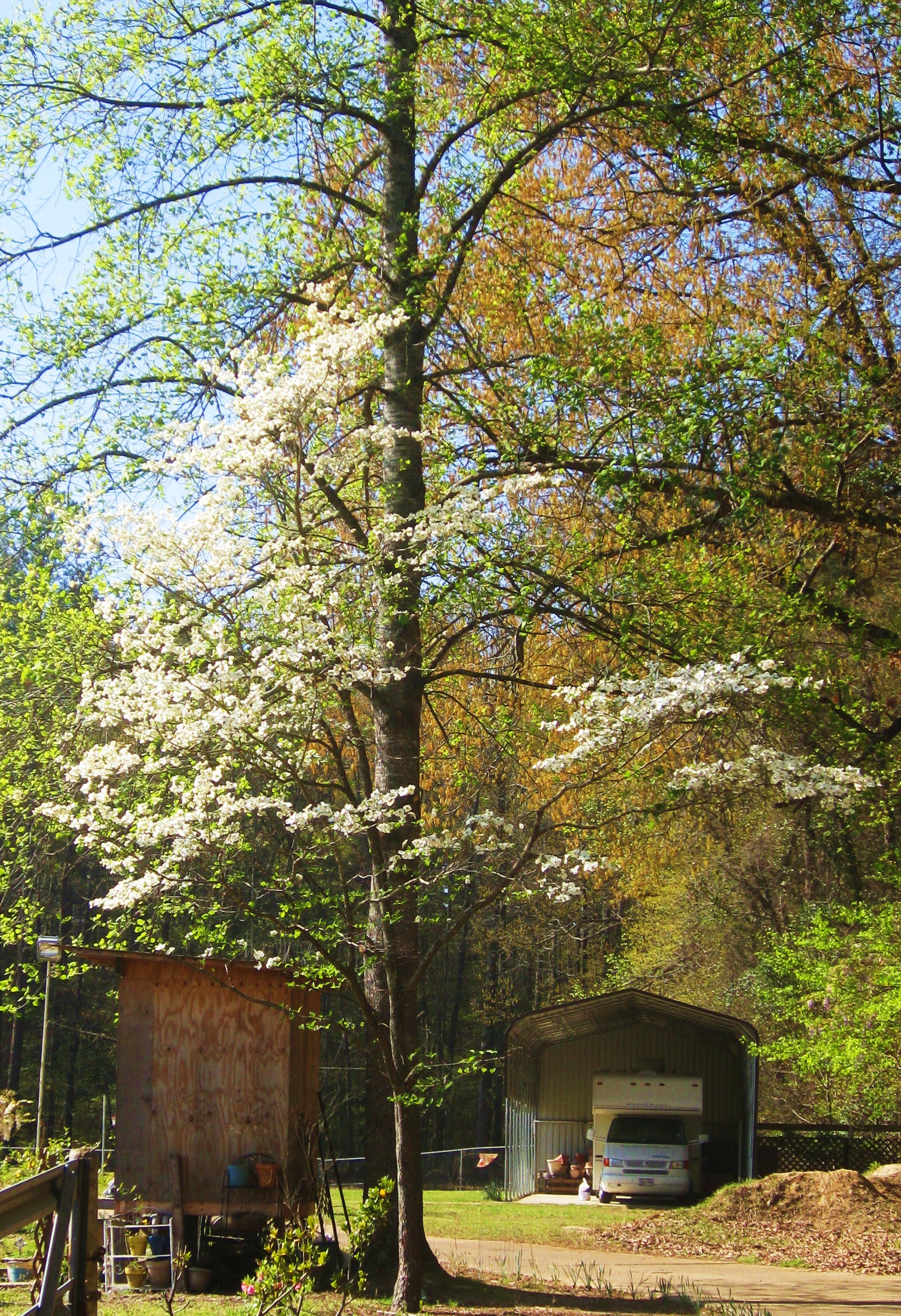
One of two dogwood trees visible out my RV, shown in background, during my and Maggie's visit to my daughter's home in Camden, Arkansas. -- Photo by Pat Bean

“If you’ve never been thrilled to the very edges of your soul by a flower in spring bloom, maybe your soul has never been in in bloom.” — Terri Guillemets

 Travels With Maggie

When it’s bluebonnet time in Texas, the wisteria and dogwood are blooming in Arkansas.

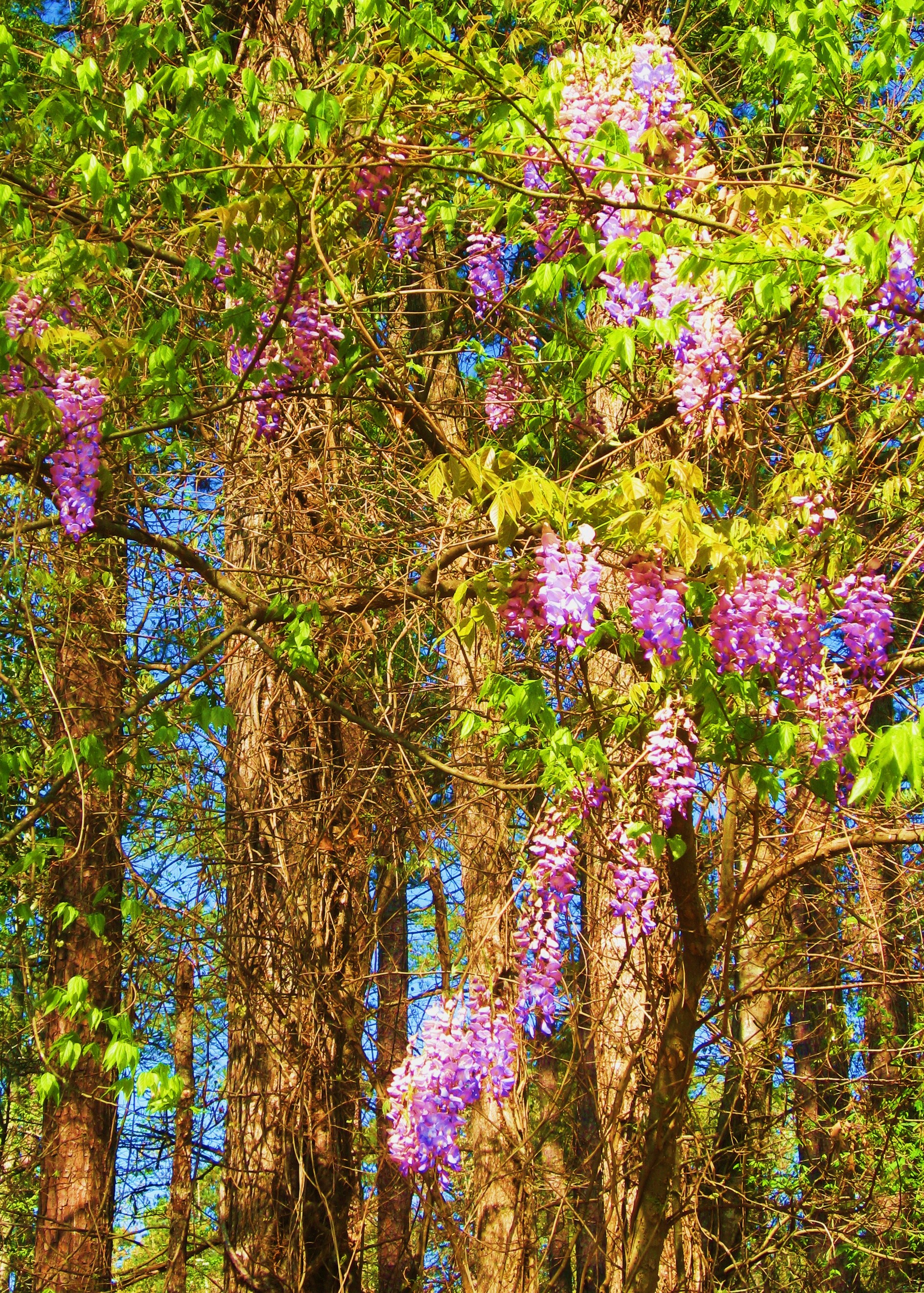
The purple chandeliers of wisteria, a woody vine that likes to curl itself around a tree to rise into the air, begin dotting the roadside forest as soon as I crossed the border between the two states in Texarkana.

Then every few miles as I drove deeper into the state, a patch of white dogwood blossoms, usually sheltered by some larger tree, would add its delicate voice to the landscape.

These purple and white flowers helped ease the pain of leaving the magnificence of Texas bluebonnets waving good-bye from my RV’s rear-view mirror.

I arrived at my youngest daughter’s home here in Camden, Arkansas, a few days ago during a late cold spell and overcast days. The sun finally came out yesterday – and so did my camera.

Wild wisteria adds a touch of magical color to Arkansas' landscape. -- Photo by Pat Bean

Wisteria grows wild in the forested land that partially surrounds my daughter’s five-acre rural home, and two dogwood trees grow on her side of the fence.

Both Texas and Arkansas claim the sassy northern mockingbird as their state bird. -- Photo by Pat Bean

I thought I would share their beauty with you. For good measure, I’ve included a picture of a northern mockingbird that hangs around my RV. It’s a familiar sight in both Texas and Arkansas, with both states claiming it as their state bird.

Life is good.

While it wasn't exactly in the middle of Mother Nature's bounties, I sat for a while on this bench beside the Lake Erie harbor at the Amherstburg Navy Yard in Canada. -- Photo by Pat Bean


 The range of what we think and do is limited by what we fail to notice. And, because we fail to notice that we fail to notice, there is little we can do to change until we notice how our failing to notice shapes our thoughts and deeds.” — R.D. Laing

Travels with Maggie

Somewhere I read, many years ago and I can’t recall the author, that if one truly wanted to observe nature they should find a quiet place in the midst of it and sit very still for at least half an hour.

I thought that was a very good idea, but until I took up birdwatching my attention span never lasted much longer than five minutes. Now it’s up to 10 minutes.

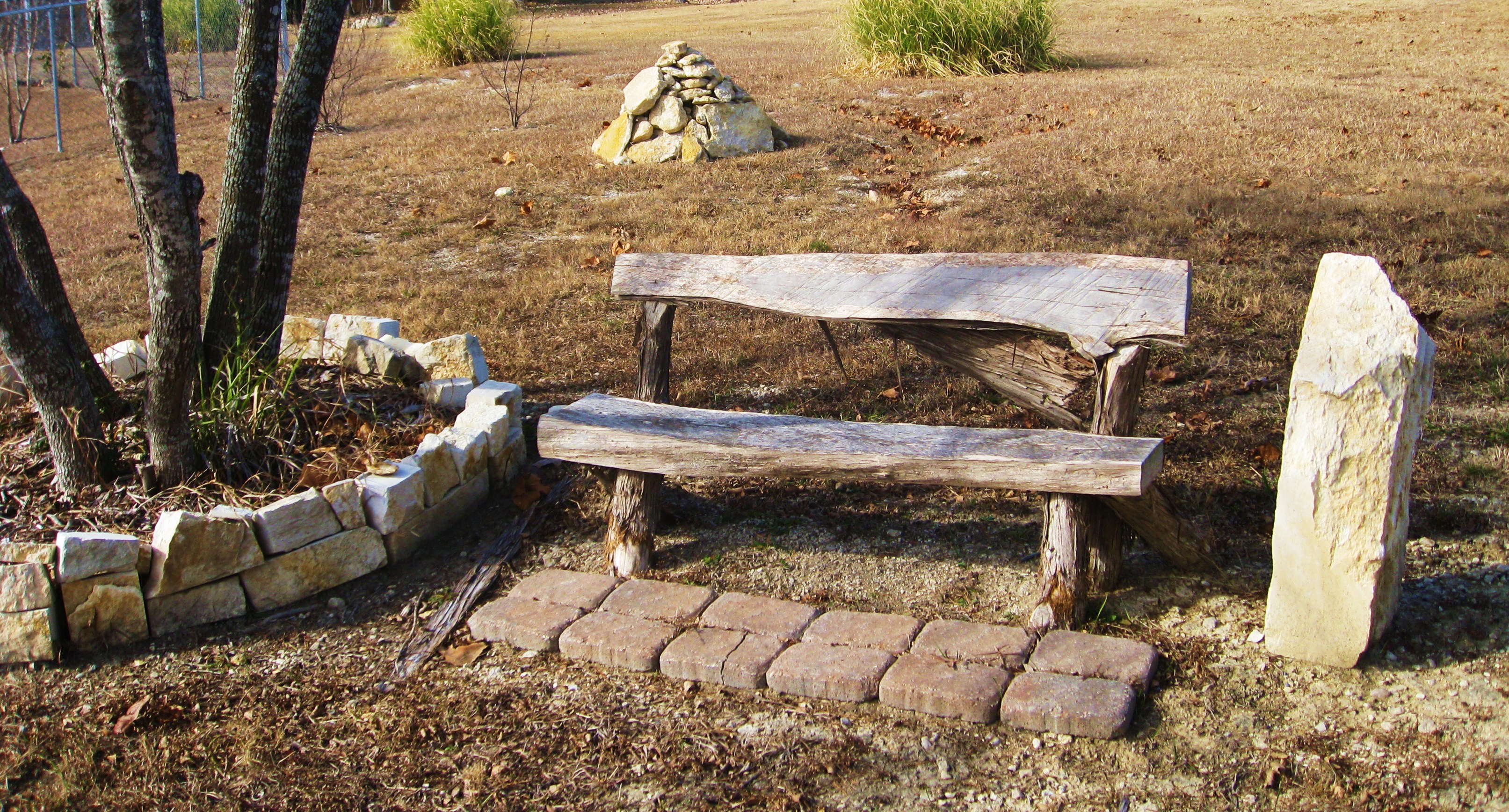
A quiet sit on this rustic bench in the front yard of my son's Central Texas home is almost always a birdy one, with colorful cardinals, goldfinches, mockingbirds and blue jays making appearances. -- Photo by Pat Bean

But occasionally I do force myself to sit still for the required 30 minutes and am always amazed with the benefits.

The birds that whisked away at the sound of my footsteps usually come back and go about their business of building a nest, feeding their young or simply eating the seeds out of a tall sunflower. American goldfinch love to do this and its delightful to watch as they hang upside down on a stem that’s bent with their almost weightless bodies.

As the world slows and my heartbeat follows, I begin to notice a line of ants carrying leaf matter into their nest, or bees and butterflies flitting from flower to flower as they go about feeding and pollinating.

Several times, when I’ve been sitting very still, deer, rabbits, squirrels, even once a raccoon, have come into view. And since Maggie’s usually asleep in a spot of shade within minutes of my sitting down, they often linger.

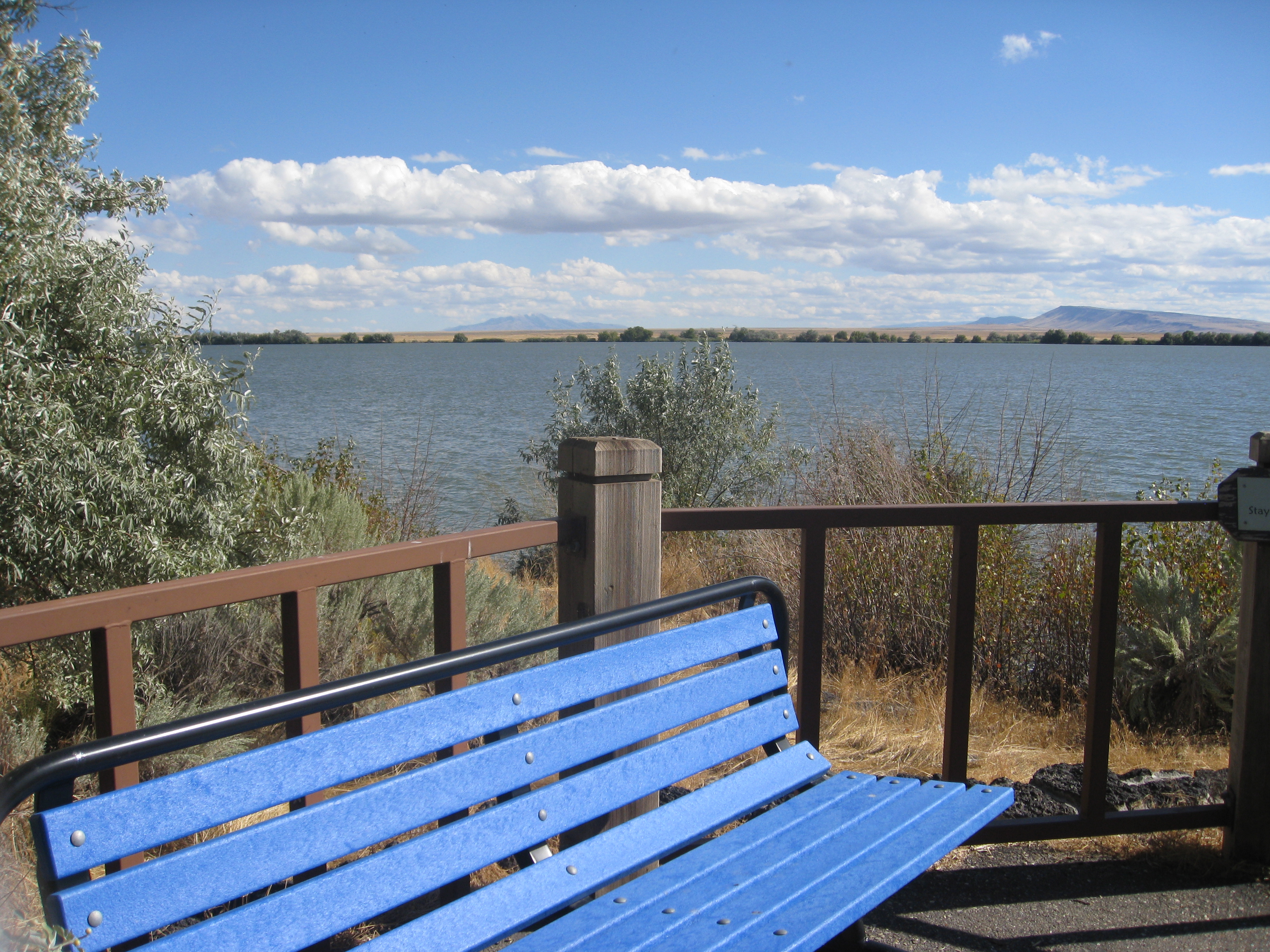
The day I sat on this blue bench at Lake Walcott State Park in Southern Idaho, two deer ambled among the trees off to my right, and a flock of white pelicans flew low over the lake on my left. -- Photo by Pat Bean

When a lake or an ocean shore is part of the view, I become mesmerized by sunlight and shadow reflections, to the point of losing track of time, which for my busy brain is almost a miracle. .

This sitting still in the midst of Mother Nature’s wonders is the only form of meditation that works for me. It’s never failed to leave me more at peace with myself and with the world.

I really should do it more. Perhaps you would like to join me.

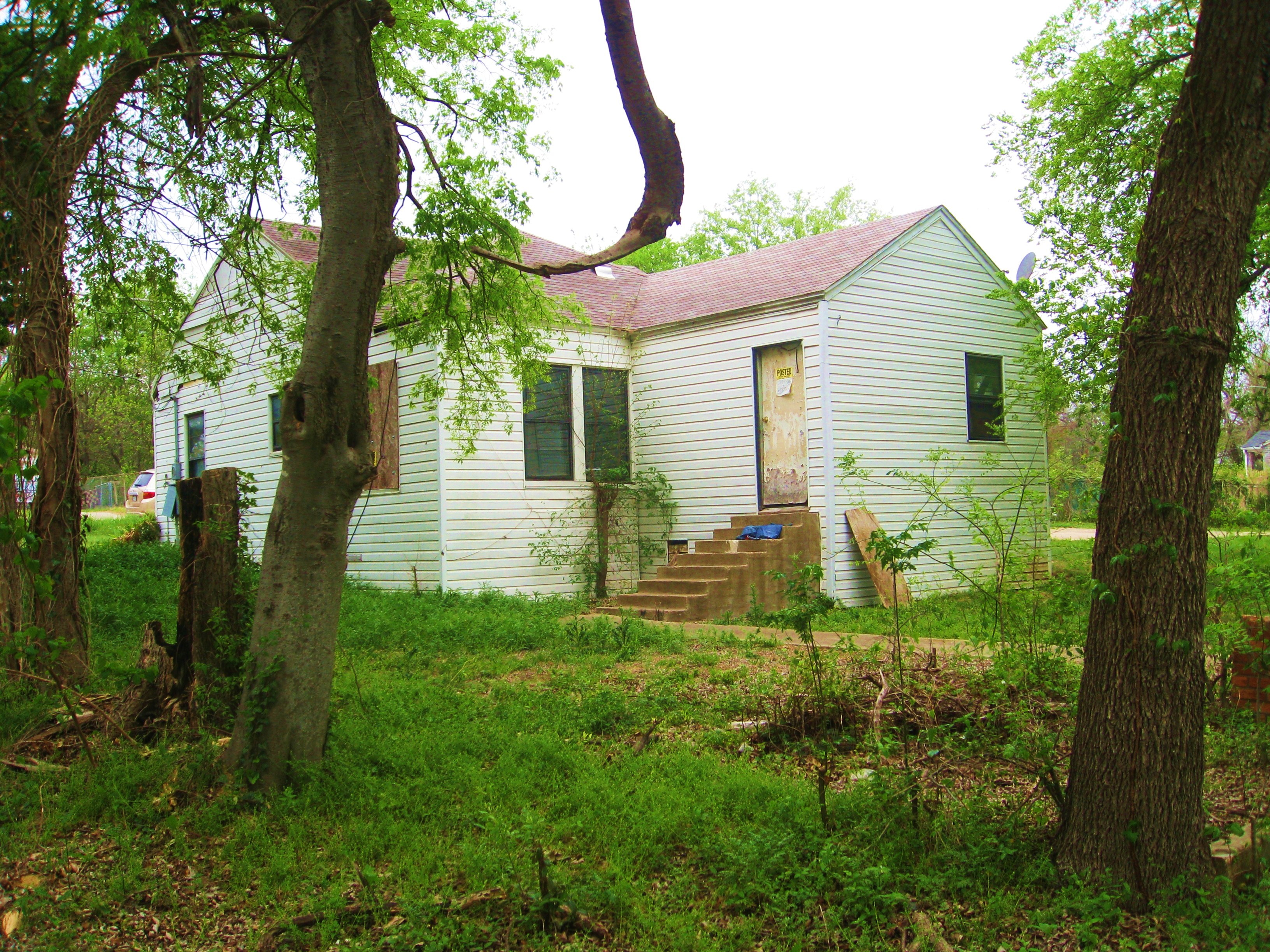
I remember sitting on these back steps eating praline candy my grandmother made from pecans I had picked up off the ground. I ate so much I got deathly sick and have never liked praline candy since. -- Photo by Pat Bean

“The richness of life lies in memories we have forgotten.” — Cesare Pavese

Journeys

When I was three years old, my grandfather died. My father took it as an invitation to move our family of three into my grandmother’s house. We stayed there for eight years, moving only after my grandmother died.

Those years weren’t a happy time in my life. My mother and grandmother did not get along; and my father was a good-timing Charlie who left the house early, came home late and almost always gambled his paycheck away.

My life was squeezed between the petty bickering of my mother and grandmother, and my mother’s shrill voice berating my father when he was home. My dad never fought back, and because of this I erroneously considered him the hero and my mother the villain of the family.

Into this chaos came two younger brothers demanding my mother’s attention, and making me feel even more unwanted and unloved. It was with great glee when I could put this past behind me, although of course, as we humans so often do, I created another kind of chaos for my own children.

Mostly dead now, this large tree in the neighbor's yard was an ideal one for climbing, and I spent many an hour nestled among its branches. -- Photo by Pat Bean

I’m not sure why, but this time when I was visiting Dallas, I had a deep-seated urge to find the home of my youth, the one in which my grandmother taught me how to cook, the one where my mother sewed me a beautiful blue flowered dress from a flower sack, the one where I had a faithful canine companion named Blackie, and the one that had a large swing set in the backyard on which I played circus trapeze artist.

My oldest daughter drove, and together we found my grandmother’s house, where it still languishes, dilapidated and condemned, in the small Dallas suburb of Fruitdale.

Of course there are differences. There is no lush gardenia bush, whose fragrance still haunts me, beside the front door. Two houses now sit where my mother had attended a large vegetable garden. And houses now stood in the large cornfield across the street, from which I remember my dad sneaking into at night to bring home a few ears for supper.

I suddenly remembered how we all laughed, even my mother, as we ate old Miss Hallie’s corn slathered with homemade butter. Strange, I thought, what a difference 50 years had made in the memories that now seemed important.
Dallas: Crossing through the middle of it in rush-hour traffic stimulates the brain cells. -- Dallas skyline photo courtesy of Wikipedia

Ashes to ashes. Dust to rust. Oil those brains. Before they rust. — From A. Nonny Mouse Writes Again by J. Prelutsky

Working crossword puzzles and riding roller coasters are both supposed to be good for the brain. The first one stimulates the thinking muscles and the second one provides a quick shot of adrenalin to jolt the brain awake.

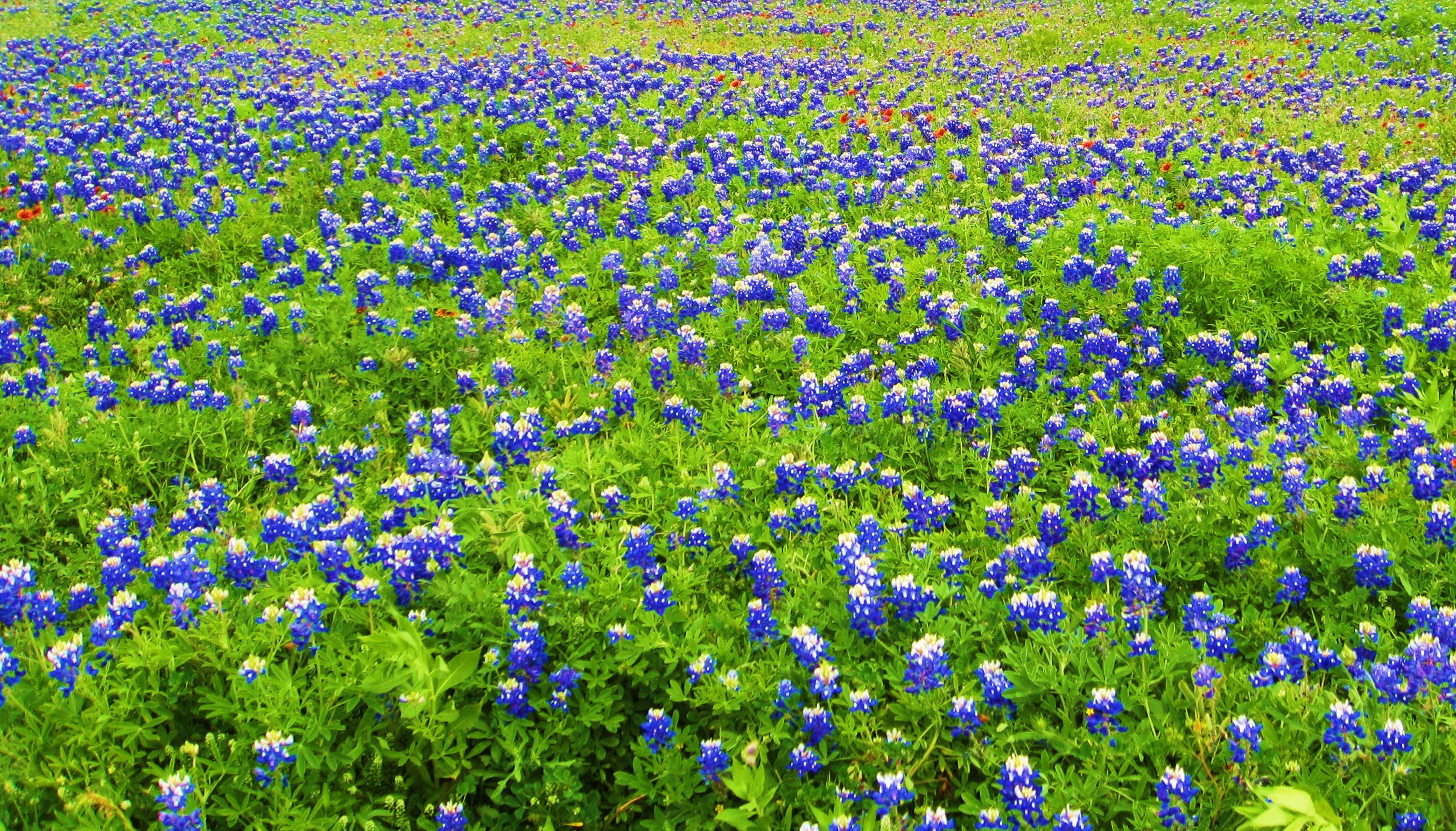
Even though it's essential to keep one's eyes on the road, one still can't help noticing Texas' famous bluebonnets growing wild alongside Dallas' many freeways. -- Photo by Pat Bean

I came up with another way to enrich those little gray cells yesterday. I drove my RV from my oldest daughter’s home in Rowlett to Irving to have lunch with my grandson. Irving, by the way, is the real home of the Dallas Cowboys.

The round-trip journey took me through the heart of downtown Dallas, beneath underpasses and overpasses stacked up to five lanes high, and across seven lanes of one-way traffic near where Interstate 30 and Interstate 35E meet up. I entered 35’s bumper-to-bumper traffic in the right lane and exited, just a few miles down the road, from the far left lane.

The trip had to have exercised and jolted my brain enough to erase at least the couple of years I aged on the cross-town journey.

Strangely, however, I don’t mind the occasional road trip like this. Such an experience lets me know I can still cope with the modern world. It also makes me appreciate all that much more the rural, little-traveled scenic byways I carefully select for most of my travels.

What gave my soul another delight this time was that the shoulders of the busy freeways were often alive with patches of bluebonnets.  They were the first I’ve seen this season.