Feeds:
Posts
Comments

Male ruby-throated hummingbird on guard duty. -- Photo by Joe Schneid

“Two birds disputed about a kernel, when a third swooped down and carried it off.” Proverb from the Congo.

Travels With Maggie

I usually start my morning with the first hint of gray coloring over the ebony of the night. It’s as if my body stirs with the announcement that the golden globe creeping up from the eastern horizon might bring with it a spectacular sunrise.

This morning in Camden, however, the sun was hiding behind an overcast sky. Instead Mother Nature graced me with a different gift. As I lay abed, thinking about which of the things on my to-do list I would tackle first, a hummingbird landed on the nectar feeder I had put out yesterday, carefully placing it so I could easily see any winged visitors from my RV window.

While all the bird presented to me in the dim morning light was its dark profile, I knew it was probably one of the two ruby-throated hummingbirds that I had watched play king of the nectar feeder the day before. Identifying hummingbird species in Arkansas is a snap for anyone – if it’s anything other than a ruby-throated, it’s a rare bird sighting.

Female ruby-throated hummingbird. -- Photo by Joe Schneid

As I had watched the two scrappers find the nectar feeder within minutes of my hanging it up, the pair had been a blur of whirring wings performing a territorial dance. As soon as one would land on the red lip of the feeder, the other would come zinging down at it.

This morning, my lone, dawn visitor sat still as a bittern stretching its long neck in the weeds to camouflage itself. About every 30 seconds or so, the hummer would dip its thin bill down into the feeder to sip up nectar. It was warming up its fragile body from the cool night – raising its resting 250-per-minute heart rate back up to its daytime rhythm of about 1,200 heart beats a minute.

Such numbers fascinate me, as does the fact that this tiny dynamo weighs less than half an ounce , beats its wings over 50 times a second and can hover and fly in any direction, including upside down.

Meanwhile, I wondered where the second hummer from yesterday was this morning, perhaps at the duplicate feeder hanging from my daughter’s patio roof on the other side of her property. I suspect ed that once they had refueled, they might resume their territorial game.

I can’t wait for the show to begin. But in the meantime I have a to-do list to tackle.
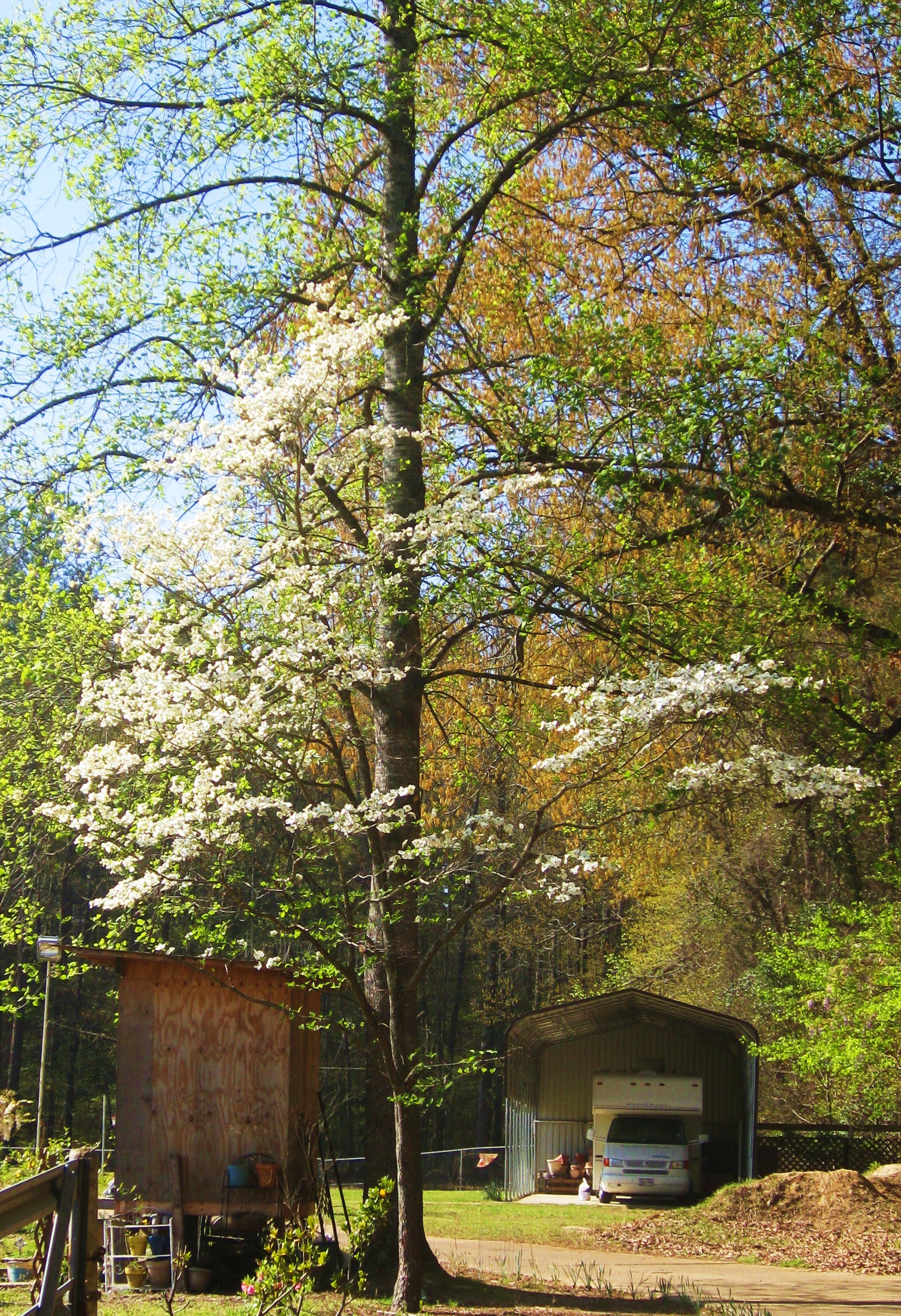
 

One of two dogwood trees visible out my RV, shown in background, during my and Maggie's visit to my daughter's home in Camden, Arkansas. -- Photo by Pat Bean

“If you’ve never been thrilled to the very edges of your soul by a flower in spring bloom, maybe your soul has never been in in bloom.” — Terri Guillemets

 Travels With Maggie

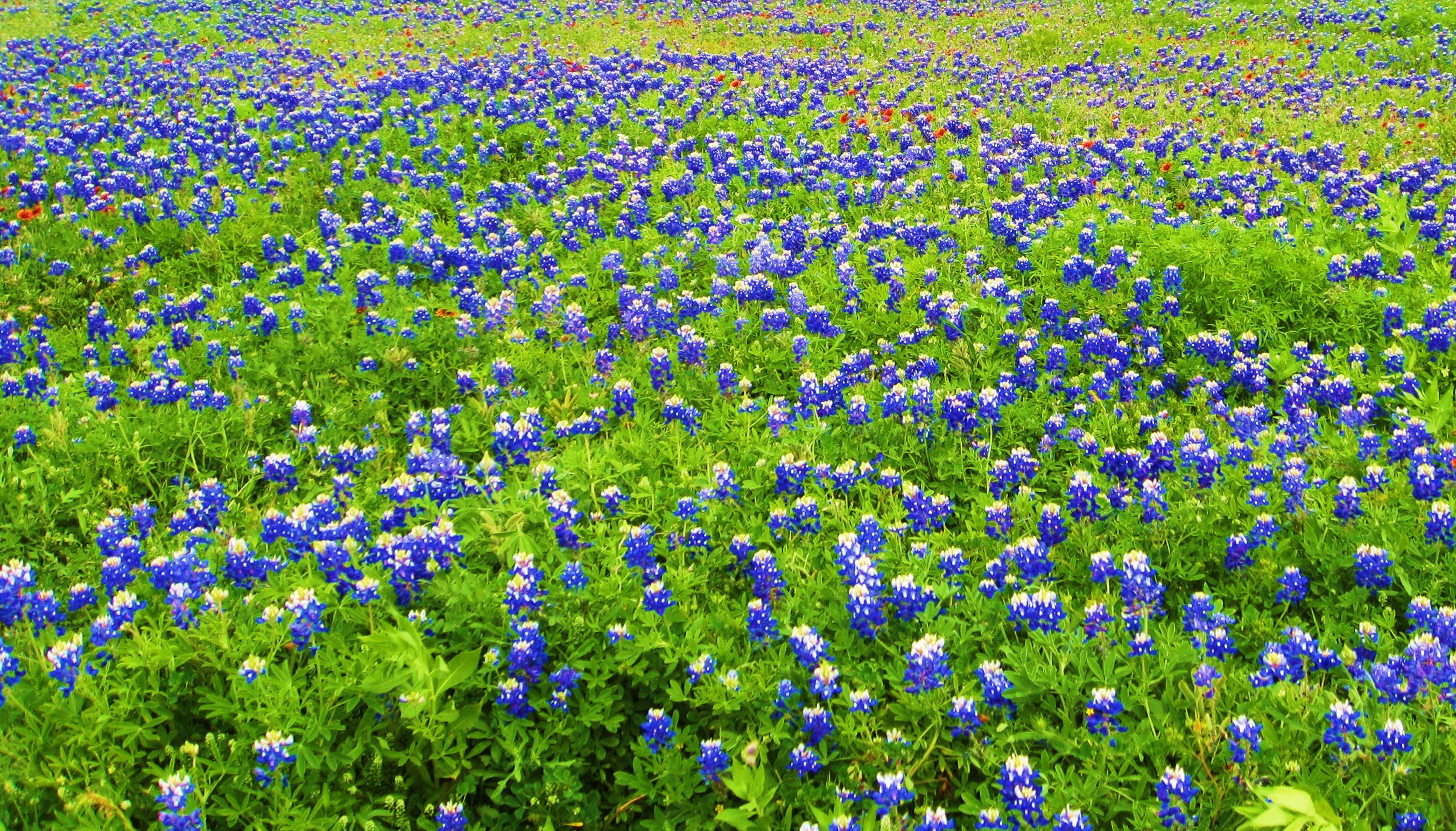
When it’s bluebonnet time in Texas, the wisteria and dogwood are blooming in Arkansas.

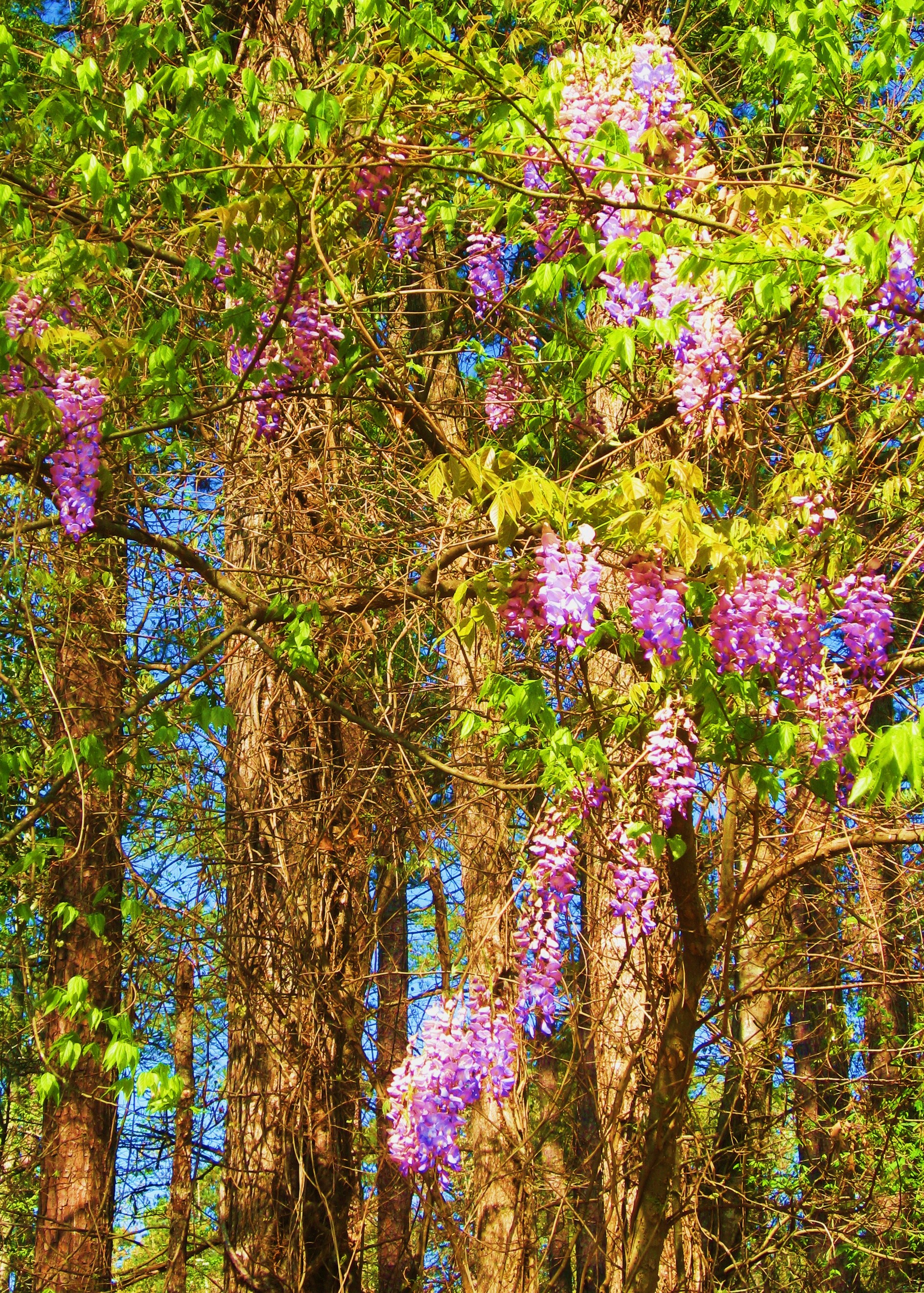
The purple chandeliers of wisteria, a woody vine that likes to curl itself around a tree to rise into the air, begin dotting the roadside forest as soon as I crossed the border between the two states in Texarkana.

Then every few miles as I drove deeper into the state, a patch of white dogwood blossoms, usually sheltered by some larger tree, would add its delicate voice to the landscape.

These purple and white flowers helped ease the pain of leaving the magnificence of Texas bluebonnets waving good-bye from my RV’s rear-view mirror.

I arrived at my youngest daughter’s home here in Camden, Arkansas, a few days ago during a late cold spell and overcast days. The sun finally came out yesterday – and so did my camera.

Wild wisteria adds a touch of magical color to Arkansas' landscape. -- Photo by Pat Bean

Wisteria grows wild in the forested land that partially surrounds my daughter’s five-acre rural home, and two dogwood trees grow on her side of the fence.

Both Texas and Arkansas claim the sassy northern mockingbird as their state bird. -- Photo by Pat Bean

I thought I would share their beauty with you. For good measure, I’ve included a picture of a northern mockingbird that hangs around my RV. It’s a familiar sight in both Texas and Arkansas, with both states claiming it as their state bird.

Life is good.

While it wasn't exactly in the middle of Mother Nature's bounties, I sat for a while on this bench beside the Lake Erie harbor at the Amherstburg Navy Yard in Canada. -- Photo by Pat Bean


 The range of what we think and do is limited by what we fail to notice. And, because we fail to notice that we fail to notice, there is little we can do to change until we notice how our failing to notice shapes our thoughts and deeds.” — R.D. Laing

Travels with Maggie

Somewhere I read, many years ago and I can’t recall the author, that if one truly wanted to observe nature they should find a quiet place in the midst of it and sit very still for at least half an hour.

I thought that was a very good idea, but until I took up birdwatching my attention span never lasted much longer than five minutes. Now it’s up to 10 minutes.

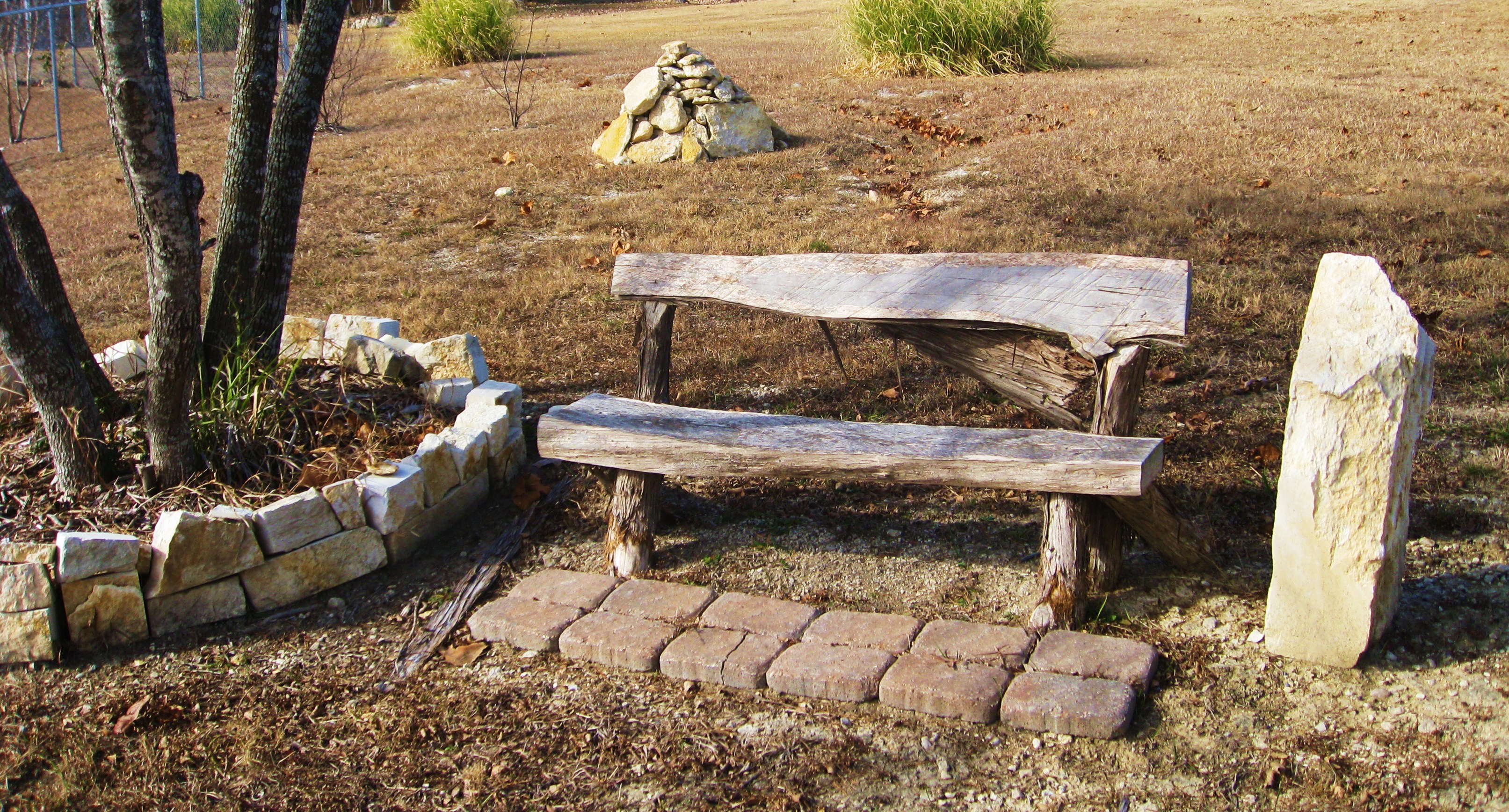
A quiet sit on this rustic bench in the front yard of my son's Central Texas home is almost always a birdy one, with colorful cardinals, goldfinches, mockingbirds and blue jays making appearances. -- Photo by Pat Bean

But occasionally I do force myself to sit still for the required 30 minutes and am always amazed with the benefits.

The birds that whisked away at the sound of my footsteps usually come back and go about their business of building a nest, feeding their young or simply eating the seeds out of a tall sunflower. American goldfinch love to do this and its delightful to watch as they hang upside down on a stem that’s bent with their almost weightless bodies.

As the world slows and my heartbeat follows, I begin to notice a line of ants carrying leaf matter into their nest, or bees and butterflies flitting from flower to flower as they go about feeding and pollinating.

Several times, when I’ve been sitting very still, deer, rabbits, squirrels, even once a raccoon, have come into view. And since Maggie’s usually asleep in a spot of shade within minutes of my sitting down, they often linger.

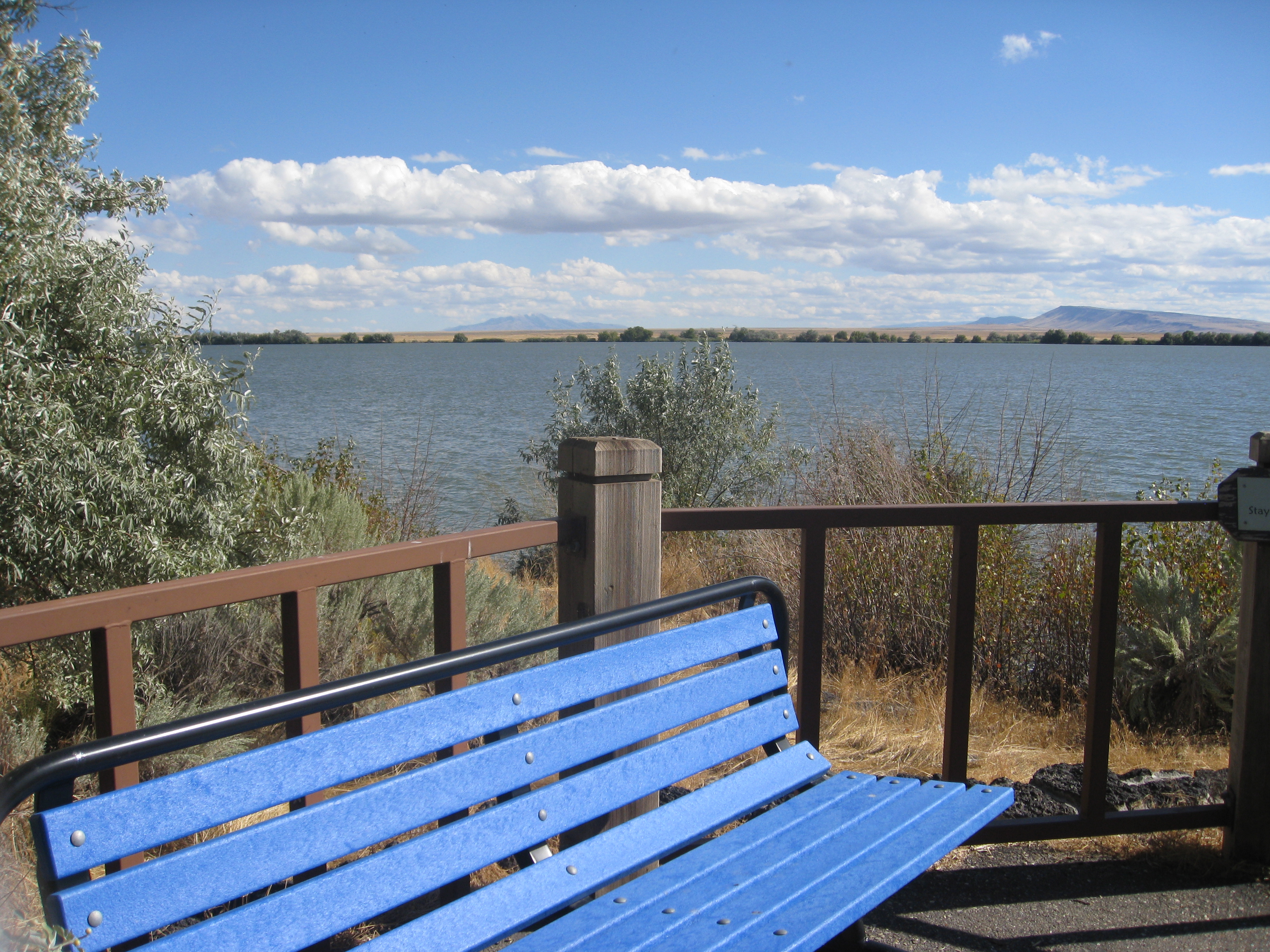
The day I sat on this blue bench at Lake Walcott State Park in Southern Idaho, two deer ambled among the trees off to my right, and a flock of white pelicans flew low over the lake on my left. -- Photo by Pat Bean

When a lake or an ocean shore is part of the view, I become mesmerized by sunlight and shadow reflections, to the point of losing track of time, which for my busy brain is almost a miracle. .

This sitting still in the midst of Mother Nature’s wonders is the only form of meditation that works for me. It’s never failed to leave me more at peace with myself and with the world.

I really should do it more. Perhaps you would like to join me.

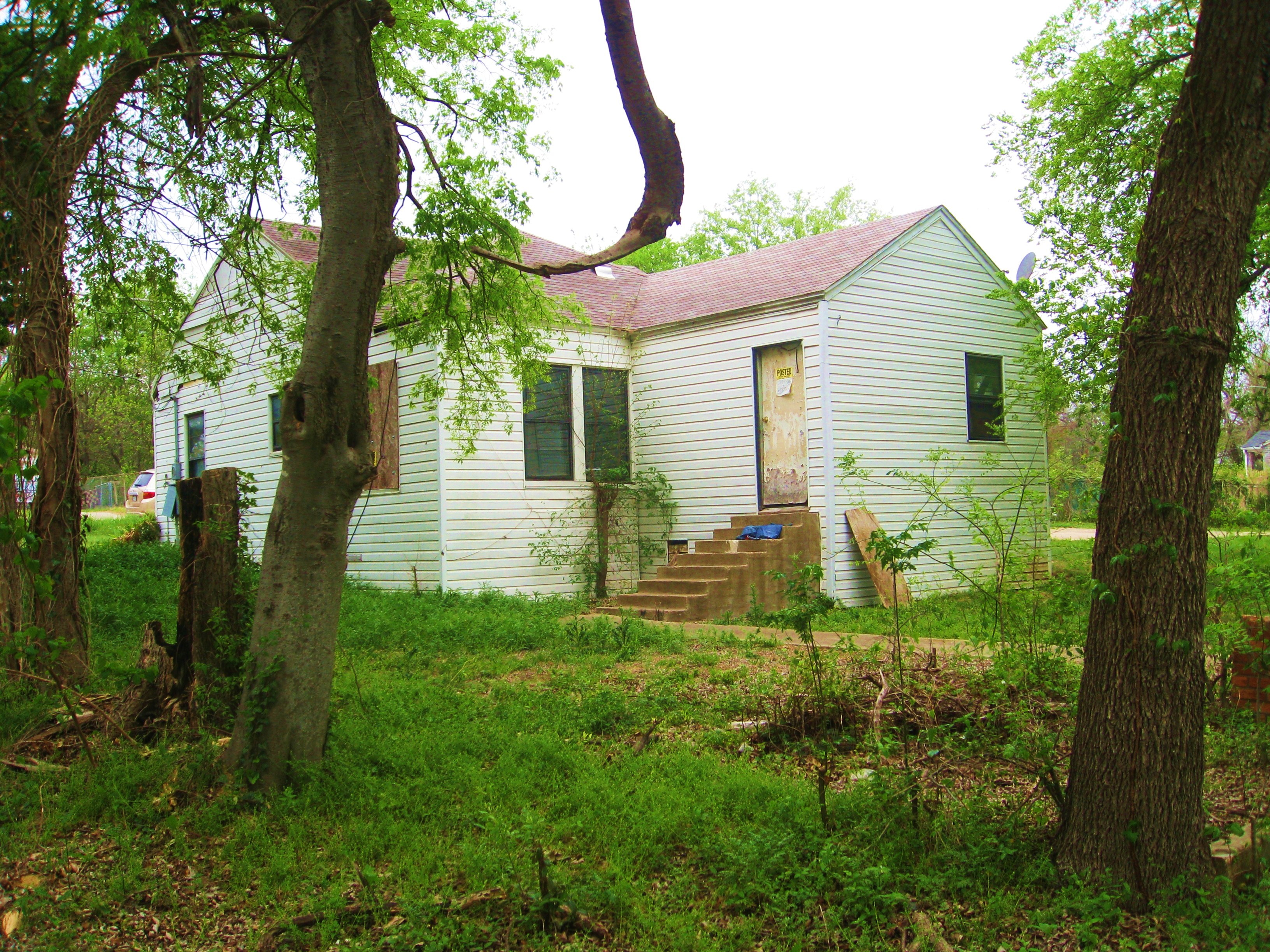
I remember sitting on these back steps eating praline candy my grandmother made from pecans I had picked up off the ground. I ate so much I got deathly sick and have never liked praline candy since. -- Photo by Pat Bean

“The richness of life lies in memories we have forgotten.” — Cesare Pavese

Journeys

When I was three years old, my grandfather died. My father took it as an invitation to move our family of three into my grandmother’s house. We stayed there for eight years, moving only after my grandmother died.

Those years weren’t a happy time in my life. My mother and grandmother did not get along; and my father was a good-timing Charlie who left the house early, came home late and almost always gambled his paycheck away.

My life was squeezed between the petty bickering of my mother and grandmother, and my mother’s shrill voice berating my father when he was home. My dad never fought back, and because of this I erroneously considered him the hero and my mother the villain of the family.

Into this chaos came two younger brothers demanding my mother’s attention, and making me feel even more unwanted and unloved. It was with great glee when I could put this past behind me, although of course, as we humans so often do, I created another kind of chaos for my own children.

Mostly dead now, this large tree in the neighbor's yard was an ideal one for climbing, and I spent many an hour nestled among its branches. -- Photo by Pat Bean

I’m not sure why, but this time when I was visiting Dallas, I had a deep-seated urge to find the home of my youth, the one in which my grandmother taught me how to cook, the one where my mother sewed me a beautiful blue flowered dress from a flower sack, the one where I had a faithful canine companion named Blackie, and the one that had a large swing set in the backyard on which I played circus trapeze artist.

My oldest daughter drove, and together we found my grandmother’s house, where it still languishes, dilapidated and condemned, in the small Dallas suburb of Fruitdale.

Of course there are differences. There is no lush gardenia bush, whose fragrance still haunts me, beside the front door. Two houses now sit where my mother had attended a large vegetable garden. And houses now stood in the large cornfield across the street, from which I remember my dad sneaking into at night to bring home a few ears for supper.

I suddenly remembered how we all laughed, even my mother, as we ate old Miss Hallie’s corn slathered with homemade butter. Strange, I thought, what a difference 50 years had made in the memories that now seemed important.

Dallas: Crossing through the middle of it in rush-hour traffic stimulates the brain cells. -- Dallas skyline photo courtesy of Wikipedia

Ashes to ashes. Dust to rust. Oil those brains. Before they rust. — From A. Nonny Mouse Writes Again by J. Prelutsky

Working crossword puzzles and riding roller coasters are both supposed to be good for the brain. The first one stimulates the thinking muscles and the second one provides a quick shot of adrenalin to jolt the brain awake.

Even though it's essential to keep one's eyes on the road, one still can't help noticing Texas' famous bluebonnets growing wild alongside Dallas' many freeways. -- Photo by Pat Bean

I came up with another way to enrich those little gray cells yesterday. I drove my RV from my oldest daughter’s home in Rowlett to Irving to have lunch with my grandson. Irving, by the way, is the real home of the Dallas Cowboys.

The round-trip journey took me through the heart of downtown Dallas, beneath underpasses and overpasses stacked up to five lanes high, and across seven lanes of one-way traffic near where Interstate 30 and Interstate 35E meet up. I entered 35’s bumper-to-bumper traffic in the right lane and exited, just a few miles down the road, from the far left lane.

The trip had to have exercised and jolted my brain enough to erase at least the couple of years I aged on the cross-town journey.

Strangely, however, I don’t mind the occasional road trip like this. Such an experience lets me know I can still cope with the modern world. It also makes me appreciate all that much more the rural, little-traveled scenic byways I carefully select for most of my travels.

What gave my soul another delight this time was that the shoulders of the busy freeways were often alive with patches of bluebonnets.  They were the first I’ve seen this season.

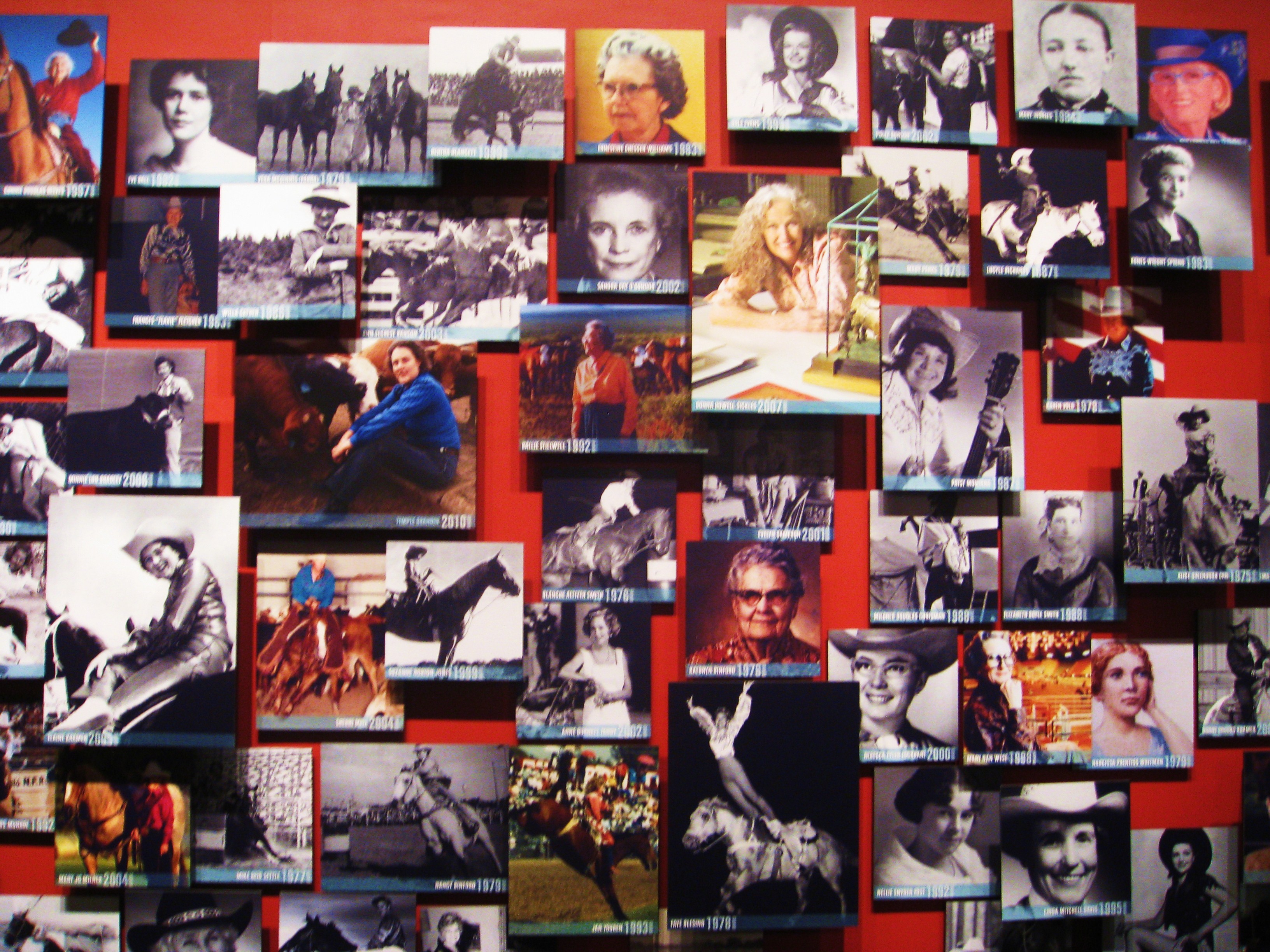
Cowgirl wall of faces -- Photo by Pat Bean

“Cowgirl is an attitude … A pioneer spirit, a special American brand of courage. The cowgirl faces life head on, lives by her own lights, and makes no excuses … A cowgirl might be a rancher, or a barrel racer, or a bull rider, or an actress. But she’s just as likely to be a checker at the local Winn Dixie, a full-time mother, a banker, an attorney, or an astronaut.” — Dale Evans

Journeys

They call it Cowtown USA. I’m talking about Fort Worth, Dallas’ next door neighbor. It was my home for a couple of years back in the late 1970s, when I was a reporter for the Fort Worth Star-Telegram.

A bronze of Sacagawea graces the entrance to the Cowgirl Museum and Hall of Fame in Fort Worth. -- Photo by Pat Bean

A job with such a big-city newspaper was the dream of many journalists, including mine. I

Pink symbol of the cowgirl spirit. -- Photo by Pat Bean

loved the hectic pace and getting to cover everything from murders and a bigoted sheriff to a visiting circus and former President Richard Nixon after his resignation.

It was a heady time in my life. But I gave it all up in 1980 to accept a job at a smaller paper in the Wasatch Mountains of Utah. Mother Nature’s call to my soul was louder than skyscrapers, bright city lights and an opportunity to rise to the top of my profession.

I thought about this choice yesterday when my daughter and I visited the National Cowgirl Museum and Hall of Fame in Fort Worth. This is a place dedicated to women with strong ties to the land, even if they don’t excel at riding wild horses.

It’s a place that celebrates the pioneering spirit of the women who helped settle this nation, of movie-star, rhinestone cowgirls who showed young girls they could do anything they wanted to do, and of the tough cowgirl spirit of the women who went up against the guys and scored: Annie Oakley, who could out-shoot the men, and Sandra Day O’Connor who began life on a cattle ranch and ended up being a Supreme Court Justice.

I was a bit taken back, however by the museum’s current special exhibit. “The Apron Chronicles.” The show highlights, through their aprons, the hard-working lives and recollections of a diverse group of strong American women and a few men. .

Interestingly, I told my daughter afterward, that early in my life I had made the decision to never wear an apron. And I never did, even though I never shirked from cleaning and cooking and raising my children pretty much single-handed.

An apron was a symbol for me that women belonged at home in the kitchen. And while I actually love cooking, I knew the world had more to offer me than a cutting board and an oven.

And I was right.

Worthy of a Georgia O'Keeffe painting. -- Photo by Pat Bean

“When you take a flower in your hand and really look at it, it’s your world for the moment. I want to give that world to someone else. Most people in the city rush around so, they have no time to look at a flower. I want them to see it whether want to or not.” Georgia O’Keeffe

Just for Today

Mother Nature has her secret treasures, even in big cities.

For example, I spent five years looking in prime birding habitat for a brown creeper, which although illusive isn’t rare. I finally found it just three blocks away from my oldest daughter’s Dallas suburb home.

The Dallas Metroplex is also full of small parks, like the one just off Miller Road in Rowlett, where there’s a small pond, and where I got my grandson, David, first interested in birding. As we started off on a trail that would lead us behind backyards to the edge of Lake Ray Hubbard, we came upon a red-shouldered hawk just as it caught a mouse.

Orange is such a cheerful color. Don't you agree? -- Photo by Pat Bean

Boys being boys, he found that quite exciting – actually so did I.

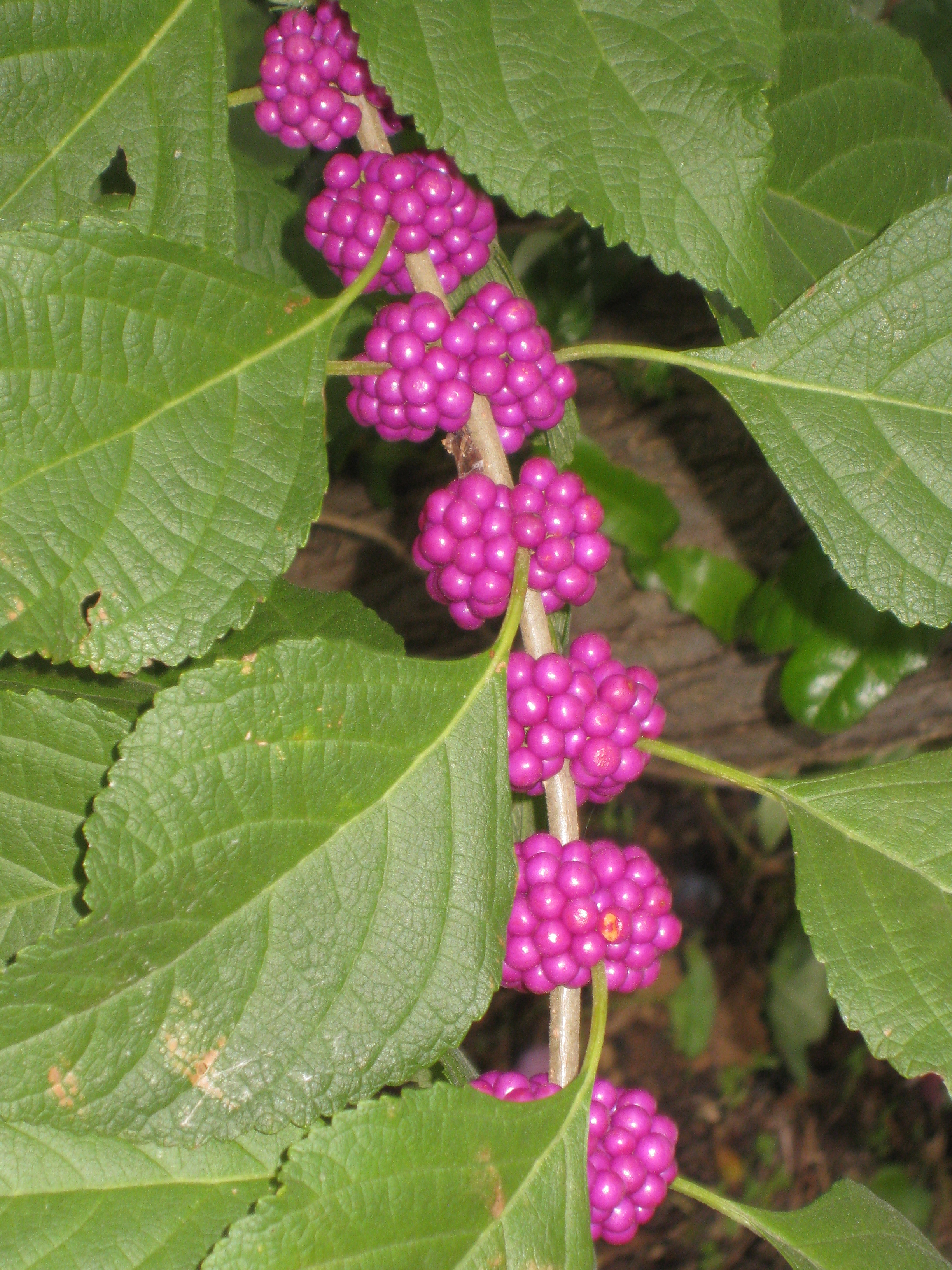
But purple makes the heart sing.

For a bit more of Mother Nature when I’m in the Dallas area, I escape to nearby Cedar Hill State Park, where I volunteered for a few months as campground host a couple of years back.

 It was here that I saw my first painted bunting and my first yellow-billed cuckoo – and watched as a rainy winter gave way to a colorful spring.

I thought this morning, which is going to turn into a busy day, might be the perfect opportunity to share a bit of the park’s color with you. Then I can go exploring with my daughter, Deborah, in search of more big city sights.

We’re celebrating her birthday a couple of days late by going out on the town. I’ll probably tell you all about it soon.

Freshly sprouted blossoms shout out their spring song. -- Photo by Pat Bean

“It is singular how soon we lose the impression of what ceases to be constantly before us. A year impairs, a luster obliterates. There is little distinct left without an effort of memory, then indeed the lights are rekindled for a moment – but who can be sure the Imagination is not the torch-bearer? Lord Byron

Travels With Maggie

Spring is bursting out all over!”

The song lyrics played joyously through my head this morning as I took my dog, Maggie, outside to do her business. The trees were budding, the dandelions were sprouting, a cool breeze stirred my hair, the squirrels were chattering and the birds were twittering.

Back at my desk in front of my computer, I was curious as to what musical from my past had been the inspiration for the song. I suspected it was “Oklahoma “but wasn’t quite sure.

Will I remember that it was a yellow-eyed great-tailed grackle I saw this morning, or will memory rename the bird a Brewer's blackbird? -- Photo by Pat Bean

I Binged, which is what I do instead of Googling, and discovered my memory had tricked me twice. The actually lyrics are “June is bursting out all over,” and the musical in which the song was featured is “Carousel.”

Memory is such an unreliable source.

This fact was made extremely plain to me when my children, now all grown and most with children of their own, began recalling past incidents in their childhood. Although all five of them may have experienced the same thing at the same time, each of their stories were different. More startling was that none of the tales fit my own memories of the events.

How could this possibly be? I still don’t know the answer, although I’ve learned a lot about human nature since the differing stories began being shared.

These memory quirks we all seem to share, however, have increased my appreciation for being a writer. Blogging daily in a public forum, which I have been doing since the first of the year, has become a way of making my life more tangible, to the point that sometimes things don’t seem real until I write them down.

And what was real this morning was that spring, not June, was bursting out all over.

A stained-glass peacock adorns a side panel at the entrance to Kalachandji's.

Towers of the Hare Krishna Temple overlook an East Dallas neighborhood. -- Photos by Pat Bean


“Perhaps travel cannot prevent bigotry, but by demonstrating that all peoples cry, laugh, eat, worry and die, it can introduce the idea that if we try and understand each other, we may even become friends.” Maya Angelou

Eating Out

While I’m most comfortable and peaceful surrounded by Mother Nature’s awesome bounties of streams, lakes, trees, mountains, gorges, and fields of grasses and wildflowers where birds, butterflies and larger wildlife find refuge, I occasionally enjoy a few days stay in a large city.

Such skyscraper metroplexes offer awesome museums to visit, live performances to attend, dozens of art galleries to pursue and intriguing new places to eat.

A tree in the center of the open-sky courtyard restaurant helped me feel as if Mother Nature was enjoying the meal, too. -- Photo by Pat Bean

The one big city I visit most is Dallas. It’s where I was born, and where my oldest daughter and oldest grandson both live. I came here specifically this time to see the grandson, David, get married, but spending time with my daughter, Deborah, and Shanna, her daughter and my granddaughter who came up from Argentina for her brother’s big event, has been a big bonus.

Shanna inherited my love of travel and exploring new things in life. So when she asked if I was: “Up to a temple visit and then a vegetarian dinner,” the answer was a quick yes, even though I had no idea where she would be taking me.

It was to a modest, sometimes rundown, section of East Dallas, where the Sri Sri Radha Kalachandji Mandi Hare Krishna Temple’s tall towers overlook an ethic neighborhood of East Indians.

I was fascinated.

The first thing we did on entering the building was to go to a back room where we took off our shoes. Shanna was familiar with the place from her earlier Dallas yoga study days. We then went into a large, long room with a glossy wood floor and a stage full of Indian gods. A monk was leading a few devotees in chanting as they stared ahead at the stage, or as one young man did, danced to the chanting. Shanna and I sat on a side bench and watched and listened as the room slowly began to fill.

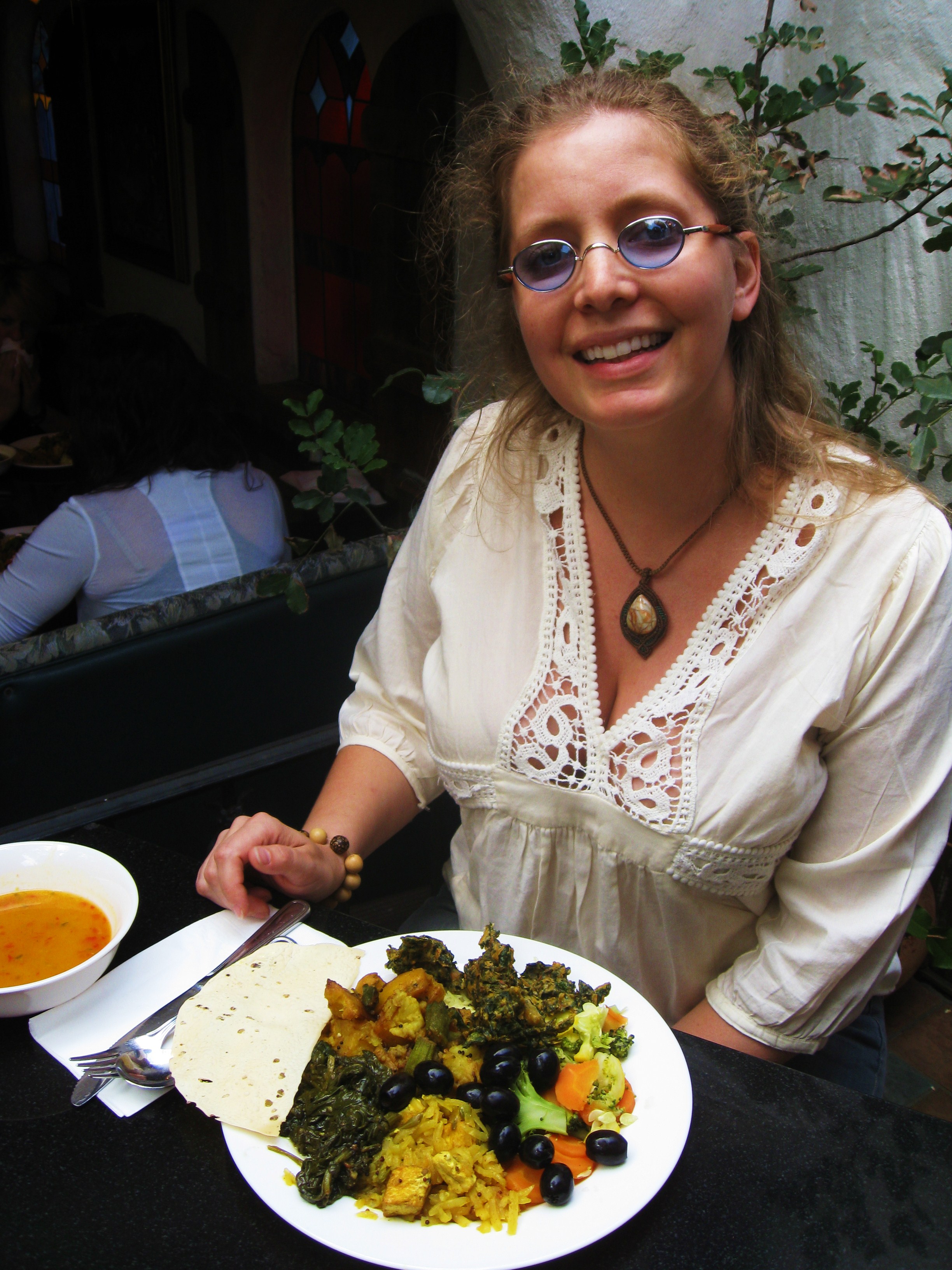
My granddaughter, Shanna, getting ready to chow down. -- Photo by Pat Bean

The women who came into the room were all dressed in colorful saris, while the men’s clothing ranged from pajama looking outfits to a just-got-off-from work American business look. One woman carried a small child and beside her walked a sweet-faced imp of a girl, perhaps 4, who came over and played high-fives with us. We smiled at the mother to let her know that the child was not bothering us.

A bit later, when our stomachs started protesting, we retrieved our shoes and went across the hallway to Kalachandji’s, This small, buffet style, eating place inside the Hare Krishna Temple was voted the best vegetarian restaurant in Dallas in 2010.

I have to admit healthy food never tasted so good, and the rice pudding with which I ended the meal was heavenly. And since we ate our meal in a courtyard open to a sky with a tree in the middle, I even felt Mother Nature’s presence a little bit.

Life is good.


A bit disheveled, but I finally got myself back up from the creek, and Shanna even got a photo of Maggie and I together, which led to my sliding down the cliff. -- Photo by Shanna Lee

“Remember what Bilbo used to say: It’s a dangerous business, Frodo, going out your door. You step onto the road, and if you don’t keep your feet, there’s no knowing where you might be swept off to.” — J.R.R. Tolkien

Travels With Maggie

Rowlett, one of the many suburbs surrounding Dallas and where my oldest daughter lives, has been my home for the past couple of weeks. What with a grandson’s wedding, other family activities and a fenced backyard for Maggie, I haven’t taken my usually daily walks.

So it was with extreme delight yesterday when my granddaughter, Shanna, Maggie and I were able to escape for a stroll in Rowlett’s Springfield Park, which offers walking paths along a creek and around a lake. For the more adventurous, there’s also a narrow path through the woods that runs alongside a creek. Of course this is the one the three of us took.

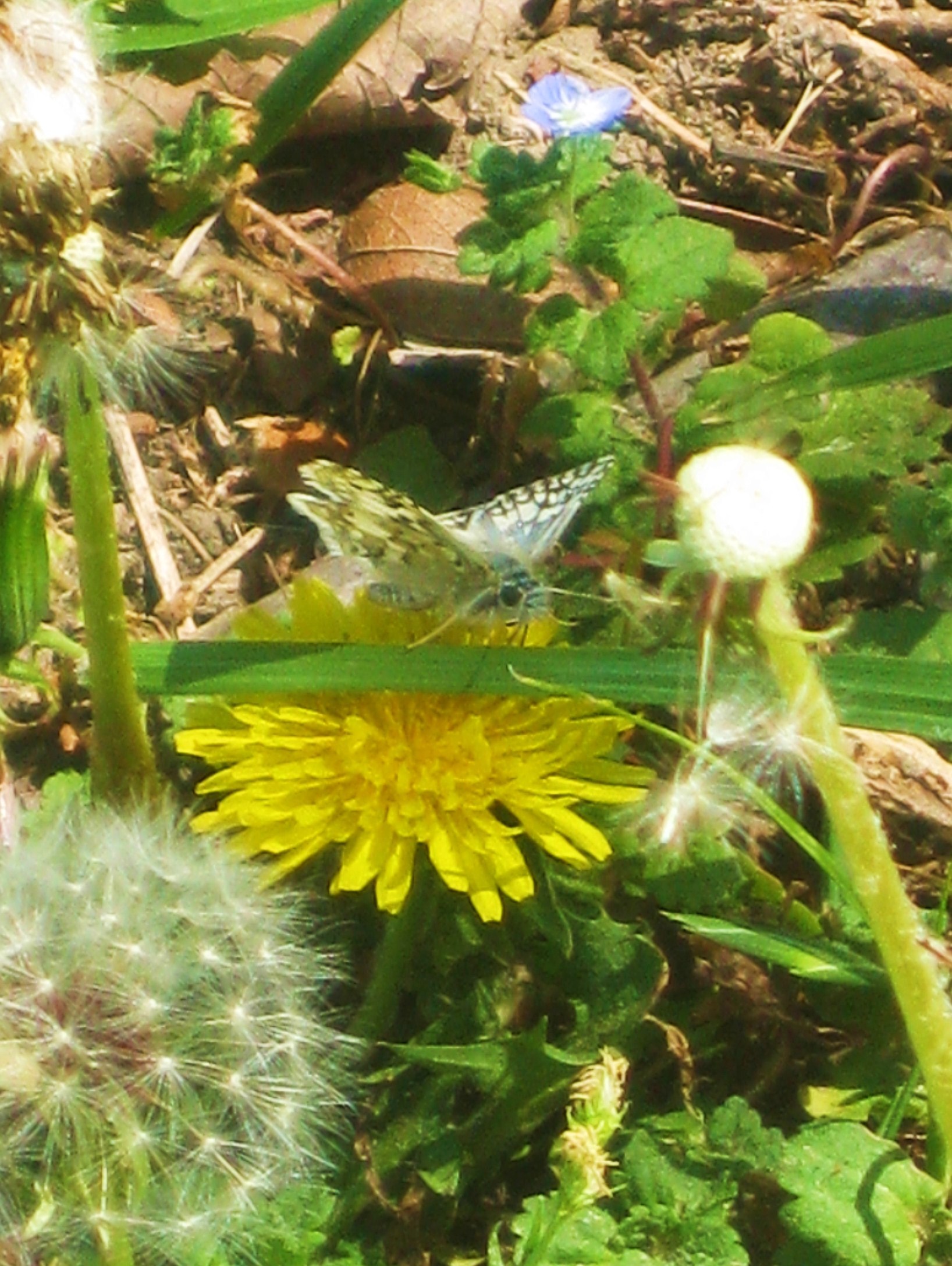
A butterfly and wildflowers, evidence of spring bursting out all over. -- Photo by Pat Bean

As we hiked, I took photographs of wildflowers, butterflies, budding trees, great-tailed grackles and the creek. At one point along the hike, a huge gnarl of intertwined tree trunks caught my attention. I decided it would be a great spot for Shanna to take a picture of Maggie and me. Since I’m always the photographer, I don’t have any good photos of my canine traveling companion and me together.

Erosion, however, had cut a part of the path away that I needed to cross to get over to the scenic photo site. Over-estimating my athletic skills, I decided I could maneuver past it.

Bad idea!

One step quickly found me sliding down a steep eight-foot drop. Fortunately I was able to grab hold of a tree snag that counteracted gravity just about six inches before I would have ended up in the creek.

Shanna’s immediate response was to nervously ask: “Are you OK Nana. Are you hurt.” I wasn’t. The only casualty was my turquoise pants whose seat and one leg was a dirty brown. Maggie, whose retractable leash I still had in my hand, gave me a look that clearly said: “That was a stupid thing to do. Don’t expect me to rescue you.”

Since Shanna couldn’t reach me, it was a self rescue using snags to slowly haul myself up, always remembering to make sure I had three limbs firmly placed before I reached for a new hold.

The response from my granddaughter when I reached the top was: “You’re awesome Nana.” Her words made my fall well worth the effort.

Shanna also managed to snap a picture of Maggie and I just before I reached the top of the path again. It wasn’t quite the photograph I had pictured earlier, but I decided it was good enough.