Feeds:
Posts
Comments

I found the brown seed pods of the yucca plant as beautiful in their own way as the tall white blossoms that would burst forth when spring finally came to Lathrop State Park. -- Photo by Pat Bean
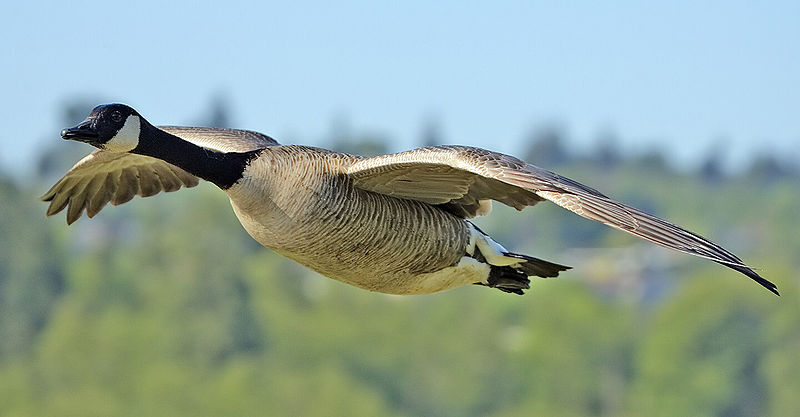
Who can not hear the honk of wild geese flying overhead and not yearn to be up there with them. Not I. -- Photo by Alan D. Wilson


 “There must be a positive and negative in everything in the universe in order to complete a circuit or circle, without which there would be no activity, no motion.” John McDonald

Travels With Maggie*

Before leaving Lathrop State Park this morning, Maggie and I took a walk along the park’s Hogback Trail. The path was heavily dotted with juniper trees, some full of berries, and yucca plants full of left-over brown seed pods. The few oaks we passed were still leafless.

That’s because winter still ruled this 6,500-foot elevation Colorado Park, where sparse sprinkles of snow fell during the night. I suspected it would still be awhile before the yucca plants’ tall white blossoms showed themselves to the world.

Maggie and I startled a couple of deer as we came around the corner, although they took their time in scampering away, as if knowing we meant them no harm. Maggie has never shown an interest in deer. Her preferred animal to chase are lizards, to the point that she once followed them into a mass of cactus, with the expected result.

We also passed sandstone boulders, whose pinkish orange and pale brown hued surfaces showed patterns of their life long ago beneath the sea. Lichens added more color to the rocks and would eventually wear them back down to the sand they were before pressure glued the grains together.

It seems Mother Nature is always pointing out to us that life is indeed a circle, just as in Disney’s “The Lion King.”  The more I travel and observe the more I know this is true.

Back at the RV, Maggie and I drove around the park for one last look at this stunning place with twin lakes, Martin and Horseshoe, that sits in the shadow of the Spanish Peaks. If I hadn’t planned on meeting up with a friend at Zion National Park on the 29th, I would definitely have stayed longer.

The park’s parting gift to us was a flock of honking geese flying overhead. Maggie was already snoozing and didn’t hear them, but they sounded to me like the opening prelude to the day’s travel ahead. I was eager to begin the adventure.

Day 7 of the Journey, April 25, 2011

A view of the Spanish Peaks, two Colorado volcanic mountains,  beyond Lathrop State Park's Martin Lake. The peaks were a popular landmark for Santa Fe Trail travelers. -- Photo by Pat Bean

A view of the Spanish Peaks, two Colorado volcanic mountains, beyond Lathrop State Park's Martin Lake. The peaks were a popular landmark for Santa Fe Trail travelers. -- Photo by Pat Bean

 “A mountain is composed of tiny grains of earth. The ocean is made up of tiny drops of water. Even so, life is but an endless series of little details, actions, speeches, and thoughts. And the consequences wherher goor or bead of even the least of them are far reaching.” — Sivananda

Travels with Maggie*

At La Junta, I left Highway 50, dropping down to Highway 10, not to be confused with busy Interstate 10 that rolls across the country between the two big oceans. This 10 was a narrow, two-lane Colorado backroad with practically no traffic – exactly the kind I seek out in my travels.

It was a hilly route, surrounded mostly by small farms and agricultural fields with an occasional sign announcing the owners considered their property a ranch and not a farm.

Soon I began seeing cholla cactus, and then magpies, my first since leaving Texas, which except for a rare one in the Panhandle, has no magpies. Since I consider the magpie my animal totem, I was excited to once again be in their landscape

As I drove west, I gained enough elevation to pop my ears, and watched as the fields gave way to cholla cactus and the land took on a more 3D appearance.

Ahead, I knew, lay mountains, big ones. So as Maggie, who as usually was snoozing in the co-pilot seat, and I crested each new hill, I scanned the horizon for my first peek at the peaks.

Finally, despite low hanging clouds this day, I had it. And as usual, after months of absence from them, my eyes became moist.

A short time later, Maggie and I reached our day’s destination, Colorado’s Lathrop State Park, where I parked with a view of the Spanish Peaks out my window.

I wasn’t born in the mountains, but I felt I was home.

*Continuing Day 6 of the journey, April 24, 2011

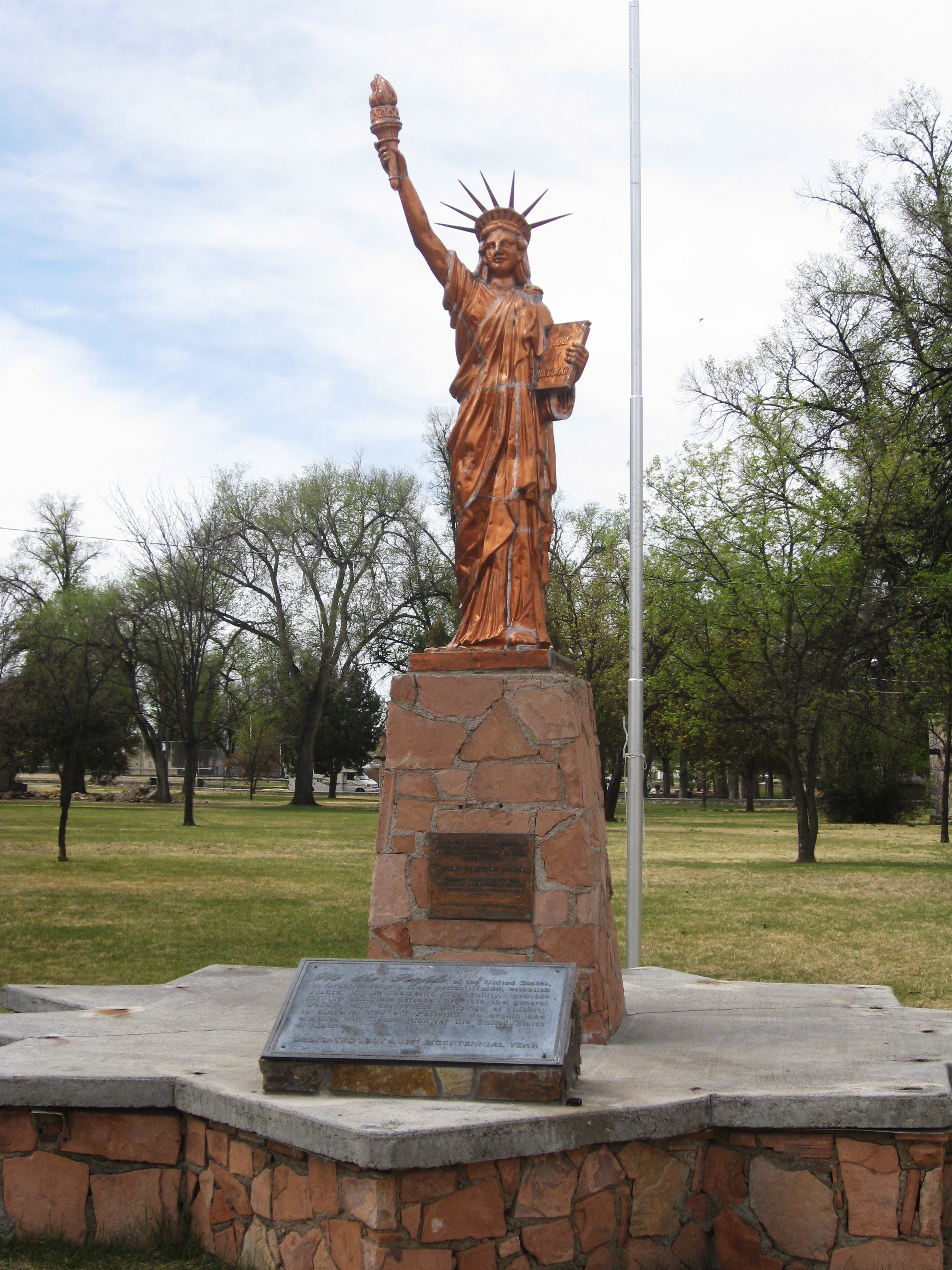
Lady Liberty in La Junta, Colorado. -- Photo by Pat Bean

Redbud blossoms say spring — Photo by Pat Bean


“Education is learning what you didn’t even know, you didn’t know.” — Daniel J. Boorstin

Travels With Maggie*

I stopped at La Junta, Colorado, to see the Koshare Indian Museum, but it was closed. Instead I took a walk in the City Park adjacent to the museum, where I was surprised to see the Statue of Liberty.

Of course not the real thing, just a miniature replica presented to the city by local Boy Scouts. Why was it here in this small town that sat on the banks of the Arkansas River (which by the way I had already crossed several times since leaving Texas just six days ago) and in the path of the old Santa Fe Trail?

This inquiring mind needed to know. It was the homework I set myself for the evening.

La Junta, I learned first, had its beginnings as a construction camp for the Santa Fe Railroad, which, when completed, marked the beginning of the end for the Missouri to New Mexico foot path. After the railroad work was completed the construction camp almost died, but then the railroad built a depot and roundhouse at the site and it bustled once again.

In 1881, the camp was incorporated and named La Junta, which in Spanish means the junction.

As to the Statue of Liberty replica, I learned there are over 200 of them scattered around the country in 39 states. Iowa, with 27, has the most, with Kansas coming in a close second with 26, and Missouri, with 25, taking third place.

The statue in La Junta is one of 17 for Colorado. A complete list of the statue sites, just in case you have an inquiring mind, too, can be found at: http://tinyurl.com/4q5a7gw

The statues were Kansas City Scout Commissioner J.P. Whitaker’s idea for celebrating the Boy Scouts’ 40th anniversary in the 1950s. Anyone with $350 plus the cost of freight for the 290-pound, 8.5-foot tall copper statues could get one.

Homework completed, I was once again a satisfied traveler.

A road trip is so much more than just traveling down the road taking in the sights with the eyes. The brain needs a bit of stimulating vistas to make it a complete travel experience. Well, at least that’s the way I prefer to travel.

*Continuing Day 6 of the journey, April 24, 2011

I named the upper one Peter, as in Cottontail. -- Photo by Pat Bean

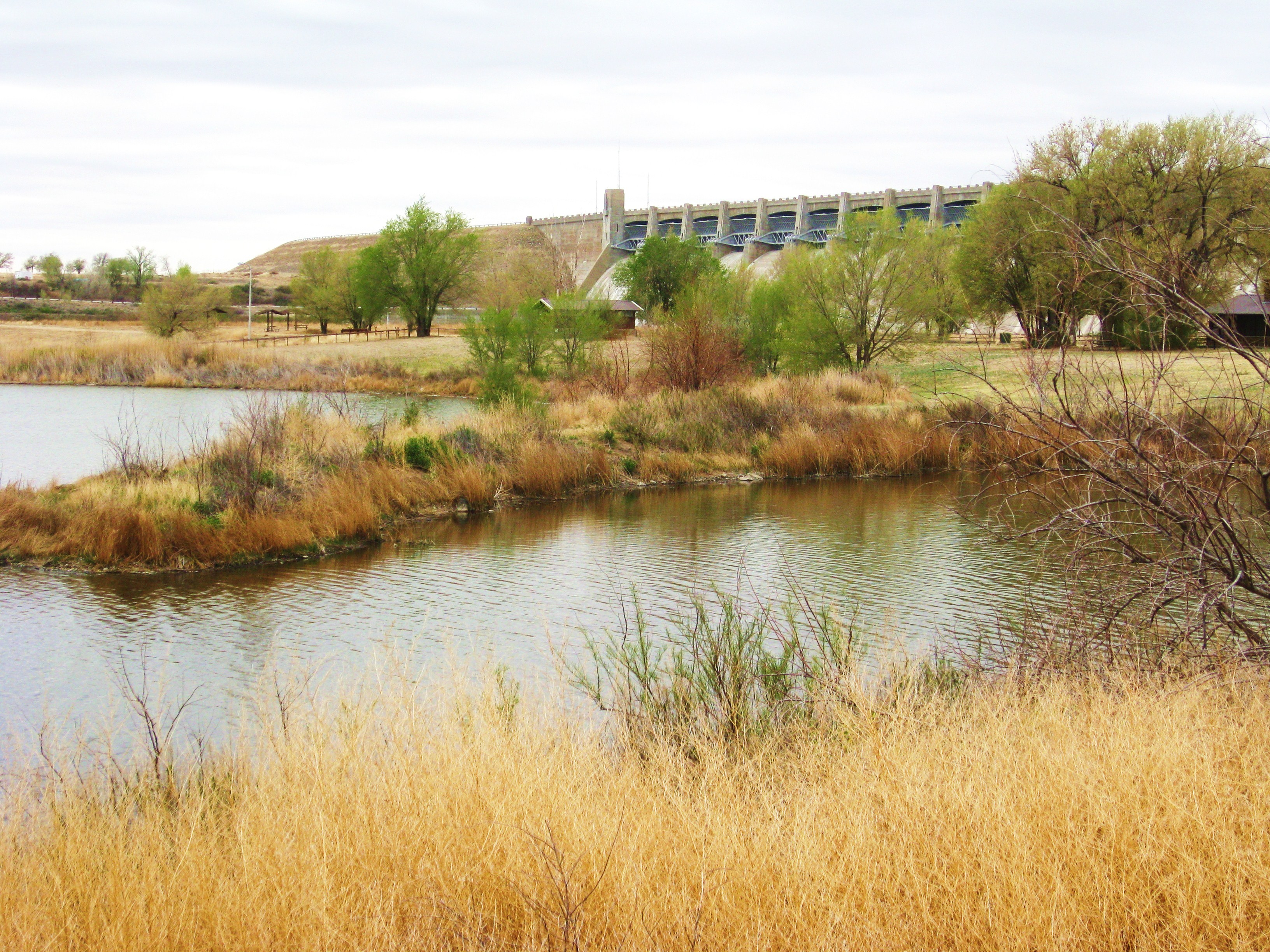
The view out my rear window looking toward the John Martin Reservoir Dam. — Photo by Pat Bean


NOTE: I’ve been taking my blog readers on a journey from Texas to Idaho with me as Maggie and I go down the road. But while I’m writing a mile-by-mile travelogue so readers can actually follow me on a map or Google Earth, I may take three days of blogging to describe one day.

The result is that I’m farther down the road than my blog, which has confused readers. I know because they’ve told me. To solve that problem, I’m now adding a footnote to any blogs that are about a specific day of travel that happened earlier in time.

For example, today’s blog is about happenings that took place this past Sunday, and the footnote reads: April 24, Day 6 of the journey.

Travels With Maggie*

I realized when I woke this morning at John Martin Reservoir State Park in Colorado that it was Easter.

And a lovely one it was. Hasty Lake was winking at me in the morning light, robins were searching for worms beside my RV and a pair of mallards were floating and quacking among the reeds along the shoreline. Did you know that the mallard is the only duck that actually quacks.

As I sat, drinking my coffee and reading the news, or as much of it as I could handle for the day, I had a couple of visitors. Most appropriate ones, I might add.

Two small cottontails spent about 10 minutes roaming around my RV. I named the larger of the two Peter, and thought about Thornton Burgess’ “Adventures of Peter Cottontail” that I had so loved as a child. He wrote 26 books about the beloved rabbit, and while I’m sure I didn’t read all of them, I certainly read quite a few.

And now, since I was alone, I sang as much as I could remember of “Here comes Peter Cottontail, hopping down the bunny trail, hippity hop ….”  I suddenly felt like a child again, and at my age that’s a good way to feel.

The tune was still going through my head when Maggie and I got back on Highway 50, which we followed west through several small rural towns to La Junta. Along the way, I noticed quite a few redbud trees just popping with brand new hot-pink buds

They looked exactly like the blossoms of the redbud trees that I had photographed in early March in Harker Heights, Texas. I laughed, thinking that summer was just around the corner when I had left Texas.

It was sort of like being transported in a time machine. First remembering my childhood reading habits and now here I was enjoying spring all over again.

Pat Conroy, one of my favorite authors, sums it up: “Once you have traveled, the voyage never ends, but is played out over and over again in the quietest chambers. The mind can never break off from the journey.”

Kansas in the rear-view mirror -- Photo by Pat Bean

“Life becomes precious and more special to us when we look for the little everyday miracles and get excited about the privileges of simply being human.” — Tim Hansel.

Travels With Maggie

Maggie and I left Kansas and its winds behind today as we drove west on Highway 50 to John Martin Reservoir State Park in Colorado. Route 50, like the more famous Route 66, was created in 1926 as part of the original U.S. Highway System.

But while only bits and piece of the more famous Route 66, which stretched from Chicago to Los Angeles, remains today, the longer Highway 50 is almost intact, stretching from the Atlantic in Maryland to Sacramento, California. Originally it went all the way to San Francisco, but that section got eaten up by larger roads, not much different from what Highway 50 did to earlier travel routes.

Portions of Highway 50 used to be part of the Santa Fe Trail, back when travel depended on feet, human or animal. That unpaved trail, stretching from Missouri to Santa Fe, New Mexico, was heavily used from 1822 until the railroad came to Santa Fe about 1880.

Today’s drive was quite peaceful, with little traffic, giving me time to consider how fortunate I was to have four wheels carrying me smoothly to my destination. My passing RV spooked a striking male ring-necked pheasant in the grasses beside the road and I got to see him skitter away, his red and green head bobbing and his long tail waving behind him.

As I drove, gaining elevation, I could see father behind me than ahead. It was a puffy-white cloud day, and the sky looked like a sea with white-capped waves. The image in my rear-view mirror was striking enough that I snapped a picture of it as I drove. Not too smart probably but there were no other cars in sight.

Time passed fast and soon we were pulling into the campground, where I backed my RV, Gypsy Lee, up next to Hasty Lake. Robins, Eurasian doves, great-tailed grackles, blue-winged teal floating in the lake and a twittering titmouse welcomed us.

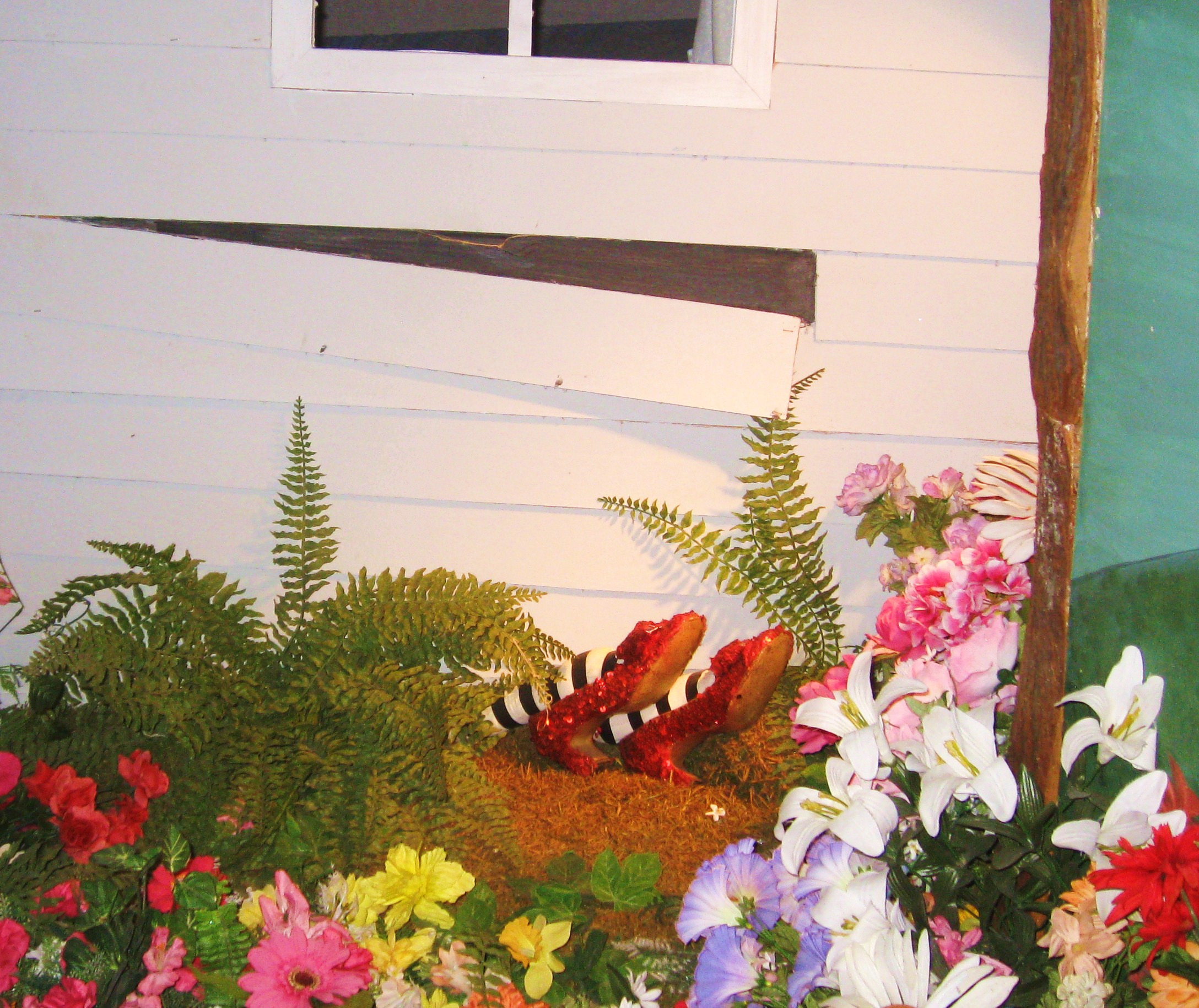
A scene from Dorothy's House -- Photo by Pat Bean

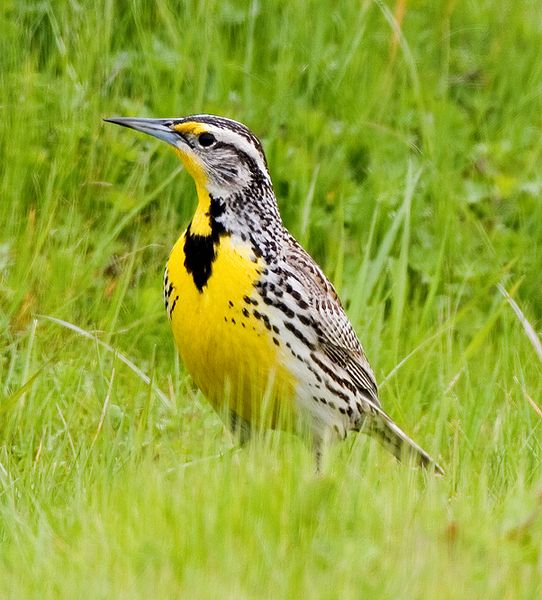
Western meadowlark, photo by Kevin Cole

 “It’s a warm wind, the west wind, full of birds’ cries; I never hear the west wind but tears are in my eyes. For it comes from the west lands, the old brown hills, and April’s in the West wind, and daffodils.” — John Masefield

Travels With Maggie

Kansas: The sunflower is the state flower and the western meadowlark its state bird. While I was a bit too early for sunflowers, I saw lots of western meadowlarks. This is a bird whose beauty I failed to see until I first looked at it through binoculars 12 years ago.

It’s golden breast, adorned with a black necklace, is so brilliant that on seeing the feathers magnified I forgot to breathe for a bit. Now when I see one flitting alongside the road as I drive, and I saw lots this day, I remember the intensity of the golden color even if all I see to identify the bird is its outer white tail feathers as it skims the grasses in the opposite direction from the road.

Besides meadowlarks, I also experienced plenty of Kansas’ Oz-Land winds, although not quite as bad as the one that sent Dorothy’s home flying out of this world. The state, in case you’re interested in trivia, is named after the Kansas Indians, who were once known as People of the Wind.

While the wind blew outside this morning I, appropriately, toured Dorothy’s House that sits beside Liberal’s Coronado Museum. Both the historical museum, and its recreated kitchen of Aunt Em’s time reminded me of my grandmother’s home, perhaps because I was born the same year the Wizard of Oz movie was released.

Two antiques on display at the museum, an icebox that was kept cool by a daily visit of an ice wagon and a treadle sewing machine that was foot-powered, had strong memories for me.

I remembered waiting for the ice man to come to my grandmother’s home before she finally broke down and bought one of those newfangled refrigerators, and I remembered the time I played around on her sewing machine and put a needle through my thumb.

Gosh! I hadn’t thought of those things in a long time.

Back outside in the wind, Maggie and I only made it to Garden City, just 65 miles up the road from Liberal, before calling a halt to our travels for the day.

“I’m tired of fighting the wind,” I told the clerk when I checked into RJ’s RV Park.

“Perhaps,” he said as he assigned me to a site on Tinman Alley, “it will be calmer tomorrow.”

I doubted it. After all, unlike Dorothy, I was in Kansas.

One crow in the road at Texas' Cedar Hill State Park. -- Photo by Pat Bean

I think Maggie was as surprised as I was on seeing a circular sidewalk, landscaped with funky art, that led nowhere off to the side of the Western Star RV Ranch in Liberal, Kansas. -- Photo by Pat Bean

I saw turkeys alongside the road when traveling Highway 83. — Photo by Pat Bean


“He who can no longer pause to wonder and stand rapt in awe is as good as dead; his eyes are closed.” Albert Einstein

Travels With Maggie

After rising early, drinking my cream-drenched coffee while posting my blog, catching up on e-mail and reading the New York Times online, then waking and taking my dog, Maggie, for a walk, I decided to get a few extra miles on the road this day.

I did just that – making it from Vernon, Texas, to Liberal, Kansas.

Vernon lies along the route of the former Great Western Trail and millions of cattle passed through the town during the late 1800s. Liberal lies along the route Coronado took in his search in the mid-1500s for the mythical Seven Cities of Gold.

The distance between the two historic cities, if you take Highway 287 west to Childress and turn north on Highway 83, is 261 miles. It was an eye-opening journey.

The landscape was mostly occupied by agriculture fields with an occasional oil rig plopped down in the middle. Sometimes the pump was rusted and still, sometime rusted and pumping.

The flatness of the land was broken by stumpy hills whose summits looked out for miles and miles to an almost endless horizon.

A multitude of birds were out enjoying relief from the high winds that had dominated the outdoors for the past several days, during which I had mostly only seen turkey vultures. This day I identified robins, great-tailed grackles, house sparrows, mourning doves, meadowlarks, red-tailed hawks, horned larks, rock pigeons, Eurasian collarded doves and even a half dozen wild turkeys.

Then there was the dinosaur near Canadian, a funny name for a Texas city I thought. A bit of internet research after I had settled in for the night told me the town was named after the Canadian River. Since the river’s headwaters are in Colorado, that left me wondering where the name of the river came from.

I’m still wondering about that, but I did learn more about the dinosaur that sits on a prominent Mesa for the viewing pleasure of Highway 83 travelers. The 50-foot brontosaurus was created by artist Gene Cockrell and named Audry after his wife. You can see a picture of the long-necked creature – the dinosaur not the wife – at RoadsideAmerica.com

I laughed when a huge RV overtook and passed me towing a fancy barbecue smoker with all the works. Then I wondered where those folks were going to settle for the night and if I could finagle an invitation to dinner. The rig disappeared over one of the hills, however, and I never saw it again.

Almost before I knew it, the miles were behind me and I was hooking Gypsy Lee up at the Western Star RV Ranch on Highway 54, five miles outside of Liberal.

The park had a a circular sidewalk, leading nowhere and with funky landscaping art, where I took Maggie for a walk. A patch of sickly grass with stickers, however, lay between it and the graveled RV area.

Poor Maggie got a sticker in her paw. She stopped, lifted her foot and demanded with a painful look that I Remove the nasty offender! After it was out, I then got the toasty brown-eyed look that said Carry me to the sidewalk.

Of course I did. She’s the boss, or so my kids are always telling me.

I also shared the red beans and rice leftovers from the night before with her before we settled down to watch an episode of Castle on my DVDs. She got a doggie treat and I got some peach yogurt to eat as we watched.

As my travels go, it was just an ordinary day. But I loved every minute of it.

Bluebonnets -- Photo by Pat Bean

The Wichita Falls waterfall.

“To my mind, the greatest reward and luxury of travel is to be able to experience everyday things as if for the first time, to be in a position in which almost nothing is so familiar it’s taken for granted.” — Bill Bryson

Travels With Maggie

After hiking a mesquite grove at Lake Arrowhead State Park, stopping to photograph bluebonnets that I figured would be the last ones I would see for the year, and visiting Wichita Falls’ tiny skyscraper, a Ripley’s Believe It or Not wonder, I stopped by Lucy Park to see the city’s better known landmark, its waterfall.

While the city is named for the waterfall that once dropped down from the Wichita River here, this is not it. That falls washed away in a flood back in the 1800s. The replacement for the original is a 54-foot tiered waterfall created by man back in 1987. They say you can see it as you cross the river bridge on Interstate 44, but I wanted a more personal experience.

It was a gentle walk to the falls through the landscaped park along the bubbling river, past ponds favored by mallards and beneath pecan trees. The time it took to view the falls, however, put me behind schedule. I create that problem a lot.

Once back on the road, it was quite windy. So I stopped just 50 miles down the road in Vernon, where I checked into the Rocking A RV Park and fixed some red beans and rice for my dinner.

I shared with my dog, Maggie, then together we took one final walk around the park before settling in for the night.

Since my travels are not measured in miles, I was one contented traveler. Maggie appeared pretty happy, too.

View of Wichita Falls from the top floor of the world's smallest skyscraper. -- Photo by Pat Bean


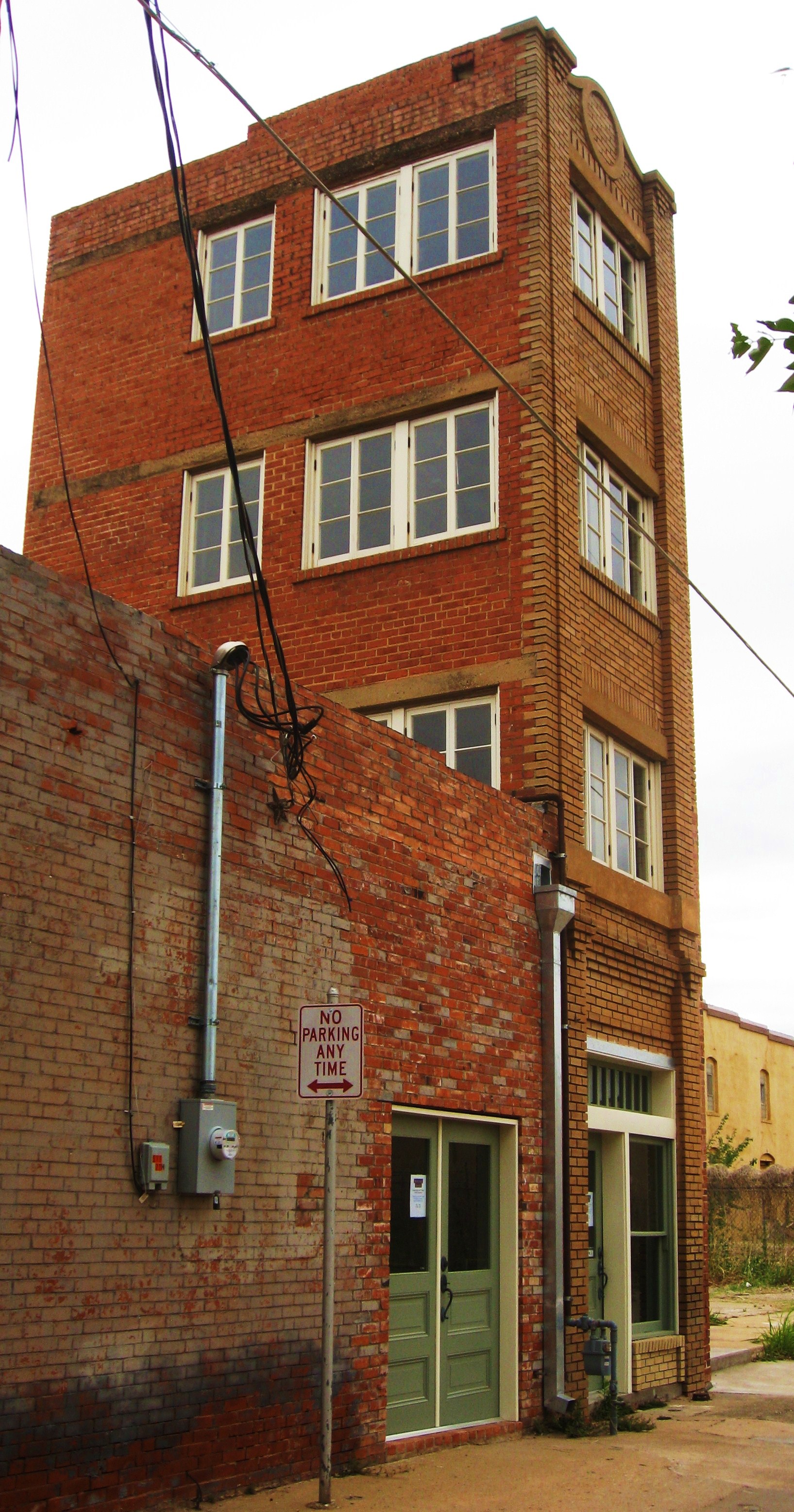
The four-story, 80-foot tall skyscraper. — Photo by Pat Bean

“Do you know the difference between education and experience? Education is when you read the fine print; experience is what you get when you don’t.” Pete Seeger.

Travels With Maggie

After leaving Lake Arrowhead, I stopped in Wichita Falls to see the world’s smallest skyscraper. That’s right. I said smallest. Not everything is Texas-sized in the Lone Star State.

The mini-brick building was constructed in 1920 with $200,000 that eager investors poured into the proposed skyscraper after seeing its plans. Thinking more of future profits than the construction project, the backers failed to notice a major flaw. .

Those architectural plans, as presented to them by a Philadelphia scam artist, were drawn in inches instead of feet. The result was a four-story, 10-foot by 16-foot building one-twelfth the size expected. And the investors had no legal recourse because they had signed the plans.

Well, except they did get back the cost of the proposed elevator, which never was put in. The only original access to the top three floors was a ladder.

Someone later added rough wooden steps to the fourth floor, and I climbed them with permission of owners of the Artifact Emporium, which is now attached to the skyscraper. You can access the skyscraper through their store, and they say they get many visitors daily who do just that.

Looking out at the city from the top floor, I thought about all the times I had signed papers without thoroughly reading the fine print. I think I’ll be more careful about doing that in the future.