Feeds:
Posts
Comments

Pond Reflections

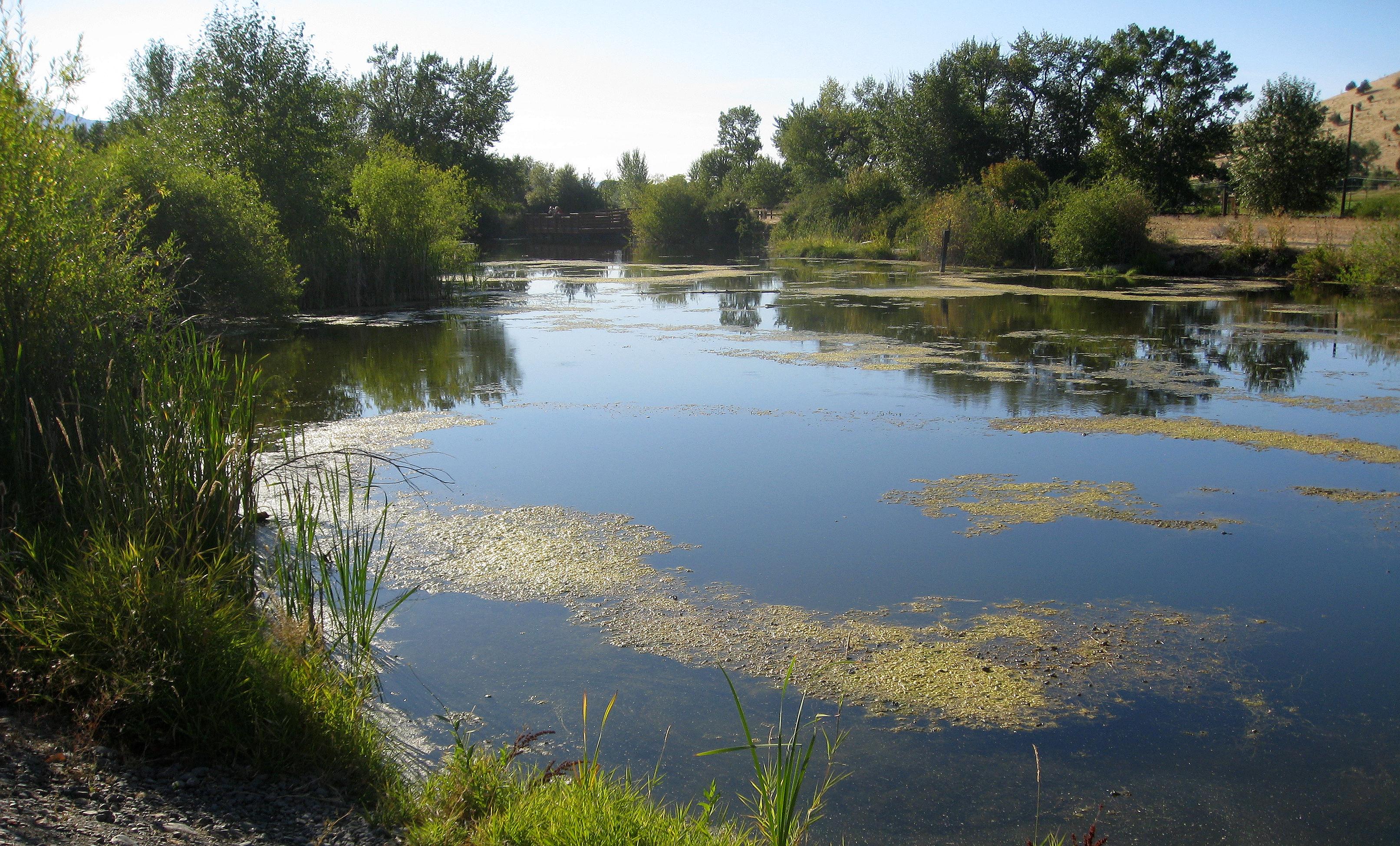
The pond at the end of the nature trail at Clyde Holliday State Park in Oregon. -- Photo by Pat Bean

 “When was the last time you spent a quiet moment just doing nothing – just sitting and looking at the sea, or watching the wind blowing the tree limbs, or waves rippling on a pond … “ – Ralph Marston

Travels With Maggie

One of the blogs I follow is “Life in the Bogs,” in which the author, Robin, frequently includes daily pictures of one particular pond. Every shot – influenced by the day’s sun or mist, shadows or light, and of course the seasons – is different.
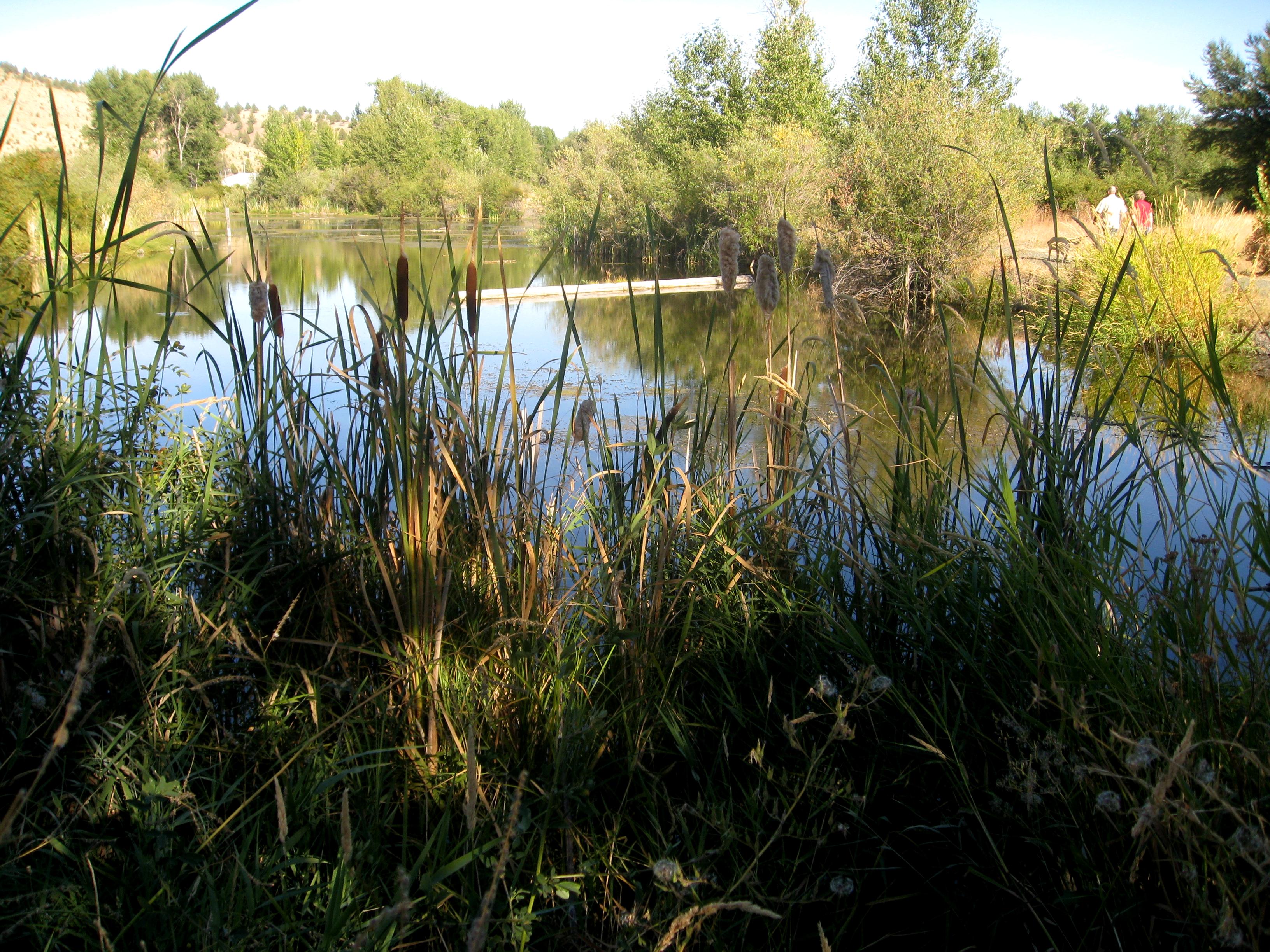
Cattails add their special texture to the scene. -- Photo by Pat Bean

When I read her blog, I feel as if I’m also walking the trail that takes her to the pond and the neighboring “bog.” If you’re a nature lover, like me, I suggest you check it out at http://bogsofohio.wordpress.com

Meanwhile, I thought I would share the pond I discovered this afternoon at Clyde Holliday State Park on the John Day River in Oregon. I hadn’t planned to stop here, but the park looked too inviting to pass up.

After getting settled in, Maggie and I went to explore its nature trail, which ended at the pond. We surprised some California quail – a mom and dad and at least half a dozen half-grown chicks – on the way out, and two mule deer on the way back.

It was a beautiful hike, about a mile in length, that we both enjoyed.

High Flight

Travels With Maggie

I am in Milton-Freewater, Oregon, where I have an extremely busy day ahead of me in preparation for getting on the road tomorrow. So I’m simply going to share my very favorite poem in the whole universe with you.  Have a great day!

My earth-bound legs can only dream of soaring free in a sky like this that one day overlooked Canyonlands National Park. -- Photo by Pat Bean

High Flight

“Oh! I have slipped the surly bonds of Earth

And Danced the skies on laughter-silvered wings;

Sunward I’ve climbed, and joined the tumbling mirth

of sun-split clouds, — and done a hundred things

You have not dreamed of — wheeled and soared and swung

High in the sunlit silence, Hov’ring there,

I’ve chased the shouting wind along, and flung

My eager craft through footless halls of air …

Up, up the long, delirious, burning blue

I’ve topped the wind-swept heights with easy grace.

Where never lark, or even eagle flew —

And while with silent lifting mind I have trod

The high untrespassed sanctity of space,

Put out my hand and touched the face of God.

— John Gillespie Magee Jr.


The frog and the snail, one of the more elegant of the carved wooden frogs that are scattered around Milton-Freewater. -- Photo by Pat Bean

“We think too small, like the frog at the bottom of the well. He thinks the sky is only as big as the top of the well. If he surfaced, he would have an entirely different view.” Mao Tse-Tung

Travels With Maggie

“So how does a town get a moniker like Milton-Freewater,” I asked my friend, Sherry, who was graciously showing me about this Northern Oregon town that has about 6,500 residents.

“Well, it began,” she said – and now I paraphrase – when the goody-two-shoes in town wanted Milton, which was established in the late 1860s, to become a dry town..

Being a Texan, she didn’t have to explain “dry.” The Lone Star State is checker-boarded with wet and dry towns. We’re talking booze here, not water.


This fine old frog with the cats once stood in front of a hardware store that was also an animal shelter. -- Photo by Pat Bean

Sherry continued: The party-goers didn’t like that and so they moved out and created their own town just next door to the north. They originally named it Walla Walla, but they changed it to Freewater when town officials decided to offer free water as a means of attracting more residents.

And so the two cities, the best of rivals, existed for many years.

In the early 1950s, however, the costly economics of infrastructure to maintain two cities was recognized. The vote to join the towns was a hot one, and the issue passed by a margin of only 50 votes. And the two ends of town continue to maintain separate images, Sherry related. .

She said the locals have long had another name for their beloved city – Muddy Frogwater.

There’s even an an annual week-long festival called Muddy Frogwater Days, which celebrated its 31st anniversary just last month. One of the activities, Sherry said, was a frog race.

And this lovely frog, which stands in front of Curves, is proudly showing off all the weight she lost. -- Photo by Pat Bean

“Like in Mark Twain’s “The Celebrated Jumping Frog of Calavaras County?”

“Yeah!”

My traveling canine companion, Maggie and I are sorry we missed it

“How dreary—to be—Somebody!
How public—like a frog—
To tell one’s name—the livelong June—
To an admiring Bog!”

— Emily Dickinson  

“I have never been aware before how many faces there are. There are quantities of human beings, but there are many more faces, for each person has several.” – Rainer Maria Rilke

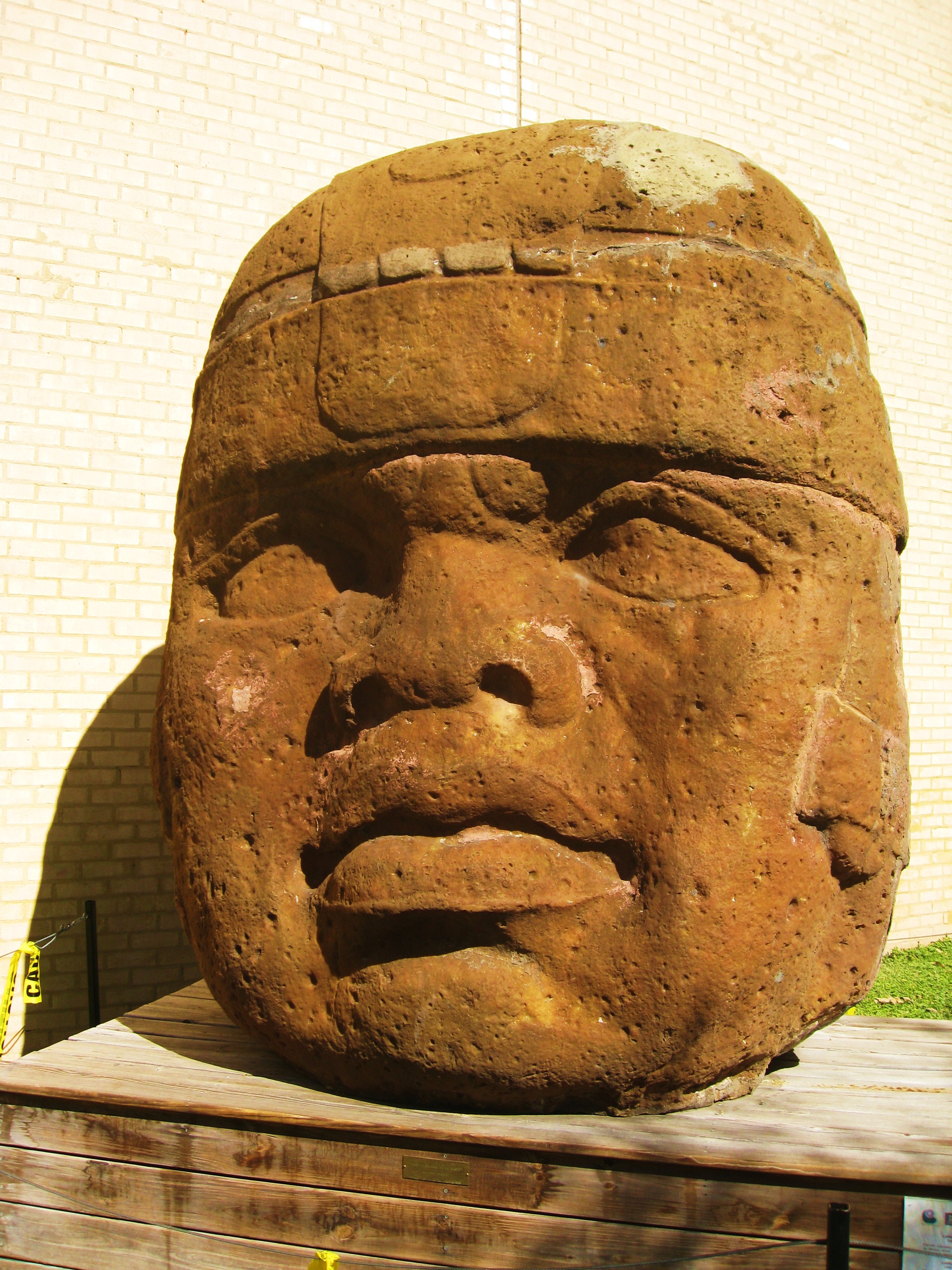
Olmec head, HemisFair Park, San Antonio, Texas. It's a really big face. -- Photo by Pat Bean

The discovery of the Olmec Heads, like this one that was put on display at the 1968 HemisFair held in San Antonio, which I was privileged to attend, provided archaeologist with many mysteries to solve. It was finally decided that the heads  were created by the  mother culture of the Mayans. it’s a face from the past.

“A man finds room in the few square inches of his face for the traits of all his ancestors; for the expression of all his history, and his wants.” Ralph Waldo Emerson.

A Too Early Phone Call

“Morning is when the wick is lit. A flame ignited, the day delighted with heat and light, we start the fight for something more than before.” Jeb Dickerson 

One of the two northern flickers that visited me just as the sun was coming up this morning. -- Photo by Pat Bean

Travels With Maggie

My morning began at 5 a.m. with a phone call when I was still deep asleep, By the time I stumbled out of bed and figured out where my phone was – in the cab beneath my RV’s upper bunk – it had stopped ringing.

After crawling back into bed and snuggling back beneath the covers because it was quite a chilly morning here in Pendleton, Oregon, where I’m parked in the farmyard of a friend’s mother, I hit the redial button.

It was my daughter-in-law, Cindi, in Texas who rang to tell me the books I had ordered from Amazon had arrived. They included Susan Albert’s “Bleeding Heart,” the next in the China Bayles’ books I’m reading and one that hadn’t been available on Kindle.

A much better look at a northern flicker, this one a male. -- Photo by Joanne Kamo

I said, perhaps a bit snippy: “It’s o-dark-hundred here. I’m in the Pacific time zone and two hours earlier than where you are.”

“Oh,” she responded. But then of course we chatted for a while. I couldn’t be too angry because she’s my traveling guardian angel and has handled all my mail for the past seven years. .

After we hung up, I tried to go back to sleep, but unlike my dog, Maggie, who never even lifted her head at the phone call, sleep had vanished for the day. So I got up, fixed coffee and sat down in front of my computer, alternating between answering e-mails and watching the day arrive out my window.

I was rewarded with a pair of northern flickers messing around a tree near my RV. I tried to get a picture, but it was dark and my photo turned out poorly. I thought you might want to see it anyway, but I added a photo taken by Joanne Kamo  http://www.pbase.com/jitams to give you a better look.

Meanwhile, I did enjoy watching the pair of large woodpeckers – that’s the family to which northern flickers belong. They stayed around for quite a while poking around the tree, and sticking their heads into a couple of holes it contained. If Cindi hadn’t called I would have missed them all together.

Life’s like that. It throws you a curve ball, then apologizes with a slow pitch you can’t miss.

“Life loves to be taken by the lapel and told ‘I’m with you kid. Let’s go’” —  Maya Angelou

Collage of cowgirls hanging in the Cowgirl Hall of Fame Museum in Fort Worth, Texas.

I was looking through my photos for a picture to illustrate texture and came across this. Certainly the textures found in the lives of these strong women qualify. I find it awesome to just think about the softness of their hearts, the hardness of the steel  fueling their gumption, the kindness of their hands on a child’s feverish face, the hot rash of passion in their lives and the rough calluses of their ranch worn hands. And it’s all beautiful.


A flea and a fly in a flue

Were caught, so what could they do

Said the fly, “Let us flee.”

“Let us fly,” said the flea.

So they flew through a flaw in the flue.” – Unknown


The large quail at the entrance to the Carmella Winery in Southern Idaho made me giggle. -- Photo by Pat Bean

Travels With Maggie

Roadside sites, like a giant wooden California quail at the entrance to the Carmella Winery adjacent to Three Island State Park in Glenns Ferry, Idaho, make me giggle.

But it was a snicker that erupted from my lips when I saw the name of the Catholic Church in Glenns Ferry.  I really didn’t mean to be so irreverent, but I simply couldn’t help it.

“The Lady of Limerick Catholic Church” read the sign. .

Now a limerick is a kind of five-line poem that is usually a bit bawdy. Or,poetically explained:

The limerick packs laughs anatomical

In space that is quite economical,

But the good ones I’ve seen

So seldom are clean,

And the clean ones so seldom are comical.


The Lady of Limerick, to whom I issue an apology for my irreverence

Of course there was another explanation. The Lady of Limerick refers to a statue of the Virgin Mary located in the city of Limerick in Ireland. I now know that because I did a bit of research out of curiosity. It still seems a bit odd to me, however, that anyone knowing what most people think of when the word limerick is mentioned would still name a church that.

But to check if my sense of humor was askew, I told a friend that I had passed a church called “The Lady of Limerick.” She didn’t snicker, but she laughed so hard she almost choked.

At least I have company in my irreverence.

 “In this world of change, nothing which comes stays, and nothing which goes is lost.” Anne Sophie

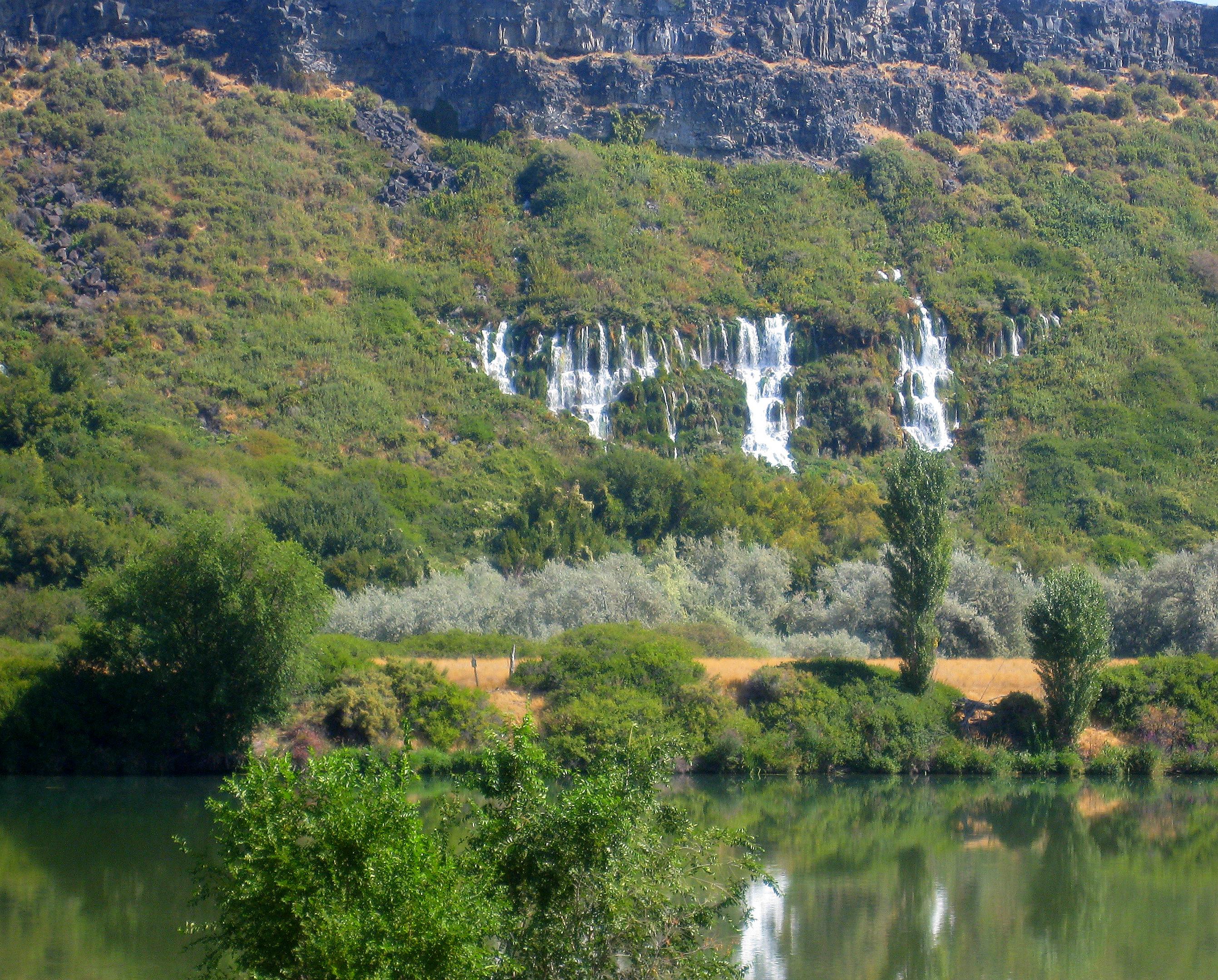
Thousand Springs from the wrong side of the Snake River. -- Photo by Pat Bean

Travels With Maggie

I never exactly got lost yesterday, but I never got exactly where I was going. My maps didn’t help, and my 25-year-old memories were useless.

I wanted to drive the section of Highway 30, known as the Thousand Springs Byway that runs south of Interstate 84 and west of Twin Falls – and I did. But I still never got to the actual site I was trying to find.

Back in the mid-1980s, when I was regional editor at the Times-News in Twin Falls, one of my girl friends took me right up to those rivulets of crystal clear water that gush out of the sides of the steep cliff and flow into the snake river.

I climbed among the tumbled rocks between the rivulets of water, and walked a short boardwalk that had water flowing beneath it. That was the place I wanted to visit again.

Instead, I found myself on the opposite of the river with only distant views of the springs. And after spending so much time at the nearby Haggarman Fossil Beds, which I was seeing for the first time and told you about in yesterday’s blog, I was short of time to search more.

So instead of close-up views of the springs, all I got was a distant view from the wrong side of the Snake River. And so that’s all you get to see, too.

 “Travel and change of place impart new vigor to the mind.” Seneca

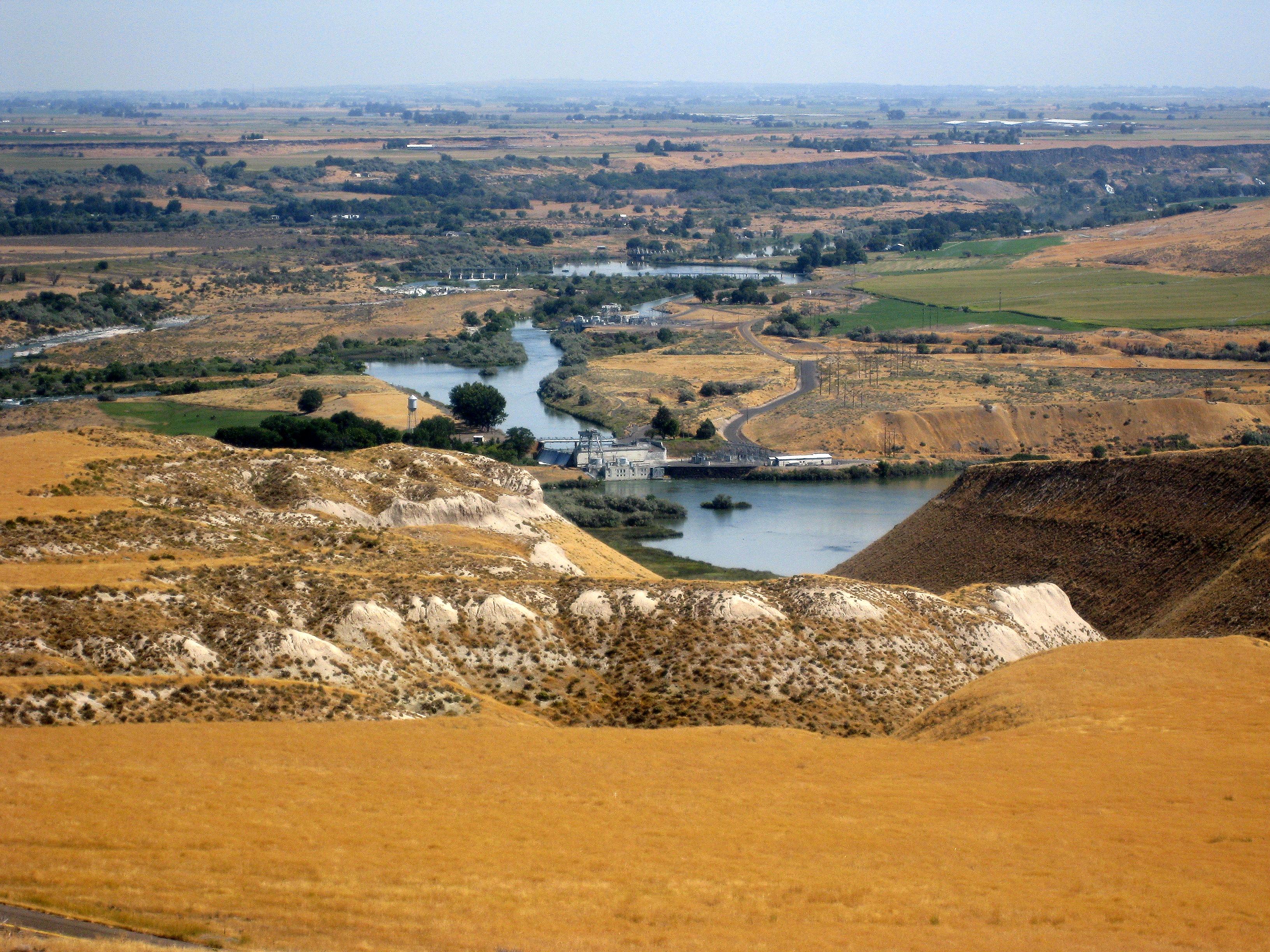
Looking down on the Snake River on a landscape over which wild horses roamed 3.5 million years ago, and one settlers crossed going West just 150 years ago. -- Photo by Pat Bean

Travels With Maggie

Did you know Idaho has a state fossil? I didn’t – until today when I visited Haggarrman Fossil Beds National Monument.

It’s the Haggarman horse, which lived about 3.5 million years ago. Fossils from about 30 of the animals, which sort of looks like a hybrid between a horse and a zebra, were found near Haggarman, Idaho, back in the late 1920s.

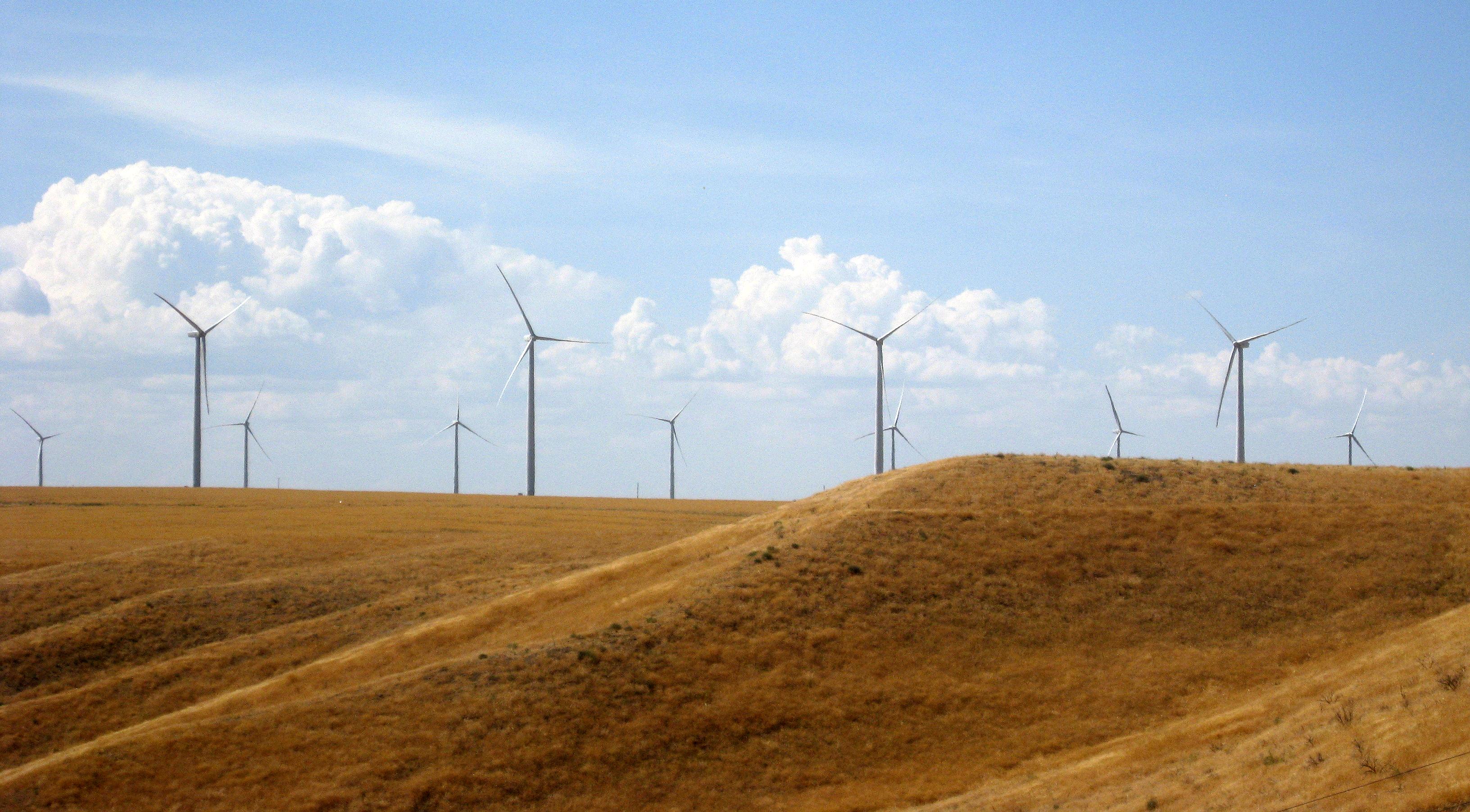
Turning my back on the Snake River, this upward view of the monument looks to the future, and hopefully less dependency on fossil fuels. It's a beautiful view. -- Photo by Pat Bean

The area, which overlooks the Snake River near Haggarman and is about 20 miles north of Twin Falls, has also turned up an extinct species of camel that once roamed North America, as well as a mastodon, a dirk tooth cat and a bone crushing dog that lived over 3 million years ago.

The area is considered a world treasure because it contains the richest known deposits from the Pliocene epoch, the period before the ice age and the same period as the early evolution of man.

Fascinating, or so it was to me.

But the monument also has something for those who only want to go back in time about 200 years. It includes a portion of the Oregon Trail, which was first used by fur trappers, and then in the 1840s for the great western migration.

Today’s first day back on the road was short in miles, but certainly covered a lot of time. Life is good.

9-11 Changed Everything

  “I may never be normal again. But this is my life now. I have to live it.” — Manu Dhingra, 27, a securities broker who suffered burns over a third of his body on 9-11

A 10-year Perspective

The Twin Towers, March 2001 .. Wikipedia photo

How did 9-11 change your life, I was asked.

It was a question I found difficult to answer. No sudden revelations came to mind on how my life was different today than it was that horribly bad day in 2001. I lost no loved ones, although I mourned because of the senselessness that took so many innocent lives and disrupted so many families.

I continued living my life as before. My job went on, as did those of my children. My grandchildren continued graduating from school, marrying and having children of their own.

And then the “what if” questions hit me.

What if there had been no 9-11? Would we have still gone to war with Iraq? How many American soldiers and innocent civilians would still be alive today if 9-11 hadn’t happened?

Would the Patriot Act still have been passed, causing Americans to lose many freedoms on which this country was founded? Would our country’s leaders still have resorted to torture with the excuse of keeping America safe?

9-11 -- The horribly bad day that changed everything.

Nasty questions. Nasty answers.

Yes. I have changed. I’ve lost the mom-and-apple-pie image of America that I grew up believing in. My ever-optimistic attitude toward life has been charred. My trust in human nature has dimmed and my sense of security is dampened.

But life goes on, and I have no intention of giving into fears so as to turn the world over to the bad guys. I live my life as before. Perhaps that’s why on being asked how had 9-11 changed my life, the first thought that popped into my mind was “It didn’t.”

But of course it did.