Feeds:
Posts
Comments

“In all things of nature there is something of the marvelous.” Aristotle  
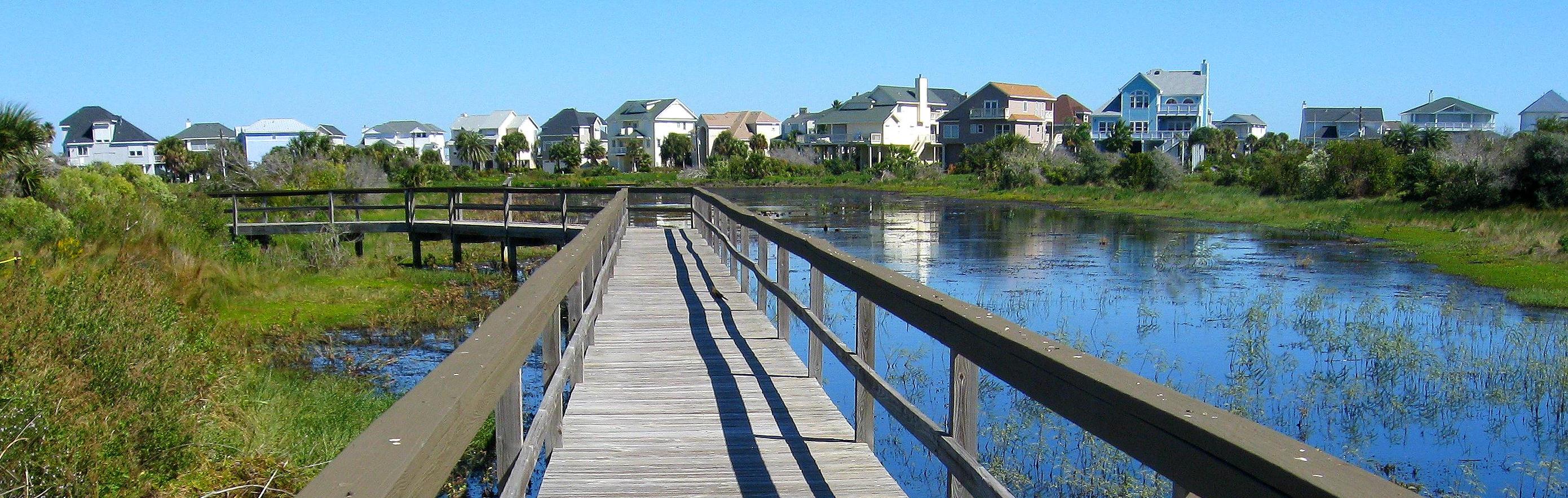
Boardwalk entry into Lafitte Cove Nature Preserve -- Photo by Pat Bean

Chasing Birds

I found myself surrounded by pricy homes this past week, walking a Galveston Island landscape that once belonged to the infamous Jean Lafitte. He came to the island in 1817, which at the time was mostly uninhabited except for Karankawa Indians. 
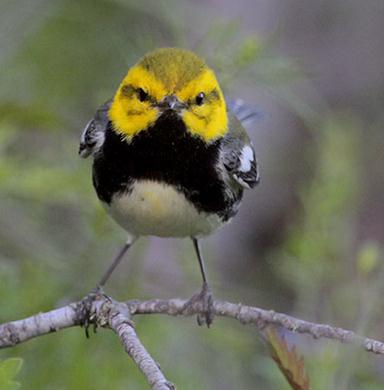
Black-throated green warbler -- Photo by Joanne Kamo http://www.pbase.com/jitams

Lafitte battled the Indians and used the island, with its protected bay, as a base for his smuggling and pirating activities until 1821, when he made the mistake of attacking an American merchant ship. The schooner, the USS Enterprise, was sent then to oust him.

Lafitte agreed to leave the island without a fight, but before he did he burned the settlement and fortress he had created, and is said to have taken a huge amount of treasure away with him.

I hadn’t come to the place for its historical significance, however. I had come in search of birds in the small sanctuary that sat in the middle of the residential neighborhood.

Marker near the nature preserve noting that Lafitte fought a battle with the Karankawa Indians at this site. -- Photo by Pat Bean

In honor of Lafitte– although I’m not sure what there is to honor, except that perhaps along with his nefarious pirating activities he helped Andrew Jackson defend New Orleans in 1815 – the sanctuary was dubbed Lafitte’s Cove Nature Preserve.

Its boardwalk and paved paths wander past a wetlands area, a small lake and though thick woodlands; its location, just inland from the gulf, makes it an ideal stopover for birds migrating along the coast.

On the day my son, Lewis, and I birded the preserve, we saw mottled ducks, blue-winged teals, mallards, white-eye vireos, orange-crowned warblers, cardinals, mockingbirds, brown thrashers, black-throated-green warblers and blue-headed vireos, which I thought was a pretty good number for a very windy day in October.

Lewis, who had birded the small sanctuary in May, said he had seen at least triple the number of species on that outing.

Wouldn’t it be nice, I thought, if every residential neighborhood saved a small patch of land for the birds. Don’t you agree?

 “Do not go where the path may lead, go instead where there is no path and leave a trail.” Ralph Waldo Emerson

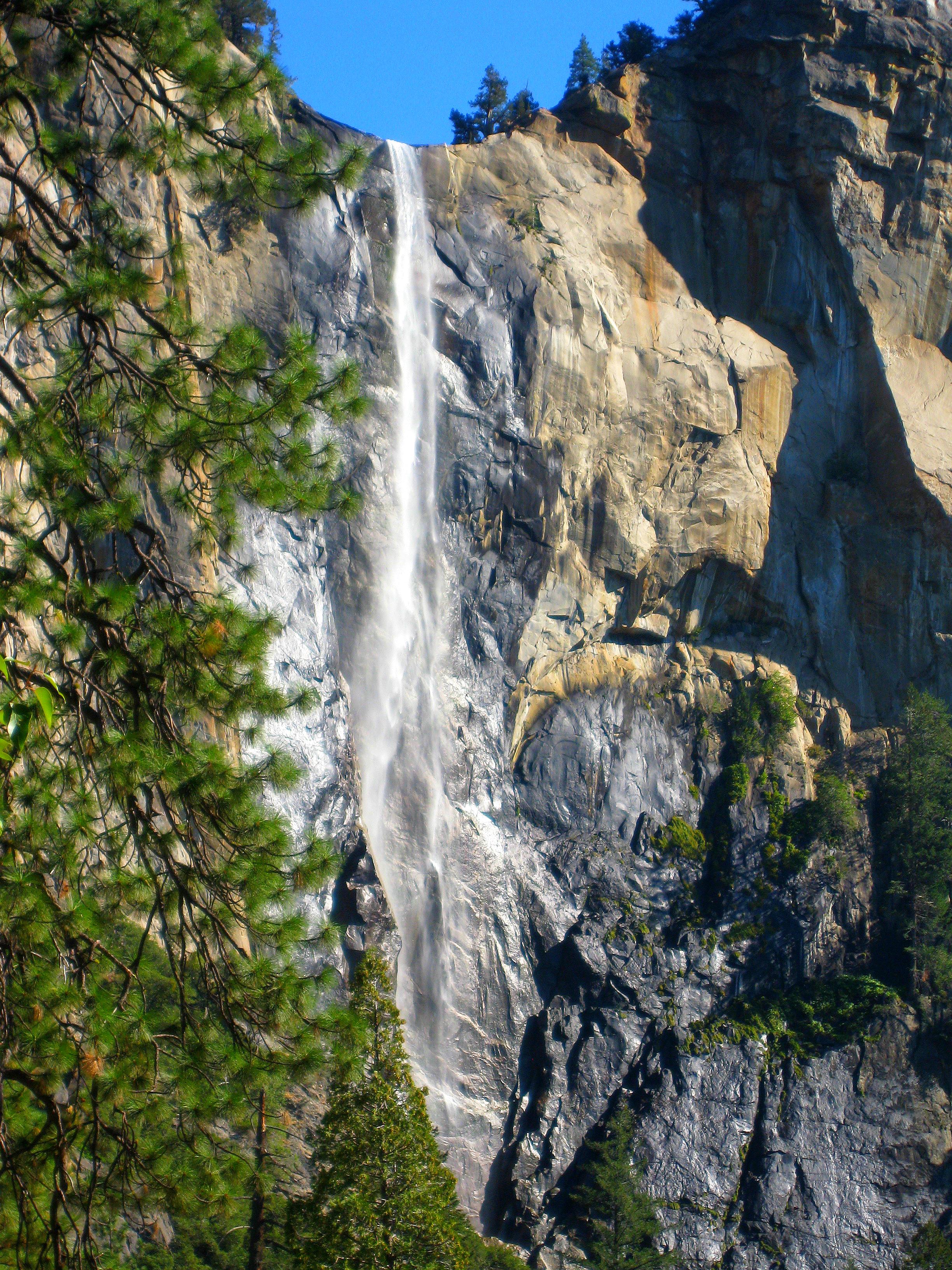
Walking beside a quiet stream and taking pictures of it, especially when the water is full of reflections, is one of my favorite things to do. This stream is located along Highway 41 in Yosemite National Park. -- Photo by Pat Bean


Travels With Maggie

I recently came across a great travel blog called Wanderings. It’s written by Shannon and Brian, who like me unloaded possessions and took off in an RV to see the country.

I particularly enjoyed one of their recent posts: “7 Lessons from a Year on the Road,”  http://wanderings2010.wordpress.com/

In it, they noted that the “path is beaten for a reason.”How true I thought, but then remembered how much planning I do to take the road less traveled when I have a choice. Or do I?

I hadn't noticed the waterfall before i stopped beside the stream. What a nice surprise. -- Photo by Pat Bean Since beginning my travels with my canine companion, Maggie, seven years ago I’ve seen many of this country’s most popular tourist sites, including Niagara Falls, Mount Rushmore, St. Louis’ Gateway Arch, The Golden Gate Bridge, the Everglades, and numerous national parks, including my visit just this past month to Yosemite.

My solution to finding a little peace at some of the more popular tourist sites has been to visit them after Labor Day and before Memorial Day. This strategy has at least minimized the impact of traffic jams around the more popular attractions.

I’ve also discovered that even in the midst of hundreds of tourists, it’s still possible to find a bit of solitude to ease the pain of jostled elbows, the cacophony of noise and long lines.

I found it in Yosemite when I pulled off the road at a convenient spot to take some pictures of a small stream and stretch mine and Maggie’s legs a bit. There was room for only two other vehicles to park at the spot, which had no markers and wasn’t indicated on the park’s map.

Except for one lone fisherman, who was upstream a ways, Maggie and I had the place to ourselves. After taking a few pictures of the stream, I glanced up at the rock cliffs on the far side of the water.

Wow! I thought when I saw the waterfall. I had chosen well for my off-the-beaten path rejuvenation stop.

I guess it doesn’t matter which path you choose to follow – beaten or unbeaten – as long as you take one of them.


“To find the universal elements enough; to find the air and the water exhilarating; to be refreshed by a morning walk or an evening saunter; to be thrilled by the stars at night; to be elated over a bird’s nest or a wildflower in spring – these are some of the rewards of the simple life.”  ~John Burroughs

Birding Day

I abandoned my blog this morning, and spent the day out birding with my son Lewis. I just barely got back, and words always fail me this time of day. So I’ll simply share one of the photos I took today. Hopefully you’ll think it worth my usual 350 words.

Great

Great egrets and roseate spoonbils at Surfside -- Photo by Pat Bean

“…we turned a point of the hill on our left, and came suddenly in sight of another and much larger lake, which, along its eastern shore, was closely bordered by the high black ridge which walled it in by a precipitous face … Spread out over a length of 20 miles, the lake, when we first came in view, presented a handsome sheet of water; and I gave to it the name Lake Albert, in honor of the chief of the corps to which I belong. …” John Fremont

Lake Albert's southeast end from Highway 395. -- Photo by Pat Bean

Travels With Maggie

Highway 395 stretches for 1,370 miles – from the Canadian border in Washington, down through Oregon, California, Nevada and back into California, where it ends just about 150 miles short of the Mexican border. .

I drove 730 miles of it heading south last month, beginning in Pendleton, Oregon, and ending when I turned west onto Highway 120 that would take me up and over 9,943-foot Tioga Pass through the Sierra Nevada Mountains and down into Yosemite Valley.

Much of the drive was on steep, narrow, winding roads with little traffic. I loved every moment of the journey.

Lake Albert from Albert Rim -- Wikipedia photo

The route winds through Oregon’s Battle Mountain State Park, the Umatilla, Malheur, Modoc, Toiyabe and Inyo national forests, and the X L Ranch Indian Reservation, passing numerous lakes on the way. There’s Goose Lake in Oregon, located near Fandango Pass that was used by early settlers to California; Nevada’s Washoe Lake, located between Reno and Carson City and popular with windsurfers; and Mono Lake in California, which was on my bucket list because of its importance to migrating shore birds.

A smaller lake that captured my attention was Oregon’s Lake Albert. Like Mono, it is too salty for fish to live in its waters. It has, however, a dense population of brine shrimp that make it a popular dining stopover for migrating grebes, phalaropes, terns, avocets, geese, stilts, ibis and other birds.

Albert Rim geology marker -- Photo by Pat Bean

Canada geese were the main occupants on the narrow lake the day I drove the 15-mile section of Highway 395 that overlooks the east side of the lake from just feet away. I stopped several times to admire the lonely and lovely view of pink hills reflecting onto the water from the opposite shore.

I also found myself fascinated by the geology marker that explained the lava ridge running parallel to the lake. Known as the Albert Rim, it’s one of the highest fault scarps in the United States.

Except for the highway, which ran between the basalt ridge and the lake, and an occasional passing vehicle, I suspected the landscape still looked pretty much as it did during John Fremont’s mapping expedition in central and southern Oregon back in the 1840s.

It’s rare to find a place so little impacted by we humans – and wonderful.

“The moments of happiness we enjoy take us by surprise. It is not that we seize them, but that they seize us.” – Ashley Montagu

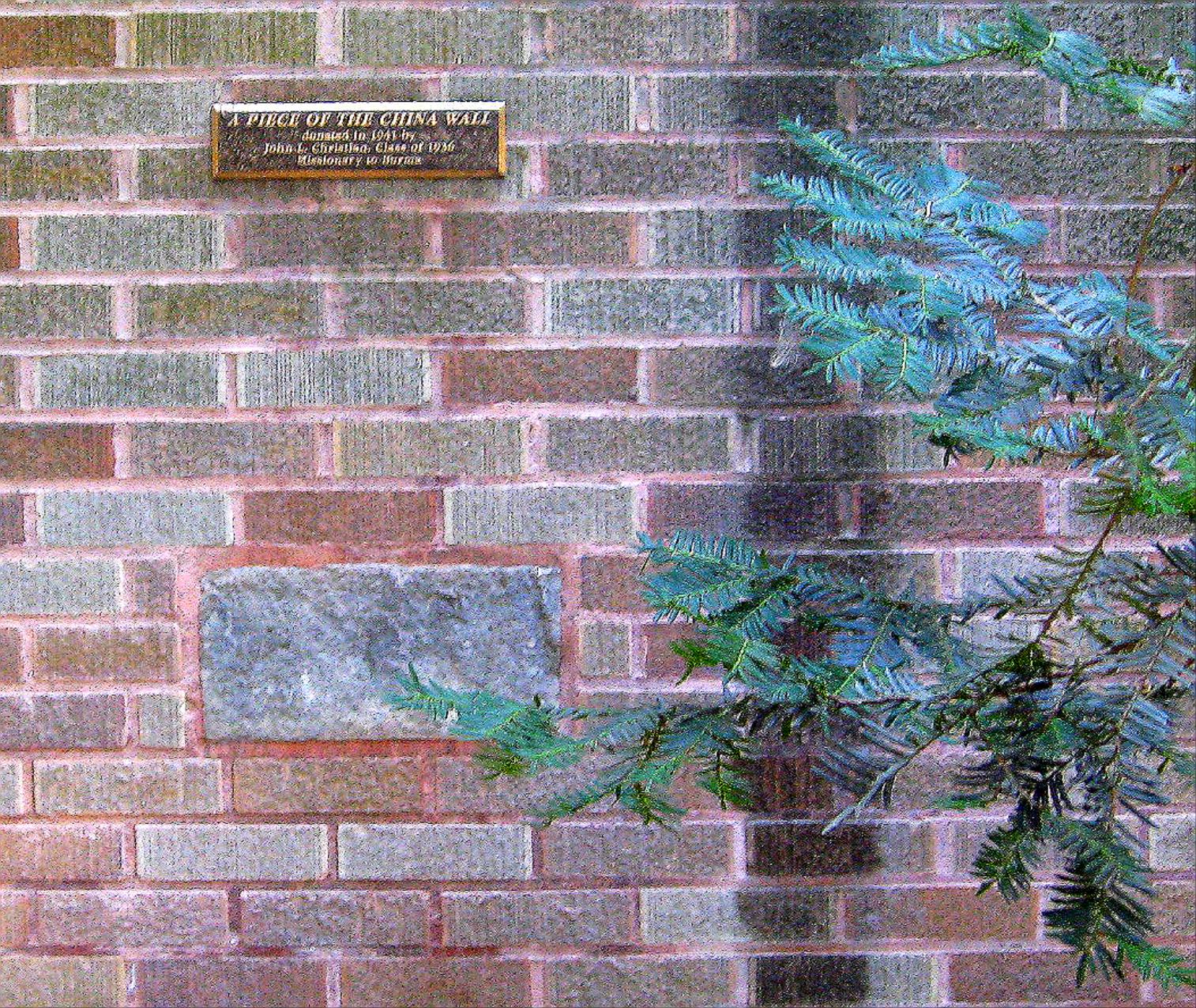
A piece of the Great Wall of China in Walla Walla, Washington. -- Photo by Pat Bean

Travels With Maggie

Call me weird if you like, but I think the ladybug I find on the rose is even more beautiful than the rose itself. And it’s not just because I know that ladybugs eat the aphids that eat the roses. It’s mostly because coming across a ladybug is usually a surprise.

I like surprises. Seeing things I don’t expect to see. It’s actually what I enjoy best about travel.

Now that doesn’t mean that I don’t enjoy seeing the magnificent sights travel is all about. One wouldn’t want to go to Yellowstone and not see Old Faithful, or to New York and not see Niagara Falls.

But the little unexpected things along the way are what put the magic in any journey.

One of the more surprising surprises I got in September took place in Walla Walla, Washington.

I went there with my friend, Sherry, who lives in Milton-Freewater, Oregon. As we drove the eight miles from her home to the larger town to do some shopping, we got to talking about the places we wished we could afford to visit in the near future.

“Ayers Rock in Australia and the Great Wall of China top my list,” I said.

“Oh! Would like to touch a piece of the Great Wall,” she asked?

She then took me to the Walla Walla University, from which she had graduated.

The UFO above an eye exam sign on a Wal-Mart in Roswell, New Mexico, was a jolly fun surprise. -- Photo by Pat Bean

Hidden in a bushy alcove, on the brick wall of a campus building, was indeed a piece of the Great Wall. It had been incorporated into the building as one of the bricks. Above it was a plaque that read: “A piece of the China Wall, donated in 1941 by John L. Christian, Class of 1936, missionary to Burma.”

The touch of the rough, gray rock felt magical, and my fingers tingled.

My brain, however, was thinking that such casual taking of a piece of history today could land one in serious trouble. Of course things were different back then, when everyone was expected to bring home “real” souvenirs, like a piece of lava from Craters of the Moon or a rock-hard log from the Petrified Forest.

Back in the 1940s,  the “Take nothing but memories, leave nothing but footprints” motto hadn’t yet become conservation’s cry.  While I’m glad it’s now the standard, I’m also glad I got to actually touch a piece of China’s history.

It was a magnificent surprise to add to my travel memories.

Perhaps one day I’ll get to touch the actual wall. Of course, given my current economic reality, that would indeed be a surprise.

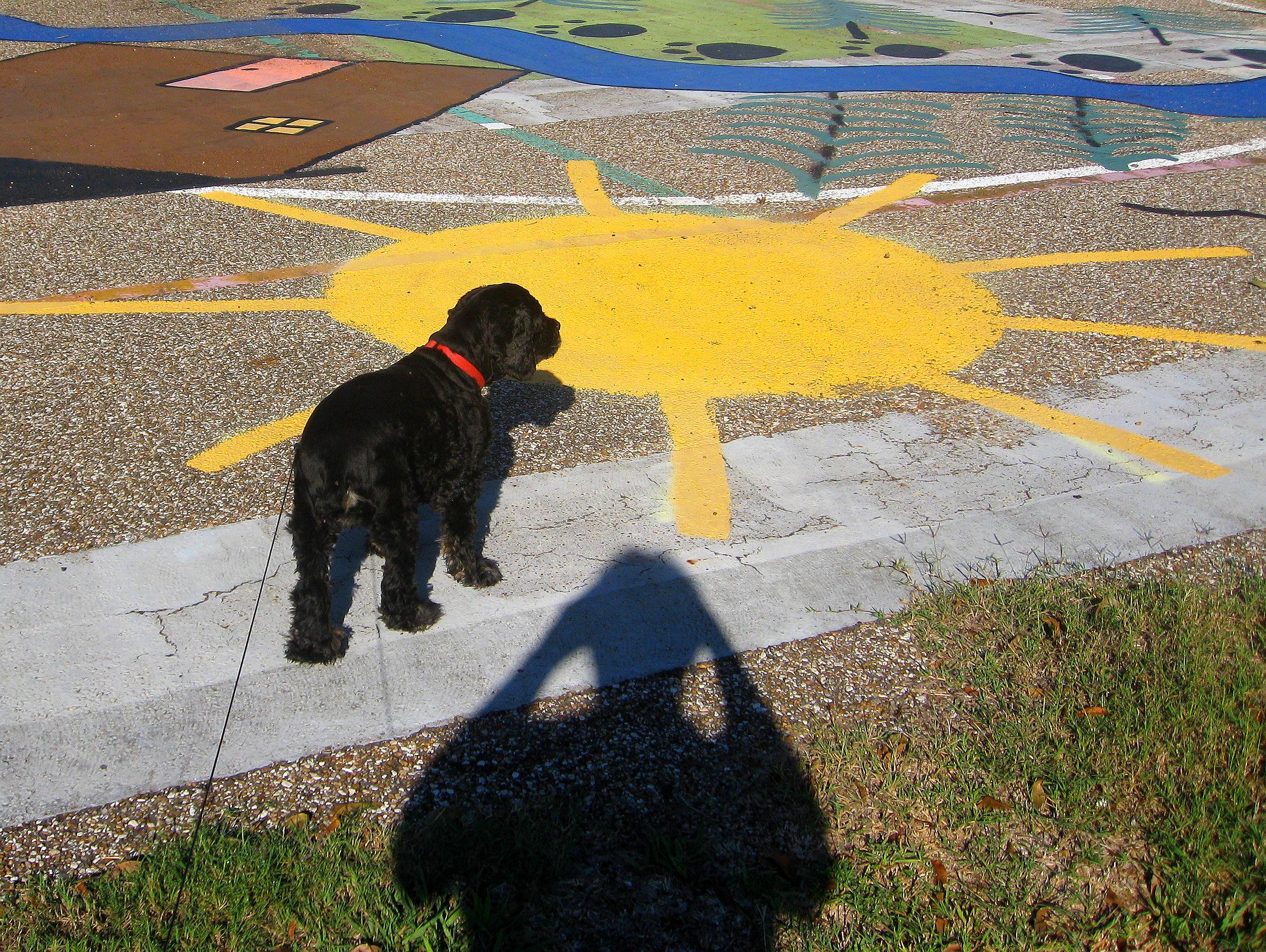
My shadow and Maggie become part of the basket ball court art. -- Photo by Pat Bean

 Every child is an artist. The problem is how to remain an artist once we grow up.” – Pablo Picasso

Travels With Maggie

The park across the street from my son’s home in Lake Jackson has a basketball court, but I’ve never seen it used for that purpose.


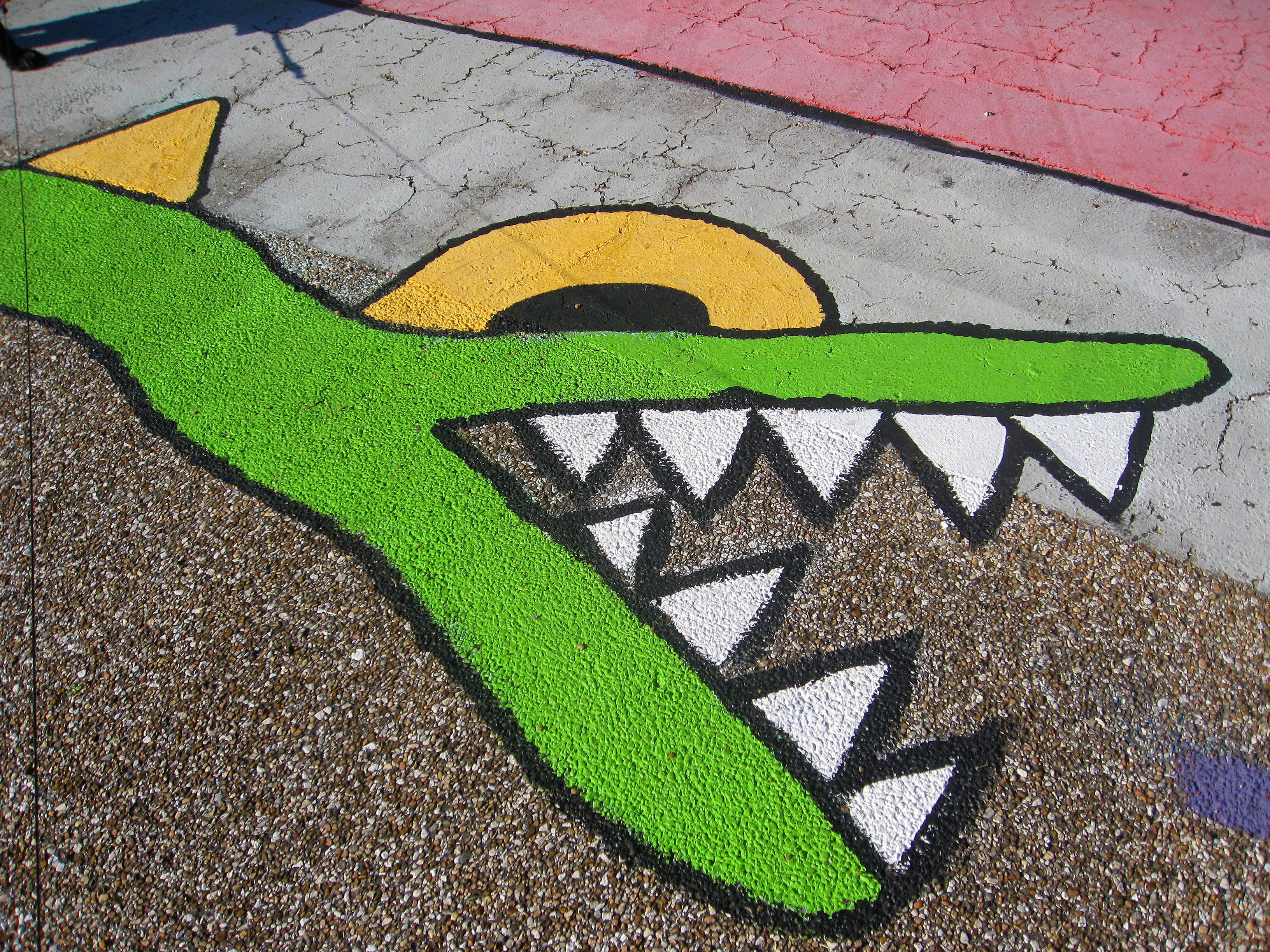
The big green snake with big teeth -- Photo by Pat Bean

Perhaps that is why some young artists – I suspects students from the school next door to the park – decided to brighten it up a bit. While I was away for the summer, they dabbed the rough cement court with color.

The bright images include a river running across the court, a few houses and trees, a hop scotch layout and a couple of gigantic snakes, the kinds of things young artists have been doodling on paper since they could hold a crayon.

I found it enchanting – and so in tune with the week’s photo challenges about possibilities.


Grackles join the cacophony of color -- Photo by Pat Bean

“A picture of many colors proclaims images of many thoughts.” – Donna Favors


“If we had a keen vision of all that is ordinary in human life, it would be like hearing the grass grow or the squirrel’s heart beat, and we should die of that roar which is the other side of silence.” – George Eliot

Some squirrels can be downright sassy. -- Photo by Pat Bean

Travels With Maggie

Unlike all the other squirrels my canine traveling companion, Maggie, and I approached in the park early this morning, one didn’t quickly scamper away at the sight of us.

It held its ground, engaging us in a stare off. We got to within about 20 feet of it before Maggie could stand it no longer. With a sudden spurt of energy, she raced toward it.

She had 25-feet before her retractable leash would pull her up short, but she stopped before she hit the end. I think she knew, even before she started the chase, that she didn’t have a chance. She’s had a lot of experience with sassy squirrels during our many walks.

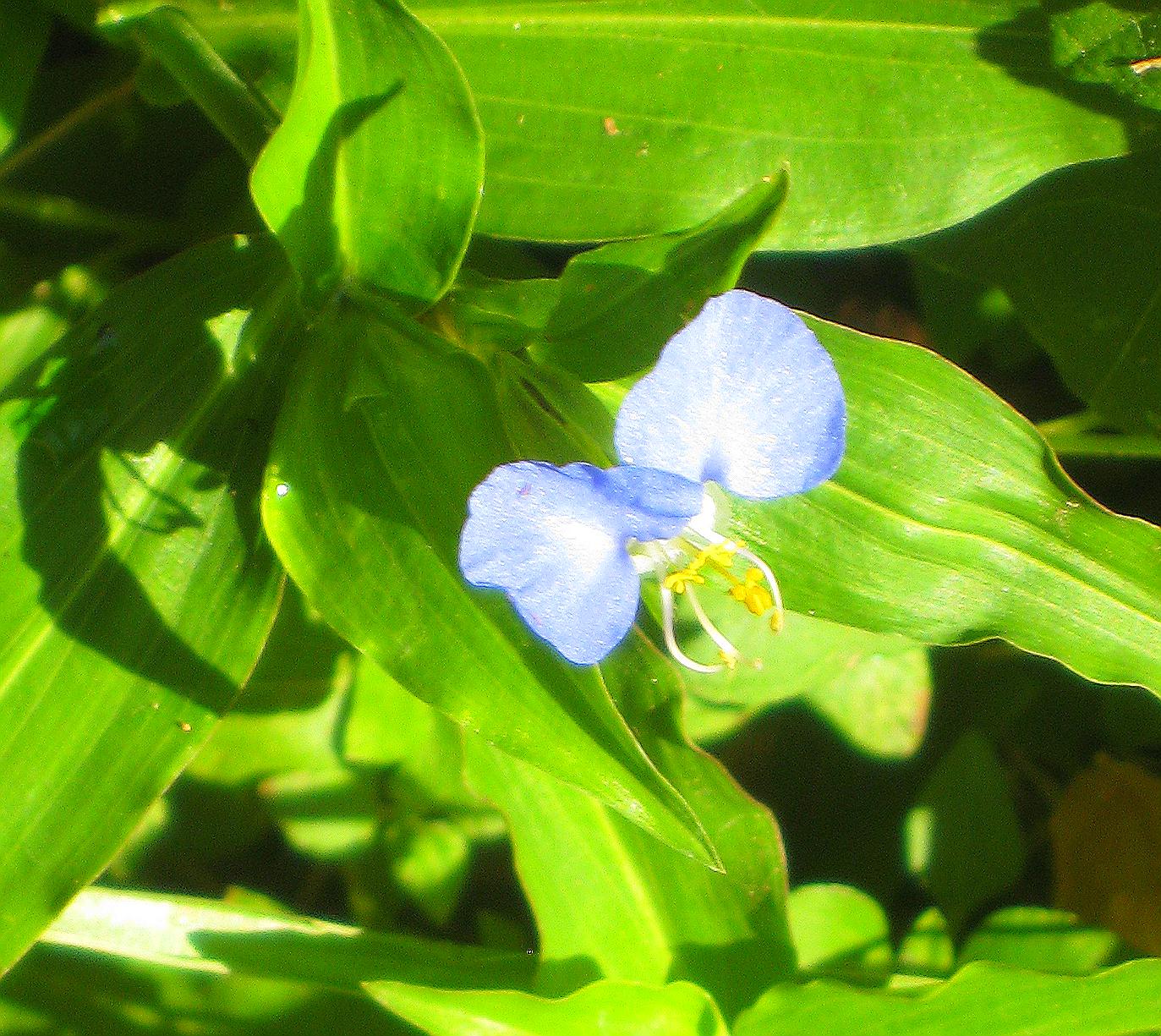
A small widow's tear blossom beneath a bush finally got my brain off squirrels and onto the wonders that Mother Nature always surprises me with when I take a walk. -- Photo by Pat Bean

The squirrel, which of course had headed up the nearest tree, was now looking down from a low branch chattering away in what could only be scorn for our intrusion. It had decided we were trespassers, that it owned the park and we had no business being here.

What, I wondered, had made this squirrel challenge us while all the others ran away.

It was like asking what makes some humans adventurous and some timid, why some of us love roller coaster rides and others shun what they consider such dangerous tomfoolery.

I often see parallels between animals and humans. I guess that’s why they’re often used to describe us humans, as in sly as a fox, slow as a snail, graceful as a cat, stubborn as a mule or swift as an eagle.

I never heard one, however, comparing us to a squirrel. What, I wondered would the adjective be: Sassy, brave, quick or foolish came to mind.

That squirrel hadn’t just taunted Maggie, it had taunted my brain.


 “The family. We were a strange little band of characters trudging through life sharing diseases and toothpaste, coveting one another’s desserts, hiding shampoo, borrowing money, locking each other out of our rooms, inflicting pain, and kissing to heal it in the same instant, loving, laughing, defending, and trying to figure out the common thread that bound us all together.” – Erma Bombeck

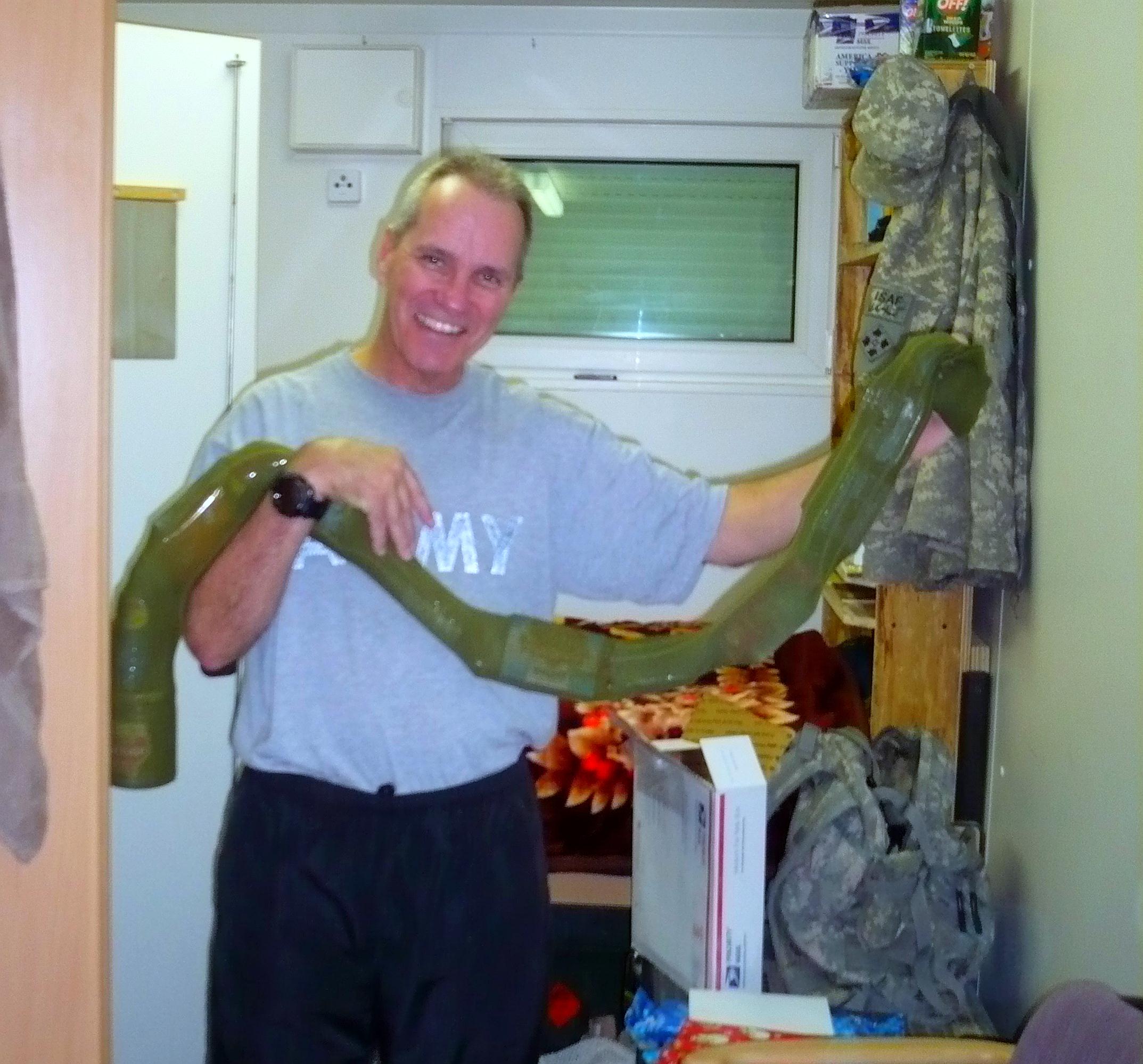
D.C. with his long green thing during one of his Army deployments.

Family Memories

“Hey Mom, I brought back a surprise for you from Afghanistan,” was the message I got from my oldest son, D.C. I was in Idaho at the time, and the only thing I wanted from Afghanistan was my son, home, safely.

Later, I wondered what the surprise could be.

“It’s a long green thing,” my daughter-in-law, Cindi, hinted.

It took a few minutes, but then I burst out laughing.

“Oh, you mean his Christmas stocking,” I said.

This is a thing that goes back many, many years, back to the time when my son was a pre-teenager. It was a time when money was in extremely short supply in our family, and so our Christmas stockings were just that – everyone’s own clean sock. And the kids always found the biggest ones they owned to hang up.

Now D.C. always was an ingenious kid. He chose his long Boy Scout knee sock, but decided it still wasn’t big enough. So he cut the foot off one of the socks and sewed the rest of the stocking to the top of the other one. It was such a brilliant idea that he didn’t even get punished for the deed. I think I filled it up with oranges that first Christmas.

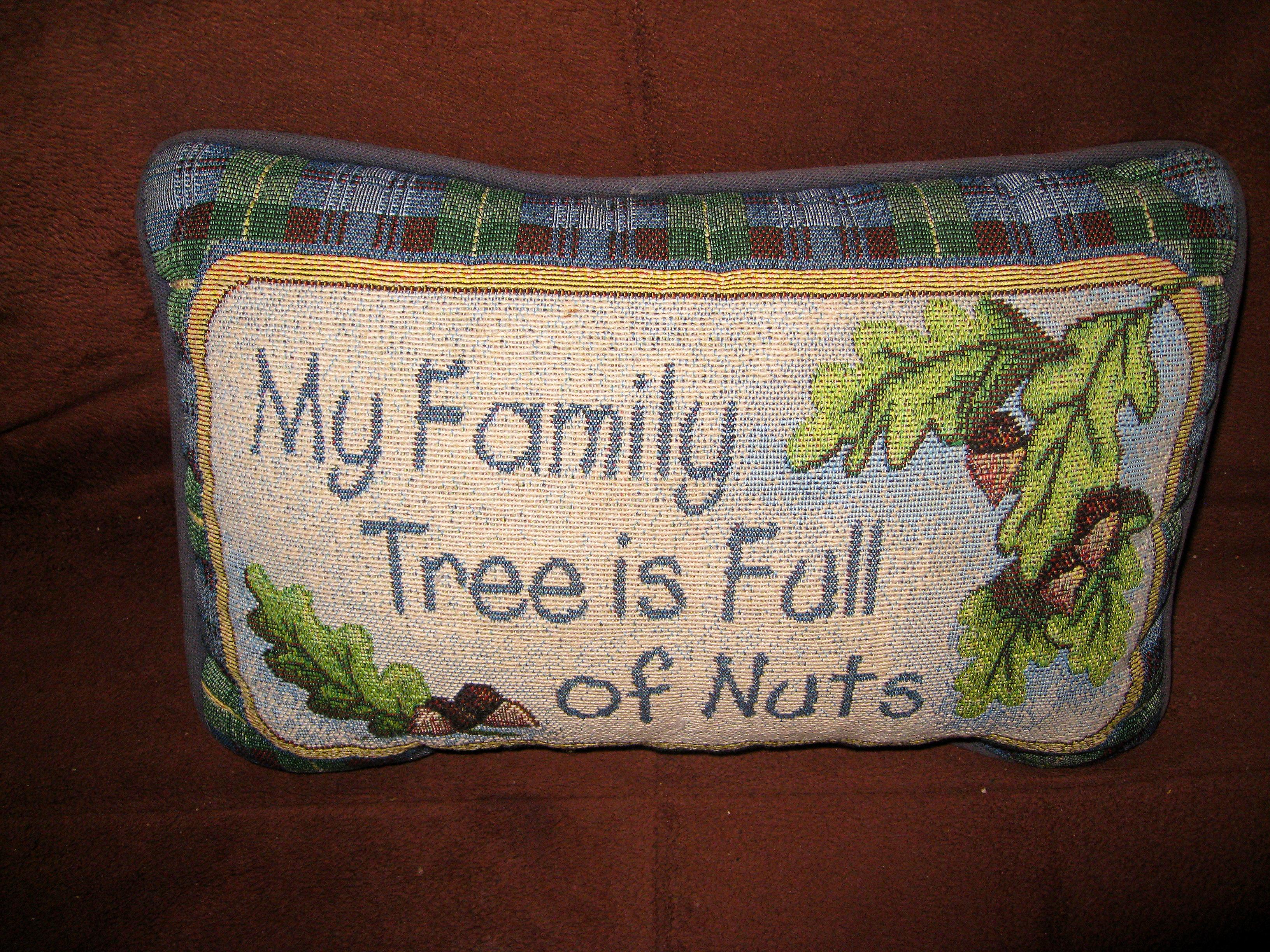
The pillow, given to me by my oldest daughter, Deborah, that sits on the couch in my RV. Laughter is good for the soul is my motto.

In the meantime, as kids do, D.C. grew up, joined the Army, married, had kids of his own and made the military his career for the next 35 years. It was during one of his three tours in Iraq as a Blackhawk helicopter pilot that I came upon that long-forgotten green stocking.

As a joke, I filled it up with goodies like smoked oysters, canned chili, Vienna sausage, nuts, toy cars, hand warmers, a Pez dispenser and a heck of a lot of other stuff and sent it to him that year for Christmas.

He’s made sure the stocking was returned to me every year since.

I guess in thankfulness for my son’s safe return from the war zone, his upcoming retirement and all the laughter that stocking has provided the family over the years, I’ll have to fill it up yet one more time.

“A leaf fluttered in through the window this morning, as if supported by the rays of the sun, a bird settled on the fire escape, joy in the task of coffee, joy accompanied me as I walked.” Anais Nin

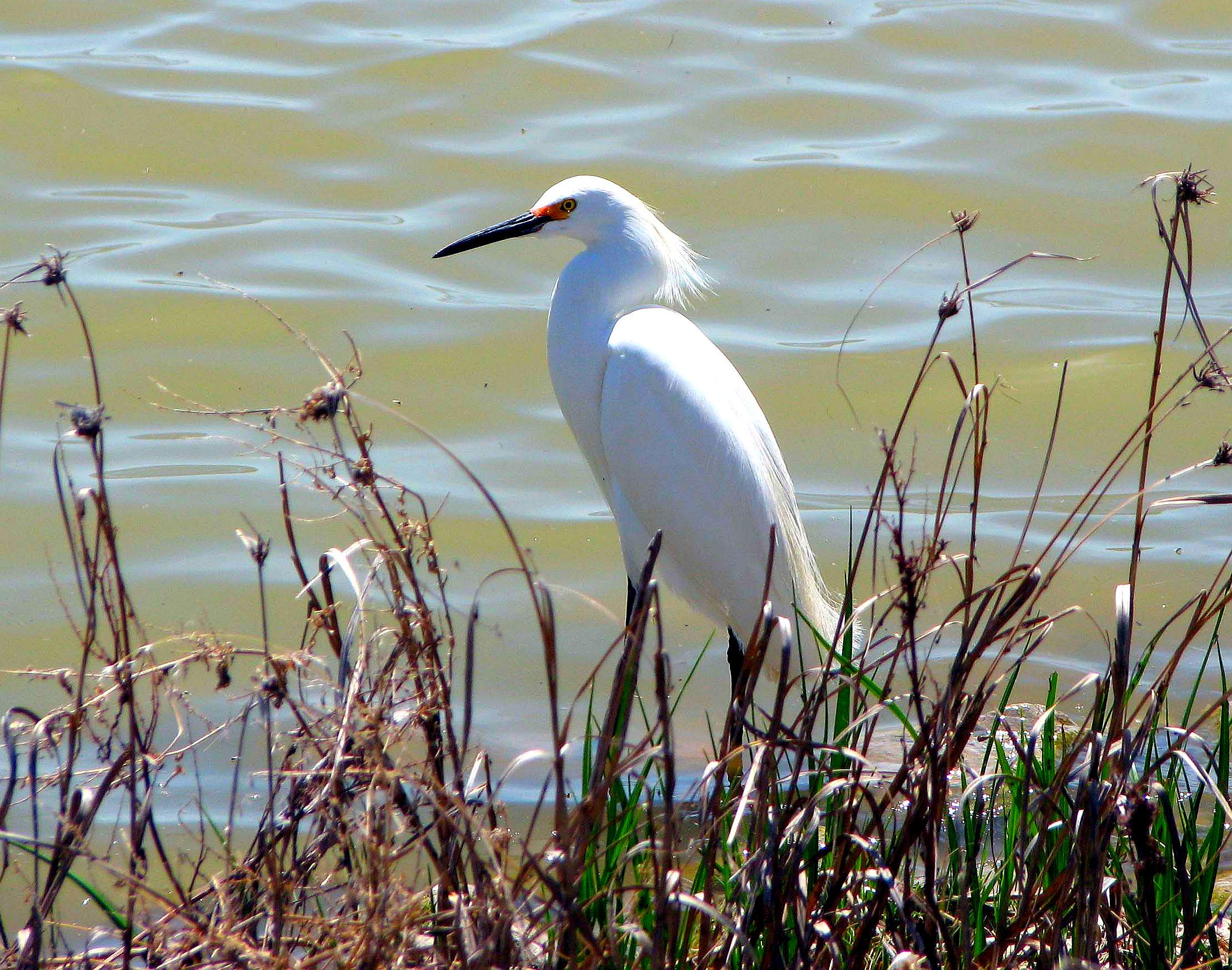
Snowy egret at the Bear River Migratory Bird Refuge in Utah. -- Photo by Pat Bean

Travels With Maggie

The landscape around the Texas Gulf Coast home of my son, Lewis, is always full of birds. It is why my binoculars are always sitting beside me when my RV, Gypsy Lee, is parked in his driveway.

Wrens, woodpeckers, warblers, hawks and ducks all visit or pass through his yard.

This morning, Carolina wrens inspected the gutters over his garage, a pair of cardinals sat on the utility wires attached to his roof and a flock of black-bellied whistling ducks flew overhead, alerting me to their presence with their high-pitched chorus as they winged past in V-formation.

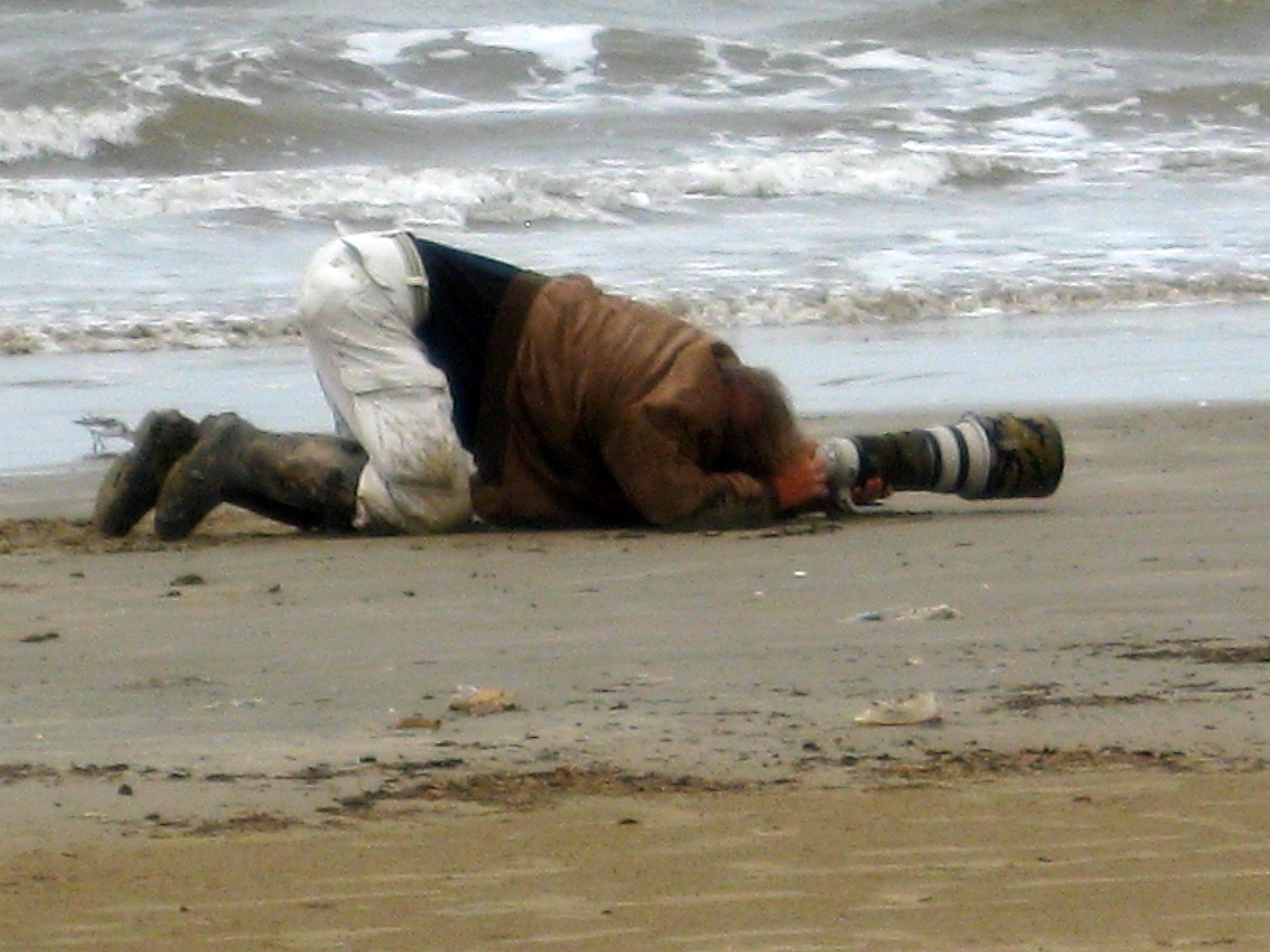
Is this a photographer taking picture of birds, or a birdwatcher photographing birds? -- Photo by Pat Bean

The park directly across the street from my son’s home offers even more entertainment for this passionate birder: Logger-head shrikes hang out in the trees, mockingbirds frequently chase away a red-tailed hawk when it comes around and goldfinches hang around the feeders in the yard next to the park.

I sometimes think I might be mistaken for a peeping Tom, or in my case a Jane, because I might appear to be looking in someone’s window when I’m simply watching a ruby-throated hummingbird flitting around the flowers.

If you really want to know how crazy we avid birders are, you should go see the movie, “The Big Year.” It’s about competitive bird watching. Or you can read the book, “The Big Year: A Tale of Man, Nature, and Fowl Obsession,” written by Mark Obmascik. It’s actually a true story and I couldn’t put it down once I started reading.


Great-tailed grackles near Surfside, Texas. -- Photo by Pat Bean

Recently, when I was down at the beach – to watch birds of course – I watched another bird watcher as he tried to take a picture of some skimmers. Watching him was almost as much fun as watching the skimmers myself. I wondered if he was more photographer than birder, or more birder than photographer, like me.

We birders are actually a funny, but much blessed lot. The day I realized I had joined the craziness was the day I took a 440-mile, one-day, round-trip drive just to see nesting ospreys.

In fact, many of the 122,000 miles I’ve put on Gypsy Lee the past seven years have been in pursuit of birds – from the elegant trogons in Southeast Arizona, to the marbled murrelets on the Oregon Coast, to the Atlantic puffins in Maine, and the Florida scrub jays in the Everglades.

It’s been one great feathered adventure after feathered adventure.

Perhaps that’s why, at least for a little while, I’m content to simply watch birds from the comfort of my RV that is parked in the driveway of my son.  

 “I would be the most content if my children grew up to be the kind of people who think decorating consists mostly of building enough bookshelves.” Anna Quindlen

Longhorn wall hanging at the Salt Grass in Pearland -- Photo by Lewis Bean

Travels With Maggie

The Texas longhorn’s mounted head at the Salt Grass in Pearland caught my attention last night. Eight Beans, the human kind, had gone there to celebrate my daughter-in-law’s birthday.

As we waited, beneath the bull, I thought of all the other animal trophies I had seen hanging from walls. This particular steer, I suspected, was there as a symbol of the restaurant’s No. 1 menu item – Steak!

It was certainly in poor taste if looked at through the longhorn’s eyes.

My mind thinks about such things as this when it’s not otherwise occupied. Everyone, I thought, has their own ideas about decorating and the trophies they show off — including me.

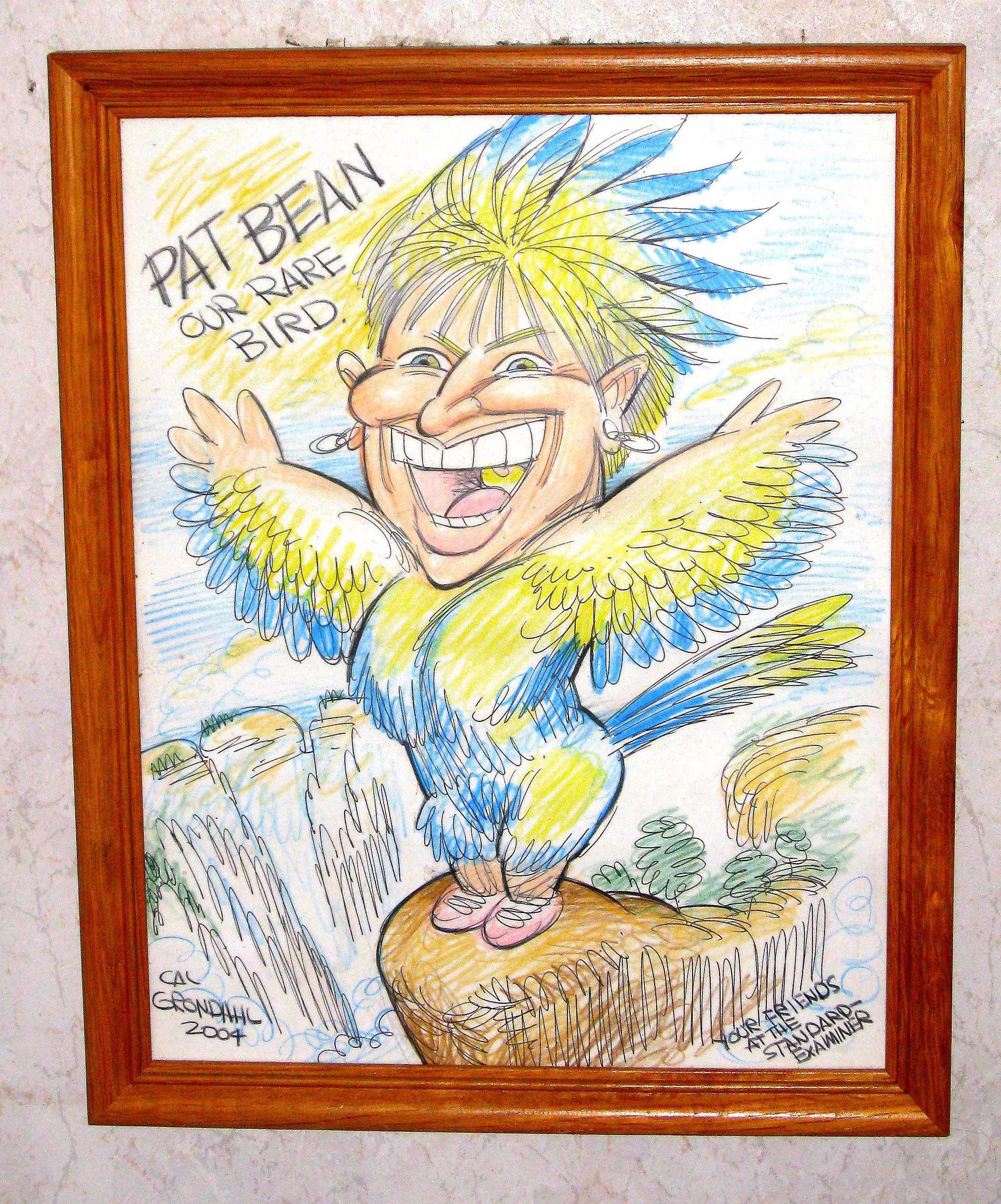
Hanging in the only spot in my RV that can hold anything is a caricature of me drawn by cartoonist Cal Grondahl. It shows me as a bird in honor of my bird-watching passion, and goes well with my “trophy’ list of how many birds I’ve seen since 1999.

The St. Bernard's head that hangs on the wall in the Shooting Star Saloon in Huntsville, Utah.

And then there’s my list of all the states I’ve visited – only three more to go to make it 50. I would have to say these qualify as my trophies.

During my travels around the country, one of the more common wall trophies I’ve seen over the years is the mythical jackalope. If you don’t know, or can’t guess, it’s a stuffed jackrabbit with antelope horns attached. I’ve always wondered why some people think this is so funny.

I’ve even come across a stuffed rattlesnake and a huge alligator used as décor. That’s just creepy.

I'm sure that there are those who will think the caricature of me as a bird is as strange as a jackalope.

But by far the strangest mounted head I’ve come across is the one of a 300-pound St. Bernard that hangs in the Shooting Star Saloon in Huntsville, Utah. This bar, built in 1879, is one of those sights, if you’re ever in the neighborhood, that you really shouldn’t miss.

The giant St. Bernard, very beloved by his former owner and once listed in the Guinness Book of Records because of his size, is called Buck. So if you go, be sure and ask for the Buck Booth.

And be sure and order a Shooting Star hamburger. It’s been rated one of the best hamburgers in America. I’ve had one, and I agree.

And if the Buck Booth is filled, you can always sit beneath a black bear or an elk and simply admire Buck from a distance.

By the way, what’s hanging on your walls?