Feeds:
Posts
Comments

“All journeys have secret destinations of which the traveler is unaware.” – Martin Buber


American woodcock. The one we saw at Brazos Bend had a beautiful red belly but flew away too quickly for me to get a photograph. -- Wikipedia photo


Travels With Maggie

The best option I’ve found to dump the holding tanks in my RV when I’m visiting my son in Lake Jackson is Brazos Bend State Park. The compensation for making the 80-mile round-trip drive is that the Texas park, known for its alligators, is one of my favorite places to bird.

I announced my intentions of making the drive to my son, Lewis, asking if he would like to make the trip with me. He passed the word along to his wife, Karen.

“Mom needs to take a dump at Brazos Bend,” is how he put it, which suddenly became a standing joke among us.

Saturday, the two of them, also birders, joined me for the adventure. Arriving at the park, I renewed my annual Texas State Park pass, then took care of Gypsy Lee’s business while Karen and Lewis walked Maggie and watched a flock of cedar waxwings.


But this red-eyed fellow, a black-crowned night heron, posed nicely for me. -- Photo by Pat Bean

Ten minutes after I had put on plastic gloves, hooked up a sewer hose and pulled levers, Gypsy Lee’s holding tanks were empty and I was ready to join the birding party.

We decided to hike the Hoots Hollow trail near the park entrance. It was a good choice.

One of the first birds we saw as we entered the moss-dripping forest was an American woodcock. It was cause for great joy as the bird was a lifer for all three of us. It brought my list of species seen up to 699.

But the benefits of having to drive to Brazos Bend to dump didn’t end there. Just as we were about to exit the trail, I got my 700th species, a Swainson’s thrush. It had been quite awhile since I had added any new bird species to my life list, and to get two in one day was fantastic.

Our continued birding around Forty Acre Lake was also great. We ended the day with 57 species, our final one being a black-crowned night heron that posed for my camera.

The day left me looking forward to my next “dump.”

Weekly Photo Challenge

“Looking back, you realize that a very special person passed briefly through your life, and that person was you.  It is not too late to become that person again.”   ~Robert Brault

Self Portrait

As I frequently point out, I’m a writer not a photographer. It’s a conscious decision to prioritize my life, which is already too full of the many things I do.  I’ve always wanted it all, but finally had to accept that each thing I do takes a chunk away from something else. 

Since writing is at the top of my important list,  I spend more time with a notepad than a camera.  To assure that I continue doing this, my only camera is a small pocket point-and-shoot. It’s a Canon PowerShot with a decent zoom and image stabilizer that is almost alwaays with me. It has no straps and I carry no tripod so it fits quite nicely in the right-hand pocket of my cargo pants.

Without any extra equipment, however, I was a little perturbed at this week’s photo challenge. I wasn’t sure I could take a decent  self-portrait. 

The problem must have been fermenting in my brain when I visited Brazos Bend State Park yesterday.  While I was standing on a pier that jutted into the water, taking photos of common moorhens and a big old alligator watching them from his tiny island outpost, the solution suddenly appeared below me.

Can you see me?

Self-Portrait -- Photo by Pat Bean

Everything has beauty, but not everyone sees it.” Confucious


The Mrs. Trueheart -- International Oleander Society photo


Travels With Maggie

A recent walk through a cemetery in Galveston in search of the graves of my ancestors yielded an unexpected surprise.


The historical marker that sent me on a search to discover the oleander connection to my Trueheart ancestors. -- Photo by Pat Bean

A historical marker told me that several varieties of oleander were named after family members of my great-great-great-great-grandparents, John and Anne Trueheart.

Of course I later went on a search to find out which varieties honored them. Except for one exception, the search turned out to be as elusive as the bodies in the Galveston Cemetery, all of which got jostled about by hurricanes hitting the Texas Gulf Coast island.

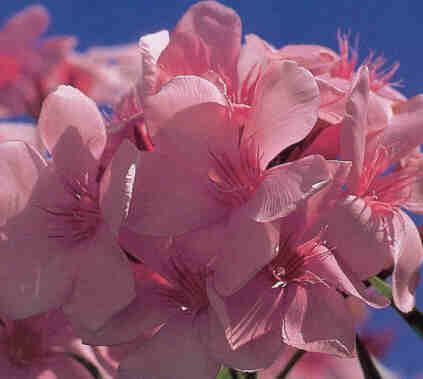
The one subspecies I found that I believe without a doubt was named after my ancestors is the Mrs. Trueheart. It’s a strikingly deep pink, full blossomed oleander, whose photographic image delighted me.

That I find surprises in my travel and walks with Maggie is not surprising. They’re the reasons why I’m not a couch potato. This one just happened to be a bit more surprising than average.

Unexpected surprise? Now isn’t that an oxymoron?

 “Birth and death; we all move between these two unknowns.” Bryant H. McGill


Life goes on in Florida's Brevard Zoo for these two magnificent eagles, who are injured and could not survive in the wild. Have they made peace with their limited environment? Hopefully, because life goes on one way or another. -- Photo by Pat Bean


Travels With Maggie


As leaves of this Japanese pear tree fall, a flowering bud is eager to take its place. -- Photo by Pat Bean

I’ve reached an age when acquaintances and dear friends are dying. This past year I lost two who were especially dear to me. One had adopted me into her family for holidays when mine were far away. She made it all the way to 99 before she finally gave up her will to live. Her funeral, per her wishes, was a celebration.

Another dear friend, an irreverent writing colleague who was the life of any party and who was always making me pee from laughing so hard, also left this world. She was a year younger than me, and this death was much harder to bear.

I’m not a religious person, so I get no comfort from well-meaning comments that suggest she’s in a better place now.

It’s not that I don’t believe in this better place, I do. It’s just that I believe this better place is here and now. It’s all we have. It’s up to each of us to make it the best it can be.

Life goes on through grief. It goes on when something or someone kicks us to the ground. It goes on if we can’t afford all our wants. It simply goes on.

This is a picture that speaks louder than a thousand words, so I won't say them. -- Photo by Pat Bean


These thoughts all roared through my brain this morning as I walked Maggie. The flowering Japanese pear tree in my son’s yard first stirred up the cacophony in my brain. As winter teases and taunts and hides in Texas’ Gulf Coast, as it’s doing today when the air conditioner in my RV is running, this small tree comes to life.

For each leaf that falls, it sends out a bud that will bloom this winter. In the background, between the pear tree’s naked limbs, is another tree, one that’s providing onlookers a rustling, reality video of brilliant color.

I find meaning and comfort in Mother Nature. Her message to me is one of reincarnation, not that I expect to come back to live another life, but that a tiny drop of who I am will become a permanent part of this planet.


“It is better to travel well than to arrive.” Buddha 

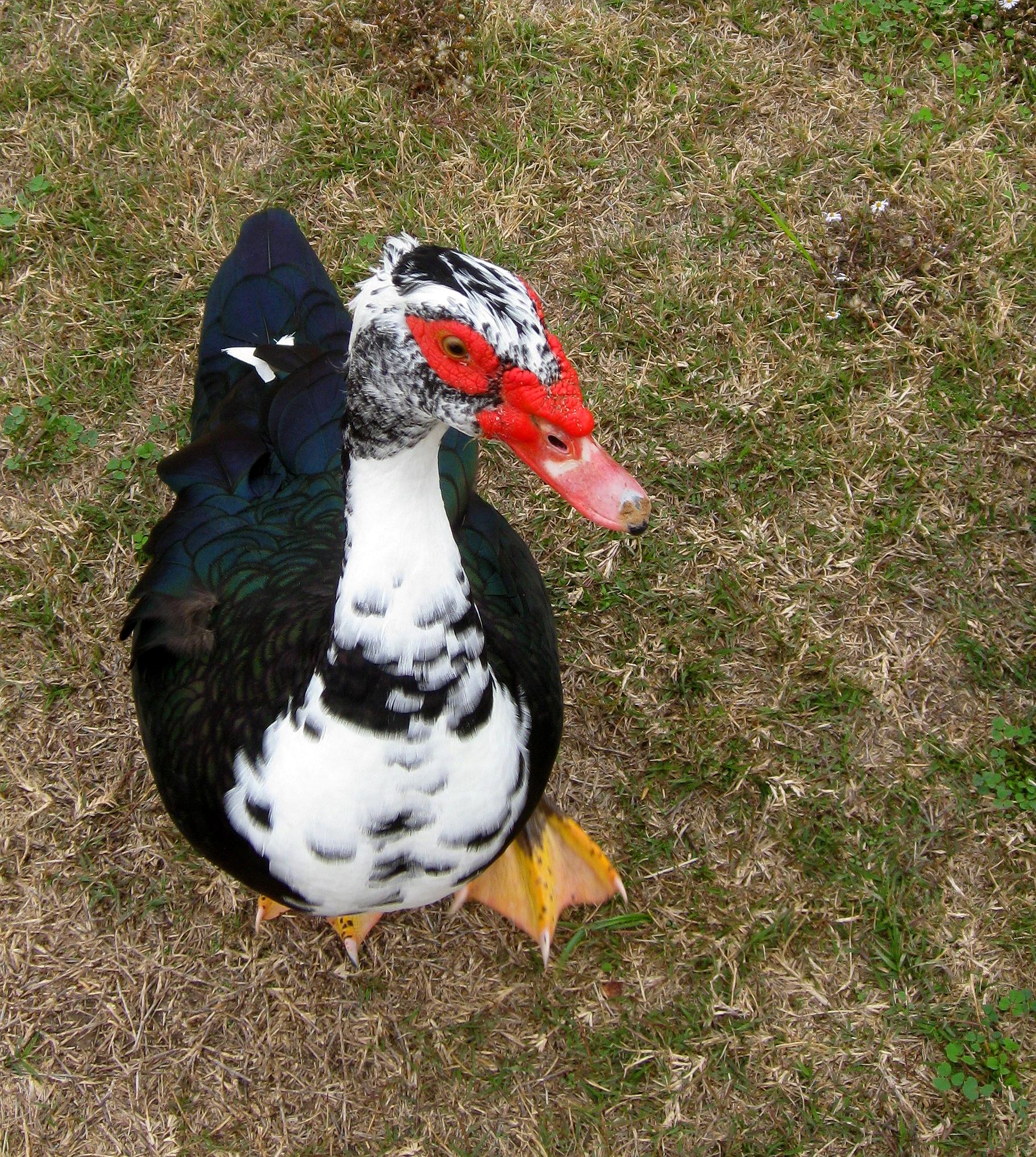
This Muscovy duck wasn't shy at all. -- Photo by Pat Bean

Bird Talk

“Want to go to Texas City with me?” My son, Lewis, asked yesterday.

Giving nary a thought to the writing and other items on my busy day’s agenda, I said: “Sure.”

While the trip was a business one for my son, I knew that there would still be plenty of opportunities to see birds along the way. Lewis is as passionate about bird watching as his bird-watching mom.

Besides, road trips are my thing. Nothing makes me happier than watching life through a vehicle’s windows, especially knowing one can stop at any time for closer looks. While I once had to hit an older son just to get him to stop and let his mom go to the restroom, Lewis has always been as eager to explore the roadsides as me.

The first stop on this overcast, foggy day was at an RV park near Angleton. I had been looking for a place to dump my holding tanks and this was a possibility. While we weren’t in my RV today, I still wanted to check out the possibility.

It turned out not to be an option, but the long driveway into the park passed by a field full of killdeer, meadowlarks and mourning doves.


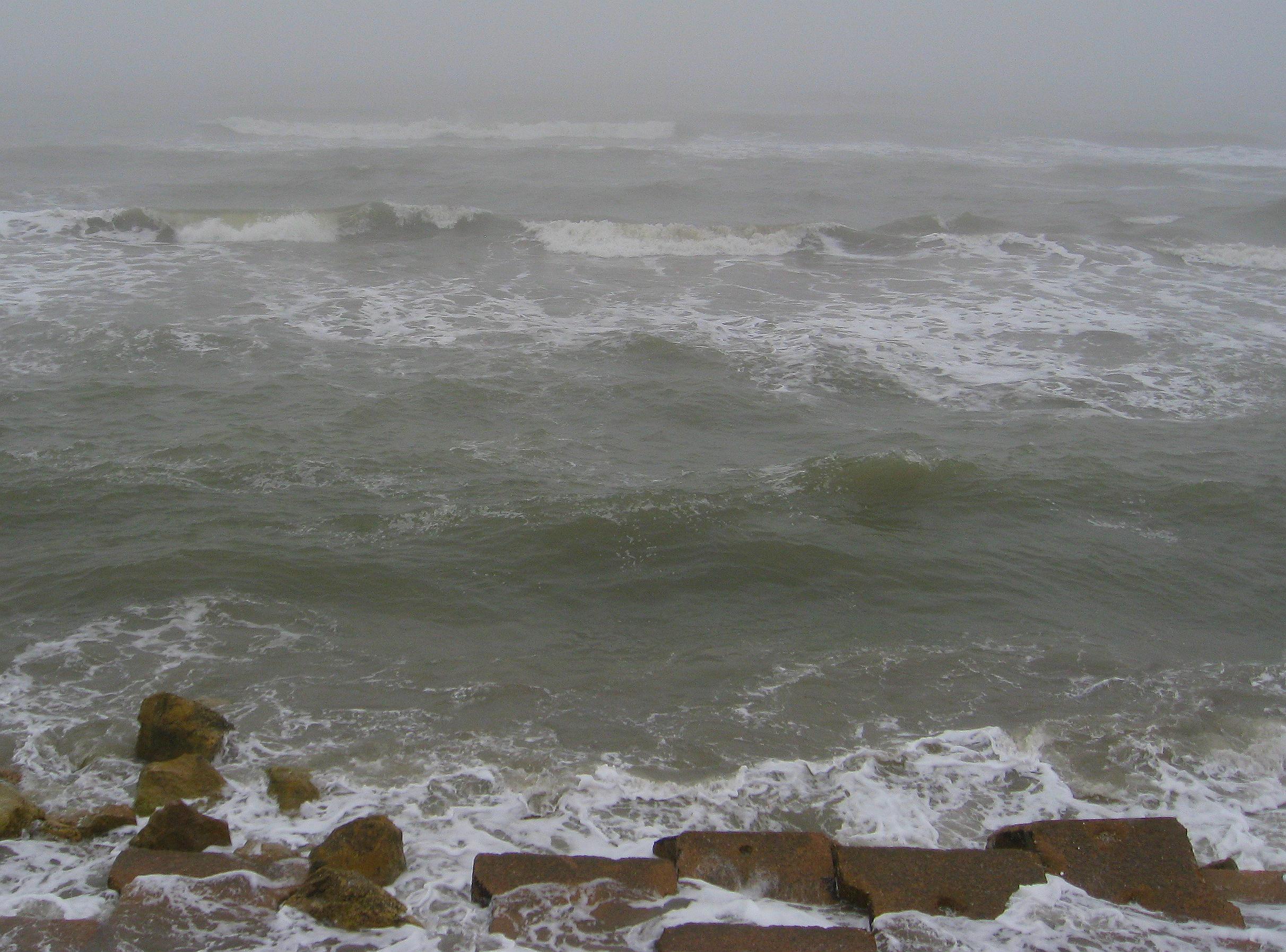
The waves rolled in from a horizon made invisible by the fog. I had my son stop along the Galveston Sea Wall so I could try and capture the day's mood. -- Photo by Pat Bean

And the park grounds turned up some Muscovy ducks, a Mexican species that’s beginning to be seen more and more of in North America. The ones we saw this day, although free to fly away, clearly preferred domestication.

They swarmed Lewis in hopes that he would have food to give them. I stood back and took pictures, enjoying the iridescent sheen of their feathers and the bright red nodules on their faces.

Back in the car, we drove on to Texas City. After my son had taken care of his business, we took the long way home through Galveston and over the San Luis Pass toll bridge to Surfside, birding as we drove.

Laughing gulls and brown and white pelicans were the seashore’s primary occupants along the Galveston Sea Wall. At LaFitte’s Cove, a small birding sanctuary in a residential section south of Galveston, the shallow pond area was full of ducks, teals, ibises, yellowlegs, coots and sandpipers.

“A good day for ducks,” said the one other birder we passed.

Indeed it was.

It was also a good day for a road trip. While I do so love sunshine, this day’s mist and fog added a hint of mystery and magic to the day’s drive – and 57 different bird species.

“An artist is a dreamer consenting to dream of the actual world.” George Santayana

Birdcage Mural at the St. Louis Zoo -- Photo by Pat Bean

Travels With Maggie

Inspiration for a blog topic eluded me this morning. After an hour spent reading e-mails, favorite blogs and the depressing news in the New York Times, I still hadn’t come up with a keyboard burner.

Spoonbill nest against the frame of the Birdcage -- Photo by Pat Bean

So I did what I usually do when this happens. I peruse the photos I’ve taken since my canine traveling companion, Maggie, and I began living and traveling full-time in our RV, Gypsy Lee. Thankfully I have seven years and over 123,00 miles of fodder to search for an idea. The walk back down memory lane is always pleasurable so I’m not complaining.

This morning my fancy was stopped at the St. Louis Zoo, home of the Birdcage. This walk-in aviary was built for the 1904 World’s Fair by the Smithsonian Institution at a cost of $17,500.

It was supposed to be moved to the organization’s National Zoo in Washington D.C. after the fair ended, but St. Louis residents protested, and the Smithsonian generously allowed the city to buy the flight cage for $3,500.

Pieces of sky framed by the Birdcage's ribs, with artfully placed birds. -- Photo by Pat Bean

Cost of the birds was extra. Records show that these charges included $7.50 for a pair of Mandarin ducks and $20 for four Canada geese.

Today it’s been turned into a cypress swamp that houses aquatic birds commonly found along the Mississippi River.

Looking through the pictures that I took back in 2006, I was struck by the amazing likeness between art and the real thing. The art is part of the glass tile mural outside the cage and the real things are the birds that live in the aviary.

I found both beautiful, particularly when I thought about the artist who created the mural.

Now I’m curious to know who was the artist.  Do you know?

“I have the world’s largest collection of seashells. I keep it on all the beaches of the world … perhaps you’ve seen it.” – Steven Wright

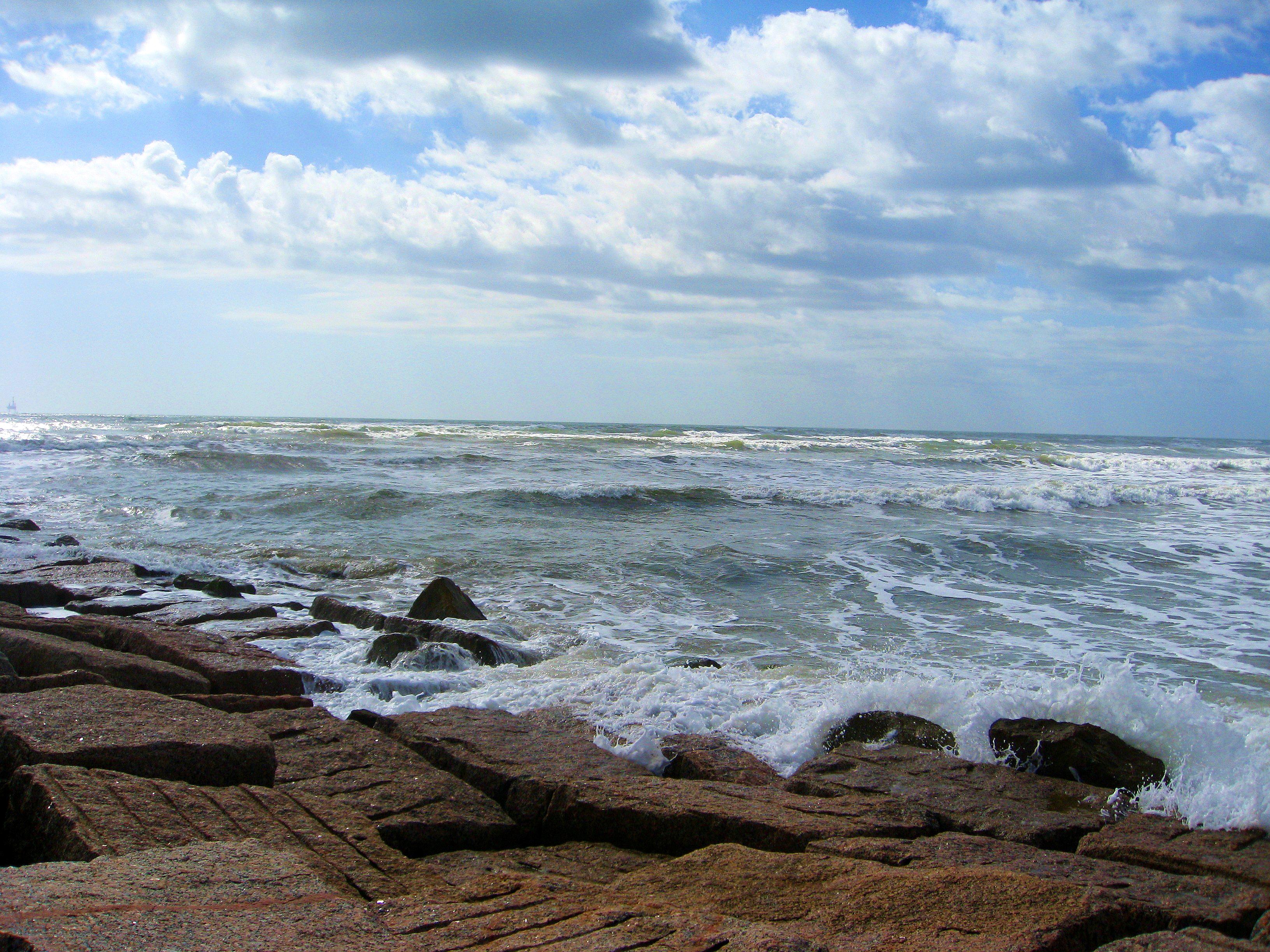
Wave-watching from the Quintana Jetty on the Texas Gulf Coast. -- Photo by Pat Bean

Travels With Maggie

Janet Evanovich’s Stephanie Plum’s latest antics in “Explosive Eighteen” called louder to me last night than the Cowboys and Giants.

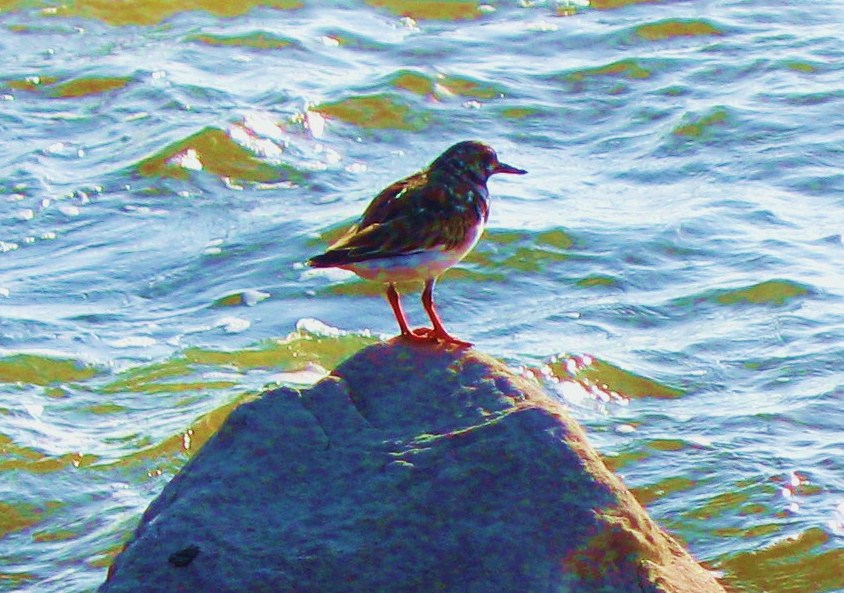
This ruddy turnstone was also wave-watching. -- Photo by Pat Bean

So after dinner with my son and his family, I escaped back out to my RV to read instead of watch the Dallas Cowboy?New York Giants football game. As a Dallas native, I’m an avid cowboy fan, but I seldom watch football these days, preferring instead to read about the game the next day.

I also knew that this particularly game was going to spark family tensions. My Texan son, Lewis, would be pulling for the Cowboys, while my fantastic New Yorker daughter-in-law, Karen, would be rooting for the Giants. Both of them are rabid followers of their teams.

My son left for work before I got up this morning, but my daughter-in-law stopped by my RV to say good-bye before she left for the day. I

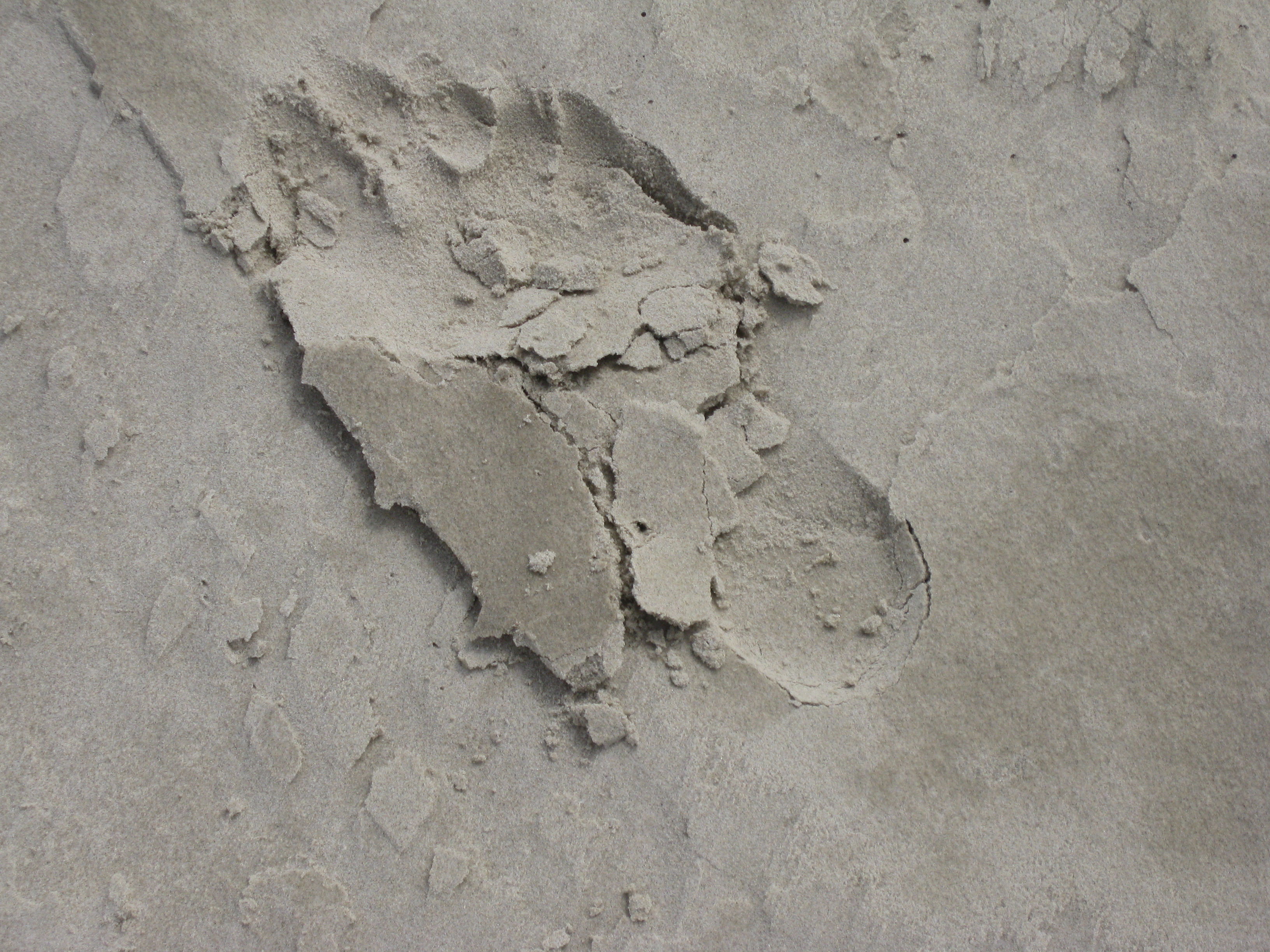
Footprints in the sand intrigue me. -- Photo by Pat Bean

didn’t need to ask who won. The smile on her face lit up the overcast dawn. Hopefully my son will have cheered up by the time he gets home.

In the meantime, I have errands to run. I have to mail off Christmas packages and get propane for my RV, which means a road trip from Lake Jackson to Brazoria.

After that, Maggie and I are going to the beach for a little bird-watching, wave-watching and sand-walking. I can’t think of a better way to spend the afternoon. Can you?

The more you praise and celebrate your life, the more there is in life to celebrate.” — Oprah Winfrey  

All little kids know how to celebrate with birthday cake, even if it's not their birthday. -- Photo by Pat Bean

“Celebrate the happiness that friends are always giving, make every day a holiday and celebrate just living.” — Amanda Bradley

The end of a good life is cause for celebration. The death in question here is my old raft which finally could be patched no more. Many people celebrated its passing.

What The Heck Is That Duck?

“Both the grand and the intimate aspects of nature can be revealed in the expressive photograph. Both can stir enduring affirmations and discoveries, and can surely help the spectator in his search for identification with the vast world of natural beauty and the wonder surrounding him. – Ansel Adams


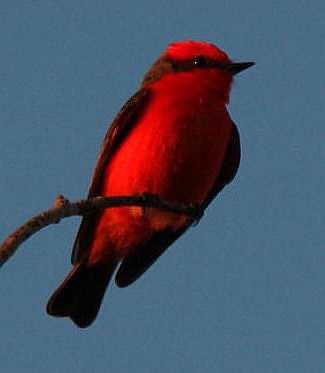
Vermilion flycatcher: Unlike many flycatchers that look alike, there is no mistaking this species. -- Photo by Pat Bean


Bird Talk

I’ve always wanted to know the names of things, but I wasn’t exactly pathetic about the need until I took up birding back in 1999.

I came late to this addictive passion, suddenly being amazed at all the birds around me. Where once these flying creatures were invisible, as if existing in a parallel world with a curtain drawn between them and me, suddenly I was seeing them everywhere.

My fascination with birds can be annoying to non-birders. A shadow flicks across the landscape and I lose my place in a conversation as my eyes turn upward searching for the source.

I constantly scan the tops of utility poles looking for familiar profiles. The sight of a red-tailed hawk sitting atop one causes me to yell “stop” to the car driver. A rustle or movement of leaves and I am distracted from a task. No roadside pond goes unscanned. Well, you get the idea.


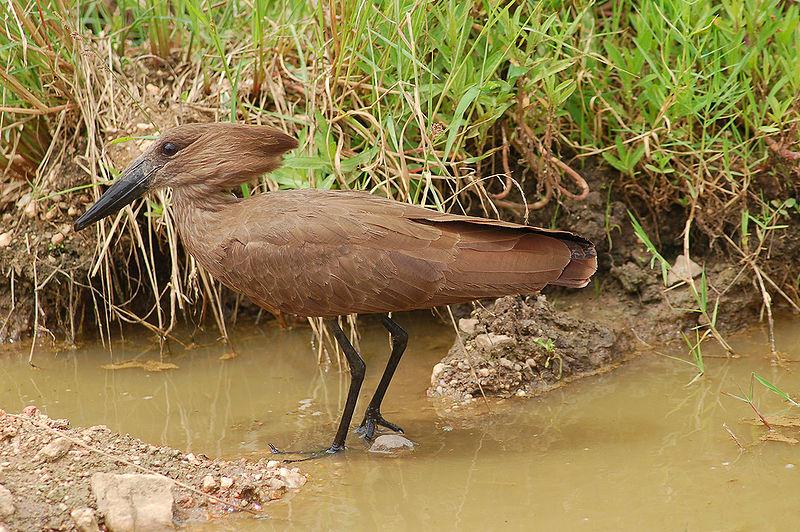
The unique profile of a hammerkop makes it a hard bird to misidentify. But you'll have to go to the African continent if you want to see one. -- Photo by Pat bean

But seeing a bird is not enough. I must know what bird it is.

Is that a crow or a raven was one of my first identification problems. The raven is larger but size, without a comparison, is not much help. So I learned that a crow’s tail is razor straight at the end, while a raven’s tail is wedge-shaped. Ravens also are the ones who suffer bad-hair days.

Many flycatchers, meanwhile, still puzzle me. Quite a few look almost exactly alike. A long look through a good scope, and knowing preferred ranges and habitats of each species, is necessary for identifying these birds.


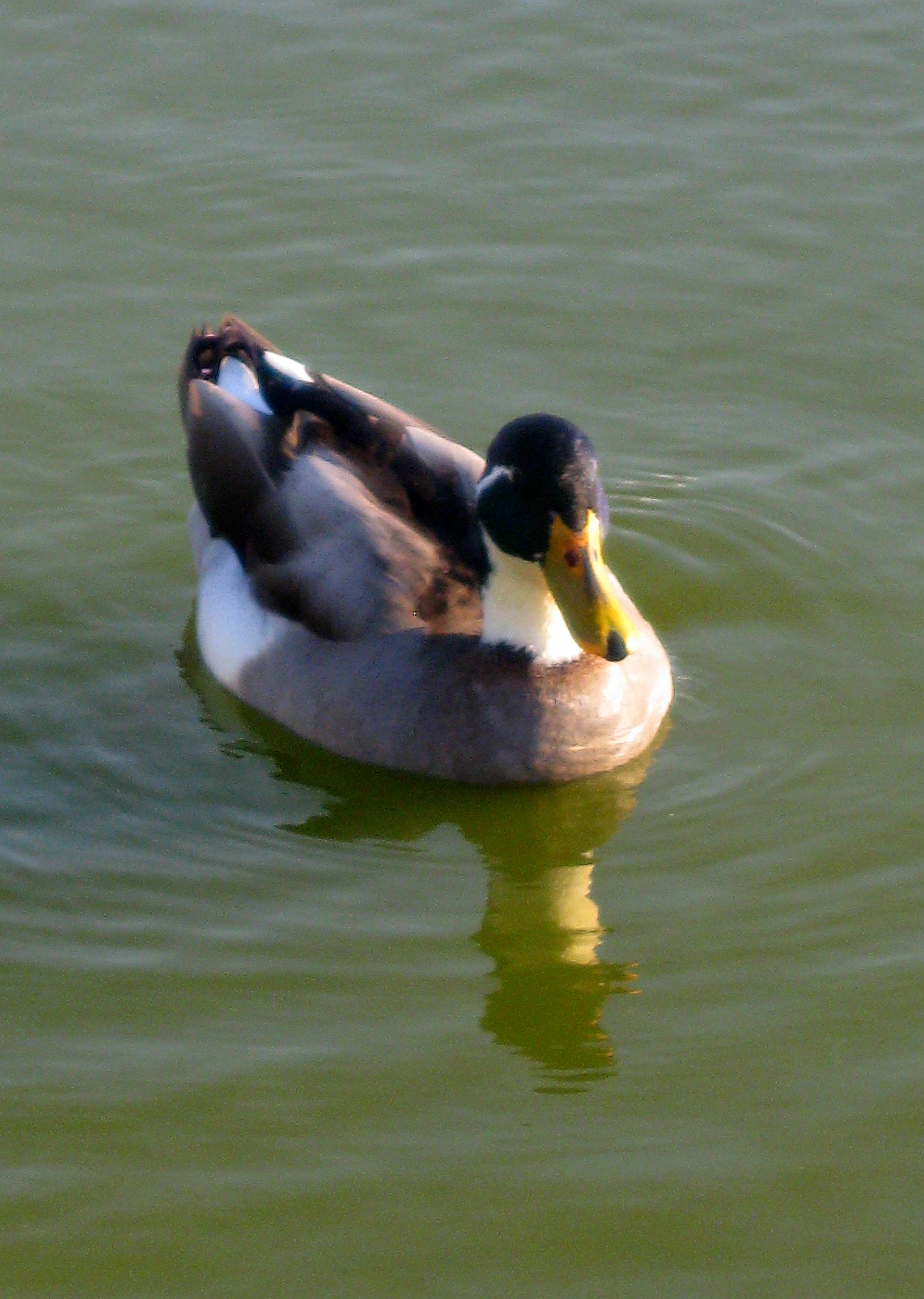
You won't find this bird in any field guide. It's a mallard hybrid. -- Photo by Pat Bean

Knowing that you’re looking at a flycatcher is easy, however. One usually sees them sitting up straight on a branch. They fly out to catch an insect and then most return to the same branch to repeat the process. If I have long enough to watch, and a good field guide, sometimes I can even figure out whether it’s a dusky or a willow, or one of several other flycatchers showing off for me.

When I was first learning to bird, there was this one particular duck that completely stumped me. While I had a really good look at the creature, I couldn’t find it in my field guide. I finally gave up and asked one of my birding mentors, who immediately broke into laughter.

The duck in question was a mallard hybrid. Since then I’ve seen a lot of these unique, but sterile offspring. Mallards, it seems, are sluts.

 “Orange is the happiest color.” – Frank Sinatra


This gulf fritillary meets the 2012 suggested tangerine tango dress code -- Photo by Pat Bean


Travels With Maggie


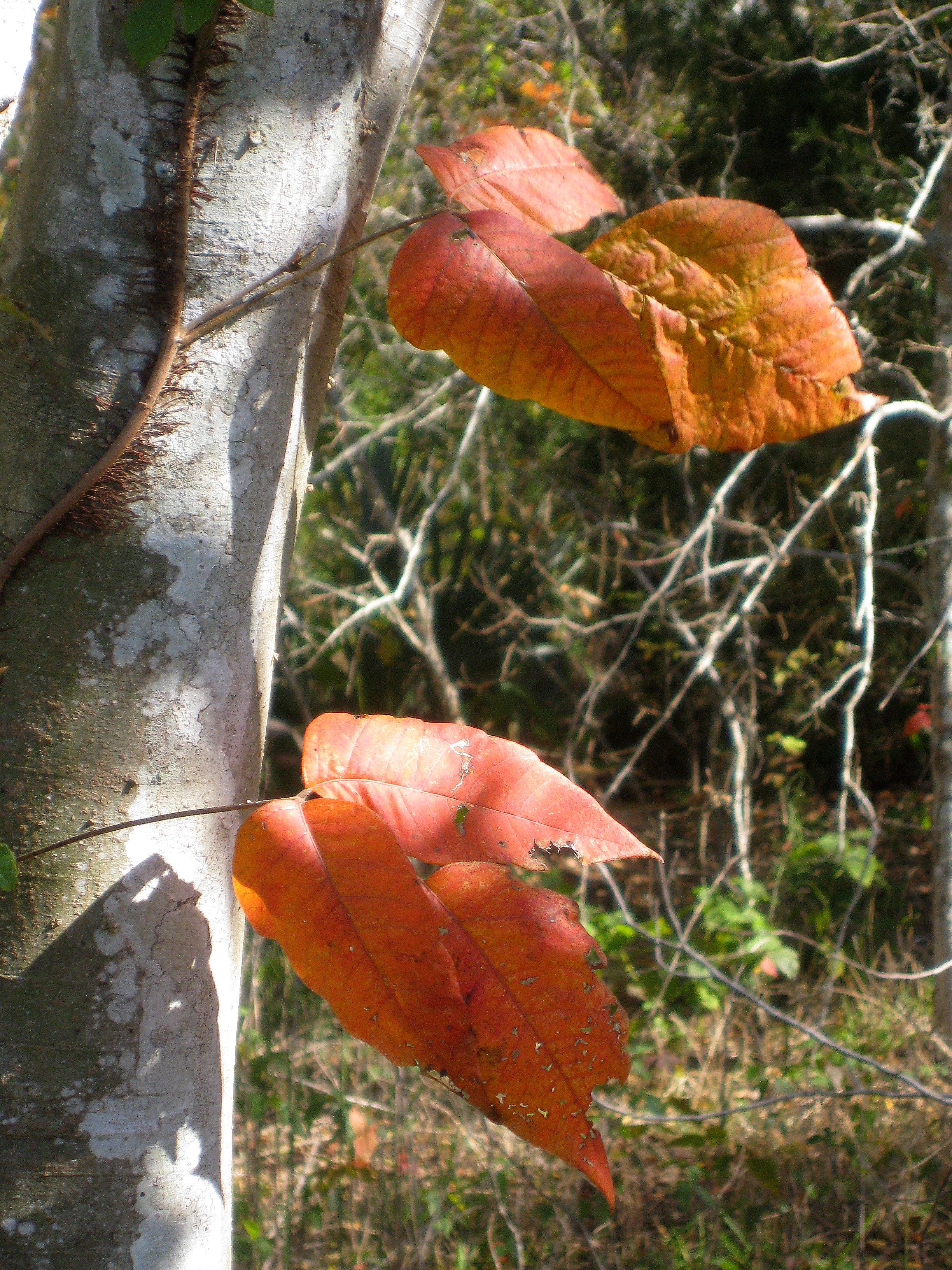
The last leaves of fall linger on the landscape's color palette -- Photo by Pat Bean

The color of 2012 is going to be orange, says Leatrice Eiseman of the Pantone Color Institute, which creates color standards for fashion and home industries.

The world doesn’t need more blues and gray. It needs a shot of energy and that’s what “tangerine tango” will give it, she predicts.

I think Mother Nature agrees with her.

While I only found the New York Times article in which Eiseman was quoted this morning while scanning the Internet for blogging inspiration, I took some photos that match her criteria for color boldness a couple of days earlier while out walking Maggie.

Thanks to an abundance of live oak trees that hold on to their green leaves through the winter, the Texas Gulf Coast escapes the blandness of many winter landscapes.

Even so, one has to look a little harder to discover the sparkling color jewels among the brown leaves, gray moss and bare flower gardens of winter here.


Grays and blues, however, will never go away. -- Photo by Pat Bean

Finding that shot of color, be it red berries on a yaupon holly tree or a few lingering leaves bearing fall hues always brings a smile to my face.

So I’ll be delighted if I find more orange products in 2012, especially if the colorists take their cues from Mother Nature.

“There is no blue without yellow and without orange.” — Vincent Van Gogh